Tag Archives: Strategy

3 Steps to Find the Horse’s A** In Your Company (and Create Space for Innovation)

3 Steps to Find the Horse's A** In Your Company (and Create Space for Innovation)

GUEST POST from Robyn Bolton

Innovation thrives within constraints.

Constraints create the need for questions, creative thinking, and experiments.

But as real as constraints are and as helpful as they can be, don’t simply accept them. Instead, question them, push on them, and explore around them.

But first, find the horse’s a**

How Ancient Rome influenced the design of the Space Shuttle

In 1974, Thiokol, an aerospace and chemical manufacturing company, won the contract to build the solid rocket boosters (SRBs) for the Space Shuttle. The SRBs were to be built in a factory in Utah and transported to the launch site via train.

The train route ran through a mountain tunnel that was just barely wider than the tracks.

The standard width of railroad tracks (distance between the rails or the railroad gauge) in the US is 4 feet, 8.5 inches which means that Thiokol’s engineers needed to design SRBs that could fit through a tunnel that was slightly wider than 4 feet 8.5 inches.

4 feet 8.5 inches wide is a constraint. But where did such an oddly specific constraint come from?

The designers and builders of America’s first railroads were the same people and companies that built England’s tramways. Using the existing tramways tools and equipment to build railroads was more efficient and cost-effective, so railroads ended up with the same gauge as tramways – 4 feet 8.5 inches.

The designers and builders of England’s tramways were the same businesses that, for centuries, built wagons. Wanting to use their existing tools and equipment (it was more efficient and cost-effective, after all), the wagon builders built tramways with the exact distance between the rails as wagons had between wheels – 4 feet 8.5 inches.

Wagon wheels were 4 feet 8.5 inches apart to fit into the well-worn grooves in most old European roads. The Romans built those roads, and Roman chariots made those grooves, and a horses pulled those chariots, and the width of a horses was, you guessed it, 4 feet 8.5 inches.

To recap – the width of a horses’ a** (approximately 4 feet 8.5 inches) determined the distance between wheels on the Roman chariots that wore grooves into ancient roads. Those grooves ultimately dictated the width of wagon wheels, tramways, railroad ties, a mountain tunnel, and the Space Shuttle’s SRBs.

How to find the horse’s a**

When you understand the origin of a constraint, aka find the horse’s a**, it’s easier to find ways around it or to accept and work with it. You can also suddenly understand and even anticipate people’s reactions when you challenge the constraints.

Here’s how you do it – when someone offers a constraint:

  1. Thank them for being honest with you and for helping you work more efficiently
  2. Find the horse’s a** by asking questions to understand the constraint – why it exists, what it protects, the risk of ignoring it, who enforces it, and what happened to the last person who challenged it.
  3. Find your degrees of freedom by paying attention to their answers and how they give them. Do they roll their eyes in knowing exasperation? Shrug their shoulders in resignation? Become animated and dogmatic, agitated that someone would question something so obvious?

How to use the horse’s a** to innovate

You must do all three steps because stopping short of step 3 stops creativity in its tracks.

If you stop after Step 1 (which most people do), you only know the constraint, and you’ll probably be tempted to take it as fixed. But maybe it’s not. Perhaps it’s just a habit or heuristic waiting to be challenged.

If you do all three steps, however, you learn tons of information about the constraint, how people feel about it, and the data and evidence that could nudge or even eliminate it.

At the very least, you’ll understand the horse’s a** driving your company’s decisions.

Image credit: Pixabay

Endnotes:

  1. To be very clear, the origin of the constraint is the horse’s a**. The person telling you about the constraint is NOT the horse’s a**.
  2. The truth is never as simple as the story and railroads used to come in different gauges. For a deeper dive into this “more true than not” story (and an alternative theory that it was the North’s triumph in the Civil War that influenced the design of the SRBs, click here

Subscribe to Human-Centered Change & Innovation WeeklySign up here to get Human-Centered Change & Innovation Weekly delivered to your inbox every week.

Shark Tanks are the Pumpkin Spice of Innovation

Shark Tanks are the Pumpkin Spice of Innovation

GUEST POST from Robyn Bolton

On August 27, Pumpkin Spice season began. It was the earliest ever launch of Starbucks’ Pumpkin Spice Latte and it kicked off a season in which everything from Cheerios to protein powder to dog shampoo promises the nostalgia of Grandma’s pumpkin pie.

Since its introduction in 2003, the Pumpkin Spice Latte has attracted its share of lovers and haters but, because it’s a seasonal offering, the hype fades almost as soon as it appears.

Sadly, the same cannot be said for its counterpart in corporate innovation — The Shark Tank/Hackathon/Lab Week.

It may seem unfair to declare Shark Tanks the Pumpkin Spice of corporate innovation, but consider the following:

  • They are events. There’s nothing wrong with seasonal flavors and events. After all, they create a sense of scarcity that spurs people to action and drives companies’ revenues. However, there IS a great deal wrong with believing that innovation is an event. Real innovation is not an event. It is a way of thinking and problem-solving, a habit of asking questions and seeking to do things better, and of doing the hard and unglamorous work of creating, learning, iterating, and testing required to bring innovation — something different that creates value — to life.
  • They appeal to our sense of nostalgia and connection. The smell and taste of Pumpkin Spice bring us back to simpler times, holidays with family, pie fresh and hot from the oven. Shark Tanks do the same. They remind us of the days when we believed that we could change the world (or at least fix our employers) and when we collaborated instead of competed. We feel warm fuzzies as we consume (or participate in) them, but the feelings are fleeting, and we return quickly to the real world.
  • They pretend to be something they’re not. Starbucks’ original Pumpkin Spice Latte was flavored by cinnamon, nutmeg, and clove. There was no pumpkin in the Pumpkin Spice. Similarly, Shark Tanks are innovation theater — events that give people an outlet for their ideas and an opportunity to feel innovation-y for a period of time before returning to their day-to-day work. The value that is created is a temporary blip, not lasting change that delivers real business value.

But it doesn’t have to be this way.

If you’re serious about walking the innovation talk, Shark Tanks can be a great way to initiate and accelerate building a culture and practice of innovation. But they must be developed and deployed in a thoughtful way that is consistent with your organization’s strategy and priorities.

  • Make Shark Tanks the START of an innovation effort, not a standalone event. Clearly establish the problems or organizational priorities you want participants to solve and the on-going investment (including dedicated time) that the company will make in the winners. Allocate an Executive Sponsor who meets with the team monthly and distribute quarterly updates to the company to share winners’ progress and learnings
  • Act with courage and commitment. Go beyond the innovation warm fuzzies and encourage people to push the boundaries of “what we usually do.” Reward and highlight participants that make courageous (i.e. risky) recommendations. Pursue ideas that feel a little uncomfortable because the best way to do something new that creates value (i.e. innovate) is to actually DO something NEW.
  • Develop a portfolio of innovation structures: Just as most companies use a portfolio of tools to grow their core businesses, they need a portfolio of tools to create new businesses. Use Shark Tanks to the surface and develop core or adjacent innovation AND establish incubators and accelerators to create and test radical innovations and business models AND fund a corporate VC to scout for new technologies and start-ups that can provide instant access to new markets.

Conclusion

Whether you love or hate Pumpkin Spice Lattes you can’t deny their impact. They are, after all, Starbucks’ highest-selling seasonal offering. But it’s hard to deny that they are increasingly the subject of mocking memes and eye rolls, a sign that their days, and value, maybe limited.

(Most) innovation events, like Pumpkin Spice, have a temporary effect. But not on the bottom-line. During these events, morale, and team energy spike. But, as the excitement fades and people realize that nothing happened once the event was over, innovation becomes a meaningless buzzword, evoking eye rolls and Dilbert cartoons.

Avoid this fate by making Shark Tanks a lasting part of your innovation menu — a portfolio of tools and structures that build and sustain a culture and practice of innovation, one that creates real financial and organizational value.

Image credit: Unsplash

Subscribe to Human-Centered Change & Innovation WeeklySign up here to get Human-Centered Change & Innovation Weekly delivered to your inbox every week.

Lobsters and the Wisdom of Ignoring Your Customers

Lobsters and the Wisdom of Ignoring Your Customers

GUEST POST from Robyn Bolton

Being the smart innovator (and businessperson) you are, you know it’s important to talk to customers. You also know it’s important to listen to them.

It’s also important to ignore your customers.

(Sometimes)

Customers will tell you what the problem is. If you stay curious and ask follow-up questions (Why? and Tell me more), they’ll tell you why it’s a problem and the root cause. You should definitely listen to this information.

Customers will also tell you how to fix the problem. You should definitely ignore this information.

To understand why, let me tell you a story.

Eye Contact is a Problem

Years ago, two friends and I took a day trip to Maine. It was late in Fall, and many lobster shacks dotting the coast were closed for the season. We found one still open and settled in for lunch.

Now, I’m a reasonably adventurous eater. I’ll try almost anything once (but not try fried tarantulas). However, I have one rule – I do not want to make eye contact with my food.

Knowing that lobsters are traditionally served with their heads still attached, I braced for the inevitable. As the waitress turned to me, I placed the same order as my friends but with a tiny special request. “I’ll have the lobster, but please remove its head.”

You know that scene in movies when the record scratches, the room falls silent, and everyone stops everything they’re doing to stare at the person who made an offending comment? Yeah, that’s precisely what happened when I asked for the head to be removed.

The waitress was horrified, “Why? That’s where all the best stuff is!”

“I don’t like making eye contact with my food,” I replied.

She pursed her lips, jotted down my request, and walked away.

A short time later, our lunch was served. My friends received their lobsters as God (or the chef) intended, head still attached. Then, with great fanfare, my lobster arrived.

Its head was still attached.

But we did not make eye contact.

Placed over the lobster’s eyes were two olives, connected by a broken toothpick and attached to the lobster’s “ears” by two more toothpicks.

The chef was offended by my request to remove the lobster’s head. But, because he understood why I wanted the head removed, he created a solution that would work for both of us – lobster-sized olive sunglasses.

Are you removing the head or making sunglasses?

Customers, like me, are experts in problems. We know what the problems are, why they’re problems, and what solutions work and what don’t. So, if you ask us what we want, we’ll give you the solution we know – remove the head.

Innovators, like you and the chef, are experts in solutions. You know what’s possible, see the trade-offs, and anticipate the consequences of various choices. You also take great pride in your work and expertise, so you’re not going to give someone a sub-par solution simply because they asked for it. You’re going to provide them with olive sunglasses.

Next time you talk to customers, stay curious, ask open-ended questions, ask follow-up questions, and build a deep understanding of their problems. Then ignore their ideas and suggestions. They’ll only stand in the way of your olive sunglasses.

Image credit: Pixabay

Subscribe to Human-Centered Change & Innovation WeeklySign up here to get Human-Centered Change & Innovation Weekly delivered to your inbox every week.

Top 10 Human-Centered Change & Innovation Articles of October 2022

Top 10 Human-Centered Change & Innovation Articles of October 2022Drum roll please…

At the beginning of each month, we will profile the ten articles from the previous month that generated the most traffic to Human-Centered Change & Innovation. Did your favorite make the cut?

But enough delay, here are October’s ten most popular innovation posts:

  1. Bridging the Gap Between Strategy and Reality — by Braden Kelley
  2. How Do You Judge Innovation: Guilty or Innocent? — by Robyn Bolton
  3. Scaling New Heights – Building Resilience — by Teresa Spangler
  4. What Great Transformational Leaders Learn from Their Failures — by Greg Satell
  5. Your Brand Isn’t the Problem — by Mike Shipulski
  6. What’s Next – Through the Looking Glass — by Braden Kelley
  7. Don’t Blame Quiet Quitting for a Broken Business Strategy — by Soren Kaplan
  8. The Ways Inflection Points Define Our Future — by Greg Satell
  9. How to Use TikTok for Marketing Your Business — by Shep Hyken
  10. Making Innovation the Way We Do Business (easy as ABC) — by Robyn Bolton

BONUS – Here are five more strong articles published in September that continue to resonate with people:

If you’re not familiar with Human-Centered Change & Innovation, we publish 4-7 new articles every week built around innovation and transformation insights from our roster of contributing authors and ad hoc submissions from community members. Get the articles right in your Facebook, Twitter or Linkedin feeds too!

Have something to contribute?

Human-Centered Change & Innovation is open to contributions from any and all innovation and transformation professionals out there (practitioners, professors, researchers, consultants, authors, etc.) who have valuable human-centered change and innovation insights to share with everyone for the greater good. If you’d like to contribute, please contact me.

P.S. Here are our Top 40 Innovation Bloggers lists from the last two years:

Subscribe to Human-Centered Change & Innovation WeeklySign up here to get Human-Centered Change & Innovation Weekly delivered to your inbox every week.

3 Mind-Blowing Things I Learned in Nebraska

3 Mind-Blowing Things I Learned in Nebraska

GUEST POST from Robyn Bolton

In the Before Times, we attended conferences to learn, make connections, and promote ourselves and our businesses. Then COVID hit, and conferences became virtual.   Although that made them easier to attend, it also made them easier to skip. Because, if we’re honest, most conferences were more about connecting and promoting than learning.

Last week, I went to one of those rare, almost mythical, conferences more focused on learning and connecting than promoting. It was fantastic! It was also in Nebraska (which is a pretty interesting place, btw).

Here are my three biggest mind-blowing takeaways from Inside Outside’s IO2022 Summit:

“Strategy is the direction you take to win in the future”

Kareen Proudian, Managing Partner at Faculty of Change

It’s a bit embarrassing to admit, but if you asked me to define “Strategy,” I’d respond with a long and rambling answer. Which means I can’t define “strategy.”  This admission is especially embarrassing because I have a resume littered with places where I developed, drafted, and implemented strategies, so I should have learned what the word means. But nope, I didn’t.

I suspect I’m not alone.

Asking for the definition of strategy is like asking if you must wear clothes to the office. You should know the answer. But unlike whether or not clothing is mandatory, most of us don’t know the answer, AND it’s easy to get away with never knowing the answer.

The elegant simplicity of Kareen’s definition of strategy blew my mind. It’s short, memorable, and something that most people can understand. Maybe I should share the definition with my alma maters and past employers.

“When we feel threatened, our IQ drops 50 to 70 points”

Alla Weinberg, CEO at Spoke & Wheel

When I first heard talk about Psychological Safety and Safe Spaces in today’s business world, I rolled my eyes. Hard. As a Gen X-er, I grumbled about how we didn’t need “safe spaces” when I grew up because we were tough and self-reliant, and I lamented the inevitable downfall of society caused by weak and coddled Millennials.

I was wrong.

Psychological Safety is absolutely and unquestionably essential for individuals to grow, teams to work, companies to operate and innovate, and societies to function and evolve. I’ve seen teams and businesses transform and achieve unbelievable success by discussing and living the elements they require for Psychological Safety. I’ve also seen teams and businesses fail in its absence.

These results aren’t surprising when you realize that you feel threatened when you are in a complex situation in which you cannot accurately predict the outcomes. And when you feel threatened, you are half as intelligent, effective, and creative as you are when you’re calm.

So, if you’re a manager and you’re upset that your people aren’t as intelligent, effective, or creative as they should be, it may not be their fault. It may be yours.

“Stage expertise, not industry expertise, is key to innovation success”

Sean Sheppard, Managing Partner at U+

There is deep comfort in the known. It’s why we gravitate to people like us. It’s also why companies ask job candidates and consultants about their experience in the industry and choose those with deep experience and impressive expertise. Often, there’s nothing with this question or the resulting decision.

Sometimes, it’s precisely the wrong question.

Sometimes, functional expertise is significantly more important than industry experience. After all, if you’re the hiring manager at a healthcare company looking for a Director of Finance, who would you hire – a Marketing Director from a competitor or a Finance Director from a CPG company?

That’s the case with innovation.

Decades of real-world experience (not to mention the successful launch of 100+ startups) show that successful corporate startup teams had expertise (mindsets, skillsets, executional drive) in the startup’s phase and a working knowledge of the industry rather extensive industry expertise and little to no innovation experience.

Questions are good. The right questions are better. So, the next time you’re staffing up an innovation team (or hiring a consultant), choose based on their innovation experience and willingness to learn about your industry.

Innovation happens everywhere

That’s why people from San Francisco, Austin, Washington DC, NYC, Toronto, Boston, and dozens of other places converged on Lincoln, Nebraska.

We went to see innovation in action and learn about the thriving startup community in the middle of the country. We also went to learn and connect with others committed to creating new things that create value.

Getting our minds blown was a bonus.

Image credit: Pixabay

Subscribe to Human-Centered Change & Innovation WeeklySign up here to get Human-Centered Change & Innovation Weekly delivered to your inbox every week.

Three HOW MIGHT WE Alternatives That Actually Spark Creative Ideas

Three How Might We Alternatives That Actually Spark Creative Ideas

GUEST POST from Robyn Bolton

Q: How might we brainstorm new ideas to serve our customers better?

A: Have a brainstorming session that starts with “How Might We help customers [Job to be Done/problem]?”

If only it were that simple.

How Might We (HMW) is an incredible tool (not BS, as some would assert), but we misuse it. We focus too much on the “we” and not enough on the “might.”

Might > We

HMW was first used to prompt people to be “wildly creative while simultaneously leveraging [company’s] innate strengths.”

IDEO popularized the prompt as a way to solve “wicked problems” – problems so complex that there is no right or wrong answer.

In both of these cases, the assumption was that the word “might” would free people from the shackles of today’s thinking and constraints and give people permission to dream without fear of judgment and reality.

“We” kept ideas tethered to the reality of the company’s “innate strengths,” providing a modicum of comfort to executives worried that the session wouldn’t result in anything useful and would, therefore, be a waste of time.

We > Might

Alas, as time went on and HMW became more popular, we lost sight of its intent (prompt wildly creative thinking about wicked problems) and twisted it to our purposes.

  • We end the HMW sentence with our problems (e.g., HMW cut costs by getting more customers to use self-service tools?).
  • We use it to brainstorm solutions to things that aren’t even problems (e.g., HMW eliminate all customer service options that aren’t self-serve?)
  • We mentally replace “might” with “will” so we can emerge from brainstorming sessions with a tactical implementation plan.

How Might Can YOU Fix HMW?

If you’re not getting creative, radical, or unexpected ideas from your brainstorming sessions, you have an HMW problem.< As a result, continuing to use HMW as a tool to prompt creative, radical, or unexpected ideas is the definition of insanity. And you are not insane. Instead, mix it up. Use different words to articulate the original intent of HMW.

How would we solve this problem if the answer to every request is YES?

Innovation thrives within constraints. Brainstorming doesn’t.

Even when you tell people not to constrain themselves, even implore them to value “quantity over quality,” you still get more “safe” ideas rather than more “crazy” ideas.

Do more than tell. Make a world without constraints real. Explicitly remove all the constraints people throw at ideas by creating a world of infinite money, people, capabilities, willingness, appetite for risk, and executive support. Doing this removes the dreaded “but” because there is no “but we don’t have the money/people/capabilities” or “but management will never go for it” and creates space for “and.”

What would we ask for if we were guaranteed a YES to only ONE request?

This question is often asked at the end of a brainstorm to prioritize ideas. But it’s equally helpful to ask it at the beginning.

This question shifts our mindset from “the bosses will never say yes, so I won’t even mention it” to “the bosses will say yes to only one thing, so it better be great!”  It pulls people off the sidelines and reveals what people believe to be the most critical element of a solution.   It drives passionate engagement amongst the whole team and acts as a springboard to the next brainstorm – How Might We use (what they said yes to) to solve (customers’ Jobs to be Done/problem)?

How would we solve the problem if the answer to every request is NO?

This one is a bit risky.

Some people will throw their hands in the air, declare the exercise a waste of time and effort, and collapse into a demotivated blob of resignation.

Some people will feel free. As Seth Godin wrote about a journal that promises to reject every single person who submits an article, “The absurdity of it is the point. Submitting to them feels effortless and without a lot of drama, because you know you’re going to get rejected. So instead of becoming attached to the outcome, you can simply focus on the work.”

For others, this will summon their inner rebel, the part of themselves that wants to stick it to the man, prove the doubters wrong, and unleash a great “I told you so” upon the world. To them, “No” is the start of the conversation, not the end. It fires them up to do their best work.

Don’t invite the first group of people to the brainstorm.

Definitely invite the other two groups.

How Might Will/Do YOU Fix HMW?

If you want something different, you need to do something different.

Start your next brainstorm with a new variation on the old HMW prompt.

How do people react? Does it lead to more creative or more “safe” ideas?

How might we adjust to do even better next time?

Image credit: Pexels

Subscribe to Human-Centered Change & Innovation WeeklySign up here to get Human-Centered Change & Innovation Weekly delivered to your inbox every week.

Making Innovation the Way We Do Business (easy as ABC)

Making Innovation the Way We Do Business (easy as ABC)

GUEST POST from Robyn Bolton

“We need to be more innovative.”

How many times have you said or heard that? It’s how most innovation efforts start. It’s a statement that reflects leaders’ genuine desire to return to the “good ol’ days” when the company routinely created and launched new products and enjoyed the publicity and growth that followed.

But what does it mean to be more innovative?

Innovation’s ABCs

A is for Architecture

Architecture includes most of the elements people think of when they start the work to become more innovative – strategy, structure, processes, metrics, governance, and incentives.

Each of these elements answers fundamental questions:

  • Strategy: Why is innovation important? How does it contribute to our overall strategy?
  • Structure: Who does the work of innovation?
  • Process: How is the work done?
  • Metrics: How will we know when we’re successful? How will we measure progress?
  • Governance: Who makes decisions? How and when are decisions made?
  • Incentives: Why should people invest their time, money, and political capital? How will they be rewarded?

When it comes to your business, you can answer all these questions. The same is true if you’re serious about innovation. If you can’t answer the questions, you have work to do. If you don’t want to do the work, then you don’t want to be innovative. You want to look innovative*.

B is for Behavior

Innovation isn’t an idea problem. It’s a leadership problem.

Leaders that talk about innovation, delegate it to subordinates and routinely pull resources from innovation to “shore up” current operations don’t want to be innovative. They want to look innovative.

Leaders who roll up their sleeves and work alongside innovation teams, ask questions and listen with open minds, and invest and protect innovation resources want to be innovative.

To be fair, it’s incredibly challenging to be a great leader of both innovation and operations. It’s the equivalent of writing equally well with your right and left hands. But it is possible. More importantly, it’s essential.

C is for Culture

Culture is invisible, pervasive, and personal. It is also the make-or-break factor for innovation because it surrounds innovation architecture, teams, and leaders.

Culture can expand to encourage and support exploration, creativity, and risk-taking. Or it can constrict, unleashing antibodies that swarm, suffocate, and kill anything that threatens the status quo.

Trying to control or change culture is like trying to hold water in your fist. But if you let go just a bit, create the right conditions, and wait patiently, change is possible.

Easy as 123

The most common mistake executives make in the pursuit of being “more innovative” is that they focus on only A or only B or only C.  But, as I always tell my clients, the answer is “and, not or.”

  1. Start with Architecture because it’s logical, rational, and produces tangible outputs like org charts, process flows, and instruction manuals filled with templates and tools. Architecture is comforting because it helps us know what to do and how.
  2. Use Architecture to encourage Behavior because the best way to learn something is to do it. With Architecture in place (but well before it’s finished), bring leaders into the work – talking to customers, sharing their ideas, and creating prototypes. When leaders do the work of innovation, they quickly realize what’s possible (and what’s not) and are open to learning how to engage (behave) in a way that supports innovation.
  3. Leverage Architecture and Behavior to engage Culture by creating the artifacts, rituals, and evidence that innovation can happen in your company, is happening and will continue to happen. As people see “innovation” evolve from a buzzword to a small investment to “the way we do business,” their skepticism will fade, and their support will grow.

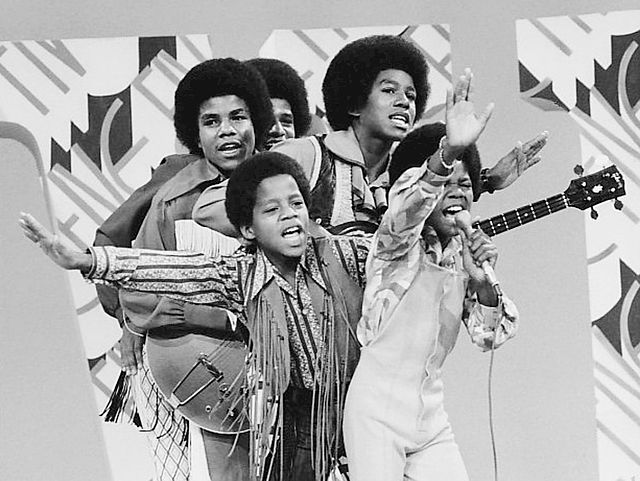
Just like the Jackson 5 said

ABC, It’s easy a 123

Architecture, behavior, culture – they’re all essential to enabling an innovation capability that repeatedly creates new revenue.

And while starting with architecture, building new leadership behaviors, and investing until the culture changes isn’t easy, it’s the 123 steps required to “be more innovative.”

Image credit: Wikimedia Commons

Subscribe to Human-Centered Change & Innovation WeeklySign up here to get Human-Centered Change & Innovation Weekly delivered to your inbox every week.

Four Things You Need to Succeed in The Good Place

Four Things You Need to Succeed in The Good Place

GUEST POST from Robyn Bolton

You have, no doubt, seen the design squiggle. The ubiquitous scribble is all loopy and knotty in the beginning until it finally sorts itself into a straight line by the end.

It illustrates the design process – “the journey of researching, uncovering insights, generating creative concepts, iteration of prototypes and eventually concluding in one single designed solution” – and its elegant simplicity has led it to be adopted by all sorts of other disciplines, including innovation.

But when I showed it to a client, her immediate response was, “It’s Jeremy Bearimy!”*

Wha????

And that is how I discovered The Good Place, a sitcom about four humans who die, go to The Good Place, and struggle to learn what it means to be good.

The show, created by Michael Schur of The Office and Parks and Recreation fame, is a brilliant treatise on ethics and moral philosophy. It also contains valuable wisdom about what innovators need to succeed.

Questions

With all due respect, “It’s the way it’s always been done” is an excuse that’s been used for hundreds of years to justify racism, misogyny…

Tahani Al-Jamil

This quote was a gut punch from the show’s fourth and final season. As innovators, we often hear people ask why change is needed. “If it ain’t broke, don’t fix it!” they proclaim.

But sometimes it is broke, and we don’t know it. At the very least, it can always be better.

So, while “it’s the way it’s always been done” at your company probably (hopefully) doesn’t include racism, misogyny, sexism, and other genuinely horrible things, framing the status quo as an enabler of those horrors is a harsh wake-up call to the dangers of an unquestioning commitment to continuing to do things the way they’ve always been done.

Decisions (not just Ideas)

If you’re always frozen in fear and taking too long to figure out what to do, you’ll miss your opportunity, and maybe get sucked into the propeller of a swamp boat.

Jason Mendoza

Even though Jason Mendoza is the resident idiot of The Good Place, he occasionally (and very accidentally) has moments of profound insight. This one to a situation that innovators are all too familiar with – analysis paralysis.

How often do requests for more data, more (or more relevant) benchmarks, or input from more people slow down decisions and progress? These requests are rarely rooted in doubt about the data, benchmarks, or information you presented. They are rooted in fear – the fear of making the wrong decision, being blamed or shamed, and losing a reputation or even a job.

But worse than being wrong, blamed, shamed, or unemployed is missing an opportunity to radically improve your business, team, or even the world. It’s the business equivalent of getting sucked into the propeller of a swamp boat.

Actions (not just decisions)

In football, trying to run out the clock and hoping for the best never works. It’s called “prevent defense.” You don’t take any chances and just try and hold on to your lead. But prevent defense just PREVENTS you from winning! It’s always better to try something.

Jason Mendoza

Jason does it again, this time invoking a lesson learned from his beloved Jacksonville Jaguars.

Few companies publicly admit to adopting a prevent defense, even though most companies engage in it. They play prevent defense when they don’t invest in innovation, focus exclusively on maintaining or incrementally improving what they currently do, or confine their innovation efforts to events like hackathons and shark tanks.

Incremental improvements and innovation theater keep you competitive. But they won’t get you ahead of the competition or make you a leader in your industry. In fact, they prevent it by making you feel good and safe when you’re really just running out the clock.

Perseverance

Come on, you know how this works. You fail and then you try something else. And you fail again and again, and you fail a thousand times, and you keep trying because maybe the 1,001st idea might work. Now, I’m gonna and try to find our 1,001st idea.

Michael

It’s hard to explain this quote without sharing massive spoilers, so let’s just say that The Good Place is an experiment that fails. A lot.

But it’s also an experiment that generates profound learning and universe-altering changes, things that would not have been possible without the failures.

Yes, smart innovators know when to kill a project. They also know when to try one more time. Wise innovators know the difference.

One final bit of wisdom

Innovation is hard. You will run into more resistance than expected, and things will rarely work out as planned. As long as you keep trying and learning, you won’t fail.

To paraphrase Jason Mendoza (again), you’re not a failed innovator, you’re pre-successful.

*For those of you who are, like I was, unfamiliar with Jeremy Bearimy, here’s a clip explaining it (WARNING: SPOILERS)

Subscribe to Human-Centered Change & Innovation WeeklySign up here to get Human-Centered Change & Innovation Weekly delivered to your inbox every week.

Top 10 Human-Centered Change & Innovation Articles of August 2022

Top 10 Human-Centered Change & Innovation Articles of August 2022Drum roll please…

At the beginning of each month we will profile the ten articles from the previous month that generated the most traffic to Human-Centered Change & Innovation. Did your favorite make the cut?

But enough delay, here are August’s ten most popular innovation posts:

  1. Why Amazon Wants to Sell You Robots — by Shep Hyken
  2. Now is the Time to Design Cost Out of Our Products — by Mike Shipulski
  3. How Consensus Kills Innovation — by Greg Satell
  4. The Four Secrets of Innovation Implementation — by Shilpi Kumar
  5. Reset and Reconnect in a Chaotic World — by Janet Sernack
  6. This 9-Box Grid Can Help Grow Your Best Future Talent — by Soren Kaplan
  7. ‘Fail Fast’ is BS. Do This Instead — by Robyn Bolton
  8. The Power of Stopping — by Mike Shipulski
  9. The Battle Against the Half-Life of Learning — by Douglas Ferguson
  10. The Phoenix Checklist – Strategies for Innovation and Regeneration — by Teresa Spangler

BONUS – Here are five more strong articles published in July that continue to resonate with people:

If you’re not familiar with Human-Centered Change & Innovation, we publish 4-7 new articles every week built around innovation and transformation insights from our roster of contributing authors and ad hoc submissions from community members. Get the articles right in your Facebook, Twitter or Linkedin feeds too!

Have something to contribute?

Human-Centered Change & Innovation is open to contributions from any and all innovation and transformation professionals out there (practitioners, professors, researchers, consultants, authors, etc.) who have valuable human-centered change and innovation insights to share with everyone for the greater good. If you’d like to contribute, please contact me.

P.S. Here are our Top 40 Innovation Bloggers lists from the last two years:

Subscribe to Human-Centered Change & Innovation WeeklySign up here to get Human-Centered Change & Innovation Weekly delivered to your inbox every week.

3 Ways to Get Customer Insights without Talking to Customers

3 Ways to Get Customer Insights without Talking to Customers

GUEST POST from Robyn Bolton

Most of my advice to leaders who want to use innovation to grow their businesses boils down to two things*:

  1. Talk (and listen) to customers
  2. Do something

But what if you don’t want to talk to customers?

After all, talking to customers can be scary because you don’t know what they’ll say. It can be triggering if they say something mean about your product, your business, or even you as a person. It can be draining, especially if you’re an introvert.

Plus, there are so many ways to avoid talking to customers – Send a survey, hire a research firm to write a report, invoke the famous Steve Jobs quote about never doing customer research.

Isn’t it just better to stay tucked away in the office, read reports, state opinions as if they are facts (those opinions are based on experience, after all), and make decisions?

Nope.

It is not better. It is also not safer, easier, or more efficient.

To make the best decisions, you need the best data, which comes from your customers.

But that doesn’t mean you need to talk to them to get it.

The best data

The best data helps you understand why your customers do what they do. This is why Jobs to be Done is such a powerful tool – it uncovers the emotional and social Jobs to be Done that drive our behavior and choices (functional Jobs to be Done are usually used to justify our choices).

But discovering Jobs to be Done typically requires you to talk to people, build rapport and trust in a one-on-one conversation, and ask Why? dozens of times so surface emotional and social JTBD.

Luckily, there are other ways to find Jobs to be Done that don’t require you to become an unlicensed therapist.

Observe your customers

Go where your customers are (or could be) experiencing the problem you hope to solve and try to blend in. Watch what people are doing and what they’re not doing. Notice whether people are alone or with others (and who those others are – kids, partners, colleagues, etc.). Listen to the environment (is it loud or quiet? If there’s noise, what kind of noise?) and to what people are saying to each other.

Be curious. Write down everything you’re observing. Wonder why and write down your hypotheses. Share your observations with your colleagues. Ask them to go out, observe, wonder, and share. Together you may discover answers or work up the courage to have a conversation.

Quick note – Don’t be creepy about this. Don’t lurk behind clothing racks, follow people through stores, peep through windows, linger too long, or wear sunglasses, a trench coat, and a fedora on a 90-degree day, so you look inconspicuous. If people start giving you weird looks, find a new place to people-watch.

Observe yourself

Humans are fascinating, and because you are a human, you are fascinating. So, observe yourself when you’re experiencing the problem you’re hoping to solve. Notice where you are, who is with you, the environment, and how you feel. Watch what you do and don’t do. Wonder why you chose one solution over another (or none).

Be curious. Write down everything you did, saw, and felt and why. Ask your colleagues to do the same. Share your observations with your colleagues and find points of commonality and divergence, then get curious all over again.

Quick note – This only works if you have approximately the same demographic and psychographic profiles and important and unsatisfied Jobs to be Done of your target customers.

Be your customer

What if your business solves a problem that can’t be easily observed? What if you don’t have the problem that your business is trying to solve?

Become your customer (and observe yourself).

Several years ago, I worked with a client that made adult incontinence products. I couldn’t observe people using their products, and I do not have important (or unsatisfied) Jobs to be Done that the products can solve.

So, for one day, I became a customer. I went to Target and purchased their product. I went home, wore, and used the product. I developed a deep empathy for the customer and wrote down roughly 1 million ways to innovate the product and experience.

Quick note – Depending on what’s required to “be your customer,” you may need to give people a heads up. My husband was incredibly patient and understanding but also a little concerned on the day of the experiment.

It’s about what you learn, not how you learn it

It’s easy to fall into the trap of thinking there is one best way to get insights. I’m 100% guilty (one-on-one conversations are a hill I have died on multiple times).

Ultimately, when it comes to innovation and decision-making, the more important thing is having, believing, and using insights into why customers do what they do and want what they want. How you get those insights is an important but secondary consideration.

* Each of those two things contains A TON of essential stuff that must be done the right way at the right time otherwise, they won’t work, but we’ll get into those things in another article

Image Credit: Pixabay

Subscribe to Human-Centered Change & Innovation WeeklySign up here to get Human-Centered Change & Innovation Weekly delivered to your inbox every week.