
GUEST POST from Robyn Bolton
“Yes, and….”
You know it. You love it. You may even use it.
The phrase is a core principle of improv that has become the “magic” brainstorming phrase. On stage, it encourages acceptance and collaboration, and in innovation, it quiets the critics (“No, because”), one-uppers (“No, but”), and passive-aggressive show-offs (“Yes, but”).
And there are other core Improv principles that will help you lead your team to innovation success.
You probably know them. You may or may not love them. And you definitely need to use them.
1. Be human
As Alla Weinberg pointed out in our conversation about Psychological Safety, “People are messy.” YOU are a person (I assume), meaning YOU are messy. And that’s ok because guess what? Your boss, team, and even that super annoying person in (fill in the function) are people, meaning they’re messy.
Improv embraces the mess. When someone says the wrong thing, something unexpected happens, or everything goes wrong, the actors don’t stand around, point fingers, and complain. They embrace the opportunity to step into the scene, support their fellow actor, and move things forward. Plus, as Coach Beard says, “Perfection sucks. Perfect is boring.”
2. Connect
Building genuine and authentic relationships is central to building Psychological Safety. It’s also central to great Improv. Consider this example:
If two performers come on stage and only talk about the muffins they are baking, it’s going to be a boring scene. The audience doesn’t care about the muffins! What they really want to know is how these characters feel, especially about each other. Is one character sad because her daughter is about to go off to college, and she will miss spending time with her? Or is the other character fearful because she will have to navigate adulthood without her mom nearby? If the scene doesn’t focus on the relationship, it isn’t going very far. In order to connect well in the scene, improvisers must be attuned to one another.
If all you do as a leader is talk about your calendar, your To-do list, and deadlines, people aren’t going to care about the work. They’ll do the work because that’s what you pay them to do. But they won’t care enough to problem-solve (they’ll ask you for the solution), suggest improvements (they’ll do what you ask), or develop new ideas (they’ll wait for your orders). As a leader, you need to connect to create. That applies to creating solutions, new businesses, and the next generation of leaders.
3. Actively Listen
Active listening isn’t just about nodding your head while someone else speaks. Active listening requires giving full attention to the speaker, letting go of judgment, and understanding their point of view. You don’t have to agree with what they’re saying, but you do have to understand and respond to it.
Actively listening, understanding, and responding are essential to Improv. When an actor does something completely unexpected, their fellow actors can’t ignore it because that will destroy the show. They respond to it and build on it. After all, you shouldn’t say “Yes and” if you don’t know what you’re saying yes to.
4. Pivot
Pivoting is hard. It’s hard to admit something isn’t working, and often harder to figure out what will work while you’re in the middle of doing the thing that doesn’t work. And that’s what Improv actors have to do all the time. You may not notice because it looks easy. But it only looks easy because they practice all the time.
Flexibility, adaptability, and the ability to change quickly are all skills that can be developed. But you must practice. Some people are naturally more comfortable making changes, but everyone can learn skills and tools to recognize when a change in direction is required and quickly sort through the options to find the next best option.
5. Have fun
Improv is hard work, and it’s fun. Innovation is hard work and (it should be) fun. We spend too much time at work and with our colleagues to not have fun, laugh, or enjoy ourselves. Work will never be all rainbows and unicorns, just like not every Improv sketch will be hilarious. But there must be moments of fun, laughter, and joy because you can’t create or innovate when you’re overwhelmed, downtrodden, or burned out.
As Jeff Ash, Director of Westside Improv, explains:
“Play unlocks the creative spirit that we all have. When people lose a creative spirit and get engulfed in whatever they’re doing in their day-to-day lives, I believe it impacts our ability to connect, build relationships, and be in community.”
What are other lessons we can learn from Improv?
Image credit: Dall-E via Bing
 Sign up here to join 17,000+ leaders getting Human-Centered Change & Innovation Weekly delivered to their inbox every week.


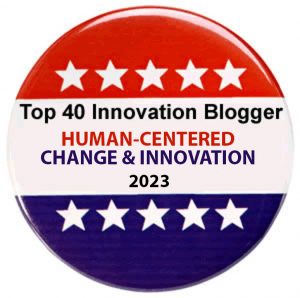 After a week of torrid voting and much passionate support, along with a lot of gut-wrenching consideration and jostling during the judging round, I am proud to announce your Top 40 Innovation Bloggers of 2023:

 Greg Satell is a popular speaker and consultant. His first book,
  Mike Shipulski brings together people, culture, and tools to change engineering behavior. He writes daily on Twitter as

 A twenty-five year Procter & Gamble veteran, Pete has spent the last 8+ years applying insights from psychology and behavioral science to innovation, product design, and brand communication. He spent 17 years as a serial innovator, creating novel products, perfume delivery systems, cleaning technologies, devices and many other consumer-centric innovations, resulting in well over 100 granted or published patents. Find him at pete.mindmatters@gmail.com







 Soren Kaplan is the bestselling and award-winning author of Leapfrogging and The Invisible Advantage, an affiliated professor at USC’s Center for Effective Organizations, a former corporate executive, and a co-founder of
 Diana heads marketing at
 Dainora (a.k.a. Dee) creates customer-centric content at Viima. Viima is the most widely used and highest rated innovation management software in the world. Passionate about environmental issues, Dee writes about sustainable innovation hoping to save the world – one article at the time.
 Arlen Meyers, MD, MBA is an emeritus professor at the University of Colorado School of Medicine, an instructor at the University of Colorado-Denver Business School and cofounding President and CEO of the Society of Physician Entrepreneurs at
 Leo is the founder of
  Rachel Audige is an Innovation Architect who helps organisations embed inventive thinking as well as a certified Systematic Inventive Thinking Facilitator, based in Melbourne.
 Art Inteligencia is the lead futurist at Inteligencia Ltd. He is passionate about content creation and thinks about it as more science than art. Art travels the world at the speed of light, over mountains and under oceans. His favorite numbers are one and zero.
 Phil McKinney is the Author of “Beyond The Obvious”, Host of the Killer Innovations Podcast and Syndicated Radio Show, a Keynote Speaker, President & CEO CableLabs and an Innovation Mentor and Coach.
 Dr. Ralph-Christian Ohr has extensive experience in product/innovation management for international technology-based companies. His particular interest is targeted at the intersection of organizational and human innovation capabilities. You can follow him on Twitter
 Dr. Dean Anderson and Dr. Linda Ackerman Anderson lead
 Scott Anthony is a strategic advisor, writer and speaker on topics of growth and innovation. He has been based in Singapore since 2010, and currently serves at the Managing Director of Innosight’s Asia-Pacific operations.
 Anthony Mills is the Founder & CEO of Legacy Innovation Group (
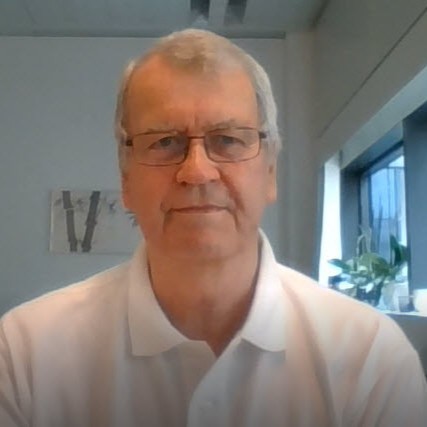 Paul Hobcraft runs
 Chateau G Pato is a senior futurist at Inteligencia Ltd. She is passionate about content creation and thinks about it as more science than art. Chateau travels the world at the speed of light, over mountains and under oceans. Her favorite numbers are one and zero.
 Jesse Nieminen is the Co-founder and Chairman at
  As an experience architect, Alain helps leaders craft customer, employee and shareholder experiences for profit, reinvention and transformation. He does this through his personal consultancy Alain Thys & Co as well as the transformative venture studio

 Happy Holidays!
 Human-Centered Change and Innovation loves making innovation insights accessible for the greater good, because we truly believe that the better our organizations get at delivering value to their stakeholders the less waste of natural resources and human resources there will be.