Tag Archives: Business Transformation

Nominations Closed for the Top 40 Innovation Bloggers of 2020

Nominations Open for the Top 40 Innovation Bloggers of 2020Business Strategy Innovation loves making innovation insights accessible for the greater good, because we truly believe that the better our organizations get at delivering value to their stakeholders the less waste of natural resources and human resources there will be.

As a result we are eternally grateful to all of you out there who take the time to create and share great innovation articles, presentations, white papers, and videos with Braden Kelley and the Business Strategy Innovation team. As a small thank you to those of you who follow along, we like to make a list of the Top 40 Innovation Bloggers available each year!

Our lists from the ten previous years have been tremendously popular, including:

Top 40 Innovation Bloggers of 2012
Top 40 Innovation Bloggers of 2013
Top 40 Innovation Bloggers of 2014
Top 40 Innovation Bloggers of 2015
Top 40 Innovation Bloggers of 2016
Top 40 Innovation Bloggers of 2017
Top 40 Innovation Bloggers of 2018
Top 40 Innovation Bloggers of 2019

Do you just have someone that you like to read that writes about innovation, or some of the important adjacencies – trends, consumer psychology, change, leadership, strategy, behavioral economics, collaboration, or design thinking?

Business Strategy Innovation is now looking for the Top 40 Innovation Bloggers of 2020.

The deadline for submitting nominations is December 31, 2020 at midnight GMT.

You can submit a nomination either of these two ways:

  1. Sending us the name of the blogger and the url of their blog by @reply on twitter to @innovate
  2. Sending the name of the blogger and the url of their blog and your e-mail address using our contact form

So, think about who you like to read and let us know by midnight GMT on December 31, 2020.

We will then compile a voting list of all the nominations, and publish it on January 1, 2021.

Voting will then be open from January 1-7, 2021 via comments and twitter @replies to @innovate.

The ranking will be done by me with influence from votes and nominations. The quality and quantity of contributions by an author will be a contributing factor.

The official Top 40 Innovation Bloggers of 2020 will then be announced on here in early January 2021.

We’re curious to see who you think is worth reading!


Accelerate your change and transformation success

Subscribe to Human-Centered Change & Innovation WeeklySign up here to get Human-Centered Change & Innovation Weekly delivered to your inbox every week.

The Importance of Stakeholder Mapping

The Importance of Stakeholder Mapping

GUEST POST from Art Inteligencia

Stakeholder mapping is an essential tool for any organization that wants to succeed. It allows a company to identify the key stakeholders who are involved in a project or initiative, and to better understand their interests and needs. By understanding the stakeholders and their interests, a company can develop strategies that will ensure the successful completion of their project or initiative.

Stakeholder mapping is not only important for the success of a project or initiative, but it is also a vital part of any organizational strategy. The process of mapping stakeholders allows organizations to identify the various stakeholders that could potentially be involved in the project or initiative. This includes both internal and external stakeholders and allows the organization to better understand the potential benefits and risks associated with each stakeholder. It can also help the organization to better manage the relationship with stakeholders and to ensure that all stakeholders are aligned with the objectives of the project or initiative.

Stakeholder mapping can also provide organizations with valuable insight into the interests and needs of each stakeholder. This insight can be used to develop strategies that will ensure the successful completion of the project or initiative. By understanding the interests and needs of each stakeholder, organizations are better able to develop strategies that will account for the interests of all stakeholders.

Finally, stakeholder mapping is also important for organizations because it allows them to identify potential risks and opportunities associated with each stakeholder. By understanding the risks and opportunities associated with each stakeholder, organizations can develop strategies to minimize the risks and maximize the benefits for all stakeholders.

In summary, stakeholder mapping is an essential tool for any organization that wants to succeed. It allows a company to identify the key stakeholders who are involved in a project or initiative, and to better understand their interests and needs. By understanding the stakeholders and their interests, a company can develop strategies that will ensure the successful completion of their project or initiative. Additionally, stakeholder mapping can provide organizations with valuable insight into the interests and needs of each stakeholder, as well as potential risks and opportunities associated with each stakeholder.

Continue reading to explore the role of stakeholder analysis in change management

Image credit: Pixabay

Subscribe to Human-Centered Change & Innovation WeeklySign up here to get Human-Centered Change & Innovation Weekly delivered to your inbox every week.

What is a Chief Transformation Officer?

What is a Chief Transformation Officer?

GUEST POST from Art Inteligencia

The role of the Chief Transformation Officer (CTO) is an increasingly important one within modern organizations. A CTO is responsible for leading and managing the transformation of an organization, both strategically and operationally. This includes overseeing the development of new processes, systems and structures to improve the organization’s efficiency and effectiveness.

The key responsibilities of a CTO involve developing and implementing a strategic plan that outlines the goals and objectives of the organization, as well as its commitment to transformation. This includes the establishment of a transformation framework that outlines the necessary steps and processes required to achieve the desired outcomes. The CTO is also responsible for leading the implementation of the transformation plan, which includes the design and implementation of new processes and systems, as well as the development of a culture of continuous improvement.

CTOs must also be able to identify and manage risks associated with the transformation process. This includes the identification of potential obstacles to achieving the desired outcomes and developing plans to mitigate these risks. Additionally, CTOs must be able to identify and implement new technologies and processes that can help streamline operations and optimize performance.

CTOs must be well-versed in the latest technology trends, as well as the latest business principles and best practices. They must understand the implications of their decisions on the organization’s overall performance, as well as the potential impact on customer satisfaction.

Finally, CTOs must be able to effectively communicate and collaborate with all stakeholders, including customers, employees, partners, and suppliers. This includes the ability to effectively manage expectations and build trust among all stakeholders.

In summary, the role of a Chief Transformation Officer is a critical one in today’s organizations. CTOs must be able to lead and manage the transformation process, while ensuring the organization’s objectives are achieved. They must also be able to identify and manage risks, as well as implement new technologies and processes to optimize performance. Finally, they must be able to effectively communicate and collaborate with all stakeholders to ensure the organization’s success.

Image credit: Pexels

Subscribe to Human-Centered Change & Innovation WeeklySign up here to get Human-Centered Change & Innovation Weekly delivered to your inbox every week.

Change Management Best Practices for Mergers and Acquisitions

Change Management Best Practices for Mergers and Acquisitions

GUEST POST from Art Inteligencia

Mergers and acquisitions (M&A) can be one of the most challenging events any business will ever experience. Change management is essential to ensure the successful integration of two organizations, cultures, and systems. To ensure a smooth transition, it’s important to have a plan in place that covers every aspect of the process. Here are some key best practices for change management during mergers and acquisitions.

1. Establish Clear Goals and Objectives: Before beginning any merger or acquisition, it’s important to set clear goals and objectives. This includes the desired outcomes of the transaction, the timeline for the integration process, and the resources that will be required. Having a clear understanding of the objectives will help ensure that everyone is on the same page throughout the process.

2. Develop a Change Management Plan: A comprehensive change management plan should be developed to guide the transition process. The plan should address the impact of the merger or acquisition on the people, processes, and technologies involved. It should also include strategies for communicating the changes to stakeholders, as well as plans for training and supporting employees during the transition.

3. Create an Open Communication Platform: Open and effective communication is essential for managing change during a merger or acquisition. All stakeholders should be kept informed of the progress of the merger or acquisition, and any changes that arise should be communicated in a timely manner. An open communication platform should be established to ensure that information is shared quickly and accurately.

4. Stress the Benefits: It’s important to emphasize the positive aspects of the merger or acquisition to all stakeholders. Employees should be made aware of the benefits they will experience as a result of the transaction. This could include new job opportunities, expanded markets, or access to new technologies.

5. Monitor and Adjust: The transition process should be constantly monitored and adjusted as needed. This could include changing the timeline, adjusting the resources required, or even scrapping the plan altogether and starting over. It’s important to remain flexible and be prepared to adjust the plan as needed.

Mergers and acquisitions can be a difficult and stressful process, but with the right change management plan in place, the transition can be much smoother. By following these best practices, businesses can ensure that the transition is successful and that stakeholders are satisfied with the outcome.

Image credit: Pexels

Subscribe to Human-Centered Change & Innovation WeeklySign up here to join 17,000+ leaders getting Human-Centered Change & Innovation Weekly delivered to their inbox every week.

Innovation, Change and Transformation in London – Part One

Innovation, Change and Transformation in London - Part One

I’m off to London tomorrow for my London Business School class reunion. And, while I’m looking forward to reuniting with my LBS classmates, I’m also looking forward to connecting in person with some of the smartest innovation, change and transformation professionals, academics and entrepreneurs on the planet.

But I need your help…

I’m trying to organize a meetup of London innovation, change, and transformation professionals on Friday afternoon, 3 May 2019 in central London, but I’m still looking for someone to provide a space to facilitate this cross-pollination of ideas.

If you would like to host me and a dozen or so amazing innovation, change and transformation professionals, academics and entrepreneurs to empower some great conversations and information sharing, please contact me.

I will be returning to London in June/July, but more about that later. Stay tuned!

UPDATE: I was able to secure a room at the Oracle office in Central London near Moorgate for Friday afternoon from 1pm-4pm. Please contact me if you’re interested in attending as I’m finalizing the attendee list and I have a maximum capacity for 25 people. I’ll send final details by email once the attendee list is finalized.

UPDATE: We had a great turnout at this innovation, change and transformation meetup at the Oracle office in Central London. It was a great opportunity to meet some great Innovation Excellence contributors in person, to make a lot of great connections between people and to share information and inspiration. For those of you unable to make it, sorry, but you really missed out! Maybe next time…


Accelerate your change and transformation success

Subscribe to Human-Centered Change & Innovation WeeklySign up here to get Human-Centered Change & Innovation Weekly delivered to your inbox every week.
Transform Your Business with a Change Success Manager

Transform Your Business with a Change Success Manager

“Stealing the role of customer success manager from the world of SaaS is the key to making your digital transformation efforts a success.”

I was speaking with a headhunter recently about some of the roles she was recruiting for and there was one that captured my attention. It was a posting she had for a customer success manager at one of your favorite three letter software companies. And, as she extolled the merits of the role I found myself thinking that the management practice of organizational change is still so immature. There are still so many missing tools and mindsets in the organizational behavior area of management science.

What I found so captivating about the responsibilities of a customer success manager, is that the kinds of tasks she described are exactly the kinds of activities that need to be performed as part of any organizational change effort. The difference is that software companies have recognized that they need to have people dedicated, ideally from the very beginning of the process, to help connect the cross-functional dots for the customer behind the scenes, actively manage expectations and outcomes, ensure a mutual understanding of what success looks like, and to make sure that it is ultimately achieved.

Technology companies everywhere seem to be racing to embrace the role of customer success manager as a new member of their army of service professionals. And, the customer success manager, above all else, strives to ensure that every customer moves beyond purchase, beyond installation, beyond first use, to productive use, deepening engagement, and the holy grail of retention and referral.

And retention is key in SaaS businesses because the churn rate (13% per year on adverage) is higher than other subscription type businesses (6-8% per year according to Recurly Research), but lower than the churn rate for some wireless carriers (which averages between 1-3% per month). Churn rate is a statistic measuring those customers who choose not to renew their service, or to switch their service to another subscription provider. A churned customer doesn’t write you a check for next year, or future years either.

The main reason SaaS customers churn, especially after their first year, is that the perceived value of the subscription is insufficient relative to the price to justify renewing it. They may have bought the software but didn’t install it, installed it but never really got up and running with it, or just found it too hard to get the value out of the software that they were promised. The old technology sales model didn’t care about these situations. Tech companies just focused on closing the sale, recognizing the revenue and moving on to close the next prospect. With the SaaS model, sales are no longer king, adoption and engagement are king. If the customer doesn’t adopt, engage and expand their footprint with your SaaS offering then it is easy for them to switch to an offering of a competitor.

So, if customer success managers are so instrumental to the success of technology companies in the era of the cloud, why shouldn’t they also be considered instrumental inside of our organizations as the key to successful change?

The problem is that too many organizations are still stuck in an upside-down paradigm where change management is seen as a bolt on to project management, instead of truly architecting our organizations for successful change.

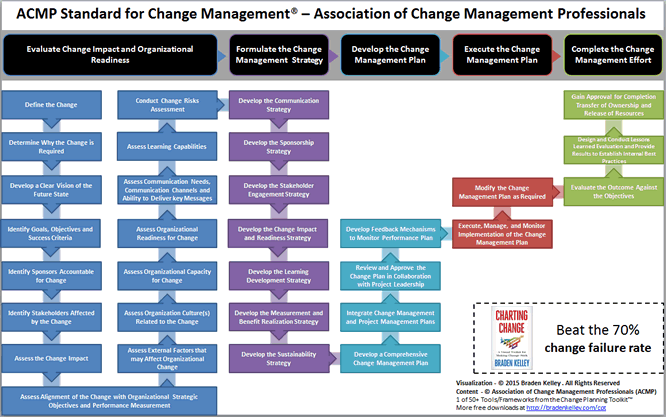
Companies that want to be successful over the long term understand that change is not an event but a constant. They strategically select those capabilities and competencies needed for the next phase of their evolution, plan a portfolio of change initiatives that executes upon their strategy, and understand that change saturation and change readiness must always be considered. Companies that succeed in this era of unending change will constantly manage the expectations of their people around each change initiative and how the process will work and what the technology can and can’t do.

It is not surprising that companies would first embrace a role that adds tremendous value on the revenue generating side of the business first. Technology companies have determined customer success managers are critical to helping customer organizations adopt changes imposed by new technologies while ultimately increasing the lifetime value of each new customer. But for similar reasons internal to the organization, companies must also now embrace the need for a role I’d like to call the change success manager.

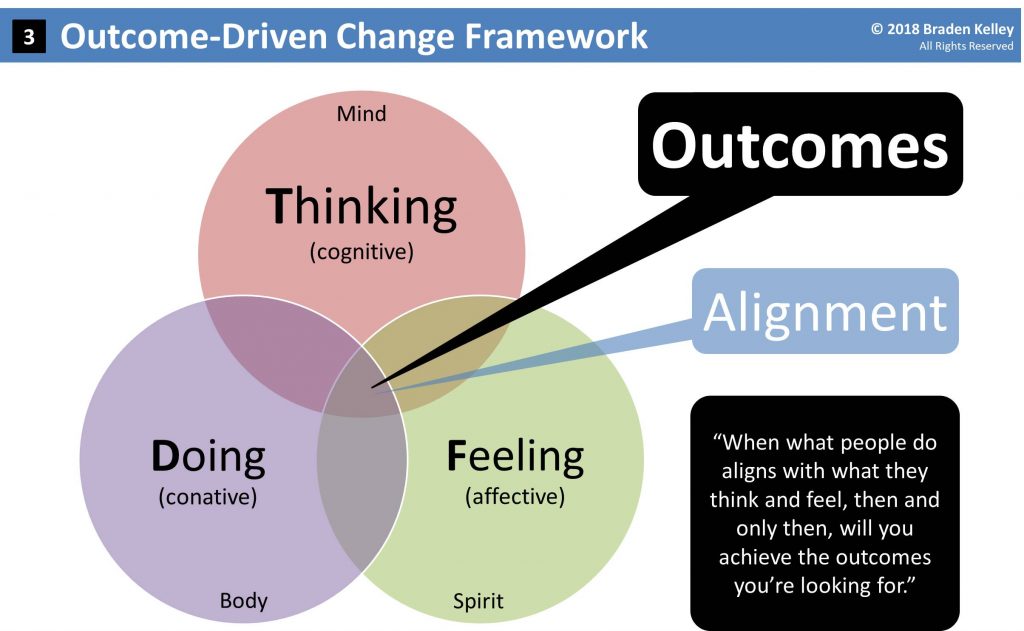
A change success manager is a change manager on steroids. However, in today’s business climate most people think of a change manager as the person a project manager brings in near the end of a software implementation project that does the training or communications. That may be how companies are doing the so-called people side of change today, but it is wrong!

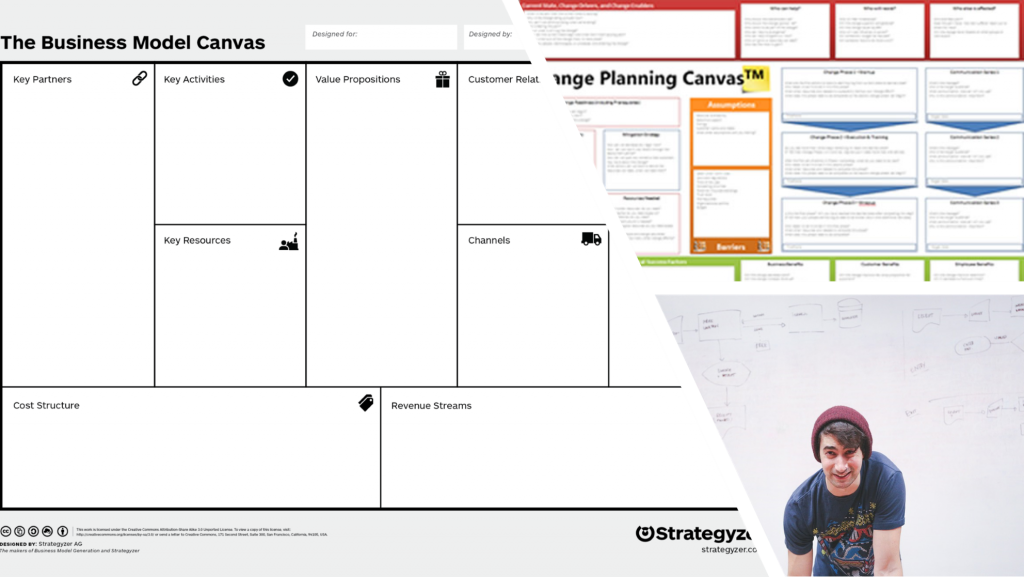
This new role of change success manager is intended to lead each change initiative inside the organization from beginning to end. A change success manager is brought in at the beginning of the process to reach across the organization and identify a cross functional team specific to the needs of each change initiative for the purposes of convene as part of a change planning workshop. This change planning team will facilitate each change planning workshop using tools like the Change Planning Toolkit™ to identify the change leadership team that will take decisions and remove roadblocks for the change management team that will facilitate the actions necessary to advance the change initiative to its desired outcomes.

And, unlike the current model of change that many organizations follow, a change success manager will have one or more project managers on their change management team to identify the appropriate pace for the project, and the right size for the work packages, in order to maintain momentum across the entire duration of the change initiative and increase the adoption of internal change – just like a customer success manager increases the adoption of external changes!

This article originally appeared on CIO.com


Accelerate your change and transformation success

Subscribe to Human-Centered Change & Innovation WeeklySign up here to get Human-Centered Change & Innovation Weekly delivered to your inbox every week.
Flaws in the Crawl Walk Run Methodology

The Flawed Crawl Walk Run Methodology

Many of you may have heard of the Crawl Walk Run project methodology. For those of you that haven’t the idea is that if a project team is trying to achieve something big, that sometimes you have to evolve your approach in stages rather than trying to make all the changes all at once. Many people are quite fond of this approach and can be heard repeating the mantra “Let’s crawl before we walk, let’s walk before we run.” Others have evolved Crawl Walk Run into Crawl Walk Run Fly. One of those groups is Edelman (a public relations firm), which in the following image proposes the following Crawl Walk Run Fly approach to social media:

Crawl Walk Run Fly Edelman

Ultimately the Crawl Walk Run Fly project approach looks back to the following Martin Luther King, Jr. quote for its inspiration and structure:

“If you can’t fly then run, if you can’t run then walk, if you can’t walk then crawl, but whatever you do you have to keep moving forward.” – Martin Luther King, Jr.

But the flaw in the Crawl Walk Run project approach was exposed in a conversation I had yesterday with Stewart Pearson, a former client and friend, who happens to be the founder of Consilient Group, an emerging consulting group focused on helping clients undertake data-driven, insight-driven digital transformations to empower organizations to ignite sustainable growth and innovation.

Stewart was speaking about how some companies get stuck in this Crawl Walk Run mindset, and potentially jeopardize their future as a going concern. The truth is that Crawl Walk Run is only applicable to a small subset of projects, and definitely not appropriate for strategic projects because of the imminent danger of the competition transforming faster than you to better serve (and thus take) customers in the marketplace. Stewart captured this in the following way (slightly modified here by me):

“The danger of Crawl Walk Run is that while you’re busy crawling, a competitor is going to walk over you, right before another competitor runs over both of you.”

Then of course we can add in to this that if the customers wants and/or needs have changed, then simultaneously startups will not be crawling, or walking, or running, but FLYING by those incumbents engaged in a crawl, walk, or run strategies to maintain their relevance to the customers in the marketplace. But startups face their own danger in their FLY strategy, embodied in their lack of experience and infrastructure, and in many cases, their need to educate. This can cause startups to fly past the place where customers wants and needs have moved. So the flying strategy is not without risk.

Consulting clients or people inside your firm (depending on your context) may push back against this idea and again something like “Let’s crawl before we walk.” and it’s really seductive to give into this and tow the company line that achieving something is better than achieving nothing. But at the same time, the financial, human and capital resources that you might invest in implementing a broad crawl effort could potentially be more smartly implemented in a narrow run or fly effort off to the side that may then have the potential to be rolled out in a broad manner.

So, in situations where the company potentially faces more risk from moving slowly than from moving too fast, look for opportunities to craft a strategy that allows you to pick a small part of your business (possibly a single project or a single client) that you can begin building out a run strategy for (a strategy that leverages the existing experience and infrastructure of the organization) or a fly strategy (one that completely re-imagines your market approach).

The idea here being to prototype, test, learn, and then scale your transformative new market approach rather than gradually transforming your market approach in a series of phases. This is more like the approach we use in the innovation space, and has a lot of potential in helping to accelerate your ability to continuously transform your organization the maintain optimal value exchanges with your customers.

What do you think?

Do you think your organization could move away from the siren’s song of Crawl Walk Run, or are you stuck on all fours for the rest of your career with your existing client or employer?

This article originally was featured on Linkedin


Accelerate your change and transformation success

Subscribe to Human-Centered Change & Innovation WeeklySign up here to get Human-Centered Change & Innovation Weekly delivered to your inbox every week.
Measuring Organizational Agility – The Triple T Metric v1.0

Measuring Organizational Agility - The Triple T MetricThere is an increasing amount of chatter and confusion out there around what organizational agility is and feeling that it must be important to organizational success.

But, before we discuss organizational agility, it is important to define what we mean by the term.

BusinessDictionary.com has a decent definition:

“The capability of a company to rapidly change or adapt in response to changes in the market. A high degree of organizational agility can help a company to react successfully to the emergence of new competitors, the development of new industry-changing technologies, or sudden shifts in overall market conditions.”

Usually people begin speaking about organizational agility and its importance to the success of the organization when they speak about the increasing pace of change, and the challenge the organization faces in keeping up.

Because of this, one of the key measures of organizational agility you may want to consider using, I like to call the Triple T Metric:

Time
to
Transform

The Triple T Metric is a measure of how long it takes an organization to make a transformation. But to measure your progress on the Triple T Metric over time, you must define it and measure it in a consistent manner. So, if a transformation is like a trip from Point A to Point B, we must define Point A and Point B.

  • Point A = the point in time at which the organization recognizes a change is needed away from the steady state
  • Point B = the point in time at which the organization successfully arrives at the new steady state

You’ll notice that Point A doesn’t start at the point at which people AGREE that a change is needed and AGREE to make it, but at the point the organization RECOGNIZES a change is needed. This is because there is great opportunity to increase your organizational agility by increasing the speed at which the organization moves from recognizing the need for change, to agreeing to change, to planning the change, to executing the change.

This is just v1.0 of our discussion of the Triple T Metric, to introduce the concept. We’ll get into more detail in a future post.

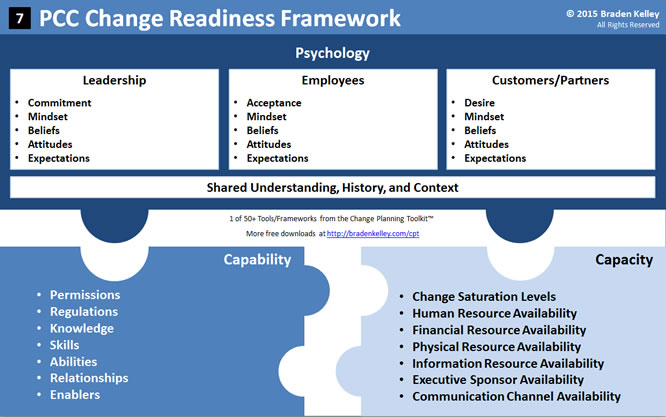
All of these transitions must be included because organizational agility is ultimately about how quickly the organization can successfully plan, lead, and execute (manage and maintain) a change effort, increasing your organizational agility requires that you increase both your change capability and your change capacity.

How fast can your organization change?

If you want to learn how to change faster, and make your organization more agile, grab a copy of Charting Change and the supporting materials for book buyers!


Accelerate your change and transformation success

Subscribe to Human-Centered Change & Innovation WeeklySign up here to get Human-Centered Change & Innovation Weekly delivered to your inbox every week.
What Change Roles Are Missing?

What Change Roles Are Missing?

I’m gearing up to write a new app and book on organizational change to complement a powerful new visual change toolkit that will be incredibly useful for use in change programs, project and portfolio management, and even innovation, and so I’m canvasing the organizational change literature space (including change leadership, change management, and business transformation) and looking to identify:

  1. The best organizational change thought leaders
  2. The most powerful organizational change frameworks
  3. The most useful organizational change tools
  4. The best organizational change books (including change leadership, change management, and business transformation)

Please contact me to tell me your favorites or add below in the comments.

I will be launching a new community and information site soon to launch this visual change toolkit free to the world, in an extremely collaborative way. Which is why I’m looking for your thoughts on the four items above. Once the skeleton site is up in the next week or so, people will also be able to submit their suggestions on the site.

But in the meantime, based on the success of the Nine Innovation Roles from my last book Stoking Your Innovation Bonfire and some ideas that have been triggered by the work I’ve done in various workshops with organizations around the world with the Nine Innovation Roles, I’ve decided to identify a similar set of roles that people should make sure are occupied on their guiding coalitions.

And as I look at the Nine Innovation Roles there are a few that are still applicable in a broader change context (after all, Innovation Is All About Change). Here are the ones that I believe still are necessary in an organizational change program:

1. Revolutionary

The Revolutionary is the person who is always eager to change things, to shake them up, and to share his or her opinion. These people are uncomfortable standing still and not shy about sharing their opinions. Often they see the status quo as not good enough, so the Revolutionary wants to change it.

2. Architect

Change doesn’t emerge from a vacuum. Someone has to see the bigger picture, bring the idea fragments together and create a cohesive change program, a new business architecture, and guide people to create a collection of project artifacts to help guide the change effort. This is the role of the Architect.

3. Artist

The Artist doesn’t seek change like the Revolutionary or see the big picture like the Architect, but Artists are really good at evolving the seeds of change, shaping them, watering them, and ultimately making the impetus for change more clear, the benefits more compelling, and the change plan more complete.

4. Barrier Buster

Every change effort should identify several potential barriers to change, and the team must identify ways to overcome them before the change program is ready to be communicated to the masses. This is where the Barrier Buster comes in. Barrier Busters love solving tough problems and often have the deep domain knowledge or the deep insight into the change target’s mindset necessary to move minds and resources to support the change program.

5. Connector

The Connector does just that. These people hear a Revolutionary say something interesting and put him together with an Architect and an Evangelist; The Connector listens to the Artist and knows exactly where to find the Barrier Buster that the change effort needs.

6. Lion Tamer

The Lion Tamer is really good at identifying risks, potential negative outcomes, and the steps necessary to implement a change. Lion Tamers take the unwieldy beast that any change program can easily become, tame it, help break it down into digestible chunks, and make it real. These are the people who can picture how the change is going to be made and line up the right resources to make it happen.

7. Evangelist

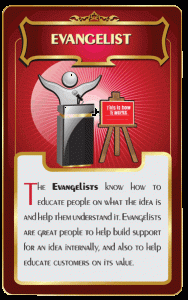
The Evangelists know how to educate people on what the change is and help them understand it. Evangelists are great people to help attract guiding coalition members and to build support for a change effort among leadership. Evangelists also are great at both evangelizing on behalf of customers, employees and partners, but also in helping to educate customers, employees, and partners on the value of the change effort.

8. INSERT YOUR SUGGESTION HERE

9. INSERT YOUR SUGGESTION HERE

So, that’s only a first cut at a set of Change Roles that must be filled on the guiding coalition or the change program team.

What roles are missing?

Are there any there that are not needed or redundant?

Please sound off in the comments below.


Build a common language of innovation on your team

Subscribe to Human-Centered Change & Innovation WeeklySign up here to get Human-Centered Change & Innovation Weekly delivered to your inbox every week.
DMAIC for Innovation

DMAIC for InnovationBelow is a rough draft of an article I wrote for the current issue of iSixSigma magazine.

Can the popular Six Sigma framework be adapted to look at innovation?

Much has been written about how a formal Six Sigma approach and a formal approach to innovation cannot co-exist. But is that really true?

On the surface these two formal approaches personify the natural tension between exploitation and exploration activities within any organization. Six Sigma is generally thought of as an exploitation activity, while innovation is usually associated with exploration. When I speak of exploitation, I’m not speaking of child labor and deforestation, but of optimizing the transformation of organization’s inputs into profitable outputs under its existing business model. And when I speak of exploration, I’m referring to the organization’s efforts to pursue new potential business models, new product or service areas, or both.

Let’s look back before we look forward.

Continue reading the rest of this article on Innovation Excellence

A Brief History

The Six Sigma methodology is celebrating its 25th anniversary this year after being developed by Motorola back in 1986 and popularized by GE and others. As many of you know, Six Sigma began as a methodology focused on improving quality, but over time organizations have adopted and adapted the methodology to encompass activities focused on continuous improvement and on cutting costs.

Innovation meanwhile, dates back nearly 500 years as a term to the Latin innovare which is often interpreted to mean “to renew or change” and the most often referenced godfather of innovation is Joseph Schumpeter (1930). So despite being focused on the new, the philosophy of innovation is actually older than that of Six Sigma.

But, so what?

The people who see innovation and Six Sigma as compatriots and not combatants are correct. This is because in some cases Six Sigma can actually be seen as an innovation approach – but not in every instance.

Say what?

Let’s look at my definition for innovation and then dig a little deeper, and this ambiguity will make more sense:

“Innovation transforms the useful seeds of invention into widely adopted solutions valued above every existing alternative.”

Shared Goals, Different Outcomes

I think we can all agree that both Six Sigma and innovation are focused on creating improvement. However, while Six Sigma is focused on achieving improvement by decreasing variability, innovation is focused on achieving improvement by increasing value. Sometimes an increase in quality through a decrease in variability does create increased value for the customer and sometimes it doesn’t.

Say what?

When would an increase in quality through a decrease in variability not lead to an increase in value for the customer?

Well, one important component of my innovation definition above was the end bit – “valued above every existing alternative – and widely adopted” – which is the real key. New solutions have an obvious increase in value that the inventor always sees, but at the same time they generally have an accompanying decrease in value for the customer that often an inventor fails to see that prevents their solution from being widely adopted (and thus staying an invention instead of graduating to become an innovation).

It is therefore possible for a new solution to deliver increased quality but actually destroy value for the customer – and not be widely adopted as a result. This is why things like the incandescent light bulb and traditional mousetrap stay around for so long despite the introduction of other potential solutions.

Natural Conflict

You should see by now that while Six Sigma and innovation are not mortal enemies at their cores, there are differences that create natural conflicts. This requires managers to be aware and to consciously manage how they are going to use these two approaches together (if at all) in their organizations.

The main tension between the two approaches is that Six Sigma at its core requires accurate measurement. How else will you know whether a Six Sigma project has resulted in decreased variability and a sustainable improvement? On the flip side, the more radical or disruptive an innovation project is attempting to be, the more difficult it will be to accurately measure both the expected risk of the project and the expected profitability and adoption possibilities. A great example of the difficulties of forecasting risk and outcomes is the Segway. Imagine you were in charge of the project back in 2000. How would you size the market for personal transporters? How would you forecast what the media response would be? How would estimate the risks to the project posed by sidewalk regulations? How would you measure consumer readiness accurately? We all know that most forecasts for the new are based on the old, and that this measurement approach is flawed, but it loses all credibility when applied to disruptive innovation projects – and we have to accept that. This inherent uncertainty is why successful innovation is often the result of finding the right questions, while success at Six Sigma is often the result of finding the right measurements.

The mindset created by the need for accurate measurement is congruent with the executive mindset, which brings me to another of my favorite tensions in business – that between the executive mindset and the entrepreneurial mindset. Often not effectively managing this tension, more than any other, prevents organizations from being able to successfully innovate in a sustainable manner. Let’s compare these two mindsets:

  • The Executive Mindset – Executives typically are focused on what they can do to avoid failure. Executives tend to focus on doing everything they can to make the trains run on time (so to speak).
  • The Entrepreneurial Mindset – Entrepreneurs typically are focused on trying to do whatever they can to create success. Entrepreneurs tend to ask questions like, “Why a train?”

These natural tensions mean that managers have to be careful not to make adoption of Six Sigma methodologies too widespread. Otherwise, there is a real possibility of stifling the un-structured thinking in the more creative areas of the business, such as Design and R&D. This is especially true where the initial stages of idea discovery take place – when partial ideas need to be collected and connected to form strong innovation candidates.

Linking Six Sigma to Innovation

In organizations using Six Sigma and Innovation, there are real opportunities to use the two together. Maybe it is in using Design for Six Sigma (DFSS) in the later stages of your innovation process to ensure that your new products and services deliver the same level of quality as your existing product or service portfolio. Or, with open lines of communication between your innovation and Six Sigma groups, maybe there are opportunities for:

  • Six Sigma groups using an expanded methodology focused on continuous improvement to pass interesting improvement ideas that are a bit too radical to be accurately measured, or just a bit too variable. The innovation group, on the other hand, might be able to collect and connect the dots, or to challenge the right other areas of the organization or its partner/supplier/customer ecosystem to find a workable solution.
  • Innovation groups enhancing, evaluating or developing ideas might be able to reach out to people in the Six Sigma group for help in either identifying better ways of measuring potential performance of different ideas, or possibly even for help in knocking down certain obstacles that might arise in the commercialization of ideas.
  • Six Sigma groups to leverage the innovation group to help them identify solutions that can achieve six sigma results when they can’t identify potential solutions internally capable of producing the requisite level of quality within accompanying tolerances for variability.

DMAIC for Innovation

Given that people have expanded the use of the DMAIC methodology (Define, Measure, Analyze, Improve, and Control) beyond strict use on improving quality and reducing variability to be used on continuous improvement projects, I thought why not stretch it a bit further and create a DMAIC for Innovation. Let’s have a look at what such a creature might look like.

Define

Imagine that you work for an automobile manufacturer and I were to task you with solving the following technical challenge: “How would you make our automobiles use less gasoline?” Think about what your approach would be. Now, some of you might focus on making the automobile lighter, others might focus on making the engine more efficient, still others would focus on making it more aerodynamic, and a few of you would think about ways to make an automobile that ran on something other than gasoline altogether. Ask the innovation question in the wrong way and you will get different innovation results than you expect. Here are some key things to consider:

  • Any successful innovation effort begins with a cross-functional innovation leadership team sitting down and defining what innovation means for the organization, establishing a common language, and communicating this out to the organization in a clear manner.
  • While it may be good sometimes to have people going off in lots of different directions, that needs to be a conscious choice, otherwise the innovation energy of your organization will dissipate and little will be achieved. You must focus the innovation energy of your organization and that is done by defining what innovation means to your organization and what the common language around innovation will be. At the same time it is important to establish an innovation vision and strategy.
  • An innovation vision provides the focus employees need and a vision is about the “where” and the “why,” not the “what” or the “how.” Jack Welch, former CEO of General Electric, once said, “Good business leaders create a vision, articulate the vision, passionately own the vision, and relentlessly drive it to completion.” An innovation vision can help employees answer questions like – “What kind of innovation are we pursuing as an organization?” or “Why should employees, suppliers, partners, and customers be excited to participate?”
  • An innovation strategy is not merely agenda for new product development or a technology roadmap from R & D. Instead, an innovation strategy identifies who will drive a company’s profitable revenue growth and sets the innovation direction for an organization toward the achievement of its innovation vision. A well-defined innovation strategy helps the organization define which innovation challenges to focus on and what tactics will best help the organization conquer those challenges. At the same time, it serves as a map to refer back to as projects and ideas are being evaluated, so that ideally a link can be maintained between the organizational strategy and the innovation strategy.

Measure

While it is often harder to estimate the market size for true innovations than it is for line extensions or product improvement projects, it is still important to measure certain things related to innovation. When looking to begin a formal approach to innovation, here are some key measurement questions that need to be asked:

  • What are the organizations innovation goals?
  • What is the capacity for innovation in your organization?
  • What is the organization’s appetite for risk?
  • What is the organizations ability to finance innovation projects?
  • What is the ability of the organization to be flexible and adaptable?
  • How will we measure the success of our innovation program?
  • How will we instrument our innovation projects for learning?

Analyze

Innovation requires a great deal of analysis. This includes analyzing what the key insights are that you can drive your ideations off of, analysis of the brand equity and capabilities of the organization that can be leveraged, and analysis of what direct and adjacent competitors are doing now, and analysis of the future strategic actions that we expect our competitors to take. In coming up with these key insights it is useful to use a methodology like Rowan Gibson’s four lenses from Innovation to the Core:

  • Challenging orthodoxies: Questioning deeply held dogmas inside companies and inside industries about what drives success.
  • Harnessing discontinuities: Spotting unnoticed patterns of trends that could substantially change the rules of the game.
  • Leveraging competencies and strategic assets: Thinking of a company as a portfolio of skills and assets rather than as a provider of products or services for specific markets.
  • Understanding unarticulated needs: Learning to live inside the customer’s skin, empathizing with unarticulated feelings and identifying unmet needs.

The analysis phase is not, of course, just about generating the insights, but also about generating the ideas. And when it comes to ideas, people don’t realize that often their great idea is actually only a partial idea. So, another important and often underappreciated part of the analysis phase when it comes to innovation is the collection and connection of partial ideas to create potential complete solutions. And, there is also a great opportunity for collaboration during this phase to take the raw ideas and make them better BEFORE the final part of the analysis phase. The crescendo of this phase is the analysis of all of the potential ideas that you could fund, evaluating them using cross-functional teams, and picking which to fund.

Improve

The improve phase is about actually creating the innovation. It’s about getting down to business and beginning to develop the selected ideas. This includes prototyping, market testing, customer feedback, and most importantly – learning and iterating. A key part of this iteration as we discussed earlier is finding the right questions to highlight reasons for potential market success or failure. Embedded in this of course is finding the right answers that will turn a potential invention into a widely adopted innovation success.

But there is another part of innovation that is often under-appreciated, and that is the role of communications. If you are truly bringing an innovation to market, then you are bringing new value to customers that they may not intuitively understand that they have the need for. Too often companies fail at innovation because they ignore the importance of communications:

  • Internally to make people inside the organization passionate believers and supporters of the ideas (instead of roadblocks).
  • Internally to improve the inputs into the idea development process. How can you contribute to the improvement of an idea if you don’t understand what it is or the magnitude of its impact?
  • Externally to either explain the new value for an incremental innovation, or to educate the customer about the value of a disruptive innovation.

Control

Control is of course about making innovation repeatable, sustainable, and successful in the organization. How do you make innovation a deeply embedded capability of the organization? The organization must move from pursuing a firefighting approach to innovation and create a continuous process with organizational commitment at every level. This means that you build a foundation on:

  • An organizational psychology with improved tolerance for risk and an understanding that failure is a real possibility, and that instead of avoiding failure, we will seek success and mitigate failure through a portfolio approach and by embedding an ability to learn fast from failure OR success.
  • Building an organizational structure and policies that enable resource flexibility and movement of resources to projects where they are needed most.
  • Creating a culture and systems that support the free flow of information to employees about customer insights and the value of innovation and amongst employees to enable stronger collaboration on ideas and partial ideas.
  • Providing the leadership commitment, the processes and tools, the rewards and recognition, the skills training, and other elements of creating a sustainable innovation process culture.

Conclusion

Six Sigma and innovation can co-exist. They both bring value to the party and while the languages may be somewhat different, it is possible to create a shared vocabulary and a shared understanding of how the two approaches to creating positive business change can work together. It is always a question of finding balance. Find that balance between chaos and structure. Find that balance between exploration and exploitation. Innovation and Six Sigma are not enemies. In fact they have a lot in common. In much the same way that it requires organizational commitment and a professional approach to achieve high levels of quality, it requires organizational commitment and a professional approach to achieve continuous innovation. If you can embed quality into your products, you can embed innovation into your organization.

Happy innovating!

If you’d like to share your thoughts about the intersections or interplay between innovation and six sigma, please sound off in the comments below…

This has been a rough draft of an article I wrote for the current issue iSixSigma magazine – to see the finished version – subscribe.

Sources:

  1. Kelley, Braden (2010). Stoking Your Innovation Bonfire. USA. Wiley & Sons. ISBN 0470621672
  2. http://en.wikipedia.org/wiki/Six_sigma
  3. http://www.businessweek.com/magazine/content/07_24/b4038406.htm (link broken)
  4. McKeown, Max (2008). The Truth About Innovation. London, UK: Prentice Hall. ISBN 0273719122.

Build a Common Language of Innovation

Subscribe to Human-Centered Change & Innovation WeeklySign up here to get Human-Centered Change & Innovation Weekly delivered to your inbox every week.