
Tag Archives: transformation

Reset and Reconnect to Increase our Connectedness

Reset and Reconnect to Increase our Connectedness

GUEST POST from Janet Sernack

In our second blog in the Reconnect and Reset series of three blogs, we stated that now is not the time to panic. Nor is it a time to languish from change fatigue, pain, and emotional lethargy. It is a significant moment in time to focus, rehabilitate, rebuild, repair, regrow and reset to increase our connectedness through linking human touchpoints that increase people-power in the fourth industrial revolution.

In the current environment, where chaos and order are constantly polarizing, it’s crucial to touch people with empathy, reignite their social skills, and enable them to become healthily self-compassionate and more self-caring to:

  • Patiently support, lead, manage, mentor, and coach them towards finding their own balance to flow with mitigating the challenges of the fourth industrial revolution.
  • Take advantage of new technologies, networks, and ecosystems to re-engage and collaborate with others and with civil society in positive ways that contribute to the whole.
  • Do the good work that creates a more compelling, inclusive, resilient, and sustainable future, that serves the common good.

The Landscape Has Changed and So Have the Solutions

As the fourth industrial revolution continues to implode, we need to zoom out and consider the bigger picture. Where a recent Harvard Review article What Will Management Look Like in the Next 100 Years?” states that we are entering an era, which is fundamentally transforming the way we operate. Which is defined by the disruptive growth in blockchain technology, robotics, artificial intelligence, high-performance computing, and other core digital capabilities.

All of which, in some way, is dependent on linking the key human touchpoints that increase people’s power and our connectedness.

  • An era of empathy

In the same article, management scholar Rita Gunther McGrath argued that management practices based on command and control, and expertise would ultimately make way for empathy.

Where work is centred around value creation conducted through networks and collaboration, that rely on increasing the connectedness between machines and humans rather than through rigid structures and relationships to thrive through increasing people-power in the fourth industrial revolution.

  • Capable of better

The Qualtrics 2022 Employee Experience Trends Report also states that the landscape has changed.  Where people are choosing to work flexibly, to work in the places that work best for them, and to take time for their own well-being, families, and friends.

Where people are demanding change because they care, about their leaders and their organizations, and want to be capable of developing better ideas; better innovations; and delivering better performances.

The report outlines the four things your people need you to know:

  1. There will be an exodus of leaders – and women will be the first out the door.
  2. People will demand better physical and digital workspaces.
  3. The lack of progress in diversity, inclusion, and belonging won’t be accepted.

People don’t want to become irrelevant, nor do they want their managers, leaders, and organizations to become irrelevant. People know that they can’t, and won’t go back to the old ways of doing things. People also know that they are already living in the new normal and that they need to start working there, too and to do that, we need to increase our connectedness.

Which is especially important for building people’s power and mitigating the challenges emerging in the fourth industrial revolution.

  • A transformative moment for employees and employers

Businessolver’s Eighth Annual Report on the State of Workplace Empathy describes how the pandemic has impacted on employees’ personal lives, the labor market, and the economy, and states that “we are living through a renegotiation of the social contract between employees and employers”.

Their data shows that amid the return to the office, fewer employees view their organizations as empathetic, and that workplace empathy has clear implications for employee well-being, talent retention, business results, and increases people-power:

  • About 70% of employees and HR professionals believe that empathetic organizations drive higher employee motivation.
  • While 94% of employees value flexible work hours as empathetic, the option is only offered in 38% of organizations.
  • 92% of CEOs say their response to returning to in-person work is satisfactory, compared to 78% of employees.
  • 82% of employees say their managers are empathetic, compared to 69% who say the same about their organization’s chief executive.

Yet, there seems to be a true lack of understanding, especially in the corporate sector, of what it means to be empathetic, and a shortage of time and energy to develop the mindsets, behaviors, and skills to practice it and make it a habit.

It is also a fundamental way of being to increase our connectedness and building peoples-power.

Make a Fundamental Choice to Increase our Connectedness

Even though each person is a distinct physical being, we are all connected to each other and to nature, not only through our language but also by having a deeper sense of being.

Human connectedness is a powerful human need that occurs when an individual is aware and actively engaged with another person, activity, object or environment, group, team, organization, or natural environment.

It results in a sense of well-being.

The concept is applied in psychology as a sensation or perception where a person does not operate as a single entity – we are all formed together to make another, individual unit, which is often described as wholeness.

Which is especially important for our well-being and people power in the face of the challenges of the fourth industrial revolution.

Strategies for Developing Quality Connections

  • Be grounded, mindful and conscious

Being grounded and mindful enables people to become fully present to both themselves and to others. It is a generous gift to unconditionally bestow on others. Especially at this moment in time, where the pandemic-induced social isolation, has caused many people to become unconsciously and unintentionally self-absorbed.

There is an opening to become aware of, and to cultivate our attending and observing skillsets, to sense and see the signals people are sending, at the moment they are sending them. To help people identify the source of their issues to re-establish a sense of influence and control that reduces their autonomic nervous system reactions and help them restore their calmness.

This is the basis to increase our connectedness, by attuning and becoming empathetic as to what thoughts and feelings lay behind their behaviours and actions, with detachment, allowing and acceptance.

  • Be open-hearted and open-minded 

Being curious about what others are feeling and thinking, without evaluating, judging, and opposing what they are saying. By knowing how to listen deeply for openings and doorways that allow possibilities and opportunities to emerge, to generate great questions that clarify and confirm what is being both said and unsaid.

To support people by creating a safe and collective holding space, that reduces their automatic unconscious defensive responses.  To defuse situations by being empathic and humble and increase our connectedness by asking how you might help or support them, and gaining their permission and trust to do so.

Increase our connectedness through being vulnerable in offering options so they make the best choice for themselves, to reduce their dependence, help them identify and activate their circles of influence and control and sustain their autonomy.

  • Help people regenerate

Now is the moment in time to focus on building workforce capabilities and shifting mindsets for generating a successful culture or digital transformation initiative by harnessing, igniting, and mobilizing people’s motivation and collective intelligence and building people power.

It is crucial to acknowledge and leverage the impact of technology through increasing people-power by developing new mindsets, behaviors, skills, and new roles, which are already emerging as fast as other roles change.

Be willing to invest in the deep learning challenges that build people’s readiness and receptivity to change, so they can embrace rather than resist it, and be willing to unlearn, and relearn, differently, by collaborating with other people, leaders, teams, and organizations across the world.

Ultimately, it all depends on being daring and willing to increase our connectedness, through adapting, innovating, and collectively co-creating strategies, systems, structures that serve the common good, and contribute to the well-being of people, deliver profits and nurture a sustainable planet.

Find out more about our work at ImagineNation™

Find out about our collective, learning products and tools, including The Coach for Innovators, Leaders, and Teams Certified Program, a collaborative, intimate, and deeply personalized innovation coaching and learning program, supported by a global group of peers over 9-weeks, starting Tuesday, February 7, 2023.

It is a blended and transformational change and learning program that will give you a deep understanding of the language, principles, and applications of an ecosystem focus, human-centric approach, and emergent structure (Theory U) to innovation, and increase people-power, upskill people and teams and develop their future fitness, within your unique context. Find out more about our products and tools.

This is the final in a series of three blogs on the theme of reconnecting and resetting, to create, invent and innovate in an increasingly chaotic world.

You can also check out the recording of our 45-minute masterclass, to discover new ways of re-connecting through the complexity and chaos of dis-connection to create, invent and innovate in the future! Find out more.

Image credit: Pixabay

Subscribe to Human-Centered Change & Innovation WeeklySign up here to get Human-Centered Change & Innovation Weekly delivered to your inbox every week.

From Trendspotting to Transformation

Translating Foresight into Action

From Trendspotting to Transformation

GUEST POST from Chateau G Pato

In our increasingly volatile and complex world, the ability to identify emerging trends is no longer enough. Every executive team can access reports on AI, sustainability, or demographic shifts. The true differentiator, as a human-centered change and innovation thought leader, lies not in spotting the trends, but in translating foresight into concrete, transformational action. Many organizations excel at analysis but falter at execution, leaving invaluable insights to languish in PowerPoint presentations. The future belongs to those who bridge the gap between understanding what’s coming and actively shaping their response, converting potential threats and opportunities into tangible strategies and innovations.

The challenge isn’t a lack of information; it’s a lack of connection between the strategic foresight function and the operational innovation engine. Trend reports often remain isolated, failing to inform product development, marketing initiatives, or organizational design. This disconnect stems from a mindset that views foresight as a predictive exercise rather than a generative one. To truly move from trendspotting to transformation, we must shift our focus from merely observing the future to actively engaging with it, asking “What does this trend mean for us, and what will we do about it?” This requires a robust, repeatable methodology that empowers teams to move from abstract insights to actionable strategies and, ultimately, breakthrough innovations.

The Foresight-to-Action Framework: A Human-Centered Approach

Bridging the gap between trend analysis and practical implementation requires a structured, human-centered framework. It’s about empowering your people to envision and build the future, not just react to it:

  • 1. Deconstruct and Empathize: Don’t just list trends; unpack them. Who will be affected by this trend? How will it change their daily lives, their needs, their desires? Use human-centered design tools like empathy maps and user personas to make abstract trends tangible and relatable.
  • 2. Provoke and Connect: Challenge your assumptions. How might this trend disrupt your core business, even if it seems unrelated? How might it open up entirely new business models or customer segments? Force cross-functional teams to connect disparate trends, looking for synergistic opportunities or compounding risks.
  • 3. Envision and Experiment: Based on your insights, develop concrete future scenarios. Don’t just describe them; visualize them. Then, identify specific, low-risk experiments that can test assumptions about these future states. What’s the smallest, fastest way you can learn if your envisioned future is viable?
  • 4. Prototype and Pilot: Move beyond theoretical discussions to tangible prototypes. This doesn’t mean a fully-fledged product, but a minimum viable product (MVP) or service that brings a piece of the future to life. Pilot these prototypes with real users, gather feedback, and iterate rapidly.

This systematic approach, which Braden Kelley has developed and refined as FutureHacking™, empowers organizations to move beyond passive observation. FutureHacking™ provides the tools and mindset necessary to transform abstract trends into concrete innovation pathways. It’s a human-centered methodology that focuses on translating foresight into tangible prototypes and actionable strategies, fostering a culture where every team member is equipped to anticipate and proactively shape the future, not just react to it. It enables businesses to iterate rapidly, de-risk their investments, and build resilient strategies that anticipate tomorrow’s challenges today.

“Foresight without action is merely entertainment. Transformation requires the courage to translate ‘what if’ into ‘what now’.” — Braden Kelley


Case Study 1: The LEGO Group – Building the Future Piece by Piece

The Challenge:

In the early 2000s, The LEGO Group faced a looming crisis. Digital entertainment was on the rise, and children were spending less time with physical toys. The company recognized the trend, but the challenge was how to respond strategically without abandoning its core identity. They needed to evolve beyond plastic bricks but feared alienating their loyal customer base.

The Foresight-to-Action Solution:

LEGO embraced a proactive foresight strategy that involved deep engagement with emerging trends in digital play and child development. They didn’t just observe; they experimented. This led to innovations like LEGO Mindstorms, which blended physical building with robotics and coding, appealing to a new generation of digital natives. Later, they developed transmedia storytelling through movies (e.g., The LEGO Movie) and video games, seamlessly integrating digital experiences while reinforcing the core value of creative building. Their foresight function worked directly with product development teams to prototype and test these new concepts.

  • Deconstructed Trends: They understood that the digital trend wasn’t just about screens, but about interaction, creativity, and new forms of storytelling.
  • Envisioned New Play: They imagined a future where physical and digital play could coexist and enhance each other, rather than compete.
  • Prototyped and Piloted: Mindstorms and early video games were clear examples of prototyping a new future, learning from user interaction, and scaling successful concepts.

The Result:

By translating foresight into tangible action, LEGO transformed itself from a traditional toy company into a global entertainment brand. They didn’t just survive the digital revolution; they thrived, leveraging foresight to drive continuous innovation that connected with new audiences while staying true to their heritage. This strategic agility allowed them to anticipate and shape the future of play, rather than being swept away by it.


Case Study 2: Starbucks – Anticipating the “Third Place”

The Challenge:

In its early growth stages, Starbucks was expanding rapidly, but leaders like Howard Schultz weren’t just thinking about coffee; they were thinking about human connection and urban trends. They anticipated a societal need for a “third place”—neither home nor work—where people could gather, socialize, and relax. The challenge was how to design and scale this concept into a ubiquitous global brand.

The Foresight-to-Action Solution:

Starbucks’ success was rooted in translating this foresight into every aspect of its store design, product offerings, and customer experience. They didn’t just sell coffee; they sold an atmosphere, a sense of community, and a comfortable environment for meeting or working. This went beyond trendspotting; it was about actively creating the future “third place.” They designed inviting interiors, comfortable seating, and, crucially, provided free Wi-Fi long before it was common, anticipating the rise of mobile work and digital nomads.

  • Deconstructed Human Needs: They understood a growing urban loneliness and a desire for accessible, comfortable social spaces.
  • Envisioned a New Experience: They imagined a place that felt like an extension of one’s living room or office, going beyond the transactional coffee shop model.
  • Prototyped and Scaled: Each store became a prototype for the “third place” concept, with continuous iteration on design, menu, and service to optimize the desired feeling.

The Result:

Starbucks didn’t just adapt to the “third place” trend; it defined it. By acting on their foresight, they built a global empire that transcended coffee sales, creating a powerful cultural phenomenon. This transformation from a simple coffee vendor to a global social hub demonstrates the immense power of translating foresight into concrete, human-centered action, shaping consumer behavior and urban landscapes in the process.


Conclusion: The Act of Future-Making

The distinction between organizations that merely survive and those that truly thrive often comes down to their ability to transform foresight into action. It’s about having the courage to move beyond analysis paralysis and to actively engage in future-making. This requires not just brilliant strategists, but a culture that empowers every team member to observe, question, experiment, and build.

As leaders, our role is to champion this shift. We must provide the methodologies — like FutureHacking™ — and foster the mindset that views trends not as destiny, but as raw material for innovation. The future is not something that happens to us; it is something we create, one strategic action and one human-centered innovation at a time. Let’s move beyond predicting the future and start building it.

Extra Extra: Because innovation is all about change, Braden Kelley’s human-centered change methodology and tools are the best way to plan and execute the changes necessary to support your innovation and transformation efforts — all while literally getting everyone all on the same page for change. Find out more about the methodology and tools, including the book Charting Change by following the link. Be sure and download the TEN FREE TOOLS while you’re here.

Image credit: Pixabay

Subscribe to Human-Centered Change & Innovation WeeklySign up here to get Human-Centered Change & Innovation Weekly delivered to your inbox every week.

3 Mind-Blowing Things I Learned in Nebraska

3 Mind-Blowing Things I Learned in Nebraska

GUEST POST from Robyn Bolton

In the Before Times, we attended conferences to learn, make connections, and promote ourselves and our businesses. Then COVID hit, and conferences became virtual.   Although that made them easier to attend, it also made them easier to skip. Because, if we’re honest, most conferences were more about connecting and promoting than learning.

Last week, I went to one of those rare, almost mythical, conferences more focused on learning and connecting than promoting. It was fantastic! It was also in Nebraska (which is a pretty interesting place, btw).

Here are my three biggest mind-blowing takeaways from Inside Outside’s IO2022 Summit:

“Strategy is the direction you take to win in the future”

Kareen Proudian, Managing Partner at Faculty of Change

It’s a bit embarrassing to admit, but if you asked me to define “Strategy,” I’d respond with a long and rambling answer. Which means I can’t define “strategy.”  This admission is especially embarrassing because I have a resume littered with places where I developed, drafted, and implemented strategies, so I should have learned what the word means. But nope, I didn’t.

I suspect I’m not alone.

Asking for the definition of strategy is like asking if you must wear clothes to the office. You should know the answer. But unlike whether or not clothing is mandatory, most of us don’t know the answer, AND it’s easy to get away with never knowing the answer.

The elegant simplicity of Kareen’s definition of strategy blew my mind. It’s short, memorable, and something that most people can understand. Maybe I should share the definition with my alma maters and past employers.

“When we feel threatened, our IQ drops 50 to 70 points”

Alla Weinberg, CEO at Spoke & Wheel

When I first heard talk about Psychological Safety and Safe Spaces in today’s business world, I rolled my eyes. Hard. As a Gen X-er, I grumbled about how we didn’t need “safe spaces” when I grew up because we were tough and self-reliant, and I lamented the inevitable downfall of society caused by weak and coddled Millennials.

I was wrong.

Psychological Safety is absolutely and unquestionably essential for individuals to grow, teams to work, companies to operate and innovate, and societies to function and evolve. I’ve seen teams and businesses transform and achieve unbelievable success by discussing and living the elements they require for Psychological Safety. I’ve also seen teams and businesses fail in its absence.

These results aren’t surprising when you realize that you feel threatened when you are in a complex situation in which you cannot accurately predict the outcomes. And when you feel threatened, you are half as intelligent, effective, and creative as you are when you’re calm.

So, if you’re a manager and you’re upset that your people aren’t as intelligent, effective, or creative as they should be, it may not be their fault. It may be yours.

“Stage expertise, not industry expertise, is key to innovation success”

Sean Sheppard, Managing Partner at U+

There is deep comfort in the known. It’s why we gravitate to people like us. It’s also why companies ask job candidates and consultants about their experience in the industry and choose those with deep experience and impressive expertise. Often, there’s nothing with this question or the resulting decision.

Sometimes, it’s precisely the wrong question.

Sometimes, functional expertise is significantly more important than industry experience. After all, if you’re the hiring manager at a healthcare company looking for a Director of Finance, who would you hire – a Marketing Director from a competitor or a Finance Director from a CPG company?

That’s the case with innovation.

Decades of real-world experience (not to mention the successful launch of 100+ startups) show that successful corporate startup teams had expertise (mindsets, skillsets, executional drive) in the startup’s phase and a working knowledge of the industry rather extensive industry expertise and little to no innovation experience.

Questions are good. The right questions are better. So, the next time you’re staffing up an innovation team (or hiring a consultant), choose based on their innovation experience and willingness to learn about your industry.

Innovation happens everywhere

That’s why people from San Francisco, Austin, Washington DC, NYC, Toronto, Boston, and dozens of other places converged on Lincoln, Nebraska.

We went to see innovation in action and learn about the thriving startup community in the middle of the country. We also went to learn and connect with others committed to creating new things that create value.

Getting our minds blown was a bonus.

Image credit: Pixabay

Subscribe to Human-Centered Change & Innovation WeeklySign up here to get Human-Centered Change & Innovation Weekly delivered to your inbox every week.
Making Innovation the Way We Do Business (easy as ABC)

Making Innovation the Way We Do Business (easy as ABC)

GUEST POST from Robyn Bolton

“We need to be more innovative.”

How many times have you said or heard that? It’s how most innovation efforts start. It’s a statement that reflects leaders’ genuine desire to return to the “good ol’ days” when the company routinely created and launched new products and enjoyed the publicity and growth that followed.

But what does it mean to be more innovative?

Innovation’s ABCs

A is for Architecture

Architecture includes most of the elements people think of when they start the work to become more innovative – strategy, structure, processes, metrics, governance, and incentives.

Each of these elements answers fundamental questions:

  • Strategy: Why is innovation important? How does it contribute to our overall strategy?
  • Structure: Who does the work of innovation?
  • Process: How is the work done?
  • Metrics: How will we know when we’re successful? How will we measure progress?
  • Governance: Who makes decisions? How and when are decisions made?
  • Incentives: Why should people invest their time, money, and political capital? How will they be rewarded?

When it comes to your business, you can answer all these questions. The same is true if you’re serious about innovation. If you can’t answer the questions, you have work to do. If you don’t want to do the work, then you don’t want to be innovative. You want to look innovative*.

B is for Behavior

Innovation isn’t an idea problem. It’s a leadership problem.

Leaders that talk about innovation, delegate it to subordinates and routinely pull resources from innovation to “shore up” current operations don’t want to be innovative. They want to look innovative.

Leaders who roll up their sleeves and work alongside innovation teams, ask questions and listen with open minds, and invest and protect innovation resources want to be innovative.

To be fair, it’s incredibly challenging to be a great leader of both innovation and operations. It’s the equivalent of writing equally well with your right and left hands. But it is possible. More importantly, it’s essential.

C is for Culture

Culture is invisible, pervasive, and personal. It is also the make-or-break factor for innovation because it surrounds innovation architecture, teams, and leaders.

Culture can expand to encourage and support exploration, creativity, and risk-taking. Or it can constrict, unleashing antibodies that swarm, suffocate, and kill anything that threatens the status quo.

Trying to control or change culture is like trying to hold water in your fist. But if you let go just a bit, create the right conditions, and wait patiently, change is possible.

Easy as 123

The most common mistake executives make in the pursuit of being “more innovative” is that they focus on only A or only B or only C.  But, as I always tell my clients, the answer is “and, not or.”

  1. Start with Architecture because it’s logical, rational, and produces tangible outputs like org charts, process flows, and instruction manuals filled with templates and tools. Architecture is comforting because it helps us know what to do and how.
  2. Use Architecture to encourage Behavior because the best way to learn something is to do it. With Architecture in place (but well before it’s finished), bring leaders into the work – talking to customers, sharing their ideas, and creating prototypes. When leaders do the work of innovation, they quickly realize what’s possible (and what’s not) and are open to learning how to engage (behave) in a way that supports innovation.
  3. Leverage Architecture and Behavior to engage Culture by creating the artifacts, rituals, and evidence that innovation can happen in your company, is happening and will continue to happen. As people see “innovation” evolve from a buzzword to a small investment to “the way we do business,” their skepticism will fade, and their support will grow.

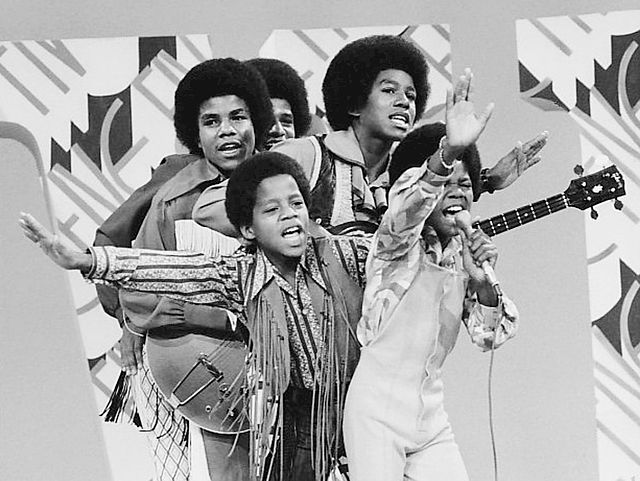
Just like the Jackson 5 said

ABC, It’s easy a 123

Architecture, behavior, culture – they’re all essential to enabling an innovation capability that repeatedly creates new revenue.

And while starting with architecture, building new leadership behaviors, and investing until the culture changes isn’t easy, it’s the 123 steps required to “be more innovative.”

Image credit: Wikimedia Commons

Subscribe to Human-Centered Change & Innovation WeeklySign up here to get Human-Centered Change & Innovation Weekly delivered to your inbox every week.

Four Things You Need to Succeed in The Good Place

Four Things You Need to Succeed in The Good Place

GUEST POST from Robyn Bolton

You have, no doubt, seen the design squiggle. The ubiquitous scribble is all loopy and knotty in the beginning until it finally sorts itself into a straight line by the end.

It illustrates the design process – “the journey of researching, uncovering insights, generating creative concepts, iteration of prototypes and eventually concluding in one single designed solution” – and its elegant simplicity has led it to be adopted by all sorts of other disciplines, including innovation.

But when I showed it to a client, her immediate response was, “It’s Jeremy Bearimy!”*

Wha????

And that is how I discovered The Good Place, a sitcom about four humans who die, go to The Good Place, and struggle to learn what it means to be good.

The show, created by Michael Schur of The Office and Parks and Recreation fame, is a brilliant treatise on ethics and moral philosophy. It also contains valuable wisdom about what innovators need to succeed.

Questions

With all due respect, “It’s the way it’s always been done” is an excuse that’s been used for hundreds of years to justify racism, misogyny…

Tahani Al-Jamil

This quote was a gut punch from the show’s fourth and final season. As innovators, we often hear people ask why change is needed. “If it ain’t broke, don’t fix it!” they proclaim.

But sometimes it is broke, and we don’t know it. At the very least, it can always be better.

So, while “it’s the way it’s always been done” at your company probably (hopefully) doesn’t include racism, misogyny, sexism, and other genuinely horrible things, framing the status quo as an enabler of those horrors is a harsh wake-up call to the dangers of an unquestioning commitment to continuing to do things the way they’ve always been done.

Decisions (not just Ideas)

If you’re always frozen in fear and taking too long to figure out what to do, you’ll miss your opportunity, and maybe get sucked into the propeller of a swamp boat.

Jason Mendoza

Even though Jason Mendoza is the resident idiot of The Good Place, he occasionally (and very accidentally) has moments of profound insight. This one to a situation that innovators are all too familiar with – analysis paralysis.

How often do requests for more data, more (or more relevant) benchmarks, or input from more people slow down decisions and progress? These requests are rarely rooted in doubt about the data, benchmarks, or information you presented. They are rooted in fear – the fear of making the wrong decision, being blamed or shamed, and losing a reputation or even a job.

But worse than being wrong, blamed, shamed, or unemployed is missing an opportunity to radically improve your business, team, or even the world. It’s the business equivalent of getting sucked into the propeller of a swamp boat.

Actions (not just decisions)

In football, trying to run out the clock and hoping for the best never works. It’s called “prevent defense.” You don’t take any chances and just try and hold on to your lead. But prevent defense just PREVENTS you from winning! It’s always better to try something.

Jason Mendoza

Jason does it again, this time invoking a lesson learned from his beloved Jacksonville Jaguars.

Few companies publicly admit to adopting a prevent defense, even though most companies engage in it. They play prevent defense when they don’t invest in innovation, focus exclusively on maintaining or incrementally improving what they currently do, or confine their innovation efforts to events like hackathons and shark tanks.

Incremental improvements and innovation theater keep you competitive. But they won’t get you ahead of the competition or make you a leader in your industry. In fact, they prevent it by making you feel good and safe when you’re really just running out the clock.

Perseverance

Come on, you know how this works. You fail and then you try something else. And you fail again and again, and you fail a thousand times, and you keep trying because maybe the 1,001st idea might work. Now, I’m gonna and try to find our 1,001st idea.

Michael

It’s hard to explain this quote without sharing massive spoilers, so let’s just say that The Good Place is an experiment that fails. A lot.

But it’s also an experiment that generates profound learning and universe-altering changes, things that would not have been possible without the failures.

Yes, smart innovators know when to kill a project. They also know when to try one more time. Wise innovators know the difference.

One final bit of wisdom

Innovation is hard. You will run into more resistance than expected, and things will rarely work out as planned. As long as you keep trying and learning, you won’t fail.

To paraphrase Jason Mendoza (again), you’re not a failed innovator, you’re pre-successful.

*For those of you who are, like I was, unfamiliar with Jeremy Bearimy, here’s a clip explaining it (WARNING: SPOILERS)

Subscribe to Human-Centered Change & Innovation WeeklySign up here to get Human-Centered Change & Innovation Weekly delivered to your inbox every week.

Leveraging Opposition to Drive Change Forward

Leveraging Opposition to Drive Change Forward

GUEST POST from Greg Satell

Clearly, we live in a time of great flux. First, #MeToo, then Covid-19 and now a new racial consciousness in the wake of the murder of George Floyd. The most important task for leaders over the coming years will be to guide their organizations through change. Make no mistake, it won’t be easy. Important changes always encounter staunch resistance.

In Cascades, I researched dozens of change efforts ranging from historic turnarounds at major corporations like IBM and Alcoa, to political revolutions like the color revolutions in Eastern Europe and social movements like the struggle for civil and LGBT rights in America. Every one had to overcome entrenched opposition to succeed.

Yet probably the most impressive strategy for overcoming opposition I came across was how the Serbian movement called Otpor devised a plan to turn arrests to their advantage. The key to their strategy was to study their opposition, anticipate its actions and leverage them for their own benefit. Business leaders can use similar strategies to drive change forward.

Forming a Sense of Identity

Clearly, the threat of arrests poses a significant obstacle to any protest movement. In the case of Otpor, which was working to bring down the brutal Milošević regime, there was not only the threat of incarceration and embarrassment, but serious physical harm. The authorities depended on this fear to keep people in line.

So Otpor set out to make arrests a source of pride rather than fear. Anyone who was arrested got a t-shirt and the more times you were arrested, the better t-shirt you got. Once you were arrested five times, you received the coveted black Otpor t-shirt that you could wear to school the next day and impress all your friends.

Many of the transformational change efforts I researched used similar strategies. In his quest to reform the Pentagon from within, Colonel John Boyd gathered around him a passionate group of “Acolytes” which would support each other, help check facts, streamline logical arguments and hone the message of a particular reform plan.

Those who are working to undermine your efforts want to make you feel isolated and alone. Even a seemingly powerful CEO can face a skeptical board, investor community and media. So, the first step is to build a strong sense of identity, which is why even massive transformations tend to start with small groups and build out from there.

Devising an Infiltration Strategy

Whenever you set out to make a significant change, there are going to be some people who aren’t going to like it. Change of any kind threatens the status quo, which has inertia on its side and never yields its power gracefully.

Yet one of the biggest mistakes a change effort can make is to see the opposition as monolithic. While it’s easy to think that anyone who isn’t with you to be against you, the truth is that there are always shades of belief. Some really are dead set against the change you want to bring about, but others are only passively opposed, and most are probably fairly neutral.

One of the Otpor activists’ most brilliant strokes was to see arrests as an opportunity for infiltration because it gave them the opportunity to make friends with the individual police officers, most of whom didn’t particularly like arresting peaceful student protestors. Later, when many of these same officers had to decide whether to shoot into the crowd or join the movement, they chose the latter.

Make no mistake. To drive any kind of change forward you need to bring people in who don’t immediately agree with you. Transformation is never really top down or bottom up, but moves side to side. You don’t create change just by rallying your supporters, but by breaking through higher thresholds of resistance to bring in others.

Let Your Opponents Overreach and Send People Your Way

While Otpor’s infiltration strategy was highly effective, it didn’t solve the problem of arrests. Peaceful activists were still being taken in and, in many cases, abused. No amount of respectful behavior and playful banter could fully inoculate the activists from the reality that at least some of the police officers enjoyed terrorizing them.

Yet here too, Otpor found ways to use the situation to their advantage. First, every activist had the local Otpor office on speed dial. When someone got arrested, they pressed the button on their phones and their colleagues immediately knew that an arrest was under way. Which set into motion a number of actions.

First, lawyers were called to ensure that the rights of the activists would be protected. Then, a protest would be organized outside the police station and the media would be notified. An affiliate group, “Mothers of Otpor,” would show up and demand to know why their sons and daughters were being persecuted and abused.

So instead of arrests embarrassing the protestors, they embarrassed the regime. Every time it arrested an Otpor activist, it was subjected to a media barrage that showed peaceful protests outside police stations including not only well-behaved activists, but their mothers demanding to know why the regime was terrorizing their children.

Once your opposition senses that you are gaining traction, they will tend to lash out and send people your way. In my research, I’ve been truly amazed at how consistent this behavior is. It doesn’t matter whether you’re an activist executing peaceful protests, a change agent trying to scale an important program or simply someone trying to win a consensus in a meeting. Getting your opponents to overreach will often be the thing that breaks the logjam and brings change about.

Learning To Love Your Haters

Every transformational change starts with a heartfelt sense of grievance, and it doesn’t take a brutal regime to arouse passions. The need to adopt a new technology, transform a business model or shift an organizational culture, can be just as emotional as a political movement like Otpor. So it can be incredibly frustrating when people stand in the way of change.

Yet in my research, I found that successful change efforts didn’t demonize their opposition, they learned from them. In some cases, those that resisted change had good reasons and helped point out flaws in the plan. In other cases, by engaging in dialogue, they helped identify shared values and a common purpose.

The genius behind Otpor’s arrest strategy is that it made a distinction between the institution of the regime and the humanity of the police officers who were just trying to do their job and go home to their families at night. It was that insight that led them to engage with the individual officers, joke with them and get to know them on a personal basis.

And that’s the lesson we can learn, whether we are working to transform an organization, an industry, a community or society as a whole. Those that oppose us often feel just as passionately about their cause as we do ours. We overcome opposition not by overpowering it, but through identifying shared values and attracting others to our side.

— Article courtesy of the Digital Tonto blog
— Image credit: Unsplash

Subscribe to Human-Centered Change & Innovation WeeklySign up here to get Human-Centered Change & Innovation Weekly delivered to your inbox every week.

You Can’t Innovate Without This One Thing

You Can't Innovate Without This One Thing

GUEST POST from Robyn Bolton

It just landed on your desk. Or maybe you campaigned to get it. Or perhaps you just started doing it. How the title of “Innovation Leader” got to your desk doesn’t matter nearly as much as the fact that it’s there, along with a budget and loads of expectations.

Of course, now that you have the title and the budget, you need a team to do the work and deliver the results.

Who should you look for? The people that perform well in the current business, with its processes, structures, and (relative) predictability, often struggle to navigate the constant uncertainty and change of innovation. But just because someone struggles in the process and structure of the core business doesn’t mean they’ll thrive creating something new.

What are the qualities that make someone a successful innovator?

70 answers

A lot of people have a lot to say about the qualities and characteristics that make someone an innovator. When you combine the first four Google search results for “characteristics of an innovator” with the five most common innovation talent assessments, you end up with a list of 70 different (and sometimes conflicting) traits.

The complete list is at the end of this article, but here are the characteristics that appeared more than once:

  1. Curious
  2. Persistent
  3. Continuously reflective
  4. Creative
  5. Driven
  6. Experiments
  7. Imaginative
  8. Passionate

It’s a good list, but remember, there are 62 other characteristics to consider. And that assumes that the list is exhaustive.

+1 Answer

It’s not. Something is missing.

There is one characteristic shared by every successful innovator I’ve worked with and every successful leader of innovation. It’s rarely the first (or second or third) word used to describe them, but eventually, it emerges, always said quietly, after great reflection and with dawning realization.

Vulnerability.

Whether you rolled your eyes or pumped your fist at the word made famous by Brene Brown, you’ve no doubt heard it and formed an opinion about it.

Vulnerability is the “quality or state of being exposed to the possibility of being attacked or harmed, either physically or emotionally.”  Without it, innovation is impossible.

Innovation requires the creation of something new that creates value. If something is new, some or all of it is unknown. If there are unknowns, there are risks. Where there are risks, there is the possibility of being wrong, which opens you up to attack or harm.

When you talk to people to understand their needs, vulnerability allows you to hear what they say (versus what you want them to say).

In brainstorming sessions, vulnerability enables you to speak up and suggest an idea for people to respond to, build on, or discard.

When you run experiments, vulnerability ensures that you accurately record and report the data, even if the results aren’t what you hoped.

Most importantly, as a leader, vulnerability inspires trust, motivates your team, engages your stakeholders, and creates the environment and culture required to explore, learn, and innovate continuously.

n + 1 is the answer

Just as you do for every job in your company, recruit the people with the skills required to do the work and the mindset and personality to succeed in your business’ context and culture.

Once you find them, make sure they’re willing to be vulnerable and support and celebrate others’ vulnerability. Then, and only then, will you be the innovators your company needs.


Here’s the full list of characteristics:

  1. Action-oriented, gets the job done
  2. Adaptable
  3. Ambitious
  4. Analytical, high information capacity, digs through facts
  5. Associative Thinker, makes uncommon connections
  6. Breaks Boundaries, disruptive
  7. Business minded
  8. Collaborative
  9. Compelling Leader
  10. Competitive
  11. Consistent
  12. Continuously reflects (x3)
  13. Courageous
  14. Creative (x3)
  15. Curious (x4), asks questions, inquisitive, investigates
  16. Delivers results, seeks tangible outcomes
  17. Disciplined
  18. Divergent Thinker
  19. Driven (x3)
  20. Energetic
  21. Experiments (x2)
  22. Financially oriented
  23. Flexible, fluid
  24. Formally educated and trained
  25. Futuristic
  26. Giving, works to benefit others, wants to make the world better
  27. Goal-oriented
  28. Has a Growth mindset
  29. Highly confident
  30. Honest
  31. Imaginative (x2)
  32. Influential, lots of social capital
  33. Instinctual
  34. Intense
  35. Iterating between abstract and concrete thinking
  36. Learns through experiences
  37. Likes originality, seeks novelty
  38. Loyal
  39. Motivated by change, open to new experiences
  40. Networks, relates well to others
  41. Observes
  42. Opportunistic mindset, recognizes opportunities
  43. Opportunity focused
  44. Passionate (x2)
  45. Patient
  46. Persistent (x4)
  47. Persuasive
  48. Playful
  49. Pragmatic
  50. Proactive
  51. Prudent
  52. Rapidly recognizes patterns
  53. Resilient
  54. Resourceful
  55. Respects other innovators
  56. Seeks understanding
  57. Self-confident
  58. Socially intelligent
  59. Stamina
  60. Takes initiative
  61. Takes risks
  62. Team-oriented
  63. Thinks big picture
  64. Thrives in uncertainty
  65. Tough
  66. Tweaks solutions constantly
  67. Unattached exploration
  68. Visionary
  69. Wants to get things right
  70. Willing to Destroy

And the sources:

Image Credit: Pixabay

Subscribe to Human-Centered Change & Innovation WeeklySign up here to get Human-Centered Change & Innovation Weekly delivered to your inbox every week.

3 Ways to Get Customer Insights without Talking to Customers

3 Ways to Get Customer Insights without Talking to Customers

GUEST POST from Robyn Bolton

Most of my advice to leaders who want to use innovation to grow their businesses boils down to two things*:

  1. Talk (and listen) to customers
  2. Do something

But what if you don’t want to talk to customers?

After all, talking to customers can be scary because you don’t know what they’ll say. It can be triggering if they say something mean about your product, your business, or even you as a person. It can be draining, especially if you’re an introvert.

Plus, there are so many ways to avoid talking to customers – Send a survey, hire a research firm to write a report, invoke the famous Steve Jobs quote about never doing customer research.

Isn’t it just better to stay tucked away in the office, read reports, state opinions as if they are facts (those opinions are based on experience, after all), and make decisions?

Nope.

It is not better. It is also not safer, easier, or more efficient.

To make the best decisions, you need the best data, which comes from your customers.

But that doesn’t mean you need to talk to them to get it.

The best data

The best data helps you understand why your customers do what they do. This is why Jobs to be Done is such a powerful tool – it uncovers the emotional and social Jobs to be Done that drive our behavior and choices (functional Jobs to be Done are usually used to justify our choices).

But discovering Jobs to be Done typically requires you to talk to people, build rapport and trust in a one-on-one conversation, and ask Why? dozens of times so surface emotional and social JTBD.

Luckily, there are other ways to find Jobs to be Done that don’t require you to become an unlicensed therapist.

Observe your customers

Go where your customers are (or could be) experiencing the problem you hope to solve and try to blend in. Watch what people are doing and what they’re not doing. Notice whether people are alone or with others (and who those others are – kids, partners, colleagues, etc.). Listen to the environment (is it loud or quiet? If there’s noise, what kind of noise?) and to what people are saying to each other.

Be curious. Write down everything you’re observing. Wonder why and write down your hypotheses. Share your observations with your colleagues. Ask them to go out, observe, wonder, and share. Together you may discover answers or work up the courage to have a conversation.

Quick note – Don’t be creepy about this. Don’t lurk behind clothing racks, follow people through stores, peep through windows, linger too long, or wear sunglasses, a trench coat, and a fedora on a 90-degree day, so you look inconspicuous. If people start giving you weird looks, find a new place to people-watch.

Observe yourself

Humans are fascinating, and because you are a human, you are fascinating. So, observe yourself when you’re experiencing the problem you’re hoping to solve. Notice where you are, who is with you, the environment, and how you feel. Watch what you do and don’t do. Wonder why you chose one solution over another (or none).

Be curious. Write down everything you did, saw, and felt and why. Ask your colleagues to do the same. Share your observations with your colleagues and find points of commonality and divergence, then get curious all over again.

Quick note – This only works if you have approximately the same demographic and psychographic profiles and important and unsatisfied Jobs to be Done of your target customers.

Be your customer

What if your business solves a problem that can’t be easily observed? What if you don’t have the problem that your business is trying to solve?

Become your customer (and observe yourself).

Several years ago, I worked with a client that made adult incontinence products. I couldn’t observe people using their products, and I do not have important (or unsatisfied) Jobs to be Done that the products can solve.

So, for one day, I became a customer. I went to Target and purchased their product. I went home, wore, and used the product. I developed a deep empathy for the customer and wrote down roughly 1 million ways to innovate the product and experience.

Quick note – Depending on what’s required to “be your customer,” you may need to give people a heads up. My husband was incredibly patient and understanding but also a little concerned on the day of the experiment.

It’s about what you learn, not how you learn it

It’s easy to fall into the trap of thinking there is one best way to get insights. I’m 100% guilty (one-on-one conversations are a hill I have died on multiple times).

Ultimately, when it comes to innovation and decision-making, the more important thing is having, believing, and using insights into why customers do what they do and want what they want. How you get those insights is an important but secondary consideration.

* Each of those two things contains A TON of essential stuff that must be done the right way at the right time otherwise, they won’t work, but we’ll get into those things in another article

Image Credit: Pixabay

Subscribe to Human-Centered Change & Innovation WeeklySign up here to get Human-Centered Change & Innovation Weekly delivered to your inbox every week.

Strategy for a Post-Digital World

Strategy for a Post-Digital World

GUEST POST from Greg Satell

For decades, the dominant view of strategy was based on Michael Porter’s ideas about competitive advantage. In essence, he argued that the key to long-term success was to dominate the value chain by maximizing bargaining power among suppliers, customers, new market entrants and substitute goods.

Yet digital technology blew apart old assumptions. As technology cycles began to outpace planning cycles, traditional firms were often outfoxed by smaller competitors that were faster and more agile. Risk averse corporate cultures needed to learn how to “fail fast” or simply couldn’t compete.

Today, as the digital revolution is coming to an end, we will need to rethink strategy once again. Increasingly, we can no longer just move fast and break things, but will have to learn how to prepare, rather than just adapt, build deep collaborations and drive skills-based transformations. Make no mistake, those who fail to make the shift will struggle to survive.

Learning to Prepare Rather Than Racing to Adapt

The digital age was driven, in large part, by Moore’s law. Every 18 months or so, a new generation of chips would come out of fabs that was twice as powerful as what came before. Firms would race to leverage these new capabilities and transform them into actual products and services.

That’s what made agility and adaptation key competitive attributes over the past few decades. When the world changes every 18 months, you need to move quickly to leverage new possibilities. Today, however, Moore’s Law is ending and we’ll have to shift to new architectures, such as quantum, neuromorphic and, possibly, biological computers.

Yet the shift to this new era of heterogeneous computing will not be seamless. Instead of one fairly simple technology based on transistors, we will have multiple architectures that involve very different logical principles. These will need new programming languages and will be applied to solve very different problems than digital computers have been.

Another shift will be from bits to atoms, as fields such as synthetic biology and materials science advance exponentially. As our technology becomes infinitely more powerful, there are also increasingly serious ethical concerns. We will have to come to some consensus on issues like what accountability a machine should have and to what extent we should alter the nature of life.

If there is one thing that the Covid-19 crisis has shown is that if you don’t prepare, no amount of agility will save you.

Treating Collaboration as a New Competitive Advantage

In 1980, IBM was at an impasse. Having already missed the market for minicomputers, a new market for personal computers was emerging. So, the company’s leadership authorized a team to set up a skunk works in Boca Raton, FL. A year later, the company would bring the PC to market and change computer history.

So, it’s notable that IBM is taking a very different approach to quantum computing. Rather than working in secret, it has set up its Q Network of government agencies, academic labs, customers and start-ups to develop the technology. The reason? Quantum computing is far too complex for any one enterprise to pursue on its own.

“When we were developing the PC, the challenge was to build a different kind of computer based on the same technology that had been around for decades,” Bob Sutor, who heads up IBM’s Quantum effort, told me. “In the case of quantum computing, the technology is completely different and most of it was, until fairly recently, theoretical,” he continued. “Only a small number of people understand how to build it. That requires a more collaborative innovation model to drive it forward.”

It’s not just IBM either. We’re seeing similar platforms for collaboration at places like the Manufacturing Institutes, JCESR and the Critical Materials Institute. Large corporations, rather trying to crush startups, are creating venture funds to invest in them. The truth is that the problems we need to solve in the post-digital age are far too complex to go it alone. That’s why today, it’s not enough to have a market strategy, you need to have an ecosystem strategy.

Again, the Covid-19 crisis is instructive, with unprecedented collaborative efforts driving breakthroughs.

Drive Skills-Based Transformations

In the digital era, incumbent organizations needed to learn new skills. Organizations that mastered these skills, such as lean manufacturing, design thinking, user centered design and agile development, enjoyed a significant competitive advantage. Unfortunately, many firms still struggle to deploy critical skills at scale.

As digital technology enters an accelerated implementational phase, the need to deploy these skills at scale will only increase. You can’t expect to leverage technology without empowering your people to use it effectively. That’s why skills-based transformations have become every bit as important as strategic or technology-driven transformations.

As we enter the new post-digital era the need for skills-based transformations will only increase. Digital skills, such as basic coding and design, are relatively simple. A reasonably bright high school student can become proficient in a few months. As noted above, however, the skills needed for this new era will be far more varied and complex.

To be clear, I am not suggesting that everybody will need to have deep knowledge about things like quantum mechanics, neurology or genomics a decade from now any more than everybody needs to write code today. However, we will increasingly have to collaborate with experts in those fields and have some sort of basic understanding.

Making the Shift from Disrupting Markets to Pursuing Grand Challenges

The digital economy was largely built on disruption. As computer chips became exponentially faster and cheaper, innovative firms could develop products and services that could displace incumbent industries. Consider that a basic smartphone today can replace a bundle of technologies, such as video recorders, GPS navigators and digital music players, that would have cost hundreds of thousands of dollars when they were first introduced.

This displacement process has been highly disruptive, but there are serious questions about whether it’s been productive. In fact, for all the hype around digital technology “changing the world,“ productivity has been mostly depressed since the 1970s. In some ways, such as mental health and income inequality, we are considerably worse off than 40 or 50 years ago.

Yet the post-digital era offers us a much greater opportunity to pursue grand challenges. Over the next few decades, we’ll be able to deploy far more powerful technologies to solve problems like cancer, aging and climate change. It is, in the final analysis, these physical world applications that can not only change our lives for the better, but open up massive new markets.

The truth is that the future tends to surprise us and nobody can say for sure what the next few decades will look like. Strategy, therefore, can’t depend on prediction. However, what we can do is prepare for this new era by widening and deepening connections throughout relevant ecosystems, acquiring new skills and focusing on solving meaningful problems.

In the face of uncertainty, the best way to survive is to make yourself useful.

— Article courtesy of the Digital Tonto blog
— Image credit: Pixabay

Subscribe to Human-Centered Change & Innovation WeeklySign up here to get Human-Centered Change & Innovation Weekly delivered to your inbox every week.

Five Myths That Kill Change and Transformation

Five Myths That Kill Change and Transformation

GUEST POST from Greg Satell

I first became interested in transformation in the fall of 2004. I was managing a leading news organization in Kyiv, Ukraine when the Orange Revolution broke out. It was an amazing thing to witness and experience. Seemingly overnight, a habitually dormant populace suddenly rose up and demanded change.

One of the things that struck me at the time is how no one really knew what was going on or what would happen next—not the journalists I spoke to in the newsroom every day, not the other business leaders and certainly not the political leaders. Anyone with any conventional form of power seemed to have completely lost their ability to shape events.

That’s what started me on my 15 year-long journey to understand how transformation works that led to my book, Cascades. What I found was that many traditional notions about change management are not only wrong, but they can also actually kill a transformational effort even before it really starts. Here are five myths that you need to avoid if you want to bring change about.

Myth #1: You Need to Get Off to a Fast Start

Traditionally, managers launching a new initiative have aimed to start big. They work to gain approval for a sizable budget as a sign of institutional commitment, recruit high-profile executives, arrange a big “kick-off” meeting and look to move fast, gain scale and generate some quick wins. All of this is designed to create a sense of urgency and inevitability.

That may work for a conventional project, but for something that’s truly transformational, it’s a sure path to failure. Starting off with a big bang will often provoke fear and resistance among those who aren’t yet on board. Real, lasting change always starts with small groups, loosely connected, united by a shared purpose.

A much more effective strategy is to start with a keystone change that represents a concrete and tangible goal, involves multiple stakeholders and paves the way for future change. That’s how you build credibility and momentum. While the impact of that early keystone change might be limited, a small, but meaningful, initiative can show what’s possible.

For example, when the global data giant Experian sought to transform itself into a cloud-based enterprise, it started with internal API’s that had limited effect on its business. Yet those early achievements spurred on a full digital transformation. In much the same way, when Wyeth Pharmaceuticals began its shift to lean manufacturing, it started with a single process at a single plant. That led toa 25% reduction of costs across the entire firm.

Myth #2: You Need to Demand Early Commitment

Another thing that leaders often do is demand early commitment to a transformational initiative. They point out a new direction and they want everybody to get on board—or else. Any lingering questions or doubts are considered to be tantamount to disloyalty and are not tolerated.

This is silly. If an initiative really is transformational, then by definition it’s very different than what the rank and file have come to accept. If people don’t have any questions or doubts, then that means they never really believed in the organization before the transformation. They were just keeping their heads down and playing along.

Rather than demanding commitment, smart transformation initiatives start out as voluntary. By allowing people to opt-in, you are much more likely to get people who are truly enthusiastic and want things to work. That will make things much easier than wasting a lot of time and energy trying to convince people that change is a good thing.

Smart, devoted people should have questions. Certainly, you wouldn’t want people to change direction on a dime and have absolutely no doubts. At least in the beginning, you want to allow people to self-select. That’s how you ensure that people are genuinely enthusiastic and engaged, rather than just playing lip service to the idea.

Myth #3: You Have to Have a Unique Value Proposition and Differentiate Yourself

Because traditional change management programs rely so much on persuasion, they tend to borrow a lot from marketing. So the first step they often take is to differentiate the change they seek from the status quo by formulating a unique value proposition. This is almost always a mistake.

It is difference that makes people uncomfortable with change in the first place, so presenting unfamiliar concepts is a sure way to heighten resistance. Rather than focusing on differentiation, what you want to do is present change in the context of shared values.

For example, many organizations today are trying to adopt agile development techniques. Unfortunately, evangelists often start by promoting the Agile Manifesto, because that’s what makes them passionate about the idea in the first place. Yet for people outside the Agile community, the Agile Manifesto can seem strange, or even threatening.

If you want to attract people to your cause, you need to focus on shared values to create a comfortable entry point. In the case of Agile development, while most people are unfamiliar with the concepts in the Agile Manifesto, everybody understands the value of better-quality projects done faster & cheaper. As Darrell Rigby and his co-authors explain in Doing Agile Right, Agile, at its core, is really about becoming a high-performance organization.

Myth #4: You Have to Engage Your Fiercest Critics

One of the things we’re most frequently asked about in our workshops is how to persuade those who are dead set against change. The underlying assumption is that if you can come up with the right communication strategy or rhetorical flourish, anybody can be convinced of anything. That’s clearly not the case. Nobody is that clever or charming.

The truth is that if an idea is important and has real potential for impact, there will always be people who will hate it and work to undermine it in ways that are dishonest, deceptive and underhanded. You will not convince them, and you shouldn’t even try. You will just be wasting time and energy.

What you can do, however, is listen. The arguments your opposition uses will clue you in to the shared values that can bring people over to your side. For example, for a long-time people who opposed LGBTQ rights emphasized that they were defending families. It is no accident that gay marriage, with its emphasis on committed relationships and raising happy families, became the vehicle to drive the movement forward.

In a similar vein, those who oppose diversity and inclusion initiatives often do so on the grounds of performance (while strongly proclaiming that they support fairness). Yet the vast preponderance of the evidence shows that diversity improves performance. By making that case, you are tapping in a value that even your opposition has highlighted as important.

Myth #5: Transformation Is Either Top-Down or Bottom-Up

There has been a long running debate about whether change should be top-down or bottom-up. Some say that true change can only take hold if it comes from the top and is pushed through the entire organization. Others argue that you must first get buy-in from the rank-and-file before any real change can take place.

That is a false choice. For any given idea or initiative, you are likely to find both support and resistance at every level of the organization. You don’t start a movement for change by specifying who belongs and who doesn’t, you need to go out and identify your Apostles wherever you can find them.

The truth is that transformation isn’t top-down or bottom-up but moves from side-to-side. Change never happens all at once and can’t simply be willed into existence. It can only take place when people truly internalize and embrace it. The best way to do that is to empower those who already believe in change to bring in those around them.

And that reveals what is probably the most important myth of all, that creating change takes special personal qualities. One of the things that amazed me in my research was how ordinary even legendary change leaders were at the beginning (as a young lawyer, Gandhi was too shy to speak up in court). What made them different is what they learned along the way.

Transformation is always a journey, never a particular destination. So, the most important thing you can do to bring change about is simply to get started. If not now, when? If not you, who?

— Article courtesy of the Digital Tonto blog
— Image credit: Unsplash

Subscribe to Human-Centered Change & Innovation WeeklySign up here to get Human-Centered Change & Innovation Weekly delivered to your inbox every week.