Category Archives: Change

Why Dissatisfaction is Awesome

Why Dissatisfaction is Awesome

GUEST POST from Mike Shipulski

If you’re dissatisfied, there’s a reason.

If you’re dissatisfied, there’s hope for us all.

If you’re not dissatisfied, there’s no forcing function for change.

If you’re not dissatisfied, the status quo will carry the day.

If you’re not dissatisfied, innovation work is not for you.

If you’re dissatisfied, you know it could be better next time.

If you’re dissatisfied, your insecure leader will step on your head.

If you’re dissatisfied, there’s a reason and that reason is real.

If you’re dissatisfied, follow your dissatisfaction.

If you’re dissatisfied, I want to work with you.

If you’re dissatisfied, it’s because you see things as they are.

If you’re dissatisfied, your confident leader will ask how things should go next time.

If you’re dissatisfied, it’s because you want to make a difference.

If you’re dissatisfied, look inside.

If you’re dissatisfied, there’s a reason, the reason is real and it’s time to do something about it.

If you’re dissatisfied, you’re thinking for yourself.

If you’re so dissatisfied you openly show anger, thank you for trusting me enough to show your true self.

If you’re dissatisfied, it’s because you know things should be better than they are.

If you’re dissatisfied, do something about it.

If you’re dissatisfied, thank you for thinking deeply.

If you’re dissatisfied, it’s because you’re not asleep at the wheel.

If you’re dissatisfied, it’s because your self-worth allows it.

Thank you for caring enough to be dissatisfied.

Image credit: Pixabay

Subscribe to Human-Centered Change & Innovation WeeklySign up here to join 17,000+ leaders getting Human-Centered Change & Innovation Weekly delivered to their inbox every week.
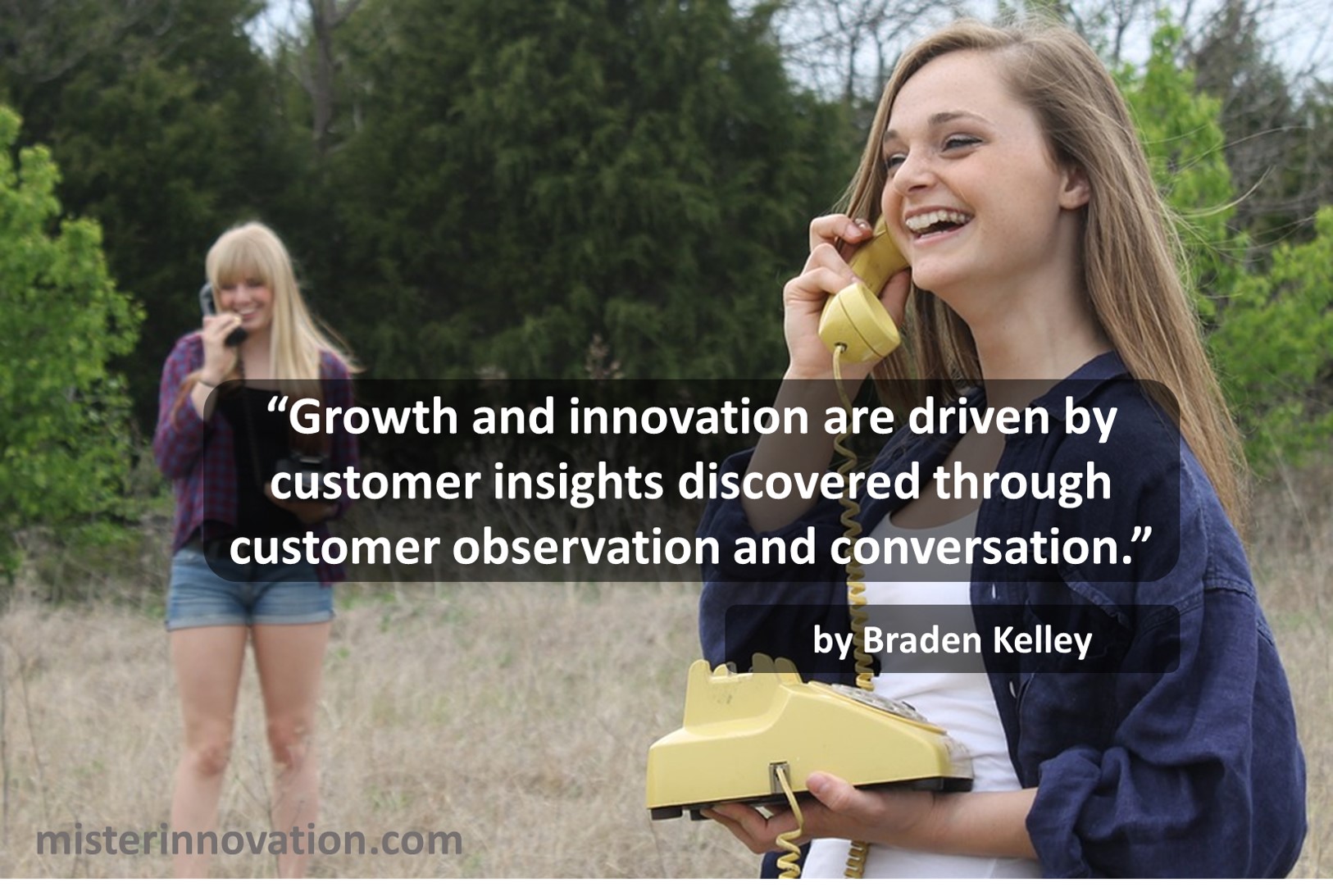
1,000+ Free Innovation, Change and Design Quotes Slides

LAST UPDATED: November 12, 2025 at 10:21AM
1,000+ Free Innovation, Change and Design Quotes Slides

Spice Up Your Meetings, Presentations, Keynotes and Workshops

I’m flattered that people have been quoting my keynote speeches and my first two books Stoking Your Innovation Bonfire and Charting Change (now in its Second Edition).

So, I’m making some of my favorite quotes available from myself and other thought leaders in a fun, visual, easily shareable format.

I’ve been publishing them on Instagram, LinkedIn, Facebook, and Twitter.

Find a compelling quote for a meeting, presentation, workshop or keynote speech on any of these topics:

  • Innovation
  • Design
  • Customer Experience
  • Digital Transformation
  • Change
  • Creativity
  • Leadership
  • Design Thinking

Download twenty (20) volumes of fifty (50) quote posters, for a total of 1,000 (with more on the way), for FREE from my store:

You can add them all to your shopping cart at once and download them for FREE.

Print them, share them on social media, or use them in your presentations, keynote speeches or workshops.

They are all Adobe PDF’s and the best way to add them to your presentation is to:

  1. Put the PDF into FULL SCREEN MODE
  2. Take a screenshot
  3. Paste it into your presentation
  4. Crop it and adjust the size to your liking
  5. Change the background color of the slide to a suitable color (if necessary)

Contact me with your favorite quote or to book me for a keynote, workshop, or piece of commissioned content to attract new customers.

Subscribe to Human-Centered Change & Innovation WeeklySign up here to get Human-Centered Change & Innovation Weekly delivered to your inbox every week.

The Unpredictability of Innovation is Predictable

The Unpredictability of Innovation is Predictable

GUEST POST from Mike Shipulski

A culture that demands predictable results cannot innovate. No one will have the courage to do work with the requisite level of uncertainty and all the projects will build on what worked last time. The only predictable result – the recipe will be wildly successful right up until the wheels fall off.

You can’t do work in a new area and deliver predictable results on a predictable timetable. And if your boss asks you to do so, you’re working for the wrong person.

When it comes to innovation, “ecosystem,” as a word, is unskillful. It doesn’t bound or constrain, nor does it show the way. How about a map of the system as it is? How about defined boundaries? How about the system’s history? How about the interactions among the system elements? How about a fitness landscape and the system’s disposition? How about the system’s reason for being? The next evolution of the system is unpredictable, even if you call it an ecosystem.

If you can’t tolerate unpredictability, you can’t tolerate innovation.

Innovation isn’t about reducing risk. Innovation is about maximizing learning rate. And when all things go as predicted, the learning rate is zero. That’s right. Learning decreases when everything goes as planned. Are you sure you want predictable results?

Predictable growth in stock price can only come from smartly trying the right portfolio of unpredictable projects. That’s a wild notion.

Innovation runs on the thoughts, feelings, emotions and judgement of people and, therefore, cannot be predictable. And if you try to make it predictable, the best people, the people that know the drill, will leave.

The real question that connects innovation and predictability: How to set the causes and conditions for people to try things because the results are unpredictable?

With innovation, if you’re asking for predictability, you’re doing it wrong.

Image credit: Unsplash

Subscribe to Human-Centered Change & Innovation WeeklySign up here to join 17,000+ leaders getting Human-Centered Change & Innovation Weekly delivered to their inbox every week.
Stealing From the Garden of Eden

Stealing From the Garden of Eden

GUEST POST from Greg Satell

The story of the Garden of Eden is one of the oldest in recorded history, belonging not only to the world’s three major Abrahamic faiths of Judaism, Christianity and Islam, but also having roots in Greek and Sumerian mythology. It’s the ultimate origin archetype: We were once pure, innocent and good, but then were corrupted in some way and cast out.

As Timothy Snyder points out in his excellent course on The Making of Modern Ukraine, this template of innocence, corruption and expulsion often leads us to a bad place, because it implies that anything we do to remove that corrupting influence would be good and just. When you’re fighting a holy war, the ends justify the means.

The Eden myth is a favorite of demagogues, hucksters and con artists because it is so powerful. We’re constantly inundated with scapegoats— the government, big business, tech giants, the “billionaire” class, immigrants, “woke” society — to blame for our fall from grace. We need to learn to recognize the telltale signs that someone is trying to manipulate us.

The Assertion Of Victimhood

In 1987, a rather drab and dull Yugoslavian apparatchik named Slobodan Milošević was visiting Kosovo field, the site of the Serbs humiliating defeat at the hands of the Ottoman empire in 1389. While meeting with local leaders, he heard a commotion outside and found police beating back a huge crowd of Serbs and Montenegrins.

“No one should dare to beat you again!” Milošević is reported to have said and, in that moment, that drab apparatchik was transformed into a political juggernaut who left death and destruction in his path. For the first time since World War II, a genocide was perpetrated in Europe and the term ethnic cleansing entered the lexicon.

In Snyder’s book, Bloodlands, which chronicled the twin horrors of Hitler and Stalin, he points out that if we are to understand how humans can do such atrocious things to other humans, we first need to understand that they saw themselves as the true victims. When people believe that their survival is at stake, there is very little they won’t assent to.

The assertion of victimhood doesn’t need to involve life and death. Consider the recent Twitter Files “scandal,” in which the social media giant’s new owner leaked internal discussions about content moderation. The journalists who were given access asserted that those discussions amounted to an FBI-Big Tech conspiracy to censor important information. They paint sinister pictures of dark forces working to undermine our access to information.

When you read the actual discussions, however, what you see is a nuanced discussion about how to balance a number of competing values. How do we balance national security and public safety with liberty and free speech? At what point does speech become inciteful and problematic? Where should lines be drawn?

The Dehumanization Of An Out-group

Demagogues, hucksters and con men abhor nuance because victimhood requires absolutes. The victim must be completely innocent and the perpetrator must be purely evil for the Eden myth sleight of hand to work. There are no innocent mistakes, only cruelty and greed will serve to build the narrative.

Two years after Milošević political transformation at Kosooe field he returned there to commemorate the 600 anniversary of the Battle of Kosovo, where he claimed that “​​the Serbs have never in the whole of their history conquered and exploited others.” Having established that predicate, the stage was set for the war in Bosnia and the atrocities that came with it.

Once you establish complete innocence, the next step is to dehumanize the out-group. The media aren’t professionals who make mistakes, they are “scum who spread lies.” Tech giants aren’t flawed organizations, but ones who deliberately harm the public. Public servants like Anthony Fauci and philanthropists like Bill Gates are purported to engage in nefarious conspiracies that undermine the public well-being.

The truth is, of course, that nothing is monolithic. People have multiple motivations, some noble, others less so. Government agencies tend to attract mission-driven public servants, but can also be prone to overreach and abuse of power. Entrepreneurs like Elon Musk can have both benevolent aspirations to serve mankind and problematic character flaws.

It is no accident that the states in the US with the fewest immigrants tend to have the most anti-immigrant sentiment. The world is a messy place, which is why real-world experience undermines the Manichean worldview that demagogues, hucksters and con artists need to prepare the ground for what comes next.

The Vow For Retribution

It is now a matter of historical record what came of Milošević. After the horrors of the genocides his government perpetrated, his regime was brought down in the Bulldozer Revolution, the first of a string of Color Revolutions that spread across Eastern Europe. He was then sent to The Hague to stand trial, where would die in his prison cell.

Milošević made a common mistake (and one Vladimir Putin is repeating today). Successful demagogues, hucksters and con artists know to never make good on their vows for retribution. In order to serve its purpose, the return to Eden must remain aspirational, a fabulous yonder that will never be truly attained. Once you actually try to get there, it will be exposed as a mirage.

Yet politicians who vow to bring down evil corporations can depend on a steady stream of campaign contributions. In much the same way, entrepreneurs and entrepreneurs who rail against government bureaucrats can be enthusiastically invited to speak to the media and at investor conferences.

It is a ploy that has continued to be effective from antiquity to the present-day because it strikes at our primordial tendencies toward tribalism and justice, which is why we can expect it to continue. It’s a pattern that recurs with such metronomic regularity precisely because we are so vulnerable to it.

Being Aware Is Half The Battle

In my friend Bob Burg’s wonderful book, Adversaries into Allies, he makes the distinction between persuasion and manipulation. Bob says that persuasion involves helping someone to make a decision by explaining the benefits of a particular course of action, while manipulation takes advantage of negative emotions, such as anger, fear and greed.

So it shouldn’t be surprising that those who want to manipulate us tell origin stories in which we were once innocent and good until a corrupting force diminished us. It is that narrative that allows them to assert victimhood, dehumanize an out-group and promise, if given the means, that they will deliver retribution and a return to our rightful place.

These are the tell-tale signs that reveal demagogues, hucksters and con artists. It doesn’t matter if they are seeking backing for a new technology, belief in a new business model or public office, there will always be an “us” and a “them” and there can never be a “we together,” because “they,” are trying to deceive us, take what is rightfully ours and rob us of our dignity.

Yet once we begin to recognize those signs, we can use those emotional pangs as markers that alert us to the need to scrutinize claims more closely, seek out a greater diversity of perspectives and examine alternative narratives. We can’t just believe everything we think. It is the people who are telling us things that we want to be true that are best able to deceive us.

Those who pursue evil and greed always claim that they are on the side of everything righteous and pure. That’s what we need to watch out for most.

— Article courtesy of the Digital Tonto blog
— Image credit: Gemini

Subscribe to Human-Centered Change & Innovation WeeklySign up here to join 17,000+ leaders getting Human-Centered Change & Innovation Weekly delivered to their inbox every week.
Top 10 Human-Centered Change & Innovation Articles of October 2025

Top 10 Human-Centered Change & Innovation Articles of October 2025Drum roll please…

At the beginning of each month, we will profile the ten articles from the previous month that generated the most traffic to Human-Centered Change & Innovation. Did your favorite make the cut?

But enough delay, here are October’s ten most popular innovation posts:

  1. AI, Cognitive Obesity and Arrested Development — by Pete Foley
  2. Making Decisions in Uncertainty – This 25-Year-Old Tool Actually Works — by Robyn Bolton
  3. The Marketing Guide for Humanity’s Next Chapter – How AI Changes Your Customers — by Braden Kelley
  4. Don’t Make Customers Do These Seven Things They Hate — by Shep Hyken
  5. Why Best Practices Fail – Five Questions with Ellen DiResta — by Robyn Bolton
  6. The Need for Organizational Learning — by Mike Shipulski
  7. You Must Accept That People Are Irrational — by Greg Satell
  8. The AI Innovations We Really Need — by Art Inteligencia
  9. Three Reasons You Are Not Happy at Work – And What to Do to Become as Happy as You Could Be — by Stefan Lindegaard
  10. The Nuclear Fusion Accelerator – How AI is Commercializing Limitless Power — by Art Inteligencia

BONUS – Here are five more strong articles published in September that continue to resonate with people:

If you’re not familiar with Human-Centered Change & Innovation, we publish 4-7 new articles every week built around innovation and transformation insights from our roster of contributing authors and ad hoc submissions from community members. Get the articles right in your Facebook, Twitter or Linkedin feeds too!

Build a Common Language of Innovation on your team

Have something to contribute?

Human-Centered Change & Innovation is open to contributions from any and all innovation and transformation professionals out there (practitioners, professors, researchers, consultants, authors, etc.) who have valuable human-centered change and innovation insights to share with everyone for the greater good. If you’d like to contribute, please contact me.

P.S. Here are our Top 40 Innovation Bloggers lists from the last four years:

Subscribe to Human-Centered Change & Innovation WeeklySign up here to get Human-Centered Change & Innovation Weekly delivered to your inbox every week.

To Survive the Sudden Acceleration You Need a Navigator’s Mindset

To Survive the Sudden Acceleration You Need a Navigator's Mindset

GUEST POST from Robert B. Tucker

When I began writing Build a Better Future six years ago, I thought I was writing a book about managing change. I didn’t realize we were entering the fastest-evolving era in human history — an era where the pace of change sometimes outstrips our ability to process it.

Events kept overtaking me. Drafts grew outdated before the ink was dry. What I came to see is that thriving in what is being called the Age of Acceleration demands something new; not a roadmap, but a compass. Not a fixed plan, but a mindset. That compass, I’ve come to believe, is made up of seven essential navigational mindsets. Together, they form a way of thinking and meeting reality that equips us to meet the future with resilience, clarity, and purpose.

1. The Preparedness Mindset: Learning to Expect the Unexpected

Preparedness begins with the acceptance that disruption is the new normal. COVID-19 taught us that the unthinkable can become tomorrow’s headline. Leaders like Dr. Andrew Smith of the Rowan-Salisbury School System in North Carolina didn’t have a pandemic playbook to follow — but they had a mindset. Smith stepped back, assessed, and used a simple business tool to restore order amid chaos.

Preparedness isn’t about fear; it’s about readiness. It’s the ability not just to bounce back, but to bounce forward. Whether facing the next pandemic, a job transition, or a technological revolution, this mindset helps us stay grounded when the winds of change howl.

2. The Futurist Mindset: Learning to Spot the Signals Amid the Noise

Futurists don’t predict the future; we can’t. What we do is forecast change, whether social, demographic, technological, geopolitical, or otherwise. Like meteorologists, we forecast what is most likely to occur. We look beyond the noise of the daily news cycle to discern patterns and “weak signals” of what’s emerging. In Build a Better Future, I introduced the D.I.T.O. framework: Direction, Implications, Threats, and Opportunities. It’s a simple but powerful tool to think through what’s changing, why it matters, and how to respond.

The challenge today isn’t the lack of information; it’s information overload. We live in what I call an “attention-fracking economy” — where our focus is mined, monetized, and sold to the highest bidder. Adopting the Futurist Mindset gives us a tool for reclaiming our attention and redirecting it toward insight rather than distraction.

3. The Adaptability Mindset: Learn, Unlearn, Relearn

As an innovation advisor and “coach” to C-suite executives for 30 years, I’ve had a ringside seat working with disrupted companies and industries. In the Age of Acceleration, denial of marketplace change is a growing liability. Kodak, Nokia, and Sears learned that lesson too late.

But adaptability is not about giving up your principles. If you told your employees that diversity and inclusion are important values, but then capitulate to political winds, that’s not adaptation but conformity. True adaptation requires discernment: knowing when to bend and when to stand firm. People like Dietrich Bonhoeffer, Nelson Mandela, and Aleksey Navalny remind us that sometimes the most courageous adaptation is moral resistance.

4. The Human Agency Mindset: Take Back the Inner-Compass

Even as AI and automation reshape work and life, we remain the authors of our own story. Yet our sense of agency — our belief that we can influence events — is under siege. Endless scrolling, algorithmic manipulation, and the loneliness epidemic are symptoms of a deeper erosion of human will.

Reclaiming agency starts with awareness: What’s going into your mind each hour? What are you allowing to shape your worldview? Technology can amplify our creativity or numb it; the choice is ours. As I like to remind my audiences, we’re not backseat passengers in someone else’s self-driving car. We can grab the wheel.

5. The Long View Mindset: Think Beyond the Quarter

Most of us live in the tyranny of the immediate — the next deadline, the next quarter, the next news alert. The Long View Mindset restores perspective. It reminds us that today’s actions echo into tomorrow’s outcomes.

As former Treasury Secretary Robert Rubin once noted, “Evaluating past decisions is one of the most overlooked leadership disciplines.” History doesn’t repeat itself, but it rhymes. When we connect past, present, and future, we make wiser decisions — and build legacies that endure.

6. The Anticipatory Mindset: Learning to See Around Corners

Every decision — from choosing a career path to making a certain investment — is a bet on the future. The Anticipatory Mindset helps us make those bets intelligently. Psychologist Philip Tetlock’s research shows that the best forecasters aren’t gurus with crystal balls; they’re thoughtful people who continually update their assumptions, seek diverse viewpoints, and stay humble about what they don’t know.

In organizations and in life, the goal isn’t to be certain — it’s to be ready.

7. The Visionary Mindset: Lead With Imagination and Integrity

Our age is not short of visionaries; it’s short of genuine ones. The tech barons who promise that AI will “save humanity” are often selling something — mainly their stock. The Visionary Mindset calls us to look higher.

History offers models of authentic vision: Pierre Teilhard de Chardin’s evolutionary spirituality, Barbara Marx Hubbard’s call for conscious evolution, Buckminster Fuller’s insistence that we design our way to abundance. Real visionaries don’t surrender to decline; they create alternatives. They see the possible amid the peril — and they invite others to help build it.

Becoming a Modern Navigator

Taken together, these seven aptitudes form what I call the Navigator’s Mindset — a way of approaching life with curiosity, courage, and moral clarity. Navigators are those who don’t fear change but face it with intelligence and resolve. They see opportunity in turbulence and responsibility in leadership.

The world will keep accelerating. Technologies will keep advancing. Institutions will keep straining under the pressure of transformation. But your mindset — your compass — remains yours to shape. There is no final destination in the Age of Acceleration — only direction, purpose, and the daily courage to keep steering toward a better tomorrow.

The future is not set in stone. It’s something we build: one day, one choice, and one good decision at a time.

This article originally appeared in Forbes

Image credit: Pixabay

Subscribe to Human-Centered Change & Innovation WeeklySign up here to get Human-Centered Change & Innovation Weekly delivered to your inbox every week.

Moving From Disruption to Resilience

Moving From Disruption To Resilience

GUEST POST from Greg Satell

In the 1990s, a newly minted professor at Harvard Business School named Clayton Christensen began studying why good companies fail. What he found was surprising. They weren’t failing because they lost their way, but rather because they were following time-honored principles, such as listening to their customers, investing in R&D and improving their products.

As he researched further he realized that, under certain circumstances, a market becomes over-served, the basis of competition changes and firms become vulnerable to a new type of competitor. In his 1997 book, The Innovator’s Dilemma, he coined the term disruptive technology.

It was an idea whose time had come. The book became a major bestseller and Christensen the world’s top business guru. Yet many began to see disruption as more than a special case, but a mantra; an end in itself rather than a means to an end. Today, we’ve disrupted ourselves into oblivion and we desperately need to make a shift. It’s time to move toward resilience.

The Disruption Gospel

We like to think of ourselves as living in a fast-moving age, but that’s probably more hype than anything else. Before 1920 most households in America lacked electricity and running water. Even the most basic household tasks, like washing or cooking a meal, took hours of backbreaking labor to haul water and cut firewood. Cars were rare and few people traveled more than 10 miles from home.

That would change in the next few decades as household appliances and motorized transportation transformed American life. The development of penicillin in the 1940s would bring about a “Golden Age” of antibiotics and revolutionize medicine. The 1950s brought a Green Revolution that would help expand overseas markets for American goods.

By the 1970s, innovation began to slow. After half a century of accelerated productivity growth, it would enter a long slump. The rise of Japan and stagflation contributed to an atmosphere of malaise. After years of dominance, the American model seemed to have its best days behind it. For the first time in the post-war era, the future was uncertain.

That began to change in the 1980s. A new president, Ronald Reagan, talked of a “shining city on a hill”, and declared that “Government is not the solution to our problem, government is the problem.” A new “Washington Consensus,” took hold that preached fiscal discipline, free trade, privatization and deregulation.

At the same time a management religion took hold, with Jack Welch as its patron saint. No longer would CEO’s weigh the interests of investors with customers, communities, employees and other stakeholders, everything would be optimized for shareholder value. General Electric, and then broader industry, would embark on a program of layoffs, offshoring and financial engineering in order to trim the fat and streamline their organizations.

The End Of History?

There were early signs that we were on the wrong path. Despite the layoffs that hollowed out America’s industrial base and impoverished many of its communities, productivity growth, which had been depressed since the 1970s, didn’t even budge. Poorly thought out deregulation in the banking industry led to a savings and loan crisis and a recession.

At this point, questions should have been raised, but two events in November 1989 would reinforce the prevailing wisdom. First, The fall of the Berlin Wall would end the Cold War and discredit socialism. Then Tim Berners-Lee would create the World Wide Web and usher in a new technological era of networked computing.

With markets opening across the world, American-trained economists at the IMF and the World Bank traveled the globe preaching the market discipline prescribed by the Washington Consensus, often imposing policies that would never be accepted developed markets back home. Fueled by digital technology, productivity growth in the US finally began to pick up in 1996, creating budget surpluses for the first time in decades.

Finally, it appeared that we had hit upon a model that worked. We would no longer leave ourselves to the mercy of bureaucrats at government agencies or executives at large organizations who had gotten fat and sloppy. The combination of market and technological forces would point the way for us.

The calls for deregulation increased, even if it meant increased disruption. Most notably, Glass-Steagall Act, which was designed to limit risk in the financial system, was repealed in 1999. Times were good and we had unbridled capitalism and innovation to thank for it. The Washington Consensus had been proven out, or so it seemed.

The Silicon Valley Doomsday Machine

By the year 2000, the first signs of trouble began to appear. The money rushing into Silicon Valley created a bubble which bursted and took several notable corporations with it. Massive frauds were uncovered at firms like Enron and WorldCom, which also brought down their auditor, Arthur Anderson. Calls for reform led to the Sarbanes-Oxley Act that increased standards for corporate governance.

Yet the Bush Administration concluded that the problem was too little disruption, not too much, and continued to push for less regulation. By 2005, the increase in productivity growth that began in 1996 dissipated as suddenly as it had appeared. Much like in the late 80s, the lack of oversight led to a banking crisis, except this time it wasn’t just regional savings and loans that got caught up, but the major financial center institutions left exposed.

That’s what led to the Great Recession. To stave off disaster, central banks embarked on an extremely stimulative strategy called quantitative easing. This created a superabundance of capital which, with few places to go, ended up sloshing around in Silicon Valley helping to create a new age of “unicorns,” with over 1000 startups valued at more than $1 billion.

Today, we’re seeing the same kind of scandals we saw in the early 2000’s, except the companies being exposed aren’t established firms like Enron, Worldcom and Arthur Anderson, but would-be disrupters like WeWork, Theranos and FTX. Unlike those earlier failures, there has been no reckoning. If anything, tech billionaires like Marc Andreessen and Elon Musk billionaires seem emboldened.

At the same time, there is growing evidence that hyped-up excesses are crowding out otherwise viable businesses in the real economy. When WeWork “disrupted” other workspaces it wasn’t because of any innovation, technological or otherwise, but rather because huge amounts of venture capital allowed it to undercut competitors. Silicon Valley is beginning to look less like an industry paragon and more like a doomsday machine.

Realigning Prosperity With Security

It’s been roughly 25 years since Clayton Christensen inaugurated the disruptive era and what he initially intended to describe as a special case has been implemented as a general rule. Disruption is increasingly self-referential, used as both premise and conclusion, while the status quo is assumed to be inadequate as an a priori principle.

The results, by just about any metric imaginable, have been tragic. Despite all the hype about innovation, productivity growth remains depressed. Two decades of lax antitrust enforcement have undermined competitive markets in the US. We’ve gone through the worst economic crisis since the 1930s and the worst pandemic since the 1910s.

At the same time, social mobility is declining, while anxiety and depression are rising to epidemic levels. Wages have stagnated, while the cost of healthcare and education has soared. Income inequality is at its highest level in 50 years. The average American is worse off, in almost every way, than before the cult of disruption took hold.

It doesn’t have to be this way. We can change course and invest in resilience. There have been positive moves. The infrastructure legislation and the CHIPS legislation both represent huge investments in our future, while the poorly named Inflation Reduction Act represents the largest investment in climate ever. Businesses have begun reevaluating their supply chains.

Yet the most important shift, that of mindset, has yet to come. Not everything needs to be optimized. Not every cost needs to be cut. We cannot embark on changes just for change’s sake. We need to pursue fewer initiatives that achieve greater impact and, when we feel the urge to disrupt, we need to ask, disruption in the service of what?

— Article courtesy of the Digital Tonto blog
— Image credit: Pixabay

Subscribe to Human-Centered Change & Innovation WeeklySign up here to join 17,000+ leaders getting Human-Centered Change & Innovation Weekly delivered to their inbox every week.
Reclaiming a Vision of a World That Works

Reclaiming a Vision of a World That Works

GUEST POST from Robert B. Tucker

If it feels to you like the world has shifted into overdrive of late, you’re not alone. As a futurist, I observe that we’ve crossed over from the familiar Information Age and have entered the Age of Acceleration. Since COVID, the pace of change has become exponential, rather than linear, increasing at an ever-increasing rate.

In the next ten years, we will experience more change than in the past hundred. That’s not hyperbole; it’s the reality of compounding and converging technological, geopolitical, social, and environmental forces.

These MegaForces of Change are rewriting the future in real time. They are creating new winners and losers, reshaping industries and institutions overnight. They are exposing how ill-prepared we are to navigate the whitewater rapids just ahead.

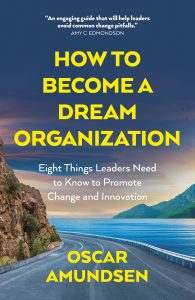
At such an inflection point in human history, it’s easy to feel powerless. It’s natural to feel as if events are happening to us rather than because of us. But that’s why I wrote Build a Better Future: 7 Mindsets for the Age of Acceleration.

After three decades advising corporate managers around the world on strategies for driving growth through innovation, I’m shifting my practice. My new passion is to accelerate human flourishing in light of this accelerated age. My goal is simple: I want to assist not just managers but everybody to regain a sense of agency, purpose, and hope amidst the biggest deluge of change we’ve experienced in our lifetimes. In short, I aspire to change the direction of humanity by helping people change their mindset.

The World Is Changing — But So Can We

Yes, the world is changing crazily, but here’s the good news: the same forces that threaten to destabilize us also contain the seeds of renewal and abundance. From my research with hundreds of innovators, entrepreneurs, and futurists, I’ve found that what separates those who flourish from those who falter isn’t intelligence, resources, or position — it’s mental hygiene.

Among the seven mindsets I explore in Build a Better Future, two feel especially urgent today.

The first is the Preparedness Mindset — the discipline of scanning the horizon, challenging assumptions, and thinking several moves ahead. Prepared leaders don’t wait for the next crisis; they actively anticipate it. They train themselves and their teams to see weak signals of change before they become tidal waves.

When you start thinking like a futurist, something remarkable happens: you start thinking about the direction, implications, threats, and opportunities in change. You begin to see the connections between events rather than reacting to them one headline at a time. You learn to differentiate signals from noise. You stop being a passive consumer of the future and start proactively shaping it.

The discipline of forward-thinking prepares you to make decisions, manage risk, and allocate your attention to what matters most. You begin to pounce on opportunities earlier, adapt faster, and feel less anxious because you have a framework for making sense of the chaos. The future stops being an abstraction — and becomes something you influence, moment by moment.

From Overwhelm to Agency

The second mindset is what I call the Human Agency Mindset. As A.I. grows ever more capable, the winners will be those who focus on nurturing what makes us uniquely human: our empathy, creativity, moral judgment, and the ability to imagine future possibilities no machine can conceive.

We now possess technologies that our ancestors could scarcely imagine. We can split atoms, edit genes, and train machines to mimic human cognition. But as technological capabilities soar, our wisdom capabilities have lagged. The real question isn’t whether we can unleash a certain technology, but whether we should, and what the implications are. How to ensure that progress serves humanity, not the other way around, will be a huge issue going forward because we can’t outsource wisdom. We must cultivate it. The danger isn’t that AI will become “smarter” than us — it’s that we’ll stop exercising our own capacity for creative thought and reflection.

Reclaiming Our Dreams

At the book launch party in Santa Barbara, I told a story about starting as a young journalist working from a tiny San Fernando Valley apartment. It was so small, the joke was you had to go outside to change your mind. But I didn’t mind because I was on fire with how journalism allowed me to subsidize my curiosity. I interviewed and profiled the visionaries and thought leaders of that era, and the experience of being around these tomorrow-builders changed my life. The big thing I became aware of was the importance of mindset in realizing your potential, and in turning visions into reality.

Today, 40 years later, I believe we all need new mindsets for what’s ahead. We need loftier visions that transcend fear and fatalism and misinformation. We need to reclaim a vision of a world that works for all — a world where technology amplifies human creativity, where wisdom keeps pace with innovation, and where we dare to believe that we can solve even the most vexing problems.

With a new set of mindsets, we can see that our best days lie ahead. That our children and grandchildren are not resigned to live lives of quiet desperation. With renewed mindsets, we can believe that nothing about the future is written in stone. The future is what we make it. It’s not something to fear or flee from. It’s something we can build — one mindset, one decision, one act of imagination at a time.

Robert Tucker Webinar November 2025

Image credits: Pexels

Subscribe to Human-Centered Change & Innovation WeeklySign up here to join 17,000+ leaders getting Human-Centered Change & Innovation Weekly delivered to their inbox every week.
Making Decisions in Uncertainty

This 25-Year-Old Tool Actually Works

Making Decisions in Uncertainty

GUEST POST from Robyn Bolton

Just as we got used to VUCA (volatile, uncertain, complex, ambiguous) futurists now claim “the world is BANI now.”  BANI (brittle, anxious, nonlinear, incomprehensible) is much worse than VUCA and reflects “the fractured, unpredictable state of the modern world.”

Not to get too Gen X on the futurists who coined and are spreading this term but…shut up.

Is the world fractured and unpredictable? Yes.

Does it feel brittle? Are we more anxious than ever? Are things changing at exponential speed, requiring nonlinear responses? Does the world feel incomprehensible? Yes, to all.

Naming a problem is the first step in solving it. The second step is falling in love with the problem so that we become laser focused on solving it. BANI does the first but fails at the second. It wallows in the problem without proposing a path forward. And as the sign says, “Ain’t nobody got time for this.”

(Re)Introducing the Cynefin Framework

The Cynefin framework recognizes that leadership and problem-solving must be contextual to be effective. Using the Welsh word for “habitat,” the framework is a tool to understand and name the context of a situation and identify the approaches best suited for managing or solving the situation.

It’s grounded in the idea that every context – situation, challenge, problem, opportunity – exists somewhere on a spectrum between Ordered and Unordered. At the Ordered end of the spectrum, cause and affect are obvious and immediate and the path forward is based on objective, immutable facts. Unordered contexts, however, have no obvious or immediate relationship between cause and effect and moving forward requires people to recognize patterns as they emerge.

Both VUCA and BANI point out the obvious – we’re spending more time on the Unordered end of the spectrum than ever. Unlike the acronyms, Cynefin helps leaders decide and act.

Five Contexts, Five Ways Forward

The Cynefin framework identifies five contexts, each with its own best practices for making decisions and progress.

On the Ordered end of the spectrum:

  • Simple contexts are characterized by stability and obvious and undisputed right answers. Here, patterns repeat, and events are consistent. This is where leaders rely on best practices to inform decisions and delegation, and direct communication to move their teams forward.
  • Complicated contexts have many possible right answers and the relationship between cause and effect isn’t known but can be discovered. Here, leaders need to rely on diverse expertise and be particularly attuned to conflicting advice and novel ideas to avoid making decisions based on outdated experience.

On the Unordered end of the spectrum:

  • Complex contexts are filled with unknown unknowns, many competing ideas, and unpredictable cause and effects. The most effective leadership approach in this context is one that is deeply uncomfortable for most leaders but familiar to innovators – letting patterns emerge. Using small-scale experiments and high levels of collaboration, diversity, and dissent, leaders can accelerate pattern-recognition and place smart bets.
  • Chaos are contexts fraught with tension. There are no right answers or clear cause and effect. There are too many decisions to make and not enough time. Here, leaders often freeze or make big bold decisions. Neither is wise. Instead, leaders need to think like emergency responders and rapidly response to re-establish order where possible to bring the situation into a Complex state, rather than trying to solve everything at once.

The final context is Disorder. Here leaders argue, multiple perspectives fight for dominance, and the organization is divided into fractions. Resolution requires breaking the context down into smaller parts that fit one of the four previous contexts and addressing them accordingly.

The Only Way Out is Through

Our VUCA/BANI world isn’t going to get any simpler or easier. And fighting it, freezing, or fleeing isn’t going to solve anything. Organizations need leaders with the courage to move forward and the wisdom and flexibility to do so in a way that is contextually appropriate. Cynefin is their map.

Image credit: Pexels

Subscribe to Human-Centered Change & Innovation WeeklySign up here to join 17,000+ leaders getting Human-Centered Change & Innovation Weekly delivered to their inbox every week.

Future Shock Is Here

How To Thrive When Change Won’t Slow Down

Future Shock Is Here

GUEST POST from Robert B. Tucker

If you’ve ever written a book, you know that “publication day” is a fraught moment. All your hard work to publicize the book can easily be overtaken by news events. I’ve had author friends come out with a book on September 11th, or maybe it’s just a random CrowdStrike attack that shuts computers down worldwide, and pulls attention elsewhere. It could be anything. All that hard work goes down the drain.

So, for October 5th, when we launch Build a Better Future: 7 Mindsets for Navigating the Age of Acceleration, I’ve got my fingers crossed. I’m hoping for a slow news day. Yet, I’m realistic enough to know that anything could happen to distract attention. And in today’s world, it probably will.

We’re living during a time when unimaginable things are happening. It’s a unique inflection point in history, complete with breakthroughs and breakdowns, everywhere all at once. Established ways of operating are becoming outdated. Institutions are groaning under the weight of rapid change. Whether we identify it or not, many people are experiencing “future shock,” anxiety caused by too much change coming at us too fast.

With the arrival of generative AI on November 30th, 2022, we’ve moved past the familiar agricultural, industrial, and information ages. We’ve stepped squarely into the Acceleration Age. Combine AI’s arrival with authoritarianism, social media, attention fracking, climate change, tariff wars, and other what I call “MegaForces” of change, and the world is rearranging itself at a dizzying pace.

We are simply not prepared for the future that is arriving faster than ever. And that’s why I wrote the book that comes out on October 5th.

The premise of Build a Better Future is that understanding the fundamentally changed nature of this emerging landscape is essential if we want to avoid being left behind. But as someone who’s devoted his life to taking people higher, let me put it another way. If you want to thrive and flourish, regardless of externalities, studying how to create the future should be part of your curriculum.

I sometimes hear people say, “I don’t keep up with the news anymore, it’s so depressing.” That’s an understandable reaction, especially to political trends like rising authoritarianism, because that’s not what the founders of this country had in mind 250 years ago when they embarked on this bold experiment called the United States of America. But it’s a prescription for sitting on the bench while disaster strikes.

When you begin to adopt some of these seven mindsets outlined in the book, you stop feeling so overwhelmed. You start seeing farther ahead. You begin to see where this confluence of MegaForces is leading us, and how we need to shape them.

You develop what I call “future fluency” – the ability to speak the language of change. You start using change as a stepping stone instead of a stumbling block.

Based on studying the rate of acceleration, futurists like Gerd Leonhard and others estimate that there will easily be more change in the next 10 years than there has been over the past 100 years. We’re going to need to adopt future forecasting tools like scenario planning and applied imagination to our work and to our lives. If we don’t, we can end up giving people bad advice based on faulty assumptions.

For example, if your kid came to you and said they were going to study to become a software engineer, up until very recently, you’d endorse their decision without further thought. But with AI, all bets are suddenly off as to the future of that profession. The tech areas – Silicon Valley, Seattle area, etc. – are shedding tech jobs left and right.

In the course of my work with industries, I often hear variations on “we didn’t see it coming.” It could have been an industry consolidation change, or it could have been a demographic, social, technological, or geopolitical change. In other words, they were minding the store and serving customers, and wham, some external force that they knew about but hadn’t paid sufficient attention to turned their world upside down.

When you begin to live with these navigational mindsets, you become what I call change resilient. You start building, not just reacting. Not just defending. You start bouncing back faster from external events. You stop feeling overwhelmed. When you adopt the new tools of innovation, things can change for the better very fast. Your perspective changes. You feel empowered.

One of the ways is to challenge yourself and your team with challenging questions. Or with this set up: “As crazy as it may sound and as impossible as it may seem, what if we …” and then have them finish the sentence with as many ways as possible. It gets the juices flowing, and that’s the point. Given the bludgeoning amount of change, we’re all treading water, waiting for the next shoe to drop.

In the age of acceleration, your imagination will be more important than how much information you have, because data is abundant. The most important role you can play going forward is to get in touch with how you inspire possibility thinking in yourself, how you envision the way you want the future to unfold.

Nothing about the future is written in stone. The future is what we make it. We can build a better, more inclusive, more sustainable future by the way we think about the future. Starting today.

This article originally appeared in Forbes

Image credit: Gemini

Subscribe to Human-Centered Change & Innovation WeeklySign up here to get Human-Centered Change & Innovation Weekly delivered to your inbox every week.