Category Archives: Training

Catalysing Change Through Innovation Teams

Catalysing Change Through Innovation Teams

Guest Post from Janet Sernack

What makes Israel so innovative? And what has this got to do with teaming? One of the key discoveries, we made, almost ten years ago, when we relocated to Israel, was the power of its innovation eco-system – the result of a collaboration between the state, venture capital firms, successful entrepreneurs, educational system, business system, incubators, and accelerators. Reinforcing and validating the importance and role of collaboration, where a range of new, inspirational, and adaptive models that lean into complexity and catalyze and embed innovative workplace culture changes, have emerged. Where some organizations have strategically and systemically, courageously invested in applying these new models internally, in catalyzing change through innovation teams.

Transform creative discoveries

Innovation teams transform creative discoveries and ideas into new platforms and business models in timely, agile, and disciplined ways that bring significant value to the market and organization. Who, according to Nick Udall, CEO and co-founder of nowhere, effectively deliver the desired step-changes, breakthrough innovations, and organizational transformation, in ways that “move beyond what we know and step into the unknown, where the relationship between cause and effect is more ambiguous, hidden, subtle and multi-dimensional.”

New collaborative models

The range of new collaborative models, include teams and teaming, tribes, collectives, and eco-systems, are all designed to help organizations innovate in turbulent times.

Where they empower and enable everyone to be involved in innovating, and in responding to the diverse assortment of complex challenges emerging from the Covid-19 crises. They also empower and enable people to co-sense and co-create inventive solutions to the range of “complex” challenges, in ways that potentially engineer 21st-century adaptability, growth, success, and sustainability, in countries, communities, and organizations.

Capacity to change

Groups, teams, and teaming are now the “DNA of cultures of innovation”, who fuel organizations, with an “evolutionary advantage – the capacity to change as fast as change itself.” As we transition from our pre-Covid-19 conventional business-as-usual “normals”, organizations have the opportunity to adapt to the high levels of ambiguity by leveraging their peoples’ collective genius.

Utilizing innovation teams to multiply their value and co-create innovation cultures that catalyze growth, in the post-Covid-19 world through:

  • Emerging and exploring possibilities
  • Discovering creative opportunities
  • Making strategic decisions
  • Incubating and accelerating new ideas.

Realm of the creative team

According to Dr. Nick Udall in “Riding the Creativity Roller-Coaster” – creative teams embrace and work with the unknown, intangible, invisible, the unconscious and the implicate, that their key challenges are “to wander with wonder into the unknown.”

Through cultivating a 21st-century skill set, including – attending and observing, questioning, listening and differing, risk-taking and experimenting, and teaming and networking that enables them to be, think and act differently.

Catalyzing change through innovation teams involves creating a culture of innovation, which according to the authors of “Eat, Sleep, Innovate” – is one in which (mindsets) and behaviors that drive innovation come naturally.

Where creative teams are formed around a Passionate Purpose, that propels them into the unknown, in an unpredictable world, where they connect and stretch with cognitive dissonance and creative tension, through developing discomfort resilience. To co-create collective breakthroughs that shift them beyond managing the probable, toward leading what’s possible.

Role of collective mindsets and behaviors

One of the key elements that we can intentionally cultivate is our ability to develop habits that build our mental toughness and emotional agility to cope with stress and adversity, at the same time, paradoxically, create, invent and innovate.

The one thing that we can all control, and is controllable, are our individual and collective mindsets – how we think, feel and choose to act, in solving complex problems, performing and innovating, to dance on the edges of our comfort zones, in the face of the kinds of uncertainties we confront today.

Challenges in creating a culture of innovation 

Our research at ImagineNation™ has found that many organizations are disappointed and disillusioned with many of the conventional approaches to effecting culture change, largely because of variables including:

  • Confusion between the role of climate, culture, and engagement assessments and processes, knowing which one aligns to their purpose, strategy, and goals and delivers the greatest and most relevant value.
  • The typically large financial investment that is required to fund them.
  • The time it takes to design or customize, and implement them.
  • The complexity of tools and processes available that are involved in contextualizing and measuring desired changes.
  • Designating responsibility and accountability for role modeling, leading, and implementing the desired changes.
  • Building peoples’ readiness and receptivity to the desired change.
  • Efforts are required in removing the systemic blockers to change.
  • Designing and delivering the most appropriate change and learning interventions.
  • The false promises of “innovation theatre”.
  • The time it takes to reap desired results, often years.

In response to our client’s need for speedy, cost-effective, and simple, internal and collaborative culture change initiatives, we developed an integrated, simple, yet profoundly effective approach that integrates three powerful streams for catalyzing change through innovation teams:

  1. Team development and teaming skills
  2. Education and learning interventions
  3. Coaching and mentoring initiatives

By taking these variables into account, focussing on building the internal capability, and offering a different and fresh perspective towards catalyzing change through innovation teams.

Creating a culture of innovation – the innovation team 

We took inspiration from our 32 years of collective knowledge, wisdom, and experience across the domains of change management, culture, leadership, and team development as well as from our 8 years of iterating and pivoting our approach to the People Side of Innovation.

Coupling this with our extensive research sources, we developed and customized a team-based action and blended learning and coaching methodology for innovation teams, described as:

  • Change catalysts who operate with senior leadership sponsorship, empowered and equipped to trigger internal change management, engagement, and learning initiatives.
  • Teachers, coaches, and mentors who provide coaching and mentoring support to educate people in innovation principles and processes that cultivate sustainable innovation through co-creating learning programs and events.
  • A small effective and cohesive team, of evangelists, agitators, coaches, and guides and enables the whole organization to participate through partnering and collaborating on potentially ground-breaking (Moonshot) projects, aligned to the organization’s vision, purpose, and strategy.
  • Amazing networkers and influencers who work both within and outside of silos to inspire and motivate people to co-operate and collaborate by taking a systemic perspective, leveraging organizational independencies, to co-sense and co-create groundbreaking (Moonshot) prototypes that they pitch to senior leaders.
  • Being customer-obsessed and equipped with the innovation agility – capacity, competence, and confidence to adapt, transform, and constantly innovate to maximize the impact of innovation across the organization to affect growth, and deliver improved value by making innovation everyone’s job, every day, to make innovation a habit and way of life.

Developing the future fit future-facing company

Involves a commitment toward catalyzing change through innovation teams, leveraging teams, tribes, collectives as internal growth engines, who collaborate quickly to respond to ambiguity, turbulence, and rapid developments. By being nimble and agile, leading with open minds, hearts, and will to be present and compassionate to emerging human needs, courageously experiment with different business models, and creatively contribute to an improved future, for everyone.

This is the first in a series of three blogs about catalyzing change through innovation teams, why innovation teams are important in catalyzing culture change, and what an innovation team does.

Check out our second blog which describes how an innovation team operates and our final blog which includes an evidence-based case study of an effective and successful innovation team in a client organization.

Find out about our learning products and tools, including The Coach for Innovators Certified Program, a collaborative, intimate, and deep personalized innovation coaching and learning program, supported by a global group of peers over 8-weeks, starting Tuesday, October 19, 2021.

It is a blended and transformational change and learning program that will give you a deep understanding of the language, principles, and applications of a human-centered approach and emergent structure (Theory U) to innovation, within your unique context. Find out more

Image credit: Unsplash.com

Subscribe to Human-Centered Change & Innovation WeeklySign up here to get Human-Centered Change & Innovation Weekly delivered to your inbox every week.
Digital Consulting Jobs at HCL – August 2021

HCL Digital Consulting Jobs

Change Management, Recruiting, Training and Development Jobs

As many of you already know, recently I joined HCL Digital Consulting to help clients with Customer Experience (CX) Strategy, Organizational Change & Transformation, Futurism & Foresight, and Innovation.

Our group is growing and there are four new job postings at HCL Digital Consulting in our Organizational Agility group that I’d like to share with you:

HCL Digital Consulting Jobs on Linkedin

Click the links to apply on LinkedIn, or if we know each other, feel free to contact me and I might be able to do an employee referral.

And as always, be sure and sign-up for my newsletter to stay in touch!

p.s. Be sure and check out my latest article on the HCL Blog


Accelerate your change and transformation success

Subscribe to Human-Centered Change & Innovation WeeklySign up here to get Human-Centered Change & Innovation Weekly delivered to your inbox every week.

What is the best way to create successful change? – EPISODE FOUR – Ask the Consultant

Live from the Innovation Studio comes EPISODE FOUR of a new ‘Ask the Consultant’ series of short form videos. EPISODE FOUR tackles a question I’m asked so frequently that I wrote a book to answer it:

“What is the best way to create successful change?”

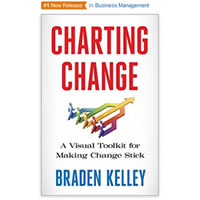
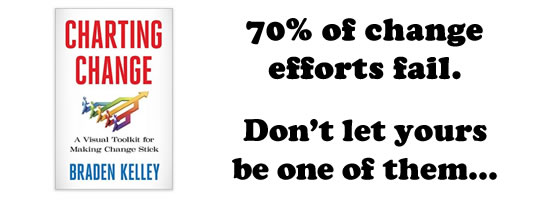
Hint: It starts with getting a copy of Charting Change because I introduce in the book several key frameworks that lay the groundwork for successful change that are built upon in the Change Planning Toolkit™.

The pace of change is accelerating and organizations need to become more agile and more capable of continuous change. This presents a huge challenge for most organizations.

Together in this episode we’ll explore some of the core building blocks to creating successful change in your organization, and a discuss what else is in Charting Change and the Change Planning Toolkit™, and how this particular book can make a great course book for change management courses at universities, executive education, and corporate training programs.

Many of the tools in the optional Change Planning Toolkit™ will look familiar to change management professionals because they have been informed by the ACMP’s Standard for Change Management and the PMI’s PMBOK.

Five Keys to Successful Change 550

“Does the change you’re proposing inspire fear or curiosity? Fear steals energy from change; curiosity fuels it.”— Braden Kelley

Grab your copy of Charting Change on Amazon while they last!

What question should I tackle in the next video episode of “Ask the Consultant” live from my innovation studio?

Contact me with your question

}} Click here to watch the video {{

Below are the previous episodes of ‘Ask the Consultant’:

  1. EPISODE ONE – What is innovation?
  2. EPISODE TWO – How do I create continuous innovation in my organization?
  3. EPISODE THREE – What is digital transformation?
  4. All other episodes of Ask the Consultant


Accelerate your change and transformation success

Subscribe to Human-Centered Change & Innovation WeeklySign up here to get Human-Centered Change & Innovation Weekly delivered to your inbox every week.
How can I create continuous innovation in my organization? – EPISODE TWO – Ask the Consultant

Live from the Innovation Studio comes EPISODE TWO of a new ‘Ask the Consultant’ series of short form videos. EPISODE TWO tackles the second most commonly asked question of me:

“How can I create continuous innovation in my organization?”

Hint: It starts with getting a copy of Stoking Your Innovation Bonfire because I detail in the book how to overcome the key barriers to innovation.

Together in this episode we’ll explore how to create continuous innovation in your organization, why I wrote Stoking Your Innovation Bonfire, and how it can make a great course book for innovation courses at universities, executive education, and corporate training programs.

“Innovation is never easy — and not always welcome. This book is dedicated to the men and women who dedicate their lives to pushing our organizations to make more efficient use of our human capital and natural resources and to make the world a better place.”

Grab a great deal on Stoking Your Innovation Bonfire on Amazon while they last!

What question should I tackle in the next video episode of “Ask the Consultant” live from my innovation studio?

Contact me with your question

}} Click here to watch the video {{

Below are the previous episodes of ‘Ask the Consultant’:

  1. EPISODE ONE – What is innovation?
  2. All other episodes of Ask the Consultant


Accelerate your change and transformation success

Subscribe to Human-Centered Change & Innovation WeeklySign up here to get Human-Centered Change & Innovation Weekly delivered to your inbox every week.

Picking a Problem Worth Solving From a Sea of Problems

Picking a Problem Worth Solving From a Sea of Problems

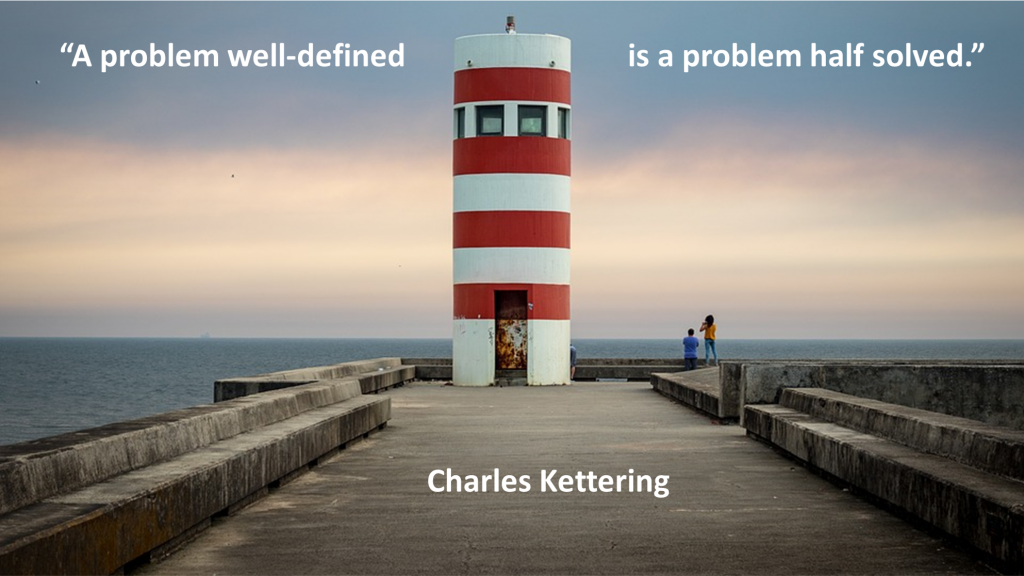
In the current environment, human-centric challenges abound, but you can’t focus on solving all of them. Many organizations complain not about having too few ideas, but about having TOO MANY IDEAS. Human-centered design principles can be incredibly helpful to assist with empathy, problem framing, problem re-framing, solutioning, prototyping, hypothesis testing, experimentation, and iteration. All of which can help you narrow down onto a few problems worth solving.

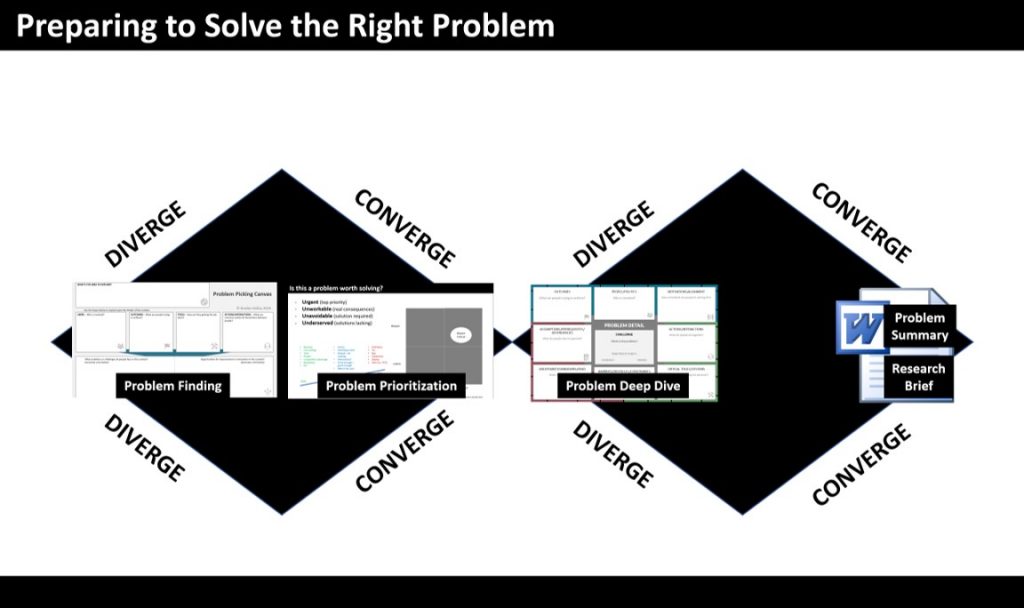
Preparing to Solve the Right Problem

I’d like to share with you here the recording of the keynote I delivered on 9 June 2020 at the virtual ISPIM Innovation Conference titled Picking a Problem Worth Solving From a Sea of Problems:

Because there are not a lot of great tools for Human-Centered Design (aka Design Thinking) I’ve been putting together some tools to make the approach a little more intuitive. I’ve either built, or am in the process of building tools for:

  1. Insight Generation (under construction)
  2. Science Fiction and Futurism (completed)
  3. Problem Finding Canvas (available)
  4. Problem Prioritization (completed)
  5. Problem Deep Dive (completed)

Some of my human-centered design approaches are covered in the virtual keynote video above, and below you’ll find a quick introduction to a simple but powerful tool I created for picking a search area and a challenge to design against:

Inexpensive Tool for Finding Problems Worth Solving

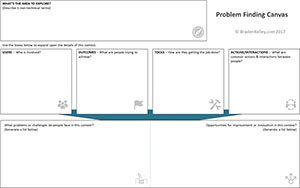
Problem Finding CanvasThe Problem Finding Canvas is intended to help you think deeply about the different areas to explore that you could address, the challenges that make up each of those areas to explore and the opportunities for innovation or improvement that exist in solving those challenges.

Key Focus Areas

The middle of the canvas is designed to help clients uncover more than just the obvious challenges, so be sure and dig deep into the details of the:

  • Users
  • Outcomes
  • Tools
  • Actions/Interactions

Desired Outcome

The Problem Finding Canvas should help you investigate a handful of areas to explore, choose the one most important to you, extract all of the potential challenges and opportunities and choose one to prioritize.

What’s Missing?

I’m in the middle of packaging together the other tools mentioned above into a suite of Human-Centered Design tools for your Design Thinking efforts and a broader Human-Centered Innovation Toolkit™.

What tools do you wish you had for doing design thinking?

What tools are missing from your innovation toolbox that you wish you had?

Please leave a reply in the comments and maybe I can build them for you!


Accelerate your change and transformation success

Subscribe to Human-Centered Change & Innovation WeeklySign up here to get Human-Centered Change & Innovation Weekly delivered to your inbox every week.
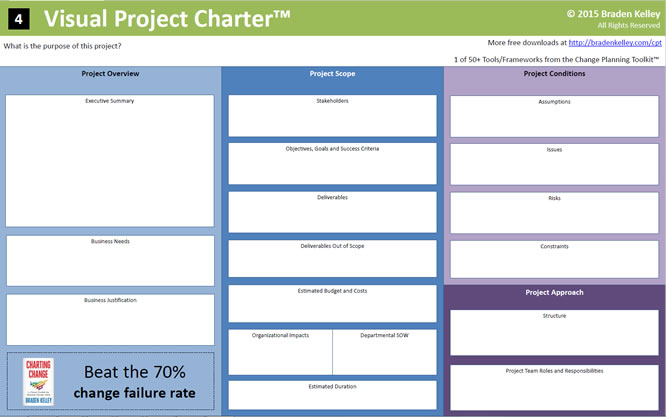
Remote Project Management – The Visual Project Charter™

Remote Project Management - The Visual Project Charter™

The truth is that for most of us project managers, whether we want to admit it or not, the process of creating a project charter is one that we often dread.

We sit there in front of a Microsoft Word template blinking at us on the screen and realize just how much missing or incomplete information we have when we begin typing into the one of the very first, and potentially most important artifacts for any project.

We know we face the sending of a series of emails, follow up emails, follow up to the follow up emails, and maybe even some escalation emails and phone calls just to get the information we need to create the first draft of a project charter. And that’s before we even begin trying to get alignment, buy-in, and sign-off on the document.

Now, add in the challenges of trying to create a project charter when everyone is working remotely and our sacred task of initiating a project doesn’t get any easier.

So, there has never been a better time to leverage the Visual Project Charter™.

The Visual Project Charter™

With online whiteboarding tools like Mural, Miro, LucidSpark and Microsoft Whiteboard you can easily download the Visual Project Charter™ for FREE as a JPEG and upload it as a background to place digital sticky notes on as you collaborate with cross-functional team virtually using Zoom, Cisco WebEx or Microsoft Teams.

Visual Project Charter™

Click here to access the PDF poster (35″x56″) and JPEG of the Visual Project Charter™

To help give you a better idea of how easy this is to do and what it might look like, I created the following short six-minute video introduction to the Visual Project Charter™ to show how easy it is to take the JPEG and upload it as a background into online whiteboarding tools like Mural, Miro, LucidSpark or Microsoft Whiteboard where you can place digital sticky notes instead of real ones as you collaborate with cross-functional team virtually using Zoom, Cisco WebEx or Microsoft Teams.

Click here to access the PDF poster (35″x56″) and JPEG of the Visual Project Charter™

Remote Project Management

Whether you download the Visual Project Charter™ PDF and print it as a poster (35″x56″) or use the JPEG in the digital world I’m sure you’ll agree that this a much more visual, collaborative, enjoyable and effective way to gather all of the information to populate your project charter and build the buy-in and alignment necessary to make your project a success!

Here is a step-by-step guide for how to use the Visual Project Charter™ with online whiteboarding tools like Miro, Mural, LucidSpark and Microsoft Whiteboard:

  1. Download the Visual Project Charter™ from this web site
  2. (both JPEG and PDF)

  3. Create a new workspace in your online whiteboarding tool (Miro, Mural, LucidSpark or Microsoft Whiteboard)
  4. Upload the JPEG version of the Visual Project Charter™ to your online whiteboarding tool
    • MIRO – ‘Upload->My Device’ (left side icons)
    • MURAL -‘Images->import images’ (left side icons)
    • LUCIDSPARK – ‘Insert->Images’ (under hamburger menu on the top)
    • WHITEBOARD – ‘Images->Library Image’ (bottom icons)

  5. Resize the JPEG image after it is added
  6. Lock the JPEG image down so people can’t move it around when placing their sticky notes
  7. Create work areas around the Visual Project Charter™ to give you larger, targeted areas to work (if desired)
  8. Plan and execute your cross-functional team meeting to populate the Visual Project Charter™ via Zoom or Cisco WebEx or Microsoft teams when the workspace is built
  9. Have fun!
  10. Use the results of your Visual Project Charter™ session to create a traditional project charter and route it for signatures

Charting ChangeI’m sure you’ll get a lot of value out of the Visual Project Charter™, especially when using it as part of your remote project management best practices.

And, if you like the Visual Project Charter™, you will LOVE the Change Planning Toolkit™ and should definitely pick up copies of my books:

  1. Charting Change
  2. Stoking Your Innovation Bonfire

Subscribe to Human-Centered Change & Innovation WeeklySign up here to get Human-Centered Change & Innovation Weekly delivered to your inbox every week.
The Impact of Virtual Reality on Education and Training

The Impact of Virtual Reality on Education and Training

GUEST POST from Art Inteligencia

Over the past decade, virtual reality (VR) has rapidly evolved from a mere gaming technology to a powerful tool with vast potential in various industries. One sector where VR has already made a significant impact is education and training. With its ability to create immersive and realistic experiences, virtual reality has transformed the way we learn and develop new skills. In this article, we will explore the profound impact of VR on education and training through two compelling case study examples.

Case Study 1: Medical Training

One area where virtual reality has revolutionized education and training is in the field of medicine. Traditional medical training heavily relies on textbooks and real-life patient interactions. However, these methods have limitations when it comes to providing hands-on experience and exposure to rare medical scenarios. Virtual reality has stepped in to bridge this gap.

Take, for instance, the case of Osso VR. This VR surgical training platform allows medical students, residents, and even experienced surgeons to practice complex surgical procedures in a realistic virtual environment. By recreating the surgical environment, complete with haptic feedback, trainees can simulate various procedures on virtual patients with life-like precision. Osso VR has been proven to increase the efficiency of learning surgical techniques, reduce risks associated with training on patients, and enhance overall performance. It provides an invaluable opportunity for medical professionals to gain confidence and proficiency in critical procedures before stepping into the operating room.

Case Study 2: Cultural Immersion

Virtual reality has also proved to be a valuable tool in providing immersive cultural experiences for students. Many educational institutions now leverage VR to take students on virtual field trips, transcending the boundaries of physical travel and enabling them to explore ancient civilizations, distant countries, and unique cultural sites without leaving the classroom.

For instance, Google Expeditions offers an extensive library of virtual field trips using VR technology. Using inexpensive VR headsets, students can teleport to historical landmarks, foreign cities, or even outer space. By immersing themselves in these virtual environments, students can experience the history, culture, and natural wonders of places they may have never otherwise visited.

These experiences go beyond simply viewing images or reading textbooks. They enable students to actively engage with their surroundings, interact with virtual objects, and listen to narrations from experts. Research has shown that such immersive VR experiences enhance students’ retention, increase their empathy and cultural understanding, and improve their overall engagement with the subject matter.

Conclusion

The examples of medical training and cultural immersion provided here are just scratching the surface of the possibilities that virtual reality offers in education and training. VR has the potential to enhance learning outcomes across various disciplines, from engineering and architecture to aviation and military training. By offering safe, cost-effective, and immersive experiences, virtual reality is revolutionizing the way we educate and develop new skills.

As the technology continues to advance and become more accessible, it is essential for educators, institutions, and policymakers to embrace and integrate virtual reality into their curricula. By doing so, we can unlock the full potential of virtual reality and empower future generations with superior educational experiences, leading to a more dynamic and knowledgeable society.

Bottom line: Futures research is not fortune telling. Futurists use a scientific approach to create their deliverables, but a methodology and tools like those in FutureHacking™ can empower anyone to engage in futures research themselves.

Image credit: Pexels

Subscribe to Human-Centered Change & Innovation WeeklySign up here to get Human-Centered Change & Innovation Weekly delivered to your inbox every week.
Join Me at Innovation Leader’s IMPACT 2019 in San Francisco

Join Braden Kelley at Innovation Leader's IMPACT 2019 in San Francisco

Want to find out how to learn fast instead of failing fast?

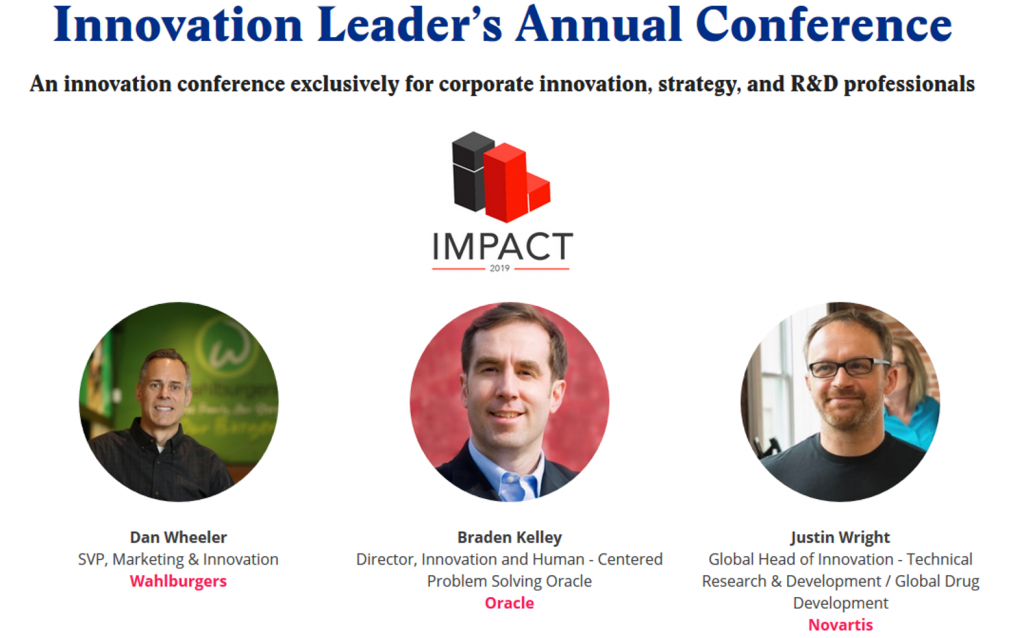
Join me in San Francisco, CA next month – October 22-24, 2019 at Innovation Leader’s IMPACT 2019, their annual conference where innovation leaders from organizations around the world will meet to share innovation best practices.

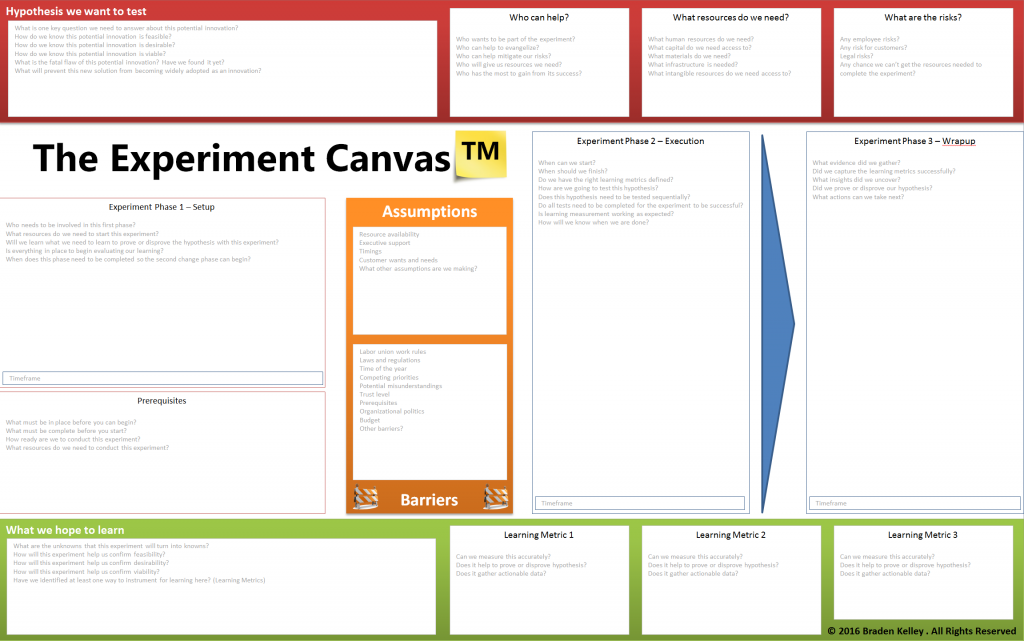
I’ll be doing a keynote and workshop that will give participants hands-on experience with The Experiment Canvas™ from my forthcoming Human-Centered Innovation Toolkit™.

The Experiment Canvas by Braden Kelley

The Experiment Canvas™ is one of the many tools that I’ve already created for the Human-Centered Innovation Toolkit™, and it is an incredibly valuable tool for use by people following Design Sprint, Design Thinking or other innovation methodologies to craft and execute experiments.

If you’d like to get involved as a patron or premium sponsor to help finish toolkit development and distribution, please contact me.

Otherwise, I look forward to seeing you next month in San Francisco!

Connect with me on Twitter (@innovate) to orchestrate a meetup to learn about my work at Oracle or to sit down with me at the event to explore any of the powerful tools in the Change Planning Toolkit™ or Human-Centered Innovation Toolkit™.


Accelerate your change and transformation success

Subscribe to Human-Centered Change & Innovation WeeklySign up here to get Human-Centered Change & Innovation Weekly delivered to your inbox every week.

Why Unlearning is More Critical Than Continuous Learning

LAST UPDATED: November 30, 2025 at 7:32PM

Why Unlearning is More Critical Than Continuous Learning

GUEST POST from Chateau G Pato

In the age of exponential change, organizations are suffocated not by a lack of information, but by an abundance of obsolete information. Every firm champions Continuous Learning — the idea that employees must constantly acquire new skills. Yet, few acknowledge that the space in our cognitive and organizational structures is finite. New knowledge cannot take root if the old, comfortable certainties are still occupying the ground.

This is where the Skill of Unlearning becomes paramount. Unlearning is not about forgetting; it’s about choosing to discard the relevance of previously successful mental models and organizational processes that are no longer fit for the current context. It is the conscious, human-centered decision to create cognitive capacity for the new, disruptive ideas necessary for survival.

Unlearning is a strategic necessity. If you cannot unlearn the operating principles of the last decade, you will apply last decade’s solutions to this decade’s problems, and you will fail not from a lack of effort, but from a failure of release.

The Unlearning Imperative: Removing the Ruts of Success

The biggest blocker to unlearning is often past success. When a strategy or process works brilliantly for ten years, it hardens into dogma. This dogma creates three primary barriers that must be addressed through human-centered change:

1. The Organizational Identity Barrier

Many firms derive their identity from their history (“We are the best analog camera manufacturer,” or “We are the best provider of physical media”). When the market shifts, employees struggle to let go of the core competency that defined their professional value. Unlearning requires redefining the organizational mission from what we produce to what problem we solve for the customer, regardless of the technology.

2. The Procedural Rigidity Barrier

The “way we’ve always done things” acts as concrete, resisting new methodologies (e.g., trying to implement Agile development using a rigid waterfall budgeting process). Unlearning requires disrupting the processes that reward the old behavior. You can’t learn radical new product development if the budget cycle punishes every failed experiment. The process itself must be unlearned.

3. The Cognitive Comfort Barrier

For individuals, unlearning is emotionally taxing. It means admitting that a skill they spent decades mastering is now worth less than a skill they don’t yet possess. Leaders must create Psychological Safety where employees are allowed to be temporarily incompetent as they transition to the new model. The fear of looking foolish is the number one killer of unlearning.

Case Study 1: The Insurance Giant and the Digital Channel Shift

Challenge: Dominance of an Obsolete Sales Channel

A large, established insurance company (“LegacyInsure”) dominated its market through a massive, highly successful network of local, commissioned agents. When digital-native competitors offered instantaneous online quotes and sign-ups, LegacyInsure lagged. The problem wasn’t a lack of digital investment; it was the cultural inability of its regional managers to unlearn the value structure of the agent-led model.

The Unlearning Intervention: Mandatory Dual Operating Models

The leadership knew forcing a sudden shift would alienate key personnel. Instead, they mandated a Dual Operating Model for three years, creating a separate, digitally-focused division with zero dependence on the agent network. Critically, regional managers were assigned metrics that rewarded both the old and the new model, forcing them to:

  • Unlearn the assumption that high-touch contact was required for every sale.
  • Learn to value data from self-service customers (Learning).

The Human-Centered Lesson:

By separating the models, the company created a safe space for the new to grow without being suffocated by the old, profitable dogma. The regional managers who embraced the unlearning process transitioned into roles overseeing both digital and agent channels, becoming change champions. Those who couldn’t unlearn their previous success were gently transitioned out over time. The company unlearned its channel dependency and survived the digital wave.

Case Study 2: The Software Company and the Product Pivot

Challenge: Sticking to a Feature Set That No Longer Solved the Core Problem

A B2B software firm (“FeatureSoft”) built its reputation on a product with deep, complex, and highly customizable features. However, the market had shifted to favoring simple, intuitive, cloud-based solutions (the SaaS Revolution). FeatureSoft’s engineers were resistant to the pivot; their professional identity was tied to building complexity.

The Unlearning Intervention: The ‘Kill Your Darling’ Mandate

The CEO issued a direct mandate to unlearn complexity. They created an internal innovation challenge: “Build the simplest possible version of our product that delivers 80% of the customer’s value in a pure SaaS model, using only 20% of the original codebase.” The prize was funding for the team to become the new core product unit.

  • Engineers were forced to unlearn the value of complexity and mastery of the legacy code.
  • They had to learn the value of abstraction and minimal viable product (MVP).

The Human-Centered Lesson:

The challenge transformed the culture. By making the act of simplifying the primary goal, the company inverted the value hierarchy. The engineers, highly intelligent and competitive, embraced the new challenge. They successfully unlearned the need for feature depth and focused on solving the core user problem elegantly, facilitating a market-saving pivot that would have been blocked by the cognitive inertia of its legacy code experts.

Mastering the Unlearning Skill

Unlearning is an active, not passive, process. It requires leadership to institutionalize rituals that challenge the status status quo:

  1. The Pre-Mortem: Before launching any major project, assume the project failed spectacularly two years in. Discuss what old assumption was responsible for that failure.
  2. The Stop Budget: Allocate a percentage of budget not to R&D, but to identifying and stopping obsolete projects, processes, and products. Reward the teams that successfully kill their own initiatives and free up resources.
  3. Reverse Mentoring: Mandate senior leaders be mentored by new, entry-level employees specifically on their lack of knowledge — their fresh, unburdened perspective on customer friction.

Focusing on continuous learning fills the organizational tank; mastering unlearning ensures the tank can be properly emptied and refilled. This is the ultimate skill of human-centered change.

“The measure of intelligence is the ability to change. The measure of organizational intelligence is the ability to unlearn.”

Frequently Asked Questions About the Skill of Unlearning

1. What is the fundamental difference between Unlearning and Forgetting?

Unlearning is not about forgetting information; it is the conscious, deliberate act of discarding the relevance or applicability of a previously successful mental model, process, or assumption. It’s creating space for new knowledge, while forgetting is a passive failure of memory.

2. Why is past success the biggest barrier to Unlearning?

Past success creates dogma. When a process works for a long time, it becomes an entrenched part of the organizational identity and reward system, leading to procedural and cognitive rigidity. This comfort and certainty actively resist any new information that contradicts the profitable “way we’ve always done things.”

3. What is the “Stop Budget” and why is it important for Unlearning?

A Stop Budget allocates funds specifically to identifying and terminating obsolete projects, processes, or products. It’s important because it institutionalizes the reward structure for unlearning, shifting the focus from simply starting new things to actively clearing the internal roadblocks created by the old, allowing resources and attention to be intentionally freed up.

Your first step toward mastering Unlearning: Hold an “Assumption Audit” meeting for your next major project. Before discussing the solution, have everyone write down three ‘truths’ they hold about the market or the customer based on the last five years of success. Then, for 15 minutes, debate why each of those ‘truths’ might be completely false today.

Extra Extra: Because innovation is all about change, Braden Kelley’s human-centered change methodology and tools are the best way to plan and execute the changes necessary to support your innovation and transformation efforts — all while literally getting everyone all on the same page for change. Find out more about the methodology and tools, including the book Charting Change by following the link. Be sure and download the TEN FREE TOOLS while you’re here.

Image credit: Pixabay

Subscribe to Human-Centered Change & Innovation WeeklySign up here to get Human-Centered Change & Innovation Weekly delivered to your inbox every week.
The Human Capital Ledger

Accounting for Employee Knowledge and Skills

LAST UPDATED: November 20, 2025 at 12:43PM

The Human Capital Ledger

GUEST POST from Chateau G Pato

Every organization meticulously tracks its financial assets, inventory, and intellectual property. We have sophisticated systems for accounting for every dollar, every piece of equipment, every patent. Yet, the most valuable, dynamic asset in any knowledge-driven economy—the collective intelligence, skills, and experience of our employees—remains largely unaccounted for, relegated to static job descriptions or informal tribal knowledge. This profound oversight isn’t just an HR problem; it’s a strategic vulnerability costing companies dearly in lost innovation, inefficient project staffing, and a diminished ability to adapt to rapid market changes.

It’s time for a fundamental shift in how we perceive and manage our workforce: to introduce the concept of a Human Capital Ledger. Just as a financial ledger provides a clear, real-time view of monetary assets and liabilities, a Human Capital Ledger offers a dynamic, structured account of the knowledge, skills, and even passions resident within our workforce. This isn’t merely an HR tool; it’s a strategic imperative for any leader serious about human-centered innovation and organizational resilience in the 21st century.

The goal isn’t to commoditize human beings but to elevate our collective understanding of their diverse capabilities, unlocking latent potential and enabling organizations to deploy talent with unprecedented agility and purpose.

The Hidden Costs of Unaccounted Human Capital

When employee skills and knowledge are not transparently mapped and made discoverable, organizations suffer from a range of costly inefficiencies and missed opportunities:

  • Innovation Bottlenecks: Promising projects are stalled or fail because the right internal expertise isn’t easily discoverable or deployable across departmental silos.
  • Inefficient Staffing: Teams struggle to find individuals with niche skills, leading to expensive external hires when internal talent already exists, or inefficient, reactive upskilling.
  • Redundant Training: Multiple employees are trained in the same skill without knowing others already possess it, wasting valuable resources and time.
  • Disengaged Workforce: Employees with valuable, often hidden, skills feel overlooked, their full potential untapped, leading to frustration, lower morale, and ultimately, attrition.
  • Slow Adaptation: The organization struggles to pivot quickly to new market demands, technological shifts, or competitive threats because it lacks a clear, real-time view of its collective capability to learn and execute new strategies.

A Human Capital Ledger directly addresses these by transforming human capability into a transparent, actionable, and strategically managed asset.

Key Characteristics of an Effective Human Capital Ledger

Building a robust Human Capital Ledger requires moving beyond outdated HR databases and focusing on dynamic, actionable insights that empower both individuals and the organization:

  • Dynamic Skill Mapping: A continuously updated, granular mapping of individual skills, proficiencies (e.g., beginner, proficient, expert), and even demonstrated capabilities. This goes far beyond generic job titles to capture true expertise.
  • Experience & Project History: A rich record of projects contributed to, specific roles played, and tangible outcomes achieved, providing essential context for skills in action.
  • Learning Pathways & Interests: Documenting employee development goals, certifications, and expressed interests or passions, indicating potential future capabilities and areas for growth.
  • Searchable & Discoverable: Enabling leaders, project managers, and even employees themselves to easily search for specific skills, expertise, or project experiences across the entire organization.
  • Self-Maintained & Peer-Validated: A system that encourages employees to update and enrich their own profiles, potentially with peer validation or manager endorsement, to ensure accuracy and reduce HR administrative burden.
  • Privacy & Security-Centric: Designed with clear rules on data access and use, respecting employee privacy while maximizing organizational benefit and building trust.

Key Benefits for Innovation and Change

Implementing a Human Capital Ledger fundamentally transforms how organizations understand, manage, and deploy their talent, leading to significant competitive advantages and cultural shifts:

  • Accelerated Innovation: Rapidly form high-impact, cross-functional “Tiger Teams” by precisely identifying individuals with complementary, often hidden, skills across departments, dramatically shortening innovation cycles.
  • Strategic Workforce Planning: Proactively identify emerging skill gaps and critical dependencies, informing targeted training programs, strategic hiring, or agile re-skilling initiatives before they become crises.
  • Enhanced Employee Engagement: Employees feel genuinely valued when their full range of skills is recognized and utilized; they are empowered to seek projects that align with their interests, passions, and growth objectives.
  • Smarter Project Staffing: Optimize project success by precisely matching the right skills and experience to critical initiatives, reducing ramp-up time, minimizing risk, and increasing efficiency.
  • Improved Knowledge Transfer: Easily identify internal experts for mentoring, training, or documenting critical institutional knowledge, mitigating the risks of brain drain and ensuring continuity.
  • Agile Talent Deployment: Pivot quickly to new market opportunities or internal challenges by rapidly re-deploying existing talent with the exact capabilities required, fostering true organizational adaptability.

Case Study 1: The Global Consulting Firm and the Expert Rediscovery

Challenge: Redundant Expertise & Missed Project Opportunities

A global consulting firm, renowned for its expertise, often struggled to staff niche, high-value projects efficiently. Project leaders frequently hired expensive external contractors for specialized skills (e.g., specific industry regulations, emerging AI platforms) only to later discover an internal expert with the exact same proficiency working in a different, often distant, division. This led to wasted costs, project delays, and missed internal growth opportunities.

Human Capital Ledger Intervention:

The firm implemented a dynamic Human Capital Ledger, leveraging an enhanced internal social networking platform. Every consultant and staff member was encouraged (and incentivized) to create a detailed skill profile, listing technical proficiencies, industry knowledge, language capabilities, and even soft skills. Crucially, the system allowed for peer endorsements of skills and linked profiles directly to past project contributions and outcomes. A dedicated “Talent Scout” role was introduced to actively search this ledger for internal matches before external sourcing was considered.

The Human-Centered Lesson:

Within two years, external contractor spend for specialized skills dropped by 15%, equating to millions in savings. More importantly, internal project success rates increased as teams found the right internal experts faster. Consultants felt more valued, seeing their diverse skills recognized and utilized, leading to higher morale and reduced turnover. The ledger transformed talent management from a reactive, siloed process to a proactive, networked ecosystem, enabling the firm to surface hidden gems of human capital and strategically deploy its existing workforce with unparalleled precision.

Case Study 2: The Manufacturing Company and the Automation Upheaval

Challenge: Adapting to Rapid Automation & Skill Obsolescence

A traditional manufacturing company faced a strategic imperative to rapidly automate its factory floors. This meant many long-term employees’ manual labor skills were becoming obsolete, leading to significant anxiety, resistance to change, and potential layoffs. The company lacked a clear understanding of what transferable skills these employees possessed or their capacity for re-skilling into new roles.

Human Capital Ledger Intervention:

The company developed a Human Capital Ledger focused specifically on “re-skilling potential.” Beyond current job skills, it collected data on employees’ problem-solving aptitudes, willingness to learn new technologies, previous training (even outside work, like hobbyist interests), and expressed career interests. Using this rich qualitative and quantitative data, they identified a cohort of “automation-ready” employees—those with strong analytical skills or a passion for technology—who were offered intensive training programs for new roles in robot maintenance, data analysis, and automation programming. The ledger also helped leadership proactively identify which skills were rapidly becoming obsolete, enabling targeted planning for up-skilling others.

The Human-Centered Lesson:

This proactive, human-centered approach saved the company millions in potential severance and retraining costs, but more significantly, it retained invaluable institutional knowledge and significantly boosted employee morale and trust during a turbulent period. The ledger transformed a potential workforce crisis into a strategic re-skilling opportunity, demonstrating a profound commitment to its people. It proved that understanding the full spectrum of human capital, including potential and passion, is critical for navigating massive organizational change with empathy and efficiency, turning disruption into opportunity.

Building Your Human Capital Ledger: A Strategic Imperative

Implementing a Human Capital Ledger is a journey, not a destination. It requires a thoughtful investment in technology, an unwavering commitment to data integrity, and a culture that values transparency, continuous learning, and employee empowerment. Start small, learn quickly, and scale strategically:

  • Pilot in a Department or Project: Choose one department or a high-priority project to build out detailed, dynamic skill profiles, demonstrating early wins.
  • Focus on Critical Skills First: Identify the 5-10 strategic skills your organization desperately needs for future growth or current challenges and prioritize mapping those.
  • Empower Employees: Design a system that encourages and incentivizes individuals to take ownership over their profiles, updating them regularly, and seeking peer validation. Make it *their* tool for career growth.

By bringing the invisible wealth of human capability into clear, actionable view, the Human Capital Ledger empowers organizations to move with unprecedented agility, innovate with precision, and build a workforce that feels truly valued, engaged, and strategically indispensable. It’s not just better accounting; it’s the ultimate human-centered approach to unlocking organizational success and navigating the future of work.

“The most valuable asset isn’t on your balance sheet; it’s in the minds, hearts, and hands of your people. It’s time to account for it, not just manage it.” — Braden Kelley

Your first step towards building a Human Capital Ledger: Choose one specific, complex problem your team or organization is currently facing that requires diverse expertise. Instead of immediately looking outside or relying on formal titles, task a small group with identifying 3-5 existing employees (even in different departments or roles) who might possess unique, underutilized skills, experiences, or even passions that could contribute to solving that problem. Focus solely on their unlisted capabilities and how they could be creatively leveraged for an unexpected solution.

Extra Extra: Because innovation is all about change, Braden Kelley’s human-centered change methodology and tools are the best way to plan and execute the changes necessary to support your innovation and transformation efforts — all while literally getting everyone all on the same page for change. Find out more about the methodology and tools, including the book Charting Change by following the link. Be sure and download the TEN FREE TOOLS while you’re here.

Image credit: Pexels

Subscribe to Human-Centered Change & Innovation WeeklySign up here to get Human-Centered Change & Innovation Weekly delivered to your inbox every week.