Monthly Archives: November 2022

The Human Element in Futurism

Understanding What Drives Tomorrow’s Behaviors

The Human Element in Futurism

GUEST POST from Chateau G Pato

We live in a world obsessed with technological predictions. We meticulously track Moore’s Law, debate the singularity of AI, and map the exponential curve of quantum computing. But I argue that this focus on hardware and code misses the single most volatile and vital factor in any prediction: the human being. As a human-centered change and innovation thought leader, my job is to look beyond the what of technology to the why of behavior. Futurism is not about predicting a new device; it’s about understanding a new human need. The key to successful future-casting — and successful innovation — lies in anchoring technological foresight to the immutable principles of human psychology and anticipating how technology will meet, or fail to meet, our deepest, most enduring needs for connection, control, identity, and security.

The history of failed predictions is littered with technologies that were brilliant on paper but died in the marketplace because they misunderstood or ignored human behavior. We often forget that technology is merely an accelerant; the engine of change is always a shift in human value. To effectively navigate and profit from the future, leaders must perform an exercise I call Behavioral Foresight. This means starting with the timeless human desire (e.g., the need for connection, status, or ease) and then envisioning the scenarios where a disruptive technology either amplifies that desire or simplifies the mechanism for achieving it. When technological capability meets a deep human truth, true transformation occurs.

The Three Drivers of Tomorrow’s Behavior

While the expression of human needs changes with every innovation cycle, the underlying drivers remain constant. Successful futurism anticipates the convergence of technology with these three enduring pillars:

  • 1. The Need for Control and Autonomy: As the world becomes more complex, people inherently seek more control over their personal data, time, and environment. Any technology that democratizes power, decentralizes decision-making, or gives the individual greater agency (from blockchain to personalized health trackers) is inherently aligned with a fundamental human driver.
  • 2. The Pursuit of Ease (Frictionless Living): We are wired to conserve energy. Innovations that eliminate friction, simplify complex processes, or reduce cognitive load will always win. This is why a one-click purchase button is more successful than a three-step form, and why seamless integration beats powerful but complex software. Tomorrow’s successful behaviors are the easiest ones.
  • 3. The Desire for Authentic Identity and Belonging: Technology may connect us globally, but it also creates anxiety around authenticity and status. The future of social platforms and digital identities will be driven by platforms that allow for niche, meaningful connections and give people powerful tools to express their unique, evolving selves, resisting the homogenizing forces of mass culture.

“Predicting technology is easy. Predicting human behavior is the only thing that matters.”


Case Study 1: The Smartphone Revolution – Prioritizing Connection Over Capability

The Failed Prediction:

In the early 2000s, many tech experts predicted that the future of mobile phones would be driven by technical capability — faster processors, superior cameras, and advanced features. The prevailing wisdom was that professional and power users would be the primary adopters of these complex devices.

The Human-Centered Reality:

The iPhone’s success was not initially built on its superior processing power (which lagged behind competitors at launch), but on its ability to satisfy the human need for frictionless connection and belonging. The seamless interface, the easy access to email and social platforms, and the intuitive camera made it a powerful social tool, not just a business device. The killer applications were not spreadsheets; they were instant messaging, photo sharing, and social networking. The success was driven by the average person’s need to feel constantly connected and to easily share their lived experience. It prioritized the human element (ease, connection) over the technical element (raw power).

The Key Behavioral Insight:

The market demonstrated that people will tolerate significant complexity behind the scenes (processor architecture, network latency) if the interface perfectly addresses their core human need for immediate, effortless social interaction. The future of mobile wasn’t about power; it was about proximity to people.


Case Study 2: The Failure of Google Glass – When Status Conflicts with Comfort

The Technological Promise:

Google Glass was a technological marvel: a discreet, wearable computer that promised to deliver information directly into the user’s field of vision, representing the ultimate fusion of digital information and physical reality. Technically, it was a leap forward, aimed at maximizing efficiency and access to data.

The Human-Centered Failure:

Despite the technical brilliance, Glass failed spectacularly in the consumer market, largely because it created severe friction in two fundamental human areas: social identity and control.

  • Identity/Belonging: Users felt self-conscious, and the public saw the wearers — dubbed “Glassholes” — as arrogant or intrusive. The device was perceived as a symbol of status and exclusion, making the wearer feel separate rather than integrated.
  • Control/Security: The always-on camera and recording capability deeply violated the social contract of trust and privacy, making non-wearers feel a profound lack of control over their own image and security in the wearer’s presence.

The technology ignored the human truth that people value their sense of comfort, privacy, and social acceptance far more than instant access to search results.

The Key Behavioral Insight:

The market demonstrated that any technology that infringes upon the psychological safety and social norms of the community will be rejected, regardless of its utility. The human need for social acceptance and privacy trumped the efficiency gains offered by the wearable tech.


Conclusion: The Future is Human-Shaped

The most enduring innovations are not those that change the most things, but those that understand the things that never change—the immutable drivers of human behavior. Technology simply provides new pathways to fulfill these old needs.

For any leader charting a course into the future, your greatest tool is not a crystal ball or a supercomputer; it is radical empathy. You must look at emerging technologies through the lens of human psychology. Ask: Does this technology simplify an ancient frustration? Does it amplify a core need for connection? Does it empower the individual or take away their control?

The convergence of technological capability and human truth is where true value is created. By centering your future-casting on the timeless human element, you move beyond mere trendspotting to true FutureHacking – proactively shaping a world that is not only technologically advanced but also genuinely human-centered and aligned with the aspirations of the people it serves.

Extra Extra: Because innovation is all about change, Braden Kelley’s human-centered change methodology and tools are the best way to plan and execute the changes necessary to support your innovation and transformation efforts — all while literally getting everyone all on the same page for change. Find out more about the methodology and tools, including the book Charting Change by following the link. Be sure and download the TEN FREE TOOLS while you’re here.

Image credit: 1 of 950+ FREE quote slides available at http://misterinnovation.com

Subscribe to Human-Centered Change & Innovation WeeklySign up here to get Human-Centered Change & Innovation Weekly delivered to your inbox every week.

Lobsters and the Wisdom of Ignoring Your Customers

Lobsters and the Wisdom of Ignoring Your Customers

GUEST POST from Robyn Bolton

Being the smart innovator (and businessperson) you are, you know it’s important to talk to customers. You also know it’s important to listen to them.

It’s also important to ignore your customers.

(Sometimes)

Customers will tell you what the problem is. If you stay curious and ask follow-up questions (Why? and Tell me more), they’ll tell you why it’s a problem and the root cause. You should definitely listen to this information.

Customers will also tell you how to fix the problem. You should definitely ignore this information.

To understand why, let me tell you a story.

Eye Contact is a Problem

Years ago, two friends and I took a day trip to Maine. It was late in Fall, and many lobster shacks dotting the coast were closed for the season. We found one still open and settled in for lunch.

Now, I’m a reasonably adventurous eater. I’ll try almost anything once (but not try fried tarantulas). However, I have one rule – I do not want to make eye contact with my food.

Knowing that lobsters are traditionally served with their heads still attached, I braced for the inevitable. As the waitress turned to me, I placed the same order as my friends but with a tiny special request. “I’ll have the lobster, but please remove its head.”

You know that scene in movies when the record scratches, the room falls silent, and everyone stops everything they’re doing to stare at the person who made an offending comment? Yeah, that’s precisely what happened when I asked for the head to be removed.

The waitress was horrified, “Why? That’s where all the best stuff is!”

“I don’t like making eye contact with my food,” I replied.

She pursed her lips, jotted down my request, and walked away.

A short time later, our lunch was served. My friends received their lobsters as God (or the chef) intended, head still attached. Then, with great fanfare, my lobster arrived.

Its head was still attached.

But we did not make eye contact.

Placed over the lobster’s eyes were two olives, connected by a broken toothpick and attached to the lobster’s “ears” by two more toothpicks.

The chef was offended by my request to remove the lobster’s head. But, because he understood why I wanted the head removed, he created a solution that would work for both of us – lobster-sized olive sunglasses.

Are you removing the head or making sunglasses?

Customers, like me, are experts in problems. We know what the problems are, why they’re problems, and what solutions work and what don’t. So, if you ask us what we want, we’ll give you the solution we know – remove the head.

Innovators, like you and the chef, are experts in solutions. You know what’s possible, see the trade-offs, and anticipate the consequences of various choices. You also take great pride in your work and expertise, so you’re not going to give someone a sub-par solution simply because they asked for it. You’re going to provide them with olive sunglasses.

Next time you talk to customers, stay curious, ask open-ended questions, ask follow-up questions, and build a deep understanding of their problems. Then ignore their ideas and suggestions. They’ll only stand in the way of your olive sunglasses.

Image credit: Pixabay

Subscribe to Human-Centered Change & Innovation WeeklySign up here to get Human-Centered Change & Innovation Weekly delivered to your inbox every week.

Using Analytics to Understand Human Behavior

The Data-Driven Innovator

Using Analytics to Understand Human Behavior

GUEST POST from Art Inteligencia

In the world of change and innovation, there is a false dichotomy that has persisted for too long: the perceived conflict between **human-centered design** and **data science**. We often hear that the most profound insights come from intuition, empathy, and listening to the customer’s story. While true, that view misses a critical reality: the most powerful innovation emerges when intuition is fueled by rigorous data. As a human-centered change and innovation thought leader, I argue that the future belongs to the **Data-Driven Innovator**—the one who uses analytics not just to measure performance, but to deeply understand, predict, and ultimately serve complex human behavior. Data is not the enemy of empathy; it is the most sophisticated tool we have to **quantify human needs** and **de-risk the innovation process**.

The problem with relying solely on traditional methods—surveys, focus groups, and simple intuition—is that they are often limited by what people *say* they do, which rarely aligns with what they *actually* do. Behavioral data, gathered from digital footprints, transactional records, and usage patterns, provides an unbiased, unfiltered window into genuine human motivation. It tells us where customers get stuck, which features they ignore, and the specific sequence of actions that leads to delight or frustration. Innovation, therefore, must move beyond simply collecting Big Data to mastering **Deep Data**—the careful, ethical analysis of behavioral patterns to uncover the latent needs and unarticulated desires that lead to breakthrough products and experiences.

The Analytics-Driven Empathy Framework

To successfully fuse human-centered thinking with data rigor, innovators must adopt a framework that treats analytics as the starting point for empathy, not the endpoint for analysis:

  • 1. Behavioral Mapping (The ‘What’): Begin by mapping the customer journey using pure behavioral data. Which steps have the highest drop-off rate? What is the *actual* time between a pain point being identified and a solution being sought? This quantifies the problem space and directs attention to where human frustration is highest.
  • 2. Qualitative Triangulation (The ‘Why’): Once data identifies a “what” (e.g., 60% of users fail at this step), the innovator must deploy qualitative research (interviews, observation) to find the “why.” Data highlights the anomaly; human-centered methods explain the motivation, the fear, or the confusion behind it.
  • 3. Predictive Prototyping (The ‘How to Fix’): Use analytics to build predictive models that test new concepts. Instead of launching a full product, use A/B testing and multivariate analysis on small, targeted groups. Data allows you to quickly iterate on prototypes, measuring the direct impact on human behavior (e.g., effort reduction, time saved, emotional response captured via text analysis).
  • 4. Ethical Guardrails (The ‘Should We?’): Data analysis carries immense responsibility. Innovators must establish clear ethical guidelines to ensure data is used to serve customers, not to manipulate them. Prioritize transparency, privacy-by-design, and actively audit algorithms to eliminate bias and ensure fairness.

“Empathy tells you *how* to talk to the customer. Data tells you *when* and *where* to listen.”


Case Study 1: Netflix – Quantifying the Appetite for Content

The Challenge:

In the crowded media landscape, the challenge for Netflix was twofold: how to reduce churn (customers leaving) and how to justify the massive, risky investment in original content. They couldn’t rely on simple focus groups for such high-stakes, long-term decisions.

The Data-Driven Innovation Solution:

Netflix became the master of **deep data analysis** to understand the human appetite for content. They didn’t just track viewing habits; they tracked every micro-interaction: when a user paused, rewound, what they searched for, the time of day they watched, and the precise moment they abandoned a show. This behavioral data revealed clear, quantitative unmet needs. For example, the data showed that a significant cohort of users watched British period dramas, starring a specific type of actor, and favored directors with a particular cinematic style. This insight was then used to greenlight shows like House of Cards and Orange Is the New Black, not just because they sounded good, but because the data demonstrated a latent, high-demand audience for that exact combination of themes, talent, and viewing format.

The Human-Centered Result:

By using analytics as an engine for creative decision-making, Netflix revolutionized media production. They proved that data can fuel, rather than stifle, creativity. The result was not just reduced churn and massive market dominance, but a fundamentally improved customer experience—a personalized library that feels tailor-made for each user, making them feel genuinely understood. This is innovation where the data-driven decision leads directly to human delight.


Case Study 2: Spotify – Using Behavioral Data to Define Identity

The Challenge:

For a music streaming service, the challenge is not just providing access to millions of songs, but helping users navigate that overwhelming volume and connecting them with the *right* song at the *right* emotional moment. The user’s relationship with music is deeply personal and often unarticulable—how do you quantify musical identity?

The Data-Driven Innovation Solution:

Spotify innovated by translating passive listening into actionable behavioral data. They moved beyond simple “most played” lists to create products like **Discover Weekly** and **Wrapped**. These features rely on deep analytics that track everything from the track’s tempo and key (acoustic data) to the time of day it was played, the device used, and the listener’s immediate skip rate (behavioral data). The key innovation was to use machine learning to identify the musical identity of the user not by asking them, but by observing their habits, and then to use that data to serve them content they didn’t even know they wanted. The company uses this data to quantify a person’s mood, context, and latent taste.

The Human-Centered Result:

Spotify transformed passive music consumption into an active, highly personalized journey. Products like ‘Wrapped’ don’t just give users data; they give them a **narrative about themselves**, which is profoundly human-centered. This innovation has led to unmatched user engagement and loyalty. It demonstrates that data analytics, when applied empathetically, can be used to reflect a user’s identity back to them, deepening their connection to the service and making the abstract concept of personal taste tangible and delightful.


Conclusion: The Future of Innovation is Quantified Empathy

The time for the intuitive innovator to stand apart from the data scientist is over. The next great wave of innovation will be led by those who understand that **Deep Data is the greatest tool for Deep Empathy**. Analytics does not dehumanize the innovation process; it refines it, allowing us to move from generalized guesses about human needs to precise, actionable insights. By fusing human-centered design principles with the rigor of behavioral analytics, we create a powerful feedback loop. Data points us toward the friction, empathy reveals the solution, and data again validates the fix. This is the quantified path to innovation, ensuring that we are not just building things that are technically possible, but things that people genuinely need, deeply want, and, most importantly, actually use.

The future belongs to the data-driven innovators who treat every behavioral click, every pause, and every purchase as a precious piece of the human story they are trying to tell.

Extra Extra: Futurology is not fortune telling. Futurists use a scientific approach to create their deliverables, but a methodology and tools like those in FutureHacking™ can empower anyone to engage in futurology themselves.

Image credit: Pixabay

Subscribe to Human-Centered Change & Innovation WeeklySign up here to get Human-Centered Change & Innovation Weekly delivered to your inbox every week.

Crabby Innovation Opportunity

Crabby Innovation Opportunity

There are many foods that we no longer eat, but because we choose to, not because they have disappeared from nature. In fact, here is a list of 21 Once-Popular Foods That We All Stopped Eating, including:

  • Kool-Aid
  • Margarine
  • Pudding Pops
  • Candy Cigarettes
  • etc.

But today, we’re going to talk about a food that I personally love, but that I’ve always viewed as a bit of luxury – crab legs – that is in danger of disappearing off the face of the planet due to climate change and human effects. And we’re not just talking about King Crab, but we’re also talking about Snow Crab, and we’re talking about Dungeness Crab too. And this is a catastrophe not just for diners, but to an entire industry and the livelihood of too many families to count:

That’s more than a BILLION CRABS that none of us have had the pleasure of their deliciousness.

And given the magnitude of the die off, it is possible they might disappear completely, meaning we can’t enjoy and salivate at the thought of this popular commercial from the 80’s:

Climate change and global warming are real. If you don’t believe humans are the cause, that it’s naturally occurring, fine, it’s still happening.

There can be no debate other than surrounding the actions we take from this point forward.

And while the magnitude of the devastation of other animal species that humans are responsible for is debatable, we are failing in our duties as caretakers of the earth.

This brings me back to the title of the post and the missions of this blog – to promote human-centered change and innovation.

Because we have killed off one of our very tastiest treats (King, Snow and Dungeness Crabs), at least in the short-term (and possibly forever), there is a huge opportunity to do better than krab sticks or the Krabby Patties of SpongeBob SquarePants fame.

If crab legs are going to disappear from the menus of seafood restaurants across the United States, and possibly the world, can someone invent a tasty treat that equals or exceeds the satisfaction of wielding a crab cracker and a crab fork and extracting the white gold within to dip into some sweet and slippery lemon butter?

Who is going to be first to crack this problem?

Or who will be the first to find a way to bring the crabs back from extinction?

We’re not just talking about a food to fill our bellies with, we’re talking about a pleasurable dining experience that is going away – that I know someone can save!

And no Air Protein marketing gimmicks please!

Image credit: Northsea.sg

Subscribe to Human-Centered Change & Innovation WeeklySign up here to get Human-Centered Change & Innovation Weekly delivered to your inbox every week.

Four Ways to Overcome Resistance to Change

Four Ways to Overcome Resistance to Change

GUEST POST from Greg Satell

Why are organizations so resistant to change? Many point to a corporate immune system or to organizational antibodies that instantly attack change. The idea is that leaders prefer stability to disruption and put systems in place to reduce variance. These systems will instantly seek out and destroy anyone who tries to do anything different.

This is a dangerously misleading notion. There is no such thing as a corporate immune system. In fact, most senior executives are not only in favor of change, they see themselves as leading it! However, while most people are enthusiastic about change as a general concept, they are suspicious of it in the particular.

The truth is that is if the change you seek has the potential to be truly impactful, there are always going to be people affected who aren’t going to like it. They will seek to undermine it, often in very dishonest ways. That’s just a fact of life that you need to accept. Yet history clearly shows that, with a smart strategy, even the most ardent opposition can be overcome.

1. Ignore The Opposition — At First

The first principle for overcoming resistance is to understand that there is no reason you need to immediately engage with your active opposition. In fact, it’s something you should do your best to avoid in the early stages when your idea is still untried, unproven and vulnerable.

All too often, change initiatives start with a big kickoff meeting and communication campaign. That’s almost always a mistake. In every organization, there are different levels of enthusiasm to change. Some will be ready to jump on board, but others will be vehemently opposed. For whatever reason, they see this particular idea as a threat.

By seeking to bring in everybody at once, you are very likely to end up spending a lot of time and energy trying to persuade people who don’t want to be persuaded. The truth is that in the beginning your idea is the weakest it’s ever going to be. So there’s no reason to waste your time with people who aren’t open to it.

If you find yourself struggling to convince people, you either have the wrong change or the wrong people. So at first, seek out people who are already enthusiastic about your vision for change and want it to succeed.

2. Identify Your Apostles

In retrospect, transformations often seem inevitable, even obvious. Yet they don’t start out that way. The truth is that it is small groups, loosely connected, but united by a common purpose that drives transformation. So, the first thing you want to do is identify your apostles—people who are already excited about the possibilities for change.

For example, in his efforts to reform the Pentagon, Colonel John Boyd began every initiative by briefing a group of collaborators called the “Acolytes,” who would help hone and sharpen the ideas. He then moved on to congressional staffers, elected officials and the media. By the time general officers were aware of what he was doing, he had too much support to ignore.

In a similar vein, a massive effort to implement lean manufacturing methods at Wyeth Pharmaceuticals began with one team at one factory, but grew to encompass 17,000 employees across 25 sites worldwide and cut manufacturing costs by 25%. The campaign that overthrew Serbian dictator Slobodan Milošević started with just 5 kids in a coffee shop.

One advantage to starting small is that you can identify your apostles informally, even through casual conversations. In skills-based transformations, change leaders often start with workshops and see who seems enthusiastic or comes up after the session. Your apostles don’t need to have senior positions or special skills, they just have to be passionate.

3. Shift from Differentiating Values to Shared Values

People feel passionately about things that are different. That’s why the first product that Steve Jobs launched after he returned to Apple was the iMac. It wasn’t a very good computer, but its bright colors were designed to appeal to Apple’s passionate fan base, as was the “Think Different” ad campaign launched around the same time.

Yet if all Steve Jobs had to rely on was difference, Apple would have never grown beyond its most ardent fans and become the most valuable company in the world. It was the company’s growing reputation for high quality and smart features that brought in new customers. True change is always built on common ground.

One of the biggest challenges in driving transformation is that while differentiating values make people excited about an idea, it is shared values that help grow a movement. That doesn’t mean you’re abandoning or watering down your principles. It just means that you need to meet people where they are, not where you wish them to be.

For example, the Agile Manifesto has inspired fierce devotion among its adherents. Yet for those outside the Agile development community, its principles can seem weird and impractical. If you want to bring new people, it’s better to focus on shared values, such as the ability to produce better quality projects on time and on budget.

4. Create and Build on Meaningful Success

The reason people resist change is that they have a certain level of comfort with the status quo. Change forces us to grapple with the unfamiliar, which is always uncomfortable. There are also switching costs involved. So, if you want your change to take hold, at some point you are going to have to prove you can get results.

One great example is the PxG initiative at Procter & Gamble. It got started when three mid-level executives decided that they could dramatically improve a process. They didn’t try to convince anybody or ask for permission but were able to reduce the time it took from weeks down to hours. That started a movement within the company that has attracted thousands.

When Experian CIO Barry Libenson started a cloud transformation at his company, he didn’t force anybody to go along. Instead, he focused on helping product managers who wanted to build successful cloud projects. As they began to show concrete business results, the pressure for others to get with the program increased.

Perhaps most of all, you need to accept that resistance is part of change and that’s not necessarily a bad thing. In fact, skeptics can often point out important flaws in your idea and make it stronger. The difference between successful revolutionaries and mere dreamers is that those who succeed anticipate resistance and build a plan to overcome it.

— Article courtesy of the Digital Tonto blog
— Image credit: Pixabay

Subscribe to Human-Centered Change & Innovation WeeklySign up here to get Human-Centered Change & Innovation Weekly delivered to your inbox every week.
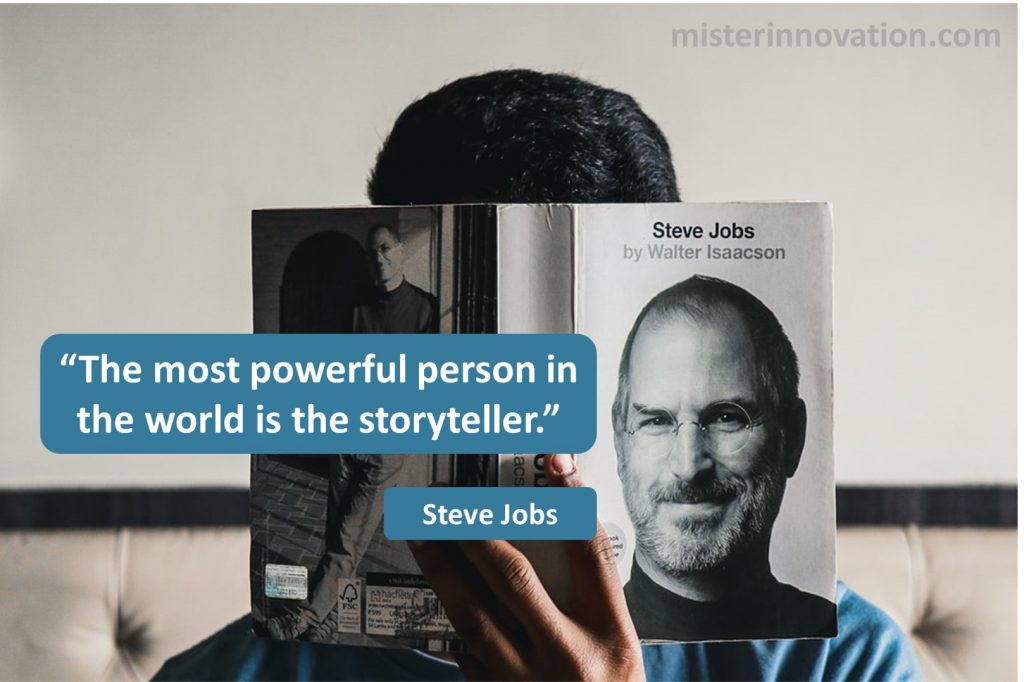
Making Abstract Concepts Tangible

The Power of Anecdote

Making Abstract Concepts Tangible

GUEST POST from Chateau G Pato

In the innovation landscape, we are drowning in data and gasping for insight. We talk endlessly about “digital transformation,” “agile strategy,” and “cultural change”—phrases that are intellectually sound but emotionally sterile. These abstract concepts, presented in PowerPoint decks filled with charts and jargon, may inform the mind, but they rarely move the soul. As a human-centered change and innovation thought leader, I can tell you this truth: Jargon and data don’t drive change; stories do. The single most powerful tool a leader has to ignite a movement, overcome resistance, and embed a new culture is the simple, compelling anecdote. An anecdote takes an abstract, often intimidating strategic goal and anchors it to a specific, tangible human moment, making the incomprehensible accessible and the unbelievable real.

We are wired for narrative. Neurologically, when we hear pure data or statistics, only the language processing centers of our brains are engaged. But when we hear a story, the brain areas that would be active if we were *experiencing* the events ourselves light up. This phenomenon, known as neural coupling, is why an anecdote is the kinetic energy of change. It releases oxytocin, building trust and empathy between the storyteller and the listener. It moves past intellectual understanding to emotional ownership. You can tell an employee that the company needs to be “customer-centric” ten times, and they’ll nod. But tell them the story of how one simple act of service saved a customer’s day, and you don’t just inform them—you transform their understanding of their own role. The anecdote is the ultimate human-centered design for strategy.

A Framework for Anecdotal Leadership

Effective leaders don’t just delegate strategy; they become the chief storytellers of the organization’s future. Leveraging the power of anecdote requires intent and structure, not just random storytelling. Here is a framework for embedding narrative into your leadership:

  • 1. Anchor the Abstract to the Authentic: For every major strategic initiative—whether it’s “sustainability” or “process efficiency”—find the one authentic story that illustrates the point. Do not let a new value statement stand alone; anchor it with the specific human moment that brought that value to life.
  • 2. Democratize Storytelling: The most potent anecdotes often do not come from the C-suite. They come from the front lines, from the customer service representative, the engineer, or the sales associate. Leaders must actively create channels to collect and amplify these stories, turning the front line into the source of organizational truth.
  • 3. Vulnerability as the Currency of Trust: To drive real behavioral change, leaders must model vulnerability. Sharing a personal anecdote about a major failure, a moment of profound uncertainty, or a time when you realized you were wrong is the fastest way to build psychological safety. It signals that it is safe for others to take risks and admit mistakes, which is the oxygen of innovation.
  • 4. The Anecdotal Test: Before presenting any major initiative—a new product, a cultural shift, a strategic pivot—test it with a simple question: “If I stripped away all the data and jargon, what single, compelling story would prove the value of this change?” If you can’t tell that story, your strategy is too abstract to succeed.

“Facts tell, but stories sell. In the business of change, you must sell the vision before you can achieve the strategy.” — Braden Kelley


Case Study 1: NASA’s Apollo Program – The Janitor’s Shared Purpose

The Challenge:

In the 1960s, the goal of “putting a man on the moon” was monumental, abstract, and technically incomprehensible to most people. How do you align thousands of scientists, engineers, and support staff across dozens of different facilities—from mathematicians calculating trajectories to janitors sweeping the halls—to a single, human-centered objective?

The Power of Anecdote:

The solution was encapsulated in a single, enduring anecdote involving President John F. Kennedy. As the story goes, during a 1962 tour of the NASA Space Center, Kennedy approached a janitor and asked him what his job was. The janitor, without hesitation, replied, “Mr. President, I’m helping put a man on the moon.” This story, whether perfectly accurate or slightly mythologized, became the organizational blueprint for shared purpose. It was instantly accessible and emotionally resonant. It showed everyone that their role, no matter how distant from the rocket itself, was essential to achieving the collective, human-centered goal.

The Result:

This anecdote transcended engineering schematics and budget reports. It didn’t just explain the mission; it defined the *meaning* of the mission for every employee. It created an organizational culture where purpose was tangible and felt at every level. It is a powerful example of how a leader can use a single, simple human story to align a massive, complex organization toward an abstract, audacious vision, turning a technical challenge into a human triumph.


Case Study 2: Southwest Airlines – Defining Culture Through Action Stories

The Challenge:

How does an airline maintain a culture of exceptional, “beyond-the-policy” customer service and high operational efficiency in an industry notorious for low margins, high stress, and bureaucratic rigidity? Furthermore, how do they teach this unique culture to thousands of new employees every year?

The Power of Anecdote:

Southwest Airlines achieved this not through rule books, but through an obsessive focus on collecting, sharing, and celebrating stories of service. Instead of a 10-point plan for “Customer Loyalty,” new employees are immersed in anecdotes about fellow staff: the flight attendant who bought a pizza for a stranded flight, the ground crew member who retrieved a teddy bear from a distant airport, or the employee who went above and beyond to comfort a nervous traveler. These stories—passed down in training, internal newsletters, and town halls—do not just describe the culture; they prescribe the behavior. They act as concrete examples of the abstract concept of “LUV,” making the company’s commitment to fun and service palpable and actionable.

The Result:

By making storytelling central to their internal communication, Southwest created an immediately recognizable, human-centered cultural fabric. The anecdotes serve as powerful, memorable standards of conduct that are far more effective than any memo. They guide autonomous decision-making in the moment, empowering employees to break rank for the sake of the customer experience. The enduring success of Southwest proves that a thriving, innovative culture is fundamentally a collection of great stories that its people choose to live out every day.


Conclusion: The Narrative Imperative

The era of leading with abstraction is over. If you want people to move—if you want to ignite genuine innovation, shift culture, and drive a strategic transformation—you must first move their hearts. The anecdote is your most potent tool, the linguistic delivery system for empathy and action. It allows you to take the vast, complex machinery of change and compress it down into a moment that every human can understand, remember, and internalize. As leaders, our role is not just to analyze the data; it is to master the narrative. We must become the chief story collectors and chief storytellers, for the enduring power of a single, well-told human story will always outweigh a thousand bullet points. The most effective strategies are not those that calculate best, but those that resonate best.

Extra Extra: Because innovation is all about change, Braden Kelley’s human-centered change methodology and tools are the best way to plan and execute the changes necessary to support your innovation and transformation efforts — all while literally getting everyone all on the same page for change. Find out more about the methodology and tools, including the book Charting Change by following the link. Be sure and download the TEN FREE TOOLS while you’re here.

Image credit: 1 of 950+ FREE quote slides available at http://misterinnovation.com

Subscribe to Human-Centered Change & Innovation WeeklySign up here to get Human-Centered Change & Innovation Weekly delivered to your inbox every week.

Management Accountability in Two Dimensions

Performance and Power

Management Accountability in Two Dimensions

GUEST POST from Geoffrey A. Moore

In Silicon Valley, we talk a lot about leadership but perhaps not enough about management. That’s because we are famous for working the fuzzy front end of things, where management is premature and leadership is paramount. But to have real impact on the world, you must eventually lean on strong management to operate at scale. So, what exactly does that entail?

First and foremost, management is about delivering the performance committed to in the plan. Everyone gets this, and while there are major differences in styles of management, all are measured ultimately by performance metrics, and no one is confused. We may not like the numbers we are supposed to make, but we know what they are, we have some idea of what it will take to make them, and we will get report-outs along the way to tell us how we are doing.

Such is not the case, however, with a second dimension of management accountability—the need to continually invest in ways that will power future performance. Performance consumes power as a means to create returns. If we focus 100% of our resources on performance, we will eventually exhaust all our existing sources of power and will be unable to compete effectively going forward.

Seems obvious enough, but here is the problem. We do not define power anywhere nearly as clearly as we define performance. We do not have reports that tell us how we are doing on the power side of the equation. We are often not really clear about what power we should be going after, what investments could be specifically targeted to deliver power, or what metrics would verify that we have succeeded. Worse still, our performance compensation systems can actually incent us to ignore all this ambiguity around “power management” and focus solely on meeting our performance commitments, particularly when resources are tight. Worst of all, as power dwindles, it becomes harder and harder to make the number, which puts more pressure on the resources we have, which further disincentivizes investing in future power. The result is a downward spiral from which it is painfully hard to escape.

So, what can we do to prevent it?

To begin with, we will need a map—specifically a power map, an understanding of the geography of our current power base. We can develop one through root cause analysis. That is, if we are in the Performance Zone, we can ask, where are our products successful, where are they not, and why? Where are our sales efforts successful, where are they not, and why? Similarly, if we are in the Productivity Zone, we can ask, where are our systems working as promised, where are they not, and why? Which of our programs have delivered the change in state promised, which have not, and why? (Note: if we are in the Incubation Zone, we are already an investment in power, so this exercise would not apply.)

Root cause analysis, by its very nature, shifts the focus from the domain of performance (effects) to that of power (causes). The deeper this analysis can penetrate, the more insightful our map of power becomes. This is a good opportunity to engage the entire team, not only to improve the quality of the analysis, but also to help everyone develop their own management perspective.

Once a power map is in view, then the question becomes, if we could intervene in only one place, where could we have the most impact, and what would it take to bring it about? We are looking for a specific initiative that could change the game within whatever time limits are appropriate to the situation. Here are some examples:

  • In response to a weakening industry status, Sybase leveraged the financial crisis in 2008 to boost its power on Wall Street, a long-dormant part of its power map, with a campaign that focused on portfolio risk analysis, capitalizing on the unique attributes of its columnar database for online analytics. The success of that campaign bought valuable time to develop a mobile app platform for hosting enterprise applications on the iPhone, something that led to SAP acquiring the company at a premium in 2010.
  • In response to the successful performance of the iPod and iTunes (almost half of Apple’s revenue in 2007), subsequently being exposed to the existential threat of smartphones eventually assimilating music players, Apple invested deeply in the iPhone, leveraging its existing wireless downloading infrastructure to liberate programs and content from carrier control. Today, the iPod is effectively embedded in the iPhone, and it is that device that supplies 50 percent of Apple’s revenue.
  • In response to drastically deteriorating industry power at IBM in the early 1990s, Lou Gerstner completely reframed the enterprise’s power map, rejecting the view that future power would come from disaggregation, asserting instead that it would come from global integration. Leveraging an emerging global trend in e-commerce, he and his team transformed the company into a services-led powerhouse that helped lead the IT industry for another decade.

These examples, of course, represent big power maps. Most of us play on a considerably smaller stage. But the principles are the same:

  • Leave conventional wisdom behind
  • Take a fresh view of the power dynamics influencing your organization
  • Launch a single focused initiative that tees things up for future success

All that remains is to create accountability for power outcomes. Accountability begins with identifying a single accountable person. People often shy away from this because they associate it with someone to blame. That is neither the point nor the role. Rather, this person is the quarterback of the initiative. To be really clear, they are not the team owner (that would be the executive sponsor) nor are they the coach (that would be the line manager in charge of delivering both performance and power), but rather they are the person on the field taking input from teammates to make the best calls in the moment. Without this single point of coordination, initiatives are unable to take decisive action under conditions of uncertainty—in other words, they underperform in game-time situations.

The next thing we need is a good way to keep score. This can be tricky because indicators for power are not as easy to see as those for performance. Nonetheless, we cannot manage what we cannot measure, so we need to get creative here. One place we can look for ideas is from our customer success operations. There the focus is on onboarding, adoption, usage, and upsell—all of which are signals of whether power is waxing or waning. Whatever the initiative we are managing, we need to create proxies to detect these kinds of signal and use them to track our progress.

Finally, we need to tie meeting power metrics with compensation, not only for the single accountable person but also for the organization making the resource sacrifices to enable the investment required. This will typically be in the form of bonuses for hitting key metrics within a given time limit. Not only do such bonuses motivate, they also make clear to the rest of the enterprise that this initiative is important, and that the people leading it are committed to its success.

That’s what I think. What do you think?

Image Credit: Unsplash

Subscribe to Human-Centered Change & Innovation WeeklySign up here to get Human-Centered Change & Innovation Weekly delivered to your inbox every week.

Integrating Ethics into Every Stage of Innovation

From Concept to Conscience

Integrating Ethics into Every Stage of Innovation

GUEST POST from Art Inteligencia

In the relentless pursuit of innovation, we often celebrate speed, disruption, and market dominance. The mantra “move fast and break things” has, for too long, overshadowed a more profound responsibility. As a human-centered change and innovation thought leader, I have seen the dazzling promise of new technologies turn into societal pitfalls due to a critical oversight: the failure to integrate ethics at the very inception of the innovation process. It’s no longer enough to be brilliant; we must also be wise. We must move beyond viewing ethics as a compliance checklist or a post-launch clean-up operation, and instead, embed **conscience into every single stage of innovation**, from the initial concept to the final deployment and beyond. The future belongs to those who innovate not just with intelligence, but with integrity.

The traditional innovation pipeline often treats ethics as an afterthought—a speed bump encountered once a product is almost ready for market, or worse, after its unintended consequences have already caused harm. This reactive approach is inefficient, costly, and morally bankrupt. By that point, the ethical dilemmas are deeply baked into the design, making them exponentially harder to unwind. The consequences range from algorithmic bias in AI systems to privacy invasions, environmental damage, and the erosion of social trust. True human-centered innovation demands a proactive stance, where ethical considerations are as fundamental to the design brief as user experience or technical feasibility. It’s about asking not just “Can we do this?” but “Should we do this? And if so, how can we do it responsibly?”

The Ethical Innovation Framework: A Human-Centered Blueprint

Integrating ethics isn’t about slowing innovation; it’s about making it more robust, resilient, and responsible. Here’s a human-centered framework for embedding conscience at every stage:

  • 1. Concept & Ideation: The “Pre-Mortem” and Stakeholder Mapping:
    At the earliest stage, conduct an “ethical pre-mortem.” Imagine your innovation has caused a major ethical scandal in five years. What happened? Work backward to identify potential failure points. Crucially, map all potential stakeholders—not just your target users, but also those who might be indirectly affected, vulnerable groups, and even the environment. What are their needs and potential vulnerabilities?
  • 2. Design & Development: “Ethics by Design” Principles:
    Integrate ethical guidelines directly into your design principles. For an AI product, this might mean “fairness by default” or “transparency in decision-making.” For a data-driven service, it could be “privacy-preserving architecture.” These aren’t just aspirations; they are non-negotiable requirements that guide every technical decision.
  • 3. Testing & Prototyping: Diverse User Groups & Impact Assessments:
    Test your prototypes with a diverse range of users, specifically including those from marginalized or underrepresented communities. Conduct mini-impact assessments during testing, looking beyond functionality to assess potential for bias, misuse, or unintended social consequences. This is where you catch problems before they scale.
  • 4. Launch & Deployment: Transparency, Control & Feedback Loops:
    When launching, prioritize transparency. Clearly communicate how your innovation works, how data is used, and what ethical considerations have been addressed. Empower users with meaningful control over their experience and data. Establish robust feedback mechanisms to continuously monitor for ethical issues post-launch and iterate based on real-world impact.

“Innovation without ethics is a car without brakes. You might go fast, but you’ll eventually crash.” — Braden Kelley


Case Study 1: The IBM Watson Health Debacle – The Cost of Unchecked Ambition

The Challenge:

IBM Watson Health was launched with immense promise: to revolutionize healthcare using artificial intelligence. The vision was to empower doctors with AI-driven insights, analyze vast amounts of medical data, and personalize treatment plans, ultimately improving patient outcomes. The ambition was laudable, but the ethical integration was lacking.

The Ethical Failure:

Despite heavy investment, Watson Health largely failed to deliver on its promise and ultimately faced significant setbacks, including divestment of parts of its business. The ethical issues were systemic:

  • Lack of Transparency: The “black box” nature of AI made it difficult for doctors to understand how Watson arrived at its recommendations, leading to a lack of trust and accountability.
  • Data Bias: The AI was trained on limited or biased datasets, leading to recommendations that were not universally applicable and sometimes even harmful to diverse patient populations.
  • Over-promising: IBM’s marketing often exaggerated Watson’s capabilities, creating unrealistic expectations and ethical dilemmas when the technology couldn’t meet them, potentially leading to misinformed medical decisions.
  • Human-Machine Interface: The integration of AI into clinical workflows was poorly designed from a human-centered perspective, failing to account for the complex ethical considerations of doctor-patient relationships and medical liability.

These failures stemmed from an insufficient integration of ethical considerations and human-centered design into the core development and deployment of a highly sensitive technology.

The Result:

Watson Health became a cautionary tale, demonstrating that even with advanced technology and significant resources, a lack of ethical foresight can lead to commercial failure, reputational damage, and, more critically, the erosion of trust in the potential of AI to do good in critical fields like healthcare. It highlighted the essential need for “ethics by design” and transparent AI development, especially when dealing with human well-being.


Case Study 2: Designing Ethical AI at Google (before its stumbles) – A Proactive Approach

The Challenge:

As Google became a dominant force in AI, its leadership recognized the immense power and potential for both good and harm that these technologies held. They understood that building powerful AI systems without a robust ethical framework could lead to unintended biases, privacy violations, and societal harm. The challenge was to proactively build ethics into the core of their AI development, not just as an afterthought.

The Ethical Integration Solution:

In 2018, Google publicly released its **AI Principles**, a foundational document outlining seven ethical guidelines for its AI development, including principles like “be socially beneficial,” “avoid creating or reinforcing unfair bias,” “be built and tested for safety,” and “be accountable to people.” This wasn’t just a PR move; it was backed by internal structures:

  • Ethical AI Teams: Google established dedicated teams of ethicists, researchers, and engineers working cross-functionally to audit AI systems for bias and develop ethical tools.
  • AI Fairness Initiatives: They invested heavily in research and tools to detect and mitigate algorithmic bias at various stages of development, from data collection to model deployment.
  • Transparency and Explainability Efforts: Work was done to make AI models more transparent, helping developers and users understand how decisions are made.
  • “Red Teaming” for Ethical Risks: Internal teams were tasked with actively trying to find ethical vulnerabilities and potential misuse cases for new AI applications.

This proactive, multi-faceted approach aimed to embed ethical considerations from the conceptual stage, guiding research, design, and deployment.

The Result:

While no company’s ethical journey is flawless (and Google has certainly had its own recent challenges), Google’s early and public commitment to AI ethics set a new standard for the tech industry. It initiated a critical dialogue and demonstrated a proactive approach to anticipating and mitigating ethical risks. By building a framework for “ethics by design” and investing in dedicated resources, Google aimed to foster a culture of responsible innovation. This case highlights that integrating ethics early and systematically is not only possible but essential for developing technologies that genuinely serve humanity.


Conclusion: The Moral Imperative of Innovation

The time for ethical complacency in innovation is over. The power of technology has grown exponentially, and with that power comes a moral imperative to wield it responsibly. Integrating ethics into every stage of innovation is not a burden; it is a strategic advantage, a differentiator, and ultimately, a requirement for building solutions that truly benefit humanity.

As leaders, our role is to champion this shift from concept to conscience. We must move beyond “move fast and break things” to “move thoughtfully and build better things.” By embedding ethical foresight, transparent design, and continuous accountability, we can ensure that our innovations are not just brilliant, but also wise—creating a future that is not only technologically advanced but also fair, just, and human-centered.

Extra Extra: Futurology is not fortune telling. Futurists use a scientific approach to create their deliverables, but a methodology and tools like those in FutureHacking™ can empower anyone to engage in futurology themselves.

Image credit: Pixabay

Subscribe to Human-Centered Change & Innovation WeeklySign up here to get Human-Centered Change & Innovation Weekly delivered to your inbox every week.

Psychological Safety: The Foundation of a Thriving and Innovative Culture

Psychological Safety: The Foundation of a Thriving and Innovative Culture

GUEST POST from Chateau G Pato

In a world defined by volatility, uncertainty, complexity, and ambiguity (VUCA), the old rules of leadership no longer apply. For too long, we have celebrated organizational cultures built on a foundation of intense competition, relentless efficiency, and a drive for individual brilliance. The implicit message was simple: success belongs to the most competent, the most certain, and the most productive. As a human-centered change and innovation thought leader, I am here to argue that this approach is fundamentally flawed. The most resilient, innovative, and high-performing teams are not the ones with the most talent, but the ones with the most trust. Their secret weapon is a concept known as **psychological safety**, the shared belief that the team is a safe place for taking interpersonal risks.

Psychological safety is not about being “nice” or creating a “safe space” for mediocrity. It’s about building a foundation of trust where people feel safe enough to be vulnerable. It’s the feeling that you can admit a mistake, ask a “stupid” question, or challenge the status quo without fear of being ridiculed, shamed, or punished. This is a crucial distinction. When psychological safety is absent, our natural human instinct to self-preserve kicks in. We self-censor, we withhold critical information, and we stick to the known, a recipe for stagnation and eventual failure. But when it’s present, something magical happens: individual intelligence transforms into collective genius. Teams learn faster, innovate more freely, and adapt to change with a level of agility that is impossible in a fear-based environment.

The Business Case for Safety: Why Trust is Your Greatest Asset

The argument for psychological safety isn’t just a philosophical one; it’s a strategic imperative with a clear business case. Research from a wide range of fields—from organizational psychology to neuroscience—confirms its power. In a landmark study, Google’s “Project Aristotle,” researchers set out to find the secret to the company’s most effective teams. They analyzed everything from individual skills to personality types, but the data revealed a surprising truth: the single most important factor was not talent, but psychological safety. This finding cemented psychological safety as the ultimate foundation for high-performance.

When psychological safety is high, a team can:

  • Embrace a Learning Mindset: Mistakes are seen as data points for learning, not failures to be punished. This enables rapid iteration and a “fail-fast” culture.
  • Unlock Creativity and Innovation: When people are free from the fear of looking foolish, they are more likely to share unconventional ideas, leading to genuine breakthroughs.
  • Improve Problem-Solving: Team members are more likely to speak up about potential problems, raise red flags, and engage in constructive conflict, allowing the team to address issues before they become crises.
  • Increase Employee Engagement and Retention: People want to work in an environment where they feel valued, respected, and safe. A culture of psychological safety fosters deep loyalty and reduces turnover.

“Talent gets you on the field, but psychological safety is what allows you to win the game.”


Case Study 1: Pixar’s “Braintrust” – A Masterclass in Candor and Trust

The Challenge:

In the high-stakes world of animated filmmaking, a single creative misstep can lead to a disastrous flop. For Pixar, the challenge was to create a mechanism for frank, honest, and even brutal feedback on films in progress without crushing the creative spirit of the director and their team. A typical corporate review process would be too political and hierarchical for the level of candid feedback needed.

The Psychological Safety Solution:

Pixar’s solution was the **Braintrust**, an exclusive group of the company’s most accomplished directors and storytellers. This wasn’t a formal committee; it was a culture built on psychological safety. The core rules of the Braintrust are simple yet powerful: a director is never obligated to act on the feedback, and the group’s purpose is to help the film succeed, not to assert power. The feedback is always on the work, never the person. This deep, shared belief that everyone is there to help and that no one is judging personal worth allowed for a level of open, candid criticism that is almost unheard of in other creative industries. Directors could present their half-finished, deeply flawed films and receive honest input without fear of professional harm.

The Result:

The Braintrust is a key reason for Pixar’s long-term, unprecedented creative success. It is a living testament to the power of psychological safety. By building an environment where candor and vulnerability were not just tolerated but celebrated, Pixar created a collective intelligence that consistently elevated the quality of every film. They proved that honest feedback, delivered with a foundation of trust, is the ultimate driver of creative excellence.


Case Study 2: The Boeing 737 MAX Crisis – The Catastrophic Cost of Silence

The Challenge:

In the years leading up to the two fatal crashes of the Boeing 737 MAX, the company was under immense pressure to compete with Airbus and deliver a new, fuel-efficient aircraft on an aggressive timeline. Internally, a culture of cost-cutting and a rigid, top-down hierarchy created a fear-based environment. Engineers and employees were aware of potential issues with the new flight control software (MCAS), but they felt unable to raise their concerns.

The Psychological Safety Failure:

In this culture of fear, with an emphasis on meeting deadlines at all costs, employees chose silence over speaking up. A damning report by the House Transportation and Infrastructure Committee found that a lack of psychological safety prevented whistleblowers from coming forward. Engineers felt that raising safety concerns would not only fall on deaf ears but could also lead to retaliation or professional damage. Instead of a collaborative problem-solving approach, the culture fostered a dangerous “don’t ask, don’t tell” mentality. The very people who could have prevented the tragedy were silenced by an environment that prioritized speed and cost over human lives.

The Result:

The absence of psychological safety at Boeing led to one of the most devastating corporate crises in modern history. The two fatal crashes killed 346 people and resulted in a massive financial and reputational blow. The case of the 737 MAX serves as a powerful cautionary tale, demonstrating that a lack of psychological safety is not just a cultural problem; it is a critical strategic risk with potentially catastrophic consequences. It’s a stark reminder that when people are afraid to speak up, the cost can be measured in both lives and livelihoods.


Conclusion: The Ultimate Foundation for Innovation

Psychological safety is not a “nice-to-have” or a buzzword from a corporate retreat. It is the ultimate foundation for building teams that are resilient, adaptable, and ready for anything. It is the soil in which innovation grows, where creativity flourishes, and where people are empowered to be their best, most authentic selves. As leaders, our most important job is not to have all the answers, but to create the environment where our teams feel safe enough to find them together.

In a world of constant change, the ability to learn and evolve is paramount. And learning only happens when we are willing to admit what we don’t know, to experiment without fear of failure, and to speak our minds without fear of judgment. The future belongs to the psychologically safe. Let’s start building it, one conversation and one act of vulnerability at a time.

Extra Extra: Because innovation is all about change, Braden Kelley’s human-centered change methodology and tools are the best way to plan and execute the changes necessary to support your innovation and transformation efforts — all while literally getting everyone all on the same page for change. Find out more about the methodology and tools, including the book Charting Change by following the link. Be sure and download the TEN FREE TOOLS while you’re here.

Image credit: Pexels

Subscribe to Human-Centered Change & Innovation WeeklySign up here to get Human-Centered Change & Innovation Weekly delivered to your inbox every week.

A Superpower That Can Save The Day

Same But Different

GUEST POST from Mike Shipulski

If there’s one superpower to develop, it’s to learn how to assess a project and get a good feel for when it will launch.

When you want to know how long a project will take, ask this simple question: ‘What must the project team learn before the project can launch?” By starting with this single question, you will start the discussion that will lead you to an understanding of what hasn’t been done before and where the uncertainty is hiding. And if there’s one thing that can accelerate a project, it’s defining where the uncertainty is hiding. And knowing this doubly powerful, like a pure two-for-one, because if you know where uncertainty is, by definition, you know where it isn’t. Where the uncertainty isn’t, you can do what you did last time, and because you’ve done it before, you know how long it will take. No new tools, no new methods, no new analyses, no new machines, no new skillsets, no new anything. And for the remaining elements of the project, well, that’s where the uncertainty is hiding and that’s where you will focus on the learning needed to secure the launch.

But it can be difficult to understand the specific learning that must be done for a project to launch. One trick I like to use is the Same-But-Different method. It goes like this. Identify a project that launched (Project A) that’s most similar to the one that will launch next (Project B) and perform a subtraction of sorts. Declare that Project B (the one you want to launch) is the same as Project A (the one you already launched) but different in specific ways and then define those differences as clearly and tightly as possible. And where it’s different, that’s where the learning energy must be concentrated.

Same-But-Different sounds simplistic and trivial, but it isn’t. More than anything, it’s powerful. For the elements that are the same, you do what you did last time, which is freeing. And for the small subset if things that are different, you dig in!

Same-But-Different drives deep clarity and extreme focus, which result in blistering progress and blinding effectiveness.

And for some reason unknown to me, asking a team to define the novel elements of a project is at least fifty times more difficult than asking them how Project B is different than Project A. So, it feels good to the team when they can use Same-But-Different to quickly easily define what’s different and then point directly to the uncertainty. And once the team knows where the uncertainty is hiding, it’s no longer hiding.

And if there’s one thing a project team likes, it’s knowing where the uncertainty is hiding.

Image credit: Unsplash

Subscribe to Human-Centered Change & Innovation WeeklySign up here to get Human-Centered Change & Innovation Weekly delivered to your inbox every week.