
Monthly Archives: February 2022

Real Change Requires a Majority

Real Change Requires a Majority

GUEST POST from Greg Satell

“Don’t worry about people stealing your ideas,” said the computing pioneer Howard Aiken. “If your ideas are any good, you’ll have to ram them down people’s throats,” and truer words were scarcely ever spoken. We tend to think that if an idea has merit, everybody will immediately recognize its value, but that’s almost never true.

Ignaz Semmelweis, quite famously, advocated for hand washing at hospitals, but was ostracized, not celebrated, for it and would himself die of an infection contracted under care before his idea caught on. William Coley discovered cancer immunotherapy over a century ago, but was thought by many to be some sort of a quack.

Good ideas fail all the time. Part of the problem is that people who believe passionately in an idea feel compelled to win over the skeptics. That’s almost always a mistake. The truth is that the difference between success or failure often has nothing to do with the inherent value of an idea, but where you choose to start and the best place to start, is with a majority.

The Fundamental Fallacy of Change Management

Pundits tell us that change is inevitable, so we need to create a sense of urgency about it. They say we must “innovate or die,” because those who don’t “get it” are dinosaurs and, much like their reptilian brethren, they are bound to die an awful, painful death once the asteroid hits (and, the implication is, they will deserve it too).

History, however, shows us exactly the opposite. People like Ignaz Semmelweis and William Colely had truly groundbreaking ideas that could have saved millions of lives if they were adopted earlier. Nevertheless, those in the medical establishment that thwarted their efforts thrived while the innovators themselves suffered greatly professionally and personally.

It’s not just the medical profession either. Take a short tour throughout history and it becomes clear that unjust and incompetent regimes can have remarkable staking power. The status quo always has inertia on its side and rarely yields its power gracefully. A bad idea can last for decades, or centuries even.

The fundamental fallacy of change management is that it is essentially a communication exercise, that change fails because people don’t understand it well enough and if you explain it to them in sufficiently powerful terms, they will embrace it. The truth is that change fails because others oppose it in ways that are devious, underhanded and deceptive.

That needs to be your primary design constraint.

The Power of Local Majorities

Merely telling someone about change, no matter how artfully, is unlikely to be effective, but that doesn’t mean that people are immune to persuasion. In fact, there are decades of studies that show that people naturally conform to ideas that are widely held by others around them.

Consider this famous series of conformity experiments conducted by Solomon Asch in the 1950s. The design of the study was simple, but ingenious. Asch merely showed a group of people pairs of cards like these:

Asch Experiment Greg Satell

Each person in the group was asked to match the line on the left with the line of the same length on the right. However, there was a catch: almost everyone in the room was a confederate who gave the wrong answer. When it came to the real subjects’ turn to answer, most conformed to the majority opinion, even when it was obviously wrong.

Clearly, most ideas are not nearly that unambiguous, which is why, despite having made breakthrough discoveries, Semmelweis and Coley had so much trouble getting traction for them. The majority of the medical establishment was resistant and Semmelweis and Coley found themselves in the minority. Majorities routinely push back against minorities.

The Threshold Model of Collective Action

One important aspect of Asch’s conformity studies was that the results were far from uniform. A quarter of the subjects never conformed, some always did, and others were somewhere in the middle. We all have different thresholds to adopt an idea or to partake in an action, based on factors like confidence in our ability to make judgments and expected punishments or rewards for getting it right or wrong.

The sociologist Mark Granovetter addressed this issue with his threshold model of collective behavior. As a thought experiment, he asks us to imagine a diverse group of people milling around in a square. Some are natural deviants, always ready to start trouble, most are susceptible to provocation in varying degrees and the remainder is made up of unusually solid citizens, almost never engaging in antisocial behavior.
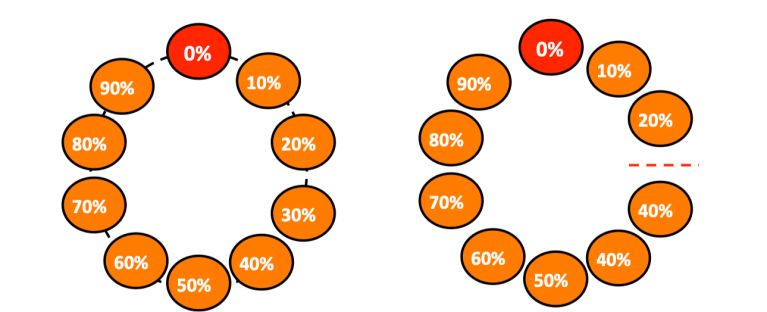
Threshold Model Greg Satell

You can see a graphic representation of how the model plays out above. In the example on the left, a miscreant throws a rock and breaks a window. That’s all it takes for his friend next to him to start and then others with slightly higher thresholds join in as well. Before you know it, a full-scale riot ensues.

The example on the right is slightly different. After the first few troublemakers start, there is no one around with a low enough threshold to join in. Rather than the contagion spreading, it fizzles out, the three miscreants are isolated and little note is made of the incident. Although the groups are outwardly similar, a slight change in conformity thresholds can make a big difference.

It’s a relatively simplistic example, but through another concept Granovetter developed called the strength of weak ties, we can see how it can lead to large scale change in the final graphic below as an idea moves from group to group.
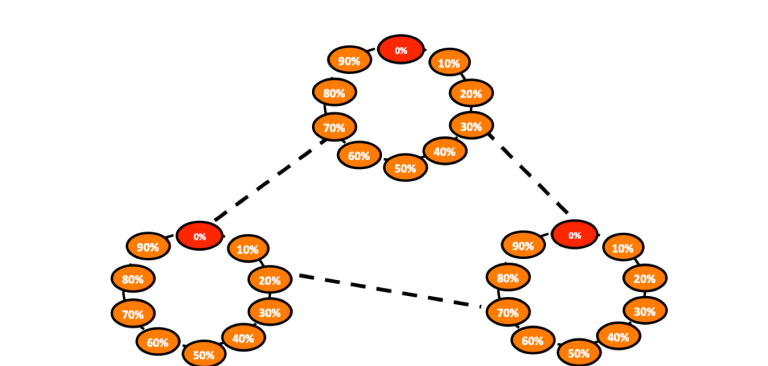
From Thresholds to Cascades Greg Satell

The top cluster is identical to the one in the first example and a local majority forms. However, no cluster is an island because people tend to belong to multiple groups. For example, we form relationships with people in our neighborhood, from work, religious communities and so on. So an idea that saturates one group soon spreads to others.

Notice how the exposure to multiple groups can help overcome higher thresholds of resistance, because of the influence emanating from other groups through weak links. When you start with a majority, even if it is a small, local majority, an idea can gain traction, move from cluster to cluster and almost infinitely scale.

As I explain in my book, Cascades, there is significant evidence that this is how ideas actually do spread in the real world. The crucial point here is that it makes a really big difference where you choose to start. If you start with people who are enthusiastic about your idea, you are much more likely to succeed than if you choose people who are resistant.

So rather than trying to convince everybody at once, you are much better of identifying people who are likeminded and working on a Keystone Change that can for them basis of a larger transformation.

Working to Attract, Rather Than Overpower

When we look at the stories of Semmelweis and Coley through the prism of local majorities and resistance thresholds, we can see the mistake that they made. Having made truly breakthrough discoveries, they naturally assumed that others would see value in them. Instead, they ran headlong into a highly resistant majority and got squashed.

In my work helping leaders drive organizational transformations, I see this happen all the time. People who believe passionately in an idea naturally assume that others will “see the light.” Not surprisingly, they want to move quickly and overpower any resistance. This is especially true if they feel that they have institutional power behind them.

Yet that is almost always a mistake. There is a reason why the vast majority of organizational transformations fail, even though they typically have big budgets and C-Suite support behind them. To drive meaningful, lasting change you can’t rely on overpowering resistance, but must work to attract and empower genuine support.

That means you need to start with a majority. In the beginning, that may mean starting with a small, local majority— say, three people in a room of five. You can always expand a majority out, but once you find yourself in the minority, you will immediately feel pushback. The secret to overcoming resistance to an idea and driving it forward is understanding that you get to choose where to start.

Revolutionary change always starts with the art of choosing wisely.

— Article courtesy of the Digital Tonto blog
— Image credit: Pixabay, Greg Satell

Subscribe to Human-Centered Change & Innovation WeeklySign up here to get Human-Centered Change & Innovation Weekly delivered to your inbox every week.

Harnessing AI for Breakthrough Innovation

Harnessing AI for Breakthrough Innovation

GUEST POST from Art Inteligencia

In the rapidly evolving digital landscape, Artificial Intelligence (AI) is not just a tool for optimization, but a catalyst for breakthrough innovation. Organizations worldwide are leveraging AI to transform industries, redefine customer experiences, and create unprecedented value. In this article, we explore how AI can drive innovative growth and provide real-world case studies demonstrating its potential. We also include links to additional resources for those looking to deepen their understanding of this transformative technology.

Case Study 1: AI in Healthcare – Revolutionizing Diagnosis

The healthcare industry stands to gain immensely from AI, particularly in improving diagnostic accuracy and efficiency. One standout case is that of Google’s DeepMind, which has partnered with Moorfields Eye Hospital in London to develop an AI system capable of diagnosing complex eye diseases as accurately as world-leading experts. Utilizing deep learning algorithms, the system analyzes thousands of retinal scans to detect conditions like diabetic retinopathy and age-related macular degeneration.

This breakthrough has not only increased diagnostic speed but also enhanced accessibility to expert-level care, thereby improving patient outcomes. The AI’s ability to learn and improve from vast datasets ensures continuous innovation in diagnostic technology, underscoring AI’s game-changing role in healthcare.

Case Study 2: AI in Retail – Personalizing Customer Experience

Retail is another sector where AI is reshaping business models and consumer engagement. Consider the case of Stitch Fix, an online personal styling service that combines data science and human expertise to deliver personalized fashion recommendations. By analyzing customer preferences, purchasing history, and social media behavior, Stitch Fix’s AI system curates clothing options tailored to each individual’s taste.

The system not only predicts customer preferences with remarkable accuracy but also helps the company optimize inventory, reducing waste and costs. This approach has enabled Stitch Fix to offer a highly customized shopping experience, setting a new standard in the retail industry and highlighting AI’s potential to innovate traditional business practices.

The Strategic Framework for AI-Driven Innovation

To harness AI for breakthrough innovation, organizations need a strategic framework that integrates AI into the core of their operations. Here are key steps to consider:

  1. Identify Opportunities: Begin with a comprehensive exploration of areas where AI can create the most impact. Look for patterns, inefficiencies, and unmet needs within your industry.
  2. Leverage Data: AI thrives on data. Ensure your organization has a robust data infrastructure to gather, store, and analyze relevant data.
  3. Foster Collaboration: Encourage cross-disciplinary teams, combining AI expertise with industry know-how, to identify and implement innovative solutions.
  4. Iterate and Scale: Start with pilot projects, learn from iterations, and scale successful innovations across the organization.

Further Reading

For those looking to explore more about the intersection of AI and innovation, I recommend checking out the following articles:

Conclusion

AI holds the potential to drive transformative change across industries by enabling breakthrough innovations. By intelligently integrating AI into strategic operations, organizations can unlock new value, create sustainable competitive advantages, and embark on unprecedented growth trajectories. The case studies of Google’s DeepMind and Stitch Fix exemplify how AI can be harnessed to revolutionize industries and enhance user experiences. As we continue to explore the possibilities, the role of AI in shaping the future of innovation becomes increasingly vital.

This article provides a comprehensive analysis of how AI can be utilized for breakthrough innovation, supplemented by two case studies and links to further resources on this website.

Extra Extra: Futurology is not fortune telling. Futurists use a scientific approach to create their deliverables, but a methodology and tools like those in FutureHacking™ can empower anyone to engage in futurology themselves.

Image credit: Pixabay

Subscribe to Human-Centered Change & Innovation WeeklySign up here to get Human-Centered Change & Innovation Weekly delivered to your inbox every week.

What Entrepreneurship Education Really Teaches Us

What Entrepreneurship Education Really Teaches Us

It’s been 100 years since Harvard Business School began using the case study method. Beyond teaching specific subject matter, the case study method excels in instilling meta-skills in students. This article explains the importance of seven such skills: preparation, discernment, bias recognition, judgement, collaboration, curiosity, and self-confidence.

Now, project-based learning has emerged as another experiential learning model.

Some educators define meta-skills as a group of long-lasting abilities that allow someone to learn new things more quickly.

I have been teaching biomedical and clinical innovation and entrepreneurship for several years now and my students have told me they learned much more than how to start a company or launch an organizational initiative, In fact, we start every course with defining entrepreneurship as the pursuit of opportunity under volatile, uncertain, complex and ambiguous conditions (VUCA) with the goal of creating stakeholder defined value through the deployment of innovation using a VAST business model to achieve the quintuple aims.

Here is what I learned teaching entrepreneurship to 1st year medical students at the University of Colorado School of Medicine.

Knowledge is what you know. Skills are things you learn how to do. Abilities are your natural talents. Competencies are what you need to know how to do to accomplish a given goal. Meta-KSAs are the things that you know, learn and do that are transferable.

Here is a list entrepreneurial virtues and competencies.

Other entrepreneurial meta-KSAs you will learn about are:

  1. Failure
  2. Selling things, including yourself
  3. Stories
  4. Fear
  5. Emotions
  6. Empathy
  7. Pattern recognition
  8. Testing and experimenting
  9. Data generation and analysis
  10. Resilience and perseverance
  11. Mindset
  12. Questioning

Entrepreneurship education and training is more about learning life skills that are used to create value, not just companies. We should start teaching it in pre-school. The longer we wait, the harder it is to learn and apply the meta-KSAs. It is unlikely that the Facebook version of Meta will be as helpful.

Image credit: Pixabay

Subscribe to Human-Centered Change & Innovation WeeklySign up here to get Human-Centered Change & Innovation Weekly delivered to your inbox every week.

Navigating Innovation and Change Like a Visionary Leader

Navigating Innovation and Change Like a Visionary Leader

GUEST POST from Chateau G Pato

In today’s rapidly evolving business landscape, companies are constantly facing the pressures of innovation and change. The leaders who can effectively navigate these waters not only secure their companies’ survival but also thrive through dynamic market shifts. Visionary leaders—those who cultivate a culture of creativity while managing change—are becoming indispensable. Let’s explore how some have successfully harnessed innovation and change to propel their organizations forward.

The Power of Purpose-Driven Leadership

Visionary leadership begins with a clear understanding of the organization’s core purpose. This is more than just a mission statement; it’s a guiding light that informs strategy, drives motivation, and fosters resilience amidst change.

Case Study 1: Indra Nooyi at PepsiCo

Under Indra Nooyi’s leadership, PepsiCo underwent a transformative change balancing profit with purpose. Her ‘Performance with Purpose’ vision not only refocused the company’s portfolio towards health-conscious products but also embedded sustainability into its business strategy. Nooyi recognized that long-term success depended on aligning business practices with the changing expectations of society. The introduction of healthier product lines and sustainable packaging are testaments to her visionary leadership, resulting in increased market shares and brand loyalty.

Nooyi’s approach illustrates how visionary leaders integrate their organization’s core purpose into innovation strategies, ensuring that change efforts resonate with both consumers and stakeholders.

Fostering a Culture of Innovation

Visionary leaders know that innovation doesn’t just happen; it requires a supportive environment where creativity is encouraged and risk-taking is tolerated. Creating such an environment involves more than installing bean bags and coffee machines—it requires a fundamental shift in how failure and success are perceived within the organization.

Case Study 2: Satya Nadella at Microsoft

When Satya Nadella took over as CEO in 2014, Microsoft was seen as a technology behemoth that had lost its innovative edge. Nadella committed to fostering a culture of learning and collaboration. The ‘growth mindset’ philosophy he introduced encouraged employees to embrace challenges and learn from failures. Under Nadella’s leadership, Microsoft shifted its focus to cloud computing, AI, and open-source software, areas where it has since become a dominant player.

This cultural transformation at Microsoft showcases how visionary leaders can reinvigorate innovation by altering organizational mindsets and encouraging cross-departmental collaboration.

Embracing and Managing Change

While innovation sets the stage for what’s possible, it’s the ability to manage change that ensures its implementation. Visionary leaders understand the human side of change—recognizing that people are at the heart of every successful transformation.

To delve deeper into effective change management techniques, consider exploring my articles on The Change Curve Model and Emotional Commitment to Change. These resources provide valuable insights into leading your team through the complexities of change.

Conclusion: The Legacy of Visionary Leaders

Visionary leaders leverage their foresight to drive transformative changes, fostering innovative solutions while ensuring alignment with organizational values. They balance stability with flexibility, profit with purpose, and short-term wins with long-term objectives.

The legacy of leaders like Indra Nooyi and Satya Nadella demonstrates that with the right vision, a commitment to cultural shifts, and a keen understanding of change management, any organization can navigate the tumultuous waters of innovation and emerge stronger. As we look to the future, it is clear that the leaders who can navigate these challenges with foresight and empathy will continue to shape the world of business.

Extra Extra: Futurology is not fortune telling. Futurists use a scientific approach to create their deliverables, but a methodology and tools like those in FutureHacking™ can empower anyone to engage in futurology themselves.

Image credit: Pexels

Subscribe to Human-Centered Change & Innovation WeeklySign up here to get Human-Centered Change & Innovation Weekly delivered to your inbox every week.

Designing for Humans

Bridging Empathy and Innovation

Designing for Humans - Bridging Empathy and Innovation

GUEST POST from Art Inteligencia

In a world that is constantly evolving, the need to innovate is imperative. However, innovation should not be pursued at the expense of human-centric design. To truly succeed, businesses and innovators must build a bridge between empathy and innovation, ensuring that every solution aligns with the deeper needs, desires, and behaviors of real people. As a thought leader in human-centered change and innovation, I’m passionate about this intersection and how it can lead to transformational success.

Harnessing Empathy in Design

Empathy is at the heart of human-centered design. It involves stepping into the shoes of your users and understanding their experiences, pain points, and motivations. By prioritizing empathy, design teams can uncover insights that traditional data analysis might miss, leading to more meaningful, impactful innovations.

Case Study 1: IDEO and the Design of the First Apple Mouse

In the early 1980s, Apple collaborated with the design and innovation consultancy IDEO to create the first computer mouse for personal computers. While the technical design and innovation were crucial, IDEO’s commitment to understanding the everyday user’s experience was what set this project apart.

By observing how people interacted with computers, IDEO was able to design a mouse that was intuitive and easy to use. This focus on user experience and empathy led to a product that not only met functional requirements but also transformed how people interacted with technology, paving the way for Apple’s user-centric philosophy.

Bridging Empathy and Innovation through Collaborative Design

Collaborative design is a method of integrating diverse perspectives and expertise into the innovation process. By bringing together cross-functional teams and incorporating feedback from users, organizations can ensure that solutions are not only innovative but also grounded in real-world needs.

Case Study 2: Airbnb’s Evolution through Storytelling and Empathic Research

Airbnb’s journey from a struggling startup to a global hospitality powerhouse is a testament to the power of empathy and storytelling. The company invested in deeply understanding the journey and experiences of their users – both hosts and guests.

Through empathic research and storytelling workshops, Airbnb’s design team was able to identify key pain points and emotional highs present in their customer journey. This enabled them to design a platform that addresses both practical and emotional needs, fostering trust and engagement with the brand.

The Path Forward: Empathy-Driven Innovation Cultures

For organizations looking to replicate such success, fostering a culture that values empathy and innovation is paramount. By investing in ongoing user research, promoting cross-disciplinary collaborations, and prioritizing human-centered outcomes, businesses can create products and services that resonate deeply with users.

To explore further, check out my other articles on Human-Centered Innovation: The New Imperative and Empathic Research: Unlocking Insights for Breakthrough Innovation for deeper insights on embedding empathy into the innovation process.

As we venture into the future, it is clear that the most successful innovations will be those that are intimately connected with human needs and aspirations. By bridging empathy and innovation, we can create a world where technology and design truly enhance the human experience.

Please make sure the links provided are reviewed as they are conceptual in this context. Confirm their existence on your site at the actual URLs.

Extra Extra: Futurology is not fortune telling. Futurists use a scientific approach to create their deliverables, but a methodology and tools like those in FutureHacking™ can empower anyone to engage in futurology themselves.

Image credit: Pexels

Subscribe to Human-Centered Change & Innovation WeeklySign up here to get Human-Centered Change & Innovation Weekly delivered to your inbox every week.

The Art and Science of Transformation Leadership

The Art and Science of Transformation Leadership

GUEST POST from Chateau G Pato

In today’s fast-paced and ever-evolving business environment, the ability to lead and manage change is not just an advantage; it is a necessity. Successful transformation demands a delicate balance between art and science, combining analytical skills with empathetic communication. Whether optimizing processes, integrating technology, or steering organizational culture, change leadership is a multifaceted challenge. In this article, we explore the art and science of transformation through a comprehensive lens, enriched by two real-world case studies.

The Art and Science Behind Leading Change

The duality of transformation lies in merging the tangible, measurable aspects with intangible, human elements. The science of change entails understanding models, metrics, and systematic approaches. Meanwhile, the art requires adapting these methodologies to fit the unique culture, values, and emotions of the people involved. Navigating this duality is what sets apart exceptional change leaders.

Science provides a foundation with established methodologies like ADKAR, Kotter’s Eight Steps, Lewin’s Change Management Model or Braden Kelley’s Human-Centered Change. These frameworks offer strategic roadmaps to identify objectives, design interventions, and measure outcomes systematically.

Art, on the other hand, emphasizes the human side of change. It involves storytelling, building trust, and engaging teams at an emotional level. Leaders must have the intuition to sense unspoken resistance and the creativity to inspire wholehearted participation.

Case Study 1: The Digital Transformation of a Global Retailer

Company X, a global retail giant, faced declining sales due to increased online competition. Recognizing the need for a digital transformation, they embarked on a comprehensive change journey—a combination of cutting-edge technology and employee engagement.

The science came through an intensive market analysis and the implementation of an advanced e-commerce platform. Yet, success hinged on the art of embracing the organizational culture. Leadership conducted workshops and storytelling sessions to connect the new strategy with employees’ daily experiences.

By aligning technology with their teams’ intrinsic motivations, Company X not only revitalized sales but also fostered a culture of innovation and agility. For more insights on aligning technology and people, explore my article on Leading Digital Transformation.

Case Study 2: Cultural Shift in a Healthcare Organization

Healthcare Inc., a large provider overwhelmed by bureaucratic inefficiencies, needed a cultural shift toward more patient-centric care. The transformation journey required both science and art in equal measures.

The scientific approach began with a comprehensive audit of processes, followed by redesigning workflows to prioritize patient outcomes. Quantitative metrics were established to track improvements in service delivery.

However, the art of transformation played a pivotal role. Leadership realized that genuine change necessitated altering deeply ingrained behaviors. Through empathetic leadership and ongoing dialogues, they cultivated a shared vision of patient-centricity among staff.

Today, Healthcare Inc. is recognized for its exemplary patient care, demonstrating how cultural transformation, when driven by both art and science, can yield remarkable results. Further explore this topic by reading Encouraging a Growth Mindset During Times of Organizational Change.

Key Takeaways for Effective Change Leadership

  • Integrate Science with Art: Balance data-driven strategies with human-centric leadership to address both processes and people.
  • Develop Emotional Intelligence: Cultivate the ability to understand and influence the emotions and motivations of others throughout the change process.
  • Communicate and Engage: Use stories and symbols to connect change initiatives with personal and organizational identity.
  • Measure and Adapt: Continuously assess the effectiveness of interventions and be willing to adapt strategies as needed.

Conclusion

Leading change is both an art and a science—a dance between strategy and storytelling, metrics and motivation. By thoughtfully integrating these aspects, leaders can not only drive successful transformations but also instill a culture of continuous improvement. As you embark on your journey of change, remember that both the logic of science and the empathy of art are your allies in shaping a better future.

Hopefully this article fulfills your curiosity and captures the essence of leading change through a balanced approach of art and science. The case studies illustrate real-world examples, while additional resources further enrich the discussion.

Extra Extra: Futurology is not fortune telling. Futurists use a scientific approach to create their deliverables, but a methodology and tools like those in FutureHacking™ can empower anyone to engage in futurology themselves.

Image credit: Pixabay

Subscribe to Human-Centered Change & Innovation WeeklySign up here to get Human-Centered Change & Innovation Weekly delivered to your inbox every week.

Why Charities Should Do Annual Donor and Recipient Experience Audits

Why Charities Should Do Annual Donor and Recipient Experience Audits

GUEST POST from Art Inteligencia

In today’s rapidly changing world, the landscape for charities is evolving with increasing donor expectations and the need for demonstrating tangible impact. To stay relevant and effective, it’s crucial for charities to perform annual donor and recipient experience audits. But, it is important to remember that an experience audit goes beyond mapping the donor and recipient journeys to document, score and even benchmark key elements of the experiences. This article explores the importance of these audits and highlights how they can significantly enhance the operations of charitable organizations. We will explore two insightful case studies and provide additional resources for further reading.

The Importance of Experience Audits

Experience audits focus on understanding and improving the emotions and reactions of donors and recipients during their interactions with an organization. These audits provide a thorough evaluation of touchpoints, communication effectiveness, and overall satisfaction. By implementing these audits, charities can identify strengths and areas for improvement, ultimately fostering trust and loyalty among stakeholders.

Case Study 1: Charity Water

Charity Water, an organization dedicated to providing clean and safe drinking water to people in developing countries, conducted a donor experience audit in 2021. The audit revealed that while donors appreciated transparency in fund allocations, they desired more personalized communication. As a result, Charity Water introduced a new donor portal offering customized impact reports and regular updates on specific projects funded by the donors. This change led to a 25% increase in donor retention within a year.

Case Study 2: Feeding America

Feeding America, a network of food banks, conducted a recipient experience audit in 2022 to better understand the needs and preferences of the individuals and families they served. The audit highlighted the need for more culturally diverse food offerings and simplified access to services. Implementing these insights, Feeding America revamped their supply chain to include diverse food options and launched a user-friendly mobile app that improved service access. As a result, recipient satisfaction scores increased by 30% in eight months.

Integrating Audits with Innovation Strategy

Annual audits should not be isolated events. Instead, they should be intricately linked with a charity’s innovation strategy. By doing so, organizations can ensure continuous improvement and adapt to changing needs efficiently. This approach of integrating experience audits into strategic planning aligns with key principles discussed in Catalysing Change Through Innovation Teams, which explores cultivating an innovation-friendly environment.

The Path Forward

Conducting comprehensive donor and recipient experience audits enables charities to remain connected and relevant to their target audiences. By doing so, they align their missions with the needs of those they aim to serve and those who support their cause. These audits offer a strategic advantage, as evidenced by the successful implementations by Charity Water and Feeding America.

For charities eager to harness the power of these audits, starting with a clear roadmap and involving all stakeholders will be crucial. For further guidance on implementing successful audits and fostering a culture of continuous improvement, consider exploring The Role of Leadership in Successful Change Management.

Conclusion

The charitable sector’s challenges are numerous, but through strategic audits focusing on donor and recipient experiences, nonprofits can not only survive but thrive. Investing in understanding these experiences provides the bedrock for greater impact, increased trust, and sustained growth.

Extra Extra: Futurology is not fortune telling. Futurists use a scientific approach to create their deliverables, but a methodology and tools like those in FutureHacking™ can empower anyone to engage in futurology themselves.

Image credit: Pexels

Subscribe to Human-Centered Change & Innovation WeeklySign up here to get Human-Centered Change & Innovation Weekly delivered to your inbox every week.

Invest Yourself in All That You Do

Invest Yourself in Everything You Do

GUEST POST from Douglas Ferguson

Diversity of thought and diversity of perspective is crucial to innovative solutions within teams. Building a work culture around diversity and inclusion is proven to provide performance rates that outshine the competition.

“If everybody is thinking alike, then somebody isn’t thinking.” — General George S. Patton Jr

The market environment that we find ourselves in is ever-changing, especially when we look at ideating and problem-solving in a remote or hybrid landscape. Being acutely aware that not only do you have a diverse workforce but that there are measures in place to promote psychological safety within that diverse pool of ideas and emotions will lead to a transformation from complex problem solving, into simple and often beautiful solutions. The critical fact here is that we must always be exploring ways to unleash everyone in order to promote true idea-sharing.

Matthew Reynolds, a dear friend, and peaceful warrior built a Diversity and Inclusion Consultancy inspired by finding a sense of belonging within the industry. By exploring how to shift the consciousness of humanity we begin to open the door to whom we think we are, we begin to discover our authentic self, and with that knowledge, we can shift our consciences to a more inclusive mindset. To hear more on Crafting Your Equity Lens, listen in on the Control the Room Podcast with Matthew.

No alt text provided for this image

When we listen to ideas, like the one Matthew presents, and we take a moment to look inward, we begin to make important shifts within ourselves that have an outward effect. As John Coltrane says, “Invest yourself in everything you do. There is fun in being serious.” When you brake that down, and truly invest in shifting your perspective to one that embraces diversity and inclusion there is a natural shift into building a psychologically safe foundation for your community. When that is achieved, there is much and more fun to be had! Every voice being heard and appreciated means new ideas, and it means more effective problem-solving.

We hold diversity, equity, and inclusion very close here at Voltage Control as one of our core values and we invite you and your community to do the same.

Image credit: Pixabay, unknown

Subscribe to Human-Centered Change & Innovation WeeklySign up here to get Human-Centered Change & Innovation Weekly delivered to your inbox every week.

The Link Between Innovation and Customer Experience Audits

The Link Between Innovation and Customer Experience Audits

GUEST POST from Chateau G Pato

In today’s fiercely competitive market, organizations strive to outshine their competitors not only through groundbreaking products and services but also by transforming their customer experience. One approach that has gained significant traction is the integration of innovation and customer experience (CX) audits. This integration helps in uncovering hidden opportunities, thus driving continuous improvement and differentiation.

Customer experience audits go beyond traditional market research by diving deeper into the customer journey blueprint. They scrutinize each touchpoint where a customer interacts with a brand, paving the way for innovative solutions tailored to enhance customer satisfaction and loyalty. Let’s delve into two case studies illustrating how companies have leveraged CX audits to propel their innovation capabilities.

Case Study 1: Ritz-Carlton Hotel Company’s “Mystique” Innovation

Ritz-Carlton, a name synonymous with luxury and service excellence, constantly reinvents itself to keep meeting and exceeding customer expectations. Conducting regular customer experience audits revealed an opportunity to innovate within their guest experiences. Through in-depth assessments, they discovered that personalization was a cornerstone of remarkable guest experiences.

With insights drawn from these audits, Ritz-Carlton developed its “Mystique” data-driven platform. It innovatively gathers and utilizes customer preferences to tailor guest interactions, from preferred room settings to curated dining experiences. This innovation not only elevated customer satisfaction but also set a new standard in luxury hospitality, distinguishing Ritz-Carlton from their competitors.

Case Study 2: Starbucks’ Drive-Thru Redesign

Starbucks has long been a leader in customer experience innovation. However, they realized their drive-thru services lagged in providing a seamless experience. Through thorough customer experience audits, Starbucks identified bottlenecks and areas of friction in their drive-thru operations.

Inspired by these findings, Starbucks redesigned their drive-thru lanes, implemented digital menu boards, and integrated a real-time queuing system. These changes minimized wait times and allowed for a more personalized approach to orders via the Starbucks mobile app. This innovation not only improved customer satisfaction but also boosted sales during peak hours.

The aforementioned cases clearly demonstrate that innovation and customer experience audits go hand in hand. By understanding customer pain points, needs, and desires through audits, companies can ideate impactful innovations that lead to superior experiences.

For more insights on innovation and customer experience, check out these other articles:

In conclusion, to stay competitive and relevant, companies must consistently audit and innovate their customer experiences. Are you ready to conduct your next customer experience audit and uncover the innovation opportunities waiting for your organization?

Extra Extra: Futurology is not fortune telling. Futurists use a scientific approach to create their deliverables, but a methodology and tools like those in FutureHacking™ can empower anyone to engage in futurology themselves.

Image credit: Dall-E

Subscribe to Human-Centered Change & Innovation WeeklySign up here to get Human-Centered Change & Innovation Weekly delivered to your inbox every week.

Dare to Think Differently

Dare to Think Differently

GUEST POST from Janet Sernack

As many of my colleagues are aware, I am at heart, a maverick, an unorthodox or independent-minded person. Who is curious and inquisitive, and finds change and challenging the status quo exciting, fascinating and stimulating. I am also, considered, by some, as a misfit, someone whose behaviors and attitudes sets them apart from others in an uncomfortably conspicuous way, that often rocks the boat. There is a range of consequences for people like me, who dare to think differently, especially now that I have also achieved the status of a Modern Elder – “the perfect alchemy of curious and wise, with curiosity leading to expansive inquiry while wisdom distills what’s essential.”

Coupled with both the challenges and constraints of the currently disrupted Covid-19 and digitized world, I am finding that the consequences of being different have intensified, become more impactful, and are often, quite confronting. Where differences cause resistance to change, divisiveness, and conflict, rather than maximizing differences in ways that embrace our humanity, diversity, to harness collective intelligence to make the organization, or world a better, more inclusive, and safer place.

Diversity is of the Essence

According to Jonathan Sacks, in his book “The Dignity of Difference- How to avoid the clash of civilizations,” he states that “we are living in the conscious presence of difference”.

Which exists in the home, in the street, in our workplaces, communities, and countries where we constantly encounter groups and cultures whose ideas and ideals are unlike ours. “That can be experienced as a profound threat to identity. Identity divides.” Considering that “the world is not a single machine, it is a complex, interactive ecology in which diversity – the biological, personal, cultural and religious – is of the essence.”

“When difference leads to war, both sides lose. When it leads to mutual enrichment, both sides gain.”

As is currently being evidenced by the tense and tentative Ukrainian and Russian border confrontation, with its potentially tragic consequences. Where Yuval Noah Harari states in a recent article in The Economist – “At the heart of the Ukraine crisis lies a fundamental question about the nature of history and the nature of humanity: is change possible? Can humans change the way they behave, or does history repeat itself endlessly, with humans forever condemned to re-enact past tragedies without changing anything except the décor”?

People Who Dare to Think Differently

Adam Grant, in his book “The Originals – How Non-Conformists Change the World” describes an original (n) as “A thing of singular or unique character; a person who is different from other people in an appealing or interesting way; a person of fresh initiative or inventive capacity”.

The book goes on to explain strategies, through studies and stories how to champion new ideas and fight groupthink, in constructive ways that maximize diversity and differences and promote dissent, as the basis for cultivating original thought to effect positive change.

Ray Dallio, in his book Principles explores this further, suggesting that “if you are like most people, you have no clue about how other people see things and aren’t good at seeking to understand what they are thinking because you’re too preoccupied with telling them what you yourself think is correct.” Often causing divisiveness rather than inclusion, resistance to change, and as a consequence, missing the possibilities and opportunities that may be present.

This also impedes our overall adaptiveness and creativity in an exponentially changing, world, to make real progress, and constructively change and limits the potential for innovation, growth and ability to contribute to the common good.

Change Management Has Changed

In a recent article from the Boston Consulting Group, they stated that  “Effective change management requires leaders to shift away from one-size-fits-all approaches and develop an expanded set of context-specific strategies”.

Which are truly adaptive, collaborative, energize, catalyze change, harness, and mobilize people’s and customers’ collective intelligence, in ways that are appreciated and cherished by all, and contribute to the common good.

To ultimately collectively co-create a set of different, empowered future-fit leaders, teams, and organizations – who courageously, compassionately, and creatively contribute toward an improved future, for customers, stakeholders, leaders, teams, organizations as well as for the good of the whole.

Welcoming Dissent and Thoughtful Disagreement

At ImagineNation™ we dare to think differently and teach train, and coach people and teams to maximize their potential to lead, manage, coach, through implementing and embedding change and innovation, differently.

We enable people to lead in the imagination age by empowering, enabling, and equipping them to be and think differently to:

  • Flow with some people’s need to be “right” and in control, when they are being defensive, abusive, and divisive, even when disagreement and conflict occur.
  • Artfully and skillfully use cognitive dissonance and creative tension to pull people towards a new possibility and envision a new and compelling future.
  • Be inclusive to support mutual enrichment, through co-sensemaking, that helps them create “order” (in their own context) and simplicity from complexity and change.
  • Self-regulate and self-manage emotionally in the face of uncertainty and volatility.
  • Be relatable, empathic, inspiring, and artfully and skillfully influential in helping people open their minds and hearts toward co-creation, collaboration, and experimentation that ensures a shared contribution for mutual gain.
  • Be creative and inventive to maximize their multiple and collective intelligences through learning, contrarian thinking, constructive debate, and creative conversations that generate discovery.

In ways that engage deep generative listening, inquiry, questioning, and differing that uses cognitive dissonance to unleash the creative energy that triggers and generates thinking differently.

When people are trusted and empowered to think differently, they co-create a frequency that allows, awakens, and activates their adaptive and innovative leadership qualities, consciousness, states, and qualities of mind and heart, to effect positive change.

Taking wise and intelligent action

It also enables them to wisely choose the most intelligent actions that result in adaptive and innovative outcomes.

This helps creativity to flourish and disrupts and interrupts those people, whose complacency, conformity, and rigidity create divisions, and feelings of desolation and exclusion that kill our capacity and competence to collaborate, create and invent.

Leaving me to wonder and inquire;

  • What if the “strangers” among us simply listen, with open minds and open hearts to the thought, feelings, and opinions of others, with both curiosity and detachment?
  • What if we could collectively co-create safe containers and collective holding spaces, that maximize our differences and diversity, and simply share a creative conversation about what could be possible?
  • How might we maximize our diversity of thought, to enable us to think differently about the issue, opportunity, or problem in ways that supported differences for mutual enrichment?

There is no wisdom on one point of view

Might this result in a deeper connection when there is polarization between people?

Might it be possible to co-sense and co-create a sense of inclusion, and an opening for a deeper philosophical exploration and discovery for thinking differently about the role, nature of and impact prescriptive points of view on how people truly feel, really think, and deeply act in our globalized and connected world?

Might it help us collectively to co-create making it a better place?

Find out more about our work at ImagineNation™

Find out about our learning products and tools, including The Coach for Innovators Certified Program, a collaborative, intimate, and deep personalized innovation coaching and learning program, supported by a global group of peers over 9-weeks, starting Tuesday, May 4, 2022. It is a blended and transformational change and learning program that will give you a deep understanding of the language, principles, and applications of an ecosystem focus, human-centric approach, and emergent structure (Theory U) to innovation, and to upskill people and teams and develop their future fitness, within your unique context. Find out more.

Image credit: Unsplash

Subscribe to Human-Centered Change & Innovation WeeklySign up here to get Human-Centered Change & Innovation Weekly delivered to your inbox every week.