Category Archives: Psychology

The Rise of Employee Relationship Management (ERM)

The Rise of Employee Relationship Management (ERM)

by Braden Kelley

What’s in a name?

From the early days when HR was referred to as workforce management or personnel management, to the emergence of scientific management and labor unions, the practice of human resources has been constantly evolving.

The name for the practice and principles of getting the most out of people in business has continued to change too, with the latest term ‘human resources’ coming into being along with an acceptance that human factors were more important than physical factors and monetary rewards for motivation.

The Accelerating Pace of Change

But, in an era when the pace of change and transformation are constantly accelerating and innovation is increasingly important to maintaining relevance, should we still be focused on ‘human resources’? Or does our view and language need to evolve?

Every day customer experience becomes more crucial to market success, and more people are talking about happy employees as being the key to happy customers. But, are employers backing up this talk?

Today most digital transformations have at their heart, several elements of an evolved customer relationship management (CRM) approach and often one or more customer journey maps.

The Shift from HCM to ERM

So, should we be shifting our views from a focus on Human Capital Management (HCM) to a focus on ERM (Employee Relationship Management) and EX (Employee Experience) to mirror how we are thinking about the importance of employees as something not to be managed but instead to be empowered, supported and developed?

And how will Generation Z change expectations of employers?

Making a shift in our mindset and our language when it comes to employees, could also cause us to focus on different metrics – shifting from a focus on controlling the costs of salaries and benefits to optimizing employee lifetime value (ELV).

Unlocking the True Value of Employees

Employees are not just a cost, they are a source of incredible value and to unlock their full potential we must invest in helping them maximize the value they can create, access, and translate for customers. Me must go beyond training and invest in even more powerful initiatives like human libraries and internal internships to help each employee not just do the job they were hired to do, but to do the job they were born to do.

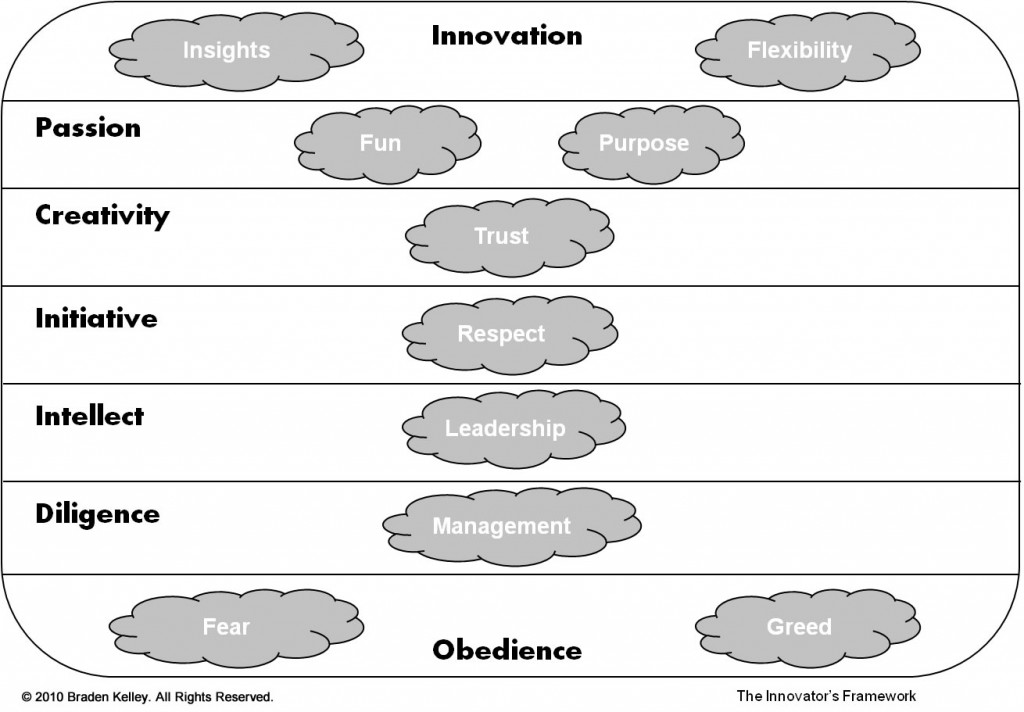
Innovators Framework(one of the many concepts introduced in my first book Stoking Your Innovation Bonfire)

Building on the work of London Business School’s Gary Hamel and shifting to an Employee Relationship Management (ERM) mindset we can get beyond the obedience, diligence and intellect that fear, greed, management and leadership can deliver, and instead focus on unlocking the initiative, creativity, passion and innovation that will drive the organization to higher levels of success and continuing relevance with customers.

Employee Relationship Management (ERM) is the Future of HR

We must reimagine our approach to the humans in our organizations and to recognize and leverage their uniqueness instead of treating them as replaceable cogs in a machine.

The time has come for organizations to manage both the experiences and the relationships with each of their employees as individuals to make the collective stronger, healthier, and more resilient.

Now is the time to build a conscious, measured, professional approach to Employee Relationship Management (ERM).

What say you?


Accelerate your change and transformation success

Subscribe to Human-Centered Change & Innovation WeeklySign up here to get Human-Centered Change & Innovation Weekly delivered to your inbox every week.

The Importance of Empathy in Innovation

The Importance of Empathy in Innovation

GUEST POST from Art Inteligencia

Empathy plays a pivotal role in the process of innovation, as it enables individuals and organizations to truly understand the needs and experiences of the end user. By fostering a deep sense of empathy, innovators can develop products and services that not only meet the practical needs of consumers but also resonate with their emotional and psychological requirements. In this article, we explore the importance of empathy in driving innovation, and present two case studies that illustrate how empathy can lead to groundbreaking solutions.

Case Study 1: Warby Parker

Warby Parker, a disruptive eyewear company founded in 2010, has made a name for itself by prioritizing empathy in its innovation process. The company recognized the challenges faced by consumers when purchasing eyeglasses – high prices, limited options, and a lack of transparency in the industry. By empathizing with their target market, Warby Parker developed a direct-to-consumer model that offered affordable, stylish eyewear that resonated with customers. They also implemented a unique at-home try-on program, allowing customers to experience the frames before making a purchase. This empathetic approach not only disrupted the traditional eyewear industry but also built a loyal customer base that values transparency and affordability.

Case Study 2: Apple

Apple is renowned for its innovative products that have reshaped industries and transformed the way we live and work. One key factor behind Apple’s success is its emphasis on empathy in design and innovation. The late Steve Jobs, co-founder and former CEO of Apple, famously said, “You have to start with the customer experience and work backward to the technology.” Apple’s design process is deeply rooted in understanding the needs, desires, and emotions of its customers. By empathizing with users and anticipating their future needs, Apple has been able to develop products like the iPhone, iPad, and Apple Watch that have fundamentally changed the way we communicate, work, and play. Apple’s commitment to empathy in innovation has not only solidified its position as a market leader but has also set a benchmark for user-centric design in the tech industry.

These case studies underscore the critical role that empathy plays in driving innovation and creating meaningful impact in the marketplace. Whether it’s disrupting existing industries, like Warby Parker, or setting new standards for user experience, like Apple, organizations that prioritize empathy are better equipped to develop products and services that truly resonate with consumers. As we continue to navigate an ever-changing business landscape, the importance of empathy in innovation cannot be overstated. By fostering a culture of empathy within their organizations, leaders can unlock new opportunities, drive growth, and make a lasting impression on customers.

Bottom line: Futurology is not fortune telling. Futurists use a scientific approach to create their deliverables, but a methodology and tools like those in FutureHacking™ can empower anyone to engage in futurology themselves.

Image credit: Pexels

Subscribe to Human-Centered Change & Innovation WeeklySign up here to get Human-Centered Change & Innovation Weekly delivered to your inbox every week.

50 Cognitive Biases Reference – Free Download

by Braden Kelley

I came across this cognitive biases infographic from TitleMax that captures a wide range of cognitive biases, making it a useful tool for design thinking, and to help everyone out, I’ve taken the original infographic and reformatted it into a five page PDF for easy reading and printing on 8.5″ x 11″ letter size paper.

Cognitive biases are the invisible forces that derail innovation programs, stall organizational change, and cause smart leaders to make systematically poor decisions. They are not character flaws — they are hardwired features of human cognition that evolved to help us make fast decisions with limited information. In modern organizational life, that same wiring produces predictable, measurable errors in judgment that cost organizations enormous amounts of time, money, and competitive position.

The poster below documents 50 of the most important cognitive biases. But a list without context is just trivia. What follows is a practitioner’s guide to understanding how these biases actually show up in innovation and change management — and what to do about them.

→ Download the free 50 Cognitive Biases PDF reference poster
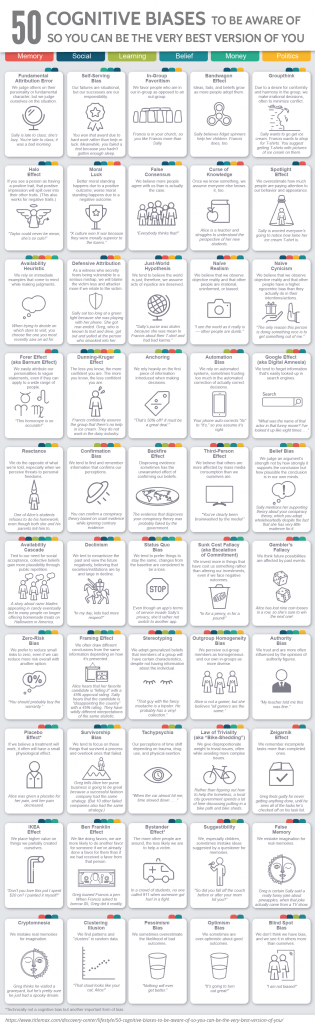

Cognitive Biases Infographic


What is a Cognitive Bias?

A cognitive bias is a systematic pattern of deviation from rationality in judgment — a mental shortcut that causes predictable errors in how we perceive, remember, evaluate, and decide. The term was introduced by psychologists Amos Tversky and Daniel Kahneman in the early 1970s, whose work on heuristics and biases eventually earned Kahneman the Nobel Prize in Economics.

Cognitive biases are not random errors. They are systematic — meaning they skew in predictable directions, affect virtually everyone, and can be anticipated and partially corrected for once you know what to look for. This is what makes them both dangerous and manageable: dangerous because they operate largely below conscious awareness, manageable because their patterns are well-documented and can be designed around.

There are over 180 documented cognitive biases. The 50 in the reference poster below represent the ones most relevant to decision-making, innovation, and organizational change.


The Most Important Cognitive Biases for Innovation and Change Leaders

Rather than listing all 50 in isolation, here are the biases that most consistently damage innovation and change efforts — grouped by the type of harm they cause:

Biases That Kill Good Ideas Before They Start

Status Quo Bias — The tendency to prefer the current state of affairs and perceive any change as a loss. This is the single most powerful force working against organizational change. People don’t resist change because they are irrational; they resist it because loss aversion is a fundamental feature of human cognition. Understanding status quo bias is the foundation of effective change management.

Not Invented Here (NIH) Bias — The tendency to dismiss ideas, technologies, or approaches that originated outside one’s own team or organization. NIH bias is why open innovation programs struggle to get internal adoption, why acquired companies’ best practices get discarded, and why organizations keep reinventing wheels others have already built.

Normalcy Bias — The tendency to underestimate the likelihood and impact of disasters or disruptions, and to assume that things will continue functioning as they have. Organizations with strong normalcy bias are the ones blindsided by competitive disruption — they saw the signals but assumed nothing would really change.

Anchoring Bias — Over-reliance on the first piece of information encountered. In innovation, anchoring causes teams to fixate on initial concepts and fail to explore the full solution space. In change management, early resistance anchors the narrative even after the change program has addressed the original concerns.

Biases That Corrupt Decision-Making

Confirmation Bias — The tendency to seek, interpret, and remember information that confirms existing beliefs. Confirmation bias is why market research so often validates the product the team already wanted to build, why change programs underestimate resistance (leaders see the evidence that supports adoption and discount the evidence that doesn’t), and why post-mortems on failed initiatives are so often incomplete.

Sunk Cost Fallacy — Continuing to invest in a failing course of action because of the resources already committed, rather than on the basis of future expected value. Innovation programs routinely suffer from sunk cost fallacy — continuing to develop products or approaches that early evidence has already shown won’t work, because stopping would mean admitting the original investment was wasted.

Overconfidence Bias — The tendency to overestimate one’s own abilities, the accuracy of one’s knowledge, and the likelihood of positive outcomes. Research consistently shows that people are overconfident about their predictions, their understanding of customer needs, and their ability to execute complex projects on time and on budget. Innovation forecasts are systematically optimistic for this reason.

Dunning-Kruger Effect — The cognitive bias in which people with limited knowledge or competence in a domain overestimate their own abilities. In organizational innovation, Dunning-Kruger manifests as executives with limited innovation experience making confident pronouncements about innovation strategy, or teams with no design experience dismissing the value of user research.

Planning Fallacy — The tendency to underestimate how long tasks will take and how much they will cost, even when similar tasks have taken longer and cost more in the past. Every innovation timeline is affected by planning fallacy. The research-based correction is to use “reference class forecasting” — looking at how long similar projects actually took rather than relying on bottom-up estimates of the specific project.

Biases That Distort What We See and Remember

Availability Heuristic — Overweighting information that is easy to recall — typically because it is recent, vivid, or emotionally significant. In innovation, the availability heuristic causes teams to overweight anecdotal customer feedback, recent competitive moves, and memorable failure stories while underweighting systematic data that is harder to remember. In change management, one vocal resister often receives more attention than dozens of quiet supporters.

Survivorship Bias — Focusing on successful examples while ignoring failures, leading to false conclusions about what actually drives success. Survivorship bias is endemic in innovation: we study successful companies, successful products, and successful leaders while systematically ignoring the failed companies, failed products, and failed leaders whose experiences would give us a more accurate picture of the odds.

Recency Bias — Giving more weight to recent events than to events further in the past. Recency bias causes organizations to over-respond to the most recent competitive threat, customer complaint, or market shift — making reactive strategy decisions that sacrifice long-term positioning for short-term reassurance.

Framing Effect — Drawing different conclusions from the same information depending on how it is presented. The same change initiative framed as “protecting what we’ve built” will get different responses than when framed as “transforming how we work” — even if the substance is identical. Understanding the framing effect is one of the most powerful tools available to change communicators.

Biases That Damage Team and Organizational Dynamics

Groupthink — The tendency for cohesive groups to prioritize consensus over critical evaluation, suppressing dissent and independent thinking. Groupthink is why leadership teams make decisions that each individual member privately doubted, why innovation committees approve mediocre ideas rather than rejecting them, and why post-mortems so often reveal that several people knew something was wrong but didn’t say so.

In-Group Bias — Favoring members of one’s own group over outsiders. In organizational innovation, in-group bias leads to silo thinking, resistance to cross-functional collaboration, and the dismissal of external perspectives that could provide genuinely valuable input.

Authority Bias — Overweighting the opinions of authority figures. Authority bias suppresses dissent in hierarchical organizations — junior employees with genuinely valuable insights about customer needs, operational problems, or competitive threats stay silent because the authority figure in the room has already expressed an opinion.

Bandwagon Effect — The tendency to adopt beliefs or behaviors because many others do. In innovation, the bandwagon effect produces waves of copycat strategy — every company rushes into the same trend simultaneously, often arriving too late and with insufficient differentiation. In change management, it produces the illusion of adoption — people publicly going along with a change while privately not changing their behavior.


How to Reduce the Impact of Cognitive Biases in Your Organization

You cannot eliminate cognitive biases — they are features of human cognition, not bugs that can be patched. But you can design processes, practices, and organizational structures that systematically reduce their impact:

Pre-mortems — Before launching an initiative, ask the team to imagine it has failed and work backwards to identify what went wrong. This technique, developed by Gary Klein, counteracts overconfidence, planning fallacy, and groupthink by legitimizing dissent before commitment is locked in.

Devil’s advocate roles — Formally assigning someone to argue against the prevailing view in key decisions. This counteracts confirmation bias, authority bias, and groupthink by structurally requiring that contrary evidence and arguments be surfaced.

Diverse decision teams — Including people with different backgrounds, perspectives, and organizational positions in key decisions. Diversity counteracts in-group bias, normalcy bias, and the availability heuristic by bringing different sets of information and reference points to the table.

Structured innovation processes — Using frameworks like design thinking, jobs to be done, and the Change Planning Canvas™ that require evidence-based decision making at each stage rather than intuitive judgment. Structured processes counteract anchoring, confirmation bias, and the sunk cost fallacy by requiring teams to explicitly revisit assumptions at regular intervals.

Reference class forecasting — When estimating timelines and costs, start with the actual track record of similar projects rather than bottom-up estimates of the specific project. This is the most evidence-based correction for planning fallacy available.

Psychological safety — Creating an environment where people can surface dissenting views, bad news, and uncomfortable data without fear of retaliation. Psychological safety is the organizational prerequisite for counteracting authority bias, groupthink, and the suppression of disconfirming information.


Download the Free 50 Cognitive Biases Reference Poster

The poster below documents all 50 biases in a visual reference format — designed to be printed and displayed as a reminder of the invisible forces at work in every decision your team makes.

→ Download the free PDF reference poster

Frequently Asked Questions About Cognitive Biases

What is a cognitive bias?

A cognitive bias is a systematic pattern of deviation from rationality in judgment — a mental shortcut that causes predictable errors in how we perceive, remember, evaluate, and decide. Cognitive biases are not random mistakes; they are systematic patterns that skew in predictable directions and affect virtually everyone. They were first formally described by psychologists Amos Tversky and Daniel Kahneman in the 1970s, whose research eventually earned Kahneman the Nobel Prize in Economics.

How many cognitive biases are there?

There are over 180 documented cognitive biases, though researchers continue to identify new ones. Wikipedia’s list of cognitive biases currently includes over 180 entries. The 50 biases covered in the reference poster on this page represent the ones most relevant to decision-making, innovation, and organizational change — the biases that most consistently affect how leaders and teams think and decide in organizational contexts.

What is the most common cognitive bias?

Confirmation bias — the tendency to seek, interpret, and remember information that confirms existing beliefs — is consistently identified as one of the most pervasive and damaging cognitive biases in organizational settings. Status quo bias and overconfidence bias are also extremely common and particularly damaging in innovation and change management contexts. Most researchers and practitioners agree that no single bias is universally “most common” — different biases dominate in different situations and different individuals show different bias profiles.

Can cognitive biases be eliminated?

No — cognitive biases cannot be fully eliminated because they are features of how the human brain processes information, not errors that can be corrected through willpower or awareness alone. Research shows that even people who are highly aware of a specific bias continue to exhibit it. What can be done is to design decision processes, team structures, and organizational practices that systematically reduce the impact of the most damaging biases — through techniques like pre-mortems, devil’s advocate roles, diverse decision teams, and structured frameworks that require evidence-based decision making.

How do cognitive biases affect innovation?

Cognitive biases affect every stage of the innovation process. Confirmation bias causes teams to validate concepts they already believe in rather than rigorously testing assumptions. Status quo bias and normalcy bias cause organizations to underestimate competitive threats and resist necessary change. Overconfidence and planning fallacy cause systematic underestimation of timelines, costs, and difficulty. Groupthink suppresses the dissenting voices that would catch fatal flaws before they become expensive failures. Survivorship bias causes organizations to draw false lessons from successful examples while ignoring the much larger population of failures. Understanding and designing around cognitive biases is one of the highest-leverage investments an innovation leader can make.

Subscribe to Human-Centered Change & Innovation WeeklySign up here to get Human-Centered Change & Innovation Weekly delivered to your inbox every week.

Using Intuition to Drive Innovation Success

Using Intuition to Drive Innovation Success

Americans are in love with data, big data, analytics, artificial intelligence and machine learning.

… and the rest of the world is catching the same disease.

Data is important, don’t get me wrong, but it is only one side of the coin driving innovation and operational success.

On the other side of the coin is intuition.

As smart organizations try and make greater use of human-centered design, empathy and intuition can and must play an increasingly important role.

Bruce Kasanoff states that “Intuition is the Highest Form of Intelligence” in his article on Forbes.

Intuition is incredibly important to human-centered design from the standpoint that an “intuitive” design taps into our shared understanding as humans of how things should operate.

Intuition is the secret sauce of the quantum human computer, and as the pace of change AND complexity both accelerate, we must change our brain function to develop not just our intellectual capabilities but our instinctual capabilities as well.

Nobel Prize winner Daniel Kahneman wrote about these two ways of thinking in his book Thinking, Fast and Slow. Let’s look at a short video looking at intuition, science and dreams:

Science Intuition and Dreams – Dean Radin

Dreams can be an incredibly powerful tool for innovation, in fact the Nine Innovation Roles that play an important role in the best-selling book Stoking Your Innovation Bonfire came to me in a dream. Many experts recommend that you keep a pen and a notebook next to your bed to capture these flashes of brilliance.

Dreams and shared understanding are but two manifestations of intuition, of our interconnectedness with each other and energies greater than ourselves. But how do we leverage our intuition for innovation?

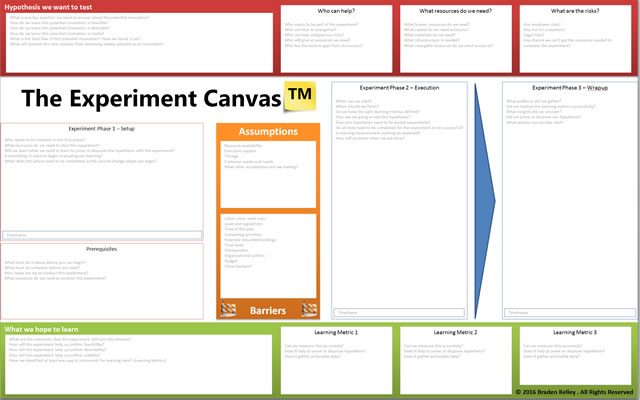
One way is to use your innovation as an input to use with a tool like The Experiment Canvas™:

The Experiment Canvas

Which is available as a free tool here on my web site from the forthcoming Disruptive Innovation Toolkit™.

You can use it to craft a hypothesis based on your intuition that you want to test, it keeps you focused on what you hope to learn during the experiment, and to consider the setup, operation, and wrapup of your experiment – among other things.

Too often people ignore their intuition because it doesn’t seem scientific. But, turning intuitive insights into hypotheses to test will help you overcome your hesitancy until you train your intuition and to learn to trust it as the potential human quantum computer that it could be. The other reason that people ignore their intuition is that well, they just can’t hear it. For many people, their intellectual mind is so busy that they can’t receive and react to what their intuitive mind is telling them.

Here is an interesting video that highlights these two points and how humans communicate behind the scenes:

Are you drowning out your intuitive mind? Are you failing to consider what is saying, and to test its assertions?

If so, please stop it, and learn new ways to keep innovating!

SPECIAL BONUS:

If you’d like to watch and learn even more about intuition…

Here is a video on Nikola Tesla and the Power of Intuition:


Accelerate your change and transformation success

Subscribe to Human-Centered Change & Innovation WeeklySign up here to get Human-Centered Change & Innovation Weekly delivered to your inbox every week.

Understanding Habit Formation

Utilizing Consumer Psychology for Continuous Innovation

Understanding Habit Formation

GUEST POST from Art Inteligencia

In today’s competitive business landscape, companies are constantly seeking ways to innovate and stay ahead of the curve. One key strategy that has proven to be effective in driving business growth and success is understanding habit formation and leveraging consumer psychology to create products and services that cater to consumers’ habits. By tapping into the subconscious motives that drive consumer behavior, businesses can develop innovative solutions that not only meet consumers’ needs but also create long-lasting habits that lead to brand loyalty and sustained success. In this article, we will explore the concept of habit formation and how businesses can harness the power of consumer psychology to drive continuous innovation.

Case Study 1: Starbucks

Starbucks is a prime example of a company that has successfully utilized consumer psychology to drive habit formation and continuous innovation. The coffee giant has mastered the art of creating a unique and immersive customer experience that appeals to consumers’ habits and preferences. From the moment customers walk into a Starbucks store, they are greeted with the familiar aroma of freshly brewed coffee, welcoming ambiance, and friendly baristas. These sensory cues trigger positive emotions and reinforce the habit of visiting Starbucks for their daily caffeine fix.

Moreover, Starbucks has leveraged consumer psychology to create a loyalty program that incentivizes customers to visit their stores regularly. By offering rewards for frequent purchases and personalized promotions based on customers’ previous orders, Starbucks encourages repeat business and fosters a sense of loyalty among its customers. This strategy has not only helped Starbucks retain its existing customer base but also attract new customers who are drawn to the convenience and rewards offered by the loyalty program.

Case Study 2: Peloton

Peloton is another company that has effectively utilized consumer psychology to drive habit formation and innovation in the fitness industry. With its interactive workout platform and high-end exercise equipment, Peloton has created a community-driven experience that motivates users to establish a regular exercise routine. By tapping into consumers’ desire for social connection and accountability, Peloton has successfully built a loyal following of fitness enthusiasts who rely on the platform for their daily workouts.

Furthermore, Peloton’s data-driven approach to personalizing the workout experience has enabled the company to continuously iterate and improve its products and services based on consumer feedback. By analyzing user metrics and behavior patterns, Peloton can tailor its content and recommendations to meet the evolving needs and preferences of its customers. This commitment to customer-centric innovation has allowed Peloton to stay ahead of the competition and maintain its position as a leader in the fitness industry.

Conclusion

In conclusion, understanding habit formation and leveraging consumer psychology are essential strategies for driving continuous innovation and business growth. By tapping into consumers’ subconscious motivations and preferences, companies can create products and services that not only meet their customers’ needs but also establish long-lasting habits that lead to brand loyalty and sustained success. As demonstrated by the case studies of Starbucks and Peloton, businesses that prioritize consumer psychology and habit formation are more likely to thrive in today’s competitive marketplace. By incorporating these principles into their business strategies, companies can unlock new opportunities for growth, innovation, and long-term success.

Bottom line: Futurists are not fortune tellers. They use a formal approach to achieve their outcomes, but a methodology and tools like those in FutureHacking™ can empower anyone to be their own futurist.

Image credit: Unsplash

Subscribe to Human-Centered Change & Innovation WeeklySign up here to get Human-Centered Change & Innovation Weekly delivered to your inbox every week.

Training Your Quantum Human Computer

Quantum Human Computing

What is quantum computing?

According to Wikipedia, “Quantum computing is the use of quantum phenomena such as superposition and entanglement to perform computation. Computers that perform quantum computations are known as quantum computers.”

Rather than try and explain all of the ins and outs of how quantum computing differs from traditional computing and why it matters, I encourage you to check out this YouTube video:

In case you were curious, according to the Guinness Book of World Records, the current record holder for quantum computing is a Google machine capable of processing 72 Quantum Bits. There is supposedly a machine in China capable of 76 Qubits, but it has yet to be fully recognized as the new record holder.

So, what does quantum computing have to do with humanity and the human brain and our collective future?

Is the human brain a quantum computer?

The easy answer is – we’re not sure – but scientists are conducting experiments to try and determine whether the human brain is capable of computing in a quantum way.

As the pace of change in our world accelerates and data proliferates, we will need to train our brains to use less traditional brute force computing of going through every possibility one after another to do more parallel processing, better pattern recognition, and generating an increase in our ability to see insights straight away.

Connect the Dots

But how can we train our brains?

There are many different ways to better prepare your brain as we move from the Information Age to the Age of Insight. Let me start you off with two good ones and invite you to add more in the comments:

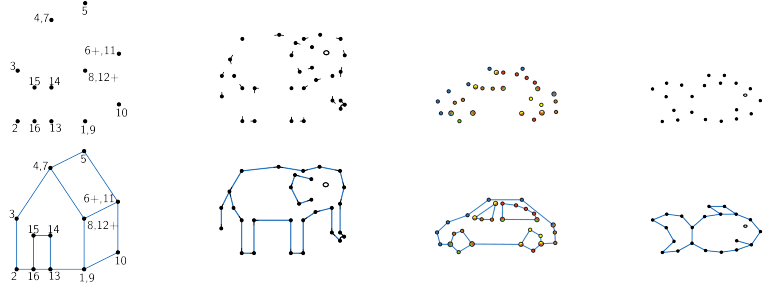
1. Connect the Dots

Many of us grew up doing connect-the-dot puzzles, and they seemed pretty easy. But, that is with visual queues. The image above shows a number of different visual queues. Connect the dots, especially without numbers or visual queues are great proving grounds for improving your visual pattern recognition skills.

2. DLAIY JMBULE

One of my favorites is the word game DAILY JUMBLE in my local newspaper. You can also play it online. The key here is to work not on using brute force to reorder the letters into a word, but trying to train your brain to just SEE THE WORD – instantly.

Succeeding at this and other ways of training your brain to be more like a quantum computer involves getting better at removing your conscious analytical brain from the picture and letting other parts of your brain take over. It’s not easy. It takes practice – continual practice – because it is really hard to keep the analytical brain out of the way.

So, are you willing to give it a try?

Stay tuned for the next article in this series “The Age of Insight” …

Image credits: Utrecht University, Pixabay


Accelerate your change and transformation success

Subscribe to Human-Centered Change & Innovation WeeklySign up here to get Human-Centered Change & Innovation Weekly delivered to your inbox every week.
The Role of Emotions in Consumer Behavior

Applying Insights for Innovation

The Role of Emotions in Consumer Behavior: Applying Insights for Innovation

GUEST POST from Art Inteligencia

In today’s fast-paced and competitive market, understanding the role of emotions in consumer behavior is crucial for companies looking to innovate and stay ahead of the curve. Emotions play a significant role in shaping consumer decision-making, influencing what products they buy and how they interact with brands. By tapping into these emotions, companies can create more meaningful and memorable experiences for their customers, leading to increased loyalty and brand advocacy.

Case Study 1: Apple

One company that has successfully leveraged the power of emotions in consumer behavior is Apple. With its sleek design, intuitive user interface, and powerful marketing campaigns, Apple has cultivated a strong emotional connection with its customers. By focusing on the emotional benefits of its products, such as creativity, self-expression, and simplicity, Apple has been able to position itself as a lifestyle brand that goes beyond just selling technology. This emotional appeal has helped Apple maintain a loyal customer base and drive sales year after year.

Case Study 2: Coca-Cola

Another example of a company that has used emotions to drive consumer behavior is Coca-Cola. Through its iconic advertising campaigns, Coca-Cola has been able to evoke feelings of happiness, nostalgia, and togetherness in consumers. By associating its brand with positive emotions, Coca-Cola has created a strong emotional bond with its customers, leading to increased sales and brand loyalty. In addition, Coca-Cola has been able to innovate by introducing new flavors and products that tap into different emotional needs, such as its Diet Coke line for health-conscious consumers.

Innovative companies are increasingly recognizing the importance of emotions in consumer behavior and are incorporating emotional insights into their product development and marketing strategies. By understanding the emotional drivers behind consumer behavior, companies can create products and experiences that resonate with their target audience on a deeper level. This emotional connection can lead to increased brand loyalty, customer satisfaction, and ultimately, business success.

Conclusion

The role of emotions in consumer behavior is a powerful force that companies can harness to drive innovation and growth. By understanding and tapping into the emotional needs and desires of their customers, companies can create products and experiences that truly resonate with their target audience. By applying insights from successful case studies like Apple and Coca-Cola, companies can pave the way for innovation and success in today’s competitive market.

Bottom line: Futures research is not fortune telling. Futurists use a scientific approach to create their deliverables, but a methodology and tools like those in FutureHacking™ can empower anyone to engage in futures research themselves.

Image credit: Pexels

Subscribe to Human-Centered Change & Innovation WeeklySign up here to get Human-Centered Change & Innovation Weekly delivered to your inbox every week.

Change Resistance: Addressing Common Barriers and Overcoming Employee Pushback

Change Resistance: Addressing Common Barriers and Overcoming Employee Pushback

GUEST POST from Chateau G Pato

In today’s dynamically evolving business landscape, organizations are faced with a constant need to adapt and embrace change in order to stay competitive. However, change initiatives often encounter resistance from employees, leading to delays and potentially derailing the desired outcomes. Understanding the common barriers to change and implementing strategies to address them is essential for effective change management. This article explores two case studies that illustrate how organizations successfully overcame employee pushback during transformative change endeavors.

Case Study 1: Implementing a New Performance Management System

Company X, a global technology firm, decided to revamp its performance management system to align with their updated business objectives. The organization aimed to encourage a culture of regular feedback and continuous improvement. Recognizing the resistance that the change might evoke, the management team took proactive steps to minimize employee pushback.

Firstly, the company ensured transparency and clarity by communicating the rationale behind the change. They conducted workshops and town hall meetings to explain how the new system would help employees grow professionally and benefit the organization as a whole. This transparent approach enabled employees to grasp the purpose of the change, which reduced uncertainty and resistance.

Secondly, they involved employees in the process by inviting feedback and suggestions. By incorporating their input, the organization demonstrated a genuine commitment to engaging employees and valuing their opinions. This inclusive strategy not only addressed employee concerns but also fostered a sense of ownership among employees, leading to higher acceptance of the new system.

Lastly, the company offered comprehensive training programs to help employees adapt to the change successfully. By providing resources and support, the organization minimized the fear of the unknown and empowered employees to embrace the new performance management system confidently. Regular check-ins and support forums were also established to provide ongoing assistance.

The combined efforts resulted in a smooth transition with minimal resistance. Employees gradually recognized the benefits of the new system, such as increased collaboration and individual growth opportunities. The successful implementation demonstrated that addressing common barriers and involving employees can drive positive change outcomes.

Case Study 2: Shifting to Remote Work during the COVID-19 Pandemic

Organization Y, a mid-sized consulting firm, faced the daunting challenge of transitioning its workforce to remote work amidst the COVID-19 pandemic. While the magnitude of the global crisis was beyond anyone’s control, the management team anticipated the potential resistance from employees during such a sudden transformation.

To overcome employee pushback, the company took proactive measures to support its employees’ transition to remote work. The first step was to ensure open and transparent communication channels. Frequent virtual meetings were conducted to address concerns, provide updates, and clarify expectations. This continuous dialogue improved employee morale and reduced anxiety about the uncertainties associated with remote work.

Understanding that remote work would alter the dynamics of collaboration, the organization invested in collaborative tools and technologies. Platforms like Microsoft Teams and Zoom were introduced to facilitate seamless virtual communication, ensuring effective teamwork and maintaining a sense of connection among employees.

To combat the potential feelings of isolation, the company also organized virtual team-building events, such as online happy hours and game nights. These activities helped foster a sense of camaraderie and provided an emotional support system during a challenging time.

Through these efforts, Organization Y successfully minimized employee resistance and maintained productivity during the transition to remote work. The crisis ultimately pushed the organization to adopt more flexible work practices, resulting in increased employee satisfaction and reduced operational costs.

Conclusion

Change resistance is an inevitable component of any transformative journey, but it does not have to hinder progress. By acknowledging common barriers, understanding employee concerns, and implementing strategies like transparent communication, employee involvement, and ongoing support, organizations can successfully overcome pushback. The case studies of Company X and Organization Y demonstrate that addressing resistance can lead to positive change outcomes and foster a resilient organizational culture capable of embracing future transformations.

EDITOR’S NOTE: Braden Kelley’s Problem Finding Canvas can be a super useful starting point for doing design thinking or human-centered design.

“The Problem Finding Canvas should help you investigate a handful of areas to explore, choose the one most important to you, extract all of the potential challenges and opportunities and choose one to prioritize.”

Image credit: Unsplash

Subscribe to Human-Centered Change & Innovation WeeklySign up here to get Human-Centered Change & Innovation Weekly delivered to your inbox every week.

Designing Products with Emotional Intelligence

Understanding User Needs and Desires

Designing Products with Emotional Intelligence: Understanding User Needs and Desires

GUEST POST from Chateau G Pato

In today’s competitive market, many companies strive to create products that not only meet customer needs but also evoke emotions and build meaningful connections. This approach is known as designing products with emotional intelligence. By understanding and addressing user needs and desires, companies can create products that resonate with customers on a deeper level, leading to increased customer satisfaction, loyalty, and ultimately, business success. This article explores the concept of designing products with emotional intelligence and provides two case study examples.

Case Study 1: Apple iPhone – A seamless blend of aesthetics and functionality

One of the most successful examples of designing products with emotional intelligence is the Apple iPhone. When the first iPhone was introduced in 2007, it revolutionized the mobile phone industry by offering a seamless blend of aesthetics and functionality. Apple understood that customer needs extended beyond mere features and specifications. They realized that customers desired a device that was not only technologically advanced but also visually appealing and user-friendly.

Apple’s designers focused on creating an emotional connection with their users by prioritizing the user experience. The iPhone’s sleek design, intuitive interface, and user-friendly features addressed the desires of consumers who craved a mobile device that was not only functional but also aesthetically pleasing. As a result, the iPhone became an iconic product, renowned for its emotional appeal, and established Apple as a leader in the smartphone industry.

Case Study 2: Airbnb – Creating a sense of belonging and personalization

Another prime example of designing products with emotional intelligence is Airbnb. The company recognized that travelers often desired a more intimate and authentic travel experience than what traditional hotels could offer. To meet these needs and desires, Airbnb created a platform that allows homeowners to rent out their properties to travelers, enabling them to experience local culture instead of staying in impersonal hotel rooms.

Airbnb’s success can be attributed to the emotional connection it established with its users. By focusing on personalization, the company ensured that travelers felt a sense of belonging while staying at a stranger’s home. The platform allows users to explore various listings, read reviews, and communicate with hosts, fostering trust and creating an emotional bond before booking. Additionally, by providing personalized recommendations based on user preferences, Airbnb delivers a tailored experience that aligns with each user’s desires, making them feel valued and understood.

Conclusion

Designing products with emotional intelligence is crucial for companies aiming to create meaningful connections with their customers. Understanding user needs and desires enables businesses to go beyond functional features and address the emotional aspect of product experiences. By focusing on emotional intelligence, companies like Apple and Airbnb have achieved tremendous success. By crafting products that not only meet practical needs but also evoke positive emotions, companies can build a loyal customer base and differentiate themselves in today’s competitive market. Ultimately, the key to designing products with emotional intelligence lies in empathizing with users, delving into their desires, and creating experiences that resonate with their emotions.

Bottom line: Futurology is not fortune telling. Futurists use a scientific approach to create their deliverables, but a methodology and tools like those in FutureHacking™ can empower anyone to engage in futurology themselves.

Image credit: Pixabay

Subscribe to Human-Centered Change & Innovation WeeklySign up here to get Human-Centered Change & Innovation Weekly delivered to your inbox every week.

The Psychology of Creativity: Tapping into the Inner Innovator

The Psychology of Creativity: Tapping into the Inner Innovator

GUEST POST from Art Inteligencia

Creativity is often perceived as a mysterious and intangible quality possessed by only a few select individuals. However, research in psychology has shed light on the inner workings of creativity, revealing that it is indeed a skill that can be nurtured and developed. By understanding the psychology of creativity, we can tap into our inner innovator and unlock the potential to generate novel and groundbreaking ideas. In this article, we will delve into the underlying principles of creative thinking and explore two case study examples that highlight the power of harnessing our innate creative abilities.

Case Study 1: Pixar Animation Studios

Pixar Animation Studios has redefined the world of animated films, continuously producing groundbreaking movies that captivate audiences of all ages. A key aspect of Pixar’s success lies in their commitment to fostering a creative environment. At Pixar, employees are encouraged to embrace their inner child-like curiosity, enabling them to think outside the box and bring novel ideas to the table. The company recognizes that creativity flourishes when individuals feel safe to take risks and voice their opinions.

Furthermore, Pixar adopts a collaborative approach that capitalizes on the power of diverse perspectives. They value the input of every team member, regardless of their role, fostering an egalitarian atmosphere where ideas can flow freely. By recognizing that creativity can come from anyone and anywhere within their organization, Pixar taps into the collective creative potential of their workforce.

Case Study 2: Warby Parker

Warby Parker revolutionized the eyewear industry by creating a consumer-centered business model that disrupted traditional retail habits. The founders of Warby Parker recognized that creativity is closely intertwined with empathy, understanding that true innovation arises from a deep understanding of the consumer’s needs and desires. They observed an opportunity to deliver stylish, affordable eyewear to customers who were tired of overpriced, limited options.

By conducting extensive market research and seeking insights into customer pain points, Warby Parker developed a disruptive direct-to-consumer model. The company’s innovative home try-on program, which allows customers to sample several frames before making a purchase, was born from this empathetic approach. Warby Parker’s success story demonstrates that creativity, when rooted in empathy, can redefine industries and challenge established norms.

Unpacking the Psychology of Creativity

Creativity is not a magical quality that only exists within a select few; it is a skill that can be developed and enhanced. The psychology of creativity unveils several key principles that can help individuals tap into their inner innovator:

1. Embrace a growth mindset: Adopting a growth mindset, as proposed by psychologist Carol Dweck, is crucial for nurturing creativity. Believing that creativity is a malleable skill fosters a willingness to learn and experiment, empowering individuals to explore new ideas fearlessly.

2. Cultivate curiosity: Curiosity is a driving force behind creativity. By maintaining a sense of wonder and actively seeking new experiences, individuals can broaden their perspectives and find inspiration in unexpected places.

3. Create a supportive environment: Environment plays a significant role in fostering creativity. Nurturing a culture that celebrates diverse ideas, encourages risk-taking, and rewards out-of-the-box thinking creates the ideal conditions for creative thinking to thrive.

Conclusion

The psychology of creativity reveals that everyone has the potential to tap into their inner innovator and generate game-changing ideas. By embracing a growth mindset, cultivating curiosity, and creating a supportive environment, individuals and organizations can unlock their creative potential. Case study examples, such as Pixar Animation Studios and Warby Parker, showcase the transformative power of embracing creative thinking. Indeed, the psychology of creativity teaches us that by harnessing our innate imaginative abilities, we can push the boundaries of what is possible and drive meaningful change in the world.

Bottom line: Futures research is not fortune telling. Futurists use a scientific approach to create their deliverables, but a methodology and tools like those in FutureHacking™ can empower anyone to engage in futures research themselves.

Image credit: Pexels

Subscribe to Human-Centered Change & Innovation WeeklySign up here to get Human-Centered Change & Innovation Weekly delivered to your inbox every week.