Category Archives: Psychology

4 Questions to Find Out if You’re a Forward-Thinker

4 Questions to Find Out if You're a Forward-Thinker

GUEST POST from Robert B. Tucker

Generals, the old saying goes, are always fighting the last war. In the age of global pandemic and Moore’s Law, this is a prescription for disaster.

Artificial intelligence, quantum computing, disinformation, and biotechnology are “making traditional battlefields and war-fighting methods increasingly irrelevant,” notes a just-released bipartisan task force report on the “Future of Defense.”

These days, generals and policy-makers in Washington are not the only ones who need to stop fighting the last war. All leaders today, no matter what industry or profession, need to hone their capacity to look, think and act ahead of the curve. The future is arriving faster than ever.

The ability— but more importantly the willingness — to think forward will be a key component of organizational and personal success going forward. The next decade is certain to be more volatile, uncertain, complex and ambiguous than ever before.

And full of potential, at the same time— for those who are” future-ready.”

As a futurist and innovation advisor, I regularly witness the competitive advantages of forward thinking. I also observe the downside effects of being stuck in the past (consider the fate of Blockbuster, Kodak, JCPenny, Blackberry and many others).

Since the early 1980s, I’ve studied the patterns and habits of visionary leaders. My research suggests that forward thinking is a learned behavior, rather than an innate human ability. We can get better at sizing up what is to come — and seizing the inherent opportunities therein — by being curious, outwardly focused on change in all its dimensions, and pro-active in our information intake.

To improve your abilities as a forward thinker, focus on two areas: strategic foresight and innovation skills. Strategic foresight is the the byproduct of taking in quality information, reading signals of change that could spell danger or opportunity, tracking trends, examining scenarios of possible futures, and exercising your imagination. It’s also projecting ahead (forecasting) what is most likely to happen and what will be needed in the future.

By considering these five questions, you’ll gain quick insight into where you stand currently, and I’ll offer suggestions for skill-building your forward thinking abilities.

1. Do friends, family or colleagues ever acknowledge you for your imagination?

If they do, that’s a good sign that you are already someone who thinks ahead.

Imagination is the ability to form mental images of something in advance of it being real. The future becomes clear to all of us at some point. But it does so in advance for those who engage their imaginations, and turn vision into reality.

Forward thinking is something all of us do all the time in order to get through the day. You are doing it when you read the weather report and then take your umbrella. You are forward thinking when you conjure up the layout of your dream house before you ever start drawing up a blueprint.

At work, you are forward thinking when you look at an aging product line and imagine ways it can be revitalized for today’s customer. Forward thinking is looking at something everyone around you labels a problem, and pondering how it might become an opportunity. It’s seeing in your mind’s eye how you want that important meeting with clients to go next week. It’s working on the fourth quarter of next year, and planning for the year after that.

If people around you perk up when you speak about your plans, your dreams, your visions — it probably means you’re adept at being a forward thinker already. And of course coming up with ideas is only part of the equation. The other part is bringing ideas to life.

2. Do you periodically audit your “information diet”?

Your information diet includes all the numerous information sources you avail yourself to: newsfeeds, the periodicals and daily newspapers you subscribe to, plus industry reports, email newsletters, etc. When you audit your info-intake, you’re really questioning how rich it is, and how it might be improved.

To assess yours, calculate how many in-depth articles and non-fiction books you’ve read in the last six months. Covid-19 and an erratic president of the United States have placed us all in a constant state of distraction and anxiety. Our collective information intake has skewed heavily towards breaking news about the current crisis. Temporarily, this was inevitable. But as a longer-term information diet, it is the moral equivalent of trying to survive off a diet of McDonald’s Happy Meals.

If you want to accelerate your forward-thinking skills, start with your informational intake. Conduct a simple assessment of your information diet: turn “garbage in, garbage out” into “good things in, good things out.” Monitor how much time are you spending on trivia, gossip, and entertainment, versus those that are substantive, fact-checked, well-researched and future-inspiring. Set aside time regularly to read without interruptions (long flights work best for me). Subscribe to worthy publications rather than “grazing” the web and partaking solely of free information. And read broadly, especially history and biography, and encourage yourself to “read up on” subjects in the news that you’re not naturally interested in.

A well-rounded informational diet will pay big dividends in the future.

3. Do you regularly sharpen your forecasting skills?

While nobody can predict the future, you and I must make predictions all the time in terms of where to invest, where to work, and what decisions we make. So why are some people better able to make accurate predictions?

University of Pennsylvania professor Philip Tetlock has looked in to this question. he studies why some people are better than others at predicting what will happen in the future. His research indicates that most of the noted experts you see on television have the accuracy of “dart throwing chimpanzees.” But that there are folks out there among us who somehow have an ability in this area.

Tetlock and his researchers host “forecasting tournaments” to identify what separates superior forecasters from the rest. In these competitions, thousands of non-expert everyman volunteers answer a series of questions on various current events topics, from when the Global Pandemic will actually end, to the near term stability or instability of the Eurozone.

Tetlock has identified a small group of people who generated forecasts that beat the rest of tournament participants by well over 50 percent. How did they do it and what are their secrets?

While these highly- adept forecasters come from various backgrounds, they have certain traits in common: they are philosophically cautious and humble. They are comfortable with numbers but not always math whizzes. They are pragmatic and capable of considering diverse points of view — “open minded.” They are intellectually curious and enjoy puzzles and mental challenges. And most especially, they are alert to personal bias and wishful thinking (”this virus will go away”). Tetlock stresses the need to think in terms of probabilities and to avoid guessing, and he believes that we can get better by monitoring our habits and practices.

By working on some of these traits, and reflecting on the accuracy of your predictive decisions, you sharpen your ability to accurately forecast your future.

4. Do you benchmark the best practices of leading innovators in order to improve?

Researching the book, Winning the Innovation Game, I interviewed 43 leading visionaries, futurists, Nobelists and discovered the one trait they all have in common —they are forward thinkers.

I flew to Memphis to interview Fred Smith, CEO and founder of FedEx corporation, one of the first of a new breed of forward thinking leaders to appear in the 1970s. I asked him how he got the (at the time) radical idea for the company. He explained that during the early 1970s, he was happily running a family-owned business at the Little Rock, Arkansas airport that refurbished aircraft, and he noticed how frequently they’d get calls from people frantic and wanting to get a package to another city overnight. But there was no way to accomplish that. Finally, Smith said, he decided to fill that need with a freight company for “time sensitive” parcels.

Amazon CEO Jeff Bezos, according to those who have, has figured out how to spend the bulk of his calendar on forward thinking. He delegates to trusted lieutenants the implementation of ideas. He spends most of his time examining how the world will look three, five and 10 years out. He is focused on baking in results for the third quarter two years from now, notes an article in Fortune. He sees his job as identifying and refining the Innovation Roadmap that will take the company from where it is today to where he wills it to be in the future — on time and on schedule.

This article originally appeared in Forbes
Image credit: 1 of 1,250+ FREE quote images available at http://misterinnovation.com

Subscribe to Human-Centered Change & Innovation WeeklySign up here to get Human-Centered Change & Innovation Weekly delivered to your inbox every week.

The Role of Diversity and Inclusion in Fostering Innovation

The Role of Diversity and Inclusion in Fostering Innovation

GUEST POST from Chateau G Pato

In today’s rapidly changing world, innovation is the driving force behind success and growth for any organization. To keep up with the ever-evolving market demands, companies are increasingly recognizing the importance of embracing diversity and fostering inclusion within their workforce. The impact of a diverse and inclusive environment goes beyond just social justice; it also plays a pivotal role in fostering innovation and driving business competitiveness. Let’s explore some case study examples that highlight the role of diversity and inclusion in promoting innovation.

Case Study 1: Google’s Employee Resource Groups

Google, a global technology leader, has long been known for its commitment to diversity and inclusion. One of the ways they promote a diverse and inclusive workforce is through their Employee Resource Groups (ERGs). These ERGs are voluntary, employee-led groups that aim to create a sense of belonging for underrepresented groups. By bringing together employees with diverse backgrounds, experiences, and perspectives, Google’s ERGs have become catalysts for innovation. These groups provide a platform for employees to connect, share ideas, and contribute to problem-solving, resulting in innovative solutions that address a wide range of challenges. For instance, the Black Googler Network (BGN) launched an initiative called “CS in Color” to address the racial disparities in computer science education. Through this program, BGN empowered students of color with coding skills, driving innovation by diversifying the tech industry’s talent pool.

Case Study 2: Johnson & Johnson’s Open Innovation Program

Johnson & Johnson (J&J), a multinational healthcare company, recognizes that embracing diversity contributes to its innovation efforts. They have implemented an open innovation strategy that emphasizes collaboration with external partners. In 2011, J&J established the Diversity & Inclusion External Innovation Council to enhance diversity and inclusion in their external collaborations. By partnering with entrepreneurs, startups, and diverse suppliers, J&J aims to foster innovation by tapping into a broader pool of ideas and solutions. By embracing diversity in their external partnerships, J&J has been able to drive breakthrough innovations in various therapeutic areas. For example, their collaboration with a small biotech company led to the development of a groundbreaking treatment for multiple myeloma, a type of blood cancer. By incorporating diverse perspectives and leveraging external partnerships, J&J has been able to stay at the forefront of healthcare innovation.

These case study examples demonstrate that diversity and inclusion play a vital role in fostering innovation. By embracing employees with different backgrounds, experiences, and perspectives, organizations can tap into a vast array of ideas and approaches. Diversity of thought and perspectives fuels creativity, leading to innovative solutions and increased competitiveness. Furthermore, inclusion ensures that diverse voices are heard, valued, and given the opportunity to contribute fully, resulting in a more collaborative and innovative work environment.

Conclusion

To fully reap the benefits of diversity and inclusion, organizations must focus on creating an inclusive culture that promotes psychological safety, encourages diverse perspectives, and supports collaboration. By doing so, organizations can foster an innovative culture where everyone feels empowered to contribute their unique ideas and drive positive change.

Diversity and inclusion are not only moral imperatives but also powerful enablers of innovation. Embracing diversity within the workforce promotes creativity, fuels innovation, and results in solutions that meet the needs of an increasingly diverse customer base. By fostering an inclusive environment where every voice is valued and heard, organizations can drive innovation, unlock new opportunities, and ensure long-term success in today’s fast-paced and competitive world.

Bottom line: Futurology is not fortune telling. Futurists use a scientific approach to create their deliverables, but a methodology and tools like those in FutureHacking™ can empower anyone to engage in futurology themselves.

Image credit: misterinnovation.com

Subscribe to Human-Centered Change & Innovation WeeklySign up here to get Human-Centered Change & Innovation Weekly delivered to your inbox every week.

The Psychological Impact of Change

Understanding the Emotions and Reactions Individuals Experience During Times of Change and How to Effectively Support Them

The Psychological Impact of Change

GUEST POST from Art Inteligencia

Change, whether anticipated or unexpected, often triggers a wide range of emotions and reactions in individuals. Understanding the psychological impact of change is crucial for organizations, leaders, and support networks to effectively assist individuals in navigating these turbulent times. In this article, we explore the common emotions and reactions people experience during change, followed by two case study examples that demonstrate the diverse range of responses. Additionally, we offer effective strategies to support individuals during periods of change, fostering resilience and facilitating positive adaptation.

Emotions Experienced During Change

Change has the potential to instigate a rollercoaster of emotions. Fear, uncertainty, and anxiety are common responses as individuals face a shift from familiar routines and into the unknown. Feelings of sadness, grief, and loss may also emerge as people let go of what they once knew or valued. Conversely, excitement, anticipation, and hope can accompany positive changes, serving as beacons guiding individuals towards new possibilities. Recognizing and acknowledging these emotional responses is crucial to provide appropriate support during times of change.

Case Study One: Jenna’s Job Loss

Jenna had been working at the same company for 15 years when she suddenly received news of her redundancy. She felt overwhelmed by a profound sense of loss, as her job had been a significant part of her identity. Initially, Jenna experienced shock and denial, followed by anger and frustration. With the support of her colleagues, she gradually accepted the situation and embarked on a journey of self-discovery. By attending career transition workshops and receiving counseling, Jenna eventually embraced the opportunity to explore new professional avenues. With resilience and determination, she transformed a seemingly devastating change into a personal growth experience.

Case Study Two: Sam’s Relocation

Sam, a 10-year-old boy, was informed by his parents that they would be relocating to a new city due to a job transfer. Sam’s immediate reaction was that of fear and sadness. He worried about leaving his school, friends, and familiar surroundings behind. Acknowledging Sam’s emotions, his parents engaged him in open communication and involved him in the relocation process. They encouraged Sam to express his thoughts and concerns, reassuring him that they would provide support throughout the transition. By focusing on the positive aspects of the move, like new friends and exciting opportunities, Sam gradually became more receptive to the change, ultimately adapting to his new environment with a sense of curiosity and resilience.

Support Strategies During Change

To effectively support individuals during times of change, several strategies can be implemented:

1. Clear Communication: Open and honest communication is vital. Providing individuals with information about the change, reasons behind it, and potential benefits helps reduce uncertainty and anxiety.

2. Provide Resources: Offering resources such as counseling, dedicated support teams, or external assistance equips individuals with tools and guidance to navigate the transition.

3. Encourage Resilience: Foster a supportive environment that encourages resiliency. Highlight the potential for personal growth, emphasizing adaptability and strength in overcoming challenges.

4. Empathy and Active Listening: Validate individuals’ emotions and actively listen to their concerns. By acknowledging their feelings, you create a safe space for them to express themselves and feel heard.

Conclusion

Change brings forth a variety of emotions and reactions in individuals, ranging from fear and uncertainty to excitement and hope. Through understanding and acknowledging these responses, individuals can effectively navigate change and harness the opportunity for personal growth and adaptation. By implementing support strategies, fostering open communication, and validating emotions, we can create an environment that effectively supports individuals during times of change, enabling them to flourish and thrive in the face of uncertainty.

Image credit: Pexels

Subscribe to Human-Centered Change & Innovation WeeklySign up here to get Human-Centered Change & Innovation Weekly delivered to your inbox every week.
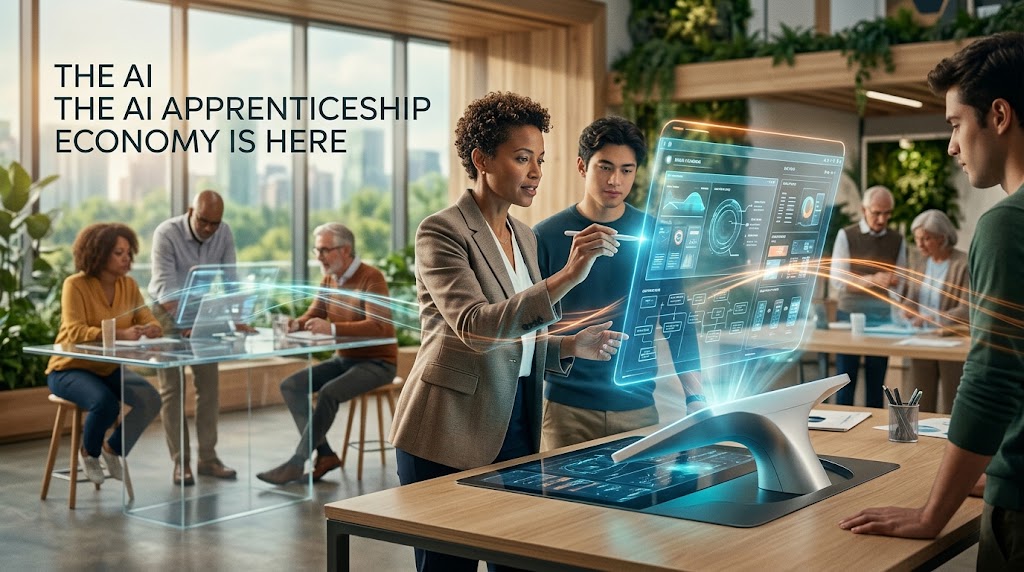
The AI Apprenticeship Economy is Here

Rethinking Change, Innovation, and Human Potential

The AI Apprenticeship Economy is Here

GUEST POST from Art Inteligencia


The Fallacy of Automation vs. The Promise of Apprenticeship

The dominant conversation surrounding Artificial Intelligence remains stubbornly stuck in a false binary: either AI will systematically replace human talent across every knowledge domain, or it is merely a glorified backend automation utility. Both perspectives miss the true strategic shift happening right beneath our feet.

We are entering The AI Apprenticeship Economy. In this new paradigm, AI should not be viewed as an autonomous replacement for human expertise, nor as a static tool. Instead, it functions as a digital apprentice—an eager, extraordinarily fast assistant capable of processing massive volumes of data, but one that inherently lacks context, empathy, strategic nuance, and lived experience.

Just as a master craftsperson guides, curates, and shapes the output of an apprentice, human workers must step into the role of strategic orchestrators. When we reframe AI as a dynamic partner in skill-building and experience design, we unlock unprecedented organizational agility. The leaders and organizations that thrive in this decade won’t be those who use AI to cut headcount, but those who design superior human-centered ecosystems where humans and digital apprentices elevate each other’s potential.

The Core Pillars of the AI Apprenticeship Economy

To successfully integrate digital apprentices into an organization, leaders must move beyond superficial efficiency metrics and rethink how value is generated. The AI Apprenticeship Economy rests on three fundamental structural pillars:

Bidirectional Mentorship

Traditional software training is one-way: humans learn how to operate the system. In an apprenticeship model, the learning loop runs both ways. Human experts continuously train AI agents on tacit domain knowledge, organizational nuance, brand voice, and customer context. In return, AI provides humans with rapid synthesis, real-time pattern recognition, and non-obvious cross-industry insights, accelerating human skill development and decision-making.

Human-Centered Control Loops

An apprentice is never left without supervision on mission-critical work. Designing robust human-in-the-loop and human-on-the-loop architectures ensures that strategic intuition, ethical oversight, and emotional intelligence remain firmly anchored by human judgment. Control loops must be designed not as bureaucratic roadblocks, but as seamless experience touchpoints that allow human experts to easily review, refine, and approve apprentice output.

Accelerated Value-to-Market

When multidisciplinary teams are paired with specialized AI apprentices, the path from idea to validated prototype shrinks from months to days. By treating AI agents as dedicated research, design, and analysis pods, organizations can radically increase their experimentation capacity. This speed enables teams to test more hypotheses, iterate on experience designs faster, and bring high-value innovations to market with significantly reduced risk.

Redesigning Change Management for AI-Human Synergies

Technology alone never transforms an enterprise; culture and experience design do. Scaling the AI Apprenticeship Economy requires a fundamental shift in how we approach organizational change, moving away from top-down mandates toward human-centered enablement.

Overcoming Resistance Through Agency

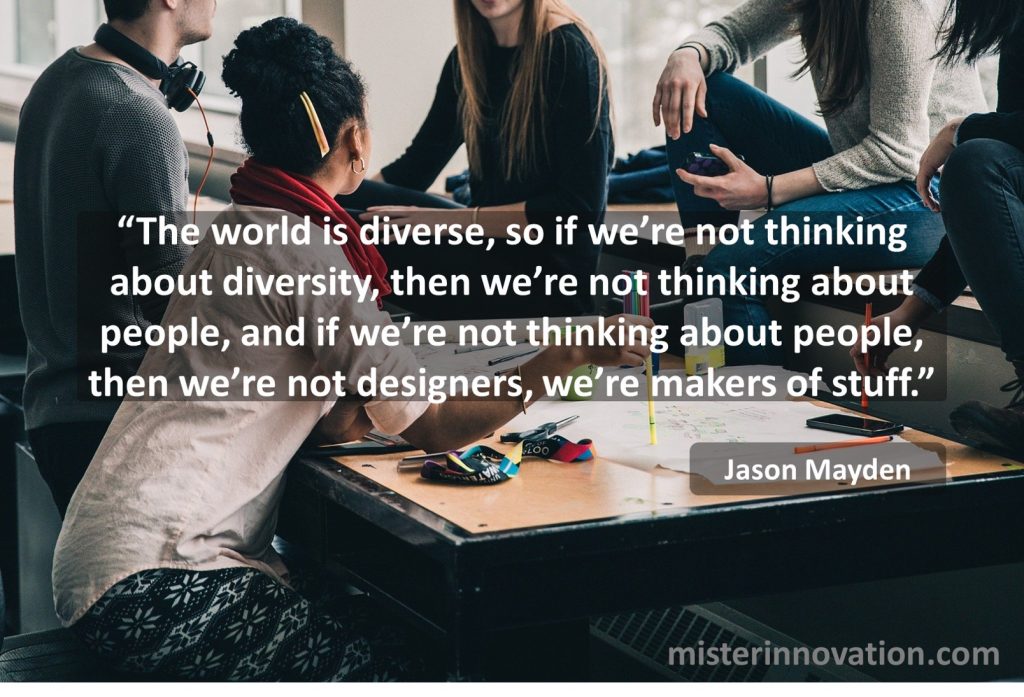
Fear of obsolescence is the primary driver of resistance to new technologies. When AI is framed as a cost-cutting replacement tool, employees naturally respond with hesitation or passive resistance. By reframing the narrative around agency and mentorship—positioning the employee as the “master” directing a digital apprentice—we shift the dynamic from displacement to empowerment. Workers retain ownership over their domain while delegating low-leverage friction tasks.

Updating Experience Design (EX/UX)

The success of human-AI collaboration hinges on friction-free interface design. Employee Experience (EX) teams must rethink workplace workflows to ensure human-AI handoffs are intuitive and transparent. This means building user experiences where feedback loops are clear, confidence scores are visible, and taking control back from an AI agent requires zero administrative overhead. When interaction models are designed around human cognitive needs, adoption follows naturally.

Building Cultural Infrastructure for Experimentation

In an environment where digital apprentices compress production cycles, innovation becomes a function of psychological safety. Leaders must cultivate a culture that encourages rapid, decentralized experimentation. This involves establishing clear guardrails—so teams know where they have total freedom to test apprentice-assisted ideas—and actively celebrating “smart failures” that yield strategic insights. Without strong cultural permission to experiment, the full value of AI apprenticeships will remain untapped.

A Framework for Innovation Managers

To move from strategic vision to execution, innovation leaders need a practical roadmap for integrating digital apprentices into everyday operational workflows. This three-step framework ensures AI adoption drives measurable business value while keeping human experience at the center.

Step 1: Map the Apprentice Touchpoints

Begin by conducting a workflow audit across your teams to separate high-value strategic thinking from routine operational friction. Identify low-leverage, contextual tasks—such as initial data synthesis, preliminary research summaries, scenario modeling draft generation, or basic prototype coding—that can be safely delegated to digital apprentices. Mapping these touchpoints creates clear boundary lines where human oversight begins and automated assistance ends.

Step 2: Establish Quality Controls & Ethics

An apprentice is only as effective as the governance surrounding its work. Establish clear human-in-the-loop validation checkpoints before any apprentice-generated asset touches customers or critical internal systems. Define robust ethical guidelines, algorithmic bias checks, data privacy standards, and brand alignment rubrics to ensure all outputs meet organizational standards without introducing hidden liabilities or experience drift.

Step 3: Measure Beyond Efficiency

Traditional IT implementations measure success purely by cost reduction or hours saved. In the AI Apprenticeship Economy, efficiency is merely the baseline. Innovation managers must track higher-order value metrics, including:

  • Creative Bandwidth: The increase in time employees spend on high-level strategic problem solving and customer experience design.
  • Innovation Velocity: The speed at which teams move from initial concept to validated market experiment.
  • Experience Level Measures (XLMs): Improvements in internal employee satisfaction, team engagement, and external customer sentiment across AI-augmented touchpoints.

Conclusion: The Future Belongs to the Master Craftsman

The dawn of the AI Apprenticeship Economy represents far more than an incremental upgrade in enterprise software—it demands a fundamental transformation in organizational culture, leadership mindset, and experience design. Leaders who view AI merely as a mechanism for headcount reduction are playing a short-sighted game that risks stripping their organizations of tacit knowledge, domain mastery, and distinct brand value.

The true competitive advantage in this era will belong to organizations that cultivate master craftspeople—leaders and teams capable of setting vision, asking better questions, exercising strategic judgment, and expertly directing fleets of digital apprentices. AI brings the raw compute, processing speed, and scale, but humans bring the cause, empathy, purpose, and creative direction.

By designing human-centered workflows where digital apprentices elevate human potential rather than diminish it, we build resilient organizations capable of navigating perpetual market chaos. The tools are ready; the challenge now is designing the human experience to match.

Frequently Asked Questions

How does the AI Apprenticeship model differ from traditional automation?

Traditional automation seeks to replace human tasks with static, rules-based software to cut costs. The AI Apprenticeship model treats AI as a dynamic partner requiring human direction, context, and ethical curation, aiming to elevate human creative bandwidth and innovation velocity rather than simply reduce headcount.

How do organizations prevent loss of human domain expertise when delegating tasks to AI?

By establishing bidirectional mentorship loops and human-centered control loops. Employees maintain ownership over strategic decision-making and quality governance, positioning the worker as the “master craftsperson” who reviews, refines, and directs the apprentice’s raw output.

What key metrics should leaders track to measure AI Apprenticeship success?

Instead of relying solely on hours saved or immediate cost reduction, leaders should track creative bandwidth (time spent on strategic problem solving), innovation velocity (concept-to-experiment speed), and Experience Level Measures (XLMs) across both employee engagement and customer sentiment.


EDITOR’S NOTE: Braden Kelley’s Problem Finding Canvas can be a super useful starting point for doing design thinking or human-centered design.

“The Problem Finding Canvas should help you investigate a handful of areas to explore, choose the one most important to you, extract all of the potential challenges and opportunities and choose one to prioritize.”

Image credit: Gemini

Subscribe to Human-Centered Change & Innovation WeeklySign up here to get Human-Centered Change & Innovation Weekly delivered to your inbox every week.

The Cognitive Value Chain

Structuring Teams to Take Ideas from Conception to Scale

The Cognitive Value Chain

GUEST POST from Art Inteligencia


Executive Summary: The Cognitive Value Chain

Most organizations do not suffer from a shortage of great ideas—they suffer from a systemic inability to move those ideas from initial spark to sustained, enterprise-scale impact.

Traditional innovation approaches treat ideation and execution as binary states. The Cognitive Value Chain redefines innovation as a continuous, human-centered assembly line of distinct cognitive modes. By aligning specific mindsets, team structures, and experience design principles to distinct phases of value creation, leaders can bridge the execution gap and turn friction into momentum.

Core Thesis

Scaling innovation is fundamentally a human-centered change challenge. Success requires intentionally orchestrating four cognitive transitions: shifting from Explorers identifying human needs, to Architects prototyping value, to Integrators building organizational readiness, and finally to Optimizers realizing value at scale.

Key Strategic Takeaways

  • Eliminate the Handoff Friction: Great ideas die in the seams between teams. Structuring early integration loops prevents the “Not Invented Here” syndrome before scaling begins.
  • Align Mindset to Stage: Assigning execution-oriented mindsets too early stifles discovery, while keeping exploratory mindsets too late prevents operationalization.
  • Human-Centered Integration: Change management and experience design cannot be downstream afterthoughts—they must be woven into the fabric of product and service architecture from Day 1.

Phase 1: Context & Discovery (Insight Generation)

Every scalable innovation begins not with a solution, but with deep curiosity and a relentless commitment to understanding human needs and market shifts.

Phase 1 lays the foundation of the Cognitive Value Chain by framing the right problems before jumping to answers. Instead of brainstorming in a vacuum, teams engage in Human-Centered Sensing—evaluating the broader landscape through the dual lenses of customer and employee experience design to uncover latent friction, unarticulated desires, and strategic opportunities.

Phase Blueprint

  • Primary Objective: Uncover high-value insights and establish strategic problem-solution fit.
  • Cognitive Mode: Divergent, inquisitive, empathetic, and challenge-driven.
  • Key Deliverable: Formulated problem statements and customer experience gap analyses.

Team Dynamic: Explorers & Empaths

To succeed in this initial phase, team structures must prioritize cognitive diversity that thrives on ambiguity. The ideal team composition combines:

  • Explorers: Individuals who scan horizon trends, challenge long-held organizational assumptions, and connect disparate dots across industries.
  • Empaths: Experience design practitioners who listen deeply to users, mapping emotional journeys and uncovering hidden behavioral pain points.

Tooling & Methodology

Insight generation relies on structured inquiry rather than ad-hoc ideation. Teams leverage problem-framing canvases, contextual inquiry, and experience mapping to align organizational strategy directly with authentic market demands. By establishing a rigorous foundation here, organizations ensure that downstream investments are built on validated human value rather than internal guesswork.

Phase 2: Synthesis & Prototyping (Value Design)

Raw insights hold little enterprise value until they are translated into tangible, testable architectures designed for both human desirability and operational viability.

Phase 2 pivots the Cognitive Value Chain from open-ended exploration to purposeful convergence. Here, teams synthesize raw customer and employee insights into initial service models, experience blueprints, and business concepts. Through continuous feedback loops, early designs are de-risked long before capital-intensive deployment begins.

Phase Blueprint

  • Primary Objective: Convert raw insights into validated, low-fidelity prototypes and scalable experience architectures.
  • Cognitive Mode: Convergent, constructive, analytical, and iterative.
  • Key Deliverable: Tested prototypes, experience blueprints, and initial business model hypotheses.

Team Dynamic: Architects & Designers

This phase requires a transition in cognitive posture—moving from open inquiry to systemic construction. The team structure centers on:

  • Architects: Strategic thinkers who evaluate technical feasibility, value proposition sustainability, and broader ecosystem integration.
  • Designers: Experience specialists who craft user interfaces, touchpoints, and interaction flows to ensure intuitive adoption.

Tooling & Methodology

Rapid experimentation is the cornerstone of value design. Teams utilize experience prototyping, visual charters, and experiment canvases to stress-test assumptions. By measuring real human reactions to early concepts, organizations identify potential friction points and refine the solution while the cost of modification remains low.

Phase 3: Change Readiness & Operationalization (System Alignment)

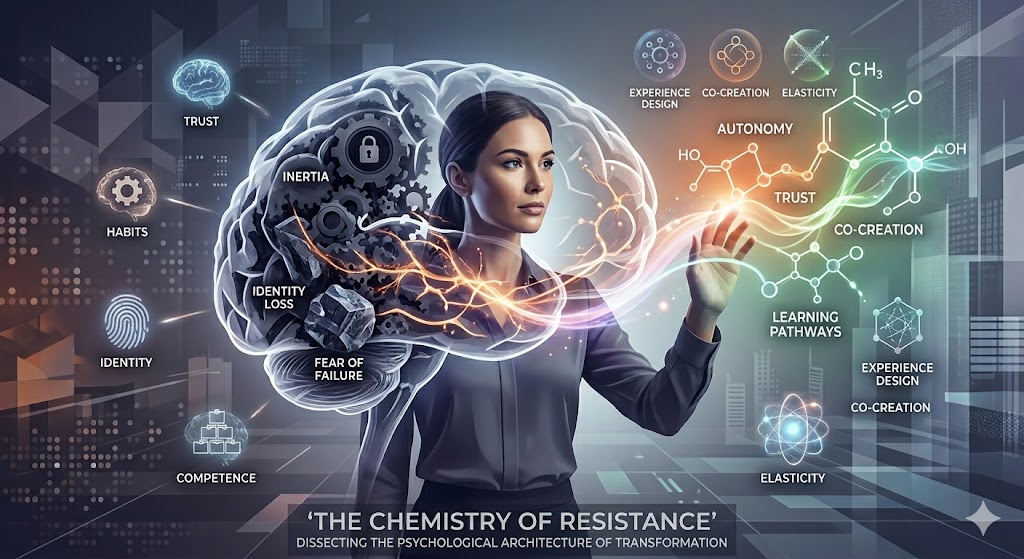
The greatest threat to a brilliant innovation is not market rejection—it is internal organizational inertia and systemic resistance to change.

Phase 3 bridges the critical chasm between a validated prototype and an enterprise-wide rollout. Instead of treating change management as a late-stage announcement, the Cognitive Value Chain integrates human-centered change design directly into operational planning. This ensures that organizational culture, incentives, governance, and capabilities are aligned long before scaling begins.

Phase Blueprint

  • Primary Objective: Overcome organizational friction, build institutional capability, and prepare systems for enterprise adoption.
  • Cognitive Mode: Relational, integrative, strategic, and capability-focused.
  • Key Deliverable: Change architecture plans, stakeholder engagement roadmaps, and operational transition frameworks.

Team Dynamic: Change Champions & Integrators

Navigating the organizational handoff demands mindsets skilled in empathy, negotiation, and systems thinking. Primary roles include:

  • Change Champions: Influencers and leaders across departments who build cross-functional coalition, communicate purpose, and drive cultural buy-in.
  • Integrators: Operations and systems experts who reconfigure workflows, update governance structures, and align IT/process architectures with the new experience.

Tooling & Methodology

Success in this phase relies on structured change planning tools, organizational agility frameworks, and stakeholder impact mapping. By proactively diagnosing risk and addressing the human element of change early, teams dismantle the “Not Invented Here” bias and establish frictionless pathways for enterprise scaling.

Phase 4: Scaling & Continuous Evolution (Value Realization)

Innovation reaches its full potential only when scalable delivery is paired with an ongoing commitment to continuous experience refinement.

Phase 4 represents the destination of the Cognitive Value Chain—embedding the innovation seamlessly into the core operating engine of the enterprise. True value realization requires industrializing delivery without losing the human-centered spirit that sparked the original vision. By establishing tight feedback loops, operational teams maintain delivery excellence while constantly feeding fresh signals back into Phase 1 for perpetual learning.

Phase Blueprint

  • Primary Objective: Achieve sustained enterprise scale, measure real-world impact, and institutionalize continuous feedback loops.
  • Cognitive Mode: Disciplined, analytical, systematic, and optimization-oriented.
  • Key Deliverable: Scaled operating models, experience level metrics, and ongoing continuous improvement cycles.

Team Dynamic: Operators & Optimizers

Scaling requires transition to execution-minded cognitive styles focused on consistency, efficiency, and governance. Key capabilities include:

  • Operators: Process and delivery leaders who manage day-to-day execution, maintain quality standards, and ensure operational resilience across all channels.
  • Optimizers: Data and analytics specialists who track adoption metrics, measure experience level outcomes, and fine-tune system performance.

Tooling & Methodology

Long-term success depends on robust measurement frameworks, experience management oversight, and operational governance dashboards. By continuously monitoring key performance and experience indicators, organizations ensure the value proposition remains vibrant and adaptable to evolving market forces over time.

Conclusion & Strategic Imperative

Innovation is not a solitary lightning strike—it is an orchestrated, human-centered journey from early insight to enterprise realization.

By mastering The Cognitive Value Chain, organizations move past the trap of random ideation and build a resilient capability for sustained value creation. The true bottleneck in modern business is rarely a lack of vision; it is the structural friction between how teams think, collaborate, and adapt across transitions.

The Leadership Call to Action

Leaders must step back from simply managing project outcomes and focus instead on designing the cognitive environment. Audit your organization to identify where your value chain leaks potential: Are you expecting Explorers to drive operational scale, or asking Optimizers to discover breakthrough insights?

Aligning the right cognitive modes, human-centered design practices, and change management principles to each stage of the journey ensures your best ideas don’t just survive the organization—they transform it.

Frequently Asked Questions

What is the primary difference between traditional innovation models and The Cognitive Value Chain?

Traditional models treat ideation and execution as binary steps, often leading to severe handoff friction. The Cognitive Value Chain redefines innovation as a continuous, four-stage human-centered assembly line, systematically aligning specific cognitive mindsets—Explorers, Architects, Integrators, and Optimizers—to each phase of value creation.

Why do great concepts usually fail during Phase 3 (Change Readiness & Operationalization)?

Most concepts stall during operationalization due to internal organizational inertia and the “Not Invented Here” syndrome. Phase 3 addresses this by integrating human-centered change design, organizational agility, and stakeholder alignment into the process before enterprise scaling begins, rather than treating change management as a late-stage afterthought.

How can leaders apply The Cognitive Value Chain to existing teams?

Leaders should conduct a cognitive audit of their innovation process to identify operational bottlenecks. Rather than expecting one team to manage the entire lifecycle, leaders must structure cross-functional transitions that match individuals’ natural cognitive strengths (discovery, architectural design, change integration, or operational optimization) to the appropriate stage of the innovation journey.


EDITOR’S NOTE: Braden Kelley’s Problem Finding Canvas can be a super useful starting point for doing design thinking or human-centered design.

“The Problem Finding Canvas should help you investigate a handful of areas to explore, choose the one most important to you, extract all of the potential challenges and opportunities and choose one to prioritize.”

Image credit: Gemini

Subscribe to Human-Centered Change & Innovation WeeklySign up here to get Human-Centered Change & Innovation Weekly delivered to your inbox every week.
Why Cognitive Style is the Ultimate Predictor of Project Success

Beyond the Skillset

Why Cognitive Style is the Ultimate Predictor of Project Success

GUEST POST from Art Inteligencia


The Missing Metric: Cognitive Style

To build truly resilient initiatives, leaders must look beyond what people know and focus on how they think. Cognitive Style represents the distinct, fundamental way an individual perceives information, navigates ambiguity, and approaches problem-solving. It is the invisible force shaping team dynamics, determining whether a group will clash during strategic pivots or seamlessly pivot together.

The Thesis

Technical skills define what a team can build, but cognitive style dictates how they adapt, collaborate, and execute when change hits. In an environment defined by continuous disruption and human-centered transformation, cognitive alignment—not functional capability alone—is the ultimate predictor of project success.

The Archetypes of Project Dynamics

Effective change and experience design require balancing four core cognitive archetypes, each bringing a distinct operational lens to the table:

Explorers (Generative)

Thrive in ambiguity, framing problem spaces, identifying unmet user needs, and spotting non-obvious opportunities.

Architects (Structural)

Excel at translating fluid ideas into scalable systems, governance frameworks, and repeatable operational models.

Accelerators (Execution)

Focus on velocity, rapid prototyping, and translating strategy into tangible, testable project milestones.

Integrators (Relational)

Focus on empathy, cross-functional alignment, and ensuring human-centered adoption across stakeholder groups.

The Pivot Crisis

The true test of a team’s cognitive balance occurs when unexpected disruptions strike. Cognitively uniform teams suffer from systemic blind spots: a team composed entirely of Accelerators may rush down a flawed path without pausing to reframe the problem, while a team dominated by Explorers can get trapped in endless discovery loops. Without a diverse cognitive mix, teams lack the internal mechanics required to gracefully absorb scope adjustments, emerging risks, or shifting user needs.

The Experience Design Gap

Traditional project environments and legacy governance frameworks heavily favor linear, structural processing. This systemic bias frequently marginalizes generative Explorers during technical execution and sidelines relational Integrators until late-stage change management. Excluding these perspectives during critical design phases results in technically sound deliverables that fail to resonate with end users or achieve meaningful organizational adoption.

Designing Human-Centered Workflows

Cognitive diversity yields value only when the operating environment supports different modes of processing information. Leaders must design collaboration norms, decision-making frameworks, and feedback loops that honor these styles. This means balancing real-time, high-energy brainstorming sessions favored by Accelerators with asynchronous, reflective feedback spaces required by Architects to synthesize complexity before committing to a path.

Cognitive Diversity in Governance

Traditional gatekeeping models often enforce rigid compliance that stifles experimentation, or default to unstructured agility that lacks accountability. Implementing cognitively inclusive governance ensures that stage-gates serve as strategic checkpoints rather than bureaucratic hurdles. By structuring decision criteria to validate problem reframing (Explorers), structural integrity (Architects), momentum (Accelerators), and stakeholder empathy (Integrators), governance becomes an accelerator for human-centered change.

Measurable Impact

Shifting focus toward cognitive alignment delivers tangible, bottom-line advantages. Teams built with intentional cognitive harmony experience significantly lower interpersonal drag, demonstrate greater resilience during strategic pivots, and accelerate change adoption. When human-centered experience design meets cognitively balanced execution, organizations consistently see higher innovation yields and faster time-to-value for strategic initiatives.

Closing Thought

Projects rarely fail due to a deficit of technical skill or intelligence—they fail because highly capable individuals are wired to process ambiguity and solve problems in fundamentally incompatible ways. Master the art of cognitive style, and you turn change from an operational hazard into your greatest competitive advantage.

Why does technical talent alone fail to guarantee project success?

Even high-performing technical experts struggle when their problem-solving styles conflict under pressure. Without cognitive synergy, teams encounter friction, struggle to handle scope changes, and experience delays during critical strategic pivots.

How can leaders orchestrate teams for optimal cognitive balance?

Leaders should map team composition to the lifecycle stages of an initiative—leveraging Explorers and Integrators during early discovery, and shifting toward Architects and Accelerators during structured build and execution phases.


Bring This Thinking to Your Next Event

Braden Kelley is a LinkedIn Top Voice, bestselling author, and innovation keynote speaker who helps organizations get to the future first and build sustainable innovation cultures.

Book Braden as a Keynote Speaker →

Image credit: Gemini

Subscribe to Human-Centered Change & Innovation WeeklySign up here to get Human-Centered Change & Innovation Weekly delivered to your inbox every week.

Managing Identity Loss

Helping Employees Transition Through Professional Evolution

Managing Identity Loss

GUEST POST from Chateau G Pato


I. Understanding the Anatomy of Identity Loss

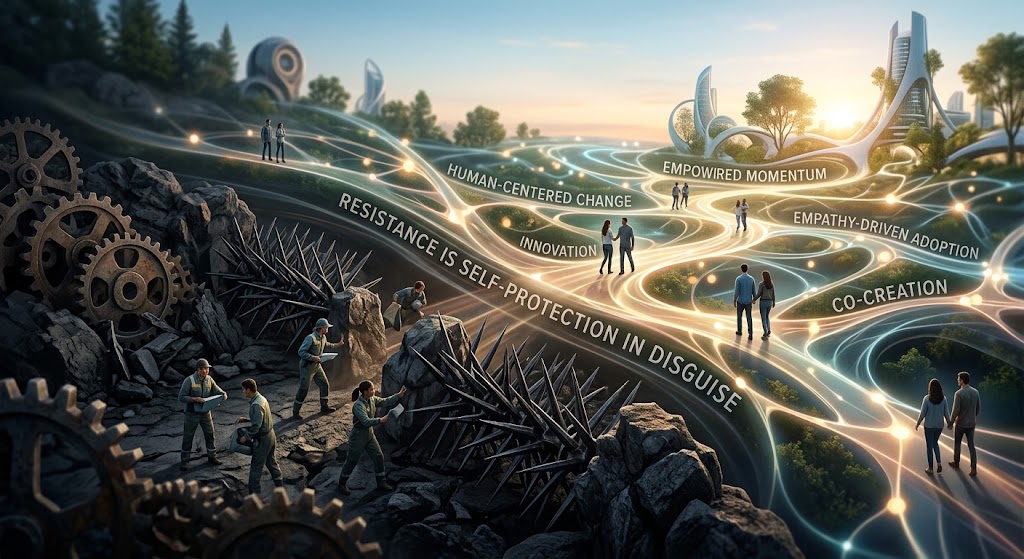
When organizations undergo significant transformations, leaders often spend millions optimizing systems and workflows while ignoring the fundamental human architecture beneath them. True change rarely fails because the strategy was flawed; it fails because people are asked to abandon who they are before they understand who they are becoming.

The “Who Am I Now?” Dilemma

Professional identity is built on years of accumulated expertise, earned status, and predictable mastery. When a transformation upends those foundations, employees experience a profound psychological shift:

  • The Fall from Expert to Novice: Moving subject-matter experts into unfamiliar digital paradigms strip them of their primary source of workplace confidence. The anxiety of feeling incompetent often manifests as active resistance.
  • Loss of Agency and Status: Reorganizations and process shifts can erase legacy accomplishments overnight, leaving individuals feeling disempowered and invisible.
  • The Professional Grief Cycle: Denial, defensiveness, and bargaining are not signs of stubbornness—they are natural human responses to losing a meaningful professional identity.

Futurology & Technological Displacement

As artificial intelligence and automated systems rapidly integrate into daily operations, the nature of workplace friction has fundamentally changed. The threat is no longer just operational; it is existential.

  • Redefining Human Value: Technology doesn’t just alter what employees do—it challenges who they feel they are. When an algorithm performs in seconds what took a specialist years to master, it creates a crisis of purpose.
  • The Role Evolution Mandate: Workers must shift from tactical execution to strategic curation, prompt orchestration, and high-empathy problem solving. This transition requires active guidance, psychological safety, and intentional experience design.

II. Framing the Transition: Experience Design for Identity Shifts

To navigate profound identity disruption, organizations must look beyond traditional change management. Traditional methods treat people as assets to be moved across a spreadsheet. Human-centered experience design, by contrast, recognizes that transitioning professional identity is an emotional and psychological journey that requires intentional architecture.

From Change Management to Experience Architecture

Systemic transformation succeeds only when we design the transition experience with the same rigor and empathy we apply to customer experience:

  • Building Psychological Bridges: Mandating a new future state overnight creates panic and withdrawal. Experience architecture builds intentional stepping stones—scaffolding new behaviors while helping employees safely sunset legacy routines.
  • Designing for Emotional Touchpoints: Mapping the employee journey means identifying key moments of friction, uncertainty, and self-doubt, then embedding explicit support structures directly into those touchpoints.
  • Co-Creating the Future State: People rarely resist changes they help design. Involving employees in shaping their evolved roles transforms identity loss into identity ownership.

The Change Planning Framework

Integrating identity considerations directly into the early strategy phase prevents blind spots that derail execution:

  • Mapping Identity Loss Early: Before launching new initiatives, assess who loses status, mastery, or visibility. Identifying where identity shock will hit hardest allows leaders to proactively design mitigations.
  • Visualizing the Shift: Utilizing collaborative visual frameworks and toolkits enables teams to map out their evolving responsibilities together, making abstract organizational shifts tangible and actionable.
  • Aligning Purpose with Capability: Help individuals connect their foundational expertise to the new vision, ensuring they see a clear, valued place for themselves in the organization’s future state.

III. Actionable Strategies for Leaders: Preserving Dignity while Driving Evolution

Navigating identity transition requires more than empathetic rhetoric; it demands structured, practical interventions. Leaders must act as architects of transition—creating environments where employees can let go of old paradigms without feeling that their past contributions were meaningless.

1. Honor the Past to Unlock the Future

Abruptly discarding legacy systems or methodologies often signals to long-tenured employees that their past work no longer has value. To unlock momentum for the future, leaders must intentionally honor past achievements:

  • Acknowledge the Legacy: Celebrate the expertise, dedication, and historical wins that brought the organization to its current point before demanding adoption of the new direction.
  • Create Formal Sunsetting Rituals: Mark the retirement of legacy tools or processes with intentional milestones, giving teams a sense of closure rather than a silent erasure.

2. Reframing Core Capabilities

When tasks become automated or obsolete, an employee’s sense of competence is threatened. Leaders must help individuals decouple their professional worth from specific tools and anchor it to enduring human capabilities:

  • Translate Tactical Skills into Strategic Value: Help a manual process expert see that their true value lies in domain context, critical thinking, and quality orchestration, not just mechanical execution.
  • Highlight Transferable Strengths: Conduct skill-mapping exercises that explicitly connect an individual’s foundational strengths—such as empathy, problem-solving, or stakeholder management—to newly emerging roles.

3. Designing Psychological Safety Networks

Identity transition forces experienced professionals back onto a learning curve, introducing the fear of failure. Without psychological safety, individuals protect their identity through resistance:

  • Establish Safe Sandbox Environments: Create low-stakes experimentation zones where employees can practice using new tools, platforms, or workflows without fear of performance penalties.
  • Build Identity Support & Peer Networks: Pair transitioning employees with mentors or peers who have successfully navigated similar role evolutions to offer practical guidance and reassurance.

4. Redefining Success Metrics

Continuing to measure performance against legacy key performance indicators (KPIs) while expecting new behaviors creates conflicting signals and heightens identity anxiety:

  • Reward Adaptability and Learning Velocity: Shift evaluation frameworks to value curiosity, experimentation, and speed of skill acquisition alongside traditional output metrics.
  • Recognize Value Orchestration: Measure how effectively individuals leverage new capabilities, AI tools, or cross-functional collaborations to drive broader organizational outcomes.

IV. The Leader’s Role as an Identity Catalyst

Transformation cannot be delegated solely to HR or change management offices. True organizational agility requires leaders at every level to step up as identity catalysts—guiding their teams through the vulnerability of evolution with authenticity, narrative clarity, and deliberate experience design.

Empathy as a Strategic Metric

Leading through identity disruption requires moving beyond top-down mandates toward genuine, human-centered engagement:

  • Radical Candor and Transparency: Acknowledge the discomfort and ambiguity of change directly. Pretending a transition is seamless undermines trust and dismisses real employee anxieties.
  • Active Listening and Validation: Create deliberate feedback loops to hear employee concerns without immediately jumping to defend the change strategy. Validating their experience builds the psychological safety needed to move forward.

Storytelling and Narrative Building

Data drives decisions, but stories drive commitment. Leaders must help employees connect their personal career arcs to the organization’s macro journey:

  • Crafting the Evolution Story: Help individuals frame their career trajectory not as a sharp rupture, but as a logical, empowering next chapter built on the foundation of their past contributions.
  • Illuminating Role Models: Highlight stories of peers who have successfully reinvented their roles, providing tangible proof concepts for what success looks like in the new paradigm.

Designing the New Employee Experience (EX)

A successful transition culminates in an employee experience that feels intentional, empowering, and aligned with long-term growth:

  • Restoring Autonomy and Agency: Re-establish a sense of control by giving employees room to shape how they execute their new responsibilities and define their daily workflows.
  • Cultivating Renewed Purpose: Ensure new roles are clearly tied to meaningful business and customer outcomes, helping individuals regain pride and fulfillment in their evolving professional identity.

Conclusion: Building Resilient, Evolution-Ready Cultures

In an era defined by continuous technological advancement and market shifts, change is no longer a discrete event with a clear beginning and end—it is a perpetual operating condition. Organizations that succeed in this environment will not be those with the sleekest software or the most rigid plans, but those that master the human dimension of transition.

By shifting our focus from enforcing compliance to designing human-centered transition experiences, we address the root cause of organizational friction: the fear of losing identity, status, and purpose. When leaders honor past contributions, create safe spaces for experimentation, and help employees reframe their core value, identity loss transforms from a point of resistance into a catalyst for profound personal and collective growth.

Ultimately, helping people navigate professional evolution builds hyper-adaptable, deeply loyal cultures. When employees know their dignity and growth are prioritized amidst disruption, they don’t just survive change—they actively drive the innovation required to shape the future.

Frequently Asked Questions

What is professional identity loss in the workplace?
Professional identity loss occurs when organizational restructuring, automation, or role shifts strip employees of the legacy expertise, status, and routine tasks that previously defined their professional value and sense of purpose.
How does experience design differ from traditional change management?
Traditional change management focuses primarily on processes, tools, and compliance. Experience design takes a human-centered approach, focusing on the psychological journey, emotional friction points, and co-creating transition pathways so employees maintain agency and dignity during evolution.
How can leaders support employees experiencing identity loss due to AI and automation?
Leaders can support employees by honoring past contributions, decoupling personal worth from obsolete mechanical tasks, providing safe sandbox environments for risk-free upskilling, and redefining success metrics to reward adaptability and high-empathy value orchestration.


Bottom line: Futurology is not fortune telling. Futurists use a scientific approach to create their deliverables, but a methodology and tools like those in FutureHacking™ can empower anyone to engage in futurology themselves.

Image credit: Gemini

Subscribe to Human-Centered Change & Innovation WeeklySign up here to get Human-Centered Change & Innovation Weekly delivered to your inbox every week.
What is Social Analysis?

What is Social Analysis?

GUEST POST from Art Inteligencia

Social analysis is the practice of understanding how individuals, groups, and societies interact with each other and how they are structured. It is an interdisciplinary field of study that draws on various methods and theories from the social sciences, including sociology, psychology, and anthropology.

Social analysis seeks to explain why social relationships and institutions take the forms they do, how they are maintained, how they change, how they are experienced, and how they are shaped by broader social, economic, and political contexts. In addition, social analysis is used to identify and address social problems, as well as to develop strategies for social change.

The term social analysis is often used interchangeably with other terms, such as social research, social science, and social theory. However, social analysis is distinct from these other terms in its focus on understanding the social dynamics of a particular situation. Social analysis is not only concerned with the empirical data collected from a certain society, but also with understanding the underlying social forces that shape its dynamics.

Social analysis often employs a variety of methods, such as interviews, surveys, and participant observation. In addition, it can draw on other sources of data, such as archival records, census data, and quantitative analysis.

Social analysis is an important tool for understanding the complexities of social life. It provides insights into how individuals and groups interact, how they are structured, and how they are shaped by larger social and economic forces. Social analysis can also be used to identify and address social problems, as well as to develop strategies for social change.

Image credit: Pixabay

Subscribe to Human-Centered Change & Innovation WeeklySign up here to get Human-Centered Change & Innovation Weekly delivered to your inbox every week.

The Science of Ambience

How Multi-Sensory Environments Drive Customer Loyalty

The Science of Ambience

GUEST POST from Art Inteligencia


Ambience Is Not Decoration — It’s a Loyalty System

Walk into a space that “gets” you and something quiet happens before a single word is spoken. Your shoulders drop. Your pace changes. You feel oriented — or unsettled — long before you can explain why. That feeling is not an accident of paint color or playlist. It is ambience doing its real job: shaping whether people feel understood enough to stay, return, and advocate.

Too often, organizations treat ambience as finishing work — a mood board, a scent diffuser, a lighting upgrade bolted on after the “real” experience has been designed. Human-centered experience design flips that sequence. Ambience is not decoration layered onto loyalty strategy. It is loyalty strategy expressed through the senses.

Customers rarely leave because a single touchpoint failed in isolation. They leave when the cumulative sensory story of a place contradicts the promise of the brand. A premium claim under harsh lighting. A “calm” clinic with chaotic sound. A “welcoming” store that smells of nothing memorable — or worse, of indifference. The brain keeps score even when the survey does not.

Loyalty, in this light, is less a program and more a pattern of felt safety, belonging, and coherence. Multi-sensory environments earn that pattern when every cue — what people see, hear, smell, touch, and taste — works as one intentional system. Get the system right, and return visits stop being a chase and start becoming a habit. Get it wrong, and no points balance will fully repair what the body already decided.

The opportunity for innovators and experience leaders is clear: stop asking only what the space looks like, and start asking what the space teaches people to feel about your relationship with them. That is the science — and the craft — of ambience.

The Brain Buys Feelings First

People like to believe they choose with logic. Neuroscience and behavioral research keep reminding us otherwise: sensory input arrives first, emotion follows close behind, and rationalization often shows up last — wearing a suit and claiming it was in charge all along.

Sight sets expectation. Lighting temperature, visual clutter, color, and spatial rhythm tell the nervous system whether to explore, hurry, or brace. Sound regulates arousal — tempo, volume, and acoustic quality can invite lingering or push people through. Scent is tightly wired to memory and emotion; a single familiar note can reopen a whole chapter of association. Touch — materials, temperature, weight, texture — confirms or contradicts what the eyes promised. Taste and even ambient temperature close the loop, especially in hospitality, food retail, and care environments where the body is fully enrolled in the experience.

None of this means customers are irrational. It means they are human. The brain is a prediction engine constantly asking: Am I safe? Am I respected? Does this match what I was led to expect? Multi-sensory ambience answers those questions in milliseconds. When the answers feel coherent, trust rises. When they conflict, cognitive load rises with them — and loyalty becomes harder to earn because the experience itself feels effortful.

For experience designers and innovation leaders, the implication is practical. If you only optimize scripts, funnels, and features while ignoring the sensory field in which decisions happen, you are designing for a customer who does not exist. Feelings are not soft extras. They are the operating system of preference.

Designing the Five Senses as One Experience

The mistake most organizations make is designing senses in silos. Marketing owns scent. Operations owns noise. Facilities owns lighting. Digital owns the screen. The customer, inconveniently, experiences all of it at once.

Human-centered ambience treats the senses as one system. Congruence — when cues reinforce the same emotional promise — creates coherence. A wellness clinic that softens light, reduces sharp acoustics, uses clean natural materials, and keeps scent subtle and calming is not being “nice.” It is reducing threat signals so people can receive care. A flagship retail space that pairs theatrical visuals with aggressive sound, sticky floors, and a chemical smell is not being bold. It is teaching the body that the brand’s story and the brand’s reality are different people.

Congruence does not mean every sense must be loud. Often the most sophisticated environments know what to withhold. Silence can be a design choice. Neutral scent can be more trustworthy than a forced signature fragrance. Restraint is still authorship.

Cross-industry, the pattern holds. Hotels win return stays when arrival feels like exhale, not processing. Grocery and specialty retail increase dwell and basket size when circulation, light, and sound support discovery instead of fatigue. Workplaces that claim “collaboration” while assaulting people with glare and echo discover that culture cannot outrun physiology. Even digital-physical hybrids — showrooms, clinics with apps, stadiums with companion experiences — succeed when the sensory story stays continuous across channels rather than resetting at every threshold.

Design the senses separately and you get a collage. Design them as one experience and you get a place people recognize in their bodies — which is where loyalty actually lives.

From Moment to Memory: The Loyalty Loop

Loyalty programs count transactions. Ambience shapes the memories that make people want another transaction in the first place.

The loop is simple and stubbornly human: sensory moment → emotional response → memory encoding → preference → return or advocacy. A well-composed environment does not merely please in the present; it becomes easier to recall and easier to choose again later. That is why people can describe “how a place felt” years after they forget the exact product they bought.

Emotionally tagged memories are sticky. When ambience creates relief, delight, dignity, or belonging, the brain files the brand under return here. When ambience creates stress, confusion, or mild contempt, the brain files it under avoid if possible — even if the price was fine and the staff was polite. Points can bribe behavior for a while. They rarely overwrite a bodily verdict.

This is also why “consistency” is not the enemy of innovation. People do not need every visit to be identical; they need the emotional contract to remain recognizable. Variation can refresh attention. Incoherence breaks trust. The loyalty loop rewards organizations that treat each visit as another chance to reinforce a felt promise — not another chance to surprise people into cognitive whiplash.

If you want advocacy, design for memorability with meaning. If you want retention, design for emotional reliability. Multi-sensory ambience is how both get into the nervous system, not just the CRM.

How to Build Multi-Sensory Environments That Earn Trust

Start with the human outcome, not the fixture list. What should people feel able to do here — decide calmly, celebrate, recover, explore, belong? Ambience is successful when it supports the job-to-be-done and the emotional job underneath it.

Then map the sensory journey with the same rigor you would give a service blueprint. Where do people arrive, wait, choose, pay, recover, and leave? At each stage, ask what the eyes, ears, nose, skin, and palate are being asked to process. Friction often hides in the gaps between owned departments.

A practical build sequence

  • Define the emotional contract. One clear promise (calm confidence, playful discovery, quiet luxury, restorative care) that every sensory cue must serve.
  • Prototype before you renovate. Test lighting scenes, sound levels, materials, and scent with real users. Bodies give faster feedback than slide decks.
  • Design for congruence, then for delight. Alignment first; signature moments second. A memorable cue works only if the system around it does not contradict it.
  • Measure feel and behavior. Pair qualitative sensory feedback with dwell time, return rate, completion, complaint themes, and staff observations.
  • Protect people from overload. More senses engaged is not automatically better. Intensity without intention becomes noise — and noise erodes trust.

Authenticity is non-negotiable. Borrowed “experience theater” that does not match your operations, values, or audience reads as manipulation. Human-centered change asks a harder question than Can we make this impressive? It asks Can we make this true? Environments that earn loyalty feel authored, not decorated — and they remain livable for the employees who must sustain them every day.

The Future of Ambience Is Adaptive and Human

The next chapter of ambience will be less static showroom and more responsive system. Sensors, spatial computing, adaptive lighting and sound, and personalization engines will let environments shift with occupancy, time of day, accessibility needs, and context. Done well, that is radical hospitality: spaces that notice people and adjust without forcing them to negotiate for comfort.

Done poorly, it becomes a new form of pressure — environments that optimize conversion while ignoring consent, dignity, and cognitive rest. The ethical line is not whether technology is used. It is whether adaptation serves human flourishing or merely extracts attention and spend.

Futurology in experience design should therefore stay anchored to a human-centered question: What does this environment make possible for the people inside it? Adaptive ambience can reduce anxiety in care settings, support neurodiversity at work, deepen immersion in cultural spaces, and make retail feel less extractive and more reciprocal. It can also deepen surveillance and manipulation if leaders treat the nervous system as just another funnel stage.

So the mandate for innovators is clear. Treat ambience as a continuous practice, not a capital project you finish and forget. Keep listening to how spaces feel as conditions change. Keep aligning sensory systems with brand promise and human need. The organizations that win lasting loyalty will not be the ones with the most stimuli. They will be the ones whose multi-sensory environments make people feel recognized — again and again — in a world that increasingly does not.

Frequently Asked Questions

What is multi-sensory ambience in customer experience?

Multi-sensory ambience is the intentional design of sight, sound, scent, touch, and taste/temperature as one coherent system that shapes how people feel in a space. It is not décor added at the end; it is experience design that influences trust, memory, and the likelihood customers return.

How do multi-sensory environments increase customer loyalty?

Coherent sensory cues create positive emotion, which strengthens memory and preference. Over time, that loop — moment, feeling, memory, return — builds loyalty more reliably than incentives alone, because customers remember how a brand made them feel in their bodies, not only what they purchased.

How can businesses start designing ambience that earns trust?

Define the emotional contract first, map sensory cues across the customer journey, prototype with real people, measure both feeling and behavior, and avoid sensory overload or inauthentic theatrics. Congruence across the senses matters more than maximizing stimulation.

Bottom line: Futurists are not fortune tellers. They use a formal approach to achieve their outcomes, but a methodology and tools like those in FutureHacking™ can empower anyone to be their own futurist.

Image credit: Gemini

Subscribe to Human-Centered Change & Innovation WeeklySign up here to get Human-Centered Change & Innovation Weekly delivered to your inbox every week.
The New Corporate Sovereignty

How Tech Monopolies Are Rewriting the Social Contract

The New Corporate Sovereignty

GUEST POST from Chateau G Pato


The Shift from Platforms to Polities

For centuries, the social contract was a well-understood, if invisible, agreement: citizens granted authority and yielded certain liberties to governments in exchange for the protection of their rights, the maintenance of public infrastructure, and the preservation of the public square. If the system broke, democratic mechanisms — or at least geographic realities — offered a path toward accountability. Today, that foundational agreement is being quietly yet fundamentally rewritten without a single vote being cast.

We have entered the era of the new corporate sovereignty. A handful of global technology monopolies have evolved far beyond their original mandates as product builders or marketplace facilitators. By controlling the digital layer upon which modern life, commerce, and communication occur, these ecosystems now function as pseudo-sovereign entities. They dictate the boundaries of acceptable speech, control the flow of economic opportunity, and manage the digital identities of billions of people — commanding populations and geopolitical influence that rival or exceed most nation-states.

When we evaluate this shift through the twin lenses of human-centered innovation and futurology, a critical question emerges: Who is designing this future, and are humans still its primary stakeholders? As experience designers and strategists, we must look past the seductive convenience of frictionless interfaces to examine the structural power dynamics underneath. If the systems that govern our daily realities are built solely to optimize for engagement and platform lock-in, we risk trading true civic agency for a new form of digital vassalage. It is time to audit the new corporate social contract before its architectures become permanent.

I. Infrastructure as Government: The New Public Utilities

In the physical world, the markers of sovereignty are obvious: roads, bridges, electrical grids, and water systems. These are the foundational utilities that make society function. In the digital age, however, the critical infrastructure required for societal survival has been completely enclosed by private enterprise. Cloud computing fabrics, mobile operating systems, and centralized identity protocols are no longer just optional consumer products — they are the modern public utilities, completely owned and operated by a handful of corporate entities.

This reality exposes a profound failure in human-centered innovation. True human-centered design should empower individuals and foster long-term resilience. Instead, the tech ecosystem has mastered the “experience design trap.” By engineering hyper-frictionless experiences, seamless single-sign-on (SSO) ecosystems, and predictive cross-device synchronization, these platforms have made systemic dependency completely invisible. We willingly swap traditional civic friction for the intoxicating convenience of corporate lock-in, unaware that we are trading accountability for convenience.

When an ecosystem controls the very pipes through which commerce, communication, and identity flow, its operational choices cease to be mere business decisions. If a platform alters an algorithm, it can instantly decimate entire industries or obscure vital public information. If it revokes an account, it can effectively erase an individual’s digital existence. When corporate policy wields the power to enforce digital exile, it is no longer practicing corporate governance — it is exercising sovereign power.

II. Algorithmic Law and Private Courts

Constitutions were designed to limit power, protect rights, and outline clear frameworks for justice. In the digital realm, however, traditional constitutional protections have been effectively supplanted by Terms of Service (ToS) agreements. Billions of user-citizens check a box to “agree” to legal frameworks they have never read, entering a private jurisdiction where traditional legal protections — like due process, free speech, and the presumption of innocence — do not apply. The corporate user agreement has become the default constitution of the twenty-first century.

Within these corporate fiefdoms, the rule of law is maintained not by transparent courts, but by automated moderation algorithms. These systems act as a hyper-efficient police force, judge, and jury, processing millions of behavioral violations every second. Because these algorithms operate on proprietary code, their logic remains entirely opaque, leaving individuals and small businesses with zero democratic oversight or viable paths to appeal when their digital livelihoods or voices are suddenly stripped away.

From an experience design perspective, this is a systemic failure of the highest order. When design teams prioritize engagement optimization and behavioral velocity over long-term civic health, the resulting architecture naturally favors outrage over nuance. By automating the policing of human discourse using blunt, profit-driven metrics, tech monopolies haven’t just broken the public square — they have redesigned it to ensure social cohesion remains permanently fragmented.

III. The Data Tithe and The Surveillance Social Contract

Every historic feudal system relied on a foundational exchange: the peasant surrendered a significant portion of their harvest to the lord in exchange for physical security and access to the land. Today, we participate in a strikingly similar arrangement, though the currency has changed. We pay a continuous “data tithe.” In order to access the essential infrastructure of modern connection, productivity, and commerce, we must continually surrender the granular details of our behavioral, emotional, and spatial lives.

This surveillance social contract operates on a massive asymmetry of information and power. While users experience these platforms as convenient, “free” utilities, the underlying business architecture treats human experience as raw material destined for behavioral modification markets. The depth of predictive analytics held by these corporate sovereigns creates a profound power imbalance. They understand user vulnerabilities, biases, and triggers far better than any traditional government ever could, effectively reducing active citizens to predictable, monetizable digital assets.

Looking at this dynamic through a futurist lens, the danger goes far beyond targeted advertising. We are witnessing the maturation of systems capable of mass behavioral orchestration. When a handful of entities control the inputs, notifications, and information feeds of billions of people, they possess the levers to subtly shape societal norms, steer purchasing habits, and influence geopolitical outcomes. Innovation that treats human autonomy as a resource to be harvested is inherently unsustainable; we must urgently redesign the relationship between human data and corporate privilege.

IV. The Borderless State vs. The Geographic Nation

Traditional geopolitics is entirely bound by geography, relying on physical borders, sovereign soil, and national treaties. Tech monopolies, however, have built borderless digital empires that operate completely detached from geographic constraints. With user bases that number in the billions, these digital polities command populations vastly larger than any historical empire and wield concentrated economic and informational influence that rivals — and often terrifies — traditional superpowers.

This borderless nature enables a sophisticated strategy of regulatory arbitrage and systemic evasion. When a corporate entity’s infrastructure is distributed globally, its intellectual property sheltered in tax havens, and its operational hub located half a world away, traditional nation-states find their domestic laws toothless. These organizations do not merely lobby governments; they routinely out-navigate them, treating local regulations not as binding societal mandates, but as minor operational frictions to be optimized away or legally out-resourced.

We are now witnessing open confrontations where tech monopolies treat sovereign states as peers — or subordinates — rather than authorities. Whether it is an ecosystem cutting off news access to an entire continent to protest local copyright laws, or a platform refusing to comply with supreme court directives regarding algorithmic transparency, the power dynamic has fundamentally flipped. When private corporations can effectively veto national legislation through technical non-compliance, the geographic social contract is no longer just being rewritten — it is being subordinated to the terms of the platform.

V. Futurology: Three Horizons of Corporate Sovereignty

To truly understand how this power dynamic will evolve, we must look beyond the immediate horizon. By applying a futurist framework to the trajectory of corporate sovereignty, we can map out how the relationship between humans, corporations, and states is likely to shift across three distinct time horizons.

Horizon 1: Deep State-Corporate Interdependence (Present – 3 Years)
In the immediate term, we are seeing an accelerating trend of governments outsourcing their core civic duties. Lacking the technical agility to build advanced infrastructure, nation-states increasingly rely on tech monopolies to manage critical systems — ranging from health-tracking ecosystems and identity verification protocols to the very cloud fabrics that power military and judicial databases. The boundary between public authority and private infrastructure is blurring, creating a symbiotic reliance where the state protects the monopoly, and the monopoly runs the state.

Horizon 2: The Emergence of Platform Jurisdictions (3 – 7 Years)
As we move into the medium term, corporate sovereignty will likely transition from digital control to physical and financial self-governance. We can anticipate the rise of corporate-managed digital jurisdictions — often referred to as “network states” — where individuals align their primary loyalty, legal disputes, and community structures with an ecosystem rather than a geographic nation. This era will be marked by the mainstreaming of private, platform-specific currencies and tokens that bypass central banks entirely, allowing tech giants to dictate monetary policy for their respective populations.

Horizon 3: The Fragmentation of Lived Reality (7+ Years)
In the long term, the ultimate expression of corporate sovereignty will be the total fragmentation of human reality itself. As competing tech monopolies mature their proprietary artificial intelligence ecosystems, spatial computing layers, and immersive realities, they will no longer just control the information we read — they will control the reality we perceive. Citizens will find themselves locked into entirely different sensory, historical, and factual universes depending on which tech stack they inhabit. At this point, corporate sovereignty is no longer just political or economic; it becomes ontological, designing the very parameters of human experience.

Conclusion: Redesigning the Social Contract

The rise of corporate sovereignty presents a defining challenge for the future of human-centered innovation. For too long, the tech industry has measured success through the narrow lenses of market capitalization, user acquisition, and interface speed. We have treated the steady erosion of civic agency as an acceptable trade-off for unprecedented convenience. But when corporate platforms begin to dictate the terms of human discourse, control the foundational utilities of society, and fragment our shared reality, convenience becomes an incredibly dangerous narcotic.

As strategists, experience designers, and innovators, we must intentionally pivot from building tools of passive dependency to designing frameworks of active empowerment. Innovation can no longer be decoupled from ethics. If we are to reclaim the social contract, we must design systems that prioritize interoperability over walled gardens, data portability over corporate lock-in, and algorithmic transparency over black-box manipulation. We need to actively transition our mindset — and the architectures we build — from treating people merely as monetization targets or “users,” and start treating them as digital citizens possessing unalienable rights.

Ultimately, if global technology monopolies are going to wield the power of sovereigns, they must be held to the exact same standards of accountability, justice, and human dignity that we demand from our finest democratic institutions. The future is not a predetermined destination; it is an ongoing design project. It is well within our power to reject a future of digital vassalage and instead build an ecosystem where technology serves to expand human potential, protect human autonomy, and honor the true social contract.

Frequently Asked Questions

What is “corporate sovereignty” in the context of modern technology?
Corporate sovereignty refers to the shift where technology monopolies evolve beyond mere businesses into pseudo-sovereign entities. By controlling the digital infrastructure essential for daily life, identity, commerce, and communication, these platforms effectively write their own social contracts, governing public discourse and societal behavior without democratic oversight.
How do tech monopolies override traditional national laws?
Tech giants leverage their borderless digital nature to practice regulatory arbitrage, distributing infrastructure globally and locating operational hubs dynamically. Because their user populations outnumber geographic nation-states, they can negotiate with governments as geopolitical peers or bypass local regulations entirely through technical non-compliance.
What role does experience design play in this new social contract?
Experience design acts as a tool for invisible dependency. By engineering hyper-frictionless, convenient interfaces (such as single-sign-on ecosystems), platforms encourage users to voluntarily opt into corporate lock-in, masking the systemic power asymmetry and the continuous surrender of personal data.

Image credit: Gemini

Subscribe to Human-Centered Change & Innovation WeeklySign up here to get Human-Centered Change & Innovation Weekly delivered to your inbox every week.