Tag Archives: humanity

Liberated to Care – How AI Can Restore Humanity in Healthcare

Liberated to Care - How AI Can Restore Humanity in Healthcare

GUEST POST from Kellee M. Franklin, PhD.

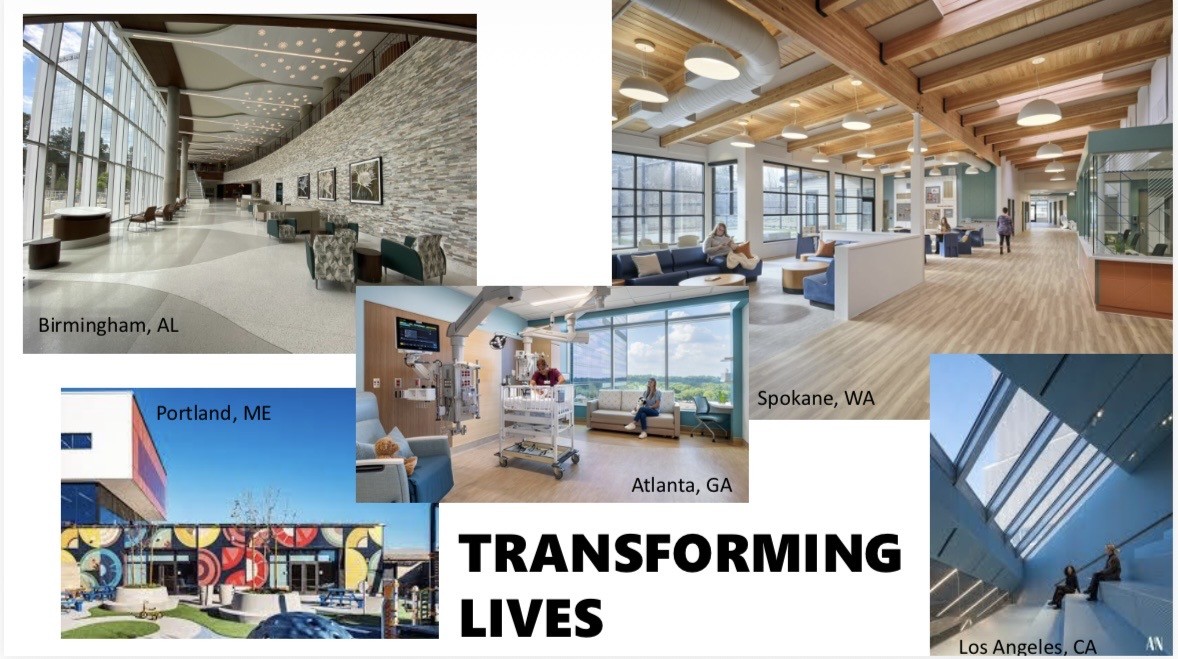
Heapy has long been a quiet force in the evolution of healthcare design – not with grand pronouncements, but with deep, thoughtful work that reshapes how we experience care. For decades, they have approached hospitals and clinics not as static buildings, but as living ecosystems – places where healing does not happen despite the surroundings, but because the space was designed to make it possible.

Their work goes beyond sustainability in the traditional sense – energy efficiency, material choices, LEED certifications – though they lead there, too. What sets Heapy apart is their commitment to human sustainability: designing spaces that support not just the planet, but the people within them. Clinicians. Patients. Families. The entire care team.

They understand that a healing environment is not just about clean lines and natural light – though those things matter. It is about creating places that reduce stress, prevent burnout, and foster connection. Spaces that are flexible enough to adapt to a pandemic, yet intimate enough to embrace the ailing or comfort a grieving family.

And they do this not in isolation, but in partnership – with providers, communities, vendors, and innovators who recognize that the future of healthcare is not only about smart technologies, but about deep human intention. It is not just what we build, but why – and for whom.

It was in that spirit last week, I had the honor of serving as the keynote speaker at Heapy’s Symposium on Sustainability in Healthcare, hosted in the beautiful “Queen City” of Cincinnati, Ohio – a gathering of dreamers and designers from across industries, all united by a shared belief: that the future of care must be human-centered.

It was in that room, surrounded by industry pioneers, who see beyond efficiency and into empathy, that the vision for a different kind of healthcare took shape – not as a distant ideal, but as a gentle uprising already underway.

We have spent decades optimizing a system that was not built to heal. It was not built for people at all. It is a machine – and both patients and caregivers are just trying to survive it.

We have chased speed, throughput, and cost-cutting – as if care were an assembly line. But in the rush to do more, faster, we have lost something irreplaceable: the human connection that lies at the heart of healing.

Clinicians drown in documentation; their eyes fixed on screens instead of faces. Patients feel like data points, shuffled through impersonal workflows. And hospital administrators, well-meaning as they are, focus on numbers that measure activity, not meaning.

But what if we stopped trying to make the machine run faster – and started asking: How might we build something entirely different? Not a smarter system, but a human one?

Not a system that grinds, but one that breathes. Not one that manages, but cares.

That is the future we are stepping into – not as a distant dream, but as a calm, determined shift, unfolding from the electricians who wire our buildings to the executives who shape our boardrooms. Not a future where technology replaces humanity, but one where it finally sees us – amplifies us – and reminds us why we are here.

And this future – the heart of healing — rests on four pillars, championed by forward-thinking organizations like The American College of Healthcare Executives (ACHE): liberating clinicians, designing for resilience, committing to learning, and personalizing care.

Automation in Healthcare

Liberating Clinicians: Letting Humans Be Humans

Imagine a clinic where the doctor looks at you – not at a screen. Where nurses spend their shifts at the bedside, not buried in charts. Where the administrative load does not fall on the shoulders of those already stretched thin – like patients juggling multiple portals, passwords, and fragmented records.

That is not fantasy. It is the promise of AI as an ally, not an agitator.

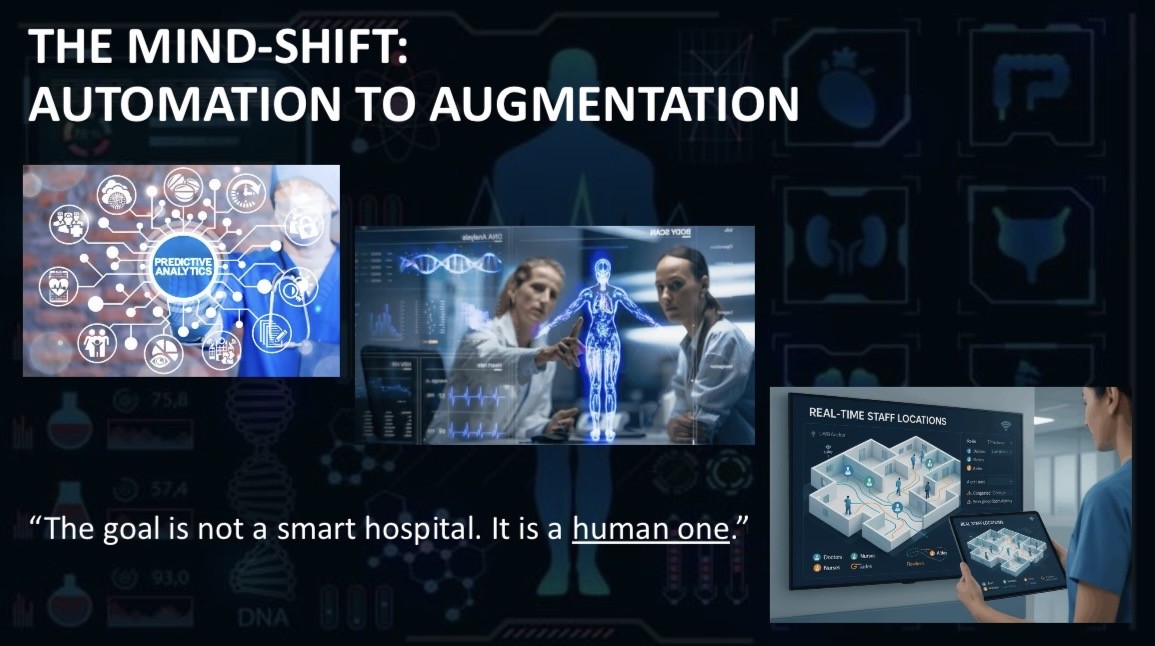
We are already seeing systems where AI stealthily handles prior authorizations, drafts clinical notes, and surfaces critical data – not to replace clinicians, but to free them. Early adopters report not just time savings, but better patient outcomes. But the real win? Time. Time to listen. Time to notice. Time to care.

Because healing is not transactional. It is relational. It lives in the pause, the eye contact, the hand on the shoulder. And when we automate the mechanical, we make space for the meaningful. The metric should not be how many patients we see – but how deeply we see them.

Designing for Resilience: Spaces that Adapt, Not Just Endure

Now picture the places where care happens.

Too often, they feel like relics – rigid, impersonal, built for a world that no longer exists. The next generation of healing environments must be different. They must be resilient, not just in structure, but in spirit.

We need hospitals that can withstand storms – literal and metaphorical. That can scale during surges, pivot during pandemics, and adapt to the rapid pace of change. Modular walls. Flexible rooms. Infrastructure that evolves.

But resilience is not just about durability – it is about humanity.

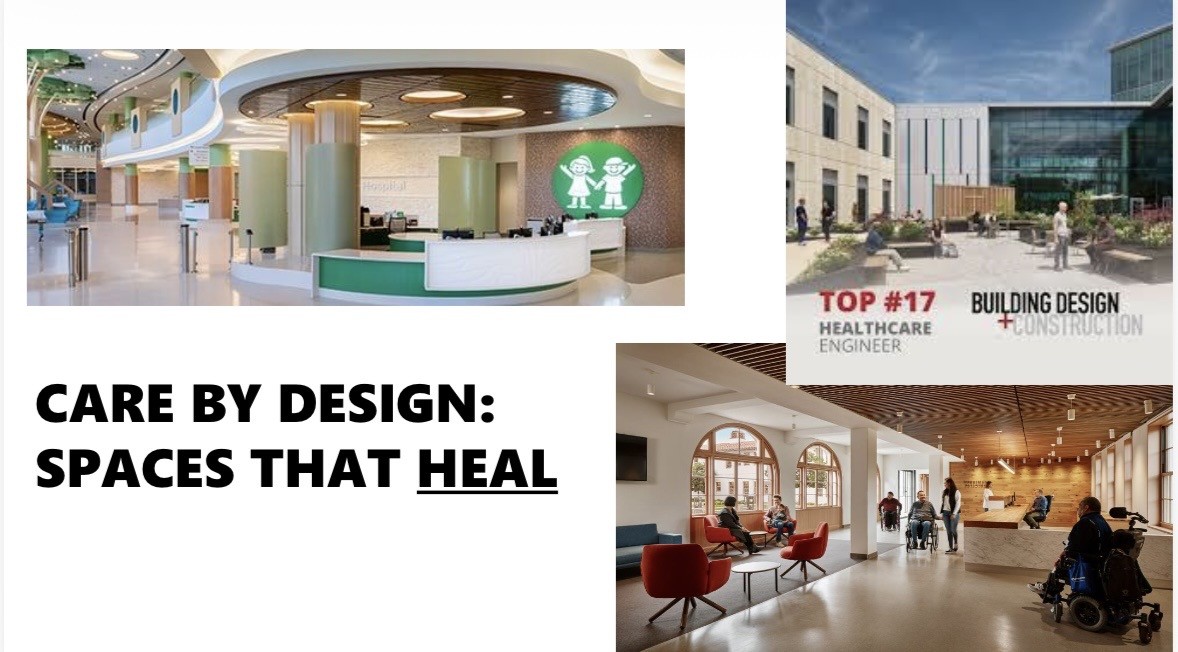
It is peaceful zones for staff to decompress. Natural light in every patient room. Wayfinding that feels intuitive, not clinical. It is designing for emotional endurance as much as physical strength.

Because burnout is not just caused by workload – it is shaped by environment. A space that feels cold, chaotic, or dehumanizing wears people down. One that feels calm, connected, and cared for – even in a crisis – helps them endure.

So let us stop building facilities and start creating healing ecosystems. Places that support not just survival, but the fullness of life – where healing and wholeness go hand-and-hand.

Committing to Lifelong Learning: Growing…Together

Even the smartest tools and strongest walls will not matter if we do not equip people with the knowledge, skills, and supportive environment they need to grow.

That is why ongoing education is not just a nice-to-have – it is non-negotiable. But not the kind of training that feels like a box to check. We need learning that is alive, adaptive, and human-centered.

Leaders, clinicians, and designers need to understand not just how to work with AI – but why it matters to their work. It is not about compliance – it is about curiosity. Not just in operating it but partnering with it. We need safe spaces to experiment, explore, grow – and yes, even fail. No innovation happens without change – and no meaningful change happens without real learning.

Micro-learning modules. Peer mentorship. Protected time for reflection. These are not luxuries – they are lifelines of learning and innovation.

And when leaders model learning – when they say, “I don’t know, let’s figure it out together” – they signal that growth matters more than perfection.

Because the future of care is not about mastering technology – it is about forming partnerships. With each other. With patients. With tools that extend our capacity, not replace our judgment.

Transforming Care

Personalizing Care: Seeing the Person, Not the Problem

Finally, imagine care knows you.

Not in a surveillance way – not data hoarded, but wisdom shared. AI that can tailor treatments plans, adjust room settings, and anticipate needs – always with consent, transparency, and control.

This is not about efficiency. It is about dignity.

It is remembering the patient’s name. Honoring their preferences. Adapting to their story. Adjusting to their situation. The most powerful curative is still human attention – and AI can help us focus it.

We are already seeing systems where AI personalizes everything from medication timing to discharge planning – not to automate empathy, but to boost it.

Because when care feels seen and heard, the healing penetrates deeper.

Five Actions for Leaders: From Vision to Practice

So, what can leaders do – right now – to turn this vision into reality?

  1. Redesign Workflows Around Human Dignity: Stop measuring success by speed. Reengineer processes to reduce burnout and restore time for true connection. Use AI to handle the mechanical – documentation, scheduling, billing – and let it also surface critical insights, flag at-risk patients, and streamline workflows so clinicians can focus on what they do best: medicine. Measure moments of care, not mouse clicks – and allow AI to illuminate what truly matters: patient healing and well-being.
  2. Co-Create with Frontline Teams: No more top-down rollouts. Invite nurses, doctors, and support staff into the design of every new tool, space, workflow, and policy. – and use AI to elevate their voices, not override them. Imagine AI that analyzes frontline feedback in real-time, surfaces hidden pain points, and co-generates solutions alongside those who know the work best. Ask: Does this help you provide better care? Their lived experience, supported by intelligent insight, guide what gets built – because the best solutions do not emerge from closed boardroom doors, but from the open collaborative hands and hearts within the community of care.
  3. Build Spaces that Breathe: Invest in modular, adaptable infrastructure – but go further. Design for emotional resilience: tranquil zones, natural light, intuitive layouts, and AI-enhanced environments that respond to human needs in real-time. Imagine rooms that adjust lighting and temperature based on patient stress levels, or corridors that guide staff to moments of respite between high-pressure tasks. A healing space is not just durable – it is humane, alive with invisible intelligence that supports the whole-person: mind, body, heart, and spirit.
  4. Champion Learning as an Act of Care: Make continuous education protected time, not an afterthought. Offer micro-learning, peer mentorship, and collaborative spaces – and harness AI as a dynamic learning partner. Imagine intelligent systems that surface personalized insights, adapt to individualized learning styles, and guide clinicians through real-time decision support that doubles as on-the-job training. When leaders model curiosity and embrace AI not just as a tool, but as a catalyst for growth and innovation, they create cultures where learning is ongoing and invigorating.
  5. Personalize Without Surveillance: Use data to deepen trust, not erode it. Implement AI that personalizes care – predicting needs, tailoring environments, and adapting support – but always with consent, transparency, and patient control. Let personalization mean dignity: remembering a name, honoring a preference, adapting to a story, adjusting to a changing situation, and above all, putting people, not patterns, at the center.

A Future That Feels Human, Beautifully Imperfect

This is not about replacing the system. It is about reimagining it.

From one that manages people to one that sees them.

From one that measures output to one that values presence.

From one that optimizes speed to one that honors slowness – personal focus, deep listening, and the easy moments of connection that no algorithm can replicate.

The tools are here. The insights are clear. The question is no longer can we – but will we?

Will we choose efficiency – or humanity?

Will we build systems that merely function – or ones that truly heal?

The answer lies not in technology, but in where we choose to place our attention – and our intention.

As a Triple Negative Breast Cancer survivor, I have felt firsthand how cold and mechanical care can be – and how profoundly a space can either deepen that pain or help heal it. I have also seen how systems can exhaust the very people meant to deliver care. But I hold onto a belief: healing begins when we return to our humanity. From designers and clinicians to administrators and patients, each of us plays a vital role in co-creating a whole-health environment where care is not just delivered, but genuinely experienced.

And perhaps the most revolutionary act in healthcare today might just be this: to care, deeply, as beautifully imperfect humans – and to let everything else serve a universal truth – one rooted in compassion, true connection, and shared humanity.

Image credits: Kellee M. Franklin

Subscribe to Human-Centered Change & Innovation WeeklySign up here to join 17,000+ leaders getting Human-Centered Change & Innovation Weekly delivered to their inbox every week.

Top 10 Human-Centered Change & Innovation Articles of June 2023

Top 10 Human-Centered Change & Innovation Articles of June 2023Drum roll please…

At the beginning of each month, we will profile the ten articles from the previous month that generated the most traffic to Human-Centered Change & Innovation. Did your favorite make the cut?

But enough delay, here are June’s ten most popular innovation posts:

  1. Generation AI Replacing Generation Z — by Braden Kelley
  2. Mission Critical Doesn’t Mean What You Think it Does — by Geoffrey A. Moore
  3. “I don’t know,” is a clue you’re doing it right — by Mike Shipulski
  4. 5 Tips for Leaders Navigating Uncertainty – From Executives at P&G, CVS, Hannaford, and Intel — by Robyn Bolton
  5. Reverse Innovation — by Mike Shipulski
  6. Change Management Best Practices for Maximum Adoption — by Art Inteligencia
  7. Making Employees Happy at Work — by David Burkus
  8. 4 Things Leaders Must Know About Artificial Intelligence and Automation — by Greg Satell
  9. Be Human – People Will Notice — by Mike Shipulski
  10. How to Fail Your Way to Success — by Robyn Bolton

BONUS – Here are five more strong articles published in May that continue to resonate with people:

If you’re not familiar with Human-Centered Change & Innovation, we publish 4-7 new articles every week built around innovation and transformation insights from our roster of contributing authors and ad hoc submissions from community members. Get the articles right in your Facebook, Twitter or Linkedin feeds too!

Have something to contribute?

Human-Centered Change & Innovation is open to contributions from any and all innovation and transformation professionals out there (practitioners, professors, researchers, consultants, authors, etc.) who have valuable human-centered change and innovation insights to share with everyone for the greater good. If you’d like to contribute, please contact me.

P.S. Here are our Top 40 Innovation Bloggers lists from the last three years:

Subscribe to Human-Centered Change & Innovation WeeklySign up here to get Human-Centered Change & Innovation Weekly delivered to your inbox every week.

Top 10 Human-Centered Change & Innovation Articles of March 2023

Top 10 Human-Centered Change & Innovation Articles of March 2023Drum roll please…

At the beginning of each month, we will profile the ten articles from the previous month that generated the most traffic to Human-Centered Change & Innovation. Did your favorite make the cut?

But enough delay, here are March’s ten most popular innovation posts:

  1. Taking Care of Yourself is Not Impossible — by Mike Shipulski
  2. Rise of the Prompt Engineer — by Art Inteligencia
  3. A Guide to Effective Brainstorming — by Diana Porumboiu
  4. What Disruptive Innovation Really Is — by Geoffrey A. Moore
  5. The 6 Building Blocks of Great Teams — by David Burkus
  6. Take Charge of Your Mind to Reclaim Your Potential — by Janet Sernack
  7. Ten Reasons You Must Deliver Amazing Customer Experiences — by Shep Hyken
  8. Deciding You Have Enough Opens Up New Frontiers — by Mike Shipulski
  9. The AI Apocalypse is Here – 3 Reasons You Should Celebrate! — by Robyn Bolton
  10. Artificial Intelligence is Forcing Us to Answer Some Very Human Questions — by Greg Satell

BONUS – Here are five more strong articles published in February that continue to resonate with people:

If you’re not familiar with Human-Centered Change & Innovation, we publish 4-7 new articles every week built around innovation and transformation insights from our roster of contributing authors and ad hoc submissions from community members. Get the articles right in your Facebook, Twitter or Linkedin feeds too!

Have something to contribute?

Human-Centered Change & Innovation is open to contributions from any and all innovation and transformation professionals out there (practitioners, professors, researchers, consultants, authors, etc.) who have valuable human-centered change and innovation insights to share with everyone for the greater good. If you’d like to contribute, please contact me.

P.S. Here are our Top 40 Innovation Bloggers lists from the last three years:

Subscribe to Human-Centered Change & Innovation WeeklySign up here to get Human-Centered Change & Innovation Weekly delivered to your inbox every week.

What’s Next – The Only Way Forward is Through

What's Next - The Only Way Forward is Throughby Braden Kelley

The world needs you. The United States needs you. Your family needs you.

Both your heart and your mind are needed to work on potentially the greatest innovation challenge ever put forward.

What is it?

We must find a solution to the division and lack of meaning that has become the American experience.

I’m not sure about the country you live in, but here at home in the United States we are more divided than we have been in a long time – if ever. People are feeling such an absence of meaning and purpose in their lives that they are finding it in opposing ‘the other’.

In the most extreme cases, we are so divided that brothers and sisters, and parents and children are no longer speaking with each other or getting together for holiday meals.

We speak often about the importance of diversity of thought, diversity of group composition for innovation, but when a society reaches a point where people cannot productively disagree and debate their way forward together, innovation will inevitably begin to suffer.

When there is no dialogue, no give and take and a culture begins to emerge where opposition is mandatory, progress slows.

As long as the current situation intensifies, there will be no progress on other areas in desperate need of innovation:

  • Climate change
  • Gender equity
  • (Insert your favorite here)

We all need your help creating the idea fragments that we can connect as a global innovation community into meaningful ideas that hopefully lead to the inventions that will develop into the innovations we desperately need.

The innovations that will move social media from its current parallel play universe to one which actually encourages productive dialogue.

The innovations that will help people find the renewed sense of meaning and purpose that can’t be found making Sik Sok videos, watching other people play video games on Kwitch or investing in cryptocurrency pyramid schemes.

Meaning of Life Quote from Braden Kelley

Our entrepreneurs have made a lot of cotton candy the past couple of decades and people are starving, people are hangry.

There are certain constants in the human condition, and when we as a species stray too far away, it creates huge opportunities for innovators to create new things that will bring us back into balance.

But we can’t ignore where we are now.

We must acknowledge our current situation and fight our way past it. The only way forward is through.

As a thought starter, here is an ad campaign from Heineken from 2017:

We need everyone’s help to address the meaning crisis.

We need everyone’s help to bring America (and the rest of the world) back into productive conversation and connection – to end the division.

Are you up to the task?

Are you ready to help?

Let’s start the dialogue below and get that pebble rolling downhill in the winter, gathering snow as it goes.

I would love to hear your thoughts in the comments on:

  • other great thought starters
  • good idea fragments to build on
  • the way through

Image credit: Pixabay

Subscribe to Human-Centered Change & Innovation WeeklySign up here to get Human-Centered Change & Innovation Weekly delivered to your inbox every week.

Training Your Quantum Human Computer

Quantum Human Computing

What is quantum computing?

According to Wikipedia, “Quantum computing is the use of quantum phenomena such as superposition and entanglement to perform computation. Computers that perform quantum computations are known as quantum computers.”

Rather than try and explain all of the ins and outs of how quantum computing differs from traditional computing and why it matters, I encourage you to check out this YouTube video:

In case you were curious, according to the Guinness Book of World Records, the current record holder for quantum computing is a Google machine capable of processing 72 Quantum Bits. There is supposedly a machine in China capable of 76 Qubits, but it has yet to be fully recognized as the new record holder.

So, what does quantum computing have to do with humanity and the human brain and our collective future?

Is the human brain a quantum computer?

The easy answer is – we’re not sure – but scientists are conducting experiments to try and determine whether the human brain is capable of computing in a quantum way.

As the pace of change in our world accelerates and data proliferates, we will need to train our brains to use less traditional brute force computing of going through every possibility one after another to do more parallel processing, better pattern recognition, and generating an increase in our ability to see insights straight away.

Connect the Dots

But how can we train our brains?

There are many different ways to better prepare your brain as we move from the Information Age to the Age of Insight. Let me start you off with two good ones and invite you to add more in the comments:

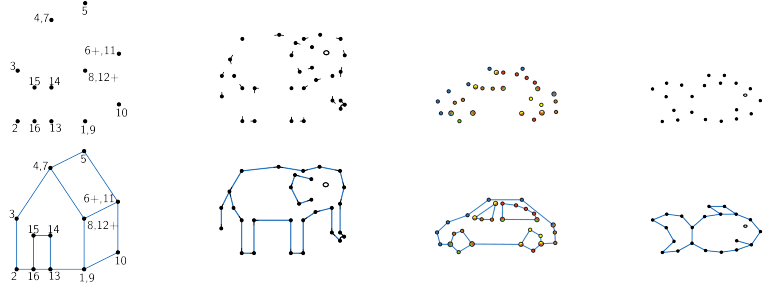
1. Connect the Dots

Many of us grew up doing connect-the-dot puzzles, and they seemed pretty easy. But, that is with visual queues. The image above shows a number of different visual queues. Connect the dots, especially without numbers or visual queues are great proving grounds for improving your visual pattern recognition skills.

2. DLAIY JMBULE

One of my favorites is the word game DAILY JUMBLE in my local newspaper. You can also play it online. The key here is to work not on using brute force to reorder the letters into a word, but trying to train your brain to just SEE THE WORD – instantly.

Succeeding at this and other ways of training your brain to be more like a quantum computer involves getting better at removing your conscious analytical brain from the picture and letting other parts of your brain take over. It’s not easy. It takes practice – continual practice – because it is really hard to keep the analytical brain out of the way.

So, are you willing to give it a try?

Stay tuned for the next article in this series “The Age of Insight” …

Image credits: Utrecht University, Pixabay


Accelerate your change and transformation success

Subscribe to Human-Centered Change & Innovation WeeklySign up here to get Human-Centered Change & Innovation Weekly delivered to your inbox every week.