Tag Archives: digital transformation

3 Mind-Blowing Things I Learned in Nebraska

3 Mind-Blowing Things I Learned in Nebraska

GUEST POST from Robyn Bolton

In the Before Times, we attended conferences to learn, make connections, and promote ourselves and our businesses. Then COVID hit, and conferences became virtual.   Although that made them easier to attend, it also made them easier to skip. Because, if we’re honest, most conferences were more about connecting and promoting than learning.

Last week, I went to one of those rare, almost mythical, conferences more focused on learning and connecting than promoting. It was fantastic! It was also in Nebraska (which is a pretty interesting place, btw).

Here are my three biggest mind-blowing takeaways from Inside Outside’s IO2022 Summit:

“Strategy is the direction you take to win in the future”

Kareen Proudian, Managing Partner at Faculty of Change

It’s a bit embarrassing to admit, but if you asked me to define “Strategy,” I’d respond with a long and rambling answer. Which means I can’t define “strategy.”  This admission is especially embarrassing because I have a resume littered with places where I developed, drafted, and implemented strategies, so I should have learned what the word means. But nope, I didn’t.

I suspect I’m not alone.

Asking for the definition of strategy is like asking if you must wear clothes to the office. You should know the answer. But unlike whether or not clothing is mandatory, most of us don’t know the answer, AND it’s easy to get away with never knowing the answer.

The elegant simplicity of Kareen’s definition of strategy blew my mind. It’s short, memorable, and something that most people can understand. Maybe I should share the definition with my alma maters and past employers.

“When we feel threatened, our IQ drops 50 to 70 points”

Alla Weinberg, CEO at Spoke & Wheel

When I first heard talk about Psychological Safety and Safe Spaces in today’s business world, I rolled my eyes. Hard. As a Gen X-er, I grumbled about how we didn’t need “safe spaces” when I grew up because we were tough and self-reliant, and I lamented the inevitable downfall of society caused by weak and coddled Millennials.

I was wrong.

Psychological Safety is absolutely and unquestionably essential for individuals to grow, teams to work, companies to operate and innovate, and societies to function and evolve. I’ve seen teams and businesses transform and achieve unbelievable success by discussing and living the elements they require for Psychological Safety. I’ve also seen teams and businesses fail in its absence.

These results aren’t surprising when you realize that you feel threatened when you are in a complex situation in which you cannot accurately predict the outcomes. And when you feel threatened, you are half as intelligent, effective, and creative as you are when you’re calm.

So, if you’re a manager and you’re upset that your people aren’t as intelligent, effective, or creative as they should be, it may not be their fault. It may be yours.

“Stage expertise, not industry expertise, is key to innovation success”

Sean Sheppard, Managing Partner at U+

There is deep comfort in the known. It’s why we gravitate to people like us. It’s also why companies ask job candidates and consultants about their experience in the industry and choose those with deep experience and impressive expertise. Often, there’s nothing with this question or the resulting decision.

Sometimes, it’s precisely the wrong question.

Sometimes, functional expertise is significantly more important than industry experience. After all, if you’re the hiring manager at a healthcare company looking for a Director of Finance, who would you hire – a Marketing Director from a competitor or a Finance Director from a CPG company?

That’s the case with innovation.

Decades of real-world experience (not to mention the successful launch of 100+ startups) show that successful corporate startup teams had expertise (mindsets, skillsets, executional drive) in the startup’s phase and a working knowledge of the industry rather extensive industry expertise and little to no innovation experience.

Questions are good. The right questions are better. So, the next time you’re staffing up an innovation team (or hiring a consultant), choose based on their innovation experience and willingness to learn about your industry.

Innovation happens everywhere

That’s why people from San Francisco, Austin, Washington DC, NYC, Toronto, Boston, and dozens of other places converged on Lincoln, Nebraska.

We went to see innovation in action and learn about the thriving startup community in the middle of the country. We also went to learn and connect with others committed to creating new things that create value.

Getting our minds blown was a bonus.

Image credit: Pixabay

Subscribe to Human-Centered Change & Innovation WeeklySign up here to get Human-Centered Change & Innovation Weekly delivered to your inbox every week.

Making Innovation the Way We Do Business (easy as ABC)

Making Innovation the Way We Do Business (easy as ABC)

GUEST POST from Robyn Bolton

“We need to be more innovative.”

How many times have you said or heard that? It’s how most innovation efforts start. It’s a statement that reflects leaders’ genuine desire to return to the “good ol’ days” when the company routinely created and launched new products and enjoyed the publicity and growth that followed.

But what does it mean to be more innovative?

Innovation’s ABCs

A is for Architecture

Architecture includes most of the elements people think of when they start the work to become more innovative – strategy, structure, processes, metrics, governance, and incentives.

Each of these elements answers fundamental questions:

  • Strategy: Why is innovation important? How does it contribute to our overall strategy?
  • Structure: Who does the work of innovation?
  • Process: How is the work done?
  • Metrics: How will we know when we’re successful? How will we measure progress?
  • Governance: Who makes decisions? How and when are decisions made?
  • Incentives: Why should people invest their time, money, and political capital? How will they be rewarded?

When it comes to your business, you can answer all these questions. The same is true if you’re serious about innovation. If you can’t answer the questions, you have work to do. If you don’t want to do the work, then you don’t want to be innovative. You want to look innovative*.

B is for Behavior

Innovation isn’t an idea problem. It’s a leadership problem.

Leaders that talk about innovation, delegate it to subordinates and routinely pull resources from innovation to “shore up” current operations don’t want to be innovative. They want to look innovative.

Leaders who roll up their sleeves and work alongside innovation teams, ask questions and listen with open minds, and invest and protect innovation resources want to be innovative.

To be fair, it’s incredibly challenging to be a great leader of both innovation and operations. It’s the equivalent of writing equally well with your right and left hands. But it is possible. More importantly, it’s essential.

C is for Culture

Culture is invisible, pervasive, and personal. It is also the make-or-break factor for innovation because it surrounds innovation architecture, teams, and leaders.

Culture can expand to encourage and support exploration, creativity, and risk-taking. Or it can constrict, unleashing antibodies that swarm, suffocate, and kill anything that threatens the status quo.

Trying to control or change culture is like trying to hold water in your fist. But if you let go just a bit, create the right conditions, and wait patiently, change is possible.

Easy as 123

The most common mistake executives make in the pursuit of being “more innovative” is that they focus on only A or only B or only C.  But, as I always tell my clients, the answer is “and, not or.”

  1. Start with Architecture because it’s logical, rational, and produces tangible outputs like org charts, process flows, and instruction manuals filled with templates and tools. Architecture is comforting because it helps us know what to do and how.
  2. Use Architecture to encourage Behavior because the best way to learn something is to do it. With Architecture in place (but well before it’s finished), bring leaders into the work – talking to customers, sharing their ideas, and creating prototypes. When leaders do the work of innovation, they quickly realize what’s possible (and what’s not) and are open to learning how to engage (behave) in a way that supports innovation.
  3. Leverage Architecture and Behavior to engage Culture by creating the artifacts, rituals, and evidence that innovation can happen in your company, is happening and will continue to happen. As people see “innovation” evolve from a buzzword to a small investment to “the way we do business,” their skepticism will fade, and their support will grow.

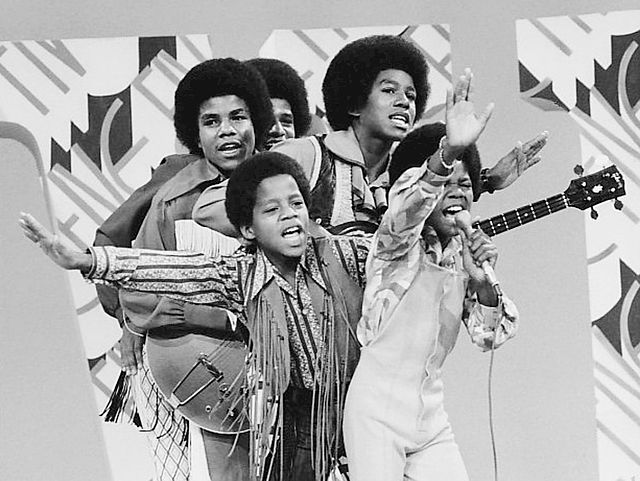
Just like the Jackson 5 said

ABC, It’s easy a 123

Architecture, behavior, culture – they’re all essential to enabling an innovation capability that repeatedly creates new revenue.

And while starting with architecture, building new leadership behaviors, and investing until the culture changes isn’t easy, it’s the 123 steps required to “be more innovative.”

Image credit: Wikimedia Commons

Subscribe to Human-Centered Change & Innovation WeeklySign up here to get Human-Centered Change & Innovation Weekly delivered to your inbox every week.

People Drive the World-Technology as a Co-Pilot via Center of Human Compassion

People Drive the World-Technology as a Co-Pilot via Center of Human Compassion

GUEST POST from Teresa Spangler

People at the Center – Technology as a Co-Pilot

Are people at the center of your innovation and new product plans? Have we made people the center of all things digital? Are human’s and our environment the center of the new world entering the 4th Industrial Revolution? When innovation is during groundbreaking disruptive inventions or whether innovation is iterating into new products… what is placed at the center of your strategies? What are the reasons for these new inventions?

So much is at stake, as the world turns to being driven by AI, humanoids, rockets’ red glare searching for new lands to inhabit, games and more games feeding our brains with virtual excitement and stimulation, devices galore on our bodies, in our hands, in our homes helping us navigate our every move and in many ways directing us on how to think. The acceleration of digital permeating our lives is mind boggling. The news we are fed, seemingly unbiased, the product advertisements that sneak into our feeds, the connections via too many social and work-related networks that appear all too promising and friendly too is overwhelming. Technology is encompassing our lives!

The Power of Technology

Don’t get me wrong, I love technology for all the positive it contributes to the world. Technology is allowing individuals to create! To create and earn! To take control of their lives and build meaningful endeavors. The creation of TIME and SPACE to live how we to live has been a major outcome of

1. technology but also 2. the pandemic.

Let’s explore the creator economy which has experienced an explosion of late. As referenced in the Forbes articleThe Biggest Trends For 2022 In Creator Economy And Web3, by Maren Thomas Bannon, Today, the total size of the creator economy is estimated to be over $100 billion and 50 million people worldwide consider themselves creators. Creators will continue to bulge out of the global fabric as individuals seek to augment their incomes or escape the confines or rigged corporate cultures. Technology is enabling creators no doubt!

Technology is also allowing forward acting organizations to scale growth at unprecedented speeds. Let’s look at a recent survey conducted by Accenture

Curious about the effects of the pandemic, we completed a second round of research in early 2021 and discovered the following:

  1. Technology Leaders have moved even further ahead of the pack and have been growing at 5x the rate of Laggards on average in the past three years.
  2. Among the “Others” there is a group of organizations—18% of the entire sample—that has been able to break previous performance barriers—the Leapfroggers.

Let’s look at a recent survey conducted by Accenture

Curious about the effects of the pandemic, we completed a second round of research in early 2021 and discovered the following:

  1. Technology Leaders have moved even further ahead of the pack and have been growing at 5x the rate of Laggards on average in the past three years.
  2. Among the “Others” there is a group of organizations—18% of the entire sample—that has been able to break previous performance barriers—the Leapfroggers.

Of course, so much technology is doing good things for the world. 3-D printing is emerging at the center of homelessness. As reported in the #NYTIMES, this tiny village in Mexico is housing homeless people. The homes were built using an oversized 3-D printer.

Another example positive outcomes of technology is the emergence of over-the-counter hearing devices. Fortune Business Insights estimates the global hearing aids market is projected to grow from $6.67 billion in 2021 to $11.02 billion by 2028 at a CAGR of 7.4% in forecast period, 2021-2028.

These devices, until this year, were regulated to being sold by medical professionals at, for the majority of population in need, very high prices $2000 to $5000+ per hearing aid. Yes typically you need two. But recent innovations in ear buds and bluetooth are allowing other technology companies into the game! Take Bose for example, the FDA recently approved Bose SoundControl Hearing Aids to be purchased on their website for $895/pair. No need for a hearing professional. This significantly changes the playing field and opens the doors for so many that have put off purchases (of these not covered by insurance by the way) devices.

Entertainment & leisure travel is going to a whole new level with the help of technology. It’s wonderful that anyone with connectivity and travel the world and explore via Virtual Reality. Here are 52 places you can explore in the comfort of your home shared by NY Times. Many of us attended conferences and events over the past two years virtually. We’ll see an exponential growth in virtual reality experiences in the coming year.

So why am I talking about creating a Center for Human Compassion if so much good is really coming out of technology? Because many of the outcomes are also unrealized and not anticipated or at least publicized to prepare people. It is essential for companies, technologists, and product teams to consider the consequences of new technologies. Not as an afterthought but at the forethought, from inception of ideas we must ask what are the downsides? How will people be affected? What could happen?

The quote below is taken from the World Economic Forum report, Positive AI Economic Futures

machines will be able to do most tasks better than humans. Given these sorts of predictions, it is important to think about the possible consequences of AI for the future of work and to prepare for different scenarios. Continued progress in these technologies could have disruptive effects: from further exacerbating recent trends in inequality to denying more and more people their sense of purpose and fulfillment in life, given that work is much more than just a source of income.

WeForum brings 150 thought leaders together to share thoughts on how we create an AI world we want. For all of AI’s good, there are potentials for negative outcomes.

Let’s take the military’s fight again hobbyists and drones. In the recent article from WSJ, The Military’s New Challenge: Defeating Cheap Hobbyist Drones, how much energy was placed on Human Compassion if drone technologies, IoT and AI got in the wrong hands?

The U.S. is racing to combat an ostensibly modest foe: hobbyist drones that cost a few hundred dollars and can be rigged with explosives. @WSJ

I feel certain there was some consideration but not enough to draw out possible negative impacts and how to mitigate them before they could even start. Did we really put people at the center of what is possible with drone technologies? What do you think?

This is no easy task. We know what is good for us can turn to bad for us when in the wrong hands, or if it’s not moderated to healthy limits. How do we help facilitate a more compassionate relationship with technology and put people at the center?

Here are four strategies to ensure you are keeping people at the center of your innovation, new products and technology development efforts.

  1. Create a Center of Human Compassion, or People Centered Technology Consortium, or what ever you wish to brand your initiative. Select trusted advisors from external (customers, partners…) and a select group of internal stake holders to join your collaborative to gather input, feedback and push back!
  2. Discuss with your trusted group very early on. Gamify initiatives around gathering what ifs! Anticipating the worst you will plan better for the best! (leaving the hope out)
  3. Build a continuous feedback loop. It is important that insights and scenarios are revisited and rehashed over and over again.
  4. Join other consortiums and get involved with AI and tech for good initiatives. If you can’t find ones you feel are of value to you and your company, start one!

Mantra for the year: #lucky2022 but not without work and placing people front and center of plans will good fortune and luck come for the masses.

As always, reach out if you have ideas you’d like to share or questions you’d like to discuss!

Subscribe to Human-Centered Change & Innovation WeeklySign up here to get Human-Centered Change & Innovation Weekly delivered to your inbox every week.

Reset and Reconnect in a Chaotic World

Reset and Reconnect in a Chaotic World

GUEST POST from Janet Sernack

Meeting face to face, for a lovely lunch recently, with a coaching colleague, we were both shocked to discover how stressed and anxious we were feeling about being asked to deliver live workshops and face-to-face coaching to clients once again.

We shared how emotionally, mentally, and physically overwhelmed we felt, despite having decades of knowledge, experience, and skills in being able to deliver deep learning programs and face-to-face coaching sessions, about doing live gigs again! We also agreed, that despite the range of largely effective emotionally intelligent coping strategies we developed to help ourselves and our clients self-regulate, self-manage, to better adapt to the pandemic-imposed work-from-home restrictions that the past two and half years of working, alone, and in isolation, online, had taken its toll.

We acknowledged and accepted that we along with many of our clients were all suffering from elevated levels of stress, discomfort, and anxiety. We then agreed that it was time to focus on exploring how to better help ourselves and our clients reconnect and reset by enabling them to create states of well-being, emotional agility, and mental fitness, where they can feel good, can function well, and be effective and innovative in an increasingly chaotic world.

To seek new ways of enabling ourselves and our clients to deal effectively with a range of unresourceful feelings including helplessness, powerlessness, and fearfulness about an uncertain future. 

We noticed that these feelings often caused many of our clients to contract and freeze, and become immobilised as a result of what we describe as a “bubble” of self-induced silo-based behaviours. That often evolved into extreme self-centeredness, and unconscious selfishness, which ultimately increased their feelings of isolation and loneliness, and lack of belonging, resulting in defensive and avoidant behaviours, in what is becoming an increasingly chaotic world.

How are these ways of being and acting impacting organisations?

Partnering in a wide range of online global coaching sessions, we noticed that a number of common trends emerged as to how our client’s teams and organisations, are being impacted at the cultural level:

  • Immobilization – many people are unable to self-manage their work from home workloads and are quietly burning out, through being overly task-focused and busy, whilst others are preferring to work autonomously, and not waste hours commuting.
  • Lacking safety and trust – many organisations are freezing all of their change initiatives, learning programs, and projects, causing people to fear loss and overall job insecurity, where many people are contracting more deeply within their “bubbles” and become even more distrustful of leadership and even more passively defensive and avoidant.
  • Lacking clarity and foresight – many organisations have slipped into being so reactive, focussing only on delivering short-term results, and are not communicating a clear strategy for leading the way forwards.

Resulting in:

  • Increased resistance to change and going back to the office adds to people’s inertia, and to their sense of disconnection and lack of belonging.
  • Increased risk adversity and conventional (cost cutting), tactical and short-term focus, inhibits any investment in Research and Development or the skills development required in developing and executing a future innovation strategy.
  • People have become even more fearful of failure, and are not stretching themselves to adapt, grow, learn and innovate with disruption, and often choosing to merely change jobs, in a competitive job marketplace, driven by scarcity, as a perceived short term solution.

A unique moment in time

This has created an opportunity, in this unique moment in time, to focus on being kinder to ourselves and to others by helping and supporting each other, respectfully and compassionately, creatively and courageously, to reconnect and reset. Despite rising levels of economic, civic, and social uncertainty and unrest.

What made sense yesterday may not make so much sense today.

Many of the mental models we applied yesterday may not be relevant for tomorrow because corporate culture, civic and social structures have drastically changed and digitalization has become commonplace, noting that we are shifting from a VUCA to BANI world where:

  • Brittle has replaced Volatility.
  • Anxiety reflects Uncertainty.
  • Non-linearity is an addition to Complexity.
  • Incomprehensibility is ultimately the consequence of our non-linear world and goes one step further than Ambiguity.

Paradoxically, this has created new openings to genuinely explore and discover new thresholds to adapt, generate new mindsets, develop skill sets, and power up our toolkits to keep pace with the effects of the emerging BANI world and capture complex systems by asking a  key generative or catalytic question:

How might you support and enable others to think and act differently in such a world, where old patterns seem to crumble while new ideas and systems still need to be created, invented, innovated, and established?

As the world of work changes, so does the need for everyone to consider how to be more open-hearted, minded, and willed with one another.

A final word from Gallop CEO Jon Preston in the Gallop Global Emotions Report:

“All over the world, people are trying to understand the rise of violence, hatred, and increased radicalization. They will continue to argue over what the best policy responses should be and what role social media plays in fueling negative emotions.

However, policymakers must understand why so many more people are experiencing unprecedented negative emotions and focus on the drivers of a great life.

Our shared humanity and wellbeing depend on it”.

When we generously and kindly demonstrate care, respect, and appreciation for the value everyone brings, we can also demonstrate helpfulness and support, through our unconditional willingness to reconnect and reset.

Resulting in an ability to co-create a better sense of belonging and a more optimistic outlook, through enhancing our emotional intelligence.  To effectively self-regulation and self-manage the superpowers and strategies required to thrive, flourish and flow, and make transformational changes in the face of relentless uncertainty, disruption, and a chaotic world.

This is the first in a series of three blogs on the theme of reconnecting and resetting, to create, invent and innovate in an increasingly chaotic world. You can also register for our free 45-minute masterclass on Thursday, 25th August, to discover new ways of re-connecting through the complexity and chaos of dis-connection to create, invent and innovate in the future! Find out more.

Image credit: Pixabay

Subscribe to Human-Centered Change & Innovation WeeklySign up here to get Human-Centered Change & Innovation Weekly delivered to your inbox every week.

Integrating User Feedback into Your Designs

The Unseen Revolution: Placing the User at the Heart of Innovation

Integrating User Feedback into Your Designs

GUEST POST from Chateau G Pato

In the whirlwind of digital transformation and perpetual innovation, it’s easy for organizations to become entranced by the siren song of cutting-edge technology and brilliant new features. We chase the next big thing, pouring resources into development cycles and marketing campaigns, often with the best intentions. Yet, a fundamental truth, often overlooked, remains: true innovation isn’t born in a vacuum; it’s forged in the crucible of human experience. It’s about solving real problems for real people. And to do that effectively, we must embrace the power of user feedback, integrating it not as an afterthought, but as the very heartbeat of our design process.

As a human-centered change and innovation thought leader, I’m here to tell you that the organizations that truly thrive are those that listen intently, observe diligently, and adapt tirelessly based on the voices of their users. This isn’t just about collecting data; it’s about fostering empathy, building trust, and creating products and services that resonate deeply with the people they are designed to serve. Think of user feedback as the compass that guides your innovation ship, ensuring you navigate towards true user value, not just perceived opportunity.

So, how do we move beyond lip service and genuinely integrate user feedback into our designs? Let’s explore the strategic imperatives and practical methodologies that can transform your approach.

The Business Imperative: Why User Feedback Isn’t Just “Nice to Have”

Beyond the philosophical alignment with human-centered design, there’s a compelling business case for prioritizing user feedback. Neglecting user voices can lead to:

  • Increased Development Costs: Building features no one wants or solving problems that don’t exist is a colossal waste of resources. Iterating based on feedback early on prevents costly reworks down the line.
  • Higher Customer Churn: Products that don’t meet user needs or solve their pain points will inevitably see users migrate to competitors.
  • Stagnated Innovation: Without real-world input, innovation can become insular, leading to solutions that are technologically brilliant but practically irrelevant.
  • Damaged Brand Reputation: A brand perceived as unresponsive or out of touch with its users will struggle to build loyalty and command market respect.

Conversely, a strong feedback loop leads to **increased customer retention, accelerated product-market fit, and a higher return on investment** for your design and development efforts.

Beyond the Survey: Cultivating a Feedback Culture

The first step is to recognize that user feedback isn’t a one-off event; it’s a continuous conversation. Forget the annual, dreaded customer satisfaction survey that gets filed away and forgotten. Instead, cultivate a culture where feedback is actively sought, openly discussed, and systematically acted upon.

This means:

  • Democratizing Feedback Channels: Make it easy for users to provide feedback through multiple touchpoints – in-app prompts, dedicated feedback sections on your website, social media monitoring, and even direct communication with support teams. Think of every interaction as a potential feedback opportunity.
  • Empowering Front-Line Teams: Your customer service representatives, sales teams, and even delivery personnel are often the first point of contact for users. Equip them with the tools and training to capture, categorize, and escalate feedback effectively. They are your eyes and ears on the ground.
  • Celebrating Feedback: Acknowledge and appreciate users who take the time to offer their insights. Show them that their voices matter by publicly demonstrating how their feedback has led to improvements. This reinforces positive behavior and encourages more participation.
  • Leadership Buy-in: Ensure that leadership actively champions the importance of user feedback, dedicating resources and time to its collection and analysis.

From Data to Design: The Iterative Loop

Once you’re collecting feedback systematically, the real work begins: translating those insights into actionable design changes. This requires a robust iterative loop, where feedback informs design, design leads to testing, and testing generates new feedback. It’s a continuous dance of discovery and refinement.

Consider these critical elements and methodologies:

  • Qualitative and Quantitative Harmony: Don’t rely solely on quantitative data (numbers, metrics). While valuable for identifying trends, qualitative data (user interviews, usability testing observations, open-ended survey responses) provides the “why” behind the numbers, revealing pain points, motivations, and unmet needs. Combine the ‘what’ with the ‘why’.
  • Rapid Prototyping and Testing: Once you have an idea for an improvement, don’t wait for a full-scale development cycle. Create low-fidelity prototypes (sketches, wireframes, click-through mocks) and get them in front of users quickly through usability testing. This allows for rapid iteration and minimizes the cost of failure. Fail fast, learn faster.
  • Customer Journey Mapping and Empathy Maps: These powerful tools help visualize the user’s experience with your product or service, identifying touchpoints, pain points, and opportunities for improvement based on collected feedback. They build empathy within the design team.
  • Closed-Loop Feedback: It’s not enough to just collect feedback and make changes. Close the loop by informing users about the changes you’ve made based on their input. This builds trust, encourages continued engagement, and demonstrates that their voice is truly heard.

Case Study 1: The Evolution of Slack’s Notifications

When Slack first launched, its notification system was robust but, for some users, overwhelming. While highly customizable, the sheer volume of notifications could lead to fatigue and missed important messages. Instead of dismissing these concerns, Slack’s product team actively sought feedback.

They conducted extensive user interviews, observed user behavior through analytics, and analyzed data on notification settings. They discovered that users craved more nuanced control and better filtering mechanisms. Based on this feedback, Slack iteratively introduced features like “Do Not Disturb” modes, granular channel-specific notification settings, and intelligent highlighting of direct mentions. They didn’t just add features; they redesigned the notification experience to be less intrusive and more helpful. This continuous refinement, driven by user feedback, transformed a potential pain point into a key strength, reinforcing Slack’s reputation as a productivity tool that respects user focus and reduces cognitive load.

Case Study 2: Netflix’s Recommendation Engine Refinement

Netflix’s recommendation engine is legendary, but it wasn’t built in a day. Early iterations, while functional, sometimes struggled to truly capture the eclectic tastes of its diverse user base. Netflix understood that the success of its platform hinged on users finding content they loved.

They employed a multi-pronged approach to user feedback. A/B testing was central, allowing them to test subtle variations in the recommendation algorithm and measure their impact on watch time and user satisfaction. They also conducted extensive user surveys, focus groups, and analyzed vast amounts of viewing data, gathering qualitative insights into how users perceived the recommendations and what they felt was missing. This feedback led to significant improvements, including the introduction of “Thumbs Up/Down” ratings for more explicit preferences, personalized rows based on specific genres or actors, and even the now-iconic “Skip Intro” button – a brilliant user-driven innovation that addressed a common, minor but pervasive frustration. By continuously learning from user interactions and preferences, Netflix cemented its position as the world’s leading streaming service, demonstrating that even a minor improvement based on feedback can have massive impact.

Overcoming Obstacles: Navigating the Feedback Landscape

While the benefits are clear, integrating user feedback isn’t without its challenges. You might encounter:

  • Conflicting Feedback: Different users have different needs. Prioritize based on impact, frequency, and strategic alignment.
  • Sifting Through Noise: Not all feedback is equally valuable. Develop criteria for filtering and categorizing insights.
  • Organizational Resistance: Some teams may be hesitant to embrace changes based on external input. Demonstrate quick wins and the positive impact of user-driven design.
  • Analysis Paralysis: Don’t get bogged down in endless analysis. Set clear timelines for decision-making and action.

Addressing these challenges requires strong leadership, clear processes, and a commitment to continuous learning.

The Innovation Imperative: Designing for the Human

In a world saturated with choices, the differentiator is no longer just about features or price; it’s about the quality of the human experience. Organizations that embrace user feedback as a core tenet of their design philosophy are not just building better products; they are building stronger relationships, fostering loyalty, and ultimately, creating a more sustainable future. This principle extends beyond digital products into service design, physical goods, and even organizational processes. Every interaction is an opportunity for human-centered improvement.

Remember, innovation isn’t about what you think is best; it’s about understanding what truly resonates with the people you serve. So, open your ears, open your minds, and let the voice of your users guide your journey towards meaningful and impactful design. The revolution isn’t coming; it’s already here, and it’s powered by you, the user, and the organizations brave enough to listen. Start listening today. Your users are waiting.

Extra Extra: Because innovation is all about change, Braden Kelley’s human-centered change methodology and tools are the best way to plan and execute the changes necessary to support your innovation and transformation efforts — all while literally getting everyone all on the same page for change. Find out more about the methodology and tools, including the book Charting Change by following the link. Be sure and download the TEN FREE TOOLS while you’re here.

Image credit: Pexels

Subscribe to Human-Centered Change & Innovation WeeklySign up here to get Human-Centered Change & Innovation Weekly delivered to your inbox every week.

Is Digital Different?

Is Digital Different?

GUEST POST from John Bessant

‘Now the chips are down…’

‘The robots are coming…’

‘Digitalize or die!’

There’s no shortage of scary headlines reminding us of the looming challenge of digital transformation. The message is clear. On the one hand if we don’t climb aboard the digital bandwagon we’ll be left behind in a kind of late Stone Age, slowly crumbling to dust while the winds of change blow all around us. On the other we’re facing some really big questions — about employment, skills, structures, the whole business model with which we compete. If we don’t have a clear digital strategy to deal with these we’re going to be in trouble.

And it’s not just the commercial world which is having to face up to these questions; the same is true in the public sector and in the not-for-profit world. The digital storm has arrived.

There aren’t any easy solutions to this which explains why so many conferences now have the digital word scrawled across their strap-lines. They provide focal points, create tents within which people can huddle and talk together, trying to work out exactly how they are going to manage this challenge. I’ve spent the past couple of weeks attending a couple — ‘Innovating in the digital world’ was the banner under which the ISPIM (the International Society for Professional Innovation Management) community gathered while ‘Leading digital transformation’ brought EURAM (the European Academy of Management) together. Close to a thousand people gathering for more than just a welcome post-Covid reunion; conferences like these are a good indication of the scale of the questions which digital transformation raises.

A Pause for Thought

But look again at those headlines at the start of this piece. They were actually newspaper cuttings from the 1980s, close on fifty years ago. Anxiety about the transformative potential of digital technology was running pretty high back then and for similar reasons. And yet their dire predictions of disaster and massive structural upheaval haven’t quite emerged. Somehow, we’ve made it through, we haven’t had mass unemployment, we haven’t been replaced by intelligent machines, and while income distribution remains very unequal the causes of that are not down to technological change.

Which is not to say that nothing has changed. Today’s world is radically different along so many dimensions, and not everyone has made it through the digital crisis. Plenty of organizations have failed, unable to come to terms with the new technology whilst others have emerged from nowhere to dominate the global landscape. (It’s worth reflecting that none of the FAANGS corporations (Facebook/Meta, Amazon, Apple, Netflix and Google were even born when those headlines were written). So, we’ve had change, yes, but it’s not necessarily been destructive or competence-destroying change.

If we’re serious about managing the continuing challenge then it’s worth taking a closer look at just what digital innovation involves. Is it really so revolutionary and transformative? The answer is a mixture. In terms of speed of arrival it’s been a very-slow paced change. Digital innovation isn’t new. Despite the hype around the disruptive potential of this technological wave the reality is that it’s been building for at least 70 years, ever since the invention of the transistor back in Bell Labs in 1947. And there’s a good argument for seeing it date back fifty years before that to when John Fleming and Lee DeForest began playing around with valves and enabling simple electronic circuits.

The idea of programmable control was around another hundred years before that; early on in the Industrial Revolution we saw mechanical devices increasingly substituting for human skill and intervention. Textile manufacturers were able to translate complex designs into weaving instructions for their looms through the use of punched card systems, an innovation pioneered by Joseph Marie Jaquard. Not for nothing did the Luddites worry about the impact technology might have on their livelihoods. And we should remember that it was in the nineteenth, not the twentieth century that the computer first saw the light of day in the form of the difference and analytical engines developed by Charles Babbage and Ada Lovelace.

In fact although there has been rapid acceleration in the application of digital technology over the past thirty years in many ways it has more in common with a number of other ‘revolutions’ like steam power or electricity where the pattern is what Andrew Hargadon calls ‘long fuse, big bang’. That is to say the process towards radical impact is slow but when it converges there can be significant waves of change flowing from it.

Riding the Long Waves of Change

Considerable interest was shown back in the 1980s (when the pace of the ‘IT revolution’ appeared to be accelerating) in the ideas of a Russian economist, Nikolai Kondratiev. He had observed patterns in economic activity cycles which seemed to have a long period (long waves) and which were linked to major technological shifts. The pattern suggested that major enabling technologies like steam power or electricity which had widespread application potential could trigger significant movements in economic growth. The model was applied to the idea of information technology and in particular Chris Freeman and Carlota Perez began developing the approach as a lens through which to explore major innovation-led changes. They argued that the role of technology as a driver had to be matched by a complementary change in social structures and expectations, a configuration which they called the ‘techno-economic paradigm’ .

Importantly the upswing of such a change would be characterised by attempts to use the new technologies in ways which mainly substituted for things which already happened, improving them and enhancing productivity. But at a key point the wave would break and completely new ways of thinking about and using the technologies would emerge, accelerating growth.

A parallel can be drawn to research on the emergence of electricity as a power source; for a sustained period it was deployed as a replacement for the large central steam engines in factories. Only when smaller electric motors were distributed around the factory did productivity growth rise dramatically. Essentially the move involved a change in perspective, a shift in paradigm.

Whilst the long wave model has its critics it offers a helpful lens through which to see the rise of digital innovation. In particular the earlier claims for revolutionary status seemed unfounded, reflecting the ‘substitution’ mode of an early TEP. Disappointment with the less than dramatic results of investing in the new wave would slow its progress — something which could be well-observed in the collapse of the Internet ‘bubble’ around 2000. The revolutionary potential of the underlying technologies was still there but it took a while to kick the engine back into life; this time the system level effects are beginning to emerge and there is a clearer argument for seeing digital innovation as transformative across all sectors of the economy.

This idea of learning to use the new technology in new ways underpins much of the discussion of what is sometimes called the ‘productivity paradox’ — the fact that extensive investment in new technologies does not always seem to contribute to expected rises in productivity. Over time the pattern shifts but — as was the case with electric power — the gap between introduction and understanding how to get the best out of new technology can be long, in that case over fifty years.

Surfer

Strategy Matters

This model underlines the need for strategy — the ability to ride out the waves of technological change, using them to advantage rather than being tossed and thrown by them, finally ending up in pieces on a beach somewhere. Digital technology is like any other set of innovations; it offers enormous opportunities but we need to think hard about how we are going to manage them. Riding this particular wave is going to stretch our capabilities as innovation managers, staying on the board will take a lot of skill and not a little improvisation in our technique.

It’s easy to get caught up in the flurry of dramatic words used to describe digital possibilities but we shouldn’t forget that underneath them the core innovation process hasn’t changed. It’s still a matter of searching for opportunities, selecting the most promising, implementing and capturing value from digital change projects. What we have to manage doesn’t change even though the projects may themselves be significant in their impact and scalable across large domains. There’s plenty of evidence for that; whilst there have been notable examples of old guard players who have had to retire into bankruptcy or disappearance (think Kodak, Polaroid, Blockbuster) many others continue to flourish in their new digital clothes. Their products and services enhanced, their processes revived and revitalised through strategic use of digital technologies.

If the conferences I’ve been attending are a good barometer of what’s happening then there’s a lot behind this. Organizations of all shapes and sizes are now deploying new digitally driven product and service models and streamlining their internal operations to enable efficient and effective global reach. If anything the Covid-19 pandemic has forced an acceleration in these trends, pushing us further and faster into a digital world. And it’s working in the public and third sector too; for example the field of humanitarian innovation has been transformed by the use of mobile apps, Big Data and maker technologies like 3D printing. Denmark even has a special ministry within government tasked with delivering digitally-based citizen innovation.

Digital Innovation Management

Perhaps what’s really changing — and challenging — is not the emerging set of innovations but rather the way we need to approach creating and delivering them — the way we manage innovation. And here the case for rethinking is strong; continuing with the old tried and tested routines may not get us too far. Instead we need innovation model innovation.

Take the challenge of search — how do we find opportunities for innovation in a vast sea of knowledge? Learning the new skills of ‘open innovation’ has been high on the innovation management agenda for organizations since Henry Chesbrough first coined the term nearly twenty years ago. We know that in a knowledge-rich world that ‘not all the smart people work for us’ and we’ve developed increasingly sophisticated and effective tools for helping us operate in this space.

Digital technologies make this much faster and easy to do. Internet searches allow us to access rich libraries of knowledge at the click of a mouse, social media and networks enable us to tap into rich and varied experience and to interact with it, co-creating solutions. ‘Recombinant’ innovation tools fuelled by machine learning algorithms scour the vast mines of knowledge which the patent system represents and dig out unlikely and fruitful new combinations, bridging different application worlds.

Broadcast search allows us to crowdsource the tricky business of sourcing diverse ideas from multiple different perspectives.  And collaboration platforms allow us to work with that crowd, harnessing collective intelligence and draw in knowledge, ideas, insights from employees, customers, suppliers and even competitors.

Digital innovation management doesn’t stop there; it can also help with the challenge of selection as well. We can use that same crowd to help focus on interesting and promising ideas, using idea markets. Think Kickstarter and a thousand other crowdfunding platforms and look at the increasing use of such approaches within organizations trying to sharpen up their portfolio management. Simulation and exploration technologies enable us to delay the freeze — to continue exploring and evaluating options for longer, assembling useful information on which to base our final decision about whether or not to invest.

And digital techniques blur the lines around implementation, bringing ideas to life. Instead of having to make a once for all commitment and then standing back and hoping we open up a range of choice. We can still kill off the project which isn’t working and has no chance — but we can also adapt in real time, pivoting around an emerging solution to sharpen it, refine it, help it evolve. Digital twins enable us to probe and learn, stress testing ideas to make sure they will work. And the whole ‘agile innovation’ philosophy stresses early testing of simple prototypes — ‘minimum viable products’ — followed by pivoting. Innovation becomes less dependent on a throw of the dice and a lot of hope; instead it is a guided series of experiments hunting for optimum solutions.

Capturing value is all about scale and the power of digital technologies is that they enable us to ‘turbocharge’ this phase. The physical limits on expansion and access are removed for many digital products and services and even physical supply chains and logistics networks can be enhanced with these approaches. Networks allow us not only to spread the word via multiple channels but also enable us to tap into the social processes of influence which shape diffusion. Innovation adoption is still heavily influenced by key opinion leaders but now those influencers can be mobilised much more rapidly and extensively.

The story of Tupperware is a reminder of this effect; it took a passionate woman (Brownie Wise) building a social system by herself in the 1950s to turn a great product into one of the most recognised in the world. Today’s social marketing technologies can draw on powerful tools and infrastructures from the start.

In the same way assembling complementary assets is essential — the big question is one of ‘who else/what else do we need to move to scale? In the past this was a process of finding and forming a series of relationships and carefully nurturing them to create an ecosystem. Today’s platform architectures and business models enable such networks to be quickly assembled and operated in digital space. Amazon didn’t invent remote retailing; that model emerged a century ago with the likes of Sears and Roebuck painstakingly building their system. But Amazon’s ability to quickly build and scale and then to diversify across to new areas deploying the same core elements depends on a carefully thought-out digital architecture.

Digital is Different?

So yes, digital is different in terms of the radically improved toolkit with which we can work in managing innovation. Central to this is a strategy — being clear where and why we might use these tools and what kind of organization we want to create. And being prepared to let go of our old models; even though they are tried and tested and have brought us a long way the reality is that we need innovation model innovation. That’s at the heart of the concept of ‘dynamic capability’ — the ability to configure and reconfigure our processes to create value from ideas.

The idea of innovation management routines is a double-edged sword. On the one hand routines enable us to systematise and codify the patterns of behaviour which help us innovate — how we search, select , implement and so on. That helps us repeat the innovation trick and means that we can build structures and processes and policies to strengthen our innovation capability. But we not only need to review and hone these routines, we also need the capacity to step back and challenge them and the courage to change or even abandon them if they are no longer appropriate. That’s the real key to successful digital transformation.


If you’re interested in more innovation stories please check out my website here
And if you’d like to listen to a podcast version you can find it here
Or follow my online course here

Image credits: FreePik

Subscribe to Human-Centered Change & Innovation WeeklySign up here to get Human-Centered Change & Innovation Weekly delivered to your inbox every week.

Transformation Insights – Part Two

Transformation Insights - Part Two

“The world needs stories and characters that unite us rather than tear us apart.”~ Gale Anne Hurd, Producer of Aliens and The Terminator

GUEST POST from Bruce Fairley

In my early years I was fortunate to spend some time on film sets. Unlike how the entertainment industry is portrayed in the Netflix series, The Movies that Made Us, I did not come to blows with any of my directors as Eddie Murphy apparently did with John Landis during the making of Coming to America. Nor did I witness an entire crew mutiny, as James Cameron did on Aliens. Instead, I often saw the same dynamic I’ve witnessed in the tech sector from the first moment I stepped off set and into I.T.

People coming together.

Skilled, diverse, passionate people hard at work fighting against miscommunication, technical issues, and time constraints – coming together to achieve something significant. I referred to this in my previous Transformation Insights post, The Future Always Wins as:

Collaboration Between Complementary Influencers.

This dynamic is as true of a film set as it is of a firm engaged in digital transformation. In both cases, expertise in various areas is required to create a successful whole, with C-Suite leaders in the corporate sphere tasked with providing the articulated vision at the helm. Of course, the success of any endeavor comes down to human-powered action and decision making at every level of execution. And while the challenges of a digital transformation project may not be as bone-breaking dangerous as the stunts in an action film, getting to greatness requires a similar fusion of mind and machine – of talent and technology.

If that sounds like The Terminator, consider that its box office success speaks to the fusion of mind and machine as an unstoppable trajectory – but those who deepen their humanity rather than succumb to machine rule are the heroes that triumph. This was mirrored in the making of the film, which was nearly shut down when the crew put down their tools. Addressing their humanity and acknowledging the value of their contribution changed the story from disaster to blockbuster.

Humans lead – technology serves. Not the other way around.

When that is reversed, dystopia ensues whether on screen or in the boardroom. Having witnessed many occasions in which technology was expediently obtained before its value to the user could be established, I am convinced we have lost the plot in telling a wider, corporate story. Technology was supposed to liberate not enslave. Instead, how many times have you attended a Zoom meeting or prepared weeks for a presentation only to discover the sound not working, the slide deck freezing, or even a hidden ‘on’ button? These may be simple examples, but they rob the intrepid hero of the corporate journey; the chance to shine and advance their creative talent much like the crew of Aliens putting down their tools. Now multiply that by the large scale digital transformation projects I’ve spearheaded, and it becomes clear how a broken axis between human-powered decision making and technology can break the bottom line.

Optimism and momentum towards a more positive, successful outcome hinges on more than technological expertise. It requires an understanding of the whole story – and how the team, tech, leadership, and consumers each play a role. The story you wish to tell about your corporate journey requires buy-in at every level of service – human and tech. Obstacles are not indictments, they are merely obstacles. But they do often require a third-party complementary collaborator that understands how to transform pitfalls into profits.

When I launched the Narrative Group I wanted to amplify the genius of C-Suite executives through the optimization of the business-tech relationship. Similarly to how I observed the inner workings of a set and how all the pieces had to fit together to create a screen success, I spent years observing digital transformation from the inside. Across continents and boardrooms, I learned, led, and transformed as well. This only increased my commitment to helping talented leaders tell their story successfully.

If you’re a C-Suite leader that would like to storyboard the trajectory of your corporate success, please feel free to reach out and continue the conversation at:

connect@narrative-group.com

Image Credit: The Narrative Group

Subscribe to Human-Centered Change & Innovation WeeklySign up here to get Human-Centered Change & Innovation Weekly delivered to your inbox every week.

Taking Personal Responsibility – Seeing Self as Cause

Taking Personal Responsibility – Seeing Self as Cause

GUEST POST from Janet Sernack

In our last two blogs on Taking Personal Responsibility, we stated that when people aren’t taking personal responsibility, they cannot be accountable, they will fail in their jobs, and their teams, and fail to grow as individuals and as leaders. Taking personal responsibility is an especially crucial capability to develop self-awareness and self-regulation skills in the decade of both disruption and transformation. It all starts with seeing self as the cause of what happens to us, rather than baling it on the effects events and problems have on us! Where people can learn to recognize the structures at play in their lives and change them so that they can create what they really want to create in their lives, teams, or organizations.

In the last two blogs, we shared a range of tips for shifting people’s location, by creating a line of choice, to help them shift from being below the line and blaming others for their reactive response, to getting above the line quickly.  Through shifting their language from “you, they and them” to “I, we and us” and bravely disrupting and calling out people when they do slip below the line. How doing this allows people to also systemically shift across the maturity continuum, from dependence to independence and ultimately towards interdependence.

In a recent newsletter Otto Scharmer, from the Presencing Institute states “Between action and non-action there is a place. A portal into the unknown. But what are we each called to contribute to the vision of the emerging future? Perhaps these times are simply doorways into the heart of the storm, a necessary journey through the cycles of time required to create change”.

Creating the place – the sacred pause

When I made a significant career change from a design and marketing management consultant to becoming a corporate trainer, one of the core principles I was expected to teach to senior corporate managers and leaders was taking personal responsibility.

Little knowing, that at the end of the workshop, going back to my hotel room and beating myself up, for all of the “wrongs” in the delivery of the learning program, was totally out of integrity with this core principle.

Realising that when people say – those that teach need to learn, I had mistakenly thought that I had to take responsibility for enacting the small imperfections I had delivered during the day, by berating myself, making myself “wrong” and through below the line self-depreciation!

Where I perfectly acted out the harmful process of self-blame, rather than rationally assessing the impact of each small imperfection, shifting to being above the line where I could intentionally apply the sacred pause:

  • Hit my pause button to get present, accept my emotional state,
  • Connect with what really happened to unpack the reality of the situation and eliminate my distortions around it,
  • Check-in and acknowledge how I was truly feeling about what happened,
  • Acknowledge some of the many things that I had done really well,
  • Ask myself what is the outcome/result I want for participants next program?
  • Ask myself what can I really learn from this situation?
  • Consciously choose what to do differently the next time I ran the program.

I still often find myself struggling with creating the Sacred Space between Stimulus and Response and have noticed in my global coaching practice, that many of my well-intentioned clients struggle with this too.

The impact of the last two and a half years of working at home, alone, online, with minimal social interactions and contact, has caused many of them to languish in their reactivity, and for some of them, into drowning in a very full emotional boat, rather than riding the wave of disruptive change.

Being the creative cause

In our work at ImagineNation, whether we help people, leaders and teams adapt, innovate and grow through disruption, their ability to develop true self-awareness and be above the line is often the most valuable and fundamental skill set they develop.

It then enables us to make the distinction that creating is completely different from reacting or responding to the circumstances people find themselves in by applying the sacred pause.

When people shift towards seeing self as the cause they are able to create and co-create what they want in their lives, teams or organization by learning to create by creating, starting with asking the question:

  • What result do you want to create in your life?
  • What is the reality of your current situation?

This creates a state of tension, it is this tension that seeks resolution.

In his ground-breaking book The Path of Least Resistance Robert Fritz, goes on to describe and rank these desired results as “Fundamental Choices, Primary Choices, and Secondary Choices.”

Because there is one thing that we can all do right and is totally in our control – is to shift towards seeing self as the cause and make a set of conscious choices, with open hearts, minds, and wills, as to how we think, feel and choose to act.

“We are the creative force of our life, and through our own decisions rather than our conditions, if we carefully learn to do certain things, we can accomplish those goals.”

We all have the options and choices in taking responsibility, empowering ourselves and others to be imaginative and creative, and using the range of rapid changes, ongoing disruption, uncertainty, and the adverse pandemic consequences, as levers for shifting and controlling, the way we think, feel.

Benefits of seeing self as the cause and being above the line

Applying the sacred pause to make change choices in how we act – and being brave and bold in shifting across the maturity continuum, will help us to cultivate the creativity, interdependence, and systemic thinking we all need right now because it:

  • Helps people self-regulate their reactive emotional responses, be more open-hearted and emotionally agile, and helps develop psychologically safe work environments where people can collaborate and experiment, and fail without the fear of retribution or punishment.
  • Enables people to be more open-minded, imaginative, and curious and creates a safe space for continuous learning, maximizing diversity and inclusion, and proactive intentional change and transformation.
  • Promotes ownership of a problem or challenging situation and helps develop constructive and creative responses to problems and an ability to take intelligent actions.
  • Gives people an opportunity to impact positively on others and build empowered trusted and collaborative relationships.
  • Enables entrepreneurs and innovators to invent creative solutions and drive successful innovative outcomes.
  • Building the foundations for accountability, where people focus their locus of control on what they promise to deliver, enables them to be intrinsically motivated, and take smart risks on negotiating outcomes that they can be counted on for delivering.

Tips for seeing self as the cause and operating above the line

Taking personal responsibility and seeing self as the cause involves:

  • Acknowledging that “I/we had a role or contributed in some way, to the fact that this has not worked out the way “I/we wanted.”
  • Clarifying the outcome or result in you want from a specific situation or a problem.
  • Seeking alternatives and options for making intelligent choices and actions, and using the language of “I/we can” and “I/we will” to achieve the outcome.
  • Replacing avoiding, being cynical and argumentative, blaming, shaming, controlling, and complaining with courageous, compassionate, and creative language and acts of intention.
  • People become victors who operate from “self as cause” where they are empowered to be the creative forces in their own lives by making fundamental, primary, and secondary change choices.
  • Trust your inner knowing and deep wisdom that everything has a specific and definable cause and that each and every one of us has the freedom to choose how to respond to it.

Back to leadership basics

As Stephen Covey says, people need to deeply and honestly say “I am what I am today because of the choices I made yesterday” because it’s not what happens to us, it’s our reactive response to what happens that hurts us.

Being willing to step back, retreat, and reflect on the gap between the results you want, and the results you are getting all starts with stepping inward, backward, and forwards, using the sacred pause, to ask:

  • What happened? What were the key driving forces behind it?
  • How am I/we truly feeling about it?
  • What was my/our role in causing this situation, or result?
  • What can I/we learn from it?
  • What is the result/outcome I want to create in the future?
  • What can I/we then do to create it?

As a corporate trainer, consultant and coach, I found out the hard way that developing the self-awareness and self-regulation skills in taking personal responsibility and seeing self as the cause is the basis of the personal power and freedom that is so important to me, and almost everyone else I am currently interacting with.

It’s the foundation for transcending paralysis, overwhelm, and stuck-ness and activating our sense of agency to transform society and ourselves.

This is the third and final blog in a series of blogs on the theme of taking responsibility – going back to leadership basics. Read the previous two here:

Find out about our learning products and tools, including The Coach for Innovators, Leaders, and Teams Certified Program, a collaborative, intimate, and deeply personalized innovation coaching and learning program, supported by a global group of peers over 9-weeks, starting Tuesday, October 18, 2022. It is a blended and transformational change and learning program that will give you a deep understanding of the language, principles, and applications of an ecosystem focus,  human-centric approach, and emergent structure (Theory U) to innovation, and upskill people and teams and develop their future fitness, within your unique context.

Image credit: Pixabay

Subscribe to Human-Centered Change & Innovation WeeklySign up here to get Human-Centered Change & Innovation Weekly delivered to your inbox every week.

Taking Personal Responsibility – Creating the Line of Choice

Taking Personal Responsibility - Creating the Line of Choice

GUEST POST from Janet Sernack

In our last blog, we described how people’s personal power is diminished when they don’t take personal responsibility for the impact of their behaviors and actions and the results they cause. Where many people are feeling minimized and marginalized, anxious as a result of being isolated and lonely, worrying about losing their security and freedom, and dealing with the instability in their working environments.  Resulting in many people disengaging from the important conversations, job functions, key relationships, workplaces, and in some instances, even from society. Where managers and leaders lack the basic self-awareness and self-regulation skills to control the only controllable in uncertain and unstable times, is to choose how to respond, rather than react to it.

We have a unique moment in time to shift their defensiveness through being compassionate, creative, and courageous towards helping managers and leaders unfreeze and mobilize to exit our comfort zones.  To take intelligent actions catalyze and cause positive outcomes, that deliver real solutions to crises, complex situations, and difficult business problems.

Why do people avoid taking personal responsibility?

People typically avoid taking personal responsibility for reasons ranging from simple laziness, risk adversity, or a fear of failure, to feeling change fatigued, overwhelmed, or even victimized by the scale of a problem or a situation.

Resulting in a range of different automatic defensive, and a range of non-productive reactive responses including:

  • Avoidant behavior, where feel victimized and targeted, people passively “wriggle” and the buck gets passed onto others, and the real problem or issue does not get addressed or resolved.
  • Controlling behavior, where people ignore their role in causing or resolving the real problem or issue, and aggressively push others towards their mandate or solution, denying others any agency.
  • Argumentative behavior, where people play the binary “right-wrong” game, and self-righteously, triggered by their own values, oppose other people’s perspectives in order to be right and make the other person wrong.

Creating the line of choice

At Corporate Vision, we added a thick line of “choice” between “personal responsibility” and “blame, justification and denial” to intentionally create space for people to consider taking more emotionally hygienic options rather than:

  • Dumping their “emotional boats” inappropriately onto others, even those they may deeply care about,
  • Sinking into their habitual, and largely unconscious default patterns when facing complex problems, which results in the delivery of the same results they always have.
  • Not regulating their automatic reactive responses to challenging situations, and not creating the vital space to pause and reflect to think about what to do next.

To enable them to shift towards taking response-ability (an ability to respond) and introducing more useful options for responding in emotionally agile, considered, constructive, inclusive, and creative ways to the problem or the challenge.

Noticing that when we, or others we interact with, do slip below the line to notice whether to “camp” there for the long term or to simply choose to make the “visit” a short one!

Doing this demonstrates the self-awareness and self-regulation skills enabling people to take personal responsibility. Which initiates ownership and a willingness to be proactive, solutions, and achievement orientated – all of which are essential qualities for 21st century conscious leadership that result in innovative outcomes that result in success, growth, and sustainability.

Shifting your location – from “you, they and them” to “I, we and us”

Developing the foundations for transformational and conscious leadership involves:

  • Supporting people to acknowledge and accept that the problem or challenge is not “out there” and is within their locus of control or influence.
  • Shifting the “Maturity Continuum” to enable leaders and managers to be both independent and interdependent.
  • Creating a line of choice to think, act and do things differently.
  • Calling out people when they slip below the line.

It involves supporting people to let go of their expectation that “they” or someone else, from the outside, will fix it, and supporting them to adopt a stance where:

  • “I” or “we” can and are empowered to do it,
  • “I” or “we” are responsible for getting above the line,
  • “I” or “we” can choose a different way of being, thinking, and acting intelligently in this situation.

Developing conscious leadership

At any time, everyone is either above or below the line because it is elemental to the type of conscious leadership we all need to survive and thrive, in a world where people are seeking leaders, managers, and working environments that require interdependence.

To operate in the paradigm of “we” – we can do it; we can cooperate; we can combine our talents and abilities and create something greater together.

We cooperate together by creating the line of choice where we call out to ourselves and others when we slip below it, to get above the line as quickly as possible.

Where interdependent people and communities combine their efforts, and their self-awareness and self-regulation skills with the efforts of others to achieve their growth and greatest success by increasing:

  • Transparency and trust,
  • Achievement and accountability,
  • Diversity and inclusion,
  • Experimentation and collaboration.

All of these are founded on the core principle of taking personal responsibility, which is an especially crucial capability to develop self-awareness and self-regulation skills in the decade of both disruption and transformation.

Bravely calling out self and others

When we take responsibility for managing our own, “below the line” reactive responses, by habitually creating the line of choice, we can bravely call out ourselves and others when we slip below it.

Because when we don’t call ourselves and others we interact with, we are unconsciously colluding with their emotional boats, default patterns, and automatic reactive responses, which inhibit their ability to effect positive change.

When we safely awaken ourselves and others, we can get back above the line quickly and choose different ways of being, thinking, and acting intelligently in the situation.

Alternately, people aren’t taking personal responsibility, they cannot be accountable, they will fail in their jobs, and their teams, and fail to grow as individuals and as leaders.

In fact, developing a habitual practice of emotionally intelligent and conscious leadership by safely and bravely disrupting ourselves and our people, in the face of ongoing uncertainty, accelerating change, and continuous disruption.

This is the second in a series of three blogs on the theme of taking responsibility – going back to leadership basics.

Find out about our learning products and tools, including The Coach for Innovators, Leaders, and Teams Certified Program, a collaborative, intimate, and deeply personalized innovation coaching and learning program, supported by a global group of peers over 9-weeks, starting Tuesday, October 18, 2022. It is a blended and transformational change and learning program that will give you a deep understanding of the language, principles, and applications of an ecosystem focus,  human-centric approach, and emergent structure (Theory U) to innovation, and upskill people and teams and develop their future fitness, within your unique context.

Image credit: Unsplash

Subscribe to Human-Centered Change & Innovation WeeklySign up here to get Human-Centered Change & Innovation Weekly delivered to your inbox every week.

Taking Personal Responsibility – Back to Leadership Basics

Taking Personal Responsibility – Back to Leadership Basics

GUEST POST from Janet Sernack

I was first introduced to the principle of Taking Personal Responsibility when I attended a number of experiential workshops facilitated by Robert Kiyosaki who is now well known globally as the successful entrepreneurial author of the “Rich Dad Poor Dad” book series. At that time, in the late 1980s, the concept simply involved taking personal responsibility for your role in getting the results you get, in both challenging and problematic situations.

This principle has since evolved as the most crucial foundation for developing our emotionally intelligent, conscious, and transformational leadership capabilities. Largely through focusing on the development of self-awareness and self-regulation skillsets, which are especially important skills to cultivate in times of extreme uncertainty.

Blaming, Justifying, and Denying

Taking personal responsibility involves encouraging people to step up and out of blaming themselves or others, out of justifying their position or denying what is really going on to largely avoid the cognitive, emotional, and visceral results and consequences of their actions.

Which are essentially, largely unconscious defensive reactions to the problem or situation. So, it sounds quite simple, yet, even now, it’s still largely a countercultural principle, and a neurologically challenging one, because we are wired to survive (fight/flight/freeze) in the face of what we perceive as danger!

Especially when many of us are living in an oppositional blaming and shaming political environment, or within a passively or aggressively defensive organizational culture. Where a large section of the community, has been forced by the constraints of the pandemic, into fearing that their security and survival needs will not be met. Alternately, the great resignation and the nature of the virtual hybrid workplace have increased some people’s fears about even being able to get their jobs done!

All of this creates distorted thoughts and language that focus on “scarcity” where many people are fearing that they are not “enough” and do not have “enough” to deal with their current circumstances. Rather than leaning towards exploring and eliciting the possibilities and opportunities available in our abundant world.  As there is no clear playbook about how people can effectively and responsibly lead and manage in this unique 21st-century context, many people are floundering, languishing into largely emotionally overwhelmed states.

Where it is easier, and sometimes safer, to be a victim, blame and shame others for their helpless or powerless situation, or to justify and deny any need to change their perspective about it, never mind their role in causing their own anxious and unresourceful emotional states.

Back to Leadership Basics

Yet, it is more important than ever, for leaders and managers to help people:

  • Take ownership of their consequences and be responsible for the emotional, cognitive, and visceral results of their actions,
  • Authentically connect, empower, and enable people and communities to flourish,
  • Provide safe, transparent, trusted environments and interdependence where people can dare to think differently and potentially thrive.

This means that the range of crises, uncertainty, and disruptions we are experiencing now is forcing us to go back to basic 101 management and leadership principles.

According to McKinsey & Co in a recent article “A Leaders Guide – communicating with teams, stakeholders and communities during Covid 19” – “Crises come in different intensities. As a “landscape-scale” event, the coronavirus has created great uncertainty, elevated stress and anxiety, and prompted tunnel vision, in which people focus only on the present rather than toward the future. During such a crisis, when information is unavailable or inconsistent, and when people feel unsure about what they know (or anyone knows), behavioral science points to an increased human desire for transparency, guidance, and making sense out of what has happened”.

The Maturity Continuum – Shifting to I and We

The principle of taking personal responsibility has evolved and been enhanced significantly through the work of Steve Covey, in the “Seven Habits of Effective People” and provides the core foundations for transformational and conscious leadership through the “Maturity Continuum”:

  1. Dependence is the paradigm of you – you take care of me; you come through for me; you didn’t come through for me; I blame you for the results. Dependent and approval-seeking people need others to get what they want.
  2. Independence is the paradigm of I – can do it; I am responsible; I am self-reliant; I can choose. Independent people get what they want through their own efforts.
  3. Interdependence is the paradigm of we – we can do it; we can cooperate; we can combine our talents and abilities and create something greater together. Interdependent people combine their efforts with the efforts of others to achieve their greatest success.

Putting the Maturity Continuum to Work

In the early 2000s I was an associate of Corporate Vision, Australia’s first culture change and transformation consultancy, now the globally successful Walking the Talk organisation, for fourteen years.

Where every culture, leadership, team development, or change program we designed and presented, introduced taking personal responsibility, as a fundamental, core learning principle. Aligning it with the principle of – For things to change first I must change, which deeply challenged and disrupted people’s belief systems, habitual mindsets, thinking styles, and ways of acting.

As a seasoned coach of twenty years, these two core principles seem to still profoundly challenge the majority of my coaching clients across the world, no matter how senior their role or position is, or how knowledgeable, skilled, and experienced they are!

Where many managers and leaders have failed to self-regulate, lack self-awareness, and have unconsciously slipped into feeling victimized, powerless, helpless, and in some instances, even hopeless about their futures where some are:

  • Feeling frozen, inert, paralyzed, overwhelmed, and immobilized in their abilities to affect any kind of positive change in both their work and home environments.
  • Unconsciously slipping into blaming and shaming others for their situations,
  • Justifying their inertia through a range of “reasonable reasons” and “elaborate stories” about how it’s “not their fault” or it’s not “up to them” to make any change.
  • Simply denying their current consequences, or the importance of needing to take positive actions, and make changes.
  • Unmotivated, lack any desire for control, or have the personal power to affect change in their situation.

Initiating Taking Personal Responsibility

To accept and share responsibility starts with being bravely willing to courageously connect with our whole selves and consciously stepping back to hit our internal pause button, retreat into silence and stillness, and compassionately ask:

  1. What happened?
  2. What can I/we learn from it?
  3. What can I/we then do to create it?

Taking personal responsibility becomes a compassionate, creative, and courageous exercise in continuous learning, self-awareness, and emotional self-regulation in ways that safely disrupt people’s defensiveness and awaken them to the possibility of being personally powerful in tough situations.

It is also the basis for taking intelligent actions catalyze and cause positive outcomes, that deliver real solutions to crises, complex situations, and difficult business problems.

This is the first in a series of three blogs on the theme of taking responsibility – going back to leadership basics.

Find out more about our work at ImagineNation™

Find out about our learning products and tools, including The Coach for Innovators, Leaders, and Teams Certified Program, a collaborative, intimate, and deeply personalized innovation coaching and learning program, supported by a global group of peers over 9-weeks, starting Tuesday, October 18, 2022. It is a blended and transformational change and learning program that will give you a deep understanding of the language, principles, and applications of an ecosystem focus,  human-centric approach, and emergent structure (Theory U) to innovation, and upskill people and teams and develop their future fitness, within your unique context. Find out more about our products and tools.

Image credit: Pixabay

Subscribe to Human-Centered Change & Innovation WeeklySign up here to get Human-Centered Change & Innovation Weekly delivered to your inbox every week.