Category Archives: Entrepreneurship

What will it take to create a national medical records system?

What will it take to create a national medical records system?

GUEST POST from Arlen Meyers, M.D.

Almost every person that has experienced the US sickcare system has been frustrated by the lack of data interoperability. We are all paying the costs, now pegged at $4.1T. About $1T of the tab is waste.

Here is the case for data interoperability.

Larry Ellison, the CEO of Oracle, is the latest person who says he wants his company to fix that.

Like those that preceded him, he will face:

  1. Stakeholders that don’t play nice with each other
  2. An enormous cost
  3. Trying to create a VAST business model
  4. Inconsistent technical standards
  5. Competition
  6. The lack of a national patient unique identifier system
  7. Privacy and confidentiality issues
  8. A highly regulated system for patients sharing their data
  9. End user resistance to dissemination and implementation
  10. Cybersecurity
  11. Connecting the kaleidoscope of the disparate elements of the US sickcare system of systems, like the VA, safety net hospitals, rural hospitals, academic centers and DOD facilities
  12. Combining financial data with clinical data
  13. Combining research data with clinical care data
  14. Varying levels of data maturity in the system
  15. Accessing data that is created outside of traditional medical service facilities
  16. The growth of retail sickcare and sicktech companies
  17. Harnessing data from the internet of medical things
  18. Integrating artificial intelligence to not only achieve the quintuple aim, but also create shareholder value that will conflict with one another
  19. Winning the “cloud wars”
  20. The lack of trust and growing sickcare technoskepticism
  21. The Cerner VA implentation FUBAR halo effects.
  22. Changing the EMR “SHIT” -single most hated information technology- to a whole product solution
  23. Accessing unstructured data on social media sites
  24. Governance of the enterprise
  25. Regulatory oversight of software as a medical device and digital therapeutics
  26. Low levels of sickcare professional and patient data literacy
  27. Barriers to international data sharing in a era of pandemics and required rapid response
  28. Fax facts
  29. Push back from patients who want to be paid for their data
  30. Decentralized clinical trial data issues
  31. DEI
  32. Leaderpreneurship skills
  33. UI/UX Will he eliminate passwords?

Wouldn’t it be nice if Sickcare USA, Inc. could provide you with the same experience as your bank ATM system?

Is Larry really the smartest person or just in the wrong room?

Image Credit: Pixabay

Subscribe to Human-Centered Change & Innovation WeeklySign up here to get Human-Centered Change & Innovation Weekly delivered to your inbox every week.

Implementing AI in Small Businesses

Implementing AI in Small Businesses

GUEST POST from Chateau G Pato

Artificial Intelligence (AI) has rapidly progressed from a futuristic ideal to a strategic business imperative. Small businesses, key drivers of innovation, stand to benefit tremendously from AI’s transformative potential. Yet, many remain uncertain about how to effectively integrate AI into their operations. This article explores practical steps and illustrative case studies to demystify AI implementation for small businesses.

Understanding AI’s Potential

AI technologies, encompassing machine learning, natural language processing, and data analytics, offer small businesses the opportunity to enhance efficiency, improve customer experience, and innovate product offerings. By understanding these capabilities, businesses can identify areas where AI could deliver the most value.

Steps for Implementing AI

1. Identify Pain Points

Begin by assessing your business operations to identify challenges or repetitive processes that could be optimized with AI. This could range from automating customer service inquiries to analyzing customer data for insights.

2. Research AI Solutions

Once you’ve pinpointed specific needs, research AI tools that align with these requirements. Consider scalability, integration capabilities, and cost-effectiveness when evaluating potential solutions.

3. Start Small

Begin with a pilot program to test selected AI technologies. This approach helps mitigate risks and provides valuable insights into how AI performs within your business environment.

4. Training and Adaptation

Ensure your team is on board with AI implementation. Provide the necessary training to help employees understand and work alongside these new technologies.

5. Measure and Iterate

Measure the impact of AI tools on your business outcomes. Use data-driven insights to refine and expand your AI strategies incrementally.

Case Studies

Case Study 1: AI in Retail – Boutique Elegance

Boutique Elegance, a small clothing store, faced difficulties in managing inventory and understanding customer preferences. By implementing an AI-driven inventory management system, they reduced stockouts by 30% and optimized inventory levels. The AI analyzed sales data to predict future trends and customer preferences, enabling the store to adjust its offerings accordingly. As a result, customer satisfaction increased, and Boutique Elegance saw a revenue growth of 20% over six months.

Case Study 2: AI in Service Industry – TechFix Solutions

TechFix Solutions, a local IT support business, struggled with handling an increasing volume of customer support requests. By deploying a chatbot powered by natural language processing, TechFix automated over 60% of routine inquiries. The chatbot provided instant responses, freeing up human agents to address more complex issues. This led to a 40% decrease in response times and a noticeable boost in customer satisfaction ratings. Additionally, the AI-driven system offered insights into common customer issues, guiding the development of educational content and resources that further improved user experience.

Conclusion

AI represents a powerful tool for small businesses to remain competitive and responsive in a dynamic market. By strategically implementing AI, businesses can streamline operations, enhance customer experiences, and unlock new growth opportunities. As demonstrated through these case studies, even modest AI investments can yield significant returns. Embrace AI as a collaborative partner, and your small business will be well-positioned for future success.

Extra Extra: Because innovation is all about change, Braden Kelley’s human-centered change methodology and tools are the best way to plan and execute the changes necessary to support your innovation and transformation efforts — all while literally getting everyone all on the same page for change. Find out more about the methodology and tools, including the book Charting Change by following the link. Be sure and download the TEN FREE TOOLS while you’re here.

Image credit: Unsplash

Subscribe to Human-Centered Change & Innovation WeeklySign up here to get Human-Centered Change & Innovation Weekly delivered to your inbox every week.

Changing Your Innovator’s DNA

Changing Your Innovator's DNA

GUEST POST from Arlen Meyers, M.D.

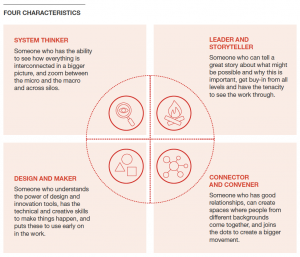
In their book, The Innovator’s DNA, the authors identified 5 parts to the secret sauce of innovative business success:

In thinking about how these skills work together, they found it useful to apply the metaphor of DNA. Associating is like the backbone structure of DNA’s double helix; four patterns of action (questioning, observing, experimenting, and networking) wind around this backbone, helping to cultivate new insights. And just as each person’s physical DNA is unique, each individual we studied had a unique innovator’s DNA for generating breakthrough business ideas.

Associating is about pattern recognition, connecting dots and seeing what others don’t see.

 These business school professors describe the creative mindset that they believe executives must embrace.

So, A stands for Attention, which is about noticing problems or opportunities that you and others previously missed by changing where and how you look.

L is for Levitation, which means stepping back to gain perspective and make sense of what you’ve seen to reflect on what you need to do differently.

I stands for Imagination, which involves connecting the dots in new and interesting ways to create original and useful ideas. Learn something new every day.

E is about Experimentation, which is about testing your promising idea and turning it into a workable solution that addresses a real need. Here is the value to experimentation in innovation.

Finally, N stands for Navigation, which is about finding ways to get your solution accepted without getting shot down in the process.

Here is another take on the theme

Innovation starts with mindset. Most scientists, engineers and health professionals don’t have it. However, there are ways to develop and change the gene expression by practicing epigenetic exercises. In case you missed that biology class, epigenetics literally means “above” or “on top of” genetics. It refers to external modifications to DNA that turn genes “on” or “off.” These modifications do not change the DNA sequence, but instead, they affect how cells “read” genes.

So, if you want to unlock your innerpreneurial genes, try :

  1. Associating, by realizing that sickcare USA cannot be fixed from inside.
  2. Associating by practicing open innovation
  3. Associating by thinking twice about thinking out of the box
  4. Questioning by being a problem seeker, not a problem solver
  5. Questioning why not instead of why and getting to why
  6. Observing by learning to see around corners. Avoid having to say “I didn’t see it coming” :

Look ahead of the curve – Track the trends and pay greater attention to the external environment. Beef up your information diet and endeavor to “get informed” rather than passively “be informed.”

Think ahead of the curve – Take the time to connect the dots, look for patterns of change, and emerging opportunities. Ask: where will this trend, technology or Driving Force of Change be in 10 years and what might I need to do in response?

Act ahead of the curve – Don’t wait for a trend to overwhelm you, take responsive action today. Disrupt yourself. “We must be willing to learn, unlearn and relearn to get ahead in this fast-paced digital world,” notes Jeff Thomson, president and CEO of the Institute of Management Accountants.

Here are 10 strategic trends that will drive data management. Did you see them coming?

  1. Observing by looking for the clues, not the roadmap
  2. Experimenting by using the business model canvas instead of writing a business plan
  3. Experimenting by applying your clinical or scientific mindset
  4. Networking by building robust internal and external networks
  5. Networking the right way when coldLinking
  6. Networking by learning how to meet up at a Meetup
  7. Networking by growing and engaging your alumni network

David Epstein explains in his book. Range, that specializing and practicing repeatedly works in environments that are “kind”. Tiger Woods excelled because he started young and engaged in a task and tried to do better. There were clearly defined rules and immediate outcomes that provided feedback. Doctors are also in this category and the educational establishment picks medical students who demonstrate narrow and deep thinking.

On the other hand, in “wicked” learning environments and domains, like entrepreneurship, the rules of the game are often unclear and incomplete, i.e. there are VUCA (volatile, uncertain, complex and ambiguous) conditions, there may or may not be repetitive patterns and they may not be obvious, and feedback i often delayed, inaccurate or both. Sometimes, you have to make up the rules as you go along and they are not necessarily transferable from one industry to the next because of the differences in industry ecosystems and cultures, like sickcare. That’s another reason why the clinical mindset is different than the entrepreneurial mindset and why it is so hard to find doctors with both.

Here are some more ways to sharpen your entrepreneurial skills.

Doctors have the potential to make great entrepreneurs because they have the DNA. No, they are not lousy business people. Downstream gene expression, though, is often a problem.

Image Credits: Pixabay, Design Council

Subscribe to Human-Centered Change & Innovation WeeklySign up here to get Human-Centered Change & Innovation Weekly delivered to your inbox every week.

What is Killing Capitalism in America?

What is Killing Capitalism in America?

GUEST POST from Greg Satell

There’s no doubt that capitalism in America is in bad shape. Higher market share concentration in industry is leading to higher profits for corporate giants, but also to higher prices and lower wages along with decreased innovation and productivity growth as well as a long-term decline in entrepreneurship.

You would think that the rise of progressive politicians like Bernie Sanders and Alexandria Ocasio-Cortez would be responsible for the decline in the power of capitalism and the demise of free markets. However, a new book by NYU finance professor Thomas Philippon, titled The Great Reversal, argues exactly the opposite.

In fact, he shows through meticulous research how capitalists themselves are killing capitalism. Through the charade of “pro-business” policies, industry leaders have been increasing regulation and limiting competition over the past 20 years. We need to right the ship and return to an embrace of free markets, entrepreneurship and innovation.

A Rise in Rent Seeking and Regulatory Capture

The goal of every business is to defy markets. Any firm at the mercy of supply and demand will find itself unable to make an economic profit—that is profit over and above its cost of capital. In other words, unless a firm can beat Adam’s Smith’s invisible hand, investors would essentially be better off putting their money in the bank.

That leaves entrepreneurs and managers with two viable strategies. The first is innovation. Firms can create new and better products that produce new value. The second, rent seeking, is associated with activities like lobbying and regulatory capture, which seeks to earn a profit without creating added value. In fact, rent seeking often makes industries less competitive.

There is abundant evidence that over the last 20 years, American firms have shifted from an innovation mindset to one that focuses more on rent seeking. First and foremost, has been the marked increase in lobbying expenditures, which since 1998 have more than doubled. Firms invest money for a reason, they expect a return.

It seems like they are getting their money’s worth. Corporate tax rates in the US have steadily decreased and are now among the lowest in the developed world. Occupational licensing, often the result of lobbying by trade associations, has increased fivefold since the 1950s. Innovative firms such as Tesla face legislation that seeks to protect incumbent businesses. These restrictions have coincided with a decrease in the establishment of new firms.

Perhaps most importantly, the increasingly lax regulatory environment has resulted in a boom in mergers and acquisitions, which led to increased market power among fewer firms and increased barriers to entry for new market entrants.

The Decline of Competitive Markets

To understand how markets have died in the US, you only have to look at the airline industry. After years of mergers just four airlines control roughly two thirds of the market. Yet even that understates the problem. On individual routes, there are often only one or two competitors. We’ve all experienced the results: increasingly higher prices and worse service.

Airlines are far from an isolated case. Consider the cable industry, where consolidation has resulted in broadband prices that are almost 50% higher than in Europe. For mobile phone service, Americans are being charged more than twice what our European friends are. Across a wide swath of industries, increasing concentration is leading to lower competition.

Yet the problem is more than just Americans getting ripped off by corporations who are able to charge us more and give us less. Fat and happy industries tend to underinvest and become less competitive over time, enjoying short-term profits but putting the economic well-being of the country in serious jeopardy.

Again, there is evidence that this is exactly what’s happening. There is abundant data showing that American corporations are underinvesting, even while they have been reporting strong profits to investors.

Entrepreneurial Headwinds

With protected markets and healthy profits, recent decades have been great for incumbent businesses, but not so great for those who want to start new ones. In fact, entrepreneurship in America recently hit a 40-year low and a recent report by the Brookings Institution found that business dynamism in general has been declining since the 80s.

It’s not hard to see why. A recent study found that about half of all college students struggle with food insecurity even as tuition has risen from an average of $15,160 in 1988 to $34,740 in 2018. Not surprisingly, student debt is exploding. It has nearly tripled in the last decade. In fact student debt has become so onerous that it now takes about 20 years to pay off four years for college and even more for those who pursue a graduate degree.

So even the bright young people who don’t starve are often condemned to decades of what is essentially indentured servitude. That’s no way to run an entrepreneurial economy. In fact, a study done by the Federal Reserve Bank of Philadelphia found that student debt has a measurable negative impact on new business creation.

Another obstacle for entrepreneurs is our healthcare system which represents a huge economic burden. Consider that in the US healthcare expenditures account for roughly 18% of GDP. Most OECD countries spend roughly half that. Anyone who wants to start a business first needs to figure out where their health insurance will come from. Is it any wonder that entrepreneurship is declining in America?

Pro-Business Policies Are Often Anti-Market

The truth is that no business leader wants a free market. In fact, most of our efforts go toward tipping the playing field in our favor. Often, we do that in positive ways, such as building a trusted brand or innovating new products. Yet the incentives, if not the motivations, for rent seeking behavior are exactly the same.

For far too long pro-business lobbies have run rampant over our democracy. The Supreme Court’s Citizens United decision, which led to essentially unrestricted political donations, has made a bad situation worse. Members of Congress now spend roughly 30 hours a week “dialing for dollars” rather than tending to the nation’s business.

And we pay the price in higher prices, stagnant wages and worse service. Where we should be investing in the future, creating better infrastructure, schools and a cleaner healthier environment, instead we are spending it on tax breaks for businesses, even though research has shown that these incentives don’t promote economic growth.

It’s time to claim capitalism back for ourselves and promote free markets, entrepreneurship, innovation and public well-being. That’s how you build competitive markets and a healthy society.

— Article courtesy of the Digital Tonto blog
— Image credit: Pexels

Subscribe to Human-Centered Change & Innovation WeeklySign up here to get Human-Centered Change & Innovation Weekly delivered to your inbox every week.

The 3 Student Entrepreneur Personas

The 3 Student Entrepreneur Personas

GUEST POST from Arlen Meyers, M.D.

Healthcare professional schools, healthcare innovation and entrepreneurship education, and training programs are growing. However, one question is should they be required or elective?

The medical student persona has changed in the past several years. Seeing around corners is always hard. However, to go to where the puck will be is a useful step when planning strategy and tactics to meet the needs of customers segments. Here are some ways to help build your parabolic mirror view of what’s next.

If you have a product or service and are planning not just for the now, but the next and new, then painting a picture of your customer archetype or persona is a key tool.

Do you know who your dream customer is?

There are three steps for understanding your dream customer:

  1. Consider the big issues they are facing – look wider and investigate global issues, such as hunger, environmental sustainability or education.
  2. Identify the industry trends that are affecting them – technology, big data, cyber security, etc.
  3. Describe your customer avatar/archetype/persona now – make a collage including their goals and values, demographics, their pain points and challenges.

Here are the various sickcare innovation and entrepreneurship student segments.

That said, the argument for mandatory is that all students should be exposed to core concepts, like design thinking, much like rotating through core clinical rotations, if nothing else, to get exposure to potential career choices. It might even make them better doctors and possibly help with burnout.

The argument for elective is that all students won’t have the same interests and it would be a waste of time and resources leading the laggards to water knowing you can’t make them drink.

One way to sort potential students is to understand the entrepreneurship education customer segments and their 3 core personas.

The Convinced and Confident know entrepreneurship should be part of their career pathway. In fact, many of them have had entrepreneurial life experiences prior to medical school.

The Curious but Clueless don’t know what they don’t know but are willing to learn more. Many have never held a job in their life. Some might be willing, but unable to develop an entrepreneurial mindset. Others discover their innerpreneur, and move on.

The Could Care Less are unwilling and unable to give it a try. Their attitude is , “I went to medical school to take care of patients, not take care of business”. What they don’t realize is that if you don’t take care of business, you have no business taking care of patients.

Here is what I learned teaching sickcare innovation and entrepreneurship to 1st year medical students.

Here is what I learned teaching sickcare innovation and entrepreneurship to a cohort of xMBA/HA students.

If you are part of creating or teaching these programs, you will eventually have to sort the wheat from the chaff. If you are a leaderpreneur, your job will depend on doing so.

Image Credit: Pixabay

Subscribe to Human-Centered Change & Innovation WeeklySign up here to get Human-Centered Change & Innovation Weekly delivered to your inbox every week.

17 Reasons Not to Be a Physician Entrepreneur

17 Reasons Not to Be a Physician Entrepreneur

GUEST POST from Arlen Meyers, M.D.

Judging by the headlines on their LinkedIn profile and their presence on social media, more and more MD/DOs are innovators, coaches, entrepreneurs and non-clinical consultants. Many are starting or working with biomedical and clinical startups, including a group of medical school graduates, who don’t do a residency or starting their own company.. But:

  • They are not trained to do so
  • Entrepreneurship in the US has been in a downward spiral in the US for the past 40 years.
  • Most startups will fail
  • Most startups don’t have money to pay people
  • There is an innovation bubble.
  • Job security is low
  • You have to deal with people who have entrepreneurial psychopathologies are simply untrustworthy.
  • Students loan burdens are rising
  • Many are not in it for the long run
  • There are unrealistic expectations on both the consultant/employee and employer side.
  • Most MD/MBA programs should be terminated
  • Innovation theater is pervasive.

What is physician entrepreneurship? Entrepreneurship is the pursuit of opportunity under volatile, uncertain, complex and ambibuous conditions (VUCA).. The goal of physician entrepreneurs, is to create user defined value through the deployment of innovation using a VAST business model to accomplish the quintuple aim. There are many ways to do that other than creating a company.

Here are some reasons why you should think twice about being a physician entrepreneur:

  1. You are not ready to innovate
  2. You do not have the courage to innovate
  3. You do not have the mindset to innovate
  4. You think that your clinical mindset and your medical degree and training is enough to succeed
  5. You are not in a financial position to take the risk
  6. You are doing it to get away from someone of some job instead of towards something that is a better fit
  7. You do not have a career transition strategy
  8. You or your family are not willing to pay the price of successive failure
  9. You are unwilling to come down off the mountain
  10. It’s not personal
  11. You are not ready to quit your day job
  12. If you decide to create a company, or work for one, making money for the company is not that important to you.
  13. You don’t have the knowledge, skills, abilities and competencies to add value to a business
  14. You don’t have entrepreneurial DNA
  15. You don’t have a big enough network or know how to manage it as part of building your personal brand
  16. You don’t know how to sell things
  17. You are a problem solver, not a problem seeker.

Think twice about telling someone to take your white coat and shove it. You will save yourself and lots of other people heartburn and other people’s time, effort and money.

Image Credit: Pixabay

Subscribe to Human-Centered Change & Innovation WeeklySign up here to get Human-Centered Change & Innovation Weekly delivered to your inbox every week.

Future of Global Physician Entrepreneurship

Future of Global Physician Entrepreneurship

GUEST POST from Arlen Meyers, M.D.

What’s your definition of entrepreneurship? Here’s the conventional one.

Mine is that physician entrepreneurship is the physician pursuit of opportunity under volatile, uncertain ,complex and ambiguous (VUCA) conditions with the goal of creating user defined value through the deployment of innovation using a VAST business model.

There are many myths about entrepreneurs. Here are some about physician entrepreneurs.

The life science innovation roadmap is risky, expensive and time consuming. To be successful, bioentrepreneurs whether healthcare professionals, scientists, engineers, investors or service providers, need to work as a team with their organizations to overcome the multiple hurdles taking their ideas to the market and patients. The process is neither linear nor predictable and outcomes are never guaranteed. In addition, because of global macroeconomic conditions, investors are unwilling to gamble on unproven technologies in a more hostile regulatory and legal environment. Consequently, commercializing bioscience discoveries is becoming more and more difficult. However, innovators still thrive. Where are some of these exciting business opportunities for bioentrepreneurs?

An initial understanding of the changes happening in international systems is the first step in identifying potential market opportunities. Here are but a few:

  1. Major and continual healthcare policy reforms
  2. Migration away from fee for service payment
  3. Consumerization, commoditization, internationalization, customization and digitization of care.
  4. Changing from a sick care system to a preventive and wellness system
  5. Defined benefit to defined contribution health insurance coverage
  6. Rightsizing the healthcare workforce
  7. Do it yourself medicine (DIY)
  8. Mobile and digical (physical and digital) care delivery models
  9. The growth of employed physicians
  10. Innovation management systems and increasing attention to health entrepreneurship.
  11. Increasing demand for high touch care
  12. Increasing discontinuity of cares changing quickly. All of these changes present biomedical and healthcare entrepreneurs opportunities to create new products, services, models and platforms. Patients are taking more control of funding and contributing to basic and clinical research using the internet and social media continues to play a bigger and bigger role in healthcare marketing and delivery.
  13. Demographic and economic changes and social mobility
  14. Closing the digital divide
  15. The impact of the 4th industrial revolution

Take opportunities in AIntrepreneurship, for example, in India, China, MENA and Africa

The drivers of physician international entrepreneurship include:

  1. Fear: Doctors are afraid they will suffer the professional, personal and economic consequences if they don’t adapt to change
  2. Greed: Physician incomes are threatened by innovation and new business models
  3. Necessity: Most doctors in industrialized countries have a relatively high standard of living. They did not bother themselves with innovation or entrepreneurship because they didn’t have to.
  4. The innovation imperative: The pace of change has accelerated and markets and employers are demanding more with less
  5. Generational demands: Medical students and residents are questioning their career decisions and demanding that schools provide them with the innovation and entrepreneurship education and training knowledge, skills and attitudes they need to thrive after graduation and throughout their careers
  6. The shifting doctor-patient relationship: Technology and DIY medicine is disintermediating doctors and fundamentally altering the doctor-patient relationship
  7. Resources: The internet, local ecosystems, acclerators and access to early stage capital has made it easier to start a business or develop an idea. People are connecting to the global economy.
  8. Portfolio careers: The sick care gig economy is growing and the future of work is changing. Fewer are committing to one lifetime career or job, including clinical medicine
  9. Opportunities: With change, comes opportunities and those few doctors with an entrepreneurial mindset are actively pursuing them. The opportunities in health entrepreneurship are sizable and physician entrepreneurs are increasing well positioned to capitalize on them.
  10. Culture: The culture of medicine is changing and encouraging creativity and innovation
  11. Politics: Access to quality care at an affordable price is in high demand as middle classes grow in developing countries. Not providing it leads to social upheaval and political instability.
  12. Budget deficits: The demand for care is almost infinite. However, the supply is limited. Consequently, policy makers and markets are looking for ways to improve outcomes at a lower cost through the deployment of innovation.
  13. Youth unemployment: Restless unemployed, educated citizens are demanding jobs and ways to use their talents.
  14. Economic development: Innovation and entrepreneurship is fuel that that feeds the engines of economic development in emerging economies. like Africa.
  15. Globalization: People, money and technology go where they are treated best, regardless of location.

The future of physician entrepreneurship is measured by progress in four domains: education, practice, research and impact. Unfortunately, each part of the physician innovation value chain is highly resistant to change and subject to multiple barriers to dissemination and implementation. We have made progress in all, but, the results are unevenly distributed.

The future of international physician entrepreneurship will be punctuated by:

  • The coherence of disparate technologies from diverse industries other than sickcare
  • Increasing transdisciplinary and international dependencies and collaboration
  • Educational reform in health professional, public health, bioengineering and computer science programs
  • Significant regulatory, legal, economic, ethical and societal issues
  • Generational, social and demographic variations in dissemination and implementation
  • An evolving global IT cybernervous system and interoperability
  • More difficult trust, privacy and security barriers
  • A high touch backlash against high tech
  • The rise of patient sickcare entrepreneurship
  • A slow migration to healthcare from sickcare

That said, this is the golden age of physician entrepreneurship, as reflected by the record number of applicants to US medical schools, the number of doctors pursuing non-clinical careers or side gigs, the ever increasing number of biomedical and clinical ecosystems, inclusion of digital health, business of medicine and entrepreneurship education and training in medical and graduate schools and the results and impact of entrepreneurs during the COVID pandemic.

Physician medical practice entrepreneurs, technopreneurs, intrapreneurs, social entrepreneurs, philanthropreneurs, edupreneurs and others are changing the world and the movement is spreading rapidly. Fortunately, despite efforts to the contrary, there is no vaccine to stop it.

Image credit: Unsplash

Subscribe to Human-Centered Change & Innovation WeeklySign up here to get Human-Centered Change & Innovation Weekly delivered to your inbox every week.

Taking Personal Responsibility – Creating the Line of Choice

Taking Personal Responsibility - Creating the Line of Choice

GUEST POST from Janet Sernack

In our last blog, we described how people’s personal power is diminished when they don’t take personal responsibility for the impact of their behaviors and actions and the results they cause. Where many people are feeling minimized and marginalized, anxious as a result of being isolated and lonely, worrying about losing their security and freedom, and dealing with the instability in their working environments.  Resulting in many people disengaging from the important conversations, job functions, key relationships, workplaces, and in some instances, even from society. Where managers and leaders lack the basic self-awareness and self-regulation skills to control the only controllable in uncertain and unstable times, is to choose how to respond, rather than react to it.

We have a unique moment in time to shift their defensiveness through being compassionate, creative, and courageous towards helping managers and leaders unfreeze and mobilize to exit our comfort zones.  To take intelligent actions catalyze and cause positive outcomes, that deliver real solutions to crises, complex situations, and difficult business problems.

Why do people avoid taking personal responsibility?

People typically avoid taking personal responsibility for reasons ranging from simple laziness, risk adversity, or a fear of failure, to feeling change fatigued, overwhelmed, or even victimized by the scale of a problem or a situation.

Resulting in a range of different automatic defensive, and a range of non-productive reactive responses including:

  • Avoidant behavior, where feel victimized and targeted, people passively “wriggle” and the buck gets passed onto others, and the real problem or issue does not get addressed or resolved.
  • Controlling behavior, where people ignore their role in causing or resolving the real problem or issue, and aggressively push others towards their mandate or solution, denying others any agency.
  • Argumentative behavior, where people play the binary “right-wrong” game, and self-righteously, triggered by their own values, oppose other people’s perspectives in order to be right and make the other person wrong.

Creating the line of choice

At Corporate Vision, we added a thick line of “choice” between “personal responsibility” and “blame, justification and denial” to intentionally create space for people to consider taking more emotionally hygienic options rather than:

  • Dumping their “emotional boats” inappropriately onto others, even those they may deeply care about,
  • Sinking into their habitual, and largely unconscious default patterns when facing complex problems, which results in the delivery of the same results they always have.
  • Not regulating their automatic reactive responses to challenging situations, and not creating the vital space to pause and reflect to think about what to do next.

To enable them to shift towards taking response-ability (an ability to respond) and introducing more useful options for responding in emotionally agile, considered, constructive, inclusive, and creative ways to the problem or the challenge.

Noticing that when we, or others we interact with, do slip below the line to notice whether to “camp” there for the long term or to simply choose to make the “visit” a short one!

Doing this demonstrates the self-awareness and self-regulation skills enabling people to take personal responsibility. Which initiates ownership and a willingness to be proactive, solutions, and achievement orientated – all of which are essential qualities for 21st century conscious leadership that result in innovative outcomes that result in success, growth, and sustainability.

Shifting your location – from “you, they and them” to “I, we and us”

Developing the foundations for transformational and conscious leadership involves:

  • Supporting people to acknowledge and accept that the problem or challenge is not “out there” and is within their locus of control or influence.
  • Shifting the “Maturity Continuum” to enable leaders and managers to be both independent and interdependent.
  • Creating a line of choice to think, act and do things differently.
  • Calling out people when they slip below the line.

It involves supporting people to let go of their expectation that “they” or someone else, from the outside, will fix it, and supporting them to adopt a stance where:

  • “I” or “we” can and are empowered to do it,
  • “I” or “we” are responsible for getting above the line,
  • “I” or “we” can choose a different way of being, thinking, and acting intelligently in this situation.

Developing conscious leadership

At any time, everyone is either above or below the line because it is elemental to the type of conscious leadership we all need to survive and thrive, in a world where people are seeking leaders, managers, and working environments that require interdependence.

To operate in the paradigm of “we” – we can do it; we can cooperate; we can combine our talents and abilities and create something greater together.

We cooperate together by creating the line of choice where we call out to ourselves and others when we slip below it, to get above the line as quickly as possible.

Where interdependent people and communities combine their efforts, and their self-awareness and self-regulation skills with the efforts of others to achieve their growth and greatest success by increasing:

  • Transparency and trust,
  • Achievement and accountability,
  • Diversity and inclusion,
  • Experimentation and collaboration.

All of these are founded on the core principle of taking personal responsibility, which is an especially crucial capability to develop self-awareness and self-regulation skills in the decade of both disruption and transformation.

Bravely calling out self and others

When we take responsibility for managing our own, “below the line” reactive responses, by habitually creating the line of choice, we can bravely call out ourselves and others when we slip below it.

Because when we don’t call ourselves and others we interact with, we are unconsciously colluding with their emotional boats, default patterns, and automatic reactive responses, which inhibit their ability to effect positive change.

When we safely awaken ourselves and others, we can get back above the line quickly and choose different ways of being, thinking, and acting intelligently in the situation.

Alternately, people aren’t taking personal responsibility, they cannot be accountable, they will fail in their jobs, and their teams, and fail to grow as individuals and as leaders.

In fact, developing a habitual practice of emotionally intelligent and conscious leadership by safely and bravely disrupting ourselves and our people, in the face of ongoing uncertainty, accelerating change, and continuous disruption.

This is the second in a series of three blogs on the theme of taking responsibility – going back to leadership basics.

Find out about our learning products and tools, including The Coach for Innovators, Leaders, and Teams Certified Program, a collaborative, intimate, and deeply personalized innovation coaching and learning program, supported by a global group of peers over 9-weeks, starting Tuesday, October 18, 2022. It is a blended and transformational change and learning program that will give you a deep understanding of the language, principles, and applications of an ecosystem focus,  human-centric approach, and emergent structure (Theory U) to innovation, and upskill people and teams and develop their future fitness, within your unique context.

Image credit: Unsplash

Subscribe to Human-Centered Change & Innovation WeeklySign up here to get Human-Centered Change & Innovation Weekly delivered to your inbox every week.

Taking Personal Responsibility – Back to Leadership Basics

Taking Personal Responsibility – Back to Leadership Basics

GUEST POST from Janet Sernack

I was first introduced to the principle of Taking Personal Responsibility when I attended a number of experiential workshops facilitated by Robert Kiyosaki who is now well known globally as the successful entrepreneurial author of the “Rich Dad Poor Dad” book series. At that time, in the late 1980s, the concept simply involved taking personal responsibility for your role in getting the results you get, in both challenging and problematic situations.

This principle has since evolved as the most crucial foundation for developing our emotionally intelligent, conscious, and transformational leadership capabilities. Largely through focusing on the development of self-awareness and self-regulation skillsets, which are especially important skills to cultivate in times of extreme uncertainty.

Blaming, Justifying, and Denying

Taking personal responsibility involves encouraging people to step up and out of blaming themselves or others, out of justifying their position or denying what is really going on to largely avoid the cognitive, emotional, and visceral results and consequences of their actions.

Which are essentially, largely unconscious defensive reactions to the problem or situation. So, it sounds quite simple, yet, even now, it’s still largely a countercultural principle, and a neurologically challenging one, because we are wired to survive (fight/flight/freeze) in the face of what we perceive as danger!

Especially when many of us are living in an oppositional blaming and shaming political environment, or within a passively or aggressively defensive organizational culture. Where a large section of the community, has been forced by the constraints of the pandemic, into fearing that their security and survival needs will not be met. Alternately, the great resignation and the nature of the virtual hybrid workplace have increased some people’s fears about even being able to get their jobs done!

All of this creates distorted thoughts and language that focus on “scarcity” where many people are fearing that they are not “enough” and do not have “enough” to deal with their current circumstances. Rather than leaning towards exploring and eliciting the possibilities and opportunities available in our abundant world.  As there is no clear playbook about how people can effectively and responsibly lead and manage in this unique 21st-century context, many people are floundering, languishing into largely emotionally overwhelmed states.

Where it is easier, and sometimes safer, to be a victim, blame and shame others for their helpless or powerless situation, or to justify and deny any need to change their perspective about it, never mind their role in causing their own anxious and unresourceful emotional states.

Back to Leadership Basics

Yet, it is more important than ever, for leaders and managers to help people:

  • Take ownership of their consequences and be responsible for the emotional, cognitive, and visceral results of their actions,
  • Authentically connect, empower, and enable people and communities to flourish,
  • Provide safe, transparent, trusted environments and interdependence where people can dare to think differently and potentially thrive.

This means that the range of crises, uncertainty, and disruptions we are experiencing now is forcing us to go back to basic 101 management and leadership principles.

According to McKinsey & Co in a recent article “A Leaders Guide – communicating with teams, stakeholders and communities during Covid 19” – “Crises come in different intensities. As a “landscape-scale” event, the coronavirus has created great uncertainty, elevated stress and anxiety, and prompted tunnel vision, in which people focus only on the present rather than toward the future. During such a crisis, when information is unavailable or inconsistent, and when people feel unsure about what they know (or anyone knows), behavioral science points to an increased human desire for transparency, guidance, and making sense out of what has happened”.

The Maturity Continuum – Shifting to I and We

The principle of taking personal responsibility has evolved and been enhanced significantly through the work of Steve Covey, in the “Seven Habits of Effective People” and provides the core foundations for transformational and conscious leadership through the “Maturity Continuum”:

  1. Dependence is the paradigm of you – you take care of me; you come through for me; you didn’t come through for me; I blame you for the results. Dependent and approval-seeking people need others to get what they want.
  2. Independence is the paradigm of I – I can do it; I am responsible; I am self-reliant; I can choose. Independent people get what they want through their own efforts.
  3. Interdependence is the paradigm of we – we can do it; we can cooperate; we can combine our talents and abilities and create something greater together. Interdependent people combine their efforts with the efforts of others to achieve their greatest success.

Putting the Maturity Continuum to Work

In the early 2000s I was an associate of Corporate Vision, Australia’s first culture change and transformation consultancy, now the globally successful Walking the Talk organisation, for fourteen years.

Where every culture, leadership, team development, or change program we designed and presented, introduced taking personal responsibility, as a fundamental, core learning principle. Aligning it with the principle of – For things to change first I must change, which deeply challenged and disrupted people’s belief systems, habitual mindsets, thinking styles, and ways of acting.

As a seasoned coach of twenty years, these two core principles seem to still profoundly challenge the majority of my coaching clients across the world, no matter how senior their role or position is, or how knowledgeable, skilled, and experienced they are!

Where many managers and leaders have failed to self-regulate, lack self-awareness, and have unconsciously slipped into feeling victimized, powerless, helpless, and in some instances, even hopeless about their futures where some are:

  • Feeling frozen, inert, paralyzed, overwhelmed, and immobilized in their abilities to affect any kind of positive change in both their work and home environments.
  • Unconsciously slipping into blaming and shaming others for their situations,
  • Justifying their inertia through a range of “reasonable reasons” and “elaborate stories” about how it’s “not their fault” or it’s not “up to them” to make any change.
  • Simply denying their current consequences, or the importance of needing to take positive actions, and make changes.
  • Unmotivated, lack any desire for control, or have the personal power to affect change in their situation.

Initiating Taking Personal Responsibility

To accept and share responsibility starts with being bravely willing to courageously connect with our whole selves and consciously stepping back to hit our internal pause button, retreat into silence and stillness, and compassionately ask:

  1. What happened?
  2. What can I/we learn from it?
  3. What can I/we then do to create it?

Taking personal responsibility becomes a compassionate, creative, and courageous exercise in continuous learning, self-awareness, and emotional self-regulation in ways that safely disrupt people’s defensiveness and awaken them to the possibility of being personally powerful in tough situations.

It is also the basis for taking intelligent actions catalyze and cause positive outcomes, that deliver real solutions to crises, complex situations, and difficult business problems.

This is the first in a series of three blogs on the theme of taking responsibility – going back to leadership basics.

Find out more about our work at ImagineNation™

Find out about our learning products and tools, including The Coach for Innovators, Leaders, and Teams Certified Program, a collaborative, intimate, and deeply personalized innovation coaching and learning program, supported by a global group of peers over 9-weeks, starting Tuesday, October 18, 2022. It is a blended and transformational change and learning program that will give you a deep understanding of the language, principles, and applications of an ecosystem focus,  human-centric approach, and emergent structure (Theory U) to innovation, and upskill people and teams and develop their future fitness, within your unique context. Find out more about our products and tools.

Image credit: Pixabay

Subscribe to Human-Centered Change & Innovation WeeklySign up here to get Human-Centered Change & Innovation Weekly delivered to your inbox every week.

What Makes Digital Health Clinical Trials Different?

What Makes Digital Health Clinical Trials Different?

GUEST POST from Arlen Meyers, M.D.

For digital health entrepreneurs, unless your intended use puts you in the FDA category of a medical device, you don’t need to show that your product is safe and effective, let alone cost-effective. In most cases, rather, you need to demonstrate to investors that it can quickly scale and make money and the sooner the better. Too bad. You would think that whether you have to or not that prudent sick care business practices would mean creating a product that does what you say it will do. That’s why only a handful of the hundreds of thousands of digital health apps are clinically valid.

However, most sick care digipreneurs avoid costly, risky trials because they are afraid of possible negative results that could be the death blow of their company, like many early stage biotech or device companies that wake up to see their valuations plummet due to a failed trial.

Digital health regulation is changing rapidly as the FDA tries to keep up with the pace of change and new products and services. On FDA regulation, the rule—for now, at least—is clear: Any device that is “intended for use in the diagnosis of disease of other conditions, or in the cure, mitigation, treatment, or prevention of disease” requires FDA approval, Curtis said. This goes for devices meant for humans and animals, as the FDA regulates both.

The emergence of digital therapeutics, the incorporation of AI and the adoption of remote sensing is challenging us how to demonstrate safety and efficacy, if not cost-efffectiveness.

For example, there’s been an explosion in the number and variety of digital apps purporting to address behavioral health issues, but a recent study published in Nature Digital Medicine casts doubts on their backing by legitimate scientific research. Based on the literature review conducted by the researchers, only 14 percent of apps described design or development that was based on real-world evidence.

One commentary to a recently published article on digital health trials noted that “The pipeline of digital health studies appears to be promising,” noted the researchers, but they also underscored that the small sample sizes in many studies “could limit their ability to yield a high level of evidence, demonstrate value, or motivate stakeholder adoption.”

Digital health technologies hold great promise to solve some of the biggest problems in our healthcare system, including achieving higher quality, lower cost, and greater access to care. a better doctor and patient experience and efficiencies in business processes. In the January 2019 issue of Health Affairs, reported that scant evidence exists demonstrating the clinical impact of twenty top-funded digital health companies. These companies tended not to study the clinical effectiveness of their products in terms of key healthcare metrics like patient outcomes, cost, and access to care.

They found 104 peer-reviewed published studies on the products or services of these companies. The majority of the studies were from three companies. Nine companies had no peer-reviewed publications. Only 28% of the studies targeted patients with high-burden, high-cost conditions or risk factors. Healthy volunteers were the most commonly studied population. Further, 15% of all studies assessed the product’s “clinical effectiveness” and only eight studies assessed clinical effectiveness in a high-cost, high-burden population. The eight clinical effectiveness studies measured impact in terms of patient outcomes, while no studies measured impact in terms of cost or access to care. There were no clinical effectiveness studies in heart disease, COPD, mental health conditions, hyperglycemia, or low back pain. Studies that did not assess clinical effectiveness may have intended to validate the product against a gold standard measurement or report feasibility of use.

This is of particular interest given the incredible amount of funding, interest, and hype in digital health. Although these companies were only a small portion of total digital health companies, they were a large portion of total private funding and had the most resources to demonstrate impact. Further, since “digital health” currently encompasses myriad technology types and approaches, these findings have broad implications.

From text messages to mobile apps, digital health devices are becoming increasingly important in clinical trials for their ability to streamline trials, lower site burden, and improve the patient experience. However, manufacturers must consider the safety, reliability, and convenience of these devices in order to effectively implement them into medical device trials. The digital components of these medical device trials must adhere to the same rigorous regulatory standards as the device itself, which can pose significant hurdles for some sponsors. Those hurdles include:

  • Usability and Accuracy. Sponsors must be able to determine that a device is providing the desired endpoint values in a trial. The metric should be accurate and presented in a usable format.
  • Safety. The manufacturer should be able to provide highly secure methods for transmitting data between the digital health device and the analysis site.
  • Convenience. The manufacturer should be able to provide logistical support to decrease the site and subject burden. They should also be able to provide full documentation of engineering verification for the devices.
  • Ease of Use. It is important to consider how the patient will interact with the device. It needs to be an appropriate size and weight, and it should allow the patient to move and behave in the same way he or she normally would.
  • Reliability. To maintain data continuity, the device should have a battery life sufficient to allow it to collect data for long periods of time with minimal glitches.

In another study of digital health apps for COVID 19, apps were evaluated using the Systems Wide Analysis of mobile health-related technologies (SWAT) tool in line with the NHS Digital Assessment Questionnaire and were given a score for each category (usability, functionality, ethical values, security and privacy, user-perceived value, design, and content) by two independent assessors.

A recent review concluded that “Safety of apps is an emerging public health issue. The available evidence shows that apps pose clinical risks to consumers. Involvement of consumers, regulators, and healthcare professionals in development and testing can improve quality. Additionally, mandatory reporting of safety concerns is needed to improve outcomes.”

The concept of a “digital clinical trial” involves leveraging digital technology to improve participant access, engagement, trial-related measurements, and/or interventions, enable concealed randomized intervention allocation, and has the potential to transform clinical trials and to lower their cost. In April 2019, the US National Institutes of Health (NIH) and the National Science Foundation (NSF) held a workshop bringing together experts in clinical trials, digital technology, and digital analytics to discuss strategies to implement the use of digital technologies in clinical trials while considering potential challenges. This position paper builds on this workshop to describe the current state of the art for digital clinical trials including (1) defining and outlining the composition and elements of digital trials; (2) describing recruitment and retention using digital technology; (3) outlining data collection elements including mobile health, wearable technologies, application programming interfaces (APIs), digital transmission of data, and consideration of regulatory oversight and guidance for data security, privacy, and remotely provided informed consent; (4) elucidating digital analytics and data science approaches leveraging artificial intelligence and machine learning algorithms; and (5) setting future priorities and strategies that should be addressed to successfully harness digital methods and the myriad benefits of such technologies for clinical research.

But, when it comes to human subject pilots and trials, there are several glaring differences of digital health trials compared to drug and device trials:

  1. Intellectual property concerns are usually lower in digital trials
  2. Digital trials need to be done faster because the markets change so quickly and the barriers to entry are lower
  3. IRBs set up to protect patients in drug and device trials are not comfortable with digital health trials
  4. We are still trying to define the ethics of data science
  5. Cybersafety is as important as patient safety
  6. Digital health clinical trial ecosystems are primitive compared to drug and device trial ecosystems although both have recruitment and completion challenges
  7. Data trials need mostly patient data, not the physical presence of patients
  8. HIPAA rules get in the way
  9. Lack of interoperability and getting data from non-traditional hospital based HIT systems skews the data and , consequently, the results
  10. Funding sources for conducting digital health trials are scarce. Investors don’t fund research projects. They fund product development and marketing. Here are some ideas on how to convince your CFO to pilot, test and integrate your IT solution.

The FDA has stated their position when it comes to the regulation of mobile medical apps.

Digital health has evolved because:

  1. Interoperability is improving
  2. Sick care is turning into health care
  3. The medical business model is changing
  4. Costs continue to spiral out of control
  5. The recognition by digipreneurs and investors that sick care is ripe for digitization
  6. Patient and provider frustration with a lousy experience
  7. Cheap mobile and internet technologies
  8. Regulatory, IP and reimbursement changes
  9. The breakdown of barriers to diffusion and implementation
  10. Digital heath ecosystems

An international consortium of medical experts has introduced the first official standards for clinical trials that involve artificial intelligence. The move comes at a time when hype around medical AI is at a peak, with inflated and unverified claims about the effectiveness of certain tools threatening to undermine people’s trust in AI overall. 

Collaboratively developed guidelines for the privacy, content, security, design and operability of mobile health (mHealth) apps have been released. Compliance with the guidelines can provide a level of assurance that an app delivers value to patients, physicians and other users.

The guidelines were developed by Xcertia, a nonprofit founded by the AMA and other major health and technology organizations. They address concerns that have hindered the use of mHealth apps. Fears that an app may expose personal health information, that its content is inaccurate or that its functionality is limited have slowed adoption of mHealth digital health tools.

These advances are permeating all aspects of clinical research but the recent acceleration of decentralised and hybrid clinical trials (DCTs) illustrates how far reaching digitalisation is becoming. Patient-centricity has been driving the decentralisation of clinical trials for some time but the rapid emergence of the COVID-19 pandemic required the pharmaceutical industry to pivot operations and accelerate its DCT programmes. This response required a corresponding ramp-up in mobile technology, data management and AI.

AI can provide insight into protocol complexity and contribute to protocol designs better adapted to DCTs, including the creation of virtual control arms. The intelligent use of data to include historical data as well as the data collected during a clinical trial can optimise the number and diversity of patients needed to reach the desired endpoints and give the patients who do participate a higher value experience.

Until and unless we address ongoing digital health clinical trial issues , sick care digipreneurs will have little or no incentive to conduct digital health clinical trials using precious startup funds. Instead, they will continue to sell snake oil and lots of folks will buy it. Maybe you should sleep on it.

Image Credit: Pixabay

Subscribe to Human-Centered Change & Innovation WeeklySign up here to get Human-Centered Change & Innovation Weekly delivered to your inbox every week.