Category Archives: Entrepreneurship

Intrapreneurship 2.0

Empowering Employees to Be Startup Founders

Intrapreneurship 2.0

GUEST POST from Art Inteligencia

The single biggest threat to a successful, established company is rarely an external competitor; it is the Internal Antibody. This is the organizational immune system that attacks new ideas, citing rigid budget cycles, resource constraints, and ‘the way we’ve always done things.’ This institutionalized resistance is why so many large organizations fail to capitalize on the single greatest source of innovative ideas: their own employees with an entrepreneurial mindset.

Intrapreneurship 1.0 was about suggestion boxes, pitch competitions, and “20% time” — nice initiatives, but often disconnected from the strategic core, quickly defunded, and politically vulnerable. Today, in the age of rapid, complex disruption, we need Intrapreneurship 2.0: a systemic approach that treats internal innovators not as suggestion-givers, but as legitimate Startup Founders with the mandate, resources, and protection needed to scale. This is how you unlock a continuous capability for internal disruption.

The Three Pillars of the Intrapreneurial Operating System

To transition from a siloed corporate structure to a decentralized innovation engine, an organization must build three pillars, transforming its internal operating system to mimic a venture capital firm.

  1. The Seed Funding and Protection Pillar:
    The greatest barrier for an intrapreneur is not generating the idea, but navigating bureaucracy. Intrapreneurship 2.0 requires a dedicated, independently governed Internal Venture Fund separate from the traditional P&L and capital expenditure budget. Most importantly, it requires a “safe harbor” — a leadership commitment to shield these projects from the corporate antibodies, protecting the innovator’s career, even if the project fails after a disciplined experiment.
  2. The Governance and Autonomy Pillar:
    Intrapreneurs must have high autonomy over their team, budget, and execution methodology. Their reporting structure should be to an impartial “Innovation Review Board” (IRB), modeled after a VC board of directors, not to their traditional department head. This allows them to move with startup speed, pivoting based on market data rather than political consensus or departmental inertia.
  3. The Talent and Rewarding Pillar:
    Innovation is a retention strategy. The rewards for successful intrapreneurial ventures must be commensurate with the risk taken. This goes beyond a one-time bonus; it must include genuine equity-like incentives (e.g., profit-sharing on the new business line), career advancement into a new business unit established around the innovation, or formal recognition as a Chief Intrapreneur. This elevates internal innovation from a side project to a viable, exciting career path.

Case Study 1: Transforming Legacy Hardware into a Service Model

Challenge: Stagnant Revenue in a Global Industrial Manufacturer

A multi-billion-dollar industrial equipment company faced declining revenue as its traditional hardware sales became commoditized. The future was in “Equipment-as-a-Service” (EaaS), but the legacy sales force and technology platforms lacked the agility to transition.

Intrapreneurship 2.0 Intervention:

The leadership team sponsored a small, cross-functional team to form a fully-funded internal startup, deliberately naming it to sound external: Synergy Tech Solutions. The team was explicitly tasked with building the EaaS platform and customer experience outside of the main P&L. They were given a two-year budget and full autonomy to choose their cloud infrastructure and agile pricing model. Crucially, a formal Executive Steering Committee acted as their impartial VC board, providing guidance but never vetoing their market experiments. When the new service generated its first $10M in Annual Recurring Revenue (ARR), the core intrapreneurial team was given the option to merge their unit back into the core with significant promotion and profit sharing, effectively transitioning from founders to general managers.

The Anti-Bureaucracy Toolkit

The single greatest tool for the intrapreneur is the ability to say no to corporate overhead. Intrapreneurship 2.0 recognizes that speed is the only currency that matters. Leaders must provide a practical “Anti-Bureaucracy Toolkit” that includes:

  • Pre-Approved Legal Templates: Quick contracts for small vendors or pilot customers, bypassing the standard six-week legal review.
  • Shadow IT Access: Permission to use modern, rapid prototyping software (often blocked by corporate IT and security policies) with agreed-upon guardrails.
  • Fast-Track Procurement: A simplified purchasing card with a higher limit for immediate needs, eliminating cumbersome Purchase Order (PO) processes.

Case Study 2: Solving Internal Talent Drain with an Innovation Marketplace

Challenge: Losing Top Talent to Startups and Internal Siloing

A large technology company suffered from talent drain as its best engineers left to join external startups. Simultaneously, internal talent was siloed and locked into non-strategic maintenance work.

Intrapreneurship 2.0 Intervention:

The company created an Internal Innovation Marketplace, essentially an internal job board for mission-driven, intrapreneurial projects. Any employee with an approved idea could post a “Team Request” for talent. The powerful shift was institutionalizing a formal Talent Mobility Policy that allowed employees to dedicate 100% of their time to an internal startup for a defined period (6-12 months) with a dedicated manager bypass for high-priority projects. This marketplace acted as a decentralized innovation incubator. It gave existing employees the startup experience they craved — ownership, speed, and mission — without having to leave the company. Within 18 months, the company successfully launched four new business lines, and top talent attrition was cut in half, proving that the best retention strategy is often internal disruption.

Conclusion: Scaling the Founder’s Mindset

Intrapreneurship 2.0 is the evolution of innovation culture. It’s not a program; it’s an organizational design decision. It is the recognition that the person closest to the customer pain or the technical opportunity is often a mid-level employee, not an executive.

“If you want to create a culture of continuous innovation, you must stop treating your best ideas as suggestions and start treating your best people as founders. Give them the key to the innovation vault and the mandate to drive change.” — Braden Kelley

The time for hesitant, half-measures is over. Embrace the principles of Intrapreneurship 2.0 to transform your workforce into a legion of nimble, motivated internal entrepreneurs, securing your future through your own capacity for disruption. Your first step: Audit your current innovation budget and separate 10% into a true, autonomous Internal Venture Fund.

For more on this topic I encourage to explore the writings of my friend Braden Kelley, a two-time best-selling author, including Charting Change and Stoking Your Innovation Bonfire, and the creator of the Human-Centered Change™ methodology. He helps organizations drive innovation, overcome resistance, and embed continuous change capabilities.

Extra Extra: Futurology is not fortune telling. Futurists use a scientific approach to create their deliverables, but a methodology and tools like those in FutureHacking™ can empower anyone to engage in futurology themselves.

Image credit: Pixabay

Subscribe to Human-Centered Change & Innovation WeeklySign up here to get Human-Centered Change & Innovation Weekly delivered to your inbox every week.

What the Current Round of Layoffs Tells Us

What the Current Round of Layoffs Tells Us

GUEST POST from Geoffrey A. Moore

When layoffs hit one or two companies, you might blame it on management, but when they hit market leader after market leader, you know something structural is afoot. The important thing then is to extract the signal from all the noise. Here is my cut at it.

First of all, it is the digital consumer sector that is under fire—not all of tech. But note that when you click on the Tech Section of any major publication, all you get is consumer tech news. B2C has eclipsed B2B in the public perception of what tech is all about. The downturn may not change this for consumers, but it sure will for investors. B2B tech actually has the opportunity to thrive in a downturn if it focuses on solving urgent problems that have short time to payback.

Second, the digital consumer model has such attractive economics when it is operating at scale that it led to a massive overvaluation of the sector per se. As with prior bubbles in tech, overvaluing is primarily due to extrapolating present growth as perpetual and ignoring global economic and geopolitical downside risks. Downturns simply call this out and demand a recalibration of valuation based on a more balanced mix of positive and negative factors.

Third, when enterprises have hyper-valued market caps, management does everything it can to sustain them, eventually to the point of counterproductive actions driven more by inertia than any sensible investment strategy. Given the peer pressures of investor relations, this is almost impossible to stop, so ultimately we end up where we are, in need of a correction that everyone saw coming, but no one acted upon. And to be fair, guessing when the correction will come is not a winning play. Better to accept the dynamics you have in front of you and then adapt as fast as you can once they change.

Net net, it is time to own the correction, put our houses in order, accept the deflation in stock price, refocus on our core mission, reset our performance metrics, and get back out on the field.

That’s what I think. What do you think?

Image Credit: Pixabay

Subscribe to Human-Centered Change & Innovation WeeklySign up here to get Human-Centered Change & Innovation Weekly delivered to your inbox every week.

Should a Bad Grade in Organic Chemistry be a Doctor Killer?

NYU Professor Fired for Giving Students Bad Grades

Should a Bad Grade in Organic Chemistry be a Doctor Killer?

GUEST POST from Arlen Meyers, M.D.

A recent article described the termination of an NYU organic chemistry professor in response to a student petition. When the professor pushed students’ grades down, noting the egregious misconduct, he said they protested that “they were not given grades that would allow them to get into medical school.” The reporter noted that, in short, this one unhappy chemistry class could be a case study of the pressures on higher education as it tries to handle its Gen-Z student body. Should universities ease pressure on students, many of whom are still coping with the pandemic’s effects on their mental health and schooling? How should universities respond to the increasing number of complaints by students against professors? Do students have too much power over contract faculty members, who do not have the protections of tenure?

And how hard should organic chemistry be anyway? One faculty member said, “Unless you appreciate these transformations at the molecular level, I don’t think you can be a good physician, and I don’t want you treating patients.”

I know the feeling. While organic chemistry is termed a “doctor killer” by premedical students, getting any grade less than an “A”, typically in science, technology, engineering, or math subjects, can doom your application. When I saw that B I got in physics in my junior year of college, I started thinking about Plan B. Then I really learned the gravity of the situation.

Despite the noise and groaning, medical school applications continue to rise, driven by many factors. However, the medical school education model dates back to the Flexner report issued in 1910. Many are trying to address the challenges of how to train the biomedical research and practice workforce to win the 4th industrial revolution, but progress has been slow. Here were the challenges facing medical schools in 2015. Things have not radically changed. Medical educators, particularly those in public medical schools, will continue to face several basic problems in the coming years. The “invisible enemy” has exacerbated many.

We should rethink how we recruit and accept medical students.

Here are some questions that should inform that transition:

1. Do doctors really need to be that “smart”? GPAs can vary significantly across different medical schools, so it pays to do your research before applying. The Association of American Medical Colleges (AAMC) reported an average GPA for medical school of 3.60 across all applicants for the 2021-2022 application cycle. For the same year, applicants had an average science GPA of 3.49 and an average non-science GPA of 3.74.

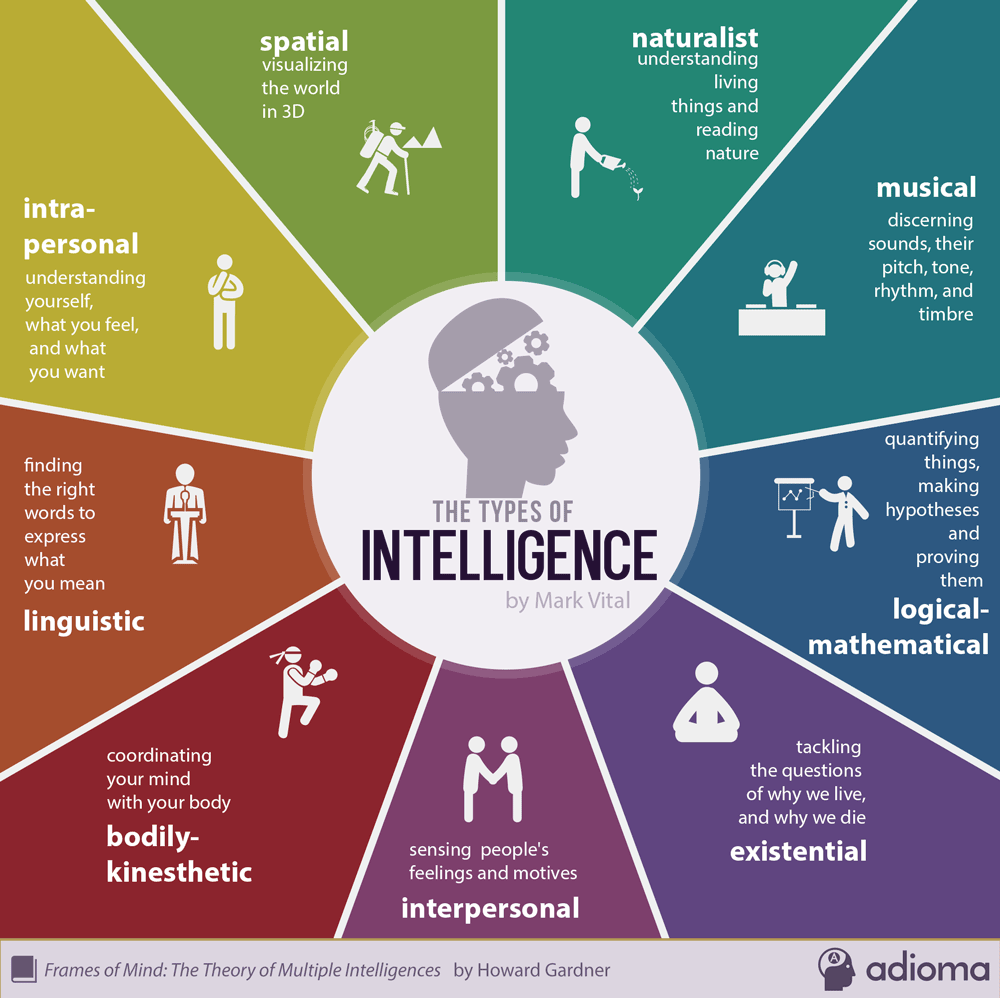
2. What kind of intelligence do doctors need to meet the needs of their stakeholders and communities?

Types of Intelligence by Mark Vital

3. Do patients really care what grade their doctor got in organic chemistry, or, for that matter, whether they graduated last in their class from medical school?

4. How has the pandemic and the persona of Gen Z changed medical education?

5. What do doctors and patients need to know to win the 4th industrial revolution? Organic chemistry?

6. How does the present system and its reliance on undergraduate STEM academic performance impact inequitable socioeconomic and demographic acceptance rates?

7. How should we transform premedical, medical, and post-graduate pedagogy? Examples are project-based learning and peer reviewed feedback.

8. Why do we insist that undergraduates declare a major?

9. Is the purpose of a medical school education solely to graduate students who have the knowledge, skills, abilities, and competencies to take care of patients, or should we provide them with exit ramps too?

10. How do we balance a medical culture of conformity with a culture of creativity?

11. What will be the future of medical work?

I’m lucky that I dodged the bullet. But I still have Plan B.

Image Credits: Adioma (Mark Vital), Pixabay

Subscribe to Human-Centered Change & Innovation WeeklySign up here to get Human-Centered Change & Innovation Weekly delivered to your inbox every week.
The Problems with ‘I’ll eat what you kill’ Arrangements​

The Problems with 'I'll eat what you kill' Arrangements​

GUEST POST from Arlen Meyers, M.D.

As more health professionals get involved with biomedical and clinical innovation and entrepreneurship, some are becoming advisors, mavens, salespeople, consultants and connectors. As such they are hired to help potential clients or employers meet benchmarks or the next critical success factor. In many instances, that means finding investors or helping to raise money for their early-stage company, newco or startup.

The success fee model also applies to sales and marketing, where the advisor is hired to source leads, leverage their relationships and networks and work around the gatekeepers of decision makers. They only get paid if contacts eventually buy the product.

Most say they do not have money to pay a retainer or recurrent cash payment so, instead they offer equity or some form of incentive or success fee model. Unfortunately, if you are considering such an “I eat what you kill” model, it comes with some problems:

  1. You might be running afoul of SEC regulations concerning raising private money if you are not a registered broker dealer
  2. If you are compensated with equity, the vesting schedule and amounts may not be mutually agreeable
  3. The company might not have the business development, sales operations, CRM or customer success infrastructure or people to follow up on leads and convert them to investors and track them back to you
  4. The client does not give you regularly scheduled updates on performance
  5. The client has unrealistic expectations about your ability to raise money from members of your network
  6. The client does not have a valid fundraising plan with the appropriate target investors
  7. After making an introduction or handoff, the result is no longer related to your efforts, much like a dating service
  8. There may be conflicts of interest for the advisor
  9. You may damage your reputation or personal brand if you are not transparent about your role
  10. You may not have the necessary education, skills, attitudes and competencies to raise money

11. The company or CEO you work for does not have the infrastructure, people or knowledge to close deals that you have sourced or people you have referred. Here are some reasons why and what they can do about getting a bigger ROI on their digital marketing tactics.

If you are asked to help a startup raise money, keep these issues in mind before agreeing to negotiated terms and conditions. Better to find your own meals than relying on eating what someone else kills.

Image Credit: Pixabay

Subscribe to Human-Centered Change & Innovation WeeklySign up here to get Human-Centered Change & Innovation Weekly delivered to your inbox every week.

Five Ways Discomfort Could Lead to Your Next Breakthrough

Five Ways Discomfort Could Lead to Your Next Breakthrough

GUEST POST from Shep Hyken

The disclaimer on investments is that “past performance is not an indicator of future results.” In other words, don’t get too comfortable with the past. All you have to do is look at the stock performance through last year (2021) compared to this year’s performance to know this is true.

Yet when it comes to people, the opposite is often true. Past performance is often an indicator of future results. Most people get comfortable and stay where they feel safe. But, what if you were willing to be uncomfortable? What if you were willing to go against the status quo, learn something new, regardless of difficulty, and take more risks? How would you feel living in a state of discomfort?

Sterling Hawkins, author of Hunting Discomfort: How to Get Breakthrough Results in Life and Business No Matter What, shares how successful people thrive on discomfort. These are the people whose past performance won’t always indicate what to expect in the future. They thrive on risk, stepping out of their comfort zones, and are fueled by something new and different.

In the book, Hawkins teaches his five-step process that produces results:

1. Expand Your Reality: Just because you were taught that something should be a certain way doesn’t mean it has to be that way. Some might call this “thinking outside the box.” It’s shattering paradigms and challenging the status quo.

This reminds me of the story that the late, great Zig Ziglar used to tell about a family dinner that included four generations. As the dinner was being prepared, a little girl asked her mom, “Why do you cut off the end of the roast before you cook it?” Mom said, “That’s the way your grandmother taught me to cook the roast.”

The little girl then went to her grandmother and asked, “Grandma, why do you cut the end of the roast off before you cook it?” Grandma said, “That’s the way your great-grandmother taught me to cook the roast.”

The little girl then went over to her great-grandmother and asked, “Great Grandma, why do you cut the end of the roast off before you cook it?” Great Grandma said, “A long time ago, the ovens weren’t as big as they are today. We had to cut the end off for the roast to fit into the oven.”

Just because we’ve always done something one way doesn’t mean we should keep doing it that way. Expanding your reality is just looking beyond the usual and ordinary.

2. Get a Tattoo: Hawkins believes you should commit so deeply to something that you’re willing to have it tattooed onto your body. You may disagree, but you do get the point. This is about commitment. The tattoo is a metaphor. You don’t really need to permanently put your feelings on your body, but consider this …

Scott Ginsberg is known as The Nametag Guy. While in college, he found that more people would talk to him if he wore a nametag. It made him approachable. He wrote a speech and several books about how to be more approachable. He committed to wearing a name tag every day. After five years, he made the ultimate commitment to his idea. He had the name tag tattooed onto his chest. That’s commitment!

3. Build a Street Gang: Surround yourself with people who will not only support you but also hold you accountable for your potential. According to Hawkins, having a trusted accountability partner can increase the likelihood of your success by up to 95%!

4. Flip It: The book covers a process for not just overcoming problems or obstacles, but instead using them to your advantage. To Flip It isn’t about seeing the reverse. It’s more about seeing the problem or challenge from a different perspective, starting with a complete understanding of the problem, obstacle, challenge or goal.

Hawkins quotes inventor Charles Kettering who once said, “A problem well stated is a problem half-solved.” Before you can solve a problem, you must first understand it. Clarity is paramount. You must be sure that the problem is not confused with the symptom. The problem becomes a challenge, and you must be clear about what impact solving that problem will mean to you or your organization. Most often, there is a larger purpose to the challenge. What’s the true end goal? For example, you may want to run a 10K race, but the larger vision is to be in good enough shape to run it.

5. Surrender: This isn’t about giving up. Instead, it’s about acceptance. Embrace inevitability and unpredictability. Be flexible and pivot when necessary. Sometimes you’ll find a breakthrough in the middle of the darkest problems. During the pandemic of the past two years, when faced with huge obstacles, some companies and brands not only survived but also found ways to thrive. The same is true for people.

We are in a world where change is happening at a faster pace than ever. We are faced with opportunities that are often disguised as problems and challenges. Hunting for the discomfort in your life and seizing it as the chance to have a breakthrough is what successful people do.

This article originally appeared on Forbes

Image Credit: Shep Hyken

Subscribe to Human-Centered Change & Innovation WeeklySign up here to get Human-Centered Change & Innovation Weekly delivered to your inbox every week.

Six Simple Growth Hacks for Startups

Six Simple Growth Hacks for Startups

GUEST POST from Soren Kaplan

Building a new business is tough. These strategies will help your startup succeed without a big investment.

As many of my readers know, I usually write about strategy, innovation, and leadership. But recently I’ve been asked a lot about how I helped establish Praxie.com as a destination website for hundreds of best practice digital tools and templates using growth hacking strategies. That’s because it’s incredibly hard to cut through the noise and establish a new brand, website presence, and business model in today’s increasingly cluttered competitive world.

So, here’s what we did to build a brand and drive tens of thousands of visitors to our website each month, all without any significant marketing investment. Anyone who’s focused, methodical, and willing take the time can do it.

1. Create Expert Content

Content is king. You can create it yourself or provide a platform that encourages users to contribute content as part of your business model. Content drives the brand and engages customers. Plus, Google and other search engines index and prioritize pages with solid content, so your specific webpages with noteworthy content will get a boost in SEO rankings and see increased traffic over time. Content comes in many forms: articles, blog posts, listicles, white papers, templates, and videos.

2. Syndicate Content to Grow Backlinks

Backlinks are the lifeblood of SEO. The more that reputable websites link back to your website (or sub-pages on your site), the higher you’ll rank will be in search engines. And the higher your rank, the more organic visitors you’ll receive. Whatever you’re doing or providing as part of your business, position yourself as the expert. Become a source of knowledge and insight for the press, get interviewed on podcasts, write articles for other sites, or do anything else that gets your name (and backlink) out there on the net. This strategy also builds your brand.

3. Become a Video Star

Content isn’t just about the written word. YouTube is now the number-two search engine in the world, right behind Google. Video content highlights your expertise. It gets shared. And it drives traffic to your website that can convert to newsletter signups, subscriptions, and product purchases. Be sure to include keywords in the titles and descriptions of your videos. Also include a plug at the end of the video for where the viewer can learn more (e.g., your website). Re-purpose your videos on social media and embed videos into your website to further reinforce your content expertise.

4. Build Email Relationships

While just about every email inbox is cluttered with spam these days, when someone gives you their email address, they’re essentially giving you permission (opting in) to connect with them. While the same principle applies to social media, email is still a unique, higher-touch, form of connection-making. As compared with social media, email is like pinning a flyer up on someone’s front door versus hoping they see one that has been posted on the corner telephone pole as they walk by. So, create easy ways for people to sign up for newsletters. Connect with others on LinkedIn, where most profiles include email addresses. Focus on building a list and providing high-value communications that use expert content to connect with your audience versus just trying to sell them your product. Many free or inexpensive tools can get you started like Mailchimp and Constant Contact.

5. Measure Everything Using Dashboards

The only way to gauge progress is to measure it. Use Google Analytics to track your most important metrics, like the number of visitors, landing pages, conversion rates for your newsletter and purchases, and more. Use free tools like those provided by Moz and Similarweb to benchmark yourself against the competition. Connect social media metrics and advertising into a dashboard that provides a holistic picture of the business. But don’t spend too much time cobbling together data. Keep it simple so you can get a quick read on how you’re doing while spending most of your time doing the things that grow your business.

6. Test, Retest, and Test Again

Google recently introduced a great tool called Optimize. Optimize allows you to quickly run tests on your website or individual web pages. By creating A/B tests that serve up different page headings, product prices, button colors, etc., you can gain insight into what works and what doesn’t based on what you’re trying to achieve. Track which market positioning statements result in the most newsletter signups or which price model delivers the greatest revenue. Running tests should be an ongoing activity which essentially means you’re taking the winning formula from your A/B test and then running another A/B test using that as the baseline. Connect your tests to your data analytics to track what works (and doesn’t) over time.

Most small startups don’t have big funding. That’s why growth hacks are so important. Use a little elbow grease, coupled with savvy customer engagement strategies, to build the basis for market traction. You might need to give it a little time to yield results, but that’s also what’s needed to create an enduring business.

Image Credit: Getty Images (acquired by Soren Kaplan)

This article was originally published on Inc.com and has been syndicated for this blog.

Subscribe to Human-Centered Change & Innovation WeeklySign up here to get Human-Centered Change & Innovation Weekly delivered to your inbox every week.

Driving the Next Era of Growth: Leveraging Data to Innovate

Driving the Next Era of Growth: Leveraging Data to Innovate

GUEST POST from Teresa Spangler

“50% of US executives and 39% of European executives said budget constraints were the primary hurdle in turning Big Data into a profitable business asset. Rounding out the top 5 challenges were data security concerns, integration challenges, lack of technical expertise, and proliferation of data silos.” (Capgemini)

“The biggest challenges companies face when implementing Big Data are budget constraints” (Capgemini)

Data analytics is continuously evolving as AI and machine learning applications get faster and smarter. The benefits that may be gained by analyzing massive data sets identifying in seconds patterns, signals, and relationships between nonaligned and aligned areas is intoxicating for savvy companies seeking to innovate. We recognize that companies can make faster and better decisions with strong analytic teams interpreting the findings. Look at what information-driven analytics has done already in cool improvements around us. There are so many good examples of this. Take transportation systems, the use of information analytics to course vehicles round congested areas in actual time is one simple example. Another, that literally may have saved the restaurant industry during the pandemic, is meals delivery services which depend on data collected to forecast demand on menu items, key order times, navigation around cities and streets not to mentioned detailed knowledge individual’s meal preferences. Data helped to optimize driving routes for more efficient delivers.

As data analytics becomes more sophisticated, we might anticipate revolutionary disruptions. However, economists report spending greater funds per capita on research, yet there is a significant decline in rate of successful innovation output. One motive for this could be that we are mistakenly focusing an excessive amount of on R&D instead of on innovation output which takes exceptional justification, funding, and resources. What does data analytics have to do with innovation? Everything! Research is crucial but just one part of a puzzle for developing new products and services. Today, innovation requires a sophistication in data analytics interpretation. There’s also a need for the curiosity, for human evaluation and a bit of intuition and intelligence. Companies need an astute cleverness like no other time in history and an ingenious approach to taking research and turning it into something new and worthwhile.  The process must be diligent, but it must also be agile. Too frequently, organizations get bogged down within the details of research and improvement, without truly questioning outside the boundaries of a container process. As a result, we have delays in the process often stalling out for lack of resource allocations. Even worse, companies not focusing on deep understanding of their data may misinterpret the analytics leaving more to chance that to solid pathways.

It’s worth saying, placing a greater emphasis on creativity and innovation is imperative vs. traditional research and improvement methods. As is deeply dissecting the data in your business. Where does all that data live? What are the hidden signals of the data, what types of converging uses (products/solutions) could you turn that data into?

We are in an era of new growth. Poll your customers! They are changing rapidly and challenged with keeping up with the speed of change but know they must. Where are they doubling down their efforts? How well do they understand their own data? What products and services are they developing, who are they collaborating with and a better question, why are you collaborating with them to innovate around their future needs? Are they investing in developing a more tech and analytic savvy organization? Better question, is your company?

As cliché as it is data is the new oil. Data will be producing its own data (it’s happening today) known as synthetic data. According to Gartner, “By 2025, synthetic data will reduce personal customer data collection, avoiding 70% of privacy violation sanctions.” This begs to question the emphasis companies are placing on developing the skills sets of the organization around analytics and data. And simply put, as oil has an expansive array of products and uses, we’re now in an era of inventing new energy sources to reduce even eliminate dependencies on oil. How might data fit into the effort to transform these dependencies? Data is essential for electric and autonomous vehicle development. Innovative companies are undertaking long tail efforts to drive the next generation of IoE (Internet of everything). Data is the fuel. Let’s explore four ways that organizations can use records analytics to power innovation and stay ahead of the competition.

  1. Design new products that think for themselves: understanding data from a variety of sources may trigger new types of needs and possible new products that could be developed. For example: understanding water needs for new smart and innovative cities being designed takes enormous planning. A partner to Plazabridge Group, designs digital twin environments for the water sector. Cites like Singapore, Houston, Dubai, must anticipate the growing needs for water and plan design and building based on anticipated needs but also, they must plan for worst- and best-case scenarios. They must plan for leakage, or contamination or other possible scenarios that may impact water supplies. Digital twinning these environments is the most cost-effective way to simulate new innovative methods. Leveraging as much data as possible as well as generating newly created synthetic data cities can plan more economically, they can execute faster and prepare for events that may occur. Understanding these models around water, suppliers may produce products that help cities build these digital environments. Not just for water systems but for any part of businesses today; manufacturing, facilities management, construction…
  2. Not all innovation has to be moonshot inventions. Simply identify unmet wishes of customers, consumers or the market creating engaging products and services. UBER goes from just carting us around leveraging an incredible inventive back in logistics infrastructure to launch UBER eats! Why not, the drivers are already out and about, the data collected indicates the most popular spots riders go to for coffee, lunch, dinner, drinks… UBER analysts have vast information on customer interests in turn turned from few riders during a pandemic to delivering food as an essential business during the pandemic. A pivot turns into a scalable source of augmented revenue as the shelter lifts and people get back to riding.
  3. So much opportunity exists to improve customer engagement: records analytics can assist businesses to better understand their clients and their wishes. This expertise can then be used to improve customer service and support future-proofing your business.
  4. Extend efficiency: data crunching algorithms, digital twinning, AR/VR simulations and access to remote experts will help corporations to streamline their operations, digitally transforming themselves for greater efficiency. This increased efficiency can lead to price savings, which can be reinvested in innovation.“90% of CEOs believe the digital economy will impact their industry, but less than 15% are executing on a digital strategy.”

— MIT Sloan and Capgemini. Seek out experts and industry mentors to help your organization make these shifts. We often fear what we cannot see, the beautiful thing about the digital world is you can build a virtual environment visualizing the unseen, and plan for all types of scenarios. A model we developed (not dependent on virtual or digital anything in fact) at Plazabridge Group is around the CIA’s The Phoenix Checklist. Strategies for Regenerating is our formula for going deep into understanding problems, future opportunities, needs, anticipating deeply the “What ifs” of every possible scenario.  When done leveraging data and analytics the possibilities become endless.

Original Article

Image credits: Pixabay

Subscribe to Human-Centered Change & Innovation WeeklySign up here to get Human-Centered Change & Innovation Weekly delivered to your inbox every week.

Land Mines of Intrapreneurship

Land Mines of Intrapreneurship

GUEST POST from Arlen Meyers, M.D.

Entrepreneurship is the pursuit of opportunity under VUCA (volatile, uncertain, complex and ambiguous) conditions with the goal of creating user/stakeholder defined value through the deployment of innovation using a VAST business model.

Intrapreneurs are employees trying to act like entrepreneurs within their organizations or non-profits. Here is the textbook of physician intrapreneurship.

Here is how to get your ideas noticed:

If you are trying to develop and deploy an AI solution in your sickcare organization, have you answered these questions?

Here are some reasons why your initiative will fail.

Do you have a VAST edupreneur business model?

Studies show that around 60 to 80% of new products fail. The same is probably true for programs and new educational offerings. It is difficult to determine the exact number of unreported cases, because who would like to talk about his innovation flops? The odds are against you.

So, what are the landmines to detect and avoid?

  1. You did not do your homework because you where unwilling, unable to do so ,or ,you do not have an entrepreneurial mindset and think because you already have 2 people who said they were interested that you could forge ahead.
  2. You did not have an exit strategy.
  3. You did not read the field manual.
  4. You don’t have the right sponsor with staying power.
  5. You tried to bite off more than your stakeholders are willing or able to chew.
  6. You are a bad rebel and chalk it up to “being authentic.”
  7. You do not have the right clinical champions on board.
  8. You have empty seats on the bus or the wrong people sitting in them.
  9. You are making these rookie intrapreneur mindset mistakes.
  10. You are not addressing the dysfunction of teams.
  11. You are not aligned with your organization’s strategy or vision.
  12. You are working in the wrong place with a toxic or fixed culture or for the wrong person.
  13. You don’t have an innovation strategy
  14. You don’t get sales and marketing
  15. You didn’t ask and answer these four questions before you started
  16.  If you’ve got a major change on the horizon, here’s how to avoid three of the most common saboteurs of company transformation. First, understand that significant change will be harder than you think it will be to achieve. Next, be realistic about your organization’s capacity to implement changes. Finally, make sure your organization understands how and why the transformation is important to you.
  17. You have not learned how to win at Survivor  1) Don’t expect friendship. Invest in relationships outside your company to meet your emotional needs; 2) Manage sideways. Your reputation with your peers becomes an important factor as you’re being considered for senior ranks; and 3) Hone your political skills.

If you get too far ahead of your troops, it is hard to tell the difference between you and the enemy. De-risk yourself. Be careful out there.

Image credit: Pixabay

Subscribe to Human-Centered Change & Innovation WeeklySign up here to get Human-Centered Change & Innovation Weekly delivered to your inbox every week.

Should you be a physician entrepreneur?

Should you be a physician entrepreneur?

GUEST POST from Arlen Meyers, M.D.

Not every doctor is cut out to be a physician entrepreneur. Are you?

It seems to me there is confusion about physician entrepreneurship, its definition and whether it represents a threat to professionalism. I’m not alone. Is a physician entrepreneur someone who starts and runs a business, or is it something more?

Entrepreneurship is the pursuit of opportunity under variable, uncertain, complex and ambiguous conditions. The goal of all entrepreneurs, including physician entrepreneurs, is to create user defined value through the deployment of innovation using a VAST business model to accomplish, in the case of medical professionals, the quintuple aim or, if applicable, shareholder value.

Here are three things to know about physician entrepreneurship.

Because of the many changes in the art and practice of medicine, many doctors have decided to get involved in non-clinical side gigs or, in some instances, leave medicine entirely. Here is a guide to non-clinical careers.

Doctors are practicing the art of entrepreneurship for many reasons:

  1. It helps patients
  2. It’s fun and challenging
  3. It gives them the ability to exercise creativity
  4. It creates alignment and engagement with organization
  5. The profit motive
  6. It creates meaning
  7. It satisfies psychic needs
  8. It provides another sources of external vaidation
  9. It’s a way to get outside of your comfort zone
  10. It allows you to take more risk
  11. The sick care business model is broken and they want to be part of the big fix after feeling ignored and disempowered
  12. They have to to surthrive

Whether you are a pre-med, a medical student, a resident, a fellow or a practicing clinician thinking about beginning the entrepreneurial journey, you should take some time to identify your persona.

You career strategy starts with answering:

  1. Where are you now?
  2. Where do you want to go?
  3. How do you want to get there?

Begin by matching yourself with one of the four core entrepreneurial personas as defined by their willingness and ability to practice entrepreneurship successfully.

The Convinced and Confident know entrepreneurship should be part of their career pathway. In fact, many of them have had entrepreneurial life experiences prior to medical school.

The Curious but Clueless don’t know what they don’t know but are willing to learn more. Many have never held a job in their life. Some might be willing, but unable to develop an entrepreneurial mindset. . Others discover their innerpreneur, and move on.

The I Couldn’t Care Less are unwilling and unable to give it a try. Their attitude is , “I went to medical school to take care of patients, not take care of business”. What they don’t realize is that if you don’t take care of business, you have no business taking care of patients.

The Conflicted have yet to discover their “innerpreneur”, but are conflicted about whether to step outside of their comfort zones and cut the chord.

Your persona will help lead you to the next steps:

  1. The Convinced and Confident: Continue to improve your knowledge, skills, abilities and competencies and learn from your experience.
  2. The Curious but Clueless: Start with education, building your networks and finding mentors
  3. The I Couldn’t Care Less: Pass on entrepreneurship until or unless you change your mind. Here are the many reasons why you should not be a physician entrepreneur.
  4. The Conflicted: Start with the 6Rs of physician career transitioning, beginning with reflection.

Where you are in the thought process will depend on who you are.

Moving from unawareness to awareness to intention to decision to action might show you someone in the mirror you would have never recognized in the past. Or, you might be looking at the same old person.

Image credit: Pixabay

Subscribe to Human-Centered Change & Innovation WeeklySign up here to get Human-Centered Change & Innovation Weekly delivered to your inbox every week.

Challenges of Artificial Intelligence Adoption, Dissemination and Implementation

Challenges of Artificial Intelligence Adoption, Dissemination and Implementation

GUEST POST from Arlen Meyers, M.D.

Dissemination and Implementation Science (DIS) is a growing research field that seeks to inform how evidence-based interventions can be successfully adopted, implemented, and maintained in health care delivery and community settings.

Here is what you should know about dissemination and implementation.

Sickcare artificial intelligence products and services have a unique set of barriers to dissemination and implementation.

Every sickcare AI entrepreneur will eventually be faced with the task of finding customers willing and able to buy and integrate the product into their facility. But, every potential customer or segment is not the same.

There are differences in:

  1. The governance structure
  2. The process for vetting and choosing a particular vendor or solution
  3. The makeup of the buying group and decision makers
  4. The process customers use to disseminate and implement the solution
  5. Whether or not they are willing to work with vendors on pilots
  6. The terms and conditions of contracts
  7. The business model of the organization when it comes to working with early-stage companies
  8. How stakeholders are educated and trained
  9. When and how which end users and stakeholders have input in the decision
  10. The length of the sales cycle
  11. The complexity of the decision-making process
  12. Whether the product is a point solution or platform
  13. Whether the product can be used throughout all parts of just a few of the sickcare delivery network
  14. A transactional approach v a partnership and future development one
  15. The service after the sale arrangement

Here is what Sales Navigator won’t tell you.

Here is why ColdLinking does not work.

When it comes to AI product marketing and sales, when you have seen one successful integration, you have seen one process to make it happen and the success of the dissemination and implentation that creates the promised results will vary from one place to the next.

Do your homework. One size does not fit all.

Image credit: Pixabay

Subscribe to Human-Centered Change & Innovation WeeklySign up here to get Human-Centered Change & Innovation Weekly delivered to your inbox every week.