Tag Archives: Mindset

Drive Innovation Through Mindset

Drive Innovation Through Mindset

GUEST POST from Stefan Lindegaard

Uncertainty is no longer a temporary disruption. It has become a permanent condition of our world. The pace of change continues to accelerate, and the rise of artificial intelligence is the clearest symbol of this shift. We know AI is important, yet we do not fully understand its role. That combination of fast change and unknowns creates both pressure and opportunity for leaders, teams, and their organizations.

The question is: how do we respond?

Most organizations instinctively turn to processes, structures, or tools. These are important, but they do not work without the right foundation. At the core of innovation lies something simpler and more powerful: mindset.

Why Mindset Matters More Than Ever

Innovation is often framed as a matter of ideas, technology, or investment. Those are critical inputs, but they only thrive when people and teams have the capabilities and, above all, the mindset to make them work.

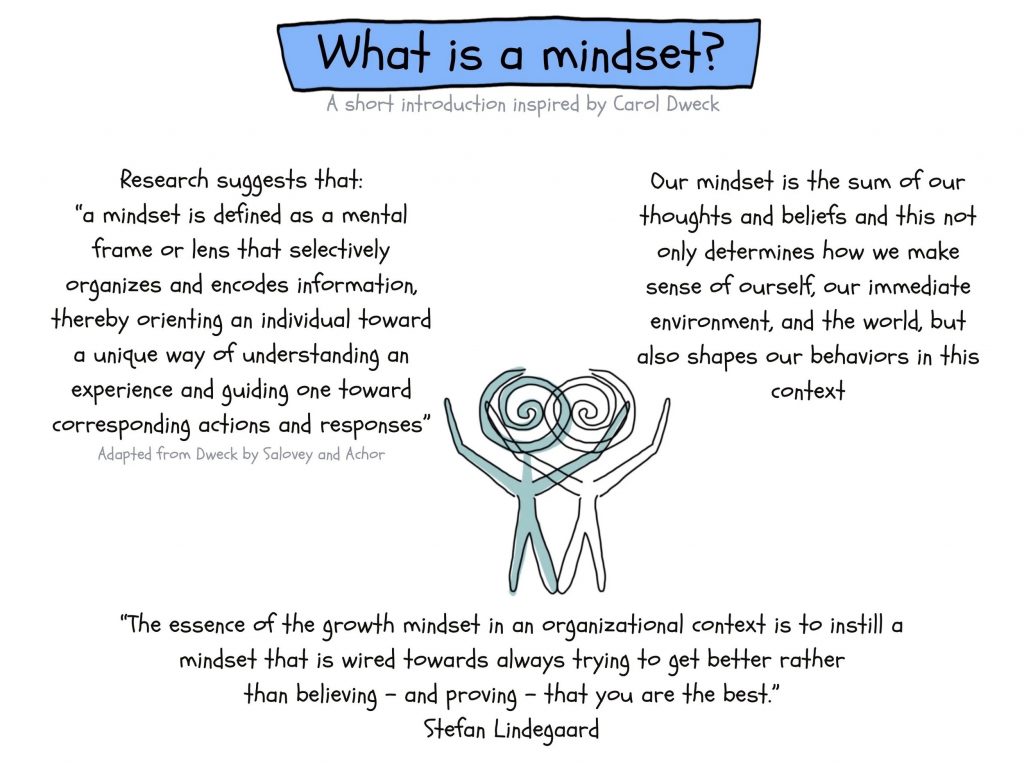
A mindset shapes how we think, behave, and collaborate. It influences whether we treat uncertainty as a threat or an opportunity, whether we see change as a disruption or as a chance to grow, and whether we treat AI as a danger or as a tool we can learn to use.

In other words: mindset drives behavior, and behavior drives innovation.

Three Realities Organizations Must Face

  1. Uncertainty is permanent: Leaders often wait for clarity before acting, but clarity rarely comes. The ability to navigate uncertainty rather than eliminate it is a defining skill of innovative organizations.
  2. The pace of change is accelerating: SMEs, startups and corporates all struggle with keeping up. Large companies may have more resources, but smaller organizations often have more agility. The common challenge is learning faster than the environment changes while implementing new ways of working effectively.
  3. AI is an unknown but critical factor: Most leaders agree AI will reshape their industry, but few know how. That is exactly the point: waiting until we know everything is too late. The right question is: what small steps can we take now to expand our comfort zone with AI?
Drive Innovation Through Mindset Infographic

How do we actually change a mindset?

This is one of the most common questions I get. It is easy to say that mindset matters, but how do we shift it?

The answer is to navigate the mindset zones:

  • Comfort zone: Where we feel safe but risk stagnation.
  • Fear zone: Where uncertainty triggers resistance, excuses, and hesitation.
  • Learning zone: Where we gain new skills and perspectives, often through discomfort.
  • Growth zone: Where we expand our capacity, create new value, and unlock innovation.

Innovation happens when we deliberately move between these zones and gradually expand the comfort zone which brings us closer to the learning and growth zones.

The mistake many leaders make is thinking this requires a radical leap. In reality, it is about small, repeated steps that turn fear into learning and learning into growth.

Over time, this becomes a habit for individuals and teams, and a foundation for building organizational capabilities for innovation.

Action Suggestions

  1. Pulse check your mindset: Ask yourself: How well do I handle uncertainty and change today? Rate yourself on a simple scale using the attached image with one of my exercises. This is your starting point.
  2. Apply the zones to AI: Where does AI sit for you? Comfort, fear, learning, or growth? Most people will find it partly in the fear zone. Instead of avoiding it, identify one small step – such as testing a tool, attending a workshop, or talking to a colleague – that moves it into learning.
  3. Turn reflection into action: For your team or organization, ask: What is one small action we can take in the next 30 days to strengthen our mindset in the context of innovation? Write it down and share it. The act of committing to a step creates momentum.
  4. Normalize uncertainty: Start conversations that treat uncertainty as a condition to navigate rather than a problem to solve. Build habits such as “uncertainty check-ins” in meetings where you share what is unknown and how you are adapting.
  5. Invest in learning capacity: Innovation is largely about] learning faster than competitors and faster than the pace of change and turning that learning into visible impact. Reward curiosity, reflection, and experimentation as much as results.

Closing Thoughts

Innovation is not a side project or a department. It is an organizational capability built on mindset. In a world of uncertainty, fast change, and emerging technologies like AI, this capability is no longer optional.

Expanding the comfort zone – again and again – is how leaders, teams, and organizations create the resilience to face today and the adaptability to seize tomorrow.

Small actions today, multiplied over time, become the foundation for long-term innovation.

Image Credit: Stefan Lindegaard, Gemini

Subscribe to Human-Centered Change & Innovation WeeklySign up here to get Human-Centered Change & Innovation Weekly delivered to your inbox every week.

How to Navigate the Future Without Getting Lost

How to Navigate the Future Without Getting Lost

GUEST POST from Robert B. Tucker

When the Trump administration abruptly withdrew from the World Health Organization in January, the Gates Foundation was thrown into turmoil. Years of investment in global health infrastructure — vaccines and medicines developed in Gates-funded labs—were suddenly jeopardized.

“We tried to anticipate what the new government might bring,” Gates Foundation director Mark Suzman told The New York Times. “But we did not foresee the scale of the change.”

They’re not alone. From boardrooms to bedrooms, individuals and institutions alike are struggling to stay upright in what can only be described as a sea of unrelenting change.

As a futurist, I observe that we are living through a rare historical inflection point. The old order is dissolving. New rules are being written. Established ways of operating — many of them holdovers from the Industrial and Information Ages — are quickly becoming obsolete. AI and automation are reshaping work. Climate disruptions are transforming industries and business models, such as insurance, upside down. Institutions are groaning under the stress of unrelenting pressure to adapt. Welcome to the Age of Acceleration.

To survive — and yes, to thrive in — the emerging future, we must develop new mindsets. We need new tools for navigating what I call the ‘MegaForces of Change’. These are not fads or short-term trends. They are seismic, global-scale shifts that have the potential to reshape our lives, careers, and communities – and indeed, the planet itself.

Just consider what we’re likely to witness over the next decade:

  • The merging of humans and machines, with AI and neuro-technology blurring the boundaries of consciousness and agency.
  • A 40 percent surge in climate-related disasters — wildfires, floods, droughts, and hurricanes — driven by a planet under duress.
  • Geopolitical unrest, economic volatility, and the possible unraveling of democratic norms.
  • Entire industries vanishing while others spring up overnight, powered by breakthroughs in quantum computing, bioengineering, and synthetic media.
  • Radical transformation in how we live, work, learn, and govern ourselves—at speeds and scales never before seen in human history.

The coming decade will confront us with unprecedented challenges—and open the door to equally unprecedented opportunities. We’ll face existential threats to our health, security, and planetary future. And yet, at the same time, we will unlock scientific, technological, and social breakthroughs with the potential to solve our most urgent problems.

But we won’t get there by clinging to yesterday’s mindsets.

To flourish in this new landscape, we must develop future preparedness—the capacity to see change coming, make sense of it, and act before we’re forced to. This isn’t just about forecasting. It’s about cultivating what I call an Anticipatory Mindset: the ability to scan the horizon, decode signals amidst the noise, and prepare for what’s next while others are still reacting to what just happened.

It’s time to embrace the mindsets that will allow us to navigate the turbulence but also ride the waves, and not be capsized by them. The future isn’t something that happens to us. It’s something we help create.

This article originally appeared in Forbes

Image credit: Pixabay

Subscribe to Human-Centered Change & Innovation WeeklySign up here to get Human-Centered Change & Innovation Weekly delivered to your inbox every week.

The Changemaker Mindset

The Changemaker Mindset

GUEST POST from Greg Satell

Every time I speak to a group of executives, they complain that their organizations desperately need to change, but that the bosses are hostile to it. And every time I speak to a group of leaders, they say that change is their highest priority, but can’t seem to align the rank-and-file behind transformational initiatives.

The truth is that everybody loves their own brand of change, it’s other people’s ideas and initiatives that they don’t like. We all have things that we want to be different. But the status quo has inertia on its side and never yields its power gracefully. To want change is one thing, but to change ourselves, well… that’s another story.

What I’ve found in both my research and my practice is that people who bring about transformational, even historic, change start out no differently than anyone else. In fact, early versions of them are often decidedly unimpressive. The difference between them and everyone else is that somewhere along the way they learn to adopt a changemaker mindset.

A Problem They Couldn’t Look Away From

As a young man, Mohandis Gandhi wasn’t the type of person anyone would notice. Impulsive and undisciplined, he was also so shy as a young lawyer that he could hardly bring himself to speak in open court. With his law career failing, he accepted an offer to represent the cousin of a wealthy muslim merchant in South Africa.

Upon his arrival, Gandhi was subjected to humiliation on a train and it changed him. His sense of dignity offended, he decided to fight back. He found his voice, built the almost superhuman discipline he became famous for and successfully campaigned for the rights of Indians in South Africa. He returned to India 21 years later as the “Mahatma,” or “holy man.”

The truth is that revolutions don’t begin with a slogan, they begin with a cause. Martin Luther King Jr., as eloquent as he was, didn’t start with words. It was his personal experiences with racism that helped him find his words. It was his devotion to the cause that gave those words meaning, not the other way around.

Steve Jobs didn’t look for ideas, he looked for products that sucked. Computers sucked. Music players sucked. Mobile phones sucked. His passion was to make them “insanely great.” Every breakthrough product or invention, a laser printer, a quantum computer or even a life-saving cure like cancer immunotherapy, always starts out with a problem someone couldn’t look away from.

Identifying A Keystone Change

Every change effort, if it is to be successful, needs to identify a Keystone Change to bridge the gap between the initial grievance about the world as it is and the vision for how the world could be. You can’t get there in a single step. This is a lesson that even a legendary changemaker like Gandhi had to learn the hard way.

In 1919, five years after his return to India, Gandhi called for a nationwide series of strikes and boycotts in response to the Rowlatt Acts, which restricted Indian rights. These protests were successful at first, but soon spun wildly out of control and eventually led to the massacre at Amritsar, in which British soldiers left hundreds dead and more than a thousand wounded.

A decade later, when the Indian National Congress asked Gandhi to design a campaign of civil disobedience in support of independence, he proceeded more cautiously. Rather than rashly calling for national action, he set out with 70 or 80 of his closest disciples to protest unjust salt laws. Their nonviolent discipline inspired the nation and the world.

Today, the Salt March is known as Gandhi’s greatest triumph. It was the first time that the British was forced to negotiate with the Indians and, because it demonstrated that the Raj could be defied, helped lead to Indian independence in 1947. Yet without that earlier failure, which Gandhi would call his Himalayan miscalculation, it would not have been possible.

Gandhi is, of course, a legendary historical figure. But other, more pedestrian, changemakers learned the same thing. A lean manufacturing transformation at Wyeth Pharmaceutical started with a single change with a single team, but quickly spread to 17,000 employees. A healthcare revolution began with just six quality practices. When the CIO of Experian set out to move his organization to the cloud, he began with internal API’s and just a few teams.

To make change real, you need to get out of the business of selling an idea and into the business of selling a success. You do that with a Keystone Change.

Empowering A Movement

We revere legendary change leaders like Gandhi, Martin Luther King Jr, Nelson Mandela and others not just for their ideas, but because of how they empowered others to take ownership of their cause. Those who followed them did so not in their names, but for themselves. The struggle was collective, not one of subservience.

That’s what makes building a movement different from traditional change models they often teach in business schools. A snazzy internal communication program and a training regimen may help an organization adopt new software or gear up to support a new product line, but it won’t change how people fundamentally think or act.

Movement leaders focus on empowerment, not persuasion. Gandhi didn’t need to convince his countrymen about the daily humiliations and injustices suffered under the British Raj. King did not have to explain to black Americans that racism was wrong. Mandela did not have to persuade black South Africans about the evils of Apartheid. They empowered them to make a difference. That’s what makes movements so compelling and effective.

Changemakers of all kinds can do the same. At Experian, the CIO set up an “API Center of Excellence” to help product managers who wanted to build out cloud-based features. To power the quality movement in healthcare, activists created “change kits” to guide hospital staff who were on board and wanted to bring their colleagues along. Change can only succeed if you equip those who believe in it to drive it forward.

Building Empathy, Even For Your Enemies

People who believe in change want to believe that if everyone understood it, they’d want it to happen. That’s why “change management” gurus focus on communication and persuasion. They think that if you explain your idea for change in just the right way, others will see the light. For many change consultants, transformation is primarily a messaging problem.

Yet anyone who has ever been married or had kids knows how hard it can be to convince even a single person of something. Persuading hundreds, if not thousands—or even an entire society—that they should drop what they’re thinking and doing to adopt your idea and help drive it forward is a tall order. The simple truth is that no one is really that charming.

Make no mistake. If your idea is important, if it has real potential to affect how people think and how they act, there will always be those who will hate it and they will work to undermine it in ways that are dishonest, underhanded and deceptive. That’s just a simple fact of life that every potential changemaker needs to learn to internalize and accept.

Yet adopting a changemaker mindset means that you understand that change is always built on common ground and that you need to build empathy, even for your most ardent adversaries, because that is how you identify shared values and move things forward. It is by listening to your opposition and internalizing its logic that you can learn how to discredit it, or even better, inspire those hostile to change to discredit themselves.

That is the changemaker mindset: To understand that change is hard, even unlikely, but to remain clear-eyed, hard-nosed and opportunity focused. To know that through shared values and shared purpose, radical, transformational change is not only possible, but ultimately inevitable.

— Article courtesy of the Digital Tonto blog
— Image credits: Unsplash

Subscribe to Human-Centered Change & Innovation WeeklySign up here to join 17,000+ leaders getting Human-Centered Change & Innovation Weekly delivered to their inbox every week.

Are You Time Affluent?

Are You Time Affluent?

GUEST POST from Mike Shipulski

When you have more than enough money, you have money affluence. With it, you can buy what you want, eat what you want, drive what you want, and travel where you want. But to have this unallocated money, or discretionary money, you probably need to spend a heck of a lot of time working. Climbing the ladder takes a lot of time. And once you’re at the top, you probably have a lot of commitments that pull hard on your calendar. Odds are, if you have unallocated or discretionary money (money affluence), you likely don’t have unallocated or discretionary time (time affluence).

If you have money affluence, but no time affluence, what do you really have?

To understand how much unallocated time you have, here’s an example day. You get up at 6:00 am, leave for work at 6:30, commute for an hour to arrive at work at 7:30, eat at your desk, leave work at 5:00 pm, arrive home at 6:00 and go to bed at 10:00. If this is your day, you have four hours of unallocated time per workday. I know this doesn’t include the realities of cleaning, cooking, yard work, paying bills, running errands, kids’ sporting events, and a number of other commitments, but makes the upcoming math work well and doesn’t demand we acknowledge we have little to no unallocated time.

In the contrived day described above, you’re getting enough sleep but not much else – no exercise, no time to relax during lunch. And, it’s likely you’re trading sleep for the time needed to accomplish the practical realities of daily life. But, let’s just say you have four hours of unallocated time. If you have four hours of unallocated time per day, do you think you have time affluence?

If you reduce your commute to thirty minutes, you have an extra hour of unallocated time (five). That doesn’t sound much, but you increased your unallocated time by 25%. And if you add thirty minutes of unallocated time for lunch and thirty minutes of exercise during the workday, you add another hour of unallocated time, increasing your unallocated time to six hours, or a 50% increase over the four hours of the baseline. But, to be clear, when you assign an activity of your choosing to unallocated time, it’s still unallocated time, but it may be helpful to think of it as discretionary time.

And if you tell your boss that for your first hour of work (from 7:30 to 8:30 am) there will be no meetings, no email, no phone calls, no Skype, no Slack, you increase your unallocated time by another hour, bringing your total up to seven hours, or a 75% increase in unallocated time.

As it stands, the world will take your unallocated time unless you protect it. And you won’t free up more unallocated time unless you grab your calendar and proactively squeeze out some time for yourself.

If you have money affluence, but no time affluence, you don’t have all that much.

Image credits: Pixabay

Subscribe to Human-Centered Change & Innovation WeeklySign up here to join 17,000+ leaders getting Human-Centered Change & Innovation Weekly delivered to their inbox every week.

Are You Testing Your Intuitions?

Are You Testing Your Intuitions?

GUEST POST from Dennis Stauffer

Do you trust your intuitions? When you have a hunch, do you go with it or hold back? There’s been a long-running debate about which is the better strategy.

Some have claimed that top executives are at their best when they “go with their gut” or “follow their instincts.” They can give examples of when that’s turned out well for them. But what we don’t know is how often other intuitions may have turned out badly.

Trusting your intuitions can sometimes keep you safe. Some research has found that firefighters are well-served by their intuitions, because it helps them avoid danger. Women who are uneasy walking alone at night are advised to follow their intuitions.

That makes sense when you’re crossing a dark parking lot or at the scene of a fire. Being cautious when there might be no threat is better than being careless when there might be one. But that doesn’t mean those intuitions are accurate.

Innovators also have intuitions—and need to. Hunches about the value of an idea, or a sense of how customers will react. For an innovator, asking whether you should trust your intuitions is the wrong question. What needs to be asked instead is: How can I test my intuitions? What can I do to find out whether those feelings are reliable?

That’s one reasons innovators have a bias for action. Because acting on their ideas—in ways that will test them—is how they find out whether those ideas will work. That’s not only a more prudent approach than just following hunches; it’s excellent practice at evaluating the merits of your ideas. So over time, you become better at forming those hunches. Because you know how well it worked in the past, and maybe where you might have biases.

If you want to enhance your intuitions—and your innovativeness—don’t trust them or distrust them.

Test them.

View this post on video here if you prefer:

Image Credit: misterinnovation.com

Subscribe to Human-Centered Change & Innovation WeeklySign up here to get Human-Centered Change & Innovation Weekly delivered to your inbox every week.

The Emotions of an Innovator

The Emotions of an Innovator

GUEST POST from Dennis Stauffer

Your emotional state has a lot to do with how innovative you are, especially when those emotions are negative. How willing are you to act in the face of uncertainty and take those risks? How comfortable are you with new ideas and interpretations that may conflict with those you have? Can you overcome your biases to gain a clear-eyed understanding of the challenges you face? The fears and prejudices we all have can undermine our ability to find solutions.

Take a few moments to recall some of the negative emotions you’ve experienced in your life.

Things like:

  • Frustration
  • Disappointment
  • Jealously
  • Resentment
  • Annoyance
  • Anger     …and that’s just the short list.

One thing they all have in common is that they make you feel bad. They undermine your happiness. They can also hamper your ability to innovate.

Now ask yourself: What prompted those emotions? I suspect you think of something that happened or that someone did that upset you, but there are deeper reasons for these emotions. They form when something isn’t what you expect or hope for. Someone isn’t doing what you want, or that you think they should. You think something needs to be corrected. You already have some outcome you’d prefer, an expectation that isn’t being met.

That’s your mindset—your beliefs about how things should be—beliefs that generate those expectations. You may think someone is doing something wrong. Perhaps they’re being mean or rude. But that means you have an idea in your head of what’s right—how you think they should behave. Or, something may not have turned out the way you hoped. Maybe you didn’t get the promotion you wanted. But that means you think you should have been given something you didn’t receive.

Change those expectations and your emotional response changes. What’s happening in your head has just as much or more impact on the emotions you feel, as whatever is happening around you—and that’s empowering. When you blame your emotions on what others do, you hand them control over your emotional state. They determine how you feel.

When you realize that your beliefs and expectations—your mindset—primes you to feel those emotions, you gain control over how you feel. Instead of anger, you can substitute curiosity about why someone would behave that way. Instead of annoyance at someone’s missteps, you can choose to be amused. Instead of disappointment, you can shift to resolve to learn from your setbacks. Instead of embarrassment, you can choose to feel humility. Instead of feeling the urge to punish someone, you can choose to feel compassion and understanding.

External events may not have changed. Those are things you don’t control. What changes is your mindset—something you can control. When you realize that you create your own emotions and take steps to create fewer negative ones, you increase your own happiness—regardless of what life throws at you. Skilled innovators have a mindset that minimizes their negative emotions. Because instead of focusing on what needs to be corrected—to restore the status quo—they focus on what can be improved. That enhances their capacity to enhance. Enhance a product or service, enhance their community and the larger world, and enhance their own lives.

Here is a video of this post if you prefer:

Image Credit: Pixabay

Subscribe to Human-Centered Change & Innovation WeeklySign up here to get Human-Centered Change & Innovation Weekly delivered to your inbox every week.
What’s Your Mindset?

What's Your Mindset?

GUEST POST from Dennis Stauffer

Your mindset has a powerful influence on how you think and behave—including how innovative you are. You have the power to shift your mindset to become more innovative. However, to do that effectively you need to know what your mindset is now, and it’s mostly subconscious.

I’m going to show you how to measure your mindset, by surfacing some of those hidden assumptions. To do this, you’ll need some way to jot down four numbers and make a simple calculation.

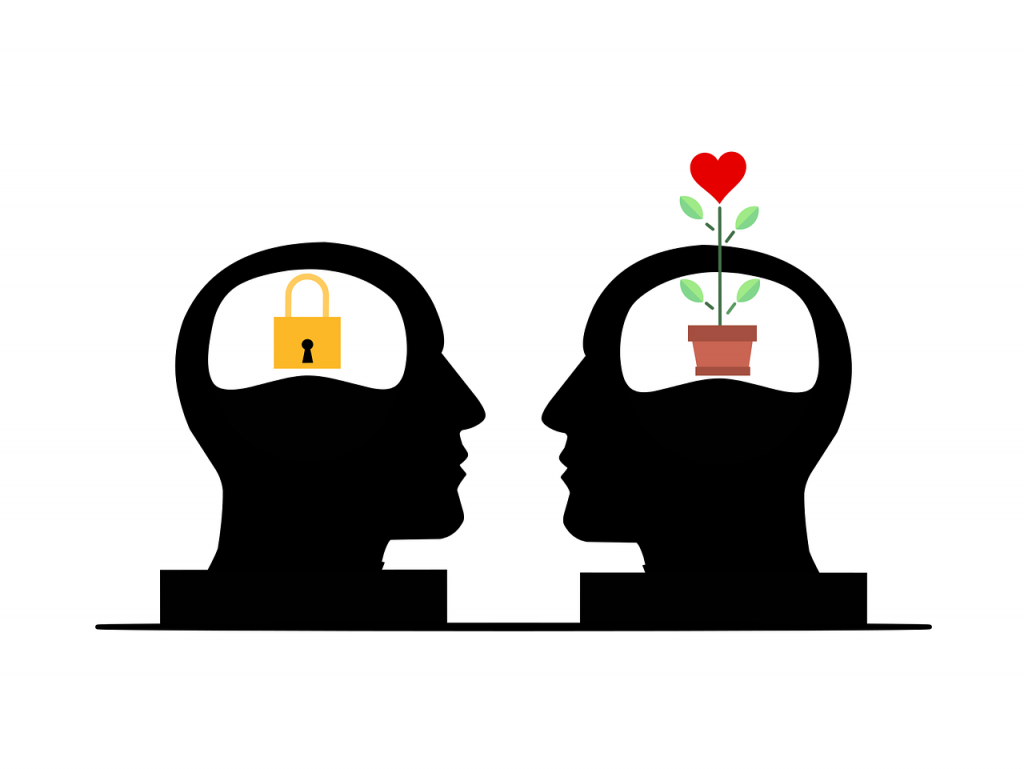
You may have heard about the work of Stanford University Professor Carol Dweck and her distinction between a growth and a fixed mindset, which is what I’m having you measure. It’s what Dweck calls your Theory of Intelligence.

For each of four statements, I’d like you to write down a number between 1 and 6. One indicating that you strongly disagree with that statement, and six that you strongly agree, with increments in-between.

  1. Strongly Disagree
  2. Disagree
  3. Slightly Disagree
  4. Slightly Agree
  5. Agree
  6. Strongly Agree

Ready?

  1. __ The first statement is: Our intelligence is something about each of us that we can’t change very much. Give that number between 1 and 6, depending on how strongly you agree or disagree with that statement.
  2. __ The next statement is: We can learn new things but we can’t really change how intelligent we are. Give that a number from one to six.
  3. __ The next statement is: No matter how much intelligence a person has, they can always change it quite a bit. Give that a number 1-6
  4. __ And the final statement is: I can always change how intelligent I am. Give that a number.

To score your results, add your first and second answers together to give yourself an “A” value, and add your third and fourth answers together to give yourself a “B” value.

If your A value is the larger of the two, that indicates that you favor what Dweck calls a fixed mindset—that you believe intelligence is largely fixed and unchanging.

If your B value is larger, you favor a growth mindset—defining intelligence as something you can change and grow.

The larger the difference between those two numbers, the stronger your preference.

In her research, Dweck has found this simple distinction has all sorts of ripple effects especially on how students perform. Students with a fixed mindset, may be quite smart, but they’re afraid to challenge themselves and try new things because if that reveals any intellectual deficits, they don’t believe they can do anything about it. Students with a growth mindset believe they can get smarter by working at it, giving them a strong motivation to work hard, learn and overcome setbacks. They tend to become the high performers.

You may never have given much thought to your personal theory of intelligence, but you almost certainly have one and it’s one of many hidden assumptions that make up your mindset. Dweck has found that those hidden assumptions impact your beliefs, behavior, motivation, competitiveness and ethics. Other researchers have found that mindset even impacts how your body functions.

Your mindset also impacts how innovative you are, and that can be measured too. Instead of the growth vs. fixed distinction, measuring your innovativeness involves a range of other tradeoffs. Things that impact how imaginative you are, how willing you are to take risks, how you make observations and how open you are to new insights and ideas.

A growth mindset makes you more willing to accept and push through failure, being ready to learn and discover. An Innovator Mindset is about how you go about doing that. How you can systematically find solutions and make improvements—including improving yourself. Being able to adapt and learn and make discoveries has many benefits in all aspects of your personal and professional life.

If you’d like to measure your innovativeness, across twelve dimensions, and receive detailed personalized feedback on how to improve it, go to Innovator Mindset where you’ll find links to take the Innovator Mindset assessment, or enroll in Mindset Trek elearning—which includes the assessment—to get in depth mindset training.

Here is a video version of this post:

Image Credit: Pixabay

Subscribe to Human-Centered Change & Innovation WeeklySign up here to get Human-Centered Change & Innovation Weekly delivered to your inbox every week.

Mastering Your Innovation Mindset

Mastering Your Innovation Mindset

GUEST POST from Dennis Stauffer

Mindset is quite a remarkable thing. It can be an invisible hindrance, or a tremendous asset when you know how to manage it. Mindset is your often subconscious beliefs about how the world works. It’s your mental frame, your personal paradigm. It has a huge impact on your ability to innovate and drive effective change.

It may have never occurred to you that when you observe something, what you see and experience is just as much in your head as it is out there. Your brain just gives you its best interpretation—using some innate processing, and based on those often-unconscious assumptions and beliefs that make up your mindset. To a great degree, you shape—or your brain shapes—what you experience.

It can be a little disturbing to realize that your brain is deciding for you what you believe is real—and not warning you about it. For a vivid illustration of just how much influence your mindset can have over you, watch this brief video.

But here’s the good news: you can learn to consciously shape your mindset, to reshape how your brain subconsciously processes what you experience.

As you discover your own unconscious assumptions, you reveal choices you didn’t know you had. You can then shape a mindset that gives you greater control, self-awareness and personal effectiveness. You can become more creative, imaginative, resourceful, open and observant–more innovative.

Innovation tools and change management strategies are important, but your mindset determines how effectively you apply those tools and strategies. It’s your default way of thinking and engaging. The key to your effectiveness is getting in front of your mindset. You need to be intentional about the beliefs you want to have, so you’re able to control your mindset, rather than letting it control you.

That’s how you become someone who creates exceptional value in your life and makes the world better—by innovating yourself.

Image Credit: Unsplash

Subscribe to Human-Centered Change & Innovation WeeklySign up here to get Human-Centered Change & Innovation Weekly delivered to your inbox every week.
Reverse Innovation

Reverse Innovation

GUEST POST from Mike Shipulski

Innovation is a result of accumulated knowledge acquired over decades that is made manifest with mundane means.

It can be helpful to understand the required mindset by working things backward.

If you want innovation, solve new problems.

If you want to solve new problems, wall off design space responsible for success.

Block the team from reusing the same old recipe for success so there will be discomfort.

Without discomfort, there can be no innovation. Seek it out.

Prohibit solutions that live in familiar design space to demand the product or service do new things.

When the product or service must do new things, new lines of customer goodness must be created.

To create new lines of customer goodness, you’ve got to look at new facets of the customers’ lives.

To look at new facets of the customers’ lives, look more broadly at the jobs customers want to do.

You can ask customers what new jobs they want to do, but they won’t be able to tell you.

When you want to understand which new jobs will change the game, watch the work.

When you watch the work, watch more than the work. Watch everything.

When you come back to the office with new jobs that will disrupt the industry, you will be misunderstood for at least a year.

Misunderstanding is a precursor to innovation. Seek it out.

Misunderstanding blocks support for new work, but at least you’ll know you’re on to something.

When you get no support for the new work, do it anyway.

Rinse and repeat, as needed.

Image credit: Pixabay

Subscribe to Human-Centered Change & Innovation WeeklySign up here to join 17,000+ leaders getting Human-Centered Change & Innovation Weekly delivered to their inbox every week.

How to Cultivate a Design Thinking Mindset

How to Cultivate a Design Thinking Mindset

GUEST POST from Chateau G Pato

In today’s fast-paced world, innovation and adaptability are key to success. Design Thinking offers a structured yet flexible approach for organizations to tackle complex problems and design creative solutions. By cultivating a design thinking mindset, teams can efficiently address challenges in a human-centered way. Here’s how you can develop this crucial mindset in your organization.

Understanding Design Thinking

Design Thinking is an iterative process at its core, focused on understanding the user, challenging assumptions, and redefining problems. It involves five phases: Empathize, Define, Ideate, Prototype, and Test. This approach not only fosters innovation but also empowers teams to create products or solutions that genuinely resonate with users.

Core Principles of a Design Thinking Mindset

Before diving into practical steps, let’s explore some key principles of a Design Thinking mindset:

  • Empathy: Understanding the needs and experiences of users.
  • Collaboration: Bringing together diverse perspectives.
  • Experimentation: Encouraging a culture of prototyping and testing.
  • User-Centered Focus: Placing the user at the center of design efforts.
  • Iterative Learning: Constantly iterating based on feedback and research.

Steps to Cultivate a Design Thinking Mindset

1. Foster Empathy

Empathy is the foundation of Design Thinking. To cultivate it, encourage team members to engage directly with customers. Observational research, interviews, and feedback sessions can help them view the world through the users’ eyes. This understanding leads to deeper insights and more user-focused solutions.

2. Embrace a Collaborative Environment

Diverse teams bring various perspectives that spark creativity and innovation. Encourage collaboration by breaking down silos within the organization. Create spaces where interdisciplinary teams can work together seamlessly, fostering a culture of open communication and shared objectives.

3. Encourage Experimentation

Creating a safe space for experimentation is vital. Allow your team to take risks and learn from failures without fear. Prototyping and testing ideas early in the process enables teams to learn from each iteration quickly, improving overall solution quality.

4. Keep the User at the Core

A user-centered focus is essential. Regularly involving users in the design process ensures that the final product aligns with their needs and preferences. Methods such as user personas and journey mapping can keep your team focused on delivering value to the user.

5. Iterate Based on Feedback

Design Thinking is an ongoing process. Encourage continuous learning by iterating based on real user feedback. This not only refines solutions but also ensures they remain relevant and effective over time.

Case Studies

Case Study 1: Airbnb

Airbnb is a prime example of how design thinking can transform a business. With the company struggling in its early days, the founders decided to deeply understand their users. By renting out their space on Airbnb, they walked in their users’ shoes. This firsthand experience and empathy led them to create features that improved the user experience significantly, such as professional photography services for listings. This approach played a significant role in Airbnb’s growth and success.

Case Study 2: IBM

IBM adopted Design Thinking to reinvigorate its innovation efforts across multiple departments. By training their staff in Design Thinking methods and principles, IBM emphasized empathy, collaboration, and iteration. This cultural shift encouraged teams to focus on user outcomes and iterate on solutions rapidly. As a result, IBM increased its speed to market and improved customer satisfaction substantially, exemplifying the transformative power of a design thinking mindset.

Conclusion

Embracing a Design Thinking mindset offers a competitive advantage in today’s challenging business landscape. By focusing on empathy, collaboration, experimentation, a user-centered approach, and continual iteration, organizations can drive meaningful innovation and gain deeper insights into their users’ needs. Start by nurturing these principles within your teams, and watch as new, creative solutions come to life.

Implementing Design Thinking isn’t a one-off project; it’s a continuous journey that requires commitment and openness. However, the rewards in creativity, innovation, and user satisfaction make it a powerful strategy for any forward-thinking organization.

Extra Extra: Because innovation is all about change, Braden Kelley’s human-centered change methodology and tools are the best way to plan and execute the changes necessary to support your innovation and transformation efforts — all while literally getting everyone all on the same page for change. Find out more about the methodology and tools, including the book Charting Change by following the link. Be sure and download the TEN FREE TOOLS while you’re here.

Image credit: Pexels

Subscribe to Human-Centered Change & Innovation WeeklySign up here to get Human-Centered Change & Innovation Weekly delivered to your inbox every week.