Tag Archives: community

Quick and Easy Way to Help Grow This Community

Quick and Easy Way to Help Grow This Community

As many of you know, this Human-Centered Change & Innovation community is a labor of love to make innovation, transformation and experience insights accessible for the greater good.

Consistent with this mission, recently I have been making a lot of contributions to LinkedIn’s new collaborative article feature, focusing on the Customer Experience topic area.

It would be a HUGE help if you could go to any or all of these ten (10) URL’s and add a reaction to any or all of my contributions to the article:

  1. How can you develop a customer-first mindset?
  2. What’s the secret to building loyal customers in a competitive market?
  3. How do you share your customer journey maps effectively?
  4. How do you share best practices with other customer experience leaders?
  5. How can you make your customer experience stand out?
  6. How do customer personas impact your CX strategy?
  7. How can you balance customer experience with efficiency?
  8. How do you identify and leverage your unique value proposition with customer journey mapping?
  9. What motivates your customer experience team?
  10. How do ensure a seamless customer experience across departments?

First, thank you in advance for adding your reactions/upvotes to my LinkedIn collaborative article contributions.

How will this help grow the community you might ask?

Well, it will assist me in achieving Top Voice status on LinkedIn, which will then help each of my article shares for the community’s contributing authors reach more people – thus growing the community of people reading and contributing articles on the human-centered change, innovation, design and experience topics we all enjoy!

Keep innovating!

Top 10 Human-Centered Change & Innovation Articles of March 2023

Top 10 Human-Centered Change & Innovation Articles of March 2023Drum roll please…

At the beginning of each month, we will profile the ten articles from the previous month that generated the most traffic to Human-Centered Change & Innovation. Did your favorite make the cut?

But enough delay, here are March’s ten most popular innovation posts:

  1. Taking Care of Yourself is Not Impossible — by Mike Shipulski
  2. Rise of the Prompt Engineer — by Art Inteligencia
  3. A Guide to Effective Brainstorming — by Diana Porumboiu
  4. What Disruptive Innovation Really Is — by Geoffrey A. Moore
  5. The 6 Building Blocks of Great Teams — by David Burkus
  6. Take Charge of Your Mind to Reclaim Your Potential — by Janet Sernack
  7. Ten Reasons You Must Deliver Amazing Customer Experiences — by Shep Hyken
  8. Deciding You Have Enough Opens Up New Frontiers — by Mike Shipulski
  9. The AI Apocalypse is Here – 3 Reasons You Should Celebrate! — by Robyn Bolton
  10. Artificial Intelligence is Forcing Us to Answer Some Very Human Questions — by Greg Satell

BONUS – Here are five more strong articles published in February that continue to resonate with people:

If you’re not familiar with Human-Centered Change & Innovation, we publish 4-7 new articles every week built around innovation and transformation insights from our roster of contributing authors and ad hoc submissions from community members. Get the articles right in your Facebook, Twitter or Linkedin feeds too!

Have something to contribute?

Human-Centered Change & Innovation is open to contributions from any and all innovation and transformation professionals out there (practitioners, professors, researchers, consultants, authors, etc.) who have valuable human-centered change and innovation insights to share with everyone for the greater good. If you’d like to contribute, please contact me.

P.S. Here are our Top 40 Innovation Bloggers lists from the last three years:

Subscribe to Human-Centered Change & Innovation WeeklySign up here to get Human-Centered Change & Innovation Weekly delivered to your inbox every week.

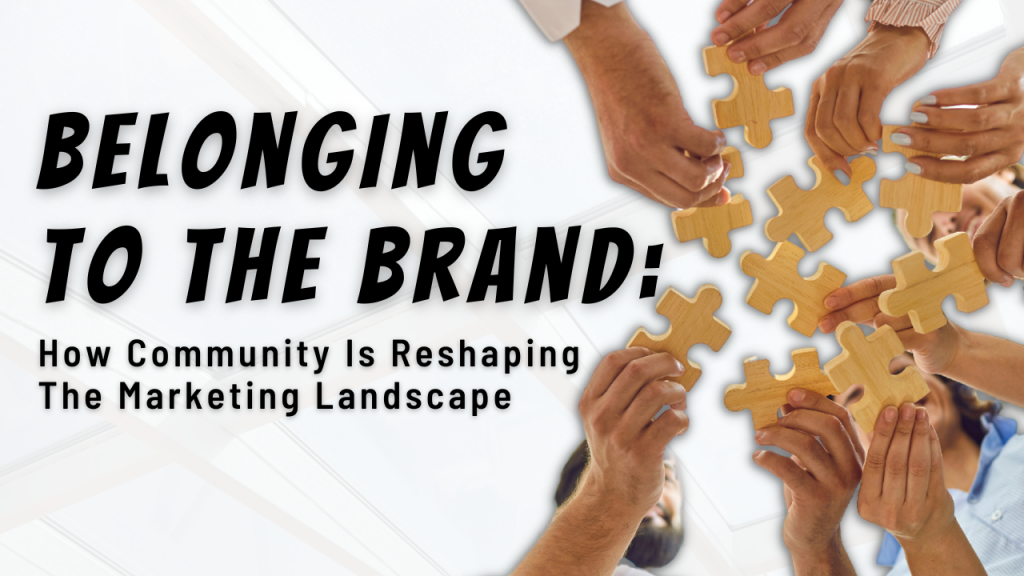
How Community is Reshaping the Marketing Landscape

How Community is Reshaping the Marketing Landscape

GUEST POST from Shep Hyken

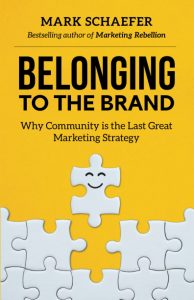
According to bestselling author and marketing expert Mark Schaefer, the next—and last—great marketing strategy is community. When I read his latest book, Belonging to the Brand, I was intrigued by the subtitle, Why Community is the Last Great Marketing Strategy. Is it really the last? Having read Schaefer’s past books, I put faith in his words, but it’s up to you to decide.

First, let’s look at the definition of community, as it applies to marketing and business. The community includes customers aligned with the company, its brand promise and what it stands for. Schaefer writes in his introduction, “Helping a person belong to something represents the ultimate marketing achievement. If a customer opts into an engaging, supportive and relevant brand community, we no longer need to lure them into our orbit with ads and SEO, right? What we used to consider marketing is essentially over.”

Schaefer is saying that once the customer is part of the community, the need to engage with intrusive advertising and marketing messages is no longer needed. You will want to find meaningful ways to connect with customers other than traditional advertising and marketing programs, and these can include positive customer experiences, quality dependable products and services, the contribution the brand or company makes to making the world a better place and more.

In my book, The Amazement Revolution, one of the seven strategies covered was community. Harley Davidson was failing and rallied its community of customers to make suggestions that would get them to come back and buy its motorcycles. The company listened, the customers noticed and Harley regained its popularity and iconic status.

Lush, a cosmetics retailer with more than 950 stores worldwide, chose to make its products cruelty-free, which means no animals are harmed in manufacturing the products. They knew this would appeal to a segment of customers who are against animal testing practices. Those customers show intense loyalty toward Lush.

Apple created different communities of customers who voluntarily offer suggestions and answers to other customers in need of help and support. These communities are in addition to Apple’s regular customer support options.

These companies (and many others) have created communities of customers willing to evangelize their brands. They enjoy and love the companies so much that they provide some of the most powerful marketing techniques ever in the form of positive reviews and referrals, also known as word-of-mouth marketing.

Early in Schaefer’s book, he shares ten (10) reasons businesses can’t ignore the power of creating a community. I’ll share three of them with some of my commentary on each one:

  1. Brand Differentiation: Beyond price and product, which are often similar to the competition’s, the community can create an emotional connection. People like to belong to something. When they love a company and its products and find others who think and feel the way they do, they naturally gravitate toward the community. Once people join, they are participating at a higher level of brand engagement and their connection to the business is deepened by this connection.
  2. Market Relevance: How do you stay relevant? Listen to your customers. The community gives you the forum to listen and engage with your customers. The conversations you monitor or participate in will fuel you with ideas to make you even more relevant to your customers. Just remember, no matter how powerful the ideas and information you learn from listening are, they won’t mean anything unless you take action.
  3. Brand Loyalty: Loyalty is an emotional connection. Creating a community is a powerful way to drive loyalty. Schaefer shares some stats that make the case. Sixty-six percent of brand community members say they are loyal to the brand. Twenty-seven percent of customers say belonging to a brand influences their decision to do business with the brand. And, 66% of companies claim their community has impact on customer retention.

As powerful as creating a community is, don’t be lured into thinking you have a captive audience to which you can sell. That’s abusing the privilege and could be an insult to your customers. While members of your community may be more engaged and buy more, they don’t want to be sold. Use the community to offer early access to products and updates, ask for opinions and feedback, help in testing products and more. You want to give them a reason to meet and something to talk about.

So, is creating your company’s community your next big marketing strategy? If you haven’t already created one, it’s a concept worthy of serious consideration.

This article originally appeared on Forbes.com

Image Credit: Pixabay, Shep Hyken

Subscribe to Human-Centered Change & Innovation WeeklySign up here to join 17,000+ leaders getting Human-Centered Change & Innovation Weekly delivered to their inbox every week.

Branding versus Bonding

The Importance of Community in Marketing

Exclusive Interview with Mark Schaefer

Mark W SchaeferConventional marketing wisdom says that communities are a great way to connect with your target audience in an engaging and meaningful way. Typical justifications for building communities include:

  • Creating an opportunity for your brand to stand out from the competition
  • Providing a platform for customers to interact and collaborate with you and each other
  • Monitoring and responding to customer feedback quickly
  • Helping build trust and loyalty with your customers
  • Driving organic growth and engagement

But successful communities go beyond company-outwards branding and instead create customer-inwards bonding.

I had the opportunity recently to interview Mark Schaefer, a globally-acclaimed author, keynote speaker, and marketing consultant. He is a faculty member of Rutgers University and one of the top business bloggers and podcasters in the world. Mark is the executive director of Schaefer Marketing Solutions, Chief Executive Officer of B Squared Media and on the advisory board of several startups. He has been a contributor to Harvard Business Review and Entrepreneur magazine.

His latest book is Belonging to the Brand: Why Community is the Last Great Marketing Strategy and explores how companies can make more effective use of communities in their marketing activities.

Below is the text of my interview with Mark and a preview of the kinds of insights you’ll find in Belonging to the Brand presented in a Q&A format:

1. Marketers are trained to reach the right audience with the right message to be successful. How is community different from audience?

From a brand marketing perspective, an audience — a group who opts-in to your content — is very important because they’ve allowed themselves to be connected to your message. However, an even more powerful opportunity exists if you can turn that audience into a community.

There are three distinguishing features of a community:

  1. There is communion. People know each other. They may become friends, collaborate, and help each other. This is important because that emotional benefit transfers to the brand!
  2. Purpose. People need a reason to gather. They want to grow something, change something, build something. How does this purpose intersect with the purpose of the brand? That’s when the magic starts to happen.
  3. Adaptability. The priorities of a community will change over time as the world changes. A community cannot be rigid in its structure or it will become irrelevant.

2. Why should marketers invest in learning how to build and connect with communities?

I have been in marketing nearly four decades and I can say with some authority that our job is harder than ever! Many traditional channels just don’t work any more. We are in a streaming media society now and most people sim0lt block us out.

Community provides a new way to connect in a meaningful way with customers. In fact, it might be the only type of marketing people won’t block. It’s the only kind of marketing people actually need because community is essential to our psychological health, especially now.

So, I think it makes sense for businesses to at least consider community since that may have no other choice.

3. Why do people join communities?

Psychological studies show that community is not just a nice-to-have. It is essential for our social well-being. Studies show that we are even physically better off when we have meaningful relationships in a community. So this is a deep-seated need in us from the beginning of time and it will always be there.

4. How can we be more connected than ever before, but also more alone?

I think social media gives us the impression that we are just a click away from a relationship but we’re not. Much of this time online is empty social calories. There is definitely a positive role social media can play in connecting people and building relationships, but it is also a powerful source of disconnection, depression, and isolation. Much of this problem was amplified by the pandemic, but the global mental health crisis has really been creeping up on us since the 1960s.

5. Are there secrets to intentionally building a community?

Belonging to the Brand - Mark SchaeferMy book provides a framework for building a community. Some of the essential steps include:

  1. Assessing the culture — Community is a business strategy, not just a marketing strategy. Is the organization behind the idea?
  2. Establishing purpose — is there a meaningful reason to gather?
  3. Building a tribe — Where are the important early members?
  4. Leadership — Nurturing a community is much different than what we are accustomed to in a traditional marketing role.
  5. Building — Building a community is constant hard work
  6. Measurement — This is difficult in a community but my book provides a path forward

6. What should marketers be most careful of when using community as a marketing strategy?

Most communities fail because they are designed to sell stuff! Obviously, we do need to sell stuff, but that’s not a reason to gather. If you provide great value to your customers, they will naturally be attracted to your products and services.

7. Should everyone be equal for a community to be successful?

I’m not sure if people are ever equal in every way. We all have our own unique talents. In a community, leaders will naturally emerge. A big part of community management is recognizing emerging leaders and bestowing them with status.

8. Where should companies build a community?

There is no cookie-cutter answer to that. But it helps if the community is part of a person’s natural daily organic experience. For example, if your customers like Facebook and visit there every day, it would be easy for them to find your community there. Try not to build your community in a place that requires new skills or an extra click.

9. Who in the marketing department should own community strategy?

I’m not sure that is important as long as it IS the marketing department. It’s unbelievable to me that 70% of existing brand communities do NOT report to marketing. This is frankly hard to understand. A community is the front line of your business — the most important customer connection. How can that no be part of marketing?

10. What does community success look like?

In the long term, there has to be a financial benefit, but in the short-term, engagement is probably the most important metric. For example, Sephora is a global cosmetics retailer with hundreds of brick-and-mortar locations. However, 80 percent of their revenue comes from their online community.

Their most important metric? Engagement. If people are talking about the company’s content and activities, it is a sign that are staying relevant and moving in a way that will lead to more brand advocacy and sales.

In the context of social media, I’m not a big fan of engagement as a metric, but in community, it is probably the most important leading indicator of financial success.

Conclusion

Thank you for the great conversation Mark!

I hope everyone has enjoyed this peek into the mind of the man behind the inspiring new title Belonging to the Brand!

Image credits: BusinessesGrow.com (Mark W Schaefer)

Subscribe to Human-Centered Change & Innovation WeeklySign up here to join 17,000+ leaders getting Human-Centered Change & Innovation Weekly delivered to their inbox every week.

Engaging Communities in Systemic Change

Co-Creation at Scale

LAST UPDATED: January 31, 2026 at 10:10AM

Engaging Communities in Systemic Change

GUEST POST from Chateau G Pato

The days of innovation as a solitary pursuit, confined to R&D labs or executive suites, are long past. In an increasingly interconnected and complex world, meaningful, sustainable change—especially systemic change—requires something far more powerful: co-creation at scale. It’s no longer enough to design for people; we must design with them, engaging diverse communities as active partners in shaping their own futures.

As a proponent of human-centered change, I’ve seen firsthand that the most resilient and impactful solutions emerge not from isolated brilliance, but from collective intelligence. When we empower communities to identify their challenges, ideate solutions, and drive implementation, we unlock a depth of insight and ownership that top-down directives simply cannot replicate. This isn’t just about soliciting feedback; it’s about fundamentally shifting power dynamics and recognizing that the lived experience of those affected by a system is the richest source of innovation.

The Power of Distributed Intelligence

Systemic change, whether in healthcare, urban planning, or environmental policy, is inherently complex. It involves multiple stakeholders, interconnected variables, and often, deeply entrenched paradigms. Attempting to force solutions onto such systems invariably leads to resistance, unintended consequences, and ultimately, failure. Co-creation at scale counters this by:

  • Uncovering Latent Needs: Communities possess tacit knowledge that external experts often miss, revealing nuanced problems and informal solutions already in practice.
  • Building Buy-in and Resilience: When people are part of the solution’s genesis, they become its champions. This fosters trust, accelerates adoption, and builds resilience against future challenges.
  • Generating Diverse Solutions: A wider range of perspectives naturally leads to a more diverse and robust set of potential solutions, increasing the likelihood of finding truly transformative breakthroughs.
  • Fostering Local Ownership: Solutions designed locally are more likely to be culturally appropriate, economically feasible, and sustainable in the long term.

“True systemic change doesn’t happen to a community; it emerges from it. Our role as innovators is not to have all the answers, but to ask the right questions and empower the collective wisdom to surface them.”

— Braden Kelley

Case Study 1: Revitalizing Urban Public Spaces

A major city was grappling with underutilized public parks and plazas, facing budget constraints and declining community engagement. Instead of hiring external consultants to design new amenities, the city launched a massive co-creation initiative. They deployed a digital platform for idea submission, organized neighborhood-level “design thinking” workshops facilitated by local volunteers, and set up temporary “pop-up” prototypes in parks for immediate user feedback.

The result was astounding. Citizens proposed innovative, low-cost solutions like mobile libraries, community gardens managed by residents, and intergenerational play areas. The process not only generated a wealth of actionable ideas but also revitalized community spirit, with residents taking ownership of maintaining the new spaces. This showcased how large-scale engagement transforms passive recipients into active stewards of their environment.

Case Study 2: Redesigning Healthcare Access in Rural Areas

A national health organization aimed to improve healthcare access in geographically dispersed rural communities, where traditional clinic models were failing. Past attempts, designed centrally, had proven ineffective. Recognizing this, they initiated a participatory design process, bringing together patients, local healthcare providers, community leaders, and even local business owners.

Through ethnographic research, “journey mapping” workshops, and iterative prototyping, the communities identified that mobile health units, telemedicine kiosks embedded in local stores, and community health workers trained from within the villages were far more effective than new brick-and-mortar clinics. The co-created solutions were tailored to local infrastructure, cultural norms, and transportation realities, leading to significantly higher adoption rates and improved health outcomes. This wasn’t just about better services; it was about building a health ecosystem that truly resonated with the lives of the people it served.

From Engagement to Shared Ownership

Most engagement models still operate inside a transactional mindset. Leaders gather feedback, refine plans, and return with a decision. While well intentioned, this approach preserves hierarchy and limits commitment. Co-creation reframes the relationship. It signals that expertise is distributed, that lived experience is data, and that authority expands when shared.

Scaling co-creation requires infrastructure: governance models that invite participation, digital platforms that amplify voices, and facilitation capabilities that transform disagreement into productive design. It also requires humility. Leaders must accept that community-driven solutions may challenge internal assumptions and legacy power structures.

As Braden Kelley often says:

“Systemic change accelerates the moment people stop feeling managed and start feeling invited. Co-creation is the architecture of that invitation.”

— Braden Kelley

Case Study 3: Helsinki’s Participatory Urban Innovation

The city of Helsinki has become a global reference point for participatory urban design. Rather than presenting finished infrastructure plans, the city embeds citizens early in the innovation process. Through digital participation platforms, neighborhood labs, and open budgeting initiatives, residents directly influence priorities ranging from public transportation to green space development.

The impact extends beyond better urban outcomes. Trust in municipal institutions increased because citizens could see their fingerprints on decisions. Participation normalized experimentation. Small prototypes were tested locally, refined collaboratively, and scaled based on evidence and community endorsement.

Helsinki’s success demonstrates that co-creation at scale is not chaotic when properly structured. It is disciplined collaboration. The city built repeatable participation mechanisms that transform civic input into continuous innovation rather than episodic consultation.

Case Study 4: LEGO Ideas and Distributed Innovation

LEGO’s Ideas platform opened product development to its global fan community. Participants submit concepts, refine them collectively, and vote on which designs deserve production. Winning ideas move into formal development, with original creators recognized and rewarded.

This initiative did more than crowdsource creativity. It shifted LEGO’s identity from manufacturer to community orchestrator. Fans became co-designers. Emotional investment deepened. Products launched with built-in advocacy because the community had already shaped their existence.

LEGO institutionalized co-creation without surrendering quality control. Clear evaluation criteria, transparent thresholds, and structured iteration ensured that participation scaled without diluting brand integrity. The result was a self-reinforcing ecosystem where innovation and loyalty grew together.

The Leadership Shift Required for Co-Creation

Co-creation at scale demands a leadership evolution from control to choreography. Leaders become designers of participation environments rather than sole decision-makers. Their role is to curate conditions where diverse voices converge into actionable progress.

Three shifts define this transition:

  • From authority to facilitation: Leaders guide dialogue instead of dictating outcomes.
  • From protection to transparency: Information flows openly to enable informed contribution.
  • From speed to sustainability: Progress is measured by adoption and ownership, not just timelines.

These shifts are uncomfortable because they redistribute power. Yet systemic change without distributed ownership is fragile. Co-created systems endure because they are socially anchored, not administratively imposed.

Designing for Scalable Participation

The misconception about co-creation is that it must be messy to be authentic. In reality, scalable co-creation depends on intentional design. Participation must be easy to enter, meaningful to sustain, and visible in its impact. Communities disengage when input disappears into a black box.

Successful organizations close the loop relentlessly. They show how ideas evolve, where decisions land, and why tradeoffs occur. Transparency is not a courtesy; it is the fuel that keeps participation alive.

When communities see their influence, they invest their energy. When they invest their energy, systemic change becomes a shared project rather than an imposed program.

Co-creation at scale is not about letting go of leadership. It is about multiplying it.

The Mechanisms of Large-Scale Co-Creation

Scaling co-creation isn’t about simply hosting more workshops. It requires a thoughtful integration of tools and methodologies:

  • Digital Engagement Platforms: Online forums, idea management software, and virtual collaboration spaces can gather insights from thousands.
  • Distributed Facilitation Networks: Training local leaders or community members to facilitate design thinking workshops amplifies reach and cultural relevance.
  • Iterative Prototyping: Quickly building and testing low-fidelity solutions with end-users ensures that ideas are grounded in reality and continuously refined.
  • Transparent Communication: Consistently feeding back insights and progress to participants builds trust and maintains engagement.

Co-creation at scale is not a shortcut; it’s an investment in a more robust, equitable, and sustainable future. It demands humility from leaders, trust in diverse perspectives, and a genuine commitment to empowering those most impacted by change.


Frequently Asked Questions

What is co-creation at scale?Co-creation at scale involves engaging large, diverse communities as active partners in identifying problems, generating solutions, and implementing change, rather than simply designing for them.

Why is co-creation essential for systemic change?Systemic change is complex and affects many stakeholders. Co-creation ensures solutions are relevant, build buy-in, uncover latent needs, and foster local ownership, leading to more resilient and impactful outcomes.

What tools facilitate large-scale co-creation?Tools include digital engagement platforms, distributed facilitation networks, iterative prototyping with user feedback, and transparent communication strategies to keep participants informed and engaged.

Image credits: Google Gemini

Subscribe to Human-Centered Change & Innovation WeeklySign up here to get Human-Centered Change & Innovation Weekly delivered to your inbox every week.

Innovation, Change and Transformation in London – Part One

Innovation, Change and Transformation in London - Part One

I’m off to London tomorrow for my London Business School class reunion. And, while I’m looking forward to reuniting with my LBS classmates, I’m also looking forward to connecting in person with some of the smartest innovation, change and transformation professionals, academics and entrepreneurs on the planet.

But I need your help…

I’m trying to organize a meetup of London innovation, change, and transformation professionals on Friday afternoon, 3 May 2019 in central London, but I’m still looking for someone to provide a space to facilitate this cross-pollination of ideas.

If you would like to host me and a dozen or so amazing innovation, change and transformation professionals, academics and entrepreneurs to empower some great conversations and information sharing, please contact me.

I will be returning to London in June/July, but more about that later. Stay tuned!

UPDATE: I was able to secure a room at the Oracle office in Central London near Moorgate for Friday afternoon from 1pm-4pm. Please contact me if you’re interested in attending as I’m finalizing the attendee list and I have a maximum capacity for 25 people. I’ll send final details by email once the attendee list is finalized.

UPDATE: We had a great turnout at this innovation, change and transformation meetup at the Oracle office in Central London. It was a great opportunity to meet some great Innovation Excellence contributors in person, to make a lot of great connections between people and to share information and inspiration. For those of you unable to make it, sorry, but you really missed out! Maybe next time…


Accelerate your change and transformation success

Subscribe to Human-Centered Change & Innovation WeeklySign up here to get Human-Centered Change & Innovation Weekly delivered to your inbox every week.

A Creative Marriage Proposal

I found this video via @MeghanMBiro and @berget and I just had to share it.

It’s a wedding proposal from an actor in my hometown to his now bride to be, and is a great example of re-imagining a traditional activity in our society – the marriage proposal.

The things I love about it are not the actual creative execution but the principles exemplified by the experience:

  1. If you have a great product or service, people will be willing to help you sell it
  2. If it’s really good, they may go out of their way to help you sell it – or even do so without asking your permission
  3. Oregon fosters creativity 😉
  4. Focus on more than the transaction – Make magic!
  5. Skills can from other contexts can be valuable to the current challenge
  6. Have fun with everything you do and you’ll have better results 🙂
  7. Don’t just ask people to help, make it fun to help
  8. Give people something to talk about and feel the love spread 🙂
  9. Even if your customers or community do the sales pitch – YOU’VE GOT TO CLOSE

What magic are you making?

Are there boring transactional parts of your business that could use a little love and magic?

Don’t be afraid to invest in reducing the friction in your adoption process. You’ll improve the value access performance in your innovation equation:


Innovation Success (or even business success)
=
Value Creation
+
Value Access
+
Value Translation

For more, see Innovation is All About Value

Build a Common Language of Innovation

Subscribe to Human-Centered Change & Innovation WeeklySign up here to get Human-Centered Change & Innovation Weekly delivered to your inbox every week.

Innovation Quotes of the Day – April 15, 2012


“The intuitive mind is a sacred gift and the rational mind is a faithful servant. We have created a society that honors the servant and has forgotten the gift.”

– Albert Einstein


“In addition to identifying the value that you can bring to the external talent community, you must also identify which connection points will multiply the attractive power of the sources of value you choose to focus on.”

– Braden Kelley (from commissioned white paper – FREE from InnoCentive)


What are some of your favorite innovation quotes?

Add one or more to the comments, listing the quote and who said it, and I’ll share the best of the submissions as future innovation quotes of the day!

Subscribe to Human-Centered Change & Innovation WeeklySign up here to get Human-Centered Change & Innovation Weekly delivered to your inbox every week.