Where does value come from?
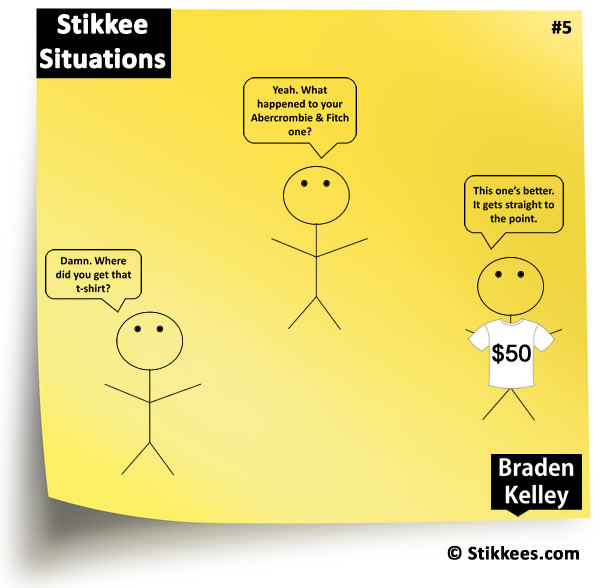
What makes people willing to pay $50 for a t-shirt that’s just like the one that ten other people are wearing in the club?
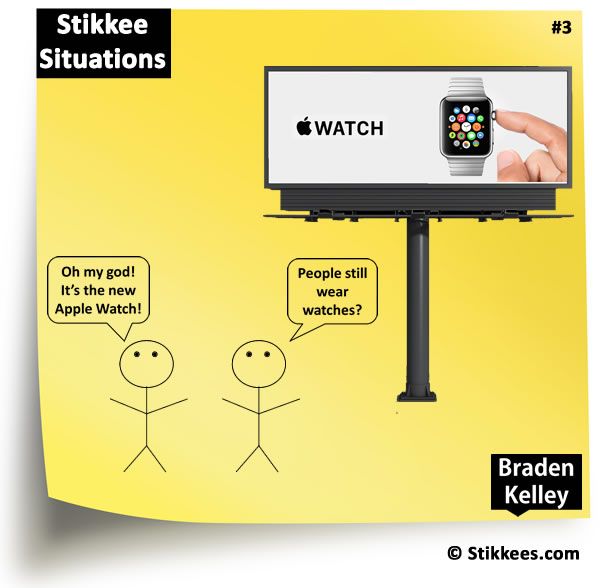
What makes people pay a premium for Apple products with features introduced by other companies months or years before?
If you are truly trying to be innovative, instead of creative or inventive, you MUST understand how your prospective customers assign value for the new solution you are about to introduce. This may require lots of customer interviews, ethnography, forced choices, and other upfront research, but it’s worth it, because if you don’t build your potential innovation on a new, unique insight then it has no chance of succeeding in the marketplace. And as I’ve said before, to achieve innovation you have to focus not just on creating value in the product or service itself, but all three sources of value:
- Value Creation
- Value Translation
- Value Access
So, let’s get back to the $50 t-shirt…
Here in Seattle we are proud of Macklemore and Ryan Lewis, who became a chart topping rap music music act by choosing not to follow the traditional way of making it in the music business so they could not only maintain their creative freedom, but also to make more money. Their mega-hit “Thrift Shop” pokes fun at fashionistas and has helped to make thrift shopping cool instead of embarrassing. Thank you to their combination of skills, they’ve been able to do a lot of the hard work themselves to promote their music, including making this video:
By remaining independent, Macklemore and Ryan Lewis are free to collaborate with whomever they want, when they want, and with sponsors who add value in specific ways consistent with the current project they are working on, instead of a record company extracting a rent from all the artist’s activities (whether they are adding value or not). Here is one such project they undertook with another local artist, Fences, and sponsorship from a company headquartered here locally – T-Mobile USA. It’s a great song and a pretty cool video if you haven’t heard or seen it before:
I for one am grateful that Macklemore and Ryan Lewis didn’t sign a record deal, and record executives have candidly admitted that they would have totally ruined the act by forcing them to change to be more “marketable.” The success of Macklemore and Ryan Lewis (and others) serve to highlight the disruption in the music industry value chain that continues to occur, creating discontinuities that artists like Macklemore and Ryan Lewis can take advantage of. This is of course as long as they have the digital and social skills to get the word out and help their music spread.
Is there disruption happening in your industry’s value chain?
How can you take advantage of the discontinuities?
Please note the following licensing terms for Stikkee Situations cartoons:
| 1. BLOGS – Link back to https://bradenkelley.com/category/stikkees/ and you can embed them for free | |
| 2. PRESENTATIONS, please send $25 to me on PayPal by clicking the button | 3. NEWSLETTERS & WEB SITES, please send me $50 on PayPal by clicking the button |
 Sign up here to get Human-Centered Change & Innovation Weekly delivered to your inbox every week.




 Back in the 1990’s NBC referred to Thursday night as must watch television, and when it comes to making the transformation from invention to innovation, an innovation often needs a ‘Must Have’ feature.
 While most people are focused on what the new Apple iPhone 6 hardware might look like and what new gizmos it might have, the real killer app for Apple’s latest refresh of their flagship mobile device will be an App and a little tiny NFC chipset.
 We live in an amazing age. An era when barriers to entry and barriers to scale sometimes seem to decreasing faster than the size of semiconductors. If Moore’s law states that the number of transistors per square inch doubles approximately every two years, what would you call the similar increase in speed to scale that has emerged over the past decade?

 Video may have killed the radio star, but the mp3 and even the CD have failed to kill the lovable vinyl LP record. In fact, they are making a resurgence and if anything have probably grown in popularity over the last decade.