Tag Archives: india

Why Following Someone Else’s Success Can Lead to Your Failure

GUEST POST from Stephen Shapiro

You attend conferences. You read books. You take training classes. All with the goal of learning strategies from those who have paved the path to success before you.

But what if following in their steps could lead you down the wrong track?

3M talks about its 15 percent rule–a philosophy that allows anyone in the organization to spend 15 percent of their time on something other than the products they are directly tasked to develop. For 3M this is an incredibly powerful strategy. Unfortunately, for many companies that try to replicate this, they often end up wasting 15 percent of their time and money on innovations that add no value.

Why is this?

There are two factors you need to consider whenever you study what someone else is doing:

  1. The underlying context
  2. The undersampling of failure

The Underlying Context

What works for one organization may not work for yours because the context is different.

3M’s culture has decades of experience with its 15 percent rule. There are many unwritten rules that support the concept, enabling it to be a powerful strategy for the company. 3M’s measurements systems are in line with this. Their performance measures enable it. In a nutshell, it is part of their DNA. It is hard to bolt on such a system if you don’t have all of the underlying principles and have it work properly.

There are other forms of context that matter. For example, your business differentiator may impact which practices make sense for your organization. If you look at the insurance industry, although nearly every company is moving heavily into apps and new technology as a differentiator, State Farm has continued to reinforce its personal touch. The company’s advertising rarely talks about technology but rather focuses on its widespread network of agents who are there to help. This has enabled State Farm to gain a lion’s share of the homeowner’s insurance market.

Undersampling of Failure

But there is a more deceptive reason why following someone else’s path to success may lead you in the wrong direction. It is called the “undersampling of failure” (a.k.a. Survivor Bias).

It’s important to recognize that when learning from others, quite often they don’t really know what made them successful. Was a particular “best practice” really the key to their success? The only way to truly know is to find a number of other companies who tried the same strategy. Were most of them successful? Or was the success limited to a small percentage? We see this all of the time. “Hey, this five-step strategy worked for me and it will work for you!” But what if 1,000 other people tried the same approach and failed. Would we ever hear about them? Probably not.

We tend to only study the successes (a.k.a. survivors) and undersample the failures.

Timing can also be a factor. In today’s fast-moving world, studying what someone did last year may be completely irrelevant to what will work today. People teaching you social media strategies may be outdated by the time you hear about them. I’ve had my own business for over 15 years. The approaches that I used in the past to drive my success would be silly in today’s environment.

And in some cases, a first-mover advantage may be the cause. The first people on Twitter had a better chance of making it big than those joining up today. And those who hopped on the Bitcoin bandwagon early on will certainly make more money than those who decide to invest there now.

These concepts are critical for all organizations (and individuals) to understand. We love to learn from others. And we should, because it can speed development times. But remember, replicating is never innovation. In fact, replication without skepticism, can lead to failure.

As I embark on my new column with Inc.com, I start with this article because I feel it sets the tone for everything I write. I will do my best to provide perspectives on how to drive higher levels of ROI with your innovation efforts. But as with any advice, be skeptical. Ask if it is right for you. Ask if it is right for you right now.

Subscribe to Human-Centered Change & Innovation WeeklySign up here to join 17,000+ leaders getting Human-Centered Change & Innovation Weekly delivered to their inbox every week.

The Challenge of Autonomous Teaching Methods

The Challenge of Autonomous Teaching Methods

An estimated 250 million children around the world cannot read, write, or demonstrate basic arithmetic skills. Many of these children are in developing countries without regular access to quality schools or teachers. While programs exist to build schools and train teachers, traditional models of education are not able to scale fast enough to meet demand. We simply cannot build enough schools or train enough teachers to meet the need. We are at a pivotal moment where an innovative approach is necessary to eliminate existing barriers to learning, enabling the seeds of innovation to be imparted to every child, regardless of geographic location or economic status.

XPRIZE Chairman and CEO, Dr. Peter H. Diamandis announced the $15M Global Learning XPRIZE today to help solve these challenges. The Global Learning XPRIZE is a five-year competition challenging teams to develop an open source solution that can be iterated upon, scaled and deployed around the world, bringing quality learning experiences to children no matter where they live. Enabling children in developing countries to teach themselves basic reading, writing and arithmetic.

At the same time, XPRIZE will launch an online crowdfunding campaign to mobilize a global street team of supporters to get involved with the Global Learning XPRIZE. Every dollar pledged will go towards optimizing the success of the prize, specifically focusing on supporting team recruitment globally and expanding field testing.

The Global Learning XPRIZE will launch with a six-month team registration period followed by 18 months of solution development. A panel of third-party expert judges will then evaluate and select the top five teams to proceed in the competition, and award each of them a $1M award. Solutions will be tested in the field with thousands of children in the developing world, over an 18-month period. The $10M top prize will ultimately be awarded to the team that develops a technology solution demonstrating the greatest levels of proficiency gains in reading, writing and arithmetic.

The learning solutions developed by this prize will enable a child to learn autonomously. And, those created by the finalists will be open-sourced for all to access, iterate and share. This technology could be deployed around the world, bringing learning experiences to children otherwise thought unreachable, who do not have access to quality education, and supplementing the learning experiences of children who do.

The impact will be exponential. Children with basic literacy skills have the potential to lift themselves out of poverty. And that’s not all. By enabling a child to learn how to learn, that child has opportunity – to live a healthy and productive life, to provide for their family and their community, as well as to contribute toward a peaceful, prosperous and abundant world.

XPRIZE believes that innovation can come from anywhere and that many of the greatest minds remain untapped.

What might the future look like with hundreds of millions of additional young minds unleashed to tackle the world’s Grand Challenges?

The Global Learning XPRIZE is funded by a group of donors, including the Dick & Betsy DeVos Foundation, the Anthony Robbins Foundation, the Econet Foundation, the Merkin Family Foundation, Scott Hassan, John Raymonds and Suzanne West.

For more information, visit http://learning.xprize.org.

COMMENTARY

I am very excited about this new effort, as I am a big believer that we should live in a world where the next Einstein could come from anywhere, but I have a few of concerns:

  • It seems to be focused on the use of technology
  • Five years is a long time (will they get a five-year-old solution?)
  • It doesn’t engage the target users in co-creation throughout the whole process (it’s outside in)
  • It seems to ignore the infrastructure in place in areas of the greatest need (where students don’t even have desks)
  • The most capable solutions may be too expensive to implement in the target areas
  • The goal should be to build an autonomous learning system that can be used for reading, writing, and arithmetic, but also extended to do much more
  • Teaching students skills autonomously is fine as long as there is social practice as part of the curriculum
  • An over-reliance on autonomous teaching will lead to less innovation not more
  • We are already seeing negative effects in first-world society from too much reliance on technology
  • If we want more innovation, we need to be teaching our kids ICE skills not just STEM, ICE being Invention, Collaboration, and Entrepreneurship – these are all social skills that don’t need technology (but can use it)

For more on my views on improving education (which doesn’t require education reform or new technology), please see my article Stop Praying for Education Reform.

For those of you who are going to enter a team, I look forward to seeing what you come up with and I hope that you’ll keep some of the above in mind!


Build a common language of innovation on your team

Subscribe to Human-Centered Change & Innovation WeeklySign up here to get Human-Centered Change & Innovation Weekly delivered to your inbox every week.

Improving Education for 20 Cents a Student

I love examples of simple, inexpensive solutions that solve important problems. Solutions like the water bottle light, the gravity light, etc., and Mike Freeston was kind enough to send this most recent example that I will share with you today. Thank you Mike!

The video details the work of a Non-Governmental Organization (aka NGO), that was created as a Community Service Center for marginalized families in rural areas an urban slums. It’s called Aarambh, and they wanted to help students who don’t even have the basic facilities, to be more comfortable and productive at school.

Most schools in rural India have two basic problems:

  1. Schools don’t have proper desks, which leads to poor eyesight, bad posture and bad writing.
  2. Students don’t have school bags.

Aarambh came up with a solution which tackled both these problems with a single, thoughtful design.

Aarambh came up with a design for portable desks made using discarded cardboard boxes (aka cartons). This choice for raw materials is both economical, and easily available. The stencil design, when cut and folded, creates a desk suitable for use by students whom must sit on the floor AND it also can serve as a school bag.

Brilliant!


Build a common language of innovation on your team

Subscribe to Human-Centered Change & Innovation WeeklySign up here to get Human-Centered Change & Innovation Weekly delivered to your inbox every week.

Bring Me Better Problems

GUEST POST from Stephen Shapiro

In life and in business, we are often told, “don’t bring me problems, bring me solutions.”

From my perspective, this is bad advice. I want people to bring me bigger and better problems.

Or, as the fortune cookie I got recently implied (see below), if you don’t focus on the right question, the answers/solutions may be useless.

Unfortunately, most people continue to work on solutions to problems that don’t matter.

Here are some questions that will help you prioritize your thinking:

  • Are you focused on what is important…or on what is urgent? Many people are “firefighting arsonists,” creating urgency in everything, even if it is not critical. A short-term mentality prevails. Make time for the important investments that will pay long-term dividends.
  • Are you investing energy on activities that provide exponential returns…or linear returns? Most people rarely look for what gives them leverage. Look for partners and business models that enable you to scale your solutions.
  • Are you working on what you actually can change/influence…or on what you wish could be changed? Not everything can be changed. Just because you are frustrated does not mean you should try to fix something. Trying to change others, for example, is a losing proposition. Instead change your attitude towards them.
  • Do you appreciate the differences in others that complement you…or on the differences that annoy you? Contrary to conventional wisdom, opposites do not attract. We tend to focus on what we don’t like in others, instead of seeing how those attributes might actually be beneficial to us. But diversity, when viewed through the right lens, can be extremely valuable.
  • Do you develop solutions that the world will value…or what you value? Some of my artist friends don’t want to “sell out.” Basically this means that they don’t want to create what others want and would rather do what they want…and remain poor.

Too often we invest our time, money, and energy (including mental energy) on things that don’t really matter or don’t produce real results.

By asking a different question you will always get a different answer. By refocusing and reframing, you can do less while getting better results.

Subscribe to Human-Centered Change & Innovation WeeklySign up here to join 17,000+ leaders getting Human-Centered Change & Innovation Weekly delivered to their inbox every week.
Using Gravity to Save and Improve Lives

Using Gravity to Save and Improve Lives

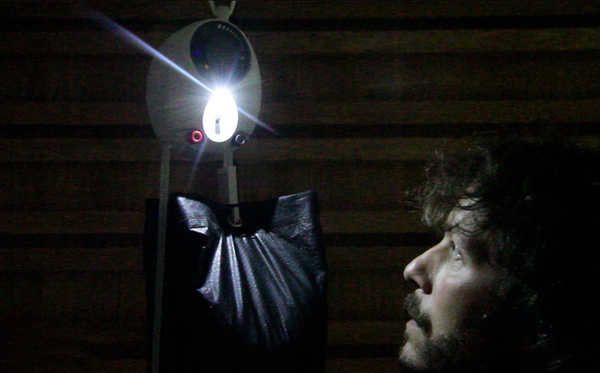
I came across an IndieGogo project that is focused on building and trialing a gravity-powered power station that can serve either as a lantern or as a flexible power source that can be used to power a task light, recharge batteries, or potentially other things that users might dream up that the designers can’t yet imagine.

Check out their video from IndieGogo:

They have already raised FIVE TIMES the money they set out to raise on IndieGogo.

I found it interesting in their promotional video that initially they started with a design challenge of designing a system that would charge a light for indoor use using a solar panel, but that they decided to abandon the approach specified from the outset and pursue alternate power sources.

Also interesting from the IndieGogo project page are the following facts:

The World Bank estimates that, as a result, 780 million women and children inhale smoke which is equivalent to smoking 2 packets of cigarettes every day. 60% of adult, female lung-cancer victims in developing nations are non-smokers. The fumes also cause eye infections and cataracts, but burning kerosene is also more immediately dangerous: 2.5 million people a year, in India alone, suffer severe burns from overturned kerosene lamps. Burning Kerosene also comes with a financial burden: kerosene for lighting ALONE can consume 10 to 20% of a household’s income. This burden traps people in a permanent state of subsistence living, buying cupfuls of fuel for their daily needs, as and when they can.

The burning of Kerosene for lighting also produces 244 million tonnes of Carbon Dioxide annually.

So, what do you think, a meaningful innovation or an interesting but impractical invention?

More information available on their web site here.


Build a common language of innovation on your team

Subscribe to Human-Centered Change & Innovation WeeklySign up here to get Human-Centered Change & Innovation Weekly delivered to your inbox every week.