Category Archives: Certification

An Innovation Lesson From The Rolling Stones

An Innovation Lesson From The Rolling Stones

GUEST POST from Robyn Bolton

If you’re like most people, you’ve faced disappointment. Maybe the love of your life didn’t return your affection, you didn’t get into your dream college, or you were passed over for promotion.  It hurts.  And sometimes, that hurt lingers for a long time.

Until one day, something happens, and you realize your disappointment was a gift.  You meet the true love of your life while attending college at your fallback school, and years later, when you get passed over for promotion, the two of you quit your jobs, pursue your dreams, and live happily ever after. Or something like that.

We all experience disappointment.  We also all get to choose whether we stay there, lamenting the loss of what coulda shoulda woulda been, or we can persevere, putting one foot in front of the other and playing The Rolling Stones on repeat:

“You can’t always get what you want

But if you try sometimes, well, you might just find

You get what you need”

That’s life.

That’s also innovation.

As innovators, especially leaders of innovators, we rarely get what we want.  But we always get what we need (whether we like it or not)

We want to know. 
We need to be comfortable not knowing.

Most of us want to know the answer because if we know the answer, there is no risk. There is no chance of being wrong, embarrassed, judged, or punished.  But if there is no risk, there is no growth, expansion, or discovery.

Innovation is something new that creates value. If you know everything, you can’t innovate.

As innovators, we need to be comfortable not knowing.  When we admit to ourselves that we don’t know something, we open our minds to new information, new perspectives, and new opportunities. When we say we don’t know, we give others permission to be curious, learn, and create. 

We want the creative genius and billion-dollar idea. 
We need the team and the steady stream of big ideas.

We want to believe that one person blessed with sufficient time, money, and genius can change the world.  Some people like to believe they are that person, and most of us think we can hire that person, and when we do find that person and give them the resources they need, they will give us the billion-dollar idea that transforms our company, disrupts the industry, and change the world.

Innovation isn’t magic.  Innovation is team work.

We need other people to help us see what we can’t and do what we struggle to do.  The idea-person needs the optimizer to bring her idea to life, and the optimizer needs the idea-person so he has a starting point.  We need lots of ideas because most won’t work, but we don’t know which ones those are, so we prototype, experiment, assess, and refine our way to the ones that will succeed.   

We want to be special.
We need to be equal.

We want to work on the latest and most cutting-edge technology and discuss it using terms that no one outside of Innovation understands. We want our work to be on stage, oohed and aahed over on analyst calls, and talked about with envy and reverence in every meeting. We want to be the cool kids, strutting around our super hip offices in our hoodies and flip-flops or calling into the meeting from Burning Man. 

Innovation isn’t about you.  It’s about serving others.

As innovators, we create value by solving problems.  But we can’t do it alone.  We need experienced operators who can quickly spot design flaws and propose modifications.  We need accountants and attorneys who instantly see risks and help you navigate around them.  We need people to help us bring our ideas to life, but that won’t happen if we act like we’re different or better.  Just as we work in service to our customers, we must also work in service to our colleagues by working with them, listening, compromising, and offering help.

What about you?
What do you want?
What are you learning you need?

Image Credit: Unsplash

Subscribe to Human-Centered Change & Innovation WeeklySign up here to get Human-Centered Change & Innovation Weekly delivered to your inbox every week.

3 Ways to View Your Innovation Basket

(including one that makes Radical Innovation easy)

3 Ways to View Your Innovation Basket

GUEST POST from Robyn Bolton

You are a rolling stone, and that means you gather no moss!  You read the September issue of HBR (and maybe last week’s article), tossed out your innovation portfolio, and wove yourself an innovation basket to “differentiate the concept from finance and avoid the mistake of treating projects like financial securities, where the goal is usually to maximize returns through diversification [and instead] remember that innovation projects are creative acts.”   

Then you explained this to your CFO and received side-eye so devastating it would make Sophie Loren proud.

The reality is that the innovation projects you’re working on are investments, and because they’re risky, diversification is the best way to maximize the returns your company needs.

But it’s not the only way we should communicate, evaluate, and treat them.

Different innovation basket views for different customers

When compiling an innovation basket, the highest priority is having a single source of truth.  If people in the organization disagree on what is in and out of the basket, how you measure and manage the portfolio doesn’t matter.

But a single source of truth doesn’t mean you can’t look at that truth from multiple angles.

Having multiple views showing the whole basket while being customized to address each of your internal customer’s Jobs to be Done will turbocharge your ability to get support and resources.

The CFO: What returns will we get and when?

The classic core/adjacent/transformational portfolio is your answer.  By examining each project based on where to play (markets and customers) and how to win (offerings, profit models, key resources and activities), you can quickly assess each project’s relative riskiness, potential return, time to ROI, and resource requirements.

The CEO: How does this support and accelerate our strategic priorities?

This is where the new innovation basket is most helpful.  By starting with the company’s strategic goals and asking, “What needs to change to achieve our strategy?” leadership teams immediately align innovation goals with corporate strategic priorities.  When projects and investments are placed at the intersection of the goal they support, and the mechanism of value creation (e.g., product, process, brand), the CEO can quickly see how investments align with strategic priorities and actively engage in reallocation decisions.

You: Will any of these ever see the light of day?

As much as you hope the answer is “Yes!”, you know the answer is “Some.  Maybe.  Hopefully.”  You also know that the “some” that survive might not be the biggest or the best of the basket.  They’ll be the most palatable.

Ignoring that fact won’t make it untrue. Instead, acknowledge it and use it to expand stakeholders’ palates.

Start by articulating your organization’s identity, the answers to “who we are” and “what we do.” 

Then place each innovation in one of three buckets based on its fit with the organization’s identity:

  • Identity-enhancing innovations that enhance or strengthen the identity
  • Identity-stretching innovations that “do not fit with the core of an organization’s identity, but are related enough that if the scope of organizational identity were expanded, the innovation would fit.”
  • Identity-challenging innovations that are “in direct conflict with the existing organizational identity.”

It probably won’t surprise you that identity-enhancing innovations are far more likely to receive internal support than identity-challenging innovations.  But what may surprise you is that core, adjacent, and transformational innovations can all be identity-enhancing.

For example, Luxxotica and Bausch & Lomb are both in the vision correction industry (eyeglasses and contact lenses, respectively) but have very different identities.  Luxxotica views itself as “an eyewear company,” while Bausch & Lomb sees itself as an “eye health company” (apologies for the puns). 

When laser-vision correction surgery became widely available, Bausch & Lomb was an early investor because, while the technology would be considered a breakthrough innovation, it was also identity-enhancing.  A decade later, Bausch & Lomb’s surgical solutions and ophthalmic pharmaceuticals businesses account for 38% of the company’s revenue and one-third of the growth.

One basket.  Multiple Views.  All the Answers.

Words are powerful, and using a new one, especially in writing,  can change your behavior and brain. But calling a portfolio a basket won’t change the results of your innovation efforts.  To do that, you need to understand why you have a basket and look at it in all the ways required to maximize creativity, measure results, and avoid stakeholder side-eye.

Image Credit: Pixabay

Subscribe to Human-Centered Change & Innovation WeeklySign up here to get Human-Centered Change & Innovation Weekly delivered to your inbox every week.

Leaders Avoid Doing This One Thing

Leaders Avoid Doing This One Thing

GUEST POST from Robyn Bolton


Being a leader isn’t easy. You must BE accountable, compassionate, confident, curious, empathetic, focused, service-driven, and many other things. You must DO many things, including build relationships, communicate clearly, constantly learn, create accountability, develop people, inspire hope and trust, provide stability, and think critically. But if you’re not doing this one thing, none of the other things matter.

Show up.

It seems obvious, but you’ll be surprised how many “leaders” struggle with this. 

Especially when they’re tasked with managing both operations and innovation.

It’s easy to show up to lead operations.

When you have experience and confidence, know likely cause and effect, and can predict with relative certainty what will happen next, it’s easy to show up. You’re less likely to be wrong, which means you face less risk to your reputation, current role, and career prospects.

When it’s time to be a leader in the core business, you don’t think twice about showing up. It’s your job. If you don’t, the business, your career, and your reputation suffer. So, you show up, make decisions, and lead the team out of the unexpected.

It’s hard to show up to lead innovation.

When you are doing something new, facing more unknowns than knowns, and can’t guarantee an outcome, let alone success, showing up is scary. No one will blame you if you’re not there because you’re focused on the core business and its known risks and rewards. If you “lead from the back” (i.e., abdicate your responsibility to lead), you can claim that the team, your peers, or the company are not ready to do what it takes.

When it’s time to be a leader in innovation, there is always something in the core business that is more urgent, more important, and more demanding of your time and attention. Innovation may be your job, but the company rewards you for delivering the core business, so of course, you think twice.

Show up anyway

There’s a reason people use the term “incubation” to describe the early days of the innovation process. To incubate means to “cause or aid the development of” but that’s the 2nd definition. The 1st definition is “to sit on so as to hatch by the warmth of the body.”

You can’t incubate if you don’t show up.

Show up to the meeting or call, even if something else feels more urgent. Nine times out of ten, it can wait half an hour. If it can’t, reschedule the meeting to the next day (or the first day after the crisis) and tell your team why. Don’t say, “I don’t have time,” own your choice and explain, “This isn’t a priority at the moment because….”

Show up when the team is actively learning and learn along with them. Attend a customer interview, join the read-out at the end of an ideation session, and observe people using your (or competitive) solutions. Ask questions, engage in experiments, and welcome the experiences that will inform your decisions.

Show up when people question what the innovation team is doing and why. Especially when they complain that those resources could be put to better use in the core business. Explain that the innovation resources are investments in the company’s future, paving the way for success in an industry and market that is changing faster than ever.

You can’t lead if you don’t show up.

Early in my career, a boss said, “A leader without followers is just a person wandering lost.” Your followers can’t follow you if they can’t find you.

After all, “80% of success is showing up.”

Image credit: Pixabay

Subscribe to Human-Centered Change & Innovation WeeklySign up here to join 17,000+ leaders getting Human-Centered Change & Innovation Weekly delivered to their inbox every week.

Why Sometimes Being Certifiable is a Good Thing

Certified Design Thinking ProfessionalRecently I became a Certified Design Thinking Professional (CDTP) through the Global Innovation Institute (GInI).

I’m sure you’ve probably heard someone say that an individual is certifiable. In the negative context of the word it means that an individual is “officially recognized as needing treatment for mental disorder” according to the Oxford Languages dictionary.

BUT, there is of course a positive meaning to the word certifiable as well – “able or needing to be certified.”

I’ve been doing human-centered design, or what some people refer to as ‘design thinking’, for more than twenty years – since I built Symantec’s first web-based technical support and customer service capabilities. But, despite decades of experience I’ve never bothered to get certified. So, why now?

Well, recently I finished building and launching a Design Thinking program for Oracle customers similar to Salesforce Ignite, Deloitte Greenhouse, EY Wavespace, SAP Leonardo, etc. Now as I explore a range of potential new opportunities to tackle next, there is one inescapable fact that presents itself very quickly:

Companies are extremely risk averse as they evaluate potential vendors and employees, and so they place a great deal of value on diplomas and certifications as a way of decreasing the perceived risk of hiring the services of a new employee or contractor.

This is valuable to the individual as well, but certifications help to increase the knowledge and confidence for the person too. And, tools like the Applied Innovation Master Book (AInMB) contain not only valuable information about design thinking, but also about innovation in the bargain. And, the Applied Innovation Master Book gives you one place to jump back to for selecting the methods you want to leverage each time you engage in a new design challenge.

So, does it make sense to get certified in everything you could possibly get certified on?

Maybe not. But, there are definitely times where being certifiable is a good thing.

Keep innovating!


Accelerate your change and transformation success

Subscribe to Human-Centered Change & Innovation WeeklySign up here to get Human-Centered Change & Innovation Weekly delivered to your inbox every week.


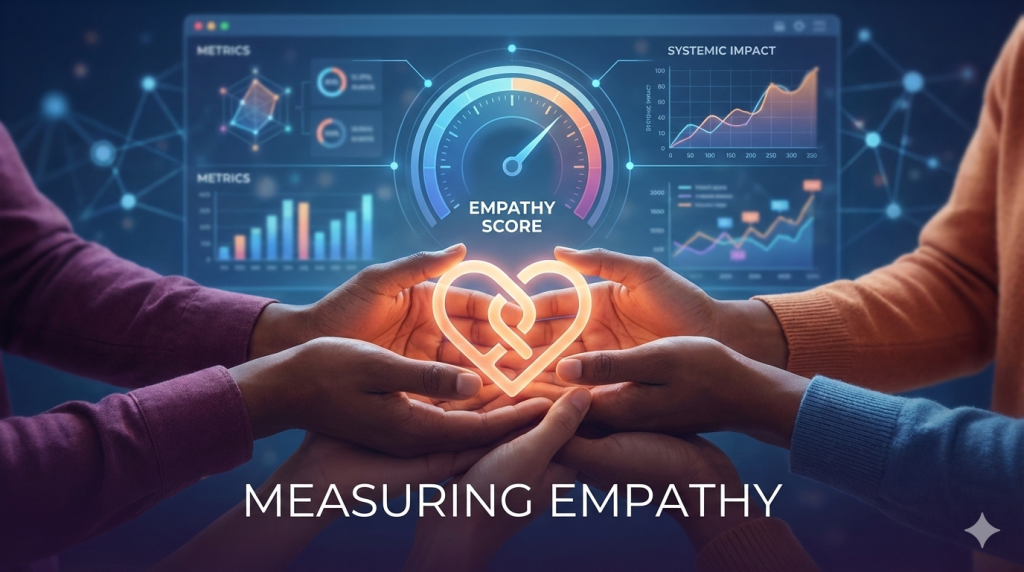
Measuring Competencies Like Empathy and Collaboration

Certifying Soft Skills
Measuring Competencies Like Empathy and Collaboration

GUEST POST from Chateau G Pato
LAST UPDATED: January 19, 2026 at 12:29PM

For decades, the corporate world has operated on a convenient fiction: that “hard skills” — coding, accounting, engineering — are the solid bedrock of business, while “soft skills” are the fuzzy, unenforceable garnishes. We hire for the hard, and we fire for the lack of the soft.

As we navigate an era defined by rapid technological disruption and the rise of Artificial Intelligence, this distinction is not just obsolete; it is dangerous. When machines can crunch numbers faster and generate code cleaner than any human, the true differentiator for an organization — the engine of sustainable innovation and successful change management — becomes the intensely human capacity to connect, understand, and co-create.

The problem has never been that organizations don’t value empathy or collaboration. The problem is that they haven’t known how to measure them with rigor. If we cannot measure it, we cannot manage it, and we certainly cannot certify it. To build truly human-centered organizations, we must crack the code on credentialing the very competencies that make us human.

“We are entering an age where your technical expertise gets you in the room, but your ability to empathize and collaborate determines your impact once you are there. Innovation is a social endeavor; if we can’t measure the quality of our connection, we can’t improve the quality of our creation.”

— Braden Kelley

Moving Beyond the “Vibe Check”

The historical skepticism toward certifying soft skills stems from a reliance on self-assessment. Asking an employee, “How empathetic are you on a scale of 1 to 10?” is useless data. True measurement requires moving from sentiment to demonstrated behavior in context.

We must shift our focus from assessing internal states (how someone feels) to external applications (what someone does with those feelings to drive valuable outcomes). A certification in empathy, for example, shouldn’t signify that a person is “nice.” It should signify that they possess a verified toolkit for uncovering latent user needs and the emotional intelligence to navigate complex stakeholder resistance during change initiatives.

Case Study 1: The “Applied Empathy” Badge in Service Design

The Challenge

A prominent financial services firm found that its digital transformation efforts were stalling. Their product teams were technically proficient but were building solutions based on assumptions rather than user realities, leading to poor adoption rates. They needed to embed deep user understanding into their development lifecycle.

The Measurement Solution

Instead of a generic communications workshop, the firm worked to develop an “Applied Empathy Practitioner” certification. To earn this, candidates had to pass a rigorous, multi-stage evaluation:

  • Scenario-Based Simulation: Candidates engaged in role-play scenarios with “difficult customers,” evaluated not on appeasement, but on their ability to use active inquiry to uncover the root cause of frustration.
  • Portfolio of Evidence: Candidates had to submit documented examples of how an insight gained through empathetic interviewing directly altered a product roadmap or service feature. They had to prove the application of the skill.

The Outcome

The certification became a prerequisite for lead design roles. The company saw a 40% reduction in post-launch rework because consumer friction points were identified earlier. They moved empathy from a “nice-to-have” trait to a measurable, certifiable professional competency linked to reduced risk.

Case Study 2: Certifying Collaboration in a Siloed Tech Giant

The Challenge

A global software enterprise was struggling with innovation velocity. While individual departments were high-performing, cross-functional projects frequently died on the vine due to territorialism and a lack of psychological safety. They needed leaders who could act as bridges, not gatekeepers.

The Measurement Solution

The organization realized that certifying collaboration couldn’t be based on a multiple-choice test. They developed a “Master Collaborator” credential focused on network dynamics and team environment:

  • Organizational Network Analysis (ONA): Instead of just asking “Are you a team player?”, the company used anonymized metadata to map communication flows. They identified individuals who served as high-trust connectors between disparate groups.
  • 360-Degree “Safety” Index: Peers and subordinates evaluated candidates specifically on their ability to create psychological safety—the environment where people feel safe to take risks and voice dissenting opinions without fear of retribution.

The Outcome

Leaders who achieved this certification were placed in charge of critical, high-risk innovation initiatives. The data showed that teams led by certified collaborators brought new products to market 25% faster, primarily because information flowed freely and failures were treated as learning opportunities rather than punishable offenses.

“In the symphony of innovation, empathy isn’t just a note — it’s the harmony that binds the orchestra together, allowing every voice to resonate.”

— Braden Kelley

Case Study 3: Google’s Project Oxygen

Google, a pioneer in data-driven decision-making, launched Project Oxygen in 2008 to identify what makes a great manager. Through extensive analysis of over 10,000 performance reviews, feedback surveys, and interviews, they discovered that technical skills ranked eighth on the list of top behaviors. Instead, top managers excelled in coaching, empowering teams, and showing genuine concern for team members’ success and well-being — hallmarks of empathy.

To certify these competencies, Google developed comprehensive training programs and certification pathways
integrated into their leadership development. Managers undergo rigorous assessments, including peer reviews, self-evaluations, and behavioral interviews focused on specific actions like “is a good coach” and “has a clear vision and strategy for the team.” Successful participants earn internal certifications that directly influence promotions, compensation, and leadership opportunities.

The impact has been profound. Teams led by certified managers report higher satisfaction scores, lower attrition rates, and up to 20% better performance metrics in areas like project delivery and innovation output. This case study illustrates how quantifying soft skills through structured, data-backed feedback can translate into measurable business outcomes, proving that empathy isn’t just nice — it’s a competitive advantage.

Case Study 4: IBM’s Digital Badge Program

IBM has been at the forefront of skills certification with their open badges initiative, launched in 2015. This program extends beyond technical proficiencies to include soft skills like collaboration, agility, and empathy. For instance, to earn a “Collaborative Innovator” badge, employees must complete real-world projects involving cross-functional teams, submit detailed evidence of their contributions, and receive endorsements from at least three peers or supervisors.

A particularly compelling application was during IBM’s transition to hybrid work models following the global pandemic. Employees pursuing certification participated in immersive virtual reality simulations where they navigated complex team conflicts, such as resolving disagreements in diverse groups. These scenarios tested empathy through active listening exercises, inclusive decision-making, and emotional support simulations. Performance is evaluated using AI analytics that score interactions based on predefined empathy and collaboration rubrics.

Badges are issued on a blockchain platform, ensuring they are secure, verifiable, and portable across careers. Data from IBM indicates that employees with soft skill badges are 15% more likely to be promoted internally and report 25% higher job satisfaction levels. Moreover, teams with a higher density of certified collaborators exhibit faster problem-solving times and more innovative patent filings. IBM’s model showcases how blending technology with human-centric evaluation can standardize soft skill certification while preserving the authenticity of interpersonal dynamics.

The Future of Human-Centered Credentialing

Certifying these skills is not about creating a new layer of bureaucracy. It is about signaling value. By creating rigorous standards for empathy, collaboration, adaptability, and resilience, we provide a roadmap for employees to develop the skills that actually matter in a volatile future.

These certifications cannot be “one-and-done.” Just as technical certifications require renewal, soft skill credentials must be dynamic, requiring ongoing evidence of application in increasingly complex scenarios. This ensures that the skills are living capabilities, not just framed certificates.

As leaders in human-centered change, we must champion the idea that the “hardest” skills to master — and the most valuable to measure — are the ones that connect us.

Frequently Asked Questions

Why is it difficult to measure soft skills like empathy?

Soft skills are inherently subjective and context-dependent. Unlike technical skills which have binary outcomes (the code works or it doesn’t), soft skills like empathy rely on behavioral indicators, the perception of others, and the ability to apply emotional intelligence in varied scenarios, making quantitative measurement challenging.

How can organizations effectively certify collaboration?

Effective certification moves beyond self-assessments and utilizes 360-degree feedback mechanisms, Organizational Network Analysis (ONA) to see who genuinely connects silos, and scenario-based evaluations that test a person’s ability to foster psychological safety and manage conflict constructively.

What is the business value of certifying soft skills?

Certifying soft skills provides a tangible framework for creating a human-centered culture. It leads to better innovation through diverse perspectives, faster adoption of change initiatives due to higher trust, and improved retention by valuing the human element of work.

Extra Extra: Because innovation is all about change, Braden Kelley’s human-centered change methodology and tools are the best way to plan and execute the changes necessary to support your innovation and transformation efforts — all while literally getting everyone all on the same page for change. Find out more about the methodology and tools, including the book Charting Change by following the link. Be sure and download the TEN FREE TOOLS while you’re here.

Image credits: Google Gemini

Subscribe to Human-Centered Change & Innovation WeeklySign up here to get Human-Centered Change & Innovation Weekly delivered to your inbox every week.



Join me in London for a Two-Day Innovation Certification Course

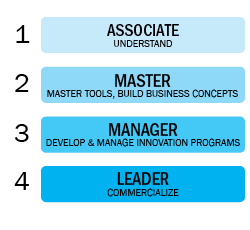
Join me in London for a Two-Day Innovation Certification CourseI’m excited about the launch of the first global innovation certification, with four full levels to choose from (two for innovation practitioners and two for innovation leaders), complete with many action learning components.

The certification is being offered by the Global Innovation Management Institute in cooperation with the IXL Center, the Hult International Business School, and Innovation Excellence.

In 2014 in addition to doing innovation keynotes, workshops and masterclasses, I am considering a world tour to bring in-person two-day GIMI Level 1 Innovation Certification courses and innovation eLearning to Seattle in Mar/Apr, followed by London in May.

The two full days of Level 1 Innovation Certification training in London will be priced per person or with a discount for a group of four (4) people (which will include materials, the cost of the certification exam, and some special bonuses), or if you’d like to organize a group session for your company while I’m there, we can discuss a price for that.

If someone is willing to donate a Central London location and attendee logistics, please contact me as I can offer a significant discount in exchange (at least 50%).

But I need your help to determine which dates the two-day Level 1 Innovation Certification Training should be held on.

Finally, In addition to London I hope to soon be announcing other cities where the two-day in-person GIMI Level Innovation Certification course will be offered, either before or after the London dates.

Should your city be at the top of the list?

Sound off in the comments!


Build a common language of innovation on your team

Subscribe to Human-Centered Change & Innovation WeeklySign up here to get Human-Centered Change & Innovation Weekly delivered to your inbox every week.





Start 2014 with an Innovation Catalyst Certification

Start 2014 with an Innovation Catalyst Certification

I’m a certified Innovation Catalyst. Are you?

Did you know you that for FREE between now and January 31, 2014 you could become certified as an Innovation Catalyst by the Global Innovation Management Institute as a special offer in preparation for the launch of four (4) full levels of innovation certification?

Four Innovation Certification LevelsThe FREE Innovation Catalyst certification is a subset of what will be offered as part of the Level 1 Certification (Innovation Associate), which people can prepare for by either:

  1. Self-study
  2. Attending a TWO DAY in-person training session conducted by an approved trainer
  3. Completing eLearning that I will be providing

The Level 1 Certification for Innovation Associates will be much more involved, but to give people a taste of what will be included the Global Innovation Management Institute (GIMI) has created the FREE Innovation Catalyst certification, and because it is a subset of the Level 1 content, it will help you get off to a running start in the achievement of the other more detailed levels.

Earn the FREE Innovation Catalyst certification in FOUR EASY STEPS:
(Sorry, the free BETA period expired January 31, 2014)

Udemy Innovation Catalyst Certification CourseSTEP ONE: Register for the FREE Innovation Catalyst certification

STEP TWO: Download and print out the study guide

STEP THREE: Enroll in and complete the FREE Innovation Catalyst eLearning

STEP FOUR: Study and take the test!

Start the new year with a bang and join me as a certified Innovation Catalyst!

Register now for the FREE Innovation Catalyst certification Signup now for the FREE Innovation Catalyst certification eLearning

Sorry, this offer expired January 31, 2014


Build a common language of innovation on your team

Subscribe to Human-Centered Change & Innovation WeeklySign up here to get Human-Centered Change & Innovation Weekly delivered to your inbox every week.