The Great American Contraction Revisited

Preparing for the Post-Labor Knowledge Economy

The Great American Contraction - Preparing for the Post-Labor Knowledge Economy

by Braden Kelley and Art Inteligencia


I. Introduction: The Horizon of the Post-Labor Era

We are standing on the precipice of a profound structural shift. The rapid convergence of generative AI, autonomous agentic workflows, and evolving demographic realities is no longer just reshaping industries — it is fundamentally redefining the relationship between human labor and value creation. The traditional models that have governed the corporate world for decades are being challenged by an imminent economic phenomenon: The Great American Contraction.

This contraction is not a standard macroeconomic downturn or a temporary corporate downsizing cycle. Instead, it represents a permanent, structural reduction in the demand for traditional, volume-based knowledge work labor. As technology transitions from a tool used by humans to an autonomous entity capable of executing complex intellectual tasks, organizations must confront a stark new reality. We are moving rapidly toward a post-labor knowledge economy where market leadership will not be determined by the size of an enterprise’s headcount, but by the agility of its architecture and the depth of its human insight.

To navigate this shift successfully, forward-thinking executives, innovation leaders, and experience designers must look beyond short-term efficiency gains. Preparing for this next era requires a proactive commitment to human-centered change management and strategic futurology. This deep-dive builds upon the foundational concepts first introduced in the original framework on The Great American Contraction, providing a roadmap for organizations looking to transform disruption into an unprecedented competitive advantage.

II. Understanding ‘The Great American Contraction’

To successfully navigate the emerging economic landscape, we must first accurately diagnose the forces at play. The Great American Contraction is a term that describes the systemic decoupling of business productivity from traditional human labor hours. For the last century, scaling a knowledge-based business required a proportional scaling of headcount. If you wanted to process more claims, write more code, or manage more customer accounts, you hired more people. That linear relationship is permanently fracturing.

The Macro Drivers of Structural Shift

This contraction is fueled by three compounding macroeconomic and technological trends:

  • The Cognitive Automation Velocity: Unlike previous industrial revolutions that automated physical labor, current advancements target high-level cognitive tasks — data synthesis, legal analysis, software architecture, and creative asset generation — at near-zero marginal cost.
  • The Shift from Assets to Agents: Organizations are rapidly moving away from static software tools toward autonomous agentic ecosystems that require minimal human intervention to execute complex, multi-step business processes.
  • Demographic Realities: A naturally tightening labor market in specialized sectors is accelerating corporate incentives to build resilient, tech-driven operational frameworks that minimize dependency on scarce talent pools.

Why This Is Not a Standard Downsizing Cycle

It is a critical mistake for enterprise leaders to view this era through the lens of traditional corporate restructuring. In a typical economic recession, companies cut headcount to survive short-term revenue declines, only to rehire when demand rebounds. The Great American Contraction is entirely different. The labor demand is contracting because the capacity to execute knowledge work has been permanently commoditized by technology.

Value is rapidly migrating away from the execution of knowledge tasks and toward the orchestration, governance, and human validation of automated systems.

The Futurist Lens: Reimagining Organizational Scale

From a futurology perspective, this paradigm shift requires leaders to entirely reinvent how they define organizational maturity and scale. Historically, a “large” or “powerful” company was measured by its tens of thousands of full-time employees (FTEs). In the post-labor knowledge economy, market capitalization and societal impact will be driven by ultra-lean, highly leveraged enterprises. Success will belong to organizations that can orchestrate vast networks of AI capabilities, grounded firmly by human-centered strategy, empathy, and experience design.

III. Shifting from Labor to Orchestration: The New Knowledge Architecture

As the capacity to execute routine intellectual tasks becomes a cheap, ubiquitous commodity, the traditional structure of corporate departments must undergo a radical evolution. In the post-labor knowledge economy, value creation undergoes a massive migration. To survive The Great American Contraction, organizations must transition their human workforces away from direct task execution and toward system orchestration.

The Migration of Value

Historically, the bulk of corporate payroll has gone toward the doing of work — writing lines of code, drafting legal briefs, assembling financial models, or creating marketing assets. Today, autonomous agents can handle these tasks in fractions of a second. Consequently, human value is moving upstream. The new premium is placed on the following core activities:

  • Curating Intent: Framing the right problems to solve and defining the precise strategic boundaries for automated systems.
  • Auditing and Verification: Acting as the ultimate arbiter of truth, quality, and ethical alignment to ensure machine outputs meet human standards.
  • Continuous Innovation: Connecting disparate insights to create entirely new business models, experiences, and paradigms that data-driven algorithms cannot predict.

Human-Centered Design in an Automated World

When every competitor has access to the same powerful cognitive automation engines, technology ceases to be a sustainable competitive differentiator. Differentiation returns entirely to the human element. This is where experience design (CX/EX) and human-centered innovation frameworks become mission-critical. Enterprises must intentionally design customer journeys and employee experiences that preserve authentic empathy, trust, and emotional intelligence — qualities that machines can simulate but never genuinely possess.

Defining the “Orchestrator” Skillset

The workforce that remains must be rapidly upskilled to fit the profile of an Enterprise Orchestrator. This specialized role requires a unique hybrid of technical literacy and deeply human soft skills. The core competencies of the modern orchestrator include:

Traditional Knowledge Worker Role The Post-Labor Orchestrator Shift
Subject Matter Executor: Specializes in deep, narrow execution (e.g., manual copywriting or standard data analysis). Systems Architect: Understands how to connect multiple AI agents, databases, and human touchpoints to solve complex problems.
Content Creator: Focuses heavily on the volume and initial production of assets. Context Curator & Editor: Directs the vision, refines the nuance, and injects brand voice and human empathy into raw outputs.
Process Follower: Relies on linear, established operational playbooks. Adaptive Problem Solver: Thrives in ambiguity, continually redesigned workflows as technological capabilities shift.

By transforming your workforce from an army of creators into a lean team of orchestrators, your organization builds the structural resilience required to thrive amidst ongoing economic contraction.

IV. Strategic Imperatives for Enterprise Leaders

Navigating The Great American Contraction requires more than passive adaptation; it demands a aggressive, proactive overhaul of enterprise strategy. Leaders cannot afford to wait for the post-labor economy to fully stabilize before changing how they run their businesses. To maintain a competitive edge, corporate executives must immediately execute three strategic imperatives.

1. Redefining Corporate Capacity

For decades, procurement, HR, and finance departments have used Full-Time Equivalent (FTE) headcount as the primary metric to calculate corporate capacity and scale. In a post-labor knowledge economy, tracking headcount is an obsolete way to measure capability. Leaders must shift toward outcome-focused, algorithmic capacity modeling.

Instead of asking, “How many analysts do we need to launch this product?” the question must become, “What orchestration framework and human oversight are required to deliver this outcome at scale?” This shift untethers organizational growth from linear payroll inflation, allowing lean enterprises to achieve massive operational leverage.

2. Embedding Continuous Innovation as an Operational Core

When cognitive tasks can be commoditized and replicated by competitors almost instantly, static business models will decay at an unprecedented rate. Innovation can no longer be treated as a periodic workshop or a isolated R&D department — it must be embedded directly into the daily operational workflow.

Organizations must build structural systems that allow for constant experimentation. This means creating micro-feedback loops where insights from customer experience design (CX) are immediately fed into autonomous development cycles, allowing the business to continuously reinvent its value proposition before the market forces a collapse.

3. Upskilling for Cognitive Adaptability

The transition from a workforce of executors to a lean team of orchestrators cannot happen overnight without an intentional, empathetic commitment to human-centered change. Enterprise leaders have a responsibility to actively guide their talent through this friction point.

Training programs must pivot away from teaching specific software tools or rigid, linear processes, as those workflows will likely be automated within months. Instead, enterprise training must focus intensely on building cognitive adaptability. This includes deep development in:

  • Critical thinking and advanced prompt engineering curation
  • Strategic systems thinking and cross-functional integration
  • Empathy-driven user experience design and ethical risk management

By treating upskilling as a core pillar of your digital transformation strategy, you reduce organizational friction, honor the human side of change, and build a workforce capable of steering the company through the ongoing contraction.

V. Designing the Future: A Framework for Resilient Innovation

Surviving the structural shifts of The Great American Contraction requires a rigorous, repeatable methodology. Organizations cannot rely on ad-hoc technological adoption; they must intentionally design their future operating state. By combining the principles of strategic futurology, experience design, and human-centered change management, enterprise leaders can build a comprehensive framework for resilient innovation.

The Braden Kelley Approach to Human-Centered Change

Too often, digital transformation initiatives focus entirely on technological capabilities while ignoring the human element. This imbalance is exactly why large-scale corporate pivots fail. In a post-labor economy, successful transformation must lead with empathy. When introducing autonomous agents and cognitive automation, leaders must actively manage the psychological transition of their workforce. This means establishing psychological safety, framing automation as an expansion of human capability rather than a replacement of human worth, and transparently mapping new career pathways for evolving roles.

The Automation vs. Humanity Matrix

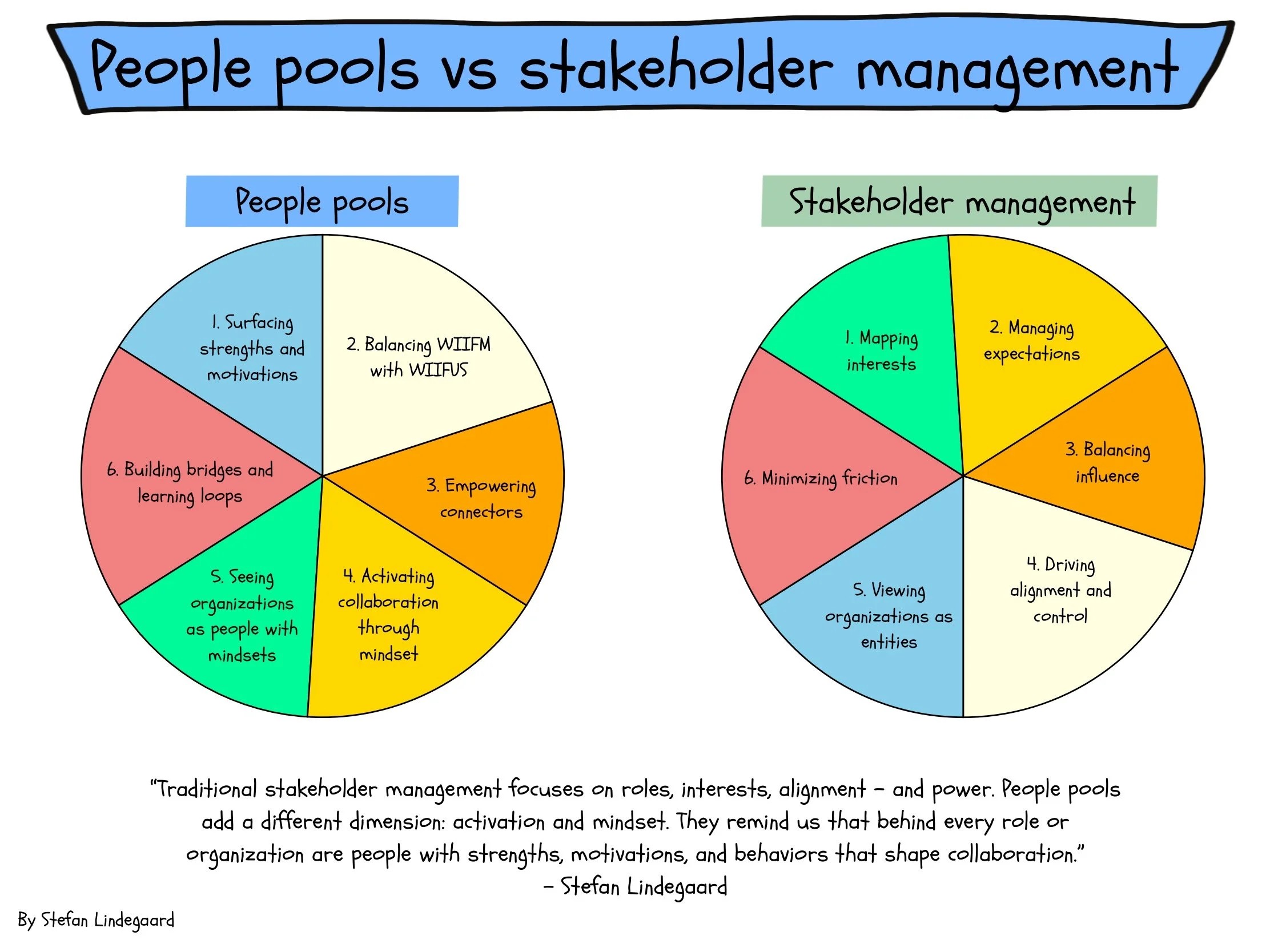
To avoid over-automating critical touchpoints — or under-automating operational bottlenecks — organizations must systematically audit their business architecture. Leaders should map organizational workflows across two primary variables: cognitive volume and emotional necessity. This creates a clear roadmap for where to deploy seamless technology versus where to deepen human presence:

Workflow Classification Strategic Action Operational Execution
High Volume / Low Emotional Touch
(e.g., standard billing, routine data migration)
Autonomous Automation Fully offload to autonomous agentic systems. Remove human friction entirely to achieve maximum operational efficiency.
High Volume / High Emotional Touch
(e.g., customer onboarding, complex escalations)
Human Orchestration Deploy AI engines to generate solutions behind the scenes, but utilize human experience designers to deliver the touchpoint with empathy.
Low Volume / High Emotional Touch
(e.g., high-value strategic partnerships, crisis management)
Pure Human Experience Intentionally restrict technology to a passive, supporting role. Maximize direct human-to-human connection, trust, and deep design thinking.

Practicing Agile Futurology

The post-labor knowledge economy moves far too quickly for traditional five-year strategic plans. Instead, innovation leaders must practice agile futurology. This involves building continuous signal-scanning networks across your industry to identify emerging technological capabilities, regulatory shifts, and economic contractions before they cause disruption. By converting these weak signals into actionable corporate experiments, your organization transitions from a defensive posture of reacting to change, to an offensive posture of actively driving it.

VI. Conclusion: The Opportunity Within the Contraction

While the phrase The Great American Contraction inherently signals a shrinking of traditional roles, it does not mean the future of business is bleak. For forward-thinking leaders, this macro-economic shift represents one of the greatest expansions of creative and strategic capability in human history. By removing the burden of manual, volume-based knowledge execution, we are effectively liberating human intellect to focus on what it does best: inventing, connecting, and empathizing.

The Optimistic Futurist Outlook

The transition into a post-labor knowledge economy should not be viewed as a destination of widespread professional obsolescence, but as an evolution toward higher-value contributions. When machines completely handle the commoditized execution of ideas, the human premium shifts entirely to the quality of our curiosity, the strength of our ethics, and the depth of our experience design. The organizations that thrive in this new era will be those that view automation not as a tool to cut costs, but as a mechanism to amplify human potential.

The Call to Action for Innovators

The post-labor economy is not a distant, theoretical concept — it is actively being constructed around us today. Waiting for the dust to settle before choosing a direction is a guaranteed path to irrelevance. Executive leaders, experience designers, and corporate strategists must seize the initiative immediately by taking tangible steps toward systemic transformation:

  • Begin dismantling legacy capacity models tied strictly to full-time equivalent headcount.
  • Audit operational workflows to systematically separate high-volume automation tasks from high-empathy human touchpoints.
  • Commit deeply to human-centered change management, ensuring your workforce is actively upskilled into strategic orchestrators.

The future of work will not be defined by what technology can do, but by how courageously human leaders choose to design the transition. To explore the foundational research, frameworks, and strategic insights driving this transformation, return to the original thesis and join the ongoing conversation and access the tools (FutureHacking, Human-Centered Change, etc.) here on bradenkelley.com.

Frequently Asked Questions

What is ‘The Great American Contraction’?

The Great American Contraction is a structural macroeconomic shift characterized by a permanent decoupling of business productivity from traditional human labor hours. Driven by advanced generative AI and autonomous agentic ecosystems, it represents a contraction in the market demand for volume-based, routine knowledge work execution, shifting the corporate premium toward human orchestration and strategic design.

What is a post-labor knowledge economy?

A post-labor knowledge economy is an economic landscape where the direct execution of cognitive and intellectual tasks (such as coding, basic analysis, and content generation) is largely commoditized and performed autonomously by technology at near-zero marginal cost. In this economy, human value centers entirely on orchestration, continuous innovation, ethical oversight, and empathy-driven experience design.

How should corporate leaders prepare for this economic shift?

Enterprise leaders must rapidly implement three strategic changes: redefine corporate capacity metrics away from full-time equivalent (FTE) headcount toward capability outcomes; systematically embed continuous innovation into daily operations; and aggressively invest in employee upskilling focused on cognitive adaptability, systems thinking, and human-centered change management.


Content Authenticity Statement: The topic area, key elements to focus on, etc. were decisions made by Braden Kelley, with a little help from Google Gemini to clean up the article, add images and create infographics.

Image credit: Gemini

Subscribe to Human-Centered Change & Innovation WeeklySign up here to get Human-Centered Change & Innovation Weekly delivered to your inbox every week.

Customers Don’t Care About Your Profit

They Care About Your Service

Customers Don't Care About Your Profit

GUEST POST from Shep Hyken

Recently, I heard from one of our subscribers, a sales and finance consultant at a luxury automobile dealership. He shared a story about how a customer was almost mistreated.

In the world of auto sales, some salespeople are 100% commission-based, and when they sell a vehicle at a discounted price, there is little to no profit, resulting in a very small commission. This is important, as sometimes these low-commission sales cause employees to treat customers differently than they would for a high-commission sale.

Customers expect to be treated the same regardless of how much or little they pay for their vehicle. Furthermore, they don’t realize, nor do they care, how much of a sales commission is paid to the employee.

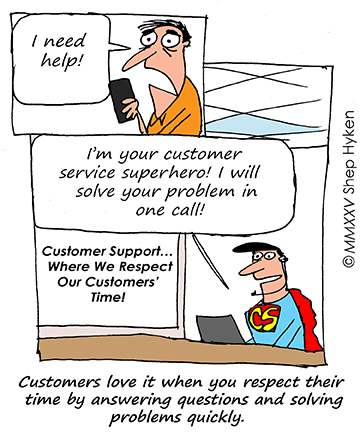
Shep Hyken Customer Service vs Profit Cartoon

That brings us to the customer who bought a two-year-old luxury sports car. The first time it rained, she realized the windshield wipers needed to be replaced. The customer called her salesperson, who explained that he was happy to replace the blades. He went to his sales manager to ask how to handle the replacement and was told to charge her the cost of the blades or to tell her to buy them at Walmart for less than the dealership’s cost and bring them in to have them replaced.

The salesperson was shocked and reminded his sales manager that they were selling a premium brand. Eventually, the manager agreed, but the experience reminded him that profit, or the lack thereof, dictated the level of service the dealership would offer.

Three Customer-First Lessons

With that in mind, let’s use the story as a learning experience for all businesses. Here are three lessons from the story:

  1. The Customer Doesn’t Care about Your Profit: Every customer deserves respect and a consistent experience, whether it’s $20 transaction or a $200,000 one. Profit per interaction shouldn’t determine the level of care.
  2. Know the Lifetime Value of the Customer: The wiper blades may have been a $20 problem, but how the customer was treated for the problem could determine the future sale of a high-end luxury automobile worth thousands of times more. Knowing the average value of a customer will help employees make more informed, customer-focused decisions. Small gestures today can protect long-term loyalty and repeat business.
  3. Consistency Builds Trust: Luxury brands thrive on consistent treatment, but the principle applies to all types of businesses. Today’s customers demand a good customer experience. Train and empower employees to deliver a consistent standard of service, every time, for every customer.

In the end, customers remember the experience, not your profit margins. Get the small things right, and the money follows as you earn their trust, confidence, and loyalty.

Image Credit: Unsplash, Shep Hyken

Subscribe to Human-Centered Change & Innovation WeeklySign up here to join 17,000+ leaders getting Human-Centered Change & Innovation Weekly delivered to their inbox every week.

Direction of Fit

A litmus test for news reporting, directed research, and conspiracy theories

Direction of Fit - A litmus test for news reporting, directed research, and conspiracy theories

GUEST POST from Geoffrey A. Moore


The philosopher Elizabeth Anscombe is credited with a wonderful thought experiment that illustrates the concept of direction of fit. Imagine a shopper is doing her errands, working off a list of things to buy. She is being followed by a detective who is making a list of everything she does buy. If both are successful, at the end of the day their two lists should be identical. But each list represents a different direction of fit. The shopper’s list works from mind to world: it seeks to fit the world to what the mind intends. The detective’s list works from world to mind: it seeks to fit the list to what the world in fact manifested. Mind-to-world and world-to-mind are thus two distinct directions of fit. Hold that thought as we apply it to three different kinds of discourse.

  1. News reporting is committed to maintaining a world-to-mind direction of fit. The integrity of the news is based on reporters doing their very best to discover and communicate what actually happened in the world. As part of their communication, they are responsible for providing evidence for their claims, citing whatever documents, sources, or other materials that warrant believing these claims to be true. The goal is to inform the reader as objectively as possible, a key plank in any platform that supports liberal democracy.
  2. Directed research is more complicated. It follows a bi-directional approach to fitting. It begins with a hypothesis which it seeks to either verify or disprove through some form of research or experiment. This represents a mind-to-world direction of fit. Einstein’s theory of relativity is an example. That research or experimentation, however, is conducted with scrupulous objectivity in order to create a body of world-to-mind evidence that is independent of the hypothesis. The Eddington Dyson expeditions to use a solar eclipse to test Einstein’s theory is an example. The final results represent a meeting of the two, often resulting in a version of the hypothesis that has been modified to incorporate learnings from the research findings. In Einstein’s case, this was not necessary. In this manner, science proceeds dialectically between the two directions, building an increasingly reliable model of the world.
  3. Conspiracy theories represent a mind-to-world direction of fit. They consist of hypotheses that cannot be verified due to the nefarious actions of the actors involved. They are presented as truths despite their lack of evidence, and these presentations are protected by the right of free speech. Because there is no mechanism for governing or qualifying conspiracy theories, there is no limit to the outrageousness of their claims. When such claims are converted to headlines, they garner attention, which in turn attracts advertisers, which funds the media that publishes them. This has materially adverse effects on any liberal democracy that relies on news media to inform public decision-making.

As one can see, the ethics of news reporting and conspiracy theories are diametrically opposed. This presents a challenge to news organizations that wish to maintain the integrity of their mission. The fact that people are promoting conspiracy theories is something that is happening in the world. As such, it warrants reporting. When these theories are labeled as such, however, conspiracy theorists claim that is all part of the conspiracy. They also claim that the news outlets in question are biased against them, that they aren’t getting their fair share of the coverage. We have left logic behind and are now firmly in the domain of rhetoric. In the absence not just of evidence, but of any obligation to provide evidence, the most brazen voices win.

This is not OK. It is why our educational system needs to prioritize the teaching of critical thinking. Here both the right and the left need to be taken to task. The right continues to use conspiracy theories to restrict such efforts. The left uses political correctness to the same ends. Neither trusts that students will develop responsible habits through open dialog. The best way to meet this challenge, in my view, is to engage students in directed research projects that use the two-way direction of fit to investigate issues of interest and concern.

That’s what I think. What do you think?

Image Credit: Unsplash

Subscribe to Human-Centered Change & Innovation WeeklySign up here to join 17,000+ leaders getting Human-Centered Change & Innovation Weekly delivered to their inbox every week.

Cognitive Enhancement and the Augmented Worker

Another AI Soft Landing Scenario Exploration — The Neurological Frontier

LAST UPDATED: May 17, 2026 at 7:02 PM

Cognitive Enhancement and the Augmented Worker

by Braden Kelley and Art Inteligencia


As we navigate the profound shifts brought about by generative and agentic AI, the question is no longer if the world will change, but how we will land. This article is the fifth installment in our AI Soft Landing series — a collection of hypotheses exploring how humanity and industry might transition into an AI-augmented future without systemic collapse.To understand the full context of this journey, you can explore the previous hypotheses here:

Beyond the Automated Horizon

For years, the mainstream narrative surrounding the rise of artificial intelligence has been trapped in a stark, binary choice: either humanity must race against the machine to protect traditional jobs, or we must retreat entirely to purely manual, artisanal, or civic labor. This false dichotomy creates an atmosphere of anxiety, framing AI as an inevitable displacement engine. However, there is a much more compelling, optimistic, and techno-progressive path forward — one that doesn’t replace the worker, but upgrades them.

We are on the cusp of an incremental “Cyborg Transition.” Rather than the dramatic, invasive sci-fi brain chips often popularized in media, this evolution is happening softly and ubiquitously. It is a gradual merging with AI tools through augmented cognition, extended memory, and real-time decision-making support. Just as smartphones transitioned from luxury gadgets to indispensable external brains that we feel lost without, advanced AI agents are becoming a normalized extension of our intellectual identity.

As each generation grows up with deeper, more fluid AI integration, the definition of “human labor” will expand rather than contract. The economy doesn’t lose human workers; it amplifies their potential. Value is shifting rapidly from the speed of task execution to the depth of intent orchestration, empathy, and strategic conceptualization.

Yet, this thrilling neurological frontier brings urgent socioeconomic challenges. As we design this future, we must confront pointed questions about accessibility: Who can afford premium cognitive augmentation, and who risks being left behind as an unaugmented underclass? The future of work is not about automation replacing humanity — it is about intentionally designing a human-centered transition that elevates us all.

Human AI Symbiosis Infographic

I. The Human-AI Symbiosis: Anatomy of the Augmented Worker

The relationship between humans and technology is shifting from a utilitarian model of “user and tool” to a deeply integrated, symbiotic partnership. The augmented worker does not merely operate AI; they think alongside it. This symbiosis fundamentally alters how cognitive tasks are processed, distributed, and executed in the modern enterprise.

Cognitive Scaffolding and Memory Extension

Generative AI and advanced LLMs are evolving far beyond reactive search engines or drafting assistants. They now function as cognitive scaffolding — external structures that support and expand human working memory. By offloading the heavy lifting of data retrieval, synthesis, and administrative tracking to ambient AI, workers dramatically reduce their mental load. This allows the human brain to bypass structural cognitive bottlenecks and maintain focus on higher-order problem solving.

Continuous Contextual Awareness

The true power of the augmented worker lies in real-time, proactive support. Instead of a worker pausing their workflow to query a database, ambient AI companions continuously listen, observe, and analyze the operational environment. Whether an employee is in a customer meeting, a design sprint, or a complex engineering review, the AI proactively feeds them historical context, relevant cross-functional data, and predictive outcomes. Decision-making is no longer limited by what a single human can recall in the moment.

Redefining Human Labor: Intent Orchestration

As task execution becomes increasingly automated, the baseline definition of valuable human labor is undergoing a radical expansion. The economic value of a worker is shifting from how fast they can build to how deeply they can conceptualize. Human labor is becoming a discipline of intent orchestration. In this new paradigm, the most valuable skills are human-centered: empathy, strategic vision, ethical judgment, and the ability to ask the right questions to direct autonomous systems toward meaningful innovation.

Incremental Cyborg Infographic

II. The Incremental Cyborg: How Augmentation Becomes Normalized

Society often envisions the integration of human and machine as a sudden, disruptive event — a dystopian leap marked by invasive cybernetics. In reality, the transition is smooth, behavioral, and highly incremental. We do not notice ourselves becoming cyborgs because the technology adapts to our natural behaviors, slowly weaving itself into the fabric of daily life until it becomes entirely invisible.

The Generational Shift in Technological Adaptation

Every generation establishes a new baseline for what feels “natural.” Digital natives seamlessly adapted to glass touchscreens, shifting human-computer interaction from rigid commands to fluid gestures. The next generation of workers will natively interface with multi-modal AI agents from early childhood. For these individuals, a software tool that does not anticipate their needs, remember their preferences, or actively collaborate with them will feel as broken and archaic as a rotary phone feels to a teenager today.

The Frictionless Interface

The acceleration of this transition is directly tied to the elimination of user-interface friction. The barrier between human thought and digital execution is shrinking rapidly. We are moving away from keyboard-and-mouse dependencies toward high-bandwidth, natural modalities: conversational voice, subtle eye-tracking, contextual gesture control, and predictive text. As these interfaces become completely frictionless, the delay between conceptualizing an idea and seeing it manifested by an AI tool drops to near zero.

The Psychology of Integration: Expanding Intellectual Identity

The final stage of normalization is psychological. When a tool responds instantly, holds perfect recall of your entire career’s output, and matches your cognitive rhythm, the human brain naturally begins to treat it as an extension of the self. This is the phenomenon of extended cognition. Workers will no longer view AI as external enterprise software they have to log into; instead, they will view it as a peripheral lobe of their own brain. The line where the human mind ends and the digital asset begins will blur, permanently expanding our sense of personal intellectual identity.

Augmented Workplace Infographic

III. Innovation and Experience Design in the Augmented Workplace

As the capabilities of the workforce expand, the frameworks we use to design business processes and employee experiences must evolve in tandem. Managing an augmented workforce requires a radical shift from traditional human resource management to intentional Experience Design. Organizations must build environments that don’t just utilize tools for efficiency, but actively harmonize human creativity with machine intelligence.

Designing the Augmented Experience (AX)

Traditional User Experience (UX) and User Interface (UI) design paradigms are no longer sufficient. When humans and AI operate in a continuous, bidirectional feedback loop, we must design for the Augmented Experience (AX). AX design focuses on creating non-disruptive, ambient workflows where the AI transitions smoothly between passive observer, active assistant, and autonomous executor. The goal is to eliminate cognitive switching costs, ensuring that software feels like a natural collaborator rather than a demanding administrative chore.

Hyper-Accelerated Innovation Cycles

The democratization of specialized, cross-functional knowledge through AI removes the traditional bottlenecks of organizational silos. An augmented worker in marketing can instantly understand technical architectural constraints; a developer can instantly run predictive financial models on their code. By collapsing the time required to research, prototype, and validate ideas, organizations can transition from rigid, linear development models to continuous, hyper-accelerated innovation cycles. The distance between a strategic spark and market reality shrinks from months to hours.

The Resilience Premium and Burnout Mitigation

Historically, technological revolutions have been used to squeeze more volume out of the worker, leading to chronic stress and burnout. A human-centered approach to augmentation reverses this trend, aiming for a Resilience Premium. By offloading low-value administrative friction, repetitive reporting, and data sorting to AI, we free up human cognitive capacity. Workers can redirect their energy toward high-empathy, high-creativity tasks — the exact areas where human fulfillment is highest — resulting in both a more innovative enterprise and a healthier, more resilient workforce.

Dark Side of the Frontier Infographic

IV. The Dark Side of the Frontier: The Unaugmented Underclass

While the potential for human elevation is immense, a techno-progressive future is never guaranteed to be an equitable one. As cognitive augmentation becomes the primary driver of economic value, the traditional gaps in society will mutate. We must look past the optimistic horizon to confront a stark societal risk: the creation of a deeply entrenched, structurally excluded unaugmented underclass.

The Cognitive Divide vs. The Digital Divide

For decades, policymakers and technologists have fought to close the “digital divide” — the gap between those with access to internet-connected hardware and those without. The neurological frontier introduces a far more insidious challenge: the Cognitive Divide. This is not a matter of whether a worker has a screen, but whether they have access to premium, high-tier cognitive models that actively shape thought, strategy, and problem-solving velocity. When the barrier to entry for high-paying roles is the quality of your digital mind-extension, inequality becomes deeply intellectual.

The Economics of Enhancement: Corporate Gatekeeping

Advanced, specialized AI ecosystems require massive computational power and proprietary datasets, meaning they will largely be controlled by elite tech conglomerates and well-funded enterprises. If these cognitive tools remain locked behind corporate paywalls or exorbitant personal subscription models, then only the wealthiest individuals and organizations will afford the “upgrade.” This threatens to create a feedback loop where the augmented class accumulates wealth and influence at a velocity that the unaugmented cannot mathematically match, cementing a new form of economic caste system.

The Modern Luddite Movement and Cultural Backlash

We must also anticipate a profound cultural and psychological pushback. Not everyone will want to integrate with ambient AI systems, and many will view the blurring lines of human identity as a fundamental threat to human dignity. This resistance will likely fuel a modern Luddite movement — not driven by an ignorant fear of technology, but by a conscious desire to preserve unaugmented human agency. Society will face severe fragmentation as companies face an identity crisis: how to manage, value, and respect the labor of workers who choose to remain “organically human” in an ecosystem designed entirely for the augmented.

Conclusion: Designing a Human-Centered Autonomous Future

The neurological frontier is not a distant science fiction scenario; it is an active transition unfolding across the global workforce today. By moving past the paralyzing fear of automation and embracing the potential of incremental cyborg symbiosis, we open the door to a massive expansion of human creativity, capability, and fulfillment. The economy does not have to lose its workers to AI — it can choose to lift them up.

A Call to Action for Innovation and Change Leaders

This optimistic future will not happen by accident. Business leaders, change agents, and experience designers cannot treat AI merely as a tool for cutting costs and optimizing headcounts. We must actively architect organizational cultures and technical ecosystems that prioritize human agency. True innovation lies in designing the Augmented Experience responsibly, ensuring that technology serves as a platform for human elevation rather than a mechanism for worker exploitation or burnout.

The Ultimate Metric of Progress

As we navigate this profound shift, the ultimate benchmark of our success must change. We can no longer measure progress solely by the efficiency of our algorithms or the number of tasks automated away. Instead, we must evaluate our organizations by a human-centered standard: How much more capable, creative, and fulfilled are the people within our ecosystem? The Resilience Premium must become a core metric of the modern enterprise.

We are not being replaced by artificial intelligence; we are being challenged by it. We are being pushed to shed the routine, administrative friction of our daily work and step into roles defined by deep empathy, bold imagination, and strategic intent orchestration. The frontier of human labor is expanding — it is now our responsibility to design an equitable, inspiring transition that leaves no worker behind.

Frequently Asked Questions

What is the “Cyborg Transition” in the context of the modern workforce?

The Cyborg Transition refers to the incremental, behavioral merging of human workers with AI tools to enhance cognitive capabilities. Instead of relying on invasive sci-fi brain chips, this transition happens softly through everyday software, ambient AI companions, and natural interfaces (voice, gesture) that expand human memory, context, and decision-making velocity until the tool feels like a natural extension of the worker’s intellectual identity.

How does cognitive augmentation change the definition of human labor?

Cognitive augmentation expands human labor rather than contracting it. As AI automates routine task execution and administrative friction, the value of human work shifts to “intent orchestration.” Human labor is redefined around uniquely human-centered skills: empathy, strategic conceptualization, ethical judgment, and the creative vision required to direct autonomous systems toward meaningful innovation.

What is the “Cognitive Divide” and why is it a risk?

The Cognitive Divide is the socio-economic gap between workers who have access to premium, high-tier cognitive AI tools and those who do not. Unlike the traditional digital divide (which focuses on basic hardware/internet access), the Cognitive Divide threatens to create an “unaugmented underclass” structurally locked out of high-paying roles because they cannot afford the digital mind-extensions controlled by elite corporate gatekeepers.


EDITOR’S NOTE: This is a visualization of but one possible future. I will be publishing other possible futures as they crystallize in my mind (or as you suggest them for me to explore).

Image credits: Google Gemini

Content Authenticity Statement: The topic area, key elements to focus on, etc. were decisions made by Braden Kelley, with a little help from Google Gemini to clean up the article, add images and create infographics.

Subscribe to Human-Centered Change & Innovation WeeklySign up here to get Human-Centered Change & Innovation Weekly delivered to your inbox every week.

What is an Innovation Keynote Speaker?

Innovation Keynote Speaker Braden Kelley

Most organizations know they need to innovate. Far fewer know how to build the conditions that make innovation actually happen — consistently, at scale, across teams and functions. This is the gap that a great innovation keynote speaker is uniquely positioned to close.

But the term gets used loosely. Not every speaker who mentions disruption or design thinking qualifies as an innovation keynote speaker in the meaningful sense. Understanding what the role actually involves — and what separates genuinely useful speakers from entertaining but forgettable ones — is worth your time before you commit budget to a booking.


What Is an Innovation Keynote Speaker?

An innovation keynote speaker is a subject matter expert who helps organizations understand, develop, and apply innovation capabilities through live presentations, workshops, and masterclasses. Unlike a generic motivational speaker, an innovation keynote speaker brings deep expertise in how organizations create new value — and the cultural, structural, and human factors that determine whether innovation efforts succeed or fail.

The best innovation speakers don’t just inspire. They equip. Audiences leave with frameworks they can apply, mental models that reframe stubborn problems, and a clearer sense of the specific actions that will move their organization forward.

A strong innovation keynote typically addresses some combination of:

  • Innovation strategy — how organizations choose where and how to innovate
  • Innovation culture — the leadership behaviors, structures, and norms that enable or block creative thinking
  • Human-centered design — building solutions around the real needs of real people
  • Change management — navigating the human side of transformation
  • Emerging technology and trends — understanding which forces are reshaping your industry and how to respond

What Does an Innovation Keynote Speaker Actually Do?

The format varies significantly depending on your event’s needs, budget, and goals. Here’s how the most common engagements work in practice.

Keynote Presentations

A 45 to 75-minute keynote is the most common format — typically delivered at a conference, leadership summit, or annual meeting. A well-designed innovation keynote sets the intellectual agenda for the event, gives attendees a shared language and framework, and creates the momentum that carries into breakout sessions and hallway conversations.

The best innovation keynotes challenge assumptions rather than confirming them. They introduce ideas the audience hasn’t encountered before, reframe familiar problems in ways that open new solutions, and leave people with a clear sense of what they can do differently starting Monday morning.

Workshops and Masterclasses

Workshops extend the keynote into active application. Rather than a one-way presentation, a workshop engages participants in using innovation frameworks on their own real challenges — building skills through practice rather than passive listening.

Innovation workshops are particularly valuable for leadership teams that need to move beyond general awareness into genuine capability building. A half-day or full-day workshop with the right facilitator can accomplish more than months of internal training on the same topics.

Webinars and Virtual Keynotes

Virtual formats have expanded access to innovation speakers significantly. A well-produced virtual keynote can reach distributed teams across multiple locations simultaneously, making innovation thinking accessible to organizations that couldn’t previously justify the investment in an in-person event.

Custom Research and Advisory

The deepest engagement level involves an innovation speaker working with your organization over time — developing custom frameworks, conducting research specific to your industry, and helping build internal capabilities rather than delivering a single keynote.


Innovation Keynote Speaker vs. Motivational Speaker — What’s the Difference?

This distinction matters more than most event planners realize when they’re making a booking decision.

A motivational speaker primarily works on mindset and emotional energy — leaving audiences feeling inspired, capable, and energized. That’s genuinely valuable in the right context. But motivation without a map doesn’t produce innovation. If your audience leaves feeling great but can’t articulate a single new framework or specific action they’ll take, the investment hasn’t generated a return.

An innovation keynote speaker works on both energy and capability. The best ones are genuinely inspiring — but the inspiration is grounded in substance. The audience doesn’t just feel differently, they think differently. They have new tools. They see their organization’s challenges through a new lens.

If your event goal is to energize your team before a busy quarter, a motivational speaker may be exactly right. If your goal is to build organizational capability, shift culture, or equip leaders with frameworks they’ll actually use, you need an innovation speaker.


What to Look for When Booking an Innovation Keynote Speaker

The speaking industry makes it easy to find charismatic presenters. It’s harder to find innovation speakers with genuine depth. Here’s what to look for.

Proprietary Frameworks and Original Thinking

Any speaker can summarize research and present trend lists. What distinguishes an exceptional innovation keynote speaker is original intellectual contribution — frameworks they’ve developed, models they’ve tested, insights that aren’t available in any business book. Ask what frameworks the speaker brings that are uniquely theirs. Look for powerful tools like Braden Kelley’s Nine Innovation Roles and Innovation Maturity Assessment. Look for comprehensive methodologies like Braden’s Human-Centered Innovation and frameworks like those in Stoking Your Innovation Bonfire.

Real-World Application Experience

Innovation theory is easy to talk about. Innovation practice is significantly harder. Look for speakers who have actually led innovation initiatives inside organizations — who understand the politics, the resource constraints, the cultural resistance, and the messy reality of trying to make new things happen inside existing institutions.

Genuine Customization

An innovation keynote that could be delivered identically to any audience in any industry is a warning sign. Strong innovation speakers invest real time understanding your organization’s specific challenges, your industry’s dynamics, and your audience’s level of sophistication before they set foot on stage. The best keynotes feel like they were written specifically for your people — because they were.

A Body of Work That Demonstrates Commitment

Books, frameworks, tools, research, years of consistent contribution to the field — these signal that a speaker has genuinely earned their expertise rather than recently rebranding as an innovation speaker because the label is in demand. Look at what they’ve built, not just how well they present.

Outcomes, Not Just Content

Ask what the speaker wants your audience to be able to do differently after the keynote. The answer tells you everything. Vague answers about inspiration or awareness signal a speaker focused on their own performance. Specific answers about behavioral changes, new frameworks the audience will apply, or decisions they’ll make differently signal a speaker focused on your organization’s outcomes.


Questions to Ask Before You Book

Use these in your vetting conversations to quickly identify the right fit:

  • What original frameworks do you bring that aren’t available elsewhere? Listen for genuine intellectual property, not trend summaries. Look for powerful frameworks like The Eight I’s of Infinite Innovation and FutureHacking.
  • How do you customize your content for different industries and audiences? A strong answer involves a discovery process. A weak one describes the same talk delivered everywhere.
  • What do you want our audience to be able to do differently after your keynote? Look for specific behavioral outcomes, not emotional ones.
  • Can you share an example of an insight you’ve delivered that wasn’t obvious at the time? This tests whether their thinking is genuinely ahead of the curve.
  • What formats beyond the keynote do you offer, and when are they most valuable? This helps you understand whether a workshop or masterclass would serve your goals better than a standalone keynote.
  • How do you measure whether a keynote has been successful? Speakers who think about impact tend to deliver it.

Why Organizations Hire Innovation Keynote Speakers

The specific reasons vary, but the most common situations where an innovation keynote speaker adds the most value include:

Annual conferences and leadership summits — where the right keynote sets the intellectual agenda for the year and gives distributed teams a shared framework to work from.

Culture change initiatives — where an external voice can say things internal leaders can’t, create psychological safety for new conversations, and help an organization see itself differently.

Strategy offsites — where a keynote or workshop challenges the assumptions underlying the current strategy before the planning process begins in earnest.

Industry conferences — where an innovation speaker positions your organization as a thought leader by association and delivers genuine value to attendees.

Learning and development programs — where innovation capability needs to be built systematically across a leadership population rather than inspired in a single event.


Ready to Book an Innovation Keynote Speaker?

Braden Kelley is an innovation keynote speaker and futurist who has spent decades helping organizations build the mindsets, frameworks, and capabilities to thrive through change. His human-centered approach to innovation and change management has been applied by organizations worldwide, and his proprietary frameworks — including the Human-Centered Change methodology — give audiences tools they can use immediately.

Whether you need a keynote that re-frames how your leadership team thinks about innovation, a workshop that builds practical capability, or a masterclass that equips your people with frameworks for navigating change, Braden brings the substance and the delivery to make your event memorable and genuinely useful.

Explore ten reasons to hire an innovation keynote speaker — then book Braden Kelley for your next event.


Explore more on innovation strategy, change management, and human-centered thinking at Human-Centered Change and Innovation.

Why You Need to Leverage Shared Values in Change Leadership

Why You Need to Leverage Shared Values in Change Efforts

GUEST POST from Greg Satell

When Lou Gerstner took over at IBM in 1993, the century-old tech giant was on its knees. Many thought it should be broken up into smaller, more focused companies. Others had different ideas. So at Gerster’s first press conference, people were curious about his strategy and disappointed when he failed to deliver one.

“The last thing IBM needs right now as a vision,” he said. What he meant was that IBM’s culture was broken. “Culture isn’t just one aspect of the game,” he would later write. “It is the game. What does the culture reward and punish – individual achievement or team play, risk taking or consensus building?”

What Gerstner saw was that IBM had lost sight of the values that had made it successful in the first place. He wasn’t “disrupting.” He was making IBM culture safe to innovate again and, by doing that, he achieved one of the most remarkable turnarounds in corporate history. If you want to achieve truly radical change, you need to start with shared values.

Making The Shift From Differentiating Values To Shared Values

IBM wasn’t Gerstner’s first stint leading a company. He’s been President at American Express and CEO at RJR Nabisco, both of which were very different from technological companies. Yet Gerstner didn’t focus on how his experiences were different, but on how they were the same—each of these businesses have to serve the customer.

“Lou refocused us all on customers and listening to what they wanted and he did it by example,” Irving Wladawsky-Berger, one of Gerstner’s chief lieutenants would later tell me. “We started listening to customers more because he listened to customers.” It was upon that simple principle that he changed the course of IBM’s future.

In a similar vein, when Nelson Mandela wanted to create a new future for South Africa, he organized a Congress of the People, a multi-racial gathering which produced a statement of shared values that came to be known as the Freedom Charter, which is still revered even today. He would later say it would have been very different if his organization, the ANC, had written it by themselves, but it wouldn’t have been nearly as powerful

When we’re passionate about an idea, we want to show how it’s different. We want to explain all its beautiful complexity and nuance, so that people can share our passion and fervor. That’s almost always a mistake. The first step to creating truly transformational change is to anchor it in what people already know and feel comfortable with.

Creating Safety Around The Change Conversation

When an enterprise is in crisis, one of the first things that often gets cut is investments in the future. So when Gerstner scheduled his first non-headquarters visit at IBM to the firm’s legendary research facility at Yorktown Heights, everybody there got nervous. Many expected there to be deep cuts and, possibly, that the entire facility would be shut down.

Actually, quite the opposite. “I saw the pain of IBM’s problems on their faces,” Gerstner remembered. “I talked about how proud I was to be at IBM. I underscored the importance of research to IBM’s future.” It was a wise move. Although few knew it at the time, scientists at IBM had just made a major breakthrough that made quantum computing possible and a few years later the company’s Deep Blue supercomputer would beat Garry Kasparov at chess.

Many change management schemes advise to create a “sense of urgency” and creating a “burning platform” atmosphere. Yet Gerstner understood that employees were perfectly aware of how dire the situation was. What they needed wasn’t more fear, but to see a path forward. Terrified people don’t make good decisions. They’re also more likely to head for the exit than to work for the future.

Don’t get me wrong, you don’t want to sugarcoat things. You need to be frank, honest and paint a clear picture. Gerstner made it plain that day that there would be changes. Yet by rooting his message in shared values, he was able to create a sense of safety around the change conversation. The scientists were able to see that they could, in fact, be heroes in the story of IBM’s future. As it turned out, they would be.

Creating A Dilemma Rather Than A Conflict

Once you start being explicit about your values you will inevitably find that not everyone shares them and that was certainly true at IBM. For example, Wladawsky-Berger told me that “IBM had always valued competitiveness, but we had started to compete with each other internally rather than working together to beat the competition. Lou put a stop to that and even let go of some senior executives who were known for infighting.”

A simple truth is that whenever we set out to make a significant impact, there will always be those who will work to undermine what we are trying to achieve in ways that are dishonest, underhanded and deceptive. Yet when that happens we need to be careful not to get sucked into a conflict, which will likely take us off course and discredit what we’re trying to achieve. Instead, we need to learn to design a dilemma.

Dilemma actions have been used for at least a century—famous examples include Gandhi’s Salt March, King’s Birmingham Campaign and Alice Paul’s Silent Sentinels—but more recently codified by the global activist, Srdja Popović. They are just as effective in an organizational context, using an opponent’s resistance against them.

One of the great things about dilemma actions is that you approach them exactly the same way you approach building allies—by identifying a shared purpose. Once you do that, you can design a constructive act rooted in that shared purpose that advances your agenda. That forces your opponent to make a choice: they can either disrupt the act and violate the shared value or they can let it go forward and allow change to proceed.

For example, I was once running a transformation project that was being impeded by a Sales Director hogging accounts. Although it was agreed that she would distribute her clients, she never got around to it. So I set up a meeting with a key account and one of our salespeople. When she tried to disrupt the meeting, she violated the shared value we had established and was dismissed from her position. Everything fell into place after that.

Forging A Shared Purpose

Change always begins with a grievance—there’s something people don’t like and they want it to change. Yet the status quo always has inertia on its side and never yields its power gracefully. That’s why it’s so important to forge a shared purpose, because people need a common mission they can believe in to see themselves as stakeholders in a shared future.

The reason so many organizations find themselves unable to pursue a purpose isn’t because they don’t want to, but because it is so hard. Purpose doesn’t begin with a single step, but with a diverging path. To honor a value we need to be willing to incur costs and constraints. We must choose one direction at the expense of another, or stay mired and lost, unable to move forward.

That’s why the change conversation needs to focus on what you value. Values are how an enterprise honors its mission. They represent choices of what an organization will and will not do, what it rewards and what it punishes and how it defines success and failure. Perhaps most importantly, values will determine an enterprise’s relationships with other stakeholders, how it collaborates and what it can achieve.

Perhaps most importantly, shared values enable a shared identity, which is what you need for change to last. The goal of a revolution, as Srdja Popović once explained to me, is not a constant state of disruption, but eventually to become mainstream, to be mundane and ordinary. That can only be done if change is built on common ground.

— Article courtesy of the Digital Tonto blog
— Image credit: Google Gemini

Subscribe to Human-Centered Change & Innovation WeeklySign up here to join 17,000+ leaders getting Human-Centered Change & Innovation Weekly delivered to their inbox every week.

What is a Futurist Speaker?

Futurist Speaker Braden Kelley

by Braden Kelley

Every organization faces the same fundamental challenge: the future is arriving faster than most leaders can process it. Artificial intelligence, shifting workforce dynamics, geopolitical disruption, and technological convergence are reshaping industries at a pace that leaves traditional planning frameworks struggling to keep up.

This is precisely why demand for futurist speakers has surged in recent years. But with so many people claiming the title — and event budgets too valuable to waste on the wrong choice — it pays to understand what a futurist speaker actually does, how they differ from other keynote speakers, and what separates the exceptional from the merely adequate.


What is a Futurist Speaker?

A futurist speaker is a keynote speaker who specializes in helping organizations anticipate, prepare for, and shape the future. Rather than simply motivating an audience or recapping industry trends, a futurist speaker brings a structured analytical lens to emerging signals — identifying patterns across technology, society, business, and culture to help leaders make better decisions today.

The best futurist speakers don’t predict the future with false precision. Instead, they build what futurists call “preferred futures” — coherent, evidence-based visions of where an organization or industry could go, and the choices that will determine which path is taken.

A futurist keynote speaker typically draws on:

  • Trend analysis and horizon scanning — identifying weak signals before they become obvious disruptions
  • Scenario planning — building multiple plausible futures to stress-test strategy
  • Cross-industry pattern recognition — finding the innovation lessons that travel across sectors
  • Human-centered frameworks — grounding future thinking in the people who will live and work through change

The result is an audience that leaves not just inspired, but genuinely better equipped to navigate uncertainty.


Futurist Speaker vs. Innovation Keynote Speaker — What’s the Difference?

These two roles overlap significantly, and many speakers occupy both spaces. But there are meaningful distinctions worth understanding when you’re making a booking decision.

A futurist speaker tends to focus on what’s coming — emerging technologies, societal shifts, and the long-range forces reshaping industries. The primary lens is anticipation: how do we see change before it arrives?

An innovation keynote speaker tends to focus on how organizations respond — building the cultures, processes, and capabilities to create value from change. The primary lens is action: how do we actually innovate effectively?

The most effective speakers in this space do both. They help audiences understand the forces reshaping the landscape and give them practical frameworks for responding. If your event needs both strategic foresight and actionable takeaways, look for a speaker who can credibly bridge both worlds rather than defaulting to one or the other.


What Does a Futurist Speaker Actually Do at an Event?

A common misconception is that futurist keynote speakers simply deliver a TED-style talk about technology trends and leave. The best futurist speakers offer significantly more, and understanding the full range of formats helps you match the right speaker to your event’s needs.

Keynote presentations are the most common format — a 45 to 90-minute talk that sets the intellectual agenda for a conference or leadership offsite. A strong futurist keynote opens minds, challenges assumptions, and gives attendees a shared framework for thinking about the future that they carry into breakout sessions and beyond.

Workshops and masterclasses go deeper. Rather than a one-way presentation, a futurist-led workshop engages participants in applying futures thinking tools to their own strategic challenges. These are particularly valuable for leadership teams who need to move from awareness to action.

Panels and facilitation leverage the futurist’s cross-industry perspective to enrich conversation and push groups beyond their existing mental models.

Custom research and white papers represent the highest engagement level — where a futurist speaker works with an organization over time to develop proprietary foresight outputs rather than a single keynote.

Most corporate bookings start with a keynote and evolve from there. The organizations that get the most value treat a futurist keynote as the beginning of a conversation, not the end of one.


What to Look For When Booking a Futurist Speaker

Not everyone who calls themselves a futurist speaker has earned the designation. Here’s what distinguishes genuine expertise from polished packaging.

Intellectual rigor over entertainment value. The speaking industry rewards charisma, and charisma matters. But a futurist who can only tell you what’s already obvious — that AI is changing things, that remote work is here to stay — isn’t adding value your leadership team couldn’t generate internally. Look for speakers who demonstrate original thinking, proprietary frameworks, and the ability to connect trends your audience hasn’t yet noticed.

Industry relevance balanced with cross-sector breadth. The most valuable insights often come from adjacent industries. A futurist speaker who only knows your industry well will reflect your assumptions back at you. One who understands multiple sectors can surface the pattern that your competitors haven’t seen yet.

Customization, not off-the-shelf content. A strong futurist keynote speaker invests time understanding your audience, your industry’s specific challenges, and your event’s strategic objectives. Generic content delivered to every audience is a warning sign.

Practical frameworks, not just predictions. Predictions without actionable frameworks leave audiences with anxiety rather than agency. The best futurist speakers give organizations tools they can actually apply — ways of scanning for signals, building scenarios, and making decisions under uncertainty.

A body of work that demonstrates commitment to the field. Books, research, tools, frameworks, and years of consistent output signal that a speaker has genuinely developed expertise rather than simply rebranding as a futurist because the label is in demand.


Questions to Ask Before You Book a Futurist Speaker

Use these questions in your vetting process to quickly separate genuine expertise from well-packaged generalism.

  1. What proprietary frameworks or research do you bring to this topic? — You’re listening for original thinking like FutureHacking™, not recycled trend reports.
  2. How do you customize your keynote for different industries and audiences? — A good answer involves a discovery process. A poor answer describes the same talk delivered everywhere.
  3. Can you share examples of specific insights you’ve delivered that weren’t obvious at the time? — This tests whether their foresight is genuinely ahead of the curve.
  4. What do you want audiences to be able to do differently after your keynote? — Futurist speakers should be able to articulate behavioral outcomes, not just emotional ones.
  5. How do you stay current, and what’s your research process? — Look for systematic horizon scanning, diverse information sources, and genuine intellectual curiosity.
  6. What formats beyond the keynote do you offer, and when do they add value? — This helps you assess whether deeper engagement is appropriate for your situation.

How Human-Centered Change Makes Futurism Actionable

One of the most common failures in futures thinking is the gap between insight and action. Organizations leave a futurist keynote energized and then return to the same meetings, the same processes, and the same assumptions that made the future feel distant in the first place.

The most durable approach to organizational foresight connects future thinking to the human dimension of change — recognizing that technologies and trends only matter insofar as people can understand, embrace, and act on them. This means going beyond trend lists and scenario matrices to build the organizational capabilities that allow people to navigate change continuously, not just react to it episodically.

This is the intersection where innovation strategy, change management, and futures thinking converge — and it’s where the most valuable futurist keynote speakers operate.


Ready to Book a Futurist Keynote Speaker?

Braden Kelley is an innovation keynote speaker and futurist who helps organizations build the mindsets, frameworks, and capabilities to thrive through change. Drawing on decades of experience across industries and the development of human-centered innovation and change frameworks used by organizations worldwide, Braden brings both the strategic foresight and the practical tools your audience needs to move from awareness to action.

Learn more about booking Braden Kelley as your futurist keynote speaker →


Explore more on futures thinking, innovation strategy, and human-centered change at Human-Centered Change and Innovation.

Top 10 Human-Centered Change & Innovation Articles of April 2026

Top 10 Human-Centered Change & Innovation Articles of April 2026Drum roll please…

At the beginning of each month, we will profile the ten articles from the previous month that generated the most traffic to Human-Centered Change & Innovation. Did your favorite make the cut?

But enough delay, here are April’s ten most popular innovation posts:

  1. Why an AI Soft Landing Might Look Like Victorian England — by Braden Kelley
  2. The Four Psychological Disruptions of AI at Work — by Braden Kelley
  3. Liberated to Care – How AI Can Restore Humanity in Healthcare — by Kellee M. Franklin, PhD.
  4. The Consumption Collapse – When the Feedback Loop Bites Back — by Art Inteligencia
  5. Four Steps to the Future – Announcing the Newest FREE Addition to the FutureHacking™ Toolkit — by Braden Kelley
  6. Which of the Nine Innovation Roles do you play? (A Quiz) — by Braden Kelley
  7. How to Consciously Develop More Courage — by Tullio Siragusa
  8. Does Planned Obsolescence Fuel the Fire or Just Burn the House Down? – The Innovation Paradox — by Braden Kelley
  9. Misunderstanding Big Ideas is Very Dangerous — by Greg Satell
  10. Artificial Intelligence Powered Teamwork — by David Burkus

BONUS – Here are five more strong articles published in March that continue to resonate with people:

If you’re not familiar with Human-Centered Change & Innovation, we publish 4-7 new articles every week built around innovation and transformation insights from our roster of contributing authors and ad hoc submissions from community members. Get the articles right in your Facebook, Twitter or Linkedin feeds too!

Build a Common Language of Innovation on your team

Have something to contribute?

Human-Centered Change & Innovation is open to contributions from any and all innovation and transformation professionals out there (practitioners, professors, researchers, consultants, authors, etc.) who have valuable human-centered change and innovation insights to share with everyone for the greater good. If you’d like to contribute, please contact me.

P.S. Here are our Top 40 Innovation Bloggers lists from the last five years:

Subscribe to Human-Centered Change & Innovation WeeklySign up here to get Human-Centered Change & Innovation Weekly delivered to your inbox every week.
Participatory Design Meets Diversity

GUEST POST from Douglas Ferguson

A few years ago Voltage Control surveyed nearly 100 leaders on culture, mental health, DEI, experience, hybrid, leadership, facilitation, collaboration, technology, and change (in case you missed it). Within the findings, we explore leaders’ challenges, capability gaps, and opportunities to adapt to the current workplace ecosystem more effectively, in order to define a working maturity model. The maturity model is a snapshot of trends across the nearly 100 leaders we heard from, combining quotes with findings from a survey. Download Work Now 2023 here. (you can also get the 2022 edition at the same time)

Workplace culture and diversity are essential to co-creation and participatory design.  

Participatory Design Meets Diversity

Participatory design is a driving force in our innovation practice. The unique design methodology opens the door to rich conversations and remarkable collaboration. With this approach to design, participants are invited into the process of investigating, reflecting, developing, and essentially co-creating your products or services.

With engaging design processes in place, these sessions capture the needs of all participants in a hierarchical manner. As opposed to us telling customers or clients what they need, this approach allows for key stakeholders to show us what matters to them.

We’ve spent years practicing and incorporating this methodology into workshops and design sprints. What we discovered is invaluable: diversity is key.

Our team at Voltage Control found that in order to truly overcome bias and move industries forward, diversity in participants throughout this design process is vital. Hosting inclusive spaces in this co-design experience will lend itself to more ideas and fuel irreplicable growth.

Straight from our Work Now 2023 findings, here’s what leaders should ask themselves regarding their workplace culture before leading inclusive participatory design sessions:

  • How might we support organizations in (re)defining their cultures at this moment and beyond?
  • How might we enable leaders to communicate and co-create a shared culture—including to remote and hybrid teams?
  • For leaders who created a culture of “increased transparency of communication and encouraged virtual gatherings”—what would need to change so these practices are not lost as remote work time decreases?
  • How might we enable leaders to co-create meaningful work experiences with their teams in order to enhance environments of trust and collaboration?

For more on cultivating diverse teams and improving your participatory design strategy, join us in our Liberating Structure series where we will lead you in unleashing creativity in your meetings through maximum participation.

Douglas Ferguson | President, Voltage Control

Image credit: Pexels

Subscribe to Human-Centered Change & Innovation WeeklySign up here to get Human-Centered Change & Innovation Weekly delivered to your inbox every week.
The Final Frontier of Experience Design

Sensing the Future via Digital Olfaction

LAST UPDATED: May 15, 2026 at 6:56 PM

The Final Frontier of Experience Design

GUEST POST from Art Inteligencia


Breaking the Tyranny of the Screen

For decades, digital transformation has been trapped in a flat, two-dimensional paradigm. We have poured billions of dollars into refining pixels, expanding screen real estate, and perfecting spatial audio. Yet, despite these massive leaps in graphics and computational power, our digital interactions remain fundamentally detached from the full spectrum of human biology. We live in a world of glass and glare — a sensory monoculture that prioritizes sight and sound while leaving our other senses completely starved.

The Sensory Deficit in Modern UX/CX

This heavy reliance on visual and auditory stimuli has created a profound sensory deficit in modern user experience (UX) and customer experience (CX) design. Today’s digital landscape feels cold, clinical, and transactional. Whether we are navigating a corporate dashboard, exploring a virtual reality environment, or interacting with an e-commerce platform, the experience is mediated by barriers that keep us isolated from the physical world.

As experience designers and innovation leaders, we must ask ourselves: Have we reached the limits of what sight and sound can achieve for human engagement? When every brand possesses a sleek logo and a curated sonic identity, visual and auditory channels become noisy, overcrowded, and subject to diminishing returns. To truly differentiate and build deeper connections, we must look — and sniff — beyond the screen.

The Emotional Gravity of Smell

This is where the biological reality of olfaction changes everything. Unlike sight and sound, which are processed, filtered, and rationalized by the thalamus before reaching the higher brain, our olfactory system possesses a direct, unmediated highway to the limbic system — the evolutionary ancient seat of memory, emotion, and behavioral drive.

When we smell something, we don’t just process data; we feel it instantly. Scent has an unparalleled emotional gravity. It can trigger deep nostalgia, alter cortisol levels, shift cognitive focus, and inspire trust in a fraction of a second. By ignoring this hardwired human superpower, traditional digital design misses the ultimate tool for meaningful behavioral change, authentic memory retention, and empathetic engagement.

The Core Thesis: Moving Toward Molecular Awareness

Digital olfaction — or olfactory digitization — is not a marketing gimmick, a transient trend, or a sci-fi novelty. It represents a foundational shift toward a molecule-aware world.

By building the infrastructure to digitize, transmit, and synthesize scent data, we are introducing an entirely new layer of contextual intelligence to technology. This infrastructure will fundamentally redefine how humans interact with machines, environments, and brands. It transitions us away from merely manipulating data on a screen and guides us toward a future where technology adapts to, respects, and enriches the holistic human experience.

The Technical Frontier: Mapping the Unmappable

To build a molecule-aware world, we must first solve a massive engineering and translation problem. Nature is a breathtakingly complex designer; the biological nose has spent millions of years evolving to detect microscopic chemical shifts in real time. Replicating this capability in silicon and software requires us to bridge the gap between organic chemistry, data science, and advanced hardware. It is a frontier defined by two distinct structural barriers and a fundamental challenge of standardization.

The Dual Barriers of Machine Olfaction

True digital olfaction requires a system to do two things simultaneously: capture a physical molecule and understand what it means. In the field of machine olfaction, these are known as the two structural limits:

  • The Limit of Detection: This is a hardware challenge. A digital nose must possess near-single-molecule sensitivity to match the resolution of biological systems. It means engineering sensors capable of registering minuscule traces of volatile organic compounds (VOCs) drifting through highly chaotic, real-world environments.
  • The Limit of Recognition: This is a software and artificial intelligence challenge. Even if a sensor detects a plume of molecules, it must accurately decode the complex chemical signature. A single familiar scent — like fresh morning coffee or rain on hot asphalt — is rarely a single molecule; it is an intricate dance of dozens of compounds mixed together. Advanced AI classifiers are required to isolate, identify, and categorize these dynamic patterns against a noisy background.

The Standardization Hurdle: Why Smell Isn’t RGB

Why has digital olfaction lagged so far behind computer vision and digital audio? The answer lies in the lack of a universal data standard.

In digital vision, we conquered the world by breaking light down into three primary color channels: Red, Green, and Blue (RGB). By mixing varying intensities of these three channels, a screen can replicate almost any color the human eye can perceive. Audio functions similarly, mapping neatly onto measurable wave frequencies.

Scent possesses no such simplicity. There are no “primary smells” that can be combined to recreate every odor in the universe. Instead, olfaction relies on thousands of unique chemical structures interacting with hundreds of highly specialized biological receptors. Because of this multi-dimensional complexity, the industry currently lacks a consensus on the optimal sensor modality or a unified digital language to catalog the molecular world. We are essentially building the internet of scent before agreeing on the protocol.

The Modern Sensor Toolkit

Despite these hurdles, a sophisticated toolkit of biomachine noses is emerging, moving us away from bulky laboratory equipment and toward nimble, edge-computing devices. Innovation leaders should watch three primary sensor modalities:

Metal-Oxide (MOx) Sensors: These are the reliable workhorses of industrial gas detection. When volatile molecules hit a heated metal-oxide surface, a change in electrical resistance occurs. While excellent for detecting specific gases or simple environmental hazards, traditional MOx arrays often struggle with the nuanced, multi-layered scent profiles required for complex experience design.

Electrochemical Arrays: Operating via chemical reactions that produce measurable electrical currents, these sensors offer excellent sensitivity. They are increasingly deployed in localized industrial settings and specialized quality control loops where target chemical compounds are well-defined.

Peptide-Functionalized Optoelectronic Platforms: This represents the cutting edge of human-centered sensory innovation. By coating silicon-photonic chips with engineered synthetic peptides — microscopic strings of amino acids designed to mimic human scent receptors — these devices combine biological precision with light-based data transmission. When a scent molecule binds to the peptide, it alters the path of light through the chip, creating an instantaneous, highly accurate digital “fingerprint” of the odor.

Human-Centered Experience Design (UX/CX)

As experience designers, our ultimate goal has always been to close the gap between human intent and digital execution. We strive to create environments that feel natural, intuitive, and profoundly resonant. By introducing digital olfaction into our design toolkit, we move past the constraints of traditional user interfaces. We are no longer just designing interfaces for the eyes and fingers; we are designing holistic ecosystems for the entire human nervous system.

From Interfacing to Immersing: Achieving True Presence

The rise of spatial computing, augmented reality (AR), and virtual reality (VR) has exposed the limitations of purely visual and auditory immersion. You can render a flawless, photorealistic forest in a headset, and you can surround the user with the directional audio of wind rustling through leaves — but if the air smells like a sterile corporate office or a plastic headset, the illusion remains fragile. The user’s brain recognizes the sensory mismatch, preventing total cognitive buy-in.

When we integrate localized, precise olfactory cues alongside visual, auditory, and haptic feedback, something extraordinary happens: we unlock a state of genuine presence. Scent anchors the subconscious mind. By introducing the crisp note of pine or the damp aroma of earth at the exact moment the user steps into that virtual forest, we align the sensory inputs. This multisensory harmony deepens engagement, accelerates learning retention in training environments, and elevates digital storytelling from a passive viewing experience to an unforgettable lived event.

Designing Olfactory Brand Identities: The Invisible Logo

For decades, enterprise branding has relied heavily on the visual and the vocal. Organizations spend millions curating color palettes, typography, and sonic logos or jingles. Yet, the most emotionally direct channel for brand equity remains completely unmapped.

In a molecule-aware future, progressive organizations will design intentional, digitized olfactory brand identities. Imagine a luxury automotive brand delivering a subtle, signature digital scent through the cabin’s climate system the moment an autonomous vehicle picks up a passenger. Or consider an upscale hospitality brand synchronizing a digital scent profile across its physical lobbies, its digital unboxing experiences, and its virtual travel previews. Because scent bypasses critical filters and triggers historical nostalgia instantly, these invisible logos build an emotional stickiness that traditional visual advertising simply cannot match. It transforms a transaction into a relationship.

Sensory Assistive Technologies: Empathy in Innovation

Perhaps the most profound application of digital olfaction lies not in commerce, but in empathetic, human-centered innovation. When we look at experience design through the lens of accessibility and care, digital scent becomes a powerful tool for cognitive bridging and behavioral support.

Consider the design of environments for individuals living with advanced dementia or cognitive decline. As cognitive faculties diminish, traditional visual signs and auditory reminders can become confusing or anxiety-inducing. Digital olfaction offers a gentler, more deeply rooted alternative. By utilizing automated, sensory-based design architectures, care facilities can introduce specific ambient scents — such as the distinct aroma of baked bread or fresh citrus — just prior to mealtime. This subconscious cue naturally stimulates appetite, reduces anxiety, and provides a comforting sense of emotional grounding and temporal orientation without requiring complex cognitive processing. Here, innovation ceases to be about technological novelty and becomes an act of profound human empathy.

Strategic Industry Vectors: Where “Digital Sniffing” Disrupts First

While the consumer applications of digital olfaction in gaming and brand marketing grab headlines, the most immediate, high-value disruptions are occurring deep within enterprise operations. Digital sniffing is transitioning from a novelty to critical infrastructure. By operationalizing ambient chemical data, forward-thinking industries are solving legacy challenges that have resisted traditional digitization for decades. The vanguard of this molecular revolution is concentrated across three strategic vectors.

Healthcare & Non-Invasive Diagnostics: The Breath as a Biometric

For centuries, medicine has been a largely reactive discipline — we treat illnesses after symptoms manifest. Digital olfaction turns this paradigm on its head by transforming the human breath into a continuous, non-invasive biometric stream. Every metabolic process in the human body leaves behind a specific trail of Volatile Organic Compounds (VOCs) that escape through our breath, sweat, and fluids. Diseases like lung cancer, diabetes, and even early-stage Parkinson’s alter these VOC signatures long before a patient feels sick.

By embedding AI-powered biomachine noses into everyday medical devices, smartphones, or public wellness kiosks, we can detect these microscopic shifts with incredible accuracy. This unlocks low-cost, ultra-early screening platforms that democratize preventative care. The human-centered impact here cannot be overstated: we are moving away from invasive, anxiety-inducing diagnostic procedures toward a future of passive, continuous health monitoring that catches threats when they are most treatable.

Agribusiness & Food Safety: Dynamic Freshness Over Static Dates

The global food supply chain is plagued by a massive structural inefficiency: our reliance on arbitrary, static “best by” or expiration dates. These dates are often conservative estimates calculated months in advance, leading to staggering amounts of premature food waste, or conversely, failing to prevent outbreaks of foodborne illnesses when supply chains break down.

Digital olfaction introduces real-time, molecular transparency to agribusiness. By deploying sensor arrays within shipping containers, cold-storage warehouses, and processing facilities, companies can constantly monitor the chemical outgassing of produce, meat, and dairy. Instead of guessing freshness based on a calendar, logistics networks can track actual degradation, optimize shipping routes based on real-time shelf life, and instantly flag contamination or spoilage. This optimization reduces waste, enhances food security, and protects margins across the entire ecosystem.

Security & Defense: Decentralized Threat Detection

In high-stakes security environments, biological working dogs have long been the gold standard for detecting explosives, narcotics, and hazardous materials. However, K9 units are a finite, highly resource-intensive asset. Dogs get tired, require extensive training, and face immense physical danger in active threat zones.

Autonomous, localized digital olfaction platforms are stepping in to complement and augment these biological heroes. Highly ruggedized, peptide-functionalized sensor arrays can be integrated into stationary security checkpoints, autonomous drones, or robotic ground vehicles. These systems work continuously without fatigue, mapping invisible chemical plumes and identifying airborne hazards in real time. By decentralizing threat detection, we can safeguard critical infrastructure and protect human lives without putting operators — or animals — in harm’s way.

The Market Shapers: Leading Companies and Startups to Watch

The digital olfaction ecosystem is accelerating rapidly, moving from academic labs to commercial viability. For innovation leaders and experience designers, keeping a pulse on this landscape is no longer optional — it is a baseline requirement for future readiness. The market is currently being shaped by specialized pioneers who are building the foundational hardware, software, and chemical registries required to make technology molecule-aware.

To navigate this emerging sector, organizations should closely monitor these three trailblazing companies, each approaching the challenge from a distinct technological modality and targeting unique strategic markets:

Company / Startup Core Technology Modality Primary Strategic Target Market
Osmo AI-powered molecular scent mapping and predictive chemical synthesis. Built on a foundation of machine learning models that can predict how a molecule smells based solely on its molecular structure. Fragrance formulation, sustainable ingredient design, raw material sourcing, and digital scent replication for consumer goods.
Aryballe Peptide-functionalized, silicon-photonic optoelectronic noses. They combine biochemical sensors that mimic human olfactory receptors with advanced machine learning to deliver precise, repeatable digital scent fingerprints. Food and beverage quality control, automotive cabin diagnostics, industrial fluid monitoring, and supply chain integrity.
OVR Technology Micro-cartridge scent-dispensing hardware and spatial audio-visual integration tools. They specialize in ultra-precise, localized burst technology that releases and completely clears scents in milliseconds. Immersive professional training, spatial computing (AR/VR/XR), therapeutic digital wellness, and next-generation entertainment ecosystems.

Navigating the Ecosystem

What makes this landscape fascinating from an innovation perspective is that these players are not necessarily in direct competition; rather, they are constructing different pieces of the same puzzle. While Osmo acts as the brain cataloging and synthesizing the molecular world, Aryballe serves as the highly sensitive diagnostic receptor, and OVR Technology operates as the delivery mechanism for human interaction.

As these technologies mature and converge, they will form the backbone of a standardized internet of scent. Strategic leaders should begin identifying which modality aligns with their organizational needs — whether they need to decode the environment (Aryballe), predict chemical design (Osmo), or deliver a transformative user experience (OVR Technology).

Deep-Dive Case Study: Nondestructive Quality Control in Luxury Agribusiness

To truly understand the power of innovation, we must look at how it solves real-world, high-stakes problems where trust and value intersect. Theory inspires, but application instructs. To see digital olfaction in action, we look at the luxury agribusiness sector — specifically, the global market for Extra Virgin Olive Oil (EVOO), a premium product where liquid gold meets legacy fraud.

The Challenge: The Fragility of Premium Trust

Extra Virgin Olive Oil is one of the most economically vulnerable agricultural products in the world. It is highly susceptible to two critical vulnerabilities: natural degradation via oxidation, and deliberate financial fraud. Because true EVOO commands a premium price, bad actors frequently blend it with lower-grade seed oils or older, rancid inventories, passing it off as fresh, single-origin product.

For luxury brands, this is a catastrophic customer experience and brand equity risk. Yet, defending the supply chain has historically been a logistical nightmare. Traditional laboratory verification methods — such as Gas Chromatography-Mass Spectrometry (GC-MS) or panels of human sensory tasters—are slow, incredibly expensive, and completely destructive to the product sample being tested. A brand cannot easily or cost-effectively test every batch at every point of transfer, leading to a reactive, backward-looking quality assurance model that only catches fraud after the consumer has already had a subpar experience.

The Innovation: Upgrading to the Electronic Nose

To disrupt this cycle, progressive producers deployed an innovative solution built on a portable, peptide-functionalized silicon-photonic electronic nose platform (utilizing technology similar to Aryballe’s NeOse Advance). Instead of destroying the oil or waiting weeks for lab results, operators use handheld digital sniffing devices right on the factory floor and at receiving docks.

The process leverages headspace analysis. By capturing the volatile organic compounds vaporizing in the empty space right above the liquid oil, the digital nose pulls in the molecular “aroma plume” without ever touching or contaminating the product itself. The synthetic peptides on the sensor chip bind with the specific VOCs characteristic of pure, fresh olives. The device then uses machine learning algorithms to instantly compare the resulting digital fingerprint against an established baseline registry of verified EVOO profiles.

The Result: Shifting from Post-Mortem to Real-Time Experience

The integration of digital olfaction fundamentally transformed the agribusiness value chain, shifting quality control from a clinical post-mortem to a proactive, real-time design asset:

  • Instant Fraud Detection: The AI-driven platform can instantly flag if an oil has been cut with a cheaper alternative, identifying the molecular mismatch in under 60 seconds at a fraction of the cost of traditional lab tests.
  • Dynamic Shelf-Life Monitoring: Because the system detects the earliest microscopic markers of oxidation long before a human palate can taste the rancidity, producers can dynamically reroute inventories, ensuring only peak-condition product ever hits retail shelves.
  • Nondestructive Integrity: Zero product is wasted during testing. The supply chain remains completely fluid, transparent, and verified from grove to table.

By digitizing smell, this luxury agribusiness application proves that human-centered innovation isn’t just about building cooler apps; it’s about deploying invisible infrastructure that fiercely protects human trust, operational integrity, and the authenticity of the consumer experience.

The Ethics of Invisible Data & Change Management

Every profound technological leap brings a shadow side, and digital olfaction is no exception. As we build the infrastructure to sense the molecular world, we are introducing data streams that are entirely invisible to the naked eye. In human-centered design, innovation cannot be divorced from ethics. If we fail to design the governance frameworks around these technologies with the same care we use to build the sensors, we risk creating a deeply invasive future that erodes the very human trust we aim to build.

The Privacy of Odor Plumes: Non-Consensual Surveillance

We are accustomed to managing our digital footprints — we clear our browser cookies, turn off location services, and cover our webcams. But we cannot stop breathing, and we cannot stop shedding chemical signatures into the air around us. Every human being constantly leaves behind a unique, dynamic “odor plume” filled with metabolic, emotional, and environmental data.

The rise of decentralized molecular tracking creates intense new ethical dilemmas regarding privacy and non-consensual surveillance. If a retail environment can deploy passive digital noses to detect stress hormones in a customer’s sweat, or if an employer can passively scan an office to monitor health conditions or substance use, we cross a dangerous line from contextual assistance into dystopian violation. Innovation leaders must champion strict boundary lines: molecular data must be treated with the same weight as biometric or genomic data, requiring explicit user consent, radical transparency, and robust edge-computing privacy protections.

Organizational Adaptation: Navigating the Change Management of Data Fusion

Beyond the societal ethics, bringing digital olfaction into an enterprise requires a massive shift in organizational culture and change management. For legacy operations and engineering teams, integrating “ambient chemical data” into existing IoT architectures can feel overwhelming, disruptive, and unnecessary. People naturally resist what they do not understand, and a machine that “smells” can easily be misconstrued as an invasive policing tool or an eccentric, unstable gimmick.

To successfully guide organizations through this transition, change leaders must focus on two core pillars:

  • Demystifying the Technology: Frame digital olfaction not as an omniscient surveillance apparatus, but as a collaborative asset. Teams need to see the electronic nose as an extension of their own capabilities — a tool that automates tedious quality checks or safeguards their environment, rather than a system designed to audit their individual performance.
  • Emphasizing Human-Centered Data Fusion: Avoid the temptation to turn molecular insights into rigid, punitive metrics. Instead, design workflows where chemical data functions as a supportive layer of contextual intelligence. When a sensor flags a supply chain variance, the system should empower the human operator with options and insights, maintaining human agency at the center of the loop.

True transformation happens when technology aligns with human behavior, not when it forces humans to bend to the technology. By proactively managing the ethical guardrails and cultural shifts today, we ensure that the molecule-aware organizations of tomorrow remain profoundly human-centered.

Conclusion: Designing a Molecule-Aware World

We stand at a unique crossroads in the history of innovation. The digital architectures we have built over the last half-century are incredibly powerful, yet they remain fundamentally incomplete. By treating the human being as an organism that merely looks and listens, we have built a digital ecosystem that operates at a fraction of our true experiential capacity. Digital olfaction is the bridge that closes this gap, moving us from an era of superficial digital interaction to one of deep, molecule-aware integration.

The Innovation Mandate: Why Waiting is a Losing Strategy

When encountering an emerging frontier like olfactory digitization, the default corporate reflex is often to wait. Leaders look at the lack of a universal “RGB standard” for scent or the early stage of sensor convergence and decide to kick the container down the road, waiting for the market to mature and settle on a single victor.

This is a critical strategic blunder. The organizations that dominate the next decade will not be those that waited for absolute standardization, but those that began experimenting with the messy, beautiful reality of sensory enhancement today. The infrastructure is already viable. Whether you are using peptide-functionalized chips to protect a premium supply chain, or utilizing micro-burst delivery systems to deepen immersion in spatial computing, the tools to build a competitive advantage exist right now.

The mandate for innovation leaders is clear: begin auditing your customer and user journeys today. Look for the friction points, the cold zones, and the sensory deficits where emotional gravity and memory retention are lacking. That is where your digital olfaction roadmap begins.

The Future Smells Real

Ultimately, human-centered change is about designing a world that respects the entirety of the human experience. It is about using technology not to isolate us further behind sheets of glass, but to reconnect us to the rich, multi-layered textures of reality.

As we step boldly into this next horizon, we must remember that the ultimate destination of digital transformation isn’t a more complex virtual simulation — it is a more vibrant, authentic human existence. The future of technology will not just look sleek and sound sharp. It will smell real.

Digital Olfaction: Frequently Asked Questions

What is digital olfaction, and why does it matter for experience design?

Digital olfaction (or olfactory digitization) is the technology infrastructure used to capture, analyze, transmit, and synthesize scent data, effectively creating a molecule-aware world. For experience designers and innovation leaders, it matters because smell is the only sense that bypasses the logical brain and interacts directly with the limbic system — the seat of emotion and memory. Integrating digital olfaction allows us to move past a two-dimensional visual-auditory monoculture and build experiences with profound emotional gravity, accelerated learning retention, and authentic human connection.

How do machines actually “smell” without a universal standard like RGB?

Because scent relies on thousands of unique chemical structures rather than simple wave frequencies, it cannot be neatly mapped into an “RGB” equivalent. Instead, machine olfaction requires a dual-layer approach. The hardware layer utilizes biomachine noses — ranging from metal-oxide sensors to cutting-edge peptide-functionalized optoelectronic chips — to catch volatile organic compounds (VOCs). The software layer then uses advanced AI classifiers to analyze the resulting chemical patterns, matching the multi-dimensional “scent print” against digital registries to identify and decode the smell.

What are the primary ethical and change management risks of olfactory digitization?

The foremost ethical risk is privacy; humans constantly shed invisible odor plumes containing metabolic, emotional, and health data that cannot be turned off, opening the door to non-consensual biometric tracking if guardrails are not established. On an organizational level, the primary change management challenge is demystifying the technology. Leaders must proactively design workflows where digital noses are framed as collaborative assets that empower human operators and protect supply chains, rather than punitive, invasive surveillance tools.


Disclaimer: This article speculates on the potential future applications of cutting-edge scientific research. While based on current scientific understanding, the practical realization of these concepts may vary in timeline and feasibility and are subject to ongoing research and development.

Image credits: Gemini

Subscribe to Human-Centered Change & Innovation WeeklySign up here to get Human-Centered Change & Innovation Weekly delivered to your inbox every week.