GUEST POST from Geoffrey A. Moore
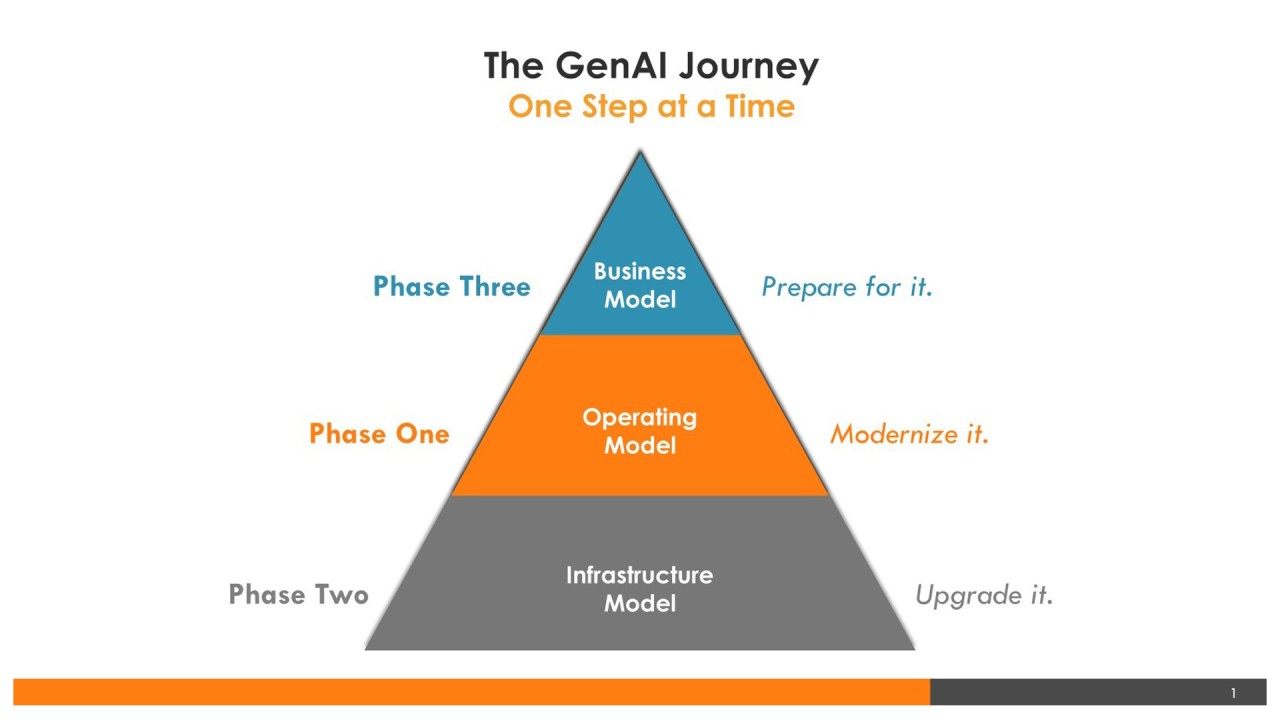
As companies move from experimenting with GenAI to deploying for real ROI, executives should plan for three phases of development along the following lines:
Phase One: Optimize your operating model. This is the one everyone gets right away. Every business process is encumbered by ‘stupid stuff’ — low-value-adding tasks that are “how we do business around here.” These are all candidates from process re-engineering, but in the meantime, people have to work through them or around them to get anything done. RPA (Robotic Process Automation) can solve for the ones that are routine. GenAI expands the aperture to include those that demand creating situation-specific text, the sort of thing that would answer an FAQ, nudge a prospect to take a call, or check in on users that are at risk of churning out. Expediting this sort of work is a no-regrets move, entailing little risk while generating modest ROI.
Phase Two: Upgrade your infrastructure model. While you will likely start your Phase One journey leveraging out-of-the-box GenAI from Microsoft, Google, or Amazon, as you get deeper into it, you will want to add RAG (Retrieval-Augmented Generation) to the mix. Retrieval-Augmented Generation (RAG) is the process of optimizing the output of a large language model so it references an authoritative knowledge base outside of its training data sources before generating a response. Basically, it taps into confidential in-house knowledge stores, as well as any external sources that provide expertise specific to your business, to build a more effective prompt for the public GenAI to leverage. Coordinating the APIs, keeping the guard rails on the process, and capturing the reusable knowledge gained will all require additional investment in your in-house IT capabilities.
Phase Three: Revisit your business model. Sooner or later, AI is going to materially disrupt the way business is done in your industry, eliminating old sources of trapped value while creating new ones at the same time. Customers will still look to your company to help them achieve their business outcomes, but they will be paying for different things than they pay for today. Consultancies and legal firms, for example, can expect to re-engineer their billable hour model, financial services their transaction fee model, and search engines their sponsored-ad model. The larger your enterprise, the more disruptive this is likely to be, so this would be a good time to test out new models in your Incubation Zone.
That’s what I think. What do you think?
Image Credit: Geoffrey Moore
 Sign up here to join 17,000+ leaders getting Human-Centered Change & Innovation Weekly delivered to their inbox every week.