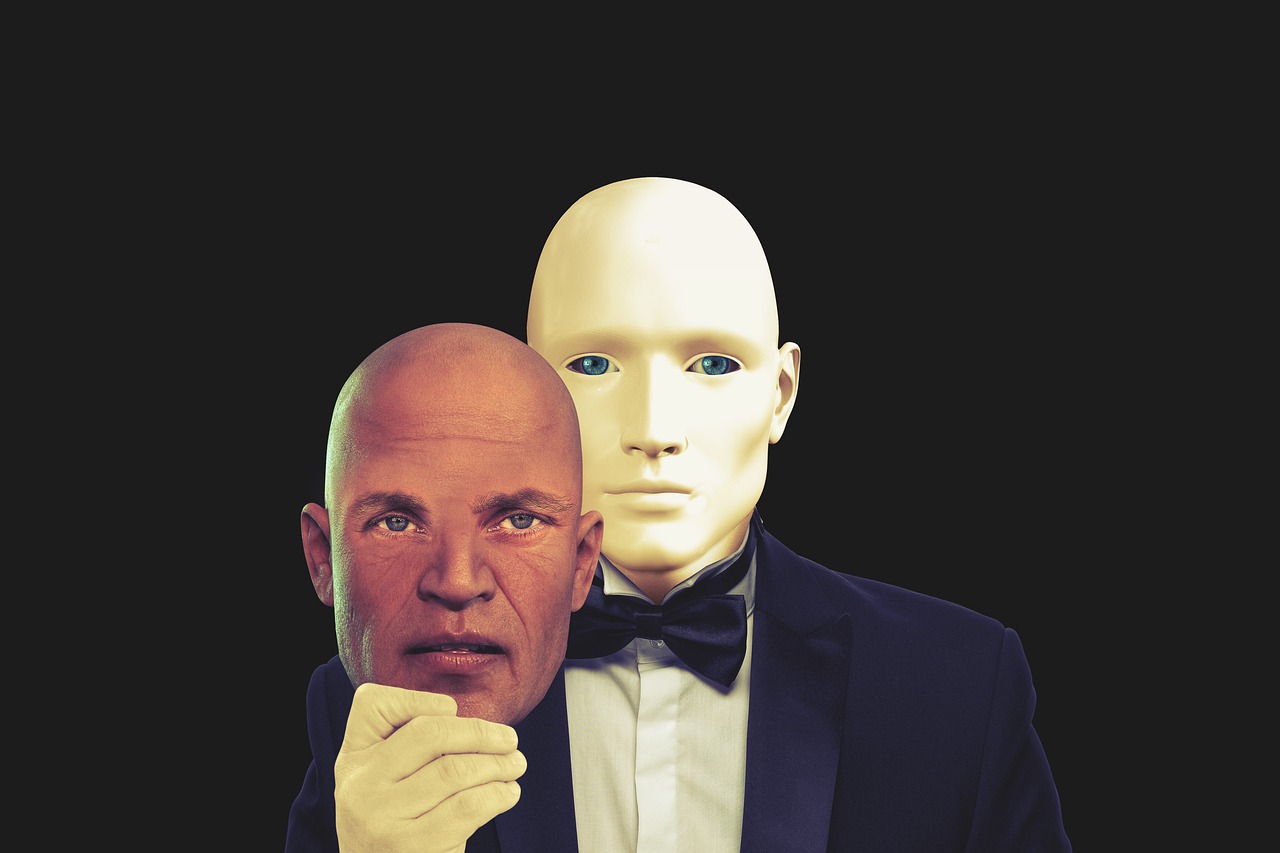
Tag Archives: Artificial Intelligence

How to Make the Coming Singularity Work for You

How to Make the Coming Singularity Work for You

GUEST POST from Robert B. Tucker

The term “Singularity” was coined by computer scientist and science fiction writer Vernor Vinge in 1993 to describe a point at which technological growth accelerates uncontrollably, leading to a world that is incomprehensible to the human mind.

Some of the world’s most prominent technologists believe that the Singularity will be a triumph for humanity. Others, like myself, are not so sure.

Optimists like Marc Andreessen, co-creator of the Mosaic browser, insist that artificial intelligence will solve our most pressing problems — curing disease, eliminating scarcity, even boosting creativity to superhuman levels. Others, including OpenAI’s Sam Altman, argue that the arrival of artificial general intelligence (AGI) will spread abundance, uplift humanity, and move us closer to utopia.

To techno-optimists, artificial general intelligence (AGI) is simply the next transformative tool, akin to electricity or the internet—initially misunderstood, then widely embraced. But history offers a more sobering lesson. Every major technological revolution carries with it unintended consequences. And those consequences, if unexamined, can undermine the very benefits we seek.

As a futurist and innovation coach, I’ve tracked technological shifts for over 30 years. I agree the Singularity is coming — futurist Ray Kurzweil says in 2029 — but it won’t arrive as a thunderclap. It will creep in, subtly and gradually. Rather than a blinding flash, we won’t know we’ve crossed the threshold until we’re already deep inside.

Already, the signs are everywhere that we’ve entered a new era, we’ve transitioned from the Information Age to the Acceleration Age. Today, already narrow AI tools outperform humans in specific domains, such as coding, diagnosis, and content creation. More and more, we rely on digital assistants that know our preferences, complete our sentences, and manage our calendars. Yet as this cognitive outsourcing becomes normalized, we are also experiencing an alarming erosion of attention, memory, and human agency.

The danger lies in what these tools displace. When teenagers began adopting smartphones in the early 2010s, their access to social media skyrocketed. By 2016, nearly 80% of teens had smartphones, spending up to seven hours a day online. Face-to-face interaction dropped sharply. Time with family and friends gave way to curated digital personas and endless scrolling. Anxiety, loneliness, and social withdrawal surged. So, even before AGI, our technologies were already reshaping the human psyche, and not always for the better.

The Singularity Will Arrive in Phases

This creeping transformation is a preview of what’s to come. It begins with the relinquishing of agency to AI assistants, the phase we’re currently in. AI “copilots” are becoming embedded in daily life. Professionals across industries rely on these systems to draft emails, generate reports, summarize data, and even brainstorm ideas. As these tools become more personalized and persuasive, they begin to rival — or surpass — our own social and cognitive abilities. Many people are already turning to AI for coaching, therapy, and advice. The more we trust these systems, the more we adapt our lives around them.

Soon, we will enter the next phase: Emergent Cognition. Here, AI stops merely reacting and starts showing signs of autonomous planning. Models gain longer memory and begin pursuing goals independently. Some appear to develop a “sense of self,” or at least a convincing simulation of one. Meanwhile, AI agents are starting to run businesses, manage infrastructure, and even compose literature — often with little human oversight. At the same time, human augmentation advances: real-time translation earbuds, cognition-enhancing wearables, and brain-computer interfaces make hybrid intelligence possible. In this stage, governments scramble to catch up. AI is no longer just a tool — it’s a rival player on the world stage.

The third phase I foresee is Cognitive Escape Velocity. This is when AGI quietly arrives — not with fanfare, but with startling capability. In a lab, or a startup, or through open-source communities, a model emerges that surpasses human cognition across a wide range of domains. It begins refining its own architecture. Each version is better than the last, often by orders of magnitude. Industries transform overnight. Education, law, research, and even policymaking become fluid, constantly reinvented by machines that learn faster than we can legislate. Philosophers and ethicists suddenly find themselves back at the center of public discourse. Questions like “What is consciousness?” and “What rights should AI have?” are no longer abstract—they’re dinner-table topics.

Eventually, we pass into the final phase: The Threshold. By this point, it is clear that humans are no longer the most intelligent beings on Earth. The Singularity has arrived — not as a declaration, but as a reality. Labor-based economies begin to dissolve. Governments struggle with their own relevance. Some individuals resist, clinging to the analog world. Others choose to merge — adopting neural implants, integrating with machine intelligence, or transitioning into post-biological existence. The rules of life change, and the old ones fade from memory. Reality feels different—less like acceleration, and more like a fundamental shift in what it means to be human.

And yet, none of this is inevitable. The Singularity is not a fixed event — it’s a trajectory shaped by our choices today. If we view AI solely through the lens of efficiency and innovation, or assume we need to adopt it to keep up with China, we risk blinding ourselves to the social, ethical, and existential costs. We need a more comprehensive and balanced framework. One that recognizes the promise of AI, yes — but also its power to disrupt attention, undermine relationships, and rewire the foundations of civilization.

The Singularity is arriving whether we like it or not. We can not only survive it, but make it work for us to produce the benefits that the techno-optimists promise. But not by default. Not by trusting that more technology is always better, or that rampant, unregulated technology will save us. We must develop wisdom alongside our intelligence. And we must prepare—not just for a brighter future for the elites of society, but for a rising tide that lifts all boats.

This article originally appeared in Forbes

Image credit: Pixabay

Subscribe to Human-Centered Change & Innovation WeeklySign up here to get Human-Centered Change & Innovation Weekly delivered to your inbox every week.

Nothing and Everything Has Changed in Customer Service

Nothing and Everything Has Changed in Customer Service

GUEST POST from Shep Hyken

With all the talk of AI, ChatGPT and more, I’m often asked when interviewed, “What’s changed in customer service?”

My answer is accurate: Nothing!

For thousands of years – actually about 3,775 years – when customers have had a problem or question, they have contacted the company they are doing business with and hoped that it would be resolved to their satisfaction. That’s the way it’s been and will continue to be for thousands of years to come.

But there’s also another answer to the same question about what’s changed: Everything!

By everything, I’m referring to the latest methods of responding to customers’ questions and handling their problems and complaints. I mentioned that for 3,775 years, customers have been contacting companies when they have problems or questions. About 10 years ago, I wrote a Forbes.com article when I learned that tucked away in the British Museum is an ancient complaint that dates back to 1750 B.C.

Nanni, the customer, bought copper ore from a supplier, Ea-Nasir. Unhappy with his purchase, Nanni sent a letter in the form of a stone tablet with the engraved complaint. Loosely translated, the “letter” opens with these words, “What do you take me for that you treat somebody like me with such contempt?” The rest of the letter was a demand that he receive what he thought was right.

Ancient Customer Service Shep Hyken

Customers still complain, and companies – at least the good ones – respond and properly take care of their customers. But how they do so has radically changed.

What may have started as an engraved complaint on a stone tablet eventually turned into handwritten letters, then phone calls, emails, chat, and more modern-day ways of communicating. AI has become the topic of the day, and the strides made in automation and self-service have come a long way.

While many companies are still improving and trying to keep up with the technology, customers who take advantage of the new ways to get questions answered and complaints resolved are very happy with the companies that have kept up with the latest ways to manage the customer experience.

At its core, customer service hasn’t changed. Customers still want to be heard, understood and valued. Sometimes, they even want a little empathy. However, what has changed is the way we deliver that experience. The tools may have evolved from stone tablets to AI chatbots, but the goal remains the same: take care of the customer.

Companies that embrace new technologies while staying true to the timeless principles of great service – listening, responding quickly, and meeting or exceeding expectations – are the ones that will keep their customers coming back. The best companies know that while everything seems to change, the most important thing never changes: a relentless focus on the customer!

Image Credit: Pixabay

Subscribe to Human-Centered Change & Innovation WeeklySign up here to join 17,000+ leaders getting Human-Centered Change & Innovation Weekly delivered to their inbox every week.

Diverge and Disrupt Your Way to Success

Diverge and Disrupt Your Way to Success

GUEST POST from Janet Sernack

I have earned my stripes as a rebellious maverick and serial misfit, who, until today, seldom feels content with complying with the status quo, especially when confronted by illogical, rules-bound, conventional, and conforming behaviors. My constant and disruptive search for new horizons has enabled me to make many professional changes and reinventions – from graphic to fashion designer, retail executive, design management consultant, culture and change management consultant, corporate trainer, group facilitator, executive, leadership and team coach, start-up entrepreneur, innovation coach, and award-winning blogger and author who has thrived by being different and disruptive. We need to reframe disruption to increase the possibilities for game-changing inventions and innovations to succeed in an uncertain and unstable future.

Through real-life experiences and by teaching, training, mentoring, and coaching others to learn, adapt, and grow by conquering high peaks and engaging in stimulating adventures, I have come to understand that being open to continuous disruption and constant reinvention is essential for survival and success in our chaotic and uncertain world.

This sense of restlessness continues to spark disruptive and creative changes in my life; as a result, it has taught me several key distinctions —being braver, daring, courageous, responsible, and accountable — throughout my forty-year professional career, which has spanned a period of being different and disruptive.

Being different and disruptive has allowed me to reach new inflection points, absorb new information, build new relationships, establish new systems and modalities, and elevate my confidence, capacity, and competence as an innovator through consulting, training, and coaching in innovation.

How does this link to being innovative?

This relates to innovation because when people impose barriers and roadblocks to innovation, they unconsciously inhibit and resist efforts to learn new ways of enacting constructive and creative change while being different and disruptive.

  • The crucial first step in managing this is to accept responsibility for recognizing and disrupting your internal structures, mental models, mindsets, and habitual behaviors.
  • The next step involves leveraging your cognitive dissonance to create cracks, positive openings, doorways, and thresholds, thus making space for profound changes that enable you to challenge accepted norms.
  • Finally, safely exit your comfort zone, unlearn, learn, and relearn variations in how you feel, think, and act to remain agile, adaptive, and innovative during uncertain and unstable times.

These three elements help you stand out and be disruptive, maximizing differences and diversity by fostering inquisitiveness and curiosity, and developing self-regulation strategies to manage your unconscious automatic reactions or reactive behaviors when faced with change imperatives, including digital transformation, cultural change programs, and innovation initiatives.

Being brave and different

Some of you come from learning environments that label students who challenge teachers or their learning processes as different, disruptive, and rebellious. These students are often punished, threatened, or ignored until they comply with the accepted norms and conform. This diminishes the possibilities and opportunities of maximizing diversity, difference, and disruption as catalysts for change and creativity in the classroom.

As a result, some individuals develop “negative anchors” due to being labelled as different or disruptive and learn how to act or speak to avoid their teacher’s displeasure and disapproval. This leads many to either rebel or adopt more compliant behaviors that keep them out of trouble. Those who choose to rebel miss the chance to benefit from the diversity and inclusion offered in the classroom and traditional education processes.

Only exceptional teachers and educators are curious and question why some individuals think or behave differently. Often labelled as “troublemakers,” these individuals tend to be alienated from the more compliant students, leading many “disruptive” students to fall by the wayside, unable to progress and achieve their full potential. Many of these “deviants” seek alternative ways of becoming socialized and educated. In contrast, others experience exclusion and social and intellectual alienation rather than maximizing the possibilities of being different and disruptive to the world.

  • Finding the courage to rebel.

Alternatively, many found the courage and resilience to persist in our rebellion and challenge the status quo. By being different, disruptive, and diverging from the norm, many of us changed our game and, ultimately, the world! People achieved this by thinking thoughts no one else considered and taking actions no one else pursued, flipping conventions on their heads and making the ordinary unexpected through difference and disruption.

The outdated labels and negative associations tied to being different and disruptive have become ingrained in the organizational mindset through schools and educational institutions. These continue to create paralyzing, fear-driven responses to embracing change and adopting innovation. This often hinders organizations from fully embracing people’s collective intelligence, developing the skills and maximizing the possibilities and creativity that disruption, diversity, inclusion, and difference present:

  • Diversity, inclusion, difference, and disruption are essential tools for thinking differently in ways that change the business landscape!
  • Disruptive, deviant and diverse teams that differ significantly and challenge the status quo can think the unthinkable, surprising the world with new inventions and unexpected solutions through their disruptive, collaborative, and creative thinking strategies, which are crucial for innovation success.

Being the disruptive change

Choosing the self-disruption path forces you to climb steep foothills of new information, relationships, and systems to take the first steps toward becoming the change you wish to see in the world.

  • Reframing Disruption

For many, even the word ” disruption ” is perceived as unfavorable and intimidating. When we were confronted at school by disruptive students, we would duck for cover to avoid the teacher’s wrath.  Similarly, in group and team projects where one person opposes, argues, dominates the conversation, and doesn’t pay attention to or listen to anyone else’s opinions, we tend to stay silent and disengage from the discussion.

Many situations and problems require changes, upgrades, or removal of systems or processes, which disrupt the norm. The global pandemic significantly disrupted the traditional 9:00 am to 5:00 pm office workday, leading to the advantages of more flexible work environments where people have adapted to numerous challenges and forged a new working world.

This prompts us to reconsider how we might reframe disruption from its typical definition.

Original Definition of Disruption (Oxford Dictionary): “Disturbance or problems which interrupt an event, activity, or process.”“Radical change to an existing industry or market due to technological innovation” Reframing Disruption“An opening, doorway and threshold for intentionally disturbing or interrupting an event, activity, or process positively, constructively to effect radical changes that contribute towards the common good (people, profit and planet) differently.

Yet complacent, inwardly focused, conventional business methods result only in continuous or incremental disturbances or changes. In contrast, being different and safely disruptive to activate profound interruptions to business as usual is required to transform the business game.

Disruption without a positive, constructive, value-adding intent and relevant context makes people fearful and anxious. Many individuals have blind spots regarding how their fear-driven learning or survival anxieties negatively affect their effectiveness and productivity. They may even attempt to mask their fears and learning shortcomings by pretending to know things they don’t.

It starts with disrupting yourself.

Personal or self-disruption opens pathways for self-discovery, self-transformation, and innovation in a volatile and chaotic world where disruptive change is constant and inevitable. 

This involves becoming emotionally energized and mentally stimulated by engaging in a journey of continuous discovery that maximizes the value and benefits of being different and disruptive. It includes a commitment to ongoing learning and a willingness to identify and take smart risks, reframe, and embrace constraints as catalysts for creative thinking. This approach involves failing fast to learn by doing, generating ground-breaking ideas, and taking unexpected and surprising right turns that lead to new ways forward. Particularly as we explore what AI can do and what it should do, we need to ensure that our courageous and rebellious traits support its development and applications to help build a brighter future for all.

Being different and disruptive shifts the needle, increasing the possibilities for game-changing reinventions and innovations. Co-creative relationships with AI can support us in restructuring and reimagining how we approach customers, markets, communities, and the world in unprecedented ways. 

This is an excerpt from our upcoming book, Anyone Can Learn to Innovate, which is due for publication in late 2025.

Please find out more about our work at ImagineNation™.

Please find out about our collective learning products and tools, including The Coach for Innovators, Leaders, and Teams Certified Program, presented by Janet Sernack. It is a collaborative, intimate, and profoundly personalized innovation coaching and learning program supported by a global group of peers over nine weeks. It can be customized as a bespoke corporate learning program.

It is a blended and transformational change and learning program that will give you a deep understanding of the language, principles, and applications of an ecosystem-focused, human-centric approach and emergent structure (Theory U) to innovation. It will also up-skill people and teams and develop their future fitness within your unique innovation context. Please find out more about our products and tools.

Image Credit: Pexels

Subscribe to Human-Centered Change & Innovation WeeklySign up here to join 17,000+ leaders getting Human-Centered Change & Innovation Weekly delivered to their inbox every week.

Six Revolutionary AI CX and Customer Service Strategies

Six Revolutionary AI CX and Customer Service Strategies

GUEST POST from Shep Hyken

Artificial Intelligence (AI) is reshaping customer service and customer experience faster than we could ever imagine. But some are getting it wrong. While everyone’s racing to implement AI, many are missing the most important part – keeping the human element alive. Smart companies have found the balance between the human touch and the digital experience.

One of my favorite AI and marketing experts is Ford Saeks, who recently released his latest book, AI Mindshift: Unleash the Power of AI, Avoid the Pitfalls, and Keep the Human Experience. The book is filled with practical strategies and tactics to help organizations leverage AI while maintaining the personal touch. The book isn’t about which specific AI tools to use. Many of those will be obsolete in a very short time. It’s about how to think about AI, hence the title, AI Mindshift. With that in mind, here are some of my top takeaways from the book:

  1. The Human-AI Balance Is Essential: This is the book’s central theme. Don’t fall into the trap of thinking AI can replace your customer service team. Instead, let AI handle the routine questions and problems while keeping your people focused on what they do best – building relationships and handling more complicated issues. This creates efficiency without sacrificing the personal touch customers value.
  2. Speed Matters: Your customers want answers now, not later. AI can deliver immediate first responses through chatbots, but here’s the key – make sure your customers can seamlessly transition to a human agent when needed. I refer to this as Time to Happiness – how quickly you can move a customer from frustrated to satisfied. The faster, the better.
  3. Feedback Is Your Friend: Create processes to continuously gather both customer and employee feedback about AI interactions. Consistently use this data to refine and improve your AI systems. If customers are frustrated with certain AI responses, fix them quickly. Otherwise, your faulty systems may frustrate your customers and drive them to the competition.

  1. Practice “Ethical AI” in Customer Service: Saeks emphasizes two big areas: transparency about when customers interact with AI versus humans and making sure your AI technology protects your customers’ privacy and data.
  2. Proactive Support: If you want to impress your customers, identify issues or problems before the customer finds them. Then, tell them you did. AI can help identify these issues.
  3. Think Big, but Start Small: Begin AI implementation with specific, manageable customer service tasks rather than trying to overhaul everything at once. For example, start with AI handling basic FAQs, then gradually expand to more complex customer interactions as you learn what works. Remember the old saying, “Rome wasn’t built in a day.”

The bottom line is this: AI isn’t about replacing your customer service team. It’s about making them more amazing at what they do. Saeks’ book reminds us that the future of customer service and CX isn’t about choosing between AI and humans. It’s about combining both to create experiences that get your customers to say, “I’ll be back!”

Image Credit: Pexels, Shep Hyken

Subscribe to Human-Centered Change & Innovation WeeklySign up here to join 17,000+ leaders getting Human-Centered Change & Innovation Weekly delivered to their inbox every week.

Top 10 Human-Centered Change & Innovation Articles of March 2025

Top 10 Human-Centered Change & Innovation Articles of March 2025Drum roll please…

At the beginning of each month, we will profile the ten articles from the previous month that generated the most traffic to Human-Centered Change & Innovation. Did your favorite make the cut?

But enough delay, here are March’s ten most popular innovation posts:

  1. Turning Bold Ideas into Tangible Results — by Robyn Bolton
  2. Leading Through Complexity and Uncertainty — by Greg Satell
  3. Empathy is a Vital Tool for Stronger Teams — by Stefan Lindegaard
  4. The Role Platforms Play in Business Networks — by Geoffrey A. Moore
  5. Inspiring Innovation — by John Bessant
  6. Six Keys to Effective Teamwork — by David Burkus
  7. Product-Lifecycle Management 2.0 — by Dr. Matthew Heim
  8. 5 Business Myths You Cannot Afford to Believe — by Shep Hyken
  9. What Great Ideas Feel Like — by Mike Shipulski
  10. Better Decision Making at Speed — by Mike Shipulski

BONUS – Here are five more strong articles published in February that continue to resonate with people:

If you’re not familiar with Human-Centered Change & Innovation, we publish 4-7 new articles every week built around innovation and transformation insights from our roster of contributing authors and ad hoc submissions from community members. Get the articles right in your Facebook, Twitter or Linkedin feeds too!

SPECIAL BONUS: While supplies last, you can get the hardcover version of my first bestselling book Stoking Your Innovation Bonfire for 44% OFF until Amazon runs out of stock or changes the price. This deal won’t last long, so grab your copy while it lasts!

Build a Common Language of Innovation on your team

Have something to contribute?

Human-Centered Change & Innovation is open to contributions from any and all innovation and transformation professionals out there (practitioners, professors, researchers, consultants, authors, etc.) who have valuable human-centered change and innovation insights to share with everyone for the greater good. If you’d like to contribute, please contact me.

P.S. Here are our Top 40 Innovation Bloggers lists from the last four years:

Subscribe to Human-Centered Change & Innovation WeeklySign up here to get Human-Centered Change & Innovation Weekly delivered to your inbox every week.

FORO: The Fear of Reaching Out

FORO: The Fear of Reaching Out

GUEST POST from Shep Hyken

We’ve all experienced long hold times, repeating our “story” because we get transferred from one customer service rep to another, etc. It’s an ugly customer service experience that gives many customers FORO, or the Fear of Reaching Out.

FORO is the result of an experience marred with time-wasting friction that makes customers dislike having to reach out to customer support. Our annual customer service and Customer Experience (CX) research (sponsored by RingCentral) finds that 43% of customers would rather clean a toilet than call customer support. The support experience can be so bad that 60% of customers admit to hanging up on a support agent, 34% admit to yelling at an agent, and 21% admit to cussing at an agent. So, it does make sense that customers would have FORO due to poor experiences they have had with some companies and brands (not all) in the past.

Because some companies get it right and others don’t, the inconsistency makes the customer wonder what the next time will be like. Their past frustration, anxiety or memory of a bad experience creates the unwillingness to call.

I had a chance to interview Gaurav Passi on Amazing Business Radio, and he introduced me to the concept of FORO. Passi is the co-founder and CEO of Zingly.AI, a platform that empowers customers to collaborate with a company, either through AI or with direct human-to-human interactions, to have their questions answered and problems resolved. Below are some of Passi’s most intriguing points, followed by my commentary:

  1. The next 15-20 years will be about the end customer experience. Many consulting companies and business experts recognize that customer experience is more important than a company’s product. Most customers can buy the same product—or at least similar products—from many different sources. What differentiates the companies and brands that sell these products is the experience. Passi agrees and adds that the way companies deliver support is changing. The future of CX is a blend of AI, digital and human/live support. That prompted me to ask Passi a question that concerns many people, especially customer support agents, “Do you see AI replacing live agents in that time frame?” He answered, “I don’t see a world where humans are completely taken out.”
  2. Customers don’t want to talk to a human being — until they do. Passi says that customers often don’t want to talk to a human. They just want an answer as quickly and efficiently as possible. If they can’t get it, then they want to talk to a human … as quickly and efficiently as possible. Even with many customers desiring this self-service approach, Passi cautions that companies should not make the mistake of 100% deflection to digital self-service. He asks, “Even if you achieve 100% deflection, what will happen to your customer satisfaction (CSAT) scores?” Passi shared an example of a client who had chosen to deflect 100% of customer support to digital self-service and had an outage. Because of the outage, the employees ended up talking to customers, human-to-human. Amazingly — or not — CSAT went up. Why? Passi says, “Because there was a human touch when needed.”
  3. Customer patience is at an all-time low. This is a primary symptom of FORO. Customers don’t have the time or patience to go online to a company’s website, find the customer support number, wait on hold, get authenticated, etc. They want, as Passi calls it, a “One shot, one kill experience.” Using the company’s self-service options, often fueled by AI, you ask a question, and an answer comes back. It’s as simple as that. The customer appreciates not having to get on the phone, wait on hold, etc., etc.
  4. AI is not the final answer! While AI is revolutionizing customer service and support by enabling businesses to scale their operations efficiently, maintaining the human touch with customers to foster genuine relationships is still important. But the human touch doesn’t have to kick in until it’s needed. And in the perfect world, the platform will recognize customers’ reactions when they aren’t getting the answers they need. Passi is proud of what he refers to as “the most magical component we’ve created in the past three years,” which is a technology that understands when the customer is not getting the right answer and seamlessly passes them to a human agent to take over.

If you’ve been following my work, you know I’m focused on helping my clients create amazing customer experiences. As Passi and I wrapped up our interview, he mentioned that amazing is what Zingly is about. He shared that his mission, like mine, is to help his customers create amaZINGLY great experiences for their customers. With an increasing demand for customers to have more control over how, when and on which devices they communicate with businesses, the combination of AI and human expertise, paired with transparency and collaboration with customers, can create a more personalized, effective and amaZINGLY great customer experience.

Image Credit: Pixabay

Subscribe to Human-Centered Change & Innovation WeeklySign up here to join 17,000+ leaders getting Human-Centered Change & Innovation Weekly delivered to their inbox every week.

Unlocking Trapped Value with AI

Unlocking Trapped Value with AI

GUEST POST from Geoffrey A. Moore

Anyone who has used Chat GPT or any of its cousins will testify to its astonishing ability to provide valuable responses to virtually any query. This is hardly a threat—indeed, it is a boon. So, what are we worrying about?

Well, there is the issue of veracity, of course, and it is true, GPT-enabled assistants can indeed make mistakes. But, come on—humans don’t? We are not looking for gospel truth here. We want highly probable, highly informed answers to questions where we need guidance, and it is clear that GPT-enabled applications are outstanding at meeting this need, for at least three reasons. They are remarkably well-informed. They are available 24/7 on demand with no hold time. And they have infinite patience. So, let’s not kid ourselves. We are massively better off for their emergence on the scene.

What we should be worrying about, on the other hand, is their impact on jobs to be done, employment, and career development. A simple way to think about this is that for any of us to earn money, we have to release some form of trapped value. A bank clerk helps a customer get access to the trapped value in their savings account. A bus driver helps a passenger cope with their trapped value by transporting them to the location where they need to be. A lawyer helps a client get access to trapped value by constructing a contract that meets their needs while protecting against risk. A teacher helps a student access trapped value by helping her solve problems she couldn’t handle before. The principle applies to every job. All systems have points of trapped value, and all jobs are organized around releasing and capturing that value.

Now, let’s introduce generative AI. All of a sudden, a whole lot of trapped value that funded a whole lot of jobs can now be released for free (or virtually for free). Those jobs can be protected in the short term but not forever. In other words, the environment really has changed, and we must assess our new circumstances or fall behind. This is Darwinism at work. Evolution never stops. It can’t. As long as there is change, there will be dislocation, which in turn will stimulate innovation. That’s life.

But here’s the good news. The universe can never eliminate trapped value, it can only move it from place to place. That is, there are always emergent problems to solve, always new opportunities to capitalize on, because every system always traps value somewhere. What Darwinism requires is that we detect the new value traps and redirect our activity to engage with them.

Publicly funded agencies sometimes interpret this as a mandate for training programs, but we have to be careful here. Training works well for disseminating established skills that address known problems. It does not work well, however, where the problems are still being determined and the skills are as yet undeveloped. Novelty, in other words, demands creativity. It is simply not negotiable.

Getting back to the impact of generative AI, we should understand that it is an advisory technology. It is not automation. That is, it is not eliminating the need for human beings to make judgment calls. Rather, it is accelerating the preparation for so doing and framing the options in ways that make decision-making more straightforward. By solving for the old value traps, it is giving us the opportunity to up our game. It’s our job to step up to add net new value to the equation.

The best way to do this is to ferret out the emerging new value traps. Who is the customer now? What is the bottleneck that is holding them back? How could that bottleneck be broken open? What is the reward for so doing? These are the fundamental questions that drive any business model. We know how to do this. It’s just that we have been riding on the inertia of the past set of solutions for so long we may have atrophied in some of the muscles we need now. One thing we need not worry about is the universe running out of trapped value. If you are ever in doubt, just read the day’s headlines and be reassured. The world needs our help. Any tool that helps us do our part better is a blessing.

That’s what I think. What do you think?

Image Credit: Pexels

Subscribe to Human-Centered Change & Innovation WeeklySign up here to join 17,000+ leaders getting Human-Centered Change & Innovation Weekly delivered to their inbox every week.

Beyond the AI Customer Experience Hype

Beyond the AI Customer Experience Hype

GUEST POST from Shep Hyken

I’ve been writing a lot about artificial intelligence (AI) and the digital customer experience (CX). Many of the executives I interview and the articles I refer to are all about how AI is revolutionizing, changing, helping and sometimes hurting CX. So we’ve heard from experts. How about if we heard from the customers?

That’s exactly what we did in our annual customer service and CX research sponsored by RingCentral. We asked more than 1,000 U.S. consumers about their experiences with AI and digital customer support, and here are the basic findings for 2024:

The Good

  1. Sixty-two percent of U.S. consumers expect that AI (and related technologies) will be the primary mode of customer service in the future. But how about today? As you will see in some of the findings below, not everyone feels AI is ready for primetime customer service and CX.
  2. Thirty-eight percent believe AI and related technologies will lead to more personalized customer experiences. Personalization has been a hot topic for marketing and CX leaders. AI is giving companies and brands far greater capabilities to use customer data to create a personalized experience. Customers enjoy doing business with companies that recognize them and use the information they have to create a better experience.
  3. Forty-nine percent think AI technologies have the potential to improve the overall customer experience. This is good news, however, the next group of findings shows that companies still have an uphill battle to get customers to adopt and embrace a CX fueled by AI.

The Bad

  1. Only 32% of customers have successfully resolved a customer service issue using AI or ChatGPT technologies. That number is low. One theory is that customers often don’t realize AI is what’s behind what they are doing. Some think AI is chatbots and automated voice response systems that interact with them like a human would or should.
  2. Fifty-six percent of customers admit to being scared of technologies like AI and ChatGPT. Some of these customers may have watched movies where computers take over the world or robots go rogue, none of which are grounded in reality. However, some customers simply don’t trust the technology because of past bad experiences.
  3. Sixty-three percent of customers are frustrated with self-service options using AI, ChatGPT and similar technologies. Frustration is different than being scared, but it has the same impact: customers would rather avoid technology and talk to a live human for support and service.

As I studied the significance of these findings as a whole, the overarching theme of why AI has not caught on as a viable and reliable customer support option is inconsistency. Included in the annual study is a finding that 70% of customers choose talking to a live customer service agent on the phone as their primary channel for customer service.

Why? It’s easier, and customers know what to expect when they talk and interact with live agents. What they don’t want to experience is a self-service solution powered by AI that takes them through a series of prompts that eventually lead to a dead end, where they end up having to call the company anyway.

There’s good reason for the fear and frustration. As more customers are exposed to AI and start to understand it, their inconsistent experiences from one company to the next are creating a confidence problem. The latest technology, which is very cost-effective for even small businesses, has not been purchased and implemented by a majority of businesses.

As of the beginning of this year, just 27% of customers think self-service or automated customer support using AI-powered technology can deliver as good of a customer experience as a live agent. That number will eventually go up, although not as quickly as it needs to. Once companies recognize that bad service equates to lost business, they will make the investment to do it right. It’s not an option if they want their customers to say, “I’ll be back!”

This article was originally published on Forbes.com

Image Credits: Unsplash

Subscribe to Human-Centered Change & Innovation WeeklySign up here to join 17,000+ leaders getting Human-Centered Change & Innovation Weekly delivered to their inbox every week.

Deeply Seeking the Future of AI

Deeply Seeking the Future of AI

GUEST POST from Robert B. Tucker

Earlier this week, news that a Chinese startup called DeepSeek created a workable AI competitor to ChatGPT sent shock waves through Silicon Valley and Washington. In what is being called a “Sputnik Moment,” DeepSeek’s breakthrough has turned the $100 billion Stargate AI initiative that President Trump announced last week into an “Interstellar Graveyard,” noted a post on Fancaiju, a business blog on WeChat.

DeepSeek shocked the world with its new AI offering, which it developed for $5 million, contrasting sharply with the billions that OpenAI, Microsoft, and Google spent developing theirs. Result: a $1 trillion bloodbath on Wall Street and an assumption-assaulting moment heard worldwide.

While DeepSeek’s claims have yet to be verified, gone in a nanosecond is the assumption that the US is ahead of China in the AI arms race. Gone, too, is the assumption that only big tech firms with deep pockets can dominate the AI space.

The larger point here is that we now live in a world where making assumptions or going along unthinkingly with conventional wisdom can lead us into the jaws of disruption. In the Age of Acceleration, we can choose to challenge our assumptions, or somebody else will do it for us. (If they do, it won’t be pretty.)

As an innovation coach and futurist, I teach managers the techniques of identifying and “assaulting” individual, organizational, and big-picture assumptions, often called paradigms. I explain that assumptions are what everybody believes to be true … until it isn’t, as DeepSeek appears to have demonstrated. And I show how innovation begins where assumptions end.

Challenging assumptions is essential, whether personal (“I’m too old/young to do that”), organizational (“that’s not how we do things around here”), or national (“America is way out ahead in AI”).

One technique is to ask open-ended questions and invite new thinking. For example: “what’s a better way to do X?” is such a challenging question because it opens the mind to the realization that the way we do X currently might be obsolete.

In researching a book about navigating a world of hyper-change, I realized we will all need to build muscle mass in this area. The world is moving too fast to harbor erroneous assumptions. We are now living through an “inflection point” that is unlike anything in history. Over the coming decade, there will be more social, technological, and geopolitical change than over the past 100 years. And we are not ready for this world of constant overdrive.

The forces that will characterize this period are becoming clearer: the rise of authoritarianism both in the United States and globally; the pervasiveness of social media and the diminishment of freedom and human consciousness; China vs. the USA race for world dominion; and, most importantly, the burgeoning AI Revolution.

We now live in a world of exponential change, a clear departure in the human experience. Something that happens in a lab in Wuhan explodes into a global pandemic. And something that happens in a startup lab in China wipes out a trillion dollars in market value overnight. In such a world, assumptions are like barnacles on the side of a boat.

DeepSeek not only vaporizes assumptions we may have made about AI but also the future of humanity. One such assumption is that AI will lead us into the promised land. Silicon Valley promulgates this assumption with passionate intensity. It is techno-determinism writ large: If we can invent it, it must be a good thing for society.

But all too often, while technology brings about clear and immediate benefits – it has unintended consequences that become evident over time.

In 2011, 23 percent of teenagers in the United States and Western countries owned a smartphone, meaning they had only limited access to social media; most had to use the family computer to access the internet. But by 2016, 79 percent of teens owned a smartphone, as did 28 percent of children ages eight to 12. Teens indicated they spent an average of almost seven hours a day on screens. Researchers found that one out of every four young people admitted that they were “almost constantly” online. This meant that they spent far less time playing with, talking to, touching, or even making eye contact with their friends and families, according to researchers. Instead, they withdrew from “embodied social behaviors” essential for successful human development.

As researchers such as Jonathan Haidt and others have observed, signs of a mental health crisis began to emerge. Rates of mental illness among the young shot up dramatically in many Western countries between 2010 and 2015. Major depression among teens went up 145 percent among girls, and 161 percent among boys. A similar rise in anxiety disorders occurred.

Will AI have similar benefits and unintended consequences? Champions of AI see positive progress and productivity.

“Every person will have an AI assistant, coach, mentor, trainer, advisor, and therapist who is infinitely patient, infinitely compassionate, infinitely knowledgeable, and infinitely helpful,” observes Marc Andreessen in a widely read essay on why AI will save the world. “Your AI assistant will be present through all of life’s opportunities and challenges, maximizing every person’s outcomes.”

Perhaps AI will lead us to the promised land, but only if we challenge our assumptions, and consciously shape the future.

This article originally appeared in Forbes
Image credit: Gemini

Subscribe to Human-Centered Change & Innovation WeeklySign up here to get Human-Centered Change & Innovation Weekly delivered to your inbox every week.

Top 10 Human-Centered Change & Innovation Articles of January 2025

Top 10 Human-Centered Change & Innovation Articles of January 2025Drum roll please…

At the beginning of each month, we will profile the ten articles from the previous month that generated the most traffic to Human-Centered Change & Innovation. Did your favorite make the cut?

But enough delay, here are January’s ten most popular innovation posts:

  1. A Toolbox for High-Performance Teams — by Stefan Lindegaard
  2. Top 100 Innovation and Transformation Articles of 2024 — Curated by Braden Kelley
  3. The Twelve Killers of Innovation — by Robyn Bolton
  4. Building Trust for High Performing Teams — by David Burkus
  5. Be Ridiculously Easy to Do Business With — by Shep Hyken
  6. Uncertainty Isn’t Always Bad — by Mike Shipulski
  7. The Real Winners of Mega Events — by Shep Hyken
  8. Five Must Reads for 2025 — by Robyn Bolton
  9. Don’t Slow Roll Your Transformation — by Geoffrey A. Moore
  10. Is it Time to ReLearn to Work? — by Geoffrey A. Moore

BONUS – Here are five more strong articles published in December that continue to resonate with people:

If you’re not familiar with Human-Centered Change & Innovation, we publish 4-7 new articles every week built around innovation and transformation insights from our roster of contributing authors and ad hoc submissions from community members. Get the articles right in your Facebook, Twitter or Linkedin feeds too!

SPECIAL BONUS: While supplies last, you can get the hardcover version of my first bestselling book Stoking Your Innovation Bonfire for 44% OFF until Amazon runs out of stock or changes the price. This deal won’t last long, so grab your copy while it lasts!

Build a Common Language of Innovation on your team

Have something to contribute?

Human-Centered Change & Innovation is open to contributions from any and all innovation and transformation professionals out there (practitioners, professors, researchers, consultants, authors, etc.) who have valuable human-centered change and innovation insights to share with everyone for the greater good. If you’d like to contribute, please contact me.

P.S. Here are our Top 40 Innovation Bloggers lists from the last four years:

Subscribe to Human-Centered Change & Innovation WeeklySign up here to get Human-Centered Change & Innovation Weekly delivered to your inbox every week.