Category Archives: Innovation

Why Great Teams Embrace Failure

And How to Do Failure Properly
Why Great Teams Embrace Failure

GUEST POST from David Burkus

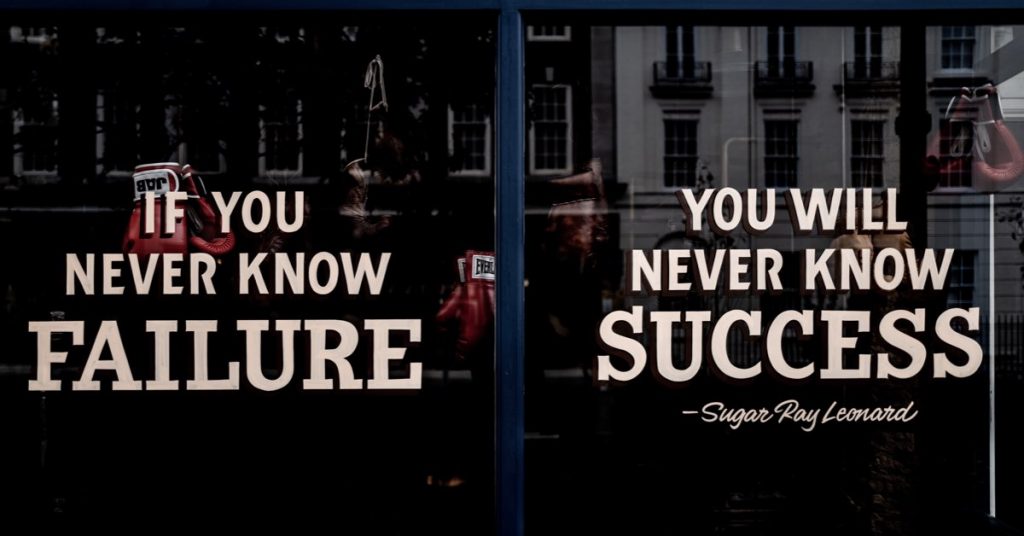
Failure is feedback. And that maxim is nowhere more true than on teams. When individual team members or the whole team experiences a failure, how they respond can be the difference between a team that continuously improves and enhances performance, and a team that falls apart.

And research backs this up. One of the first studies of psychological safety focused on how teams responded to failure. Amy Edmondson examined the teams of nurses on various wards of a hospital and found that the teams with the highest rated leaders had a higher than average rate of reported medical errors. It wasn’t until looking further that she found the medical error rates were actually the same as other wards…but lower rated leaders who punished failures scared nurses away from reporting them. In other words, the great teams with great leaders embraced failure. And in doing so, they made it easier for everyone on the team to learn from mistakes and get better.

In this article, we’ll review three ways many teams embrace failure on individual, team, and system-wide levels in order to learn, grow, and better perform.

Learning Moments

The first way great teams embrace failure is through learning moments. A learning moment is a positive or negative outcome of any situation that is openly and freely shared to benefit all. And learning moments aren’t strictly a euphemism for failures. A learning moment happens whenever a team member experiences a personal failure and shares that failure with the team along with what they’re learned as a result. The idea is to grant amnesty over the occasional screw-up so long as the person brings a lesson as well. Over time, learning moments become opportunities to discuss how to change one’s approach or put systems in place to reduce failures in the future. But most importantly, learning moments destigmatize failures and move them from being something to be denied at all costs to something that increases performance. Failure is a great teacher—and when team member’s share learning moments they’re reducing the tuition for everyone else on the team by saving them from their own failures.

Post-Mortems

The second way great teams embrace failure is through post-mortems. A post-mortem is exactly what it sounds like…it’s a meeting to discuss a project after it has died. It’s meant to diagnosis teamwide failures (though many high performing teams also conduct post-mortems after the completion of successful projects as well). The purpose of the meeting is not to find someone to blame, or someone to give all the credit. The goal is to extract lessons from the project about where the team is strong and where they need improvement. When people are open and honest about their weaknesses and contributions to failure, teams celebrate the vulnerability that was just signaled.

Many teams can conduct an effective post-mortem with just five simple questions:

  1. What was our intended result?
  2. What was the actual result?
  3. Why were they different?
  4. What will we do the same next time?
  5. What will we do differently next time?

These five answers help identify the parts of the project that teams need to improve, while keeping them focused on the future and not on blaming people for actions in the past.

Failure Funerals

The third way great teams embrace failure is through failure funerals. As if a post-mortem didn’t sound morbid enough, failure funerals are useful rituals to reflect on failures that happened due to situations outside of the team’s control. Sometimes failures just happen. The environment changes, unforeseen regulations are created, or clients inexplicably decide to part ways. When that happens, it’s important to create moments for teams mourn the loss—but also extract some learning. This can be a short as a 15- or 30-minute meeting where team members share their feelings about the project that failed—and pivot toward what they appreciated about serving on the project and what they learned. Some teams even observe a moment of silence or a toast to the project gone wrong. These types of celebrations not only focus the team on lessons learned, but they encourage future risk-taking and keep teams motivated even when those chances of failure are high. Failure is inevitable—learning is a choice. And the purpose of a failure funeral is to make the deliberate choice to learn.

In fact, each of these three rituals represent a deliberate choice toward learning. Great teams embrace failure because doing so embraces learning. Those extra lessons help them improve over time—and trust each other more over time—and eventually become a team where everyone feels they can do their best work ever.

Image credit: David Burkus

Originally published at https://davidburkus.com on May 1, 2023.

Subscribe to Human-Centered Change & Innovation WeeklySign up here to join 17,000+ leaders getting Human-Centered Change & Innovation Weekly delivered to their inbox every week.


How to Determine if Your Problem is Worth Solving

How to Determine if Your Problem is Worth Solving

GUEST POST from Mike Shipulski

How do you decide if a problem is worth solving?

If it’s a new problem, try to solve it.

If it’s a problem that’s already been solved, it can’t be a new problem. Let someone else re-solve it.

If a new problem is big, solve it in a small way. If that doesn’t work, try to solve it in a smaller way.

If there’s a consensus that the problem is worth solving, don’t bother. Nothing great comes from consensus.

If the Status Quo tells you not to solve it, you’ve hit paydirt!

If when you tell people about solving the problem they laugh, you’re onto something.

If solving the problem threatens the experts, double down.

If solving the problem obsoletes your most valuable product, solve it before your competition does.

If solving the problem blows up your value proposition, light the match.

If solving the problem replaces your product with a service, that’s a recipe for recurring revenue.

If solving the problem frees up a factory, well, now you have a free factory to make other things.

If solving the problem makes others look bad, that’s why they’re trying to block you from solving it.

If you want to know if you’re doing it right, make a list of the new problems you’ve tried to solve.

If your list is short, make it longer.

EDITOR’S NOTE: Braden Kelley’s Problem Finding Canvas can be a super useful starting point for doing design thinking or human-centered design.

“The Problem Finding Canvas should help you investigate a handful of areas to explore, choose the one most important to you, extract all of the potential challenges and opportunities and choose one to prioritize.”

Image credit: Pixabay

Subscribe to Human-Centered Change & Innovation WeeklySign up here to join 17,000+ leaders getting Human-Centered Change & Innovation Weekly delivered to their inbox every week.

Innovation Is Driving Away Your Top Talent

Innovation Is Driving Away Your Top Talent

GUEST POST from Robyn Bolton

You want and need the best, most brilliant, most awesome-est people at your company. But with unemployment at a record low, the battle for top talent is fierce.

So, you vow not to enter the battle and invest in keeping your best people and building a reputation that attracts other extraordinary talents.

You offer high salaries, great benefits, flexible work arrangements, the prestige of working for your company, and the promise of rapid career progression. All things easily matched or beaten by other companies, so you get creative.

INNOVATION!

Your best people are full of ideas and have the confidence and energy to make things happen. So, you unleash them. You host hackathons and shark tanks. You install idea collection software and run contests. You offer training on how to be more innovative. You encourage employees to spend 20% of their time on passion projects.

And they quit.

They quit participating in all the opportunities you offer.

They quit sharing ideas.

They quit your company,

Not because they are ungrateful.

Or because they don’t want to innovate.

Or because they don’t have ideas.

They quit because they realize one of the following “truths”

They’re not “Innovators”

High performers believe they need to work on an innovation project to progress (because management explicitly or implicitly communicates this). But when they finally get their chance, they struggle. The project falls behind schedule, struggles to meet objectives, and is quietly canceled. They see this as a failure. They believe they failed.

But they didn’t fail. They learned something very uncomfortable – they’re not good at everything.

Innovation is different than Operation. When you’re operating, you’re working in a world full of knowledge, where cause and effect are predictable and “better” is easily defined. When you’re innovating, you’re working in a world full of assumptions, where things are unpredictable, patterns emerge slowly, and few things are defined. Most people are great at operating. Some people are great at innovating. Extraordinarily few are great at both.

Innovation is a hobby, not an imperative

The problem with innovation efforts like hackathons, shark tanks, and “20% Time” is that people pour their hearts and souls into them and get nothing in return. Sure, an award, a photo with the CEO, and bragging rights motivate them for a few weeks. But when their hard work isn’t nurtured, developed, and brought to a conclusion (either launched or shelved), they realize it was all a ruse.

They are disappointed but hope the next time will be different. It isn’t.

They stop participating to spend time on “more important” things (their “real” work). But they still care, so they keep tabs on other people’s efforts, quietly hoping this time will be different. It isn’t.

They grow cynical.

They choose to stay and accept that innovation isn’t valued or resign and go somewhere it is.

Their potential is bigger than your box

“I felt like Dorothy in the Wizard of Oz. Before the training, the world was black and white. After, it was full color. I don’t want to go back to black and white.”

For this person, the training had gone wonderfully awry.

The training built their innovation skills but motivated them to find another job because it opened their eyes. They realized that while they loved the uncertainty and creativity of innovation, their place in the organization wouldn’t allow them to innovate. They were in a box on an org chart. They no longer wanted to be in that box, but the company expected them to stay.

But are these “truths” true?

As Mom always said, actions speak louder than words.

  • Who does your company value more – innovators or operators? The answer lies in who you promote.
  • Is innovation a strategic priority? The answer lies in where and how you allocate resources (people, money, and time).
  • Do you want to retain the person or the resource? The answer lies in your willingness to support the person’s growth.

Speak the truth early and often

If a top performer struggles in an innovation role, don’t wait until the project “fails” to reassure them that operators are as (or more) important and loved as innovators. Connect them with senior execs who faced the same challenges. Make sure their next role is as desirable as their current one.

(Or, if innovators are truly valued more than operators, tell them that, too.)

If innovation is an imperative, commit as much time and effort to planning what happens after the event as you do planning the event itself. Have answers to how people will be freed up to continue to work on their projects, money will be allocated, and decisions will be made.

(Or, if innovation really is a corporate hobby, follow the model of top universities and let people participate f they want and give everyone else time off to pursue their hobbies).

If you want to retain the person more than the resource, work with them to plot a path to the next role. Be honest about the time and challenge of moving between boxes and the effects on their career. And if they still want to break out of the box, help them.

(Or, if you want them to stay in the box, tell them that, too.)

Don’t let Innovation! drive away your top talent. Use honesty to keep them.

Image credits: Pixabay

Subscribe to Human-Centered Change & Innovation WeeklySign up here to join 17,000+ leaders getting Human-Centered Change & Innovation Weekly delivered to their inbox every week.

Top 10 Human-Centered Change & Innovation Articles of April 2023

Top 10 Human-Centered Change & Innovation Articles of April 2023Drum roll please…

At the beginning of each month, we will profile the ten articles from the previous month that generated the most traffic to Human-Centered Change & Innovation. Did your favorite make the cut?

But enough delay, here are April’s ten most popular innovation posts:

  1. Rethinking Customer Journeys — by Geoffrey A. Moore
  2. What Have We Learned About Digital Transformation Thus Far? — by Geoffrey A. Moore
  3. Design Thinking Facilitator Guide — by Douglas Ferguson
  4. Building A Positive Team Culture — by David Burkus
  5. Questions Are More Powerful Than We Think — by Greg Satell
  6. 3 Examples of Why Innovation is a Leadership Problem — by Robyn Bolton
  7. How Has Innovation Changed Since the Pandemic? — by Robyn Bolton
  8. 5 Questions to Answer Before Spending $1 on Innovation — by Robyn Bolton
  9. Customers Care About the Destination Not the Journey — by Shep Hyken
  10. Get Ready for the Age of Acceleration — by Robert B. Tucker

BONUS – Here are five more strong articles published in March that continue to resonate with people:

If you’re not familiar with Human-Centered Change & Innovation, we publish 4-7 new articles every week built around innovation and transformation insights from our roster of contributing authors and ad hoc submissions from community members. Get the articles right in your Facebook, Twitter or Linkedin feeds too!

Have something to contribute?

Human-Centered Change & Innovation is open to contributions from any and all innovation and transformation professionals out there (practitioners, professors, researchers, consultants, authors, etc.) who have valuable human-centered change and innovation insights to share with everyone for the greater good. If you’d like to contribute, please contact me.

P.S. Here are our Top 40 Innovation Bloggers lists from the last three years:

Subscribe to Human-Centered Change & Innovation WeeklySign up here to get Human-Centered Change & Innovation Weekly delivered to your inbox every week.

A Flop is Not a Failure

Why innovation thrives on being able to reframe

A Flop is Not a Failure

GUEST POST from John Bessant

Mexico City, Olympic Games, 1968. The stadium is packed, the wider world looks on via TV coverage. Everywhere there’s an air of expectancy but also an awareness that at such high altitude it’s going to be hard for athletes to beat their best. Records are there to be broken, you have to hope for something special.

And in the high jump event they weren’t disappointed. The record for men’s high jump had hovered around 2.23 m for several years. But a young 21-year-old was about to change that; Dick Fosbury, representing the USA broke this with a height of 2.24 m and won the gold medal.

What was so spectacular was not just the achievement but the way it was accomplished. Unlike other athletes who did the (apparently obvious) thing of running and then jumping over the bar, swinging one leg behind the other, Fosbury paused at the moment of jumping, turned his back and flopped over it backwards. Why would anyone do that?

Fosbury had an answer — he’d been working on it for five years before his Mexico success. He’d been frustrated with the limits of the traditional ‘straddle’ jump and experimented with alternative ways of getting over the bar, finally hitting on and perfecting his backwards approach. The big advantage of doing this was that it gave him a lower and different centre of gravity and allowed for more clearance over the bar.

The ‘Fosbury flop’ as it quickly became known opened up new possibilities for the sport; within ten years it had become the dominant mode for all jumpers and helped move the world record to 2.45 m which was set in 1993 by Javier Sotomayor. These days anyone attempting the high jump has come to resemble the ‘fish flopping on the deck of a boat’ as one newspaperman described Fosbury’s Mexico model.

John Bessant Doodly Image

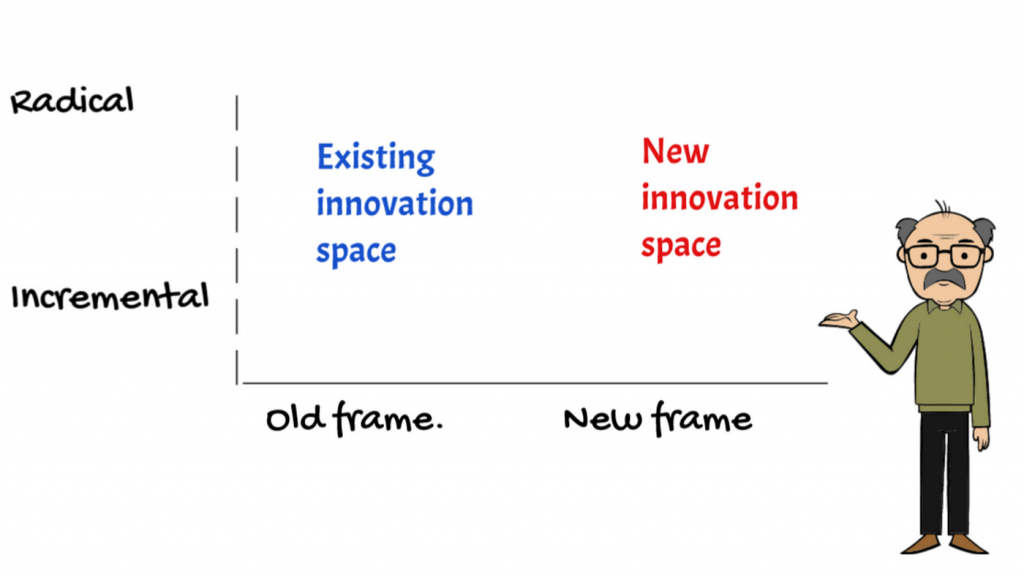
What Fosbury’s feat reminds us of is the power of reframing in innovation. Innovation can take place anywhere along a continuum from doing what we do better — incremental — to doing something completely different — radical. And it can cover what we offer the world — product or service — and the ways we create a deliver that offering — process. That gives us plenty to keep us busy in our innovation day.

But sometimes we can reframe, look at what we’re doing in a different way, identify novel approaches. For example we can rethink the positioning of our innovation — opening up a new market segment or moving into a new geographical area. There’s plenty of learning and pivoting involved in doing that — as Netflix discovered when it began to extend its offer from the USA to Canada and then Europe and beyond.

We can be more radical and change the story we tell and who we tell it to — think about Starbucks and others and the way they repositioned coffee from a simple hot drink to something consumed in as many varieties and combinations as fine wine. Or Haagen Dasz and others who reframed the idea of ice cream as a sensuous adult pleasure rather than as a treat for kids on hot days. Or Henry Ford, bringing the motor car from the small luxury goods market to being a ‘car for Everyman at a price every man can afford’.

This kind of reframing opens up new possibilities but poses new challenges. Just as Fosbury and his followers had to rethink so much of their approach and learn new tricks (not least about where and how to land!) so this kind of position reframing requires major modifications to our product/service offering and our delivery processes.

Think about low-cost airlines — if your main idea is to offer flights at half the price of your competitors, you’ll quickly find out how fast you can lose money. The only way you can make that model work, selling seats to a market who otherwise couldn’t afford to fly will be to radically change your processes, stripping costs and complexity out of everything from booking to check-in, to boarding right through to turnaround time management. Master those tricks and you not only have a viable business model, you’ve got something which the rest of the pack have to catch up with.

But reframing doesn’t stop there; business model innovation is a very hot topic these days and at heart it is finding ways to change the game by replacing one business model with an alternative. Business models set out the architecture through which an innovation can deliver value– for which market segments, with which value proposition and so on. Business model innovation is all about replacing that system with a different better one.

We’ve got plenty of examples of this happening — think about Uber or AirBnB and how they’ve not only become successful new models themselves but also offered templates for others to use in different fields. Or what Spotify and the music streaming services have done to entertainment by changing the model from ownership to rental.

It’s the same with capital goods makers like Caterpillar or Rolls Royce. Instead of selling products on a one-off basis they now offer the functionality of those products to their customers on a rental basis, charging them for ‘power by the hour’ for example.

Once again such reframing isn’t trivial, it drives innovation in product and service and it requires major rethinking about the processes which create and deliver such service. If Rolls-Royce, General Electric and others are being paid for the number of hours their engines are keeping airliners in the air then they need to work hard to ensure that they are reliable and well-maintained. So, they’ve had to innovate in their products to improve reliability through intelligent condition monitoring, they’ve had to install skilled staff at airports making sure engines are quickly and regularly checked and serviced and they’ve had to rethink their financial and support operations to reflect the changed approach.

Beyond all of this comes the possibility of completely reframing the whole approach to innovation — innovation model innovation. Sometimes it’s not enough just to tweak and adapt the product or service development pathway or revise arrangements for process improvement. Sometimes there’s a need for a radical rethink.

A good example of this is the experience of Procter and Gamble and their emerging response to the opportunities and challenges posed by ‘open innovation’. Faced with a world in which ‘not all the smart people work for you’ they reframed their approach to creating thousands of new products from one which had dominated a century and a half of growth through Research and Develop. They replaced it with a new strategic approach to innovation, with the deceptively simple label of ‘Connect and develop’.

The challenge was easy to express and CEO Alan Lafley did so in 2000 when he launched the program. In the future P&G would get 50% of its innovations from outside as distinct from the previous model which was 100% home grown. Simple to say but it has taken then 25 years to turn the challenge into a viable and successful new model. On the way they’ve had to re-engineer so much, finding ways to identify and filter external ideas, to assimilate them and deploy that new knowledge in new directions for the business and simultaneously to make better use of knowledge which P&G had created and then never found a home for.

There’s a useful Greek word — paradigm — which can be used to describe the way we see the world. It’s like the mental spectacles through which we see which problems to focus on and which solutions might be relevant. Change the spectacles — reframe to a new paradigm — and everything looks different, opening up new and fruitful possibilities. It’s an idea which has been put forward by Thomas Kuhn the philosopher of science to explain how our thinking progress follows a pattern of ‘punctuated equilibrium’ — long periods of working within a particular frame followed by a transition to a new way of looking and thinking.

Paradigm innovation is powerful and influential; it changes the world. Which might be a fitting epilogue to the fulsome obituaries which have appeared in response to the sad news of Dick Fosbury’s death last month. He was a true innovator and he changed the way athletes thought about their challenge, helping them aim and reach higher.

Image Credits: Eugene Register-Guard (From the Medford Star-Tribune, 1964), John Bessant (Doodly)

You can find a podcast version of this here and a video version here

And if you’d like to learn with me take a look at my online course here

Subscribe to Human-Centered Change & Innovation WeeklySign up here to join 17,000+ leaders getting Human-Centered Change & Innovation Weekly delivered to their inbox every week.

3 Examples of Why Innovation is a Leadership Problem

Through the Looking Glass

3 Examples of Why Innovation is a Leadership Problem

GUEST POST from Robyn Bolton

Do you sometimes feel like you’re living in an alternate reality?

If so, you’re not alone.  Most innovators feel that way at some point.

After all, you see things that others don’t.

Question things that seem inevitable and true.

Make connections where others only see differences.

Do things that seem impossible.

It’s easy to believe that you’re the crazy one, the Mad Hatter and permanent resident of Wonderland.

But what if you’re not the crazy one?

What if you’re Alice?

And you’re stepping through the looking glass every time you go to work?

In Lewis Carroll’s book, the other side of the looking glass is a chessboard, and all its inhabitants are chess pieces that move in defined and prescribed ways, follow specific rules, and achieve defined goals.  Sound familiar?

Here are a few other things that may sound familiar, too

“The rule is, jam tomorrow and jam yesterday – but never jam today.” – The White Queen

In this scene, the White Queen offers to hire Alice as her lady’s maid and pay her “twopence a week and jam every other day.”  When Alice explains that she doesn’t want the job, doesn’t like jam, and certainly doesn’t want jam today, the queen scoffs and explains the rule.

The problem, Alice points out, is that it’s always today, and that means there’s never jam.

Replace “jam” with “innovation,” and this hits a little too close to home for most innovators.

How often do you hear about the “good old days” when the company was more entrepreneurial, willing to experiment and take risks, and encouraged everyone to innovate?

Innovation yesterday.

How often do you hear that the company will invest in innovation, restart its radical innovation efforts, and disrupt itself as soon as the economy rebounds, business improves, and things settle down a bit?  Innovation tomorrow.

But never innovation today.  After all, “it’s [innovation] every other day: today isn’t any other day, you know.”

“When I use a word, it means just what I choose it to mean – neither more, not less.” – Humpty Dumpty

In this scene, poor Alice tries to converse with Humpty Dumpty, but he keeps using the “wrong” words.  Except they’re not the wrong words because they mean exactly what he chooses them to mean.

Even worse, when Alice asks Humpty to define confusing terms, he gets angry, speaks in a “scornful tone,” and smiles “contemptuously” before “wagging his head gravely from side to side.

We all know what the words we use mean, but we too often think others share our definitions.  We use “innovation” and “growth,” assuming people know what we mean.  But they don’t.  They know what the words mean to them.  And that may or may not be what we mean.

When managers encourage people to share ideas, challenge the status quo, and take risks, things get even trickier.  People listen, share ideas, challenge the status quo, and take risks.  Then they are confused when management doesn’t acknowledge their efforts.  No one realizes that those requests meant one thing to the managers who gave them and a different thing to the people who did them.

“It takes all the running you can do, to keep in the same place.  If you want to go somewhere else, you must run at least twice as fast as that!” – The Red Queen

In this scene, the Red Queen introduces life on the other side of the looking glass and explains Alice’s new role as a pawn.  Of course, the explanation comes after a long sprint that seems to get them nowhere and only confuses Alice more.

When “tomorrow” finally comes, and it’s time for innovation, it often comes with a mandate to “act with urgency” to avoid falling behind.  I’ve seen managers set goals of creating and launching a business with $250M revenue in 3 years and leadership teams scrambling to develop a portfolio of businesses that would generate $16B in 10 years.

Yes, the world is moving faster, so companies need to increase the pace at which they operate and innovate.  But if you’re doing all you can, you can’t do twice as much.  You need help – more people and more funding, not more meetings or oversight.

“Life, what is it but a dream?”

Managers and executives, like the kings and queens, have roles to play.  They live in a defined space, an org chart rather than a chessboard, and they do their best to navigate it following rules set by tradition, culture, and HR.

But you are like Alice.  You see things differently.  You question what’s taken as given.  And, every now and then, you probably want to shake someone until they grow “shorter – and fatter – and softer – and rounder – and…[into] a kitten, after all.”

So how do you get back to reality and bring everyone with you?  You talk to people.  You ask questions and listen to the answers.  You seek to understand their point of view and then share yours.

Some will choose to stay where they are.

Some will choose to follow you back through the looking glass.

They will be the ones who transform a leadership problem into a leadership triumph.

Image credits: Pixabay

Subscribe to Human-Centered Change & Innovation WeeklySign up here to join 17,000+ leaders getting Human-Centered Change & Innovation Weekly delivered to their inbox every week.

Design Thinking Facilitator Guide

A Crash Course in the Basics

Design Thinking Facilitator Guide

GUEST POST from Douglas Ferguson

Are you interested in facilitating a design thinking session at your workplace or for another organization? Have you learned about design thinking and want to get started or deepen your skills? If you are a newbie to design thinking facilitation, this is the guide for you. We’ve highlighted the basics you need to know to lead a design thinking or innovation workshop. Facilitation skills are essential to navigating complex business problems, and a skilled facilitator can supercharge the team’s performance. We encourage you to attend our Facilitation Lab, a weekly virtual meetup to support effective implementation.

Read this design thinking facilitator guide, and you’ll have solid tools to be successful from start to finish.

What is Design Thinking?

To start, let’s define some key terms. First, design thinking. Design thinking is a process used for creative problem-solving; a methodology that puts the end-user or customer at the center of decision-making. Design thinking is also characterized by an emphasis on prototyping and testing ideas and working in a highly collaborative manner with a cross-disciplinary team. Design thinking isn’t a passing business trend. It’s a powerful and widely-implemented approach to strategic work adopted by both startups and major corporations to tackle business challenges. Here are a few of our favorite design thinking books we recommend adding to your library for an in-depth background.

A design thinking facilitator leads collaborative working sessions that utilize design thinking practices to reinvigorate creative growth. The gatherings include brainstorms, innovation workshops, executive summits, design springs, multi-day workshops, and long-term projects.

A design thinking facilitator is a coach to innovative, productive group think and work.

Design thinking facilitators help teams focus on the customer throughout the process and uncover new insights and ideas typically aren’t revealed during business as usual (ex. the boss has an epiphany in the shower and tells the team to execute). In a nutshell, a design thinking facilitator is a conduit to innovative productive group discovery and creation. Facilitation skills are key to maximizing these outcomes.

Want to learn the basics of how to facilitate a design thinking workshop? Read our 7-step guide below, then consider our Workshop Design Course to help you get started.

Step 1: Get Focused

Your first task as a design thinking facilitator is to clarify and define what you need to accomplish through your workshop or meeting. You want to determine the focus based on team needs or challenges. Record the primary goal and high-level questions to answer, and make sure participants are aligned on defined objectives.

Pro-tip: Before planning the workshop, consider 30-60-minute conversations with each stakeholder before the design thinking session to make sure objectives are clear.

Step 2: Make the Guest List

Now that you’ve defined objectives, you and the key stakeholder(s) need to determine fitting participants. Who’s taking part in the workshop? Your client will likely have a strong hand in building the guest list. As the design thinking facilitator, it’s crucial that you advise here.

Too many people leads to chaos. Too few people means too few ideas.

Diversity in skillset, expertise, attitude, tenure, etc. is essential to an informed perspective. The more points-of-view that are represented, the more applicable your solutions. In terms of number of participants, somewhere between 7 to 15 is ideal. Too many people leads to chaos. Too few people means too few ideas.

Step 3: Make Your Agenda

With the objective and participants determined, the next step of facilitating a design thinking workshop is the agenda. A wise way to plan your agenda is to start at the end: With what tools do you need to leave the design thinking session? Are you prioritizing alignment? A system or process in place? A collection of novel ideas? Are you looking for a prioritized roadmap or a paper prototype of a new experience? When you clearly define your goals, you can plan the design thinking activities to build toward the conclusion.

The individual activities you will implement varies greatly based on the challenge. Need inspiration to kick off your Design Thinking activities? There are many free resources to help guide you and your team on your journey. We’ve also outlined exercises for virtual workshops here.) No matter your timeline, prioritize time for introductions, icebreakers, and short breaks to check inboxes.

Pro tip: Be generous when time-boxing your design thinking activities. Everything will take longer than you think. A good rule of thumb is to double the time you imagine an individual activity will take.

Step 4: Get Your Space

Next up: Where are you going to host your design thinking workshop? While it might sound like a minor detail, the space affects the day’s success.

We recommend getting participants out of their workspace(s) to inspire fresh thinking and distance from day-to-day work. Whether you need to offer a hybrid option, have the budget for an offsite space, or need to use the office, consider the following to enhance the experience:

  • Look for good natural light and character. (A windowless hotel conference room is not ideal.)
  • Provide comfortable seating for all. (Simple, but we’ve seen it happen.)
  • Guarantee wall space or boards for pinning materials and capturing ideas.
  • Don’t forget AV needs: a projector for presenting, a screen if someone needs to collaborate remotely, etc.

Want more information on choosing a space? Check out 7 Things to Consider When Choosing a Workshop Venue here.

Step 5: Gather Supplies

With space, participants, and a solid agenda, you now need supplies to execute your workshop. Your exact supplies will be driven by your activities, agenda, and chosen space. Here are some basics to get you started:

If you want to dive deeper into the specific supplies that are recommended for a design sprint (which are helpful for any workshop), read here.

Pro-Tip: If possible, bring a filling breakfast and lunch so you don’t have to leave to eat. Also, healthy snacks, water, and coffee will keep people engaged as the day goes on.

Step 6: Be the Leader

It’s the big day! It’s time for you to lead the group through the agenda and activities you worked so hard on. The more you facilitate, the more skilled you become. 

Make sure to be yourself and keep the following things in mind as you lead the team in design thinking:

  • You’re the boss: People are looking for you to guide them. You’re prepared and are the expert. Establish your authority early and feel confident making decisions and telling the group when it’s time to move forward in the agenda.
  • Establish rules: Let the group know the rules of the day. Encourage people to stay off their phones and to fully participate in the session. Let them know that there are designated breaks.

Give everyone a voice: As the facilitator, you are responsible for making sure everyone is heard. If you notice someone being quiet, pull them into the conversation. You designed the guest list with their contribution in mind.

Step 7: Wrap It Up & Play It Back

After the workshop has come to a close, recognize your role as a design thinking facilitator to equip the group with tools for long-term success. Consider these in the days afterward:

  • Photograph and document: Make sure you photograph important output from the meeting: Post-its, diagrams, or worksheets that may have been created.
  • Synthesize the learnings: Take time to reflect on the session and the ideas that came of it. Create a MURAL board or a short presentation to share with participants and their teammates.

Get the group back together: Schedule time to share back your learnings with the participants and make plans together for how to implement thinking and learnings into daily work.


Looking to become a Design Thinking Facilitator?

What’s the importance of bringing in a professional to lead the session? A design thinking facilitator positively disrupts the team dynamic. Read up on why professional facilitation can make a difference.

We hope you’re excited to become a Design Thinking facilitator. Voltage Control has design thinking facilitator training will maximize your facilitation skills. Our Facilitation Certification programs will guide you through key facilitation skills and provide you with ample opportunities to practice.

Article originally published at VoltageControl.com

Image credit: Pexels

Subscribe to Human-Centered Change & Innovation WeeklySign up here to join 17,000+ leaders getting Human-Centered Change & Innovation Weekly delivered to their inbox every week.

Get Ready for the Age of Acceleration

How Preparing to Climb Mt. Everest Can Help You

Get Ready for the Age of Acceleration - Doug Burbank

GUEST POST from Robert B. Tucker

The phone rang in geologist Doug Burbank’s office at the University of Southern California. A climbing buddy was calling to ask if he wanted to join an expedition that was shortly to climb Everest. Impulsively, even though he had a full teaching schedule, a wife, and two young daughters, Doug said, “Count me in.”

What Doug did next to prepare for the adventure of a lifetime will amaze you. It’s a story I’ll share at the Pacific Coast Futures Retreat on May 2nd, in Santa Barbara, and it will help you deal with the uncertainty and volatility of the Age of Acceleration and constant disruption just ahead.

Doug realized that, living in Los Angeles, frost is rare. His body was not ready. He began researching the question: “How do I prepare my body to live in subzero temperatures day after day?” Add to this challenge the fact that Doug suffers from acrophobia – fear of heights. He needed to mitigate this potentially immobilizing condition – and fast! Doug’s innovative solutions will surprise you (e.g. “Put your hands in a bucket of ice water for ten minutes a day for two weeks to acclimate the body,” etc.).

Doug Burbank’s strategies have great relevance to the Everest before all of us: how to prepare for a world where the rate of change is increasingly exponential and never before experienced in human history?

In virtually every realm of our lives, the forecast is one of increased volatility and uncertainty. From energy to A.I. to unbridled technology. From medical breakthroughs to social media, to the rapidly warming climate. These forces will disrupt millions who are not prepared. They will create new winners and losers. They will influence markets. They will drive consumer and voter and social behavior. And they will challenge us as never before to look and think ahead of the curve, to mine the lessons of history, to unleash human agency and vision to shape the future we want rather than the one we inherit by default.

Over the next ten years, there will be more change than over the past 100 years. The divide will grow between those who “get it” and those who don’t. Between those who watch changes envelop them and toss them around and those who take calculated risks to create their own reality.

My friend Doug Burbank knows the secrets of how to adapt to new environments and come out alive. The Pacific Coast Futures Retreat will be a day of learning and discussion about the overdrive future. At this powerful, one-day gathering of forward thinkers from the world of business, academia, government, and the non-profit sector, the focus will be on understanding and mapping the emerging terrain. We will master the necessary “navigational skills” that will alert us to threats and unleash the creativity to discover and seize the opportunities that change brings about.

Pacific Coast Futures Retreat Banner

If you want to develop new navigational mindsets that will enable you to thrive and prosper no matter what shape the future takes, and if you seek to become indispensable to your organization, family, community and to play an outsized role in shaping the future for the common good, please join us by registering here.

Image credits: Robert B. Tucker, Doug Burbank

Subscribe to Human-Centered Change & Innovation WeeklySign up here to join 17,000+ leaders getting Human-Centered Change & Innovation Weekly delivered to their inbox every week.

A Different Approach to Well-being, Resilience and Creativity

A Different Approach to Well-being, Resilience and Creativity

GUEST POST from Janet Sernack

In our previous blogs, we outlined the need, in our chaotic world of unknowns, to reclaim our focus and attention and take charge of our own minds. By reclaiming these, and enhancing self-awareness we have a deeper understanding of the sources of our anxiety and distractions.  How to self-manage and self-regulate them through developing deliberate calm. To effectively create consciousness, and a safe space that potentially transforms the power of our minds and hearts to connect with others, cultivate well-being, harness people’s collective genius, and generate our resilience, through thinking about creativity differently.

Transforming fear and alarm

This mobilizes the energy our fears, anxiety, and alarm provide to transform the power of our minds and develop physical and psychological well-being. We can then apply proven neuroscience principles and coaching practices to cultivate resilience and think about creativity differently.

Transforming our fears and alarm in this way increases our resilience in responding to events in real-time, anticipating future events, and processing learning’s post events. It also enhances our well-being and creativity to enable us to be courageous and compassionate when inventing and innovating in an uncertain and constantly changing environment.

The potential outcomes include people experiencing more positive emotions, increased engagement at work, increased development of positive relationships, and more meaningful and purposeful work. These help us be adaptive, and transform the power of our hearts and minds to be creative, accomplish, learn, adapt, grow, and innovate through disruption.

Well-being is in crisis

In the latest report, by Udemy on “Workplace Learning Trends” they compare data collected from Australian workers (human capital) in early September 2022 with previous surveys in November 2019, August 2020, and May 2021.

They discovered three surprising truths about well-being, including:

  • Workers’ resilience levels are waning. More than two-thirds of workers (68.5%) felt like they were burning out at work. This is impacting workers’ levels of performance, job satisfaction, and commitment.
  • There is a crisis for meaningful work Only 39.1% of workers said their work was valuable and worthwhile, versus 47% in 2021, and 52.9% in 2020.
  • Many workplaces are wasting their well-being Workplaces have too much invested in EAP services (which are proving only slightly more effective than doing nothing) and not enough in more effective tools that workers are more comfortable accessing like Wellbeing Artificial Intelligence Bots, Wellbeing Apps, Wellbeing Workshops and Wellbeing Coaching.

This reinforces the need to think and act differently when we approach cultivating well-being, resilience, and creativity to better realize our human potential and human skills in times when they are our most valuable assets and needed the most and are crucial to future success!

Developing deliberate calm

“Deliberate calm” involves developing a practice of adaptive, intentional choices that anyone can develop by embracing what was once regarded as “soft” stuff: self-awareness, emotional intelligence, and mindfulness to learn proactively and lead dynamically amid the most uncertain circumstances, where according to Aaron De Smet, the co-author of “Deliberate Calm: How to Learn and Lead in a Volatile World”:

“Why do we say “deliberate”? Because if you’re not deliberate about it you will probably freak out. I need to be very deliberate in knowing that I’m in a chaotic situation, knowing the stakes are high, knowing there’s a lot of uncertainty, and then deliberately calming myself down and taking stock”.

Deliberate calm looks at the inner world, the outer world, the context, and the dynamic between those and starts by slowing down to create a safe space for people to enjoy the benefits of deliberate calm.  This helps activate, focus, and unleash our creative brains and facilitates thinking about creativity differently.

Hitting our pause buttons

Creating deliberate calm is one of the most critically urgent human skill sets to develop.

It involves creating for ourselves and co-creating, with others, more normalized states of equilibrium and calmness. This enables us to cultivate our physical and psychological well-being, develop resilience and unleash creativity differently by accessing our collective intelligence, skills, and experience through applying proven neuroscience principles and coaching practices.

It starts with initiating a habit of pausing long enough to take deep breaths, retreat, reflect, and access these inner parts of ourselves; including noticing our emotions, identifying our triggers, observing our physical reactions to normalize our equilibrium, coherence, and calmness, and focusing on thinking about creativity differently.

Re-appraising our situation

We can then reappraise what is really going on, by identifying what our emotions are telling us, sustaining the most resourceful emotions and letting negative ones go, and finally, by identifying the key options for taking positive actions. Ultimately take smarter risks, make smarter decisions, and take more intelligent actions that cultivate our well-being, develop our resilience, unleash creativity differently, and satisfy our desire for meaning, purpose, and accomplishment.

As evidenced by our global coaching practice, this personally empowering and energizing activity focuses our attention, minds, and hearts on what really matters, and on what we can truly influence and control in a world of unknowns, and engages people deeply in doing the value-adding, productive and meaningful work that delivers it.

Three new deliberate calming practices to access and unleash our creative brains

  • Being grounded: involves being fully embodied, whole, centered, and balanced in ourselves and our relationships, we are in complete control of our mental, physical, and emotional selves, and are not easily influenced or shaken by other ideas or individuals.
  • Our unconscious mind, through our brains’ default mode network (DMN), is freed to wander, and be spontaneous in emerging and generating novel and surprising ideas and patterns.

This is usually achieved by regularly practicing a range of very simple activities that help us get centered, including removing any distractions (mobile phones), deep breathing (box breathing), and slow grounding repetitive exercises such as Feldenkrais.

  • Being mindful: involves focusing our conscious attention on the present moment, our physical sensations, thoughts, and emotions in an accepting, nonjudgmental, and discerning way. It involves training our unconscious minds to notice, focus and pay deep attention to what is really going on, for ourselves, for others, and in the system, we are operating within.
  • Our conscious minds are now provided with the focus necessary for guided problem-solving and for identifying the actions required to deliver the desired outcomes.

This is usually achieved by simple activities, by directing your focus when walking during the day (in nature without headsets), yoga, swimming, golf, tennis, listening to music, cooking, or by simple mindful meditation practices.

  • Being conscious: involves being in the present moment, or fully in the “here and now,” and means that we are grounded, fully aware, and mindful of what is happening at every moment because we are now consciously aware and able to shift our minds and generate creative thinking strategies.
  • Our conscious minds are able to exploit possibilities and make sense of the ideas that surface in the mind-wandering phase, by accessing the salience network, which then recruits the executive control networks, in our brains to refine and develop an idea. We can then exploit the range of creative ideas to make unexpected connections and to emerge, diverge and converge novel ideas for thinking about creativity differently, as well as for smart risk-taking, decision-making, and innovative problem-solving.

Empowering people to envision and transform

Creating a safe space, to transform the power of our minds and hearts to connect with others cultivates our well-being, harnesses peoples’ collective genius, generates resilience, and unleashes creativity by thinking about creativity differently.

This manifests as an opportunity to empower people to plan and make the nudges necessary to kickstart change, envision and plan for the future of unknowns.

Rather than unintentionally colluding with their unconscious panicking and retreating from the fears, anxiety, and risks currently emerging in an uncertain world full of disruption and crises.

Find out about our collective, learning products and tools, including The Coach for Innovators, Leaders, and Teams Certified Program, presented by Janet Sernack, is a collaborative, intimate, and deeply personalized innovation coaching and learning program, supported by a global group of peers over 9-weeks, starting Friday, May 12, 2023.

It is a blended and transformational change and learning program that will give you a deep understanding of the language, principles, and applications of an ecosystem focus, human-centric approach, and emergent structure (Theory U) to innovation, and upskill people and teams and develop their future fitness, within your unique innovation context.

Image Credit: Pixabay

Subscribe to Human-Centered Change & Innovation WeeklySign up here to join 17,000+ leaders getting Human-Centered Change & Innovation Weekly delivered to their inbox every week.

5 Questions to Answer Before Spending $1 on Innovation

5 Questions to Answer Before Spending $1 on Innovation

GUEST POST from Robyn Bolton

Just because you can doesn’t mean you should.

That is one of the very few pieces of advice that seems to apply to everything, including spandex workout clothes, movie tickets, and bank fees.

And innovation.

Just because you can invest in innovation doesn’t mean you should.

Yes, I know this is borderline blasphemy in a volatile, uncertain, complex, and ambiguous (VUCA) world. It’s also downright shocking from someone who spends every day trying to help companies innovate.

But it’s true.

And the state of corporate innovation would be infinitely better if executives stopped spending on innovation simply because they can and started exploring if they should.

You can start that exploration with these five (5) questions:

1. What is the current state of the business?

If the business fundamentals aren’t solid – you’re hemorrhaging cash, customers are abandoning you like a sinking ship, and you can’t make or deliver a quality solution to save your life – DO NOT INNOVATE! Do not spend $1 or 1 minute on anything other than fixing your fundamentals.

While innovation theory is very clear about the importance of building your core business and creating new ones, it does not apply in this situation because, in this situation, you won’t be in business long enough to reap the rewards of your innovation investment. Instead, invest in re-building your business into a viable and sustainable enterprise. Then invest in innovation.

If your fundamentals are solid, go to the next question.

2. Why is innovation important?

There is no wrong answer to this question. But your answer has massive implications on what you do next and the results you should expect.

If innovation is important because it enables or accelerates a strategic priority, creates or reclaims a competitive advantage, or fundamentally alters the basis of competition in your industry, then invest in it like the Mission Critical endeavor it is and expect game-changing results.

If innovation is important because it builds your reputation as an innovator while helping you attract and retain customers, employees, and investors, then it’s a marketing or PR tactic. Invest in it as you would other marketing and PR tactics and measure success in awareness, trial, and loyalty.

If innovation is important because investors are demanding it, take time to understand why. The answer is probably one of the two reasons above.

3. What does it need to deliver, and by when?

What gets measured gets managed. If it’s measured, it’s important. If it’s not measured, it’s a hobby.

You would never enter a new market, invest in a new plant, or launch a new product without success metrics and KPIs. You start with a plan for measuring success because these investments are important.

If innovation is truly important, you need to do the same thing – determine what you will measure (how we will quantify success), how (specific metrics and tools), and how often (monthly, quarterly, annually). And then do the work of measuring (and managing).

4. How much are we willing to invest before we get ROI?

Innovation takes time to generate meaningful results, but very few executives have the patience to wait years for results, mainly because they know that every dollar or person they allocate to innovation is a dollar or person not generating (almost) guaranteed results this year.

Be honest about when you expect meaningful results and whether you’re willing to continue to invest money and hire people for that long before you get results. If there’s a gap, close it by moving the time to results in (and adjusting expectations) or moving your investment horizon out.

5. ???

I want to hear from you.

What’s a question that you wished leadership asked before investing in innovation?

Drop your suggestion in the Comments, and I promise to respond!
(plus others will thank you)

Image credits: Pixabay

Subscribe to Human-Centered Change & Innovation WeeklySign up here to join 17,000+ leaders getting Human-Centered Change & Innovation Weekly delivered to their inbox every week.