
Category Archives: culture

Why You Must Define Innovation

(Hint: It’s All About Efficiency)

Why You Must Define Innovation

GUEST POST from Robyn Bolton

As the world around you becomes more volatile, uncertain, complex, and ambiguous (VUCA), you know that you need to build skills to navigate it and inspire others to follow your path.

But what if you are the source of ambiguity? 

Because you are. Every time you speak.

The words we use always have clear meaning and intent to us but may not (and often don’t) have the same meaning and intent to others. 

That’s why one of the first and most essential things a company can do when starting its innovation journey is to decide what “innovation” means. It may seem like an academic exercise, but it becomes very practical when you discover that one person thinks it means something new to the world, another thinks it’s a new product, and a third thinks it means anything commercialized.

Ambiguity = Efficiency?

“Innovation” isn’t the only word that is distractingly ambiguous. Language, in general, evolved to be ambiguous because ambiguity makes it more efficient. In 2012, cognitive scientists at MIT found the ambiguity–efficiency link, noting “words with fewer syllables and easier pronunciation can be ‘reused,’ avoiding the need for a vast and increasingly complex vocabulary.” 

You read that right. In language, ambiguity leads to efficiency.

Every time you speak, you’re ambiguous. You’re also efficient.

The RIGHT level of Ambiguity = Efficiency!

In 2014, researchers at Pompeu Fabra University in Barcelona found that language’s ambiguity is critical to communicating complex ideas,

“the researchers argue that the level of ambiguity we have in language is at just the right level to make it easy to speak and be understood. If every single object and concept had its own unique word, then language is completely unambiguous – but the vocabulary is huge. The listener doesn’t have to do any guessing about what the speaker is saying, but the speaker has to say a lot. For example, “Come here” might have to be something like “I want you to come to where I am standing.” At the other extreme, if the same word is used for everything, that makes it easy for the speaker, but the listener can’t tell if she is being told about the weather or a rampaging bear.”

.

Either way, communication is hard. But Sole and Seoane argue that with just the right amount of ambiguity, the two can find a good trade-off.”

A certain level of ambiguity is efficient. Too much or too little is inefficient.

How to find the RIGHT level of Ambiguity for “Innovation”

In everyday life, it’s ok for everyone to have a slightly different definition of innovation because we all generally agree it means “something new.”  Sure, there will be differences of opinion on some things (is a new car an “innovation” if it just improved on the previous model?). Still, overall, we can exist in this world and interact with each other despite, or maybe because of, the ambiguity.

Work is a different story. If you are responsible for, working on, or even associated with innovation, you better be very clear on what “innovation” means because its definition determines expectations and success for what you do. If it means one thing to you and a different thing to your boss, and a third thing to her boss, you’re in for a world of disappointment and pain.

Let’s avoid that.  Instead:

  1. Define the word
  2. Get everyone to agree on the definition
  3. Use the word and immediately follow it with, “And by that, I mean (definition)”

Gently correct people when they use the word to mean something other than the agreed-upon definition. Once everyone uses the word correctly, you can stop defining it every time because its meaning has taken root.

So, the next time someone rolls their eyes and comments on the “theoretical” or “academic” (i.e., not at all practical, useful, or actionable) exercise of defining innovation, smile and explain that this is an exercise in efficiency.

Subscribe to Human-Centered Change & Innovation WeeklySign up here to join 17,000+ leaders getting Human-Centered Change & Innovation Weekly delivered to their inbox every week.

How to Make Navigating Ambiguity a Super Power

How to Make Navigating Ambiguity a Super Power

GUEST POST from Robyn Bolton

You are a leader. The boss. The person in charge.

That means you know the answer to every question, make the right decision when faced with every choice, and act confidently when others are uncertain. Right?

(Insert uproarious laughter here).

Of course not. But you act like you do because you’re the leader, the boss, the person in charge.

You are not alone. We’re all doing it.

We act like we have the answers because we’ve been told that’s what leaders do. We act like we made the right decision because that’s what leaders do in a volatile, uncertain, complex, and ambiguous (VUCA) world where we must work quickly and flexibly while doing more with less.

But what if we didn’t? 

What if we stopped pretending to have the answer or know the right choice? What if we acknowledged the ambiguity of a situation, explored its options and interpretations for just a short while, and then decided?

We’d make more informed choices. We’d be more creative and innovative. We’d inspire others.

So why do we keep pretending?

Ambiguity: Yea! Meh. Have you lost your mind?!?

Stanford’s d.School calls the ability to navigate ambiguity “the super ability” because it’s necessary for problem-finding and problem-solving. Ambiguity “involves recognizing and stewing in the discomfort of not knowing, leveraging and embracing parallel possibilities, and resolving or emerging from ambiguity as needed.”

Navigating ambiguity is essential in a VUCA world, but not all want to. They found that people tend to do one of three things when faced with ambiguity:

  • Endure ambiguity as “a moment of time that comes before a solution and is antagonistic to the objective – it must be conquered to reach the goal.”
  • Engage ambiguity as “an off-road adventure; an alternate path to a goal. It might be rewarding and helpful or dangerous and detrimental. Its value is a chosen gamble. Exhilaration and exhaustion are equally expected.”
  • Embrace ambiguity as “oceanic and ever-present. Exploration is a challenge and an opportunity. The longer you spend in it, the more likely you are to discover something new. Every direction is a possibility. Navigation isn’t simple. It requires practice and patience.

Students tend to enter the program with a resignation that ambiguity must be endured. They leave embracing it because they learn how to navigate it.

You can too.

In fact, as a leader in a VUCA world, you and your team need to.

How to Embrace (or at least Engage) Ambiguity

When you want to learn something new, the library is one of the best places to start. In this case, the Library of Ambiguity  – an incredible collection of the resources, tools, and activities that professors at Stanford’s d.School use to help their students build this super ability.

It’s easy to get overwhelmed by the number of resources, so here are three that I recommend:

Design Project Scoping Guide

  • What it is: A guide for selecting, framing, and communicating the intentions of a design project
  • When to use it: When you are defining an innovation project and need to align on scope, goals, and priorities
  • Why I like it: The guide offers excellent examples of helpful and unhelpful scoping documents.

Learning Zone Reflection Tool

  • What it is: A tool to help individuals better understand the tolerance of ambiguity, especially their comfort, learning, and panic zones
  • When to use it: Stanford used this as a reflection tool at the end of an introductory course, BUT I would use it at the start of the project as a leadership alignment and team-building tool:
    • Leadership alignment – Ask individual decision-makers to identify their comfort, learning, and panic zones for each element of the Project Scoping Guide (problem to be solved, target customer, context, goals, and priorities), then synthesize the results. As a group, highlight areas of agreement and resolve areas of difference.
    • Team-building – At the start of the project, ask individual team members to complete the worksheet as it applies to both the project scope and the process. Individuals share their worksheets and, as a group, identify areas of shared comfort and develop ways to help each other through areas of learning or panic.
  • Why I like it: Very similar to the Project Playground concept I use with project teams to define the scope and set constraints, it can be used individually to build empathy and support amongst team members.

Team Dashboards

  • What it is: A tool to build trust and confidence amongst a team working through an ambiguous effort
  • When to use it: At regular pre-defined intervals during a project (e.g., every team check-in, at the end of each Sprint, once a month)
  • What I like about it:
    • Individuals complete it BEFORE the meeting, so the session focuses on discussing the dashboard, not completing it
    • The dashboard focuses on the usual business things (progress against responsibilities, the biggest challenge, next steps) and the “softer” elements that tend to have the most significant impact on team experience and productivity (mood, biggest accomplishment, team balance between talking and doing)

Learn It. Do It.

The world isn’t going to get simpler, clearer, or slower. It’s on you as a leader to learn how to deal with it. When to slow it down and explore and when to speed it up and act. No one is born knowing. We all learn along the way. The Library will help. No ambiguity about that!

Image credit: Pexels

Subscribe to Human-Centered Change & Innovation WeeklySign up here to join 17,000+ leaders getting Human-Centered Change & Innovation Weekly delivered to their inbox every week.

Transformative Strategies Propel You From Good to Great

Catalysts of Creativity

Transformative Strategies Propel You From Good to Great

GUEST POST from Teresa Spangler

“The desire to create is one of the deepest yearnings of the human soul.” 

Dieter F. Uchtdorf

Creating Brilliance: Unlocking Greatness Through the Power of Fresh Perspectives

So, you’ve got a good team—dedicated, hardworking, and innovative. But you’re aiming for greatness. You want that creative spark to turn into a full-blown inferno. You’re seeking the secret ingredient to take you from good to extraordinary. The Wall Street Journal article, To Spur Team Creativity, Replace a Regular With an Outsider that secret may be as simple as inviting an unexpected guest sparking a creative fiesta.

Unearthing Diamonds: The Unconventional Maverick

Let’s imagine your team is a finely tuned orchestra, each instrument playing its part to create a harmonious melody. Now, suppose you bring in a jazz saxophonist to your classical symphony. It’s out there. But the unique rhythm and raw improvisation that the saxophonist introduces can completely transform your orchestra’s sound, creating a rich, vibrant symphony that’s truly unforgettable. That’s the exciting, transformative potential an outsider brings to your team.

This isn’t a novel concept. It dates back to the time of the Medicis in Renaissance Italy. This influential family knew that when diverse minds—scientists, artists, philosophers, all under one roof—collide, they create a kaleidoscope of groundbreaking ideas. Your team can tap into That magic of the Medici effect.

From Good to Great: Ingenious Strategies for a Fresh Perspective

How do you go from good things are peachy to GREAT we’re rockin and rollin like the best jazz bands in a world? Here are some ingenious ideas to help you:

  1. Cross-Pollination with Different Industries: Imagine what could happen when your team brainstorms with folks from a different sector. It’s like creating a fusion cuisine that surprises and delights. Remember the delicious blend of tech and fitness when Apple and Nike collaborated? We got the brilliant Nike+ product line!
  2. The AI Ace: AI tools, like OpenAI’s GPT-4, can be your secret weapon to unleash a storm of innovative ideas, helping you push the boundaries of what’s possible.
  3. Global Immersion: Send your team members on an adventure to explore different cultures, similar to Adobe’s international sabbaticals. The diverse insights they return with can be the secret to your team’s creativity.
  4. Innovation Showdowns: Throw open a challenge to outsiders to develop innovative ideas. GE’s Ecomagination Challenge did just this, resulting in a treasure trove of ideas on renewable energy.
  5. Crowdsourcing Creativity: Leverage the crowd’s power to generate many ideas. Online platforms like our PBG Innovation Labs, IdeaScale pr Innocentive platforms can help you source a universe of ideas from a world of thinkers.

Creative Sparks: Exercises to Ignite Brilliance

While bringing in fresh perspectives, it’s equally important to stoke the internal creative fires. Here are a few fun exercises that can help:

  1. Rapid Ideation: Set a timer and get your team to write down as many ideas as possible on a topic. The aim is to think quickly and wildly, making way for some unexpected gems of ideas.
  2. Storyboarding: This technique borrowed from filmmakers can help your team visualize a process or product development, opening up new avenues for innovation.
  3. Yes, And…: Borrowed from improv comedy, this exercise involves building on a teammate’s idea with an attitude of acceptance and expansion, creating an environment that encourages creative risk-taking.
  4. The 30 Circles Test: Give your team a sheet of paper with 30 identical circles and challenge them to transform as many circles as possible into different objects within a set time. This exercise is an excellent exercise for enhancing flexibility and diversity in thinking.
  5. The Six Thinking Hats: A strategy developed by Edward de Bono, this exercise requires team members to ‘wear’ different ‘hats’ representing various thinking styles – factual, emotional, and creative. Six Thinking Hats promotes diversity of thought and holistic problem-solving.

Igniting Greatness: Creative Exercises and Wisdom from ‘Thinkertoys’

One of my favorite go to creative resources is the book, Thinkertoys, as I reference in the article The Phoenix Checklist, there are many great exercises in the book. I note a few below.

False Faces: Based on a technique from Michael Michalko’s ‘Thinkertoys,’ this exercise encourages reversing your perspective to spark innovation. For example, if you think a particular solution won’t work, switch your mindset to consider how it could work. The shift in perspective often uncovers unexpected paths.

  1. Hall of Fame: Inspired by another Thinkertoy, this exercise has you pondering what a famous individual would do if faced with your problem. Posing Albert Einstein or Amelia Earhart can lead to innovative solutions that you might not have thought of in your shoes.
  2. Circle of Opportunity: This ‘Thinkertoy’ involves identifying trends relevant to your project or problem. Then, pick two randomly and try to create opportunities at their intersection. This exercise can often result in novel ideas or approaches.
  3. The Three B’s: Another recommendation from ‘Thinkertoys,’ the Three B’s stand for Bath, Bed, and Bus. Our best ideas often come to us during quiet times or when our mind is relaxed. Incorporate downtime into your brainstorming process to allow ideas to flow naturally.

Now, let’s sprinkle in some wisdom from ‘Thinkertoys’:

  • “Everyone can create if given the opportunity and the right methods” – Let this be your team’s mantra. Creativity isn’t the domain of a select few—it’s a muscle everyone has and can be trained with the right exercises.
  • “All the good ideas have not been thought of yet” – Just when you think you’re out of ideas, remember this. Innovation is boundless space, and there’s always room for another groundbreaking idea.
  • “Separate fact from fiction, and you will discover your unique way of thinking” – Encourage your team to challenge assumptions and look at the facts constantly. This will help them forge their unique problem-solving approach.

Embracing this wisdom from ‘Thinkertoys,’ along with the exercises and strategies mentioned above, can empower your team to move from good to great. Remember, diversity of thought and ideas is the wind beneath your creative wings—let it carry you to unexplored heights of innovation. Keep striving, innovate, and let the fireworks of creativity illuminate your path to greatness.

Reaping the Rich Harvest of Outsider Influence

Welcoming an outsider to your team is akin to introducing a new species into an ecosystem. It stirs things up, leads to some unexpected interactions, and eventually, often creates a more dynamic, resilient system.

Explaining the team’s ways to an outsider forces everyone to take a step back, reevaluate, and articulate their perspectives more clearly. And in that process, you’re likely to uncover some unexplored trails, some exciting possibilities that were right there, waiting to be discovered.

Also, the outsider’s fresh approach to solving problems is contagious. Before you know it, your team members are trying on different hats, looking at challenges from new angles, and coming up with solutions that are as out-of-the-box as they are effective.

Going from Good to Great: The Creative Way

So, the Wall Street wisdom stands true—adding an outsider to your team can be the secret ingredient to take you from good to great. By inviting fresh perspectives and stimulating internal creativity through clever strategies and exercises, you’re not just kindling the creative spark but fueling a brilliant blaze of innovation.

Remember, diversity of thought and ideas isn’t just a good-to-have—it’s the golden key that unlocks greatness. By embracing diversity, we ensure that our team doesn’t settle for the ordinary but constantly reaches for the extraordinary. So let’s keep striving for the stars and make the journey from good to great creatively fulfilling. Get ready to embrace brilliance, and let the creative fireworks begin!

 LEARN MORE

Learn how we leverage the best strategies for your organization to spark new ways of thinking and prepare you for a strong growth filled future. Schedule a complimentary facilitated 2-hour creative program today and kickstart renewed energy and creative culture.

Image credit: Unsplash

Subscribe to Human-Centered Change & Innovation WeeklySign up here to join 17,000+ leaders getting Human-Centered Change & Innovation Weekly delivered to their inbox every week.

An Executive’s Guide for Market Adaptability and Goal-Based Alignment

Shifting Sands

An Executive's Guide for Market Adaptability and Goal-Based Alignment

GUEST POST from Teresa Spangler

A rolling stone gathers no moss, but a business executive, unlike the stone, can’t just roll along. We’ve got to navigate the shifting sands of business markets while juggling not just two but a myriad of short-term and long-term goals. So, how do we get from being a ‘dazed and confused’ executive to a ‘smooth operator’? Buckle up; let’s embark on this wild ride together.

Welcome to the Quicksand!

Business markets these days change faster than a chameleon on a rainbow. Technology advances, consumer trends, competition – you name it. It’s like trying to build a sandcastle on quicksand. But with a strategic approach, even quicksand can become solid ground. Here’s how:

1. Turn into Business Chameleons

Agility is the still the new cool. Embrace it. An agile organization is like a well-oiled transformer, ready to change form and function with market trends. Bill Gates is known for being a long time agile leader. “Success today requires the agility and drive to rethink, reinvigorate, react, and reinvent.”  In the face of regenerative AI and so many technological advances this quote has never been truer!  Transforming your organization into business chameleon leaders could have significant benefits. You’re rarely left behind and always ready to grab new opportunities.

How to:

  • Promote a culture of flexibility: Encourage the “Yes, we can!” spirit.
  • Make innovation your best friend: Regular brainstorming sessions, innovation labs, or ‘Shark Tank’ style pitches can be fantastic.
  • Flex your strategies: Don’t stick to one path like a GPS with a weak signal. Adapt, change, and grow.

2. Balancing Act with Objectives

Picture this: You’re walking a tightrope, balancing a feather in one hand (short-term goal) and a bowling ball (long-term goal) in the other. Sounds tough? This scenario may be! So let’s come down to steadier grounds. Balancing short and long-term goals is an art and a science.

·      Strategic Planning and Prioritization

o  Planning is at the core of balancing short and long-term goals. It involves setting clear, measurable goals and creating a roadmap.

o  Begin with your long-term goals (3-5 years), and then break them down into shorter-term goals (1 year, quarterly, monthly). This way, you create a clear path towards your long-term vision.

o  Prioritize your goals based on their impact on your long-term objectives. This ensures you’re always working towards your big picture goals, even while tackling immediate tasks.

·      Flexible Resource Allocation

o  A flexible resource allocation strategy is key to balancing short and long-term goals.

o  Allocate resources (time, money, staff) to both short-term projects and long-term initiatives.

o  However, remain flexible and ready to reallocate resources as needed. For instance, you may temporarily divert more resources if a short-term opportunity arises that could greatly benefit the business.

·      Regular Progress Reviews

o  Regularly reviewing progress towards your goals is crucial.

o  Set specific milestones for both short-term and long-term goals. This will allow you to track progress and make necessary adjustments.

o  If you find you’re consistently missing short-term goals due to focusing too much on the long-term (or vice versa), it’s a sign that you need to reassess your balance and possibly adjust your strategy.

Balancing short-term and long-term goals is an ongoing process. It requires strategic planning, flexible resource allocation, and regular progress reviews. By employing these strategies, you can ensure your business stays focused on the present while keeping an eye on the future.

 Benefits:

  • Ensures survival today (short-term) and success tomorrow (long-term).
  • Enhances value for stakeholders.
  • Builds resilience in the organization.

Arm Yourself with Tools and Techniques

Like a Swiss army knife, these tools can get you out of any sticky situation:

  • Scenario Planning: Picture yourself as a fortune teller. Create different future scenarios based on market trends. Plan your strategies accordingly.
  • Key Performance Indicators (KPIs): These are your compasses in the business wilderness. They help you stay on track with both short and long-term goals.
  • Regular Strategy Reviews: Like annual medical check-ups, regular strategy reviews ensure your business is in good health and shape.
  • Stakeholder Engagement: This is not just a buzzword. Engage employees, customers, shareholders, etc. They provide valuable insights and help align business objectives.

3. Embracing Technological Disruption

In the business world, technology is the game-changer, the grand maestro orchestrating a symphony of innovation. For executives, it’s not just about staying up-to-date with the latest tech; it’s about anticipating the next ‘big thing’ and leveraging it to get an edge.

How to:

  • Build an innovation-focused IT team: Encourage them to explore emerging tech trends that can revolutionize your business.
  • Invest in training: Ensure your team has the skills to handle new technology.

Benefits:

  • Improved operational efficiency.
  • Greater customer satisfaction through personalized experiences.
  • Competitive advantage in the market.

4. Expansion into New Markets

Growing businesses often look to expand into new markets – it’s like exploring uncharted territories. It’s challenging but can be incredibly rewarding.

How to:

  • Research extensively: Understand the new market’s dynamics, customer behaviors, and potential competitors.
  • Adapt your product/service: Modify your offerings to cater to the needs of the new market.

Benefits:

  • Diversification of revenue streams.
  • Increased brand recognition and business growth.

5. Building Strategic Partnerships

Think of it as having a dance partner to help you waltz through the shifting sands. Strategic partnerships can provide resources, technology, or market access you don’t currently have.

How to:

  • Identify potential partners: Look for companies that complement your business and share your values.
  • Clearly define roles and objectives: Make sure both parties understand what they’re bringing to the table and what they expect in return.

Benefits:

  • Access to new resources, technology, or markets.
  • Shared risks and costs.

6. Customer-centric Approach

In a world where the customer is king, ignoring their needs is like shooting yourself in the foot. With every market shift, customer preferences change. It’s important to listen, learn, and adapt accordingly.

How to:

  • Gather feedback: Use surveys, interviews, or focus groups to understand your customer’s needs.
  • Incorporate feedback: Modify your products or services based on the insights gathered.

Benefits:

  • Increased customer loyalty and satisfaction.
  • Greater market share and profitability.

7. Sustainable Business Practices

The world is waking up to the importance of sustainability. And businesses are no different. Incorporating sustainable practices can help businesses stand out and thrive amidst market shifts.

How to:

  • Go green: Implement eco-friendly practices in your business operations.
  • Promote sustainability: Ensure that your business partners, suppliers, and customers know about your commitment to sustainability.

Benefits:

  • Enhanced brand image and reputation.
  • Attracting conscious consumers and, thus, increasing market share.

8. Effective Change Management

Change is scary. It’s the boogeyman under the business bed. But as the market shifts, change is inevitable. The key is managing it effectively so your business can adapt and your team is on board.

How to:

  • Communicate: Let your team know about upcoming changes and how it impacts them.
  • Train and support: Provide the necessary training and support to help your team adapt to the changes.

Benefits:

  • Smooth transition during periods of change.
  • Maintaining high morale and productivity levels in your team.

CASE STUDY EXAMPLES

Case Study: The Phoenix Rises

Remember Blockbuster? They were the big kid on the block in video rentals. Then, along came a little-known company called Netflix. Blockbuster didn’t adapt quickly, and we know how that story ends. Netflix, on the other hand, has continually adapted. They went from mailing DVDs to streaming, licensing content, and creating their own. It’s been quite the journey from the ‘little engine that could’ to the ‘big engine that did.’

Case Study: The Rise, Fall, and Rise Again of LEGO

LEGO, a beloved brand for many of us growing up, hit a wall in the early 2000s. Competition from video games and a lack of product focus almost led to their downfall. But they didn’t give up. LEGO turned things around by aligning their short-term and long-term goals, returning to their core product, and expanding into new ventures like movies and video games. It’s a testament to the fact that even when the sands shift beneath your feet, you can build a castle with the right strategies!

Case Study: The Digital Transformation of Domino’s Pizza

Once upon a time, Domino’s Pizza was just another pizza delivery company. But when online ordering began to gain traction, they seized the opportunity. They invested in their online ordering system and mobile app and embraced social media marketing. Today, Domino’s is seen as a tech-savvy pizza company. Their share price skyrocketed, and they’re now stiffly competing with Pizza Hut.

Case Study: Starbucks’ Embrace of Sustainability

Starbucks, one of the world’s largest coffee chains, took notice of the growing trend toward sustainability and decided to make a change. They’ve committed to reducing their environmental impact, from sustainable sourcing of their coffee to reducing waste. This commitment has helped Starbucks enhance its brand image and cater to environmentally conscious consumers.

Plazabridge Group Case Studies

The journey through the shifting sands of market change is daunting yet exciting. The real magic happens when we, as executives, adapt to these changes and ensure that our objectives align.

So, as you put on your boots to trudge through the sands, remember to keep your compass (goals) in hand, your team by your side, and your eyes on the horizon. And remember, the journey through the shifting sands is always easier when you’re not dragging your feet. So, let’s adapt, align, and conquer!

EMPLOYEES THE ENGINE TO YOUR BUSINESS

Let’s not forget, EMPLOYEES are not just cogs in the wheel. They’re the engine of your business. Engaging them in the efforts is like adding rocket fuel to your engine. They understand the ground realities, customer pain points, and operational hurdles. By involving them in decision-making, you benefit from their insights and build a more committed workforce. As the saying goes, “Alone we can do so little; together we can do so much.”

Staff engagement is like a secret weapon for businesses. It’s about creating an environment where employees feel valued, heard, and motivated to contribute their best. Here’s how you can tap into this powerful resource:

How to:

  • Encourage feedback: Let your team know their opinions matter. Whether through suggestion boxes, regular team meetings, or anonymous surveys, create channels for them to share their thoughts.
  • Involve them in decision-making: When making decisions that affect your team, include them. It could be through brainstorming sessions or by assigning them to task forces.
  • Recognize and reward: Appreciate the hard work and celebrate the wins. It could be a simple ‘thank you’ note or an employee of the month award. Recognition goes a long way in boosting morale and motivation.

Benefits:

  • Increased productivity: Employees who feel engaged and valued will likely be more productive.
  • Reduced turnover: Engaged employees are likelier to stick around, reducing the costs and disruptions associated with high staff turnover.
  • Better decision-making: By tapping into your team’s insights, you can make better-informed decisions.
  • Enhanced customer service: Happy employees often lead to happy customers. When your team is engaged, they’re more likely to deliver superior customer service.

So, there you have it, visionary leaders! An eight-step playbook to help you navigate the shifting sands of market changes. From being agile to aligning your goals, embracing technology to involving your team – it’s all about staying adaptable. As we journey through the shifting sands together, remember – it’s not just about surviving the change. It’s about thriving amidst it and becoming stronger on the other side. Now, let’s get out there and conquer those sands!

Navigating through the ever-shifting business sands can feel like being in constant flux. But as we’ve seen, by becoming agile, balancing objectives, embracing technological disruption, expanding into new markets, and building strategic partnerships, businesses don’t just survive but thrive. Yes, we all know, in the world of business, change is the only constant. With greater adaptability and alignment of goals, you can ride the waves of change to success. So, roll up your sleeves and get ready to dive into the dunes!

Image credit: Unsplash

Subscribe to Human-Centered Change & Innovation WeeklySign up here to join 17,000+ leaders getting Human-Centered Change & Innovation Weekly delivered to their inbox every week.


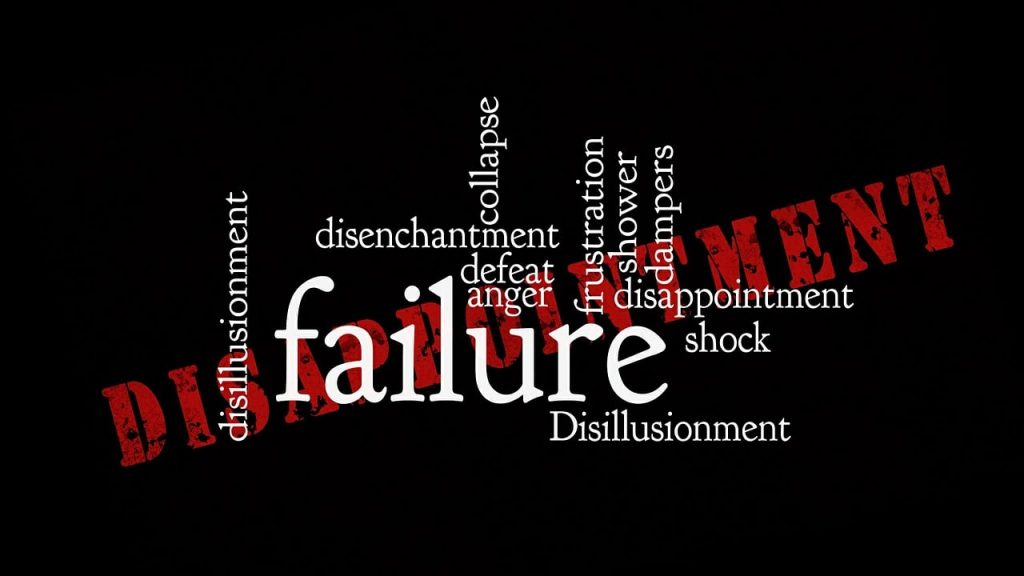
What is Failure?

What is Failure?

GUEST POST from Robyn Bolton

A couple of weeks ago, I wrote about my hatred of failure while acknowledging that there are things I hate more (inertia, blind allegiance to the status quo, unwillingness to try) that motivate me to risk it.

In response, I received this email from my friend and former colleague Daymara, now the Founder & CEO of Rockin’ Baker in Fayetteville, AR (shared here with her permission)

I’m the opposite. I love failing! That’s when I learn the most, that I question what and how I could better, question more and more. It triggers my brain to look back, re-evaluate, assess and spring forward. I wouldn’t be here today if I had not risked. I don’t think anyone starts anything thinking when they’d fail. But some of us aren’t afraid or hate it. I wouldn’t be here if I hate failing, wouldn’t have left my country looking for a safer place, wouldn’t have launched RBI because I didn’t have any entrepreneurial experience not even in the hospitality industry, wouldn’t have switched to focus on neurodiversity and so much more.

.

Because I came to the US, I got to meet you. Yes, I failed at seeing the signs & lost over 60% of my savings just 2 weeks before leaving Venezuela. I could’ve decided to stay because maybe it was going to be harder and the risk of failing in a country I didn’t know higher. I had a plan. If it didn’t work, come back home & start all over again.

.

I started RBI understanding that I could fail. I told myself, if I did, at least I would have an answer. Yes, I’m failing terribly at making this social enterprise work. Yet, I’ve gained so much knowledge about humanity, our differences, the unfairness that neurodivergents have to live daily, running a social enterprise and so much more. If I had hated failing, I wouldn’t be sharing my experience with other entrepreneurs so they don’t make the same mistakes I made. I wouldn’t be advocating for more equitable places for all, including women.

.

Failing feeds me to do better, to ask more questions, to explore more, to lead me to become better. I don’t love failing, I welcome it.

.

My first thought was, “Wow, this is so healthy! I wish more people felt and acted this way!”

My second thought was, “I wouldn’t apply the word ‘fail’ to any of these situations. You’re trying, learning, changing, and trying again.:

Just because you don’t get the expected outcome the first time doesn’t mean you failed.

Or does it?

What the Dictionary Says

According to Oxford Languages, “fail” (verb) means

  1. Be unsuccessful in achieving one’s goal, “he failed in his attempt to secure election.”
  2. Neglect to do something, “the firm failed to give adequate risk warnings.”
  3. Break down; cease to work well, “a truck whose brakes had failed.”

True but contextual:

  1. If success is defined as launching a new product, but customer feedback proves there’s no demand or willingness to pay, is shutting it down a failure?
  2. If you neglect something that isn’t important or doesn’t have significant ramifications, like not eating breakfast, did you fail or simply forget, run out of time, or make a mistake?
  3. If something works but not well, like an expense reporting system, is it a failure or just burdensome, a pain, or a necessary evil?

Also, incomplete.

What People Say

“Fail” has so many definitions and meanings in Daymara’s telling of her story. In addition to some of the dictionary’s definitions, she also uses “Fail” to mean:

  1. Take smart risks, “I could’ve decided to stay because maybe it was going to be harder and the risk of failing in a country I didn’t know higher. I had a plan. If it didn’t work, come back home & start all over again.”
  2. Get new information to facilitate learning,
    • “I’m the opposite. I love failing! That’s when I learn the most, that I question what and how I could better, question more and more. It triggers my brain to look back, re-evaluate, assess and spring forward.”
    • I started RBI understanding that I could fail. I told myself, if I did, at least I would have an answer.
  3. Adapt and change based on learning, “wouldn’t have switched to focus on neurodiversity”
  4. Grow, improve, evolve, “Failing feeds me to do better, to ask more questions, to explore more, to lead me to become better. I don’t love failing, I welcome it.”

What Do You Say?

Like “Innovation,” “Failure” is a word we all use A LOT that no longer has a common definition. In the dictionary, failure is bad and to be avoided. To Daymara and scores of entrepreneurs and innovators, failure is wonderful and welcome.

Progress, either towards or away from failure, requires us to define “Failure” for ourselves and our work and agree on a definition with our teammates.

So, tell me:

  1. What is failure to you?
  2. To your team?
  3. To your boss?

Subscribe to Human-Centered Change & Innovation WeeklySign up here to join 17,000+ leaders getting Human-Centered Change & Innovation Weekly delivered to their inbox every week.

A Tipping Point for Organizational Culture

A Tipping Point for Organizational Culture

GUEST POST from Janet Sernack

Like millions of others globally, I watched with fascination, the sensational and striking spectacle of the ceremony, significant symbolism, spectacular artifacts, and rituals at the recent King of England’s majestic coronation. At the same time, I allowed my mind to wander and wondered how this visually stunning and unrivaled British ceremony would impact the nations and realms’ culture and leadership, today and in the future, wondering if, indeed, it is at a cultural tipping point.

Where it is believed, by some, that the coronation made “two statements of great importance for today’s world about the place of religion in public life and the importance and meaning of the nation”. Acknowledging that such a monumental and marvelous event is indicative of a cultural tipping point, not only for the people it embraces but also for organizations, nations, and realms as a whole, to search for what is meaningful and valued by its people.

Making the connection

My mind wandered and made some obvious connections between the core and common elements that embody both organizational, and national cultural realms – the values, beliefs, assumptions, and mindsets that drive key behaviors and deliver the common implicit messages. As well as the disciplined systems and processes that deliver the results, the rituals that are enacted, and finally, the artifacts whose symbols represent what the culture values.

Maintaining relevance and engagement 

Like the monarchy, what do organizations need to do to maintain relevance and engagement to thrive in unstable and uncertain times, especially when their existence and legacies are being questioned and evaluated by the people they serve?

At a pivotal time when new sets of global, societal, and organizational demands are being made, largely as a result of the fourth industrial revolution, encompassing the convergence of exponential technologies impacting all of us globally.

At the same time, we are all still affected by the consequences of the global pandemic-induced lockdowns, impacting every fabric of our social and civic structures in our world today.

A case study for leveraging cultural tipping points differently 

The coronation of King Charles III provides us with a great case study of an outstanding and remarkable display of English cultural attributes.

This enables us to ask some serious questions about how national and organizational cultures and leadership in times of exponential change, like today, might thrive with uncertainty and co-create solutions to some of the most complex global challenges, by leveraging the range of cultural tipping points differently.

A range of organizational cultural tipping points

We are in effect, experiencing globally a range of cultural tipping points:

  1. At the macro level, according to a recent article here in Australia, where King Charles still resides as our head of state, the local SMH states that this realm is in a state of flux:

“The King is head of state in 15 countries. More than half of the so-called “realm states” are in the Caribbean and most of them are bailing out. Barbados two years ago, Jamaica probably next year. Belize, Grenada, Saint Vincent and the Grenadines are planning their exit as well”.

  1. At the micro level, according to Mc Kinsey & Co, in a recent article “New Leadership for a new era of thriving organizations” stated that organizations and leadership are also in a state of flux:

“Organizations such as Allianz, Haier, Microsoft, and Nucor are transforming their industries with a new organizational approach that seeks to be open, fluid, and adaptable; unleashes the collective energy, passion, and capabilities of its people; reimagines strategy; and focuses on delivering greater value to all stakeholders”.

“Their cultures support a more open, collaborative, and emergent way of working. And the shift to this new kind of model changes the way businesspeople must lead”.

Going back to culture and leadership fundamentals

Because culture and leadership are, according to Edgar H. Schein “two sides of the same coin and cannot understand one without the other” we have to be in charge and focused to intentionally, constructively, and creatively manage their interdependence.

He also states that culture matters because it is a “powerful, tacit, and often unconscious set of forces that determine both our individual and collective behaviors, ways of perceiving, thought patterns, and values”.

If we do not intentionally and strategically take charge, focus, and leverage these forces, we will simply always be at the effect of them, as they take us down the path of least resistance, remain implicit, and will not deliver the results we want and need in a disruptive world.

Going back to culture and leadership fundamentals

Because culture and leadership are, according to Edgar H. Schein “two sides of the same coin and cannot understand one without the other” we have to be in charge and focused to intentionally, constructively, and creatively manage their interdependence.

He also states that culture matters because it is a “powerful, tacit, and often unconscious set of forces that determine both our individual and collective behaviors, ways of perceiving, thought patterns, and values”.

If we do not intentionally and strategically take charge, focus, and leverage these forces, we will simply always be at the effect of them, as they take us down the path of least resistance, remain implicit, and will not deliver the results we want and need in a disruptive world.

Sharing the key messages

My mind then wandered and considered what might be the key messages being communicated by this incredible series of marvelous events, and wondered how relevant and engaging they might be to people today:

  • A coronation signals the conferment of God’s grace upon a ruler,
  • A coronation appoints the king as the Supreme Governor of the Church of England,
  • A coronation is a joyous and celebratory event.

Back to the SMH “The people got what they wanted. The cheers in the Mall, the boulevard built for the adoration of royalty, were real, even if the masses were down on those for the Queen’s Jubilee.”

Impacting the future

It remains to be seen if this powerful, majestic, memorable, and significant once-in-a-lifetime ceremonial event will ultimately help unify or divide the English realm. Which it seems, is facing its own range of unique challenges and a controversial cultural tipping point, ultimately and seriously impacting its future viability.

Back to the SMH “But Charles’s big show might be his last great day. The last dance of a wheeling, brilliant circus that has entertained and beguiled but which soon enough, in its distant realms, will stutter and shrink and reel no more.”

Why does this matter?

This matters today because we are individually, and collectively at a range of social, civic, and organizational cultural tipping points.

Where our organization and leaders are also dancing many of our “last dances”, and “stutter and shrink and reel nor more” because, according to some, we are not strategically focussed on leveraging the culture and leadership basics:

  • Implicitly clarifying values that focus on delivering value that improves the quality of people’s lives that they appreciate and cherish and explicitly making them an active part of corporate life.
  • Ensuring that leaders role model and enact behaviors that demonstrate the values in action, where people are accountable and rewarded by rigorous systems and supportive disciplined, and agile processes.
  • Co-creating powerful sets of rituals, symbols, and artifacts, aligned to the values, that deliver the “new architectures” to create permission, safety, and trust that drive collaborationexperimentation, innovation, inclusion, and sustainability.
  • Communicating engaging and inclusive messages that resonate creativity, respect, and appreciation for people, profit, and the planet.

Shifting the organizational cultural tipping points

It’s time to transform leadership to transform organizations, in ways that are self-aware and inspiring, meaningful and purposeful, equitable and sustainable, with increasing speed, resilience, and efficiency to guide organizational cultures and leadership that:

  • Helps people navigate and balance in-person and remote work, be mentally healthy and well, and make the way for both applied AI and human skills development.
  • Develops new rules for attracting and retaining people, close the capability chasm and walk the talent tightropes to better equip, empower and harness people’s harness collective intelligence to make both the organization and the world better places.
  • Creates, invents, and innovates new ways of thinking, and acting that ultimately shift the range of cultural tipping points to meet new sets of global, societal, and organizational demands and challenges emerging in the 21st century, and lets go of what is no longer relevant to better serve humanity as a whole.

Find out more about our work at ImagineNation™

Find out about our collective, learning products and tools, including The Coach for Innovators, Leaders, and Teams Certified Program, presented by Janet Sernack, is a collaborative, intimate, and deeply personalized innovation coaching and learning program, supported by a global group of peers over 9-weeks, which can be customised as a bespoke corporate learning program.

It is a blended and transformational change and learning program that will give you a deep understanding of the language, principles, and applications of an ecosystem focus, human-centric approach, and emergent structure (Theory U) to innovation, and upskill people and teams and develop their future fitness, within your unique innovation context. Find out more about our products and tools.

Image Credit: Pixabay

Subscribe to Human-Centered Change & Innovation WeeklySign up here to join 17,000+ leaders getting Human-Centered Change & Innovation Weekly delivered to their inbox every week.
Unlocking the Power of Imagination

How Humans and AI Can Collaborate for Innovation and Creativity

Unlocking the Power of Imagination

GUEST POST from Teresa Spangler

Imagination is not only the uniquely human capacity to envision that which is not, and, therefore, the foundation of all invention and innovation. In its arguably most transformative and revelatory capacity, it is the power that enables us to empathize with humans whose experiences we have never shared. ~J.K. Rowling

Part I of a 3 Part Series: Simple Strategies

Imagination has always been crucial in human innovation, creativity, and problem-solving. It enables us to envision possibilities beyond the present and find solutions to problems that do not exist yet. 

However, with Artificial Intelligence (AI) advancements, humans must develop their imaginative skills to stay competitive. To achieve that, it is important to understand the eight subsections of imagination – Effectuative, Intellectual or Constructive, Imaginative Fantasy, Empathy, Strategic, Emotional, Dreams, and Memory Reconstruction. Each of these subsections plays a crucial role in the human imagination, and as AI becomes more sophisticated, it will challenge humans to improve their imaginative abilities in each of these areas.

Understanding the Eight Subsections of Imagination

Effectuative Imagination: Effectuative imagination is the ability to imagine the consequences of one’s actions. It enables individuals to plan, make decisions, and predict outcomes. For example, a CEO may use effectuative imagination to anticipate the impact of a new product launch on the company’s financials.

To improve effectuative imagination, humans can:

  • Think about potential consequences before making decisions
  • Analyze data and use it to predict possible outcomes
  • Consider alternative scenarios before deciding on a course of action

Intellectual or Constructive Imagination: Intellectual or constructive imagination is the ability to imagine abstract concepts and ideas. It allows individuals to envision new inventions, theories, and ways of thinking. For example, a scientist may use constructive imagination to develop a new theory that explains a complex natural phenomenon.

To improve intellectual or constructive imagination, humans can:

  • Challenge assumptions and think outside the box
  • Experiment with new ideas and concepts
  • Combine existing ideas and concepts to create new ones

Imaginative Fantasy:  Imaginative fantasy is the ability to create and imagine fantastical worlds and stories. It enables individuals to escape from reality and explore the limits of their imaginations. For example, a writer may use imaginative fantasy to create a new universe for their story.

To improve imaginative fantasy, humans can:

  • Engage in creative activities such as writing, drawing, or painting
  • Read books or watch movies that take them to new worlds
  • Use their imagination to create new stories or scenarios

Empathy:  Empathy is the ability to imagine and understand the emotions and experiences of others. It enables individuals to connect with others more deeply and be more compassionate. For example, a therapist may use empathy to understand their client’s emotions and experiences.

To improve empathy, humans can:

  • Practice active listening and ask questions to understand others better
  • Imagine themselves in other people’s shoes
  • Practice kindness and compassion towards others

 Strategic Imagination:  Strategic imagination is the ability to imagine and plan for the future. It enables individuals to anticipate potential challenges and opportunities and to develop effective strategies. For example, a business leader may use strategic imagination to create a long-term growth plan for their company.

To improve strategic imagination, humans can:

  • Develop a long-term vision for their personal or professional life
  • Identify potential challenges and opportunities and develop strategies to address them
  • Use data and analysis to inform their decisions

Emotional Imagination:  Emotional imagination is the ability to imagine and experience a wide range of emotions. It enables individuals to empathize with others and connect with their emotions. For example, an actor may use emotional imagination to convincingly portray a character’s emotions.

To improve emotional imagination, humans can:

  • Practice mindfulness and self-awareness to understand their own emotions better
  • Engage in creative activities such as writing or acting to explore different emotions
  • Practice empathy to understand other people’s emotions better

Dreams:  Dreams are a manifestation of our subconscious mind and imagination. They enable us to explore our deepest desires, fears, and aspirations. Dreams are also a way for our brains to process and consolidate memories. For example, a person may have a dream about an experience that helps them understand and process their emotions.

To improve dreams and imagination, humans can:

  • Keep a dream journal to record and reflect on their dreams
  • Practice lucid dreaming to control and direct their dreams
  • Engage in creative activities such as writing or drawing to explore dream worlds and scenarios

Memory Reconstruction:  Memory reconstruction is remembering past events and experiences and using our imagination to fill in gaps and create a coherent narrative. It enables individuals to sense their past and create a personal identity. For example, a person may reconstruct childhood memories to understand how past experiences have shaped who they are today.

To improve memory reconstruction and imagination, humans can:

  • Reflect on past experiences and try to understand how they have influenced their life
  • Engage in creative activities such as writing or drawing to explore memories and create new narratives
  • Practice mindfulness to become more aware of their thoughts and feelings

How AI May Challenge Us to Become More Imaginative

As AI becomes more sophisticated, it will challenge humans to improve their imaginative abilities in each of the eight subsections of imagination. Working alongside AI can spark us to new levels of thinking. Consider AI as your partner in growing your own imagination, your creativity and your abilities to be more inventive.

Examples:

  • Effectuative Imagination: AI can analyze data and provide insights humans can use to make better decisions.
  • Intellectual or Constructive Imagination: AI can identify patterns and connections between data sets that humans may not have noticed, leading to new ideas and theories.
  • Imaginative Fantasy: AI can generate creative ideas and scenarios that humans may not have thought of independently. However, imaginative people can raise the bar on creativity by using these AI-generated fantasies.
  • Empathy: AI can analyze social media data and sentiment analysis to understand how people are feeling and to predict future trends.
  • Strategic Imagination: AI can analyze market data and economic indicators to identify potential challenges and opportunities for businesses and organizations.
  • Emotional Imagination: AI can analyze facial expressions and tone of voice to understand people’s emotions and to provide personalized recommendations and support.
  • Dreams: AI can use generative models to create realistic dream scenarios and to help individuals explore and process their subconscious thoughts and emotions.
  • Memory Reconstruction: AI can analyze large data sets and identify patterns and connections humans may not have noticed, leading to new insights and narratives.

Working Alongside AI to Unlock Human Imagination

AI is not a threat to human imagination but rather a tool that can help us unlock our full imaginative potential. By collaborating with AI, humans can gain new insights and perspectives that inform their imaginative processes. Here are some strategies for working alongside AI to unlock human imagination:

  • Use AI-powered tools to analyze data and identify patterns and connections that can inform imaginative processes.
  • Collaborate with AI-powered systems to generate new ideas and scenarios.
  • Use virtual and augmented reality tools to explore new environments and possibilities.
  • Leverage AI-powered chatbots and virtual assistants to provide personalized support and recommendations.
  • Participate in cross-functional teams that include both humans and AI-powered systems.

How Companies Can Support Employee Imagination

Companies have a critical role in supporting their employees’ imaginative skills. By doing so employees will be come more engaged and productive.  Here are a few strategies that companies can use to support employee imagination:

  • Encourage creativity by providing opportunities for employees to explore new ideas and experiment with new approaches.
  • Foster diversity and inclusion by promoting diverse perspectives and experiences and creating a safe and inclusive work environment.
  • Invest in technology and tools that support imaginative work, such as AI-powered systems, virtual and augmented reality tools, and collaborative platforms.
  • Provide learning and development opportunities focusing on imaginative skills, such as creativity, emotional intelligence, and strategic thinking.
  • Encourage collaboration by creating cross-functional teams and promoting a culture of collaboration.

Imagination is essential for the future of innovation and human productivity. The eight subsections of imagination provide a framework for understanding and developing imaginative abilities. As AI becomes more sophisticated, it will challenge humans to improve their imaginative skills in each of these areas. Humans can unlock new ideas and solutions that drive innovation and progress by developing imaginative skills and working alongside AI.

Moreover, individuals can develop their imaginative skills by embracing change, fostering curiosity, developing a growth mindset, practicing mindfulness, collaborating with AI, exploring new forms of art and creativity, practicing divergent thinking, and fostering the eight subsections of imagination.

Companies have a crucial role in supporting their employees’ imaginative skills. They can encourage creativity, foster diversity and inclusion, invest in technology and tools supporting imaginative work, provide learning and development opportunities focusing on imaginative skills, and encourage collaboration.

In the age of AI, humans must strive to maintain their unique skills and abilities. Imagination is a human trait that AI cannot replicate. Developing our imaginative skills and working alongside AI can unlock new opportunities and create a better future for ourselves and the world.

Image credit: Pixabay

Subscribe to Human-Centered Change & Innovation WeeklySign up here to join 17,000+ leaders getting Human-Centered Change & Innovation Weekly delivered to their inbox every week.

Don’t Confuse Culture with Strategy

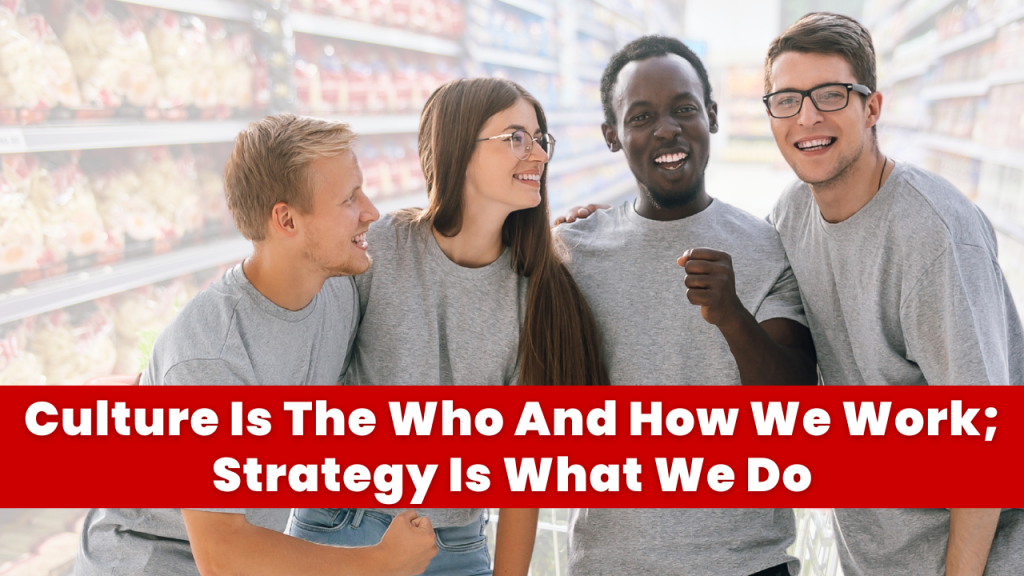
Culture is the Who and How We Work; Strategy is What We Do

Don't Confuse Culture with Strategy

GUEST POST from Shep Hyken

Culture is quite different from strategy. It’s what a company is and stands for. Peter Drucker, the legendary management guru, once said, “Culture eats strategy for breakfast.” It’s not that strategy isn’t important. It absolutely is. However, culture must come first. Then strategy must align with the culture.

One of several definitions of culture by Merriam-Webster is:

“The set of shared attitudes, values, goals and practices that characterizes an institution or organization.”

That is exactly what culture should be. However, there can be problems.

Some companies state their culture in mission, vision and/or values statements. However, those are just words—they are meaningless if not lived. And they can’t be aspirational. They must be true in the moment. A culture that is not actively practiced by leadership and employees is just a dream—just words on paper that are somewhat meaningless, regardless of how well-written and aspirational they are.

For a culture to be successful, leadership must live it and be the role model for others to emulate. And while most people think of leadership as the executives who sit in the C-suite, it is really anyone of authority. It could be anyone in management, in a supervisory position, or anyone who has direct reports. And while leaders must be role models, everyone must know and understand the culture. In the “perfect” organization, everyone is in alignment.

That is why Target is a great case study for how the right culture works. The title of this article is a quote from Christina Hennington, chief growth officer of Target, who sat on a panel at the recent 2023 National Retail Federation (NRF) Big Show. Hennington says, “We use culture as a guidepost, as a set of filters for the decisions we make in the business, both big and small. That’s all in the pursuit of our purpose, which is to help all families discover the joy of everyday life.”

Just last year, Target was No. 2 in Fortune’s Best Workplaces in Retail. It was also No. 1 in People’s Companies that Care, and No. 12 in Fortune’s 100 Best Companies to Work For. Those are some fine accolades, and with good reason. A RetailWire article noted that in 2021, when most companies were struggling to hire and keep employees, Target had its lowest turnover rate in five years. A good paycheck is a start. Good benefits are also important, and they go beyond medical benefits. For example, Target has a debt-free college program in which all full-time and part-time employees can participate. Another benefit is that Target likes to promote from within. Employees starting on hourly wages can become leaders. They take care of their people, and in turn their people take care of their customers.

Mark Ryski, founder and CEO of HeadCount Corporation, says, “Target continues to set the standard for driving up worker pay. I can only believe there is one key reason why—because a well-compensated, appreciated, happy workforce delivers better results. Imagine how it must feel to work for a company like Target that continues to look for ways to enrich employees.”

Melissa Kremer, EVP and chief human resources officer at Target, said, “Our team is at the heart of our strategy and success, and their energy and resilience keep us at the forefront of meeting the changing needs of our guests year after year.”

So, Target has nailed a big part of the culture, in that it has taken the words on paper to the people who work there. The message from Target’s leadership is clear. Build a culture that starts with a focus on your own people. Take care of them, and they will in turn, take care of the company, which includes the company’s customers.

Does that sound familiar? If you’ve been following my work for any length of time, it probably reminds you of my Employee Golden Rule: Do unto employees as you want done unto your customers. And it looks like it’s working.

This article originally appeared on Forbes.com

Image Credit: Pexels

Subscribe to Human-Centered Change & Innovation WeeklySign up here to join 17,000+ leaders getting Human-Centered Change & Innovation Weekly delivered to their inbox every week.

Building A Positive Team Culture

Building A Positive Team Culture

GUEST POST from David Burkus

Teams are a central part of our work experience. Jobs that could have been solitary at one time or another happen more efficiently and at higher quality because we work in teams. The number of teams we form, along with the size of those teams, has increased dramatically in recent decades.

And much of a team’s performance comes down to its culture. Yes, the talents and skills of individuals matter. But without a positive team culture, those same individuals will fail to achieve the level of performance they’re capable of. The common set of norms and behaviors on a team are what guide their collaboration and determine their performance.

In this article, we’ll outline 5 practical ways to build a positive team culture that will help your team thrive and succeed.

Clarify Objectives

The first way to build a positive team culture is to clarify objectives to the whole team. This might seem like a very basic way to start, but so much of what triggers conflict and disengagement on a team stems from the team working to complete vague tasks in the service of unclear goals. Clarifying the team’s goals, it’s plan of action, and its deadlines and deliverables provides the foundation on which a positive team culture can be built. It brings a sense of contribution and importance to each member of the team to know how their work fits in with the team’s purpose and how that fits into the larger organizational mission. And it provides an accountability to the team that’s difficult to enforce without that level of clarity.

Outline Expectations

The second way to build a positive team culture is to outline expectations to the team. People need to know what is expected of them, that’s what is meant by clarify objectives. Expectations takes it a step further and outlines that a completed objective looks like, so the team knows how to tell that they’ve achieved it. But outlining expectations also means outlining the expectations of behavior on a team—especially interpersonal communication and collaboration expectations. Many times, the relationships between teammates get strained because of taken for granted assumptions or assumed responses that don’t match reality. So, clarifying how we’re going to interact (even going so far as clarifying what medium of communication will be used for which topic) can go a long way toward eliminating assumptions and improving communication.

Include All

The third way to build a positive team culture is to include all. One of the more consistent findings in organizational psychology is that high-performing teams, and teams with great cultures, are marked by conversational turn taking—ensuring everyone on the team is heard. Inclusion is a vital part of a positive team culture for obvious and nonobvious reasons. It’s obvious because who wants to be part of a team that ignores them? But less obvious is the way that being deliberate about hearing and including all opens up a diversity of ideas and possible solutions and makes it more likely new and better ways of achieving objectives are found—without that diversity teams can get stale and performance can start to slide.

Recognize Good

The fourth way to build a positive team culture is to recognize the good behaviors you see. As a leader, one rule of thumb you can count on is that you’ll get more of the behaviors that you celebrate. So, when teammates demonstrate civility in dialogue or inclusion in discussion, celebrate their positive interactions. When teammates go above and beyond, praise it. Teams with great cultures (and great performance) praise and appreciate each other more than standard teams. It’s a habit for them. And that habit of praise starts with leaders who are deliberate and consistent about praising good behavior and good results any time they see it.

Reinforce Purpose

The fifth way to build a positive team culture is to reinforce purpose. Positive team cultures are cultures where teammates feel a sense of purpose, and meetings are imbued with a sense of collective purpose. Specifically, positive team cultures are ones where everyone on the team knows who is served by their doing a good job—and so they work harder and support each other to do a better job. This can be difficult for individual teams. Organizations have mission statement or vision statements—but it’s hard to see how a specific team fulfills that mission. Positive team cultures are ones where leaders (typically) have taken the time to discuss how the day-to-day work of the team serves that mission and then who benefits from that mission being accomplished. It’s not about reciting the mission statement; it’s about recalling why the task at hand matters.

If you’re starting from a negative team culture, it may take some time before these actions start turning around the culture of your team. That’s okay. Stay deliberate and stay consistent on each one of them and overtime as expectations get clearer and purpose gets reinforced, teammates behaviors will change for the better. Culture is a habit, and habit aren’t built overnight. But habits (and hence culture) are the difference between teams that drain us and teams that allow us to do our best work ever.


Image credit: Pixabay

Originally published at https://davidburkus.com on March 27, 2023.

Subscribe to Human-Centered Change & Innovation WeeklySign up here to join 17,000+ leaders getting Human-Centered Change & Innovation Weekly delivered to their inbox every week.
The 6 Building Blocks of Great Teams

The 6 Building Blocks of Great Teams

GUEST POST from David Burkus

Work is teamwork. And it’s no secret that some teams truly are greater than others.

A recent meta-analysis combined research conducted on over 200,000 teams in a variety of industries in order to answer that question. Across 274 dimensions of performance and over half a million individual team members, the researchers found that, in most fields, performance differences of teams followed a power-law—with a small number of high-performing teams achieving most of the results. In other others, high performing teams didn’t just perform a little better, they performed up to ten times better than normal teams.

With results like that, it’s worth looking at what makes a team great. Fortunately, there are a few elements of team culture that are found consistently in consistently great teams.

In this article, we’ll outline six building blocks that make a great team.

1. Clarity

The first building block of a great team is clarity. Teams need to be clear on what’s expected of them, what tasks they’re assigned—what tasks others are assigned—and how all of that fits together. Clarity is key to getting anything done. Without clarity, the ambiguity of assignments can make it feel as if others aren’t pulling their weight. One teammate will be working diligently on a project not knowing that a different teammate is waiting on her to complete a different task. But it’s not just clarity of tasks that makes a team great; it’s also clarity of people. How well teammates know the different work styles, personality differences, and strengths and weaknesses of a team can dramatically affect how well they collaborate. And that affects how well they perform.

2. Communication

The second building block of a great team is communication. Great teams have a synergy, where the eventual performance is greater than the sum of what the individuals could have done on their own. Achieving that synergy requires communication. Teammates need to be aware of what others are working on, and they need to be able to call for help (or offer) help easily. But surprisingly, this doesn’t mean that great teams are in constant communication all of the time. When it comes to knowledge work teams, it turns out that great teams communicate in bursts—spending long periods of time working uninterrupted and then short bursts of communication to solve problems and keep everyone in sync. They’re not in constant communication—because if they were they wouldn’t be able to focus on the deep work that really creates value on the team.

3. Diversity

The third building block of a great team is diversity. Diversity on a team matters because teams are often tasked with solving problems on their own—and the greater the differences in perspectives and experience, the greater the possible solutions will be generated. This “intellectual” diversity is what powers great teams. Mediocre teams may have surface level diversity—diversity in racial, ethnic, or gender characteristics—but their experiences, preferences, strengths, and weaknesses are more similar than they are different. Because of this, great teams often don’t stay together for long (because they would start thinking alike more often), or they find ways to continuously refresh the diversity of experiences and ideas on their team to keep it diverse—and hence keep it great.

4. Empathy

The fourth building block of a great team is empathy. Empathy goes alongside diversity and is really what unlocks the potential inside of a team’s diversity. Empathy here refers to how well team members understand and accept each other’s differences. Empathy on a team matters because diversity brings friction. When ideas differ, those ideas will fight for dominance. But empathy keeps the level of respect on the team high and ensures that teams are fighting to find the dominant idea and not just fighting their own personal battles or for personal dominance. Empathy teaches us how to harness idea friction into something truly powerful—and ensures that even those whose ideas don’t win out are committed to the team and the final decisions that are made.

5. Trust

The fifth building block of a great team is trust. Trust appears on great teams in two different but equally important ways. The first is task-based or cognition-based trust, which refers to how much the team trusts the knowledge, skills, abilities, and productivity of their teammates. Cognition-based trust matters because teammates need to know they’re not the only ones pulling the weight of the team. The second is person-based or affect-based trust, which refers to how much the team members genuinely likes their teammates and trust that they could be vulnerable in front of them. This matters because, on a team, all learning comes from vulnerability—the vulnerability to share new ideas or to admit mistakes and hence draw lessons from them. Both types of trust matter when building a great team.

6. Purpose

The final building block of a great team is purpose. And purpose here doesn’t mean how well the team memorized the company mission statement. Instead, it’s how well they’re internalized it. Purpose on a team refers to how well the team believes their work matters because it makes a meaningful contribution to the mission (good) and serves other people in a positive way (great). This purpose becomes a superordinate goal that has been shown in research to bond teams together better and faster than just about any other building block—and they build the other blocks faster as well. When teams have a great understanding of a great purpose—they almost can’t help but become great.

For that reason, purpose is often the best place to start when trying to take a normal team and make it great. Purpose provides the motivation for the team to work on the other building blocks and it reinforces the importance of continuing to work on them. Purpose is the foundation to build the team into one where everyone can do their best work ever.

Image credit: Wikimedia Commons

Originally published at https://davidburkus.com on February 20, 2023.

Subscribe to Human-Centered Change & Innovation WeeklySign up here to join 17,000+ leaders getting Human-Centered Change & Innovation Weekly delivered to their inbox every week.