Category Archives: culture

Hyper-Innovation

A Change Management Strategy for Better, Faster Ideas

Hyper-Innovation

GUEST POST from Douglas Ferguson

The nature of innovation is that it is a hyper-fluid force that is never fully predictable. A well-curated change management strategy helps to harness the power of innovative change.

Innovation plays a significant role in driving positive change, as 51% of organizations attribute their success to innovative initiatives, all of whom also experienced an 11% increase in revenue.

In this article, we trace the pathway to innovative change in the following topics:

  • The Plan for Change
  • Designing Strategies for Change
  • An Agile Approach to Transformation
  • Getting Curious About Change

The Plan for Change

In charting a course to bigger and better ideas, a clear change management strategy helps to identify a direct path forward. Creating a thoughtful change management strategy allows you to plan several steps ahead and steer change in your favor.

The most intentional change management strategies focus on proactive change. The following are key elements in creating a proactive path for change:

1. Prepare to Plan

Preparing to create a change management strategy is essentially planning to plan. As you consider the best approach to creating change, take time to map out each step of your strategy. While it may seem more effective to just dive in, remember that intentionality is the name of the game in lasting change.

2. Cultivate Transparency

Many changes are unexpected and unwanted. For this reason, many organizations make the mistake of keeping changes quiet from the rest of the team. However, this type of secrecy can sabotage your organizational transformation.

Make it a point to cultivate a sense of transparency at every level of your organization. By including all parties in your plans for change, you’ll get a head start on driving innovation. When team members feel included in major decisions like a big change, they are more likely to accept and support it going forward.

3. Encourage High Tolerance

Tolerance for change is a muscle that should be exercised. Challenge your team members to fight their resistance to change by sharing the benefits of change. Explaining “what’s in it for me” gives team members a reason to root for change while increasing their tolerance for the unknown.

4. Monitor and Measure 

Just as true change is a long-term endeavor, creating a change management strategy isn’t just a one-time event. Successful strategies for change will never be static, making monitoring and measuring key performance indicators a perpetual part of the change management process.

Design a fluid change management strategy by teaching your team to measure success, monitor potential problems, and resolve issues as efficiently as possible. This way, your strategy for change will evolve according to your needs.

Designing Strategies for Change

A design thinking change management strategy places team members at the heart of a change. This people-first approach to purposeful change lets team leaders curate a strategy with the greatest benefits for all parties involved. At Voltage Control, we explore design thinking as a change management practice to inspire the most innovative ideas, allowing team members to shape new initiatives together.

Apply design thinking to your change management strategy in the following ways:

1. Find the ‘What’ of Change

Design thinking facilitates purposeful change. Shape your change management strategy by determining the “what” of your change to inform your path to the most viable and innovative solutions.

2. Center Empathy

Successful changes tap into our emotions. Design thinking cuts to the heart of a change by prioritizing empathy from the very beginning. Harness empathy in your next change by considering your team members’ mindsets and perspectives before implementing change. Continue to research how all participants will be impacted by a change as you incorporate empathy into your change strategy.

3. Use Divergent Thinking

Employ divergent thinking in your change management strategy. Through a design-centered approach, shape a plan for change that encourages collaborative thinking, integrated innovation, and holistic decision-making.

4. Practice Constant Experimentation

Experimentation is the beating heart of design thinking. Make the strategizing process more tangible by testing new ideas and running experiments to see what works. By testing an idea on a small scale, you’ll be able to make the necessary changes to help shape your initiative for real change.

An Agile Approach to Transformation

An agile approach to change management zeroes in on a faster, more urgent need for transformation. Agile principles offer a valid framework for transformation. Agile is tailor-made for systemic problem-solving, allowing team members to find the most groundbreaking solutions to the most persistent problem.

According to Carie Davis, a corporate innovation specialist, inventing new methods for problem-solving is the key to driving innovative change. Regardless of how powerful an initial initiative is, lasting change won’t take hold until it truly transforms an organization. For this reason, Davis suggests that businesses initiate long-term shifts by starting small and by making little changes at the core of the company. These smaller changes are a key part of Agile change management strategy and are instrumental in catalyzing lasting transformation.

Consider applying agile methodology to your change strategy in the following ways:

1. Go Lean

  • Focus on a change strategy that provides increased value and positive change. Going lean allows for rapid transformation by limiting factors that waste resources, energy, and time.

2. Practice Continuous Improvement

  • Agile champions continuous improvement through small changes over time. These small changes lead to the most significant shifts.

3. Encourage Employee Authorship

  • Innovative change doesn’t happen with a top-down approach. Create an agile-informed change management strategy by bringing your employees into the decision-making process. This way, all team members can determine the most pressing areas for improvement and make meaningful contributions as they work together to co-create the next change.
  • 4. Practice Reflective Improvement 

  • In shaping a change management strategy to grow with your organization, practicing reflective improvement guarantees consistent long-term change. Regularly evaluate your organization’s performance and initiatives as you continue to shape your change management strategy into a better, leaner plan.
  • Getting Curious About Change

    In designing the most innovative change management strategy, don’t forget to consider a sense of curiosity. Thrive through change and drive innovation by cultivating a curious desire to be better than ever.

    Research shows that curiosity allows us to welcome new experiences with less defensiveness and aggressiveness. By responding to the unknown in uniquely positive and inquisitive ways, your teams can dream up the most imaginative solutions on their path to lasting change.

    In addition to helping teams accept change, facilitating a sense of curiosity is an essential component in designing an innovative workplace. In creating a culture of curiosity, you’ll encourage team members to become change agents themselves. With a desire to learn more, be more, and do more, you’ll be able to reframe the potential pitfalls of change and the fears that come with it as an opportunity to get better and better.

    Innovation and change are infinitely interconnected. Harness the power of both by designing a change management strategy that continues to transform your organization in the best ways possible. Explore our offerings to learn more about taking change management to the next level.

    Image credit: Pixabay

    Article first seen at VoltageControl.com 

    Subscribe to Human-Centered Change & Innovation WeeklySign up here to get Human-Centered Change & Innovation Weekly delivered to your inbox every week.

    Engaging Consciousness in the Emotional Work of Organizational Transformation

    Engaging Consciousness in the Emotional Work of Organizational Transformation

    GUEST POST from Douglas Ferguson

    Organizational transformation is a uniquely human endeavor. Navigating the journey to change starts with understanding the employee experience and creating space for emotional safety in the workplace.

    According to organizational behavior expert Sigal Barsade, emotions are the key to encouraging higher performance and achievement. Her research shows that emotions influence employees’ wellness in addition to driving productivity. Thus, to influence organizational transformation, leaders need to take a closer look at how emotions factor into the employee experience.

    In this article, we’ll discuss emotions and their role to change management in the following topics:

    • The Employee Experience
    • The Transformation Timeline
    • Emotions at Work
    • An Engagement of Consciousness

    The Employee Experience

    Without a keen understanding of the employee experience and your team’s emotional state, sustainable change is more fantasy than reality. In your efforts to initiate organizational transformation, consider first transforming employees’ work experience to promote a sense of emotional well-being.

    In shaping the employee experience, it’s critical to understand employees’ expectations for emotional safety in the workplace. As most employees value their mental health above all else, they expect their working environment to promote trust, purpose, and social cohesion. Moreover, they want to know that leadership recognizes their contributions and that there is room and opportunity for sustainable growth and development. Similarly, team members want their personal sense of purpose to be in alignment with the organization.

    With increased emotional wellness comes higher employee engagement and a more motivated workforce. With a stronger sense of emotional safety in the employee experience, leaders will find that their team is prepared to engage in organizational transformation.

    The Transformation Timeline

     “You have to attract people… you can’t bribe or coerce transformation.”
    Greg Satell

    Once you prioritize the employee experience in your change strategy, you can begin the organizational transformation timeline. Organizational transformation is a process that happens through gradual change, resulting in sustainable behavioral transformation. This type of comprehensive change can only occur through a series of repeatable actions and innovative systems, not one-time initiatives.

    Take steps towards sustainable change with the following phases of organizational transformation:

    Phase One: Fight Resistance

    To sustain organizational transformation, leaders and team members need a solid strategy for managing resistance. Resistance often stems from the discomfort that change brings.

    To move beyond this fear, leaders should explain that while transformation involves many unknown factors, the forthcoming change will bring overall positive results. By showing team members how they will benefit from a change, leaders can overcome resistance and encourage their employees to support the initiative.

    • Freezing of Behaviors
      In Lewis’ Change management model, change is broken into three steps: freezing, changing, and refreezing.

      In the first phase of organizational transformation, the “unfreezing” process will occur. This involves recognizing one’s need for change and defining new behaviors that replace the former methods and practices. During this very fluid phase, team members and leaders identify and share data that supports a need for change.

    Phase Two: Facilitate Adjustment

    After strategically managing resistance to change, the next phase in achieving organizational transformation is facilitating the adjustment period. During this phase, team members are no longer actively resisting transformation but still need time to adjust to the changes the new initiative brings.

    In the adjustment period, changes are discussed in detail, and team members are invited to provide criticism and feedback. This phase allows team members to personalize the change as they recognize their individual roles in achieving organizational transformation. In a successful adjustment phase, every team member is aligned with the necessary actions for the next phase: acceptance.

    • Changing

    Within the adjustment phase of organizational transformation, team leaders will actively change their old habits. At this time, all stakeholders work to replace undesired behaviors with desired ones.

    Phase Three: Foster Acceptance

    In phase three of the organizational transformation timeline, you’ll lead your team into the acceptance phase with a solid vision and strategy for sustaining the changes over time.

    • Refreezing

    In the foster acceptance phase, refreezing occurs when changes are stabilized and become the new normal. As the organizational transformation nears completion, team members are in the best position to cement these changes by ensuring a legacy of growth.

    Phase Four: Ensure Consistency

    The fourth phase of organizational transformation establishes consistent and sustainable growth. Consistency is a direct result of repeatable actions from strategic processes, intentional routines, and innovative practices that allow each team member to enact changes that carry into the future continuously.

    Emotions at Work

    A clear strategy for long-term change is only a roadmap to organizational transformation. After setting the stage for change to take place, leaders must engage in the emotional work of transformation.

    Change takes emotional labor, requiring an environment that is uniquely attuned to address employees’ emotional needs. In the workplace, emotions can be an accelerator for transformation. To engage emotions in the most effective way, leaders can create conditions that ensure psychological safety.

    Research shows that to solidify organizational transformation, we must mitigate emotional harm and, in doing so, foster emotional commitment from team members. While emotional harm isn’t tangible, it presents itself in certain ways that can create anxiety, fear, and similar negative responses in employees. Essentially, working to facilitate positive experiences alongside potentially negative emotions is the key to harnessing a safe space for transformation. Leaders that are able to manage the effects of stress successfully can transform a high-pressure environment into a space for high performance.

    Sonja Kresojevic, the founder of Spinnaker Co. and a proponent of using agile principles for organizational change, firmly believes that true transformation is a product of an empowered organization. According to  Kresojevic, the more we humanize change through emotional labor and healing initiatives, the more we are able to influence others and start shifting organizations in the direction of transformation.

    Leaders can promote healing and psychological safety by allowing employees to share their thoughts and criticisms freely and without retribution. With an increase in support and emotional safety, your team will be ripe for organizational transformation.

    An Engagement of Consciousness

    An organization’s penchant for the unknown is essential in driving organizational transformation. In your efforts to humanize change management, it’s crucial to understand and accept human nature’s role in experiencing change. In understanding our natural inclinations toward risk aversion in the face of change, we can work to replace this avoidance of uncertainty with curiosity, vulnerability, and authenticity in the workplace. This approach to change management will transform the way we work, the risks we take, and our willingness to accept change.

    Much of organizational transformation is dependent on accepting uncertainty: that the future is unclear and we don’t have all the answers. The real secret to driving organizational transformation is empowering people to develop and accept new ideas on their own. Managing the uncertainty of organizational transformation takes time, allowing for the unfreezing, changing, and refreezing process to take place as stakeholders consider their options.

    Rob Evans, Master Coach of Collaboration and Transformation Designer, shares that giving people a chance to court the unknown, is essential for change acceptance as it allows new ideas to seep in and take hold.

    Practicing patience during the change management process allows for “engagement in the full consciousness,” in which leaders can kickstart the organizational transformation timeline and encourage employees to buy into the change. By pairing deliberate strategy with time for authentic employee engagement, radical transformation is an inevitability.

    Ready to start the journey to organizational transformation? Consider a new approach to the employee experience. Voltage Control can help you and your team define the best path for your organization’s transformation. 

    This article originally appeared at VoltageControl.com

    Image credit: Pixabay

    Subscribe to Human-Centered Change & Innovation WeeklySign up here to get Human-Centered Change & Innovation Weekly delivered to your inbox every week.

    Valuing the Intangible Assets of an Innovation Culture

    Beyond ROI

    Valuing the Intangible Assets of an Innovation Culture

    GUEST POST from Chateau G Pato

    Every quarter, innovation leaders are faced with the same reductive question: “What is the ROI of that experiment?” This question, while financially necessary for short-term accounting, is fundamentally flawed when applied to strategic innovation. It traps innovation in a transactional mindset, demanding a dollar value on ideas that are, by definition, intended to create entirely new markets or transform existing systems.

    The true, sustainable value of an innovation program is not found in the immediate Return on Investment (ROI) of a single project. It resides in the Intangible Assets — the cultural and organizational capabilities — that the program builds. These assets, though difficult to quantify on a balance sheet today, are the ultimate determinants of long-term survival, market resilience, and future dominance. A relentless focus on short-term ROI kills the critical exploration necessary for genuine disruption.

    The Four Intangible Assets of a High-Innovation Culture

    When an organization invests in systematic, human-centered innovation, it accrues four non-financial assets that provide exponential returns over time:

    1. The Adaptability Quotient (AQ): Innovation programs are essentially training grounds for AQ, the organization’s capacity to recognize, navigate, and thrive in constant change. They force teams to unlearn old methods, embrace ambiguity, and pivot quickly. A high AQ is the organization’s most valuable insurance policy against unforeseen disruption.
    2. The Intellectual Agility Network: Innovation breaks down departmental silos by forcing cross-functional teams to solve wicked problems together. The resulting trust, shared language, and established network of communication — from engineering to marketing to legal — enables the entire organization to execute any strategic pivot faster and with less friction. This network connectivity is a massive advantage over siloed competitors.
    3. Attraction and Retention Currency: Top talent, especially younger generations, prioritize purpose and the opportunity to create impact over stability. A demonstrated commitment to challenging the status quo and funding experimental projects acts as a powerful magnet. It transforms the company brand from a cost-center employer to a future-focused destination for change agents. The cost of replacing talent far outweighs the cost of running a few failed experiments.
    4. De-risked Market Intelligence: Every failed innovation project provides invaluable information about what the market doesn’t want, what the technology can’t do, or what the internal structure won’t support. This failure is not a cost; it is cheap, high-fidelity market intelligence. It allows the organization to de-risk the next, larger investment by avoiding pitfalls already discovered in smaller, faster experiments.

    Case Study 1: The Financial Firm’s Crisis Resilience

    Challenge: Organizational Complacency and Inability to Pivot

    A global financial services firm faced paralysis when FinTech startups eroded their lending division. Their internal structure had zero Adaptability Quotient (AQ), making change slow and painful.

    Intangible Asset Focus:

    The firm launched an internal Venture Studio program. While the immediate financial ROI of the first ten projects was poor, the program successfully created a pipeline of innovation leaders and built the Intellectual Agility Network via mandatory cross-functional teams. Two years later, when a major, unforeseen regulatory change hit, the company leveraged this new internal network to execute a massive, complex systems pivot in six months — a timeline that was previously unthinkable. The intangible asset of AQ saved the company hundreds of millions in potential fines and preserved market share, a value that exponentially exceeded the cost of the failed initial projects.

    Measuring the Intangible: Shifting the Innovation KPI

    To move beyond ROI, leaders must adopt Innovation Key Performance Indicators (KPIs) that directly measure the accrual of these intangible assets. These should be tracked alongside traditional financial metrics:

    • Network Score: Percentage of innovation project members who come from non-traditional departments (e.g., Legal, HR).
    • Unlearning Rate: Number of old, inefficient processes officially decommissioned due to learnings from an innovation project.
    • Talent Flow: Promotion rate or retention rate of employees who participate in high-exposure, cross-functional innovation projects.
    • Failure Value: Clear documentation of the “most valuable lesson learned” from projects that failed to launch.

    Case Study 2: The Energy Company and the Talent Magnet

    Challenge: Stagnant Image and Failure to Recruit Digital Talent

    A traditional energy company struggled to attract top software engineers and data scientists, who saw the firm as technologically backward and environmentally unfriendly. The firm needed to visibly signal its commitment to a sustainable future.

    Intangible Asset Focus:

    The company invested in highly visible “moonshot” innovation labs focused on renewable energy grid optimization and carbon capture (projects with very high financial risk and long ROI timelines). They openly publicized the failures and learnings. The immediate ROI was negative, but the intangible return was immense: Attraction and Retention Currency. Potential recruits saw the firm was actively funding high-risk research into societal problems. By positioning the firm as a place where engineers could solve societally relevant wicked problems, the recruitment metrics soared, allowing them to fill their critical digital talent gap and secure the specialized knowledge required for future core business transformation.

    Conclusion: The Portfolio of Capabilities

    Innovation is not a vending machine where you insert budget and expect immediate profit. It is an insurance premium and a strategic investment in organizational capabilities. When you only focus on short-term ROI, you are essentially demanding that a corporate training program must immediately produce a best-selling product. It’s an illogical mandate.

    True visionary leadership understands that the investment in a strong innovation culture builds a Portfolio of Intangible Capabilities — a resilient organization that can adapt, attract talent, and learn faster than the competition. These are the assets that don’t appear in quarterly reports, but they are the only ones that guarantee relevance a decade from now.

    “If you can’t measure the return on a healthy culture, you haven’t yet calculated the staggering cost of a fearful, rigid one.” — Braden Kelley

    Your first step toward valuing the intangible: Change the primary success metric for your next three innovation experiments from ‘Revenue Generated’ to ‘Most Valuable Lesson Learned and Applied.’

    Extra Extra: Because innovation is all about change, Braden Kelley’s human-centered change methodology and tools are the best way to plan and execute the changes necessary to support your innovation and transformation efforts — all while literally getting everyone all on the same page for change. Find out more about the methodology and tools, including the book Charting Change by following the link. Be sure and download the TEN FREE TOOLS while you’re here.

    Image credit: Pixabay

    Subscribe to Human-Centered Change & Innovation WeeklySign up here to get Human-Centered Change & Innovation Weekly delivered to your inbox every week.

    Why is it important to innovate in 2023?

    Why is it important to innovate in 2023?

    GUEST POST from Janet Sernack

    At ImagineNation™ we have just celebrated 10 years as a global innovation consultancy, learning, and coaching company. During this time, we’ve identified some of the common patterns that people demonstrate as a result of feeling uncomfortable, frozen, inert, stubborn, and confused and as a result, are resistant to innovation. Where many organizations, teams, and leaders appear to walk backward as if they are sleepwalking through this time in their lives.

    At the same time, we know that innovation is transformational, and why, at this moment in time, it is more important than ever to create, invent and innovate. We also know that is crucial to be better balanced, resilient, and adaptive to grow and flow, survive and thrive, in today’s chaotic BANI environment. We also know exactly what transformative innovation involves, and how to enable and equip people to connect and collaborate in new ways to effect constructive and sustainable change in a world of unknowns.

    Innovation is, in fact, the water of life!

    Shaping the next normal

    According to a recent article by McKinsey and Co “The future is not what it used to be: Thoughts on the shape of the next normal” the coronavirus crisis is a “world-changing event” which is forcing both the pace and scale of workplace innovation.

    Stating that businesses are forced to do more with less and that many are finding better, simpler, less expensive, and faster ways to operate.  Describing how innovative health systems, through necessity, constraints, and adversity have exploited this moment in time, to innovate:

    “The urgency of addressing COVID-19 has also led to innovations in biotech, vaccine development, and the regulatory regimes that govern drug development so that treatments can be approved and tried faster. In many countries, health systems have been hard to reform; this crisis has made the difficulty much easier to achieve. The result should be a more resilient, responsive, and effective health system”.

    We all know that it is impossible to know what will happen in the future and yet, that it is possible to consider and learn from the lessons of the past, both distant and recent.  On that basis, it’s crucial to take time out, be hopeful, and positive, and think optimistically about the future. To be proactive and innovate to shape the kind of future we all wish to have, through making constructive and sustainable changes, that ultimately contribute to the common good.

    Strategically deciding to innovate

    Strategically deciding to innovate, is the first, mandatory, powerful, and impactful lever organizations, teams, leaders, and individuals can pull to effect constructive and sustainable change that enables people to execute and deliver real benefits:

    • Deal with, and find solutions to a world full of complex and competing social, civic, and political problems that are hard to solve and aren’t going away.
    • Better adapt, respond to, and be agile in fast-changing circumstances, uncertainty, instability, and to random and unexpected Black Swan events, like the global Covid-19 Pandemic and the Russian-Ukraine war.
    • Become human-centric to help people recover and manage their transition through the challenges of the global pandemic and enable them to exploit the range of accelerating technological advances in the digital age.
    • Develop corporate responsibility, sustainability, diversity, and inclusion strategies that are practical and can work and really deliver on their promises.
    • Compete by applying and experimenting with lean and agile start-up methodologies and take advantage of the opportunities and possibilities of the global entrepreneurship movement’s new models for leadership, collaboration, and experimentation.
    • Align to the range of changing workplace dynamics and trends, resulting from the pandemic, including WFH, the “soft resignation” and the demands of a hybrid workplace.
    • Shift individual, group, and collective consciousness towards collaboration and experimentation in ways that rebuild the trust that has been lost through incompetence, corruption, greed, and dishonesty.
    • Respond creatively to meet the increasingly diverse range of customer expectations and choices being made around value.

    Important to innovate – three elements

    To take advantage of living in a globalized world, where we are interconnected through technologies and values and where we have an interrelated structure of reality, we can:

    • Accept that innovation-led adaptation and growth are absolutely critical and develop targets and a willingness to invest in new scalable business models, achieve fast and effective developments, and launch processes to reflect these.
    • Invest in a coherent, time-risk balanced portfolio of initiatives and provide the resources to deliver them, at scale, strategically, to innovate to the right market, at the right price, at the right time, and through the most effective channels.
    • Adopt an ecosystem approach to adapt and grow by creating and capitalizing on both internal and external networks, and stakeholder management through developing workforce ecosystems – a structure that consists of interdependent actors, from within the organization and beyond, working to pursue both individual and collective goals.

    Problem-solving, cultural change, and improving people’s lives

    It is more important than ever to make innovation transformational, so that it delivers constructive, ethical, and sustainable change, by building on three critical successful abilities:

    1. Seeing and sensing the real systemic problem or breakthrough opportunity:
    • What problem are we solving? And is there a customer who wants to pay to have that problem solved?
    • What problem are we solving for the customer? Who needs this?
    • What are the possibilities and opportunities available to us? And is there a customer who wants to pay to have this opportunity realized?
    • What are some of our strengths? What are some of the things we are doing well that we can build upon or exploit?
    1. Shifting the culture:
    • Where are we today? Where do we want to be in the future?
    • What are our prevailing mindsets? How can we measure and contextualize their impact? What mindsets might we embrace to adapt and grow in an uncertain world?
    • How ready and receptive are we to really embrace change?
    • What do we need to unlearn and relearn to ensure our people are open-minded, hearted, and willed to embody and enact the desired change?
    • How engaged and passionate are our people in problem-solving?
    • How might we harness our people’s collective intelligence to solve problems and realize opportunities?
    1. Aligning technologies, processes, artifacts, and behaviors as a holistic system:
    • What is our appetite for risk? How do we define risk in our context?
    • What type of innovation do we strategically want to plan for and engage in?
    • What old legacy technologies no longer serve your needs? What new technologies might you be willing to invest in for the future?
    • What disciplines are in place to ensure that people have a common understanding of the key processes and comply with managing them?
    • How are we ensuring that everyone is motivated and skilled to innovate?
    • How are we ensuring that people are acknowledged, rewarded, and organized to repeatedly innovate?
    • What are the key mindsets and behaviours that enable and equip people to embody and embrace repeatedly innovate and design solutions with the end customer in mind?

    Become an adaptive and resilient difference maker

    As many of us are aware, Toys R Us and Blockbuster were huge companies, that enjoyed massive success; however, this was all brought to an end due to their failure to innovate.

    We can all avoid this fate by choosing to innovate and create constructive and sustainable change through:

    • Accepting and acknowledging that to survive and thrive in a BANI world, where necessity is still the mother of all invention, and the urgency to do this is more important than ever.
    • Identifying, understanding, and dealing with our own resistance to innovation, safely and proactively, and transforming resistance into resilience, to be adaptive and safely innovate.
    • Understanding where we are today and then assessing the gap to what we want to be in the future, and mitigating the risks of both closing the gap and leaving the gap wide open.
    • Enabling leaders, teams, and individuals to connect, explore, discover and navigate new ways of approaching and delivering commercially viable, value-adding, constructive and sustainable change, and outcomes.
    • Leveraging innovation to transform an organization, a business, the way people lead and team, to improve the quality of people’s lives in ways they appreciate and cherish.

    “In order to transcend mere adequacy and make a mark of creative transcendence on the world, organizations need to stop walking backward, following a trail that has already been blazed. The motto of the British Special Air Service is, “Who dares, wins.” It is time for businesses to be bold, inspired, and look to the horizon. The next great innovation is out there. Will you have the guts to create it?”

    Will you make a fundamental choice to innovate?

    According to McKinsey and Co “The point is that where the world lands is a matter of choice – of countless decisions to be made by individuals, companies, governments, and institutions”.

    Will you make a fundamental choice to use the current crisis to lead to a burst of innovation, productivity, resilience, and exploration in 2023, to take advantage of our connected world to create the constructive and sustainable changes we all want to have?

    Or will you continue walking backward and sleepwalking through life, and fail to take advantage of this moment in time, to innovate, and continue life with the same thinking that is causing the current range of results, that many of us don’t want to have?

    Find out more about our work at ImagineNation™

    Find out about our collective, learning products and tools, including The Coach for Innovators, Leaders, and Teams Certified Program, presented by Janet Sernack, is a collaborative, intimate, and deeply personalized innovation coaching and learning program, supported by a global group of peers over 9-weeks, starting Tuesday, February 7, 2023.

    It is a blended and transformational change and learning program that will give you a deep understanding of the language, principles, and applications of an ecosystem focus, human-centric approach, and emergent structure (Theory U) to innovation, and upskill people and teams and develop their future fitness, within your unique innovation context. Find out more about our products and tools

    Image Credit: Unsplash

    Subscribe to Human-Centered Change & Innovation WeeklySign up here to get Human-Centered Change & Innovation Weekly delivered to your inbox every week.

    Storytelling as a Strategic Asset

    Building a Culture of Shared Vision

    Storytelling as a Strategic Asset

    GUEST POST from Chateau G Pato

    In the complex, data-saturated landscape of modern business, leaders often mistake communication for connection. We blast out metrics, strategy decks, and endless transformation roadmaps, yet struggle to achieve true alignment. Why? Because facts inform, but stories inspire. As a proponent of Human-Centered Change, I believe that Storytelling is not a soft skill reserved for the marketing department; it is the single most powerful strategic asset a leader possesses for knitting together a culture of shared purpose and driving difficult, lasting innovation.

    Innovation requires people to leave the certainty of the present for the ambiguity of the future. No spreadsheet can bridge that gap; only a compelling narrative can. Storytelling provides the emotional context that turns a complex 10-point plan into a simple, unforgettable journey. It is the necessary fuel for lighting your Innovation Bonfire.

    The Anatomy of a Strategic Narrative

    A strategic story is not just a recounting of events. It is a structured tool designed to achieve three non-negotiable goals:

    1. Establishing Context and the “Why”

    Every great story starts with a clear call to action or, in business, a clear articulation of the challenge (the villain) and the opportunity (the treasure). The narrative must define why the change is necessary — not just for the bottom line, but for the customer, the employee, and the broader world. This anchors the change in a higher purpose, making sacrifice feel meaningful.

    2. Defining the Hero (It’s Not You)

    Effective leaders understand they are the narrator, not the hero. The heroes of the transformation story must be the employees, the customers, or the front-line innovators. When you center the narrative on the team’s potential to overcome the challenge, you foster psychological ownership. People are far more likely to commit to a vision in which they play the starring role.

    3. Creating Emotional Residency

    Data is processed in the prefrontal cortex; stories are processed across the brain, activating areas linked to emotion and memory. A compelling narrative creates emotional residency — the feeling that the future state is already real and deeply desirable. This emotional connection is what sustains momentum when the inevitable project setbacks occur.

    Case Study 1: The NASA “Janitor” Story

    One of the most enduring stories of strategic vision involves President John F. Kennedy visiting NASA headquarters in 1962. During his tour, he encountered a janitor carrying a broom and simply asked him what he did at NASA. The janitor’s response was legendary: “Mr. President, I’m helping put a man on the moon.”

    This is a masterclass in strategic storytelling. The janitor’s answer wasn’t a product of an operations manual or an HR training deck. It was evidence that the highest organizational mission — the “Why” — had successfully permeated every single level of the organization. The story of landing on the moon was the shared vision, and every employee understood their specific, vital role in that narrative. By anchoring the organization’s purpose in a powerful, common goal, NASA fostered an internal culture of innovation and dedication that transcended job titles and silo boundaries. The story became the operating system.

    Case Study 2: Leading Change Through Artifacts

    I once worked with a large, traditional manufacturing firm attempting a massive digital transformation, but the mid-level managers were entrenched in the old way of working. The strategy was too abstract — a deck of slides called “Digital 2.0.” To make the change real, we shifted to Human-Centered Storytelling through Artifacts.

    Instead of presenting the “Digital 2.0” slides, the leadership team created a simple, physical Customer Pain Map — a large, visual representation highlighting the three most frustrating, friction-filled touchpoints for the customer that the current systems created. Crucially, they accompanied this map with three laminated printouts of customer complaints — actual, raw feedback taken from the call center — that were so painful they were almost impossible to read without wincing.

    These artifacts became the new narrative. The purpose of the transformation instantly became clear: it wasn’t about saving money; it was about ending the customer’s pain. The team wasn’t “building Digital 2.0”; they were “fixing the red dots on the pain map.” By making the strategy tangible, emotional, and centered on the customer-as-hero, the leadership bypassed logical resistance and activated empathy, accelerating the shift in operational priorities far faster than any quarterly report could have.

    “Data tells, but narrative sells. If you want people to commit to an ambiguous future, you must give them a vivid, emotional story they can step into and own.”

    Building Your Storytelling Muscle

    How does a leader evolve from a communicator of facts to a champion of vision through narrative? It requires deliberate practice:

    • Embrace Vulnerability: Start with your own story. Leaders who share their personal “Why” — their own journey and the failure they overcame — build trust and give permission for their team members to be vulnerable, too. This is the foundation of psychological safety.
    • Gather Front-line Narratives: The most powerful stories live on your company’s front-line. Dedicate time in town halls or team meetings to have employees share a “Hero Moment” — a recent example where they solved a problem that perfectly embodied the company’s stated values.
    • Simplify the Vision: Can you summarize your entire transformation strategy in a single, three-sentence narrative that your janitor could repeat? If not, the story is too complex. Strip away the jargon until the core conflict and resolution are crystal clear.

    Your ability to narrate the future is the core competency of Human-Centered Leadership. By turning your strategic plan into a compelling, human-centric story, you move past mere communication. You create a shared reality, galvanize collective action, and unlock the massive reservoir of human potential needed to win the future.

    Extra Extra: Because innovation is all about change, Braden Kelley’s human-centered change methodology and tools are the best way to plan and execute the changes necessary to support your innovation and transformation efforts — all while literally getting everyone all on the same page for change. Find out more about the methodology and tools, including the book Charting Change by following the link. Be sure and download the TEN FREE TOOLS while you’re here.

    Image credit: Pixabay

    Subscribe to Human-Centered Change & Innovation WeeklySign up here to get Human-Centered Change & Innovation Weekly delivered to your inbox every week.

    Designing Innovation – Accelerating Creativity via Innovation Strategy

    Designing Innovation - Accelerating Creativity via Innovation Strategy

    GUEST POST from Douglas Ferguson

    To innovate is to survive.

    As an overwhelming 80% of founders believe innovation to be the heart of organizational growth, employing an innovation strategy that promotes,  facilitates, and feeds innovation is essential.

    Developing a solid plan for facilitating innovation in your organization is a necessary step in your company’s growth. In this article, we’ll discuss the best ways to harness innovation as we explore the following topics:

    • The Source of Innovation
    • What is an Innovation Strategy?
    • Strategizing for Innovation
    • Innovating from Within
    • A System of Innovation

    The Source of Innovation

    Innovation often feels like a form of magic: it’s a powerful yet elusive force that drives the best ideas and creates the greatest breakthroughs. While some prefer to wait for inspiration to strike, happenstance is hardly the driving force behind innovation.

    The true source of innovation is the organization itself. Leaders must intentionally create systems, processes, and strategies that allow for innovation at every turn.

    Innovation is similar to any other corporate function as it requires careful strategizing to make the best ideas come to life. In doing this, leaders can set the stage and make the most innovative ideas and processes a regular practice in their organization. Ultimately, innovation may appear in the initial spark of a great idea, but it takes purposeful, thoughtful, and conscious planning for a great idea to exist beyond that moment of genius.

    What is an Innovation Strategy?

    Driving organizational innovation starts with creating an innovation strategy. An innovation strategy identifies processes that allow for the most creative and effective solutions.

    The ideal innovation strategy allows an organization to zero in on its audience’s expectations by:

    •  Identifying customers’ unmet needs
    • Targeting these needs for growth

    A healthy innovation strategy allows an organization to create the most efficient pathways to resolving these needs and growing its company. Effective strategies for innovation follow a prioritization method to help teams understand which ideas hold the highest return. In creating a solid innovation strategy, leaders must develop a system that can be repeated time and again.

    Strategizing for Innovation

    From defining your goals to using tech to transform your organization into a hybrid model, the possibilities are endless when it comes to innovation. As you design your innovation strategy, it’s essential to understand the nuances of innovation. Working with an innovation consultant can help you iron out a strategy that’s best for your team. With an expert in innovation, you’ll be able to better determine effective next steps toward the business’s goals.

    Consultants are equipped to explain the subtleties in innovative strategizing, such as the various types of innovation:

    • Routine Innovation.

    Routine innovation is a building block that adds to the company’s pre-existing structure, such as its customer base or earlier versions of a product.

    • Disruptive Innovation.

    Disruptive innovation results in a new business model that disrupts or challenges the competition’s business models.

    • Radical Innovation.

    Radical innovation introduces new inventions, software, or technology to completely transform an existing business model. This type of innovation is best used to help organizations achieve a competitive advantage in the market.

    • Architectural Innovation.

    Architectural innovation uses new technology to create new markets. Essentially, architectural innovation changes the entire overall design of a product by redesigning existing components.

    In creating the best innovation strategy for your current needs, take into account the following guidelines:

    • Clarifying your goals and priorities.

    The right innovation strategy outlines your organizational goals and efforts to identify the best actionable steps to achieve these goals.

    • Fostering alignment within your organization.

    Alignment should be at the center of any innovation strategy. Everyone must be aligned in pursuing a common goal for an organization to achieve new ideas and an innovative way of working.

    • Encouraging your team to keep improving.

    Complacency kills innovation. Make sure your company is always ready to move on to the next great idea by making continuous growth and development a key part of your innovation strategy.

    • Reaching long-term success.

    Focusing on reaching long-term success is an essential part of any innovation strategy.

    Innovating From Within

    An innovation strategy becomes the most effective when leaders can ingrain the processes and practices into their culture. Once innovation becomes an integral part of how a team works, they’ll be able to keep innovation top-of-mind.

    By innovating from within, you’ll create a sustainable innovation strategy that becomes part of your company culture. Consider these pillars of innovation as you center innovation strategy at the heart of your company:

    1. Models: Innovation strategies fall into two models:
    • Business model innovation
      In this process, an organization completely adapts its business model to add value to its customers.
    • Leveraging an existing business model
      This process allows an organization to use its existing business model while bringing innovation to the business itself.
    1. Intrapreneurship
      Intrapreneurship empowers employees to act as entrepreneurs while working within the company. This encourages each person to create and act on their ideas, thus fostering a culture of ongoing company-wide innovation.
    2. Corporate Accelerator
      Corporate accelerators are programs started by larger enterprises, offering aspiring entrepreneurs the opportunity to find mentors, access seed capital, and make important connections.
    3. Innovation Labs
      Innovation labs are a starting point for R&D teams and startups to facilitate new ideas.
    4. Open Innovation Program
      This model of R&D encourages existing employees to collaborate on new business ideas that add value to the company.
    5. External Accelerators
      Though external accelerators don’t meet in-house, they can add incredible value to an organization. Businesses can use external accelerators to advance startups and drive concepts that align with their goals and needs without covering the costs of running an in-house program.
    6. Collaboration
      Collaboration is an integral component in shaping a cohesive innovation strategy. Through constant discussion, interaction, and creative collaboration, all members of an organization work together to bring their ideas to life.
    7. Ideation
      Managing innovation requires organizations to manage ideation. In doing so, leaders work to identify the best plans for analyzing, gathering, and implementing the right ideas. Ultimately, companies need an effective system that will transform an idea into a process that gets results.
    8. Measurement
      Innovation strategies should include a plan to measure success by considering relevant metrics for each goal. For example, KPIs such as email subscribers, website traffic, and social shares are excellent metrics for tracking brand awareness.

    A System of Innovation

    Developing a comprehensive innovation strategy must go beyond general objectives such as achieving growth, creating value, and beating competitors. To truly create company-wide change through innovation, organizations should clearly articulate specific objectives that will allow for the most sustainable competitive advantage.

    A thorough innovation strategy successfully embeds innovation in the very system of an organization. To implement such systemic innovation, design your innovation strategy with the following objectives:

    • Creating Long-Term Value for Potential Customers

    An innovation strategy should always consider the most effective ways to create long-term value for customers. In developing a cohesive strategy, consider the type of value you’re aiming to create through innovation. Value can be created in many ways, including improving customer experience, making a product more affordable, or benefiting society at large.

    In your efforts to identify what values to zero in on, consider those that will have the greatest impact in the long term. This way, your innovation strategy will include continuously iterating towards better designs in the future.

    • Capturing Value Generated From Innovations 

    Innovations easily attract competitors that can pose a risk to the original product or idea. In your efforts to create a thorough innovation strategy, consider how your company plans to capture the value its innovations create.

    For example, a company that creates an exciting new product should be prepared for its competition to create more affordable prototypes. In the worst-case scenario, the competition may capture the value of the innovation.

    Consider these risks in your innovation strategy by identifying what complementary services, products, assets, and capabilities may improve customer loyalty. This way, you’ll already have a plan in place to ensure your organization continues to profit from every innovation.

    • Strategizing for Business Model Innovation

    Technology plays an important role in innovation but isn’t the only path to new ideas. In developing a robust innovation strategy, consider the level of technology and your preferred method of innovation to pursue.

    Harnessing the magic of innovation takes careful planning. Need help driving innovation in your organization? At Voltage Control, we help leaders develop innovative strategies through change! Contact us today to discuss the best path to innovation. 

    Image credit: Pexels

    Article first published here: voltagecontrol.com

    Subscribe to Human-Centered Change & Innovation WeeklySign up here to get Human-Centered Change & Innovation Weekly delivered to your inbox every week.

    Innovate for Good – Breaking Paradoxes

    GUEST POST from Teresa Spangler

    At the time of my writing this, the world is in the midst of unprecedented triple crises. The COVID-19 pandemic is wreaking havoc on healthcare and on the personal lives of people globally. The economic impacts of this pandemic are crippling nations, small towns, and people all over the world. And to top it off we are experiencing incredible social unrest – protests for Black Lives Matter are taking shape all around the world, with the goal of peaceful protests for change – but they’ve been hijacked by anarchists of varied profiles… individual crusaders, terrorists acting solo, antagonists of the left and the right wings… so many different factions creating chaos. All of this to say, change is happening at paces unimaginable, and ‘INNOVATION for Good’ – of all types, centered on human, economic, and environmental impacts – is a dire necessity.

    The world faces many great challenges. For example, the World Economic Forum reports that “by 2050, global food systems will need to sustainably and nutritiously feed more than 9 billion people while providing economic opportunities in both rural and urban communities. Yet our food systems are falling far short of these goals. A systemic transformation is needed at an unprecedented speed and scale.”

    Speed and scale, these days, are the operative words prioritized in innovation investments. When and how are the big questions that investors and stakeholders primarily ask? Of course, these are important questions. Breaking the cycle of ‘profit first’ is not an easy shift for capitalist societies. Social Entrepreneurism, Social Innovation Organizations, and Non-Governmental Organizations are charting courses toward innovating in new and socially impactful ways, but they need the support, collaborative partnership, and help from investors and from the public and private sectors. The world of business has been groomed for years to drive everything fast, faster, and fastest – fail-fast, rapid prototype, accelerated stage gates, hire-slow-fire-fast, rapid returns… and so on. Measured return on investments drives innovation decision-making from new cure-all drugs to the closet full of patents that sit in the coffers of giant industry leaders never making it out into the commercial world, even though these may be game-changing, lifesaving, humanity-improving innovations.

    This chapter looks at examples of how to shift from ‘profit first’ to ‘ethics and innovation for good and safety first’. If you build it safely, ethically, and build it to serve humanity, improve the environment, and support socially good causes, the profits will come. But investors and stakeholders need to understand the WHYs – why safety, ethics, and serving are so important. How are we innovators sharing these three critical priorities in the stories we build to gain buy-in on new ideas? So often, safety and ethics are afterthoughts. Responsible Innovation: Ethics and Risks of New Technologies, Joost Groot Kormelink, TU Delft Open, 2019 note:

    “If we do not critically and systematically assess our technologies in terms of the values they support and embody, people with perhaps less noble intentions may insert their views on sustainability, safety and security, health and well-being, privacy and accountability.”

    Also in the textbook, Responsible Innovation: Ethics and Risks of New Technologies, it sites are case study examples of how conflicting values can open up new opportunities to innovate responsible. As a learning method, the case study opens up our minds to the point of view or moral foundations as an opportunity:Moral dilemmas can help stimulate creativity and innovation, and innovative design may help us to overcome problems of moral overload.”

    In the case study excerpt below: “Smart meters and conflicting values as an opportunity to innovate.” The case study points to an example of smart meter design.

    The smart meter 3.0, which is what we are ideally looking for, is designed to accommodate both of the functional requirements in order to make energy use more efficient, while also protecting personal data. It gives us privacy and sustainability. In this respect, innovation in smart metering is exactly this: the reconciliation of a range of values, or moral requirements, in one smart design, some of which were actually in conflict before. Similarly, if we would like to benefit from RFID technology (enabling to automatically identify and track tags attached to objects) in retail, but fear situations in which we might be tracked throughout the shopping mall, it has been suggested we can have it both ways. A so-called ‘clipped chip’ in the form of a price tag with clear indentations would allow customers to tear off a piece of the label, thereby shortening the antenna in the label so as to limit the range in which the label can transmit data.

    Clarity of Values-Based Purpose

    In the case above, there is clear purpose-driven innovation. Study after study has shown clarity of purpose is key to engaging people in new ideas.

    A Kin&Co survey conducted by Populus points out that “Not embedding purpose properly also alienates customers, because in this age of transparency employee problems leak out online, and into the press. Over a third of employees surveyed (34%) said they’d consider writing a negative review online.” One example cited is of “… the Etsy employee who started a petition against the company’s leaders for not living their purpose and values, which was signed by thousands of employees and then went viral.” From: Why purpose matters and four steps companies can take to get it right”, Rosie Warin, 14 February 2018, Ethical Corporation Magazine, Reuters Events – Sustainable Business, the conclusion was thus that …

     Having a purpose and not living it will actually hurt your business more than not having one at all! Why Purpose Matters

    There is a hunger for more transparency, having our work be meaningful, and knowledge that ethics and privacy are forethoughts, not afterthoughts. It’s good for business, and certainly will drive better profits in the long run.

    Breaking the ‘Fast Profit’ Addiction and Adapting Innovation for Social Benefits – Seeking Purpose

    Without tradition, art is a flock of sheep without a shepherd. Without innovation, it is a corpse.  Winston Churchill

    What if we asked the BIG ‘What if?’ What if we were more focused on the benefits of our innovations to humans, the environment, and society – making these priorities over profits first? Can it be proven that if you build it, the profits will come?

    The United Nations: Sustainable Development Goals (SDGs)

    The chapter Foundations of Moral Innovation (Chapter 3 – page 57) mentioned the ‘triple bottom line’ that socially conscious companies focus on serving – People / Planet / Profit… the social, environmental, and financial aspects of an organization’s impact. In 2015 the United Nations cast a vision (and put actions to their words) to build a better world for all people by 2030. Engaging a world of collaborators is key to the success of these 17 Development Goals (noted below).

    The 17 Sustainable Development Goals (SDGs) are one of the world’s best plan to build a better world for people and our planet by 2030. Adopted by all United Nations Member States in 2015, the SDGs are a call for action by all countries – poor, rich and middle-income – to promote prosperity while protecting the environment. They recognize that ending poverty must go hand-in-hand with strategies that build economic growth and address a range of social needs including education, health, equality, and job opportunities, while tackling climate change and working to preserve our ocean and forests. See Transforming A World: A 2030 Agenda.

    The Division for Sustainable Development Goals (DSDG) within the United Nations Department of Economic and Social Affairs (UNDESA) provides substantive support and capacity-building for these SDGs and their related thematic issues.

    To say the least, as we read these 17 audaciously massive and impactful goals, the goals feel incredibly lofty; the actions to innovate solutions for three of the goals, much less 17 of them, feels nearly unachievable (in our fast prototyping, rapid release, ROI-focused, capitalistic mind-sets) and CFOs around the world sense that acting on these in any way may weigh heavily on profits. Yet many companies are collaborating to drive solutions to these goals. The United Nations built a values-based and purpose-driven platform to participate in solving these world challenges. They provide guidelines, research, information on other collaborators, tools, data, and so much support to help those that choose to participate. And participating they are! Noted from a press release in July 2019: “28 companies with combined market cap of $1.3 trillion step up to new level of climate ambition. Ahead of the UN Climate Action Summit, companies commit to set 1.5°C climate targets aligned with a net-zero future, challenging Governments to match their ambition”.

    Here are a few of the participating companies from this release: AstraZeneca, Banka BioLoo, BT, Dalmia Cement Ltd., Eco-Steel Africa Ltd., Enel, Hewlett Packard Enterprise, Iberdrola, KLP, Levi Strauss & Co., Royal DSM, SAP, Signify, Singtel, Telefonica, Telia, Unilever, Vodafone Group PLC, and Zurich Insurance, amongst others. The release goes on to note that this collectively represents over one million employees from 17 sectors and more than 16 countries.

    It seems that the United Nations has created an intensely collaborative framework that offers a moral ground to innovate. It’s just one example, and as complex as these goals are, the framework is simple… build a mission-driven platform, engage thought-leaders around the world, set up metrics and measures for success, provide as much data as possible, offer support when and where needed, and provide as many tools as possible to encourage collaboration amongst them.

    ESG – A Moral Compass

    Social investors are a group growing in popularity and size. These investors focus their investments and their portfolios on corporations around the world with metric-driven processes to ensure they are building sustainable and responsible companies – a practice known as environmental, social and corporate governance, or ESG.

    An example of such an organization is Philips Corporation, which has made a commitment to ESG and thus to ethics over profits. In the article, “Good business: Why placing ethics over profits pays off”, they share “When companies work ethically, they will naturally outpace competition. Why? Simply because customers, as we’ve discovered, will see them as a trusted partner, not only for what they do, but how it is delivered. Commitment from management is a key factor to effectively deal with these situations.”

    In Stanford Social Innovation Review, authors Chris Fabian and Robert Fabricant write, “An ethical framework – ‘a way of structuring your deliberation about ethical questions’ – can help to bridge disparate worlds and discourses and help them work well together.” Their article further notes that, “Ethical questions might include: ‘Is this platform / product actually providing a social good?’ or ‘Am I harming / including the user in the creation of this new solution?’ or even ‘Do I have a right to be taking claim of this space at all?’”11 Such a strong ethical framework can help innovators to plan for ‘value-based collaborations’. Establishing such a framework within your innovation practice also provides a process whereby collaborators can monitor the work, and consistently ensure that ethics are intact. Moreover, planning for positive outcomes and managing to an ethical framework gives customers, buyers, stakeholders, users, and investors some comfort that the ‘net new disruptive innovations’ will be safe for all, which will result in strong profits and longevity in due time.

    Very importantly, this article also points out that while ethics may involve subjectivity, nevertheless “an ethical framework can bridge the worlds of startup technology companies and international development to strengthen cross-sector innovation in the social sector.”

    Fabian and Fabricant outline a 4-model framework in this article:

    • Innovation is humanistic: solving big problems through human ingenuity, imagination, and entrepreneurialism that can come from anywhere.
    • Innovation is non-hierarchical: drawing ideas from many different sources and incubating small, agile teams to test and iterate on them with user feedback.
    • Innovation is participatory: designing with (not for) real people.
    • Innovation is sustainable: building skills even if most individual endeavors will ultimately fail in their societal goals.

    “Critical to the world’s innovation effort is harvesting the Human Imagination!”  Patrick Reasonover – writer and producer of They Say It Can’t Be Done

    Incorporating any of the above four models provides the basis for forethought and planning. There may be additional considerations accompanying the above framework to drive even better outcomes yet – especially for those with big audacious visions of disruptive innovation. But often there are unexpected barriers. So how can one plan for the unexpected? There is a documentary film that explores some of these barriers, and four companies working to overcome them.

    They Say It Can’t Be Done, written and produced by Patrick Reasonover, is an excellent documentary exploring how innovation can solve some of the world’s largest problems. The film tracks four companies on the cutting edge of technological solutions that could promote animal welfare, solve hunger, eliminate organ wait lists, and reduce atmospheric carbon. The film explores often unexpected challenges and barriers that are potentially keeping these companies from realizing success. They each share steps and strategies on how to break through the ‘concrete walls’.

    The compelling theme from these companies is innovation for good – innovation with a moral foundation to improve humanity. One of the first questions typically asked by stakeholders is “When will these companies or their new innovations become profitable?” Here’s the BIG ‘What if’ question.  What if we changed this question to, “What will it take to make this successful, and how can we help you get there faster?”  These are fairly typical questions. But what about roadblocks potentially challenging even the most knowledgeable and experienced teams and proven technologies? I recently spoke with Patrick Reasonover about his mission and the documentary. Reasonover shares, “Faced with similar challenges to the companies in the documentary, I felt if more people understood barriers, the world would see more successful outcomes that could save people, improve human conditions, and the environment.”  Reasonover went on to share four themes that would greatly help disruptors in their innovation practices. These four themes are summarized as follows:

    1. One of the most important points he made in our discussion was to engage regulators and government agencies – collaborating with them very early on in the process and all along your path. Help them to understand; listen and take in their input.
    2. Institute what Reasonover calls an ‘Ambassador of Imagination’. We need more imagination in the world and in our own world. It’s too easy to get boxed into an innovation framework and forget to take the blinders off in order to think and create big things!
    3. Optimism is sorely needed in the world and especially for innovators. Getting new things out the door is daunting. Infuse your efforts with doses of optimism grounded in reality.
    4. CELEBRATE… hitting milestones should be celebrated along the way. It’s a long road, and all too often we get push back from doubters, investors wanting faster outcomes, governing approval agencies, and so on. Celebrate and move forward!

    These four practices create a culture that encourages and celebrates imagination, innovation, success, and all the collaborators helping you get there. And involving agencies early on in the process helps them to understand that you are taking safety and ethics seriously. Take for example 3D-printed organs for those needing transplants. There is so much at stake. Stepping through the approval process to prove it out on less risky organs – for example, 3D printed ears – helps to chart the course for other organs as the technologies and the discovery of new methods continues to develop.

    The article “On The Road To 3-D Printed Organs” in TheScientist reports, “There are a number of companies who are attempting to do things like 3-D print ears, and researchers have already reported transplanting 3-D printed ears onto children who had birth defects that left their ears underdeveloped, notes Robby Bowles, a bioengineer at the University of Utah. The ear transplants are, he says, ‘kind of the first proof of concept of 3-D printing for medicine.”

    Ethics First

    All in all, there is much evidence pointing to success, longevity, scale, and profits when building a framework that places ethics, safety, values, and purpose as planned practices in any innovation effort.

    These practices do not have to slow the process of innovation in the least. On the contrary… they will often speed up the effort, as in the example of engaging regulators as collaborators early on in your efforts. Engaging imagination and optimism are sorely needed, and keeps teams engaged and enthused. And.. leveraging one of Stanford’s four models could save a great deal of pain by monitoring outcomes all along your development stage gates. It all just makes good and safe business sense!

    *Article is an excerpt contribution (chapter 6): The Other Side of Growth: Innovator’s Responsibilities in an Emerging World

    Image credit: Pixabay

    Subscribe to Human-Centered Change & Innovation WeeklySign up here to get Human-Centered Change & Innovation Weekly delivered to your inbox every week.

    Measuring the Immeasurable

    Quantifying Culture and Psychological Safety

    Measuring the Immeasurable

    GUEST POST from Art Inteligencia

    For decades, organizational leaders have dismissed culture as a ‘soft skill’ — a nice-to-have byproduct of good management, but too ethereal to track on a balance sheet. Meanwhile, psychological safety — the bedrock belief that one can speak up without fear of punishment or humiliation — has been treated as an abstract ideal. As a human-centered change and innovation thought leader, I find this reliance on intuition and anecdote to be one of the greatest systemic failures in modern leadership. We cannot optimize what we do not measure. The innovation leaders of tomorrow must learn not just to value culture and safety, but to quantify their impact with the same rigor they apply to revenue and R&D spend.

    The innovation economy is built on risk-taking, honest feedback, and rapid experimentation. All three of these behaviors are direct consequences of high psychological safety. If employees fear making a mistake, they will revert to safe, incremental thinking. If they fear criticizing the status quo, change and innovation dies in silence. The great leap forward is now possible because technology — specifically AI-driven analysis of communication and behavioral patterns — allows us to move from a subjective feeling (e.g., “Our culture feels collaborative”) to objective, actionable data that drives organizational change. This means treating culture as a leading indicator of innovation and performance.

    The Psychological Safety Scorecard: From Feeling to Fact

    To quantify the previously unquantifiable, we must shift our focus from traditional engagement surveys to measurable behaviors and systemic friction points. Here are the three key dimensions of the Psychological Safety Scorecard, metrics now possible through NLP (Natural Language Processing) analysis of communication data:

    • 1. Speak-Up & Challenge Density: This measures the frequency and quality of dissent. How often do junior employees challenge senior leaders? We quantify the ratio of questions to statements in meetings, and the percentage of project feedback that contains a genuinely challenging idea. A high density of low-risk, candid communication is a strong sign of safety.
    • 2. Failure-to-Learn Ratio: True safety is evident in how organizations handle failure. Instead of measuring failure rates, measure the time, resources, and documentation dedicated to post-mortem analysis and shared learning. If a failed project is quickly buried and the individual responsible is sidelined, the Failure-to-Learn Ratio is high (bad), indicating low psychological safety.
    • 3. Cross-Boundary Interaction (Friction Score): Innovation often occurs at the intersection of departments. We quantify friction inherent in cross-functional interactions by measuring the number of approval loops and the sentiment (via communication analysis) when one team critiques another’s work. A low friction score indicates high cross-silo safety.

    “Culture is what happens when the CEO leaves the room. If you can measure that behavior, you can change the organization.”


    Case Study 1: Project Aristotle and the Google Teams

    The Challenge:

    Google, a company renowned for hiring the best and brightest, embarked on Project Aristotle to determine what made certain teams excel while others struggled. The hypothesis was that team performance was dependent on a mix of individual skills, tenure, or co-location — all easily measurable factors.

    The Quantified Discovery:

    After extensive data collection, they found that none of the traditional variables mattered as much as Psychological Safety. The most impactful metrics they identified were subtle, measurable behaviors: Conversation Turn-Taking (everyone on the team spoke roughly the same amount) and Social Sensitivity (team members were good at reading and responding to non-verbal cues). These metrics effectively quantified the feeling of safety. When team members felt safe to speak up and contribute equally, they took risks, shared knowledge, and, as a result, were consistently high-performing.

    The Organizational Impact:

    Google shifted its focus from optimizing individual talent to optimizing team dynamics. They now had quantifiable data points — a Psychological Safety Index — that could be trained, measured, and improved across the organization. This proved that culture is not only measurable but is the single greatest multiplier of intellectual capital and, critically, the speed of change adoption.


    Case Study 2: The Healthcare Anomaly – Error Reporting as a Safety Metric

    The Challenge:

    In high-stakes healthcare systems, traditional leadership linked low reported error rates to high quality. However, this often masked a dangerous reality: providers were hiding errors and near-misses to avoid discipline, creating a fragile system and preventing organizational learning.

    The Quantified Discovery:

    Leading healthcare institutions began flipping the metric. Instead of punishing error, they incentivized Error Reporting Density and the Near-Miss Ratio. They realized that a high rate of “near-miss” reporting (incidents that almost caused harm) was a positive metric, signaling high psychological safety. It meant front-line staff felt safe enough to admit mistakes and warn the system. Furthermore, they measured the time-to-reporting for non-punitive errors. Rapid, high-volume reporting indicated a learning culture, while slow, sporadic reporting indicated a blaming culture.

    The Organizational Impact:

    By measuring the frequency and honesty of reporting — a direct proxy for psychological safety — these organizations created a genuine Learning System. This culture of candid feedback led to thousands of small, human-centered process innovations, ultimately leading to a verifiable reduction in actual patient harm events. The ability to measure the willingness to be vulnerable became the most important metric for both innovation and life-saving operational excellence.


    Conclusion: Leadership’s New Accountability

    Measuring culture and psychological safety is the new mandate for human-centered change leaders. We must stop treating engagement surveys as a once-a-year formality and start integrating real-time behavioral metrics into our organizational dashboards. This isn’t about surveillance; it’s about enabling exponential performance and accelerating change adoption.

    The innovation premium — the added value derived from creativity, speed, and risk-taking — is directly dependent on a culture where people feel safe. By quantifying Speak-Up Density, the Failure-to-Learn Ratio, and Cross-Boundary Friction, we provide leadership with the actionable data required to dismantle fear and build a truly resilient, innovative organization. The C-suite must recognize that this investment in cultural quantification is the most essential infrastructure project of the digital age. Leaders must understand that if they can’t measure safety, they can’t manage change. The future belongs to those who make the invisible visible, transforming soft culture into hard, strategic competitive data.

    Extra Extra: Futurology is not fortune telling. Futurists use a scientific approach to create their deliverables, but a methodology and tools like those in FutureHacking™ can empower anyone to engage in futurology themselves.

    Image credit: 1 of 950+ FREE quote slides available at http://misterinnovation.com

    Subscribe to Human-Centered Change & Innovation WeeklySign up here to get Human-Centered Change & Innovation Weekly delivered to your inbox every week.
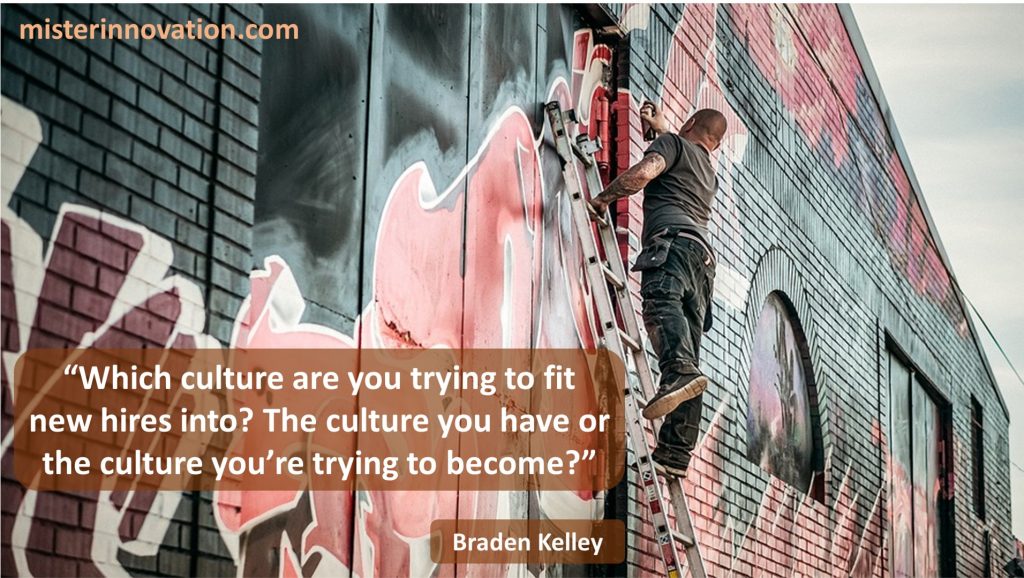
    Effective Facilitation for All

    How Leadership Fundamentals Benefit Everyone

    Effective Facilitation for All

    GUEST POST from Douglas Ferguson

    Effective facilitation isn’t limited to the inner workings of staff meetings. True facilitation goes beyond simply setting an agenda: it’s a mindset, framework, and way of being.

    Excellent facilitators know how to get the best out of their teams and design conversations that are innovative, exciting, and productive.

    In this article, we explore how the fundamentals of facilitation affect an organization in the following topics:

    • Leading with Great Expectations
    • Effective Facilitation for Everyone
    • Facilitation with a Purpose

    Leading with Great Expectations

    At its core, great facilitation is an engaging conversation. In practicing effective facilitation, leaders make sure all communication is as clear and thoughtful as possible. Facilitators can begin this conversation by intentionally setting their expectations with all stakeholders in every conversation, meeting, and project.

    Often, meetings end with attendees unaware of their colleagues’ and leaders’ expectations. By focusing on effective facilitation, leaders can identify and communicate their expectations as well as the expectations of everyone else in the room.

    Consider the following facilitation fundamentals when identifying others’ expectations and needs ahead of a meeting:

    • Personal Preparation

    Preparation is essential for any form of facilitation. Whether you’re leading a meeting or heading up a project, participants expect you to come prepared. Demonstrate proper facilitation techniques by preparing to be physically, emotionally, and mentally ready for your presentation.

    • Practice

    Practice is the next step in proper facilitation. In practicing, you’ll be able to review your process and identify any areas needed for adjustment. Moreover, practicing will help you visualize your upcoming session, anticipate problems, and prepare alternative plans should something go wrong.

    • Process

    Effortless facilitation follows a seamless process designed specifically for your audience. Facilitators have a variety of processes to choose from, including strategic planning, problem-solving, decision-making, and more.

    • Place

    Your physical or virtual environment plays an important role in your facilitation ventures. It’s essential to be as intentional as possible in selecting the space for your next session. Consider the requirements for a space, such as the size of the room, what equipment is needed, and any other elements that may affect the flow of your meeting.

    • Purpose

    The purpose may be the single most important component of effective facilitation. Your purpose will outline the end goal of a meeting and will communicate why the session is taking place.

    • Perspective

    Perspective is as essential to effective facilitation as the purpose. Your perspective allows you to contextualize the goals, mission, vision, and purpose of your meeting.

    • Product

    As effective facilitation hinges on meeting with a purpose, understanding what that purpose will produce is just as important. Consider what deliverables should be created by the end of a project, meeting, or conversation. Additionally, be sure to define the most important goals and actionable steps required to achieve them.

    • People

    Facilitate with intention by identifying who should be in attendance. Learn more about each participant by researching the bias, potential barriers, and preconceived ideas that they may bring to each meeting. Likewise, be sure to highlight their strengths to further assess how they can be an asset in your conversation.

    Effective Facilitation for Everyone

    Integrating effective facilitation skills and techniques goes far beyond the walls of a meeting. A facilitative approach to leadership zeroes in on the positives of leading an active and engaged group. Facilitation techniques such as active listening and encouragement work to stimulate participative group conversation and collaboration.

    Every member of an organization can benefit from the power of facilitative leadership. Leaders that demonstrate and embody proper facilitation skills can impart these practices to their employees.

    Facilitation techniques benefit employees in the following ways:

    1. Fostering Collaboration and Learning

    Facilitation skills are essential in encouraging an environment of collaboration and learning. Encouraging team members to look at a situation from a different perspective, consider new solutions, and understand how to bring the best out of each other will result in the most productive experiences.

    In creating a culture of learning, leaders should take the time to learn from their teams as well. Giving your employees a platform to offer their own insights is the best way to invite them into this collaborative process of co-creating learning.

    2. Getting More From Meeting Attendees

    As employees adopt the elements of effective facilitation, they’ll bring more of their skills, focus, and energy to each meeting. Equipped with the skills to act as influencers amongst their peers, each employee will become an active participant in the meeting, encouraging each other to make the most out of their time together.

    3. Improving Productivity

    As team members work together on various projects, effective facilitation skills allow them to move forward in the most productive, cost-effective, and timely manner. When employees incorporate their finely-honed facilitation skills, they work together efficiently, converse productively, and solve problems effectively. Ultimately, facilitation fundamentals allow everyone from team members to management to make the most of their time at work.

    4. Boosting Group Dynamics

    Incorporating effective facilitation skills helps improve group dynamics as well. All team members benefit from improved communication strategies, both in and out of the structured setting of meetings. These strategies allow all participants to better express their thoughts, opinions, and concerns as they work together to achieve a common goal.

    Teams that invest in developing their communication skills are likely to retain the best employees. Statistics show that organizations that practice strong communication skills experience 50% less attrition overall.

    5. Encouraging Active Participation

    While effective facilitation is often considered from a leadership perspective, it is also an excellent catalyst in driving employee participation. Oftentimes, team members don’t feel comfortable enough to share their true opinions in a meeting. Moreover, they tend to bring the bare minimum to the workplace if they don’t feel as though their participation, efforts, and insights are valued.

    Organizations that champion effective facilitation as part of their company culture are actively shaping an environment that makes employees feel as though they are truly part of their team. Feeling this sense of psychological safety allows all stakeholders to feel comfortable enough to put their all into their work.

    6. Encouraging Team Competency

    Leaders that excel in facilitation techniques are able to engender a sense of self-efficacy in their team. Oftentimes, leaders fail to go beyond methods of coaching to help their team members understand and internalize pertinent information. Effective facilitation helps to bridge the gap of competency in an organization.

    Leaders must encourage team members on the path toward true competency. This approach to facilitation is essential to incorporate a culture where facilitation skills are easily transferable.

    Lauren Green, Executive Director of Dancing with Markers, shares that the path to competency starts with meeting employees where they are:

    “First, you’re unconsciously incompetent. You’re unconscious. And then you become aware [of] your incompetence, and then you’re consciously competent. And then you start to grow your skills. So then you’re consciously competent. And then when you don’t have to think about it anymore, then you’re unconsciously competent.”

    Facilitation with a Purpose

    Just as the purpose is a powerful tool in leading a meeting, it’s also essential in building effective facilitation skills in others. Intentionally investing in facilitation training allows organizations the opportunity to teach, practice, and embody the structured techniques of effective facilitation.

    The nature of effective facilitation is that nothing can take place without purpose. From managing meetings to running projects, leading with the fundamentals of facilitation helps every facet of an organization run smoothly.

    Lead with purpose by focusing on the following effective facilitation practices:

    1. Listening first and speaking second
    2. Leading with effective communication
    3. Managing time and tracking deadlines
    4. Asking intentional questions
    5. Inviting others to engage
    6. Creating a focused and psychologically safe environment
    7. Providing unbiased objectivity
    8. Acting as a decider in group discussions

    Effective facilitation benefits everyone, whether you’re leading a meeting or encouraging employees to take their leadership skills to the next level. At Voltage Control, we help leaders and teams harness the power of facilitation. Contact us to learn how to apply these fundamentals to your organization.

    Article originally published on VoltageControl.com

    Image credit: Pexels

    Subscribe to Human-Centered Change & Innovation WeeklySign up here to get Human-Centered Change & Innovation Weekly delivered to your inbox every week.

    Why Small Teams Kick Ass

    Why Small Teams Kick Ass

    GUEST POST from Mike Shipulski

    When you want new thinking or rapid progress, create a small team.

    When you have a small team, they manage the hand-offs on their own and help each other.

    Small teams hold themselves accountable.

    With small teams, one member’s problem becomes everyone’s problem in record time.

    Small teams can’t work on more than one project at a time because it’s a small team.

    And when a small team works on a single project, progress is rapid.

    Small teams use their judgment because they have to.

    The judgment of small teams is good because they use it often.

    On small teams, team members are loyal to each other and set clear expectations.

    Small teams coordinate and phase the work as needed.

    With small teams, waiting is reduced because the team members see it immediately.

    When something breaks, small teams fix it quickly because the breakage is apparent to all.

    The tight connections of a small team are magic.

    Small teams are fun.

    Small teams are effective.

    And small teams are powered by trust.

    Image credit: Pixabay

    Subscribe to Human-Centered Change & Innovation WeeklySign up here to get Human-Centered Change & Innovation Weekly delivered to your inbox every week.