Tag Archives: strategic foresight

Top 10 Human-Centered Change & Innovation Articles of December 2022

Top 10 Human-Centered Change & Innovation Articles of December 2022Drum roll please…

At the beginning of each month, we will profile the ten articles from the previous month that generated the most traffic to Human-Centered Change & Innovation. Did your favorite make the cut?

But enough delay, here are December’s ten most popular innovation posts:

  1. Forbidden Truth About Innovation — by Robyn Bolton
  2. A Letter to Innovation Santa — by John Bessant
  3. Preserving Ecosystems as an Innovation Superpower — by Pete Foley
  4. What is a Chief Innovation Officer? — by Art Inteligencia
  5. If You Can Be One Thing – Be Effective — by Mike Shipulski
  6. How to Drive Fear Out of Innovation — by Teresa Spangler
  7. 3 Steps to Find the Horse’s A** In Your Company (and Create Space for Innovation) — by Robyn Bolton
  8. Six Ways to Stop Gen-Z from Quiet Quitting — by Shep Hyken
  9. Overcoming the Top 3 Barriers to Customer-Centricity — by Alain Thys
  10. Designing Innovation – Accelerating Creativity via Innovation Strategy — by Douglas Ferguson

BONUS – Here are five more strong articles published in November that continue to resonate with people:

If you’re not familiar with Human-Centered Change & Innovation, we publish 4-7 new articles every week built around innovation and transformation insights from our roster of contributing authors and ad hoc submissions from community members. Get the articles right in your Facebook, Twitter or Linkedin feeds too!

Have something to contribute?

Human-Centered Change & Innovation is open to contributions from any and all innovation and transformation professionals out there (practitioners, professors, researchers, consultants, authors, etc.) who have valuable human-centered change and innovation insights to share with everyone for the greater good. If you’d like to contribute, please contact me.

P.S. Here are our Top 40 Innovation Bloggers lists from the last three years:

Subscribe to Human-Centered Change & Innovation WeeklySign up here to get Human-Centered Change & Innovation Weekly delivered to your inbox every week.

What are Strategic and Market Foresight?

What are Strategic and Market Foresight?

by Braden Kelley

In my previous article What’s Next – Through the Looking Glass we explored the notion that time is not linear and this is a key part of the FutureHacking™ mindset.

To paraphrase, we get to the future not in a straight line, but by hopping from lily pad to lily pad and as we do so our landings create ripples outward in all directions and our jump direction choices and the amplitude of the ripples at each waypoint determines the shape of our path choice and our view on the potential future. And ultimately futurology and futurism are the disciplines of exploring potential, possible and preferable futures.

Only from a continuous commitment to this exploration can any organization have any chance of ongoing success. But trying to make sense of the future and to find productive ways to shape it – feels incredibly dauting to most people.

To simplify this complexity, I created the FutureHacking™ methodology and tools to enable us average humans to become our own futurist.

“FutureHacking™ is the art and science of getting to the future first.”

This is our goal. To get better at finding the best possible path and the best ripples to amplify. Doing so optimizes our distance and chosen directions so that we arrive at our preferred future. The FutureHacking™ methodology and tools make this not only possible, but accessible, so that we’ll put in the work – and reap the benefits!

This article is another in a series designed to make foresight and futurology accessible to the average business professional. Below we will look at what Strategic and Market Foresight are and how they drive ongoing business success. First some definitions:

  • Strategic Foresight is about combining methods of futures work with those of strategic management. It is about understanding upcoming external changes in relation to internal capabilities and drivers.
  • Market Foresight is about the consideration of possible and probable futures in the organization’s relevant business environment, and about identifying new opportunities in that space.
  • Source: Aalto University

Strategic Foresight and Market Foresight are two tools in our toolbox as we sharpen our focus on the potential and possible futures as we work to define a preferable future and a path to creating it.

Market Foresight gives us permission to explore how the market we compete in is likely to change as we move forward. This includes looking at how customers may change, how their consumption of existing products and services might change, and how changing customer wants and needs will create the potential for new products, and services, and even markets. Economics, demographics, trends and other factors all have a factor to play here, and we need methods for exploring the impact of each.

Strategic Foresight gives us permission to make shifts in strategy. The magic happens when we productively look both internally and externally to identify the most important changes that we can influence AND that we would monitor. The better we can understand the external changes most likely to occur (or that we want to occur), the more focus we can bring to identifying the internal capabilities that we will need to strengthen and the capabilities that we will need to build OR to buy & integrate.

The most successful organizations do a good job of matching their timeline for strategic and capability changes to the pace of market changes that are occurring. And while not explicitly mentioned, the pacing and branching of technology is a big consideration in both Strategic Foresight and Market Foresight.

Good Market Foresight will give you a better view to where the lily pads will be, and good Strategic Foresight (and investments) will help strengthen your jumping legs and propel you through a more optimal path – increasing your chances of getting to the future first!

Public resources for those that want to learn more about Strategic Foresight:

To learn more about Market Foresight, increase your knowledge of:

  • Market Research methods
  • Trendwatching/Trendhunting
  • Innovation frameworks

FutureHacking™ is Within Our Grasp

I’ve created a collection of 20+ FutureHacking™ tools to help you be your own futurist.

These tools will be available to license soon, and I’ll be holding virtual, and possibly in-person, workshops to explain how to use these simple tools to identify a range of potential futures, to select a preferred future, and activities to help influence its realization.

I think you’ll really like them, but in the meantime, I invite you to share your thoughts on how you look at and plan for the future in the comments below.

Finally, make sure you’re subscribed to our newsletter to get our weekly collection of articles, along with updates on the forthcoming FutureHacking™ set of tools.

Keep innovating!


Accelerate your change and transformation success

Image credit: Pixabay

Subscribe to Human-Centered Change & Innovation WeeklySign up here to get Human-Centered Change & Innovation Weekly delivered to your inbox every week.

From Trendspotting to Transformation

Translating Foresight into Action

From Trendspotting to Transformation

GUEST POST from Chateau G Pato

In our increasingly volatile and complex world, the ability to identify emerging trends is no longer enough. Every executive team can access reports on AI, sustainability, or demographic shifts. The true differentiator, as a human-centered change and innovation thought leader, lies not in spotting the trends, but in translating foresight into concrete, transformational action. Many organizations excel at analysis but falter at execution, leaving invaluable insights to languish in PowerPoint presentations. The future belongs to those who bridge the gap between understanding what’s coming and actively shaping their response, converting potential threats and opportunities into tangible strategies and innovations.

The challenge isn’t a lack of information; it’s a lack of connection between the strategic foresight function and the operational innovation engine. Trend reports often remain isolated, failing to inform product development, marketing initiatives, or organizational design. This disconnect stems from a mindset that views foresight as a predictive exercise rather than a generative one. To truly move from trendspotting to transformation, we must shift our focus from merely observing the future to actively engaging with it, asking “What does this trend mean for us, and what will we do about it?” This requires a robust, repeatable methodology that empowers teams to move from abstract insights to actionable strategies and, ultimately, breakthrough innovations.

The Foresight-to-Action Framework: A Human-Centered Approach

Bridging the gap between trend analysis and practical implementation requires a structured, human-centered framework. It’s about empowering your people to envision and build the future, not just react to it:

  • 1. Deconstruct and Empathize: Don’t just list trends; unpack them. Who will be affected by this trend? How will it change their daily lives, their needs, their desires? Use human-centered design tools like empathy maps and user personas to make abstract trends tangible and relatable.
  • 2. Provoke and Connect: Challenge your assumptions. How might this trend disrupt your core business, even if it seems unrelated? How might it open up entirely new business models or customer segments? Force cross-functional teams to connect disparate trends, looking for synergistic opportunities or compounding risks.
  • 3. Envision and Experiment: Based on your insights, develop concrete future scenarios. Don’t just describe them; visualize them. Then, identify specific, low-risk experiments that can test assumptions about these future states. What’s the smallest, fastest way you can learn if your envisioned future is viable?
  • 4. Prototype and Pilot: Move beyond theoretical discussions to tangible prototypes. This doesn’t mean a fully-fledged product, but a minimum viable product (MVP) or service that brings a piece of the future to life. Pilot these prototypes with real users, gather feedback, and iterate rapidly.

This systematic approach, which Braden Kelley has developed and refined as FutureHacking™, empowers organizations to move beyond passive observation. FutureHacking™ provides the tools and mindset necessary to transform abstract trends into concrete innovation pathways. It’s a human-centered methodology that focuses on translating foresight into tangible prototypes and actionable strategies, fostering a culture where every team member is equipped to anticipate and proactively shape the future, not just react to it. It enables businesses to iterate rapidly, de-risk their investments, and build resilient strategies that anticipate tomorrow’s challenges today.

“Foresight without action is merely entertainment. Transformation requires the courage to translate ‘what if’ into ‘what now’.” — Braden Kelley


Case Study 1: The LEGO Group – Building the Future Piece by Piece

The Challenge:

In the early 2000s, The LEGO Group faced a looming crisis. Digital entertainment was on the rise, and children were spending less time with physical toys. The company recognized the trend, but the challenge was how to respond strategically without abandoning its core identity. They needed to evolve beyond plastic bricks but feared alienating their loyal customer base.

The Foresight-to-Action Solution:

LEGO embraced a proactive foresight strategy that involved deep engagement with emerging trends in digital play and child development. They didn’t just observe; they experimented. This led to innovations like LEGO Mindstorms, which blended physical building with robotics and coding, appealing to a new generation of digital natives. Later, they developed transmedia storytelling through movies (e.g., The LEGO Movie) and video games, seamlessly integrating digital experiences while reinforcing the core value of creative building. Their foresight function worked directly with product development teams to prototype and test these new concepts.

  • Deconstructed Trends: They understood that the digital trend wasn’t just about screens, but about interaction, creativity, and new forms of storytelling.
  • Envisioned New Play: They imagined a future where physical and digital play could coexist and enhance each other, rather than compete.
  • Prototyped and Piloted: Mindstorms and early video games were clear examples of prototyping a new future, learning from user interaction, and scaling successful concepts.

The Result:

By translating foresight into tangible action, LEGO transformed itself from a traditional toy company into a global entertainment brand. They didn’t just survive the digital revolution; they thrived, leveraging foresight to drive continuous innovation that connected with new audiences while staying true to their heritage. This strategic agility allowed them to anticipate and shape the future of play, rather than being swept away by it.


Case Study 2: Starbucks – Anticipating the “Third Place”

The Challenge:

In its early growth stages, Starbucks was expanding rapidly, but leaders like Howard Schultz weren’t just thinking about coffee; they were thinking about human connection and urban trends. They anticipated a societal need for a “third place”—neither home nor work—where people could gather, socialize, and relax. The challenge was how to design and scale this concept into a ubiquitous global brand.

The Foresight-to-Action Solution:

Starbucks’ success was rooted in translating this foresight into every aspect of its store design, product offerings, and customer experience. They didn’t just sell coffee; they sold an atmosphere, a sense of community, and a comfortable environment for meeting or working. This went beyond trendspotting; it was about actively creating the future “third place.” They designed inviting interiors, comfortable seating, and, crucially, provided free Wi-Fi long before it was common, anticipating the rise of mobile work and digital nomads.

  • Deconstructed Human Needs: They understood a growing urban loneliness and a desire for accessible, comfortable social spaces.
  • Envisioned a New Experience: They imagined a place that felt like an extension of one’s living room or office, going beyond the transactional coffee shop model.
  • Prototyped and Scaled: Each store became a prototype for the “third place” concept, with continuous iteration on design, menu, and service to optimize the desired feeling.

The Result:

Starbucks didn’t just adapt to the “third place” trend; it defined it. By acting on their foresight, they built a global empire that transcended coffee sales, creating a powerful cultural phenomenon. This transformation from a simple coffee vendor to a global social hub demonstrates the immense power of translating foresight into concrete, human-centered action, shaping consumer behavior and urban landscapes in the process.


Conclusion: The Act of Future-Making

The distinction between organizations that merely survive and those that truly thrive often comes down to their ability to transform foresight into action. It’s about having the courage to move beyond analysis paralysis and to actively engage in future-making. This requires not just brilliant strategists, but a culture that empowers every team member to observe, question, experiment, and build.

As leaders, our role is to champion this shift. We must provide the methodologies — like FutureHacking™ — and foster the mindset that views trends not as destiny, but as raw material for innovation. The future is not something that happens to us; it is something we create, one strategic action and one human-centered innovation at a time. Let’s move beyond predicting the future and start building it.

For a foundational understanding of the practice, start with what trend spotting is before diving into application.

Extra Extra: Because innovation is all about change, Braden Kelley’s human-centered change methodology and tools are the best way to plan and execute the changes necessary to support your innovation and transformation efforts — all while literally getting everyone all on the same page for change. Find out more about the methodology and tools, including the book Charting Change by following the link. Be sure and download the TEN FREE TOOLS while you’re here.

Image credit: Pixabay

Subscribe to Human-Centered Change & Innovation WeeklySign up here to get Human-Centered Change & Innovation Weekly delivered to your inbox every week.

AI-Powered Foresight

Predicting Trends and Uncovering New Opportunities

AI-Powered Foresight

GUEST POST from Chateau G Pato

In a world of accelerating change, the ability to see around corners is no longer a luxury; it’s a strategic imperative. For decades, organizations have relied on traditional market research, analyst reports, and expert intuition to predict the future. While these methods provide a solid view of the present and the immediate horizon, they often struggle to detect the faint, yet potent, signals of a more distant future. As a human-centered change and innovation thought leader, I believe that **Artificial Intelligence is the most powerful new tool for foresight**. AI is not here to replace human intuition, but to act as a powerful extension of it, allowing us to process vast amounts of data and uncover patterns that are invisible to the human eye. The future of innovation isn’t about predicting what’s next; it’s about systematically sensing and shaping what’s possible. AI is the engine that makes this possible.

The human brain is a marvel of pattern recognition, but it is limited by its own biases, a finite amount of processing power, and the sheer volume of information available today. AI, however, thrives in this chaos. It can ingest and analyze billions of data points—from consumer sentiment on social media, to patent filings, to macroeconomic indicators—in a fraction of the time. It can identify subtle correlations and weak signals that, when combined, point to a major market shift years before it becomes a mainstream trend. By leveraging AI for foresight, we can move from a reactive position to a proactive one, turning our organizations from followers into first-movers.

The AI Foresight Blueprint

Leveraging AI for foresight isn’t a one-and-done task; it’s a continuous, dynamic process. Here’s a blueprint for how organizations can implement it:

  • Data-Driven Horizon Scanning: Use AI to continuously monitor a wide range of data sources, from academic papers and startup funding rounds to online forums and cultural movements. An AI can flag anomalies and emerging clusters of activity that fall outside of your industry’s current focus.
  • Pattern Recognition & Trend Identification: AI models can connect seemingly unrelated data points to identify nascent trends. For example, an AI might link a rise in plant-based food searches to an increase in sustainable packaging patents and a surge in home gardening interest, pointing to a larger “Conscious Consumer” trend.
  • Scenario Generation: Once a trend is identified, an AI can help generate multiple future scenarios. By varying key variables—e.g., “What if the trend accelerates rapidly?” or “What if a major competitor enters the market?”—an AI can help teams visualize and prepare for a range of possible futures.
  • Opportunity Mapping: AI can go beyond trend prediction to identify specific market opportunities. It can analyze the intersection of an emerging trend with a known customer pain point, generating a list of potential product or service concepts that address an unmet need.

“AI for foresight isn’t about getting a crystal ball; it’s about building a powerful telescope to see what’s on the horizon and a microscope to see what’s hidden in the data.”


Case Study 1: Stitch Fix – Algorithmic Personal Styling

The Challenge:

In the crowded and highly subjective world of fashion retail, predicting what a single customer will want to wear—let alone an entire market segment—is a monumental challenge. Traditional methods relied on seasonal buying patterns and the intuition of human stylists. This often led to excess inventory and a high rate of returns.

The AI-Powered Foresight Response:

Stitch Fix, the online personal styling service, built its entire business model on AI-powered foresight. The company’s core innovation was not in fashion, but in its algorithm. The AI ingests data from every single customer interaction—what they kept, what they returned, their style feedback, and even their Pinterest boards. This data is then cross-referenced with a vast inventory and emerging fashion trends. The AI can then:

  • Predict Individual Preference: The algorithm learns each customer’s taste over time, predicting with high accuracy which items they will like. This is a form of micro-foresight.
  • Uncover Macro-Trends: By analyzing thousands of data points across its customer base, the AI can detect emerging fashion trends long before they hit the mainstream. For example, it might notice a subtle shift in the popularity of a certain color, fabric, or cut among its early adopters.

The Result:

Stitch Fix’s AI-driven foresight has allowed them to operate with a level of efficiency and personalization that is nearly impossible for traditional retailers to replicate. By predicting consumer demand, they can optimize their inventory, reduce waste, and provide a highly-tailored customer experience. The AI doesn’t just help them sell clothes; it gives them a real-time, data-backed view of future consumer behavior, making them a leader in a fast-moving and unpredictable industry.


Case Study 2: Netflix – The Algorithm That Sees the Future of Entertainment

The Challenge:

In the early days of streaming, content production was a highly risky and expensive gamble. Studios would greenlight shows based on the intuition of executives, focus group data, and the past success of a director or actor. This process was slow and often led to costly failures.

The AI-Powered Foresight Response:

Netflix, a pioneer of AI-powered foresight, revolutionized this model. They used their massive trove of user data—what people watched, when they watched it, what they re-watched, and what they skipped—to predict not just what their customers wanted to watch, but what kind of content would be successful to produce. When they decided to create their first original series, House of Cards, they didn’t do so on a hunch. Their AI analyzed that a significant segment of their audience had a high affinity for the original British series, enjoyed films starring Kevin Spacey, and had a preference for political thrillers directed by David Fincher. The AI identified the convergence of these three seemingly unrelated data points as a major opportunity.

  • Predictive Content Creation: The algorithm predicted that a show with these specific attributes would have a high probability of success, a hypothesis that was proven correct.
  • Cross-Genre Insight: The AI’s ability to see patterns across genres and user demographics allowed Netflix to move beyond traditional content silos and identify new, commercially viable niches.

The Result:

Netflix’s success with House of Cards was a watershed moment that proved the power of AI-powered foresight. By using data to inform its creative decisions, Netflix was able to move from a content distributor to a powerful content creator. The company now uses AI to inform everything from production budgets to marketing campaigns, transforming the entire entertainment industry and proving that a data-driven approach to creativity is not only possible but incredibly profitable. Their foresight wasn’t a lucky guess; it was a systematic, AI-powered process.


Conclusion: The Augmented Innovator

The era of “gut-feel” innovation is drawing to a close. The most successful organizations of the future will be those that have embraced a new model of augmented foresight, where human intuition and AI’s analytical power work in harmony. AI can provide the objective, data-backed foundation for our predictions, but it is up to us, as human leaders, to provide the empathy, creativity, and ethical judgment to turn those predictions into a better future.

AI is not here to tell you what to do; it’s here to show you what’s possible. Our role is to ask the right questions, to lead with a strong sense of purpose, and to have the courage to act on the opportunities that AI uncovers. By training our teams to listen to the whispers in the data and to trust in this new collaborative process, we can move from simply reacting to the future to actively creating it, one powerful insight at a time.

Extra Extra: Because innovation is all about change, Braden Kelley’s human-centered change methodology and tools are the best way to plan and execute the changes necessary to support your innovation and transformation efforts — all while literally getting everyone all on the same page for change. Find out more about the methodology and tools, including the book Charting Change by following the link. Be sure and download the TEN FREE TOOLS while you’re here.

Image credit: Microsoft CoPilot

Subscribe to Human-Centered Change & Innovation WeeklySign up here to get Human-Centered Change & Innovation Weekly delivered to your inbox every week.

The Role of Strategic Foresight in Mapping the Future

The Role of Strategic Foresight in Mapping the Future

GUEST POST from Chateau G Pato

In an increasingly dynamic and uncertain world, businesses and organizations need to cultivate a proactive mindset towards shaping their future. The advent of strategic foresight has provided a powerful framework for identifying potential future scenarios and making informed decisions. At the heart of strategic foresight lies the principle of human-centered design, which involves placing the needs, desires, and values of individuals at the forefront of decision-making processes. This article explores the critical role of strategic foresight in mapping the future by leveraging human-centered design principles, supported by two case studies to illustrate its efficacy.

Case Study 1: The Evolution of Transportation

The transportation industry has witnessed profound changes due to emerging technologies and evolving consumer expectations. In this case study, we will explore how strategic foresight enabled a major automobile manufacturer to anticipate future mobility trends and innovate accordingly.

Identifying Emerging Trends: By leveraging strategic foresight methods, the automobile manufacturer sought to understand the drivers of change influencing transportation, such as urbanization, environmental concerns, and technological advancements. By analyzing a wide range of inputs, including consumer insights and trend analysis, they identified several potential future scenarios.

Developing Future Scenarios: Through envisioning different future states, the automobile manufacturer created scenarios that covered a spectrum of possibilities. These scenarios incorporated various socio-economic, technological, and environmental factors. Each scenario was designed to challenge traditional assumptions and foster innovative thinking.

Designing Human-Centered Solutions: Integrating human-centered design principles, the manufacturer engaged with a diverse set of stakeholders. They conducted user research, including ethnographic studies, to understand the changing needs and aspirations of people in the context of future transportation scenarios. These insights informed the development of mobility solutions that aligned with the emerging societal demands.

Outcome: The strategic foresight exercise allowed the automobile manufacturer to pivot towards a more decentralized, sustainable, and user-centric approach. By integrating electric vehicles, shared mobility solutions, and autonomous driving capabilities, they successfully positioned themselves as a leader in this new era of transportation.

Case Study 2: Enhancing Healthcare Delivery

The healthcare sector faces numerous challenges, ranging from rising costs to an aging population. This case study demonstrates how a hospital system utilized strategic foresight to transform its care delivery model and improve patient outcomes.

Anticipating Future Needs: The hospital system employed strategic foresight methodologies to understand the emerging needs and potential disruptors in the healthcare landscape. This involved analyzing demographic trends, advances in medical technology, and evolving patient preferences.

Co-Creating Future Scenarios: Through collaborative workshops and engagements with healthcare professionals, patients, and experts, the hospital system developed a set of future scenarios. These scenarios explored different facets of healthcare, including preventive care, personalized medicine, and digital health solutions. By embracing divergent perspectives, the system gained critical insights into the possible trajectories of healthcare delivery.

Prototyping and Iterating Solutions: Recognizing the value of iterative design, the hospital system prototyped various interventions aligned with each scenario. These prototypes included novel care models, patient engagement platforms, and technology-enabled solutions. Regular feedback loops and user testing helped refine and improve these solutions.

Impact: By embedding strategic foresight techniques in their organizational culture, the hospital system experienced a paradigm shift in healthcare delivery. They embraced preventative care strategies, introduced patient-centered services, and harnessed digital solutions to enhance the overall patient experience and outcomes. Furthermore, their foresight-led approach enabled them to adapt swiftly to subsequent disruptions, including the COVID-19 pandemic.

Conclusion

Strategic foresight, when integrated with human-centered design principles, enables organizations to navigate the complexities of an uncertain future and create meaningful impact. By conducting rigorous research, envisioning future scenarios, and designing for human needs, businesses and institutions can strategically position themselves to capitalize on emerging opportunities. The case studies presented highlight the power of strategic foresight as a transformative framework, unlocking new possibilities and shaping a better future for individuals and society at large.

SPECIAL BONUS: The very best change planners use a visual, collaborative approach to create their deliverables. A methodology and tools like those in Change Planning Toolkit™ can empower anyone to become great change planners themselves.

Image credit: Pixabay

Subscribe to Human-Centered Change & Innovation WeeklySign up here to get Human-Centered Change & Innovation Weekly delivered to your inbox every week.

Data-Driven Intuition

Balancing Predictive Analytics with Strategic Foresight
Data-Driven Intuition

GUEST POST from Art Inteligencia


I. Introduction: The False Dichotomy of Data vs. Instinct

In boardrooms across the globe, a subtle but dangerous rift has formed. On one side sit the data evangelists, clutching dashboard metrics, predictive models, and algorithmic forecasts as if they were holy writ. On the other side sit the design thinkers, strategists, and visionaries, relying on qualitative human insights, strategic foresight, and lived experience to point toward where the world is actually going.

This divide has created a false dichotomy: that modern leadership must choose between cold, quantitative precision or warm, intuitive creativity. In reality, choosing either in isolation is a recipe for strategic stagnation.

The Predictive Analytics Trap

To be clear: predictive analytics is an extraordinary tool. It allows organizations to optimize operations, streamline customer journeys, and detect micro-efficiencies with surgical precision. But predictive models share a fundamental flaw — they are built entirely on historical data. They look through the rearview mirror to map the road ahead.

When you rely exclusively on predictive analytics to determine your strategic direction, you create an echo chamber. You optimize for what was and what is, while remaining completely blind to black swan events, emerging cultural sea-changes, and the subtle shift in human expectations. Algorithms excel at incremental optimization, but they rarely invent radical transformation.

Reframing “Intuition” in a Data-Rich World

Part of the problem stems from how we define “intuition.” Critics often dismiss intuition as a polite word for guessing, shooting from the hip, or indulging executive hubris. But true strategic intuition is nothing of the sort.

In a human-centered innovation context, intuition is high-velocity pattern recognition built on deep empathy, environmental scanning, and domain experience. It is the ability to connect seemingly disparate weak signals, spot emerging unmet needs, and understand the emotional realities of human beings in ways a spreadsheet never could.

The Path Forward: Data-Driven Intuition

Sustainable competitive advantage does not come from choosing data over human insight, or vice versa. It emerges at the intersection of both: Data-Driven Intuition.

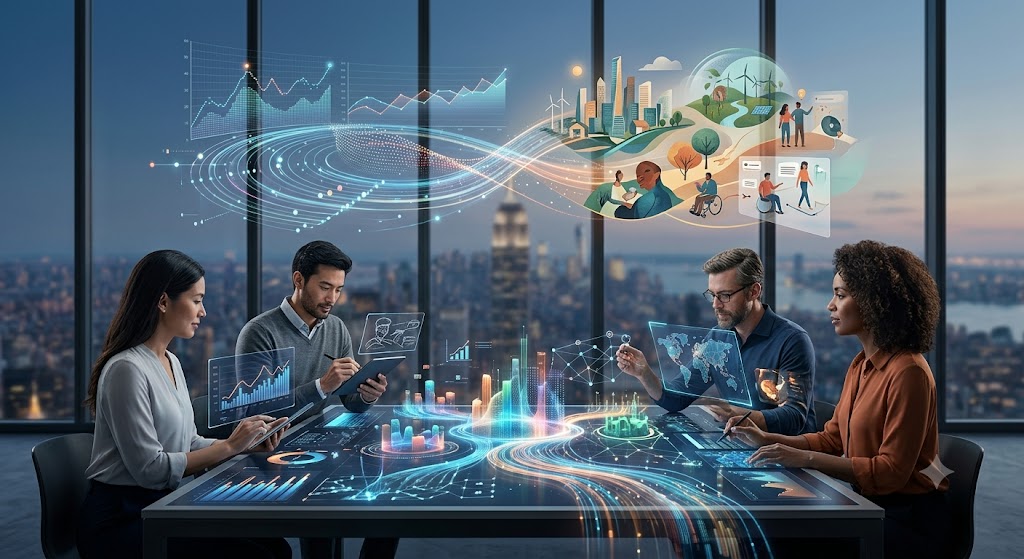
Data-Driven Intuition is a strategic discipline where quantitative analytics validate our current reality, while human empathy, experience design, and strategic foresight unlock our potential futures. By using data to sharpen our instincts and human vision to give our data direction, organizations can stop simply reacting to trends and start actively shaping the future.

II. The Blind Spots of Purely Predictive Models

The allure of predictive analytics is understandable. In an increasingly complex business environment, numbers offer the comforting illusion of certainty. Leaders are often tempted to defer major decisions to algorithms under the guise of being “data-driven.” However, an over-reliance on predictive models creates critical blind spots that can quietly undermine an organization’s future relevance.

Looking in the Rearview Mirror

Every predictive algorithm is fundamentally a historical construct. It learns by analyzing past behaviors, transactions, and environmental factors, extrapolating those patterns into the future. This approach functions exceptionally well in stable, linear environments, but breaks down completely during periods of volatility, uncertainty, complexity, and ambiguity (VUCA).

Algorithms are inherently structured to miss weak signals — the quiet, fringe behaviors, emerging cultural shifts, and subtle non-linear changes that signal genuine disruption. When organizations rely solely on historical data to chart their course, they end up double-downing on the status quo right before the floor falls out from under them.

The Erosion of Customer Experience (CX)

When you optimize strictly for data metrics, you risk stripping the humanity out of experience design. Predictive tools naturally favor metrics that are easy to quantify: speed, conversion rates, click-throughs, and immediate cost savings. What they fail to capture are the nuanced, emotional, and qualitative aspects of human connection — trust, delight, loyalty, and brand affinity.

By over-indexing on short-term numerical efficiency, companies often create friction-free experiences that are entirely forgettable. They build hyper-optimized pathways that solve transactional needs while completely missing the deeper, unmet emotional needs of their customers.

Risk Aversion vs. Breakthrough Innovation

Perhaps the most dangerous byproduct of an exclusively predictive culture is the systematic suppression of bold, breakthrough innovation. Predictive models require historical data to validate potential success. Consequently, true radical innovations — concepts that have no historical precedent — will almost always score poorly or appear unjustifiably risky under traditional analytical scrutiny.

When “proof” is required before an idea can be explored, teams naturally gravitate toward safe, incremental tweaks over transformative leaps. This creates an organizational culture where risk mitigation eclipses opportunity creation, leaving the door wide open for more agile, foresight-led competitors to reshape the industry.

III. Strategic Foresight: The Human Engine of Future-Proofing

If predictive analytics provides the map of where we have been and where momentum is pushing us today, strategic foresight is the compass that helps us navigate entirely new territories. Strategic foresight is not about predicting a single, definitive future — it is a structured discipline for expanding our strategic radar, anticipating systemic shifts, and actively designing the future we want to inhabit.

Scanning for Weak Signals

Disruption rarely arrives without warning; it starts at the edges. Long before a trend shows up in high-volume quantitative market data, it manifests as a “weak signal” — a subtle anomaly, fringe behavioral change, or novel application of technology that challenges existing assumptions.

While traditional analytics models dismiss weak signals as statistical noise or outliers, human-centered strategists treat them as early indicators of change. By actively scanning across social, technological, economic, environmental, and political landscapes (STEEP), organizations can spot the first ripples of disruption while there is still time to shape the outcome rather than merely react to it.

Scenario Planning & Future-Hacking

Relying on a single linear forecast creates fragile strategies that buckle under unexpected stress. Strategic foresight counters this vulnerability through scenario planning — the practice of constructing multiple plausible, rigorous future worlds based on intersecting drivers of change.

By exploring diverse scenarios — from the highly optimistic to the wildly disruptive — leaders can test their current business models against extreme conditions. This enables organizations to build robust, flexible strategic portfolios, identifying no-regret moves that pay off across multiple futures while preparing contingent plays for specific inflection points.

Human-Centered Anchoring

Technology changes rapidly, but core human needs evolve at a much more deliberate pace. The most resilient strategic foresight does not focus on technology for technology’s sake; it anchors future scenarios in human realities, motivations, and emotional dynamics.

By pairing strategic foresight with deep empathy and experience design, we move beyond asking “What technology will exist in ten years?” to asking “How will human expectations, values, and definitions of value transform?” When foresight is anchored in human-centered design, future strategies don’t just anticipate market shifts — they create meaningful, lasting value for the people they serve.

IV. The Framework: Synthesizing Analytics & Foresight

To move from theory to action, organizations need a structured framework that brings quantitative analytics, human empathy, and strategic foresight into continuous dialogue. Rather than treating these methodologies as sequential hand-offs, Data-Driven Intuition integrates them across three core operational phases: Discovery, Strategy, and Execution.

1. Discovery: Weak Signal Triangulation

In the discovery phase, traditional organizations use analytics to measure existing customer behavior, while strategy teams conduct qualitative research in isolation. The synthesis lies in Weak Signal Triangulation.

Data analytics identifies what is happening in the immediate landscape, isolating anomalies and micro-trends. Strategic foresight and human-centered research step in to ask why those patterns are emerging and what if they scale. By using quantitative data to validate qualitative observations, teams can spot meaningful behavioral shifts early without chasing every shiny distraction.

2. Strategy: Agile Portfolio Strategy

Strategy is often where data and foresight collide. Analytics demands predictable ROI, pushing organizations toward low-risk, incremental improvements. Foresight envisions radical change, but often struggles to secure capital without immediate historical proof.

A balanced synthesis employs an Agile Portfolio Strategy. High-confidence predictive data informs core operational optimizations and short-term bets, while strategic foresight guides exploratory investments designed to capture future market shifts. Data sharpens the execution of today’s core business, while foresight provides the directional intent for tomorrow’s growth horizon.

3. Execution: Human-Centered Change & Adaptive Feedback Loops

Even the most brilliant strategy fails if an organization lacks the capacity to execute or adapt. During execution, predictive analytics provides real-time telemetry — tracking performance metrics, conversion rates, and adoption velocity.

However, numbers alone cannot measure organizational health or user sentiment. Integrating human-centered change management ensures leaders evaluate the qualitative signals: employee readiness, emotional resonance, friction in the user experience, and cultural momentum. Real-time quantitative feedback loops allow for agile pivots, while qualitative insight ensures those adjustments remain aligned with human needs and long-term strategic vision.

V. Building an Organizational Culture of Data-Driven Intuition

Tools, frameworks, and methodologies are useless without an organizational culture capable of sustaining them. Transitioning from a purely reactive, data-obsessed posture to a culture grounded in Data-Driven Intuition requires a intentional rethink of how teams are structured, how failure is evaluated, and how leaders navigate uncertainty.

Empowering Cross-Functional, Hybrid Teams

In many organizations, data scientists, user experience researchers, and business strategists operate in distinct silos. Data teams hand off quantitative reports; design teams run isolated empathy sessions; executives make strategic bets based on high-level summaries of both. This compartmentalization breeds friction and missed opportunities.

Building a culture of Data-Driven Intuition requires breaking down these boundaries to create truly collaborative, cross-functional units. Pairing data analysts directly with experience designers, futurists, and change agents ensures that quantitative findings are immediately contextualized by human insight, and that qualitative hypotheses are subjected to rigorous data testing from the start.

Reframing Experimentation and Hypothesis-Led Failure

A culture that demands absolute statistical certainty before taking action inevitably defaults to incrementalism. To unlock strategic foresight, organizations must shift from requiring “proof of outcome” to encouraging “proof of concept” through rapid, structured experimentation.

Leaders must foster a psychological safety zone where foresight-led hypotheses can be tested cheaply and quickly in the real world. When an experiment yields unexpected results or fails to validate a hypothesis, it should not be viewed as wasted capital, but as valuable, high-velocity intelligence that sharpens the organization’s strategic radar for the next iteration.

Leading Through Human-Centered Change

Navigating the space between hard data and future possibilities creates inherent ambiguity — and ambiguity triggers resistance. Employees and middle management often cling to historical metrics because they offer a sense of safety and predictability, even when those metrics no longer serve the broader mission.

Guiding an organization through this cultural shift requires active, empathetic change leadership. Leaders must clearly communicate the *why* behind strategic pivots, helping teams understand that data is a tool to empower human judgment, not replace it. By involving employees directly in foresight exercises and experience design, leaders can cultivate organizational agility, enthusiasm, and shared ownership over the future being built.

VI. Conclusion: Shaping the Future, Not Just Responding to It

The debate between quantitative analytics and qualitative human insight was always a false choice. Predictive analytics will always be indispensable for understanding current momentum, optimizing operational performance, and illuminating immediate patterns. But data can only ever report on what has already been measured. It cannot imagine new possibilities, build deep human connections, or chart a bold direction through uncharted territory.

That is the domain of human-centered change, strategic foresight, and intentional experience design. When organizations embrace Data-Driven Intuition, they transform quantitative data from a rigid dictator into a powerful catalyst for human creativity and strategic clarity.

The leaders and institutions that thrive in the years ahead will not be those with the largest data sets or the most complex algorithmic models. They will be the ones who pair data-backed precision with empathy, curiosity, and foresight— using analytics to ground their decisions today while drawing on human intuition to shape, design, and lead the world of tomorrow.

Frequently Asked Questions

What is Data-Driven Intuition?

Data-Driven Intuition is a strategic decision-making approach that combines quantitative predictive analytics with qualitative human insight, design thinking, and strategic foresight. Rather than choosing between data and instinct, organizations use data to validate current realities and sharpen human intuition to anticipate emerging future shifts.

Why is relying solely on predictive analytics risky for long-term strategy?

Predictive analytics models are built entirely on historical data, meaning they look backward to extrapolate the future. Relying exclusively on analytics creates an echo chamber that excels at short-term optimization, but remains blind to non-linear disruptions, changing human motivations, and weak signals of market change.

How do strategic foresight and analytics work together in practice?

Strategic foresight identifies weak signals, explores multiple future scenarios, and anchors strategy in human needs, while analytics provides real-time operational feedback and validates emerging trends. Together, analytics provides the ground truth for today, while foresight provides directional intent and innovation opportunities for tomorrow.


Bottom line: Futurists are not fortune tellers. They use a formal approach to achieve their outcomes, but a methodology and tools like those in FutureHacking™ can empower anyone to be their own futurist.

Image credit: Gemini

Subscribe to Human-Centered Change & Innovation WeeklySign up here to get Human-Centered Change & Innovation Weekly delivered to your inbox every week.

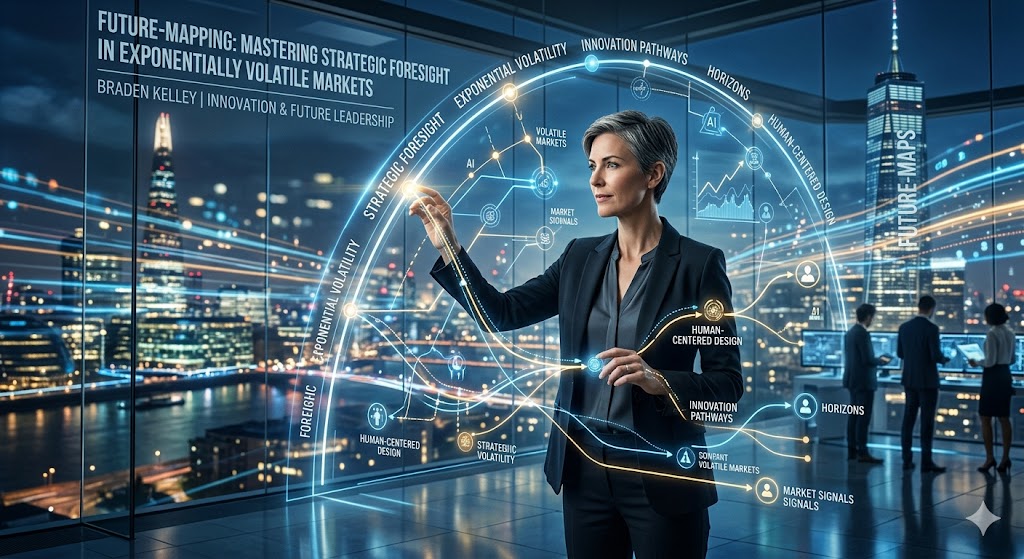
Mastering Strategic Foresight in Exponentially Volatile Markets

Future-Mapping

Mastering Strategic Foresight in Exponentially Volatile Markets - Future Mapping

GUEST POST from Chateau G Pato


I. Introduction: The Death of the Five-Year Plan

The Volatility Trap

Traditional, linear strategic planning is dying. In an era defined by exponential technological growth, unpredictable climate shifts, and hyper-connected global markets, the rigid five-year plan has become a liability. Organizations that tether themselves to fixed long-term predictions often find themselves blindsided by market disruptions, trapped in rigid structures unable to pivot when the ground shifts beneath them.

From Planning to Foresight

To survive and thrive in exponentially volatile markets, leaders must shift their organizational mindset from predicting a single corporate future to preparing for multiple, fluid realities. Strategic foresight is not about gazing into a crystal ball; it is about building the organizational muscle to anticipate waves of change, interpret weak signals, and map out dynamic pathways that maintain strategic agility.

The Human Element

At its core, future-mapping is not merely an exercise in data aggregation or trend analysis. The most profound disruptions are deeply human. True foresight requires a human-centered approach — marrying futurology with experience design and deep empathy. We must understand how the psychological needs, anxieties, and behaviors of both our workforce and our customers will evolve, ensuring that as we design the future of business, we keep humanity at the center of the experience.

II. The Foundations of Future-Mapping

Defining Future-Mapping

Future-mapping bridges the gap between abstract futurology and actionable, human-centered innovation. While traditional forecasting looks at a narrow data set to predict a single outcome, future-mapping visualizes the marketplace as a complex ecosystem of shifting human behaviors, technological waves, and economic realities. It is a visual, collaborative methodology designed to transform ambiguous macro-trends into concrete innovation strategies.

The Horizon Framework

To navigate exponential change without losing sight of daily survival, organizations must distribute their focus across three distinct horizons simultaneously:

  • Horizon 1: Optimizing the Present. Protecting, defending, and improving the core business model to maximize current efficiency and profitability.
  • Horizon 2: Nurturing Emerging Opportunities. Extending current capabilities into new, fast-growing markets or scaling adjacent business ideas.
  • Horizon 3: Designing for Visionary Futures. Developing genuinely disruptive innovations, business models, and capabilities tailored for unchartered territories five to ten years out.

Signal vs. Noise

The future rarely arrives without warning; it leaves clues. Success in volatile markets requires robust organizational sensing mechanisms to distinguish between temporary “noise” (passing fads) and true “weak signals” (early, localized indicators of structural change). By systematically scanning the fringes of technology, society, and culture, leaders can spot inflection points and catch the wave of disruption before it becomes an industry mainstream reality.

III. The Strategic Foresight Toolkit

Dynamic Scenario Planning

Static forecasting assumes the future is a straight line, but exponential volatility demands a matrix. Dynamic scenario planning moves beyond simple “best-case/worst-case” projections to construct multiple, vivid, and plausible alternate world narratives. By immersing leadership teams in these diverse realities, organizations can stress-test their current strategies, expose hidden vulnerabilities, and identify blind spots before they manifest in the real market.

Cross-Impact Analysis

Disruption rarely happens in a vacuum; it occurs at the intersection of converging forces. Cross-impact analysis evaluates how distinct macro-trends — such as the democratization of artificial intelligence, shifting generational values, and changing labor dynamics — interact with and accelerate one another. Understanding how these compounding variables collide allows organizations to anticipate secondary and tertiary market behaviors that competitors will miss.

The Backcasting Methodology

While forecasting looks forward from today to guess tomorrow, backcasting flips the timeline. It begins by designing a visionary, human-centered future state ten years down the road. From that North Star, we work backward to the present day, isolating the exact capabilities, technology investments, partnership models, and strategic pivots required along the journey. This ensures that today’s innovation portfolio is explicitly engineered to build tomorrow’s required reality.

IV. Human-Centered Experience Design for Tomorrow

The Future Customer Persona

Demographic data alone is no longer enough to understand tomorrow’s buyer. In a volatile landscape, we must map the evolving psychology of the future customer. This means anticipating how their trust metrics, digital friction points, and deep emotional needs will shift as technology integrates further into daily life. Designing tomorrow’s experiences requires building empathy today for the unique anxieties and aspirations of the next-generation consumer.

Designing for the “Next Economy”

The days of simple, isolated transactional business models are fading fast. True experience design requires transitioning from selling standalone products to orchestrating deeply integrated, adaptive ecosystem experiences. Value will increasingly be co-created at the intersection of physical spaces, fluid digital layers, and human communities, requiring organizations to design holistic journeys that adapt to changing customer contexts in real time.

The Ethics of Co-Creation

As experiences become highly personalized and driven by predictive data, the line between helpful anticipation and digital intrusion blurs. Foresight-driven innovation must be anchored by a robust ethical framework. Experience designers must actively protect human agency, inclusivity, and digital equity, ensuring that tomorrow’s platforms and ecosystems are built transparently and designed to lift people up rather than exploit them.

V. Operationalizing Innovation Under Uncertainty

Fostering Corporate Agility

The greatest threat to an organization during market upheaval is not a lack of vision, but the heavy anchor of systemic corporate inertia. Moving from insight to execution requires dismantling bureaucratic silos and creating flexible, cross-functional teams capable of rapid pivoting. Leadership must intentionally foster a culture that views change as a continuous opportunity rather than an occasional disruption, realigning internal incentives to celebrate calculated risk-taking and rapid, iterative learning.

The Resilient Portfolio

Managing innovation under exponential volatility requires a balanced investment strategy. Leaders must split resource allocation effectively, ensuring they maintain the structural integrity to defend the current bottom line while simultaneously funding high-risk, high-reward future bets. A resilient portfolio treats innovation investments like options, allowing the organization to place small, experimental bets across multiple scenario paths and dynamically scale funding as certain futures become clearer.

Continuous Iteration Loops

Strategic foresight can no longer be relegated to a static, annual executive retreat or a beautiful slide deck that sits on a shelf. Future-mapping must be embedded into the organization as an ongoing, living capability. By establishing continuous feedback loops that feed real-time market data and changing human behaviors back into the strategic matrix, the business can constantly refine its trajectory, ensuring that long-term vision and daily execution remain locked in lockstep.

VI. Conclusion: Leading Through the Fog

The New Leadership Imperative

In a world of exponential volatility, true thought leadership is no longer about having all the answers — it is about asking the right questions and possessing the institutional courage to navigate uncertainty. The most dangerous trap a successful organization can fall into is complacency. Survival in the next economy requires leaders to willingly challenge their own assumptions and actively design the mechanisms to dismantle their own legacy business models before a competitor or a shifting market force does it for them.

A Call to Action

The future is not a destination we blindly arrive at; it is a landscape we actively construct. Organizations cannot afford to sit on the sidelines, waiting for clarity that will never come, or merely reacting to disruptions after they hit. By embedding human-centered future-mapping into the core DNA of your strategy, your teams can step out of a defensive posture. Start scanning the fringes for weak signals, embrace dynamic scenario planning, and begin intentionally shaping the customer and employee experiences of tomorrow, today.

Frequently Asked Questions

What is Future-Mapping and how does it differ from traditional strategic planning?

Traditional strategic planning relies on linear forecasting to predict a single corporate future, which often fails in volatile markets. Future-Mapping is a human-centered, visual methodology that maps out multiple fluid realities based on macro-trends and weak signals, allowing organizations to remain agile and proactive.

Why is experience design critical to strategic foresight?

Technology and market changes don’t happen in a vacuum — they fundamentally alter human behavior. By integrating experience design into foresight, organizations can build deep empathy for the future customer and employee, ensuring tomorrow’s business models solve real psychological needs and friction points.

How do organizations operationalize future-mapping without disrupting current operations?

By utilizing frameworks like the Three Horizons, organizations can optimize their present core business (Horizon 1) while simultaneously nurturing emerging opportunities (Horizon 2) and designing visionary futures (Horizon 3). This creates a resilient portfolio where innovation is treated as a continuous, living capability.

Image credit: Gemini

Subscribe to Human-Centered Change & Innovation WeeklySign up here to get Human-Centered Change & Innovation Weekly delivered to your inbox every week.

Exploring the Benefits of Group Foresight

Exploring the Benefits of Group Foresight

GUEST POST from Art Inteligencia

Foresight is the process of predicting the future, whether it is on an individual, organizational, or industry level. Group foresight allows multiple voices and points of view to be stimulating discussions and debates, offering valuable insights for accurate future predictions. Group foresight offers multiple benefits, which has been evident in a range of case studies.

Collaboration and Critical Thinking

The first benefit of group foresight is that it encourages collaboration and critical thinking. This is important to breaking into new areas of analysis, as different perspectives and ideas can open a new dialogue on a particular topic. In a case study conducted by the University of Dayton, faculty leaders explored possible scenarios for their university’s future. The group was asked to explore the various diverse University contexts, such as the changing student demographics and the regulatory environment, among other things. Through a facilitated discussion among the participants, a collective vision for the University’s future was created, which was later implemented in the University’s strategic plan.

Understanding the External Environment

The second benefit of group foresight is that it creates an understanding of the external environment. This is especially important in industries like finance, which are under constant market fluctuation and change. Group foresight can provide a platform for discerning underlying trends in the market and seeing their potential impact on the organization’s future. In a case study conducted by the Foresight Team of the Bank of Australia, the team organized a series of workshops, where different stakeholders were invited to explore future scenarios and analyze their potential impacts. These workshops allowed the participants to gain an insight into the future of the market and the industry, thus enabling the Bank to better position itself in this constantly changing environment.

Conclusion

Group foresight is a valuable tool for organizations and businesses looking to take a deeper dive into the future. By encouraging collaboration and critical thinking, as well as understanding the external environment, group foresight provides insights on how to create and implement successful plans. These benefits are evident from a range of case studies, making it a valuable tool for any organization looking towards the future.

Bottom line: Futurology is not fortune telling. Futurists use a scientific approach to create their deliverables, but a methodology and tools like those in FutureHacking™ can empower anyone to engage in futurology themselves.

Image credit: Pixabay

Subscribe to Human-Centered Change & Innovation WeeklySign up here to get Human-Centered Change & Innovation Weekly delivered to your inbox every week.