
Tag Archives: organizational change

Three HOW MIGHT WE Alternatives That Actually Spark Creative Ideas

Three How Might We Alternatives That Actually Spark Creative Ideas

GUEST POST from Robyn Bolton

Q: How might we brainstorm new ideas to serve our customers better?

A: Have a brainstorming session that starts with “How Might We help customers [Job to be Done/problem]?”

If only it were that simple.

How Might We (HMW) is an incredible tool (not BS, as some would assert), but we misuse it. We focus too much on the “we” and not enough on the “might.”

Might > We

HMW was first used to prompt people to be “wildly creative while simultaneously leveraging [company’s] innate strengths.”

IDEO popularized the prompt as a way to solve “wicked problems” – problems so complex that there is no right or wrong answer.

In both of these cases, the assumption was that the word “might” would free people from the shackles of today’s thinking and constraints and give people permission to dream without fear of judgment and reality.

“We” kept ideas tethered to the reality of the company’s “innate strengths,” providing a modicum of comfort to executives worried that the session wouldn’t result in anything useful and would, therefore, be a waste of time.

We > Might

Alas, as time went on and HMW became more popular, we lost sight of its intent (prompt wildly creative thinking about wicked problems) and twisted it to our purposes.

  • We end the HMW sentence with our problems (e.g., HMW cut costs by getting more customers to use self-service tools?).
  • We use it to brainstorm solutions to things that aren’t even problems (e.g., HMW eliminate all customer service options that aren’t self-serve?)
  • We mentally replace “might” with “will” so we can emerge from brainstorming sessions with a tactical implementation plan.

How Might Can YOU Fix HMW?

If you’re not getting creative, radical, or unexpected ideas from your brainstorming sessions, you have an HMW problem.< As a result, continuing to use HMW as a tool to prompt creative, radical, or unexpected ideas is the definition of insanity. And you are not insane. Instead, mix it up. Use different words to articulate the original intent of HMW.

How would we solve this problem if the answer to every request is YES?

Innovation thrives within constraints. Brainstorming doesn’t.

Even when you tell people not to constrain themselves, even implore them to value “quantity over quality,” you still get more “safe” ideas rather than more “crazy” ideas.

Do more than tell. Make a world without constraints real. Explicitly remove all the constraints people throw at ideas by creating a world of infinite money, people, capabilities, willingness, appetite for risk, and executive support. Doing this removes the dreaded “but” because there is no “but we don’t have the money/people/capabilities” or “but management will never go for it” and creates space for “and.”

What would we ask for if we were guaranteed a YES to only ONE request?

This question is often asked at the end of a brainstorm to prioritize ideas. But it’s equally helpful to ask it at the beginning.

This question shifts our mindset from “the bosses will never say yes, so I won’t even mention it” to “the bosses will say yes to only one thing, so it better be great!”  It pulls people off the sidelines and reveals what people believe to be the most critical element of a solution.   It drives passionate engagement amongst the whole team and acts as a springboard to the next brainstorm – How Might We use (what they said yes to) to solve (customers’ Jobs to be Done/problem)?

How would we solve the problem if the answer to every request is NO?

This one is a bit risky.

Some people will throw their hands in the air, declare the exercise a waste of time and effort, and collapse into a demotivated blob of resignation.

Some people will feel free. As Seth Godin wrote about a journal that promises to reject every single person who submits an article, “The absurdity of it is the point. Submitting to them feels effortless and without a lot of drama, because you know you’re going to get rejected. So instead of becoming attached to the outcome, you can simply focus on the work.”

For others, this will summon their inner rebel, the part of themselves that wants to stick it to the man, prove the doubters wrong, and unleash a great “I told you so” upon the world. To them, “No” is the start of the conversation, not the end. It fires them up to do their best work.

Don’t invite the first group of people to the brainstorm.

Definitely invite the other two groups.

How Might Will/Do YOU Fix HMW?

If you want something different, you need to do something different.

Start your next brainstorm with a new variation on the old HMW prompt.

How do people react? Does it lead to more creative or more “safe” ideas?

How might we adjust to do even better next time?

Image credit: Pexels

Subscribe to Human-Centered Change & Innovation WeeklySign up here to get Human-Centered Change & Innovation Weekly delivered to your inbox every week.

Reset and Reconnect to Transform your World

Reset and Reconnect to Transform your World

GUEST POST from Janet Sernack

Our blog, Reset and Reconnect in a Chaotic World was the first in a series of three, on the theme of reconnecting and resetting, to create, invent and innovate in an increasingly chaotic world. In this blog, we described how we have opportunities, to focus on being kinder to both ourselves and to others we interact with. To help us shift our mental states to transition effectively through the shock and pain of the pandemic, and rehabilitate in ways that transform our worlds.

We also outlined the range of key reasons as to why it is critical to take personal responsibility for understanding, helping, and supporting those we depend upon, and who depend upon us, to respond in ways that are respectful and compassionate, creative and courageous.

That enables and empowers people to recover and rehabilitate from the shock and pain they are experiencing from their elevated levels of stress, discomfort, and anxiety, occurring in our relentlessly uncertain and chaotic environments, through allowing, accepting, and acknowledging where people are at – and that it’s OK to not be OK!

Neither a time to panic nor languish

Right now, it is neither a time to panic, stall nor to languish in the face of change fatigue and mental lethargy.

It is a time to shift from making binary (either/or) judgements towards making linear (both/and) judgements to re-think and create a mental state, that is open and receptive to emerging possibilities and embraces change in ways that are fair and inclusive.

To transform your world through:

  • Choosing a range of constructive and positive responses to the rising levels of global economic, civic, and social uncertainty and unrest in our own local environments.
  • Generously and kindly demonstrating care, respect, and appreciation for the value everyone brings, and by being collaborative, appreciative, helpful, and supportive.
  • Being unconditionally willing to take the “sacred pause” that allows ourselves, teams, organizations, and to reconnect and reset, through intentionally using constraints and developing a mental state that supports them to become adaptive, creative, inventive, and innovative.

Transforming your world involves co-creating a deeper sense of belonging and a more optimistic outlook, to enhance our collective intelligence toward discovering and navigating new ways of thriving, flourishing, and flowing in the face of ongoing disruption.

Integrating and balancing chaos and rigidity

Dr. Dan Siegal, in Mindsight, applies the emerging principles of interpersonal neurobiology to promote compassion, kindness, resilience, and well-being in our personal lives, our relationships, and our communities.

In our global coaching practice at ImagineNation™ we have observed that many of our clients are experiencing mental states that embody varying levels of discord, dissonance, and dis-order, which are deeply unconscious and are impacting them neurologically.

Dr. Dan Siegal states:

“At the heart of both interpersonal neurobiology and the mindsight approach is the concept of ‘integration’ which entails the linkage of different aspects of a system – whether they exist within a single person or a collection of individuals. Integration is seen as the essential mechanism of health as it promotes a flexible and adaptive way of being that is filled with vitality and creativity.

The ultimate outcome of integration is harmony. The absence of integration leads to chaos and rigidity—a finding that enables us to re-envision our understanding of mental disorders and how we can work together in the fields of mental health, education, and other disciplines, to create a healthier, more integrated world.”

We have seen a vast range of evidence of peoples’ internal and external, mental chaos, and self-imposed internal rigidity in many of our clients’ coaching sessions.

Knowing that when chaos and rigidity are prolonged – it creates unproductive or dysfunctional mental states and inflexible thought processing.

This makes people non-adaptive and mostly inflexible because their natural well-being is impaired (dis-order).

Our approach is to partner with clients to co-create a relationship, that supports and helps facilitate a set of more integrated mental states. This entails each person’s being respected for his or her autonomy and differentiated self through deep empathic communication, which creates the space and an opening for shifting mindsets and behaviors, to ultimately pull them towards a new possibility that may transform their world.

Allowing, accepting, and acknowledging

When we allow, accept, acknowledge and support people to recover and rehabilitate from the shock and pain they are experiencing as a result of recent global events and conflicts, including feelings of overwhelm, isolation, loneliness, and disconnection, we can enable them to initiate making these shifts.

According to Gallops Global Emotions 2022 Report – these are considered “negative emotions – the aggregate of the stress, sadness, anger, worry and physical pain that people feel every day” and have reached a new record in the history of their tracking.

Jon Clifton, CEO of Gallop stated in the report that their data reveals that unhappiness has been rising for more than a decade and that the world is also struggling from a silent pandemic – loneliness.

“Gallup finds that 330 million adults go at least two weeks without talking to a single friend or family member. And just because some people have friends, it doesn’t mean they have good friends. One‑fifth of all adults do not have a single person they can count on for help.”

No emotion or mental state is permanent!

It’s time to focus on exploring how to better help ourselves, our clients, people, and teams by paying deep attention and being intentional as to how we might experiment and collaborate, with three key steps, to make these shifts:

  1. Co-create relationships focused on supporting integration, by being respectful and empathic in all communications, to open space of possibility, and pull people towards what creative ideas and breakthroughs might transform their world.
  2. Artfully and masterfully generatively listen, inquire, question, and disagree, to evoke, provoke and create ideas for thinking and acting differently both today and in the future.
  3. Maximize people’s strengths, differences, and diversity, to sense, see and solve problems and be creative and inventive in delivering breakthrough ideas and innovative solutions that add value to the quality of people’s lives, in ways they appreciate and cherish.

Rehabilitate with intention

At the same time, paradoxically, extending options and choices that help them shift and transition through the shock and pain of the past two and half years.

Enabling and empowering people to rehabilitate, with intention rather than regret, adopting a systemic lens through:

  • Creating safe collective holding spaces, that embrace presence, empathy, and compassion.
  • Helping people get grounded, become mindful, and fully present, enables them to make quality connections, rebuild their confidence and recreate a sense of belonging.
  • Enabling, equipping, and empowering people with new mindsets, behaviors, and skills through unlearning, learning, and relearning so they can adapt, grow and be resourceful and resilient in the face of the range of emerging problems, opportunities, and challenges.
  • Amplifying people’s strengths, reinforcing positive emotions, mitigating and reducing the way they filter information to re-ignite their intrinsic motivation and re-engage them in what they can control, what care deeply about value, or need, to survive and thrive.

A decade of both transformation and disruption

As most of us are aware, we are currently experiencing a decade of both transformation and disruption, where chaos and order are constantly polarizing, making it imperative to support, mentor, and coach people to integrate and find their balance.

To help them become more flexible and open to being adaptive, and effectively “dance in dis-equilibrium” between the constant and consistent states of chaos and order.

To enable people to see themselves as the cause in actively unlearning and letting go of old mental models, unresourceful mental states, and thinking patterns, to reimagine and redesign how they work to transform their world and create a more compelling, inclusive, and sustainable future.

Find out more about our work at ImagineNation™

Find out about our collective, learning products and tools, including The Coach for Innovators, Leaders, and Teams Certified Program, presented by Janet Sernack, is a collaborative, intimate, and deeply personalized innovation coaching and learning program, supported by a global group of peers over 9-weeks, starting Tuesday, February 7, 2023.

It is a blended and transformational change and learning program that will give you a deep understanding of the language, principles, and applications of an ecosystem focus, human-centric approach, and emergent structure (Theory U) to innovation, and upskill people and teams and develop their future fitness, within your unique context. Find out more about our products and tools.

This is the second in a series of three blogs on the theme of reconnecting and resetting, to create, invent and innovate in an increasingly chaotic world.

You can also check out the recording of our 45-minute masterclass, to discover new ways of re-connecting through the complexity and chaos of dis-connection to create, invent and innovate in the future!

Image credit: Unsplash

Subscribe to Human-Centered Change & Innovation WeeklySign up here to get Human-Centered Change & Innovation Weekly delivered to your inbox every week.

How Do You Judge Innovation: Guilty or Innocent?

How Do You Judge Innovation: Guilty or Innocent?

GUEST POST from Robyn Bolton

Several months ago, a colleague sent me a link to Roger Martin’s latest article, “The Presumption of Guilt: The Hidden Logical Barrier to Innovation.”  Even though the article was authored by one of the preeminent thinkers in the field of innovation and strategy (in 2017, Thinkers50 voted him the #1 most influential management thinker in the world), I didn’t have too much hope that I would read something new or interesting. After all, I read A LOT of articles, and 99 times out of 100, I’m disappointed (80 times out of 100, I roll my eyes so hard I give myself a headache).

This one blew my mind.

With just a few sentences and applying a well-known analogy, Martin explained a phenomenon that plagues every organization and kills most innovation.

Presumed Innocence is a fundamental human right

Martin begins by pointing out that in the legal systems of modern democracies, all citizens are presumed innocent until proven guilty beyond a reasonable doubt. In 1948, the United Nations extended this concept to all nations (not just democracies) in Article 11.1 of their Declaration of Human Rights.

The presumption of innocence is so important because “the presumption of guilt (or even neutrality) puts an almost impossible burden on the defendant. The State is strong and has resources far beyond that of the individual.”

Presumed Innocence is not a fundamental innovation right

Now let’s apply this analogy and the lens of presumption of innocence or guilt to business, arguably a field where we spend much more time and make far more judgments.

You, and your fellow decision-makers, are judges and jury.

It is up to you to determine whether the projects in front of you are innocent (worthy of additional investment) or guilty (not worthy).

If you presume all defendants are guilty, you place the burden of proof on them. They must prove beyond a reasonable doubt that they will succeed and are, therefore, worthy of investment.

If you presume all defendants are innocent, you place the burden of proof on yourself (or the business as a whole). You must prove beyond a reasonable doubt that they will fail.

What type of judge are you? What kind of decision-making system do you preside over? Do you presume guilt or innocence?

In most boardrooms, projects are presumed guilty.

Presumptions in practice

Let’s consider the two “defendants” (types of projects) that appear before you – core business projects and innovation projects.

Each defendant has a team of advocates. The core business typically has a large team with ample resources and a history of success. Innovation has a much smaller team with far fewer resources and few, if any, “in-market” successes.

To be fair, you ask the same questions of both defendants – questions about market growth, performance versus competitors, and what the P&L looks like.

The team advocating for the core business produces data-filled slides, reports from reputable third parties, and financials blessed by Finance. In the deluge of facts, you forget that all the data is about the past, and you’re making decisions about the future. You find the evidence compelling (or at least reassuring), determine that the team met their burden of proof, declare the Core Business innocent, and allocate additional funds and people.

Innovation’s team also comes with slides, reports, and financials, but it’s not nearly as compelling as what you just saw from the current business team. But you are a fair judge, so you ask most questions like

  • We believe we can get X% of a Total Addressable Market estimated to be Y
  • There are no direct competitors, but consumers rated this better than current solutions
  • We don’t have a 5-year NPV or P&L for this business at scale because we’re not asking for permission to launch. We’re asking for $100,000 to continue testing.

Believe? We need to know!

No direct competitors? Perhaps there’s a reason for that!

No P&L? I’m not going to throw scarce money away!

“Guilty!” you declare, “no more resources for you! Try again!”

This example illustrates what Roger Martin considers corporate innovation’s fatal flaw. In his article, he argues,

“the status quo must play the role of the prosecutor and prove that the innovation is guilty beyond a reasonable doubt. The innovation asserts its case, laying out the future that it imagines is plausible and explains the logic that buttresses the plausibility. The onus is on the status quo to demonstrate beyond a reasonable doubt that the innovation’s logic is flawed — e.g., the proposed economics are unrealistic, customers haven’t shown a hint of caring about the unique selling features of the innovation, competitors already have a lead on us in the proposed area, etc.

If the status quo can do so, then the innovation is guilty. If it can’t, then the innovation is not guilty, and the organization should invest.”

As much as I love the idea of requiring the status quo (managers? Executives? Stockholders?) to prove that investments should not be made (i.e., the default answer is “Yes” to all requests), it’s just not a practical solution.

Burden of proof as barrier

There’s another fundamental principle in our legal system that Martin doesn’t touch on: the burden of proof shifts as the stakes increase.

Specifically, the State’s burden of proof increases from warrant to arraignment to grand jury to trial. For example, the State must provide probable cause based on direct or other reliable information to get a warrant. But the State must prove guilt beyond a reasonable doubt when the defendant goes to trial and risks losing their freedom or even their life.

But in the example above, the questions (proof required) remained the same.

The questions were appropriate for the Current Business because it’s already in the market, consuming massive resources, and its failure would have a catastrophic impact on the company.

But the questions aren’t appropriate for innovation in its early days. In fact, they were the business equivalent of demanding proof of guilt beyond a reasonable doubt to get a search warrant. Instead, a judge evaluating a project in the early Design phase should ask for probable cause based on direct or other reliable information – observed consumer behavior, small-scale research findings, or simple prototypes.

The Verdict is In

I love the concept of Presumed Guilty vs. Presumed Innocent. I see it all the time in my work, and it is painfully prevalent in Innovation Council meetings and other boardrooms where managers sit as judge and jury over a project’s (ad a team’s) fate.

I want to flip the paradigm – To make “yes” the default instead of “No” and to require managers, the keepers of the status quo, to prove beyond a reasonable doubt that a project will fail.

But I don’t think it’s possible (if I’m wrong, PLEASE tell me!).

Instead, our best bet for true innovation justice is not to shift who bears the burden of proof but rather how heavy that burden is at various points. From probable cause when the stakes are low to beyond a reasonable doubt when they’re high. And certainly more than a ham sandwich at any point

Image credit: Pexels

Subscribe to Human-Centered Change & Innovation WeeklySign up here to get Human-Centered Change & Innovation Weekly delivered to your inbox every week.

Making Innovation the Way We Do Business (easy as ABC)

Making Innovation the Way We Do Business (easy as ABC)

GUEST POST from Robyn Bolton

“We need to be more innovative.”

How many times have you said or heard that? It’s how most innovation efforts start. It’s a statement that reflects leaders’ genuine desire to return to the “good ol’ days” when the company routinely created and launched new products and enjoyed the publicity and growth that followed.

But what does it mean to be more innovative?

Innovation’s ABCs

A is for Architecture

Architecture includes most of the elements people think of when they start the work to become more innovative – strategy, structure, processes, metrics, governance, and incentives.

Each of these elements answers fundamental questions:

  • Strategy: Why is innovation important? How does it contribute to our overall strategy?
  • Structure: Who does the work of innovation?
  • Process: How is the work done?
  • Metrics: How will we know when we’re successful? How will we measure progress?
  • Governance: Who makes decisions? How and when are decisions made?
  • Incentives: Why should people invest their time, money, and political capital? How will they be rewarded?

When it comes to your business, you can answer all these questions. The same is true if you’re serious about innovation. If you can’t answer the questions, you have work to do. If you don’t want to do the work, then you don’t want to be innovative. You want to look innovative*.

B is for Behavior

Innovation isn’t an idea problem. It’s a leadership problem.

Leaders that talk about innovation, delegate it to subordinates and routinely pull resources from innovation to “shore up” current operations don’t want to be innovative. They want to look innovative.

Leaders who roll up their sleeves and work alongside innovation teams, ask questions and listen with open minds, and invest and protect innovation resources want to be innovative.

To be fair, it’s incredibly challenging to be a great leader of both innovation and operations. It’s the equivalent of writing equally well with your right and left hands. But it is possible. More importantly, it’s essential.

C is for Culture

Culture is invisible, pervasive, and personal. It is also the make-or-break factor for innovation because it surrounds innovation architecture, teams, and leaders.

Culture can expand to encourage and support exploration, creativity, and risk-taking. Or it can constrict, unleashing antibodies that swarm, suffocate, and kill anything that threatens the status quo.

Trying to control or change culture is like trying to hold water in your fist. But if you let go just a bit, create the right conditions, and wait patiently, change is possible.

Easy as 123

The most common mistake executives make in the pursuit of being “more innovative” is that they focus on only A or only B or only C.  But, as I always tell my clients, the answer is “and, not or.”

  1. Start with Architecture because it’s logical, rational, and produces tangible outputs like org charts, process flows, and instruction manuals filled with templates and tools. Architecture is comforting because it helps us know what to do and how.
  2. Use Architecture to encourage Behavior because the best way to learn something is to do it. With Architecture in place (but well before it’s finished), bring leaders into the work – talking to customers, sharing their ideas, and creating prototypes. When leaders do the work of innovation, they quickly realize what’s possible (and what’s not) and are open to learning how to engage (behave) in a way that supports innovation.
  3. Leverage Architecture and Behavior to engage Culture by creating the artifacts, rituals, and evidence that innovation can happen in your company, is happening and will continue to happen. As people see “innovation” evolve from a buzzword to a small investment to “the way we do business,” their skepticism will fade, and their support will grow.

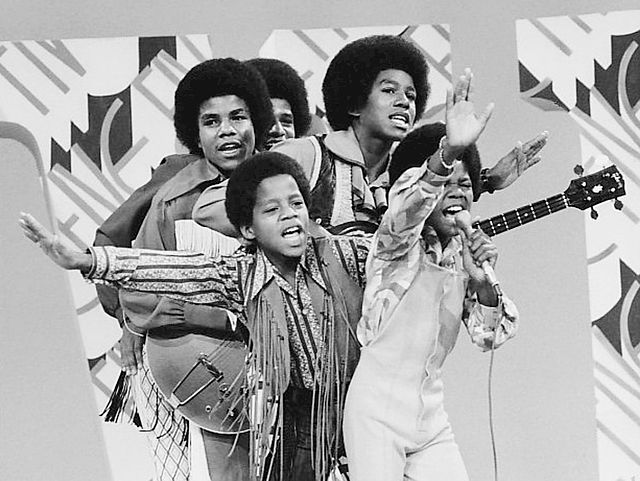
Just like the Jackson 5 said

ABC, It’s easy a 123

Architecture, behavior, culture – they’re all essential to enabling an innovation capability that repeatedly creates new revenue.

And while starting with architecture, building new leadership behaviors, and investing until the culture changes isn’t easy, it’s the 123 steps required to “be more innovative.”

Image credit: Wikimedia Commons

Subscribe to Human-Centered Change & Innovation WeeklySign up here to get Human-Centered Change & Innovation Weekly delivered to your inbox every week.

Four Things You Need to Succeed in The Good Place

Four Things You Need to Succeed in The Good Place

GUEST POST from Robyn Bolton

You have, no doubt, seen the design squiggle. The ubiquitous scribble is all loopy and knotty in the beginning until it finally sorts itself into a straight line by the end.

It illustrates the design process – “the journey of researching, uncovering insights, generating creative concepts, iteration of prototypes and eventually concluding in one single designed solution” – and its elegant simplicity has led it to be adopted by all sorts of other disciplines, including innovation.

But when I showed it to a client, her immediate response was, “It’s Jeremy Bearimy!”*

Wha????

And that is how I discovered The Good Place, a sitcom about four humans who die, go to The Good Place, and struggle to learn what it means to be good.

The show, created by Michael Schur of The Office and Parks and Recreation fame, is a brilliant treatise on ethics and moral philosophy. It also contains valuable wisdom about what innovators need to succeed.

Questions

With all due respect, “It’s the way it’s always been done” is an excuse that’s been used for hundreds of years to justify racism, misogyny…

Tahani Al-Jamil

This quote was a gut punch from the show’s fourth and final season. As innovators, we often hear people ask why change is needed. “If it ain’t broke, don’t fix it!” they proclaim.

But sometimes it is broke, and we don’t know it. At the very least, it can always be better.

So, while “it’s the way it’s always been done” at your company probably (hopefully) doesn’t include racism, misogyny, sexism, and other genuinely horrible things, framing the status quo as an enabler of those horrors is a harsh wake-up call to the dangers of an unquestioning commitment to continuing to do things the way they’ve always been done.

Decisions (not just Ideas)

If you’re always frozen in fear and taking too long to figure out what to do, you’ll miss your opportunity, and maybe get sucked into the propeller of a swamp boat.

Jason Mendoza

Even though Jason Mendoza is the resident idiot of The Good Place, he occasionally (and very accidentally) has moments of profound insight. This one to a situation that innovators are all too familiar with – analysis paralysis.

How often do requests for more data, more (or more relevant) benchmarks, or input from more people slow down decisions and progress? These requests are rarely rooted in doubt about the data, benchmarks, or information you presented. They are rooted in fear – the fear of making the wrong decision, being blamed or shamed, and losing a reputation or even a job.

But worse than being wrong, blamed, shamed, or unemployed is missing an opportunity to radically improve your business, team, or even the world. It’s the business equivalent of getting sucked into the propeller of a swamp boat.

Actions (not just decisions)

In football, trying to run out the clock and hoping for the best never works. It’s called “prevent defense.” You don’t take any chances and just try and hold on to your lead. But prevent defense just PREVENTS you from winning! It’s always better to try something.

Jason Mendoza

Jason does it again, this time invoking a lesson learned from his beloved Jacksonville Jaguars.

Few companies publicly admit to adopting a prevent defense, even though most companies engage in it. They play prevent defense when they don’t invest in innovation, focus exclusively on maintaining or incrementally improving what they currently do, or confine their innovation efforts to events like hackathons and shark tanks.

Incremental improvements and innovation theater keep you competitive. But they won’t get you ahead of the competition or make you a leader in your industry. In fact, they prevent it by making you feel good and safe when you’re really just running out the clock.

Perseverance

Come on, you know how this works. You fail and then you try something else. And you fail again and again, and you fail a thousand times, and you keep trying because maybe the 1,001st idea might work. Now, I’m gonna and try to find our 1,001st idea.

Michael

It’s hard to explain this quote without sharing massive spoilers, so let’s just say that The Good Place is an experiment that fails. A lot.

But it’s also an experiment that generates profound learning and universe-altering changes, things that would not have been possible without the failures.

Yes, smart innovators know when to kill a project. They also know when to try one more time. Wise innovators know the difference.

One final bit of wisdom

Innovation is hard. You will run into more resistance than expected, and things will rarely work out as planned. As long as you keep trying and learning, you won’t fail.

To paraphrase Jason Mendoza (again), you’re not a failed innovator, you’re pre-successful.

*For those of you who are, like I was, unfamiliar with Jeremy Bearimy, here’s a clip explaining it (WARNING: SPOILERS)

Subscribe to Human-Centered Change & Innovation WeeklySign up here to get Human-Centered Change & Innovation Weekly delivered to your inbox every week.
You Can’t Innovate Without This One Thing

You Can't Innovate Without This One Thing

GUEST POST from Robyn Bolton

It just landed on your desk. Or maybe you campaigned to get it. Or perhaps you just started doing it. How the title of “Innovation Leader” got to your desk doesn’t matter nearly as much as the fact that it’s there, along with a budget and loads of expectations.

Of course, now that you have the title and the budget, you need a team to do the work and deliver the results.

Who should you look for? The people that perform well in the current business, with its processes, structures, and (relative) predictability, often struggle to navigate the constant uncertainty and change of innovation. But just because someone struggles in the process and structure of the core business doesn’t mean they’ll thrive creating something new.

What are the qualities that make someone a successful innovator?

70 answers

A lot of people have a lot to say about the qualities and characteristics that make someone an innovator. When you combine the first four Google search results for “characteristics of an innovator” with the five most common innovation talent assessments, you end up with a list of 70 different (and sometimes conflicting) traits.

The complete list is at the end of this article, but here are the characteristics that appeared more than once:

  1. Curious
  2. Persistent
  3. Continuously reflective
  4. Creative
  5. Driven
  6. Experiments
  7. Imaginative
  8. Passionate

It’s a good list, but remember, there are 62 other characteristics to consider. And that assumes that the list is exhaustive.

+1 Answer

It’s not. Something is missing.

There is one characteristic shared by every successful innovator I’ve worked with and every successful leader of innovation. It’s rarely the first (or second or third) word used to describe them, but eventually, it emerges, always said quietly, after great reflection and with dawning realization.

Vulnerability.

Whether you rolled your eyes or pumped your fist at the word made famous by Brene Brown, you’ve no doubt heard it and formed an opinion about it.

Vulnerability is the “quality or state of being exposed to the possibility of being attacked or harmed, either physically or emotionally.”  Without it, innovation is impossible.

Innovation requires the creation of something new that creates value. If something is new, some or all of it is unknown. If there are unknowns, there are risks. Where there are risks, there is the possibility of being wrong, which opens you up to attack or harm.

When you talk to people to understand their needs, vulnerability allows you to hear what they say (versus what you want them to say).

In brainstorming sessions, vulnerability enables you to speak up and suggest an idea for people to respond to, build on, or discard.

When you run experiments, vulnerability ensures that you accurately record and report the data, even if the results aren’t what you hoped.

Most importantly, as a leader, vulnerability inspires trust, motivates your team, engages your stakeholders, and creates the environment and culture required to explore, learn, and innovate continuously.

n + 1 is the answer

Just as you do for every job in your company, recruit the people with the skills required to do the work and the mindset and personality to succeed in your business’ context and culture.

Once you find them, make sure they’re willing to be vulnerable and support and celebrate others’ vulnerability. Then, and only then, will you be the innovators your company needs.


Here’s the full list of characteristics:

  1. Action-oriented, gets the job done
  2. Adaptable
  3. Ambitious
  4. Analytical, high information capacity, digs through facts
  5. Associative Thinker, makes uncommon connections
  6. Breaks Boundaries, disruptive
  7. Business minded
  8. Collaborative
  9. Compelling Leader
  10. Competitive
  11. Consistent
  12. Continuously reflects (x3)
  13. Courageous
  14. Creative (x3)
  15. Curious (x4), asks questions, inquisitive, investigates
  16. Delivers results, seeks tangible outcomes
  17. Disciplined
  18. Divergent Thinker
  19. Driven (x3)
  20. Energetic
  21. Experiments (x2)
  22. Financially oriented
  23. Flexible, fluid
  24. Formally educated and trained
  25. Futuristic
  26. Giving, works to benefit others, wants to make the world better
  27. Goal-oriented
  28. Has a Growth mindset
  29. Highly confident
  30. Honest
  31. Imaginative (x2)
  32. Influential, lots of social capital
  33. Instinctual
  34. Intense
  35. Iterating between abstract and concrete thinking
  36. Learns through experiences
  37. Likes originality, seeks novelty
  38. Loyal
  39. Motivated by change, open to new experiences
  40. Networks, relates well to others
  41. Observes
  42. Opportunistic mindset, recognizes opportunities
  43. Opportunity focused
  44. Passionate (x2)
  45. Patient
  46. Persistent (x4)
  47. Persuasive
  48. Playful
  49. Pragmatic
  50. Proactive
  51. Prudent
  52. Rapidly recognizes patterns
  53. Resilient
  54. Resourceful
  55. Respects other innovators
  56. Seeks understanding
  57. Self-confident
  58. Socially intelligent
  59. Stamina
  60. Takes initiative
  61. Takes risks
  62. Team-oriented
  63. Thinks big picture
  64. Thrives in uncertainty
  65. Tough
  66. Tweaks solutions constantly
  67. Unattached exploration
  68. Visionary
  69. Wants to get things right
  70. Willing to Destroy

And the sources:

Image Credit: Pixabay

Subscribe to Human-Centered Change & Innovation WeeklySign up here to get Human-Centered Change & Innovation Weekly delivered to your inbox every week.

3 Ways to Get Customer Insights without Talking to Customers

3 Ways to Get Customer Insights without Talking to Customers

GUEST POST from Robyn Bolton

Most of my advice to leaders who want to use innovation to grow their businesses boils down to two things*:

  1. Talk (and listen) to customers
  2. Do something

But what if you don’t want to talk to customers?

After all, talking to customers can be scary because you don’t know what they’ll say. It can be triggering if they say something mean about your product, your business, or even you as a person. It can be draining, especially if you’re an introvert.

Plus, there are so many ways to avoid talking to customers – Send a survey, hire a research firm to write a report, invoke the famous Steve Jobs quote about never doing customer research.

Isn’t it just better to stay tucked away in the office, read reports, state opinions as if they are facts (those opinions are based on experience, after all), and make decisions?

Nope.

It is not better. It is also not safer, easier, or more efficient.

To make the best decisions, you need the best data, which comes from your customers.

But that doesn’t mean you need to talk to them to get it.

The best data

The best data helps you understand why your customers do what they do. This is why Jobs to be Done is such a powerful tool – it uncovers the emotional and social Jobs to be Done that drive our behavior and choices (functional Jobs to be Done are usually used to justify our choices).

But discovering Jobs to be Done typically requires you to talk to people, build rapport and trust in a one-on-one conversation, and ask Why? dozens of times so surface emotional and social JTBD.

Luckily, there are other ways to find Jobs to be Done that don’t require you to become an unlicensed therapist.

Observe your customers

Go where your customers are (or could be) experiencing the problem you hope to solve and try to blend in. Watch what people are doing and what they’re not doing. Notice whether people are alone or with others (and who those others are – kids, partners, colleagues, etc.). Listen to the environment (is it loud or quiet? If there’s noise, what kind of noise?) and to what people are saying to each other.

Be curious. Write down everything you’re observing. Wonder why and write down your hypotheses. Share your observations with your colleagues. Ask them to go out, observe, wonder, and share. Together you may discover answers or work up the courage to have a conversation.

Quick note – Don’t be creepy about this. Don’t lurk behind clothing racks, follow people through stores, peep through windows, linger too long, or wear sunglasses, a trench coat, and a fedora on a 90-degree day, so you look inconspicuous. If people start giving you weird looks, find a new place to people-watch.

Observe yourself

Humans are fascinating, and because you are a human, you are fascinating. So, observe yourself when you’re experiencing the problem you’re hoping to solve. Notice where you are, who is with you, the environment, and how you feel. Watch what you do and don’t do. Wonder why you chose one solution over another (or none).

Be curious. Write down everything you did, saw, and felt and why. Ask your colleagues to do the same. Share your observations with your colleagues and find points of commonality and divergence, then get curious all over again.

Quick note – This only works if you have approximately the same demographic and psychographic profiles and important and unsatisfied Jobs to be Done of your target customers.

Be your customer

What if your business solves a problem that can’t be easily observed? What if you don’t have the problem that your business is trying to solve?

Become your customer (and observe yourself).

Several years ago, I worked with a client that made adult incontinence products. I couldn’t observe people using their products, and I do not have important (or unsatisfied) Jobs to be Done that the products can solve.

So, for one day, I became a customer. I went to Target and purchased their product. I went home, wore, and used the product. I developed a deep empathy for the customer and wrote down roughly 1 million ways to innovate the product and experience.

Quick note – Depending on what’s required to “be your customer,” you may need to give people a heads up. My husband was incredibly patient and understanding but also a little concerned on the day of the experiment.

It’s about what you learn, not how you learn it

It’s easy to fall into the trap of thinking there is one best way to get insights. I’m 100% guilty (one-on-one conversations are a hill I have died on multiple times).

Ultimately, when it comes to innovation and decision-making, the more important thing is having, believing, and using insights into why customers do what they do and want what they want. How you get those insights is an important but secondary consideration.

* Each of those two things contains A TON of essential stuff that must be done the right way at the right time otherwise, they won’t work, but we’ll get into those things in another article

Image Credit: Pixabay

Subscribe to Human-Centered Change & Innovation WeeklySign up here to get Human-Centered Change & Innovation Weekly delivered to your inbox every week.

Reset and Reconnect in a Chaotic World

Reset and Reconnect in a Chaotic World

GUEST POST from Janet Sernack

Meeting face to face, for a lovely lunch recently, with a coaching colleague, we were both shocked to discover how stressed and anxious we were feeling about being asked to deliver live workshops and face-to-face coaching to clients once again.

We shared how emotionally, mentally, and physically overwhelmed we felt, despite having decades of knowledge, experience, and skills in being able to deliver deep learning programs and face-to-face coaching sessions, about doing live gigs again! We also agreed, that despite the range of largely effective emotionally intelligent coping strategies we developed to help ourselves and our clients self-regulate, self-manage, to better adapt to the pandemic-imposed work-from-home restrictions that the past two and half years of working, alone, and in isolation, online, had taken its toll.

We acknowledged and accepted that we along with many of our clients were all suffering from elevated levels of stress, discomfort, and anxiety. We then agreed that it was time to focus on exploring how to better help ourselves and our clients reconnect and reset by enabling them to create states of well-being, emotional agility, and mental fitness, where they can feel good, can function well, and be effective and innovative in an increasingly chaotic world.

To seek new ways of enabling ourselves and our clients to deal effectively with a range of unresourceful feelings including helplessness, powerlessness, and fearfulness about an uncertain future. 

We noticed that these feelings often caused many of our clients to contract and freeze, and become immobilised as a result of what we describe as a “bubble” of self-induced silo-based behaviours. That often evolved into extreme self-centeredness, and unconscious selfishness, which ultimately increased their feelings of isolation and loneliness, and lack of belonging, resulting in defensive and avoidant behaviours, in what is becoming an increasingly chaotic world.

How are these ways of being and acting impacting organisations?

Partnering in a wide range of online global coaching sessions, we noticed that a number of common trends emerged as to how our client’s teams and organisations, are being impacted at the cultural level:

  • Immobilization – many people are unable to self-manage their work from home workloads and are quietly burning out, through being overly task-focused and busy, whilst others are preferring to work autonomously, and not waste hours commuting.
  • Lacking safety and trust – many organisations are freezing all of their change initiatives, learning programs, and projects, causing people to fear loss and overall job insecurity, where many people are contracting more deeply within their “bubbles” and become even more distrustful of leadership and even more passively defensive and avoidant.
  • Lacking clarity and foresight – many organisations have slipped into being so reactive, focussing only on delivering short-term results, and are not communicating a clear strategy for leading the way forwards.

Resulting in:

  • Increased resistance to change and going back to the office adds to people’s inertia, and to their sense of disconnection and lack of belonging.
  • Increased risk adversity and conventional (cost cutting), tactical and short-term focus, inhibits any investment in Research and Development or the skills development required in developing and executing a future innovation strategy.
  • People have become even more fearful of failure, and are not stretching themselves to adapt, grow, learn and innovate with disruption, and often choosing to merely change jobs, in a competitive job marketplace, driven by scarcity, as a perceived short term solution.

A unique moment in time

This has created an opportunity, in this unique moment in time, to focus on being kinder to ourselves and to others by helping and supporting each other, respectfully and compassionately, creatively and courageously, to reconnect and reset. Despite rising levels of economic, civic, and social uncertainty and unrest.

What made sense yesterday may not make so much sense today.

Many of the mental models we applied yesterday may not be relevant for tomorrow because corporate culture, civic and social structures have drastically changed and digitalization has become commonplace, noting that we are shifting from a VUCA to BANI world where:

  • Brittle has replaced Volatility.
  • Anxiety reflects Uncertainty.
  • Non-linearity is an addition to Complexity.
  • Incomprehensibility is ultimately the consequence of our non-linear world and goes one step further than Ambiguity.

Paradoxically, this has created new openings to genuinely explore and discover new thresholds to adapt, generate new mindsets, develop skill sets, and power up our toolkits to keep pace with the effects of the emerging BANI world and capture complex systems by asking a  key generative or catalytic question:

How might you support and enable others to think and act differently in such a world, where old patterns seem to crumble while new ideas and systems still need to be created, invented, innovated, and established?

As the world of work changes, so does the need for everyone to consider how to be more open-hearted, minded, and willed with one another.

A final word from Gallop CEO Jon Preston in the Gallop Global Emotions Report:

“All over the world, people are trying to understand the rise of violence, hatred, and increased radicalization. They will continue to argue over what the best policy responses should be and what role social media plays in fueling negative emotions.

However, policymakers must understand why so many more people are experiencing unprecedented negative emotions and focus on the drivers of a great life.

Our shared humanity and wellbeing depend on it”.

When we generously and kindly demonstrate care, respect, and appreciation for the value everyone brings, we can also demonstrate helpfulness and support, through our unconditional willingness to reconnect and reset.

Resulting in an ability to co-create a better sense of belonging and a more optimistic outlook, through enhancing our emotional intelligence.  To effectively self-regulation and self-manage the superpowers and strategies required to thrive, flourish and flow, and make transformational changes in the face of relentless uncertainty, disruption, and a chaotic world.

This is the first in a series of three blogs on the theme of reconnecting and resetting, to create, invent and innovate in an increasingly chaotic world. You can also register for our free 45-minute masterclass on Thursday, 25th August, to discover new ways of re-connecting through the complexity and chaos of dis-connection to create, invent and innovate in the future! Find out more.

Image credit: Pixabay

Subscribe to Human-Centered Change & Innovation WeeklySign up here to get Human-Centered Change & Innovation Weekly delivered to your inbox every week.

Cultivate Innovation by Managing with Empathy

Cultivate Innovation by Managing with Empathy

GUEST POST from Douglas Ferguson

Managing with empathy is a leader’s superpower. Empathy opens the door to increased innovation, collaboration, and engagement.

Experts assert that empathy is the single most important skill in today’s workplace and the numbers don’t lie: 76% of workers with empathetic leaders are reportedly more motivated and engaged than those who experience leadership with less empathy.

Leaders can harness the power of empathy to create a more collaborative and engaged culture at work. In this article, we explore empathetic leadership in the following topics:

  • What is Workplace Empathy?
  • Becoming an Empathetic Leader
  • The Benefits of Managing a Team With Empathy
  • The Connection Between Empathy and innovation

What is Workplace Empathy?

Managing with empathy requires a keen understanding of the nuances of workplace empathy and empathetic leadership. Empathy allows one to understand another person’s emotions, actions, and thoughts. Our emotional or social intelligence helps us practice empathy and understand the mindsets and emotions of others.

Empathy belongs in the workplace. While work-related responsibilities should be top of mind, your team members won’t be able to do their best work if they feel as though their emotions and feelings are invalidated or ignored. It’s crucial that team members feel as though their feelings and emotions are prioritized both in their professional and personal lives. With the power of empathy, team leaders and managers can shift company culture for the better and motivate their team to be the best version of themselves.

Empathetic leaders understand the three types of empathy:

1. Cognitive Empathy

Cognitive empathy relates to connecting to another person’s mentality and understanding how certain situations influence their thoughts. Cognitive empathy is related to “theory of mind” that explores how someone can think like another and predict what their future behavior may be.

2. Somatic Empathy

Somatic empathy occurs when one experiences a physical response to another’s feelings or experience.

3. Affective Empathy

Affective empathy involves understanding another’s emotions and responding most appropriately.

Becoming an Empathetic Leader

Managing with empathy is possible for all leaders and team members willing to start within. To connect emotionally with others, you have to first prioritize your connection with yourself. By cultivating your emotional intelligence and understanding your own emotions and feelings, you’ll be better equipped to lead with empathy.

In today’s ever-changing climate, workers have to navigate the likes of diverse workforces, virtualized teams, and global economic challenges. Being able to adapt and sympathize with the perspective and experiences of others will help you improve your empathetic leadership.

Consider the following steps to amplify your emotional intelligence and grow your leadership skills:

1. Listen

Listening to your team is one of the fastest ways to start managing with empathy. With every conversation comes the opportunity to build a better relationship and affirm your team member’s emotions. In each conversation, be sure to pay attention, avoid distractions, and wait for the person to finish before you speak.

In addition to letting your team members fully share their opinions, the art of listening requires you to fully understand the emotions that are behind each conversation. This includes understanding nonverbal cues, identifying the tone of voice, and paying attention to body language. If you’re working remotely, managing with empathy can be particularly challenging. Take advantage of voice notes, video chats, SMS messaging, and sending photos and videos to ensure you’re virtually communicating as comprehensively as possible.

2. Get Personal

Though personal bonds in the workplace are often discouraged, building healthy professional relationships is an effective way to start managing with empathy. By forming personal connections with your team members, you’ll encourage a culture of open communication and alignment. As you both connect, you’ll find commonalities in your shared vision and values.

3. Adopt their Point of View

As an empathetic leader, it’s essential to gain emotional insight into what your team is feeling and thinking by adopting their point of view. Whether your company is remote or in-person, it isn’t always easy to understand the perspective or emotional state of your team. While some leaders shy away from discussing emotions and feelings at work, the truth is that learning more about each employee’s emotional state will help you understand how they approach their work and why they work the way they do.

4. Get Leadership Training

Managing with empathy doesn’t always come naturally. Take the opportunity to invest in leadership training to learn how to better incorporate your emotional intelligence and empathy into your management style. With the help of professional leaders, you’ll learn how to emotionally connect with your team and manage the personal and professional challenges that come your way. Consider courses in facilitation and change management as you learn the ins and outs of empathetic leadership.

The Benefits of Managing a Team With Empathy

Don’t put empathy on the backburner. While it takes time and intention to cultivate a company culture rooted in empathy, making the journey to create an emotionally intelligent environment is worth it.

Consider the following benefits of managing with empathy:

1. Better Relationships

Better relationships are a direct benefit of managing with empathy. Empathy helps team members emotionally connect as they identify personal interests and can freely communicate with each other. Use empathy to deepen relationships by asking questions about how others feel and providing careful and thoughtful responses.

2. Enhanced Teamwork

Empathy is a key ingredient in designing stronger teams. Managing with empathy encourages a desire for team members to help each other and work together. As you learn more about the challenges your team faces, you’ll naturally want to assist them in finding solutions. This type of cooperation encourages a culture of camaraderie where team members feel as though they are a critical part of each other’s success.

3. A Stronger Work-Life Balance

Empathy is a natural part of a stronger work-life balance. At times, challenges from one’s personal life can affect the way team members approach work obligations. Understanding their challenges will help you shape a better work-life balance for your team. Whether they need more time off or want more remote work, listening to and understanding their needs will help them create a healthier balance between their personal and professional lives.

4. Increased Innovation

A workforce of engaged and emotionally aligned employees allows for increased innovation. A workplace culture of empathy helps to develop soft skills such as curiosity, generosity, and equality, which encourages team members to design new creative and collaborative solutions.

The Link Between Empathy and Innovation

The link between innovation and empathy is undeniable. Empathetic leadership allows us to understand and relate to each other in a deeply profound and authentic way. Empathy is an incredible tool for innovation as it works to encourage companies and teams to center the needs and feelings of others.

By encouraging team members to adopt another’s point of view, leaders can utilize empathy as a problem-solving framework. Empathy places the experience and satisfaction of others at the heart of the creative and collaborative process. These empathetic techniques and behaviors are undoubtedly linked to the most effective designs, products, and creative solutions.

In the workplace, empathy naturally reinforces a culture of innovation as it encourages and validates the feelings and opinions of others. Regardless of the problems at hand, human-centered thinking encourages organizations to empathetically eliminate their biases, reservations, and judgment to arrive at the solution that benefits the end-user and their fellow team members the most.

If innovation is at the heart of your company, it’s time to start managing with empathy. Voltage Control offers custom programs built around connection, psychological safety, community, and play. Connect with us today to learn how to use empathetic leadership for the greatest good.

Article originally published at VoltageControl.com

Image Credit: Pexels

Subscribe to Human-Centered Change & Innovation WeeklySign up here to get Human-Centered Change & Innovation Weekly delivered to your inbox every week.

Taking Personal Responsibility – Seeing Self as Cause

Taking Personal Responsibility – Seeing Self as Cause

GUEST POST from Janet Sernack

In our last two blogs on Taking Personal Responsibility, we stated that when people aren’t taking personal responsibility, they cannot be accountable, they will fail in their jobs, and their teams, and fail to grow as individuals and as leaders. Taking personal responsibility is an especially crucial capability to develop self-awareness and self-regulation skills in the decade of both disruption and transformation. It all starts with seeing self as the cause of what happens to us, rather than baling it on the effects events and problems have on us! Where people can learn to recognize the structures at play in their lives and change them so that they can create what they really want to create in their lives, teams, or organizations.

In the last two blogs, we shared a range of tips for shifting people’s location, by creating a line of choice, to help them shift from being below the line and blaming others for their reactive response, to getting above the line quickly.  Through shifting their language from “you, they and them” to “I, we and us” and bravely disrupting and calling out people when they do slip below the line. How doing this allows people to also systemically shift across the maturity continuum, from dependence to independence and ultimately towards interdependence.

In a recent newsletter Otto Scharmer, from the Presencing Institute states “Between action and non-action there is a place. A portal into the unknown. But what are we each called to contribute to the vision of the emerging future? Perhaps these times are simply doorways into the heart of the storm, a necessary journey through the cycles of time required to create change”.

Creating the place – the sacred pause

When I made a significant career change from a design and marketing management consultant to becoming a corporate trainer, one of the core principles I was expected to teach to senior corporate managers and leaders was taking personal responsibility.

Little knowing, that at the end of the workshop, going back to my hotel room and beating myself up, for all of the “wrongs” in the delivery of the learning program, was totally out of integrity with this core principle.

Realising that when people say – those that teach need to learn, I had mistakenly thought that I had to take responsibility for enacting the small imperfections I had delivered during the day, by berating myself, making myself “wrong” and through below the line self-depreciation!

Where I perfectly acted out the harmful process of self-blame, rather than rationally assessing the impact of each small imperfection, shifting to being above the line where I could intentionally apply the sacred pause:

  • Hit my pause button to get present, accept my emotional state,
  • Connect with what really happened to unpack the reality of the situation and eliminate my distortions around it,
  • Check-in and acknowledge how I was truly feeling about what happened,
  • Acknowledge some of the many things that I had done really well,
  • Ask myself what is the outcome/result I want for participants next program?
  • Ask myself what can I really learn from this situation?
  • Consciously choose what to do differently the next time I ran the program.

I still often find myself struggling with creating the Sacred Space between Stimulus and Response and have noticed in my global coaching practice, that many of my well-intentioned clients struggle with this too.

The impact of the last two and a half years of working at home, alone, online, with minimal social interactions and contact, has caused many of them to languish in their reactivity, and for some of them, into drowning in a very full emotional boat, rather than riding the wave of disruptive change.

Being the creative cause

In our work at ImagineNation, whether we help people, leaders and teams adapt, innovate and grow through disruption, their ability to develop true self-awareness and be above the line is often the most valuable and fundamental skill set they develop.

It then enables us to make the distinction that creating is completely different from reacting or responding to the circumstances people find themselves in by applying the sacred pause.

When people shift towards seeing self as the cause they are able to create and co-create what they want in their lives, teams or organization by learning to create by creating, starting with asking the question:

  • What result do you want to create in your life?
  • What is the reality of your current situation?

This creates a state of tension, it is this tension that seeks resolution.

In his ground-breaking book The Path of Least Resistance Robert Fritz, goes on to describe and rank these desired results as “Fundamental Choices, Primary Choices, and Secondary Choices.”

Because there is one thing that we can all do right and is totally in our control – is to shift towards seeing self as the cause and make a set of conscious choices, with open hearts, minds, and wills, as to how we think, feel and choose to act.

“We are the creative force of our life, and through our own decisions rather than our conditions, if we carefully learn to do certain things, we can accomplish those goals.”

We all have the options and choices in taking responsibility, empowering ourselves and others to be imaginative and creative, and using the range of rapid changes, ongoing disruption, uncertainty, and the adverse pandemic consequences, as levers for shifting and controlling, the way we think, feel.

Benefits of seeing self as the cause and being above the line

Applying the sacred pause to make change choices in how we act – and being brave and bold in shifting across the maturity continuum, will help us to cultivate the creativity, interdependence, and systemic thinking we all need right now because it:

  • Helps people self-regulate their reactive emotional responses, be more open-hearted and emotionally agile, and helps develop psychologically safe work environments where people can collaborate and experiment, and fail without the fear of retribution or punishment.
  • Enables people to be more open-minded, imaginative, and curious and creates a safe space for continuous learning, maximizing diversity and inclusion, and proactive intentional change and transformation.
  • Promotes ownership of a problem or challenging situation and helps develop constructive and creative responses to problems and an ability to take intelligent actions.
  • Gives people an opportunity to impact positively on others and build empowered trusted and collaborative relationships.
  • Enables entrepreneurs and innovators to invent creative solutions and drive successful innovative outcomes.
  • Building the foundations for accountability, where people focus their locus of control on what they promise to deliver, enables them to be intrinsically motivated, and take smart risks on negotiating outcomes that they can be counted on for delivering.

Tips for seeing self as the cause and operating above the line

Taking personal responsibility and seeing self as the cause involves:

  • Acknowledging that “I/we had a role or contributed in some way, to the fact that this has not worked out the way “I/we wanted.”
  • Clarifying the outcome or result in you want from a specific situation or a problem.
  • Seeking alternatives and options for making intelligent choices and actions, and using the language of “I/we can” and “I/we will” to achieve the outcome.
  • Replacing avoiding, being cynical and argumentative, blaming, shaming, controlling, and complaining with courageous, compassionate, and creative language and acts of intention.
  • People become victors who operate from “self as cause” where they are empowered to be the creative forces in their own lives by making fundamental, primary, and secondary change choices.
  • Trust your inner knowing and deep wisdom that everything has a specific and definable cause and that each and every one of us has the freedom to choose how to respond to it.

Back to leadership basics

As Stephen Covey says, people need to deeply and honestly say “I am what I am today because of the choices I made yesterday” because it’s not what happens to us, it’s our reactive response to what happens that hurts us.

Being willing to step back, retreat, and reflect on the gap between the results you want, and the results you are getting all starts with stepping inward, backward, and forwards, using the sacred pause, to ask:

  • What happened? What were the key driving forces behind it?
  • How am I/we truly feeling about it?
  • What was my/our role in causing this situation, or result?
  • What can I/we learn from it?
  • What is the result/outcome I want to create in the future?
  • What can I/we then do to create it?

As a corporate trainer, consultant and coach, I found out the hard way that developing the self-awareness and self-regulation skills in taking personal responsibility and seeing self as the cause is the basis of the personal power and freedom that is so important to me, and almost everyone else I am currently interacting with.

It’s the foundation for transcending paralysis, overwhelm, and stuck-ness and activating our sense of agency to transform society and ourselves.

This is the third and final blog in a series of blogs on the theme of taking responsibility – going back to leadership basics. Read the previous two here:

Find out about our learning products and tools, including The Coach for Innovators, Leaders, and Teams Certified Program, a collaborative, intimate, and deeply personalized innovation coaching and learning program, supported by a global group of peers over 9-weeks, starting Tuesday, October 18, 2022. It is a blended and transformational change and learning program that will give you a deep understanding of the language, principles, and applications of an ecosystem focus,  human-centric approach, and emergent structure (Theory U) to innovation, and upskill people and teams and develop their future fitness, within your unique context.

Image credit: Pixabay

Subscribe to Human-Centered Change & Innovation WeeklySign up here to get Human-Centered Change & Innovation Weekly delivered to your inbox every week.