Tag Archives: jobs

Win Your Way to an AI Job

Anduril’s AI Grand Prix: Racing for the Future of Work

LAST UPDATED: January 28, 2026 at 2:27 PM

Anduril's AI Grand Prix: Racing for the Future of Work

GUEST POST from Art Inteligencia

The traditional job interview is an antiquated artifact, a relic of a bygone industrial era. It often measures conformity, articulateness, and cultural fit more than actual capability or innovative potential. As we navigate the complexities of AI, automation, and rapid technological shifts, organizations are beginning to realize that to find truly exceptional talent, they need to look beyond resumes and carefully crafted answers. This is where companies like Anduril are not just iterating but innovating the very hiring process itself.

Anduril, a defense technology company known for its focus on AI-driven systems, recently announced its AI Grand Prix — a drone racing contest where the ultimate prize isn’t just glory, but a job offer. This isn’t merely a marketing gimmick; it’s a profound statement about their belief in demonstrated skill over credentialism, and a powerful strategy for identifying talent that can truly push the boundaries of autonomous systems. It epitomizes the shift from abstract evaluation to purposeful, real-world application, emphasizing hands-on capability over theoretical knowledge.

“The future of hiring isn’t about asking people what they can do; it’s about giving them a challenge and watching them show you.”

— Braden Kelley

Why Challenge-Based Hiring is the New Frontier

This approach addresses several critical pain points in traditional hiring:

  • Uncovering Latent Talent: Many brilliant minds don’t fit the mold of elite university degrees or polished corporate careers. Challenge-based hiring can surface individuals with raw, untapped potential who might otherwise be overlooked.
  • Assessing Practical Skills: In fields like AI, robotics, and advanced engineering, theoretical knowledge is insufficient. The ability to problem-solve under pressure, adapt to dynamic environments, and debug complex systems is paramount.
  • Cultural Alignment Through Action: Observing how candidates collaborate, manage stress, and iterate on solutions in a competitive yet supportive environment reveals more about their true cultural fit than any behavioral interview.
  • Building a Diverse Pipeline: By opening up contests to a wider audience, companies can bypass traditional biases inherent in resume screening, leading to a more diverse and innovative workforce.

Beyond Anduril: Other Pioneers of Performance-Based Hiring

Anduril isn’t alone in recognizing the power of real-world challenges to identify top talent. Several other forward-thinking organizations have adopted similar, albeit varied, approaches:

Google’s Code Jam and Hash Code

For years, Google has leveraged competitive programming contests like Code Jam and Hash Code to scout for software engineering talent globally. These contests present participants with complex algorithmic problems that test their coding speed, efficiency, and problem-solving abilities. While not always directly leading to a job offer for every participant, top performers are often fast-tracked through the interview process. This allows Google to identify engineers who can perform under pressure and think creatively, rather than just those who can ace a whiteboard interview. It’s a prime example of turning abstract coding prowess into a tangible demonstration of value.

Kaggle Competitions for Data Scientists

Kaggle, now a Google subsidiary, revolutionized how data scientists prove their worth. Through its platform, companies post real-world data science problems—from predicting housing prices to identifying medical conditions from images—and offer prize money, and often, connections to jobs, to the teams that develop the best models. This creates a meritocracy where the quality of one’s predictive model speaks louder than any resume. Many leading data scientists have launched their careers or been recruited directly from their performance in Kaggle competitions. It transforms theoretical data knowledge into demonstrable insights that directly impact business outcomes.

The Human Element in the Machine Age

What makes these initiatives truly human-centered? It’s the recognition that while AI and automation are transforming tasks, the human capacity for ingenuity, adaptation, and critical thinking remains irreplaceable. These contests aren’t about finding people who can simply operate machines; they’re about finding individuals who can teach the machines, design the next generation of algorithms, and solve problems that don’t yet exist. They foster an environment of continuous learning and application, perfectly aligning with the “purposeful learning” philosophy.

The Anduril AI Grand Prix, much like Google’s and Kaggle’s initiatives, de-risks the hiring process by creating a performance crucible. It’s a pragmatic, meritocratic, and ultimately more effective way to build the teams that will define the next era of technological advancement. As leaders, our challenge is to move beyond conventional wisdom and embrace these innovative models, ensuring we’re not just ready for the future of work, but actively shaping it.

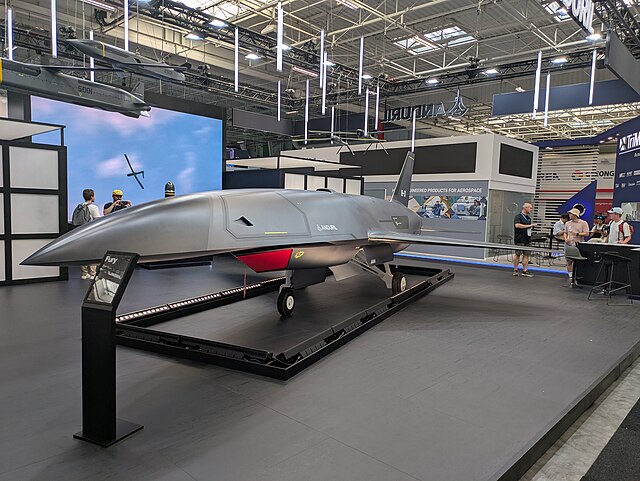
Anduril Fury


Frequently Asked Questions

What is challenge-based hiring?

Challenge-based hiring is a recruitment strategy where candidates demonstrate their skills and problem-solving abilities by completing a real-world task, project, or competition, rather than relying solely on resumes and interviews.

What are the benefits of this approach for companies?

Companies can uncover hidden talent, assess practical skills, observe cultural fit in action, and build a more diverse talent pipeline by focusing on demonstrable performance.

How does this approach benefit candidates?

Candidates get a fair chance to showcase their true abilities regardless of traditional credentials, gain valuable experience, and often get direct access to influential companies and potential job offers based purely on merit.

To learn more about transforming your organization’s talent acquisition strategy, reach out to explore how human-centered innovation can reshape your hiring practices.

Image credits: Wikimedia Commons, Google Gemini

Subscribe to Human-Centered Change & Innovation WeeklySign up here to get Human-Centered Change & Innovation Weekly delivered to your inbox every week.

The Impact of Artificial Intelligence on Future Employment

The Impact of Artificial Intelligence on Future Employment

GUEST POST from Chateau G Pato

The rapid progression of artificial intelligence (AI) has ignited both intrigue and fear among experts in various industries. While the advancements in AI hold promises of improved efficiency, increased productivity, and innumerable benefits, concerns have been raised about the potential impact on employment. As AI technology continues to evolve and permeate into different sectors, it is crucial to examine the implications it may have on the workforce. This article will delve into the impact of AI on future employment, exploring two case study examples that shed light on the subject.

Case Study 1: Autonomous Vehicles

One area where AI has gained significant traction in recent years is autonomous vehicles. While self-driving cars promise to revolutionize transportation, they also pose a potential threat to traditional driving jobs. According to a study conducted by the University of California, Berkeley, an estimated 300,000 truck driving jobs could be at risk in the coming decades due to the rise of autonomous vehicles.

Although this projection may seem alarming, it is important to note that AI-driven automation can also create new job opportunities. With the emergence of autonomous vehicles, positions such as remote monitoring operators, vehicle maintenance technicians, and safety supervisors are likely to be in demand. Additionally, the introduction of AI in this sector could also lead to the creation of entirely new industries such as ride-hailing services, data analysis, and infrastructure development related to autonomous vehicles. Therefore, while some jobs may be displaced, others will potentially emerge, resulting in a shift rather than a complete loss in employment opportunities.

Case Study 2: Healthcare and Diagnostics

The healthcare industry is another sector profoundly impacted by artificial intelligence. AI has already demonstrated remarkable prowess in diagnosing diseases and providing personalized treatment plans. For instance, IBM’s Watson, a cognitive computing system, has proved capable of analyzing vast amounts of medical literature and patient data to assist physicians in making more accurate diagnoses.

While AI undoubtedly enhances healthcare outcomes, concerns arise regarding the future of certain medical professions. Radiologists, for example, who primarily interpret medical images, may face challenges as AI algorithms become increasingly proficient at detecting abnormalities. A study published in Nature in 2020 revealed that AI could outperform human radiologists in interpreting mammograms. As AI is more widely incorporated into the healthcare system, the role of radiologists may evolve to focus on higher-level tasks such as treatment decisions, patient consultation, and research.

Moreover, the integration of AI into healthcare offers new employment avenues. The demand for data scientists, AI engineers, and software developers specialized in healthcare will likely increase. Additionally, healthcare professionals with expertise in data analysis and managing AI systems will be in high demand. As AI continues to transform the healthcare industry, the focus should be on retraining and up-skilling to ensure a smooth transition for affected employees.

Conclusion

The impact of artificial intelligence on future employment is a complex subject with both opportunities and challenges. While certain job roles may face disruption, AI also creates the potential for new roles to emerge. The cases of autonomous vehicles and AI in healthcare provide compelling examples of how the workforce can adapt and evolve alongside technology. Preparing for this transition will require a concerted effort from policymakers, employers, and individuals to ensure a smooth integration of AI into the workplace while safeguarding the interests of employees.

Extra Extra: Because innovation is all about change, Braden Kelley’s human-centered change methodology and tools are the best way to plan and execute the changes necessary to support your innovation and transformation efforts — all while literally getting everyone all on the same page for change. Find out more about the methodology and tools, including the book Charting Change by following the link. Be sure and download the TEN FREE TOOLS while you’re here.

Image credit: Pexels

Subscribe to Human-Centered Change & Innovation WeeklySign up here to get Human-Centered Change & Innovation Weekly delivered to your inbox every week.
5 Things to Consider When Hiring Corporate Innovators

5 Things to Consider When Hiring Corporate Innovators

GUEST POST from Stefan Lindegaard

As businesses continue to face unprecedented change and uncertainty, innovation is no longer optional – it’s a must-have for companies looking to survive and thrive. However, finding and developing the right people to drive corporate innovation can be challenging.

In this newsletter, we’ll explore five key ideas for hiring and developing individuals capable of leading corporate transformation and innovation forward, in a world where staying ahead of the curve is essential.

Future Potential vs. Past Competencies:

In the past, companies often hired innovators based on past competencies and results. However, the future of hiring will shift towards potential as a key criterion. Past success in other organizations is no guarantee of success in your own, and companies must adapt their hiring practices to focus on individuals who have shown a proven potential for constant learning, growth, and adaptability. Look for people who are capable of dealing well with ambiguity, adapting quickly to changing circumstances, and who possess the potential to succeed in your organization.

Knowing the Direction of Adaptation:

Organizations and talent alike must know the direction in which they need to adapt. However, it can be challenging to maintain an overview of the internal and external factors and trends impacting innovation efforts and capabilities. To tackle this issue, companies must experiment and develop ways to gauge and maintain an overview and/or direction.

For companies with a strong tradition of relying solely on the knowledge of internal R&D experts, it may require broader tracking of emerging trends, as well as reaching beyond R&D to other parts of the company for ideas on other ways to innovate. Consider all the areas where innovation can occur, including in business models, channels, and customer engagement, to name a few.

The Importance of Community Building:

Innovation is increasingly happening in ecosystems and communities, both internally and externally. Future innovation leaders must be able to create shared purpose, values, and rules of engagement to foster innovation within these communities. To build a successful community, strong networking and communication skills, as well as the ability to inspire people, are essential.

Companies should foster a culture of collaboration, encourage participation from diverse backgrounds and perspectives, and recognize and reward innovation efforts.

Creating the Right Conditions and Frameworks:

To make innovation work in big companies, it’s essential to create the right conditions and frameworks. This means allowing talent to experiment and explore new ideas freely, but also providing the resources, time, and support needed to make innovation efforts successful. Companies must be prepared to take risks and try new approaches, and foster a culture that encourages diversity of thought and collaboration. In addition, creating an inclusive culture that values diversity and recognizes the importance of different types of intelligence can also be beneficial for driving innovation forward.

The Importance of Multiple Intelligences:

Innovation requires a diverse range of skills, not just technical or product expertise. Future innovators must have a broad range of skills and experiences, including creativity, customer-centric thinking, and collaboration skills. Companies should consider different types of intelligence when hiring and developing innovation talent, such as emotional intelligence, social intelligence, and cultural intelligence. By valuing multiple intelligences and creating a culture that encourages diverse perspectives, companies can ensure they have the talent they need to drive innovation forward.

As the business landscape continues to evolve at a breakneck pace, innovation will be the key to survival for many companies. However, innovation is only possible with the right people in place. By shifting the focus from past competencies to future potential, tracking emerging trends and adapting accordingly, building strong communities, creating the right frameworks, and considering multiple types of intelligence, companies can hire and develop the right people for the job. Hiring full teams can also help foster innovation and bring about change faster.

By keeping these ideas in mind, companies can ensure that they have the talent they need to thrive in today’s fast-paced business environment.

Image Credit: Pixabay

Subscribe to Human-Centered Change & Innovation WeeklySign up here to get Human-Centered Change & Innovation Weekly delivered to your inbox every week.

Rise of the Prompt Engineer

Rise of the Prompt Engineer

GUEST POST from Art Inteligencia

The world of tech is ever-evolving, and the rise of the prompt engineer is just the latest development. Prompt engineers are software developers who specialize in building natural language processing (NLP) systems, like voice assistants and chatbots, to enable users to interact with computer systems using spoken or written language. This burgeoning field is quickly becoming essential for businesses of all sizes, from startups to large enterprises, to remain competitive.

Five Skills to Look for When Hiring a Prompt Engineer

But with the rapid growth of the prompt engineer field, it can be difficult to hire the right candidate. To ensure you’re getting the best engineer for your project, there are a few key skills you should look for:

1. Technical Knowledge: A competent prompt engineer should have a deep understanding of the underlying technologies used to create NLP systems, such as machine learning, natural language processing, and speech recognition. They should also have experience developing complex algorithms and working with big data.

2. Problem-Solving: Prompt engineering is a highly creative field, so the ideal candidate should have the ability to think outside the box and come up with innovative solutions to problems.

3. Communication: A prompt engineer should be able to effectively communicate their ideas to both technical and non-technical audiences in both written and verbal formats.

4. Flexibility: With the ever-changing landscape of the tech world, prompt engineers should be comfortable working in an environment of constant change and innovation.

5. Time Management: Prompt engineers are often involved in multiple projects at once, so they should be able to manage their own time efficiently.

These are just a few of the skills to look for when hiring a prompt engineer. The right candidate will be able to combine these skills to create effective and user-friendly natural language processing systems that will help your business stay ahead of the competition.

But what if you want or need to build your own artificial intelligence queries without the assistance of a professional prompt engineer?

Four Secrets of Writing a Good AI Prompt

As AI technology continues to advance, it is important to understand how to write a good prompt for AI to ensure that it produces accurate and meaningful results. Here are some of the secrets to writing a good prompt for AI.

1. Start with a clear goal: Before you begin writing a prompt for AI, it is important to have a clear goal in mind. What are you trying to accomplish with the AI? What kind of outcome do you hope to achieve? Knowing the answers to these questions will help you write a prompt that is focused and effective.

2. Keep it simple: AI prompts should be as straightforward and simple as possible. Avoid using jargon or complicated language that could confuse the AI. Also, try to keep the prompt as short as possible so that it is easier for the AI to understand.

3. Be specific: To get the most accurate results from your AI, you should provide a specific prompt that clearly outlines what you are asking. You should also provide any relevant information, such as the data or information that the AI needs to work with.

4. Test your prompt: Before you use your AI prompt in a real-world situation, it is important to test it to make sure that it produces the results that you are expecting. This will help you identify any issues with the prompt or the AI itself and make the necessary adjustments.

By following these tips, you can ensure that your AI prompt is effective and produces the results that you are looking for. Writing a good prompt for AI is a skill that takes practice, but by following these secrets you can improve your results.

So, whether you look to write your own AI prompts or feel the need to hire a professional prompt engineer, now you are equipped to be successful either way!

Image credit: Pexels

Subscribe to Human-Centered Change & Innovation WeeklySign up here to join 17,000+ leaders getting Human-Centered Change & Innovation Weekly delivered to their inbox every week.

Elevating the Importance of Construction and Manufacturing

Elevating the Importance of Construction and Manufacturing

GUEST POST from Mike Shipulski

Restaurants aren’t open as much as they used to be because they cannot hire enough people to do the work. Simply put, there are too few people who want to take the orders; cook the food; deliver food to the tables; clear the tables; and wash the dishes. Sure, it’s an inconvenience that we can’t get a table, but because there are other ways to get food no one will starve because restaurants open. And while some restaurants will go out of business, this situation doesn’t fundamentally constrain the economy.

And the situation is similar with manufacturing and construction: no one wants those jobs either. But, that’s where the similarities end. The shortfall of people who want to work in manufacturing and construction will constrain the economy and prevent the renewal of our infrastructure. Gone are the days of relying on other countries to make all your products because we now know it’s not the most cost-effective way to go. But if there is no one willing to make the products, there will be no products made. And if there is no one willing to build the roads and bridges, roads and bridges will suffer. And if there are no products, no good roads, and no safe bridges, there can be no strong economy.

While there is disagreement around why people don’t want to work in manufacturing and construction, I will propose three for your consideration.

Firstly, the manufacturing and construction sectors have an image problem. People don’t see these jobs as high-tech, high-status jobs where the working environment is clean and safe. In short, people don’t see these jobs as jobs they can be proud and they don’t think others will think highly of them if they say they work in manufacturing or construction. And because of the history of layoffs, people don’t see these jobs as secure and predictable and don’t see them as reliable sources of income. This may not be the case for all people, but I think it applies to a lot of people.

Secondly, the manufacturing and construction sectors don’t pay enough. People don’t see these jobs as viable mechanisms to provide a solid standard of living for themselves and their families. This is a generalization, but I think it holds true.

Thirdly, the manufacturing and construction sectors require specialized knowledge, skills, and abilities skills that are not taught in traditional high schools or colleges. And without these qualifications, people are reluctant to apply. And if they do apply and a company hires them even though they don’t have the knowledge, skills, and abilities, companies must invest in training which creates a significant cost hurdle.

So, what are we to do?

To improve their image, the manufacturing and construction trade organizations and professional societies can come together and create a coordinated education program to change what people think about their industries. And states can help by educating their citizens on the importance of manufacturing and construction to the health of the states’ economies. This will be a long road, but I think it’s time to start.

To attract new talent, the manufacturing and construction sectors must pay a higher wage. In the short term, profits may be reduced, but imagine how much profits will be reduced if there are no people to build the products or fix the bridges. And over the long term, with improved business processes and working methods, profits will grow.

To train people to work in manufacturing and construction, we can reinstitute the Training Within Industry program of the 1940s. The Manufacturing Extension Partnership programs within the states can be a center of mass for this work along with the Construction Industry Institute and other construction trade organizations.

It’s time to join forces to make this happen.

Image credit: Pixabay

Subscribe to Human-Centered Change & Innovation WeeklySign up here to get Human-Centered Change & Innovation Weekly delivered to your inbox every week.

Top 10 Human-Centered Change & Innovation Articles of January 2023

Top 10 Human-Centered Change & Innovation Articles of January 2023Drum roll please…

At the beginning of each month, we will profile the ten articles from the previous month that generated the most traffic to Human-Centered Change & Innovation. Did your favorite make the cut?

But enough delay, here are January’s ten most popular innovation posts:

  1. Top 40 Innovation Bloggers of 2022 — Curated by Braden Kelley
  2. Back to Basics: The Innovation Alphabet — by Robyn Bolton
  3. 99.7% of Innovation Processes Miss These 3 Essential Steps — by Robyn Bolton
  4. Top 100 Innovation and Transformation Articles of 2022 — Curated by Braden Kelley
  5. Ten Ways to Make Time for Innovation — by Nick Jain
  6. Agility is the 2023 Success Factor — by Soren Kaplan
  7. Five Questions All Leaders Should Always Be Asking — by David Burkus
  8. 23 Ways in 2023 to Create Amazing Experiences — by Shep Hyken
  9. Startups Must Be Where Their Customers Are — by Steve Blank
  10. Will CHATgpt make us more or less innovative? — by Pete Foley

BONUS – Here are five more strong articles published in December that continue to resonate with people:

If you’re not familiar with Human-Centered Change & Innovation, we publish 4-7 new articles every week built around innovation and transformation insights from our roster of contributing authors and ad hoc submissions from community members. Get the articles right in your Facebook, Twitter or Linkedin feeds too!

Have something to contribute?

Human-Centered Change & Innovation is open to contributions from any and all innovation and transformation professionals out there (practitioners, professors, researchers, consultants, authors, etc.) who have valuable human-centered change and innovation insights to share with everyone for the greater good. If you’d like to contribute, please contact me.

P.S. Here are our Top 40 Innovation Bloggers lists from the last three years:

Subscribe to Human-Centered Change & Innovation WeeklySign up here to get Human-Centered Change & Innovation Weekly delivered to your inbox every week.

The Five Gifts of Uncertainty

The Five Gifts of Uncertainty

GUEST POST from Robyn Bolton

“How are you doing?  How are you handling all this?”

It seems like 90% of conversations these days start with those two sentences.  We ask out of genuine concern and also out of a need to commiserate, to share our experiences, and to find someone that understands.

The connection these questions create is just one of the Gifts of Uncertainty that have been given to us by the pandemic.

Yes, I know that the idea of uncertainty, especially in big things like our lives and businesses, being a gift is bizarre.  When one of my friends first suggested the idea, I rolled my eyes pretty hard and then checked to make sure I was talk to my smart sarcastic fellow business owner and not the Dali Lama.

But as I thought about it more, started looking for “gifts” in the news and listening for them in conversations with friends and clients, I realized how wise my friend truly was.

Faced with levels of uncertainty we’ve never before experienced, people and businesses are doing things they’ve never imagined having to do and, as a result, are discovering skills and abilities they never knew they had.  These are the Five Gifts of Uncertainty

  1. Necessity of offering a vision – When we’re facing or doing something new, we don’t have all the answers. But we don’t need all the answers to take action.  The people emerging as leaders, in both the political and business realms, are the ones acknowledging this reality by sharing what they do know, offering a vision for the future, laying out a process to achieve it, and admitting the unknowns and the variables that will affect both the plan and the outcome.
  2. Freedom to experiment – As governments ordered businesses like restaurants to close and social distancing made it nearly impossible for other businesses to continue operating, business owners were suddenly faced with a tough choice – stop operations completely or find new ways to continue to serve. Restaurants began to offer carry out and delivery.  Bookstores, like Powell’s in Portland OR and Northshire Bookstore in Manchester VT, also got into curbside pick-up and delivery game.  Even dentists and orthodontists began to offer virtual visits through services like Wally Health and Orthodontic Screening Kit, respectively.
  3. Ability to change – Businesses are discovering that they can move quickly, change rapidly, and use existing capabilities to produce entirely new products. Nike and HP are producing face shields. Zara and Prada are producing face masks. Fanatics, makers of MLB uniforms, and Ford are producing gowns.  GM and Dyson are gearing up to produce ventilators. And seemingly every alcohol company is making hand sanitizer.  Months ago, all of these companies were in very different businesses and likely never imagined that they could or would pivot to producing products for the healthcare sector.  But they did pivot.
  4. Power of Relationships – Social distancing and self-isolation are bringing into sharp relief the importance of human connection and the power of relationships. The shift to virtual meetups like happy hours, coffees, and lunches is causing us to be thoughtful about who we spend time with rather than defaulting to whoever is nearby.  We are shifting to seeking connection with others rather than simply racking up as many LinkedIn Connections, Facebook friends, or Instagram followers as possible.  Even companies are realizing the powerful difference between relationships and subscribers as people unsubscribed en mass to the “How we’re dealing with COVID-19 emails” they received from every company with which they had ever provided their information.
  5. Business benefit of doing the right thing – In a perfect world, businesses that consistently operate ethically, fairly, and with the best interests of ALL their stakeholders (not just shareholders) in mind, would be rewarded. We are certainly not in a perfect world, but some businesses are doing the “right thing” and rea being rewarded.  Companies like Target are offering high-risk employees like seniors pregnant women, and those with compromised immune systems 30-days of paid leave.  CVS and Comcast are paying store employees extra in the form of one-time bonuses or percent increases on hourly wages.  Sweetgreen and AllBirds are donating food and shoes, respectively, to healthcare workers.  On the other hand, businesses that try to leverage the pandemic to boost their bottom lines are being taken to task.  Rothy’s, the popular shoe brand, announced on April 13 that they would shift one-third of their production capacity to making “disposable, non-medical masks to workers on the front line” and would donate five face masks for every item purchased.  Less than 12 hours later, they issued an apology for their “mis-step,” withdrew their purchase-to-donate program, and announced a bulk donation of 100,000 non-medical masks.

Before the pandemic, many of these things seemed impossibly hard, even theoretical.  In the midst of uncertainty, though, these each of these things became practical, even necessary.  As a result, in a few short weeks, we’ve proven to ourselves that we can do what we spent years saying we could not.

These are gifts to be cherished, remembered and used when the uncertainty, inevitably, fades.

Image credit: Pixabay

Subscribe to Human-Centered Change & Innovation WeeklySign up here to get Human-Centered Change & Innovation Weekly delivered to your inbox every week.

Why are so many people quitting?

Why are so many people quitting?

GUEST POST from Mike Shipulski

People don’t leave a company because they feel appreciated.

People don’t leave a company because they feel part of something bigger than themselves.

People don’t leave a company because they see a huge financial upside if they stay.

People don’t leave a company because they are treated with kindness and respect.

People don’t leave a company because they can make less money elsewhere.

People don’t leave a company because they see good career growth in their future.

People don’t leave a company because they know all the key players and know how to get things done.

People don’t leave the company so they can abandon their primary care physician.

People don’t leave a company because their career path is paved with gold.

People don’t leave a company because they are highly engaged in their work.

People don’t leave a company because they want to uproot their kids and start them in a new school.

People don’t leave a company because their boss treats them too well.

People don’t leave a company because their work is meaningful.

People don’t leave a company because their coworkers treat them with respect.

People don’t leave a company because they want to pay the commission on a real estate transaction.

People don’t leave a company because they’ve spent a decade building a Trust Network.

People don’t leave a company because they want their kids to learn to trust a new dentist.

People don’t leave a company because they have a flexible work arrangement.

People don’t leave a company because they feel safe on the job.

People don’t leave a company because they are trusted to use their judgment.

People don’t leave the company because they want the joy that comes from rolling over their 401k.

People don’t leave a company when they have the tools and resources to get the work done.

People don’t leave a company when their workload is in line with their capacity to get it done.

People don’t leave a company when they feel valued.

People don’t leave a company so they can learn a whole new medical benefits plan.

People don’t leave a job because they get to do the work the way they think it should be done.

So, I ask you, why are people leaving your company?

Image credit: Pexels

Subscribe to Human-Centered Change & Innovation WeeklySign up here to get Human-Centered Change & Innovation Weekly delivered to your inbox every week.

4 Key Aspects of Robots Taking Our Jobs

4 Key Aspects of Robots Taking Our Jobs

GUEST POST from Greg Satell

A 2019 study by the Brookings Institution found that over 61% of jobs will be affected by automation. That comes on the heels of a 2017 report from the McKinsey Global Institute that found that 51% of total working hours and $2.7 trillion dollars in wages are highly susceptible to automation and a 2013 Oxford study that found 47% of jobs will be replaced.

The future looks pretty grim indeed until you start looking at jobs that have already been automated. Fly-by-wire was introduced in 1968, but today we’re facing a massive pilot shortage. The number of bank tellers has doubled since ATMs were introduced. Overall, the US is facing a massive labor shortage.

In fact, although the workforce has doubled since 1970, labor participation rates have risen by more than 10% since then. Everywhere you look, as automation increases, so does the demand for skilled humans. So the challenge ahead isn’t so much finding work for humans, but to prepare humans to do the types of work that will be in demand in the years to come.

1. Automation Doesn’t Replace Jobs, It Replaces Tasks

To understand the disconnect between all the studies that seem to be predicting the elimination of jobs and the increasingly dire labor shortage, it helps to look a little deeper at what those studies are actually measuring. The truth is that they don’t actually look at the rate of jobs being created or lost, but tasks that are being automated. That’s something very different.

To understand why, consider the legal industry, which is rapidly being automated. Basic activities like legal discovery are now largely done by algorithms. Services like LegalZoom automate basic filings. There are even artificial intelligence systems that can predict the outcome of a court case better than a human can.

So, it shouldn’t be surprising that many experts predict gloomy days ahead for lawyers. Yet the number of lawyers in the US has increased by 15% since 2008 and it’s not hard to see why. People don’t hire lawyers for their ability to hire cheap associates to do discovery, file basic documents or even, for the most part, to go to trial. In large part, they want someone they can trust to advise them.

In a similar way we don’t expect bank tellers to process transactions anymore, but to help us with things that we can’t do at an ATM. As the retail sector becomes more automated, demand for e-commerce workers is booming. Go to a highly automated Apple Store and you’ll find far more workers than at a traditional store, but we expect them to do more than just ring us up.

2. When Tasks Become Automated, The Become Commoditized

Let’s think back to what a traditional bank looked like before ATMs or the Internet. In a typical branch, you would see a long row of tellers there to process deposits and withdrawals. Often, especially on Fridays when workers typically got paid, you would expect to see long lines of people waiting to be served.

In those days, tellers needed to process transactions quickly or the people waiting in line would get annoyed. Good service was fast service. If a bank had slow tellers, people would leave and go to one where the lines moved faster. So training tellers to process transactions efficiently was a key competitive trait.

Today, however, nobody waits in line at the bank because processing transactions is highly automated. Our paychecks are usually sent electronically. We can pay bills online and get cash from an ATM. What’s more, these aren’t considered competitive traits, but commodity services. We expect them as a basic requisite of doing business.

In the same way, we don’t expect real estate agents to find us a house or travel agents to book us a flight or find us a hotel room. These are things that we used to happily pay for, but today we expect something more.

3. When Things Become Commodities, Value Shifts Elsewhere

In 1900, 30 million people in the United States were farmers, but by 1990 that number had fallen to under 3 million even as the population more than tripled. So, in a manner of speaking, 90% of American agriculture workers lost their jobs, mostly due to automation. Still, the twentieth century became an era of unprecedented prosperity.

We’re in the midst of a similar transformation today. Just as our ancestors toiled in the fields, many of us today spend much of our time doing rote, routine tasks. However, as two economists from MIT explain in a paper, the jobs of the future are not white collar or blue collar, but those focused on non-routine tasks, especially those that involve other humans.

Consider the case of bookstores. Clearly, by automating the book buying process, Amazon disrupted superstore book retailers like Barnes & Noble and Borders. Borders filed for bankruptcy in 2011 and was liquidated later that same year. Barnes & Noble managed to survive but has been declining for years.

Yet a study at Harvard Business School found that small independent bookstores are thriving by adding value elsewhere, such as providing community events, curating titles and offering personal recommendations to customers. These are things that are hard to do well at a big box retailer and virtually impossible to do online.

4. Value Is Shifting from Cognitive Skills to Social Skills

20 or 30 years ago, the world was very different. High value work generally involved retaining information and manipulating numbers. Perhaps not surprisingly, education and corporate training programs were focused on teaching those skills and people would build their careers on performing well on knowledge and quantitative tasks.

Today, however, an average teenager has more access to information and computing power than a typical large enterprise had a generation ago, so knowledge retention and quantitative ability have largely been automated and devalued. High value work has shifted from cognitive skills to social skills.

Consider that the journal Nature has found that the average scientific paper today has four times as many authors as one did in 1950, and the work they are doing is far more interdisciplinary and done at greater distances than in the past. So even in highly technical areas, the ability to communicate and collaborate effectively is becoming an important skill.

There are some things that a machine will never do. Machines will never strike out at a Little League game, have their hearts broken or see their children born. That makes it difficult, if not impossible, for machines to relate to humans as well as a human can. The future of work is humans collaborating with other humans to design work for machines.

— Article courtesy of the Digital Tonto blog
— Image credit: Pixabay

Subscribe to Human-Centered Change & Innovation WeeklySign up here to get Human-Centered Change & Innovation Weekly delivered to your inbox every week.

Five Key Skills for Chief Transformation Officers

Five Key Skills for Chief Transformation Officers

GUEST POST from Art Inteligencia

As digital transformation continues to become more commonplace in the modern business landscape, the role of the Chief Transformation Officer (CTO) has become increasingly important. A CTO is responsible for leading and managing large-scale, enterprise-wide transformation initiatives that typically involve multiple stakeholders, departments, and processes.

Given the complexity of their role, CTOs must possess a blend of technical and leadership skills in order to be successful. Here are five key skills that every CTO should have:

1. Strategic Thinking

The CTO needs to be able to identify and prioritize potential areas of transformation in order to develop a comprehensive and effective transformation plan. This requires a deep understanding of the organization and its goals, as well as the ability to think strategically and plan ahead.

2. Change Planning, Leadership and Management

The CTO must be able to effectively lead and manage the transformation process, which includes developing and implementing a plan, managing stakeholders, and ensuring that the transformation is successful. This requires a deep understanding of change planning, leadership, and management principles and processes. Ideally, they should be a certified Human-Centered Change professional, skilled at leveraging the Change Planning Toolkit™.

3. Cross-Functional Communication

The CTO must have excellent communication skills in order to effectively communicate the transformation plan and objectives to stakeholders across functional siloes, as well as to ensure that everyone is on the same page throughout the process. The Change Planning Canvas™ is a great tool for getting everyone literally all on the same page for change, and is introduced in Braden Kelley’s best-selling book Charting Change.

4. Technical Expertise

The CTO must possess a strong understanding of the technical and operational aspects of the organization in order to develop effective transformation plans and strategies. This may involve a deep understanding of data, analytics, and enterprise systems.

5. Relationship Building

The CTO needs to be able to build relationships with stakeholders across the organization in order to ensure that everyone is on board with the transformation plan and objectives. This requires the ability to understand different perspectives and build consensus among stakeholders.

These five skills are essential for any CTO to be successful in their role. With the right skillset and a strategic approach, a CTO can lead their organization to success and ensure a successful transformation.

To read more about Chief Transformation Officers, see my other article here:

Extra Extra: Futurology is not fortune telling. Futurists use a scientific approach to create their deliverables, but a methodology and tools like those in FutureHacking™ can empower anyone to engage in futurology themselves.

Image credit: Pexels

Subscribe to Human-Centered Change & Innovation WeeklySign up here to get Human-Centered Change & Innovation Weekly delivered to your inbox every week.