
Twenty-three-year-old inventor Arnold Du Toit was recently named Britain’s best young entrepreneur by PC World Business for the Rolley. Here is some background information about Arnold from the announcement:
“Arnold started his firm when he was 21 years old in his final year of university. The idea came about after his friend complained that a full round of 18 holes took too long. Arnold captured the judges’ imaginations with his entrepreneurial spirit in getting the Rolley to market by overcoming financial and patent issues. The judges praised the Rolley’s design, with its lightweight fold-up dynamics that make it easily transportable, and his use of social media. They were also excited by the potential to rent fleets of Rolleys to golf courses and Arnold’s plans to diversify the technology into security, airports and factories.”
When I came across this announcement, a couple of things struck me. First, the power of programs like the Enterprise Associate Scheme at London South Bank University to stimulate innovation and entrepreneurship by supporting aspiring inventors and entrepreneurs in their quest to find out whether they may have the next great innovation.
Second, it was interesting in speaking with Arnold that the concept of a hop-on power trolley has been around for some time, but has not made the leap yet from invention to innovation. As I have said before, true innovation is typically a slow process, and often we forget that. Inventions do not often turn into innovations until the solution has passed a certain price/performance threshold and until a certain person in the chain of inventors identifies where the biggest value is created by the solution, and helps people access that value and translates that value for the target customers better than any of those that came before them. It looks to me like the Rolley may be achieving the right combination of value creation, value access, and value translation to become a successful innovation. Only time will tell.
I had the opportunity to interview Arnold recently about his experience in developing the Rolley and the text of the interview and some bonus material follows:
1.Why is now the right time for the Rolley?
The Rolley stands at the forefront of Electric Vehicle (EV) management, which is what the Drive Daddy Ltd Brand is all about. Using our TWINDRIVE technology we are introducing the Hop-On Rolley Golf now, but this is the only first of many innovative Rolley concepts. We have other concepts in the pipeline including our Rolley Port/Lift… project with factories and logistic sectors that will feature our new EV technology. There is no better time than now to be thinking about where the future of transport is going. The popularity of hybrid cars, electric bicycles, folding “transportables” and the growing need to for space conservation are all intersecting to point to a future where smart lifestyle products such as the Rolley will be an increasingly integrated part of our life.
2. Does the Rolley augment or transform the golfing experience? How so?
 Golf is a delicate and well-refined sport and leisure activity, with quality, confidence and professionalism at its core. The Rolley Golf offers freedom to golfers who want or need to maximise their golf performance and get exercise to maintain health, without hindering the consistent energy needed to complete a round of 18/36 holes. Some golfer need to relax during the back nine or simply do not have the time to otherwise get the most out of the memberships, given that young golfers need to typically invest 4 hours on average to complete a round (their through rate). Golfers can either walk freely with the Rolley Golf in power assisted trolley mode, utilize the Rolley Remote-Control, or green to tee or on a steep long incline utilize the unit in a swift Hop-On & ride mode. Rolley Golf boasts a compact and lightweight folding dynamic which rivals or betters the current power assisted trolleys which do not offer a hop-on aspect.
3. Why hasn’t someone done this before?
Hop-On is our own unique design/engineering philosophy, allowing golfers to walk, or to hop on and rolley about so they can streamline and focus performance effort where its needed, their swing. The idea of a ride-on golf trolley has been around since the 60s, Google this if you like. But these, albeit great concepts, focused primarily on the ride-ability and not on what golfers actually want to-date. So the Rolley grabs an entirely new market with a Hop-On Philosophy. Golfers and people in general are smart by nature. Therefore the Rolley Golf caters for choice, and how you chose your choices is how you determine smartness (that is a little deep) and we are working with a unique team of young creatives based in London, YawnCreative.com, who are helping us share the Hop-On Rolley revolution. This is our greatest value proposition (USP).
4. Tell us about the Enterprise Associate Scheme and how it helped make the Rolley a reality
London South Bank University’s Enterprise Associate Scheme (EAS) acts as a board of investors who (like Dragons Den) allow entrepreneurs to pitch for a 2 year business incubator, with Legal, Patent protection, Finance, business support, office space, laboratories, machine shops… and a Masters degree in Enterprise (and trust me, completing a masters and trying to run your own start-up is a hand-full, many late night classes, but worth every minute). Well, if you are lucky enough and you make the cut (only 3-4 ideas a year get chosen out of hundreds of applications), then they financially support you, and offer unique financing processes to help you develop your idea and business into concepts. And, if you really gun-it then you could even reach manufacturing and sales in your two year stint as a enterprise associate. And for this “investment” – which is hard to quantify (around £100-200k of value) – they only have a 10% share in your company. The support can even continue in terms of free office space and IP protection for as long as you have a business. I believe it is the closest to winning the lottery that any hard working entrepreneur can get. Especially as they take you through this EAS from as little as an idea on a napkin (providing you can sell your pitch of course).
5. Who are the inventors, entrepreneurs, or innovators that have inspired you?
I am proudly the inventor of TWINDRIVE and the Rolley innovations, but I work in a business incubator where you are surrounded by aspiring and hungry entrepreneurs who alone can make you happy it is Monday again and sad when Friday arrives. Luckily we can even work weekends! These young venturists support and drive you through the rough patches (which there are many, many of these). On the other hand, I love meeting people and I have met some great and inspiring Inventors through the EAS such as James Barnham (to name one of many) and also some truly amazing entrepreneurs such as Neil Whitehead from Stuff ID. There is also a truly supportive group of mentors from all walks of life. But the one person who requires a stand alone recognition for inspiration is my farther David du Toit – my foundation and idol.
6. Tell us about your aha moment
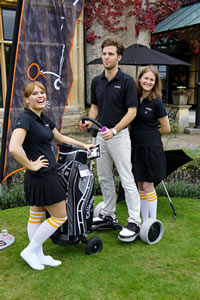 I have many loves in life – women, cars, golf and engineering. These passions help me notice opportunities. I spotted one on the golf course one day playing a round with dad, as one of his friends was a little tired (hungover) and tried to hop on his power trolley. This unfortunately did not carry him as he’d hoped but instead broke. Frustrated at the £800 he spent on it (about $1300), he started giving it the 7 iron. Through the shards of plastic and circuitry I got my eureka moment for a final year project – this was back in 2006. I developed the concept of a hop-on golf trolley during 2008/2009 as a final year project for my undergraduate course in Engineering Design at London South Bank University (LSBU). The chap with the busted up power trolley would soon become my first customer 🙂
7. What was the obstacle that almost kept the Rolley from becoming a reality?
If I look back at who I was two years ago, I would have to say finance was a big obstacle, but you soon realise that there are ways around the money hurdle. It gave me a good lesson, and over time I’ve learned to negotiate and present opportunities to those who hide behind invoices. Strategic partnerships can also be a smart way of sharing technology platforms, finance and advice. They can also be founded upon contract and equity sharing, thus reducing the hard cash requirements of the venture. Another real hurdle would be time, but being aware of the constraints that this presents helps has helped reinforce the golden rule of under promising and over delivering.
8. Do you have any advice to other inventors/entrepreneurs/innovators out there?
Look after every single person who seeks advice from you, or admires a quality that they see in you. As entrepreneurs in our day and age it is vital to support each other. Seek events and enterprising communities that will provide mutual encouragement and support. In London we have the Virgin Media Pioneers, and this is a great place to share advice and meet like minded folk. Your contacts, and I mean “real relationships with honest people”, and working to create win-win relationships are going to be two ways to move things forward. Most importantly, where possibly try not to re-invent the wheel. Look at your idea and see if there are companies who do an aspect of your invention better that you, talk to them, and remember that any new revenue stream for a smart company must be structured as a win-win. And, of course please feel free to follow @RolleyGolf to see our progress 🙂
Conclusion
I will be interested to see how the Rolley progresses. Arnold and the crew have embarked on a world tour to launch the product and are producing a video to showcase it (sneak peek here). It will be interesting to see whether now is the time for the hop-on golfing revolution to begin.
The Rolley is not the first invention addressing the hop-on golf trolley idea, but will it be the first one to bridge the gap between invention and innovation?
To watch some of the progression in this solution area, here are two other takes on the hop-on golf trolley. The first is the SWIGO from three and a half years ago, followed by the MANTYS from 21 months ago:
 Sign up here to get Human-Centered Change & Innovation Weekly delivered to your inbox every week.
 When it comes to education, we should adopt Nike’s famous motto and ‘Just Do It’.
 Can government help companies innovate, or do they tend to get in the way instead?
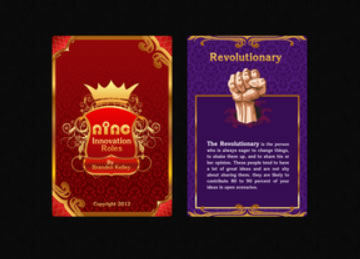
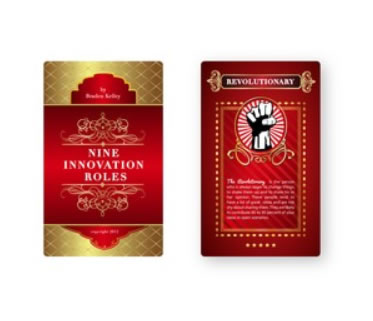
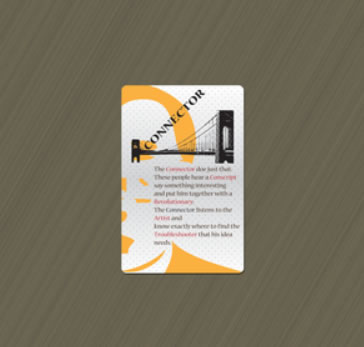
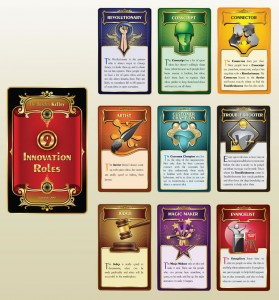




 I’m in the throes of bringing
  Nobody, including people inside Microsoft, would argue with the fact that Microsoft beat Google and Apple to the Mobile OS marketplace, but lags them both in terms of market share.