
Monthly Archives: February 2022

Disrupt Yourself, Your Team and Your Organization

Disrupt Yourself, Your Team and Your Organization

GUEST POST from Janet Sernack

Moving into a new year is always a time for retreating and reflecting to accelerate growth and harvest new ideas from our feelings, thoughts, and learnings gleaned from the last two years of disruption, extreme uncertainty, and instability. Whether you are actively seeking to disrupt yourself, your team, and your organization to effect sustainable success this year, or not, we all have the opportunity to adapt, innovate and grow from the range of challenging events that impacted us in the past 24 months. This is why it might be useful to see these disruptive events as positive, powerful, and impactful forces for creating new cracks in your own, or your team or organizational soil – to sow some imaginative, creative, and inventive seeds for effecting positive change in an unstable world.

To see them germinate the desired changes you want for yourself, your team, and organization and deliver them, to survive and thrive in 2022.

We are all being challenged by disruption

Our status quo and concepts of business-as-usual have all been significantly disrupted, resulting in a range and series of deep neurological shocks, that have shaken many of us, our teams, and our organizations, to our very cores.  Some of us adapted to a sense of urgency and exploited the opportunity to reinvent, iterate, or pivot our teams and organizations, towards co-creating individual and intentional “new normals” and just “got on” with it. Some of us have continually denied, defended, and avoided making changes, where many of us have sunk deeply into our fears and anxieties, falsely believing that our lives, and our work, would eventually go back to “normal”.

This is because a significant number of our habitual, largely unconscious mental models and emotional states, were disrupted, largely by events beyond our individual and collective control.  Causing many of us to experience “cognitive dissonance” (a situation involving conflicting attitudes, beliefs, or behaviors that produce feelings of mental discomfort leading to an alteration in one of the attitudes, beliefs, or behaviors to reduce the discomfort and restore balance) from the chaos, discomfort, confusion, and conflict.

Which saw many of us, disconnect cognitively and emotionally, from the current disruptive reality, where some of us secretly hoped that “it will all go away” manifesting and festering fundamentally and unconsciously, as inherent neurological immobility, (freeze, fight, flight) resulting in many areas as resistance to change.

Why disrupt yourself, your team, and organization?

Yet disruptive change is inevitable, the speed and pace of exponential change cannot be stopped, the range of complex and wicked global and local problems that need to be solved collectively, aren’t going away.

Job security and full-time employment, as hybrid and virtual work, and technology accelerate, are becoming “things of the past” as the workplace continues to destabilize through digitization, AI, and automation.

Whilst the war for talent also accelerates as the great resignation sets in and people make powerful, empowered life balance decisions and are on the move globally.

Taking the first steps to disrupt yourself, your team, and organization

In this time of extreme uncertainty, we have a unique moment in time, to disrupt ourselves, teams, and organizations by:

  1. Hitting our individual, collective mental, and emotional pause buttons, to retreat from our business-as-usual activities, and take time out to reflect upon paying attention and qualifying:
  • How specifically have I/we been disrupted?
  • How have our people,  teams, and customers been disrupted?
  • What are some of the major collective impacts on our organization’s current status and how might these impact our future growth potential and overall sustainability?
  • How connected are we to an exponential world, how can we ensure that our feelings, thoughts, and actions, connect with what is really happening to us, our teams, and our customers?
  • What causes disconnection and how might we manage it to be more mentally tough and emotionally agile in an extremely uncertain future?
  • What really matters to us, our teams, organizations, and customers – what do our people, teams, and customers really want from us?
  • What are some of the key elements of our organizational strategy to enact our purpose and deliver our mission?
  1. Generating safe, evocative, provocative, and creative conversations, that evoke deep listening and deep questioning, about how to individually and collectively reconnect, revitalize, rejuvenate and reenergize people, teams and organizations to survive and thrive through asking:
  • How can we engage and harness our people and teams’ energies in ways that mobilize their collective intelligence to evoke new mindset shifts and new ways of thinking and acting?
  • What are some of the key mindsets and traits we need to disrupt, shift, and cultivate to be successful to adapt and grow through disruption?
  • What skills do our leaders and teams need to learn to think and act differently to shift the organizations culture to deliver our strategy?
  • How might we shift our teams and organizations to be agile, and redesign our organizations for both stability and speed?
  • What does it mean to us, our teams, and organizations to be creative, inventive, and innovative – How might we shift our teams and organizations to be more creative, inventive, and innovative?
  • What are the new behavioral norms that will support and enable us to execute agile and innovative changes?
  • How might becoming agile and innovative help our people, teams co-create a healthy, high-performing, and sustainable organizational culture?
  • How might becoming agile and innovative add value to the quality of people’s lives and help our customers flourish?
  1. Becoming comfortable with being uncomfortable by developing our peoples, teams, and our organizational “discomfort resilience” and dance of the edge of your comfort zones through:
  • Creating safe environments where people and teams are allowed to experiment,  have permission, and are trusted to practice, make mistakes as they move through difficult emotions, and take little bets in low stake situations.
  • Intentionally breaking organizational routines and habits, to create space in people’s brains for new neural pathways to be developed.
  • Enabling people and teams to become mindful of their triggers, to interrupt their automatic reactions.
  • Equipping people and teams to thoughtfully and intentionally respond to situations, that make them uncomfortable and risk-averse, by knowing how to think differently.
  • Bringing more play into the way people work, encourages people to be imaginative, inquisitive, curious, and improvisational, to seek different ways of thinking and acting, that really make a difference in how work gets done.
  • Support people and teams to learn by doing, and failing fast, without the fear of blame, shame, and retribution, despite it being risky to do that.

Why not disrupt yourself, your team, and organization?

The future is going to be full of disruptive events and circumstances that will impact is our families, communities, team, and organizations, and the conditions of extreme uncertainty and disruption are not going to go away. In fact, they are fundamental to what might be described as our collective “new normal” and it’s up to you to disrupt yourself, your team, and organization, to lead, adapt and grow, to survive and thrive through it.

Find out about The Coach for Innovators Certified Program, a collaborative, intimate, and deep personalized innovation coaching and learning program, supported by a global group of peers over 8-weeks, starting May 2022. It is a blended learning program that will give you a deep understanding of the language, principles, and applications of a human-centered approach to innovation, within your unique context. Find out more.

Contact us now at mailto:janet@imaginenation.com.au to find out how we can partner with you to learn, adapt, and grow your business, team and organization through disruption.

Subscribe to Human-Centered Change & Innovation WeeklySign up here to get Human-Centered Change & Innovation Weekly delivered to your inbox every week.

Overcoming Challenges in Sustainable Innovation

Overcoming Challenges in Sustainable Innovation

GUEST POST from Chateau G Pato

Sustainable innovation is the frontier where ecological responsibility and business ingenuity meet. However, pioneering in this field often involves overcoming significant challenges. This article delves into how leading organizations have successfully navigated obstacles in sustainable innovation through three revelatory case studies.

Case Study 1: Patagonia’s Eco-Friendly Supply Chain

Patagonia has long been a beacon for sustainable business practices. Their commitment to environmentally friendly production processes required a radical re-imagining of their supply chain. By investing in alternative materials, such as recycled polyester and organic cotton, Patagonia not only lessened its ecological footprint but also tapped into a growing market of environmentally conscious consumers.

One key challenge was converting suppliers to sustainable practices. Patagonia tackled this by developing strategic partnerships with companies committed to sustainability, thereby transforming their entire supply chain. This case demonstrates how aligning business goals with environmental stewardship can lead to a competitive advantage.

Case Study 2: Tesla’s Electric Vehicle Revolution

Tesla faced numerous hurdles in its quest to revolutionize the automobile industry with electric vehicles (EVs). From initial skepticism about EV technology to considerable capital requirements and infrastructure development, Tesla’s journey was fraught with challenges. However, by focusing on cutting-edge battery technology and expanding supercharger networks, Tesla has steadily increased the adoption of EVs.

The key takeaway from Tesla’s approach is the importance of innovation in product design and delivery. By pushing the boundaries of technology and ensuring availability of charging infrastructure, Tesla addressed both practical and perceptual barriers to driving EV adoption.

Case Study 3: IKEA’s Circular Economy Model

IKEA’s mission to create a circular economy exemplifies how large enterprises can overcome sustainability challenges. Recognizing the environmental impact of its operations, IKEA has implemented strategies like furniture take-back programs and product recycling initiatives, aiming to become fully circular by 2030.

One challenge for IKEA was shifting consumer behavior towards participation in their circular model. By providing incentives and convenient options for customers to recycle, repair, and reuse products, IKEA not only enhanced sustainability but also deepened customer engagement and loyalty.

Conclusion

These case studies illustrate that overcoming challenges in sustainable innovation requires a blend of strategic partnerships, groundbreaking technology, and comprehensive customer engagement. For more insights into innovation, check out the Human-Centered Innovation Toolkit page and discover helpful resources on innovation execution, or check out the free innovation maturity assessment (aka Innovation Audit).

This HTML document provides a structure for an article about overcoming challenges in sustainable innovation, with case studies showcasing real-world examples from Patagonia, Tesla, and IKEA. The internal links point to relevant pages on Braden Kelley’s website to enhance the article’s value and SEO performance.

Bottom line: Futurology is not fortune telling. Futurists use a scientific approach to create their deliverables, but a methodology and tools like those in FutureHacking™ can empower anyone to engage in futurology themselves.

Image credit: Pexels

Subscribe to Human-Centered Change & Innovation WeeklySign up here to get Human-Centered Change & Innovation Weekly delivered to your inbox every week.

Five Immutable Laws of Change

Five Immutable Laws of Change

GUEST POST from Greg Satell

When I first arrived in Poland in 1997, change was all around me. It was like watching a society transform itself through time-lapse photography. Everywhere you looked, the country was shaking off decades of post-communist rust and striving to make good on the promise of 1989’s historic Round Table Agreement.

Yet it wasn’t until the fall of 2004 that I truly understood the power of change. By then, I was living in Kyiv, Ukraine and the entire country erupted in protests now known as the Orange Revolution. While Warsaw in the 90s was like rebuilding after a tornado hit, Ukraine was like being in the eye of the storm itself.

That experience led to a 15-year long journey of discovery and my book Cascades. What I found was that throughout history many have sought to create change and most have failed, but a few succeeded brilliantly. Starting out with very different challenges, philosophies and personalities, they eventually all arrived at the same principles that allowed them to prevail.

Law #1: The Status Quo Has Inertia On Its Side And Never Yields Gracefully

We tend to overvalue ideas. We think that if we have a good idea, people will immediately see its worth. Yet that’s hardly ever the case. As computer pioneer Howard Aiken put it, “Don’t worry about people stealing your ideas. If your ideas are any good, you’ll have to ram them down people’s throats.”

Consider the case of Ignaz Semmelweis, who first came up with the idea that medical staff in hospitals should wash their hands before operating on patients. You would think that would be an obviously good idea. Nevertheless, he was ostracized for it and ended up dying in an insane asylum, ironically from an infection he contracted under care.

Semmelweis’s plight was tragic, but is also so amazingly common that the tendency for the establishment to reject ideas is referred to as the Semmelweis effect. In fact, while researching my book Mapping Innovation I interviewed dozens of successful innovators and I found that every single one had to overcome stiff resistance to transform their idea into something useful.

The fact that you will face opposition when protesting an authoritarian regime is obvious, but an organizational environment can be just as cutthroat. Make no mistake. If your idea is important and has real potential for impact, there will be some who will hate it and they will work to undermine it in ways that are dishonest, underhanded and deceptive.

That must be your primary design constraint.

Law #2: Small Groups, Loosely Connected, But United By Shared Purpose Drive Transformational Change

For decades, change consultants have been telling us that if we want to drive transformation, we should “start with a bang” and create a “sense of urgency” through a big communication campaign. The results have been atrocious. In fact, McKinsey has found that nearly three quarters of organizational transformations do not succeed.

It’s not hard to understand why. If there are people who are determined to see your change fail—and every significant change encounters resistance—than a “rally the troops” type of approach will only serve to alert those who oppose change that they better get started undermining it or it might actually happen.

Fortunately, science points to another way. The truth is that small groups, loosely connected, but united by a shared purpose drive transformational change. So instead of trying to convince everybody at once, identify those who are already enthusiastic about your idea, who want it to work as much as you do. Those are people you can empower to succeed and can help bring in others, who can bring in others still.

Yet identifying advocates is only part of the battle. You also need to find imbue the effort with purpose and give it meaning. Unfortunately, all too often the quest for purpose is treated as a communication exercise. It isn’t. For change to be meaningful it has to actually solve a problem that people care about.

Law #3: Revolutions Begin With a Cause, Not A Slogan

Every change effort starts with a grievance. There’s something that people don’t like and they want it to be different. In a social or political movement that may be a corrupt leader or a glaring injustice. In an organizational context it’s usually something like falling sales, unhappy customers, low employee morale or technological disruption.

Whatever the case may be, the first step toward bringing change about is understanding that getting mired in grievance won’t get you anywhere. You can’t just complain about things you don’t like, but must come up with an affirmative vision for how you would want things to be.

The best place to start is by asking yourself, “if I had the power to change anything, what would it look like?” Martin Luther King Jr.s vision for the civil rights movement was for a Beloved Community. Bill Gates’s vision for Microsoft was for a “computer on every desk and in every home.” A good vision should be aspirational, but not completely out of reach.

One of the things I found in my research is that successful change leaders don’t try to move from grievance to vision in one step, but rather identify a Keystone Change, which focuses on a clear and tangible goal, includes multiple stakeholders and paves the way for future change, to bridge the gap.

For King, the Keystone Change was voting rights. For Gates it was an easy-to-use operating system. For your vision, it will undoubtedly be something different. The salient point here is that every successful transformation I found started out with a Keystone Change, so that’s where you will want to start as well.

Law #4: Design Tactics That Mobilize People to Influence Institutions

Organizational change consultants often recommend that changemakers prepare a stakeholder map. This isn’t necessarily a bad idea, but it is somewhat inadequate because it fails to distinguish between different kinds of stakeholders. Some stakeholders are targets for mobilization and others are targets for influence.

For example, both parents and school boards are important stakeholders in education, but for very different reasons. School boards wield institutional power that can effect change, parents do not, so we mobilize parents to influence school boards, not the other way around. We need to approach constituencies and institutions in very different ways.

One of the things we’ve consistently found in our work helping organizations to drive transformational change is that leaders construe stakeholders far too narrowly. Fortunately, decades of non-violent activism have given us powerful tools for both: the Spectrum of Allies for constituencies and the Pillars of Support for institutions.

A crucial point to remember is that you can’t dictate change by mandate. You can’t overpower but must instead attract people and empower them so that they can take ownership of the cause and make it their own. You need to accept that people will do things for their own reasons, not for yours.

Most of all, remember that every action has to have a clear purpose and be directed at influencing specific institutions. So before taking any action, ask two questions: Who are we mobilizing and to influence what?

Law #5: Every Revolution Inspires Its Own Counter-Revolution

In the aftermath of the Orange Revolution we thought we had won. After all, we had stood up to the injustice of a falsified election and prevailed. Unfortunately, it didn’t turn out that way. Five years later, Viktor Yanukovych, the same man who we had taken to the streets to prevent from office, rose to power in an election that international observers deemed free and fair. His corrupt and incompetent rule would trigger a second Ukrainian Revolution.

We find a similar pattern with many of the executives we work with. They work for months—and sometimes years—to get a project off the ground. Yet just when they think they’re turning the corner, when they’ve won executive sponsorship, signed up key partners and procured enough financing to have a realistic budget, all the sudden things seem to get mired down.

That’s no accident. Just because you’ve won a few early battles doesn’t mean opposition to your idea has melted away. On the contrary, faced with the fact that change may actually succeed, those who oppose it have probably just begun to redouble their efforts to undermine it. These efforts are often not overt, but they are there and can easily derail an initiative.

That’s why every change effort must learn how to survive victory. The truth is that change is always a journey, never a particular destination, which is why lasting change is always built on common ground. That doesn’t mean that you need to win over your fiercest critics, but it does mean you need to try to empathize with their perspective.

There is a reason why some change leaders succeed while others fail. At some point everybody needs to decide whether they would rather make a point or make a difference and, in the end, those that prevail choose the latter.

— Article courtesy of the Digital Tonto blog
— Image credit: Pexels

Subscribe to Human-Centered Change & Innovation WeeklySign up here to get Human-Centered Change & Innovation Weekly delivered to your inbox every week.
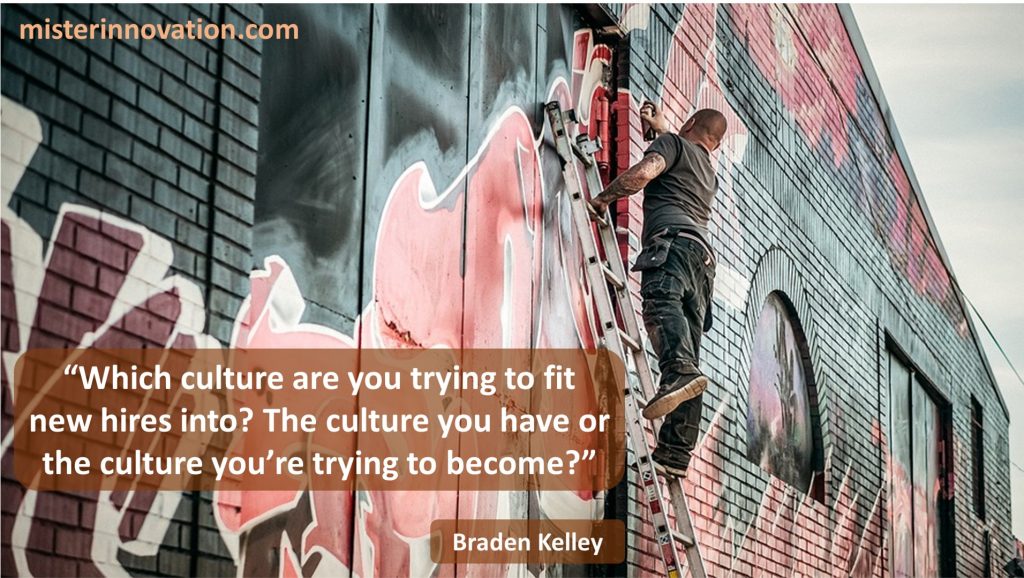
High-Performing Innovative Culture Case Studies

High-Performing Innovative Culture Case Studies

GUEST POST from Art Inteligencia

In today’s fast-paced business environment, cultivating a high-performing innovative culture is not just an advantage—it’s a necessity. Organizations that manage to embed innovation into their cultures can harness the creativity and problem-solving capabilities of their employees to deliver sustained competitive advantages. Here, we explore three compelling case studies of organizations that have successfully fostered such cultures. To deepen your understanding of fostering innovation in a work environment, check out my innovation strategies page.

Case Study 1: Google

Google has long been heralded as a paragon of innovative culture. With its famous ‘20% time’, where employees can dedicate a portion of their workweek to personal projects, Google encourages creativity and exploration. This policy has led to the creation of products like Gmail and Google News. Google’s culture emphasizes psychological safety, allowing team members to express ideas without fear of ridicule. To understand more about managing successful innovation programs, explore our deep dive into innovation programs.

Case Study 2: Spotify

Spotify’s organizational model is known for its flexibility and adaptability, encapsulated in what it calls “squads, tribes, chapters, and guilds.” Spotify encourages autonomous teams, or “squads”, to develop and iterate quickly while maintaining alignment with broader company goals through cross-functional “tribes”. This decentralized model enables rapid innovation while fostering a strong sense of team ownership and accountability.

Case Study 3: 3M

3M is often cited as a pioneer of innovative culture, with its commitment to innovation deeply embedded into its history. The company dedicates a significant percentage of its annual revenue directly to research and development. Known for its ‘15% culture’, 3M allows employees to allocate 15% of their working time to developing projects of their own choosing, which has been instrumental in creating breakthrough products like the Post-it Note. This approach highlights 3M’s focus on long-term innovation and sustained market leadership.

Conclusion

As demonstrated by these organizations, a high-performing innovative culture does not materialize overnight. It requires deliberate strategies, such as promoting psychological safety, decentralizing decision-making, and encouraging creative freedom. The success stories of Google, Spotify, and 3M offer valuable insights into the elements necessary to create such an environment. For more insights into innovation and culture, visit more of the articles here on the Human-Centered Change and Innovation blog.

Bottom line: Futurology is not fortune telling. Futurists use a scientific approach to create their deliverables, but a methodology and tools like those in FutureHacking™ can empower anyone to engage in futurology themselves.

Image credit: Pexels

Subscribe to Human-Centered Change & Innovation WeeklySign up here to get Human-Centered Change & Innovation Weekly delivered to your inbox every week.

Innovation Theater – How to Fake It ‘Till You Make It

Innovation Theater - How to Fake It 'Till You Make It

GUEST POST from Arlen Meyers

The overwhelming number of doctors, engineers and scientists don’t have an entrepreneurial mindset. What’s more, when they have an idea, they don’t know what to do with it since they will not learn those competencies in their formal training. They just don’t know how to innovate their way out of our sick care mess.

But, that hasn’t stopped lots of them from trying, include non-sick care entrepreneurs. They just improvise.

Now that Elizabeth Holmes has been convicted, many are commenting on the pros and cons of the “fake it ’till you make it” ethos of entrepreneurs and Silicon Valley. But, is this really a black and white issue? Is it true that “You have no business being something you are not, or doing something without proving your worth.” I venture to say many of us, including me, have done something that was not a good fit and we have all tried things when we simple did not know what we did not know.

Here’s how to fake it when you don’t know what you are doing or you forgot your lines:

  1. Avoid these wannapreneur rookie mistakes.
  2. If you are a female, find a male wing man so someone will invest in your product
  3. Surround yourself with people who are way above your pay grade at lots of Meetups
  4. Practice Therantology
  5. When you inevitably fail, make a big deal out of it and about how much you learned from your mistakes and include them on your Linked profile. Rinse. Repeat
  6. Wear a fleece vest with your company logo
  7. Plead ignorance about how hard it is to get anybody in sick care to change and the long sales cycles.
  8. Be sure you have lots of hood ornaments (doctors with fancy titles) on your advisory board prominently posted on your website
  9. Hire a virtual assistant that answers all of your calls and says that she/he will not be able to immediately connect you because you are in an investor meeting
  10. Get your co-working space guy to allow you to use more space than you are actually paying for when people come for meetings. Bribe interns with pizza to come and look busy.
  11. Forget being your authentic self. “You are generally better off coming across as likable, which will generally require some effort, restraint, and attention to what others expect and want to see. Seeming authentic in the process is the cherry on top of the cake, but it requires a fair amount of faking.”
  12. Try being a good rebel even if you are a bad one.
No alt text provided for this image

During these times, we are supposed to wear a mask. Most of us wear a mask all the time to hide our insecurities or avoid being outed as an imposter or physician wannapreneur, so none of this should be new to you.

 In a follow-up to their February 2021 article challenging the commonly understood definition of imposter syndrome, authors Ruchika Tulshyan and Jodi-Ann Burey offer actionable steps managers can take to end imposter syndrome in their organizations. Doing so will require work at both the interpersonal and organizational levels, and success will depend in part on gathering data and implementing real mechanisms for accountability. The authors call on managers to stop calling natural, human tendencies of self-doubt, hesitation, and lack of confidence “imposter syndrome.” Those who want women to lend their full talents and expertise must question the culture at work — not their confidence at work.

These things come with practice. But, since you are part of innovation theater, practice your lines, be sure you are wearing the right costume and that the stage is set properly. Break a leg.

Subscribe to Human-Centered Change & Innovation WeeklySign up here to get Human-Centered Change & Innovation Weekly delivered to your inbox every week.

Case Studies of Companies Excelling in Customer Experience

Case Studies of Companies Excelling in Customer Experience

GUEST POST from Chateau G Pato

In the modern business landscape, customer experience (CX) has become a crucial differentiator for companies across all industries. Organizations that prioritize and excel in CX often enjoy increased customer loyalty, higher revenues, and a significant edge over competitors. Here, we will explore three case studies of companies that have set themselves apart by delivering exceptional customer experiences.

Case Study 1: Amazon – Innovating for Unmatched Convenience

Amazon has revolutionized the retail industry, mainly due to its unwavering focus on customer satisfaction. The company’s commitment to customer experience is evident in its seamless user interface, personalized recommendations, and robust logistics network.

Key Strategies:

  • Personalization and Recommendations: Leveraging advanced algorithms, Amazon provides personalized shopping recommendations, enhancing user engagement and potential for upselling.
  • Prime Membership: Offering benefits like free shipping, streaming services, and exclusive deals, Prime membership has fostered a loyal customer base willing to spend more.
  • AWS and Innovations: Developing and integrating innovations like Amazon Web Services (AWS) and Alexa has not only diversified their offerings but also optimized the entire customer journey.

These strategic moves have ensured Amazon remains at the forefront of CX excellence, creating a frictionless shopping experience that continually adapts to consumer needs.

Case Study 2: Disney Parks – Creating Enchanting Experiences

Disney’s theme parks are synonymous with magical experiences, largely due to their meticulous attention to guest experience. Disney’s approach to CX innovation emphasizes emotion and imagination, transforming a simple park visit into an unforgettable adventure.

Key Strategies:

  • Disney MagicBands: These all-in-one wristbands enable ticketing, hotel room access, and purchases, ensuring convenience and personalization throughout the customer’s visit.
  • Cast Member Training: Disney invests heavily in training its staff, known as cast members, to provide unrivaled hospitality and problem-solving solutions, ensuring guests feel valued.
  • Storytelling and Immersion: From themed lands to interactive attractions, every aspect of the parks is designed to immerse visitors in the Disney narrative, creating cohesive and captivating experiences.

By focusing on immersive storytelling and seamless convenience, Disney has solidified its position as a leader in customer experience.

Case Study 3: Zappos – Delivering Happiness

Zappos, an online shoe and clothing retailer, has built its brand around delivering exceptional customer service. Their company culture is centered around the belief that happy employees lead to happy customers.

Key Strategies:

  • Customer Loyalty Team: Instead of a traditional call center, Zappos has a customer loyalty team that empowers employees to go above and beyond for customers without time constraints.
  • Free Shipping and Returns: Zappos offers free shipping and a generous return policy, removing barriers for online shoppers and enhancing the shopping experience.
  • Company Culture: With a set of core values that prioritize fun, creativity, and a bit of weirdness, Zappos fosters a unique environment that encourages employees to deliver exceptional service.

Zappos proves that when a company invests in its employees and empowers them to exceed customer expectations, remarkable customer loyalty and satisfaction follow.

These case studies demonstrate that excelling in customer experience requires a blend of customer-focused innovation, strategic initiatives, and a deep-seated company culture that prioritizes and values the customer. By learning from these pioneers, other organizations can begin crafting their pathways to CX excellence.

Bottom line: Futurology is not fortune telling. Futurists use a scientific approach to create their deliverables, but a methodology and tools like those in FutureHacking™ can empower anyone to engage in futurology themselves.

Image credit: Pexels

Subscribe to Human-Centered Change & Innovation WeeklySign up here to get Human-Centered Change & Innovation Weekly delivered to your inbox every week.

The Role of Mentorship in Leadership Development

The Role of Mentorship in Leadership Development

GUEST POST from Art Inteligencia

In today’s rapidly changing business landscape, mentorship plays a crucial role in leadership development. As thought leaders in the domain of human-centered change and innovation, we recognize that mentorship not only accelerates the growth of future leaders but also fosters a culture of continuous learning and improvement within organizations. Through mentorship, experienced leaders impart valuable insights, crucial skills, and critical thinking capabilities to their mentees, nurturing the next generation of visionary leaders. In this article, we will explore the role of mentorship in leadership development through three insightful case studies.

Case Study 1: The Rise of a Tech Innovator

Background

Sarah was a talented software engineer at a leading tech firm. Despite her technical prowess, she struggled with soft skills and strategic thinking required for leadership roles. Her company initiated a mentorship program to help high-potential employees like Sarah develop essential leadership skills.

Mentoring Journey

Paired with a seasoned leader, Sarah embarked on a six-month mentorship program. Her mentor, a tech industry veteran, provided guidance on navigating complex team dynamics, communicating effectively, and understanding the broader business strategy.

Outcomes

By the end of the program, Sarah successfully transitioned into a project manager role, leading a cross-functional team. Her mentor’s insights enabled her to approach challenges with a strategic mindset, ultimately driving significant innovations within her team. Her journey exemplifies how mentorship can transform technical experts into dynamic leaders.

Case Study 2: Cultivating Leadership in Healthcare

Background

Dr. Mark, a gifted physician, aspired to lead a department at a prestigious hospital. Although he excelled in patient care, he needed to enhance his leadership and organizational skills to effectively manage a medical team.

Mentoring Journey

The hospital’s mentorship program connected Dr. Mark with a senior healthcare administrator. Through bi-weekly meetings, his mentor taught him how to implement operational improvements, engage with medical staff, and make data-driven decisions.

Outcomes

With his mentor’s guidance, Dr. Mark spearheaded several departmental initiatives that increased efficiency and improved patient outcomes. His leadership was instrumental in the hospital being recognized as a center of excellence. Dr. Mark’s story highlights the importance of mentorship in developing leaders in professions where technical expertise often needs to be balanced with leadership skills.

Case Study 3: Empowering Entrepreneurs

Background

Lisa, a budding entrepreneur, launched her own startup focused on sustainable fashion. She was passionate about her business but struggled with scaling operations and securing investment.

Mentoring Journey

Lisa joined a mentorship program for entrepreneurs, where she was matched with a successful business owner. Her mentor provided insights on strategic planning, networking, and pitching to investors. Over monthly mentorship sessions, Lisa learned how to refine her business model and improve her leadership capabilities.

Outcomes

With her mentor’s support, Lisa successfully raised capital and expanded her team. Her brand gained recognition in the industry for both quality and ethical practices. Lisa attributes her accelerated growth and confidence as a leader to the invaluable guidance of her mentor, demonstrating the transformative impact of mentorship on entrepreneurship.

Conclusion

Throughout these case studies, the common thread is the transformative power of mentorship in leadership development. Whether in technology, healthcare, or entrepreneurship, mentorship equips aspiring leaders with the necessary skills and knowledge to excel in their roles. By fostering a culture of learning and support, organizations can leverage mentorship not only to develop future leaders but also to drive innovation and success. Let us continue to embrace mentorship as a strategic tool for shaping the leaders of tomorrow.

Bottom line: Futurology is not fortune telling. Futurists use a scientific approach to create their deliverables, but a methodology and tools like those in FutureHacking™ can empower anyone to engage in futurology themselves.

Image credit: Pexels

Subscribe to Human-Centered Change & Innovation WeeklySign up here to get Human-Centered Change & Innovation Weekly delivered to your inbox every week.

Innovative Companies Using Emerging Technologies

Innovative Companies Using Emerging Technologies

GUEST POST from Chateau G Pato

In the fast-paced world of business, companies must constantly innovate to stay ahead. Today, leveraging emerging technologies is essential for gaining a competitive advantage. Here, I explore how three pioneering companies are using emerging technologies to transform their industries and what lessons can be learned from their experiences.

Case Study 1: Tesla – Revolutionizing the Auto Industry with Autonomous Driving

Company Overview

Tesla, founded in 2003, has become synonymous with electric vehicles and innovations in the auto industry. Under the leadership of Elon Musk, Tesla has pushed the boundaries of what’s possible with cars, focusing on sustainability and advanced technology.

Technology Innovation

One of Tesla’s most groundbreaking endeavors is the development of autonomous driving technology. With the introduction of its Autopilot and Full Self-Driving (FSD) systems, Tesla not only enhances vehicle safety but also opens doors to a future where cars could drive themselves without human intervention.

Impact

This technology is setting a new standard in automotive innovation. Tesla’s approach to software updates over-the-air ensures that their cars get smarter over time, maintaining an edge over traditional automakers. The advent of autonomous driving could revolutionize transport logistics, reduce traffic congestion, and enhance overall road safety.

Case Study 2: Amazon – Transforming Customer Experience with AI and Robotics

Company Overview

Amazon started as an online bookstore in 1994 and has since evolved into a global e-commerce and cloud computing giant. Its founder, Jeff Bezos, has always placed a high value on innovation and customer-centric service.

Technology Innovation

Amazon has been at the forefront of AI and robotics to improve its logistics and customer experience. The use of Kiva robots in its warehouses and AI-driven recommendations on its website are just a few examples of how Amazon hones its competitive edge.

Impact

These technologies have tremendously improved the efficiency and speed of Amazon’s logistics network, allowing the company to deliver goods faster and more reliably. Moreover, AI-powered personal recommendations have increased conversion rates and enhanced the shopping experience, driving customer loyalty.

Case Study 3: IBM – Harnessing Quantum Computing for Unprecedented Problem-Solving

Company Overview

IBM is a legendary technology company that has played a pivotal role in the computing industry for over a century. Always at the forefront of tech innovation, IBM now focuses on quantum computing, AI, and cloud solutions.

Technology Innovation

IBM’s commitment to quantum computing is a game-changer. Quantum computers hold the potential to solve complex problems that are currently impossible for classical computers. IBM develops quantum systems and software and provides quantum computing as a service (QCaaS) through the IBM Quantum Experience.

Impact

This technology could revolutionize fields such as cryptography, drug discovery, and financial modeling. By providing access to quantum computing capabilities, IBM empowers researchers and businesses to explore new possibilities, thus driving innovation across various industries.

Conclusion

These case studies illustrate how companies can harness emerging technologies to redefine industry standards, improve efficiencies, and spearhead innovation. By looking at Tesla, Amazon, and IBM, we see the power of visionary thinking and technological adoption in driving business success. As we move forward, it’s essential for businesses to stay ahead by continuously exploring how emerging technologies can be integrated into their operations and strategies to lead their fields.

Bottom line: Futurology is not fortune telling. Futurists use a scientific approach to create their deliverables, but a methodology and tools like those in FutureHacking™ can empower anyone to engage in futurology themselves.

Image credit: Pixabay

Subscribe to Human-Centered Change & Innovation WeeklySign up here to get Human-Centered Change & Innovation Weekly delivered to your inbox every week.

Change Impact Assessment – Key Metrics and KPIs

Change Impact Assessment - Key Metrics and KPIs

GUEST POST from Art Inteligencia

In an ever-evolving business landscape, embracing change is not just necessary, it is fundamental for survival and growth. But how do we ensure that the changes we make are delivering the desired impact? The key lies in identifying and measuring crucial metrics and key performance indicators (KPIs) that align with your organizational goals.

Introduction to Change Impact Assessment

Assessing the impact of change involves evaluating the outcomes of initiatives or transformations against predefined goals. Metrics and KPIs act as the quantifiable indicators that help track progress, measure success, and pinpoint areas needing adjustment. Understanding these metrics allows organizations to optimize strategies and enhance decision-making.

Key Metrics and KPIs to Consider

  • Employee Engagement: Surveys and feedback mechanisms can measure levels of employee engagement, capturing morale, motivation, and commitment post-change.
  • Customer Satisfaction: Net Promoter Score (NPS), customer retention rates, and customer feedback can provide insights into how customers respond to changes.
  • Operational Efficiency: Assess metrics related to processes, such as cycle time, error rates, or productivity levels, to determine efficiency improvements.
  • Financial Performance: Monitor revenue growth, cost savings, and return on investment (ROI) to evaluate financial impact.

Case Study 1: TechCorp’s Agile Transformation

TechCorp, a leading technology firm, embarked on an agile transformation to enhance their product development process. They focused on the following KPIs to assess impact:

  • Time to Market: Measured the reduction in time taken to launch new features.
  • Team Velocity: Tracked the increase in the number of story points completed per sprint.
  • Quality Improvements: Monitored the decrease in defect rates in released products.

The transformation led to a 30% faster time to market and a 20% reduction in product defects, significantly boosting customer satisfaction and retention.

Case Study 2: HealthCareCo’s Process Optimization

HealthCareCo implemented a change management process to improve patient care operations. Key metrics included:

  • Patient Wait Time: Reduced patient wait times by 40% through streamlined check-in processes.
  • Resource Utilization: Improved scheduling efficiency, leading to a 25% increase in resource utilization.
  • Patient Satisfaction: Enhanced satisfaction scores from improved service delivery.

The strategic focus on these metrics resulted in HealthCareCo achieving a significant competitive edge, manifesting in higher patient inflow and increased profitability.

Conclusion

Successfully assessing the impact of change is crucial for any organization wanting to stay relevant and productive. By focusing on key metrics and KPIs, leaders can gain actionable insights, drive meaningful improvements, and ensure lasting organizational growth. As we continue to innovate, the disciplined measurement of change impact remains a cornerstone of sustainable success.

Bottom line: Futurology is not fortune telling. Futurists use a scientific approach to create their deliverables, but a methodology and tools like those in FutureHacking™ can empower anyone to engage in futurology themselves.

Image credit: Pixabay

Subscribe to Human-Centered Change & Innovation WeeklySign up here to get Human-Centered Change & Innovation Weekly delivered to your inbox every week.

Design for Delight to Create Products People Love

Design for Delight to Create Products People Love

GUEST POST from Chateau G Pato

In a world where consumer expectations continue to skyrocket, creating products that not only meet needs but also spark genuine delight has become a vital differentiator for businesses aiming for lasting success. This mindset, famously adopted by companies like IDEO and Intuit, is what we call “Design for Delight” (D4D). This approach focuses on deeply understanding customer needs, iteratively designing solutions, and delivering products that customers don’t just want but love.

Principles of Design for Delight

Design for Delight encompasses three key principles:

  • Deep Customer Empathy: Understanding your customers’ thoughts, emotions, and motivations.
  • Go Broad to Go Narrow: Exploring numerous possibilities and iterating quickly to find the best solution.
  • Rapid Experimentation with Customers: Using iterative testing and feedback to refine and improve products.

Case Study 1: Intuit’s QuickBooks

Intuit’s journey with QuickBooks is a quintessential example of the D4D approach. Originally a simple solution for managing personal finances, Intuit realized that small business owners had unique challenges that QuickBooks could address more effectively. By employing deep customer empathy, they identified specific pain points faced by small businesses.

Through rapid experimentation and customer feedback, Intuit redesigned QuickBooks to better serve small business needs, incorporating features like invoicing, expense tracking, and reporting. They ‘went broad to go narrow,’ exploring various product iterations before honing in on solutions that resonated with their audience. As a result, QuickBooks became ingrained in the small business ecosystem, fostering customer loyalty by addressing real-world demands in user-friendly ways.

Case Study 2: Airbnb’s Customer-Centric Redesign

Airbnb is another stellar example of D4D in action. The company revolutionized the travel industry by not only providing a marketplace for home rentals but also by prioritizing the user experience. Early on, Airbnb faced challenges with unappealing listings and unsatisfactory guest experiences. By observing and empathizing with both guests and hosts, they identified friction points hindering delightful experiences.

One critical insight was the importance of high-quality photography. Airbnb invested in professional photography services for hosts to enhance listing attractiveness, significantly increasing booking rates. This change, combined with evolving their platform based on user feedback, transformed Airbnb into a brand synonymous with delightful, personalized travel experiences.

Conclusion

Design for Delight is not just a methodology; it’s a commitment to understanding and exceeding customer expectations. By focusing on empathy, experimentation, and iteration, companies can design products and experiences that not only fulfill customer needs but also inspire their loyalty and advocacy. As seen with Intuit and Airbnb, embracing this approach results in products that aren’t just functional but are truly beloved by their users.

Bottom line: Futurology is not fortune telling. Futurists use a scientific approach to create their deliverables, but a methodology and tools like those in FutureHacking™ can empower anyone to engage in futurology themselves.

Image credit: Unsplash

Subscribe to Human-Centered Change & Innovation WeeklySign up here to get Human-Centered Change & Innovation Weekly delivered to your inbox every week.