Exclusive Mark Schaefer Interview Excerpt from CustomerThink.com
 Cumulative Advantage as a concept builds unstoppable momentum for your ideas and your business — even when the odds seem stacked against you. The book shows how initial advantages, seams of opportunity, sonic booms, and the lift from mentors can impact your world in powerful and permanent ways. It’s designed to be a practical source of inspiration for the entrepreneur, business leader, and every person with a dream that’s ready to take flight. The Cumulative Advantage concept focuses on:
- How the initial advantage that drives momentum comes from everyday ideas.
- The inside secrets of creating vast awareness for your projects.
- How to nurture powerful connections that lead to break-through opportunities.
- Why momentum is driven by the speed, time, and space of a “seam.”
- How the “certainty of business uncertainty” can be used to your advantage.
I had the opportunity recently to interview Mark Schaefer, a globally-acclaimed author, keynote speaker, and marketing consultant. He is a faculty member of Rutgers University and one of the top business bloggers and podcasters in the world. Mark is the executive director of Schaefer Marketing Solutions, Chief Executive Officer of B Squared Media and on the advisory board of several startups. He has been a contributor to Harvard Business Review and Entrepreneur magazine.
His latest book is Cumulative Advantage: How to Build Momentum for Your Ideas, Business and Life Against All Odds.
Below is the text of the interview:
1. Is success random?
Yes and no.
Momentum in life begins with some initial advantage. That is almost always random and unearned. It could be inherited wealth, a special, early educational opportunity, or being in the right place at the right time. Even being born into a free country and living in a stable household with two parents can be an advantage.
Frans Johansson wrote an entire book about this phenomenon called “The Click Moment.” I can point to a random conversation with my boss in 1992 that led to this book!
However, just having an idea or an advantage is not enough. You must pursue the idea and apply it to something changing in the world to create an opportunity. Randomness is likely to get the ball rolling, but hard work and smarts still make a difference when it comes to success.
2. Why is creating a cumulative advantage important?
There are many reasons to understand the patterns of momentum but for me, it’s the fact that it’s just so hard to stand out today. Even if you’re doing your best work, you can be buried because the level of competition and content out there is so great. How can a person or a business be heard? How can they be found?
For the past 10 years, most of my career has been devoted to this idea of becoming the signal instead of the noise. It’s never been harder for a business to be seen and heard and I think understanding how we can apply momentum to our lives is a big idea to help solve this problem.
3. Can anyone create cumulative advantage for their business or ideas?
This is going to sound weird, but honestly, no. This haunted me as I wrote the book. I realized that every business book and every self-help book is inherently elitist. The author assumes a person has the money to buy the book, the time to read it, and the resources to act on it.
But there is a big part of society that is being pulled under by Cumulative Disadvantage. It’s a cosmically complex topic that I address, in part, at the end of the book. I wanted to write a book that could help everyone, I don’t think anybody can, really.
But let’s put it this way — if you have the resources to buy the book and read it, then yes, you can probably build momentum!
4. What kinds of initial advantages might the average person have?
It can be anything really that leads to some momentum in later life. I already mentioned this idea about just living in a safe home as an advantage. Children adopted out of poverty had a substantial gain in IQ just from being in a safe environment.
Research has shown that early reading skills can lead to an advantage in education. Early athletic coaching can lead to longer and more profitable professional careers (just ask Tiger Woods or Serena Williams!). It can be a special ability, a personality trait, or even a stroke of luck along the way.
5. We are all surfing the crest of a wave that started long ago. Advantage builds on advantage. Why is curiosity so important?
I once had the opportunity to meet Walter Isaacson, the biographer of Steve Jobs, Leonardo DeVinci and Benjamin Franklin. I asked him what made a genius. He said endless curiosity and an ability to see patterns.
The world is filled with millions of ideas. An idea is worth nothing without the pursuit of curiosity, That is the beginning of momentum.
Click to read the rest of the interview on CustomerThink.com

 Sign up here to get Human-Centered Change & Innovation Weekly delivered to your inbox every week.

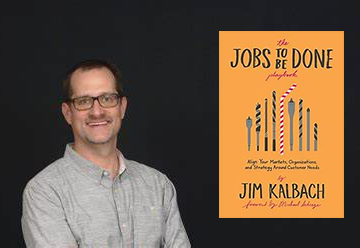 The Jobs-to-be-Done (JTBD) approach offers a unique lens for viewing the people you serve. Instead of looking at the demographic and psychographic factors of consumption, JTBD focuses on what people seek to achieve in a given circumstance. People don’t “hire” products and services because of the demographic they belong to; instead, they employ solutions to get a job done.
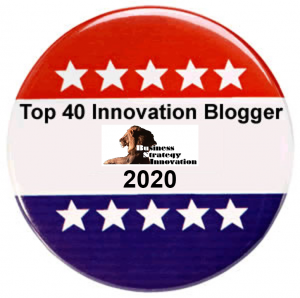 After a week of torrid voting and much passionate support, along with a lot of gut-wrenching consideration and jostling during the judging round, I am proud to announce your Top 40 Innovation Bloggers of 2020:
 Tom Koulopoulos is the author of 10 books and founder of the
 Greg Satell is a popular speaker and consultant. His first book,
 Phil McKinney is the Author of “Beyond The Obvious”, Host of the Killer Innovations Podcast and Syndicated Radio Show, a Keynote Speaker, President & CEO CableLabs and an Innovation Mentor and Coach.

 Eric Eskey is a Managing Director at Strategyn, an innovation consultancy. Eric is in the business of creating the future. I aim to use the resources he has – his work, investments, voice, and imagination – to encourage innovation and defeat the hidden forces that resist it.
 Scott Anthony is a strategic advisor, writer and speaker on topics of growth and innovation. He has been based in Singapore since 2010, and currently serves at the Managing Director of Innosight’s Asia-Pacific operations.


 Nicolas Bry is Orange Startups Studio Founder. He entices Orange employees in engaging as intrapreneurs, bringing their idea to life within Orange business. Nicolas is equally a passionate expert for innovation labs exploring new business. International speaker (TEDx), delivering Masterclasses @Google Academy, and Tech/Business Schools, ISPIM Prize for innovation management, Nicolas is Writer of


 Jesse Nieminen is the Co-founder and Chairman at



 Francesco Pagano, Vice President, EMEA Head of Portfolio of Licenses Brands at Fossil Group Europe, is passionate about craft brands, innovation, brand management, brand communication and international business. He is always up for irresistible product concepts, ultimate communication via integrated campaigns and great Italian food.
 Dimis Michaelides is a keynote speaker, author, consultant and trainer in leadership, creativity and innovation. Contact him for a workshop or a presentation at
  Greg Heist is the Chief Innovation Officer at Gongos, a decision intelligence company.
 Gijs van Wulfen helps organizations to structure the chaotic start of innovation as author, speaker and facilitator. He is the founder of the FORTH innovation method and author of the innovation bestseller The Innovation Expedition. He was chosen by LinkedIn as one of their first 150 Influencers. Follow Gijs @gijsvanwulfen
 Shawn Nason, founder and CEO of MOFI, lives his life with a commitment to make everyone he meets a part of his family. Armed with the gift of discernment, he has the uncanny ability to walk alongside people as they struggle to connect with their deepest passions and engage their most debilitating demons. He challenges the world around him to be fully present, get real, and knock down the barrier that separates the various compartments in their lives.


 John Carter has been a widely respected adviser to technology firms over his career. John is the author of
 Ludwig Melik is CEO of Planbox, whose mission is to help organizations thrive by transforming the culture of agile work, continuous innovation, and creativity across the entire organization… Connect with him on LinkedIn or join the conversation by following Planbox on Facebook, Twitter, and LinkedIn.

 Rachel Audige is an Innovation Architect who helps organisations embed inventive thinking as well as a certified Systematic Inventive Thinking Facilitator, based in Melbourne.
 Mick Simonelli is an innovator with 20+ years of implementing change and positive disruption at USAA. As a military veteran, he held transformation roles in numerous military organizations; and as a business executive, he purposely hired vets to help launch numerous innovations as the Chief Innovation Officer for a Fortune 500 company. Mick currently serves as an innovation consultant and can be found at www.micksimonelli.com Follow @MickSimonelli
 Mitch Ditkoff is the Co-Founder and President of Idea Champions and the author of “Awake at the Wheel”, as well as the very popular Heart of Innovation blog.
 Peter Cook leads Human Dynamics and The Academy of Rock, providing Keynotes, Organisational Development and Coaching. He is the author of seven books on business leadership. His three passions are science, business and music, having led innovation teams for 18 years to develop life-saving drugs including the first treatments for AIDS and the development of Human Insulin. Peter is Music and Business editor at Innovation Excellence. You can follow him on twitter @Academyofrock.
 Mukesh Gupta is Director of Customer Advocacy, SAP India Private Limited. He also served as Executive Liaison for the SAP User group in India, and as a Global Lead in Sales & Business Development. He blogs, and shares podcasts and videos, on his site rmukeshgupta.com
 Urko Wood helps clients of Reveal Growth find and capitalize on the best opportunities for innovation and growth in their markets. He is one of only a handful of people in North America who are expert practitioners in the breakthrough “jobs-to-be-done” (JTBD) innovation approach that has enabled over 400 of the Fortune 1000 to generate billions of dollars in new revenue and achieve new product success rates of over 80%.



 Neil Sholay is re-shaping innovation and digital experiences as a Vice President of Digital Innovation for EMEA & JAPAC at Oracle. He leads a curious, multidisciplinary team of thinkers, Ideators, strategists, designers, developers, storytellers, rebels and proud geeks, who are reshaping Innovation and digital experiences. They bring new ideas & business models to life, using co-innovation and rapid prototyping.
 For more than a decade I’ve devoted myself to making innovation insights accessible for the greater good, because I truly believe that the better our organizations get at delivering value to their stakeholders the less waste of natural resources and human resources there will be.
 Business Strategy Innovation loves making innovation insights accessible for the greater good, because we truly believe that the better our organizations get at delivering value to their stakeholders the less waste of natural resources and human resources there will be.
 Every two years Suntop Media ranks the