Category Archives: Psychology

A Creative Marriage Proposal

I found this video via @MeghanMBiro and @berget and I just had to share it.

It’s a wedding proposal from an actor in my hometown to his now bride to be, and is a great example of re-imagining a traditional activity in our society – the marriage proposal.

The things I love about it are not the actual creative execution but the principles exemplified by the experience:

  1. If you have a great product or service, people will be willing to help you sell it
  2. If it’s really good, they may go out of their way to help you sell it – or even do so without asking your permission
  3. Oregon fosters creativity 😉
  4. Focus on more than the transaction – Make magic!
  5. Skills can from other contexts can be valuable to the current challenge
  6. Have fun with everything you do and you’ll have better results 🙂
  7. Don’t just ask people to help, make it fun to help
  8. Give people something to talk about and feel the love spread 🙂
  9. Even if your customers or community do the sales pitch – YOU’VE GOT TO CLOSE

What magic are you making?

Are there boring transactional parts of your business that could use a little love and magic?

Don’t be afraid to invest in reducing the friction in your adoption process. You’ll improve the value access performance in your innovation equation:


Innovation Success (or even business success)
=
Value Creation
+
Value Access
+
Value Translation

For more, see Innovation is All About Value

Build a Common Language of Innovation

Subscribe to Human-Centered Change & Innovation WeeklySign up here to get Human-Centered Change & Innovation Weekly delivered to your inbox every week.

The Code for Successful Innovation

The Code for Successful InnovationI had the opportunity to attend the Front End of Innovation a couple of years ago in Boston and of the three days of sessions, I have to say that unlike most people, my favorite session was that of Dr. Clotaire Rapaille. The author of “The Culture Code: An Ingenious Way to Understand Why People Around the World Live and Buy as They Do”, Dr. Rapaille extolled the crowd with his thoughts on ‘codes’ and ‘imprints’.

For me this particular session was the one that most synchronized with how I view the front end of innovation. For me, the front end has nothing to do with ideas or managing ideas, but instead is all about uncovering the key insights to build your ideation on top of.

Now, there are lots of insights that you can build your ideation on top of to create potentially innovative ideas. Consumer insights is one of the building blocks and the one that Clotaire Rapaille has built his empire on. Dr. Rapaille’s core premise is that there is a ‘code’ for each product and service that drives its purchase and adoption. That ‘code’ in turn is driven by the ‘imprints’ that people make when they first understand what something is for the first time and the sensations and feelings they associate with it.

For example, kids don’t grow up drinking coffee, but they grow up smelling coffee from a very young age, most often in the home. So, most of us imprint coffee to the home and our mothers and have a stronger feeling about the smell of coffee than the taste. What does this mean for coffee sellers? Well, instead of focusing on the taste to drive sales (the logical response), they are more likely to have success by focusing on the smell and on creating images that make the product feel like home.

Taking the concept of ‘codes’ and ‘imprints’ further, Dr. Rapaille spoke about how he doesn’t trust what people say, and so he instead focuses on what people do. If you look back at the coffee example, our logical brain would tell us to prefer the coffee that tastes the best, but the reptilian brain will prefer the coffee that smells the best because of the strength of the imprinting. And according to Dr. Rapaille, the reptilian brain always wins.

To make his point, Dr. Rapaille talked about how we remember our dreams – because the cortex arrives late for work. Translation? Our logical brains (cortex) arrive after a decision has already been made by the reptilian brain or the emotional brain and so the logical brain gets put to work justifying the reptilian or emotional brain’s decision with logical reasons. How else would you explain the purchase of a Hummer after all?

Sounds easy right? Well, it gets more complicated as culture gets involved. For example, another of Rapaille’s examples that was not shared at the event is how in the United States the code for a Jeep is ‘horse’ and so the headlights should be round instead of square because horses have round eyes, but in France the code for Jeep is ‘freedom’ because of the strength of WWII liberation imprints – meaning that the marketing strategy for Jeep in France is completely different than in the United States.

Because imprints happen in general at a very young age and given the reach of Dr. Rapaille’s work, you can see very quickly why so many organizations are marketing to children, even for products that are for adults – seemingly as a way to make sure that ‘imprints’ are made so that there is consumer demand to draw on in the future. Or is that conspiracy theory at work?

Dr. Rapaille at the Front End of Innovation also spoke about how when it comes to technology, people want to be amazed, people want the technology to be magical, and to use his favorite phrase – people want to say “wow!” For wow to happen in technology according to Dr. Rapaille, we must strive for simplicity – one magical step with no cables.

Meanwhile, in our organizations we must try and identify what our organization’s ‘code’ is and better leverage multi-disciplinary, multi-cultural teams to drive creativity, while also being careful not to change the code of the organization so much that people don’t recognize it, or trust in it. And finally to use one of Dr. Rapaille’s many generalizations, Americans love to try things (they learn that way), and they love the impossible, so don’t be afraid to ask them to do it.

When I distill all of what he had to say and what he has had to say other places, for me it boils down to one key insight about the limitations of innovation methodologies like:

  • Customer-led innovation
  • Needs-based innovation
  • Jobs-to-be-done

This insight is that the reason that asking customers what they want is problematic is because of the inconsistencies between imprints and intellect, between the reptilian brain and the logical brain, and between knowing and doing. Taken together this ties in nicely with something I have believed for a while now…

When it comes to driving adoption, it matters less what you say and more what you can get others to do. As marketers we are far too focused on trying to get people to ‘tell a friend’. We should be more focused on getting people to ‘show a friend’.

So, what is your code for successful innovation?

What do you want others to show?

Please think about it and let me know what you come up with in the comments.

For those of you who want to know more, check out this embedded via from PBS’ “The Persuaders” with Douglas Rushkoff:

Build a Common Language of Innovation

Subscribe to Human-Centered Change & Innovation WeeklySign up here to get Human-Centered Change & Innovation Weekly delivered to your inbox every week.

Do you have an Anti-Creativity Checklist?

I came across Yougme Moon’s “Anti-Creativity Checklist” over at the Harvard Business Review after a tweet from @lindegaard and it got me thinking…

In order to build a culture capable of encouraging innovation or creativity (or both), you must first do an inventory of the psychology and mental models in play in your organization.

One great way to do this would be to build an ‘anti-innovation checklist’ or an ‘anti-creativity checklist’. If you start watching the vocabulary that people use in meetings where ideas are being discussed, the behavior of senior leadership as it relates to these areas, and most importantly – how people respond – you’ll get a better sense of where your organizational challenges lie with respect to innovation and creativity. Wouldn’t that make such an exercise of great value to an organization?

Anyways, as an example, I’ve pulled out the fourteen items on Yougme Moon’s checklist from the video above, which you may just want to watch:

  1. Play it safe. Listen to that inner voice.
  2. Know your limitations. Don’t be afraid to pigeonhole yourself.
  3. Remind yourself: It’s just a job.
  4. Show you’re the smartest guy in the room. Make skepticism your middle name.
  5. Be the tough guy. Demand to see the data.
  6. Respect history. Always give the past the benefit of the doubt.
  7. Stop the madness before it can get started. Crush early-stage ideas with your business savvy.
  8. Been there, done that. Use experience as weapon.
  9. Keep your eyes closed. Your mind too.
  10. Assume there is no problem.
  11. Underestimate your customers.
  12. Be a mentor. Give sound advice to the people who work for you.
  13. Be suspicious of the “creatives” in your organization.
  14. When all else fails, act like a grown-up.

What is on your “anti-innovation checklist” or your “anti-creativity checklist”?

Please feel free to share yours in the comments below.

Related Article:

Build a Common Language of Innovation

Subscribe to Human-Centered Change & Innovation WeeklySign up here to get Human-Centered Change & Innovation Weekly delivered to your inbox every week.

Narrowing the Widening American Skills Gap

Narrowing the Widening American Skills Gap

Employers today are having trouble finding good workers and resent having to train them after the educational system is done with them. The skills gap – the difference between the skills needed on the job and those possessed by the applicants – is plaguing human resource managers and business owners looking to hire productive employees.

But will No Child Left Behind and a steep increase in federal education standards fix the problem or make it worse?

Most people would agree that our education system is no longer up to the task required for maintaining innovation leadership. The battle lines are drawn around exactly how to fix the problem. While China is focused on introducing more creativity into their educational curriculum, many in the United States feel that more Science, Technology, Engineering, and Mathematics (STEM) education is the cure to what ails our innovation standing. The right path to take is not clear and so there are a lot of educational experiments taking place trying to find a better way forward.

But, we are approaching the skills gap in the wrong way. Employers need employees with more skills, not more education, and there is a subtle but important difference between skills and education.

Education comes through study. Skills come through practice.

We have a skills gap because our educational system is too focused on education and doesn’t focus enough on skills development. We need to focus more attention on teaching children that learning is an important and lifelong pursuit, and then teach them how to learn so they can easily acquire whatever skills they need through practice.

In an era in which almost any kind of knowledge work can be outsourced to India, the Philippines or elsewhere, we do our children a disservice if we prepare them for commodity work instead of the insight-driven, innovation-focused, highly-competitive workplace of the future. Our current education system is over-engineered around standardized tests and a single correct answer, and has very little tolerance for considering multiple “right” answers or why the right answer might be wrong.

We’ve re-architected our information technology infrastructure several times over the past few decades, yet our educational architecture remains unchanged. It is time to change the goals and expected outcomes for our entire educational system.

First, we must stop educating children and start educating families to close the gaps in basic academic skills, higher-order thinking skills, and personal qualities that face employers. Second, we need to spend less time memorizing data that can be easily accessed, and instead focus on extracting insights from available information and data.

According to Dr. Jacquelyn Robinson, a community workforce development specialist with the Alabama Cooperative Extension System, “Creativity, once a trait avoided by employers, is now prized among employers who are trying to create the empowered, high-performance workforce needed for competitiveness in today’s marketplace.” We too must invest in instilling creativity in our children.

We need to spend more resources towards skill building. We need to transform teachers into tutors, proctors into facilitators, and shepherds into guides that assist students in discovering where their passions lie and help them engage in collaborative, project-based learning that builds the lateral thinking and problem solving skills that will drive today’s innovation economy.

At the same, we need to stop treating children as fungible commodities and instead re-architect our educational system to provide equal measures of general education, skills development, and passion discovery/practice.

So we need to learn more about passion identification and find ways to help children maximize their inherent gifts.

To close the skills gap, we need to stop thinking about how to make the current education system better and instead define what we now need our education system to achieve.

We need to experiment to identify new methods and structures to underpin an innovative education system in this country, and then find ways to scale the most promising solutions.

This article originally appeared on The Atlantic but it’s gone missing

Build a Common Language of Innovation

Subscribe to Human-Centered Change & Innovation WeeklySign up here to get Human-Centered Change & Innovation Weekly delivered to your inbox every week.

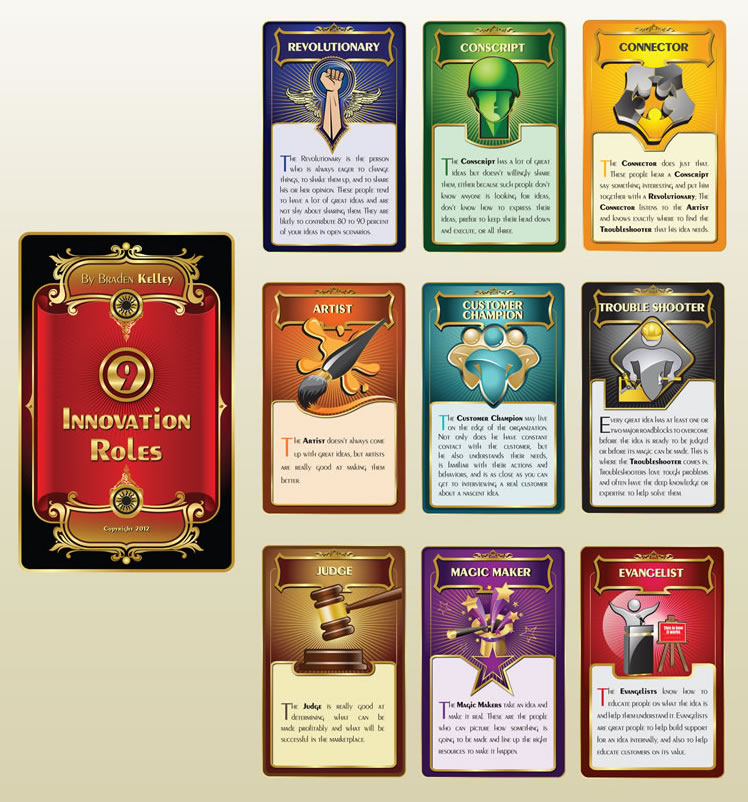
UPDATE – Nine Innovation Roles Group Diagnostic Tool

I am proud to announce that my crowdfunding project over on IndieGoGo for the Nine Innovation Roles Group Diagnostic Tool has already received support from EIGHT people to get the project off to a strong start. There are still lots of great perks available including discounts on the Nine Innovation Roles Group Diagnostic Tool and seminar kits, and even FIVE (5) two-hour innovation keynote and workshop combos at an incredibly discounted price.

The Nine Innovation Roles Group Diagnostic Tool will come with a series of simple exercises and a deck of roles cards to help create a fun, interactive experience for innovation teams or organizations to use to help people better understand what roles they fill on innovation projects, why the team’s or organization’s innovation efforts are failing, and how they can together improve the innovation performance of their teams or organization.

Nine Innovation Roles Group Diagnostic Tool Coming Soon

Design for Nine Innovation Roles Group Diagnostic Tool

You can click to read more about The Nine Innovation Roles, but here is the ethos behind it:

“Too often we treat people as commodities that are interchangeable and maintain the same characteristics and aptitudes. Of course, we know that people are not interchangeable, yet we continually pretend that they are anyway — to make life simpler for our reptile brain to comprehend. Deep down we know that people have different passions, skills, and potential, but even when it comes to innovation, we expect everybody to have good ideas.

I’m of the opinion that all people are creative, in their own way. That is not to say that all people are creative in the sense that every single person is good at creating lots of really great ideas, nor do they have to be. I believe instead that everyone has a dominant innovation role at which they excel, and that when properly identified and channeled, the organization stands to maximize its innovation capacity. I believe that all people excel at one of nine innovation roles, and that when organizations put the right people in the right innovation roles, that your innovation speed and capacity will increase.”

Nine Innovation Roles Group Diagnostic Tool Coming Soon

The Nine Innovation Roles Group Diagnostic Tool and Workshop can help you identify why your innovation efforts are failing or how your innovation teams could be more successful in the future. Don’t wait. Book a workshop, or pre-order the group diagnostic tool and run a team building exercise of your own.

Book a Nine Innovation Roles Group Diagnostic Workshop

Build a Common Language of Innovation

Subscribe to Human-Centered Change & Innovation WeeklySign up here to get Human-Centered Change & Innovation Weekly delivered to your inbox every week.

Are You Innovating for the Past or the Future?

Are You Innovating for the Past or the Future?I had the opportunity to meet and chat with local ethnographic researcher Cynthia DuVal about the role of ethnographic research in the innovation process, and she shared an insight that I thought I would share with the rest of you.

She mentioned that it is important for a good ethnographer or researcher to consider the timeline of the development process when extracting insights. Why is this important?

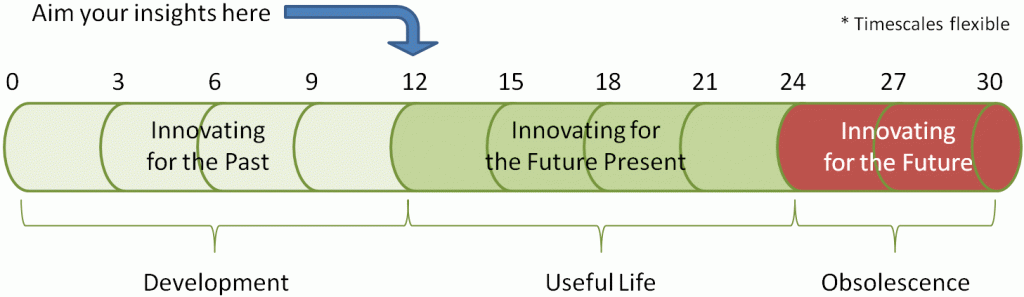
Well, if you’ve got a 12-18 month product or service development process to go from insight to in-market, then you should be looking not to identify the insights that are most relevant today, BUT the insights that will be most relevant 12-18 months from now. If you can go from insight to in-market faster than that, that’s fantastic, but the point still holds.

If your research team takes all of the data they’ve gathered and extracts insights for today, then you are innovating for the past, and if they develop insights too far along the time continuum then you are innovating for the future. You can’t really innovate for the past (your offering won’t be innovative and will be beaten easily by competitors). If you innovate for the future, then adoption will be slow until customers become ready. The trick is to task your insights team to provide guidance for the future present.

Innovating for Future Present

The ideal of course is to design a product based on customer insights appropriate to the time of the product launch to maximize the useful life of the customer insights.

The product or service are an expression of the customer insights, and it is the useful life of the insights that we are concerned with, not the useful life of the product or service (a post-purchase concept). When the insights reach their sell by date, sales will begin to tail off, and you better have another product or service ready to replace this one (based on fresh insights).

Now, extracting accurate customer insights for the present is difficult enough. Doing it for the future present is even harder. But, if your team starts out with that as its charter, they will likely rise to the challenge, for the most part.

FlexibilityBecause the team will likely only get the insights mostly right, it is important that your go-to-market processes include a great deal of modularity and flexibility. In the same way that product development processes have to design for certain components that are ‘likely’ to be available, but also have a backup design available that substitutes already released components–should the cutting edge components not be ready in time.

To innovate for the future present, you must maintain the flexibility to tweak branding and messaging (and even the product or service itself) should some of the forecasted customer insights prove to be inaccurate and require updates. It is also a good idea to evaluate, as you go, whether or not a fast follower version (e.g. iPhone OS v3.1) of the product, service, and/or branding or messaging will need to be prepared to address last minute customer insight discoveries that can’t be incorporated into the product or service or branding/messaging at launch.

So, will your team have the flexibility necessary to innovate for the future present, or will you find your team innovating for the past or the future?


Build a Common Language of Innovation on your team

Subscribe to Human-Centered Change & Innovation WeeklySign up here to get Human-Centered Change & Innovation Weekly delivered to your inbox every week.

Effective Conversational Marketing

A few years ago I published a white paper on “Effective Conversational Marketing” and it is still relevant today as my service offering evolves to a B2B Pull Marketing focus.

Here is an excerpt:

Introduction

What is conversational marketing?

Conversational marketing is relationship marketing for the social media age. Thinking about your marketing efforts in terms of a conversation changes the approach and better integrates social media. Relationships are something that are formed, but conversations are ongoing and evolving and require both sides to participate.

How Social Media Fits In

Effective Conversational MarketingIt seems like I can’t get through a day right now without hearing somebody in the media or on the street talking about social media. I think it is great that social media has captured people’s attention, but will having more communication channels improve conversational marketing?

Only if properly integrated into the conversations between consumers and companies.

To do this, social media must be established both as part of your on-going conversational marketing programs (on-boarding, loyalty, retention, etc.) and also integrated into your ad hoc or seasonal marketing campaigns.”

Download the complete “Effective Conversational Marketing” white paper in PDF form.

One thing is for sure. Effective conversational marketing is central to successful pull marketing strategy and your overall marketing investments.

Contact us if you’d like to hire me to create thought leadership for you to help increase your inbound sales leads, or to create a pull marketing strategy to increase your revenue.

Retain Braden Kelley to increase inbound sales leads

Image Credit – NoLifeBeforeCoffee

Build a Common Language of Innovation

Subscribe to Human-Centered Change & Innovation WeeklySign up here to get Human-Centered Change & Innovation Weekly delivered to your inbox every week.

Instinctual Innovation versus Intellectual Innovation

One of the best Twitter names that I’ve come across in the past few years is @ShowerThinker – almost as cool as mine – @innovate. It’s an account for an inventor that makes post-it notes for the shower called Aqua Notes.

This Twitter name captures a well-understood fact – that a lot of great ideas (and ultimately innovations) come to us not from brainstorming, but from the connection to our subconscious that occurs in the shower (or pretty much anywhere else in the bathroom). If so many great ideas come to us when our active mind is elsewhere, then why is such little attention paid to this source of innovation.

A lot has been written about creativity and the brain, left brain vs. right brain thinking, and how often the brain just needs to get out of its own way for creativity to occur as there is no single creative area of the brain.

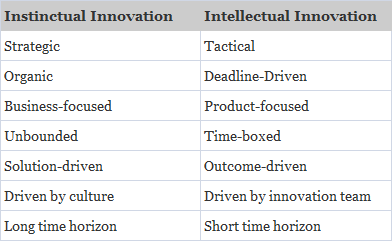
In my own cuarto de bano moment, I came up with this contrasting phrase to help us frame the conversation – Instinctual Innovation versus Intellectual Innovation.

Intellectual Innovation begins with active efforts to capture and develop ideas using techniques such as brainstorming, greenhousing, etc.

Instinctual Innovation springs forth from a collection of sometimes un-connected information that collects in an individuals brain. Often ideas that form the basis for instinctual innovation rattle around as part of a collection of problems in search of solutions for a long time before emerging.

I’ve created this table to lay out some of the differences:

Instinctual Innovation versus Intellectual Innovation

Innovation has garnered a lot of attention in the press over the past couple of years, and many executives have the word rolling off their tongues quite easily now. In some organizations this has translated into employees being trained to be better intellectual innovators, or into creativity consultants helping stimulate the organization’s intellectual innovation for a particular project.

But much less attention is being paid to instinctual innovation. To build sustainable instinctual innovation you have to train members of your organization to be business innovators. You also need to provide members with a set of clear and actionable innovation goals along with a simple visual framework to decipher them. And, most importantly you have to invest in the organizational change necessary to create a culture of continuous innovation.

Then, and only then, will instinctual innovation be best able to emerge from any part of the organization on its own timeline and integrate with the intellectual innovation that is also going on at the same time.

Intellectual innovation can help drive the short-term growth of an organization. But, when combined with instinctual innovation, the two together can create an innovation engine to power the organization now and into the future.

What do you think?

Build a Common Language of Innovation

Subscribe to Human-Centered Change & Innovation WeeklySign up here to get Human-Centered Change & Innovation Weekly delivered to your inbox every week.

Nine Innovation Roles Sample Cards Have Arrived

It was a very exciting day in the Kelley household. The sample cards arrived today from the printers for the Nine Innovation Roles Group Diagnostic Tool. The cards and the group exercises that go with them are designed to be a group diagnostic tool that teams and organizations can use to self-diagnose why innovation efforts are failing and how the odds of innovation success could be improved – or by me in a customized Nine Innovation Roles Group Diagnostic Workshop.

Book a Nine Innovation Roles Group Diagnostic Workshop

I received ten decks of 54 cards each, for a total of 540 cards for me to bring next week to hand out to the 650 attendees at the Front End of Innovation conference in Orlando, FL (May 15-17, 2012). You can save 20% on the conference with discount code FEI12BRADEN. To let people see the sample cards I recorded a couple of videos that I would love to get your thoughts on (and some feedback on the cards in them too).

A fun one:

And an unboxing video:

I would be interested to hear in the comments below which video you think I should make the featured video on the product page and on http://9roles.com.

Also, please feel free to let me know what you think at first glance of the Nine Innovation Roles Group Diagnostic Tool sample cards in the comments as well.

Build a Common Language of Innovation

Subscribe to Human-Centered Change & Innovation WeeklySign up here to get Human-Centered Change & Innovation Weekly delivered to your inbox every week.

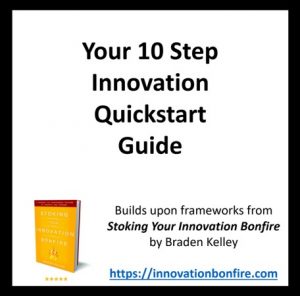
Innovation QuickStart Guide

Innovation QuickStart GuideYou know how sometimes when you order a product you get this inch-thick instruction manual that you never read, but also how there is sometimes a QuickStart Guide of 5-10 simple steps to get you up and running quickly?

Well, Stoking Your Innovation Bonfire is the instruction manual that an increasing number of organizations are ordering for teams to help them with their innovation efforts. But, I’m sure companies could also use an Innovation QuickStart. So, here is one you could use (excerpted in part from my book):

10 Steps to Get Your Innovation Efforts Off to a Good Start

1. Conduct an Innovation Audit

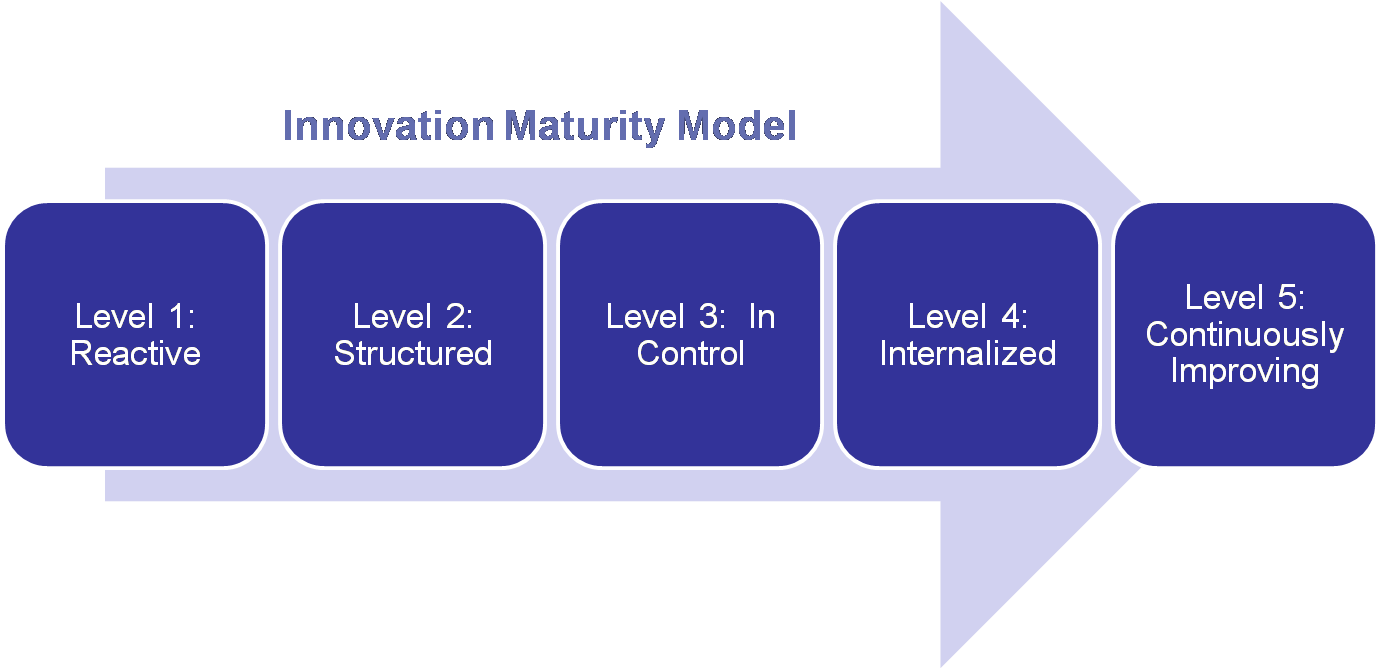
How can you know where you are going to go with innovation if you don’t first know where you already are? For this reason I created a 50 question innovation audit and linked it to an Innovation Maturity Model from Karl T. Ulrich and Christian Terwiesch of Wharton Business School.
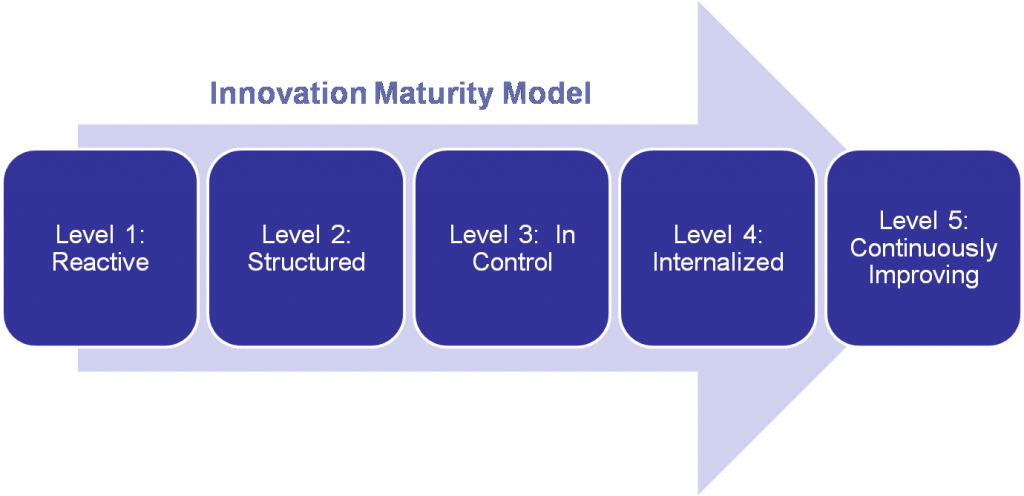
Innovation Maturity Model

2. Define What Innovation Means for Your Organization

Here is a simple exercise you can do next time you get together in your organization to talk about innovation. Have everyone in the group write down what their definition of innovation is, and then compare that to the official definition of innovation for the organization (if you have one) and the innovation definitions of others in the group. Defining innovation as an organization is important because it helps you determine what kinds of innovation you are focusing on as an organization, and what kinds of innovation you ARE NOT focusing on.

3. Create a Common Language of Innovation

Creating a definition of innovation is the first step in creating a common language of innovation. The importance of creating a common language of innovation is that language is one of the most important components of culture. If people in your organization don’t talk about innovation in a consistent way and see communications reinforcing the common language, how can you possibly hope to embed innovation in the culture of the organization? Ensuring consistent language in presentations, emails, etc. and having people read the same book on innovation or taking the same training courses are just some ways to help create and reinforce a common language of innovation.

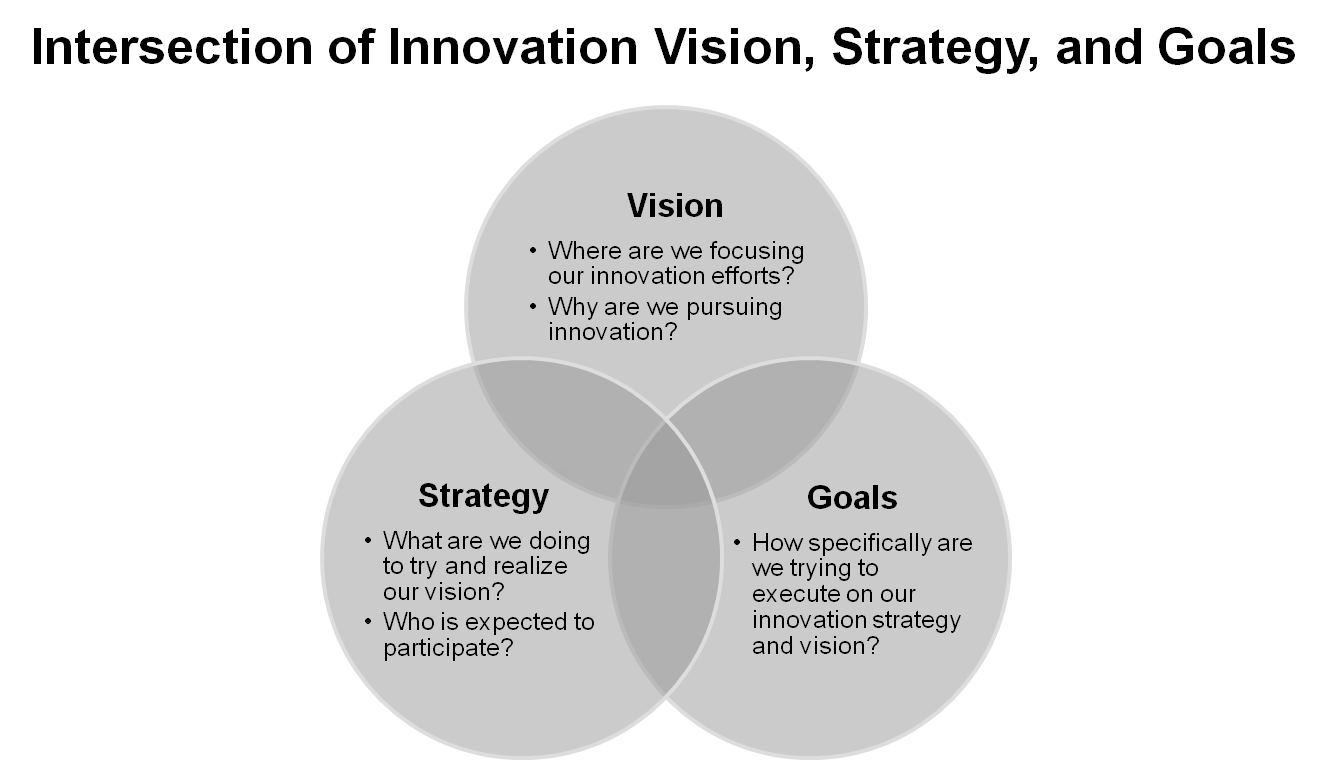
4. Define Your Innovation Vision

A startup begins life as a single-minded entity focused on innovating for one set of customers with a single product or service. Often as a company grows to create a range of products and/or services, the organization can start to lose track of what it is trying to achieve, which customers it is trying to serve, and the kind of solutions that are most relevant and desired by them.

Jack Welch, CEO of GE once said, “Good business leaders create a vision, articulate the vision, passionately own the vision, and relentlessly drive it to completion.”

Vision is about focus and vision is about the ‘where’ and the ‘why’ not the ‘what’ or the ‘how’. A vision gives the business a sense of purpose and acts as a rudder when the way forward appears uncertain. An innovation vision is no less important, and it serves the same basic functions. An innovation vision can help to answer some of the following questions for employees:

  • Is innovation important or not?
  • Are we focusing on innovation or not?
  • What kind of innovation are we pursuing as an organization?
  • Is innovation a function of some part of the business?
  • Or, is innovation something that we are trying to place at the center of the business?
  • Are we pursuing open or closed innovation, or both?
  • Why should employees, suppliers, partners, and customers be excited to participate?

When people have questions, they tend not to move forward. For that reason it is crucial that an organization’s leadership both has a clear innovation vision, and clearly and regularly communicates it to key stakeholders. If employees, suppliers, partners, and customers aren’t sure what the innovation vision of the organization is, how can they imagine a better way forward?
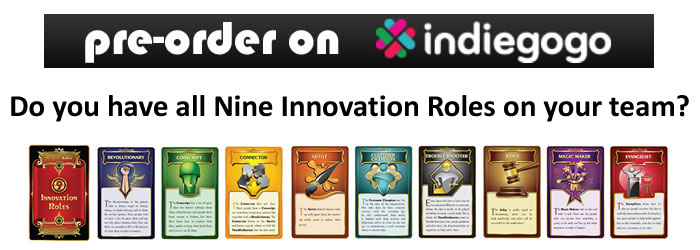
Pre-Order Nine Innovation Roles Card Decks

5. Define Your Innovation Strategy

Many organizations take the time to create an organizational strategy and a mission statement, only to then neglect the creation of an innovation vision and an innovation strategy. An innovation strategy is not merely a technology roadmap from R&D or an agenda for new product development. Instead, an innovation strategy identifies who will drive a company’s profitable revenue growth and what will represent a strong competitive advantage for the firm going forward. Under this umbrella the innovation goals for the organization can be created.

An innovation strategy sets the innovation direction for an organization towards the achievement of its innovation vision. It gives members of the organization an idea of what new achievements and directions will best benefit the organization when it comes to innovation. As with organizational strategy, innovation strategy must determine WHAT the organization should focus on (and WHAT NOT to) so that tactics can be developed for HOW to get there.
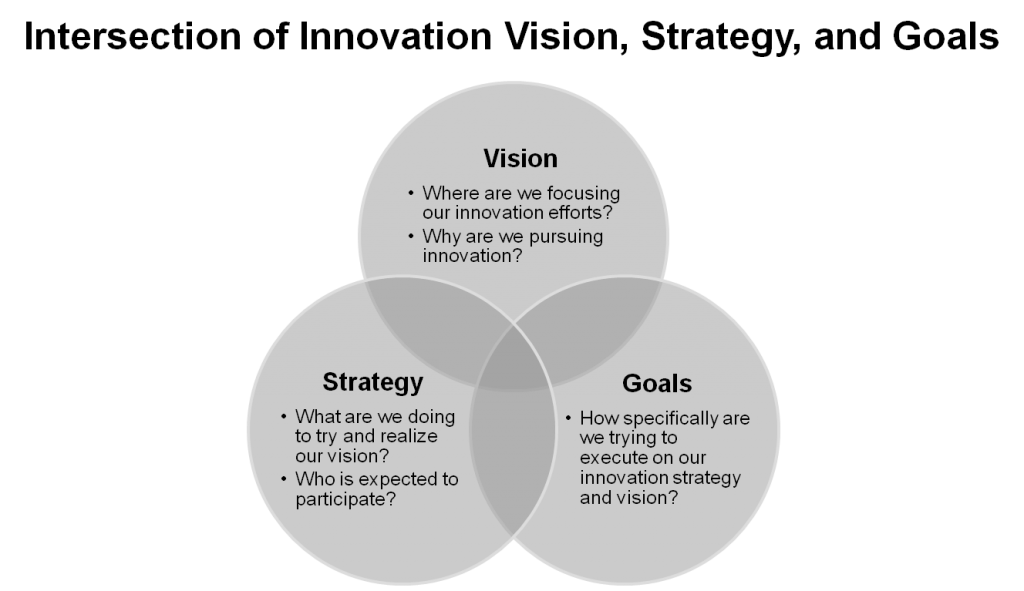
Innovation Vision Strategy Goals

6. Define Your Innovation Goals

Just as managers and employees need goals to know what to focus on and to help them be successful, organizations need innovation goals too. Clear innovation goals, when combined with a clear innovation strategy and a single-minded innovation vision for the organization, will maximize the instinctual innovation that emerges from employees and the intellectual innovation that occurs on directed innovation projects.

While an innovation vision determines the kinds of innovation that an organization, and an innovation strategy determines what the organization will focus on when it comes to innovation, it is the innovation goals that break things down into tangible objectives that employees can work against. Let’s look at P&G as an example to see how these three things come together at the highest level:

Innovation Vision

  • Reach outside the company’s own R&D department for innovation

Innovation Strategy

  • Create a formal program (Connect + Develop) to focus on this vision

Innovation Goal

  • Source 50% of the company’s innovation from outside

The 50% goal gives employees and management something to measure against, and it sets a very visible benchmark that the whole organization can understand and visualize how big the commitment and participation must be in order to reach it. It is at this point of communicating the innovation goals that senior management also has to communicate how they intend to support their efforts and how they will help employees reach the innovation goals.

7. Create a Pool of Money to Fund Innovation Projects

Product managers leading product groups and general managers leading business units typically have revenue numbers they are trying to hit, and they will spend their budgets trying to hit those numbers. As a result, there are often precious little financial resources (and human resources) available for innovation projects that don’t generate immediate progress toward this quarter’s business goals. As a result, many organizations find themselves setting money aside outside of the product or business unit silos that can be allocated on the future needs of the business instead of the current needs of the product managers and general managers. This also allows the organization to build an innovation portfolio of projects with different risk profiles and time horizons. But, however you choose to fund innovation projects, the fact remains that you need to have a plan for doing so, or the promising projects that form your future innovation pipeline – will never get funded.

8. Create Human Resource Flexibility to Staff Innovation Projects

Some organizations allow employees to spend a certain percentage of their time on whatever they want, but most don’t. Some organizations allow employees to pitch to spend a certain percentage of their time on developing a promising idea, but most organizations are running so lean that they feel there is no time or money for innovation. Often this is true and so employees sometimes work on promising ideas on their own time, but they shouldn’t have to. And if you make them do so, it will be much more likely that they will develop the promising idea with others outside the company and the organization will gain nothing from these efforts.

Don’t turn your motivated intrapreneurs into entrepreneurs.

You must find a way to create resource flexibility. Organizations that want to continue to grow and thrive must staff the organization in a way that allows managers to invest a portion of their employees’ time into promising innovation projects. One model to consider is that of Intuit, which allows employees to form project teams and to accumulate percent time and then schedule time off to work on an innovation project with co-workers in the same way that they schedule a vacation. This allows the manager to plan for the employees’ absence from the day-to-day and allows the employee to focus on the innovation project during that scheduled leave from their workgroup. But that’s just one possible way to create human resource flexibility.

Pre-Order Nine Innovation Roles Card Decks

9. Focus on Value – Innovation is All About Value

Value creation is important, but you can’t succeed without equal attention being paid to both value access and value translation because innovation is all about value…

Innovation = Value Creation (x) Value Access (x) Value Translation = Success!

Now you will notice that the components are multiplicative not additive. Do one or two well and one poorly and it doesn’t necessarily add up to a positive result. Doing one poorly and two well can still doom your innovation investment to failure. Let’s look at the three equation components in brief:

Value Creation is pretty self-explanatory. Your innovation investment must create incremental or completely new value large enough to overcome the switching costs of moving to your new solution from the old solution (including the ‘Do Nothing Solution’). New value can be created by making something more efficient, more effective, possible that wasn’t possible before, or create new psychological or emotional benefits.

Value Access could also be thought of as friction reduction. How easy do you make it for customers and consumers to access the value you’ve created. How well has the product or service been designed to allow people to access the value easily? How easy is it for the solution to be created? How easy is it for people to do business with you?

Value Translation is all about helping people understand the value you’ve created and how it fits into their lives. Value translation is also about understanding where on a continuum between the need for explanation and education that your solution falls. Incremental innovations can usually just be explained to people because they anchor to something they already understand, but radical or disruptive innovations inevitably require some level of education (often far in advance of the launch). Done really well, value translation also helps to communicate how easy it will be for customers and consumers to exchange their old solution for the new solution.

The key thing to know here is that even if you do a great job at value creation, if you do a poor job at either value access or value translation, you can still fail miserably.

10. Focus on Creating a Culture of Learning Fast

There is a lot of chatter out there about the concept of ‘failing fast’ as a way of fostering innovation and reducing risk. Sometimes the concept of ‘failing fast’ is merged with ‘failing cheap’ to form the following refrain – ‘fail fast, fail cheap, fail often’.

Now don’t get me wrong, one of the most important things an organization can do is learn to accept failure as a real possibility in their innovation efforts, and even to plan for it by taking a portfolio approach that balances different risk profiles, time horizons, etc.

But when it comes to innovation, it is not as important whether you fail fast or fail slow or whether you fail at all, but how fast you learn. And make no mistake, you don’t have to fail to innovate (although there are always some obstacles along the way). With the right approach to innovation you can learn quickly from failures AND successes.

The key is to pursue your innovation efforts as a discrete set of experiments designed to learn certain things, and instrumenting each project phase in such a way that the desired learning is achieved.

The central question should always be:

“What do we hope to learn from this effort?”

When you start from this question, every project becomes a series of questions you hope to answer, and each answer moves you closer to identifying the key market insight and achieving your expected innovation. The questions you hope to answer can include technical questions, manufacturing questions, process questions, customer preference questions, questions about how to communicate the value to customers, and more. AND, the answers that push you forward can come from positive discrete outcomes OR negative discrete outcomes of the different project phases.

The ultimate goal of a ‘learning fast’ approach to innovation is to embed in your culture the ability to extract the key insights from your pursuits and the ability to quickly recognize how to modify your project plan to take advantage of unexpected learnings, and the flexibility and empowerment to make the necessary course corrections.

The faster you get at learning from unforeseen circumstances and outcomes, the faster you can turn an invention into an innovation by landing smack on what the customer finds truly valuable (and communicating the value in a compelling way). Fail to identify the key value AND a compelling way to communicate it, and you will fail to drive mass adoption.

Click the image to download a PDF flipbook:
Summary

When you start with an innovation audit and creating a common language of innovation (including a definition of innovation), it sets you up well to create a coherent innovation vision, strategy, and goals. And then if you build in the financial and human resource flexibility necessary to create a focus on value creation, access and translation – and support it with a culture that is focused on learning fast – YOU WILL have built a solid foundation for your innovation efforts to grow and mature on top of. Are there more things that go into embedding innovation into your culture and creating sustainable innovation success? Absolutely. But, if you work diligently on these ten items you will get your innovation efforts off to a strong start.

What are you waiting for?

Image Credits: Stoking Your Innovation Bonfire


Build a Common Language of Innovation
Subscribe to Human-Centered Change & Innovation WeeklySign up here to get Human-Centered Change & Innovation Weekly delivered to your inbox every week.