Category Archives: Psychology

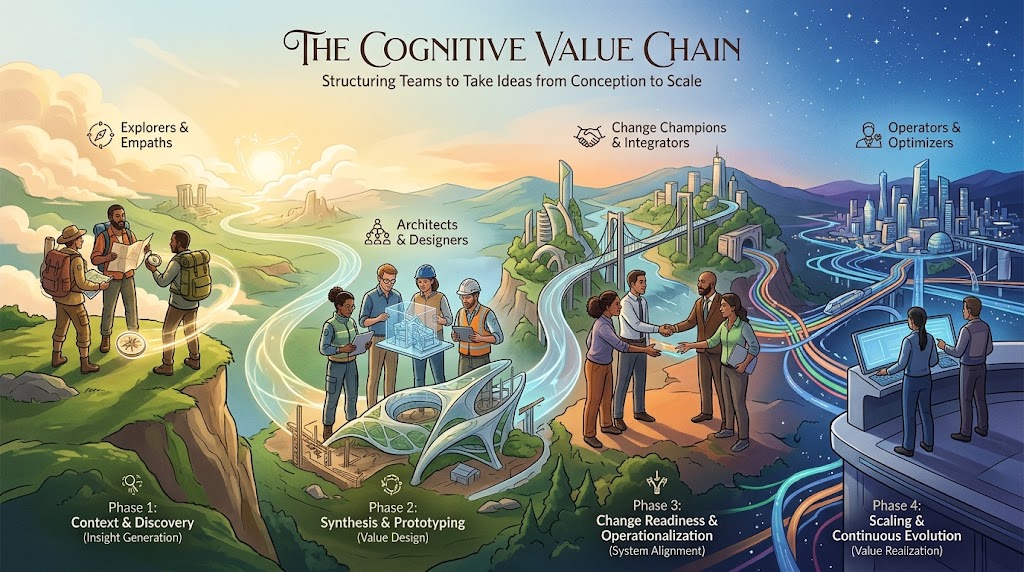
Why Empathy and Collaboration Are Strategic Agility Metrics

Beyond the Checklist

Why Empathy and Collaboration Are Strategic Agility Metrics

GUEST POST from Chateau G Pato


The Mirage of the Metric

The Agility Paradox: Organizations look incredibly agile on paper—they are checking off sprint goals, hitting project milestones, and deploying software faster than ever. Yet, true strategic pivots still fail or stall under the weight of market realities.

The Flaw of the Checklist: Traditional agility metrics measure activity (velocity, burndown charts, process compliance) rather than capability (adaptability, resilience, cultural alignment). We have optimized for the speed of doing tasks rather than the capacity to absorb transformation.

The Thesis: True strategic agility isn’t a mechanical process; it is a deeply human one. To survive continuous disruption, organizations must elevate empathy and collaboration from soft, secondary considerations into core, measurable strategic metrics that drive sustainable performance.

Redefining Strategic Agility through a Human Lens

What Strategic Agility Actually Means: It is the organizational capacity to spot threats and opportunities early, pivot resources instantly, and execute changes without tearing the cultural fabric apart. It isn’t just about moving fast; it is about changing direction cohesively.

The Human-Centered Change Gap: Processes don’t change; people do. Technology platforms and organizational restructuring are just inanimate plans until human beings choose to adopt them. If your workforce is fatigued, untrusting, or structurally siloed, your strategy is dead on arrival.

Shifting from Compliance to Commitment: Checking a box on a change management framework might ensure legal or administrative compliance, but it completely fails to inspire true commitment. To cultivate a culture that embraces the unknown, organizations must intentionally design psychological safety into the transformation process itself.

Metric #1: Empathy as an Early Warning and Adoption System

Empathy as Data: We must reframe empathy. It is not a vague, soft sentiment; it is a source of deep, operational insight. By actively listening to and understanding customer and employee pain points, leadership gains access to predictive data that reveals hidden friction before it impacts the bottom line.

The Cost of an Empathy Deficit: When organizations push changes from the top down without regard for the human experience, they create an empathy deficit. This manifests as acute change fatigue, passive resistance, low engagement, and quiet quitting—all of which act as an invisible brake on strategic execution.

How to Operationalize and Measure Empathy: To manage empathy strategically, we must make it visible on the leadership dashboard through actionable indicators:

  • Change Saturation Mapping: Quantifying and tracking the total emotional and cognitive load placed on specific teams to avoid hitting a breaking point before a new initiative even launches.
  • Psychological Safety Scores: Utilizing regular, anonymous pulse assessments to measure whether employees feel safe pointing out flaws or risks in a new strategic direction early in the life cycle.
  • The Employee Friction Index: Measuring the qualitative and quantitative lag between a problem being identified by frontline staff and that feedback actually reaching executive decision-makers.

Metric #2: Collaboration as the Engine of Co-Creation

Moving Past Functional Silos: True innovation lives at the intersections of disciplines. Siloed organizations are inherently rigid, slow to respond to market shifts, and prone to internal friction. When departments guard their boundaries rather than sharing insights, strategic agility drops to zero.

Collaboration vs. Communication: Sending more emails, scheduling more status updates, or hosting more meetings isn’t collaboration—that is just noise. True collaboration is the deliberate, cross-functional co-creation of value, where diverse teams actively solve problems together rather than handing off tasks over functional walls.

How to Operationalize and Measure Collaboration: To ensure collaboration drives strategic velocity, leadership must track how effectively teams integrate across boundaries:

  • Cross-Functional Velocity: Tracking the exact duration it takes for a strategic concept to move from a cross-departmental idea to a live, working prototype.
  • Organizational Network Analysis (ONA): Visually mapping how information, trust, and decision-making actually flow across teams, exposing the realities of the informal network versus the rigid boxes of the formal org chart.
  • Co-Creation Ratios: Measuring the percentage of major strategic initiatives designed side-by-side with frontline employees versus those simply mandated to them from the top down.

Experience Design (XD) for the Change Journey

Designing the Employee Change Experience: True transformation requires that we apply the same rigorous experience design principles to our internal team members that we routinely apply to external customer journeys. Employees should not be passive recipients of change; their journey must be intentionally architected.

Reducing Friction Points: Strategic agility stalls when anxiety spikes. By mapping out the change journey, we can identify the specific moments of highest friction—such as major system migrations, sudden structural reorganizations, or shifts in role definitions—and proactively design targeted supportive interventions to smooth the transition.

The Reward: When organizations invest in designing a human-centered change experience, the cultural dynamic shifts. You move away from a workforce that views transformation as a series of existential threats, replacing it with a culture that approaches continuous evolution as a well-designed, collaborative adventure.

Conclusion: The New Agile Dashboard

The Futurist’s Outlook: The future does not belong to the biggest or even the fastest organization, but to the most adaptable. In an era of continuous disruption, the static checklist is a dangerous relic of a predictable world. Survival requires an organization that can organically reconfigure itself in real time.

A Call to Action for Leaders: It is time to radically update the executive dashboard. To build true enterprise resilience, leaders must balance traditional financial and operational metrics with human-centric indicators. If you aren’t measuring the psychological safety, change saturation, and cross-functional trust of your teams, you are flying blind.

The Final Word: True agility cannot be bought off a shelf or installed via a process framework. When empathy and collaboration become embedded as core strategic metrics, agility ceases to be a methodology you practice and naturally becomes the culture you live.

Frequently Asked Questions

Why are traditional agility metrics failing today’s organizations?

Traditional agility metrics like sprint velocity and process compliance measure activity rather than actual capability. They track how quickly tasks are completed within a rigid framework, but fail to measure an organization’s cultural readiness, resilience, and capacity to absorb continuous, strategic change without burning out its people.


How can empathy be treated as a measurable strategic metric?

Empathy can be operationalized by tracking data points that reflect the human experience of change. This includes using Change Saturation Mapping to measure the cognitive load on teams, tracking Psychological Safety Scores to see if employees feel safe surfacing risks early, and measuring the time lag for critical frontline feedback to reach executive leadership.


What is the difference between organizational communication and true collaboration?

Communication is simply the transmission of information, which often manifests as an overwhelming volume of emails, Slack messages, and status meetings. Collaboration is the cross-functional co-creation of value. It occurs when diverse, cross-departmental teams actively solve problems together from the start, breaking down institutional silos.

Bottom line: Futurology is not fortune telling. Futurists use a scientific approach to create their deliverables, but a methodology and tools like those in FutureHacking™ can empower anyone to engage in futurology themselves.

Image credit: Gemini

Subscribe to Human-Centered Change & Innovation WeeklySign up here to get Human-Centered Change & Innovation Weekly delivered to your inbox every week.

How Diverse Perspectives Defend Against Strategic Blind Spots

Inclusivity as a Shield

How Diverse Perspectives Defend Against Strategic Blind Spots

GUEST POST from Chateau G Pato


The High Cost of the Echo Chamber

In a fast-evolving marketplace, the greatest threat to an organization’s survival isn’t a competitor’s budget or a sudden shift in technology. It is the leadership team’s collective blind spots. Too often, successful companies fall victim to the “Innovation Illusion” — the dangerous belief that past success guarantees future relevance. Homogeneous thinking creates comfortable but fragile echo chambers, leaving organizations vulnerable to disruption because everyone is looking at the horizon through the exact same lens.

To survive and thrive, we must shift the narrative. True inclusivity is not a check-the-box human resources initiative or a corporate compliance requirement; it is a core strategic shield and a critical driver of continuous innovation. When we limit our perspectives, we limit our foresight.

Inclusivity acts as the ultimate defense mechanism against strategic blind spots. By actively inviting, valuing, and integrating diverse perspectives into our decision-making architectures, we transform organizational vulnerability into competitive resilience. We move from reactive damage control to proactive future-shaping, ensuring that the human experiences we design and the strategies we deploy are robust enough to withstand the unexpected.

The Anatomy of a Strategic Blind Spot

Strategic blind spots are not accidental gaps in data; they are systemic failures of perception. In the boardroom, these blind spots are fueled by deep-seated cognitive biases. Groupthink rewards conformity over critique, confirmation bias causes leaders to cherry-pick data that validates their current worldview, and proximity bias elevates the voices of those closest to the center of power while silencing the realities of the frontline. When leadership teams share the same background, education, and career trajectories, their collective blind spots expand exponentially.

This homogeneity often leads to the “User Persona” Fallacy. Organizations frequently design strategies, products, and experiences for a monolithic customer base that exists only in slide decks. They build for an idealized version of the end-user, entirely ignoring shifting human behaviors, cultural nuances, and regional demographic realities. When you don’t have diverse voices participating in the design of an experience, you inherently design an experience full of friction for anyone outside the dominant demographic group.

From a futurology perspective, a lack of diversity severely limits an organization’s ability to recognize weak signals on the periphery. Disruptive trends and market shifts rarely emerge from the mainstream; they begin at the margins. If your strategy team lacks cognitive diversity, you will miss the early indicators of shifting consumer values, emerging technologies, or evolving labor dynamics. By the time a threat is obvious enough for a homogeneous team to recognize it, the window for proactive innovation has already closed.

Inclusivity as the Ultimate Defense Mechanism

To insulate an organization against fast-moving market disruptions, leadership must actively expand its strategic perimeter. Homogeneous teams naturally struggle to identify risks outside their collective comfort zone. In contrast, teams rich in cognitive diversity and varied lived experiences act as a natural early warning system. They bring distinct mental models to the table, allowing the organization to stress-test strategies from multiple angles and uncover hidden vulnerabilities before they manifest as operational failures.

However, simply assembling a diverse team is not enough; the environment must support them through robust psychological safety. True risk mitigation requires a culture where “constructive friction” is celebrated rather than suppressed. When frontline employees — who interact daily with the realities of the market — feel safe to challenge executive assumptions, wave red flags, and voice dissenting opinions without fear of professional retaliation, the organization gains a powerful shield against catastrophic blind spots.

This is where experience design and strategic foresight converge into a human-centered approach to governance. True inclusivity means bringing the principles of co-creation directly into the boardroom. Rather than designing top-down strategies and forcing compliance, organizations must build participatory architectures. By ensuring that the individuals who actually experience the operational or customer friction are actively involved in designing the solutions, companies can create resilient, future-ready strategies that eliminate blind spots from the very start.

Operationalizing the Shield: From Philosophy to Action

Moving from a philosophy of inclusivity to an actionable defensive shield requires changing how we build, launch, and manage strategic initiatives. It starts by deliberately de-biasing our innovation pipelines. Instead of allowing a uniform group of stakeholders to move projects from ideation to execution, organizations must embed diverse checkpoints into standard change management and product development frameworks. These checkpoints force a pause to ask: Whose voice is missing from this stage, and what assumptions are we making on their behalf?

One of the most effective ways to operationalize this is by institutionalizing the “Pre-Mortem” framework, supercharged by cross-functional diversity. Before a major strategy, product, or change initiative is launched, leadership should assemble a diverse team that spans different departments, seniority levels, and backgrounds. This team is given a singular mission: assume the launch has completely failed, and work backward to identify exactly why. By leveraging diverse lived experiences, this exercise uncovers subtle, non-obvious failure modes — such as cultural missteps or front-line operational friction — long before they impact the bottom line.

Finally, we must look beyond internal corporate structures and extend this participatory architecture to our entire ecosystem. Building an inclusive shield means involving diverse external partners, suppliers, and customer co-creation cohorts. Co-creation reduces organizational resistance and builds immediate buy-in. When you invite your broader ecosystem to actively shape your solutions, you shift from a fragile, top-down mandate to a resilient network that naturally defends against disruption and accelerates human-centered change.

The Human-Centered Future of Strategy

Defending against strategic blind spots is not a one-time crisis response; it is an ongoing leadership commitment. To build a truly resilient organization, leaders must step back and actively audit their inner circles, advisory boards, and decision-making processes for homogeneity. If everyone around the executive table shares the same perspective, has the same background, and agrees on every direction, the organization is structurally vulnerable to the next major market disruption.

The transition to a human-centered, inclusive model requires shifting our entire view of organizational change. Top-down mandates are inherently fragile because they fail to account for the nuanced realities of a diverse workforce and customer base. By replacing rigid, top-down approaches with participatory innovation and robust co-creation architectures, we don’t just protect our companies from hidden risks — we unlock the collective intelligence required to see around corners.

Ultimately, embedding inclusivity into the DNA of your strategy yields a powerful double dividend. It provides a defensive shield that intercepts catastrophic blind spots before they cause harm, while simultaneously creating an offensive engine for breakthrough value. When people feel valued, heard, and empowered to contribute their unique perspectives, you create an agile, future-ready culture capable of navigating change and actively shaping the future of your industry.

Frequently Asked Questions

1. Why is inclusivity considered a strategic shield rather than just an HR initiative?

Traditional HR initiatives often treat diversity as a compliance metric. As a strategic shield, inclusivity is an active risk-mitigation tool. By bringing diverse perspectives into decision-making, organizations deliberately break up executive echo chambers, challenge flawed assumptions, and expose critical blind spots before they lead to market disruption.

2. How do diverse teams help an organization spot “weak signals” in the market?

Disruptive trends rarely start in the mainstream; they emerge at the margins. Homogeneous teams tend to focus on familiar data and established patterns. Diverse teams bring varied lived experiences and distinct mental models, allowing them to notice, interpret, and validate subtle shifts in human behavior and technology that others overlook.

3. What is a “Pre-Mortem” and how does diversity make it more effective?

A Pre-Mortem is an exercise where a team assumes a project has completely failed before it even launches, and works backward to find the causes. When this is done with a highly diverse, cross-functional team, it uncovers a much wider array of potential failures — such as front-line friction or cultural missteps — that a uniform leadership team would never see coming.

Bottom line: Futurology is not fortune telling. Futurists use a scientific approach to create their deliverables, but a methodology and tools like those in FutureHacking™ can empower anyone to engage in futurology themselves.

Image credit: Gemini

Subscribe to Human-Centered Change & Innovation WeeklySign up here to get Human-Centered Change & Innovation Weekly delivered to your inbox every week.

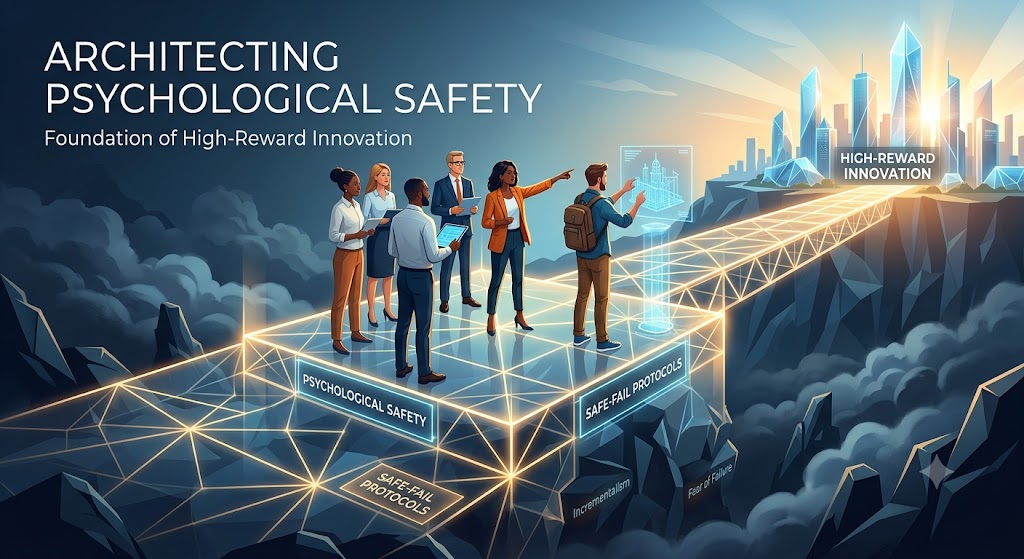
Architecting Psychological Safety

The Foundation of High-Risk, High-Reward Innovation

Architecting Psychological Safety

GUEST POST from Chateau G Pato


Organizations everywhere are demanding moonshots. Leaders stand on stages decreeing that their teams need to think bigger, disrupt industries, and embrace radical change. Yet, behind the scenes, an unspoken friction paralyzes the pipeline. We ask our people to leap across a chasm of high-risk, high-reward innovation, but we build our corporate infrastructure out of concrete and sharp edges. When they look down, all they see is the penalty for falling.

This is the core paradox of modern business: we crave breakthrough outcomes, but we unconsciously design environments that incentivize incremental safety. True innovation requires people to step into extreme ambiguity, challenge legacy assumptions, and risk public failure. If the human experience of that journey is defined by fear—fear of career stagnation, social friction, or executive blowback—people will naturally default to the path of least resistance. They will deliver optimized versions of yesterday’s ideas.

“Psychological safety is not about creating a soft, consequence-free comfort zone where everyone is polite. It is about architecting a high-performance environment where intellectual friction is intentional, and social friction is actively minimized.”

To unlock continuous, game-changing innovation, we must treat psychological safety not as a vague HR initiative, but as a deliberate architectural requirement. Innovation isn’t just a game of generating ideas; it is the discipline of managing the human experience of change. We don’t need braver employees; we need leaders who design ecosystems where bravery isn’t a prerequisite for speaking the truth.

I. The Human-Centered Architecture of Safety

To design an ecosystem where high-risk innovation thrives, we must view the organization through the lens of experience design. Culture is not an accident; it is the sum of every experience an employee has with a system, a process, or a leader. If we map the typical Innovator’s Journey, we quickly uncover the emotional toll of pushing boundaries.

Think about the exact touchpoints when a team member chooses to voice an unconventional idea, challenge a legacy operational model, or admit that a highly funded pilot is failing. In a poorly designed ecosystem, these moments are fraught with anxiety. The innovator must mentally calculate the social cost: “Will I look foolish? Will my manager see this as a distraction? Am I risking my next promotion?” When the perceived tax on vulnerability is too high, great insights are silenced long before they reach an innovation dashboard.

Designing the “Vulnerability Window”

Architecting safety requires us to intentionally design physical, digital, and cultural spaces that act as a Vulnerability Window. These are structured zones—whether a collaborative workshop, a digital innovation pipeline, or a weekly strategy review—where the traditional corporate hierarchy is explicitly paused. By designing low-friction entry points for dissenting opinions, we lower the personal risk of participation, allowing the best ideas to rise to the surface based on merit rather than organizational politics.

Moving from Fear to Structured Curiosity

The final component of this architecture is transforming how we react to the unexpected. When something goes wrong or an idea challenges the norm, the default corporate reflex is defensive. We must replace this fear response with a repeatable framework of structured curiosity.

Instead of demanding to know “Why didn’t you meet the legacy benchmark?”, human-centered leaders ask: “What did this experiment reveal about where the market is moving?” This simple shift in language reframes the entire human experience. It changes the narrative from an individual defending their value to a collaborative team uncovering a strategic signal.

II. Structural Mechanics: Building the Infrastructure for Risk

Cultural shifts mean very little if your organizational structure still punishes deviation from the norm. To turn psychological safety into a sustainable competitive advantage, we must back up our empathy with hard structural mechanics. Leadership cannot simply ask people to take bigger risks; we must build the operational infrastructure that makes risk-taking rational.

The “Safe Fail” Protocol

The first mechanical layer is the implementation of an explicit Safe Fail Protocol. High-risk exploration cannot survive if it is measured by the same rigid operational KPIs used to judge mature, predictable business lines. We must design isolated sandbox environments—both financial and operational—where teams have a mandate to push boundaries. Within these sandboxes, a “failed” experiment is not a compliance breach; it is a successful extraction of market data. By drawing clear, transparent boundaries around where experimentation lives, we protect the core business while freeing innovators from the paralyzing fear of accidental operational fallout.

Redefining Accountability

True psychological safety doesn’t eliminate accountability; it clarifies it. When a high-risk project misses its commercial target, the legacy corporate mechanism searches for a throat to choke. A human-centered innovation architecture pivots the question entirely. We shift the post-mortem from “Who blundered?” to “What did our design or system allow us to discover, and how quickly can we integrate that signal?” Accountability shifts away from guaranteeing a predictable outcome and moves toward guaranteeing rigorous experimentation, velocity of learning, and transparent communication.

The Portfolio Approach to Safety

Just as we balance risk across a product portfolio, leadership must apply a portfolio mindset to psychological safety itself. Different tiers of innovation require different degrees of environmental insulation.

Innovation Tier Risk Level Required Safety Infrastructure
Incremental (Core) Low Standard continuous improvement loops; low structural insulation needed.
Adjacent (Growth) Moderate Cross-functional autonomy; ring-fenced budgets to protect exploration from operational cuts.
Transformational (Moonshots) High Complete Safe Fail Protocols; direct executive air cover; decoupled from standard corporate KPIs.

By aligning your structural safety mechanics with the specific risk profile of the work, you ensure that radical thinkers have the heavy-duty air cover they need to explore the future, while routine optimizations remain crisp, efficient, and accountable.

III. Overcoming the Change Friction

Every time an organization attempts to install psychological safety, the existing corporate ecosystem fights back. This isn’t due to malice; it is the natural resistance of a system designed for predictability. When you introduce the ambiguity required for high-risk innovation, you trigger the organization’s cultural antibodies. To successfully navigate this transition, we must apply deliberate change management mechanics to dissolve this friction before it stalls our progress.

Neutralizing Cultural Antibodies

Cultural antibodies rarely attack out in the open. Instead, they manifest as passive-aggressive alignment, slow-rolling approvals, or the classic weaponization of process: “That’s a fascinating idea, but it doesn’t align with our current compliance framework.” These unspoken rules and systemic delays silently suffocate high-reward ideas before they ever have a chance to be validated. Human-centered leaders must actively hunt for these friction points, calling them out not as personal failures, but as structural barriers that need to be intentionally dismantled.

Empowering Middle Management

The heaviest friction in any transformation almost always concentrates in middle management. Frontline managers are caught in a brutal vice: executives demand radical innovation, yet their day-to-day compensation and performance reviews are tied to flawless operational predictability.

If a manager feels that championing a team member’s volatile, high-reward experiment puts their own career safety at risk, they will quietly kill it. We must equip middle management with specific tools and air cover—translating “risk” into the language of managed portfolios, and explicitly rewarding them for the velocity of insights their teams uncover, regardless of whether every experiment succeeds.

Co-Creating the Shift

The greatest irony of culture change is attempting to deploy psychological safety via a top-down executive mandate. You cannot force people to feel safe on command. True safety is built through Participatory Innovation—co-creating the new behavioral norms alongside the people who will actually live them.

By engaging teams to help define where the boundaries of the “Safe Fail” zones should sit, and inviting them to co-design the protocols for post-project learning, we replace resistance with active contribution. People do not resist change; they resist being changed. When they own the architecture of their own psychological safety, the cultural friction naturally begins to melt away.

Conclusion: The Ultimate Competitive Advantage

At its core, high-risk, high-reward innovation is not a technology problem, a capital problem, or an intellectual property problem. It is entirely a human problem. Algorithms can optimize what already exists, and capital can fund execution, but the cognitive leaps required to invent the future must be volunteered by people. They must come from human beings who feel secure enough to step away from the comfortable consensus and voice an unproven, volatile truth.

When organizations treat psychological safety as a soft, secondary culture metric, they are fundamentally misunderstanding the physics of change. Safety is the load-bearing infrastructure upon which all radical growth is built. Without it, your brilliant corporate strategies and expansive innovation budgets will only ever produce incremental optimizations—because your people will instinctively realize that the personal cost of a bold failure far outweighs the corporate reward of a breakthrough success.

The challenge for future-focused leaders is clear: stop standing at the front of the room asking your teams to be braver, more creative, or more disruptive. That places the burden of risk entirely on the individual. Instead, pivot your energy toward becoming an architect.

Intentionally design your experiences, structure your safe-fail mechanics, and co-create an ecosystem where bravery isn’t a prerequisite for speaking up. When you build a system where the truth is low-friction, high-reward innovation becomes the natural, inevitable output.

Frequently Asked Questions

1. Does psychological safety mean lowering performance standards?

Absolutely not. Psychological safety and high performance standards go hand in hand. It is not about creating a comfortable, consequence-free zone where accountability disappears. Instead, it is about creating an environment where intellectual friction is encouraged, allowing teams to ruthlessly critique ideas and take massive risks without fearing personal or social retaliation.

2. How do you prevent “Safe Fail” zones from draining corporate resources?

By strictly bounding them through fixed operational parameters, timeframes, and capital limits. A “Safe Fail” protocol is not a blank check for endless experimentation; it is a structured sandbox. The goal is to maximize the velocity of learning while capping the financial and operational blast radius, treating the investment as buying an option on future data.

3. What is the fastest way to identify cultural antibodies in our system?

Look closely at your friction points—specifically where projects stall, why ideas are modified to look more conventional, and how middle managers are compensated. When team members default to passive-aggressive alignment or use compliance frameworks as a shield to slow-roll unconventional ideas, your organizational antibodies are actively rejecting the risk.

Put This Into Practice With the Change Planning Toolkit™

The frameworks in this article are part of the Human-Centered Change™ methodology — a visual, collaborative system of 70+ tools built around the Change Planning Canvas™. 26 of the tools come with every copy of Charting Change.

Image credit: Gemini

Subscribe to Human-Centered Change & Innovation WeeklySign up here to get Human-Centered Change & Innovation Weekly delivered to your inbox every week.

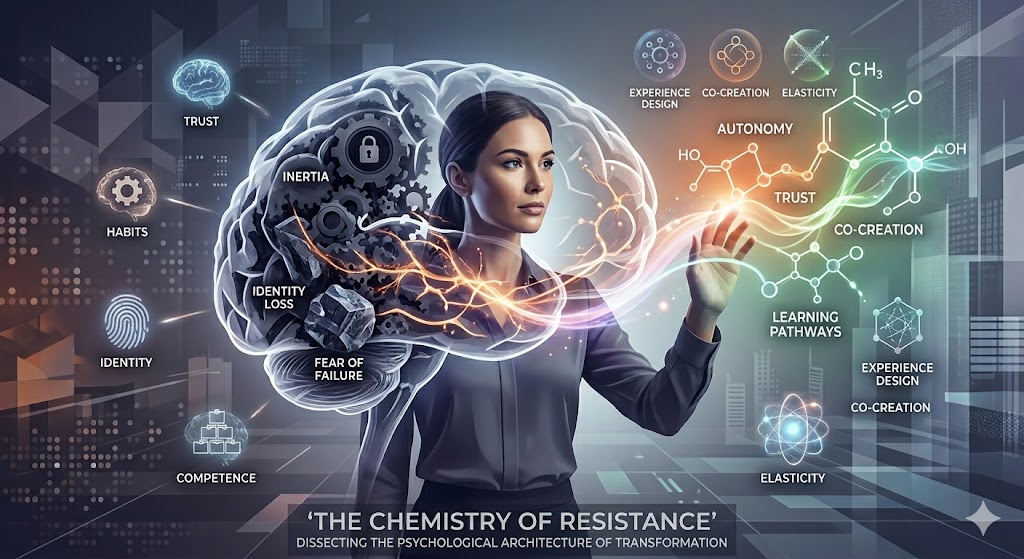
The Chemistry of Resistance

Dissecting the Psychological Architecture of Transformation

The Chemistry of Resistance

GUEST POST from Chateau G Pato


I. Introduction: The Myth of the “Difficult” Employee

In the high-stakes arena of organizational transformation, a dangerous narrative persists. When a brilliant new digital strategy stalls, or an innovative framework faces friction, leadership all too often points the finger at the workforce. Resistance is labeled as stubbornness, complacency, or a simple failure to “get it.” This diagnosis is not only lazy; it is fundamentally flawed. People do not resist change because they are inherently difficult; they resist because the human architecture is wired to survive, and survival favors the known.

To truly understand why transformation fails, we have to look past the surface-level behavioral pushback and explore the underlying emotional and psychological equilibrium of our people. Think of your organization as a delicate chemical compound. Every workflow, cultural norm, and established expertise represents a stable bond. When leadership introduces a massive strategic pivot, they are dropping a highly reactive agent into that stable compound. Without a proper catalyst, the reaction is almost always volatile.

The paradigm shift we must embrace is a move away from enforcing compliance and toward designing a safer human experience. True, human-centered change management isn’t about building a bigger battering ram to smash through employee resistance. It is about fundamentally altering the underlying formula of the environment, lowering the activation energy required to evolve, and ensuring that movement toward the future feels safer and more rewarding than standing still.

II. The Biology of the Status Quo: Why the Brain Fights Change

To design an experience that guides people through transformation, we must first respect the biological reality of the human brain. Evolution has spent millions of years optimizing the mind to conserve energy and predict threats. When leaders demand a sudden pivot, they aren’t just changing a workflow; they are asking the human nervous system to override its deepest survival programming.

The Cognitive Tax of Innovation

The brain is an energy-hungry organ, consuming roughly 20% of the body’s metabolic resources despite making up only 2% of its weight. To maintain efficiency, the brain relies heavily on established mental models — cognitive shortcuts developed through years of repetition. When an employee operates on “autopilot,” their brain burns minimal fuel. Introducing a new enterprise tool or a restructured operating model abruptly shatters those shortcuts. It forces the prefrontal cortex into overdrive, burning massive amounts of glucose to map out unfamiliar territory. In a very literal, biological sense, innovation feels exhausting because it imposes a massive cognitive tax.

The Amygdala Hijack

When leadership announces a major transformation without psychological preparation, the subconscious mind rarely interprets it as an “exciting opportunity.” Instead, the amygdala — the brain’s ancient radar for danger — registers the ambiguity of change as a threat. Before the rational mind can process the strategic benefits, the body is flooded with cortisol and adrenaline. This “amygdala hijack” narrows focus, heightens anxiety, and triggers a defensive fight, flight, or freeze response. The employee who aggressively questions a new process isn’t necessarily being difficult; their biology is actively fighting a perceived threat to their safety and stability.

Loss Aversion in High Definition

Human psychology is deeply governed by what behavioral economists call loss aversion. The pain of losing something we already possess is roughly twice as powerful as the pleasure of gaining something of equal value. In an organizational shift, the losses are immediate and concrete: a familiar routine, a hard-won piece of subject matter expertise, or a comfortable team dynamic. Conversely, the promised gains of the transformation are distant, abstract, and uncertain. When we look through the lens of loss aversion, resisting change isn’t irrational — it is a perfectly natural human equation trying to protect what is known from the risk of the unknown.

III. Dissecting the Psychological Architecture (The Four Elements)

When resistance manifests in an organization, it rarely looks like a thoughtful critique of strategy. Instead, it surfaces as passive aggression, missed deadlines, or a sudden dip in morale. To transform effectively, leaders must look past these surface behaviors and dissect the four foundational pillars that form the psychological architecture of resistance.

1. Identity and Autonomy

At the core of every high-performing employee is a sense of professional identity. People build their self-worth around what they are exceptionally good at doing. When you introduce artificial intelligence, automation, or a dramatic restructuring, the unvoiced fear isn’t just about losing a job — it is about losing an identity. Employees quietly ask themselves: “Who am I if the expertise I spent a decade building is suddenly automated or rendered obsolete?” When a transformation strips away an individual’s autonomy and alters their professional narrative without their input, resistance becomes an act of self-preservation.

2. Competence and Fear of Failure

Nobody wakes up hoping to do a mediocre job. Yet, transformation frequently demands that seasoned experts step away from their zone of mastery and become absolute beginners again. This transition creates immense anxiety. The psychological friction of feeling clumsy, slow, or incompetent while learning a new framework can be paralyzing. If the organizational culture prioritizes flawless execution over iterative learning, employees will naturally cling to legacy systems where their competence is guaranteed, rather than risking failure on an unfamiliar stage.

3. Inertia and Habits

Organizations run on habits. These deeply ingrained routines allow teams to collaborate and deliver results without burning out from constant decision-making. However, these habits also create immense organizational inertia. Unlearning an old workflow requires significantly more psychological energy than learning a new one from scratch. When leaders underestimate the sheer friction involved in breaking daily habit loops, they mistake the gravitational pull of old routines for willful defiance.

4. Trust and Psychological Safety

The final and most critical element is the relational foundation between leadership and the workforce. In an environment lacking transparency, ambiguity is instantly filled with fear, rumor, and worst-case scenarios. Psychological safety — the belief that one can take risks, speak up, and make mistakes without fear of retaliation — acts as the primary neutralizer to the threat response. Without it, any new strategic initiative is viewed with skepticism, and resistance becomes a protective shield against a system that hasn’t earned the right to be trusted.

IV. From Resistance to Reaction: Designing the Catalyst

Understanding the psychological chemistry of resistance is only the first step. The true work of an innovation leader lies in designing the catalyst — the deliberate interventions that alter the environment and allow a positive, collaborative reaction to occur. We must transition from managing change as a top-down mandate to designing it as a human-centered employee experience.

Human-Centered Experience Design (XD) for Change

For decades, organizations have heavily invested in customer experience (CX) design, mapping out every emotional high and low of the buyer’s journey to remove friction. Yet, when it comes to internal transformation, that same level of empathy is rarely applied to our own people. Human-centered experience design for change means treating the employee journey during a rollout as a premium product. Leaders must map out the emotional arc of the transformation, identifying precisely where cognitive fatigue, anxiety, or confusion will peak, and proactively design support systems, clear communication, and intuitive training to smooth those specific valleys.

Co-Creation as an Antidote

One of the most effective ways to neutralize the brain’s threat response is to restore a sense of autonomy. When a change is pushed down from an isolated executive suite, it feels like an external threat. However, when employees are actively invited into the design process, the psychological dynamic completely shifts. Co-creation turns passive recipients of change into active authors of the future. By utilizing collaborative workspaces, visual canvases, and iterative feedback loops, we can leverage the unique insights of frontline teams. When people help build the solution, they don’t resist the outcome — because they are defending a future they helped create.

Re-framing the Narrative

Every transformation requires a narrative shift. Traditional change management focuses heavily on the “what” and the “when” — the timelines, the features, and the cost savings. This purely logical approach fails to speak to the emotional brain. To inspire movement, leaders must re-frame the narrative from a story of loss to a story of liberation. The conversation should pivot away from “what we are forced to leave behind” and focus intensely on “what this transformation unlocks for your personal capability.” We must paint a vivid picture of a future where mundane tasks are stripped away, allowing people to focus on higher-value, more creative, and deeply fulfilling work.

V. The Futurist’s Perspective: Building Change Fluidity

As we look toward the horizon of business and technology, one reality becomes undeniable: the velocity of disruption is accelerating. The traditional cycles of stability interrupted by occasional shifts are gone. To thrive in an era shaped by continuous technological evolution, we must fundamentally reinvent how our organizations approach the concept of adaptation itself.

The End of “Static” Organizations

For decades, change management has been anchored to classic linear models — most notably the idea of “Unfreeze, Change, Refreeze.” The assumption was that an organization could disrupt its steady state, implement a new strategy, and then settle back into a comfortable, frozen equilibrium. In a world of fluid market demands, that model is obsolete. Attempting to “refreeze” an organization today only creates a brittle structure that breaks the next time a market disruption hits. We must abandon the pursuit of a permanent static state and accept that transformation is no longer a project with a start and end date; it is a core business competency.

Designing for Elasticity

Instead of building rigid structures that require massive, painful overhauls to pivot, future-ready organizations must design for elasticity. This means embedding adaptability directly into the daily habit loop of the enterprise. By utilizing modular team structures, continuous learning pathways, and visual alignment tools, we can make small, iterative adjustments a natural part of daily operations. When minor experiments, feedback loops, and process refinements are normalized, the organization builds collective muscle memory for agility. This gradual exposure drastically lowers the activation energy required for larger strategic shifts, turning a potentially volatile reaction into a smooth transition.

The Role of Leadership as Experience Architects

This shifting landscape demands a profound evolution in leadership style. The era of the top-down change manager who drives compliance through governance and metrics is giving way to a new paradigm. Tomorrow’s leaders must act as experience architects. Their primary responsibility is not to police a implementation schedule, but to intentionally curate a psychological and physical environment where safe experimentation can flourish. This means actively rewarding fast learning, dismantling the silos that stall cross-functional collaboration, and providing the steady, human-centered vision that keeps teams grounded — even when the ground beneath them is constantly moving.

VI. Conclusion: The Balanced Formula

When we look beneath the surface of organizational friction, we find that resistance is not an obstacle to innovation — it is a vital component of it. Resistance is simply unchanneled energy, a natural biological signpost pointing directly to where our people feel exposed, unprotected, or unheard. When leaders stop trying to override this energy and instead choose to respect, diagnose, and integrate it into the design process, it transforms into the very friction that stabilizes, tests, and refines a strategy.

Managing transformation successfully requires balancing a clear, strategic vision with deep human empathy. By moving away from rigid, top-down compliance and adopting a human-centered design approach, we can turn a potentially volatile organizational reaction into a powerful, sustained evolution. The future belongs to the organizations that don’t just tolerate change, but build a collective capability for it.

For change leaders, the mandate is clear: stop trying to manage resistance. Step up as an experience architect, respect the biology of your workforce, co-create the path forward, and start designing human experiences worthy of the people driving your future.

Frequently Asked Questions

Why do employees naturally resist organizational transformation?

Employee resistance is primarily driven by biological and psychological defense mechanisms rather than stubbornness. The human brain treats unfamiliar changes as a cognitive tax that burns massive metabolic energy, frequently triggering an “amygdala hijack” that treats the unknown as a physical threat. Additionally, psychological factors like loss aversion make the immediate loss of familiar routines feel twice as painful as the abstract promise of future gains.

How can leaders neutralize the brain’s threat response during change?

Leaders can lower the workforce’s threat response by introducing co-creation and human-centered experience design (XD). Instead of mandating changes from the top down, involving employees in designing the transition restores their sense of autonomy. Reframing the strategic narrative from what is being lost to what the transformation personally unlocks for their professional capability also shifts the mind from a defensive state to an opportunistic one.

What is organizational elasticity and why is the “unfreeze-refreeze” model dead?

The classic “unfreeze-change-refreeze” model fails because market disruption and technological evolution are now continuous; attempting to “refreeze” an organization creates a brittle structure prone to breaking. Organizational elasticity is the practice of embedding adaptability directly into daily workflows through modular teams and iterative feedback loops. This builds collective muscle memory, making constant adaptation a normal habit rather than a disruptive event.

Image credit: Gemini

Subscribe to Human-Centered Change & Innovation WeeklySign up here to get Human-Centered Change & Innovation Weekly delivered to your inbox every week.

How Corporate AI Gatekeeping Threatens Global Economic Mobility

The Cognitive Divide

How Corporate AI Gatekeeping Threatens Global Economic Mobility

GUEST POST from Art Inteligencia


The New Architecture of Exclusion

The traditional digital divide was a crisis of infrastructure — a tangible gap between those with fiber-optic cables and those left in the dark. Today, that divide has evolved into something far more insidious: a cognitive barrier. We are witnessing the birth of an architecture of exclusion, where the raw material being rationed is no longer just bandwidth, but intelligence amplification itself.

From Digital Divide to Cognitive Divide

For decades, human-centered change looked at connecting the world. Now that a baseline of connectivity exists, the goalposts have been moved. The new paradigm splits the global workforce not by whether they can access information, but by how effectively they can synthesize it. When advanced frontier AI models are sequestered behind premium tiers and corporate firewalls, we create a multi-class system of thought. Those with the tools can automate complexity and scale their impact exponentially; those without are left to compete using manual cognitive labor, cementing a permanent structural disadvantage.

The Mechanics of Corporate Gatekeeping

This exclusion isn’t accidental; it is a deliberate moat-building strategy executed through several key levers:

  • Tiered Access Models: Relegating the public and developing nations to heavily rate-limited or outdated legacy models, while reserving the true frontier capabilities — the models capable of complex reasoning and novel synthesis — for high-paying enterprise clients.
  • Geofencing and Regional Licensing: Restricting access based on geography, often under the guise of compliance, which effectively cuts off emerging markets from the modern engines of economic growth.
  • Aggressive IP and Compute Moats: Using capital intensity and proprietary data hoarding to ensure that no grassroots competitor can match the scaling capabilities of centralized tech giants.

The Erosion of the Digital Commons

True innovation requires an open sandbox. Historically, the internet thrived because its foundational layers were open. Today, we see a systematic squeezing of the open-source AI ecosystem. Under the banner of safety and risk mitigation, aggressive lobbying is driving regulatory capture. By setting compliance costs impossibly high, institutional gatekeepers are attempting to outlaw independent development. This doesn’t make technology safer; it simply ensures that the future of human thought is managed by a small circle of corporate compliance officers, choking out the diverse, decentralized ideas that drive genuine global mobility.

Stifling the Global Engine of Innovation

Innovation is not a top-down corporate mandate; it is a collaborative, emergent phenomenon that thrives on diversity, serendipity, and human-centered problem-solving. When we allow corporate gatekeepers to control the access points to advanced intelligence, we effectively starve the grassroots engine that drives global progress. By optimizing AI solely for enterprise efficiency, the broader spectrum of human ingenuity is left out of the equation.

The Small Business and Solopreneur Disadvantage

The lifeblood of economic mobility has always been the agile disruptor — the small business or solopreneur who spots a local inefficiency and fixes it. However, as the global economy increasingly relies on an “intelligence layer” to manage everything from supply chain logistics to predictive market analysis, the cost of entry is skyrocketing. Hyper-local innovators in developing or underserved economies are being priced out of the very tools required to compete on a global stage, creating a severe structural asymmetry that favors established monopolies over entrepreneurial grit.

The Death of Serendipity

When technology is locked behind corporate walls, its development roadmap is guided strictly by shareholder returns and immediate commercial applications. This transaction-focused approach leads to the death of serendipity. Real breakthrough innovation relies on unexpected use cases — what happens when an tool built for one purpose is adapted by someone with an entirely different worldview to solve a unique local challenge? Gatekeeping ensures that AI remains hyper-optimized for Western corporate needs, like advertising click-through optimization, while starving the creative exploration needed to tackle systemic global crises in decentralized education, agriculture, and public health.

The Experience Design Failure

From an experience design perspective, current corporate AI ecosystems are fundamentally flawed because they treat people as mere users to be monetized rather than active participants to be empowered. True human-centered design requires that technology respects and integrates with diverse cultural, linguistic, and behavioral realities. By building rigid, one-size-fits-all platforms optimized for centralized corporate structures, gatekeepers ignore the cultural nuances and local realities of global communities. This lack of inclusive design converts a tool that should elevate human capability into a digital monoculture that forces everyone to adapt to the machine, rather than the machine adapting to humanity.

The Threat to Economic Mobility

The promise of the digital age was a flattening of the global playing field. For a moment, a talented creator with a laptop and an internet connection could compete from anywhere. But as advanced AI transforms from a luxury into the baseline operating system of business, corporate gatekeeping threatens to permanently distort the socioeconomic landscape. By controlling the access points to high-tier cognitive tools, we are actively dismantling the ladders of upward mobility.

Upward Mobility in the Automation Age

As routine tasks are increasingly automated, the premium value in the workforce shifts entirely to orchestration — the ability to direct, prompt, and synthesize outputs from sophisticated AI systems. In this environment, career velocity and earning potential are directly tied to the caliber of the model you collaborate with. Restricting access to legacy or throttled versions for the public creates a glass ceiling for the next generation of knowledge workers. It ensures that those born outside privileged corporate or geographic circles are trained for a world that no longer exists, locked out of high-value orchestrator roles.

The Cognitive Drain

Human-centered innovation relies on retaining brilliant minds within local ecosystems to solve local problems. However, corporate gatekeeping forces a devastating talent migration. When the frontier tools required to conduct cutting-edge research, design breakthrough experiences, or build scalable applications are held exclusively within mega-corporations or specific geographic tech hubs, the world’s best talent must migrate to where the compute lives. This creates a severe cognitive drain, stripping underserved regions of their brightest minds and leaving local economies structurally dependent on foreign intellectual property.

Widening the Global GDP Gap

We are facing the real danger of a permanent economic stratification between the Global North and Global South. Nations and organizations that can afford massive enterprise licensing agreements and proprietary infrastructure are experiencing an exponential compounding of productivity and wealth creation. Meanwhile, regions restricted by high subscription costs, regional licensing blocks, or geofencing are trapped in a linear growth model. This imbalance does not just widen the existing global GDP gap; it cements it, establishing a systemic economic hierarchy driven entirely by who controls the keys to synthetic intelligence.

A Human-Centered Blueprint for Cognitive Equity

To avoid a future of permanent economic and intellectual stratification, we cannot rely on the benevolent tech monopolies to self-correct. We need a fundamental paradigm shift that repositions advanced intelligence as a foundational human right. Designing a path forward requires a deliberate blend of strategic foresight, open architecture, and a relentless commitment to human-centered experience design that empowers the individual over the institution.

Redefining AI as a Global Public Utility

We must begin by fundamentally changing how we view advanced cognitive compute. Just as electricity, clean water, and cellular networks became recognized as essential infrastructure for societal participation, frontier AI capabilities must be treated as a global public utility. This requires building international, collaborative frameworks and public-private consortiums dedicated to providing open, subsidized, or free access to baseline advanced models. When the foundational layer of intelligence is universally accessible, the competitive landscape shifts back to where it belongs: on human creativity, execution, and local problem-solving.

Fostering Decentralized, Open-Source Innovation

True resilience is built on diversity, not centralized monocultures. To break the corporate stranglehold, we must actively invest in and protect the open-source ecosystem from regulatory capture. This means supporting sovereign AI initiatives where local communities, universities, and regional governments build, fine-tune, and retain ownership of models tailored to their unique linguistic, cultural, and economic needs. By decentralizing the data, training, and deployment of these tools, we ensure that the intellectual capital remains within local economies to fuel grassroots, self-sustaining growth.

Democratic Experience Design

Universal access to code and compute is meaningless if the interface remains a barrier. The future of equity relies on democratic experience design (XD)—shifting the tech industry’s focus from maximizing corporate user acquisition to maximizing human community empowerment. Designers must intentionally craft intuitive, hyper-accessible interfaces that function flawlessly across low-bandwidth environments, older hardware, and varied literacy levels. By designing tools that meet humans exactly where they are — respecting their diverse cognitive patterns and cultural contexts — we turn AI from a complex corporate gate into an open, inclusive doorway to global mobility.

Conclusion

The trajectory of artificial intelligence is not a predetermined law of physics; it is a series of deliberate design choices. If we continue down the current path of unchecked corporate gatekeeping, we will successfully build an incredibly sophisticated machine that serves an vanishingly small percentage of the global population. This isn’t just an ethical failure; it is a massive strategic misstep that chokes out the collective intelligence required to navigate an increasingly complex world.

The Call to Action for Future Leaders

The challenge ahead calls for a new breed of futurists, corporate leaders, and policymakers who can see past next quarter’s shareholder report. True leaders must aggressively push back against monopolistic moats and short-sighted regulatory capture masquerading as safety. We must intentionally design policies, platforms, and business models that actively share cognitive power rather than hoarding it. The premium for future leadership should be measured not by how much intelligence a company can sequester, but by how much human potential it can unlock globally.

The Human-Centered Imperative

At its core, innovation has never been about the tools themselves; it has always been about what humans can achieve when those tools elevate their natural capabilities. If we are to achieve true global economic mobility, cognitive equity must become our baseline requirement, not an afterthought. We must bridge the cognitive divide before its architecture hardens into a permanent barrier. True progress occurs when we stop designing smarter machines for a select few, and start using technology to make the entirety of humanity smarter together.

Frequently Asked Questions

What exactly is the “Cognitive Divide”?

The Cognitive Divide is the widening economic, social, and intellectual gap between individuals or organizations with unrestricted access to advanced, frontier AI reasoning models and those who are restricted to outdated, throttled, or heavily paywalled legacy systems.

How does corporate gatekeeping affect global innovation?

When corporations restrict advanced AI capabilities to high-paying enterprise clients, they stifle grassroots innovation. Small businesses, solopreneurs, and creators in developing regions are priced out of the “intelligence layer” needed to compete, shifting AI’s focus to corporate efficiency rather than solving broad human challenges.

What is a human-centered solution to this divide?

A human-centered approach involves treating baseline advanced compute as a global public utility, actively funding and protecting decentralized open-source AI ecosystems, and utilizing democratic experience design (XD) to create intuitive, accessible interfaces that work across diverse cultural and technical environments.


Image credit: Gemini

Subscribe to Human-Centered Change & Innovation WeeklySign up here to get Human-Centered Change & Innovation Weekly delivered to your inbox every week.

Optimizing Your Human Capital Mix for Innovation

Mapping Cognitive Diversity

Optimizing Your Human Capital Mix for Innovation

GUEST POST from Art Inteligencia


I. Introduction: Beyond the Checklist – Defining Cognitive Diversity

In an era dominated by algorithmic efficiency, predictive automation, and rapid technological disruption, organizations are fiercely hunting for the ultimate competitive advantage. Yet, in this mad dash for digital supremacy, a critical truth is often overlooked: your most powerful engine for transformation remains deeply, inherently human. True innovation isn’t a product of pure computing power; it is born from the sparks that fly when different human minds collide. However, many modern leadership teams are flying completely blind when it comes to managing their most valuable asset—their human capital mix.

The core issue lies in a pervasive executive misunderstanding. For years, organizations have poured immense energy into building diverse workforces, yet they frequently mistake demographic checklist diversity for true cognitive diversity. While hiring individuals of varying backgrounds, races, genders, and ethnicities is a vital ethical and cultural foundation, it does not automatically guarantee a diversity of thought. Without intentional orchestration, traditional corporate recruitment pipelines inadvertently construct “mirror-image” teams—groups of people who look different on paper but possess identical educational pedigree, career tracks, and psychological profiles.

The Homogeneity Trap: When a team suffers from cognitive uniformity, they operate with shared, systemic blind spots. They fall into the trap of premature consensus, celebrating smooth alignment while walking hand-in-hand off a strategic cliff because no one possessed the cognitive wiring to see the obstacle ahead.

To build a future-proof organization, we must explicitly define cognitive diversity: it is the distinct variance in how individuals process information, solve complex problems, navigate ambiguity, and perceive long-term strategic risks. It is not about what people think; it is about how they think.

This reveals a glaring corporate paradox. High-performing, cognitively uniform teams are incredibly satisfying to manage in the short term. They communicate seamlessly, move quickly, and excel at linear, operational execution. But when faced with the need for radical innovation, structural change, or strategic foresight, this harmony becomes an organizational liability. To unlock breakthrough growth, leaders must shift their focus from passive talent acquisition to the active, deliberate choreography of diverse minds.

II. The Anatomy of Thought: Mapping the Cognitive Spectrum

To intentionally orchestrate an innovation engine, leaders must first understand the raw materials at their disposal. Human cognition does not exist in a binary state; it is a rich, multi-dimensional spectrum. When we fail to map this spectrum, we default to lazy labels like “creative” versus “analytical.” In reality, cognitive style dictates how an individual senses environmental shifts, evaluates threats, and constructs solutions. By breaking down these thinking styles into distinct strategic dimensions, we can begin to see our human capital not as a headcount, but as a dynamic matrix of capabilities.

The Dimensions of Cognitive Style

To design an effective human capital mix, we must look at three primary cognitive axises that govern how people naturally approach challenges:

  • Analytical vs. Intuitive (How We Process Data):
    Analytical thinkers excel at reductionism—breaking complex systems down into isolated, measurable variables to find data-driven proof points. Conversely, intuitive thinkers focus on synthesis. They look at the white space between the data, identifying macro-patterns, systemic connections, and gut-level insights that traditional metrics often miss.
  • Structured vs. Adaptive (How We Handle Execution):
    Structured minds crave order, predictability, and robust frameworks. They are the masters of risk mitigation, turning chaotic concepts into repeatable, scalable processes. Adaptive minds, on the other hand, thrive in the gray zone. They view constraints as fluid, boundaries as temporary, and pivot effortlessly when experiments yield unexpected data.
  • Foresight-Oriented vs. Present-Focused (How We View Time):
    Present-focused individuals are masters of immediate operational reality. They ask, “How do we optimize what is working right now?” Foresight-oriented thinkers live 3 to 10 years in the future. They naturally engage in strategic foresight, anticipating paradigm shifts and technological disruptions before they hit the mainstream market.

The Tooling: Moving from Intuition to Infrastructure

Understanding these dimensions abstractly is a start, but true change management requires actionable infrastructure. Leaders cannot optimize a mix they cannot see. This is where visual, human-centered frameworks become critical.

The Power of the Visual Workspace: Just as we use structured canvases to deconstruct business models or map customer journeys, we must use visual diagnostic matrices to map our collective cognitive landscape.

By plotting a team’s natural inclinations across a visual canvas, leaders can instantly spot dangerous clusters of cognitive uniformity and identify glaring vacancies. This visual approach democratizes the assessment process. It strips away the clinical sterility of traditional psychological testing, turning cognitive style into a tangible, collaborative design asset that the entire team can see, respect, and build upon.

III. The Innovation Lifecycle and Cognitive Choreography

One of the most damaging myths in modern business is the concept of the singular, all-powerful creative genius—the polymath who can effortlessly spot a future trend, design a breakthrough solution, and flawlessly scale it across an enterprise. In reality, this individual does not exist. Human beings are cognitively specialized. A brilliant futurist who can anticipate a paradigm shift three years out is often the absolute worst person to manage the meticulous operational details of a commercial launch.

True innovation is not a single event; it is a multi-stage journey with fundamentally shifting psychological demands. To win, leaders must stop looking for the perfect innovator and instead focus on cognitive choreography—the deliberate act of passing the baton to different thinking styles as an idea moves from inception to reality.

Phase-by-Phase Alignment

To optimize your human capital mix, you must intentionally align specific cognitive profiles with the precise stage of the innovation lifecycle where their natural wiring thrives:

  • Phase 1: Ideation & Foresight (The Explorers):
    This is the domain of divergent, intuitive, and highly future-focused thinkers. In this stage, the goal is to challenge existing orthodoxies, connect seemingly unrelated dots, and map the horizon of possibilities. These individuals are comfortable with high ambiguity and are energized by the blank page.
  • Phase 2: Evaluation & Strategy (The Stress-Testers):
    Once a universe of ideas is captured, the cognitive demand pivots. Enter the analytical, structured, and risk-aware minds. Their job is not to kill ideas, but to pressure-test them. They design robust frameworks, build financial models, calculate market viability, and turn abstract concepts into a coherent, strategic hypothesis.
  • Phase 3: Execution & Scale (The Builders):
    The final arc of the lifecycle requires linear, adaptive executors. These individuals excel at project management, system integration, and overcoming operational roadblocks. They possess the operational discipline to build the product, optimize the supply chain, and drive the human adoption required to make the change stick.

The Danger of Mismatched Capital

When organizations fail to choreograph this process, they inadvertently create massive friction points that destroy both morale and capital. The cost of cognitive mismatch is severe:

The Strategic Mismatch: If you place highly structured executors in charge of the exploration phase, they will prematurely optimize and kill radical ideas in the name of risk mitigation. Conversely, if you leave intuitive ideators in charge of the scaling phase, the project will dissolve into endless scope creep and operational chaos.

Innovation fails not because the ideas are bad, but because the wrong minds are driving them at the wrong time. By viewing the innovation lifecycle as a relay race rather than a solo sprint, leaders can ensure that every individual is positioned to play to their absolute cognitive strengths.

IV. Overcoming the Friction Point: Managing Cognitive Clash

When you deliberately assemble a team of individuals who think, process information, and view time in radically different ways, you are not building a harmonious club. You are building a pressure cooker. Cognitive diversity naturally breeds friction. It is a fundamental law of organizational psychology that people prefer the company of those who validate their existing worldviews. When an intuitive futurist presents a highly conceptual, pattern-based strategy to a structured operational expert who demands immediate, linear data points, tension is inevitable. This is the moment of cognitive clash.

Many leaders misinterpret this friction as a performance problem or a personality conflict and attempt to suppress it. This is a critical leadership failure. The friction itself is not the problem; it is the raw energy from which innovation is forged. The goal of a human-centered leader is not to eliminate clash, but to manage and channel it so that destructive personal friction becomes constructive intellectual friction.

Psychological Safety as Infrastructure

You cannot leverage cognitive diversity if your people are afraid to voice their natural perspectives. Without deep, structural psychological safety, the dominant cognitive archetype in the room—usually the one aligned with the immediate hierarchy—will silence all others.

  • De-personalizing the Debate: Leaders must explicitly frame differing perspectives not as personal attacks or insubordination, but as necessary stress-testing. When a structured thinker questions the viability of an intuitive idea, they are fulfilling their cognitive role, not being a obstructionist.
  • Eliminating the “Right vs. Wrong” Binary: True change management requires shifting the team’s internal narrative from “Who is right?” to “What are we missing?” This subtle shift in vocabulary transforms an adversarial confrontation into a collaborative investigation.

The Role of the Innovation Facilitator

To successfully navigate these friction points, organizations need a new breed of leader: the Innovation Facilitator. This individual operates outside the traditional boundaries of command-and-control hierarchy, serving instead as a linguistic and cognitive translator.

The Translator’s Mandate: The Innovation Facilitator’s job is to step into the middle of a cognitive clash, translate the intent behind the differing viewpoints, and ensure that creative tension resolves into a superior, synthesized outcome rather than gridlock.

When the analytical mind says, “We don’t have the data for this,” the facilitator translates: “They are asking how we can safely run an experiment to gather the data.” When the intuitive mind says, “You’re killing the vision,” the facilitator translates: “They are trying to protect the core value proposition.” By actively managing the climate and vocabulary of collaboration, leaders can turn cognitive clash from a dangerous liability into their greatest transformative asset.

V. Strategic Blueprints for Leaders: Optimizing Your Mix

Recognizing the value of cognitive diversity is an essential mindset shift, but intent without infrastructure is merely an illusion of progress. To transform these insights into a sustainable competitive advantage, leaders need concrete, repeatable blueprints. You cannot manage what you do not measure, and you cannot optimize a mix that remains invisible. Translating cognitive diversity from a theoretical concept into an operational discipline requires deliberate intervention across three key areas: auditing, portfolio design, and workspace orchestration.

The Cognitive Audit: Baselining Your Team

Before launching any major digital transformation or strategic innovation initiative, leaders must conduct a thorough assessment of their existing human capital landscape. This is not about issuing rigid personality tests that pigeonhole employees; it is about mapping baseline thinking preferences under pressure.

  • Identify Clusters and Blind Spots: Look for overwhelming concentrations of a single cognitive style. A leadership team entirely comprised of structured, present-focused executioners will struggle to see disruptive threats, while a team of purely intuitive futurists will repeatedly stall at the execution line.
  • Trace Historic Failure Modes: Analyze past projects that failed to cross the finish line. Did they die because they lacked analytical rigor during evaluation, or because they lacked adaptive agility during rollout? Mapping historic failures often exposes the exact cognitive vacancies currently plaguing your team.

Designing the “Balanced Portfolio”

Just as a financial manager balances an investment portfolio to maximize returns while mitigating risk, an innovation leader must intentionally curate a portfolio of diverse minds. When recruiting or forming cross-functional teams, you must look specifically for individuals who plug the cognitive holes exposed during your audit.

The Recruiting Paradigm Shift: Stop hiring exclusively for culture fit—which frequently serves as a subconscious proxy for cognitive homogeneity. Start actively sourcing for “culture add” and cognitive friction, deliberately introducing minds that challenge and expand the team’s collective bandwidth.

The Visual Workspace: Democratizing the Process

Once a cognitively diverse team is assembled, traditional, unstructured meetings will naturally favor the loud, the politically powerful, or the dominant cognitive archetype. To level the playing field, leaders must implement structured, visual collaboration tools.

By utilizing collaborative, canvas-based frameworks, you create a neutral workspace that accommodates all processing styles simultaneously. Analytical thinkers can map dependencies and data parameters; intuitive thinkers can visually connect macro-patterns; and structured executors can translate abstract concepts into linear project phases in real-time. The canvas becomes the single source of truth, ensuring that every cognitive style can contribute at peak efficiency without having to fight for airtime in a noisy room.

VI. Conclusion: The Human-Centered Innovation Engine

We stand at a profound cultural and economic crossroads. As generative AI, predictive modeling, and automated workflows rapidly commoditize routine cognitive tasks, the traditional benchmarks of corporate talent are dissolving. In this new landscape, relying on an organization of highly optimized, uniform thinkers is a fast track to irrelevance. When optimization becomes automated, the only remaining premium is breakthrough innovation—and that requires the chaotic, brilliant, and beautifully messy spectrum of human thought.

Intentional cognitive diversity is the ultimate antidote to organizational stagnation and macro-economic contractions. It transforms an enterprise from a brittle machine designed for a static environment into an adaptive, living ecosystem capable of anticipating paradigm shifts and pivoting ahead of the market curve. But this transformation will not happen by accident or through passive HR policies.

The Leadership Mandate: True innovation is never a solitary stroke of genius, nor is it a happy accident. It is a carefully orchestrated symphony of completely different minds, precisely choreographed to step forward at the exact moment their unique wiring is required.

For leaders, the call to action is immediate and clear. We must move past the comforting illusion of friction-free, homogenous teams. We must possess the courage to conduct the audits, design the balanced portfolios, build the psychological infrastructure, and introduce the visual workspaces necessary to unleash the full cognitive bandwidth of our people. The future does not belong to the fastest algorithms or the most uniform corporate structures; it belongs to the organizations that can master the human chemistry of diverse thought to turn creative friction into transformative progress.

Frequently Asked Questions

What is the difference between demographic diversity and cognitive diversity?

Demographic diversity focuses on identity-based differences such as race, gender, age, and ethnicity, which form a vital ethical and cultural foundation for any organization. Cognitive diversity, on the other hand, refers to variance in how people process information, solve problems, navigate ambiguity, and perceive strategic risks. While demographic diversity can introduce varied life experiences, it does not automatically guarantee a diversity of thought patterns; true cognitive diversity must be intentionally audited and mapped.

How do you manage the friction that naturally occurs in cognitively diverse teams?

Managing cognitive friction requires moving away from traditional command-and-control hierarchy toward building robust psychological safety. Leaders must shift the internal team narrative from an adversarial “Who is right?” to a collaborative “What are we missing?” Additionally, employing an Innovation Facilitator—someone who acts as a cognitive translator between different thinking styles—helps ensure that creative tension resolves into superior, synthesized business outcomes rather than organizational gridlock.

Why is cognitive diversity crucial in the era of Generative AI and automation?

As AI and automated workflows rapidly commoditize routine, analytical, and predictable cognitive tasks, the traditional corporate premium on mere operational efficiency is dissolving. When optimization becomes automated, an organization’s ultimate competitive advantage is radical innovation and strategic foresight. Cognitive diversity ensures a healthy human capital mix of intuitive, future-focused, and adaptive minds capable of driving the creative leaps and human-centered transformations that algorithms cannot replicate.


Image credit: Gemini

Subscribe to Human-Centered Change & Innovation WeeklySign up here to get Human-Centered Change & Innovation Weekly delivered to your inbox every week.

Values-Driven Conflict Resolution

LAST UPDATED: May 9, 2026 at 5:19 PM

Values-Driven Conflict Resolution

GUEST POST from Chateau G Pato


The Innovation-Conflict Paradox

In many corporate environments, conflict is viewed as a systemic failure — a breakdown in communication or a lack of team cohesion. We are taught to “de-escalate” and “keep the peace.” However, if we look at conflict through the lens of innovation, we see something different: friction is the prerequisite for fire.

The paradox lies in our approach. Most organizations treat conflict as a fire to be extinguished as quickly as possible. This leads to the “compromise trap,” where teams reach a middle ground that is safe but ultimately uninspired. When we rush to end the discomfort of disagreement, we often extinguish the very energy required to ignite a breakthrough.

To build a future-ready organization, we must shift our paradigm. We are moving away from transactional conflict management — which focuses on who is right and who is wrong — toward Values-Driven Conflict Resolution. This approach uses the organization’s core values as a strategic North Star, transforming interpersonal friction into creative fuel.

Grounding Conflict in Shared Values

When conflict arises, it often feels personal. However, in a high-performing innovation culture, most disagreements aren’t actually about personalities — they are about competing priorities. Without a clear North Star, these disputes devolve into a “battle of wills.” By grounding our resolution process in shared values, we provide the team with an objective tie-breaker that transcends individual ego.

Adopting a human-centered lens means acknowledging that professional friction is frequently rooted in a perceived threat to one’s values or goals. If one team member values stability while another values disruption, conflict is inevitable. The goal isn’t to eliminate these differences, but to align them toward a common “Why.” When the overarching purpose is clear, we can appreciate diverse perspectives as necessary components of a holistic solution.

Central to this transition is the creation of psychological safety. For values-driven resolution to work, individuals must feel safe enough to voice “productive disagreement” without fearing for their status or safety within the group. It is the responsibility of leadership to ensure that the friction of ideas never becomes a friction of people. When trust is the foundation, conflict becomes a collaborative tool rather than a destructive force.

The Framework: The Values-Alignment Audit

To move beyond the surface level of a dispute, we must apply a structured diagnostic approach. The Values-Alignment Audit is designed to strip away the emotional noise and reveal the strategic core of the disagreement. It shifts the conversation from a subjective clash of opinions to an objective evaluation of organizational priorities.

Step 1: Identify the Value Clash

The first step is to name the tension. Most innovation-stifling conflicts are actually invisible tug-of-wars between two positive values. Are we debating Speed vs. Quality? Innovation vs. Compliance? Or perhaps Customer Experience vs. Operational Efficiency? By identifying the specific values at play, we stop fighting people and start weighing priorities.

Step 2: Externalize the Problem

Conflict becomes toxic when it is internalized. Using human-centered design principles, we “externalize” the conflict by placing it on the table between the participants. The mindset shifts from “Me vs. You” to “Us vs. This Value Mismatch.” This psychological distancing allows collaborators to work together to solve the friction, rather than defending their own territory.

Step 3: The Futurologist’s Perspective

Finally, we must apply a temporal lens to the resolution. A solution that solves a conflict today but undermines our long-term brand promise or cultural integrity is a failure. We must ask: “Does this resolution serve our future selves?” By assessing the long-term impact, we ensure that our decisions today are building the organization we want to be tomorrow.

Moving from Compromise to Synthesis

In the traditional model of conflict resolution, the goal is often compromise. In a compromise, both parties give something up to meet in the middle. While this may end the argument, it often results in a “diluted” solution — a beige outcome that lacks the conviction required for true innovation. As change leaders, we must reject the mediocrity of the middle ground.

Instead, we strive for synthesis. Synthesis is the process of taking two seemingly opposing ideas and combining them to create a third, superior option that didn’t exist before. This is where Design Thinking becomes a powerful tool for resolution. By re-framing the conflict as a design challenge — using “How Might We” statements — we can bridge the gap between values like Standardization and Personalization without sacrificing the integrity of either.

Consider a high-stakes pivot where a team is divided between Technical Perfection and Market Readiness. A compromise would be to release a buggy product late. A synthesis, however, might involve a phased rollout or a modular architecture that satisfies the need for immediate feedback while maintaining a roadmap for excellence. When we stop viewing values as “either/or” and start seeing them as “yes/and,” we unlock the creative potential hidden within our disagreements.

Strategic Tools for Leaders

Values-driven resolution requires more than just a change in mindset; it requires a practical toolkit that leaders can deploy when the heat of innovation begins to singe the edges of collaboration. These tools are designed to make the invisible visible and turn abstract tensions into actionable data.

The Value Canvas

Borrowing from the tradition of visual collaboration, the Value Canvas is a shared workspace where stakeholders map their competing priorities. By physically plotting “Value A” against “Value B,” teams can identify where they are aligned and where their perspectives diverge. This visual transparency removes the “hidden agendas” that often derail productive debate and allows the group to iterate on the resolution just as they would a product prototype.

Language as a Catalyst

The words we choose dictate the emotional temperature of the room. We must train ourselves to shift from adversarial language to collaborative inquiry. Instead of saying “I disagree with that direction,” which can trigger a defensive response, try: “I am concerned this choice conflicts with our core value of [Value X]. How might we honor that value while still achieving this goal?” This subtle shift moves the speaker from an opponent to a guardian of the organization’s integrity.

Pre-Mortems as Prevention

The best way to manage conflict is to anticipate it. Before a project kicks off, conduct a Value Pre-Mortem. Ask the team: “If this project fails due to a values clash six months from now, what would that look like?” By identifying potential friction points — such as Security vs. Speed — before they become high-stakes crises, you can design the resolution mechanisms into the project’s governance from day one.

Conclusion: Conflict as a Design Requirement

In the evolving landscape of work, we must stop viewing conflict as an obstacle to be avoided and start seeing it as a design requirement. A team that never disagrees is a team that is likely stagnating, operating within the safe confines of the status quo. To innovate is to challenge, and to challenge is to create friction.

As we move deeper into an era defined by automation and agentic AI, the technical “how-to” will increasingly be handled by machines. This elevates the importance of uniquely human capabilities. Values-driven conflict synthesis — the ability to navigate deep-seated disagreements and emerge with a more robust, ethically aligned truth — will become one of the greatest competitive advantages a leader can possess.

The goal of the modern organization is not to achieve a sterile, conflict-free harmony. Instead, it is to build a culture where the heat of disagreement is consistently channeled through the prism of shared values. When we do this, we don’t just solve problems; we design a more resilient, human-centered future.

“Don’t aim for harmony at the expense of progress. Aim for alignment at the height of the heat.”

Frequently Asked Questions

Why is conflict considered a prerequisite for innovation?

Conflict represents the collision of diverse perspectives and priorities. Without this friction, teams often settle for the safest, most obvious ideas. By harnessing disagreement through a values-driven lens, organizations can move past superficial consensus to reach breakthrough solutions that are both creative and strategically aligned.

What is the difference between compromise and synthesis?

Compromise usually involves both parties “giving up” something to reach a middle ground, often resulting in a diluted or mediocre outcome. Synthesis, however, uses design thinking to integrate the core needs of both sides into a new, superior “third way” that honors the integrity of the competing values without sacrificing quality.

How can leaders prevent toxic conflict in high-pressure environments?

Prevention starts with establishing psychological safety and using tools like the “Value Pre-Mortem.” By identifying potential value clashes before they become personal and establishing shared language that focuses on organizational values rather than individual egos, leaders can keep the focus on the problem rather than the person.


Bottom line: Futurology is not fortune telling. Futurists use a scientific approach to create their deliverables, but a methodology and tools like those in FutureHacking™ can empower anyone to engage in futurology themselves.

Image credit: Gemini

Subscribe to Human-Centered Change & Innovation WeeklySign up here to get Human-Centered Change & Innovation Weekly delivered to your inbox every week.

Leading When Burnout Becomes Systemic

A Leadership Manifesto

Leading When Burnout Becomes Systemic

GUEST POST from Art Inteligencia


The Shift: From Individual Fatigue to Systemic Failure

For years, the corporate response to exhaustion has been rooted in the “Leaky Bucket” fallacy — the idea that if we just pour in enough self-care, yoga apps, and “mental health days,” we can offset the holes in our organizational culture. But when burnout becomes systemic, the holes are no longer static; they are widening. Attempting to solve a structural plague with individual resilience is not just ineffective; it is a design failure that places the burden of a broken system onto the shoulders of the people it is breaking.

The Diagnostic Gap: Why Wellness Programs Fail

Traditional “wellness” initiatives treat burnout as a personal deficiency in stress management. However, when an entire department is flagging, the problem isn’t a lack of mindfulness — it’s a misalignment of work design. We must bridge the gap between superficial perks and the deep-seated friction inherent in our daily operations. True leadership in this era requires moving beyond the “band-aid” approach to perform a root-cause analysis of our work ecosystems.

Defining Systemic Burnout

Systemic burnout occurs when exhaustion is no longer an outlier but the baseline. It is characterized by:

  • The Culture of Exhaustion: Where “busy-ness” is worn as a badge of honor, yet collective impact is stagnating.
  • Institutional Cynicism: A breakdown in trust where employees no longer believe that leadership has the capacity — or the will — to change the pace.
  • Erosion of Agency: When the complexity of the system outpaces the individual’s ability to influence their own outcomes.

The Innovation Tax

The most dangerous byproduct of systemic burnout is the invisible “Innovation Tax.” Chronic depletion triggers a survival mindset, forcing the brain to prioritize immediate tasks over long-term strategic thinking. In this state, creativity is viewed as a luxury we can’t afford, and risk-taking is avoided at all costs. To lead for the future, we must recognize that a depleted workforce is an organization that has lost its ability to evolve, adapt, and compete.

The Root Causes: The Design Flaws of Modern Work

Burnout is rarely the result of a single project or a difficult week; it is the cumulative output of a system designed without the human operating system in mind. If we view our organizations through the lens of experience design, we begin to see that systemic exhaustion is often a “feature” of our current work architecture, not a bug. To fix it, we must deconstruct the structural flaws that prioritize digital velocity over human capacity.

The “Always-On” Architecture

Digital transformation was intended to liberate us, yet it has often resulted in a relentless, boundary-less work environment. The “Always-On” architecture treats human cognitive energy as an infinite resource, failing to account for the necessary cycles of recovery and deep thought. When the friction between our digital tools and our biological limits becomes constant, we see a rapid erosion of the human experience. As leaders, we must move from constant connectivity to intentional engagement.

Cognitive Overload and Complexity

Modern organizations have become master architects of complexity. We suffer from an accumulation of redundant processes, excessive meeting cultures, and the “shadow work” required just to navigate internal bureaucracy. This cognitive load acts as a drag on productivity, forcing employees to spend more energy managing the system than performing the work they were hired to do. Identifying and removing these friction points is a primary responsibility of human-centered leadership.

The Reward Paradox

In many corporate cultures, we see a dangerous feedback loop: the Reward Paradox. High-performing individuals who demonstrate agility and efficiency are frequently “rewarded” with more work, higher stakes, and more complexity. Over time, this creates a perverse incentive structure where the most capable people are the first to break. We must redesign our recognition systems to value sustainable impact and strategic contribution rather than simply rewarding the ability to absorb more volume.

Human-Centered Change: Designing the Antidote

Solving systemic burnout requires a pivot from management to design. We cannot command a culture to be energized; we must architect the conditions that allow energy to flourish. By applying human-centered design principles to the very fabric of how we work, we can transition from a system of extraction to a system of empowerment, focusing on the quality of the employee experience as a lead indicator of organizational health.

The Empathy Audit

To fix the system, we must first see it through the eyes of those moving within it. An empathy audit goes beyond engagement surveys to map the actual “day-in-the-life” of our teams. We must identify the “micro-stressors” and friction points — the broken handoffs, the confusing directives, and the tool fatigue — that silently drain organizational bandwidth. Mapping these journeys allows us to treat employee pain points with the same rigor we apply to customer friction.

Strategic Subtraction

Innovation is often associated with “more” — more features, more initiatives, more goals. However, in a state of systemic burnout, the most radical act of leadership is subtraction. We must ruthlessly evaluate our portfolios to identify “zombie projects” and low-value activities that consume time without driving meaningful impact. By creating a “Stop Doing” list, we reclaim the cognitive space necessary for high-value work and creative problem-solving.

Psychological Safety as Infrastructure

Psychological safety is not a “soft” skill; it is the essential infrastructure of a resilient system. In a healthy organization, signaling that capacity has been reached must be seen as an act of professional integrity, not a confession of weakness. We must design rituals and communication channels where truth can be spoken to power regarding workloads. When people feel safe to set boundaries, the system gains the feedback loops it needs to self-correct before it reaches a breaking point.

Leading the Transition: Futurology in Management

The future of work isn’t something that happens to us; it is something we actively construct through our leadership choices today. To move beyond systemic burnout, leaders must adopt the mindset of a futurologist — anticipating shifts in human capacity and organizational needs before they manifest as crises. This requires a fundamental shift in how we perceive the relationship between time, trust, and technology.

Anticipatory Leadership

Most organizations manage resource allocation in the rearview mirror, reacting to burnout only after the data shows a spike in turnover or a dip in engagement. Anticipatory leadership involves using foresight to identify “crunch culture” triggers before they ignite. By analyzing upcoming project pipelines through a lens of human-centered capacity rather than just fiscal forecasting, we can smooth out the peaks and valleys that lead to collective exhaustion.

The Autonomy Pivot

One of the greatest contributors to systemic burnout is a lack of agency. When employees feel like “cogs” in a high-speed machine, their resilience plummets. The transition to a sustainable future requires an autonomy pivot — moving away from surveillance-based management and rigid input tracking toward a culture of outcomes-based trust. Giving people the agency to design *how* and *when* they achieve their objectives is the most effective way to restore the human energy that a rigid system extracts.

Redefining “Productivity”

Our traditional metrics for productivity are relics of the industrial age, focused on volume and activity. In the age of agentic AI and complex problem-solving, these metrics are not only obsolete — they are destructive. We must redefine productivity to measure the *impact* of work and the *sustainability* of the effort required to produce it. A future-ready leader asks: “Are we creating value, or are we just creating noise?” Transitioning our KPIs from activity-based inputs to value-based outputs is the key to decoupling growth from exhaustion.

Building the Resilient System of Tomorrow

The transition from a culture of exhaustion to one of sustainable high performance requires more than a tactical shift; it demands a fundamental re-engineering of our organizational DNA. We must move beyond the crisis management of today and begin building the infrastructure for a future where organizational agility and human well-being are inextricably linked. The goal is to create a system that scales without breaking the people who power it.

Cultural Rewiring

Change starts at the top, but it must be felt at every level. Cultural rewiring happens when leadership moves from talking about balance to modeling “sustainable high performance.” This means the C-suite must be visible in their own boundary-setting — demonstrating that the path to the top is not paved with perpetual martyrdom. When leaders prioritize their own recovery and focus, they grant a silent “permission” to the rest of the organization to do the same, effectively neutralizing the badge-of-honor busy-ness that fuels burnout.

The Role of Community

Systemic burnout thrives in isolation. In a world of distributed and hybrid work, the social capital that once buffered us against stress has often been thinned out. Rebuilding the resilient system of tomorrow requires an intentional focus on community — creating spaces for genuine human connection that aren’t tied to a specific deliverable. By strengthening these horizontal bonds, we create a network of mutual support that can absorb shocks and distribute the weight of organizational challenges more effectively.

Measuring Success: From Velocity to Vitality

If we only measure how fast we are moving (velocity), we will eventually run off a cliff. To build a truly resilient organization, we must introduce new KPIs that track the health of our “human infrastructure.” We should be measuring “Vitality” alongside “Velocity” — tracking metrics such as cognitive bandwidth, internal mobility, and the “Return on Energy” for major initiatives. When organizational health is reported with the same transparency and urgency as financial health, we finally gain the visibility needed to prevent burnout from ever becoming systemic again.

Conclusion: The Legacy of the Conscious Leader

The prevalence of systemic burnout is a signal that our current models of work have reached their logical breaking point. We can no longer afford to treat the human element as a flexible variable that can be infinitely squeezed to meet rigid organizational demands. To lead in this environment is to accept a new mandate: we are not just managers of tasks, but architects of environments where human potential can be sustained over the long term.

The goal isn’t merely to survive the current crisis or to lower turnover rates by a few percentage points. The goal is to design a future where work serves as a source of energy, purpose, and growth rather than a mechanism of depletion. This requires the courage to challenge legacy “hustle” cultures and the vision to implement systems that prioritize human-centered change and experience design.

Ultimately, leading through systemic burnout is the ultimate test of a leader’s commitment to their people. By choosing to fix the system instead of the individual, you aren’t just protecting your workforce — you are future-proofing your organization. The legacy of a conscious leader is found in the vitality of the teams they leave behind and the resilient, human-centered systems they have the bravery to build.

Frequently Asked Questions

How do you know if burnout has become systemic in an organization?

Burnout becomes systemic when exhaustion is the baseline rather than the exception. It is visible when high turnover, institutional cynicism, and a “culture of busyness” persist regardless of individual wellness efforts or time off.

Why do traditional wellness programs fail to solve systemic burnout?

Traditional programs focus on individual resilience (the “Leaky Bucket” approach) rather than fixing the structural flaws — such as cognitive overload, redundant processes, and “always-on” digital cultures — that cause the depletion in the first place.

What is the “Innovation Tax” associated with burnout?

The Innovation Tax is the loss of creative capacity and strategic risk-taking that occurs when a workforce is in survival mode. Chronic depletion forces the brain to prioritize immediate, low-value tasks over the long-term thinking required for organizational evolution.


SPECIAL BONUS: Braden Kelley’s Problem Finding Canvas can be a super useful starting point for doing design thinking or human-centered design.

“The Problem Finding Canvas should help you investigate a handful of areas to explore, choose the one most important to you, extract all of the potential challenges and opportunities and choose one to prioritize.”

Image credit: Gemini

Subscribe to Human-Centered Change & Innovation WeeklySign up here to get Human-Centered Change & Innovation Weekly delivered to your inbox every week.
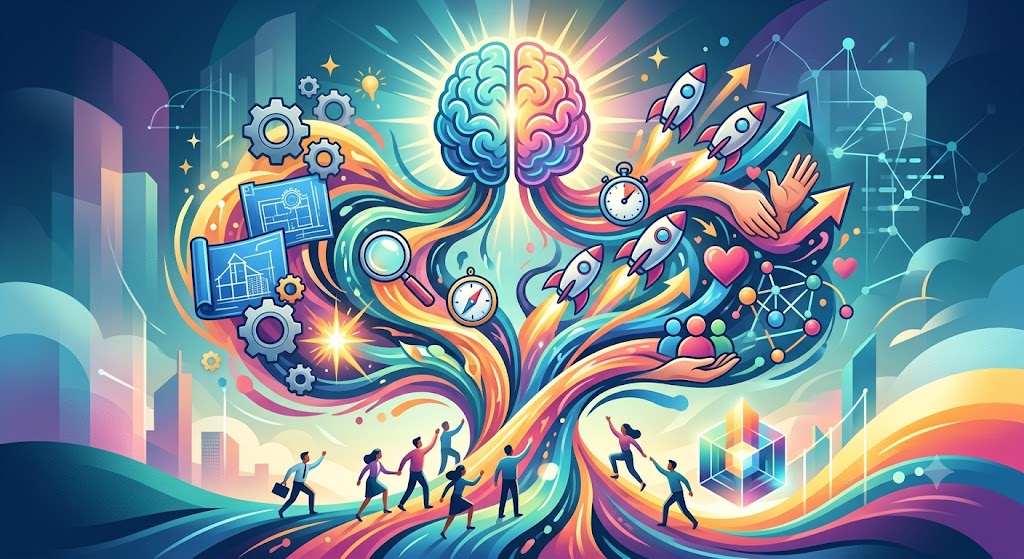
Antidotes to Short-Termism in Innovation Strategy

LAST UPDATED: May 6, 2026 at 9:59 AM

Antidotes to Short-Termism in Innovation Strategy

GUEST POST from Chateau G Pato


The High Cost of the “Quick Win”

In the modern corporate landscape, the gravitational pull of the quarterly earnings report often traps even the most visionary leaders in a cycle of incrementalism. While hitting immediate targets is necessary for survival, it frequently comes at a steep price: the sacrifice of long-term relevance. When we prioritize the “quick win” above all else, we are not just choosing efficiency; we are actively accumulating “innovation debt” that will eventually come due.

Short-termism acts as a silent killer of sustainable growth. It narrows the organizational lens, forcing teams to focus exclusively on optimizing what already exists rather than exploring what could be. This creates a dangerous Innovation Gap — the widening distance between a company’s current capabilities and the rapidly evolving demands of a future market. If we don’t intentionally design our strategies to bridge this gap, we leave the door wide open for more agile disruptors to step in.

The hard truth is that short-termism isn’t usually caused by a lack of imagination. Instead, it is a failure of design and governance. To overcome it, we must move beyond the rhetoric of “thinking big” and implement structural antidotes that protect future-oriented exploration from the pressures of today’s operational demands. We must shift the narrative from mere survival to intentional, human-centered evolution.

Diagnosis: Why We Default to the Near-Term

To solve for short-termism, we must first understand the psychological and structural anchors that keep us moored to the present. It isn’t simply a lack of “bravery” in the boardroom; it is a systemic response to how we measure success and manage risk.

Loss Aversion in the C-Suite

Human psychology is naturally wired for loss aversion. In a corporate context, the perceived risk of a failed breakthrough project often outweighs the theoretical gain of a future market-leading position. This leads to a “safety-first” mentality where proven incrementalism — making the existing horse run 2% faster — feels more responsible than investing in the “unproven” radical innovation that could replace the horse entirely.

The Incentive Misalignment

We are what we measure. Most organizational KPIs, bonus structures, and performance reviews are calibrated to annual or even quarterly cycles. When leaders are rewarded for immediate efficiency and cost-cutting, they are logically disincentivized from making “long-tail” investments. We cannot expect Horizon 3 thinking from a workforce that is being compensated solely on Horizon 1 results.

Information Overload vs. Insight Scarcity

In our hyper-connected world, leaders are bombarded with daily “noise” — competitor press releases, stock fluctuations, and viral social trends. This creates a reactive posture. When we spend all our cognitive energy responding to the friction of today, we lose the capacity to identify the subtle weak signals that point toward the opportunities of tomorrow. We mistake activity for progress and urgency for importance.

Antidote 1: Designing a Multi-Horizon Portfolio

To break the cycle of short-termism, organizations must treat innovation not as a series of isolated projects, but as a balanced portfolio. Just as a financial advisor diversifies assets to manage risk and return over time, innovation leaders must diversify their initiatives across different time horizons. This structural approach ensures that the “urgent” does not permanently crowd out the “important.”

The 70/20/10 Rule Revisited

A resilient strategy typically allocates resources in a balanced ratio: 70% to core innovation (optimizing current products), 20% to adjacent innovation (expanding into new markets or capabilities), and 10% to transformational innovation (creating entirely new breakthroughs). Short-termism occurs when the 70% begins to swallow the rest. By formalizing these buckets, organizations create a mandate for long-term exploration that is protected from quarterly budget cuts.

Operationalizing the Three Horizons

Using the Three Horizons framework allows us to visualize our current state while simultaneously mapping our future. Horizon 1 represents the systems that keep the lights on today. Horizon 2 represents emerging opportunities that are gaining momentum. Horizon 3 contains the visionary ideas that will define the organization’s future a decade from now. The “antidote” lies in managing all three simultaneously, rather than waiting for Horizon 1 to decline before thinking about Horizon 3.

Decoupled Funding and Governance

One of the most effective mechanical fixes for short-termism is decoupled funding. Transformational projects should not compete for the same “pot” of money as operational maintenance. By ring-fencing budgets for long-term bets, leadership sends a clear signal that future-proofing is a non-negotiable priority. Furthermore, these projects should be governed by different metrics — focusing on “speed to learning” rather than “speed to ROI” in their early stages.

Antidote 2: Human-Centered Futurology

Futurology is often misunderstood as the pursuit of “predicting” the future. In reality, it is about preparedness. Short-termism thrives when the future feels like an abstract, distant problem. To counter this, we must bring the future into the present by making it tangible, relatable, and human-centered. We must shift our focus from what the technology can do, to what humans will value in a world reshaped by that technology.

Foresight as an Organizational Muscle

Strategic foresight should not be a once-a-year executive retreat. It must be an ongoing organizational capability. This involves “environmental scanning” — systematically looking for weak signals and peripheral trends that are currently on the edges but have the potential to move to the center. When we train our teams to spot these signals early, we reduce the “surprise factor” and give ourselves the lead time necessary to build sustainable strategies rather than reactive patches.

Scenario Planning and Speculative Design

Data and spreadsheets are often too dry to inspire long-term change. To overcome the inertia of the present, we use scenario planning and speculative design to create vivid “future worlds.” By crafting narratives about how people will live, work, and play in five or ten years, we make the risks and opportunities feel real to stakeholders today. These stories serve as a north star, helping leadership align on a shared vision that extends far beyond the next fiscal year.

Customer Empathy Beyond Today

Traditional market research tells us what customers want now based on their current frustrations. Human-centered futurology asks a different question: “How will human needs evolve?” As socio-economic conditions shift and new technologies emerge, customer behaviors will transform. By applying empathy to these future personas, we can begin designing the experiences of tomorrow today, ensuring our innovation pipeline is solving problems that will actually exist when the product finally hits the market.

Antidote 3: Architectural Excellence & Experience Design

To resist the gravitational pull of short-termism, innovation must move from a sporadic “lightning strike” to a disciplined, repeatable process. We must design an organizational architecture that is inherently flexible, allowing us to build for the future while maintaining the stability of the present. This requires a shift from focusing on isolated product features to designing holistic, long-term Experience Strategies.

Innovation Excellence (IxL)

True innovation isn’t just about the “big idea”; it’s about the infrastructure that supports it. By implementing a robust framework for Innovation Excellence, organizations create a common language and set of tools for evaluating progress. This framework acts as a structural safeguard, ensuring that projects are judged by their strategic fit and future potential rather than just their immediate profitability. It turns innovation into a core competency rather than a side project.

Designing the Infinite Customer Journey

Short-term strategy often focuses on the point of sale. Experience design, however, looks at the entire lifecycle of the human relationship with a brand. By mapping out long-term Experience Level Measures (XLMs), we can track how our innovation efforts are improving the lives of our customers over time. This human-centered data provides a powerful counter-narrative to purely financial metrics, proving that long-term loyalty and “experience-led acquisition” are more valuable than one-off transactions.

Building for Adaptability

One of the greatest enemies of long-term thinking is “rigid infrastructure” — whether that is technical debt, fixed business models, or siloed organizational charts. To stay relevant, we must design for modularity. An adaptable architecture allows an organization to pivot its strategy without a total system collapse. By building “future-ready” platforms, we ensure that when the market shifts, we have the foundation in place to move with it, rather than being forced to rebuild from scratch under the pressure of a crisis.

Antidote 4: Cultural Transformation & Psychological Safety

The most sophisticated innovation frameworks will fail if they are planted in a culture of fear. Short-termism is often a defense mechanism; when employees feel that their jobs depend on immediate success, they will naturally avoid the risks associated with long-term exploration. To counter this, we must transform the cultural “operating system” of the organization to value learning as much as it values efficiency.

Redefining Failure and Learning Loops

In a short-term culture, a project that doesn’t yield immediate ROI is labeled a “failure.” In a future-ready culture, we treat these instances as “learning dividends.” By utilizing tools like pre-mortems, teams can anticipate future roadblocks before they occur, shifting the focus from blame to prevention. We must foster an environment where “failing fast” is actually about “learning fast,” ensuring that every experiment — regardless of the financial outcome — strengthens our strategic position.

The Leader as Orchestrator

Moving away from short-termism requires a fundamental shift in leadership style. Leaders must move from “Command and Control” — where they provide all the answers and demand immediate results — to becoming an Orchestrator. This role involves setting the vision, removing obstacles, and creating the psychological safety necessary for teams to pursue bold, long-term ideas. When leaders prioritize the health of the innovation ecosystem over the daily tally of tasks, the organization gains the breathing room to innovate.

Tapping into Collective Intelligence

The “antidote” to narrow, top-down short-termism is internal crowdsourcing. Often, the front-line employees who interact with customers daily have the clearest view of emerging shifts and long-term needs. By creating democratic channels for idea submission and collaborative problem-solving, we tap into a diverse range of perspectives. This not only builds a more robust innovation pipeline but also creates a sense of shared ownership in the organization’s future, making long-term goals feel personal rather than corporate.

Implementation: Taking the First Step

The transition from a reactive, short-term posture to a proactive, future-ready strategy does not happen overnight. It requires a series of intentional, practical shifts that bridge the gap between our current operational reality and our long-term aspirations. Implementation is where theory meets the pavement, and it begins with changing who we listen to and how we measure progress.

The “Shadow Board” Strategy

To disrupt the “echo chamber” of the executive suite, forward-thinking organizations are implementing Shadow Boards — groups of younger, non-executive employees who are given the same data as the senior board to provide a different perspective. These digital natives often see the world through a lens of 2030 rather than 1990. By involving diverse voices in high-level strategic discussions, we naturally challenge short-term assumptions and gain early visibility into the cultural shifts that will define our future market.

Validating Through Micro-Experiments

We don’t need to bet the entire company on a single long-term hypothesis. Instead, we use micro-experiments to validate our assumptions. These are low-cost, high-learning pilots designed to test specific elements of a “Horizon 3” idea. By breaking down a ten-year vision into small, actionable steps, we can gather real-world data today that justifies continued investment in tomorrow. This reduces the perceived risk of long-term innovation and allows us to pivot based on evidence rather than ego.

Measuring What Matters: Leading vs. Lagging Indicators

If we only measure revenue and profit, we will always be looking in the rearview mirror. To combat short-termism, we must introduce leading indicators that track the health of our future pipeline. This includes metrics such as “speed to learning,” “percentage of revenue from new business models,” and “innovation pipeline velocity.” By shifting our focus to these forward-looking measures, we give our teams the permission — and the mandate — to prioritize the activities that will ensure our longevity.

Conclusion: The Legacy of Innovation

In the final analysis, the fight against short-termism is not just a tactical battle over budgets or timelines — it is a philosophical commitment to the infinite game of business. Companies that survive the next decade won’t be those that hit every quarterly target at any cost, but those that viewed innovation as a continuous, human-centered journey rather than a destination with a fixed ROI.

As leaders, we must recognize that our greatest contribution isn’t the efficiency we squeeze out of today’s operations, but the foundations we build for tomorrow. When we implement the antidotes of multi-horizon portfolios, strategic foresight, and cultural psychological safety, we are doing more than just planning; we are ensuring that our organizations remain relevant in a world that refuses to stand still.

The choice is clear: we can continue to be managed by the pressures of the ledger, or we can choose to design a legacy. By prioritizing long-term innovation strategy today, we aren’t just predicting the 2030s — we are actively creating them. The future is not something that happens to us; it is something we build, one intentional, human-centered decision at a time.

It’s time to stop surviving the quarter and start stoking the innovation bonfire.

Frequently Asked Questions

How can we protect long-term innovation budgets during a market downturn?

The most effective method is “decoupled funding,” where Horizon 3 budgets are ring-fenced and treated as strategic capital rather than operational expense. By separating these funds from the core business P&L, leadership ensures that the “urgent” needs of today do not cannibalize the “important” seeds of tomorrow.

What is the difference between an SLA and an XLM in innovation?

While a Service Level Agreement (SLA) measures technical performance (uptime, speed, accuracy), an Experience Level Measure (XLM) tracks the human impact of an innovation. XLMs focus on qualitative outcomes like user friction reduction, cognitive load, and emotional resonance, ensuring the strategy remains human-centered.

How does ‘FutureHacking’ help combat short-termism?

FutureHacking involves identifying weak signals in the present to build tangible future scenarios. By making the “future” feel like a concrete reality through speculative design, leaders can more easily justify the long-term investments required to navigate upcoming socio-economic shifts.

Bottom line: Futurology is not fortune telling. Futurists use a scientific approach to create their deliverables, but a methodology and tools like those in FutureHacking™ can empower anyone to engage in futurology themselves.

Image credit: Gemini

Subscribe to Human-Centered Change & Innovation WeeklySign up here to get Human-Centered Change & Innovation Weekly delivered to your inbox every week.
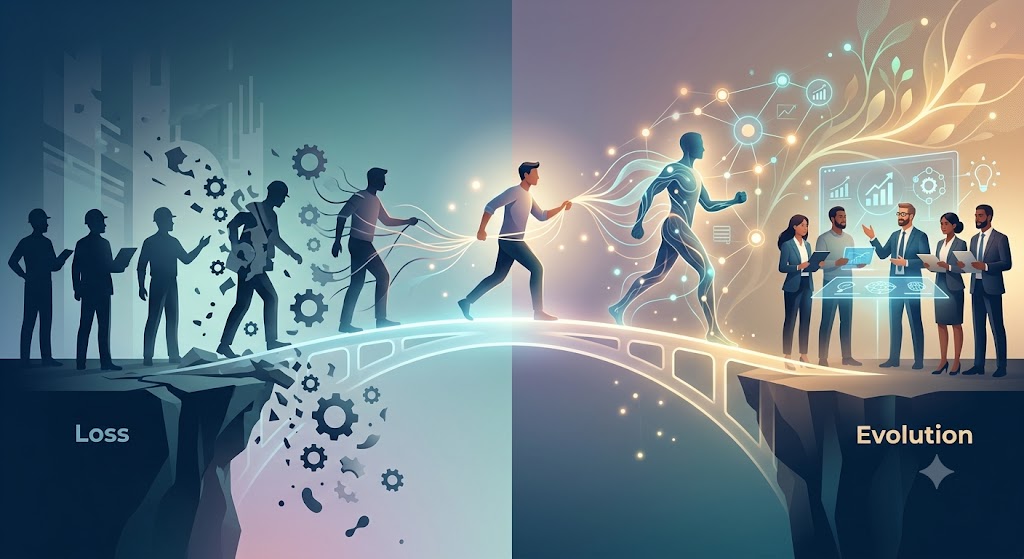
Trust-Based Contracts & Innovation Partnerships

Trust-Based Contracts & Innovation Partnerships

GUEST POST from Art Inteligencia


The Rigid Contract Trap

In the traditional corporate landscape, contracts are often drafted as defensive armor — walls of legalese designed to mitigate every conceivable risk and litigate every potential failure. While this “command and control” approach offers a sense of security for steady-state operations, it acts as a suffocating weight on the chest of innovation.

Innovation is, by definition, a journey into the unknown. It requires the freedom to pivot, the permission to fail, and the agility to adapt to emerging signals. When we bind partnerships to rigid, granular deliverables defined at a project’s inception, we prioritize compliance over outcomes. This creates a “Fixed-Mindset Partnership” where both parties are more concerned with avoiding a breach than they are with creating breakthrough value.

To thrive in an era of constant change, we must shift from Transactional Management to Relational Governance. This means evolving the contract from a static “fence” meant to keep people out, into a dynamic “foundation” meant to support shared growth. We must design agreements that mirror the human-centered principles we apply to our products: empathy, flexibility, and a relentless focus on the experience of the partnership itself.

Defining Trust-Based Contracting

Trust-based contracting is not about abandoning legal protections; it is about re-centering the agreement on mutual intent rather than purely punitive constraints. In an innovation context, the “spirit” of the agreement must carry as much weight as the “letter.” When partners trust that both sides are committed to a shared vision, they spend less energy on defensive posturing and more on creative problem-solving.

Prioritizing the Spirit over the Letter

Traditional contracts often fail because they attempt to predict a future that is inherently unpredictable. A trust-based framework acknowledges that the “how” will likely change, but the “why” — the core value proposition — remains the North Star. This shift allows for Relational Governance, where the health of the partnership is the primary metric of success.

The Core Pillars of the Partnership

  • Radical Transparency: Moving beyond “need-to-know” basis to shared intellectual roadmaps and open-book accounting. When both parties see the full picture, they can align their efforts more effectively toward shared goals.
  • Dynamic Reciprocity: Ensuring that the value exchange remains balanced as the project evolves. As breakthroughs occur or obstacles arise, the partnership must be flexible enough to re-adjust incentives so that win-win outcomes remain the reality.
  • Structural Autonomy: Granting partners the “license to explore.” This means defining “safe-to-fail” zones where experimentation is encouraged without the threat of immediate contractual penalties for missed micro-milestones.

“The most effective contracts are those that serve as a platform for co-creation, not a script for execution.”

Designing for Uncertainty (The Human-Centered Lens)

In an era of rapid technological shifts and “Agentic AI,” the traditional three-year fixed roadmap is a relic of a slower age. A human-centered approach to contracting acknowledges that the people involved — and the markets they serve— will learn and adapt during the project lifecycle. We must design agreements that account for this evolution rather than penalizing it.

Empathy as a Contractual Variable

Before the ink dries, we must look beyond the balance sheet. Designing for uncertainty starts with deep empathy for the partner’s “Why.” What are their internal cultural barriers? What are the pressures on their specific industry? When we build agreements that respect the human constraints of both organizations, we create a sturdier, more resilient bond.

The Shift to Rolling Statements of Work

To maintain agility, we must replace static, monolithic deliverables with Rolling Statements of Work (SOWs). By committing to short-term, iterative execution cycles while maintaining a long-term strategic vision, we allow the partnership to pivot based on real-world data and “FutureHacking” signals without requiring a complete legal overhaul every time a change is needed.

Value-Created vs. Effort-Based Rewards

Traditional “Time and Materials” models often incentivize inefficiency. A trust-based, human-centered contract shifts the focus toward Experience Level Measures (XLMs) and outcome-based incentives. By rewarding the impact of the innovation — rather than just the hours logged — we align the partner’s success directly with the organizational value they help create.

This transition requires moving away from rigid Service Level Agreements (SLAs) that often measure the wrong things, and toward measures that capture the qualitative and strategic health of the innovation ecosystem.

Managing Intellectual Property (IP) in Collaborative Ecosystems

One of the greatest friction points in any partnership is the “IP Paradox”: organizations seek to innovate through collaboration, yet they often employ restrictive legal frameworks that prevent the very flow of ideas required for success. To foster a true innovation partnership, we must move beyond defensive hoarding toward a model of Fluid Intellectual Capital.

The IP Paradox: Protection vs. Proliferation

When we over-protect every incremental idea, we inadvertently slow down the “Speed of Learning.” In a trust-based model, the goal is not just to own the idea, but to maximize its utility. High-walls around intellectual property often result in “Zombie Projects” — innovations that are legally secure but commercially stagnant because they couldn’t breathe in a collaborative environment.

Shared Ownership and the “Foreground/Background” Framework

To navigate this, we utilize a clear distinction between existing and emergent knowledge:

  • Background IP: This remains the sole property of the originating party. It is the “tools of the trade” each partner brings to the table. Trust-based contracts provide an automatic, friction-free license for the other partner to use this IP strictly within the scope of the project.
  • Foreground IP: This is the new value created together. Instead of a winner-take-all scramble, we design shared ownership or “Exclusive Field of Use” agreements. This ensures both parties have a vested interest in the long-term success and scaling of the innovation.

Prioritizing “Freedom to Operate”

In a world of accelerating change, being first to learn is often more valuable than being the sole owner of a patent. Trust-based contracts prioritize the Freedom to Operate. This means focusing on iterative learning and rapid market entry. By ensuring that neither party can “block” the other from pursuing the project’s North Star, we maintain the organizational agility needed to respond to “FutureHacking” signals and market shifts.

Conflict Resolution: The “Living Contract”

In traditional environments, a dispute often signals the beginning of the end for a partnership. In a human-centered innovation ecosystem, however, friction is viewed as a signal — data that the partnership needs to evolve. To handle this, we treat the agreement as a “Living Contract” that scales and adapts through consistent governance rather than static litigation.

Governance Rhythms over Quarterly Reviews

Waiting for a quarterly business review to address a misalignment is a recipe for project decay. Trust-based partnerships implement “Alignment Pulses” — short, frequent touchpoints focused on identifying emerging blockers before they calcify into legal disputes. These rhythms ensure that the “human” element of the partnership stays synchronized with the technical and financial goals.

Non-Legalistic Dispute Pathways

When significant disagreements arise, the first instinct should not be to call the lawyers, but to engage the Innovation Board. By establishing internal peer mediation frameworks, we solve problems through the lens of project success rather than contractual liability. This keeps the focus on “How do we get back on track?” instead of “Who is at fault?”

Pivoting with Grace: The “Fast Fail” Clause

True innovation requires the ability to walk away when the data suggests a path is no longer viable. Trust-based contracts include Graceful Exit strategies that allow for a “Fast Fail” without destroying the professional relationship. By pre-defining how to wind down a project — sharing the learnings and settling costs fairly — we ensure that a failed experiment doesn’t lead to a failed partnership.

“The strength of a partnership isn’t defined by the absence of conflict, but by the speed and empathy with which that conflict is resolved.” — Braden Kelley

Case Studies: Trust in Action

The difference between a rigid contract and a trust-based partnership is most visible when the unexpected occurs. To understand the practical application of these principles, we must look at how “Trust Equity” functions as a lubricant for organizational speed and a buffer against market volatility.

The Rigid Failure vs. The Agile Success

In many traditional aerospace or manufacturing sectors, we often see “Feature Creep” meet “Legal Gridlock.” When a partner identifies a necessary pivot but is bound by a fixed-price, fixed-scope agreement, the project often enters a “stalemate” phase. Progress halts while change orders are debated, leading to missed market windows and demoralized teams.

Conversely, in successful cross-industry R&D collaborations — such as those seen in modern digital transformation initiatives — partners often operate under a “Master Innovation Agreement.” This framework sets the high-level goals but leaves the tactical execution to a Joint Innovation Board. When a pivot is required, the board reallocates resources in real-time, focusing on the Experience Level Measures (XLMs) rather than debating the original line items.

Measuring “Trust Equity”

How do we measure something as intangible as trust? In an innovation ecosystem, we track specific indicators that correlate with partnership health:

  • Decision Velocity: The average time it takes to approve a strategic pivot or resource shift.
  • Information Flow: The frequency and depth of proactive “signal sharing” between organizations.
  • Conflict Resolution Time: How quickly misalignments are moved from “dispute” to “solution” without legal escalation.

By treating trust as a measurable asset, organizations can move beyond the “warm and fuzzy” perception of the word and treat it as a core component of their Innovation Maturity.

Conclusion: The Future of Partnerships

As we navigate the complexities of digital transformation and the “Agentic Paradox,” the nature of how we work together must fundamentally change. The era of the adversarial, “zero-sum” contract is drawing to a close. In its place, we are seeing the rise of the Human-Centered Ecosystem — a network of partners bound not by the fear of litigation, but by the pursuit of shared purpose.

From Gatekeepers to Enablers

For this shift to take hold, leadership must redefine the roles of legal and procurement departments. These teams should no longer function as internal gatekeepers whose sole job is to say “no” to risk. Instead, they must become Innovation Enablers, tasked with designing the flexible frameworks that allow for rapid experimentation and “FutureHacking.” Their success should be measured by the speed and health of the partnerships they help facilitate.

The Ultimate Competitive Advantage

In a world of accelerating change, your most valuable competitive advantage is not your proprietary code or your secret manufacturing process — it is your Relational Agility. Organizations that can form, scale, and pivot partnerships quickly will outperform those trapped in the “Rigid Contract Trap.”

Ultimately, a trust-based contract is a recognition of a simple truth: business is a human endeavor. When we design for trust, empathy, and transparency, we aren’t just making better agreements — we are building the foundation for the breakthroughs that will define the next decade. The most important line in any contract isn’t the one written in ink; it’s the invisible line of trust that connects the people behind the signatures.

“Stop drafting for the end of the relationship; start designing for its success.”

Frequently Asked Questions

How do Trust-Based Contracts handle failure?

Unlike traditional contracts that use penalties to punish failure, trust-based agreements utilize “Graceful Exit” clauses. These allow partners to “Fast Fail” when data shows a project is no longer viable, ensuring that the learning is captured and the relationship remains intact for future collaboration.

Do these agreements replace legal protections?

No. Trust-based contracting shifts the focus from purely punitive measures to relational governance. It layers empathy and flexibility over a legal foundation, ensuring that the “spirit” of the innovation partnership is protected as much as the “letter” of the law.

What are XLMs and why are they used?

Experience Level Measures (XLMs) capture the qualitative and strategic impact of a partnership. While SLAs measure technical uptime or speed, XLMs measure the health of the innovation ecosystem and the actual value created, aligning incentives with human-centered outcomes.


SPECIAL BONUS: Braden Kelley’s Problem Finding Canvas can be a super useful starting point for doing design thinking or human-centered design.

“The Problem Finding Canvas should help you investigate a handful of areas to explore, choose the one most important to you, extract all of the potential challenges and opportunities and choose one to prioritize.”

Image credit: Gemini

Subscribe to Human-Centered Change & Innovation WeeklySign up here to get Human-Centered Change & Innovation Weekly delivered to your inbox every week.