Tag Archives: Interviews

Building Cumulative Advantage

Exclusive Mark Schaefer Interview Excerpt from CustomerThink.com

Mark W SchaeferCumulative Advantage as a concept builds unstoppable momentum for your ideas and your business — even when the odds seem stacked against you. The book shows how initial advantages, seams of opportunity, sonic booms, and the lift from mentors can impact your world in powerful and permanent ways. It’s designed to be a practical source of inspiration for the entrepreneur, business leader, and every person with a dream that’s ready to take flight. The Cumulative Advantage concept focuses on:

  • How the initial advantage that drives momentum comes from everyday ideas.
  • The inside secrets of creating vast awareness for your projects.
  • How to nurture powerful connections that lead to break-through opportunities.
  • Why momentum is driven by the speed, time, and space of a “seam.”
  • How the “certainty of business uncertainty” can be used to your advantage.

I had the opportunity recently to interview Mark Schaefer, a globally-acclaimed author, keynote speaker, and marketing consultant. He is a faculty member of Rutgers University and one of the top business bloggers and podcasters in the world. Mark is the executive director of Schaefer Marketing Solutions, Chief Executive Officer of B Squared Media and on the advisory board of several startups. He has been a contributor to Harvard Business Review and Entrepreneur magazine.

His latest book is Cumulative Advantage: How to Build Momentum for Your Ideas, Business and Life Against All Odds.

Below is the text of the interview:

1. Is success random?

Yes and no.

Momentum in life begins with some initial advantage. That is almost always random and unearned. It could be inherited wealth, a special, early educational opportunity, or being in the right place at the right time. Even being born into a free country and living in a stable household with two parents can be an advantage.

Frans Johansson wrote an entire book about this phenomenon called “The Click Moment.” I can point to a random conversation with my boss in 1992 that led to this book!

However, just having an idea or an advantage is not enough. You must pursue the idea and apply it to something changing in the world to create an opportunity. Randomness is likely to get the ball rolling, but hard work and smarts still make a difference when it comes to success.

2. Why is creating a cumulative advantage important?

There are many reasons to understand the patterns of momentum but for me, it’s the fact that it’s just so hard to stand out today. Even if you’re doing your best work, you can be buried because the level of competition and content out there is so great. How can a person or a business be heard? How can they be found?

For the past 10 years, most of my career has been devoted to this idea of becoming the signal instead of the noise. It’s never been harder for a business to be seen and heard and I think understanding how we can apply momentum to our lives is a big idea to help solve this problem.

3. Can anyone create cumulative advantage for their business or ideas?

This is going to sound weird, but honestly, no. This haunted me as I wrote the book. I realized that every business book and every self-help book is inherently elitist. The author assumes a person has the money to buy the book, the time to read it, and the resources to act on it.

But there is a big part of society that is being pulled under by Cumulative Disadvantage. It’s a cosmically complex topic that I address, in part, at the end of the book. I wanted to write a book that could help everyone, I don’t think anybody can, really.

But let’s put it this way — if you have the resources to buy the book and read it, then yes, you can probably build momentum!

4. What kinds of initial advantages might the average person have?

It can be anything really that leads to some momentum in later life. I already mentioned this idea about just living in a safe home as an advantage. Children adopted out of poverty had a substantial gain in IQ just from being in a safe environment.

Research has shown that early reading skills can lead to an advantage in education. Early athletic coaching can lead to longer and more profitable professional careers (just ask Tiger Woods or Serena Williams!). It can be a special ability, a personality trait, or even a stroke of luck along the way.

5. We are all surfing the crest of a wave that started long ago. Advantage builds on advantage. Why is curiosity so important?

I once had the opportunity to meet Walter Isaacson, the biographer of Steve Jobs, Leonardo DeVinci and Benjamin Franklin. I asked him what made a genius. He said endless curiosity and an ability to see patterns.

The world is filled with millions of ideas. An idea is worth nothing without the pursuit of curiosity, That is the beginning of momentum.

Click to read the rest of the interview on CustomerThink.com

Accelerate your change and transformation success

Subscribe to Human-Centered Change & Innovation WeeklySign up here to get Human-Centered Change & Innovation Weekly delivered to your inbox every week.

After Hours with Mauro Porcini – PepsiCo’s First Chief Design Officer

After Hours with Mauro Porcini - PepsiCo’s First Chief Design Officer

A short while ago I had the opportunity to sit down with Mauro Porcini, SVP & Chief Design Officer at PepsiCo, a multi-billion-dollar American corporation with more than 250,000 employees. It is the second largest food and beverage company in the world, and the largest in North America.

The initial part of this interview focused on how PepsiCo embraces failure and gets to the root of customer needs and can be found on Innovation Leader. But Mauro had so much design and innovation wisdom to share that he agreed to stay after hours and answer more questions.

Mauro Porcini joined PepsiCo in 2012 as its first Chief Design Officer and began infusing design thinking into PepsiCo’s culture and leading a new approach to innovation by design across the company’s popular product platforms and brands, as well as new platforms such as Alternative Hydration (water personalization and consumption beyond the bottle) and Spire (Smart Fountains for drinks customization).

The team’s efforts extend from physical to virtual expressions of the brands, and to the company’s focus on sustainability. In the past seven years the PepsiCo design team has won more than 1,000 Design and Innovation awards.

To dive deeper into innovation at PepsiCo I posed the following questions:

Why is innovation important to PepsiCo?

Innovation is an absolutely fundamental, core value at PepsiCo. It’s a key ingredient in the company’s success and continued growth. Our daily work as designers within PepsiCo is to keep our innovation pipeline as human-centered as possible, as well as agile, flexible, reactive and in-tune with global and local trends. This requires a multi-disciplinary effort that involves close collaboration with other functions like R&D, Marketing, Strategy, Consumer Insights, and Manufacturing to ensure we are unlocking the full potential of our brands.

Mauro, I see you’re already connecting innovation and design. Let’s dig into that.

What do you see as the intersection between innovation and design, and why is this intersection important?

Mauro PorciniThe reality is that design and innovation are one and the same. Innovation is all about people. Innovation is about imagining, designing and developing meaningful solutions for people’s needs and wants. As designers, we are trained in three dimensions: human science (desirability), business (viability) and technology (feasibility). In the projects my global design team works on at PepsiCo, we connect these three dimensions to create products, brands, experiences and services that are relevant to the communities we design for. We call this approach “design”; the world often calls it “innovation.”

It’s interesting that you see innovation and design as synonyms where many see design instead as a path to innovation. Let’s explore what it takes to excel at design.

Click here to read the rest of the interview with Mauro Porcini on CustomerThink

Other questions Mauro will answer on CustomerThink include:

  1. What are some of the most important differences between doing design and being a design leader that innovators and designers should be aware of?
  2. What was the impetus, what resistance did you face, and what excited you about this design challenge?
  3. Why is it more important to be in love with your customers than to try and satisfy them?
  4. Do you have any tips for organizations trying to get better at empathy, listening and understanding to become better innovators?
  5. What are you most curious about right now?
  6. What are you working on learning about or mastering right now to help the team?

Images courtesy of PepsiCo


Accelerate your change and transformation success

Subscribe to Human-Centered Change & Innovation WeeklySign up here to get Human-Centered Change & Innovation Weekly delivered to your inbox every week.

The Jobs to be Done Playbook

Exclusive Interview for CustomerThink with Jim Kalbach

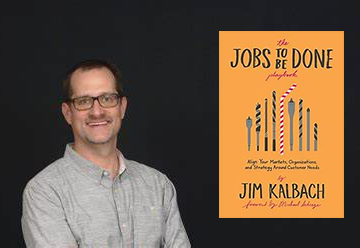
Jim Kalbach JTBD PlaybookThe Jobs-to-be-Done (JTBD) approach offers a unique lens for viewing the people you serve. Instead of looking at the demographic and psychographic factors of consumption, JTBD focuses on what people seek to achieve in a given circumstance. People don’t “hire” products and services because of the demographic they belong to; instead, they employ solutions to get a job done.

JTBD is not about your product, service, or brand. Instead of focusing on your own solution, you must first understand what people want and why that’s important to them. Accordingly, JTBD deliberately avoids mention of particular solutions in order to first comprehend the process that people go through to solve a problem. Only then can a company align its offerings to meet people’s goals and needs.

I had the opportunity recently to interview Jim Kalbach, a noted author, speaker, and instructor in user experience design, information architecture, and strategy. He is currently Head of Customer Experience at MURAL, the leading online whiteboard. Jim has worked with large companies, such as eBay, Audi, Sony, Elsevier Science, LexisNexis, and Citrix. His latest book is The Jobs To Be Done Playbook.

Below is the text of the interview:

1. What is one of the biggest misconceptions people have about Jobs-to-be-Done (JTBD)?

There are a couple, actually.

First, I often hear others referring to JTBD as something “new.” It’s not. People have been working in the field for a couple of decades now. And precursors to modern JTBD go back nearly 40 years. We really just now see a surge of interest around JTBD, and the hype around it makes it feel new.

Second, JTBD often gets conflated with existing methods in other fields. Marketers look at it is as just another type of “voice of the customer” program. Or, folks coming from human-centered design and related fields see JTBD as a version of UX design or similar. While there might be some overlaps with existing disciplines, JTBD offers a unique perspective and yields unique insights.

Finally, I see JTBD as a “language” of sorts to describe the objectives and needs of the people you want to serve, and learning a language takes practice. Even people who “get” JTBD quickly need to put time into understanding the language and techniques, which at times can be specific and rigorous. I often see people expect to walk away from reading a book or taking a workshop fully capable of practicing JTBD. That’s rarely the case, and it typically takes some effort to work into the topic and apply it.

2. What are some of the benefits of taking a JTBD approach to innovation?

JTBD offers a unique perspective that points to new insights and opportunities. The JTBD approach intentionally forces us to expunge any mention of technology, solutions, brands, or methods from our language. In doing so, you’re able to then see your domain as people do. First and foremost, they want to get their job done, not necessarily interact with your product or service. Viewing objectives and outcomes people have independent of technology opens up new possibilities and yields new conversations that point toward innovation opportunities.

Also, but removing ourselves and technology from the equation, we can better future-proof our thinking. Solutions come and go. Technology is often a fad. Jobs, on the other hand, are stable when you boil them down to their fundamental steps.

3. Who needs to be considered after selecting a job to focus on?

At first, simply consider job performers. Once you’ve defined your target job, you first want to understand how the job gets done independently of any specific technology or solution. I find that different types of job performers emerge based on the key factors, or circumstances, of getting the job done that can give rise to different personas.

Within your team, I recommending going as broad as possible and including stakeholders at all levels. Yes, JTBD can help you find hidden needs to address. But it’s also a catalyst for conversations and a way to get team alignment. Think of the various ways you can involve others in everything from the definition of your jobs landscape to interviews with job performers to creating a job map to finding opportunities.

4. What is your perspective on the interrelationship between functional, social and emotional jobs within JTBD?

I find that functional jobs give the most structure and reliability to work with initiation. So your work is generally framed by functional jobs, with emotional and social aspects layered on top. Emotional and social aspect then play a larger role when finding solutions to the unmet needs you’ve found and help frame how you’ll solve for them.

Continue reading the interview on CustomerThink


Accelerate your change and transformation success

Subscribe to Human-Centered Change & Innovation WeeklySign up here to get Human-Centered Change & Innovation Weekly delivered to your inbox every week.

A Revolutionary Way to Create Shared Value for Businesses, Customers, and Society

Interview with Erich Joachimsthaler

Erich JoachimsthalerI had the opportunity recently to interview fellow author Erich Joachimsthaler, the Founder and CEO of Vivaldi, one of the largest independent global strategy and business transformation firms, to talk with him about his new book The Interaction Field: The Revolutionary New Way to Create Shared Value for Businesses, Customers, and Society, to explore the important role that connections play in both business and innovation.

1. What are the key elements of an interaction field?

Interaction field companies or interaction field business models are highly open architectures that facilitate interactions among multiple participants, and distinguish from other digital business models like platforms (Uber, OpenTable, etc.) or digital ecosystem (Airbnb or Apple, etc.) in four ways:

  1. They solve new problems and intractable challenges (framing)
  2. They are interactional not transactional. They create collaboration, engagement, and participation across the entire interaction field including the nucleus, ecosystem and market makers (designing)
  3. They are open, inclusive and comprehensive and deeply integrate in the lives of participants (building)
  4. They enable sharing of value creation (sharing)

2. Why are interaction fields important?

They are important because they drive innovation in entirely new ways, create real new value for consumers and everyone else, and they can create exponential growth because they leverage the hyperconnectivity of everything today: where everything connects and is available anytime and anywhere.

3. What is broken in the current way of creating shared value for businesses, customers, and society?

What’s broken is that we all believe in it, but we don’t do it. Not because for wanting but because nobody has given us a business model or a framework and process to actually build a company that delivers on stakeholder capitalism. That business model is the interaction field model.

4. Has the importance of velocity of businesses changed? And if so, how?

We live in an age of accelerations. This isn’t a new thesis and wonderfully was explored by Thomas L. Friedman in his book: Thank You For Being Late. He believes that computing power has created the conditions for this change. How has the velocity changed? Three ways:

In the 1990s, when information connected to information over a website, called the internet. Two technologies emerged, ecommerce and search which created two of the most valuable companies today, namely Amazon and Google.

The next phase happened around 2007 and 2009 when people connected to people. Social media or networks became the technology and the smartphone enabled explosive connectivity. This created Facebook and Apple and a host of other companies.

We are now on the verge of the third phase where everything connects, people, information, companies, things, machines, devices and other things, anything, anywhere and anytime. Like in the previous phases, a new set of technologies from AI to quantum computing, converge and mature at the same time which will enable untold and unimaginable value creation, innovation and growth.

This changes everything. Traditional boundaries between industries and markets vanish, or at least blur. The notion of geography in terms of distance is changing, we truly live in a borderless world. Traditional value creation of companies through innovation will change.

The Interaction Field Book5. What is the difference between a platform-driven business model and an interaction field-driven business model?

Platform business models are transitional. They solve simple problems. Uber is an example that matches riders with drivers, OpenTable that matches empty restaurant seats with guests. They focus primarily on transactions, and scale based on the frequency of interaction, often a simple core interaction between two or more participants. OpenTable allows restaurants to list open tables, and guests provide feedback in the form of votes, ratings. Platforms are a good business model if you want to build OpenTable for X, the Airbnb for Y or the Uber or Lyft for Z. Go and organize a design thinking workshop and you pretty much can write a draft business model.

Platforms also often are merely self-serving. They create wealth for the orchestrator or shareholders. Look at Uber, are drivers really better off driving for Uber? Are gig economy workers really better off? Look at Amazon, who really benefits, anyone knows who is the richest man in the world? Who made in the pandemic $13.5 billion in one day? Look at Apple, who faces massive lawsuits from developers.

Continue reading the article on InnovationManagement.se


Accelerate your change and transformation success

Subscribe to Human-Centered Change & Innovation WeeklySign up here to get Human-Centered Change & Innovation Weekly delivered to your inbox every week.

Combining Big Data with Empathy Interviews

Triangulating Truth

Combining Big Data with Empathy Interviews

GUEST POST from Chateau G Pato
LAST UPDATED: January 15, 2026 at 10:23AM

Triangulating Truth: Combining Big Data with Empathy Interviews

By Braden Kelley

In the hallowed halls of modern enterprise, Big Data has become a sort of secular deity. We bow before dashboards, sacrifice our intuition at the altar of spreadsheets, and believe that if we just gather enough petabytes, the “truth” of our customers will emerge. But data, for all its power, has a significant limitation: it can tell you everything about what your customers are doing, yet it remains profoundly silent on why they are doing it.

If we want to lead human-centered change and drive meaningful innovation, we must stop treating data and empathy as opposing forces. Instead, we must practice the art of triangulation. We need to combine the cold, hard “What” of Big Data with the warm, messy “Why” of Empathy Interviews to find the resonant truth that lives in the intersection.

“Big Data can tell you that 40% of your users drop off at the third step of your checkout process, but it takes an empathy interview to realize they are dropping off because that step makes them feel untrusted. You can optimize a click with data, but you build a relationship with empathy.” — Braden Kelley

The Blind Spots of the Spreadsheet

Data is a rearview mirror. It captures the digital exhaust of past behaviors. While it is incredibly useful for spotting trends and identifying friction points at scale, it is inherently limited by its own parameters. You can only analyze the data you choose to collect. If a customer is struggling with your product for a reason you haven’t thought to measure, that struggle will remain invisible on your dashboard.

This is where human-centered innovation comes in. Empathy interviews — deep, open-ended conversations that prioritize listening over selling — allow us to step out from behind the screen and into the user’s reality. They uncover “Thick Data,” a term popularized by Tricia Wang, which refers to the qualitative information that provides context and meaning to the quantitative patterns.

Case Study 1: The “Functional” Failure of a Health App

The Quantitative Signal

A leading healthcare technology company launched a sophisticated app designed to help chronic patients track their medication. The Big Data was glowing initially: high download rates and excellent initial onboarding. However, after three weeks, the data showed a catastrophic “churn” rate. Users simply stopped logging their pills.

The Empathy Insight

The data team suggested a technical fix — more push notifications and gamified rewards. But the innovation team chose to conduct empathy interviews. They visited patients in their homes. What they found was heartbreakingly human. Patients didn’t forget their pills; rather, every time the app pinged them, it felt like a reminder of their illness. The app’s sterile, clinical design and constant alerts made them feel like “patients” rather than people trying to live their lives. The friction wasn’t functional; it was emotional.

The Triangulated Result

By combining the “what” (drop-off at week three) with the “why” (emotional fatigue), the company pivoted. They redesigned the app to focus on “Wellness Goals” and life milestones, using softer language and celebratory tones. Churn plummeted because they solved the human problem the data couldn’t see.

Triangulation: What They Say vs. What They Do

True triangulation involves three distinct pillars of insight:

  • Big Data: What they actually did (the objective record).
  • Empathy Interviews: What they say they feel and want (the subjective narrative).
  • Observation: What we see when we watch them use the product (the behavioral truth).

Often, these three pillars disagree. A customer might say they want a “professional” interface (Interview), but the Data shows they spend more time on pages with vibrant, casual imagery. The “Truth” isn’t in one or the other; it’s in the tension between them. As an innovation speaker, I often tell my audiences: “Don’t listen to what customers say; listen to why they are saying it.”

Case Study 2: Reimagining the Bank Branch

The Quantitative Signal

A regional bank saw a 30% decline in branch visits over two years. The Big Data suggested that physical branches were becoming obsolete and that investment should shift entirely to the mobile app. To the data-driven executive, the answer was to close 50% of the locations.

The Empathy Insight

The bank conducted empathy interviews with “low-frequency” visitors. They discovered that while customers used the app for routine tasks, they felt a deep sense of anxiety about major life events — buying a first home, managing an inheritance, or starting a business. They weren’t coming to the branch because the branch felt like a transaction center (teller lines and glass barriers), which didn’t match their need for high-stakes advice.

The Triangulated Result

The bank didn’t close the branches; they transformed them. They used data to identify which branches should remain as transaction hubs and which should be converted into “Advice Centers” with coffee-shop vibes and private consultation rooms. They used the app to handle the “what” and the human staff to handle the “why.” Profitability per square foot increased because they addressed the human need for reassurance that the data had initially misinterpreted as a desire for total digital isolation.

Leading the Change

To implement this in your organization, you must break down the silos between your Data Scientists and your Design Researchers. When these two groups collaborate, they become a formidable force for human-centered change.

Start by taking an anomaly in your data — something that doesn’t make sense — and instead of running another query, go out and talk to five people. Ask them about their day, their frustrations, and their dreams. You will find that the most valuable insights aren’t hidden in a server farm; they are hidden in the stories your customers are waiting to tell you.

If you are looking for an innovation speaker to help your team bridge this gap, remember that the most successful organizations are those that can speak both the language of the machine and the language of the heart.

Frequently Asked Questions on Insight Triangulation

Q: What is the primary danger of relying solely on Big Data for innovation?

A: Big Data is excellent at showing “what” is happening, but it is blind to “why.” Relying only on data leads to optimizing the status quo rather than discovering breakthrough needs, as data only reflects past behaviors and cannot capture the emotional friction or unmet desires of the user.

Q: How do empathy interviews complement quantitative analytics?

A: Empathy interviews provide the “thick data” — the context, emotions, and stories that explain the anomalies in the quantitative charts. They allow innovators to see the world through the user’s eyes, identifying the root causes of friction that data points can only hint at.

Q: What is “Triangulating Truth” in a business context?

A: It is the strategic practice of validating insights by looking at them from three angles: what people say (interviews), what people do (observations), and what the data shows (analytics). When these three align, you have found a reliable truth worth investing in.

Extra Extra: Because innovation is all about change, Braden Kelley’s human-centered change methodology and tools are the best way to plan and execute the changes necessary to support your innovation and transformation efforts — all while literally getting everyone all on the same page for change. Find out more about the methodology and tools, including the book Charting Change by following the link. Be sure and download the TEN FREE TOOLS while you’re here.

Image credits: Pixabay

Subscribe to Human-Centered Change & Innovation WeeklySign up here to get Human-Centered Change & Innovation Weekly delivered to your inbox every week.

Latest Interview with Voltage Control’s Innovation Series

Latest Interview with Voltage Control's Innovation Series

I recently had the opportunity to sit down with Douglas Ferguson of Voltage Control, to speak with him for their Innovation Series about my work as a popular keynote speaker, workshop facilitator, and thought leader on the topics of continuous innovation and change, and some of my work with clients to create innovative strategies, digital transformations, and increased organizational agility.

But mostly in this information-packed interview, I reveal key lessons from the Human-Centered Innovation Toolkit™ and my books Charting Change and Stoking Your Innovation Bonfire, including what’s hard about making innovation sustainable, the difference between invention and innovation and how the human elements are the key to successful innovation.

Here is an excerpt from the interview:

Start with the end in mind

Measurement provides a good starting point for establishing a strong foundation. “No innovation idea emerges fully formed. What people come up with are idea fragments and you have to collect and connect those dots to create a fully formed idea.” Based on those ideas, begin by identifying the value you want to create.

In order to make sure an initiative creates all the value it intends to, Braden advocates for the use of experiments with checkpoints. “You can have checkpoints that you establish along the way in terms of getting from what you’re able to do now versus your vision for the full value that you hope to create.” When thinking through experiments to validate assumptions about feasibility, viability, and desirability, also consider the flaws that might be present in your experimentation process.

“Start plotting out all the different experiments that you plan to run and the learning that you hope to get from each one. Those are the things that you can measure against to show that you’re making progress, to show that you’re going to get to the end and that you’re on track.”

The Experiment Canvas was designed to help with this:
Click here to get The Experiment Canvas™ (11″x17″)
Click here to get The Experiment Canvas™ poster (35″x56″)

Planning with the end in mind also includes consideration for scaling the invention. “Make sure you’re laying out checkpoints around your ability to scale it, because if you can’t get to that [wide] adoption point, then most likely you’re not going to get your investment back.” Think through what you’ll have to work against in order to scale so that profitability is part of the long-term plan from the beginning. Braden looks to companies like Tesla as an example of the potentially disastrous effects an inability to profitably scale can have on a product and a company’s viability despite having strong ideas and exploration practices.

Click here to read the entire interview

Here are some additional links:

1. Click here to visit the Voltage Control interview page

2. Click here to get your copy of Charting Change

3. Click here for more information on the Change Planning Toolkit™


Accelerate your change and transformation success

Subscribe to Human-Centered Change & Innovation WeeklySign up here to get Human-Centered Change & Innovation Weekly delivered to your inbox every week.

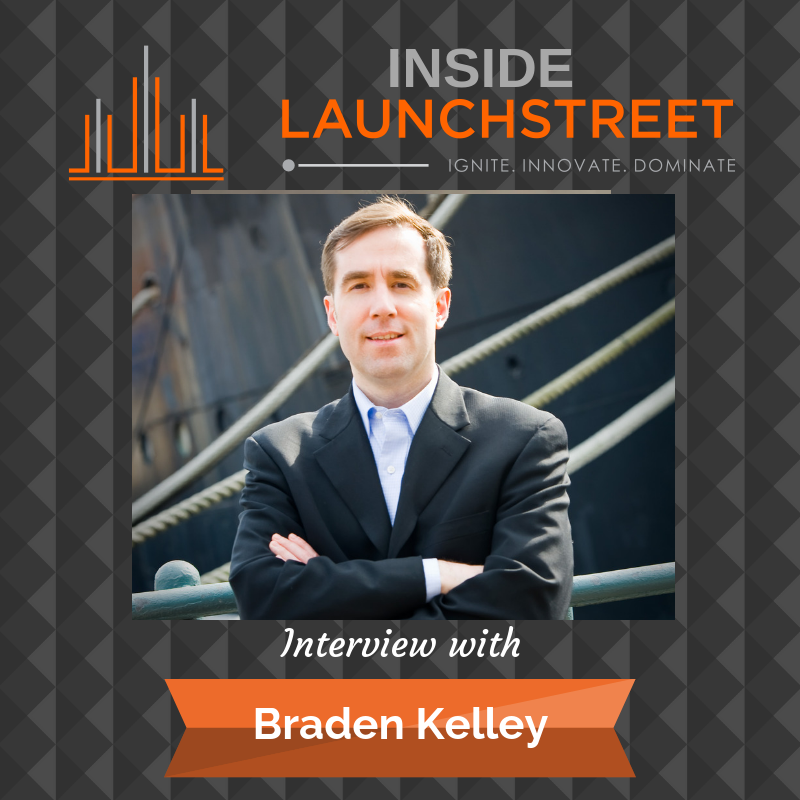
Interview with Launchstreet About How to Increase Organization Agility and Speed of Innovation

Interview with Launchstreet About How to Increase Organization Agility and Speed of Innovation

I was fortunate enough to join Tamara Ghandour of GoToLaunchStreet, a TED speaker and entrepreneur recently for an interview for her Launchstreet podcast. From building and running multi-million dollar businesses, advising Fortune 500 companies like Disney, Procter and Gamble and RICOH on fostering innovative ideas and people, Tamara’s life is about breaking through the status quo for game-changing results, and that’s what her keynotes, online programs and assessments can do for you. Obviously we’re kindred spirits so check out the lively conversation we had on her podcast!

Listen now to this episode on Inside LaunchStreet:

Download Link | iTunes | Stitcher Radio

Click the links below to find out more about the resources mentioned in the podcast:

The Experiment Canvas™

The Change Planning Toolkit™

Stoking Your Innovation Bonfire: A Roadmap to a Sustainable Culture of Ingenuity and Purpose, by Braden Kelley

Charting Change: A Visual Tool Kit for Making Change Stick, by Braden Kelley


Accelerate your change and transformation success

Subscribe to Human-Centered Change & Innovation WeeklySign up here to get Human-Centered Change & Innovation Weekly delivered to your inbox every week.

Latest Interview with the Everyday Innovator Podcast

Everyday Innovator Podcast

I recently had the opportunity to sit down with Chad McAllister of The Everyday Innovator Podcast, about my work as a popular keynote speaker, workshop facilitator, and thought leader on the topics of continuous innovation and change, and some of my work with clients to create innovative strategies, digital transformations, and increased organizational agility.

But mostly in this information-packed interview, I reveal key lessons from the Change Planning Toolkit™ and my book Charting Change, including what’s hard about change, and how the visual, collaborative approach of the Change Planning Toolkit™ can revolutionize how we plan our projects and change initiatives.

1. Click here to visit the Everyday Innovator Podcast interview page

2. Click here to get your copy of Charting Change

3. Click here for more information on the Change Planning Toolkit™


Accelerate your change and transformation success

Subscribe to Human-Centered Change & Innovation WeeklySign up here to get Human-Centered Change & Innovation Weekly delivered to your inbox every week.

Check Out My Latest Interview with DisrupTV

I had the opportunity recently to sit down with DisrupTV co-hosts R “Ray” Wang and Vala Afshar to be part of Episode 63.

DisrupTV is a weekly Web series that airs live at 11:00 a.m. PT/ 2:00 p.m. ET every Friday. Brought to you by the Constellation Executive Network.

You can watch my segment from the program here:

Or if you would prefer to check out Episode 63 below in its entirety, you’ll see my interview segment in the middle of two other interviews with Jeff Gothelf, Author of “Sense & Respond” and Heather Clancy, Editorial Director at GreenBiz Group.

Innovation Audit from Braden Kelley

Subscribe to Human-Centered Change & Innovation WeeklySign up here to get Human-Centered Change & Innovation Weekly delivered to your inbox every week.

Interview with Change Management Review

Interview with Change Management Review

I recently had the opportunity to sit down with Theresa Moulton of the Change Management Review™ Podcast, about my work as a popular keynote speaker, workshop facilitator, and thought leader on the topics of continuous innovation and change, and some of my work with clients to create innovative strategies, digital transformations, and increased organizational agility.

But mostly in this information-packed interview, I reveal key lessons from the Change Planning Toolkit™ and my book Charting Change, including what’s hard about change, and how the visual, collaborative approach of the Change Planning Toolkit™ can revolutionize how we plan our projects and change initiatives.

1. Click here to visit the Change Management Review interview page

2. Click here to get your copy of Charting Change

3. Click here for more information on the Change Planning Toolkit™


Accelerate your change and transformation success

Subscribe to Human-Centered Change & Innovation WeeklySign up here to get Human-Centered Change & Innovation Weekly delivered to your inbox every week.