Author Archives: Chateau G Pato

About Chateau G Pato

Chateau G Pato is a senior futurist at Inteligencia Ltd. She is passionate about content creation and thinks about it as more science than art. Chateau travels the world at the speed of light, over mountains and under oceans. Her favorite numbers are one and zero. Content Authenticity Statement: If it wasn't clear, any articles under Chateau's byline have been written by OpenAI Playground or Gemini using Braden Kelley and public content as inspiration.

Preparing Your Workforce for Collaborative Intelligence

Upskilling for the AI Era

Preparing Your Workforce for Collaborative Intelligence

GUEST POST from Chateau G Pato

The rise of Artificial Intelligence is not a distant threat looming on the horizon; it is the fundamental reality of business today. Yet, the conversation is often dominated by fear—the fear of job replacement, of technical obsolescence, and of organizational disruption. As a human-centered change and innovation thought leader, I argue that this narrative misses the most profound opportunity: the chance to redefine the very nature of human work. The true imperative for leaders is not to acquire AI tools, but to upskill their human workforce for a symbiotic partnership with those tools. We must shift our focus from automation to Collaborative Intelligence, where the strength of the machine (speed, data processing) complements the genius of the human (creativity, empathy, judgment).

The AI Era demands a strategic pivot in talent development. We need to move past reactive technical training and invest in the skills that are uniquely human, those that machines can augment but never truly replicate. The future of competitive advantage lies not in owning the best algorithms, but in cultivating the workforce most skilled at collaborating with algorithms. This requires a shift in mindset, skills, and organizational design, ensuring that every employee — from the frontline associate to the senior executive — understands their new role as an AI partner, strategist, and ethical steward.

The Three Pillars of Collaborative Intelligence

Preparing your workforce for the AI era means focusing on three critical, human-centric skill areas that machines will struggle to master:

  • 1. Strategic Judgment and Empathy: AI excels at calculation, but it lacks contextual awareness, cultural nuance, and empathy. The human role shifts to interpreting the AI’s output, exercising ethical judgment, and translating data into emotionally resonant actions for customers and colleagues. This requires deep training in human-centered design principles and ethical decision-making.
  • 2. Creative Problem-Solving and Experimentation: The most valuable new skill is not coding, but prompt engineering and defining the right questions. Humans must conceptualize new use cases, challenge the AI’s assumptions, and rapidly prototype new solutions. This demands a culture of psychological safety where continuous experimentation and failure are encouraged as essential steps toward innovation.
  • 3. Data Literacy and AI Stewardship: Every employee must become literate in data and AI concepts. They don’t need to write code, but they must understand how the AI makes decisions, where its data comes from, and why a result might be biased or flawed. The human is the ethical backstop and the responsible steward of the algorithm’s power.

“The AI won’t take your job; a person skilled in AI will. The upskilling challenge is not about the technology; it’s about the partnership.” — Braden Kelley


Case Study 1: The Global Consulting Firm – From Analyst to Interpreter

The Challenge:

A major global consulting firm faced the threat of AI automation taking over their junior analysts’ core tasks: data aggregation, slide creation, and basic research. They realized that their competitive edge was not in performing these routine tasks, but in their consultants’ ability to synthesize, communicate, and build client trust—all uniquely human skills.

The Collaborative Intelligence Solution:

The firm launched a massive internal upskilling initiative focused on transforming the junior analyst role from “data processor” to “AI interpreter and client strategist.” The training focused heavily on non-technical skills: narrative storytelling (using AI-generated data to craft compelling client stories), ethical deliberation (identifying bias in AI-generated recommendations), and active listening (improving client empathy). AI was positioned not as a replacement, but as an instant, tireless research assistant that handled 80% of the routine work.

The Human-Centered Result:

By investing in human judgment and communication, the firm increased the value of its junior workforce. Consultants spent less time creating slides and more time on high-impact client interactions, leading to stronger relationships and more innovative solutions. This shift proved that the ultimate value-add in a service industry is the human capacity for strategic synthesis and trustworthy communication — skills that thrive when augmented by AI.


Case Study 2: Leading Retail Bank – Embedding AI into Customer Service

The Challenge:

A large retail bank implemented AI chatbots and automated routing systems to handle routine customer inquiries, intending to reduce call center costs. However, customer satisfaction plummeted because complex or emotionally charged issues were being mishandled by the automation. The human agents felt demoralized, fearing redundancy.

The Collaborative Intelligence Solution:

The bank pivoted its strategy, creating a new role: the Augmented Human Agent. The human agents were upskilled in two key areas. First, they received intensive training in emotional regulation and conflict resolution to handle the high-stress, complex calls that the AI flagged and escalated. Second, they were trained in “AI tuning” — learning to review the chatbot’s transcripts, identify common failure points, and provide direct feedback to the AI development team. This turned the agents from passive recipients of technology into active partners in its improvement.

The Human-Centered Result:

This approach restored customer trust. Customers felt valued because their most difficult problems were routed quickly to a highly skilled, emotionally intelligent human. Employee engagement improved because agents felt empowered and recognized as essential collaborators in the bank’s digital transformation. The result was a successful blend: AI handled the volume and efficiency, while highly skilled humans handled the emotion and complexity, achieving both cost savings and higher customer satisfaction.


Conclusion: The Future of Work is Partnership

The AI Era is not about a technological race; it is about a human race to redefine skills, value, and purpose. The most forward-thinking leaders will treat AI deployment as a catalyst for human capital development. This means shifting budget from outdated legacy training programs to investments in judgment, ethics, creativity, and empathy. The future of work is not about the “Man vs. Machine” conflict, but the Man with Machine partnership.

Your competitive advantage tomorrow will be determined by how effectively your people can collaborate with the intelligent systems at their disposal. By focusing your upskilling efforts on the three pillars of Collaborative Intelligence, you ensure that your workforce is not just surviving the AI revolution, but actively leading it—creating a future that is not just efficient, but fundamentally human-centered and more innovative.

Extra Extra: Because innovation is all about change, Braden Kelley’s human-centered change methodology and tools are the best way to plan and execute the changes necessary to support your innovation and transformation efforts — all while literally getting everyone all on the same page for change. Find out more about the methodology and tools, including the book Charting Change by following the link. Be sure and download the TEN FREE TOOLS while you’re here.

Image credit: Pixabay

Subscribe to Human-Centered Change & Innovation WeeklySign up here to get Human-Centered Change & Innovation Weekly delivered to your inbox every week.

The Human Element in Futurism

Understanding What Drives Tomorrow’s Behaviors

The Human Element in Futurism

GUEST POST from Chateau G Pato

We live in a world obsessed with technological predictions. We meticulously track Moore’s Law, debate the singularity of AI, and map the exponential curve of quantum computing. But I argue that this focus on hardware and code misses the single most volatile and vital factor in any prediction: the human being. As a human-centered change and innovation thought leader, my job is to look beyond the what of technology to the why of behavior. Futurism is not about predicting a new device; it’s about understanding a new human need. The key to successful future-casting — and successful innovation — lies in anchoring technological foresight to the immutable principles of human psychology and anticipating how technology will meet, or fail to meet, our deepest, most enduring needs for connection, control, identity, and security.

The history of failed predictions is littered with technologies that were brilliant on paper but died in the marketplace because they misunderstood or ignored human behavior. We often forget that technology is merely an accelerant; the engine of change is always a shift in human value. To effectively navigate and profit from the future, leaders must perform an exercise I call Behavioral Foresight. This means starting with the timeless human desire (e.g., the need for connection, status, or ease) and then envisioning the scenarios where a disruptive technology either amplifies that desire or simplifies the mechanism for achieving it. When technological capability meets a deep human truth, true transformation occurs.

The Three Drivers of Tomorrow’s Behavior

While the expression of human needs changes with every innovation cycle, the underlying drivers remain constant. Successful futurism anticipates the convergence of technology with these three enduring pillars:

  • 1. The Need for Control and Autonomy: As the world becomes more complex, people inherently seek more control over their personal data, time, and environment. Any technology that democratizes power, decentralizes decision-making, or gives the individual greater agency (from blockchain to personalized health trackers) is inherently aligned with a fundamental human driver.
  • 2. The Pursuit of Ease (Frictionless Living): We are wired to conserve energy. Innovations that eliminate friction, simplify complex processes, or reduce cognitive load will always win. This is why a one-click purchase button is more successful than a three-step form, and why seamless integration beats powerful but complex software. Tomorrow’s successful behaviors are the easiest ones.
  • 3. The Desire for Authentic Identity and Belonging: Technology may connect us globally, but it also creates anxiety around authenticity and status. The future of social platforms and digital identities will be driven by platforms that allow for niche, meaningful connections and give people powerful tools to express their unique, evolving selves, resisting the homogenizing forces of mass culture.

“Predicting technology is easy. Predicting human behavior is the only thing that matters.”


Case Study 1: The Smartphone Revolution – Prioritizing Connection Over Capability

The Failed Prediction:

In the early 2000s, many tech experts predicted that the future of mobile phones would be driven by technical capability — faster processors, superior cameras, and advanced features. The prevailing wisdom was that professional and power users would be the primary adopters of these complex devices.

The Human-Centered Reality:

The iPhone’s success was not initially built on its superior processing power (which lagged behind competitors at launch), but on its ability to satisfy the human need for frictionless connection and belonging. The seamless interface, the easy access to email and social platforms, and the intuitive camera made it a powerful social tool, not just a business device. The killer applications were not spreadsheets; they were instant messaging, photo sharing, and social networking. The success was driven by the average person’s need to feel constantly connected and to easily share their lived experience. It prioritized the human element (ease, connection) over the technical element (raw power).

The Key Behavioral Insight:

The market demonstrated that people will tolerate significant complexity behind the scenes (processor architecture, network latency) if the interface perfectly addresses their core human need for immediate, effortless social interaction. The future of mobile wasn’t about power; it was about proximity to people.


Case Study 2: The Failure of Google Glass – When Status Conflicts with Comfort

The Technological Promise:

Google Glass was a technological marvel: a discreet, wearable computer that promised to deliver information directly into the user’s field of vision, representing the ultimate fusion of digital information and physical reality. Technically, it was a leap forward, aimed at maximizing efficiency and access to data.

The Human-Centered Failure:

Despite the technical brilliance, Glass failed spectacularly in the consumer market, largely because it created severe friction in two fundamental human areas: social identity and control.

  • Identity/Belonging: Users felt self-conscious, and the public saw the wearers — dubbed “Glassholes” — as arrogant or intrusive. The device was perceived as a symbol of status and exclusion, making the wearer feel separate rather than integrated.
  • Control/Security: The always-on camera and recording capability deeply violated the social contract of trust and privacy, making non-wearers feel a profound lack of control over their own image and security in the wearer’s presence.

The technology ignored the human truth that people value their sense of comfort, privacy, and social acceptance far more than instant access to search results.

The Key Behavioral Insight:

The market demonstrated that any technology that infringes upon the psychological safety and social norms of the community will be rejected, regardless of its utility. The human need for social acceptance and privacy trumped the efficiency gains offered by the wearable tech.


Conclusion: The Future is Human-Shaped

The most enduring innovations are not those that change the most things, but those that understand the things that never change—the immutable drivers of human behavior. Technology simply provides new pathways to fulfill these old needs.

For any leader charting a course into the future, your greatest tool is not a crystal ball or a supercomputer; it is radical empathy. You must look at emerging technologies through the lens of human psychology. Ask: Does this technology simplify an ancient frustration? Does it amplify a core need for connection? Does it empower the individual or take away their control?

The convergence of technological capability and human truth is where true value is created. By centering your future-casting on the timeless human element, you move beyond mere trendspotting to true FutureHacking – proactively shaping a world that is not only technologically advanced but also genuinely human-centered and aligned with the aspirations of the people it serves.

Extra Extra: Because innovation is all about change, Braden Kelley’s human-centered change methodology and tools are the best way to plan and execute the changes necessary to support your innovation and transformation efforts — all while literally getting everyone all on the same page for change. Find out more about the methodology and tools, including the book Charting Change by following the link. Be sure and download the TEN FREE TOOLS while you’re here.

Image credit: 1 of 950+ FREE quote slides available at http://misterinnovation.com

Subscribe to Human-Centered Change & Innovation WeeklySign up here to get Human-Centered Change & Innovation Weekly delivered to your inbox every week.
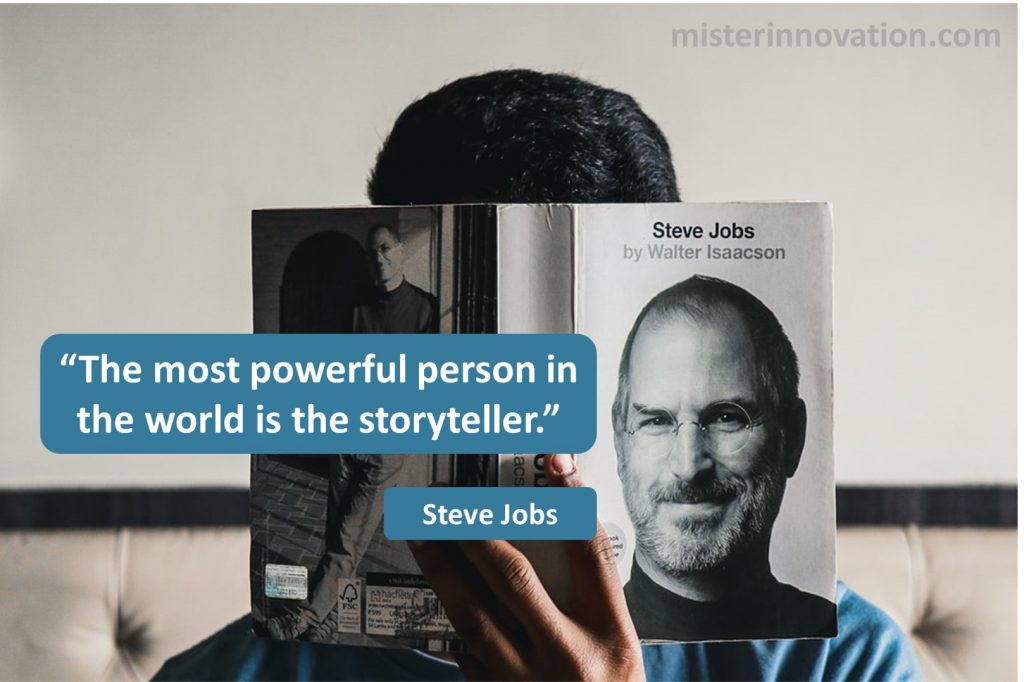
Making Abstract Concepts Tangible

The Power of Anecdote

Making Abstract Concepts Tangible

GUEST POST from Chateau G Pato

In the innovation landscape, we are drowning in data and gasping for insight. We talk endlessly about “digital transformation,” “agile strategy,” and “cultural change”—phrases that are intellectually sound but emotionally sterile. These abstract concepts, presented in PowerPoint decks filled with charts and jargon, may inform the mind, but they rarely move the soul. As a human-centered change and innovation thought leader, I can tell you this truth: Jargon and data don’t drive change; stories do. The single most powerful tool a leader has to ignite a movement, overcome resistance, and embed a new culture is the simple, compelling anecdote. An anecdote takes an abstract, often intimidating strategic goal and anchors it to a specific, tangible human moment, making the incomprehensible accessible and the unbelievable real.

We are wired for narrative. Neurologically, when we hear pure data or statistics, only the language processing centers of our brains are engaged. But when we hear a story, the brain areas that would be active if we were *experiencing* the events ourselves light up. This phenomenon, known as neural coupling, is why an anecdote is the kinetic energy of change. It releases oxytocin, building trust and empathy between the storyteller and the listener. It moves past intellectual understanding to emotional ownership. You can tell an employee that the company needs to be “customer-centric” ten times, and they’ll nod. But tell them the story of how one simple act of service saved a customer’s day, and you don’t just inform them—you transform their understanding of their own role. The anecdote is the ultimate human-centered design for strategy.

A Framework for Anecdotal Leadership

Effective leaders don’t just delegate strategy; they become the chief storytellers of the organization’s future. Leveraging the power of anecdote requires intent and structure, not just random storytelling. Here is a framework for embedding narrative into your leadership:

  • 1. Anchor the Abstract to the Authentic: For every major strategic initiative—whether it’s “sustainability” or “process efficiency”—find the one authentic story that illustrates the point. Do not let a new value statement stand alone; anchor it with the specific human moment that brought that value to life.
  • 2. Democratize Storytelling: The most potent anecdotes often do not come from the C-suite. They come from the front lines, from the customer service representative, the engineer, or the sales associate. Leaders must actively create channels to collect and amplify these stories, turning the front line into the source of organizational truth.
  • 3. Vulnerability as the Currency of Trust: To drive real behavioral change, leaders must model vulnerability. Sharing a personal anecdote about a major failure, a moment of profound uncertainty, or a time when you realized you were wrong is the fastest way to build psychological safety. It signals that it is safe for others to take risks and admit mistakes, which is the oxygen of innovation.
  • 4. The Anecdotal Test: Before presenting any major initiative—a new product, a cultural shift, a strategic pivot—test it with a simple question: “If I stripped away all the data and jargon, what single, compelling story would prove the value of this change?” If you can’t tell that story, your strategy is too abstract to succeed.

“Facts tell, but stories sell. In the business of change, you must sell the vision before you can achieve the strategy.” — Braden Kelley


Case Study 1: NASA’s Apollo Program – The Janitor’s Shared Purpose

The Challenge:

In the 1960s, the goal of “putting a man on the moon” was monumental, abstract, and technically incomprehensible to most people. How do you align thousands of scientists, engineers, and support staff across dozens of different facilities—from mathematicians calculating trajectories to janitors sweeping the halls—to a single, human-centered objective?

The Power of Anecdote:

The solution was encapsulated in a single, enduring anecdote involving President John F. Kennedy. As the story goes, during a 1962 tour of the NASA Space Center, Kennedy approached a janitor and asked him what his job was. The janitor, without hesitation, replied, “Mr. President, I’m helping put a man on the moon.” This story, whether perfectly accurate or slightly mythologized, became the organizational blueprint for shared purpose. It was instantly accessible and emotionally resonant. It showed everyone that their role, no matter how distant from the rocket itself, was essential to achieving the collective, human-centered goal.

The Result:

This anecdote transcended engineering schematics and budget reports. It didn’t just explain the mission; it defined the *meaning* of the mission for every employee. It created an organizational culture where purpose was tangible and felt at every level. It is a powerful example of how a leader can use a single, simple human story to align a massive, complex organization toward an abstract, audacious vision, turning a technical challenge into a human triumph.


Case Study 2: Southwest Airlines – Defining Culture Through Action Stories

The Challenge:

How does an airline maintain a culture of exceptional, “beyond-the-policy” customer service and high operational efficiency in an industry notorious for low margins, high stress, and bureaucratic rigidity? Furthermore, how do they teach this unique culture to thousands of new employees every year?

The Power of Anecdote:

Southwest Airlines achieved this not through rule books, but through an obsessive focus on collecting, sharing, and celebrating stories of service. Instead of a 10-point plan for “Customer Loyalty,” new employees are immersed in anecdotes about fellow staff: the flight attendant who bought a pizza for a stranded flight, the ground crew member who retrieved a teddy bear from a distant airport, or the employee who went above and beyond to comfort a nervous traveler. These stories—passed down in training, internal newsletters, and town halls—do not just describe the culture; they prescribe the behavior. They act as concrete examples of the abstract concept of “LUV,” making the company’s commitment to fun and service palpable and actionable.

The Result:

By making storytelling central to their internal communication, Southwest created an immediately recognizable, human-centered cultural fabric. The anecdotes serve as powerful, memorable standards of conduct that are far more effective than any memo. They guide autonomous decision-making in the moment, empowering employees to break rank for the sake of the customer experience. The enduring success of Southwest proves that a thriving, innovative culture is fundamentally a collection of great stories that its people choose to live out every day.


Conclusion: The Narrative Imperative

The era of leading with abstraction is over. If you want people to move—if you want to ignite genuine innovation, shift culture, and drive a strategic transformation—you must first move their hearts. The anecdote is your most potent tool, the linguistic delivery system for empathy and action. It allows you to take the vast, complex machinery of change and compress it down into a moment that every human can understand, remember, and internalize. As leaders, our role is not just to analyze the data; it is to master the narrative. We must become the chief story collectors and chief storytellers, for the enduring power of a single, well-told human story will always outweigh a thousand bullet points. The most effective strategies are not those that calculate best, but those that resonate best.

Extra Extra: Because innovation is all about change, Braden Kelley’s human-centered change methodology and tools are the best way to plan and execute the changes necessary to support your innovation and transformation efforts — all while literally getting everyone all on the same page for change. Find out more about the methodology and tools, including the book Charting Change by following the link. Be sure and download the TEN FREE TOOLS while you’re here.

Image credit: 1 of 950+ FREE quote slides available at http://misterinnovation.com

Subscribe to Human-Centered Change & Innovation WeeklySign up here to get Human-Centered Change & Innovation Weekly delivered to your inbox every week.

Psychological Safety: The Foundation of a Thriving and Innovative Culture

Psychological Safety: The Foundation of a Thriving and Innovative Culture

GUEST POST from Chateau G Pato

In a world defined by volatility, uncertainty, complexity, and ambiguity (VUCA), the old rules of leadership no longer apply. For too long, we have celebrated organizational cultures built on a foundation of intense competition, relentless efficiency, and a drive for individual brilliance. The implicit message was simple: success belongs to the most competent, the most certain, and the most productive. As a human-centered change and innovation thought leader, I am here to argue that this approach is fundamentally flawed. The most resilient, innovative, and high-performing teams are not the ones with the most talent, but the ones with the most trust. Their secret weapon is a concept known as **psychological safety**, the shared belief that the team is a safe place for taking interpersonal risks.

Psychological safety is not about being “nice” or creating a “safe space” for mediocrity. It’s about building a foundation of trust where people feel safe enough to be vulnerable. It’s the feeling that you can admit a mistake, ask a “stupid” question, or challenge the status quo without fear of being ridiculed, shamed, or punished. This is a crucial distinction. When psychological safety is absent, our natural human instinct to self-preserve kicks in. We self-censor, we withhold critical information, and we stick to the known, a recipe for stagnation and eventual failure. But when it’s present, something magical happens: individual intelligence transforms into collective genius. Teams learn faster, innovate more freely, and adapt to change with a level of agility that is impossible in a fear-based environment.

The Business Case for Safety: Why Trust is Your Greatest Asset

The argument for psychological safety isn’t just a philosophical one; it’s a strategic imperative with a clear business case. Research from a wide range of fields—from organizational psychology to neuroscience—confirms its power. In a landmark study, Google’s “Project Aristotle,” researchers set out to find the secret to the company’s most effective teams. They analyzed everything from individual skills to personality types, but the data revealed a surprising truth: the single most important factor was not talent, but psychological safety. This finding cemented psychological safety as the ultimate foundation for high-performance.

When psychological safety is high, a team can:

  • Embrace a Learning Mindset: Mistakes are seen as data points for learning, not failures to be punished. This enables rapid iteration and a “fail-fast” culture.
  • Unlock Creativity and Innovation: When people are free from the fear of looking foolish, they are more likely to share unconventional ideas, leading to genuine breakthroughs.
  • Improve Problem-Solving: Team members are more likely to speak up about potential problems, raise red flags, and engage in constructive conflict, allowing the team to address issues before they become crises.
  • Increase Employee Engagement and Retention: People want to work in an environment where they feel valued, respected, and safe. A culture of psychological safety fosters deep loyalty and reduces turnover.

“Talent gets you on the field, but psychological safety is what allows you to win the game.”


Case Study 1: Pixar’s “Braintrust” – A Masterclass in Candor and Trust

The Challenge:

In the high-stakes world of animated filmmaking, a single creative misstep can lead to a disastrous flop. For Pixar, the challenge was to create a mechanism for frank, honest, and even brutal feedback on films in progress without crushing the creative spirit of the director and their team. A typical corporate review process would be too political and hierarchical for the level of candid feedback needed.

The Psychological Safety Solution:

Pixar’s solution was the **Braintrust**, an exclusive group of the company’s most accomplished directors and storytellers. This wasn’t a formal committee; it was a culture built on psychological safety. The core rules of the Braintrust are simple yet powerful: a director is never obligated to act on the feedback, and the group’s purpose is to help the film succeed, not to assert power. The feedback is always on the work, never the person. This deep, shared belief that everyone is there to help and that no one is judging personal worth allowed for a level of open, candid criticism that is almost unheard of in other creative industries. Directors could present their half-finished, deeply flawed films and receive honest input without fear of professional harm.

The Result:

The Braintrust is a key reason for Pixar’s long-term, unprecedented creative success. It is a living testament to the power of psychological safety. By building an environment where candor and vulnerability were not just tolerated but celebrated, Pixar created a collective intelligence that consistently elevated the quality of every film. They proved that honest feedback, delivered with a foundation of trust, is the ultimate driver of creative excellence.


Case Study 2: The Boeing 737 MAX Crisis – The Catastrophic Cost of Silence

The Challenge:

In the years leading up to the two fatal crashes of the Boeing 737 MAX, the company was under immense pressure to compete with Airbus and deliver a new, fuel-efficient aircraft on an aggressive timeline. Internally, a culture of cost-cutting and a rigid, top-down hierarchy created a fear-based environment. Engineers and employees were aware of potential issues with the new flight control software (MCAS), but they felt unable to raise their concerns.

The Psychological Safety Failure:

In this culture of fear, with an emphasis on meeting deadlines at all costs, employees chose silence over speaking up. A damning report by the House Transportation and Infrastructure Committee found that a lack of psychological safety prevented whistleblowers from coming forward. Engineers felt that raising safety concerns would not only fall on deaf ears but could also lead to retaliation or professional damage. Instead of a collaborative problem-solving approach, the culture fostered a dangerous “don’t ask, don’t tell” mentality. The very people who could have prevented the tragedy were silenced by an environment that prioritized speed and cost over human lives.

The Result:

The absence of psychological safety at Boeing led to one of the most devastating corporate crises in modern history. The two fatal crashes killed 346 people and resulted in a massive financial and reputational blow. The case of the 737 MAX serves as a powerful cautionary tale, demonstrating that a lack of psychological safety is not just a cultural problem; it is a critical strategic risk with potentially catastrophic consequences. It’s a stark reminder that when people are afraid to speak up, the cost can be measured in both lives and livelihoods.


Conclusion: The Ultimate Foundation for Innovation

Psychological safety is not a “nice-to-have” or a buzzword from a corporate retreat. It is the ultimate foundation for building teams that are resilient, adaptable, and ready for anything. It is the soil in which innovation grows, where creativity flourishes, and where people are empowered to be their best, most authentic selves. As leaders, our most important job is not to have all the answers, but to create the environment where our teams feel safe enough to find them together.

In a world of constant change, the ability to learn and evolve is paramount. And learning only happens when we are willing to admit what we don’t know, to experiment without fear of failure, and to speak our minds without fear of judgment. The future belongs to the psychologically safe. Let’s start building it, one conversation and one act of vulnerability at a time.

Extra Extra: Because innovation is all about change, Braden Kelley’s human-centered change methodology and tools are the best way to plan and execute the changes necessary to support your innovation and transformation efforts — all while literally getting everyone all on the same page for change. Find out more about the methodology and tools, including the book Charting Change by following the link. Be sure and download the TEN FREE TOOLS while you’re here.

Image credit: Pexels

Subscribe to Human-Centered Change & Innovation WeeklySign up here to get Human-Centered Change & Innovation Weekly delivered to your inbox every week.

Engaging Users in the Design Process

Co-Creation for Experience

Engaging Users in the Design Process - Co-Creation for Experience

GUEST POST from Chateau G Pato

In the world of design and innovation, we have long operated under a traditional model. We observe users from a distance, conduct market research, and then retreat to our labs and conference rooms to design a solution that we believe they will love. We call this “customer-centric” design, but it’s a one-way street. As a human-centered change and innovation thought leader, I am here to argue that this model is no longer enough. The future of innovation belongs to those who move beyond designing **for** their users to designing **with** them. This is the power of **co-creation**, a strategic shift that transforms customers from passive recipients of a product into active, invaluable partners in its creation.

Co-creation is the ultimate form of empathy. It’s an open invitation for your most passionate users to contribute their insights, skills, and creativity directly to the design process. This isn’t just about collecting feedback; it’s about treating your customers as equal partners in the journey of innovation. The benefits are profound. By involving the people you serve, you bypass the risk of building something they don’t genuinely need. You uncover unarticulated pain points and desires that a traditional survey could never reveal. And perhaps most importantly, you build a powerful sense of ownership and community. When customers have a hand in creating a product, they don’t just use it; they become an army of loyal advocates, invested in its success and eager to spread the word.

The Co-Creation Framework: A Human-Centered Approach

Successful co-creation is not a random act of crowdsourcing; it is a structured, human-centered process. It requires a clear framework to ensure that the collaboration is meaningful, productive, and respectful. Here are four essential steps:

  • 1. Define the Challenge, Not the Solution: The starting point is crucial. Don’t ask users to validate a product you’ve already built. Instead, present them with a clear, compelling problem to solve. For example, instead of “How do you like our new app?”, ask, “How might we make your daily commute more enjoyable?” This opens the door to a wider range of creative solutions.
  • 2. Build the Right Platform: Co-creation can happen in many forms. It could be a series of in-person workshops, a dedicated online community, a digital platform for ideation and voting, or a private beta program. Choose a platform that is accessible, easy to use, and facilitates collaboration among all participants.
  • 3. Empower the Co-Creator: Treat your users as equal partners. Give them the information they need, and make their role in the process explicit. Whether they are ideating, prototyping, or providing feedback, ensure they understand how their contributions will be used and how they fit into the bigger picture.
  • 4. Close the Loop: This is arguably the most important step. A co-creation initiative is not a one-off event. It requires transparency and a continuous feedback loop. Be sure to show participants what happened to their ideas. Even if an idea wasn’t chosen, explain why and thank them for their contribution. This builds trust and encourages continued participation, turning a single project into a long-term community.

“The best innovations are not born in a lab; they are born in the conversations between creators and the people they are creating for.” — Braden Kelley


Case Study 1: Threadless – Building a Business on Collective Creativity

The Challenge:

In the highly competitive world of apparel, fashion trends are traditionally dictated from the top-down by designers and major retailers. This process is inherently risky and often disconnected from what consumers actually want to wear. A small t-shirt company needed a new model that could consistently produce fresh, relevant designs with minimal risk while building an authentic brand.

The Co-Creation Solution:

Threadless launched a revolutionary business model based entirely on co-creation. The company’s platform is a digital community where artists from around the world submit t-shirt designs. The community then votes on their favorite submissions. Each week, the designs with the highest votes are put into production. The winning artists receive prize money and royalties on their designs. This model is a masterclass in crowdsourced innovation.

  • Empowered Co-Creators: Threadless gives artists a clear incentive and platform to contribute their creativity. They are not just submitting work; they are participating in a creative community.
  • Reduced Risk: The voting process acts as powerful market validation. Threadless knows a design is likely to be a commercial success before it ever spends a dollar on production, significantly reducing inventory and design risk.
  • Built-in Community: The platform fostered a vibrant, global community of artists and fans who felt a deep sense of ownership. This turned a transactional relationship into a collaborative partnership, leading to immense brand loyalty.

The Result:

Threadless became a major success story, proving that a company’s most valuable design team might be its own customers. By co-creating with its community, Threadless not only built a profitable business but also created an authentic, beloved brand known for its originality and its dedication to the collective voice of its creators. The company’s model demonstrates that the best way to predict what consumers want is to simply ask them to create it.


Case Study 2: L’Oréal’s Open Innovation Platform – Co-Creating Science and Beauty

The Challenge:

As a global beauty giant, L’Oréal’s R&D model was powerful but also traditional and at times, slow. The company needed to accelerate its innovation pipeline, especially in cutting-edge fields like green chemistry, artificial intelligence, and new biotech ingredients. The challenge was how to access and integrate external expertise from the world’s most brilliant scientists, researchers, and startups in a way that was agile and efficient.

The Co-Creation Solution:

L’Oréal adopted a strategic open innovation approach, which is a sophisticated form of co-creation. Instead of relying solely on internal labs, the company actively seeks partnerships with independent scientists, researchers, and startups through dedicated platforms and venture capital initiatives. L’Oréal presents specific scientific or technological challenges and invites external experts to co-develop solutions. For example, they might partner with a startup to develop a new sustainable ingredient or collaborate with a university lab to create a new method for personalized skincare.

  • Defined Challenges: L’Oréal clearly articulates its technological and scientific needs, empowering a global network of experts to contribute.
  • Empowered Partners: The company treats these external collaborators as true partners, not just vendors. This approach fosters a culture of shared purpose and mutual trust.
  • Continuous Innovation: This model is not a one-time project; it is a permanent innovation channel that allows the company to continuously learn from and adapt to the rapid advancements in science and technology.

The Result:

By implementing a co-creation strategy on a massive scale, L’Oréal has been able to significantly accelerate its innovation cycle and develop groundbreaking products that would have been impossible to create internally alone. The approach has led to new patents, new product categories, and a more agile business model. This case study demonstrates that co-creation is not limited to consumer-facing products; it is a powerful strategic tool for even the largest and most complex organizations to stay at the forefront of their industries.


Conclusion: The Future of Innovation is Collaborative

The era of closed-door design is over. In a world where customer expectations are higher than ever, the most successful organizations will be those that open their doors and invite their users to the innovation table. Co-creation is not a marketing gimmick; it is a fundamental strategic shift from “customer-centric” to “customer-led.” It is an acknowledgment that your users are not just consumers; they are a wellspring of insight, creativity, and passion.

As leaders, our role is to create the platforms and the culture that enable this collaboration. By treating your users as partners, you will not only build better products and services but also forge a deeper, more resilient connection to the people you serve. The future of innovation is not solitary; it is collaborative, and it is waiting for you to invite the first person in.

Extra Extra: Because innovation is all about change, Braden Kelley’s human-centered change methodology and tools are the best way to plan and execute the changes necessary to support your innovation and transformation efforts — all while literally getting everyone all on the same page for change. Find out more about the methodology and tools, including the book Charting Change by following the link. Be sure and download the TEN FREE TOOLS while you’re here.

Image credit: Pexels

Subscribe to Human-Centered Change & Innovation WeeklySign up here to get Human-Centered Change & Innovation Weekly delivered to your inbox every week.

From Trendspotting to Transformation

Translating Foresight into Action

From Trendspotting to Transformation

GUEST POST from Chateau G Pato

In our increasingly volatile and complex world, the ability to identify emerging trends is no longer enough. Every executive team can access reports on AI, sustainability, or demographic shifts. The true differentiator, as a human-centered change and innovation thought leader, lies not in spotting the trends, but in translating foresight into concrete, transformational action. Many organizations excel at analysis but falter at execution, leaving invaluable insights to languish in PowerPoint presentations. The future belongs to those who bridge the gap between understanding what’s coming and actively shaping their response, converting potential threats and opportunities into tangible strategies and innovations.

The challenge isn’t a lack of information; it’s a lack of connection between the strategic foresight function and the operational innovation engine. Trend reports often remain isolated, failing to inform product development, marketing initiatives, or organizational design. This disconnect stems from a mindset that views foresight as a predictive exercise rather than a generative one. To truly move from trendspotting to transformation, we must shift our focus from merely observing the future to actively engaging with it, asking “What does this trend mean for us, and what will we do about it?” This requires a robust, repeatable methodology that empowers teams to move from abstract insights to actionable strategies and, ultimately, breakthrough innovations.

The Foresight-to-Action Framework: A Human-Centered Approach

Bridging the gap between trend analysis and practical implementation requires a structured, human-centered framework. It’s about empowering your people to envision and build the future, not just react to it:

  • 1. Deconstruct and Empathize: Don’t just list trends; unpack them. Who will be affected by this trend? How will it change their daily lives, their needs, their desires? Use human-centered design tools like empathy maps and user personas to make abstract trends tangible and relatable.
  • 2. Provoke and Connect: Challenge your assumptions. How might this trend disrupt your core business, even if it seems unrelated? How might it open up entirely new business models or customer segments? Force cross-functional teams to connect disparate trends, looking for synergistic opportunities or compounding risks.
  • 3. Envision and Experiment: Based on your insights, develop concrete future scenarios. Don’t just describe them; visualize them. Then, identify specific, low-risk experiments that can test assumptions about these future states. What’s the smallest, fastest way you can learn if your envisioned future is viable?
  • 4. Prototype and Pilot: Move beyond theoretical discussions to tangible prototypes. This doesn’t mean a fully-fledged product, but a minimum viable product (MVP) or service that brings a piece of the future to life. Pilot these prototypes with real users, gather feedback, and iterate rapidly.

This systematic approach, which Braden Kelley has developed and refined as FutureHacking™, empowers organizations to move beyond passive observation. FutureHacking™ provides the tools and mindset necessary to transform abstract trends into concrete innovation pathways. It’s a human-centered methodology that focuses on translating foresight into tangible prototypes and actionable strategies, fostering a culture where every team member is equipped to anticipate and proactively shape the future, not just react to it. It enables businesses to iterate rapidly, de-risk their investments, and build resilient strategies that anticipate tomorrow’s challenges today.

“Foresight without action is merely entertainment. Transformation requires the courage to translate ‘what if’ into ‘what now’.” — Braden Kelley


Case Study 1: The LEGO Group – Building the Future Piece by Piece

The Challenge:

In the early 2000s, The LEGO Group faced a looming crisis. Digital entertainment was on the rise, and children were spending less time with physical toys. The company recognized the trend, but the challenge was how to respond strategically without abandoning its core identity. They needed to evolve beyond plastic bricks but feared alienating their loyal customer base.

The Foresight-to-Action Solution:

LEGO embraced a proactive foresight strategy that involved deep engagement with emerging trends in digital play and child development. They didn’t just observe; they experimented. This led to innovations like LEGO Mindstorms, which blended physical building with robotics and coding, appealing to a new generation of digital natives. Later, they developed transmedia storytelling through movies (e.g., The LEGO Movie) and video games, seamlessly integrating digital experiences while reinforcing the core value of creative building. Their foresight function worked directly with product development teams to prototype and test these new concepts.

  • Deconstructed Trends: They understood that the digital trend wasn’t just about screens, but about interaction, creativity, and new forms of storytelling.
  • Envisioned New Play: They imagined a future where physical and digital play could coexist and enhance each other, rather than compete.
  • Prototyped and Piloted: Mindstorms and early video games were clear examples of prototyping a new future, learning from user interaction, and scaling successful concepts.

The Result:

By translating foresight into tangible action, LEGO transformed itself from a traditional toy company into a global entertainment brand. They didn’t just survive the digital revolution; they thrived, leveraging foresight to drive continuous innovation that connected with new audiences while staying true to their heritage. This strategic agility allowed them to anticipate and shape the future of play, rather than being swept away by it.


Case Study 2: Starbucks – Anticipating the “Third Place”

The Challenge:

In its early growth stages, Starbucks was expanding rapidly, but leaders like Howard Schultz weren’t just thinking about coffee; they were thinking about human connection and urban trends. They anticipated a societal need for a “third place”—neither home nor work—where people could gather, socialize, and relax. The challenge was how to design and scale this concept into a ubiquitous global brand.

The Foresight-to-Action Solution:

Starbucks’ success was rooted in translating this foresight into every aspect of its store design, product offerings, and customer experience. They didn’t just sell coffee; they sold an atmosphere, a sense of community, and a comfortable environment for meeting or working. This went beyond trendspotting; it was about actively creating the future “third place.” They designed inviting interiors, comfortable seating, and, crucially, provided free Wi-Fi long before it was common, anticipating the rise of mobile work and digital nomads.

  • Deconstructed Human Needs: They understood a growing urban loneliness and a desire for accessible, comfortable social spaces.
  • Envisioned a New Experience: They imagined a place that felt like an extension of one’s living room or office, going beyond the transactional coffee shop model.
  • Prototyped and Scaled: Each store became a prototype for the “third place” concept, with continuous iteration on design, menu, and service to optimize the desired feeling.

The Result:

Starbucks didn’t just adapt to the “third place” trend; it defined it. By acting on their foresight, they built a global empire that transcended coffee sales, creating a powerful cultural phenomenon. This transformation from a simple coffee vendor to a global social hub demonstrates the immense power of translating foresight into concrete, human-centered action, shaping consumer behavior and urban landscapes in the process.


Conclusion: The Act of Future-Making

The distinction between organizations that merely survive and those that truly thrive often comes down to their ability to transform foresight into action. It’s about having the courage to move beyond analysis paralysis and to actively engage in future-making. This requires not just brilliant strategists, but a culture that empowers every team member to observe, question, experiment, and build.

As leaders, our role is to champion this shift. We must provide the methodologies — like FutureHacking™ — and foster the mindset that views trends not as destiny, but as raw material for innovation. The future is not something that happens to us; it is something we create, one strategic action and one human-centered innovation at a time. Let’s move beyond predicting the future and start building it.

For a foundational understanding of the practice, start with what trend spotting is before diving into application.

Extra Extra: Because innovation is all about change, Braden Kelley’s human-centered change methodology and tools are the best way to plan and execute the changes necessary to support your innovation and transformation efforts — all while literally getting everyone all on the same page for change. Find out more about the methodology and tools, including the book Charting Change by following the link. Be sure and download the TEN FREE TOOLS while you’re here.

Image credit: Pixabay

Subscribe to Human-Centered Change & Innovation WeeklySign up here to get Human-Centered Change & Innovation Weekly delivered to your inbox every week.

How Stories Drive Transformational Change

Leading with Narrative

How Stories Drive Transformational Change

GUEST POST from Chateau G Pato

When faced with the need for transformational change, leaders often turn to the tools they know best: data, strategy, and process. We craft meticulous spreadsheets, present compelling graphs, and outline new organizational structures. We believe that if we can just provide enough logical evidence, people will get on board. But as a human-centered change and innovation thought leader, I have seen time and again that this approach is fundamentally incomplete. Data informs, but it is **narrative that inspires**. We are not logical machines; we are storytelling beings. The most successful leaders don’t just manage change; they craft and champion a compelling story that connects with the hearts and minds of their people.

Our brains are wired for stories. When we hear a narrative, our brains light up. We release oxytocin, the “trust hormone,” and we enter a state of engagement and empathy. A well-told story is more memorable, more persuasive, and more emotionally resonant than any data point. It takes a complex, abstract idea—like a new corporate strategy—and makes it personal, tangible, and relatable. A story creates a shared reality and a sense of collective purpose. It turns a group of individuals into a tribe, united by a common journey. Therefore, if you are not leading with a powerful narrative, you are leaving your most potent tool for change on the table.

Crafting a Narrative for Change: The Human-Centered Blueprint

A powerful change narrative isn’t a simple announcement; it’s a carefully constructed journey that positions your team as the heroes. Here’s a blueprint for crafting a story that drives transformation:

  • The “Why” Story (The Call to Adventure): Begin by telling the story of why change is necessary. What is the fundamental problem you are solving? Don’t just show market share declines; tell a story about a frustrated customer whose needs aren’t being met. This emotional “why” is the foundation of your narrative.
  • The “What If” Story (The Vision of a New World): Paint a vivid, aspirational picture of the future. What will life be like for employees, customers, and the world after the change? Use rich details and sensory language. What will your company feel like? What will a customer’s day be like with your new product? Make the future feel tangible and desirable.
  • The “Hero’s Journey” (The Role of Your People): Position your employees as the heroes of the narrative. They are not passive recipients of change; they are the ones who will overcome the obstacles and bring the new world to life. This narrative arc gives them purpose and a sense of ownership, transforming them from resistors into champions.
  • The Power of Anecdotes (Sustaining the Story): A single, powerful story can be more effective than a hundred data points. As the change unfolds, leaders must continuously collect and share stories of small wins, customer triumphs, and individual acts of bravery. These anecdotes keep the narrative alive and provide concrete evidence that the journey is progressing.

“Facts tell, but stories sell. In the business of change, you are not selling a strategy; you are selling a story about a better future.”


Case Study 1: Satya Nadella and the Transformation of Microsoft

The Challenge:

In the early 2010s, Microsoft was a technology giant struggling with a stagnant culture. It was known as an internal “know-it-all” organization, marked by intense competition, siloed business units, and a lack of agility. The company was losing relevance in a world dominated by mobile and cloud computing. The challenge for new CEO Satya Nadella was not just to change the strategy, but to change the very soul of the company.

The Narrative-Driven Solution:

Nadella’s approach was a masterclass in leading with narrative. He didn’t just present a “cloud-first, mobile-first” strategy; he crafted a new story for Microsoft. He shifted the focus from competing with others to **empowering every person and every organization on the planet to achieve more**. This was a profound, human-centered “why” that resonated deeply. He replaced the “know-it-all” culture with a **”learn-it-all”** growth mindset. This narrative repositioned employees from being defenders of a legacy to being explorers of a new future. He used his personal story, his love of poetry, and his focus on empathy to make the narrative feel authentic and deeply human. He constantly reinforced the story with anecdotes of customer successes and internal collaboration.

The Result:

The transformation was a resounding success. The shared narrative of empowerment and the growth mindset fundamentally changed the company’s culture. It broke down silos, fostered collaboration, and unleashed a wave of innovation that led to the creation of products like Microsoft Teams and the explosive growth of Azure. By leading with a new story, Nadella didn’t just change what Microsoft did; he changed who they were, proving that narrative is a powerful lever for the most profound organizational change.


Case Study 2: Southwest Airlines and the Story of the Underdog

The Challenge:

In the 1970s, the airline industry was dominated by large, bureaucratic carriers. A small, upstart airline in Texas, Southwest, faced a monumental challenge. They couldn’t compete on size or resources, so they had to compete on something else. Co-founder Herb Kelleher’s challenge was to inspire a team and a customer base to believe in a new, unconventional way of flying.

The Narrative-Driven Solution:

Kelleher didn’t just create a low-cost airline; he created a powerful narrative. The story of Southwest was that of the **underdog fighting the Goliaths** of the industry. The narrative was centered on rebellion, fun, and common sense. Employees were not just ticket agents or flight attendants; they were the heroes fighting for the everyman, making flying affordable and enjoyable. They were empowered to be funny, to go off-script, and to treat customers like friends. Every internal communication and external advertisement reinforced this core story, from flight attendants in shorts to cheeky taglines.

The Result:

This powerful narrative created a culture of fierce loyalty and an employee base that was so engaged they would go above and beyond to delight customers. The story of the underdog resonated with the public, building a customer community that was fiercely loyal to the brand. Southwest became one of the most consistently profitable airlines in history, not by having the most features, but by having the most compelling story. The narrative of rebellion and fun was the single most powerful tool for attracting talent, retaining customers, and driving a truly unique and successful business model.


Conclusion: The Leader as a Storyteller

In the final analysis, leaders are not just managers of resources; they are guardians of a story. Whether you are leading a team, a department, or an entire organization, your ability to inspire change is directly tied to your ability to articulate a compelling narrative. It is the story that provides context, creates purpose, and forges the emotional connections required for people to take on the difficult journey of change.

So, the next time you are faced with a transformation, put away the spreadsheets and data for a moment. Instead, ask yourself: What story are we telling? What is our “why”? What does the new world look like? And who are the heroes who will bring it to life? The most powerful and enduring transformations are built not on logic, but on the enduring and timeless magic of a great story.

Extra Extra: Because innovation is all about change, Braden Kelley’s human-centered change methodology and tools are the best way to plan and execute the changes necessary to support your innovation and transformation efforts — all while literally getting everyone all on the same page for change. Find out more about the methodology and tools, including the book Charting Change by following the link. Be sure and download the TEN FREE TOOLS while you’re here.

Image credit: Unsplash

Subscribe to Human-Centered Change & Innovation WeeklySign up here to get Human-Centered Change & Innovation Weekly delivered to your inbox every week.

The Gig Economy’s Innovation Potential

Harnessing Independent Talent

The Gig Economy's Innovation Potential

GUEST POST from Chateau G Pato

For too long, the gig economy has been viewed through a narrow, transactional lens. We’ve seen it as a way to cut costs, fill temporary gaps, or manage seasonal demand. The debate has largely centered on labor laws and the future of work, overshadowing a far more critical conversation. As a human-centered change and innovation thought leader, I am here to argue that the gig economy is not just a labor model; it is a profound innovation engine. By embracing independent talent, organizations can unlock a level of creativity, specialized expertise, and strategic agility that is simply unattainable within the confines of a traditional, full-time workforce. The future of innovation is flexible, decentralized, and driven by a global network of independent thinkers.

The traditional corporate model, built on a foundation of long-term employment, is ill-equipped for the speed of modern innovation. It’s slow to hire, slow to adapt, and often suffers from institutional inertia. The gig economy shatters these limitations. It provides a direct, on-demand connection to a world of highly specialized professionals who are often at the forefront of their fields. These individuals are not just freelancers; they are experts in AI, behavioral psychology, robotics, and design, who bring an outside-in perspective free from internal politics and organizational biases. Tapping into this talent pool is no longer just a cost-saving measure; it is a strategic imperative for any company that wants to stay relevant and competitive.

The Three Pillars of Gig-Powered Innovation

Harnessing the innovation potential of the gig economy requires a strategic mindset and a shift in how we think about talent. Here are three core pillars:

  • Access to Niche and Adjacent Expertise: Innovation often happens at the intersection of different fields. The gig economy provides instant access to highly specialized skills that you don’t have—or don’t need full-time. This allows you to quickly prototype, experiment with emerging technologies, and solve problems that your internal teams might not have the expertise for.
  • Speed and Agility: The gig model allows organizations to create lean, project-based teams that can scale up or down in real-time. This enables a true “fail fast” culture, where you can test a new idea with minimal long-term risk. There’s no lengthy hiring process, no large capital investment, just the ability to assemble the right team for the right moment.
  • Diversity of Thought: Independent professionals often work across multiple industries and cultures. They bring a fresh perspective and a unique synthesis of ideas from different contexts. This diversity of thought is a powerful antidote to groupthink and can lead to breakthrough solutions that would never have been conceived within a single organization’s walls.

“The gig economy is not about hiring temporary labor; it’s about subscribing to a global network of specialized intelligence.”


Case Study 1: P&G’s “Connect + Develop” Model

The Challenge:

In the early 2000s, consumer goods giant Procter & Gamble faced a major innovation dilemma. Its internal R&D was efficient but insular. The company realized that many of the world’s best inventors and scientists didn’t work for them. They needed a way to tap into a broader network of external talent to accelerate their product development without massive, long-term capital investments.

The Gig-Powered Solution:

P&G launched “Connect + Develop,” a program that fundamentally embodies the principles of the gig economy at an enterprise scale. Instead of relying solely on internal scientists, the company created a system to crowdsource innovation from independent inventors, academics, and research organizations worldwide. They would post specific, well-defined problems (e.g., “Find a way to make laundry detergent work in cold water”) and offer incentives for the best solutions. This was a direct move from a closed innovation model to a flexible, gig-based one.

  • Access to Expertise: P&G gained access to a vast network of independent scientists and researchers, enabling them to solve problems that had stumped their internal teams for years.
  • Reduced Risk: The company could experiment with a wide range of ideas without the risk of hiring full-time experts in every niche field.
  • Speed and Agility: The model dramatically reduced the time it took to move an idea from concept to market, as they could leverage existing, proven intellectual property.

The Result:

The “Connect + Develop” program became a massive success. P&G estimates that over half of its product innovations now come from outside the company, generating billions of dollars in revenue. The model proved that an established giant could successfully leverage the principles of a gig economy to drive continuous, large-scale innovation. It fundamentally shifted their mindset from internal creation to global collaboration.


Case Study 2: Airbnb’s Early Growth through Independent Talent

The Challenge:

In its early days, Airbnb was a lean startup with a small, core team focused on a single, disruptive idea. To grow and iterate quickly, they needed a wide range of skills—from specialized coding and data analysis to design and marketing—but they lacked the capital and time to hire full-time employees for every single need. The challenge was to be agile without burning through their limited resources.

The Gig-Powered Solution:

Airbnb, like many early-stage startups, used the gig economy as a strategic resource for innovation and growth. They leveraged platforms like Upwork and specialized talent networks to access independent contractors who could work on specific, well-defined projects. For instance, they hired freelance designers to test new website layouts, independent writers to create compelling content, and data analysts to quickly crunch numbers and inform strategic decisions. This “pay-as-you-go” approach to talent was a critical enabler of their rapid iteration cycle.

  • Agility and Speed: The ability to quickly bring on an expert for a specific project allowed Airbnb to test ideas and pivot with incredible speed.
  • Cost-Effectiveness: They could access high-level talent without the long-term cost and commitment of a full-time employee, which was crucial for a cash-strapped startup.
  • Focus on the Core: By outsourcing non-core, specialized tasks to independent professionals, the small founding team could remain focused on the central business strategy and product vision.

The Result:

The gig economy was instrumental in Airbnb’s journey from a small startup to a global giant. By strategically using independent talent, they were able to build and scale their product rapidly, test new ideas, and prove their business model. This case study demonstrates how the gig economy is not just a solution for large corporations but is an essential tool for startups to innovate with speed and efficiency.


Conclusion: The Future is a Hybrid Workforce

The future of innovation is not a binary choice between a full-time workforce and a gig economy. It is a powerful hybrid model that combines the deep institutional knowledge and cultural foundation of a core team with the specialized skills, fresh perspectives, and agility of independent talent. This new workforce architecture allows for a level of dynamism and creative problem-solving that has been impossible in the past.

As leaders, our challenge is to move beyond old paradigms and embrace this new reality. We must learn to scope problems, manage external talent, and create a culture that values collaboration regardless of employment status. The gig economy is not just a trend; it is a fundamental shift in how we access human capital. The organizations that see it as a strategic engine for innovation will be the ones that win in the future, building a more resilient, agile, and creative enterprise for generations to come.

Extra Extra: Because innovation is all about change, Braden Kelley’s human-centered change methodology and tools are the best way to plan and execute the changes necessary to support your innovation and transformation efforts — all while literally getting everyone all on the same page for change. Find out more about the methodology and tools, including the book Charting Change by following the link. Be sure and download the TEN FREE TOOLS while you’re here.

Image credit: One of 950+ FREE quote slides at http://misterinnovation.com

Subscribe to Human-Centered Change & Innovation WeeklySign up here to get Human-Centered Change & Innovation Weekly delivered to your inbox every week.

The Emotional Core of Great Design

From Features to Feelings

The Emotional Core of Great Design

GUEST POST from Chateau G Pato

In the world of product development, we’ve long been obsessed with the quantifiable. We meticulously list features, measure performance in milliseconds, and define success by technical specifications. We design for functionality, believing that the most powerful product is simply the one that does its job most efficiently. But as a human-centered change and innovation thought leader, I’ve seen a profound shift. The most enduring, beloved, and successful products of our time are not defined by their features, but by the feelings they evoke. The future of innovation belongs to those who move beyond cold logic and embrace the emotional core of great design.

The human brain is wired to make decisions based on emotion, and then use logic to justify those decisions. This isn’t a flaw; it’s a fundamental part of our experience. A product that elicits joy, trust, surprise, or a sense of belonging forges a bond that is far more powerful and resilient than one built on a simple list of features. When a user feels a connection to a product, they don’t just use it; they become an advocate for it. They forgive its flaws, celebrate its improvements, and build a lasting relationship with the brand. This is the difference between building a useful tool and creating an unforgettable experience.

The Three Principles of Emotional Design

Emotional design isn’t about slapping a beautiful user interface on a clunky product. It’s a holistic, human-centered practice that requires empathy, intuition, and a willingness to focus on the full user journey. Here are three core principles:

  • Empathy Over Efficiency: Before you can design for a feeling, you must understand the human being who will experience it. This means going beyond demographics and data points to conduct deep, qualitative research. What are their frustrations? What are their aspirations? What moments in their day could be made a little bit better, a little more joyful?
  • Designing for the Experience, Not Just the Interaction: A single user interaction might be efficient, but what about the entire journey? Emotional design looks at the whole picture—from the moment a customer discovers your brand to the final, post-purchase experience. Every touchpoint is an opportunity to reinforce a feeling of trust, delight, or ease.
  • The Power of the Unexpected: Great emotional design often surprises us. It’s the small, thoughtful detail that goes above and beyond—the clever animation, the personalized message, or the intuitive solution to a problem we didn’t even know we had. These micro-moments of delight are what turn a user into a true fan.

“Features can be copied. Feelings can’t. The ultimate competitive advantage is an emotional connection that is deeply human and utterly unique.” — Braden Kelley


Case Study 1: Apple and the Feeling of Intuitive Magic

The Challenge:

In the early 2000s, the consumer electronics market was dominated by clunky, feature-heavy devices. MP3 players, for example, were often difficult to navigate, with tiny screens and an overwhelming number of buttons. While functionally they played music, the user experience was often frustrating and technical. The “features race” led to complex, unapproachable products.

The Emotional Design Solution:

Apple’s innovation was not just in creating a better MP3 player; it was in designing for a feeling of simplicity and effortless magic. The original iPod’s design was a masterclass in emotional design. It had a single scroll wheel, a clean, minimal interface, and a seamless connection to iTunes. The famous iPod unboxing experience—from the perfectly weighted box to the clean aesthetic—was designed to evoke a feeling of elegance and anticipation. With the iPhone, Apple went even further. The absence of a keyboard and the simple, finger-driven interface made the technology feel intuitive and magical. The user wasn’t just using a phone; they were interacting with a fluid, responsive piece of art.

  • Empathy: Apple deeply understood the frustration of the current user experience—the clunkiness, the technical complexity—and designed a solution that felt effortless.
  • Experience over Function: The iPod and iPhone weren’t just about playing music or making calls. They were about the entire user experience, from the unboxing to the seamless integration of hardware and software.
  • The Unexpected: The tactile satisfaction of the iPod’s scroll wheel and the fluid, responsive gestures of the iPhone were small, delightful moments that built a deep emotional bond.

The Result:

Apple didn’t win the features race; they won the feelings race. The emotional connection they forged with their customers built an unparalleled brand loyalty that allowed them to command a premium price and dominate the market. Their success proves that a focus on human feeling can be a more powerful strategic choice than a focus on technical specifications alone.


Case Study 2: Airbnb and the Feeling of Trust and Belonging

The Challenge:

When Airbnb launched, the concept of staying in a stranger’s home was met with deep-seated fear and skepticism. The fundamental business model was built on trust, a feeling that is incredibly difficult to design for and instill in users. People needed to feel safe enough to book a space and welcome a stranger into their home, a challenge that went far beyond typical e-commerce design.

The Emotional Design Solution:

Airbnb’s design team understood that their product was not just a booking platform; it was a trust engine. They went to great lengths to design for feelings of security and belonging. This started with their user profiles, which were not just functional but also told a story. They encouraged users to build detailed, personal profiles with photos and bios, making strangers feel more human and less intimidating. The robust review system, with its two-way feedback loop, was designed to build a feeling of social proof and accountability. The company’s brand messaging, with its focus on “belonging anywhere,” was a powerful emotional narrative that resonated with people’s desire for connection and community.

  • Empathy: Airbnb designers deeply understood the core fears of their users—the fear of the unknown, the fear of danger, and the fear of a bad experience—and they systematically designed features to alleviate those fears.
  • Experience over Function: The design wasn’t just about booking a transaction. It was about creating an entire experience of belonging, from the user interface to the real-world interactions.
  • The Unexpected: Small touches, like the personalized messages from hosts and the unique, curated experiences, created a feeling of connection that was far superior to a sterile hotel booking.

The Result:

By designing for the emotional core of trust and belonging, Airbnb overcame the biggest obstacle to its business model. They transformed a scary concept into a global phenomenon. Their success is a powerful testament to the idea that the most challenging human emotions—like fear and skepticism—can be deconstructed and overcome with a thoughtful, human-centered approach to design.


Conclusion: The Ultimate Differentiator

In a world where technology is a commodity and features are easily replicated, the ultimate and most sustainable competitive advantage is an emotional connection. The brands that will win in the future are not those that build the best tools, but those that design the most powerful feelings. As leaders and innovators, our challenge is to stop seeing design as a final coat of paint and start seeing it as a fundamental strategic lever. We must prioritize empathy, listen to the unarticulated desires of our customers, and have the courage to design for a more human, more emotional, and more meaningful experience. The path to great innovation leads from the spreadsheet to the human heart, and it is a journey worth taking.

Extra Extra: Because innovation is all about change, Braden Kelley’s human-centered change methodology and tools are the best way to plan and execute the changes necessary to support your innovation and transformation efforts — all while literally getting everyone all on the same page for change. Find out more about the methodology and tools, including the book Charting Change by following the link. Be sure and download the TEN FREE TOOLS while you’re here.

Image credit: Unsplash

Subscribe to Human-Centered Change & Innovation WeeklySign up here to get Human-Centered Change & Innovation Weekly delivered to your inbox every week.

AI-Powered Foresight

Predicting Trends and Uncovering New Opportunities

AI-Powered Foresight

GUEST POST from Chateau G Pato

In a world of accelerating change, the ability to see around corners is no longer a luxury; it’s a strategic imperative. For decades, organizations have relied on traditional market research, analyst reports, and expert intuition to predict the future. While these methods provide a solid view of the present and the immediate horizon, they often struggle to detect the faint, yet potent, signals of a more distant future. As a human-centered change and innovation thought leader, I believe that **Artificial Intelligence is the most powerful new tool for foresight**. AI is not here to replace human intuition, but to act as a powerful extension of it, allowing us to process vast amounts of data and uncover patterns that are invisible to the human eye. The future of innovation isn’t about predicting what’s next; it’s about systematically sensing and shaping what’s possible. AI is the engine that makes this possible.

The human brain is a marvel of pattern recognition, but it is limited by its own biases, a finite amount of processing power, and the sheer volume of information available today. AI, however, thrives in this chaos. It can ingest and analyze billions of data points—from consumer sentiment on social media, to patent filings, to macroeconomic indicators—in a fraction of the time. It can identify subtle correlations and weak signals that, when combined, point to a major market shift years before it becomes a mainstream trend. By leveraging AI for foresight, we can move from a reactive position to a proactive one, turning our organizations from followers into first-movers.

The AI Foresight Blueprint

Leveraging AI for foresight isn’t a one-and-done task; it’s a continuous, dynamic process. Here’s a blueprint for how organizations can implement it:

  • Data-Driven Horizon Scanning: Use AI to continuously monitor a wide range of data sources, from academic papers and startup funding rounds to online forums and cultural movements. An AI can flag anomalies and emerging clusters of activity that fall outside of your industry’s current focus.
  • Pattern Recognition & Trend Identification: AI models can connect seemingly unrelated data points to identify nascent trends. For example, an AI might link a rise in plant-based food searches to an increase in sustainable packaging patents and a surge in home gardening interest, pointing to a larger “Conscious Consumer” trend.
  • Scenario Generation: Once a trend is identified, an AI can help generate multiple future scenarios. By varying key variables—e.g., “What if the trend accelerates rapidly?” or “What if a major competitor enters the market?”—an AI can help teams visualize and prepare for a range of possible futures.
  • Opportunity Mapping: AI can go beyond trend prediction to identify specific market opportunities. It can analyze the intersection of an emerging trend with a known customer pain point, generating a list of potential product or service concepts that address an unmet need.

“AI for foresight isn’t about getting a crystal ball; it’s about building a powerful telescope to see what’s on the horizon and a microscope to see what’s hidden in the data.”


Case Study 1: Stitch Fix – Algorithmic Personal Styling

The Challenge:

In the crowded and highly subjective world of fashion retail, predicting what a single customer will want to wear—let alone an entire market segment—is a monumental challenge. Traditional methods relied on seasonal buying patterns and the intuition of human stylists. This often led to excess inventory and a high rate of returns.

The AI-Powered Foresight Response:

Stitch Fix, the online personal styling service, built its entire business model on AI-powered foresight. The company’s core innovation was not in fashion, but in its algorithm. The AI ingests data from every single customer interaction—what they kept, what they returned, their style feedback, and even their Pinterest boards. This data is then cross-referenced with a vast inventory and emerging fashion trends. The AI can then:

  • Predict Individual Preference: The algorithm learns each customer’s taste over time, predicting with high accuracy which items they will like. This is a form of micro-foresight.
  • Uncover Macro-Trends: By analyzing thousands of data points across its customer base, the AI can detect emerging fashion trends long before they hit the mainstream. For example, it might notice a subtle shift in the popularity of a certain color, fabric, or cut among its early adopters.

The Result:

Stitch Fix’s AI-driven foresight has allowed them to operate with a level of efficiency and personalization that is nearly impossible for traditional retailers to replicate. By predicting consumer demand, they can optimize their inventory, reduce waste, and provide a highly-tailored customer experience. The AI doesn’t just help them sell clothes; it gives them a real-time, data-backed view of future consumer behavior, making them a leader in a fast-moving and unpredictable industry.


Case Study 2: Netflix – The Algorithm That Sees the Future of Entertainment

The Challenge:

In the early days of streaming, content production was a highly risky and expensive gamble. Studios would greenlight shows based on the intuition of executives, focus group data, and the past success of a director or actor. This process was slow and often led to costly failures.

The AI-Powered Foresight Response:

Netflix, a pioneer of AI-powered foresight, revolutionized this model. They used their massive trove of user data—what people watched, when they watched it, what they re-watched, and what they skipped—to predict not just what their customers wanted to watch, but what kind of content would be successful to produce. When they decided to create their first original series, House of Cards, they didn’t do so on a hunch. Their AI analyzed that a significant segment of their audience had a high affinity for the original British series, enjoyed films starring Kevin Spacey, and had a preference for political thrillers directed by David Fincher. The AI identified the convergence of these three seemingly unrelated data points as a major opportunity.

  • Predictive Content Creation: The algorithm predicted that a show with these specific attributes would have a high probability of success, a hypothesis that was proven correct.
  • Cross-Genre Insight: The AI’s ability to see patterns across genres and user demographics allowed Netflix to move beyond traditional content silos and identify new, commercially viable niches.

The Result:

Netflix’s success with House of Cards was a watershed moment that proved the power of AI-powered foresight. By using data to inform its creative decisions, Netflix was able to move from a content distributor to a powerful content creator. The company now uses AI to inform everything from production budgets to marketing campaigns, transforming the entire entertainment industry and proving that a data-driven approach to creativity is not only possible but incredibly profitable. Their foresight wasn’t a lucky guess; it was a systematic, AI-powered process.


Conclusion: The Augmented Innovator

The era of “gut-feel” innovation is drawing to a close. The most successful organizations of the future will be those that have embraced a new model of augmented foresight, where human intuition and AI’s analytical power work in harmony. AI can provide the objective, data-backed foundation for our predictions, but it is up to us, as human leaders, to provide the empathy, creativity, and ethical judgment to turn those predictions into a better future.

AI is not here to tell you what to do; it’s here to show you what’s possible. Our role is to ask the right questions, to lead with a strong sense of purpose, and to have the courage to act on the opportunities that AI uncovers. By training our teams to listen to the whispers in the data and to trust in this new collaborative process, we can move from simply reacting to the future to actively creating it, one powerful insight at a time.

Extra Extra: Because innovation is all about change, Braden Kelley’s human-centered change methodology and tools are the best way to plan and execute the changes necessary to support your innovation and transformation efforts — all while literally getting everyone all on the same page for change. Find out more about the methodology and tools, including the book Charting Change by following the link. Be sure and download the TEN FREE TOOLS while you’re here.

Image credit: Microsoft CoPilot

Subscribe to Human-Centered Change & Innovation WeeklySign up here to get Human-Centered Change & Innovation Weekly delivered to your inbox every week.