
Author Archives: Chateau G Pato

About Chateau G Pato

Chateau G Pato is a senior futurist at Inteligencia Ltd. She is passionate about content creation and thinks about it as more science than art. Chateau travels the world at the speed of light, over mountains and under oceans. Her favorite numbers are one and zero. Content Authenticity Statement: If it wasn't clear, any articles under Chateau's byline have been written by OpenAI Playground or Gemini using Braden Kelley and public content as inspiration.

Building the Business Case for Human-Centered Change

Prove It

Building the Business Case for Human-Centered Change

GUEST POST from Chateau G Pato

As a thought leader in human-centered change and innovation, I spend my life advocating for the things that cannot be easily measured: empathy, psychological safety, and customer delight. These concepts are the bedrock of sustainable growth, yet when we walk into the C-suite, we often face the same skeptical glare and the two most powerful words in corporate budgeting: “Prove It.”

In today’s environment of rapid technological disruption, relying on faith and anecdote to justify human-centered investment is not just ineffective; it’s a competitive liability. Agile, customer-obsessed competitors are already translating human insights into exponential growth. To overcome resistance and secure the budget for innovation, we must translate human value into shareholder value. We must stop speaking the language of feelings and start speaking the language of finance. The strongest business case doesn’t just promise a better workplace; it quantifies the dollar cost of the status quo and the concrete returns of a human-first approach. This is about fiduciary imperative, not philanthropy.

The Cost of Inhumanity: Quantifying the Status Quo

Before presenting the benefits of change, the first step in building a compelling business case is to establish the current financial drain caused by inhuman, legacy systems and cultures. You must find the hidden taxes of the status quo:

  • Employee Friction Tax: Calculate the cost of replacing talent (high turnover due to burnout or bad processes), time wasted navigating complex internal systems, and lost productivity from low engagement. This is the dollar value of wasted human capital.
  • Customer Churn Tax: Calculate the lifetime value (LTV) lost when customers abandon a product due to poor user experience, excessive friction, or ineffective support. This tax represents the erosion of your future revenue base.
  • Rework and Failure Tax: Quantify the cost of failed projects, products built on faulty assumptions (due to lack of user empathy), and expensive technical debt incurred by non-agile, siloed teams. This is the direct cost of innovation risk.

By framing the discussion around these quantifiable losses, you shift the executive conversation from, “Should we spend money on this soft stuff?” to, “How quickly can we stop losing this money?”

“The most powerful business case doesn’t sell the future; it sells the urgent necessity of escaping a financially painful present.” — Multiple Potential Authors


Case Study 1: Transforming Legacy IT Systems at a Global Bank

The Challenge:

A major global bank needed to overhaul its decades-old internal IT infrastructure. The initial proposal was a purely technical, multi-year, multi-million dollar project focused on migrating servers—a classic IT modernization effort that often meets with fierce budget scrutiny. It lacked a compelling, human-centered justification, and was viewed purely as a cost.

The Human-Centered Business Case:

Instead of focusing on server specifications, the new proposal quantified the Employee Friction Tax. The team spent two weeks interviewing high-value traders and back-office staff, finding that the slow, arcane IT systems required employees to spend an average of two hours per day manually reconciling data and waiting for systems to load. They calculated the cost of that lost labor—hundreds of thousands of hours annually—and then tied it to specific, high-risk operational errors caused by the frustration and complexity. The final proposal showed that by investing in a user-friendly, responsive new system, the bank would not just save money on maintenance, but would increase the productive capacity of its highest-paid employees by nearly 25%.

The Result:

The project was approved immediately. It was no longer an IT cost; it was a productivity and risk mitigation investment with a clear, measurable ROI tied to human efficiency. The focus shifted from infrastructure to Employee Experience (EX), which became the project’s success metric.


The Metrics Bridge: Translating Feelings into Finance

The secret to building the business case is creating a Metrics Bridge between the intangible human state and the tangible financial outcome. This is where the ROI is forged:

  1. Intangible: Psychological Safety → Bridge: Employee Submission Rate of High-Risk Ideas → Financial Outcome: New Product Pipeline Value.
  2. Intangible: User Empathy/Delight → Bridge: Reduced Support Ticket Volume & Higher NPS → Financial Outcome: Lower Cost-to-Serve & Increased Customer Lifetime Value (LTV).
  3. Intangible: Clarity of Purpose → Bridge: Project Rework Hours & Time-to-Market → Financial Outcome: Faster Revenue Realization & Lower R&D Expense.

Case Study 2: Investing in Deep Customer Empathy (Fidelity Investments)

The Challenge:

Fidelity Investments sought to improve the experience for its customers navigating complex life events, specifically the process of settling an estate. The current digital process was logical but emotionally brutal, forcing grieving customers to repeat information multiple times and navigate dense legal jargon. The traditional business case focused on reducing call center volume, a valid but transactional metric.

The Human-Centered Business Case:

Fidelity’s internal innovation team adopted a human-centered design approach, spending time with customers during the bereavement process. They realized the problem wasn’t efficiency; it was emotional burden. The new business case was built around reducing the Customer Churn Tax and maximizing Trust Lifetime Value. They proposed investing in a radically simplified, empathetic digital pathway. The quantitative anchor became the Net Promoter Score (NPS) and, critically, the retention rate of high-value generational assets (the children of the deceased often take their inherited assets to new, more modern firms). They argued that reducing a moment of profound customer pain would create profound and lasting brand loyalty that translated directly into millions in future assets under management (AUM).

The Result:

The innovation, which included a new “empathy-first” platform, drastically reduced the time required to complete the process and improved customer satisfaction scores dramatically. Crucially, the program became the new gold standard for showing how an intangible benefit (empathy) generates a tangible, multi-generational financial return (retained AUM and referrals), proving that EX is directly connected to the bottom line.


The Fiduciary Imperative

Ultimately, the challenge of securing investment for human-centered change is a challenge of communication and perspective. You must treat every human-centered initiative as a financial strategy designed to mitigate risk and unlock latent value. By quantifying the financial pain of ignoring human needs and projecting the clear, measurable financial reward of prioritizing them, we shift from asking for permission to presenting a fiduciary imperative. The time for whispering about “culture” is over. We must now shout the truth: Caring for your people and your customers is the most profitable and strategically urgent decision your company can make.

Extra Extra: Because innovation is all about change, Braden Kelley’s human-centered change methodology and tools are the best way to plan and execute the changes necessary to support your innovation and transformation efforts — all while literally getting everyone all on the same page for change. Find out more about the methodology and tools, including the book Charting Change by following the link. Be sure and download the TEN FREE TOOLS while you’re here.

Image credit: Pixabay

Subscribe to Human-Centered Change & Innovation WeeklySign up here to get Human-Centered Change & Innovation Weekly delivered to your inbox every week.

Guiding Principles for Human-Centered Innovation

The Ethical Compass

Guiding Principles for Human-Centered Innovation

GUEST POST from Chateau G Pato

We are living through the most rapid period of technological advancement in human history. From Generative AI to personalized genomics, the pace of creation is breathtaking. Yet, with great power comes the potential for profound unintended consequences. For too long, organizations have treated Ethics as a compliance hurdle — a check-the-box activity relegated to the legal department. As a human-centered change and innovation thought leader, I argue that this mindset is not only morally deficient but strategically suicidal. Ethics is the new operating system for innovation.

True Human-Centered Innovation demands that we look beyond commercial viability and technical feasibility. We must proactively engage with the third critical dimension: Ethical Desirability. When innovators fail to apply an Ethical Compass at the design stage, they risk building products that perpetuate societal bias, erode trust, and ultimately fail the people they were meant to serve. This failure translates directly into business risk: regulatory penalties, brand erosion, difficulty attracting mission-driven talent, and loss of consumer loyalty. The future of innovation is not about building things faster; it’s about building them better — with a deep, abiding commitment to human dignity, fairness, and long-term societal well-being.

The Four Guiding Principles of Ethical Innovation

To embed ethics directly into the innovation process, leaders must design around these four core principles:

  • 1. Proactive Transparency and Explainability: Be transparent about the system’s limitations and its potential impact. For AI, this means addressing the ‘black box’ problem — explaining how a decision was reached (explainability) and being clear when the output might be untrustworthy (e.g., admitting to the potential for a Generative AI ‘hallucination’). This builds trust, the most fragile asset in the digital age.
  • 2. Designing for Contestation and Recourse: Every automated system will make mistakes, especially when dealing with complex human data. Ethical design must anticipate these errors and provide clear, human-driven mechanisms for users to challenge decisions (contestation) and seek corrections or compensation (recourse). The digital experience must have an accessible, human-centered off-ramp.
  • 3. Privacy by Default (Data Minimization): The default setting for any new product or service must be the most protective of user data. Innovators must adopt the principle of data minimization — only collect the data absolutely necessary for the core functionality, and delete it when the purpose is served. This principle should extend to anonymizing or synthesizing data used for testing and training large models.
  • 4. Anticipating Dual-Use and Misapplication: Every powerful technology can be repurposed for malicious intent. Innovators must conduct mandatory “Red Team” exercises to model how their product — be it an AI model or a new biometric sensor — could be weaponized or misused, and build in preventative controls from the start. This proactive defense is critical to maintaining public safety and brand integrity.

“Ethical innovation is not about solving problems faster; it’s about building solutions that don’t create bigger, more complex human problems down the line.”


Case Study 1: Algorithmic Bias in Facial Recognition Systems

The Ethical Failure:

Early iterations of several commercially available facial recognition and AI systems were developed and tested using datasets that were overwhelmingly composed of lighter-skinned male faces. This homogenous training data resulted in systems that performed poorly — or failed entirely — when identifying women and people with darker skin tones.

The Innovation Impact:

The failure was not technical; it was an ethical and design failure. When these systems were deployed in law enforcement, hiring, or security contexts, they perpetuated systemic bias, leading to disproportionate errors, false accusations, and a deep erosion of trust among marginalized communities. The innovation became dangerous rather than helpful. The ensuing public backlash, moratoriums, and outright bans on the technology in some jurisdictions forced the entire industry to halt and recalibrate. This was a clear example where the lack of diversity in the input data (violating Principle 3) directly led to product failure and significant societal harm.


Case Study 2: The E-Scooter Phenomenon and Public Space

The Ethical Failure:

When ride-share e-scooters rapidly deployed in cities globally, the innovation focused purely on convenience and scaling. The developers failed to apply the Ethical Compass to the public space context. The design overlooked the needs of non-users — pedestrians, people with disabilities, and the elderly. Scooters were abandoned everywhere, creating physical obstacles, hazards, and clutter.

The Innovation Mandate:

While technically feasible and commercially popular, the lack of Anticipation of Misapplication (Principle 4) led to a massive negative social cost. Cities were forced to quickly step in with restrictive and punitive regulations to manage the chaos created by the unbridled deployment. The innovation was penalized for failing to be a responsible citizen of the urban environment. The ethical correction involved new technologies like integrated GPS tracking to enforce designated parking areas and mandatory end-of-ride photos, effectively embedding Contestation and Recourse (Principle 2) into the user-city relationship, but only after significant public frustration and regulatory intervention demonstrated the poor planning.


The Ethical Mandate: Making Compassion the Constraint

For innovation leaders, the Ethical Compass must be your primary constraint, just as budget and timeline are. This means actively hiring for ethical expertise, creating cross-functional Ethics Design Boards (EDBs) that include non-traditional stakeholders (e.g., anthropologists, ethicists, community advocates) for high-impact projects, and training every engineer, designer, and product manager to think like an ethicist.

The best innovations are those that successfully navigate not just the technological landscape, but the human landscape of values and consequences. When we prioritize human well-being over unbridled speed, we don’t just build better products — we build a better, more trustworthy future. Embrace ethics not as a brake pedal, but as the foundational gyroscope that keeps your innovation on course and your business resilient.

Extra Extra: Because innovation is all about change, Braden Kelley’s human-centered change methodology and tools are the best way to plan and execute the changes necessary to support your innovation and transformation efforts — all while literally getting everyone all on the same page for change. Find out more about the methodology and tools, including the book Charting Change by following the link. Be sure and download the TEN FREE TOOLS while you’re here.

Image credit: Pexels

Subscribe to Human-Centered Change & Innovation WeeklySign up here to get Human-Centered Change & Innovation Weekly delivered to your inbox every week.

Fostering Inclusive Innovation Environments

Designing for Diversity

Fostering Inclusive Innovation Environments - Designing for Diversity

GUEST POST from Chateau G Pato

We live in an age where innovation is the ultimate currency of business survival. Yet, too many organizations pursue innovation using a narrow, homogenous lens. They gather teams of like-minded individuals, often with similar backgrounds and training, and wonder why their breakthroughs are incremental rather than disruptive. As a human-centered change and innovation thought leader, I argue that the most powerful, often untapped engine for exponential innovation is Diversity — specifically, the deliberate design of truly Inclusive Innovation Environments. Diversity is not a compliance metric; it is a profound competitive necessity, particularly in the creation of global products and AI systems.

Diversity, in all its dimensions — cognitive, experiential, cultural, and demographic — brings a wider array of perspectives, mental models, and pain points to the problem-solving table. However, diversity without inclusion is merely a census count. Inclusion is the act of creating a climate where every individual feels psychologically safe to contribute their unique perspective, challenge the status quo, and bring their “whole self” to the work. When inclusion is fostered, diverse inputs lead directly to superior outputs: more robust testing of assumptions, earlier identification of blind spots (including dangerous algorithmic bias), and the creation of products and services that resonate across varied global markets with reduced risk of cultural failure.

The Three Pillars of Inclusive Innovation Design

To successfully shift from mandated diversity to organic, inclusive innovation, organizations must focus on three core design pillars:

  • 1. De-biasing the Problem Frame: Innovation often fails because the problem is defined too narrowly, based on the experience of the dominant group. Inclusive design mandates empathy research that actively seeks out and centers marginalized experiences. This involves techniques like “extreme user” interviews and mandatory cross-functional, diverse ideation teams to ensure the problem frame is broad enough to serve all potential customers, from rural users to global citizens.
  • 2. Formalizing Psychological Safety: Creative risk-taking—the heart of innovation—cannot happen in an environment where people fear speaking up or making mistakes. Psychological safety must be formalized through explicit team norms, such as Inclusion Nudges (behavioral prompts that encourage equitable participation), and leadership commitment that celebrates “informed iteration” (learning from failure) rather than punishing it. This is essential for encouraging honest critique of an idea, regardless of who proposed it.
  • 3. Designing for Cognitive Diversity (The “How”): Beyond demographics, true innovation power comes from blending different ways of thinking — analytic vs. intuitive, divergent vs. convergent, or specialists vs. generalists. Leaders must intentionally build teams that feature constructive abrasion, where diverse cognitive styles are encouraged to challenge one another respectfully, leading to solutions that are stress-tested from multiple angles before they hit the market.

“Diversity is being invited to the party. Inclusion is being asked to dance. But true innovation is having your song played, your moves celebrated, and the playlist changed because of your input.”


Case Study 1: Microsoft and the Accessible Controller

The Challenge:

Traditional gaming controllers, designed for two-handed dexterity, excluded millions of gamers with physical disabilities. The innovation problem was framed too narrowly, focusing only on the “average” user.

The Inclusive Innovation Solution:

Microsoft’s development of the Xbox Adaptive Controller was a masterclass in inclusive design. The project wasn’t led by a single internal R&D team; it was a deep collaboration with external organizations dedicated to accessibility and, critically, with users with various physical limitations who became co-designers. They focused on a modular design that could adapt to the user’s specific needs, not force the user to adapt to the technology.

The Innovation Impact:

By centering the experience of “extreme users,” Microsoft created a product that not only opened up the multi-billion-dollar gaming market to a previously excluded demographic but also established a new, modular standard for human-computer interaction. The innovation was driven by the empathy gained through actively including and listening to a traditionally marginalized user group, demonstrating that designing for the edge ultimately expands the core market and elevates the entire product category.


Case Study 2: IDEO and the Innovation of Bathroom Fixtures

The Challenge:

A client asked IDEO to redesign a commercial bathroom fixture — a seemingly mundane, mature product—for better user experience and efficiency. The initial team, composed mostly of male engineers, risked designing based on their own, limited perspective.

The Inclusive Innovation Solution:

IDEO deliberately staffed the project with a demographically and cognitively diverse team, crucially including women from various backgrounds. Through ethnographic research, the female team members immediately identified and centered a critical, overlooked pain point: women often use the bathroom differently (e.g., using sinks to adjust clothing or makeup, the height of mirrors relative to professional dress, etc.). This insight, which the male-centric team would have missed, allowed them to re-frame the problem from mere water efficiency to improving the entire grooming ecosystem.

The Innovation Impact:

The resulting fixtures and designs addressed a wider spectrum of needs, leading to innovations in mirror placement, shelf space utility, and overall ergonomics that provided superior value and differentiation. This simple staffing decision demonstrated that when a diverse team is empowered to challenge the existing artifact based on varied lived experiences, the resulting innovation is fundamentally deeper, more empathetic, and commercially stronger, reducing the risk of creating a product that only half the population truly values.


The Leadership Mandate: From Compliance to Creativity

Designing for diversity is the ultimate act of human-centered innovation. It requires a shift in leadership focus: from viewing diversity as a mandate to viewing it as a strategic accelerator of creativity. This means actively dismantling the homogeneous echo chambers that characterize too much of corporate decision-making.

Leaders must be accountable for the quality of inclusion, not just the quantity of diversity. By adhering to the three pillars — de-biasing the problem frame, formalizing psychological safety, and designing for cognitive diversity — organizations can unlock the full, immense creative power of their people. Innovation will not thrive in silence or uniformity. It requires the beautiful, constructive chaos of difference.

Extra Extra: Because innovation is all about change, Braden Kelley’s human-centered change methodology and tools are the best way to plan and execute the changes necessary to support your innovation and transformation efforts — all while literally getting everyone all on the same page for change. Find out more about the methodology and tools, including the book Charting Change by following the link. Be sure and download the TEN FREE TOOLS while you’re here.

Image credit: Pixabay

Subscribe to Human-Centered Change & Innovation WeeklySign up here to get Human-Centered Change & Innovation Weekly delivered to your inbox every week.
Why No Organization Innovates Alone Anymore

The Ecosystem Advantage

Why No Organization Innovates Alone Anymore

GUEST POST from Chateau G Pato

For centuries, the story of innovation was a story of closed walls and proprietary secrets. Companies poured resources into internal R&D labs, operating under the fiercely competitive belief that only self-reliance could guarantee advantage. This mindset, rooted in the industrial age, is now the single greatest obstacle to sustained change and growth. As a human-centered change and innovation thought leader, I assert that today’s most profound breakthroughs occur not within the isolated organization, but within expansive, fluid innovation ecosystems. The future belongs to the orchestrators, not the hoarders.

The speed and complexity of modern disruption — from advanced digital services to grand societal challenges—render the solo innovation model obsolete. No single company, no matter how large or well-funded, possesses all the necessary capital, talent, data, or technical expertise. The Ecosystem Advantage is the strategic realization that exponential innovation requires the symbiotic sharing of risk, resources, and intellectual property across a network of partners—customers, suppliers, competitors, startups, and academia. Critically, this collaborative model is inherently more human-centered because it forces the integration of diverse perspectives, mitigating internal blind spots and algorithmic bias.

Modern technology
— APIs for seamless data exchange, cloud platforms for shared development, and secure tools like blockchain for transparent IP tracking—makes this complex collaboration technically feasible. The challenge is no longer technological; it is strategic and cultural: managing complexity and balancing competition with collaboration.

The Three Strategic Imperatives of Ecosystem Innovation

To transition from isolated R&D to ecosystem orchestration, leaders must embrace three core strategic shifts:

  • 1. Shift from Ownership to Access: Abandon the idea that you must own every asset, technology, or line of code. The strategic imperative is to gain timely access to specialized capabilities, whether through open-source collaboration, strategic partnerships, or co-development agreements. This drastically reduces sunk costs and accelerates time-to-market.
  • 2. Curate the Edges for Diversity: Innovation often arises from the periphery—from startups, adjacent industries, or unexpected voices. Ecosystem leaders must proactively curate relationships at the “edges” of their industry, using ventures, accelerators, and challenge platforms to source disruptive ideas and integrate them rapidly. This diversity of thought is the engine of human-centered innovation.
  • 3. Govern for Trust, Not Control: Traditional contracts focused on control and IP protection can stifle the necessary fluid exchange of an ecosystem. Effective orchestration requires governance frameworks that prioritize trust, transparency, and a clearly defined mutual value proposition. The reward must be distributed fairly and clearly articulated to incentivize continuous participation and manage the inherent complexity.

“If you try to innovate alone, your speed is limited to your weakest internal link. If you innovate in an ecosystem, your speed is limited only by the velocity and diversity of your network.”


Case Study 1: Apple’s App Store – Ecosystem as a Business Model

The Challenge:

When the iPhone launched in 2007, its initial functionality was limited. The challenge was rapidly expanding the utility and perceived value of the platform beyond Apple’s internal capacity to develop software, making it indispensable to billions of users globally.

The Ecosystem Solution:

Apple did not try to develop all the necessary applications internally. Instead, it built the App Store — a highly curated platform that served as a controlled gateway for third-party developers. This move fundamentally shifted Apple’s role from a monolithic software provider to an ecosystem orchestrator. Apple provided the core technology (iOS, hardware APIs, payment processing) and governance rules, while external developers contributed the innovation, content, and diverse features.

The Innovation Impact:

The App Store unlocked an unprecedented flywheel effect. External developers created billions of dollars in new services, simultaneously making the iPhone platform exponentially more valuable and cementing Apple’s dominance. This model proved that by prioritizing access to external intellectual capital and accepting the risk of external development, the orchestrator gains massive leverage, speed, and market penetration.


Case Study 2: The Partnership for AI (PAI) – Ecosystem for Ethical Governance

The Challenge:

The development of advanced Artificial Intelligence poses complex, societal-level challenges related to ethics, fairness, and safety—issues that cannot be solved by any one company, given the competitive pressures in the sector.

The Ecosystem Solution:

The Partnership on AI (PAI) was established by major tech competitors (including Google, Amazon, Meta, Microsoft, and others), alongside civil society, academic, and journalistic organizations. PAI functions as a non-competitive ecosystem designed for pre-competitive alignment on ethical and human-centered AI standards. Instead of hoarding proprietary research, members collaborate openly on principles, best practices, and research that aims to ensure AI benefits society while mitigating risks like bias and misuse.

The Innovation Impact:

PAI demonstrates that ecosystems are not just for product innovation; they are essential for governance innovation. By establishing a shared, multi-stakeholder framework, the partnership reduces regulatory risk for all participants and ensures that the human element (represented by civil society and academics) is integrated into the design of core AI principles. This collaboration creates a foundational layer of ethical trust and shared responsibility, which is a prerequisite for the public adoption of exponential technologies.


The New Leadership Imperative: Be the Nexus

The Ecosystem Advantage is a human-centered mandate. It recognizes that the best ideas are often housed outside your walls and that true change requires collective action. For leaders, this means shedding the scarcity mindset and adopting a role as a Nexus — a strategic connector who enables value to flow freely and safely across boundaries.

Success is no longer measured by the size of your internal R&D budget, but by the health, diversity, and velocity of your external network. To thrive in the era of exponential change, you must master the three imperatives: prioritizing access over ownership, proactively curating the edges of your industry, and establishing governance models built on trust. Stop trying to win the race alone. Start building the highway for everyone; that is the new competitive advantage.

Extra Extra: Because innovation is all about change, Braden Kelley’s human-centered change methodology and tools are the best way to plan and execute the changes necessary to support your innovation and transformation efforts — all while literally getting everyone all on the same page for change. Find out more about the methodology and tools, including the book Charting Change by following the link. Be sure and download the TEN FREE TOOLS while you’re here.

Image credit: Pixabay

Subscribe to Human-Centered Change & Innovation WeeklySign up here to get Human-Centered Change & Innovation Weekly delivered to your inbox every week.

Integrating Physical and Virtual Experiences for Impact

Beyond Digital to Phygital

Integrating Physical and Virtual Experiences for Impact

GUEST POST from Chateau G Pato

For the last two decades, innovation has been synonymous with the digital transformation. We measured success by how quickly we could move processes, transactions, and interactions onto a screen. But this era of pure digitization is reaching its limits. As a human-centered change and innovation thought leader, I argue that the next wave of disruptive value creation lies not in the digital realm alone, but in the seamless integration of the physical and virtual worlds. We must move beyond siloed thinking — the “online” store versus the “brick-and-mortar” — and design for a unified, continuous human experience that is exponentially more powerful. This convergence is where true emotional payoff — the feeling of delight, trust, and effortless flow — is created.

This integrated approach, often termed the phygital experience, recognizes a fundamental truth: humans are analog beings living in a digital world. We crave sensory input, spatial context, and tangible interaction, but we also demand the speed, personalization, and efficiency that technology provides. The true challenge for innovators is not simply adding an app to a physical product or a store; it’s strategically weaving digital tools—like Augmented Reality (AR), which layers information directly onto the physical world—into the fabric of the physical experience to remove friction, generate insight, and deliver profound moments of delight and impact. The ethical imperative here is paramount: pervasive data collection must be matched by radical transparency and responsible governance.

The Three Design Principles of Phygital Innovation

To master the symbiotic blend of the physical and virtual, organizations must design around three core principles:

  • 1. Contextual Persistence: The user’s experience must not reset when they move between physical and digital spaces. Knowledge gained in one environment (e.g., viewing a product’s lifecycle history via an AR scan) must immediately inform the next (e.g., customized offers appearing on a self-checkout screen). The state, history, and goals of the customer must persist across the entire journey.
  • 2. Sensory Augmentation and Immersion: Use digital tools (AR, mobile sensors, IoT) to enhance, not replace, the irreplaceable sensory qualities of the physical world. This means using AR in a showroom to visualize hidden customization options, or leveraging immersive VR/AR training tools that provide a realistic, risk-free physical practice environment, turning the physical environment into an information-rich, interactive interface.
  • 3. Data-to-Trust Feedback Loops: The physical interaction must generate invaluable data, but this data must be treated ethically to build trust. Every touchpoint—a heat map of foot traffic, a verbal query, a click on a virtual product twin—must be fed into a single intelligence layer to constantly optimize both environments, while simultaneously ensuring the customer has control and visibility over their personal data.

“Digital innovation focused on screens is only half the story. True value is unlocked when the screen disappears into the environment, enhancing the human experience without distracting from it.”


Case Study 1: Amazon Go – Erasing Friction from the Physical Transaction

The Challenge:

The checkout process is the single greatest point of friction and frustration in physical retail, leading to abandoned purchases and negative customer sentiment. The goal was to remove this analog bottleneck using an invisible digital layer.

The Phygital Solution:

Amazon Go (and Fresh stores) pioneered a truly seamless phygital experience. The physical act of shopping—browsing shelves and picking up items—was maintained, satisfying the human need for tactile interaction. However, the digital layer — a complex array of computer vision, sensor fusion, and deep learning algorithms — was invisibly woven into the store’s ceiling and shelves. The “Just Walk Out” technology automatically tracked items and charged the customer’s virtual account.

The Innovation Impact:

This innovation completely eliminated the physical queue, removing the primary point of friction and resulting in a profound emotional payoff of effortlessness. The success lies in the digital invisibility — the technology is pervasive yet transparent, focusing the human on the pleasure of product selection rather than the pain of payment. This sets a new standard for physical retail efficiency, provided the data use is transparent and secure.


Case Study 2: Siemens Digital Twin for Industrial Operations

The Challenge:

Industrial organizations face immense complexity in managing highly expensive physical assets (factories, turbines, equipment). Downtime, maintenance planning, and optimization require costly, risky physical testing and limited visibility into real-time performance.

The Phygital Solution:

Siemens created comprehensive Digital Twins — virtual replicas of entire physical systems, factories, or products. These virtual models are continuously updated with real-time data streaming from sensors (IoT) embedded in the physical assets. Engineers and operators can then interact with the digital twin (a virtual environment) to simulate scenarios, optimize performance, predict maintenance needs, or test a new operating parameter before deploying it to the physical system. Crucially, AR overlays are often used to display the twin’s data directly onto the real-world equipment.

The Innovation Impact:

The Digital Twin provides a risk-free laboratory for physical operations, enhancing both safety and efficiency. This integration of the physical and virtual allows for proactive maintenance, dramatically reduces physical downtime, and accelerates innovation by allowing hundreds of design iterations to be tested virtually in a day. It demonstrates that the most impactful digital tools are those that directly and continuously improve the efficiency and safety of high-stakes physical assets and their human operators.


Conclusion: The Future is Fluid and Ethical

The most successful organizations of tomorrow will be those that fluidly navigate the space between atoms and bits. The focus of innovation must shift from asking “Is this digital?” to “How does this enhance the total human experience across all mediums?”

Leaders must mandate a unified design strategy that treats the physical and virtual realms as a singular ecosystem. This requires breaking down departmental silos and creating cross-functional teams focused purely on the continuous customer journey. By embracing contextual persistence, sensory augmentation, and robust data-to-trust feedback loops, we move beyond the limitations of purely digital solutions. The future isn’t just about faster screens; it’s about richer, more ethical, and more impactful experiences where technology elevates, rather than isolates, the human being.

Extra Extra: Because innovation is all about change, Braden Kelley’s human-centered change methodology and tools are the best way to plan and execute the changes necessary to support your innovation and transformation efforts — all while literally getting everyone all on the same page for change. Find out more about the methodology and tools, including the book Charting Change by following the link. Be sure and download the TEN FREE TOOLS while you’re here.

Image credit: Pixabay

Subscribe to Human-Centered Change & Innovation WeeklySign up here to get Human-Centered Change & Innovation Weekly delivered to your inbox every week.

When Humans and AI Innovate Together

The Symbiotic Relationship

When Humans and AI Innovate Together

GUEST POST from Chateau G Pato

The narrative surrounding Artificial Intelligence often veers into two extremes: utopian savior or dystopian overlord. Both miss the profound truth of our current inflection point. As a human-centered change and innovation thought leader, I argue that the most impactful future of AI is not one where machines replace humans, nor one where humans merely manage machines. Instead, it is a symbiotic relationship — a partnership where the unique strengths of human creativity, empathy, and intuition merge with AI’s unparalleled speed, scale, and analytical power. This “Human-AI Teaming” is not just an operational advantage; it is the definitive engine for exponential, human-centered innovation.

The true genius of AI lies not in its ability to replicate human thought, but to augment it. Humans excel at divergent thinking, ethical reasoning, abstract problem framing, and connecting seemingly unrelated concepts. AI excels at convergent thinking, pattern recognition in vast datasets, rapid prototyping, and optimizing complex systems. When these distinct capabilities are deliberately integrated, the result is a cognitive leap forward—a powerful fusion, much like a mythical centaur, that delivers solutions previously unimaginable. This shift demands a radical rethink of organizational structures, skill development, and how we define “innovation” itself, acknowledging potential pitfalls like algorithmic bias and explainability challenges not as roadblocks, but as design challenges for stronger symbiosis.

The Pillars of Human-AI Symbiosis in Innovation

Building a truly symbiotic innovation capability requires focus on three strategic pillars:

  • 1. AI as a Cognitive Multiplier: Treat AI not as an autonomous decision-maker, but as an extension of human intellect. This means AI excels at hypothesis generation, data synthesis, anomaly detection, and providing diverse perspectives based on vast amounts of information, all to supercharge human problem-solving, allowing us to explore far more options than before.
  • 2. Humans as Ethical & Creative Architects: The human role is elevated to architect and guide. We define the problem, set the ethical boundaries, provide the contextual nuance, and apply the “human filter” to AI’s outputs. Our unique capacity for empathy, understanding unspoken needs, and managing the inherent biases of AI remains irreplaceable in truly human-centered design.
  • 3. Iterative Feedback Loops: The symbiotic relationship thrives on constant learning. Humans train AI with nuanced feedback, helping it understand complex, subjective scenarios and correct for biases. AI, in turn, provides data-driven insights and rapid experimentation capabilities that help humans refine their hypotheses and accelerate the innovation cycle. This continuous exchange refines both human understanding and AI performance.

“The future of innovation isn’t about AI or humans. It’s about how elegantly we can weave the unparalleled strengths of both into a singular, accelerated creative force.” — Satya Nadella


Case Study 1: Moderna and AI-Driven Vaccine Development

The Challenge:

Developing a vaccine for a novel pathogen like SARS-CoV-2 traditionally takes years, an impossibly long timeline during a pandemic. The complexity of mRNA sequencing, protein folding, and clinical trial design overwhelmed human capacity alone.

The Symbiotic Innovation:

Moderna leveraged an AI-first approach where human scientists defined the immunological targets and ethical parameters, but AI algorithms rapidly designed, optimized, and tested millions of potential mRNA sequences. AI analyzed vast genomic databases to predict optimal antigen structures and identify potential immune responses. Human scientists then performed the critical biological testing and validation, refined these AI-generated candidates, and managed the ethical and logistical complexities of clinical trials and regulatory approval. The explainability of AI’s outputs was crucial for human trust and regulatory acceptance.

The Exponential Impact:

This human-AI partnership dramatically accelerated the vaccine development timeline, bringing a highly effective mRNA vaccine from concept to clinical trials in a matter of weeks, not years. AI handled the computational heavy lifting of molecular design, freeing human experts to focus on the high-level strategy, rigorous validation, and the profound human impact of global health. It exemplifies AI as a cognitive multiplier in a crisis, under human-led ethical governance.


Case Study 2: Generative Design in Engineering (e.g., Autodesk Fusion 360)

The Challenge:

Traditional engineering design is constrained by human experience and iterative trial-and-error, leading to designs that are often sub-optimal in terms of weight, material usage, or performance. Designing for radical efficiency requires exploring millions of permutations—a task beyond human capacity.

The Symbiotic Innovation:

Platforms like Autodesk Fusion 360 integrate Generative Design AI. Human engineers define the essential design parameters: materials, manufacturing methods, load-bearing requirements, weight constraints, and optimization goals (e.g., minimum weight, maximum stiffness). The AI then autonomously explores hundreds or thousands of design options, often generating organic, complex structures that no human designer would conceive. The human engineer then acts as a discerning curator and refiner, selecting the most promising AI-generated designs, applying aesthetic and practical considerations, and testing them for real-world viability and manufacturability.

The Exponential Impact:

This collaboration has led to breakthroughs in lightweighting and material efficiency across industries, from aerospace to automotive. AI explores an immense solution space, while humans inject creativity, contextual understanding, and final aesthetic and ethical judgment. The result is parts that are significantly lighter, stronger, and more sustainable—innovations that would have been impossible for either human or AI to achieve alone. It’s AI expanding the realm of possibility for human architects, leading to more sustainable and cost-effective products.


The Leadership Mandate: Cultivating the Centaur Organization

Building a truly symbiotic human-AI innovation engine is not merely a technical problem; it is a profound leadership challenge. It demands investing in new skills (prompt engineering, AI ethics, data literacy, and critical thinking to evaluate AI outputs), redesigning workflows to integrate AI at key decision points, and—most crucially—cultivating a culture of psychological safety where employees are encouraged to experiment with AI, understand its limitations, and provide frank feedback without fear.

Leaders must define AI not as a replacement, but as an unparalleled partner, actively addressing challenges like algorithmic bias and the need for explainability through robust human oversight. By strategically integrating AI as a cognitive multiplier, empowering humans as ethical and creative architects, and establishing robust iterative feedback loops, organizations can unlock an era of innovation previously confined to science fiction. The future of human-centered innovation is not human-only, nor AI-only. It is a powerful, elegant dance between both, continuously learning and adapting.

Extra Extra: Because innovation is all about change, Braden Kelley’s human-centered change methodology and tools are the best way to plan and execute the changes necessary to support your innovation and transformation efforts — all while literally getting everyone all on the same page for change. Find out more about the methodology and tools, including the book Charting Change by following the link. Be sure and download the TEN FREE TOOLS while you’re here.

Image credit: Pixabay

Subscribe to Human-Centered Change & Innovation WeeklySign up here to get Human-Centered Change & Innovation Weekly delivered to your inbox every week.
Prototyping the Future

Experimenting with Emerging Possibilities

Prototyping the Future

GUEST POST from Chateau G Pato

In the high-stakes game of organizational change, inertia is the silent killer. Leaders often talk about innovation, but they are terrified of the risk associated with committing millions to an unproven concept. This fear traps organizations in a cycle of incrementalism. As a human-centered change and innovation thought leader, I argue that the most powerful antidote to this paralysis is prototyping. Prototyping is not merely a step in a design process; it is a mindset — a strategic, disciplined commitment to experimenting with the future in the present. It is the art of making the unknown tangible, allowing us to fail safely, learn quickly, and dramatically increase our Return on Learning (ROL).

We must shift from an obsession with traditional ROI (Return on Investment), which punishes failure, to prioritizing ROL (Return on Learning), which rewards clarity and speed. Prototyping the future requires moving from a culture obsessed with detailed planning to one that values informed iteration. It means creating low-fidelity, high-impact simulations of emerging possibilities — be it a new product, a process, or an entirely new business model. This commitment to creating fast, disposable versions of the future dramatically lowers the psychological cost of failure, fostering the psychological safety necessary for true breakthrough innovation. Whether it’s a cardboard model, a basic wireframe, or an immersive Virtual Reality (VR) simulation, the goal is to maximize the learning extracted per dollar spent.

The Three Imperatives of Strategic Prototyping

To successfully prototype the future, organizations must focus on three core strategic imperatives that accelerate learning and reduce risk:

  • 1. De-Risking the Unknown with Speed: The primary function of a prototype is to identify and test the riskiest assumption in an emerging idea. It must be fast, cheap, and disposable. We aim to fail quickly and often at the conceptual stage, saving significant time and capital that would otherwise be wasted on building a perfect solution for the wrong problem.
  • 2. Generating Empathy Through Tangibility: Abstract ideas are difficult for stakeholders and customers to critique meaningfully. A prototype — whether physical or digital (e.g., an Augmented Reality model) —forces interaction. This human interaction generates deep empathy and reveals hidden needs, emotional reactions, and critical user friction points that no spreadsheet or survey can capture.
  • 3. Creating a Shared Vision: The future is difficult to discuss because everyone imagines it differently. A prototype serves as a Shared Artifact — a concrete, singular point of reference around which a team, and the entire organization, can align their vision, critique constructively, and unify their efforts. This speeds up decision-making and aligns cross-functional silos.

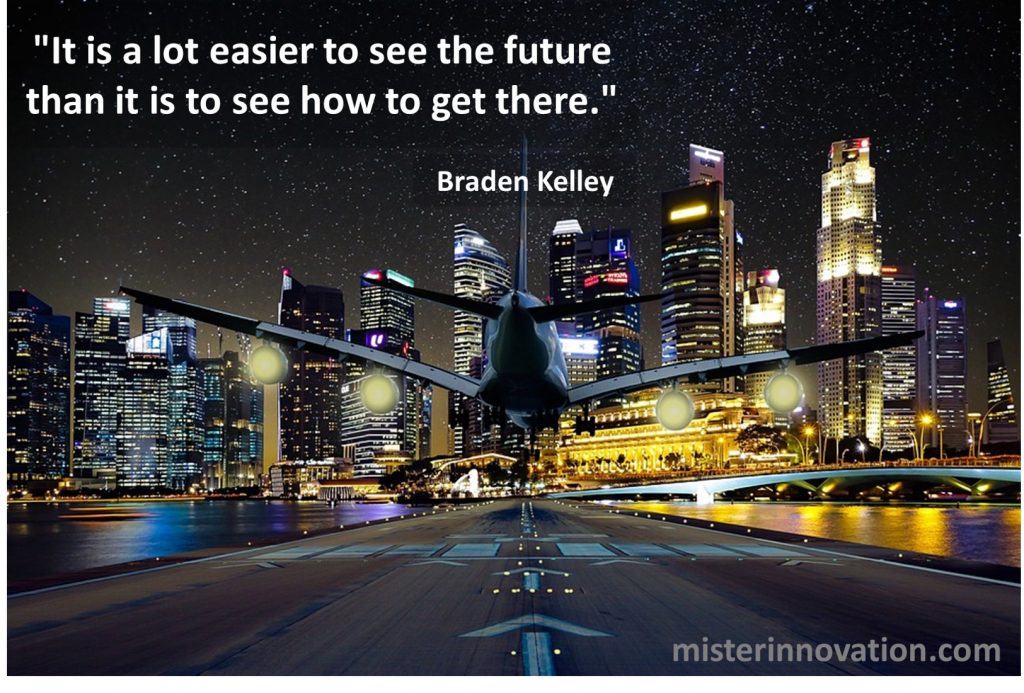
“Don’t fall in love with your first idea. Fall in love with the clarity your first prototype creates.” — Braden Kelley


Case Study 1: The IDEO Shopping Cart – Prototyping the Experience

The Challenge:

The design firm IDEO was challenged by a major grocery chain to redesign the common supermarket shopping cart. The initial, narrow focus was on engineering and durability, which would have resulted in only incremental changes.

The Prototyping Solution:

IDEO’s human-centered approach started not with engineering, but with experiential prototypes. The team quickly built several low-fidelity models using rudimentary materials (duct tape, bins, children’s seats) to test radically different concepts — like a cart with a built-in calculator or one with better maneuverability. They took these rough models into the grocery store for real-time testing, observing customer and employee interaction and failure points.

The Innovation Impact:

By prototyping the user experience rather than the final product, IDEO discovered critical, unarticulated needs—like improved maneuverability and safer child seating—that led to fundamental design shifts. The process proved that fast, visual, and highly interactive prototyping is the most efficient way to unlock breakthrough innovation by placing the human at the center of the learning loop.


Case Study 2: Amazon’s “Working Backwards” – Prototyping the Document

The Challenge:

Amazon, known for its high-velocity innovation, needed a mechanism to ensure that product teams were building things customers actually wanted and that ideas were vetted quickly without expensive software development.

The Prototyping Solution:

Amazon formalized a process called “Working Backwards,” which uses a document-based prototype. Before a single line of code is written, a team must write a Press Release (PR) announcing the finished product to the world. The PR is a one-page, customer-centric narrative explaining the product’s benefit, the problem it solves, and its release date. Accompanying the PR is a detailed FAQ and mock Customer Reviews.

The Innovation Impact:

This simple, text-based prototype forces immediate clarity and user focus. Writing the press release first ensures the team can articulate the customer value proposition before spending any engineering time. If the PR isn’t compelling, the idea is instantly shelved or iterated upon. This low-fidelity, high-discipline prototyping method de-risks multi-million-dollar projects by ensuring the idea is sound and clearly focused on the human need before the execution even begins. It is the ultimate example of prototyping the communication and the value proposition.


Conclusion: Leading with Iteration and ROL

Prototyping the future is the most responsible way to lead change. It replaces the paralyzing certainty of the five-year plan with the agile confidence of constant, low-cost learning. Leaders must create the cultural conditions for this to thrive: namely, by celebrating fast learning and treating failed prototypes as valuable data points, thereby building an organization defined by high Psychological Safety and high ROL.

The innovation landscape moves too fast for slow, secretive, and large-scale commitments. By adopting the three imperatives—speed, empathy generation, and shared vision creation—through prototyping, you ensure that your organization remains perpetually adaptive.

“Stop trying to predict the future. Start building disposable versions of it.” — Braden Kelley

That is the definitive strategy for unlocking continuous, human-centered innovation.

Extra Extra: Because innovation is all about change, Braden Kelley’s human-centered change methodology and tools are the best way to plan and execute the changes necessary to support your innovation and transformation efforts — all while literally getting everyone all on the same page for change. Find out more about the methodology and tools, including the book Charting Change by following the link. Be sure and download the TEN FREE TOOLS while you’re here.

Image credit: 1 of 950+ FREE quote slides available at http://misterinnovation.com

Subscribe to Human-Centered Change & Innovation WeeklySign up here to get Human-Centered Change & Innovation Weekly delivered to your inbox every week.
Bringing Your Innovation to Life

The Power of Visual Storytelling

Bringing Your Innovation to Life

GUEST POST from Chateau G Pato

We live in an age defined by complexity and clutter. Revolutionary ideas, transformative products, and critical organizational changes often fail—not because the innovation itself is flawed, but because the story of the innovation is invisible. As a human-centered change and innovation thought leader, I contend that in a world saturated with information, the ability to communicate impact is as vital as the ability to create it. The future of influence belongs to those who master Visual Storytelling: the strategic use of imagery, data visualization, and narrative to connect abstract concepts to human emotion and tangible benefit. This is how you bring your innovation to life, making it understandable, memorable, and — most importantly — adoptable.

Visual storytelling is far more than marketing; it’s a human-centered design principle applied to communication. Our brains process visuals 60,000 times faster than text, and we are wired to remember stories and images over lists of features or bullet points. For innovators, this means moving beyond verbose white papers and dense slide decks. It means finding the single, compelling image, the three-second animation, or the simple diagram that instantly conveys the user’s journey, the ‘before and after,’ or the strategic shift. This capability is the essential bridge between the R&D lab and the customer’s mind, transforming complex ideas into intuitive understanding.

The Three Pillars of Innovation Storytelling

Effective visual storytelling in innovation rests on three psychological pillars designed to drive adoption and overcome the innate human resistance to change:

  • 1. The Empathy Shot (The ‘Before’): Start by vividly illustrating the pain point or the broken process that the innovation solves. This establishes relevance by showing the current, difficult human reality. A picture of a frustrated user or a diagram of an inefficient, tangled process creates immediate emotional connection and validation.
  • 2. The Clarity Bridge (The ‘How’): Use simple visualizations—such as journey maps, flowcharts, or metaphors—to demystify the complexity. This reduces the cognitive load required to understand the innovation. If your innovation is AI, show a graphic of data flow, not a list of algorithms. If it’s a process change, show the old spaghetti diagram next to the clean, new highway.
  • 3. The Vision Anchor (The ‘After’): Conclude with a powerful visual depiction of the positive, human-centered outcome. This isn’t just a picture of the product; it’s a visual of the impact — the delighted customer, the streamlined workplace, or the saved time. This anchor provides the emotional payoff and fuels motivation for change.

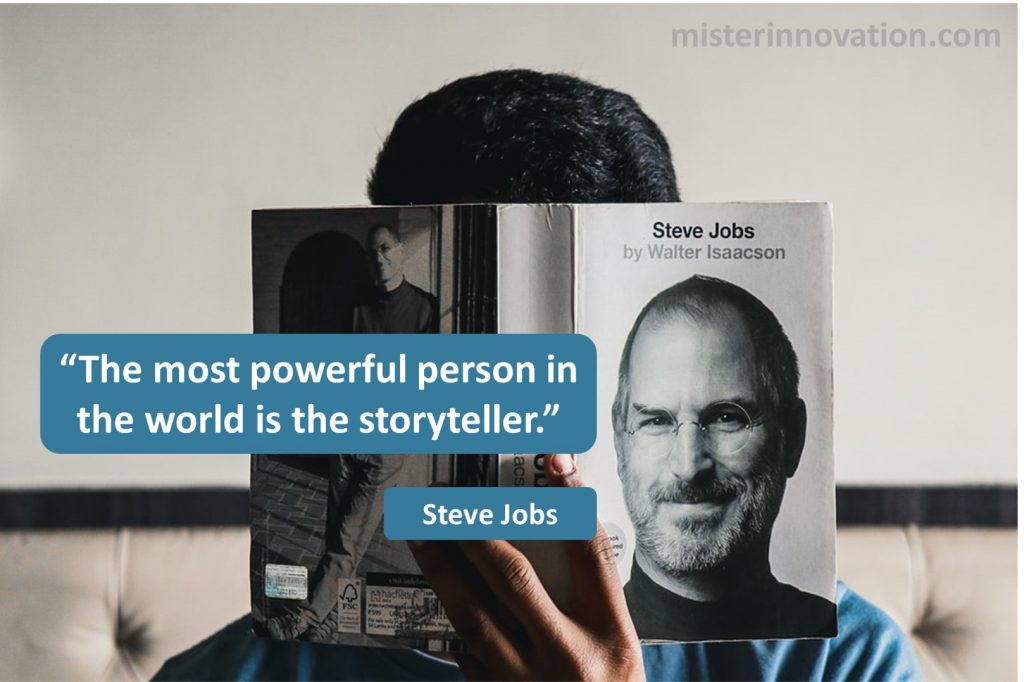
“An innovation explained in 100 words is often forgotten. An innovation shown in one powerful visual is instantly understood.” — Braden Kelley


Case Study 1: Google’s Self-Driving Cars – Visualizing Safety and Trust

The Challenge:

Introducing autonomous vehicle technology requires overcoming profound human fear: handing over control to an unseen computer. The complexity of the software and the catastrophic risk associated with failure made verbal assurances insufficient.

The Visual Storytelling Solution:

Waymo (Google’s self-driving division) tackled this by prioritizing radical visual transparency. Their early communications focused heavily on videos and internal dashboard screens showing the vehicle’s real-time perception. Viewers saw a digital overlay of lines, colors, and boxes representing every cyclist, pedestrian, speed limit sign, and potential hazard. This provided a compelling visual metaphor for the AI’s hyper-awareness, essentially letting the viewer ‘look through the car’s digital eyes.’

The Innovation Impact:

This simple visual strategy demystified the technology and built algorithmic trust. By demonstrating, frame-by-frame, that the car ‘sees’ far more reliably than a human, they used visual storytelling to translate complex machine learning data into an understandable human concept: safety. This allowed regulators, partners, and the public to emotionally process and begin accepting the innovation much faster than if they had only read engineering statistics.


Case Study 2: Airbnb’s Storyboarding – Aligning Product and Service

The Challenge:

Early on, Airbnb’s service was inconsistent. They realized they weren’t just selling a transaction (a place to sleep); they were selling a high-quality human experience. The challenge was aligning their distributed workforce and millions of hosts on what that ideal experience looked and felt like.

The Visual Storytelling Solution:

Airbnb co-founder Joe Gebbia famously used storyboarding — a simple, analog, sequential visual narrative—to map the entire customer journey, from search to checkout. One famous early storyboard was the “A-Team” story, which visually detailed a host preparing for a guest and the guest’s delightful arrival. These simple, hand-drawn visuals didn’t just document the current process; they illustrated the aspirational emotional journey the company wanted to deliver.

The Innovation Impact:

These storyboards became the central communication tool for every team—product designers, customer service, and marketing. They provided an unambiguous, visual definition of quality and purpose. By aligning the organization around a shared visual narrative of the ideal host and guest experience, they focused all innovation efforts on removing friction points in those specific moments. This clarity was instrumental in scaling their quality standards and transforming their platform from a novelty into a trusted, experience-driven brand.


Conclusion: The Visual Imperative

In the end, innovation is a human endeavor. If your revolutionary idea cannot be instantly grasped and emotionally processed, it will be delayed, diluted, or dismissed. Leaders must invest heavily in Visual Fluency within their organizations—not just hiring graphic designers, but teaching every employee, from the CEO to the engineer, to think and communicate in visuals.

The future of effective change relies on your ability to make the intangible tangible. By mastering the art of the empathy shot, the clarity bridge, and the vision anchor, you move your innovation out of the laboratory and into the lives of your customers. Stop describing your innovation. Start showing its impact. That is the definitive strategy for bringing your best ideas to life and ensuring they achieve the scale they deserve.

Extra Extra: Because innovation is all about change, Braden Kelley’s human-centered change methodology and tools are the best way to plan and execute the changes necessary to support your innovation and transformation efforts — all while literally getting everyone all on the same page for change. Find out more about the methodology and tools, including the book Charting Change by following the link. Be sure and download the TEN FREE TOOLS while you’re here.

Image credit: 1 of 950+ FREE quote slides available at http://misterinnovation.com

Subscribe to Human-Centered Change & Innovation WeeklySign up here to get Human-Centered Change & Innovation Weekly delivered to your inbox every week.

Connecting Individual Contribution to Organizational Impact

Purpose-Driven Work

Connecting Individual Contribution to Organizational Impact

GUEST POST from Chateau G Pato

In the modern economy, organizations are locked in a perpetual battle for talent, engagement, and sustainable growth. Yet, many leaders overlook the single most powerful, renewable resource at their disposal: the human desire for meaning. As a human-centered change and innovation thought leader, I argue that the future of work is not defined by perks or paychecks alone, but by a deep, authentic connection between an individual’s daily tasks and the organization’s overarching impact. This is the essence of Purpose-Driven Work. When employees understand precisely how their efforts contribute to a mission bigger than the bottom line, their productivity transforms from mere labor into inspired contribution.

The challenge for innovation leaders is moving purpose from a glossy mission statement on the wall to a dynamic, daily operating principle on the shop floor. True purpose-driven work requires a transparent system that links a junior analyst’s spreadsheet update or a warehouse worker’s careful packing directly to the organization’s larger societal or customer value. When this connection is clear, the result is exponential: lower attrition, higher engagement, better customer service, and a powerful engine for organizational resilience and human-centered innovation.

The Three Levers of Purpose Alignment

To institutionalize purpose-driven work, organizations must strategically pull three key levers:

  • 1. The “Why” Transparency: Every employee must not only know the company’s mission but also regularly see proof of that mission in action. This involves transparently sharing impact metrics, customer testimonials, and success stories that highlight the human outcome of the work.
  • 2. Contribution Mapping: Leaders must create clear pathways—literally mapping the work—that show how each department, team, and individual role acts as a critical link in the chain of impact. This eliminates the feeling of being a “cog in the machine” and emphasizes individual ownership of the final result.
  • 3. Amplifying Micro-Innovations: When purpose is clear, employees feel safe and motivated to innovate at the local level. Organizations must create structures to capture and celebrate these small, purpose-aligned improvements, reinforcing the idea that everyone is an innovation driver in the service of the mission.

“Purpose is not a destination; it’s the GPS for daily decision-making. If your people don’t know the destination, they can’t navigate the complex roads of innovation.” — Braden Kelley


Case Study 1: The Healthcare Tech Company – Connecting Code to Care

The Challenge:

A rapidly growing healthcare technology firm, specializing in electronic health records (EHR), found that its software developers were experiencing burnout and disconnection. They understood they built software, but the abstraction of code separated them from the mission of patient care. This led to quality dips and high turnover.

The Purpose-Driven Solution:

The company instituted a mandatory, recurring program called “Empathy Days.” Instead of simply reading bug reports, developers and testers were required to spend a dedicated day each quarter in a hospital or clinic setting, shadowing nurses and doctors who used their software. They witnessed firsthand how a one-second lag in loading patient data could impact a critical decision, or how a poorly designed interface created friction for an overwhelmed medical professional.

The Organizational Impact:

The impact was immediate and profound. The developers, now emotionally invested, returned to their desks with a renewed sense of urgency and accuracy. Bugs were fixed faster, and the quality of user-centered design skyrocketed because the team shifted its focus from meeting feature specifications to reducing friction for the user-in-crisis. Attrition among technical staff dropped by 15%, proving that connecting a technical task (coding) to a human outcome (saving time for a nurse) is a powerful driver of engagement and quality innovation.


Case Study 2: Global Retailer – The Sustainable Supply Chain Steward

The Challenge:

A global apparel retailer had a strong public commitment to sustainability and ethical sourcing, but this purpose felt remote to the logistics and distribution center teams, whose performance was measured almost exclusively by speed and volume (Output Metrics).

The Purpose-Driven Solution:

The retailer fundamentally altered its performance management system to incorporate Purpose-Driven Metrics. They introduced the role of the “Sustainable Supply Chain Steward” at every distribution hub. Employees were trained on the specific environmental impact of packaging choices, waste management, and shipping routes. Their contribution mapping was changed to show: “Your choice of pallet wrap today saved X amount of plastic from landfill, directly supporting the company’s 2030 goal.”

The Organizational Impact:

By empowering front-line employees with purpose and impact data, the organization unlocked a wave of decentralized, cost-saving innovation. Logistics teams began identifying new recycling partnerships and optimizing packaging designs, not because they were told to, but because they were measured and recognized for their contribution to the sustainability mission. The retailer not only saw a measurable reduction in waste and shipping costs but also achieved higher scores in employee satisfaction related to the company’s ethical practices, demonstrating a clear link between local purpose alignment and global brand equity.


The Leadership Imperative: Curating Meaning at Scale

Purpose-driven work is not a motivational poster; it is a systemic leadership commitment. The ultimate responsibility of the innovation leader is to be the chief curator of meaning, ensuring that the work environment constantly reflects the value being created for humanity. This requires intentional transparency regarding impact, courageous willingness to expose employees to the human beneficiaries of their work, and a commitment to measuring Outcome over mere Output.

When you transform a job description from a list of duties to a statement of impact, you stop hiring for compliance and start attracting talent driven by conviction. That conviction — the authentic belief that “my work matters” — is the non-replicable, human-centered competitive advantage that will define the most resilient and innovative organizations of the next decade.

Extra Extra: Because innovation is all about change, Braden Kelley’s human-centered change methodology and tools are the best way to plan and execute the changes necessary to support your innovation and transformation efforts — all while literally getting everyone all on the same page for change. Find out more about the methodology and tools, including the book Charting Change by following the link. Be sure and download the TEN FREE TOOLS while you’re here.

Image credit: 1 of 950+ FREE quote slides available at http://misterinnovation.com

Subscribe to Human-Centered Change & Innovation WeeklySign up here to get Human-Centered Change & Innovation Weekly delivered to your inbox every week.

Tailoring Experiences at Scale

The Power of Personalization

Tailoring Experiences at Scale

GUEST POST from Chateau G Pato

For decades, the dominant logic in business was mass production and mass consumption. The goal was simple: optimize for the average customer. But in today’s hyper-connected, hyper-competitive marketplace, the average customer no longer exists. They are individuals demanding recognition, relevance, and respect for their unique context. As a human-centered change and innovation thought leader, I argue that the future of competitive advantage lies in mastering The Power of Personalization — the ability to deliver tailored, meaningful experiences to millions of people, simultaneously and seamlessly. This is the ultimate convergence of human-centered design and technological scale: using data and intelligence to make every single customer feel profoundly understood. Innovation must move beyond simple segmentation to anticipatory intimacy.

Personalization is not just about slapping a name on an email. True personalization is a strategic innovation challenge that addresses the fundamental human need for relevance. When a product, service, or communication is relevant, it eliminates friction, conserves the user’s valuable time, and builds trust. Conversely, irrelevant experiences create “digital noise,” foster annoyance, and actively erode loyalty. The challenge for leaders is to establish the infrastructure—both technical and human—that allows the organization to perceive, remember, and respond to the unique needs and behaviors of its individual customers, moving from a transaction-based relationship to a personalized partnership.

The Three Dimensions of Human-Centered Personalization

Effective personalization at scale requires a deliberate strategic focus across three integrated dimensions, ensuring that technology serves human purpose:

  • 1. Contextual Intelligence (The When and Where): Personalization fails when it is delivered out of context. This dimension involves using real-time behavioral data, location, time, and device context to deliver the right message at the exact moment of need. It’s about being helpful, not just interruptive. For example, offering a specific type of coffee to a regular when they step within range of their usual store, not hours later at home.
  • 2. Behavioral Prediction (The Anticipatory Insight): Moving beyond “what they bought” to “what they are about to need.” This requires deep data analytics to model future behavior and latent needs. The innovation here is in creating proactive experiences—solving a problem the customer hasn’t even fully articulated yet. This is the difference between recommending a product and recommending a solution to a future pain point.
  • 3. Ethical Transparency (The Trust Equation): The more personal your service, the higher the need for trust. Personalization must be built on a foundation of ethical consent and clarity. Customers must understand what data is being used, why it benefits them, and have meaningful control over it. Lack of transparency transforms personalization from helpful to “creepy,” immediately destroying the human relationship you were trying to build.

“The best personalization doesn’t guess the customer’s mind; it anticipates their next human need.”


Case Study 1: Netflix – Personalizing the Discovery Experience

The Challenge:

With thousands of titles in its library, Netflix faced a monumental human-centered challenge: choice overload. An average customer who spends too long searching often quits out of frustration, leading to churn. The vastness of the library became a liability rather than an asset.

The Personalization Solution:

Netflix innovated by turning its entire platform into a hyper-personalized discovery engine. Their personalization extends far beyond basic recommendation rows. They use data to:

  • Personalize Artwork: Displaying different title images for the same movie based on the viewer’s previous habits (e.g., showing a romantic image to a romance watcher, or an action scene to a thriller fan).
  • Personalize Rows: Creating unique rows that reflect highly specific taste segments (e.g., “Visually Stunning Sci-Fi Movies with a Strong Female Lead”).
  • Behavioral Prediction: Using complex algorithms to anticipate the titles most likely to be watched next, drastically reducing the cognitive effort required to choose.

The result is a service where the entire interface is tailored to the individual, solving the human problem of choice overload.

The Human-Centered Result:

By investing in personalization as its core product strategy, Netflix dramatically increased customer engagement and reduced churn. The experience feels curated and intimate, creating a strong sense of value. It proved that in the digital age, relevance is the killer feature, and the best way to innovate around a huge catalog is to make it feel small and tailored to each person.


Case Study 2: Spotify – Tailoring the Moment of Discovery

The Challenge:

The music world is characterized by an infinite library of new content. For Spotify, the challenge was helping users feel connected to new artists and music they would love, without relying solely on manual searching or static genre lists. The innovation needed to capture the highly personal, emotional nature of music discovery.

The Personalization Solution:

Spotify’s innovation, particularly the Discover Weekly playlist, is a masterclass in anticipatory personalization. The system uses a complex blend of collaborative filtering (what similar users like) and natural language processing (analyzing articles and blogs about music) to create a wholly unique, algorithmically-generated playlist for each user, delivered every Monday.

  • Contextual Delivery: The timing (Monday morning) positions the playlist as a fresh start and a soundtrack for the week.
  • Ethical Partnership: The playlist format feels like a gift from a trustworthy, knowledgeable friend, minimizing the “creepy” factor because the value exchange is clear: “We observe your taste, and in return, we give you this high-quality, personalized content.”

This system essentially turns data analysis into an act of creative, personalized curation.

The Human-Centered Result:

Discover Weekly became one of Spotify’s most successful features, driving massive engagement. It demonstrated that personalization can be an act of generosity, giving the user a valuable, curated product that is better than anything they could have created themselves. It solidified Spotify’s role not just as a music player, but as a trusted curator and partner in the user’s emotional relationship with music.


Conclusion: The Future of Business is Individual

The Power of Personalization is the core strategic challenge of our time. It requires leaders to embrace a fundamental truth: human connection scales. You don’t need to choose between mass market reach and intimate relationships; technology has finally allowed us to achieve both.

To succeed, organizations must move from seeing personalization as a marketing tactic to recognizing it as a holistic innovation imperative — a guiding principle for product design, service delivery, and ethical governance. By leveraging contextual intelligence and behavioral prediction with unwavering ethical transparency, we can create a future where every customer feels understood, valued, and served with a precision that delights. The most profitable innovations will be those that master the art of the individual experience, delivered on a global stage.

Extra Extra: Because innovation is all about change, Braden Kelley’s human-centered change methodology and tools are the best way to plan and execute the changes necessary to support your innovation and transformation efforts — all while literally getting everyone all on the same page for change. Find out more about the methodology and tools, including the book Charting Change by following the link. Be sure and download the TEN FREE TOOLS while you’re here.

Image credit: Pexels

Subscribe to Human-Centered Change & Innovation WeeklySign up here to get Human-Centered Change & Innovation Weekly delivered to your inbox every week.