Author Archives: Braden Kelley

About Braden Kelley

Braden Kelley is a Human-Centered Experience, Innovation and Transformation consultant at HCL Technologies, a popular innovation speaker, and creator of the FutureHacking™ and Human-Centered Change™ methodologies. He is the author of Stoking Your Innovation Bonfire from John Wiley & Sons and Charting Change (Second Edition) from Palgrave Macmillan. Braden is a US Navy veteran and earned his MBA from top-rated London Business School. Follow him on Linkedin, Twitter, Facebook, or Instagram.

External Talent Strategies for a Global Talent Pool

Why Having an External Talent Strategy is Becoming Increasingly Important

External Talent Strategies for a Global Talent PoolThe old way of winning the talent wars was to search for and hire the very best talent and keep them inside your own four walls by offering them competitive compensation, benefits, and perks. Your hope was that your talent is better than your competitors’ talent. But over the last couple of decades, companies have increasingly found that employees who pursue what they do with passion will outperform an employee with a gun to their head every time. Circuit City learned very publicly that people are not commodities and went out of business from treating them as if they were. At the same time, we know that diversity is very important and hard to foster internally. And so it is to get to this diversity of thought in order to accelerate product launch and innovation timelines that companies must open up – it is a global economy with a global talent pool.

The question becomes: what is happening at the micro level with this global talent pool? Well, the world continues to move away from being a place where employees expect to have jobs for life, and fight against any change to this paradigm, to a world where portfolios, personal branding, and project-based work will become more common in an increasing number of industries. The evolving world of work is becoming a world in which individuals will need to be really good at collaborating and playing well with others, while also honing their skills at standing out from the crowd. At the same time, the external perception of your network value will expand from a focus on internal connections to also include the talented minds you might know outside the organization that can be brought in on different projects or challenges.

At the macro level, we are also confronted by an economy right now that is characterized by high unemployment – especially for the young. And for those that have jobs, many are underemployed. Meanwhile, at the other end of the age spectrum, many baby boomers will continue to look to make money and stay involved in the workplace in significant numbers. And for those not retiring who still have jobs, many employees now are doing more work but feeling less engaged. When you combine the macro and micro pictures, you can see that there is an army of talent out there looking to build their resumes or their balance sheets by working on interesting challenges and projects.

As your organization opens up and crafts a formal external talent strategy, there are several ways external talent can help benefit your organization.

Increased Speed:

  • External talent networks can form an expanded rolodex of experts that you can consult with to expand your knowledge on a particular search area or market and give you a running start instead of a standing one.
  • You can use your external talent strategy to find existing solutions from outside your industry. One example of this is a tire company adapting existing technology for cutting cheese to cutting rubber. Another is InnoCentive client OSRI, who used concrete construction principles for the purpose of oil spill cleanup (see sidebar).
  • To accelerate innovation and product development timelines, many companies strategically partner with external talent to advance their projects and help fight through roadblocks or work on other components when the lead team is off the clock. Dissecting work and distributing it to the individuals, groups, or partners that can best complete the work is an essential component of open innovation strategy.

Increased Success:

  • You can form a relationship with a particular expert and work together to solve a problem, to evaluate a range of potential solutions from internal folks, to tap expertise you lack currently in your organization, or to add diversity of thought.
  • You can use your external talent strategy to engage a large number of potential solvers on a tough problem. Through open innovation and crowdsourcing, Roche found a solution to a problem it had been struggling with for fifteen years by engaging the InnoCentive global solver community. At the same time, the company validated that the approaches it had already tried were the logical and correct ones.
  • When you engage external talent, you can collect lots of little ideas from outside, and connect them internally, uncovering some really big ideas that properly applied and executed can lead to some great new breakthrough innovations.

Increased Learning:

  • An under-appreciated and under-utilized benefit of working with external talent is to use it to learn new problem solving techniques by analyzing how the external talent solved the problem, to learn new technical skills not held internally by having external talent train internal talent, and by encouraging information sharing from the outside-in from external talent working in different disciplines.

Teamwork and Collaboration:

  • An increasing number of problem solvers are working together to solve challenges posed by organizations and this collaboration and teamwork is yielding higher quality solutions. Research by EMC into their own internal innovation challenges has shown that teams were more likely to successfully create winning challenge entries. InnoCentive, for instance, has responded to this behavior by creating more collaborative features for its global solver community to use in responding to challenges.

Consider scale for a moment. A person delivering a ton of value does not need a ton of headcount anymore if they are employing an effective external talent strategy. In an era where organizations are focused on increasing productivity and output without changing the number of headcount (focusing on revenue or profit-per-head), smart employees and business units will increasingly focus on being a force multiplier – getting more work done with the same number or even less headcount.

Two of the most important job skills in this new world of work will be the ability of the individual and the organization to deconstruct the work into portable units that can be executed by a mix of internal and external talent, and construct a project plan for distributing, aggregating, integrating, and executing the component parts to achieve the overall project goal.

But to maximize the efficiency and effectiveness of your work with outsiders – as well the output – you need to be strategic in your approach because the speed of adaptation (your ability to adapt and integrate work from outside into the inside) will become more important. And the flexibility you show as an organization and the ability of your employees to execute under immense market and customer pressures will become increasingly important as well. You must be strategic because ultimately you want to design scalable external talent strategies, policies, and processes.

— Download the rest of this FREE white paper to continue reading —
Build a Common Language of Innovation

Subscribe to Human-Centered Change & Innovation WeeklySign up here to get Human-Centered Change & Innovation Weekly delivered to your inbox every week.

Innovation or Invention? – Dog Washing Machine

Innovation or Invention? - Dog Washing MachineI saw the second picture in this article (of a dog washing machine in Japan) over my wife’s shoulder during a leisurely reading of the Sunday Seattle Times yesterday. I think it was in the Parade magazine, and as I started writing this article I found the same picture posted two years ago here, so it became clear that this idea – a dog and cat washing machine – has been already productized and in use for at least a year in Japan. But then I found the first picture in this article (which looks a lot like my daughter’s dog) in an article about the Dog-o-Matic that appeared in The Daily Mail back in 2009, meaning some inventive Brit appears to have beat out someone from Japan by nearly a year.

Dog Washing Machine - JapanNow, I can say with reasonable certainty that very few dog or cat owners really enjoy giving Fido or Princess a bath, and so the idea of a machine that you lead Fido or Princess into and shut the door and push a button to accomplish the job, sounds very appealing. It can be an incredibly messy operation fraught with danger and frustration (thus the rise of self-service dog washing places), but when you look at the first picture, is the emotional trauma of the experience something that dog or cat owners (or dogs/cats for that matter) could endure over the long term?

Hmmm…

Looking at these images, they remind me of an experience my wife and I (or mostly my wife) had in an automatically cleaned public restroom at a train station in Versailles, France that was just about as traumatic. But that’s a story for another day…

So, what do you think? Invention or innovation?

Is this something that will catch on with dog owners around the world?

I’ll leave you with a video of the Japanese version in use:

Build a Common Language of Innovation

Subscribe to Human-Centered Change & Innovation WeeklySign up here to get Human-Centered Change & Innovation Weekly delivered to your inbox every week.

Targeted Advertising While You Fly

It has been four years since I first wrote this article for my personal blog and because not many people saw it and because not much has changed I thought I would update it a bit and share it on Innovation Excellence.

Flying to Hawaii four years ago, I was reminded of the phrase, “You may be talking but nobody is listening.” Hawaiian Airlines had seen fit to pollute the cabin with an endless stream of un-targeted advertising on the plane’s set of televisions (no fancy seatback units here).

Now, at least on American Airlines the “advertising” mostly masquerades as entertainment (CBS sitcoms or clips of Letterman and 60 minutes) to try and keep the shows’ viewer base loyal or to pull in new viewers, but it’s still advertising. American Airlines has traditional advertising as well, but less than what I saw on Hawaiian Airlines four years ago. Since then I’ve flown all around the world delivering innovation speeches and innovation training, using a variety of carriers (Korean Air, Air France, Delta, etc.) and even on seatback inflight entertainment units I have yet to see any targeted advertising, and I’ve flown on a lot of flights without seatback entertainment units (although more and more airlines are updating their fleets).

Broadcast networks have at least some justification for spamming people over the airwaves (it’s their only revenue source and they are only able to target based on dominant audience profiles). The availability of on-demand, seatback entertainment systems, leaves airlines with no excuse, and in fact advertisers would be willingly to pay more for targeted impressions.

For targeting purposes, the airlines know who purchased the ticket (likely their age (senior/adult/child), phone number, e-mail, address, zip code, how much they paid, the credit card they paid with, etc.). About frequent fliers they will also know how frequently they fly, their home airport, and maybe even whether they are traveling on business and for which company. So it would definitely be possible to design a system to target advertising in-flight. And properly designed you could roll it out across a whole range of airlines to help airlines increase their revenue and advertisers reach their target audiences. So why haven’t airlines implemented such a system yet?

At its simplest, airlines could define the programming schedule as a mixture of content blocks and advertising blocks (interstitial advertising) and target the advertising by seat, using passenger data. Passenger data could be loaded up at the beginning of each flight by a gate agent using a USB key, smartcard, or other portable data storage device. Every seat could potentially receive a different combination of commercials during the flight.

Airlines wishing to avoid interstitial advertising could design a more complex system to support advertising that would appear during the programming (as banners, or whatever). Whichever way the airlines went, they have the opportunity to create a system that would likely attract the highest rates for video advertising on the planet to help them pay for the increasingly expensive fuel to fly the plane.

So why haven’t they done it?

P.S. I also thought it was interesting that Hawaiian Airlines had chosen four years ago to go “cash-free” and only accept debit and credit cards (which many other airlines have since copied). I agree with offering credit and debit cards as an option, but I’m not sure I agree with abandoning cash. Why would you want to do anything to make it more difficult for people to give you their money?

Build a Common Language of Innovation

Subscribe to Human-Centered Change & Innovation WeeklySign up here to get Human-Centered Change & Innovation Weekly delivered to your inbox every week.

Followup – Following the Line to Innovation at Costco

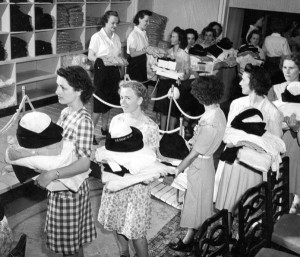
Followup - Following the Line to Innovation at CostcoDuring the winter holiday shopping season in 2007 I was suspicious when a man at Costco asked if he could scan my Costco card while I was standing in line, thinking that he was going to try and sell me on their executive card. I was pleasantly surprised when he then scanned my items with a portable scanner/computer and gave me a slip of paper to alert the cashier that he had done so.
It is a pretty simple system:

  1. Scanner/Computer reads my Costco account number and creates a record
  2. It then associates the item numbers scanned with that record, and sets a flag in the system that this temporary record exists on my account
  3. Cashier enters my Costco account number and retrieves my account
  4. The flag in the system enables the cashier to transfer the scanned item numbers into a live order
  5. The cashier verifies the number of items
  6. The cashier processes payment
  7. The system deletes the temporary record

I thought “wow!”, this is brilliant, this is exactly the type of potential process improvement that I’ve talked about before, most recently in Following the Line to Innovation (a November 2007 refresh).

The fact is that when it comes to busy holiday seasons, Costco and all other retailers have a fixed number of registers and the cashiers can only scan items and process payment so fast. If the cashiers only have to process payment and maybe throw a few things in a box, then the throughput of each cashier increases and lines become shorter or non-existent. This appears to be a new process to accommodate the increased volume of shoppers that all retailers experience during the holiday season, but the process could be even better.

Normally when I go to Costco there is a cashier working busily and a box person working less frequently. It seems to me that this scanner/computer task could become the normal job responsibility of the box person. If the jobs were re-distributed then maybe the non-holiday throughput could be increased and possibly free up people for other tasks.

All I know is that I was a happier customer that day. And–as I’ve said before–by making more efficient use of waiting time, companies can potentially decrease costs and increase revenue at the same time, while also increasing customer satisfaction. What can be better than that?

Innovation Training for your whole organization from Braden Kelley

Subscribe to Human-Centered Change & Innovation WeeklySign up here to get Human-Centered Change & Innovation Weekly delivered to your inbox every week.

Following the Line to Innovation

Following the Line to InnovationOK, it may not really be an innovation, but I appreciated the following operational efficiency anyway:

Going to check out of the Hilton New York City, there was a queue in spite of the several available kiosks and multiple employees staffing the counter to help customers with various requests. Hilton had obviously invested in some business process consulting (or possibly listened to an employee suggestion) because in addition to the kiosks and the employees staffing the counter, they had an employee staffing the line to identify the needs of guests while they waited in line.

In my case, she asked how my stay was and I told her the story about how I had difficulty with the WiFi not allowing me back into my work e-mail after the connection went down and came back up again. I told her that the first night it worked fine and that I expected not to pay for the second night because it didn’t work properly (leaving important time-critical messages stuck in my outbox). She was sympathetic, but I halfway expected to have to tell the story all over again when I got up to the counter (as this is the typical bad customer experience on the phone or in person). I was surprised and impressed when she told the counter person to take off the second night’s WiFi and that I was ready to check out. Thankfully, I didn’t have to tell the story again.

This is good operational practice for a couple of reasons:

  1. It gave them a way of increasing throughput during busy times when they would otherwise be limited by the number of computer workstations.
  2. It provided a good customer experience. I only had to tell the story once.
  3. I was on my way much more quickly as a result, and the counter person was on to their next customer more quickly as well
  4. The poor person behind me didn’t have to wait while I told my story again, and potentially argued with the counter person because this had already been taken care of while we were both waiting in line (except no arguing was necessary).
  5. If the customer has no special needs, the employee can direct the customer to an available kiosk.

This example, while more about good operational practice and customer service than innovation, does provide the opportunity to identify process innovation opportunities if we look at our own business through a lens of separating the customer experience into the following parts:

  1. Information Gathering
  2. Information Evaluation
  3. Information Processing

Are there times in your business when your customers are waiting? Why are they waiting?

Innovation Training for your whole organization from Braden Kelley

Do you have certain resources that reach capacity quickly or for sustained periods during busy times that you can’t expand easily?

Is there a way to utilize that waiting time to separate out the information gathering or information evaluation components of a customer interaction, to allow for a division of labor that can be more easily flexed to accommodate demand spikes?

In a phone scenario, could you not implement an interactive voice response phone system that notifies the customer how long they can expect to wait and then transitions to a “While you are waiting…” message and then asks the customer for their name, account number, and phone number to either be played for the agent before transferring the call, or maybe even trying to do some kind of speech to text and facilitate a record-lookup using that information?

Maybe you need to allow your skilled people to focus on information evaluation and processing, while lower skilled people focus on information gathering. Or, maybe in your industry the skilled people are at the front end, focusing on information gathering and evaluation and need to be separated from the information processing tasks.

In a manufacturing environment, while we don’t talk about information gathering, evaluation, or processing, we still use the same logic to evaluate the overall system throughput. Then, break it down into components so that we can identify and manage critical constraints and manage them in a way that maximizes throughput.

So whether you are in a manufacturing or a service environment, are you constantly looking for ways to optimize throughput and maximize profits or customer service (or maybe even both)?

What are your favorite stories of process innovations that have led to improved customer service or manufacturing efficiencies?

P.S. Continue reading on this topic by reading – Followup – Following the Line to Innovation at Costco

Subscribe to Human-Centered Change & Innovation WeeklySign up here to get Human-Centered Change & Innovation Weekly delivered to your inbox every week.

Retained Innovation

Retained InnovationAs a provider of innovation coaching services along with training and innovation speaking, I try to talk to as many other fellow practitioners as my schedule allows to keep abreast of what others are experiencing and doing. What I have found in the area of billing clients is that there are a myriad of ways of receiving compensation for the work that we do. Everything from traditional hourly/daily/weekly to at-risk payment types like graduated rates, milestone payments, equity stakes, contingencies based on achieved savings, royalties, and even retainers.

Of all the different methods that I’ve seen, I think that royalties and savings contingencies make the most sense in revenue augmentation and cost reduction scenarios. Companies should be willing to reward those practitioners that deliver real revenue increases and cost savings, and practitioners should be willing to accept lower compensation if they don’t.

But when it comes to looking at innovation projects and innovation process then I think that the retainer model is the best way to go. Innovation is about competitive advantage and in today’s competitive environment, companies can’t afford to wait around until their favorite practitioner is available to fully engage, and at the same time they can’t afford to go with whoever is available regardless of quality and fit.

I believe the retainer model works best for innovation projects and innovation process because the guidance is there when you need it. It can be as proactive or reactive as the needs of the client dictate, and it provides the continuity necessary to keep program improvements on track. The retainer model also allows the company to access their practitioner a few hours at a time, something that would be unworkable for both sides if a new contract was needed each time.

The retainer model also can be quite useful to companies who would like to have a Chief Innovation Officer (a steward of the innovation process and culture for a company), but can’t justify the overhead of a full-time resource.

But regardless of how a company chooses to resource their innovation capability, every company should have an innovation strategy, and that should include continuous re-evaluation and improvement using both inside and outside resources to preserve freshness and to introduce new thinking.

So what is your innovation strategy?

Innovation Training for your whole organization from Braden Kelley

Subscribe to Human-Centered Change & Innovation WeeklySign up here to get Human-Centered Change & Innovation Weekly delivered to your inbox every week.

Innovation Perspectives – Insights and Execution

Innovation Perspectives - Insights and ExecutionThis is the seventh of several ‘Innovation Perspectives’ articles we published in 2009 from multiple authors to get different perspectives on ‘What is the most dangerous current misconception in innovation?’. Now, here is my perspective:
For my money, the most dangerous misconception that leaders have is that coming up with a great idea is the key to innovation.

This is not the case. Insights and execution are the most important ingredients for creating innovation. As more industries become commodity battlegrounds, success will now be the driven by two key things:

  1. The quality of the insights a company has identified to build ideas upon
  2. The organization’s ability to turn their insight-driven ideas into reality

As innovation moves front and center in an increasing number of companies and industries, the quality of insights and execution will separate the winners from the losers.

Apple moving into the phone business should not have surprised a single handset manufacturer out there. What competitive response did handset manufacturers expect as they introduced increasingly music-capable phones?

The idea of a phone that is also a music player is not, in and of itself, a differentiated idea capable of capturing the imagination of the consumer, and so the iPhone was not created with the goal in mind of creating a digital music player that is also a phone (though that was the strategic purpose for its creation). Apple needed a strategic response to protect their digital music player market from being disrupted by the mobile phone handset manufacturers.

But, Apple also knew that to be successful in an industry that they had no experience in, mobile phones, that they needed to introduce a truly differentiated and valuable offering. To achieve that goal, they needed a unique insight to build their ideas on of what a mobile phone should aspire to be.

The insight they chose to build their mobile phone business on, was the insight that people were now ready to make their computing experience more portable, while also at the same time making it more personal. The key idea built on this insight was that of the App Store. In building their phone around this insight, they were able to create a device that not only could play music (and help to protect their digital music player market from being disrupted), but could also perform just about any other function that a user might desire (or even imagine to build).

A lesser company would have endeavored to build the world’s best music phone, but instead Apple realized that it was more important to build the world’s most personal and customizable mobile phone (that happens to play music). This is the power of building around an insight instead of an idea.

Apple realized that the contracts with AT&T and the permission to do something like the App Store, along with building an application development platform that developers could rally around, were possibly even more important than the device itself.

One of the lesser known innovation truths is that a true innovation is often more than just a single idea, but is often several ideas coming together to serve a new key insight. Apple’s insight was that computing was about to become more personal and move to the hand as part of this increasingly personal transition.

What insight will you build your business around?

Build a Common Language of Innovation

Subscribe to Human-Centered Change & Innovation WeeklySign up here to get Human-Centered Change & Innovation Weekly delivered to your inbox every week.

Innovation Requires Diagonal Thinking

Innovation Requires Diagonal ThinkingThe outcome of a back and forth of a dialog on Twitter with Scramray E. Pinkus generated a lovely quote worth sharing:

“Innovating is like thinking diagonally. A perfect combination of both linear and lateral.”

– Scramray E. Pinkus (@Easelton)

The conversation sprung out of a tweet I posted that postulated that when people use technology (iPads, smartphones, laptops, etc.) and television as child minders, that they are actually promoting linear thinking in their children at the expense of the lateral thinking that our society so desperately needs. We need strong lateral thinking to compliment the dominant linear thinking out there, so that together they can drive the social innovation the world needs to fix this mess we’ve made.

What do you think?

Technology as child minder, positive or negative effects on the innovative capacity of our children?

One of my proof points is this article from The Washington Post.

Any other proof points out there?

Subscribe to Human-Centered Change & Innovation WeeklySign up here to get Human-Centered Change & Innovation Weekly delivered to your inbox every week.

Food Innovation Sighting – Doritos Tacos

Food Innovation Sighting - Doritos TacosI don’t typically frequent fast food restaurant chains, but today I did, and I had a food innovation sighting for my trouble. I stopped by the local Kentucky Fried Chicken (KFC) and Taco Bell combination store and as I was picking up my crispy strips order I heard a guy order two Doritos Tacos.

“Doritos Tacos?” I thought to myself. Then I looked up and sure enough Yum Brands has teamed up with PepsiCo’s Frito Lay to bring you the Doritos Taco. It’s just like it sounds. Frito Lay has created giant round Nacho Cheese Doritos and folded them into the shape of a taco shell, and then Yum Brands employees combine them with the usual Taco Bell taco fillings.

Now I didn’t actually try one, but how could they not be good and absolutely stuffed with calories?

So hats off to Frito Lay and Yum Brands on the creation of this simple food innovation.

For those of you keeping score with your SCAMPER framework scorecard, file this one under Combine.

What other food innovation combinations would make sense for two companies to create?

Innovation Training for your whole organization from Braden Kelley

Subscribe to Human-Centered Change & Innovation WeeklySign up here to get Human-Centered Change & Innovation Weekly delivered to your inbox every week.

Innovating Through Downturns

Innovating Through DownturnsWhile most individuals and organizations natural reaction to an economic downturn is fear and retrenchment, they also present a time of great opportunity.
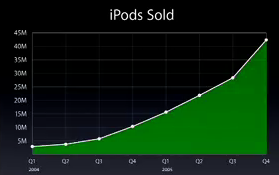
Where would Microsoft be if they hadn’t continued investing through the downturn of the early 90’s?

  • Microsoft may never have finished the hugely successful Windows 95.

Where would Apple be if they hadn’t continued investing through the technology crash of 2001-2003?

  • Apple may never have fully realized the promise of the iPod and subsequent iPhone.

  • The unemployment rate increases (more available workers)
  • Interest rates drop (lower cost of capital)
  • People become fearful of losing their jobs making it easier to recruit from companies reducing or eliminating their innovation investments (increased labor mobility)
  • People are more open to moving if a spouse’s job is eliminated or at risk (increased labor mobility)
  • When a recession arrives, it is easier to acquire tax breaks or other incentives for expansion, new sites, etc. (lower investment costs)

So, if companies have positive cash flows or significant amounts of cash on their balance sheet, or promising ideas to invest in, then there is no better time to invest. Companies with the courage and financial capability to invest in innovation through a downturn, absolutely should.

In addition to all of the other benefits, there is no better opportunity to achieve competitive separation through continued investment in innovation.

It does, however, take a strong CEO and steady board to have the courage and conviction to make such an investment. Innovation is not a perfect science and requires a tolerance for failure and a long-term commitment.

In today’s short-term Wall Street quarterly profit-driven corporate reality, investors’ short-term outlook may be the biggest impediment of all. But, smart organizations will find strategic solutions to overcome this impediment.

Organizations should take the following strategic actions to maintain or expand their innovation initiatives, despite the current global economic downturn:

  1. Secure the leadership flexibility capable of continuing to invest in innovation despite financial pressures
  2. Identify resources that you would like to have had access to during good times, that you might now have access to such as:
    • Labor in scarce specialties
    • Affordable capital
    • Scarce real estate

  3. Increase competitive monitoring to identify opportunities that may be created in areas where the competition reduces previous innovation investment
  4. Increase customer research to identify opportunities to refine your ability to deliver products and services that deliver increased customer value, ideally at lower cost
  5. Improve your innovation processes to improve your ability to innovate more quickly and effectively than your competition
  6. Improve your organizational agility to increase its flexibility to adapt to changes in market conditions caused by the downturn and to shift resources efficiently and with increased speed

Organizations that take these necessary strategic actions, will come out the other side stronger than the competition, stronger than ever before, and create opportunities to preserve or attain market leadership.

Happy innovating!

Build a Common Language of Innovation

Subscribe to Human-Centered Change & Innovation WeeklySign up here to get Human-Centered Change & Innovation Weekly delivered to your inbox every week.
