
Author Archives: Chateau G Pato

About Chateau G Pato

Chateau G Pato is a senior futurist at Inteligencia Ltd. She is passionate about content creation and thinks about it as more science than art. Chateau travels the world at the speed of light, over mountains and under oceans. Her favorite numbers are one and zero. Content Authenticity Statement: If it wasn't clear, any articles under Chateau's byline have been written by OpenAI Playground or Gemini using Braden Kelley and public content as inspiration.

How to Create an Effective Innovation Hub

How to Create an Effective Innovation Hub

GUEST POST from Chateau G Pato

Innovation has become a critical factor for success in today’s fast-paced and competitive business world. To foster and nurture innovation, many companies and organizations are establishing innovation hubs. These hubs serve as central locations for collaboration, idea generation, and experimentation. However, creating an effective innovation hub requires careful planning and execution. In this article, we will explore the key elements of a successful innovation hub by examining two case study examples.

Case Study 1: Google X

Google X, the experimental research division of Google, has gained a reputation for its groundbreaking projects and inventions. The company’s innovation hub, known as the “moonshot factory,” is a prime example of an effective innovation ecosystem. Here are three key aspects that contribute to its success:

1. Diverse and interdisciplinary teams: Google X brings together experts from various fields such as engineering, design, robotics, and artificial intelligence. This diversity of skills and perspectives enables cross-pollination of ideas, fostering innovation through shared knowledge and collaboration.

2. Encouraging experimentation and risk-taking: Google X promotes a culture that embraces failure as a necessary step towards success. Teams are encouraged to explore ambitious ideas and take calculated risks, even if they may not yield immediate results. This mindset allows for disruptive innovation and encourages team members to think beyond their usual limits.

3. Strong leadership and support: The innovation hub is backed by strong leadership that is committed to nurturing a culture of innovation. Leaders provide support and resources to teams, ensuring they have the necessary tools to think creatively and bring their ideas to fruition. This support is vital in overcoming obstacles and maintaining momentum.

Case Study 2: The Epicenter Innovation Hub

Located in Stockholm, Sweden, Epicenter is a co-working space that serves as an innovation hub for more than 350 companies. It has quickly become a hotbed for technology and creativity. Here are two essential elements that contribute to Epicenter’s effectiveness as an innovation hub:

1. Community and networking opportunities: Epicenter places a significant emphasis on fostering a strong community of professionals from various industries. It actively encourages interaction, collaboration, and networking among its members. By bringing together diverse skill sets and backgrounds, Epicenter creates an environment where ideas can flow and evolve.

2. Access to cutting-edge technology and resources: Epicenter provides its members with access to state-of-the-art technology, prototyping labs, and collaborative spaces. This infrastructure enables companies and individuals to test and develop their innovative ideas without facing barriers related to expensive equipment or limited resources. Accessibility to such resources is crucial in facilitating innovation and turning ideas into reality.

Conclusion

Creating an effective innovation hub requires careful attention to key elements such as diverse and interdisciplinary teams, encouraging experimentation and risk-taking, strong leadership and support, building a strong community, and providing access to cutting-edge technology and resources. By studying successful case examples like Google X and Epicenter, organizations can learn valuable insights and apply them to their own innovation hubs, driving their businesses forward in an era of rapid change and disruption.

Image credit: Pixabay

Subscribe to Human-Centered Change & Innovation WeeklySign up here to get Human-Centered Change & Innovation Weekly delivered to your inbox every week.

Change Leadership and the Power of Storytelling

Change Leadership and the Power of Storytelling

GUEST POST from Chateau G Pato

Change is an inevitable part of life, especially in today’s fast-paced and ever-evolving world. Organizations constantly find themselves navigating through various changes, from mergers and acquisitions to technological advancements. However, with change comes challenges, and the success of any change initiative lies in effective change leadership. One powerful tool that change leaders can harness is storytelling. By utilizing the power of stories, leaders can inspire, engage, and drive individuals towards embracing and supporting change. In this article, we will explore two case study examples that highlight the impact of storytelling in change leadership.

Case Study 1: IBM’s Transformation

IBM, a multinational technology company, went through a significant transformation when Lou Gerstner took over as CEO in the early 1990s. Gerstner inherited a struggling organization that was losing its market share and lacked direction. To turn things around, he recognized the need to infuse a new culture within the company and get everyone on board with the forthcoming changes.

Gerstner realized that simply presenting a cold set of data and charts would not be sufficient to inspire and motivate a workforce that had become disillusioned and resistant to change. Instead, he employed the power of storytelling to connect with his employees on a deep emotional level. Gerstner crafted a narrative that focused on IBM’s rich history, its role in shaping the world, and the collective responsibility of each employee to revive the organization.

Through his storytelling, Gerstner effectively conveyed the urgency for change while instilling a sense of pride and purpose. This emotional connection ultimately resulted in the successful turnaround of IBM, transforming it into a leading technology company once again.

Case Study 2: Procter & Gamble’s Innovation Culture

In the early 2000s, Procter & Gamble (P&G) faced the challenge of how to breathe life into their innovation efforts. A.G. Lafley, the CEO at the time, recognized that P&G needed a culture shift to foster creativity, risk-taking, and collaboration across the organization.

Lafley understood that storytelling could bridge the gap between strategic objectives and people’s daily work lives. He implemented a company-wide initiative called “Connect+Develop” that encouraged employees to share stories about their innovative ideas and experiences. These stories, which focused on real people and real challenges, helped employees see the tangible impact of their work and inspire others to think differently.

By creating a storytelling platform, Lafley empowered P&G employees to become change agents and ambassadors for innovation. This cultural shift resulted in numerous successful product launches and allowed P&G to maintain its position as a leader in the consumer goods industry.

The Power of Storytelling

These case studies highlight the transformative power storytelling can have in change leadership. Stories have the ability to evoke emotions, create meaning, build trust, and inspire action. When change leaders effectively communicate their vision and purpose through storytelling, they paint a vivid picture of the future and create a shared understanding among individuals.

Furthermore, storytelling engages both the rational and emotional aspects of individuals, making change feel more relatable and personal. It helps people see how they fit into the narrative and how their contributions are instrumental in achieving the desired change.

Conclusion

Change leadership is crucial during times of transformation within organizations. The power of storytelling as a change leadership tool cannot be underestimated. By crafting compelling narratives that resonate with employees’ experiences and emotions, leaders can bridge the gap between resistance and acceptance, ultimately driving the success of change initiatives.

References:

  • McNamara, C. (n.d.). Transformational Change, IBM Style. Retrieved from https://managementhelp.org/organizationalchange/transformational-change.htm
  • Denning, S. (2011). The case of storytelling in organizational change. Journal of Change Management, 11(3), 325-347.

Image credit: Pixabay

Subscribe to Human-Centered Change & Innovation WeeklySign up here to get Human-Centered Change & Innovation Weekly delivered to your inbox every week.
Innovation Through Experimentation

Strategies for Rapid Iteration

Innovation Through Experimentation

GUEST POST from Chateau G Pato

In today’s fast-paced and constantly evolving business landscape, innovation is the key to staying ahead of the competition. However, traditional approaches to innovation may not be enough to keep up with rapidly changing customer needs and preferences. To foster innovation, organizations must embrace a culture of experimentation and adopt strategies for rapid iteration. In this article, we will explore the importance of experimentation in driving innovation and discuss two case study examples to illustrate successful implementation.

Case Study 1: Google’s “20% Time”

One of the most famous examples of fostering innovation through experimentation is Google’s “20% time.” This initiative allows employees to spend 20% of their workweek, or one day, working on projects that interest them outside of their core responsibilities. This flexible structure encourages employees to explore new ideas and experiment with innovative solutions.

One notable outcome of Google’s 20% time is the creation of Gmail. Originally developed as an experiment by a Google engineer, the project emerged from the employee’s personal interest in improving email communication. Through rapid iteration and continuous experimentation, Gmail was refined and eventually launched as one of Google’s most successful products. This case study demonstrates how giving employees the freedom to experiment can lead to significant innovation and long-term success.

Case Study 2: Amazon’s A/B Testing

Amazon, the e-commerce giant, is renowned for its customer-centric approach and its relentless pursuit of innovation. One of the strategies Amazon uses to continuously iterate and improve its offerings is A/B testing. By testing different variations of a webpage, product listing, or feature, Amazon gathers quantitative data to make informed decisions about which version performs better. This data-driven approach allows them to quickly adapt and optimize their offerings to meet customer expectations.

An example of Amazon’s A/B testing is its product recommendation engine. By experimenting with different algorithms and design variations, Amazon continuously refines its recommendation engine to provide highly personalized and relevant product suggestions. This iterative process has played a significant role in enhancing the customer experience, boosting sales, and establishing Amazon as an industry leader.

Key Strategies for Rapid Iteration

1. Embrace Failure as Learning: Encourage a culture where failure is seen as an opportunity to learn and improve. Failure should not be punished but celebrated as a stepping stone towards success. By fostering an environment that values experimentation and risk-taking, organizations can encourage employees to think creatively and push boundaries.

2. Establish Rapid Feedback Loops: Implement processes that allow for quick feedback and iteration. Regularly gather feedback from customers, employees, and other stakeholders to identify areas for improvement. This feedback loop enables organizations to make iterative changes based on real-world data and inputs, leading to more relevant and effective solutions.

3. Set Clear Goals and Metrics: Clearly define innovation goals and establish measurable metrics to track progress. By setting concrete objectives, organizations can evaluate the success of their experiments and measure the impact on key performance indicators. This data-driven approach helps focus efforts on what truly matters and ensures that innovation initiatives align with overall business objectives.

Conclusion

Innovation through experimentation is crucial for organizations aiming to thrive in today’s rapidly changing business landscape. By adopting strategies for rapid iteration, businesses can foster a culture that encourages and celebrates innovation. The case study examples of Google’s “20% time” and Amazon’s A/B testing demonstrate how organizations can drive significant innovation by allowing employees to experiment and by leveraging quantitative data to inform decision-making. By embracing failure, establishing feedback loops, and setting clear goals and metrics, organizations can unleash their creative potential, adapt to evolving market dynamics, and stay ahead of the competition.

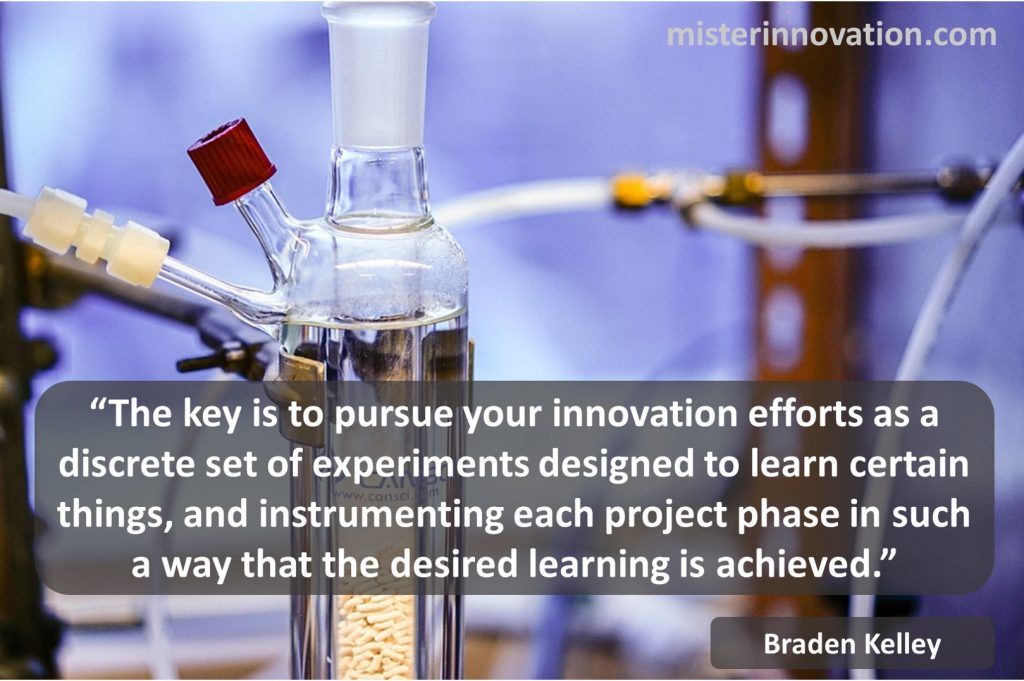
EDITOR’S NOTE: Braden Kelley’s Experiment Canvas™ can be a super useful FREE tool for your innovation or human-centered design pursuits.

“The Experiment Canvas™ is designed to help people instrument for learning fast in iterative new product development (NPD) or service development activities. The canvas will help you create new innovation possibilities in a more visual and collaborative way for greater alignment, accountability, and more successful outcomes.”

Image credit: misterinnovation.com

Subscribe to Human-Centered Change & Innovation WeeklySign up here to get Human-Centered Change & Innovation Weekly delivered to your inbox every week.
Human-Centered Design and Agile Methodologies

A Powerful Combination

Human-Centered Design and Agile Methodologies

GUEST POST from Chateau G Pato

In today’s fast-paced and competitive market, organizations are increasingly realizing the importance of incorporating both Human-Centered Design (HCD) principles and Agile methodologies into their product development processes. By doing so, companies are able to create innovative and user-centric products while staying agile and responding swiftly to changing customer needs.

Human-Centered Design is an iterative design approach that focuses on understanding and meeting the needs, desires, and behaviors of end-users. It involves continuously involving users throughout the design process, gaining insights through user research, and incorporating their feedback to build products that truly address their pain points. On the other hand, Agile methodologies emphasize flexibility, collaboration, and adaptive planning, enabling teams to iteratively deliver value through frequent and incremental product releases.

When combining HCD with Agile, organizations can leverage the strengths of both methodologies and achieve remarkable results. Let’s explore two case studies that highlight the power of this combination.

Case Study 1: Airbnb

One of the most prominent examples of successful integration of HCD and Agile methodologies is Airbnb. In its early years, Airbnb faced the challenge of low user engagement and failed to attract users to their platform. Recognizing the importance of putting users at the center of their design strategy, Airbnb embraced HCD principles alongside an Agile development approach.

Airbnb extensively researched the needs and preferences of its target audience, even going as far as sending its designers to live with hosts in different cities to truly understand the user experience. The insights gained from these immersive research experiences helped Airbnb identify pain points and develop innovative features that addressed them effectively.

By integrating Agile methodologies, Airbnb was able to quickly implement and test its design ideas, gaining rapid feedback from users. They released regular updates and constantly improved their app based on user feedback, ensuring that the product remained user-centric. Today, Airbnb is a global leader in the accommodation industry, revolutionizing the way people experience travel.

Case Study 2: Intuit

Intuit, a leading financial software company, is another example of successfully combining HCD and Agile methodologies in their product development process. Intuit’s flagship product, TurboTax, enables users to file taxes easily and efficiently. However, in observance of a common challenge faced by many organizations, Intuit realized that users often dropped out during the tax filing process due to its complexity.

To address this issue, Intuit adopted an HCD approach. They conducted extensive user research, including in-depth interviews and usability testing, to understand the pain points hindering user adoption. Based on these insights, Intuit redesigned their tax filing process to be simpler, more intuitive, and less time-consuming.

Intuit complemented their HCD efforts with an Agile development methodology. By releasing regular updates and engaging with users throughout the development process, Intuit ensured that the changes made aligned with user needs. The incremental approach allowed them to constantly improve the product and significantly reduce customer drop-offs during tax filing.

The integration of HCD and Agile methods played a crucial role in the success of TurboTax, making it the most popular tax preparation software in the market today.

Conclusion

The combination of Human-Centered Design and Agile methodologies has proven to be a powerful tool for organizations seeking to create user-centric and innovative products. The case studies of Airbnb and Intuit demonstrate how this integration can lead to significant improvements in user experiences and overall business success. By prioritizing user needs and leveraging feedback through an iterative and adaptive approach, companies can adapt to changing market requirements while delivering products that make a lasting impact.

EDITOR’S NOTE: Braden Kelley’s Problem Finding Canvas can be a super useful starting point for doing design thinking or human-centered design.

“The Problem Finding Canvas should help you investigate a handful of areas to explore, choose the one most important to you, extract all of the potential challenges and opportunities and choose one to prioritize.”

Image credit: misterinnovation.com

Subscribe to Human-Centered Change & Innovation WeeklySign up here to get Human-Centered Change & Innovation Weekly delivered to your inbox every week.

What It Takes to be a Successful Digital Disruptor

What It Takes to be a Successful Digital Disruptor

GUEST POST from Chateau G Pato

In today’s rapidly evolving digital landscape, innovation is the key to success. With technology continually reshaping industries, companies must embrace digital disruption to remain competitive. Digital disruptors are those forward-thinking individuals and organizations that actively challenge traditional business models, transforming industries and creating new opportunities. In this article, we explore two case studies to understand what it takes to be a successful digital disruptor.

Case Study 1: Uber – Revolutionizing the Transportation Industry

Uber, founded in 2009, has disrupted the traditional taxi industry by leveraging technology and creating a peer-to-peer ridesharing platform. By simply connecting drivers with passengers through a user-friendly mobile app, Uber has revolutionized the way people commute.

One of the key factors behind Uber’s success is the integration of technology into their business model. They capitalized on the widespread adoption of smartphones and built an app that provides ease of access and convenience to users. Additionally, Uber’s use of GPS technology enabled them to optimize ride routes, resulting in quicker and more efficient trips, which became a significant competitive advantage.

Moreover, Uber’s disruption of the industry was driven by its ability to identify pain points. By recognizing the challenges faced by commuters, such as long queues, unreliable service, and lack of affordability, Uber was able to provide a seamless and cost-effective alternative. They turned a fragmented and highly regulated industry into a user-centric service that offered reliable transportation at the tap of a button.

Case Study 2: Netflix – Transforming the Entertainment Industry

Netflix, founded in 1997 as a DVD rental-by-mail service, disrupted the traditional video rental industry and eventually transformed the entertainment landscape. Recognizing the potential of streaming technology, Netflix transitioned from mailing DVDs to offering an online streaming platform, which has now become a household name.

The success of Netflix can be attributed to its innovative approach to content delivery. By capitalizing on technological advancements and increasing internet speeds, they facilitated on-demand access to a vast library of movies and TV shows. This not only eliminated the need for physical stores but also provided subscribers with the freedom to watch what they want, when they want.

Furthermore, Netflix’s disruptive nature can be seen in its investment in original content. By leveraging data analytics and user preferences, they have been able to create highly engaging and binge-worthy series like “Stranger Things” and “House of Cards.” This strategic move has allowed them to not only compete with traditional media giants but also establish themselves as a major player in the entertainment industry.

What it Takes to be a Successful Digital Disruptor?

Both Uber and Netflix exemplify the characteristics required to be a successful digital disruptor. Here are some key takeaways:

1. Technological Integration: Embrace technology and leverage it to create innovative products and solutions. Digital disruptors constantly seek ways to utilize technology to improve user experience, increase efficiency, and disrupt existing markets.

2. Customer Focus: Identify pain points and seek ways to address them. Successful disruptors prioritize the user experience, understanding the needs and desires of their target audience to create seamless and user-centric solutions.

3. Agility and Adaptability: Disruption requires the ability to adapt to changing circumstances and market conditions. Successful digital disruptors remain agile, constantly innovating and evolving their business strategies and models.

4. Data-Driven Decision Making: Utilize data analytics to understand user behavior, preferences, and market trends. Data-driven insights enable disruptors to make informed decisions and drive innovation in their respective industries.

The digital disruption landscape is constantly evolving, and staying ahead of the curve is crucial for success. By embracing technology, focusing on customer needs, remaining agile, and leveraging data, upcoming disruptors have the potential to reshape industries and create remarkable opportunities.

Image credit: Unsplash

Subscribe to Human-Centered Change & Innovation WeeklySign up here to get Human-Centered Change & Innovation Weekly delivered to your inbox every week.

Change Leadership and Building Resilience in Organizations

Change Leadership and Building Resilience in Organizations

GUEST POST from Chateau G Pato

In today’s rapidly changing business landscape, organizations need strong leadership and resilience to thrive. Change is inevitable, and effective change management requires leaders who can guide their teams through transitions and build resilience within the organization. This article explores the concept of change leadership and its impact on building resilience, using two case studies to illustrate successful strategies.

Case Study 1 – IBM

IBM, a global technology giant, faced a significant challenge in the early 1990s when it realized that its traditional mainframe business was becoming obsolete. The company recognized the need to shift its focus towards emerging technologies such as cloud computing and artificial intelligence. To lead this transformation, IBM appointed Gerstner as its CEO in 1993.

Gerstner implemented a change leadership approach that involved creating a sense of urgency, establishing a clear vision, and involving employees at all levels. He recognized the importance of building resilience in the organization by aligning the company’s culture with its new strategic direction. Through transparency and open communication, Gerstner instilled trust in his employees and motivated them to embrace the changes.

IBM’s transformation was successful, and the company not only survived but thrived in the technology industry. This case study demonstrates the critical role of change leadership in driving organizational resilience during periods of significant change.

Case Study 2 – Patagonia

Patagonia is an outdoor apparel company known for its commitment to sustainability and social responsibility. In 2011, the company faced a supply chain crisis when environmental organizations exposed the use of harmful chemicals in its products. This revelation threatened Patagonia’s reputation and market position as an eco-friendly brand.

In response, the company’s founder and CEO, Yvon Chouinard, took a proactive approach to address the issue. Chouinard implemented a change leadership strategy that involved owning up to the problem, conducting thorough research on alternative materials and manufacturing methods, and engaging with stakeholders to rebuild trust.

The change leadership approach also emphasized building resilience by fostering a learning culture and empowering employees to adopt innovative practices. Patagonia introduced its “Worn Wear” program that encouraged customers to repair, reuse, and recycle their garments, aligning with its sustainability values.

Patagonia’s commitment to change and resilience paid off. With its transparent approach and focus on sustainability, the company regained customer trust and attracted new environmentally conscious consumers. The case study demonstrates how change leadership and resilience can not only mitigate a crisis but also be a driver for long-term success.

Conclusion

Change leadership is essential for building resilience in organizations. The case studies of IBM and Patagonia demonstrate that effective change leaders create a vision, engage employees, and foster a culture that embraces and adapts to change. By proactively addressing challenges and building resilience within their organizations, both companies achieved significant success.

Leadership that guides organizations through change and builds resilience enables businesses to adapt to evolving market conditions, seize new opportunities, and navigate crises. In an era of constant change, organizations that prioritize change leadership and resilience are more likely to remain competitive and thrive.

Image credit: Pixabay

Subscribe to Human-Centered Change & Innovation WeeklySign up here to get Human-Centered Change & Innovation Weekly delivered to your inbox every week.

Driving Cross-Functional Innovation

The Power of Collaboration

Driving Cross-Functional Innovation

GUEST POST from Chateau G Pato

Collaboration is a key driver of innovation, enabling diverse teams to leverage their expertise, perspectives, and skills to solve complex problems. In today’s fast-paced and interconnected world, cross-functional collaboration has become increasingly essential for businesses to stay competitive and drive meaningful change. This article explores the benefits of collaboration in fostering cross-functional innovation through two compelling case studies.

Case Study 1 – Pixar’s Creative Collaboration

Pixar, the renowned animation studio, is celebrated for its consistent delivery of groundbreaking and critically acclaimed films. One of the critical factors contributing to their success is their commitment to cross-functional collaboration. From directors to animators, writers, and technical experts, Pixar brings together diverse talents from different disciplines to create their films.

By fostering an environment of open communication and collaboration, Pixar teams challenge conventions and push boundaries. They encourage cross-pollination of ideas, creating an iterative process where different perspectives enrich the creative process. This cross-functional approach has led to numerous breakthroughs in storytelling, animation techniques, and technological advancements, enabling Pixar to create immersive and emotionally impactful films loved by audiences worldwide.

Case Study 2 – GE’s Global Research Collaboration

General Electric (GE), a multinational conglomerate, places a strong emphasis on collaboration as a catalyst for innovation. GE’s Global Research Center, one of the world’s most extensive and diverse industrial research organizations, brings together scientists, engineers, and experts from various disciplines.

By fostering cross-functional collaboration, GE harnesses the collective knowledge and expertise of its researchers. This collaborative environment has yielded groundbreaking innovations across industries, including advancements in renewable energy sources, healthcare technologies, aerospace, and more. GE’s collaboration efforts not only drive innovation but also contribute to addressing global challenges and improving the world we live in.

Benefits of Cross-Functional Collaboration:

1. Enhanced Problem-Solving: Cross-functional teams bring a range of perspectives and expertise to the table, enabling them to approach problems from different angles. This collaborative approach fosters innovative thinking and generates well-rounded solutions that address diverse needs.

2. Increased Creativity and Innovation: Collaboration sparks creativity by enabling the collision of ideas, encouraging out-of-the-box thinking, and challenging traditional paradigms. The synergy between team members from different backgrounds stimulates new perspectives and innovative solutions.

3. Improved Communication and Knowledge Sharing: Cross-functional collaboration facilitates open communication, breaking down silos and enabling the sharing of expertise and insights. This exchange of knowledge drives continuous learning, enabling teams to stay current with industry trends and leverage emerging opportunities.

4. Enhanced Decision Making: Collaboration encourages collective decision-making processes, leveraging diverse viewpoints and expertise. This approach leads to more informed and well-rounded decisions, reducing the risk of biases and improving overall organizational performance.

Conclusion

Cross-functional collaboration is a powerful tool for driving innovation and achieving organizational success. As demonstrated by the case studies of Pixar and GE, collaboration fosters creativity, problem-solving, knowledge sharing, and effective decision-making. By embracing and promoting cross-functional collaboration, businesses can harness the collective intelligence of their teams and unlock new avenues for growth, ensuring their continued relevance and competitiveness in an ever-evolving world.

Image credit: Pixabay

Subscribe to Human-Centered Change & Innovation WeeklySign up here to get Human-Centered Change & Innovation Weekly delivered to your inbox every week.

Exploring the Application of Futures Research in Business

Exploring the Application of Futures Research in Business

GUEST POST from Chateau G Pato

Futures research, also known as strategic foresight, is a valuable discipline that enables businesses to anticipate and prepare for future trends and challenges. By studying emerging technologies, social changes, and economic shifts, companies can shape their strategies to stay ahead of the curve. This article delves into the application of futures research in business through two compelling case studies that demonstrate its effectiveness.

Case Study 1: Tesla’s Disruptive Vision for Electric Vehicles

Tesla, the renowned electric vehicle manufacturer, revolutionized the automotive industry through its visionary approach. By applying futures research, Tesla identified the impending need for sustainable transportation and recognized the potential market for electric cars. Tesla’s CEO, Elon Musk, envisioned a future where electric vehicles would dominate the market, offering a cleaner and more efficient alternative to traditional combustion engines.

Rather than conforming to existing industry norms, Tesla focused on developing advanced battery technology, creating a robust charging infrastructure, and designing sleek and high-performance electric vehicles. This forward-thinking approach, based on insights gained from futures research, positioned Tesla as a leader in the electric vehicle market and set the stage for increased demand and adoption of sustainable transportation worldwide.

Case Study 2: McDonald’s Embracing Changing Consumer Preferences

McDonald’s, the global fast-food chain, experienced considerable challenges as shifting consumer preferences favored healthier and more sustainable dining options. In response to these emerging trends, McDonald’s embraced the insights provided by futures research and undertook substantial strategic transformations.

The company diversified its menu by introducing healthier options such as salads, wraps, and fruit smoothies. They also implemented sustainable practices, such as sourcing cage-free eggs and responsibly harvested coffee. Moreover, McDonald’s introduced digital ordering and payment systems to cater to changing customer behaviors.

By leveraging futures research, McDonald’s proactively adapted its business model, appealing to a wider range of customers and aligning with evolving consumer expectations. This strategic shift allowed McDonald’s to remain relevant and competitive in an industry that demanded changes to stay ahead.

Conclusion

Futures research offers immense value to businesses by providing foresight into emerging trends and transforming challenges into opportunities. The case studies of Tesla and McDonald’s demonstrate the impact of leveraging futures research to drive innovation, adapt to changing dynamics, and meet customer demands effectively.

By incorporating strategic foresight into their decision-making processes, businesses can identify new markets, anticipate future needs, mitigate risks, and develop sustainable strategies for long-term success. With the ever-increasing pace of change in today’s business landscape, futures research has become an invaluable tool for companies that seek to thrive in a future-oriented and rapidly evolving world.

Bottom line: Futurology is not fortune telling. Futurists use a scientific approach to create their deliverables, but a methodology and tools like those in FutureHacking™ can empower anyone to engage in futurology themselves.

Image credit: Pixabay

Subscribe to Human-Centered Change & Innovation WeeklySign up here to get Human-Centered Change & Innovation Weekly delivered to your inbox every week.

Predictions for the Future of Education

Predictions for the Future of Education

GUEST POST from Chateau G Pato

The Education sector is rapidly evolving and no one is quite sure what the future holds. It’s clear that technology advancements and changes in the way we approach day-to-day learning are here to stay, but there are a few noteworthy trends that may indicate what the future may hold.

1. Moving to Online Learning

The increase in digital technology over the past decade has made the move to online learning inevitable. In recent years, many educational institutions have begun offering online courses or even entire degree programs. This is proving to be an incredibly popular option among students who may not otherwise have access to more traditional learning.

In Finland, the University of Jyväskylä has taken a unique approach to the online learning revolution. Rather than offering traditional classes, the university offers an “open university” platform, where students can learn from experts without actually enrolling in a course. This approach has proven to be successful, and it’s likely that more educational institutions will begin adopting this model.

2. Personalized Learning

As technology advances, so too do our abilities to offer personalized learning. Through tracking systems, teachers can customize lesson plans and course material to better suit each student’s individual needs. Not only does this ensure that each student gets the most out of their education, but it also allows educators to detect and address potential problems before they become serious.

The Walton Family Foundation, for example, is providing schools with the resources necessary to implement personalized learning strategies. This has proven to be a successful approach in some areas, and it’s likely that more educational institutions will begin adopting similar strategies in the near future.

3. Increased Attention on Social and Emotional Development

In recent years, there has been an increased focus on the importance of social and emotional development in students. The prevalence of mental health issues among children and adolescents has forced educators to reassess their methods and approach the issue from a more holistic perspective.

In the United Kingdom, the government is currently working to ensure that social and emotional development is given the attention it deserves in the classroom. They are currently exploring ways to make sure that every school has access to the necessary resources and programs to ensure that students are emotionally and mentally supported.

Conclusion

These are just a few of the trends that may indicate what the future may hold when it comes to the education sector. As technology continues to develop and new methods are explored, we can only wait to see what the future of Education has in store.

Bottom line: Futurology is not fortune telling. Futurists use a scientific approach to create their deliverables, but a methodology and tools like those in FutureHacking™ can empower anyone to engage in futurology themselves.

Image credit: Pixabay

Subscribe to Human-Centered Change & Innovation WeeklySign up here to get Human-Centered Change & Innovation Weekly delivered to your inbox every week.

The Emergence of Smart Cities: Challenges and Opportunities

The Emergence of Smart Cities: Challenges and Opportunities

GUEST POST from Chateau G Pato

The concept of ‘smart cities’ has been gaining traction in the past decade. Smart cities integrate technology-enabled sensing, analysis and communication across vital city operations, for example, transportation and energy management. The term may also refer to a vision of a city that is connected and efficient, safer, and more livable. With their introduction into urban environments comes both challenges and opportunities.

One major challenge for smart cities is the amount of data that the connected infrastructure is expected to collect, analyze and report. For this reason, city governments require the right infrastructure and platform to store, protect and analyze the data safely to improve urban services and decision making. Security and privacy are also major concerns. Cities need to deploy new technologies and protocols for data security and privacy protection, while also managing the resilience of the data existing in such systems.

Cost is another major challenge for smart cities. The introduction of new technologies can incur high financial costs. This may include the development of interface-oriented smart systems, power supplies and real-time control. Moreover, the maintenance costs for managing and running smart city systems will be a challenge for city management.

Despite these challenges, smart cities also present lucrative opportunities. For example, two notable examples of successful implementations of smart cities are Barcelona in Spain and Amsterdam in the Netherlands.

Case Study 1 – Barcelona

Barcelona is known for its pioneering implementation of city-wide Wi-Fi. This initially included the deployment of 360 antennas across the city, providing free public access. Barcelona has since incorporated a range of digitalized services, for example, a collaboration program to create an open data platform for civic services such as waste management and pollution monitoring.

Case Study 2 – Amsterdam

Amsterdam is also an example of a successful smart city. The city collects data from a variety of sources, including sensors, wearables and smartphones, to generate a centralized control platform. This platform is then used for crime prediction, the efficient delivery of healthcare services, improved traffic management, and better environmental tracking.

Conclusion

It is clear that smart cities present both challenges and opportunities. Despite the high investments required for data collection and infrastructure, it is evident that the implementation of these frameworks can result in improved urban services and decision making, a modernized public infrastructure, and advanced safety standards. Cities that demonstrate innovation and effective management strategies could benefit from the potential of smart cities, making urban life more connected and efficient.

Bottom line: Futurology is not fortune telling. Futurists use a scientific approach to create their deliverables, but a methodology and tools like those in FutureHacking™ can empower anyone to engage in futurology themselves.

Image credit: Pexels

Subscribe to Human-Centered Change & Innovation WeeklySign up here to get Human-Centered Change & Innovation Weekly delivered to your inbox every week.