Author Archives: Chateau G Pato

About Chateau G Pato

Chateau G Pato is a senior futurist at Inteligencia Ltd. She is passionate about content creation and thinks about it as more science than art. Chateau travels the world at the speed of light, over mountains and under oceans. Her favorite numbers are one and zero. Content Authenticity Statement: If it wasn't clear, any articles under Chateau's byline have been written by OpenAI Playground or Gemini using Braden Kelley and public content as inspiration.

The Future of Education

Leveraging Technology for Improved Outcomes

The Future of Education

GUEST POST from Chateau G Pato

Education plays a crucial role in shaping society and preparing future generations for success. With the rapid advancements in technology, it is essential to explore how it can be leveraged to enhance education and improve outcomes. This article will delve into the future of education, highlighting two case studies where technology has revolutionized learning methods and brought about positive results.

Case Study 1: Khan Academy’s Personalized Learning

Khan Academy, a non-profit educational organization, has been at the forefront of using technology to personalize education. Traditional classroom settings often struggle to cater to the unique learning needs of diverse students, leading to students falling behind or becoming disengaged. However, Khan Academy’s online platform provides students with personalized learning experiences, adapting to their individual progress and needs.

The platform offers a wide range of subjects, enabling students to learn at their own pace and revisit concepts until they grasp them fully. Detailed analytics and progress reports provide teachers with valuable insights into students’ strengths and areas of improvement, allowing for more targeted instructional strategies.

Several studies have shown the positive impact of Khan Academy on student learning outcomes. For instance, a study by the Center for Research on Education Outcomes found that students who used Khan Academy for at least 30 minutes a week outperformed their peers in mathematics by 0.29 standard deviations. This personalized learning approach has transformed education by giving students the agency to drive their own learning experience and achieve improved academic performance.

Case Study 2: Virtual Reality in Medical Education

Advancements in virtual reality (VR) technology have opened up new possibilities in medical education. One innovative example is the use of VR simulations to train future surgeons. Traditional medical training would often rely on observing surgeries and practicing on cadavers or dummies, limiting exposure and hands-on experience.

With VR, medical students can engage in realistic surgical simulations, gaining practical experience and refining their skills in a controlled environment. The ability to repeat procedures and receive instant feedback contributes to accelerated learning. Moreover, VR also enables collaboration among students and instructors in virtual operating rooms, creating a community of practice and fostering teamwork.

A study published in the Journal of Medical Internet Research compared the efficacy of VR simulation training with traditional methods for laparoscopic surgery. The results revealed that VR training significantly improved participants’ technical skills, compared to those using traditional methods. VR not only enhances the learning process but also helps reduce risks and costs associated with live surgical training.

Conclusion

Technology holds immense potential to transform education and improve academic outcomes. The case studies discussed above illustrate just a glimpse of the possibilities that lie ahead. Khan Academy’s personalized learning approach showcases how technology can adapt to the unique needs of each learner, leading to enhanced results. Additionally, the use of virtual reality in medical education revolutionizes hands-on training and provides an immersive environment for students to acquire crucial skills.

As we move towards the future, it is essential to harness technology’s full potential and integrate it seamlessly into education. By doing so, we can create a more inclusive, personalized, and engaging learning experience for students across the globe, ultimately equipping them with the skills and knowledge necessary to thrive in tomorrow’s world.

Bottom line: Futurology is not fortune telling. Futurists use a scientific approach to create their deliverables, but a methodology and tools like those in FutureHacking™ can empower anyone to engage in futurology themselves.

Image credit: Pixabay

Subscribe to Human-Centered Change & Innovation WeeklySign up here to get Human-Centered Change & Innovation Weekly delivered to your inbox every week.

Developing a Change Management Framework for Your Business

Developing a Change Management Framework for Your Business

GUEST POST from Chateau G Pato

Change is inevitable in today’s fast-paced business world, and organizations that can effectively manage and implement change are the ones that thrive. However, managing change can be complex and challenging, as it requires careful planning, communication, and employee involvement. To navigate successfully through change, businesses need to develop a robust change management framework. This article will provide insights into building such a framework using real-world case study examples.

Case Study 1: Procter & Gamble (P&G)

Procter & Gamble, a multinational consumer goods company, embarked on a significant restructuring initiative to streamline its product portfolio. The company aimed to focus on its core brands and divest underperforming units. However, implementing such a transformation required the buy-in and commitment of its employees.

P&G developed a change management framework comprising four key stages. Firstly, they initiated the change by articulating a clear vision and purpose for the restructuring, emphasizing the long-term benefits for the company and its employees. The second stage involved assessing the organization’s readiness for change, identifying potential barriers, and creating a detailed plan to address them.

Next, P&G prioritized communication and involvement throughout the transformation process. They ensured that all employees understood the rationale behind the change, the role they would play, and the benefits they could expect. This transparent and inclusive approach fostered collaboration and reduced resistance.

Finally, P&G focused on sustaining the change by continuously monitoring progress, celebrating milestones, and adapting the strategy as needed. By following this change management framework, P&G successfully navigated its restructuring, improving operational efficiency and strengthening its competitive position.

Case Study 2: Microsoft

Microsoft, the technology giant, witnessed a significant transformation under the leadership of Satya Nadella. One of the key initiatives undertaken was moving from a traditional product-centric approach to a cloud-first and mobile-first strategy. This shift required a cultural change within the organization and a new mindset among its employees.

Microsoft’s change management framework focused on developing a growth mindset by promoting learning, experimentation, and collaboration. They encouraged employees to embrace new technologies and methodologies by providing training, resources, and a supportive environment. This framework fostered innovation and agility, enabling Microsoft to adapt to market changes and launch successful cloud-based services such as Microsoft Azure and Office 365.

Additionally, Microsoft focused on building a sense of purpose and shared values among its employees. They empowered individuals to take ownership of their work and encouraged autonomy, leading to increased engagement and motivation. By implementing this change management framework, Microsoft successfully shifted its business strategy and achieved substantial growth.

Key Takeaways for Developing a Change Management Framework

These case studies highlight the essential components of a change management framework:

1. Articulate a clear vision and purpose for change: Ensure that all employees understand the rationale behind the change and the benefits it will bring to the organization.

2. Assess readiness and address barriers: Identify potential obstacles, develop a comprehensive plan to mitigate them, and create opportunities for employee feedback and involvement.

3. Foster communication and involvement: Establish open channels for communication, encourage feedback, and involve employees in the change process to reduce resistance and build a sense of ownership.

4. Prioritize sustainability: Continuously monitor progress, celebrate milestones, and adapt the change strategy as needed to sustain transformation.

By developing a robust change management framework and leveraging insights from real-world case studies like P&G and Microsoft, businesses can navigate change successfully, maximize employee engagement, and thrive in an ever-evolving marketplace.

SPECIAL BONUS: Braden Kelley’s Human-Centered Change methodology and its associated Change Planning Toolkit™ goes beyond ProSci’s ADKAR, the Association of Change Management Professionals’ (ACMP) Standard, and the PMBOK used by Project Management Professionals (PMP) but is designed to be consistent with them. You can get ten (10) FREE tools from the 70+ tools and frameworks in the Change Planning Toolkit™ here, along with more information about the Human-Centered Change methodology and Braden’s book Charting Change. Book buyers get access to even more tools, including the Change Planning Canvas™.

Accelerate your change and transformation success

Image credit: Pexels

Subscribe to Human-Centered Change & Innovation WeeklySign up here to get Human-Centered Change & Innovation Weekly delivered to your inbox every week.

Design Thinking Across Industries

How to Implement It in Your Workplace

Design Thinking Across Industries

GUEST POST from Chateau G Pato

Design thinking is a problem-solving approach that has garnered significant attention in recent years. Originally embraced by the design industry, it has now expanded its influence across a wide range of sectors, from technology and healthcare to finance and education. This article will explore how design thinking can be successfully implemented in various industries through the analysis of two case studies.

Case Study 1 – Airbnb: Transforming the Hospitality Industry

One prominent example of design thinking in action is Airbnb, the online marketplace for short-term rentals. In the early stages of their journey, Airbnb encountered a major challenge: the lack of trust between hosts and guests. To address this issue, the company applied design thinking principles to reimagine the user experience and build a platform centered around trust and community.

Airbnb identified that photographs played a crucial role in establishing trust. They started by sending professional photographers to capture appealing images of listed properties. This step not only improved the overall quality of the platform but also helped to foster trust between hosts and guests. Additionally, Airbnb introduced a review system, enabling users to provide feedback and ratings for both hosts and guests. This feedback mechanism helped further build trust and accountability within the community.

By adopting a design thinking approach, Airbnb was able to create an innovative solution to a common industry problem. They focused on human-centered design, empathy, and iterative prototyping, leveraging these principles to revolutionize the hospitality industry.

Case Study 2 – Kaiser Permanente: Enhancing Healthcare Services

Design thinking has also been successfully applied in the healthcare sector, as demonstrated by the renowned healthcare organization, Kaiser Permanente. Their goal was to improve the patient experience by reducing wait times and enhancing communication between patients and medical staff.

To achieve this, Kaiser Permanente undertook a redesign of their emergency departments, seeking to understand the pain points and barriers experienced by patients. They engaged in empathy research, observing and interviewing patients to gain a deeper understanding of their needs and frustrations.

Based on these insights, Kaiser Permanente implemented various design-driven solutions. They simplified and clarified signage to reduce confusion, created digital tools to provide patients with real-time updates on their wait times, and introduced a triage system to prioritize patients based on the severity of their condition. These changes not only improved the overall patient experience but also optimized the workflow of medical professionals, resulting in more efficient and effective care.

By utilizing design thinking principles, Kaiser Permanente transformed their healthcare services, making them more patient-centric and responsive to individual needs.

Implementing Design Thinking in Your Workplace

To introduce design thinking in your workplace, consider the following steps:

1. Foster a culture of innovation: Encourage your team to think creatively and embrace a problem-solving mindset. Provide a safe space for experimenting and taking risks.

2. Empathize with users: Understand the needs, desires, and pain points of your target audience. Engage in research and direct observation to gain empathy and develop a deeper understanding of their experiences.

3. Prototype and iterate: Develop prototypes and continually refine your solutions based on feedback and testing. Embrace an iterative process that allows for continuous improvement.

4. Collaborate and seek diverse perspectives: Design thinking thrives on collaboration and diverse viewpoints. Encourage cross-functional teams and create opportunities for brainstorming and sharing ideas.

5. Embrace failure as a learning opportunity: Design thinking often involves trial and error. Embrace failure as a stepping stone to success and encourage a culture of continuous learning and growth.

By implementing design thinking principles, organizations can drive innovation, improve their products and services, and create meaningful user experiences. By learning from successful cases, such as Airbnb and Kaiser Permanente, businesses across industries can benefit from this problem-solving approach and stay ahead in an ever-evolving market.

EDITOR’S NOTE: Braden Kelley’s Problem Finding Canvas can be a super useful starting point for doing design thinking or human-centered design.

“The Problem Finding Canvas should help you investigate a handful of areas to explore, choose the one most important to you, extract all of the potential challenges and opportunities and choose one to prioritize.”

Image credit: misterinnovation.com

Subscribe to Human-Centered Change & Innovation WeeklySign up here to get Human-Centered Change & Innovation Weekly delivered to your inbox every week.

Human-Centered Design and the Future of Innovation

Human-Centered Design and the Future of Innovation

GUEST POST from Chateau G Pato

Innovation has always been a driving force behind the advancements in technology and society as a whole. From the invention of the wheel to the development of artificial intelligence, innovation has shaped and influenced our lives in countless ways. However, as we move further into the future, it becomes increasingly important to shift our focus from technology-centered design to human-centered design.

Human-centered design is an approach that prioritizes understanding the needs, desires, and behaviors of the people who will be using a product or service. It involves placing the user at the center of the design process, involving them in every stage of development, and ensuring that the final product is tailored to meet their specific needs. This approach not only leads to more successful and impactful innovations but also helps build trust and strengthen the relationship between users and technology.

Case Study 1 – Airbnb

One of the most prominent examples of human-centered design is the case of Airbnb. When the founders of Airbnb, Brian Chesky and Joe Gebbia, first started the company, they had the vision of allowing travelers to find unique and affordable accommodations. However, they quickly realized that they needed to understand the needs and concerns of both hosts and guests in order to create a successful platform.

Chesky and Gebbia embarked on a journey of talking to their potential users, staying in their homes, and experiencing the challenges they faced. This human-centered approach enabled them to identify and address issues such as safety concerns and trust-building mechanisms. By placing the users at the core of their design process, Airbnb was able to create a platform that catered to the needs of both hosts and guests, leading to its immense success and disruption of the hospitality industry.

Case Study 2 – IDEO

Another compelling case study comes from IDEO, a global design and innovation consultancy. IDEO partnered with the Indian government to tackle one of the country’s most pressing challenges: improving public sanitation. By using human-centered design principles, IDEO sought to understand the needs and behaviors of the people who were using public toilets in India.

Through extensive research and observation, IDEO discovered that the quality and cleanliness of public toilets were major concerns. They then collaborated with local communities and organizations to create innovative solutions, including portable toilet kits, mobile cleaning services, and community engagement programs. By involving the users in the design process, IDEO was able to create solutions that not only improved sanitation but also catered to the cultural and social context of the Indian population.

Conclusion

These case studies illustrate the power and potential of human-centered design in driving innovation. By focusing on the needs and experiences of the intended users, innovators can create products and services that truly make a difference in people’s lives. Human-centered design not only increases the chances of success but also builds trust and creates long-lasting value.

As we step into the future of innovation, it is imperative that we prioritize human-centered design. By embracing this approach, we can build a future where technology seamlessly integrates into our lives, enhances our experiences, and meets our ever-evolving needs.

Bottom line: Futurology is not fortune telling. Futurists use a scientific approach to create their deliverables, but a methodology and tools like those in FutureHacking™ can empower anyone to engage in futurology themselves.

Image credit: Pexels

Subscribe to Human-Centered Change & Innovation WeeklySign up here to get Human-Centered Change & Innovation Weekly delivered to your inbox every week.

Key Benefits of First Principles Thinking for Innovation

Key Benefits of First Principles Thinking for Innovation

GUEST POST from Chateau G Pato

First principles thinking is an important tool for innovation. It is a mental model that helps innovators understand the fundamental concepts underlying a problem, and apply that understanding to create new solutions. This approach to problem-solving is gaining traction in the business world and is seen as an important way to drive innovation.

First principles thinking involves breaking down a problem into its basic building blocks, then analyzing each of these components to develop a new solution. This process of breaking down a problem into its core components helps innovators identify the key elements of the issue and think about potential solutions in a more creative way.

1. Address the Root Cause

The key benefit of first principles thinking is that it helps innovators get to the root of the problem, rather than simply treating the symptoms. By understanding the underlying structure of the issue, innovators can better understand the implications of the problem and develop effective solutions.

2. See Beyond the Obvious

First principles thinking also allows innovators to look beyond what is known and consider new possibilities. By focusing on the core principles of the problem, innovators can think about potential solutions that have never been tried before. This can lead to breakthroughs that would have otherwise been impossible.

3. Develop More Sustainable Ideas

Finally, first principles thinking helps innovators develop ideas that are more sustainable. By understanding the underlying principles of the problem, innovators can develop solutions that are more likely to stand the test of time and remain relevant in the future.

Overall, first principles thinking is an important tool for innovation. It helps innovators break down problems into their basic building blocks, understand the underlying structure of the problem, and develop creative solutions. By applying this approach to problem-solving, innovators can develop new, sustainable ideas that can help drive the future of business.

Image credit: Pexels

Subscribe to Human-Centered Change & Innovation WeeklySign up here to get Human-Centered Change & Innovation Weekly delivered to your inbox every week.

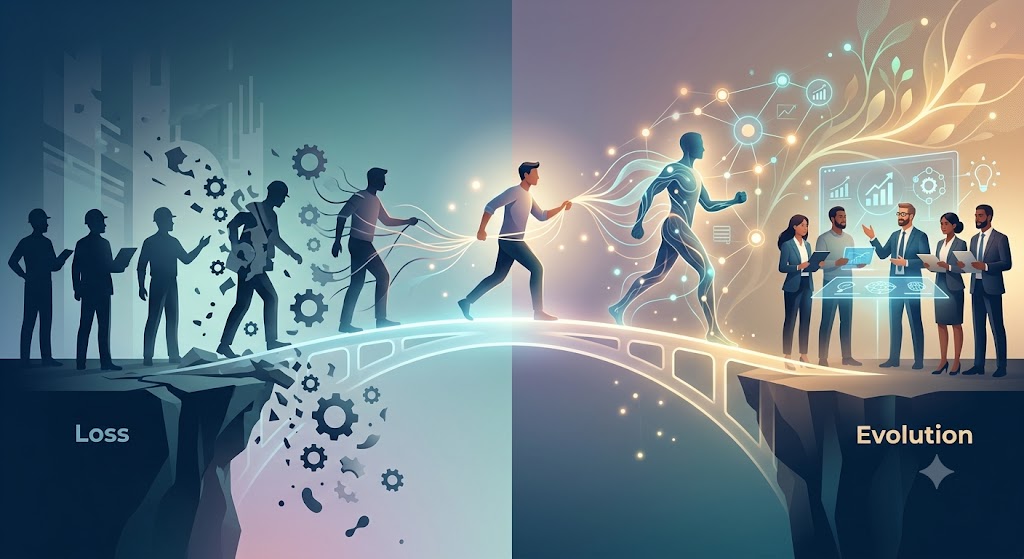
Managing Identity Loss

Helping Employees Transition Through Professional Evolution

Managing Identity Loss

GUEST POST from Chateau G Pato


I. Understanding the Anatomy of Identity Loss

When organizations undergo significant transformations, leaders often spend millions optimizing systems and workflows while ignoring the fundamental human architecture beneath them. True change rarely fails because the strategy was flawed; it fails because people are asked to abandon who they are before they understand who they are becoming.

The “Who Am I Now?” Dilemma

Professional identity is built on years of accumulated expertise, earned status, and predictable mastery. When a transformation upends those foundations, employees experience a profound psychological shift:

  • The Fall from Expert to Novice: Moving subject-matter experts into unfamiliar digital paradigms strip them of their primary source of workplace confidence. The anxiety of feeling incompetent often manifests as active resistance.
  • Loss of Agency and Status: Reorganizations and process shifts can erase legacy accomplishments overnight, leaving individuals feeling disempowered and invisible.
  • The Professional Grief Cycle: Denial, defensiveness, and bargaining are not signs of stubbornness—they are natural human responses to losing a meaningful professional identity.

Futurology & Technological Displacement

As artificial intelligence and automated systems rapidly integrate into daily operations, the nature of workplace friction has fundamentally changed. The threat is no longer just operational; it is existential.

  • Redefining Human Value: Technology doesn’t just alter what employees do—it challenges who they feel they are. When an algorithm performs in seconds what took a specialist years to master, it creates a crisis of purpose.
  • The Role Evolution Mandate: Workers must shift from tactical execution to strategic curation, prompt orchestration, and high-empathy problem solving. This transition requires active guidance, psychological safety, and intentional experience design.

II. Framing the Transition: Experience Design for Identity Shifts

To navigate profound identity disruption, organizations must look beyond traditional change management. Traditional methods treat people as assets to be moved across a spreadsheet. Human-centered experience design, by contrast, recognizes that transitioning professional identity is an emotional and psychological journey that requires intentional architecture.

From Change Management to Experience Architecture

Systemic transformation succeeds only when we design the transition experience with the same rigor and empathy we apply to customer experience:

  • Building Psychological Bridges: Mandating a new future state overnight creates panic and withdrawal. Experience architecture builds intentional stepping stones—scaffolding new behaviors while helping employees safely sunset legacy routines.
  • Designing for Emotional Touchpoints: Mapping the employee journey means identifying key moments of friction, uncertainty, and self-doubt, then embedding explicit support structures directly into those touchpoints.
  • Co-Creating the Future State: People rarely resist changes they help design. Involving employees in shaping their evolved roles transforms identity loss into identity ownership.

The Change Planning Framework

Integrating identity considerations directly into the early strategy phase prevents blind spots that derail execution:

  • Mapping Identity Loss Early: Before launching new initiatives, assess who loses status, mastery, or visibility. Identifying where identity shock will hit hardest allows leaders to proactively design mitigations.
  • Visualizing the Shift: Utilizing collaborative visual frameworks and toolkits enables teams to map out their evolving responsibilities together, making abstract organizational shifts tangible and actionable.
  • Aligning Purpose with Capability: Help individuals connect their foundational expertise to the new vision, ensuring they see a clear, valued place for themselves in the organization’s future state.

III. Actionable Strategies for Leaders: Preserving Dignity while Driving Evolution

Navigating identity transition requires more than empathetic rhetoric; it demands structured, practical interventions. Leaders must act as architects of transition—creating environments where employees can let go of old paradigms without feeling that their past contributions were meaningless.

1. Honor the Past to Unlock the Future

Abruptly discarding legacy systems or methodologies often signals to long-tenured employees that their past work no longer has value. To unlock momentum for the future, leaders must intentionally honor past achievements:

  • Acknowledge the Legacy: Celebrate the expertise, dedication, and historical wins that brought the organization to its current point before demanding adoption of the new direction.
  • Create Formal Sunsetting Rituals: Mark the retirement of legacy tools or processes with intentional milestones, giving teams a sense of closure rather than a silent erasure.

2. Reframing Core Capabilities

When tasks become automated or obsolete, an employee’s sense of competence is threatened. Leaders must help individuals decouple their professional worth from specific tools and anchor it to enduring human capabilities:

  • Translate Tactical Skills into Strategic Value: Help a manual process expert see that their true value lies in domain context, critical thinking, and quality orchestration, not just mechanical execution.
  • Highlight Transferable Strengths: Conduct skill-mapping exercises that explicitly connect an individual’s foundational strengths—such as empathy, problem-solving, or stakeholder management—to newly emerging roles.

3. Designing Psychological Safety Networks

Identity transition forces experienced professionals back onto a learning curve, introducing the fear of failure. Without psychological safety, individuals protect their identity through resistance:

  • Establish Safe Sandbox Environments: Create low-stakes experimentation zones where employees can practice using new tools, platforms, or workflows without fear of performance penalties.
  • Build Identity Support & Peer Networks: Pair transitioning employees with mentors or peers who have successfully navigated similar role evolutions to offer practical guidance and reassurance.

4. Redefining Success Metrics

Continuing to measure performance against legacy key performance indicators (KPIs) while expecting new behaviors creates conflicting signals and heightens identity anxiety:

  • Reward Adaptability and Learning Velocity: Shift evaluation frameworks to value curiosity, experimentation, and speed of skill acquisition alongside traditional output metrics.
  • Recognize Value Orchestration: Measure how effectively individuals leverage new capabilities, AI tools, or cross-functional collaborations to drive broader organizational outcomes.

IV. The Leader’s Role as an Identity Catalyst

Transformation cannot be delegated solely to HR or change management offices. True organizational agility requires leaders at every level to step up as identity catalysts—guiding their teams through the vulnerability of evolution with authenticity, narrative clarity, and deliberate experience design.

Empathy as a Strategic Metric

Leading through identity disruption requires moving beyond top-down mandates toward genuine, human-centered engagement:

  • Radical Candor and Transparency: Acknowledge the discomfort and ambiguity of change directly. Pretending a transition is seamless undermines trust and dismisses real employee anxieties.
  • Active Listening and Validation: Create deliberate feedback loops to hear employee concerns without immediately jumping to defend the change strategy. Validating their experience builds the psychological safety needed to move forward.

Storytelling and Narrative Building

Data drives decisions, but stories drive commitment. Leaders must help employees connect their personal career arcs to the organization’s macro journey:

  • Crafting the Evolution Story: Help individuals frame their career trajectory not as a sharp rupture, but as a logical, empowering next chapter built on the foundation of their past contributions.
  • Illuminating Role Models: Highlight stories of peers who have successfully reinvented their roles, providing tangible proof concepts for what success looks like in the new paradigm.

Designing the New Employee Experience (EX)

A successful transition culminates in an employee experience that feels intentional, empowering, and aligned with long-term growth:

  • Restoring Autonomy and Agency: Re-establish a sense of control by giving employees room to shape how they execute their new responsibilities and define their daily workflows.
  • Cultivating Renewed Purpose: Ensure new roles are clearly tied to meaningful business and customer outcomes, helping individuals regain pride and fulfillment in their evolving professional identity.

Conclusion: Building Resilient, Evolution-Ready Cultures

In an era defined by continuous technological advancement and market shifts, change is no longer a discrete event with a clear beginning and end—it is a perpetual operating condition. Organizations that succeed in this environment will not be those with the sleekest software or the most rigid plans, but those that master the human dimension of transition.

By shifting our focus from enforcing compliance to designing human-centered transition experiences, we address the root cause of organizational friction: the fear of losing identity, status, and purpose. When leaders honor past contributions, create safe spaces for experimentation, and help employees reframe their core value, identity loss transforms from a point of resistance into a catalyst for profound personal and collective growth.

Ultimately, helping people navigate professional evolution builds hyper-adaptable, deeply loyal cultures. When employees know their dignity and growth are prioritized amidst disruption, they don’t just survive change—they actively drive the innovation required to shape the future.

Frequently Asked Questions

What is professional identity loss in the workplace?
Professional identity loss occurs when organizational restructuring, automation, or role shifts strip employees of the legacy expertise, status, and routine tasks that previously defined their professional value and sense of purpose.
How does experience design differ from traditional change management?
Traditional change management focuses primarily on processes, tools, and compliance. Experience design takes a human-centered approach, focusing on the psychological journey, emotional friction points, and co-creating transition pathways so employees maintain agency and dignity during evolution.
How can leaders support employees experiencing identity loss due to AI and automation?
Leaders can support employees by honoring past contributions, decoupling personal worth from obsolete mechanical tasks, providing safe sandbox environments for risk-free upskilling, and redefining success metrics to reward adaptability and high-empathy value orchestration.


Bottom line: Futurology is not fortune telling. Futurists use a scientific approach to create their deliverables, but a methodology and tools like those in FutureHacking™ can empower anyone to engage in futurology themselves.

Image credit: Gemini

Subscribe to Human-Centered Change & Innovation WeeklySign up here to get Human-Centered Change & Innovation Weekly delivered to your inbox every week.

Why Bottom-Up Alignment Outperforms Top-Down Mandates

Democratizing Strategy
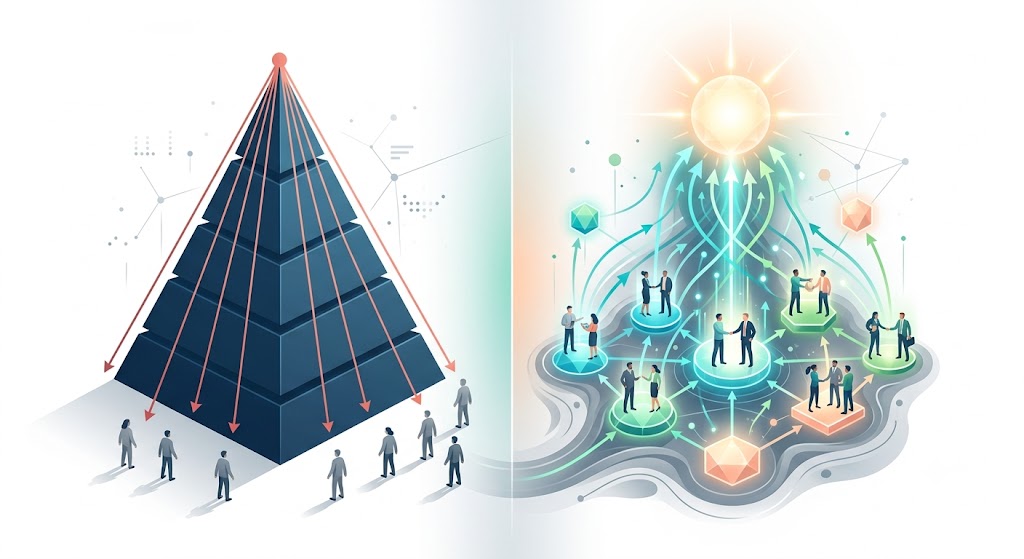
Why Bottom-Up Alignment Outperforms Top-Down Mandates

GUEST POST from Chateau G Pato

I. Introduction: The Strategy Execution Paradox

For decades, traditional strategic planning has suffered from a persistent and costly flaw: it fails not at the point of vision, but at the point of execution. Study after study reveals that up to 90% of well-crafted corporate strategies fail to achieve their intended outcomes. This is the Strategy Execution Paradox. Organizations invest millions of dollars and countless executive hours shaping brilliant long-term blueprints, only to watch them stall, fracture, or wither away once handed off to the teams responsible for making them a reality.

The Ivory Tower Trap

The root cause of this failure lies in how strategy is traditionally conceived and communicated. Far too often, strategic design occurs within an executive vacuum — an ivory tower disconnected from the day-to-day operational realities, customer interactions, and frontline friction points of the business. When leadership crafts strategy in isolation, the resulting plan inevitably contains unexamined assumptions. When dropped onto the organization as a finished product, employees receive it with skepticism rather than enthusiasm. It becomes an exercise in top-down imposition rather than shared enterprise.

The Illusion of Control

Conventional leadership models mistake commanding direction for creating commitment. Leaders operate under the illusion that because a directive was issued from the top, alignment and momentum will naturally follow. In practice, top-down mandates produce passive compliance at best and quiet resistance at worst. People rarely support that which they had no part in creating. When strategy feels like something being done to employees rather than with them, psychological ownership vanishes, taking initiative and innovation along with it.

The Core Thesis

Strategy shouldn’t be a secret document handed down from on high; it must be an ongoing, collaborative dialogue that empowers every level of the organization to co-create and own the vision. Democratizing strategy flips the traditional paradigm on its head. By moving from rigid top-down directives to human-centered, bottom-up alignment, organizations unleash frontline intelligence, foster genuine enterprise-wide ownership, and build the adaptive capacity needed to thrive in an unpredictable world.

II. The Failure Modes of Top-Down Mandates

When strategic planning operates purely as a top-down mandate, it introduces structural vulnerabilities into the organization. Mandates rely on an outdated command-and-control paradigm that assumes executive leadership possesses complete clarity on market dynamics, customer behavior, and operational capabilities. In reality, this approach creates friction points that systematically undermine execution before work even begins.

The Engagement and Insight Gap

The further leadership sits from the front lines, the greater the risk of strategic detachment. Frontline employees — customer service representatives, product engineers, field sales personnel, and operations managers — interact directly with customer pain points and process inefficiencies every day. When strategy is dictated from the executive suite, this rich source of real-time market intelligence is entirely bypassed.

Ignoring frontline insights leads to a double loss: the strategy itself is built on incomplete data, and the employees possessing critical context feel undervalued. For deeper context on how organizational disconnects derail execution, explore our analysis on bridging the execution gap through human-centered change design.

Passive Resistance and the Compliance Trap

Top-down mandates inherently demand compliance rather than fostering commitment. While compliance can secure basic task completion, it completely fails to inspire discretionary effort, creative problem-solving, or emotional investment. When directives feel imposed rather than co-created, organizational culture shifts toward self-preservation and minimal acceptable performance.

This dynamic routinely produces two destructive behaviors:

  • Malicious Compliance: Teams follow instructions to the letter even when they know the plan is flawed, allowing initiatives to fail to prove leadership wrong.
  • Passive Friction: Middle managers nod along in executive meetings while quietly delaying, deprioritizing, or diluting implementation within their business units.

Fragility in the Face of Rapid Market Shifts

Traditional top-down strategies are inherently rigid, typically anchored to annual budget cycles and static multi-year plans. When market disruptions occur — whether driven by technological breakthroughs, economic shifts, or emerging competitor moves — centralized decision-making becomes a bottleneck.

In a command-and-control setup, frontline teams lack the agency or authority to adjust tactics without seeking multi-layered approvals. By the time information travels up through management chains, gets debated at the executive level, and descends back down as a revised mandate, the window of opportunity has closed. Top-down mandates create organizational fragility precisely when speed, adaptability, and local responsiveness are required most.

III. The Four Pillars of Democratized Strategy

Democratizing strategy does not mean abandoning leadership or replacing clear direction with consensus-driven chaos. Instead, it transforms strategic planning from an exclusive, periodic event into an open, continuous operating system. To successfully shift from top-down directives to bottom-up alignment, organizations must establish four foundational pillars that bridge the gap between executive vision and enterprise-wide ownership.

1. Human-Centered Strategy Design

Human-Centered Strategy Design applies the principles of experience design directly to organizational strategy. Rather than viewing employees merely as resources responsible for executing a plan, this pillar treats them as the primary users and co-designers of the strategy itself. By deeply understanding employee workflows, operational friction, and customer insights, leaders can craft strategies that align naturally with human behavior, driving intrinsic motivation rather than relying on forced compliance.

2. Context Over Control

Command-and-control leadership attempts to manage outcomes by prescribing granular tasks. Democratized strategy replaces detailed mandates with high-level clarity and operational autonomy. Leaders define the overarching vision, strategic intent, and non-negotiable guardrails, then give frontline teams the authority to determine how best to achieve those goals within their domain. When teams understand the “why,” they are empowered to innovate the “how” without waiting for top-down permission.

3. Transparent Co-Creation

Strategy cannot be co-created in the dark. Transparent co-creation relies on accessible, visual frameworks that demystify strategic thinking and invite participation across every tier of the organization. Utilizing visual tools — such as visual project charters, change canvases, and open strategy workshops — enables cross-functional teams to map dependencies, identify risks, and contribute ideas in real time. Learn more about implementing collaborative strategy frameworks in our guide to visual strategy and human-centered change toolkits.

4. Continuous Feedback Loops

In a rapidly shifting business environment, strategy cannot remain a static document locked into annual review cycles. Democratized strategy functions as a dynamic series of hypotheses and real-time experiments. By embedding continuous feedback loops into daily operations, frontline observations and customer responses immediately inform strategic adjustments, transforming strategy into an agile, evolving dialogue.

IV. Operationalizing Bottom-Up Alignment: From Concept to Practice

Moving from the philosophy of democratized strategy to everyday organizational practice requires tangible mechanisms, shared tools, and structured habits. Bottom-up alignment does not happen by accident — it is cultivated through intentional processes that invite participation, simplify strategic communication, and connect daily operational work directly to long-term enterprise goals.

Visual Strategic Tools & Frameworks

Complex, fifty-page strategy documents isolate employees and obscure intent. To truly democratize strategic thinking, organizations must democratize the language and tools of strategy. Shared visual frameworks — such as visual project charters, innovation canvases, and human-centered change toolkits — translate abstract goals into accessible, collaborative spaces.

When cross-functional teams sit down around a single visual canvas to map out strategic intent, dependencies, and operational friction, strategy ceases to be an executive secret. It becomes a shared mental model that anyone in the organization can understand, critique, and contribute to. Discover how visual frameworks accelerate enterprise execution by exploring our insights on visual collaboration tools and the future of work.

Crowdsourcing Insight and Frontline Innovation

Operationalizing bottom-up alignment requires active channels for sourcing intelligence directly from the organizational periphery. Rather than waiting for annual planning cycles, progressive organizations create structured opportunities for continuous input:

  • Open Strategy Hackathons: Dedicated time blocks where cross-functional teams tackle specific strategic challenges and pitch solutions directly to executive sponsors.
  • Frontline Innovation Challenges: Targeted calls for ideas that focus employee creativity on solving urgent customer pain points or removing operational bottlenecks.
  • Distributed Signal Scanning: Empowering employees across all tiers to report emerging market shifts, technology trends, and customer behavioral changes into a centralized organizational foresight network.

Cascading Alignment, Not Commands

Traditional cascading passes down prescribed projects from executives to vice presidents, directors, managers, and individual contributors. Democratized cascading flips this flow by cascading context and objectives downward, while encouraging teams to translate those objectives upward through locally defined solutions.

In this model, leadership establishes enterprise-level strategic horizons and non-negotiable boundaries. Local teams then define their own tactical commitments aligned with those horizons. This approach creates high alignment while preserving high autonomy—ensuring every employee sees a direct line of sight between their daily contributions and the company’s ultimate destination.

V. Overcoming Leadership Friction & Navigating the Transition

Transitioning from a traditional command-and-control hierarchy to a democratized strategic model represents a profound cultural and operational shift. It requires reimagining power dynamics, establishing clear boundaries, and cultivating psychological safety. While the rewards of bottom-up alignment are substantial, organizations inevitably encounter friction during the transition — particularly among leadership structures accustomed to top-down control.

Redefining the Leader’s Role: From Chief Architect to Chief Enabler

The most significant hurdle in democratizing strategy is shifting the mindset of executive leadership and middle management. In traditional organizations, leadership status is tied to having all the answers and issuing authoritative directives. Democratized strategy requires leaders to transition from acting as sole architects of vision to becoming facilitators, contextualizers, and enablers.

A leader’s primary responsibility in a democratized model is to articulate clear strategic intent, define overarching guardrails, and actively remove operational friction for their teams. Rather than managing task completion, leaders focus on fostering strategic capabilities across the workforce, asking coaching questions, and creating spaces where frontline wisdom can surface and flourish. For guidance on driving this mindset shift across your leadership team, explore our approaches to human-centered change leadership and executive alignment keynotes.

Managing Strategic Noise: Guardrails vs. Chaos

A common fear among executives is that opening strategy to broader participation will lead to consensus-driven paralysis, endless debate, or fragmented priorities. However, democratizing strategy is not about managing by committee or turning every decision into a vote; it is about expanding input while maintaining decisive action.

To prevent chaotic divergence, leaders must establish firm strategic guardrails — clearly defined boundaries regarding target markets, core capabilities, budget constraints, and risk tolerance. These guardrails provide the necessary perimeter within which decentralized innovation and bottom-up alignment can occur safely and effectively:

  • Clear Decision Rights: Explicitly clarify which decisions are open for broad co-creation, which are consultative, and which remain central executive choices.
  • Focus Mechanisms: Use standardized visual frameworks and evaluation criteria to filter frontline ideas, ensuring contributions directly serve strategic intent.
  • Time-Bounded Co-Creation: Structure strategy input phases within defined windows to maintain momentum and prevent analysis paralysis.

Building Psychological Safety for Unvarnished Candor

Bottom-up alignment is entirely dependent on the quality and honesty of the information flowing upward. If frontline employees or middle managers fear pushback, career risk, or embarrassment for highlighting flawed assumptions in leadership’s vision, they will default to passive silence.

Creating true strategic alignment requires cultivating a culture of high psychological safety where candor is actively rewarded. Leaders must visibly celebrate team members who identify operational risks early, challenge orthodoxy with customer data, and report unvarnished market realities. When psychological safety becomes an organizational standard, strategy evolves from a fragile corporate ritual into a resilient, self-correcting engine.

VI. Conclusion: Building the Agile, Resilient Future

The traditional model of strategy execution — crafted behind closed doors by an elite few and handed down as an unyielding top-down mandate — is no longer viable in a world characterized by constant acceleration and unpredictability. When strategy relies on command-and-control mechanics, it creates organizational brittleness, alienates frontline talent, and guarantees an ever-widening execution gap.

Democratizing strategy offers a far more dynamic and sustainable path forward. By anchoring your strategic operating system in human-centered design, transparent visual collaboration, and continuous feedback loops, you transform strategy from a static, annual ritual into a living, enterprise-wide capability. You tap into the collective intelligence of those closest to your customers and operational reality, building high-trust teams that don’t just execute plans — they actively refine and adapt them.

Ultimately, a successful strategy is not defined by the elegance of its presentation deck, but by the shared commitment and clarity of the people bringing it to life. When you empower every level of your organization to see themselves as strategic co-creators, execution ceases to be an uphill struggle and becomes your greatest sustainable competitive advantage. To continue exploring visual frameworks, innovation toolkits, and strategies for leading human-centered transformation, visit BradenKelley.com.

Frequently Asked Questions

1. Does democratizing strategy mean decisions are made by consensus or vote?

No. Democratizing strategy is about expanding input and co-creation, not running the company by committee. Executive leadership still maintains authority over the overarching vision, resource allocation, and non-negotiable guardrails. However, frontline teams are given the autonomy and visual tools to inform that vision, identify operational friction, and co-design the tactical solutions required to achieve it.

2. How do you prevent bottom-up alignment from devolving into strategic chaos?

By setting clear strategic guardrails and decision rights upfront. Leaders must define the non-negotiable parameters — such as target markets, budget limits, core values, and risk thresholds — within which decentralized teams can innovate. Using standardized visual tools and time-bounded strategy sessions keeps input focused, actionable, and aligned with enterprise goals.

3. What is the biggest barrier to transitioning from top-down mandates to democratized strategy?

The primary barrier is leadership mindset and organizational culture. In traditional setups, leadership status is tied to issuing commands and having all the answers. Shifting to a democratized model requires leaders to transition into facilitators and enablers, while simultaneously building high psychological safety so frontline employees feel safe offering unvarnished, real-time market feedback.


Bottom line: Futurology is not fortune telling. Futurists use a scientific approach to create their deliverables, but a methodology and tools like those in FutureHacking™ can empower anyone to engage in futurology themselves.

Image credit: Pixabay

Subscribe to Human-Centered Change & Innovation WeeklySign up here to get Human-Centered Change & Innovation Weekly delivered to your inbox every week.

Exploring the Impact of Human-Computer Interaction

Exploring the Impact of Human-Computer Interaction

GUEST POST from Chateau G Pato

In today’s digital age, interactions between humans and computers have become an integral part of our daily lives. Human-Computer Interaction (HCI) refers to the design, development, and study of interactive systems that facilitate seamless communication between humans and computers. This field has revolutionized various industries and transformed the way we live, work, and interact. In this article, we will explore the impact of HCI on two case study examples.

Case Study 1 – Healthcare Industry

The healthcare industry has witnessed significant advancements through the application of HCI principles. One notable case study is the implementation of electronic health record (EHR) systems. These systems allow healthcare professionals to securely store and access patients’ medical information in a digital format. HCI plays a crucial role in designing user-friendly interfaces that enhance the accuracy, efficiency, and usability of EHR systems.

For instance, the adoption of user-centered design principles in EHR systems has led to improvements in information organization, task efficiency, and error reduction. By understanding the needs and workflows of healthcare professionals, HCI experts have successfully integrated features like intuitive user interfaces, context-awareness, and decision support systems. These advancements not only improve healthcare professionals’ productivity but also enhance patient safety and healthcare quality.

Moreover, HCI has facilitated the development of patient-centric systems in healthcare. For example, wearable devices and smartphone applications enable individuals to monitor their health conditions and communicate with healthcare providers. HCI techniques ensure that these systems provide a seamless experience, empowering patients to actively participate in their healthcare management. From reminders for medication adherence to real-time health tracking, HCI has revolutionized how patients engage with healthcare services, leading to better health outcomes.

Case Study 2 – Education Sector

HCI has made substantial contributions to the education sector, transforming pedagogical approaches and improving learning outcomes. One compelling case study is the integration of technology in classrooms, such as interactive whiteboards and collaborative learning platforms. HCI principles help create engaging and interactive interfaces that facilitate effective knowledge transfer and student engagement.

For instance, interactive whiteboards enable teachers to develop multimedia-rich lessons, encouraging active student participation. HCI considerations ensure that these boards have user-friendly interfaces, allowing educators to seamlessly navigate through content and incorporate various media elements like images, videos, and interactive quizzes. By creating a dynamic learning environment, HCI has enhanced student engagement and knowledge retention.

Furthermore, HCI has played a pivotal role in the development of online learning platforms and Massive Open Online Courses (MOOCs). Through HCI techniques, these digital learning platforms provide personalized learning experiences, adaptive assessments, and social interactions among learners. HCI principles guide the design of intuitive, accessible, and customizable interfaces that cater to diverse learner needs, ultimately promoting effective and accessible education beyond traditional classroom settings.

Conclusion

Human-Computer Interaction has had a profound impact on various industries, significantly transforming healthcare and education. The case study examples discussed highlight the power of HCI in creating user-friendly systems that enhance productivity, safety, and engagement. As technology continues to advance, the field of HCI will undoubtedly play a critical role in shaping the future of human-computer interactions, ensuring seamless experiences and enriching lives.

Bottom line: Futurology is not fortune telling. Futurists use a scientific approach to create their deliverables, but a methodology and tools like those in FutureHacking™ can empower anyone to engage in futurology themselves.

Image credit: Pixabay

Subscribe to Human-Centered Change & Innovation WeeklySign up here to get Human-Centered Change & Innovation Weekly delivered to your inbox every week.

Crafting a Change Management Communication Plan

A Guide Featuring Relevant Case Studies

Crafting a Change Management Communication Plan

GUEST POST from Chateau G Pato

Change management is a systematic approach designed for the transition of individuals, teams, and organizations from a current state to a future desired state. For any transitional process to be successful, stellar communication is crucial. This skill is even more vital when dealing with changes within an organization, making the need for a compelling change management communication plan a prime necessity.

Developing a robust change management communication plan can sometimes get quite complex, given the diverse organizational structures, numerous stakeholders, and interrelated business processes. Yet, armed with the right blueprint, the benefits are substantial and deeply impactful on the organization’s transition. The following discussion explores effective strategies for creating a communication plan for change management. To bring those strategies into context, two case study examples are also illustrated.

Case Study 1: Microsoft’s Transition to Cloud Computing

Perhaps one of the first significant changes organizations had to manage was the shift from traditional servers to cloud computing. Microsoft is a prime example of how a company strategically used change management to transition into a new era.

In 2010, Microsoft announced its shift to the cloud-first approach, a move that left not only its employees but also its massive customer base requiring serious convincing. It aimed to manage the transition smoothly and ensure it didn’t disrupt normal operations.

Microsoft used two primary communication strategies. First, they communicated why the change was necessary, emphasizing that delay would result in falling behind competitors. Secondly, they explicitly described what to expect from the change and how it would affect them.

The importance of effectively communicating the ‘why’ and ‘what’ of change cannot be overstated and must be engrained within any change management communication plan. Failure to do so would only lead to resistance and potential conflict.

Case Study 2: Adobe’s Shift to Subscription Model

Another excellent case study is Adobe’s transition from a licensing model to a cloud-based subscription model in 2013. Despite the move attracting significant backlash from users initially, Adobe managed to navigate this change remarkably well.

Adobe’s communication plan’s credibility was key to their success. They had to convince their user base that the transition was beneficial while addressing their uncertainties. Adobe effectively leveraged multiple communication channels – videos, blogs, user forums, press releases – to convey the pricing structure, advantages, and the overall rationale behind the transition.

Their transparency garnered user trust. Adobe emphasized the value they were providing and alleviated customer aversion to the change by clearly communicating.

Key Takeaways For Communication Plan

Learning from these successful change management examples, here are few steps you can implement in your communication plan:

1. Identify key stakeholders: Ensure you identify and understand all your stakeholders, anticipating their reactions, objections, and pain points to address them effectively.

2. Communicate early and often: The importance of beginning communication early cannot be overstated. Consistent, periodic communication reaffirms your messages, alleviates concerns, and mitigates potential resistance.

3. Deliver clear messages: Messaging must align with your change strategy. It should be clear, concise, and jargon-free. Also, be sure to communicate about the purpose, benefits, and impact of the change.

4. Engage all communication channels: The channels you choose to communicate changes influence the reception of your message. Consider a mix of presentations, newsletters, email digests, or webinars to communicate effectively.

5. Provide support and training: Allay stakeholder concerns by assuring support and training to facilitate a smooth transition. This further demonstrates your commitment to the change and the welfare of those affected.

Change does not occur in a vacuum. It is inextricably tied to people and processes. Thus, effective communication plans are crucial for successful change management. Crafting a change management communication plan with crucial input from all stakeholders is vital for the plan’s success, bolstering the acceptance and smooth transition during times of change.

Image credit: Misterinnovation.com

Subscribe to Human-Centered Change & Innovation WeeklySign up here to get Human-Centered Change & Innovation Weekly delivered to your inbox every week.

Design Thinking in the Digital Age

Leveraging Technology for Creative Solutions

Design Thinking in the Digital Age

GUEST POST from Chateau G Pato

At the intersection of innovation and problem-solving lies design thinking. This unique methodology provides a solution-based approach to overcoming obstacles and has been at the forefront of some of the most creative solutions and remarkable inventions. In today’s digital age, design thinking has transformed, leveraging the boons of technology to create more agile, dynamic, and user-centric products and services.

Navigating through uncertain times and complex challenges, businesses across the globe are utilizing design thinking to produce creative solutions. This article offers a glimpse into the process of design thinking in today’s digital era by exploring its role, benefits, and two enlightening case studies.

The Role of Design Thinking in the Digital Age

In the digital age, companies need to fully understand and meet the unique needs of their digitally-savvy customers. This is where the empathetic, human-centered perspective of design thinking comes into play. Technology not only provides a plethora of tools to facilitate design thinking but also prolifically influences the human experiences which are central to the process.

Leveraging technology in design thinking can help companies to better understand their customer’s behaviour and needs. Utilizing digital mediums like A/B testing, data analytics, virtual reality, etc., not only provide a wealth of insights but also allows for agility in designing, prototyping, and testing products or services.

Case Study 1: IBM

IBM exemplifies a company that has used design thinking to navigate business transformation. The tech giant adopted Enterprise Design Thinking, a framework which melds design thinking with agile practices for businesses. In response to advancements in digitization, IBM recognized a need to transform itself into a more user-centered business, with the goal of creating elite software that solves users’ problems.

IBM trained thousands of its employees in this strategy, fostering a company-wide shift that prioritized user experience. Their design thinking workshops enabled them to gather insights through collaborative creativity, and to iterate solutions based on valued user feedback using technologies such as AI, cloud computing, and machine learning. This demonstrates how design thinking, coupled with technology, can drive growth, profound transformation and outstanding business outcomes.

Case Study 2: Airbnb

Another exemplary application of design thinking and technology can be seen with Airbnb, now a billion-dollar startup. When Airbnb was on the verge of bankruptcy, the founders decided to focus on developing a better user experience to distinguish them from competitors. Thus, they turned to design thinking.

The co-founders traveled to New York and started living as Airbnb hosts. They met customers, learned about their experiences, and made necessary changes. Utilizing technology, the founders restructured and improved the website interface, resulting in an intuitive, appealing UI that focused on high-quality images of rental spaces. They mapped the customer journey, identified pain points, and provided innovative solutions. This approach resulted in a significant increase in revenue in just one week, reaffirming the power of design thinking in transforming businesses.

Conclusion

Design thinking delivers creative problem-solving strategies that promote a more empathetic, user-focused philosophy. In the digital era, leveraging technology enables real-time feedback, seamless collaboration, and a vast potential for innovation. As the examples of Airbnb and IBM illustrate, the combination of design thinking and technology can lead to transformative results for businesses ready to embrace change and focus on user needs. Indeed, as the world becomes ever more digital, design thinking will remain a vital tool for leveraging technology to foster creative, exceptional solutions.

Image credit: Pexels

Subscribe to Human-Centered Change & Innovation WeeklySign up here to get Human-Centered Change & Innovation Weekly delivered to your inbox every week.