Author Archives: Braden Kelley

About Braden Kelley

Braden Kelley is a Human-Centered Experience, Innovation and Transformation consultant at HCL Technologies, a popular innovation speaker, and creator of the FutureHacking™ and Human-Centered Change™ methodologies. He is the author of Stoking Your Innovation Bonfire from John Wiley & Sons and Charting Change (Second Edition) from Palgrave Macmillan. Braden is a US Navy veteran and earned his MBA from top-rated London Business School. Follow him on Linkedin, Twitter, Facebook, or Instagram.

The Future of Fractional Employees

The Future of Fractional Employees

In my last article 10 Reasons to Hire a Part-Time Chief Innovation Officer, I looked at the reasons why an organization might want to hire someone part-time to lead their innovation efforts (a follow-up to my previous post Hiring the Right Chief Innovation Officer).

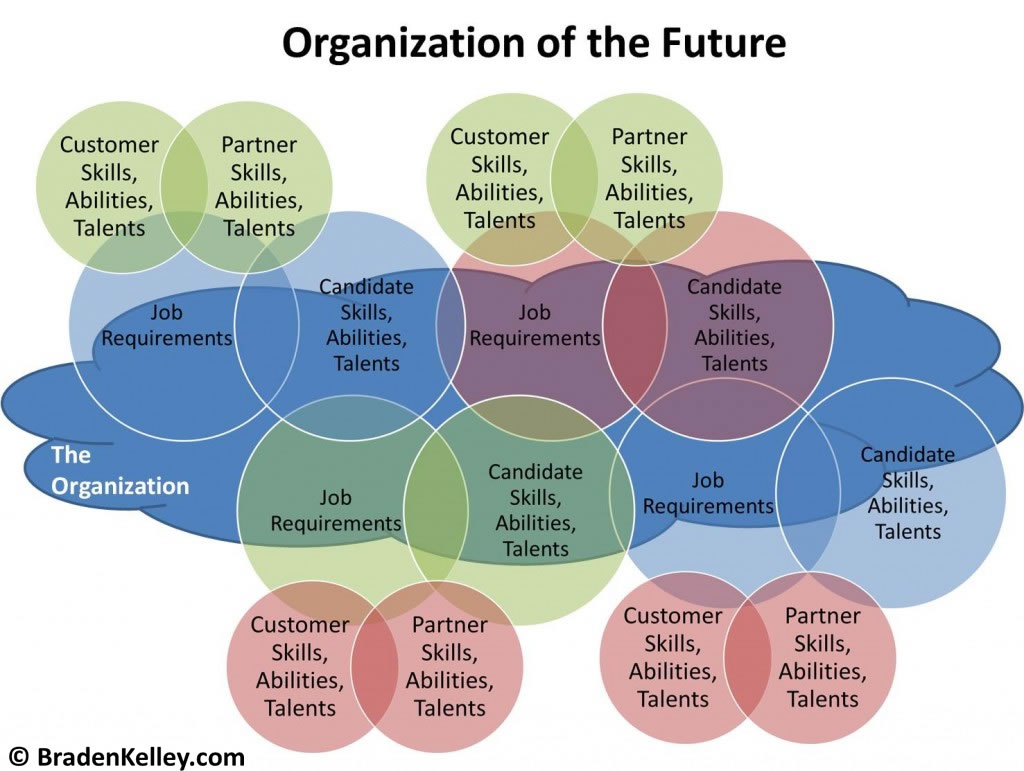
Now I’d like to explore the idea of a fractional employee in a much broader context with you. A few years ago in my popular white paper Harnessing the Global Talent Pool to Accelerate Innovation commissioned by Innocentive, I introduced the idea of building a global sensing network along with other ways that companies can reach outside their four walls to speed up their ability to innovate. I have continued since then to hypothesize that successful organizations of the future will possess more porous boundaries, becoming less like castles keeping everything inside their walls and more like atoms, freely combining with other atoms to form the molecules the market requires just-in-time.

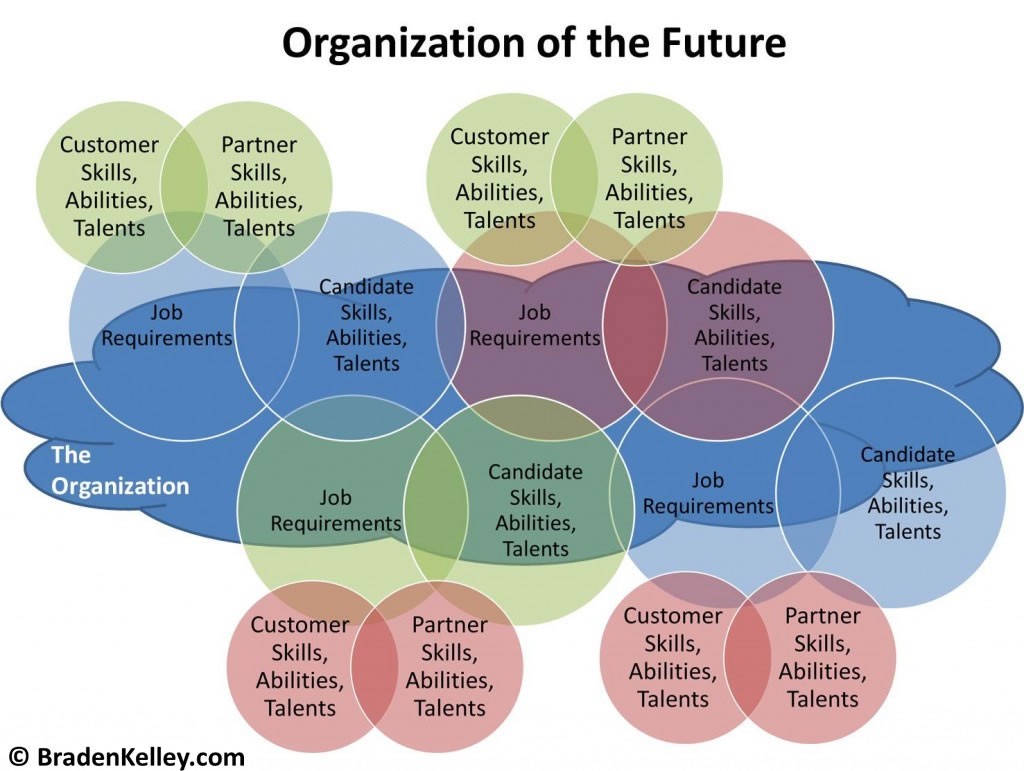
Organization of the Future

Purpose and Passion

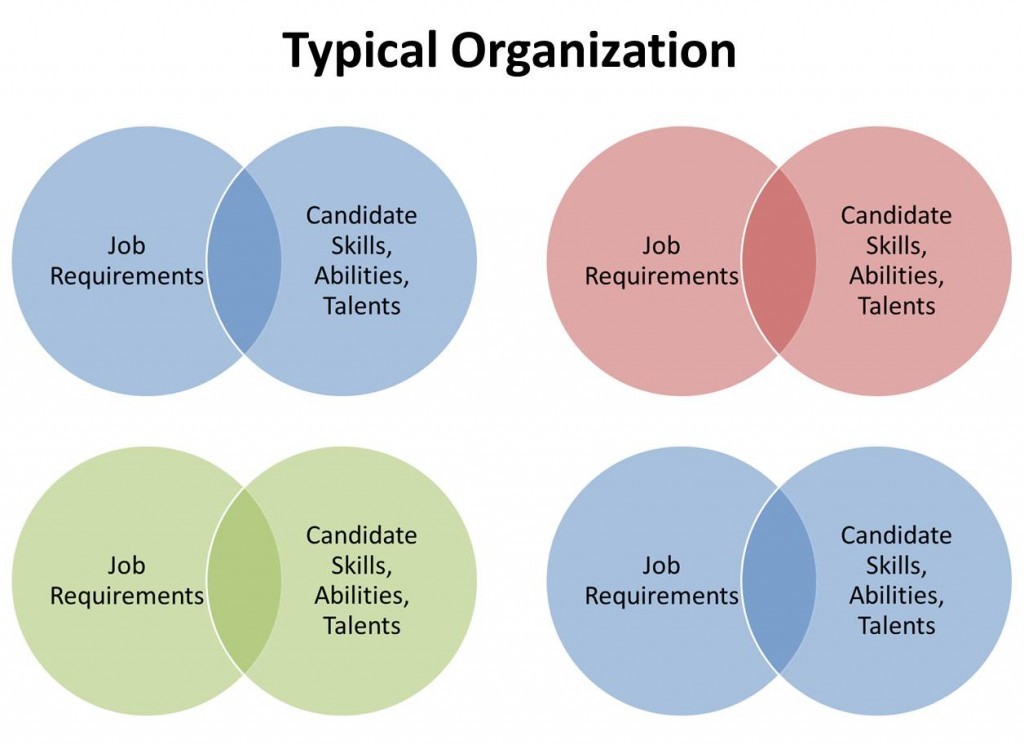
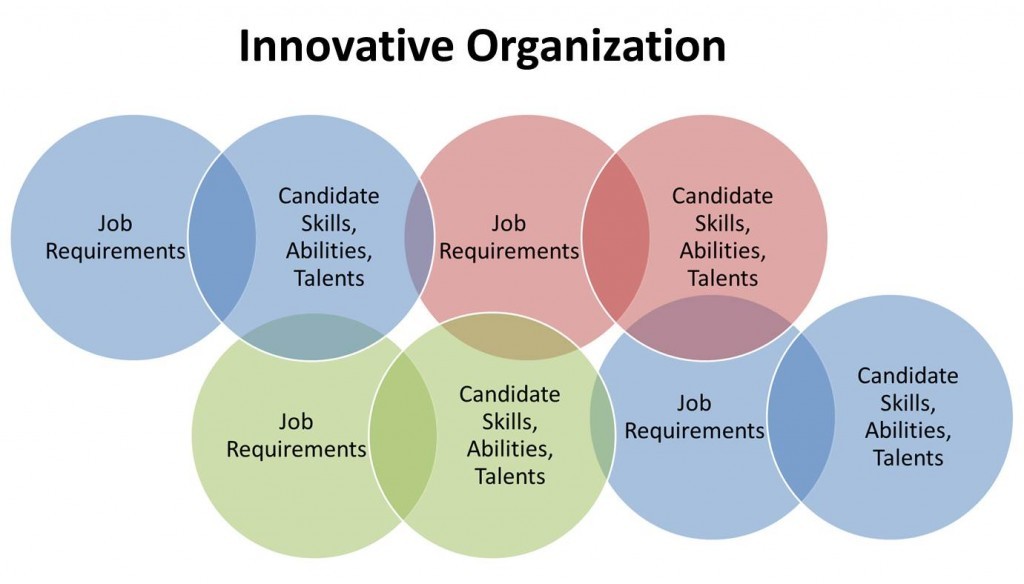
One of the key tenets of this belief is that purpose and passion are the key to unlocking the full potential of any human, and that inherently companies do a very job of unlocking either in their quest to match resumes with job descriptions.

In an effort to develop and retain employees, and fill discrete project needs, some companies are reaching beyond the job description to try and tap into more of the knowledge, skills, and abilities of the people they hire. One way this happens is through HR initiatives like the internal internships at Cisco, where a Finance employee with an interest or passion for marketing, could do an internal internship in Marketing, spending a small number of hours each week working on a discrete project with a resource need.

Outside of the organization, there are an increasing number of avenues for employees to use their un-tapped knowledge, skills, and employees to satisfy their quest for passion and purpose. These include challenge driven marketplaces for both crowdsourcing and open innovation, places like Innocentive, 99 Designs, Idea Connection, Crowdspring, and others.

Traveling the Hyperloop Ten Hours a Week

But now, we are starting to see direct to talent (DTT) models emerge. The latest example of the fractional employee model comes from Dirk Ahlborn of Hyperloop Transportation Technologies (HTT), rethinking how companies are built in the first place. Instead of hiring full-time, salaried employees, Ahlborn has decided to crowdsource the labor to part-time workers and offer stock options in lieu of salary, successfully attracting about 450 workers, based in more than a dozen countries, moonlighting from organizations like NASA and Boeing.

HTT requires crowdsourced labor to commit to a 10-hour workweek to be eligible for stock. “The guys are working for stock options — they’re doing 10 times better job [than paid employees],” says Dirk Ahlborn.

Companies like Aecom, one of the world’s largest engineering design firms, are joining individuals in participating in the potentially “transformative” project, as a way to get employees executing mundane projects for the company to also get excited about building something new.

“I always tell everyone it’s a marathon, not a sprint,” Ahlborn says. With 450 workers accumulated over the past couple of years and growing, Ahlborn adds, “It is becoming a movement.”

The Way Forward

From internal internships, to challenge-driven external innovation, to crowdsourced projects, to fractional employee initiatives, the world of work is changing as companies seek to accelerate to match the pace of continuous change and the continuous innovation expectations that come along with it.

If we go back to the Organization of the Future graphic above, you’ll see that job descriptions often overlap not just with employee knowledge, skills, and abilities but those of customers, partners, suppliers, and other employees as well.

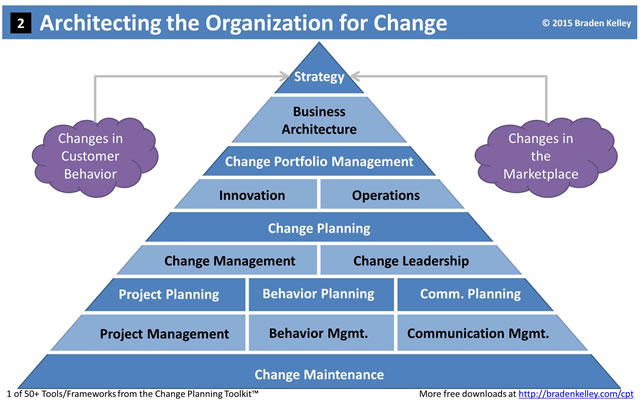
Organizations seeking to increase their organizational agility will not only use tools like the Change Planning Toolkit™ but will also change their thinking about how they get work do

ne and will do a better job of recognizing when and where to tap into the abilities of other employees, partners, suppliers, and even customers to achieve the outcomes that will allow them to continue to surprise and delight their customers, clients, or constituents.

And this means embracing a fractional employee future.

Are you ready?

Get the Harnessing the Global Talent Pool to Accelerate Innovation white paper

Sources: Innovation Excellence, MSN

This article was originally featured on Linkedin


P.S. If you’re looking to hire a Chief Innovation Officer (an Innovation Enablement Leader) on a full-time or part-time basis, drop me an email and I can either tackle the role or find someone else who can!


Accelerate your change and transformation success

Subscribe to Human-Centered Change & Innovation WeeklySign up here to get Human-Centered Change & Innovation Weekly delivered to your inbox every week.

Birth of the Part-Time Chief Innovation Officer

Birth of the Part-Time Chief Innovation Officer

In my last article, we looked at the keys to Hiring the Right Chief Innovation Officer, including some do’s and don’ts. I encourage you to follow the link and read the details of how to hire the right person to lead innovation in your organization, but to quickly highlight some of them…

First, the Part-Timing Chief Innovation Officer Hiring Don’ts:

  • Don’t hire a Chief Innovation Officer before the Board of Directors and senior leadership understands what innovation is (AND ISN’T)
  • Don’t hire a Chief Innovation Officer before the Board of Directors and senior leaders are all publicly committed to innovation
  • Don’t hire a Chief Innovation Officer before the Board of Directors and senior leadership have created a budget to fund discrete innovation projects
  • Don’t hire a Chief Innovation Officer before you move beyond the innovation as a project mindset to view innovation as a process and a capability that you need to build (like good governance or operational excellence)
  • Don’t hire a Chief Innovation Officer before you understand how new product development (NPD), research and development (R&D), and innovation will differ in your organization

And the Do’s (the Seven C’s of a Successful Innovation Culture):

  1. Cultivating a Culture of Curiosity
  2. Collection of inspiration and insight
  3. Connections
  4. Creation
  5. Collaboration
  6. Commercialization
  7. Communications

These points from my previous article Hiring the Right Chief Innovation Officer built upon some points I raised in another article Death of the Chief Innovation Officer.

In this article we will explore the idea that every organization needs an Innovation Enablement Leader, whether you call that person a Chief Innovation Officer (CINO), VP of Innovation, Innovation Director, or Innovation Program Manager, but for many organizations it may not make sense or be the right time to have a full-time employee leading your innovation efforts.

Let me say that again for emphasis…

For many organizations it may not be the right time to have a full-time employee leading your innovation efforts.

This does not mean there is ever a reason not to have someone leading your innovation efforts, BUT it does mean that there are times where it may make more sense to have someone from inside (or outside) the organization to lead your innovation efforts on LESS THAN a full-time basis.

Here are ten (10) reasons why it may be more appropriate to hire a part-time Innovation Enablement Leader (aka Fractional Chief Innovation Officer (FCINO)), instead of a full-time one:

  1. Many of the DONT’S may still be in place in your organization and you may need help in removing them so you can get started
  2. You may not be able to afford the dedication of a full-time resource to leading innovation (budget or political constraints)
  3. A risk averse organization may prefer to dedicate part of a single employee’s time to lead innovation efforts in the early days of their commitment to innovation
  4. The organization may be in the crawl phase of a crawl, walk, run innovation strategy and so in the short run only a part-time resource may be required
  5. There may be certain elements of the responsibilities of an Innovation Enablement Leader that you want other employees to own, leaving less than a full-time resource need for an Innovation Enablement Leader
  6. The need may be clear but you don’t have anyone in-house with the right knowledge, skills, and abilities to lead innovation enablement
  7. In some cultures (both country and company) someone from outside the organization (and even outside the country) may be given more leeway to recommend and help drive change than a full-time employee
  8. Hiring a part-time Innovation Enablement Leader from outside to accelerate the organization’s innovation efforts, may seem less traumatic than hiring a full-time external resource
  9. You may want to hire an external resource to work part-time with a new internal Innovation Enablement Leader to accelerate their development
  10. You’ve got more than a full-time employee’s worth of work to do, so you add another resource from inside or outside the organization

As I mentioned in Hiring the Right Chief Innovation Officer, the responsibility for innovation should remain with the business, under an innovation vision, strategy and goals set by the CEO and senior leadership. It’s okay to bring someone in from the outside to help get things off to a strong start, to build a strong foundation, and to set your Innovation Enablement Leader up for success.

Many organizations will want to have someone full-time on their payroll facilitating their innovation efforts, but in this article we’ve looked at some reasons why an organization may instead want to invest in a fractional (or part-time) Chief Innovation Officer (CINO) or Innovation Enablement Leader because of their size or their innovation maturity (or readiness). Whether you source your Innovation Enablement Leader from inside or outside the organization, and whether you do so on a full-time or a part-time basis, the key is that you dedicate someone to organizing the innovation efforts of your organization, to building a common language of innovation, and to empowering people to increase their personal innovation capabilities and the innovation capability and capacity of the organization.

Which way is best for your organization?

Image credit: morgankervin.com


P.S. If you’re looking to hire a Chief Innovation Officer (an Innovation Enablement Leader) on a full-time or part-time basis, drop me an email and I can either tackle the role or find someone else who can!


Accelerate your change and transformation success

Subscribe to Human-Centered Change & Innovation WeeklySign up here to get Human-Centered Change & Innovation Weekly delivered to your inbox every week.

Hiring the Right Chief Innovation Officer

Hiring the Right Chief Innovation Officer

Every company begins as the nimble startup, organized around the solution to a single customer problem and executing that solution better than anyone else in the market (including the incumbents with deep pockets). But at some point the hunter inevitably becomes the hunted and that nimble startup as it evolves and scales, eventually becomes that more complex (but capable) incumbent. Inevitably it finds itself so focused on capturing all of the business for its existing solutions, that it finds itself at risk of missing the next evolution in customer needs.

The companies that last the longest, manage to fulfill existing customer needs with well delivered solutions, and identify new customer needs they can satisfy as customer needs (or wants) continue to evolve. But many companies fail to do so quickly enough, especially in our new reality where it is easier than ever to start and scale a solution around the globe with limited resources. Innovation is the key to remaining relevant with customers. Innovation is the key to remaining alive.

It’s innovate or die, and this new reality leaves all companies focused on Winning the War for Innovation.

This quest to win the war for innovation has led many organizations to begin hiring Chief Innovation Officers (CINO), Innovation Managers, VP’s of Innovation, or Innovation Directors.

But many organizations have done so in haste…

There is a right way and a wrong way to hire a Chief Innovation Officer (or other innovation leader).

In this article we will look at the Do’s and Don’ts of successfully hiring the right Chief Innovation Officer.

First, the Don’ts:

  1. Don’t hire a Chief Innovation Officer before the Board of Directors and senior leadership understands what innovation is (AND ISN’T)
  2. Don’t hire a Chief Innovation Officer before the Board of Directors and senior leaders are all publicly committed to innovation
  3. Don’t hire a Chief Innovation Officer before the Board of Directors and senior leadership have created a budget to fund discrete innovation projects
  4. Don’t hire a Chief Innovation Officer before you move beyond the innovation as a project mindset to view innovation as a process and a capability that you need to build (like good governance or operational excellence)
  5. Don’t hire a Chief Innovation Officer before you understand how new product development (NPD), research and development (R&D), and innovation will differ in your organization

Being cognizant of the Don’ts will help you avoid hiring a Chief Innovation Officer before you’re able to help set them (and the organization) up for success.

We are now ready to look at the Do’s, the characteristics, skills, and abilities to look for as you search for a great Chief Innovation Officer (and team).

As I’ve written before in Death of the Chief Innovation Officer, when we think about hiring a Chief Innovation Officer (CINO) or an Innovation Director, VP of Innovation, or Innovation Manager, it is important to view your innovation leader, not as the person responsible for innovating, but instead as the person responsible for enabling innovation, encouraging it, inspiring it, facilitating it, and coordinating it. In short, what you are looking for is more of an Innovation Enablement Leader.

The implication? This person’s job should be to lead not to manage, and to enable instead of control. What you’re looking for is someone to facilitate the Seven C’s of a Successful Innovation Culture:

  1. Cultivating a Culture of Curiosity
  2. Collection of inspiration and insight
  3. Connections
  4. Creation
  5. Collaboration
  6. Commercialization
  7. Communications

1. Cultivating a Culture of Curiosity

Curiosity drives innovation, and so the more curious people you have in your organization, the more innovation you are going to be able to generate. A good Chief Innovation Officer (Innovation Enablement Leader) can help cultivate a culture of curiosity. Amplifying curiosity in your organization is one of the most important improvements you can make in your culture.

Many of my views on improving your innovation culture have been detailed in this white paper Five Ways to Make Your Innovation Culture Smell Better I wrote for Planview and in my popular book Stoking Your Innovation Bonfire.

2. Collection of Inspiration and Insight

Curiosity is driven by inspiration and insight, and so a good Innovation Enablement Leader excels at collecting and sharing inspiration and insight. This can include:

  • Teaching people inspiration gathering frameworks like the Four Lenses of Innovation from Rowan Gibson and idea generation methods like SCAMPER
  • Installing an insight gathering tool (which may or may not be merged together with an idea management solution)
  • Building a Global Sensing Network (click the link to learn more)

Building a Global Sensing Network

3. Connections

Innovation is about collecting and connecting the dots. A good Innovation Enablement Leader is good at building the connections inside (and outside) the organization that help to accelerate the gathering and dissemination of inspiration, insight, and the other elements crucial to effective (and sustained) innovation. Building on the idea of building a global sensing network (see #2), innovative organizations increasingly turn their attention outwards for innovation, recognizing that there are more smart people outside the organization than inside. This leads a good Innovation Enablement Leader to focus on Harnessing the Global Talent Pool to Accelerate Innovation.

4. Creation

The job of an Innovation Enablement Leader (or Innovation Facilitator) is to serve the rest of the organization and to work across the organization to help remove barriers to innovation and to focus on the Seven C’s of a Successful Innovation Culture. This could also mean providing a set of tools and methodologies for creative problem solving and other aspects of innovation work, organizing events, and other activities that support deepening capabilities across the Seven C’s of Successful Innovation Culture.

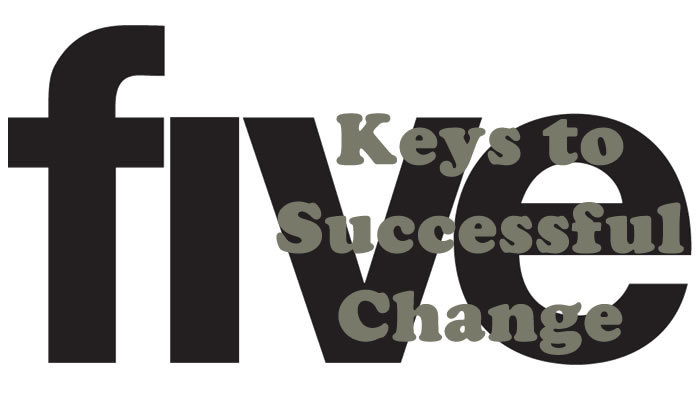
And because innovation is all about change, a good Innovation Enablement Leader will have a strong organizational change understanding and capabilities, including an understanding of the Five Keys to Successful Change from the Change Planning Toolkit™ (coming soon) and from my upcoming book Charting Change (Feb 2016):

Five Keys to Successful Change 550

A good Innovation Enablement Leader will know when to create a new innovation in-house, when to partner with an external entity like a University, startup, supplier, or other organization, and when to license a piece of technology or to acquire another company or startup in order to realize the desired innovation result for the company’s customers.

A good Innovation Enablement Leader knows which elements of the successful innovation they can best help to facilitate and where they need to call in help. This leads us nicely into #5.

5. Collaboration

Too often we treat people as commodities that are interchangeable and maintain the same characteristics and aptitudes. Of course, we know that people are not interchangeable, yet we continually pretend that they are anyway — to make life simpler for our reptile brain to comprehend. Deep down we know that people have different passions, skills, and potential, but even when it comes to innovation, we expect everybody to have good ideas.

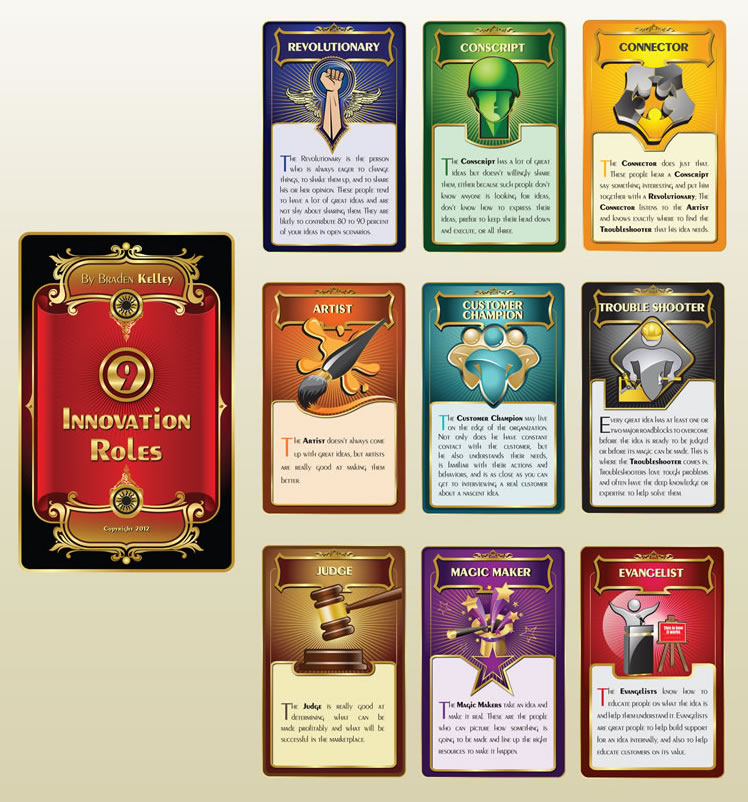
I’m of the opinion that all people are creative, in their own way. That is not to say that all people are creative in the sense that every single person is good at creating lots of really great ideas, nor do they have to be. I believe instead that everyone has a dominant innovation role at which they excel, and that when properly identified and channeled, the organization stands to maximize its innovation capacity. I believe that all people excel at one of nine innovation roles, and that when organizations put the right people in the right innovation roles, that your innovation speed and capacity will increase.

Nine Innovation Roles

Here are The Nine Innovation Roles:

1. Revolutionary

  • The Revolutionary is the person who is always eager to change things, to shake them up, and to share his or her opinion. These people tend to have a lot of great ideas and are not shy about sharing them. They are likely to contribute 80 to 90 percent of your ideas in open scenarios.

2. Conscript

  • The Conscript has a lot of great ideas but doesn’t willingly share them, either because such people don’t know anyone is looking for ideas, don’t know how to express their ideas, prefer to keep their head down and execute, or all three.

3. Connector

  • The Connector does just that. These people hear a Conscript say something interesting and put him together with a Revolutionary; The Connector listens to the Artist and knows exactly where to find the Troubleshooter that his idea needs.

4. Artist

  • The Artist doesn’t always come up with great ideas, but artists are really good at making them better.

5. Customer Champion

  • The Customer Champion may live on the edge of the organization. Not only does he have constant contact with the customer, but he also understands their needs, is familiar with their actions and behaviors, and is as close as you can get to interviewing a real customer about a nascent idea.

6. Troubleshooter

  • Every great idea has at least one or two major roadblocks to overcome before the idea is ready to be judged or before its magic can be made. This is where the Troubleshooter comes in. Troubleshooters love tough problems and often have the deep knowledge or expertise to help solve them.

7. Judge

  • The Judge is really good at determining what can be made profitably and what will be successful in the marketplace.

8. Magic Maker

  • The Magic Makers take an idea and make it real. These are the people who can picture how something is going to be made and line up the right resources to make it happen.

9. Evangelist

  • The Evangelists know how to educate people on what the idea is and help them understand it. Evangelists are great people to help build support for an idea internally, and also to help educate customers on its value.

As you can see, creating and maintaining a healthy innovation portfolio requires that you develop the organizational capability of identifying what role each individual is best at playing in your organization. It should be obvious that a failure to involve and leverage all nine roles along the idea generation, idea evaluation, and idea commercialization path will lead to suboptimal results. To be truly successful, you must be able to bring in the right roles at the right times to make your promising ideas stronger on your way to making them successful. Most organizations focus too much energy on generating the ideas and not enough on developing their ideas or their people.

A good Innovation Enablement Leader will recognize which of the Nine Innovation Roles they excel at and bring in other people into their organization that can help create a well rounded innovation team, and utilize the Nine Innovation Roles to build well-balanced innovation project teams during the execution phase.

Successful Innovation Enablement Leaders typically will be strong Revolutionaries, skilled Evangelists and passionate Customer Champions, but they also must work hard to be an impartial Judge.

At the same time, skilled Innovation Enablement Leaders will build strong relationships with the heads of strategy, digital, customer insight, research and development (R&D), new product development, and operations to both understand where to focus on creating new and differentiated value for customers, and how to create innovation that the company can successfully make, distribute, and support at scale.

6. Commercialization

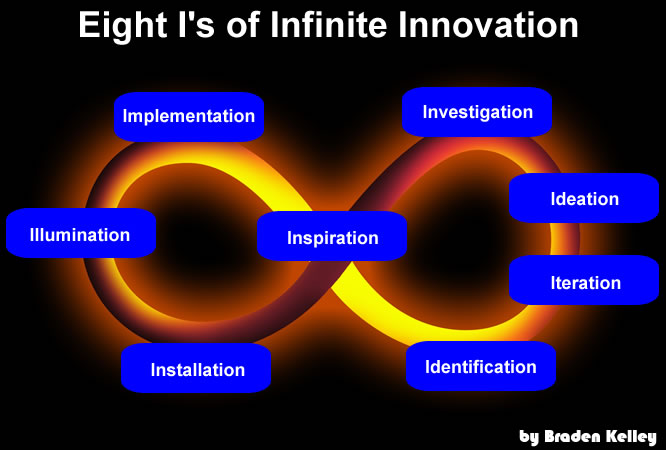
You are hiring an Innovation Enablement Leader (whether that is a Chief Innovation Officer, VP of Innovation, Innovation Director, or Innovation Manager) not to shepherd a single potential innovation project from insight to market, but to build a sustainable, continuous source of innovation, and a culture that reinforces your method for creating continuous innovation. One tool I’ve created for all types of Innovation Enablement Leaders is the Eight I’s of Infinite Innovation™, which as you can see, places inspiration at the center of looping, infinite process (see #2).

Eight I's of Infinite Innovation

7. Communications

Most organizations have innovated at least once in their existence, and in many organizations people are still innovating. A true Innovation Enablement Leader is more of a coach, supporting emergent innovation, and helping people test and learn, prototype and find the right channel to scale the most promising insight-driven ideas (or work with the organization to create new channels).

A good Innovation Enablement Leader excels at helping to define AND consistently communicate and reinforce the organization’s common language of innovation. Several companies all around the world have purchased my book Stoking Your Innovation Bonfire in large quantities for their senior leadership team (and even substantial parts of their organization) to help build their common language of innovation, or brought me in to help facilitate innovation workshops and knowledge transfer to help jumpstart their innovation program.

Conclusion

Are you seeking to control innovation with a Chief Innovation Officer or to facilitate it with an Innovation Enablement Leader?

Ultimately, the responsibility for innovation should remain with the business, under an innovation vision, strategy and goals set by the CEO and senior leadership. It’s okay to bring someone in from the outside to help get things off to a strong start, to build a strong foundation, and to set your Innovation Enablement Leader up for success.

Many organizations will want to have someone full-time on their payroll facilitating their innovation efforts, but as I’ll describe in my next post, some organizations may feel more comfortable bringing in a fractional (or part-time) Chief Innovation Officer (CINO) or Innovation Enablement Leader because of their size or their innovation maturity (or readiness), and that’s okay too.

So, stay tuned for an article on fractional or part-time Chief Innovation Officers (CINOs), and keep innovating!


P.S. If you’re looking to hire a Chief Innovation Officer (an Innovation Enablement Leader) on a full-time or part-time basis, drop me an email and I can either tackle the role or find someone else who can!


Image credit: blog.internshala.com


Accelerate your change and transformation success

Subscribe to Human-Centered Change & Innovation WeeklySign up here to get Human-Centered Change & Innovation Weekly delivered to your inbox every week.

The Five Keys to Successful Change

5 Keys to Successful Change

by Braden Kelley

My next book, Charting Change, is a followup to Stoking Your Innovation Bonfire and is now available for pre-order. While my first book helped people identify and remove barriers to innovation, my next book is designed to make the process of planning change efforts less overwhelming and more human.

Charting Change will introduce a visual, collaborative Human-Centered Change™ methodology designed to help get everyone literally all on the same page for change.

The toolkit begins by painting a different background for the landscape of organizational change. Here we introduce the first of more than fifty tools and frameworks comprising that make up the Human-Centered Change™ methodology.

When it comes to organizational change, most people focus on change management and there is even a couple of professional associations organized around the practice of change management, including the Association of Change Management Professionals (ACMP).

But change management is only one of the Five Keys to Successful Change:

Five Keys to Successful Change 550

Leave one out and eventually your change effort, no matter how big or small, will eventually fail. If you’re setting setting out to change the world, even a small corner of it, then you’ll want to be sure to consider each of the five keys and make sure that you proceed in a measured way that takes each into account.

Let’s look at each briefly in turn before we look at each area in more detail in future posts, and eventually in my new book in February 2016.

The Five Keys to Successful Change

1. Change Planning

Change Planning is the first key to successful organizational change, and it focuses on drawing out the key issues of the necessary change and puts some structure and timeline around them. You will find you have a better experience and a more successful outcome if you use a more visual, collaborative method using something like the Human-Centered Change™ methodology I will be releasing soon to help you create the necessary change plans, goals, metrics, etc.

2. Change Leadership

Change Leadership is the second key to successful organizational change, and is important because good change leadership provides the sponsorship, support and oversight necessary for the change activities to receive the visibility, care, and attention they need to overcome inertia and maintain momentum throughout the process of transformation.

3. Change Management

Change Management represents the third key to successful organizational change, and it is probably the one most people think of when they think about organizational change because it focuses on managing the change activities necessary to achieve the change objectives. The term itself has some challenges however as the term also refers to the management of code changes during the software development process and its relationship with project management is confused. We will dig more into the relationship between project management and change management in a future article.

4. Change Maintenance

Change Maintenance represents the fourth and probably most neglected key to successful organizational change. Many change leaders lose interest after the major launch milestones are achieved, and this is a real risk to sustained success of the change effort. During the change maintenance phase is when you measure the outcomes of the planned change activities and reinforce the change, to make sure the change effort has met the change objectives and when you ensure that the behavior change becomes a permanent one. Neglect this phase and people often slip back into their old, well worn patterns of behavior.

5. Change Portfolio Management

Every organization will have a broad collection of larger change efforts (digital transformation, merger integration, layoffs, etc.) and smaller change efforts (including all projects) underway or in the planning or maintenance stages at all times. This portfolio of change efforts must be managed and Change Portfolio Management represents the necessary activities for balancing all of the resource needs of this variety of change efforts.

Conclusion

This is the first step in the Human-Centered Change™ approach to organizational change that you can use to help change the world in the series of Big C and Little C change efforts that you may lead throughout your life. Big C change efforts are what most people think as change initiatives (mergers and acquisitions, layoffs, transformations, etc.) while Little C change efforts are any project that you might undertake (after all every project changes something).

If we want to do better than the 70% failure rate that change practitioners face in their work, we must look beyond change management or change leadership, and instead think more holistically about change, and to consider all Five Keys to Successful Change.

I hope you have found the article and the framework a useful first building block as we work together to build a strong foundation for successful organizational change. To be alerted when the Human-Centered Change™ methodology becomes available, please be sure and click the link below to join the mailing list, and stay tuned for the next article in this series!

Click to access this framework as a scalable 11″x17″ PDF download

Subscribe to Human-Centered Change & Innovation WeeklySign up here to get Human-Centered Change & Innovation Weekly delivered to your inbox every week.

Flaws in the Crawl Walk Run Methodology

The Flawed Crawl Walk Run Methodology

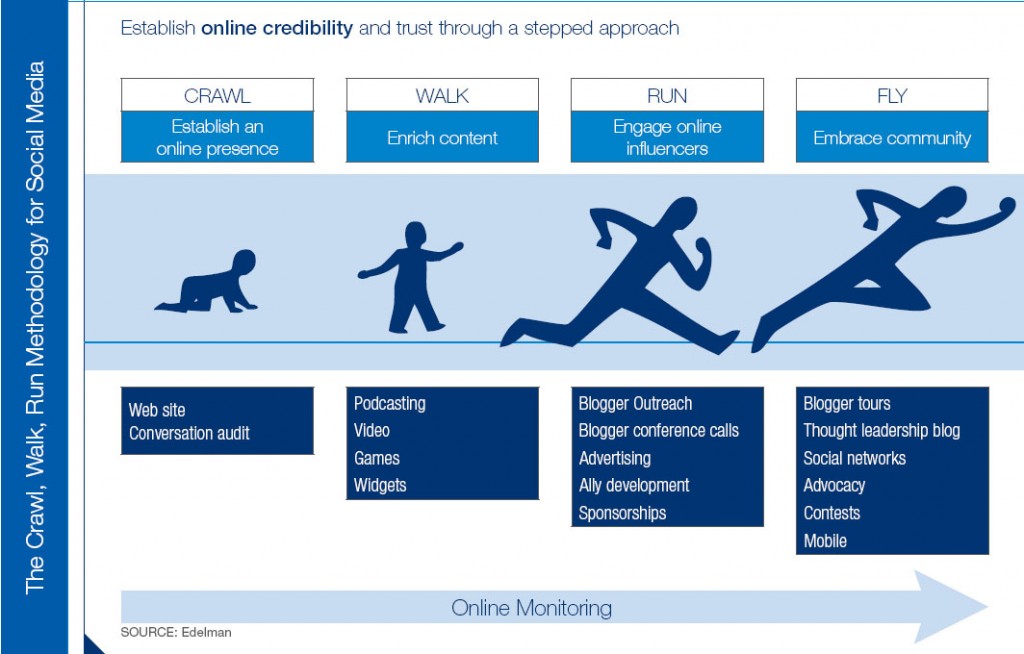
Many of you may have heard of the Crawl Walk Run project methodology. For those of you that haven’t the idea is that if a project team is trying to achieve something big, that sometimes you have to evolve your approach in stages rather than trying to make all the changes all at once. Many people are quite fond of this approach and can be heard repeating the mantra “Let’s crawl before we walk, let’s walk before we run.” Others have evolved Crawl Walk Run into Crawl Walk Run Fly. One of those groups is Edelman (a public relations firm), which in the following image proposes the following Crawl Walk Run Fly approach to social media:

Crawl Walk Run Fly Edelman

Ultimately the Crawl Walk Run Fly project approach looks back to the following Martin Luther King, Jr. quote for its inspiration and structure:

“If you can’t fly then run, if you can’t run then walk, if you can’t walk then crawl, but whatever you do you have to keep moving forward.” – Martin Luther King, Jr.

But the flaw in the Crawl Walk Run project approach was exposed in a conversation I had yesterday with Stewart Pearson, a former client and friend, who happens to be the founder of Consilient Group, an emerging consulting group focused on helping clients undertake data-driven, insight-driven digital transformations to empower organizations to ignite sustainable growth and innovation.

Stewart was speaking about how some companies get stuck in this Crawl Walk Run mindset, and potentially jeopardize their future as a going concern. The truth is that Crawl Walk Run is only applicable to a small subset of projects, and definitely not appropriate for strategic projects because of the imminent danger of the competition transforming faster than you to better serve (and thus take) customers in the marketplace. Stewart captured this in the following way (slightly modified here by me):

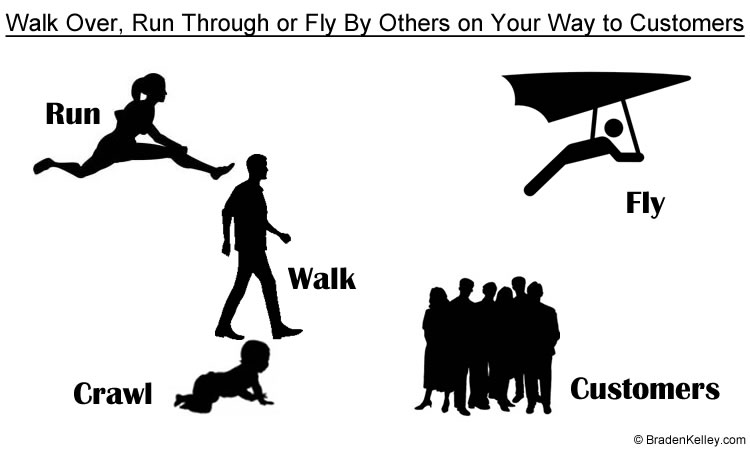
“The danger of Crawl Walk Run is that while you’re busy crawling, a competitor is going to walk over you, right before another competitor runs over both of you.”

Then of course we can add in to this that if the customers wants and/or needs have changed, then simultaneously startups will not be crawling, or walking, or running, but FLYING by those incumbents engaged in a crawl, walk, or run strategies to maintain their relevance to the customers in the marketplace. But startups face their own danger in their FLY strategy, embodied in their lack of experience and infrastructure, and in many cases, their need to educate. This can cause startups to fly past the place where customers wants and needs have moved. So the flying strategy is not without risk.

Consulting clients or people inside your firm (depending on your context) may push back against this idea and again something like “Let’s crawl before we walk.” and it’s really seductive to give into this and tow the company line that achieving something is better than achieving nothing. But at the same time, the financial, human and capital resources that you might invest in implementing a broad crawl effort could potentially be more smartly implemented in a narrow run or fly effort off to the side that may then have the potential to be rolled out in a broad manner.

So, in situations where the company potentially faces more risk from moving slowly than from moving too fast, look for opportunities to craft a strategy that allows you to pick a small part of your business (possibly a single project or a single client) that you can begin building out a run strategy for (a strategy that leverages the existing experience and infrastructure of the organization) or a fly strategy (one that completely re-imagines your market approach).

The idea here being to prototype, test, learn, and then scale your transformative new market approach rather than gradually transforming your market approach in a series of phases. This is more like the approach we use in the innovation space, and has a lot of potential in helping to accelerate your ability to continuously transform your organization the maintain optimal value exchanges with your customers.

What do you think?

Do you think your organization could move away from the siren’s song of Crawl Walk Run, or are you stuck on all fours for the rest of your career with your existing client or employer?

This article originally was featured on Linkedin


Accelerate your change and transformation success

Subscribe to Human-Centered Change & Innovation WeeklySign up here to get Human-Centered Change & Innovation Weekly delivered to your inbox every week.
What We Can Learn About Innovation From Crows

What We Can Learn About Innovation From CrowsCrows are everywhere. There is no denying it. What is fascinating is that unlike many animal species, crows live in harmony with humans (along with rats and cockroaches), and in fact choose to live with humans instead of away from them, continuing to evolve in order to thrive in areas where humans dominate the landscape.

I came across an interesting Ted video with hacker and writer Joshua Klein about his fascination with crows. It is about ten minutes long and documents examples of a variety of academic research and observations highlighting the intelligence of crows, including his own experiments with a crow vending machine.

What’s also evident in the video and interesting is how much we underestimate crows, which may go back to the popular saying ‘bird brain’. Joshua Klein highlights in the video that far from being ‘bird brains’ crows have the same ratio of brain power as a chimpanzee and possess complex communications, socialization, and memory capacity.

If you watch the video above you’ll see that crows are creative problem solvers (creativity having also been proven as a trait of dolphins) and much more persistent than a squirrel (and many humans for that matter).

So, what can we learn about innovation from the crows in the video (or in real life)?

Well, two things for sure:

1. Goals help.

Crows are inspired to use their creativity in the pursuit of food. Rewards are not a panacea for humans, but can be useful from time to time, when properly framed and reinforced with the right inspiration.

2. We must encourage people to be persistent.

If we let people be squirrels, people won’t push through the difficulties that wicked problems present, and won’t get to the other side where wicked solutions are achieved. Look at how the crows in the video were led step by step to overcome smaller challenges that accumulated into a complex solution that people wouldn’t normally think the crows would have been capable of.

These are the links between the crows and innovation that I identified from the video.

What did you see?

Image credit: HuffingtonPost.com

This article was originally featured on Linkedin


Accelerate your change and transformation success

Subscribe to Human-Centered Change & Innovation WeeklySign up here to get Human-Centered Change & Innovation Weekly delivered to your inbox every week.

The Digital Innovation Talent Shortage

The Digital Innovation Talent ShortageI was watching our Seattle Seahawks lose to the Green Bay Packers on Sunday and was surprised to see a series of television ads air during the game from GE, not touting how great their products are, but why GE is a great place for software developers to come work.

Each 30 second advertisement will have cost GE nearly $700,000, meaning that GE probably spent $2 million last Sunday. First I’ll share the ads and then I’ll share my thoughts on their significance.

All three advertisements are in this single video from ad agency BBDO:

  • Advertisement #1 (Parents’ reaction to Owen taking a developer job at GE)
  • Advertisement #2 (Fellow students’ reaction to Owen taking a job with GE)
  • Advertisement #3 (Friends’ reaction to Owen taking a developer job with GE)

All three ads highlight the gap between most people’s industrial age thinking and our new digital reality, and close with the tagline:

“The digital company. That’s also an industrial company.”

A year ago, together with Linda Bernardi, a Chief Innovation Officer at IBM, the two of us wrote about this very subject in our article for the world’s most popular innovation web site, Innovation Excellence:

You’re Either a Technology Business or You’re Out of Business

The sad truth is that most companies don’t realize this. GE, based on this ad campaign, obviously does. I won’t re-visit all of the points in the article, but instead I encourage you to read it, and for now I’ll focus on additional thoughts emerging since then. One thing I did after publishing this article with Linda, was ask the following question at my previous employer:

“Are we a technology company that happens to serve customers in the health insurance industry, or are we a health insurance company with an IT department?”

Does anyone want to guess what the majority of people answered?

The healthcare industry is undergoing a period of incredible change, but they are not the only ones. Technology is transforming market and customer expectations faster than executives and employees can transform their thinking. Customers expect more, they demand more, in every industry, and this is opening the door both for new entrants and for existing competitors to rearrange the market share picture, IF they take strategic actions focused on transforming into a more digital, more collaborative, more innovative organization. The questions every organization should be asking themselves include:

  1. How can we modify the architecture of our organization to cope with the increasing pace of change?
  2. How can we increase our organizational agility?
  3. How can we retain the talent we need to power a true digital transformation?
  4. How can we attract the talent we need to fill the gaps in our skills base to empower a successful digital transformation and to drive success in the marketplace as a social business?

I see GE’s ad campaign as the canary in the coal mine, an example of a large company awakening to one of the major challenges every organization faces in continuing to stay relevant (and profitable) in a rapidly changing, digital, always connected world.

The fact is that almost every organization needs more digital innovation talent…

And you know what?

There is a shortage…

Keeping up with the pace of technological change is hard enough. Conducting a digital transformation, and becoming a true social business is even harder, but INCREDIBLY important to your current and future success. The companies that realize this and commit to a coordinated digital transformation, embracing the fact that they are a technology company serving a particular industry and a certain set of customers will have a better chance of attracting the scarce talent they need to complete the work to emerge out the other side. And you MUST do this before every other company out there piles on and causes an incredibly bloody fight for the scarce digital innovation talent out there, and the market share that is at risk.

I will be writing more about how to increase your organizational agility and to achieve a successful digital transformation in the coming months in the run up to the publishing of my second book by Palgrave Macmillan on organizational change and the Change Planning Toolkit™.

Are you going to be like GE and admit that you need to change the way you think of yourself as an organization and change the perception potential employees have of you in the marketplace?

Are you ready to become a social business?

Do you have what you need to achieve a successful digital transformation?

Are you ready to admit that you need help getting there?

Image credit: news-leader.com


Accelerate your change and transformation success

Subscribe to Human-Centered Change & Innovation WeeklySign up here to get Human-Centered Change & Innovation Weekly delivered to your inbox every week.

Do You Agree or Disagree with Samsung’s Vision of the Future?

Samsung recently posted a video highlighting their vision of the future and the evolution of the Internet of Things (IoT).

The movie highlights their tagline ‘In Sync with Life’

While certain of the benefits highlighted in Samsung’s IOT video might be interesting, I found myself left with more questions than answers, including:

How necessary is this?

Would this really improve my life?

Is it simplifying anything or in reality, more likely to add complexity and configuration frustration?

Would this create a future that’s more human or less human?

Could I live without this?

What are the health effects of increasing the amount of unnatural frequencies being transmitted through the air?

Does this look like a better or worse future to you?


Accelerate your change and transformation success

Subscribe to Human-Centered Change & Innovation WeeklySign up here to get Human-Centered Change & Innovation Weekly delivered to your inbox every week.

A Peek Inside the Broken Corporate Hiring Model

A Peek Inside the Broken Corporate Hiring ModelI was reading with interest some of Linkedin’s recent #HowIHire series and in doing so it was interesting to see how many people are still operating under the old, broken hiring paradigm when it comes to the labor market.

The best of the bunch that I read was Beth Comstock’s You’re Hired. Now What which has more to do with what she thinks people should do after she gives them a job rather than how she hires, which I thought was a good angle to take.

My day job was recently eliminated in a budget reallocation, so I’m out there in the market looking for my next new challenge. Throughout this process (and my consulting work over the years), I’ve observed a number of different challenges that companies face with hiring, and identified some opportunities for companies to increase their return on human capital:

Challenge #1:

Scanning resumes and online applications for keywords is a very bad way to find talent. It’s very good however at finding people who at least know how to spell the keywords.

Challenge #2:

The way most organizations handle human resources is very much a product of the industrial age. Hiring new employees is still a very bureaucratic affair, a far cry from reflecting an Internet Age approach, and farther still from what’s needed in the era of Social Business and Digital Transformation. Having an outdated, bureaucratic hiring approach prevents many organizations from growing (or changing) as fast as they may need to maximize revenue and profits.

Challenge #3:

Building on Challenge #2, the hiring process is incredibly slow. It can take weeks or months to finalize and post job descriptions. It can take weeks to source candidates. It can take weeks or months for a hiring manager to get around to interviewing anyone because they are too busy. This can result in the loss of the best candidates, can lead to the loss of current employees picking up the slack (leading to more job openings), and impacts the financial performance of the organization.

Challenge #4:

With the exception of professional sports franchises, companies are so risk averse that they would rather hire someone with a lot of experience doing something in a mediocre way than someone with limited experience but a higher upside (higher capacity and capability). Following this analogy, most companies would never have hired a high school kid like Lebron James.

Challenge #5:

Automated and recruiter-led screening systems are better at identifying people that fit the job description than they are at identifying people that will thrive in the company culture and be a productive team member. You can’t train people to be a good cultural fit, but you can train smart people to do just about anything.

Opportunity #1:

Every company whether it likes it or not, is a technology company. So, if you’re running a technology company, and ideally a social business, shouldn’t you want to hire people who know how to use technology (or at least how to build a Linkedin profile)? And if they have a Linkedin profile, why wouldn’t you use that instead of asking them to create another profile on your careers site?

Opportunity #2:

Things are changing at an increasing rate. Hire people who embrace change and like to learn, because you’re always going to be asking people to learn something new as the world continues to change around you.

Opportunity #3:

Looking around the landscape, it seems like we’ve created more ways to help people find the ideal new romantic partner than the ideal new employee. Are there things that the recruiting industry could learn for the romance industry?

Opportunity #4:

There is more to an employee than their intersection with the job description. In fact employees often have knowledge, skills and abilities that intersect with multiple job descriptions. Below you’ll find a visual depiction of this and of the increasingly less well-defined organizational boundaries:

Organization of the Future

Opportunity #5:

As the boundaries of the organization become less well-defined (see above) and as business makes increasing use of open innovation, partnerships, and co-opetition, hiring managers should consider not just matching the job description but also consider their ability to build and leverage external networks, and investigate the scope and quality of their existing networks.

Conclusion

Of course there are many more challenges and opportunities than I have space to list here, but I find these to be an interesting start to a conversation. What challenges or opportunities would you like to add to the conversation?

Image credit: businessnewsdaily.com


Accelerate your change and transformation success

Subscribe to Human-Centered Change & Innovation WeeklySign up here to get Human-Centered Change & Innovation Weekly delivered to your inbox every week.

Aquion Energy to Disrupt Tesla’s Next Move?

Aquion versus Tesla

Water, water, everywhere…

Is water the solution to one of the biggest shortcomings of renewable energy?

When the wind doesn’t blow or the sun doesn’t shine, these renewable energy sources don’t source much energy, so during those times home owners and businesses using alternative energy must instead draw more power from the grid.

Elon Musk believes the solution is to build a Giga-Factory in the desert of the western United States capable of producing as many Lithium Ion batteries under one roof as are currently being made – WORLDWIDE. He intends to then use those Lithium Ion batteries not just to power his fancy electric cars for the nouveau riche, but also to power big industrial batteries suitable for homes and businesses in a new product called Powerwall. This new product contains batteries people could load in the middle of the night when there is excess supply and draw from during the day when demand (and rates) are higher, or connect to renewable energy sources and use as a storage device.

But Aquion Energy, a company founded by Dr. Jay Whitacre, a professor of materials science at Carnegie Mellon University, and backed by Bill Gates and venture capital firm Kleiner Perkins Caufield and Byers, has a different idea for how to store large amounts of energy in these same kinds of situations.

What’s different about the Aquion Energy solution compared to the Tesla Powerwall solution, is that it uses saltwater, which according to the National Oceanic and Atmospheric Administration, our oceans cover 71% of the earth’s surface and contain 95% of our water. Prices are reportedly are in the $1,000-$3,000 range and they say their batteries last longer than other battery technologies.

Meanwhile, Tesla’s solution uses expensive Lithium Ion batteries, proven to catch fire from time to time, difficult to make (Lithium mining is very water intensive and takes place typically in arid lands), the batteries often last 2-3 years (at least in laptop applications) and then unfortunately all too frequently end up in landfills. Prices are reportedly are in the $3,000-$3,500 range.

It seems like Tesla is pursuing more of a USA-centric approach while Aquion is seeking to go global more quickly, seeing its solution as potentially even more attractive for less-developed countries.

Is there room for both technologies in the marketplace?

Yes, I think so, but it will be interesting to see how the market develops.

One thing is for sure, greater availability of these kinds of systems and their ability to bring increased visibility to renewable energy and to bring down the costs of its application is a great thing!

Sources: CNBC, Tesla, and Aquion Energy


Accelerate your change and transformation success

Subscribe to Human-Centered Change & Innovation WeeklySign up here to get Human-Centered Change & Innovation Weekly delivered to your inbox every week.