Monthly Archives: November 2022

Prototyping the Future

Experimenting with Emerging Possibilities
Prototyping the Future

GUEST POST from Chateau G Pato

In the high-stakes game of organizational change, inertia is the silent killer. Leaders often talk about innovation, but they are terrified of the risk associated with committing millions to an unproven concept. This fear traps organizations in a cycle of incrementalism. As a human-centered change and innovation thought leader, I argue that the most powerful antidote to this paralysis is prototyping. Prototyping is not merely a step in a design process; it is a mindset — a strategic, disciplined commitment to experimenting with the future in the present. It is the art of making the unknown tangible, allowing us to fail safely, learn quickly, and dramatically increase our Return on Learning (ROL).

We must shift from an obsession with traditional ROI (Return on Investment), which punishes failure, to prioritizing ROL (Return on Learning), which rewards clarity and speed. Prototyping the future requires moving from a culture obsessed with detailed planning to one that values informed iteration. It means creating low-fidelity, high-impact simulations of emerging possibilities — be it a new product, a process, or an entirely new business model. This commitment to creating fast, disposable versions of the future dramatically lowers the psychological cost of failure, fostering the psychological safety necessary for true breakthrough innovation. Whether it’s a cardboard model, a basic wireframe, or an immersive Virtual Reality (VR) simulation, the goal is to maximize the learning extracted per dollar spent.

The Three Imperatives of Strategic Prototyping

To successfully prototype the future, organizations must focus on three core strategic imperatives that accelerate learning and reduce risk:

  • 1. De-Risking the Unknown with Speed: The primary function of a prototype is to identify and test the riskiest assumption in an emerging idea. It must be fast, cheap, and disposable. We aim to fail quickly and often at the conceptual stage, saving significant time and capital that would otherwise be wasted on building a perfect solution for the wrong problem.
  • 2. Generating Empathy Through Tangibility: Abstract ideas are difficult for stakeholders and customers to critique meaningfully. A prototype — whether physical or digital (e.g., an Augmented Reality model) —forces interaction. This human interaction generates deep empathy and reveals hidden needs, emotional reactions, and critical user friction points that no spreadsheet or survey can capture.
  • 3. Creating a Shared Vision: The future is difficult to discuss because everyone imagines it differently. A prototype serves as a Shared Artifact — a concrete, singular point of reference around which a team, and the entire organization, can align their vision, critique constructively, and unify their efforts. This speeds up decision-making and aligns cross-functional silos.

“Don’t fall in love with your first idea. Fall in love with the clarity your first prototype creates.” — Braden Kelley


Case Study 1: The IDEO Shopping Cart – Prototyping the Experience

The Challenge:

The design firm IDEO was challenged by a major grocery chain to redesign the common supermarket shopping cart. The initial, narrow focus was on engineering and durability, which would have resulted in only incremental changes.

The Prototyping Solution:

IDEO’s human-centered approach started not with engineering, but with experiential prototypes. The team quickly built several low-fidelity models using rudimentary materials (duct tape, bins, children’s seats) to test radically different concepts — like a cart with a built-in calculator or one with better maneuverability. They took these rough models into the grocery store for real-time testing, observing customer and employee interaction and failure points.

The Innovation Impact:

By prototyping the user experience rather than the final product, IDEO discovered critical, unarticulated needs—like improved maneuverability and safer child seating—that led to fundamental design shifts. The process proved that fast, visual, and highly interactive prototyping is the most efficient way to unlock breakthrough innovation by placing the human at the center of the learning loop.


Case Study 2: Amazon’s “Working Backwards” – Prototyping the Document

The Challenge:

Amazon, known for its high-velocity innovation, needed a mechanism to ensure that product teams were building things customers actually wanted and that ideas were vetted quickly without expensive software development.

The Prototyping Solution:

Amazon formalized a process called “Working Backwards,” which uses a document-based prototype. Before a single line of code is written, a team must write a Press Release (PR) announcing the finished product to the world. The PR is a one-page, customer-centric narrative explaining the product’s benefit, the problem it solves, and its release date. Accompanying the PR is a detailed FAQ and mock Customer Reviews.

The Innovation Impact:

This simple, text-based prototype forces immediate clarity and user focus. Writing the press release first ensures the team can articulate the customer value proposition before spending any engineering time. If the PR isn’t compelling, the idea is instantly shelved or iterated upon. This low-fidelity, high-discipline prototyping method de-risks multi-million-dollar projects by ensuring the idea is sound and clearly focused on the human need before the execution even begins. It is the ultimate example of prototyping the communication and the value proposition.


Conclusion: Leading with Iteration and ROL

Prototyping the future is the most responsible way to lead change. It replaces the paralyzing certainty of the five-year plan with the agile confidence of constant, low-cost learning. Leaders must create the cultural conditions for this to thrive: namely, by celebrating fast learning and treating failed prototypes as valuable data points, thereby building an organization defined by high Psychological Safety and high ROL.

The innovation landscape moves too fast for slow, secretive, and large-scale commitments. By adopting the three imperatives—speed, empathy generation, and shared vision creation—through prototyping, you ensure that your organization remains perpetually adaptive.

“Stop trying to predict the future. Start building disposable versions of it.” — Braden Kelley

That is the definitive strategy for unlocking continuous, human-centered innovation.

Extra Extra: Because innovation is all about change, Braden Kelley’s human-centered change methodology and tools are the best way to plan and execute the changes necessary to support your innovation and transformation efforts — all while literally getting everyone all on the same page for change. Find out more about the methodology and tools, including the book Charting Change by following the link. Be sure and download the TEN FREE TOOLS while you’re here.

Image credit: 1 of 950+ FREE quote slides available at http://misterinnovation.com

Subscribe to Human-Centered Change & Innovation WeeklySign up here to get Human-Centered Change & Innovation Weekly delivered to your inbox every week.

Things I Occasionally Forget

Things I Occasionally Forget

GUEST POST from Mike Shipulski

Clean-sheet designs are fun, right up until they don’t launch.

When you feel the urge to do a clean-sheet design, go home early.

When you don’t know how to make it better, make it worse and do the opposite.

Without trying, there is no way to know if it will work.

Trying sometimes feels like dying.

But without trying, nothing changes.

Agreement is important, but only after the critical decision has been made.

When there’s 100% agreement, you waited too long to make the decision.

When it’s unclear who the customer is, ask “Whose problem will be solved?”

When the value proposition is unclear, ask ‘What problem will be solved?”

When your technology becomes mature, no one wants to believe it.

When everyone believes the technology is mature, you should have started working on the new technology four years ago.

If your projects are slow, blame your decision-making processes.

Two of the most important decisions: which projects to start and which to stop.

All the action happens at the interfaces, but that’s also where two spans of control come together and chafe.

If you want to understand your silos and why they don’t play nicely together, look at the organizational chart.

When a company starts up, the product sets the organizational structure.

Then, once a company is mature, the organizational structure constrains the product.

At the early stages of a project, there’s a lot of uncertainty.

And once the project is complete, there’s a lot of uncertainty.

Image credit: Pixabay

Subscribe to Human-Centered Change & Innovation WeeklySign up here to get Human-Centered Change & Innovation Weekly delivered to your inbox every week.
Measuring the Immeasurable

Quantifying Culture and Psychological Safety

Measuring the Immeasurable

GUEST POST from Art Inteligencia

For decades, organizational leaders have dismissed culture as a ‘soft skill’ — a nice-to-have byproduct of good management, but too ethereal to track on a balance sheet. Meanwhile, psychological safety — the bedrock belief that one can speak up without fear of punishment or humiliation — has been treated as an abstract ideal. As a human-centered change and innovation thought leader, I find this reliance on intuition and anecdote to be one of the greatest systemic failures in modern leadership. We cannot optimize what we do not measure. The innovation leaders of tomorrow must learn not just to value culture and safety, but to quantify their impact with the same rigor they apply to revenue and R&D spend.

The innovation economy is built on risk-taking, honest feedback, and rapid experimentation. All three of these behaviors are direct consequences of high psychological safety. If employees fear making a mistake, they will revert to safe, incremental thinking. If they fear criticizing the status quo, change and innovation dies in silence. The great leap forward is now possible because technology — specifically AI-driven analysis of communication and behavioral patterns — allows us to move from a subjective feeling (e.g., “Our culture feels collaborative”) to objective, actionable data that drives organizational change. This means treating culture as a leading indicator of innovation and performance.

The Psychological Safety Scorecard: From Feeling to Fact

To quantify the previously unquantifiable, we must shift our focus from traditional engagement surveys to measurable behaviors and systemic friction points. Here are the three key dimensions of the Psychological Safety Scorecard, metrics now possible through NLP (Natural Language Processing) analysis of communication data:

  • 1. Speak-Up & Challenge Density: This measures the frequency and quality of dissent. How often do junior employees challenge senior leaders? We quantify the ratio of questions to statements in meetings, and the percentage of project feedback that contains a genuinely challenging idea. A high density of low-risk, candid communication is a strong sign of safety.
  • 2. Failure-to-Learn Ratio: True safety is evident in how organizations handle failure. Instead of measuring failure rates, measure the time, resources, and documentation dedicated to post-mortem analysis and shared learning. If a failed project is quickly buried and the individual responsible is sidelined, the Failure-to-Learn Ratio is high (bad), indicating low psychological safety.
  • 3. Cross-Boundary Interaction (Friction Score): Innovation often occurs at the intersection of departments. We quantify friction inherent in cross-functional interactions by measuring the number of approval loops and the sentiment (via communication analysis) when one team critiques another’s work. A low friction score indicates high cross-silo safety.

“Culture is what happens when the CEO leaves the room. If you can measure that behavior, you can change the organization.”


Case Study 1: Project Aristotle and the Google Teams

The Challenge:

Google, a company renowned for hiring the best and brightest, embarked on Project Aristotle to determine what made certain teams excel while others struggled. The hypothesis was that team performance was dependent on a mix of individual skills, tenure, or co-location — all easily measurable factors.

The Quantified Discovery:

After extensive data collection, they found that none of the traditional variables mattered as much as Psychological Safety. The most impactful metrics they identified were subtle, measurable behaviors: Conversation Turn-Taking (everyone on the team spoke roughly the same amount) and Social Sensitivity (team members were good at reading and responding to non-verbal cues). These metrics effectively quantified the feeling of safety. When team members felt safe to speak up and contribute equally, they took risks, shared knowledge, and, as a result, were consistently high-performing.

The Organizational Impact:

Google shifted its focus from optimizing individual talent to optimizing team dynamics. They now had quantifiable data points — a Psychological Safety Index — that could be trained, measured, and improved across the organization. This proved that culture is not only measurable but is the single greatest multiplier of intellectual capital and, critically, the speed of change adoption.


Case Study 2: The Healthcare Anomaly – Error Reporting as a Safety Metric

The Challenge:

In high-stakes healthcare systems, traditional leadership linked low reported error rates to high quality. However, this often masked a dangerous reality: providers were hiding errors and near-misses to avoid discipline, creating a fragile system and preventing organizational learning.

The Quantified Discovery:

Leading healthcare institutions began flipping the metric. Instead of punishing error, they incentivized Error Reporting Density and the Near-Miss Ratio. They realized that a high rate of “near-miss” reporting (incidents that almost caused harm) was a positive metric, signaling high psychological safety. It meant front-line staff felt safe enough to admit mistakes and warn the system. Furthermore, they measured the time-to-reporting for non-punitive errors. Rapid, high-volume reporting indicated a learning culture, while slow, sporadic reporting indicated a blaming culture.

The Organizational Impact:

By measuring the frequency and honesty of reporting — a direct proxy for psychological safety — these organizations created a genuine Learning System. This culture of candid feedback led to thousands of small, human-centered process innovations, ultimately leading to a verifiable reduction in actual patient harm events. The ability to measure the willingness to be vulnerable became the most important metric for both innovation and life-saving operational excellence.


Conclusion: Leadership’s New Accountability

Measuring culture and psychological safety is the new mandate for human-centered change leaders. We must stop treating engagement surveys as a once-a-year formality and start integrating real-time behavioral metrics into our organizational dashboards. This isn’t about surveillance; it’s about enabling exponential performance and accelerating change adoption.

The innovation premium — the added value derived from creativity, speed, and risk-taking — is directly dependent on a culture where people feel safe. By quantifying Speak-Up Density, the Failure-to-Learn Ratio, and Cross-Boundary Friction, we provide leadership with the actionable data required to dismantle fear and build a truly resilient, innovative organization. The C-suite must recognize that this investment in cultural quantification is the most essential infrastructure project of the digital age. Leaders must understand that if they can’t measure safety, they can’t manage change. The future belongs to those who make the invisible visible, transforming soft culture into hard, strategic competitive data.

Extra Extra: Futurology is not fortune telling. Futurists use a scientific approach to create their deliverables, but a methodology and tools like those in FutureHacking™ can empower anyone to engage in futurology themselves.

Image credit: 1 of 950+ FREE quote slides available at http://misterinnovation.com

Subscribe to Human-Centered Change & Innovation WeeklySign up here to get Human-Centered Change & Innovation Weekly delivered to your inbox every week.

Are You Giving Your Customers Friction or Function?

Former VP Of Amazon Preaches a Frictionless Experience

Are You Giving Your Customers Friction or Function?

GUEST POST from Shep Hyken

Customers hate friction. They want easy, no hassle, low/no effort experiences. In short, they want convenience. Our 2022 customer experience research findings confirm:

  • 70% of customers would pay more if they knew they would receive a convenient experience.
  • 75% would switch to a competitor if they found it more convenient to do business with.
  • 68% of customers say that a convenient customer experience alone will make them come back to a brand or company.

Examples of friction include long wait times, difficulty finding contact information on a website, too many steps to make a purchase online and more. Frictionless is almost not noticed—until it is. At some point, customers realize how easy it is to do business with a company, and they like it. In fact, they like it so much, as the findings show, they will pay more and keep coming back.

There have been several books that focus on creating a frictionless, convenient experience. The first was The Effortless Experience by Matt Dixon, Nick Toman and Rick Delisi, which focused on the customer support experience. Then along came my book The Convenience Revolution, which included the entire customer experience, not just customer support. This was followed by a few more excellent contributions to the subject, the most recent being The Frictionless Organization by Bill Price and David Jaffe.

Bill Price was Amazon’s first global vice-president of customer service. When Jeff Bezos interviewed Price for the job in 1999, he asked Price what his philosophy was for running customer service. Price responded, “The best service is no service,” which became the title of his first book. Price believes that the best customer experience is to have everything set up so well that they don’t need to contact customer support.

Of course, that would be perfection, and perfection is not reality. Amazon may have perfectly executed on its side, but once the package leaves the Amazon warehouse, UPS, USPS, FedEx and other delivery companies take over. If they lose a package, who will the customer call? Amazon, of course. Even if it wasn’t Amazon’s fault, they still received the call and, of course, took ownership of the problem.

Price knows that a frictionless experience often goes unnoticed by the customer until they realize why they like doing business with that company or brand. But it does get noticed by the company providing the experience. It shows up in the form of higher customer satisfaction scores such as NPS (Net Promoter Score). Repeat business and loyalty also go up.

In their book, Price and Jaffe share several reasons why every business should be frictionless:

  • Being Frictionless Reduces Cost – There is a cost to setting up a process that’s easy for customers (and employees), but the ROI far exceeds the investment. When a company is easy to do business with, it doesn’t get nearly as many customer support calls, which can be a huge drain on the customer service budget. There are fewer returns and refunds. Websites are more effective. And more.
  • Being Frictionless Drives Customer and Revenue Growth – Price’s experience with Amazon proves that a high customer satisfaction score translates into more business. Amazon has some of the highest ratings in the business world, and its growth proves this model works.
  • Being Frictionless Delivers a True Competitive Advantage – The stats at the beginning of this article prove that point. No/low friction and convenience can help bulletproof a company from the competition.
  • Being Frictionless Enables Business Survival – The past several years have tested the best business leaders. Survival during the pandemic, through supply-chain issues, and now a recession proves that the best companies can survive with the right strategies. A frictionless experience is more important than ever.

When I interviewed Price on Amazing Business Radio, he made the perfect closing comments for this article. “It doesn’t matter what kind of business you have. What matters is that customers just want things to be easy for them. And if you don’t make it really simple and easy for customers, someone else will.”

This article originally appeared on Forbes

Image Credit: Pixabay

Check out my latest research in his Achieving Customer Amazement Study, Sponsored by Amazon Web Services, Inc.

Subscribe to Human-Centered Change & Innovation WeeklySign up here to get Human-Centered Change & Innovation Weekly delivered to your inbox every week.
Bringing Your Innovation to Life

The Power of Visual Storytelling

Bringing Your Innovation to Life

GUEST POST from Chateau G Pato

We live in an age defined by complexity and clutter. Revolutionary ideas, transformative products, and critical organizational changes often fail—not because the innovation itself is flawed, but because the story of the innovation is invisible. As a human-centered change and innovation thought leader, I contend that in a world saturated with information, the ability to communicate impact is as vital as the ability to create it. The future of influence belongs to those who master Visual Storytelling: the strategic use of imagery, data visualization, and narrative to connect abstract concepts to human emotion and tangible benefit. This is how you bring your innovation to life, making it understandable, memorable, and — most importantly — adoptable.

Visual storytelling is far more than marketing; it’s a human-centered design principle applied to communication. Our brains process visuals 60,000 times faster than text, and we are wired to remember stories and images over lists of features or bullet points. For innovators, this means moving beyond verbose white papers and dense slide decks. It means finding the single, compelling image, the three-second animation, or the simple diagram that instantly conveys the user’s journey, the ‘before and after,’ or the strategic shift. This capability is the essential bridge between the R&D lab and the customer’s mind, transforming complex ideas into intuitive understanding.

The Three Pillars of Innovation Storytelling

Effective visual storytelling in innovation rests on three psychological pillars designed to drive adoption and overcome the innate human resistance to change:

  • 1. The Empathy Shot (The ‘Before’): Start by vividly illustrating the pain point or the broken process that the innovation solves. This establishes relevance by showing the current, difficult human reality. A picture of a frustrated user or a diagram of an inefficient, tangled process creates immediate emotional connection and validation.
  • 2. The Clarity Bridge (The ‘How’): Use simple visualizations—such as journey maps, flowcharts, or metaphors—to demystify the complexity. This reduces the cognitive load required to understand the innovation. If your innovation is AI, show a graphic of data flow, not a list of algorithms. If it’s a process change, show the old spaghetti diagram next to the clean, new highway.
  • 3. The Vision Anchor (The ‘After’): Conclude with a powerful visual depiction of the positive, human-centered outcome. This isn’t just a picture of the product; it’s a visual of the impact — the delighted customer, the streamlined workplace, or the saved time. This anchor provides the emotional payoff and fuels motivation for change.

“An innovation explained in 100 words is often forgotten. An innovation shown in one powerful visual is instantly understood.” — Braden Kelley


Case Study 1: Google’s Self-Driving Cars – Visualizing Safety and Trust

The Challenge:

Introducing autonomous vehicle technology requires overcoming profound human fear: handing over control to an unseen computer. The complexity of the software and the catastrophic risk associated with failure made verbal assurances insufficient.

The Visual Storytelling Solution:

Waymo (Google’s self-driving division) tackled this by prioritizing radical visual transparency. Their early communications focused heavily on videos and internal dashboard screens showing the vehicle’s real-time perception. Viewers saw a digital overlay of lines, colors, and boxes representing every cyclist, pedestrian, speed limit sign, and potential hazard. This provided a compelling visual metaphor for the AI’s hyper-awareness, essentially letting the viewer ‘look through the car’s digital eyes.’

The Innovation Impact:

This simple visual strategy demystified the technology and built algorithmic trust. By demonstrating, frame-by-frame, that the car ‘sees’ far more reliably than a human, they used visual storytelling to translate complex machine learning data into an understandable human concept: safety. This allowed regulators, partners, and the public to emotionally process and begin accepting the innovation much faster than if they had only read engineering statistics.


Case Study 2: Airbnb’s Storyboarding – Aligning Product and Service

The Challenge:

Early on, Airbnb’s service was inconsistent. They realized they weren’t just selling a transaction (a place to sleep); they were selling a high-quality human experience. The challenge was aligning their distributed workforce and millions of hosts on what that ideal experience looked and felt like.

The Visual Storytelling Solution:

Airbnb co-founder Joe Gebbia famously used storyboarding — a simple, analog, sequential visual narrative—to map the entire customer journey, from search to checkout. One famous early storyboard was the “A-Team” story, which visually detailed a host preparing for a guest and the guest’s delightful arrival. These simple, hand-drawn visuals didn’t just document the current process; they illustrated the aspirational emotional journey the company wanted to deliver.

The Innovation Impact:

These storyboards became the central communication tool for every team—product designers, customer service, and marketing. They provided an unambiguous, visual definition of quality and purpose. By aligning the organization around a shared visual narrative of the ideal host and guest experience, they focused all innovation efforts on removing friction points in those specific moments. This clarity was instrumental in scaling their quality standards and transforming their platform from a novelty into a trusted, experience-driven brand.


Conclusion: The Visual Imperative

In the end, innovation is a human endeavor. If your revolutionary idea cannot be instantly grasped and emotionally processed, it will be delayed, diluted, or dismissed. Leaders must invest heavily in Visual Fluency within their organizations—not just hiring graphic designers, but teaching every employee, from the CEO to the engineer, to think and communicate in visuals.

The future of effective change relies on your ability to make the intangible tangible. By mastering the art of the empathy shot, the clarity bridge, and the vision anchor, you move your innovation out of the laboratory and into the lives of your customers. Stop describing your innovation. Start showing its impact. That is the definitive strategy for bringing your best ideas to life and ensuring they achieve the scale they deserve.

Extra Extra: Because innovation is all about change, Braden Kelley’s human-centered change methodology and tools are the best way to plan and execute the changes necessary to support your innovation and transformation efforts — all while literally getting everyone all on the same page for change. Find out more about the methodology and tools, including the book Charting Change by following the link. Be sure and download the TEN FREE TOOLS while you’re here.

Image credit: 1 of 950+ FREE quote slides available at http://misterinnovation.com

Subscribe to Human-Centered Change & Innovation WeeklySign up here to get Human-Centered Change & Innovation Weekly delivered to your inbox every week.

Effective Facilitation for All

How Leadership Fundamentals Benefit Everyone

Effective Facilitation for All

GUEST POST from Douglas Ferguson

Effective facilitation isn’t limited to the inner workings of staff meetings. True facilitation goes beyond simply setting an agenda: it’s a mindset, framework, and way of being.

Excellent facilitators know how to get the best out of their teams and design conversations that are innovative, exciting, and productive.

In this article, we explore how the fundamentals of facilitation affect an organization in the following topics:

  • Leading with Great Expectations
  • Effective Facilitation for Everyone
  • Facilitation with a Purpose

Leading with Great Expectations

At its core, great facilitation is an engaging conversation. In practicing effective facilitation, leaders make sure all communication is as clear and thoughtful as possible. Facilitators can begin this conversation by intentionally setting their expectations with all stakeholders in every conversation, meeting, and project.

Often, meetings end with attendees unaware of their colleagues’ and leaders’ expectations. By focusing on effective facilitation, leaders can identify and communicate their expectations as well as the expectations of everyone else in the room.

Consider the following facilitation fundamentals when identifying others’ expectations and needs ahead of a meeting:

  • Personal Preparation

Preparation is essential for any form of facilitation. Whether you’re leading a meeting or heading up a project, participants expect you to come prepared. Demonstrate proper facilitation techniques by preparing to be physically, emotionally, and mentally ready for your presentation.

  • Practice

Practice is the next step in proper facilitation. In practicing, you’ll be able to review your process and identify any areas needed for adjustment. Moreover, practicing will help you visualize your upcoming session, anticipate problems, and prepare alternative plans should something go wrong.

  • Process

Effortless facilitation follows a seamless process designed specifically for your audience. Facilitators have a variety of processes to choose from, including strategic planning, problem-solving, decision-making, and more.

  • Place

Your physical or virtual environment plays an important role in your facilitation ventures. It’s essential to be as intentional as possible in selecting the space for your next session. Consider the requirements for a space, such as the size of the room, what equipment is needed, and any other elements that may affect the flow of your meeting.

  • Purpose

The purpose may be the single most important component of effective facilitation. Your purpose will outline the end goal of a meeting and will communicate why the session is taking place.

  • Perspective

Perspective is as essential to effective facilitation as the purpose. Your perspective allows you to contextualize the goals, mission, vision, and purpose of your meeting.

  • Product

As effective facilitation hinges on meeting with a purpose, understanding what that purpose will produce is just as important. Consider what deliverables should be created by the end of a project, meeting, or conversation. Additionally, be sure to define the most important goals and actionable steps required to achieve them.

  • People

Facilitate with intention by identifying who should be in attendance. Learn more about each participant by researching the bias, potential barriers, and preconceived ideas that they may bring to each meeting. Likewise, be sure to highlight their strengths to further assess how they can be an asset in your conversation.

Effective Facilitation for Everyone

Integrating effective facilitation skills and techniques goes far beyond the walls of a meeting. A facilitative approach to leadership zeroes in on the positives of leading an active and engaged group. Facilitation techniques such as active listening and encouragement work to stimulate participative group conversation and collaboration.

Every member of an organization can benefit from the power of facilitative leadership. Leaders that demonstrate and embody proper facilitation skills can impart these practices to their employees.

Facilitation techniques benefit employees in the following ways:

1. Fostering Collaboration and Learning

Facilitation skills are essential in encouraging an environment of collaboration and learning. Encouraging team members to look at a situation from a different perspective, consider new solutions, and understand how to bring the best out of each other will result in the most productive experiences.

In creating a culture of learning, leaders should take the time to learn from their teams as well. Giving your employees a platform to offer their own insights is the best way to invite them into this collaborative process of co-creating learning.

2. Getting More From Meeting Attendees

As employees adopt the elements of effective facilitation, they’ll bring more of their skills, focus, and energy to each meeting. Equipped with the skills to act as influencers amongst their peers, each employee will become an active participant in the meeting, encouraging each other to make the most out of their time together.

3. Improving Productivity

As team members work together on various projects, effective facilitation skills allow them to move forward in the most productive, cost-effective, and timely manner. When employees incorporate their finely-honed facilitation skills, they work together efficiently, converse productively, and solve problems effectively. Ultimately, facilitation fundamentals allow everyone from team members to management to make the most of their time at work.

4. Boosting Group Dynamics

Incorporating effective facilitation skills helps improve group dynamics as well. All team members benefit from improved communication strategies, both in and out of the structured setting of meetings. These strategies allow all participants to better express their thoughts, opinions, and concerns as they work together to achieve a common goal.

Teams that invest in developing their communication skills are likely to retain the best employees. Statistics show that organizations that practice strong communication skills experience 50% less attrition overall.

5. Encouraging Active Participation

While effective facilitation is often considered from a leadership perspective, it is also an excellent catalyst in driving employee participation. Oftentimes, team members don’t feel comfortable enough to share their true opinions in a meeting. Moreover, they tend to bring the bare minimum to the workplace if they don’t feel as though their participation, efforts, and insights are valued.

Organizations that champion effective facilitation as part of their company culture are actively shaping an environment that makes employees feel as though they are truly part of their team. Feeling this sense of psychological safety allows all stakeholders to feel comfortable enough to put their all into their work.

6. Encouraging Team Competency

Leaders that excel in facilitation techniques are able to engender a sense of self-efficacy in their team. Oftentimes, leaders fail to go beyond methods of coaching to help their team members understand and internalize pertinent information. Effective facilitation helps to bridge the gap of competency in an organization.

Leaders must encourage team members on the path toward true competency. This approach to facilitation is essential to incorporate a culture where facilitation skills are easily transferable.

Lauren Green, Executive Director of Dancing with Markers, shares that the path to competency starts with meeting employees where they are:

“First, you’re unconsciously incompetent. You’re unconscious. And then you become aware [of] your incompetence, and then you’re consciously competent. And then you start to grow your skills. So then you’re consciously competent. And then when you don’t have to think about it anymore, then you’re unconsciously competent.”

Facilitation with a Purpose

Just as the purpose is a powerful tool in leading a meeting, it’s also essential in building effective facilitation skills in others. Intentionally investing in facilitation training allows organizations the opportunity to teach, practice, and embody the structured techniques of effective facilitation.

The nature of effective facilitation is that nothing can take place without purpose. From managing meetings to running projects, leading with the fundamentals of facilitation helps every facet of an organization run smoothly.

Lead with purpose by focusing on the following effective facilitation practices:

  1. Listening first and speaking second
  2. Leading with effective communication
  3. Managing time and tracking deadlines
  4. Asking intentional questions
  5. Inviting others to engage
  6. Creating a focused and psychologically safe environment
  7. Providing unbiased objectivity
  8. Acting as a decider in group discussions

Effective facilitation benefits everyone, whether you’re leading a meeting or encouraging employees to take their leadership skills to the next level. At Voltage Control, we help leaders and teams harness the power of facilitation. Contact us to learn how to apply these fundamentals to your organization.

Article originally published on VoltageControl.com

Image credit: Pexels

Subscribe to Human-Centered Change & Innovation WeeklySign up here to get Human-Centered Change & Innovation Weekly delivered to your inbox every week.

Transparency in Innovation

Why Openness Builds Trust

Transparency in Innovation

GUEST POST from Art Inteligencia

For too long, the default stance of innovation has been one of secrecy. Organizations have operated under the assumption that competitive advantage is best preserved by erecting walls of intellectual property and treating consumers as passive recipients of finished products. This closed model, built on proprietary control, is fundamentally incompatible with the demands of the modern, interconnected world. The fear is palpable: If we show our hand, a competitor will steal our core idea. But as a human-centered change and innovation thought leader, I argue that this fear is misplaced. The single most critical, non-technical factor separating resilient market leaders from fragile incumbents is Transparency. Innovation thrives in the open, and in today’s economy, strategic openness is the foundation of trust.

Transparency in innovation means proactively sharing the why, the how, and the results of your creative endeavors. It involves exposing your development process, admitting to failures, disclosing the data you use, and inviting external scrutiny. This requires a courageous shift in mindset, transforming the consumer from a passive buyer into an engaged partner. This shift creates a powerful, self-correcting feedback loop of trust that accelerates quality, anticipates ethical pitfalls, and builds a powerful, resilient community around your brand, making the entire organization more anti-fragile.

The Three Dividends of Transparent Innovation

Adopting transparency is not a moral obligation; it is a superior business strategy — a Hybrid Competitive Advantage — that delivers three quantifiable dividends:

  • 1. Enhanced Integrity and Algorithmic Resilience: By exposing your processes, you invite ethical audit. This is paramount in the age of AI. Algorithmic Transparency — explaining how a machine learning model arrived at a decision — is vital for regulatory compliance and public acceptance. Openness forces integrity, catching unintended biases or data misuse before they become a public crisis. This proactive ethical diligence shields the brand from future reputational damage.
  • 2. Accelerated Improvement via Feedback: When you share prototypes or development roadmaps early, you don’t just get passive validation; you gain immediate, diverse, and high-quality feedback. The community effectively becomes an unpaid, global testing and quality assurance team, vastly accelerating the iterative cycle and ensuring the final product is truly human-centered. This speed is IP protection in itself.
  • 3. Deepened Stakeholder Trust: In an era of rampant skepticism, consumers, investors, and employees value authenticity above all. Transparency serves as a powerful signal of confidence and honesty. It communicates: “We believe in what we are doing enough to show you the messy middle.” This conviction translates directly into loyalty and a willingness to forgive inevitable missteps, leading to higher customer lifetime value (CLV).

“Secrecy guards your vulnerability; Transparency guards your resilience. The choice is between short-term control and long-term trust.”


Case Study 1: Buffer – Radical Transparency in Operational Innovation

The Challenge:

Buffer, a social media management company, operated in a crowded, competitive market where secrecy around funding and operational decisions was the norm. The challenge was finding a non-technical way to stand out and build extraordinary trust with employees and customers.

The Transparent Solution:

Buffer embraced Radical Transparency as its core operating principle. They went far beyond standard innovation disclosure, sharing sensitive company data like their public salary formula, financial health (revenue, expenses, funding), and detailed decision-making frameworks. For product innovation, this meant openly discussing the trade-offs and constraints that shaped their roadmap, explaining why one feature was prioritized over another and how resources were allocated.

The Trust-Driven Impact:

This openness fostered deep trust, leading to extremely high employee engagement and low attrition. Externally, it positioned Buffer as an ethical, reliable partner. Customers became deeply committed not just to the tool, but to the company’s values, proving that sharing sensitive operational data—the ultimate act of transparency—can be a powerful, non-replicable competitive advantage that builds profound organizational resilience.


Case Study 2: Patagonia – Transparency in the Value Chain and Impact

The Challenge:

As a global apparel company, Patagonia faces immense complexity in its supply chain, making it difficult to guarantee that every fiber and factory meets its stringent environmental and labor standards. The pressure for perfect, unquestionable sustainability is practically unattainable.

The Transparent Solution:

Patagonia chooses not to hide its complexity but to expose it through Impact Transparency, most notably with its Footprint Chronicles. This online resource publicly details the environmental and social impact of every product, from raw material extraction to final delivery. This includes disclosing manufacturing locations and, crucially, admitting to shortcomings where materials or processes do not yet meet ideal standards. They use transparency not as a claim of perfection, but as a commitment to innovation and improvement, often inviting customers to join the journey.

The Trust-Driven Impact:

By being honest about the “messy middle” of their value chain, Patagonia has earned exceptional trust and loyalty. Consumers trust the brand not because it claims perfection, but because it is willing to disclose its imperfections and actively work to fix them. This transparency drives purchasing decisions, allows Patagonia to command a price premium, and ensures that their innovation efforts—such as switching to regenerative materials—are seen as genuine commitments, not just superficial marketing.


The New Mandate: Leading with Proactive Openness

The age of opaque innovation is over. Today, secrecy is interpreted not as strategic prudence, but as a lack of confidence or, worse, something to hide. Trust, the most valuable currency in business, is earned through exposure and vulnerability.

Leaders must therefore champion a culture of Proactive Transparency. This means designing innovation processes where ethical disclosure, early feedback loops, and open communication about both success and failure are default settings. By opening your innovation process—sharing the data, revealing the constraints, and celebrating the collective effort — you not only build a better product faster, but you forge an unbreakable bond of trust with your employees, partners, and customers. Transparency is not just good for people; it’s essential for modern, resilient innovation.

Extra Extra: Futurology is not fortune telling. Futurists use a scientific approach to create their deliverables, but a methodology and tools like those in FutureHacking™ can empower anyone to engage in futurology themselves.

Image credit: Flickr

Subscribe to Human-Centered Change & Innovation WeeklySign up here to get Human-Centered Change & Innovation Weekly delivered to your inbox every week.
Black Friday Cyber Deal on Charting Change

Black Friday Cyber Deal on Charting Change

Wow! Exciting news!

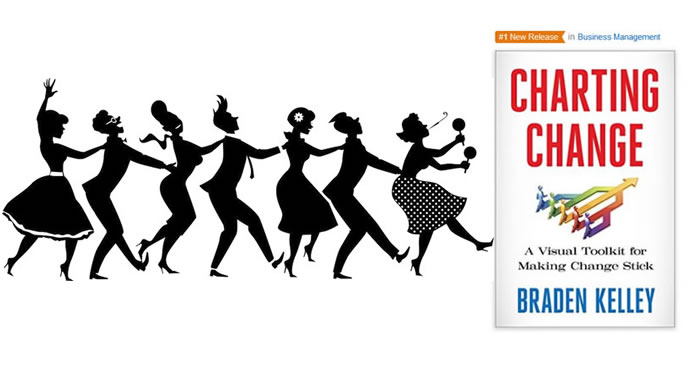
From now until November 30, 2022 you can get a 55% discount on my latest best-selling book Charting Change – plus FREE shipping!

You must go to SpringerLink for this Cyber Sale:

  • The offer is valid until November 30, 2022
  • Please use CYB22 at check-out to get your discount on books & eBooks*
  • Free shipping

Click here and enter the code CYB22 before checkout

*This offer is valid for English-language Springer & Palgrave books and eBooks and is redeemable on link.springer.com only. Titles affected by fixed book price laws, forthcoming titles and titles temporarily not available on link.springer.com are excluded from this promotion, as are reference works, handbooks, encyclopedias, subscriptions, or bulk purchases. The currency in which your order will be invoiced depends on the billing address associated with the payment method used, not necessarily your home currency. Regional VAT/tax may apply. Promotional prices may change due to exchange rates. This offer is valid for individual customers only. Booksellers, book distributors, and institutions such as libraries and corporations please visit springernature.com/contact-us. This promotion does not work in combination with other discounts or gift cards.

Imagine Your Next

Planning for the Future!

Imagine Your Next

GUEST POST from Teresa Spangler

“Our imagination is the only limit to what we can hope to have in the future.” – Charles Kettering

The line between humans and machines is blurring by the day. The future, as we know it today may be tomorrow’s history book; with our exponential technological advancement in fields like Artificial Intelligence (AI), robotics, automation etc., there will come a time when machine intelligence could exceed human capabilities to an extent that would require us to contemplate on how this might affect society for better or worse.

The question of whether AI can take over has been at the forefront among futurists ever since computers began matching human abilities—albeit not entirely replacing them just yet! Although no one knows what lies ahead for humanity, these advancements are certainly going bring changes in every sphere from socioeconomics all the way up to space exploration.

So how best can we do future planning with so many priorities sitting on our day-to-day plates? Here is a simple exercise you and your organization can use to get imaginative about your future and design the best possible outcomes you desire.

In order to formulate the best possible outcomes for your organization, you need to get imaginative and plan. One way of doing this is by looking 10 years into the future! Can you predict what the future will look like in 10 years? Probably not. But, with a little time and creativity, we can get close!

Using this first strategy that may help you started planning a possible future.

Exercise:

Look forward 10 years

Divide a wall, white board or use a conference table into two sections

  • Doom– most negative possible outcomes that could happen
  • Boom– most positive possible outcomes that could happen

Considerations in your scenarios:

  • How will the world be impacted?
  • How will humanity be impacted?
  • How will your company be impacted?
  • How will you personally be impacted?
  • How did each of the above contribute to these scenarios?
  • + Any other points you feel need to be considered

Using sticky notes 

  1. Write as many worse possible outcomes as the team can imagine
  2. Write as many of the best possible outcome you can imagine impacting the world and humans positively.

Have each person contributing to craft a mini story of each scenario as if it’s happened already with as much detail as possible.  Each person read out their mini story and collectivity design one story scenario from everyone’s input.

Now you have two possible future worlds one worst case and one best case.

Now for the planning:

Take the best case and reimagine your vision and mission as a company. What products, technologies, services, solutions will you have (no barriers! Imagine anything is possible)? 

What roles will you have, what skills will everyone have, what does the organization look like, how have your customers and their needs changed?

This is not a one-hour or one-day exercise. The idea of designing the future is ongoing.

In the future, humans will coexist with machines.

The question is: how?

What do you think about this and what are your thoughts on adapting to it now?

How does company’s products change in relation to human-machine relationships or interactions reflected by technology usage habits of today’s youth who grew up using smartphones from an early age they can type faster than 5 WPM typing speed?

Consider the possibilities!

Let us help you start your journey into the future. We’d love to help!

Request our free two-hour facilitated workshop and see what you come up with!

Image credit: Pixabay

Subscribe to Human-Centered Change & Innovation WeeklySign up here to get Human-Centered Change & Innovation Weekly delivered to your inbox every week.

Connecting Individual Contribution to Organizational Impact

Purpose-Driven Work

Connecting Individual Contribution to Organizational Impact

GUEST POST from Chateau G Pato

In the modern economy, organizations are locked in a perpetual battle for talent, engagement, and sustainable growth. Yet, many leaders overlook the single most powerful, renewable resource at their disposal: the human desire for meaning. As a human-centered change and innovation thought leader, I argue that the future of work is not defined by perks or paychecks alone, but by a deep, authentic connection between an individual’s daily tasks and the organization’s overarching impact. This is the essence of Purpose-Driven Work. When employees understand precisely how their efforts contribute to a mission bigger than the bottom line, their productivity transforms from mere labor into inspired contribution.

The challenge for innovation leaders is moving purpose from a glossy mission statement on the wall to a dynamic, daily operating principle on the shop floor. True purpose-driven work requires a transparent system that links a junior analyst’s spreadsheet update or a warehouse worker’s careful packing directly to the organization’s larger societal or customer value. When this connection is clear, the result is exponential: lower attrition, higher engagement, better customer service, and a powerful engine for organizational resilience and human-centered innovation.

The Three Levers of Purpose Alignment

To institutionalize purpose-driven work, organizations must strategically pull three key levers:

  • 1. The “Why” Transparency: Every employee must not only know the company’s mission but also regularly see proof of that mission in action. This involves transparently sharing impact metrics, customer testimonials, and success stories that highlight the human outcome of the work.
  • 2. Contribution Mapping: Leaders must create clear pathways—literally mapping the work—that show how each department, team, and individual role acts as a critical link in the chain of impact. This eliminates the feeling of being a “cog in the machine” and emphasizes individual ownership of the final result.
  • 3. Amplifying Micro-Innovations: When purpose is clear, employees feel safe and motivated to innovate at the local level. Organizations must create structures to capture and celebrate these small, purpose-aligned improvements, reinforcing the idea that everyone is an innovation driver in the service of the mission.

“Purpose is not a destination; it’s the GPS for daily decision-making. If your people don’t know the destination, they can’t navigate the complex roads of innovation.” — Braden Kelley


Case Study 1: The Healthcare Tech Company – Connecting Code to Care

The Challenge:

A rapidly growing healthcare technology firm, specializing in electronic health records (EHR), found that its software developers were experiencing burnout and disconnection. They understood they built software, but the abstraction of code separated them from the mission of patient care. This led to quality dips and high turnover.

The Purpose-Driven Solution:

The company instituted a mandatory, recurring program called “Empathy Days.” Instead of simply reading bug reports, developers and testers were required to spend a dedicated day each quarter in a hospital or clinic setting, shadowing nurses and doctors who used their software. They witnessed firsthand how a one-second lag in loading patient data could impact a critical decision, or how a poorly designed interface created friction for an overwhelmed medical professional.

The Organizational Impact:

The impact was immediate and profound. The developers, now emotionally invested, returned to their desks with a renewed sense of urgency and accuracy. Bugs were fixed faster, and the quality of user-centered design skyrocketed because the team shifted its focus from meeting feature specifications to reducing friction for the user-in-crisis. Attrition among technical staff dropped by 15%, proving that connecting a technical task (coding) to a human outcome (saving time for a nurse) is a powerful driver of engagement and quality innovation.


Case Study 2: Global Retailer – The Sustainable Supply Chain Steward

The Challenge:

A global apparel retailer had a strong public commitment to sustainability and ethical sourcing, but this purpose felt remote to the logistics and distribution center teams, whose performance was measured almost exclusively by speed and volume (Output Metrics).

The Purpose-Driven Solution:

The retailer fundamentally altered its performance management system to incorporate Purpose-Driven Metrics. They introduced the role of the “Sustainable Supply Chain Steward” at every distribution hub. Employees were trained on the specific environmental impact of packaging choices, waste management, and shipping routes. Their contribution mapping was changed to show: “Your choice of pallet wrap today saved X amount of plastic from landfill, directly supporting the company’s 2030 goal.”

The Organizational Impact:

By empowering front-line employees with purpose and impact data, the organization unlocked a wave of decentralized, cost-saving innovation. Logistics teams began identifying new recycling partnerships and optimizing packaging designs, not because they were told to, but because they were measured and recognized for their contribution to the sustainability mission. The retailer not only saw a measurable reduction in waste and shipping costs but also achieved higher scores in employee satisfaction related to the company’s ethical practices, demonstrating a clear link between local purpose alignment and global brand equity.


The Leadership Imperative: Curating Meaning at Scale

Purpose-driven work is not a motivational poster; it is a systemic leadership commitment. The ultimate responsibility of the innovation leader is to be the chief curator of meaning, ensuring that the work environment constantly reflects the value being created for humanity. This requires intentional transparency regarding impact, courageous willingness to expose employees to the human beneficiaries of their work, and a commitment to measuring Outcome over mere Output.

When you transform a job description from a list of duties to a statement of impact, you stop hiring for compliance and start attracting talent driven by conviction. That conviction — the authentic belief that “my work matters” — is the non-replicable, human-centered competitive advantage that will define the most resilient and innovative organizations of the next decade.

Extra Extra: Because innovation is all about change, Braden Kelley’s human-centered change methodology and tools are the best way to plan and execute the changes necessary to support your innovation and transformation efforts — all while literally getting everyone all on the same page for change. Find out more about the methodology and tools, including the book Charting Change by following the link. Be sure and download the TEN FREE TOOLS while you’re here.

Image credit: 1 of 950+ FREE quote slides available at http://misterinnovation.com

Subscribe to Human-Centered Change & Innovation WeeklySign up here to get Human-Centered Change & Innovation Weekly delivered to your inbox every week.