Category Archives: Leadership

Change Leadership in the Digital Age

Change Leadership in the Digital Age

GUEST POST from Chateau G Pato

In the digital age, it is no longer feasible for organizations to rely solely on traditional leadership styles and practices to effectively drive change. With digital advancements exponentially increasing in recent years, the way in which organizations approach change leadership must evolve along with it. In order to remain competitive in the modern and ever-changing world, leaders must be willing to employ innovative approaches that utilize digital tools and incorporate ideas from across the organization.

Organizations that successfully lead change in the digital age need to fundamentally shift their organizational culture to one that is driven by digitalization. This requires them to empower their workforce, proactively anticipating change and utilizing data and digital technologies to drive more agile and effective change management.

Case Study 1: 21st Century Fox

21st Century Fox is a great example of a business that has embraced change leadership in the digital age. They have invested heavily in digital technologies to streamline their internal processes, while also introducing a range of innovative initiatives aimed at driving cultural and operational change. This includes the regular use of virtual reality based training, as well as the implementation of agile working practices. Leadership is responsible for facilitating the changes required to enable this modern way of working. They ensure that employees understand and embrace the change, engaging with them and introducing flexible working practices to support this.

Case Study 2: IBM

IBM is another organization that has embraced digital leadership to drive change. As part of their transformation strategy, IBM set up a dedicated digital innovation team to drive the organization’s digital evolution and pioneer new areas of growth. This team is responsible for looking at new technologies and ensure they are implemented in an efficient and effective way. They also provide guidance for employees who need support in understanding the impact of new technologies. Through this team, IBM has developed an agile working culture which encourages its workforce to think innovatively and use digital tools to better serve customers.

Conclusion

These are just two examples of businesses leading successful change in the digital age, but the principles they have used to achieve this remain the same. To successfully and efficiently drive change in the digital era, organizations must invest in digitalization, engage all levels of staff, embrace an agile mindset and utilize data and digital technologies.

Image credit: Pixabay

Subscribe to Human-Centered Change & Innovation WeeklySign up here to get Human-Centered Change & Innovation Weekly delivered to your inbox every week.

Overcoming Resistance to Change in the Workplace

Overcoming Resistance to Change in the Workplace

GUEST POST from Art Inteligencia

Change is an inevitable part of today’s workplace. Whether driven by external forces such as technology, or internal factors such as restructuring, it’s important to know how to effectively manage resistance to change in the workplace. Employees have their own preferred ways of carrying out their job, and asking them to change the way they’re working can be disruptive. Here we will explore some key strategies for managing resistance to change, illustrated with case study examples.

Understand the Underlying Cause

The first step to overcoming resistance to change in the workplace is to understand exactly why employees are resisting the change. It could be due to a lack of information or understanding, simply being comfortable with the status quo, or it could be driven by office politics or a fear of the unknown. Once the underlying cause is understood it is easier to develop a plan to successfully manage the resistance.

For example, when Cupcake Company rolled out a new online customer ordering platform, employees were hesitant to get on board with the change. After flagging this resistance with management, they realized that employees didn’t have enough meaningful information about how the new system worked. They quickly organized training sessions to explain the new process, and started to monitor who was using the system to fine-tune it where needed.

Engage and Involve Everyone Who Will Be Affected

It’s important to engage and involve employees who will be affected by the change. This will help to build a sense of ownership and responsibility for the change, and will give them the opportunity to provide feedback and suggestions for how the change could be better managed.

For example, when the Retail Store began introducing self-checkout into its stores, they gathered a team of employees from diverse backgrounds to be ‘change champions’. These change champions were responsible for educating their peers about the benefits of the new system and encouraging them to adopt it. They also gave active feedback to the management team about any issues or problems they were facing. This approach helped to ensure that everyone involved was bought into the changes and invested in their success.

Communicate and Promote the Benefits

Employees will be more likely to accept a change if they understand the benefits of it. Companies should communicate and promote the benefits of the proposed change before it is implemented, and keep the lines of communication open throughout to ensure that employees are kept informed of developments.

For example, when a manufacturer was introducing robotic automation, they used a mix of in-person and virtual events to communicate the benefits of the new system to their workforce. They showed their employees how the new system could help free up their time for more value-added tasks, and offered skills development and training opportunities for those who wanted to gain experience in the new area. By focusing on the tangible value that employees could get from the new system, they were able to create a more positive outlook on the change.

Create a Supportive Environment

A supportive environment is essential to help employees embrace change. This can involve mentorship programs, workshops, and activities that allow employees to practice their new skills and exchange ideas on how to optimise the change.

For example, when a tech company launched its new cloud software, they dedicated a team of “change ambassadors” who acted as role models and mentors for other employees. They held regular knowledge sharing sessions and open forums to discuss ideas about how to make the most of the new system. The ambassadors also ran practice sessions for those who were new to the software and led workshops to help employees build confidence in their new skills. This approach created an open and supportive environment in which employees were comfortable to try out the new system and learn from their mistakes.

Building a Culture of Change

Forming a culture of change takes time, but it is worth investing in. Management should encourage employees to take ownership of the change and be proactive in creating new opportunities to optimize the system. This could involve setting incentives for employees who come up with innovative solutions, or implementing process improvement initiatives that allow everyone in the organization to contribute to the change process.

For example, when an accounting firm began introducing automation, they implemented a quarterly “change feedback” program. This program allowed employees to provide feedback and suggestions on how the automation process could be improved, and rewards those who came up with the most innovative ideas. By inviting the entire organization to be part of the change initiative, the firm was able to better manage resistance to change and speed up the transition process.

Conclusion

Change is often disruptive, but it is also an essential part of staying competitive and innovative. Through understanding the underlying cause, engaging and involving everyone who will be affected, communicating and promoting the benefits, creating a supportive environment, and building a culture of change, companies can successfully manage resistance to change in the workplace and find new ways to optimize their systems.

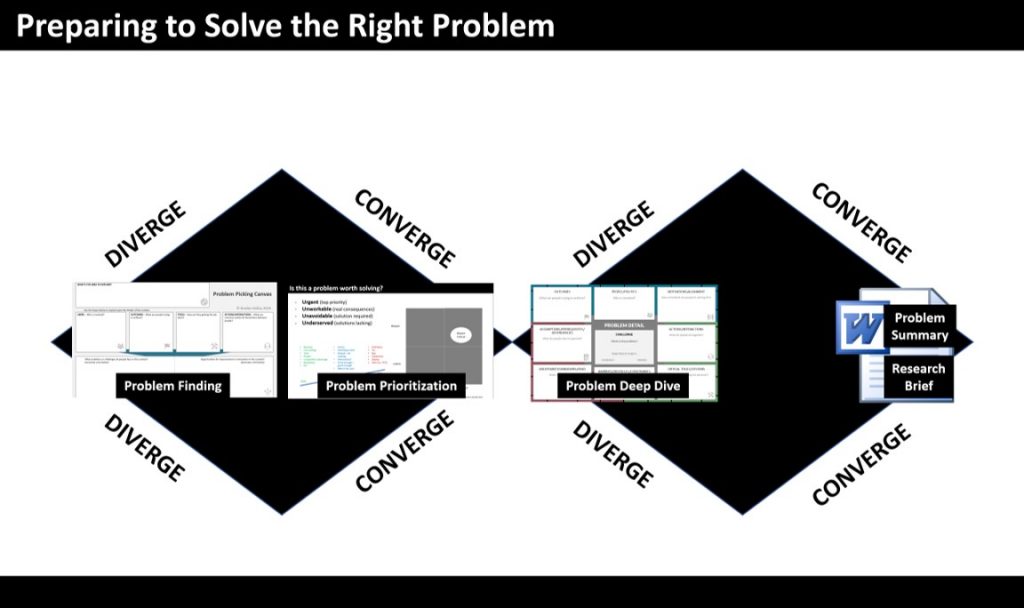
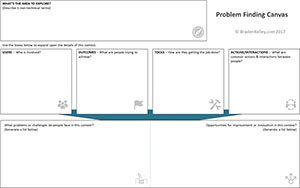
SPECIAL BONUS: Braden Kelley’s Problem Finding Canvas can be a super useful starting point for doing design thinking or human-centered design.

“The Problem Finding Canvas should help you investigate a handful of areas to explore, choose the one most important to you, extract all of the potential challenges and opportunities and choose one to prioritize.”

Image credit: Pexels

Subscribe to Human-Centered Change & Innovation WeeklySign up here to get Human-Centered Change & Innovation Weekly delivered to your inbox every week.
Holacracy and Change Leadership: A Practical Guide

Holacracy and Change Leadership: A Practical Guide

GUEST POST from Art Inteligencia

When it comes to leading a successful organizational change, there are two key elements that are critical for success: holacracy and effective change leadership. Holacracy is a self-governing system of roles and rules designed to create organizational agility, remove decision-making bottlenecks, and empower teams. And change leadership is a set of tools, processes, and methods for implementing organizational change effectively. This guide will provide a practical overview of holacracy and change leadership and provide two case studies to illustrate how organizations have combined these two powerful approaches for successful change.

What is Holacracy?

Holacracy is an organizational system designed to reduce bureaucracy and increase organisational agility. Through the use of self-governing roles, rules, and processes, holacracy enables teams to self-organize and make decisions without hierarchical decision making. Teams are empowered to be shared decision makers and have the authority to make quick decisions and undertake adaptive actions.

What is Change Leadership?

Change leadership is a set of tools and techniques designed to implement change initiatives with minimal disruption, maximize the impact of change, and ensure a successful outcome. Change leadership allows for leaders to engage their teams in the process of change, ensure alignment, and create an environment that is conducive to change. It enables leaders to stay one step ahead of the change process and identify and address any issues or roadblocks that may arise.

Case Study 1: Netflix

Netflix is a great example of an organization that successfully combined holacracy and change leadership for successful change. After the introduction of the streaming service, the need for rapid decision making increased. To respond to this need, Netflix adopted a holacracy system to empower teams and remove bottleneck decision-making. By democratizing decision making, Netflix was able to quickly adapt to market changes and ensure up-to-date product offerings. Additionally,Netflix used the change leadership approach to ensure a smooth transition to the new system. They engaged employees in the process, defined clear goals and objectives, and clearly communicated the benefits and implications of the new system.

Case Study 2: Zappos

In 2015, Zappos transitioned from a traditional top-down organization to a holacratic self-governing organization. This transition was made to further the company’s mission of putting its employees first and creating an environment of empowerment and innovation. To ensure a smooth transition, Zappos employed change leadership. They identified key stakeholders and engaged them in the transformation process, communicated the benefits of the new system, and received input from employees to ensure understanding and support for the transition. This combination of holacracy and change leadership enabled Zappos to make the transition smoothly and ensure the long-term success of the organization.

Conclusion

By combining holacracy and change leadership, organizations can increase agility and ensure successful change initiatives. Holacracy enables teams to self-organize making decisions quickly, while change leadership ensures smooth transition and effective implementation of the change. The two case studies described in this guide showcase two successful examples of companies that have successfully combined holacracy and change leadership for successful change.

Image credit: Pexels

Subscribe to Human-Centered Change & Innovation WeeklySign up here to get Human-Centered Change & Innovation Weekly delivered to your inbox every week.
Change Management: A Leader’s Guide to Effective Implementation

Change Management: A Leader's Guide to Effective Implementation

GUEST POST from Chateau G Pato

Change is a natural part of life, and so businesses must learn to make timely adjustments to stay competitive and successful in the long-term. As a leader, it is your responsibility to ensure that change is properly implemented and managed so that you and your organization are placing strategic efforts where needed. This article serves as a guide to help business leaders implement effective change management strategies in their organization.

What is Change Management?

Change management is a structured process of organizing and controlling a company’s adjustment efforts. It is considered the cornerstone of large-scale transformation and is executed with the general idea of limiting risks and maximizing the potential of positive outcomes from change initiatives. It includes four core components: analysis, planning, implementation, and review. Through these four components, organizations can strategically transform their operations, core systems, and approaches to mission-critical processes.

Why is Change Management Important?

Change management is important because it helps organizations respond to their changing environments efficiently and effectively. It serves as a system of checks and balances and ensures that all change initiatives are properly justified, planned, and implemented. The process also helps businesses minimize the waste of resources and ensure that teams involved in various projects are best working towards the same goal.

Case Study 1 – The Transformation of Microsoft

Microsoft launched an extensive internal transformation project in 2014 to update its core operations, systems, and approaches. This involved a massive overhaul of the company’s internal processes, such as switching to an agile development method. Microsoft implemented a comprehensive change management approach, which included extensive training, workforce planning, and organizational realignment initiatives. The transition was a success and enabled Microsoft to remain a leader in their industry.

Case Study 2 – The Reorganization of National Grid

National Grid, a major electric and gas utility provider, restructured its organization to meet new customer demands and market trends. The company implemented a state-of-the-art change management system to execute the reorganization process across all departments and subsets of the company. This involved a rigorous assessment process, strategic workforce planning, detailed metrics, and advanced decision-making methods. The reorganization successfully enabled National Grid to better respond to changes in its environment and remain competitive in the industry.

Conclusion

Effective change management helps organizations respond to changes in their industry and remain competitive in the long-term. As a leader, it is important to understand the various components of change management and ensure that initiatives are properly planned and implemented. By considering the two case studies provided in this guide, business leaders can gain invaluable insight into the tools and processes that can help their organization successfully manage change.

Image credit: Pixabay

Subscribe to Human-Centered Change & Innovation WeeklySign up here to join 17,000+ leaders getting Human-Centered Change & Innovation Weekly delivered to their inbox every week.

How to Prepare Your Organization for Digital Transformation

How to Prepare Your Organization for Digital Transformation

GUEST POST from Art Inteligencia

Digital transformation is an integral part of any modern business. To be successful in the digital age, organizations must embrace the new technology and adapt to the changing landscape. But, preparing for digital transformation can be a daunting task for many organizations. Here are some tips for preparing your organization for digital transformation.

1. Identify Your Goals: Before you begin any digital transformation project, it is important to identify your organization’s goals. What do you want to achieve through digital transformation? What are the key objectives you are trying to accomplish? By clearly outlining your goals, you will be able to focus your efforts and resources in the right direction.

2. Create a Digital Roadmap: Once you have identified your goals, you need to create a digital roadmap. This roadmap should include your organization’s timeline, budget, and resources. It should also outline the tasks and activities that need to be completed in order to meet your goals.

3. Analyze Your Current System: Before embarking on a digital transformation project, you should analyze your current system. Are there any areas that need improvement? Are there any processes that could be streamlined? By understanding your current system, you will be able to identify which changes need to be implemented in order to meet your goals.

4. Invest in the Right Technology: To ensure success, it is important to invest in the right technology for your organization. It is important to invest in technology that is reliable, secure, and efficient. You should also consider investing in tools and services that will help you to manage and monitor your digital transformation project.

5. Train Your Employees: Digital transformation requires a cultural change within the organization. It is important to ensure that your employees are properly trained and equipped to handle the changes that come with digital transformation. Training your employees on the new technology and processes will help to ensure a smooth transition.

Case Study 1 – Starbucks

Starbucks is an example of an organization that successfully implemented digital transformation. The company invested in technologies such as mobile apps and payment systems to improve customer experience. Starbucks also invested in training employees to use the new technologies and processes. As a result, the company saw an increase in efficiency, customer satisfaction, and sales.

Case Study – Goldman Sachs

Goldman Sachs successfully implemented digital transformation by investing in Artificial Intelligence (AI) and cloud computing. The company invested in AI to improve customer experience and help automate certain processes. Goldman Sachs also invested in cloud computing to ensure data security and to enable employees to access information from anywhere. The company saw an increase in efficiency, customer satisfaction, and market share as a result of its digital transformation initiatives.

Conclusion

By following these tips and case studies, you will be able to prepare your organization for digital transformation. To ensure success, it is important to have a clear plan and timeline, invest in the right technology, and train your employees. With the right tools and strategies, your organization will be able to successfully embrace digital transformation.

Image credit: Pixabay

Subscribe to Human-Centered Change & Innovation WeeklySign up here to get Human-Centered Change & Innovation Weekly delivered to your inbox every week.

The Benefits of Change Leadership in the Workplace

The Benefits of Change Leadership in the Workplace

GUEST POST from Chateau G Pato

Change is a common phenomenon in the workplace, and organizations must be prepared to respond and adapt to new trends, technologies, and ideas. Change leadership is a powerful tool for organizations to navigate through these changes and ensure success.

Change leadership is the ability to identify, initiate, and manage change within an organization. A successful change leader must have the right skills and knowledge to lead the organization through a period of transition.

The benefits of change leadership in the workplace are numerous. Change leaders are able to create a vision for the future of the organization, which can act as a guiding force for employees and help to motivate them to achieve the desired outcomes. Change leaders can also help to identify and implement new strategies, processes, and technologies that will help the organization to stay competitive. In addition, change leaders can help to foster an organizational culture that is open to change and encourages collaboration and innovation.

To illustrate the benefits of change leadership, let’s look at two case studies.

The first case study is about a large healthcare provider. This organization was facing challenges in meeting the increasing demands of their customers. They needed to find ways to reduce costs and improve efficiency. To address these issues, the organization hired a new change leader. The leader was able to identify and implement new strategies, processes, and technologies that helped to reduce costs, improve efficiency, and increase customer satisfaction. The change leader also created a vision of the future and developed a culture of collaboration and innovation.

The second case study is about a manufacturing company. This company was struggling to stay competitive in an ever-changing market. To address this issue, they hired a change leader. The leader was able to identify and implement new strategies, processes, and technologies that allowed the company to stay competitive. The change leader also created a vision for the future and developed a culture of collaboration and innovation.

These two case studies demonstrate how change leadership can be beneficial in the workplace. Change leaders are able to identify and implement new strategies, processes, and technologies that can help organizations to stay competitive and successful. They can also create a vision for the future and foster an organizational culture that is open to change and encourages collaboration and innovation.

Change leadership is an important tool for organizations to navigate through periods of transition. By having the right skills and knowledge, change leaders can help organizations to stay competitive and successful. With the right strategies and processes in place, organizations can ensure that they are prepared for any changes that may come their way.

Image credit: Pexels

Subscribe to Human-Centered Change & Innovation WeeklySign up here to join 17,000+ leaders getting Human-Centered Change & Innovation Weekly delivered to their inbox every week.

Going Beyond the Business Model Canvas

Going Beyond the Business Model Canvas

For decades when business people and aspiring entrepreneurs came up with an idea and became serious about commercializing it, they would, by default, create a business plan. Anyone who has ever created a business plan knows they are a LOT of work. And as any innovator knows, most ideas turn out to be garbage. As a result, the creation of most business plans ends up being a waste of time.

All of this wasted time and money in the universes of both corporate innovation and startups was definitely an area of opportunity.

This pain has been solved in part by the Business Model Canvas created by Alex Osterwalder and Yves Pigneur, the Lean Canvas created by Ash Maurya, and by minor variations created by others.

Purpose of the Business Model Canvas

The purpose of both at their core is the same. The Business Model Canvas and the Lean Canvas seek to help entrepreneurs, intrapreneurs and innovators quickly explore the desirability, feasibility and viability of their ideas in a more visual and collaborative way, while also supporting much quicker iterations and revisions to both the value proposition and its path to market.

Where a business plan may take weeks to create, a Business Model Canvas or Lean Canvas can be created in an afternoon.

Where a business plan is often created by one person and revised by others in a serial manner, a Business Model Canvas or Lean Canvas is a group activity, informed by a collection of diverse perspectives and experiences, and challenged, evolved and revised in a real-time, parallel manner.

What excites me most as someone who conducts workshops all around the world and teaches people how to use the Business Model Canvas and other innovation & change tools, is that the Business Model Canvas and Lean Canvas have helped to accelerate a transformation in not only how people are taught, but also how they are permitted to conduct business.

Creating a Business Model Canvas as a Team

The Visual and Collaborative Workplace Transformation

This transformation is a game changer because it represents a growing integration of methods into workshops and meetings that enable facilitators to engage not only auditory learners, but visual, kinesthetic and social learners as well.

This more human approach to prototyping a business helps to add a bit more structure around an idea, in a collaborative way that will more quickly surface gaps and flaws while also testing assumptions, collecting idea fragments into a more holistic value proposition and creating a vision for how to make it real.

But, as we all know, any new business or any potential innovation will create an abundance of required and necessary changes. Unfortunately, whether you are using the Business Model Canvas or the Lean Canvas, the truth and the limitation is that they are but a single tool and can’t help you walk the rest of the path to reality. To create the changes necessary to realize your vision, you will need many more tools.

“When what people do aligns with what they think and feel, then and only then, will you achieve the outcomes you’re looking for.”

The good news is that this more visual and collaborative way of working helps with two of the most important keys to success – buy-in and alignment – and also helps to align mind, body, and spirit to harness the whole brain and its three constructs:

  1. Cognitive (thinking)
  2. Conative (doing)
  3. Affective (feeling)

Outcome-Driven Change Framework by Braden Kelley

Beyond the Business Model Canvas and the Lean Canvas

Visual, collaborative tools like the Business Model Canvas, Lean Canvas, Empathy Map, Value Proposition Canvas, Experience Maps, Service Design, and even Customer Journey Maps have laid the groundwork for a more modern, more powerful way of working that leverages the whole brain of the individual, and all three learning styles of the collective.

And where these tools all represent the beginning of a visual, collaborative endeavor to create change, they are missing the tools to help plan for and execute the changes that are being proposed.

Making the Shift to Human-Centered Change

This is where the Change Planning Toolkit™ powering the Human-Centered Change methodology comes in. It has been designed with the Change Planning Canvas™ at its core to feel familiar to those already using the aforementioned tools and empower teams to take the next steps on their journey to be successful:

  1. Innovation and Intrapreneurship
  2. Startup Creation
  3. Digital Transformation
  4. Design Thinking
  5. New Product Development (NPD)
  6. Service Design
  7. Experience Design
  8. Customer Experience (CX) Improvement Efforts
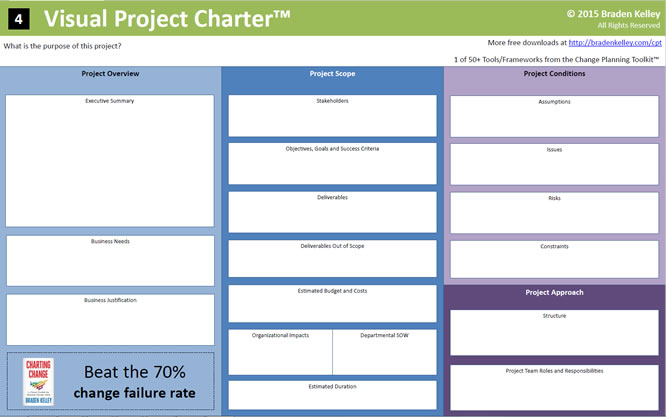
  9. Projects (make sure you also get the Visual Project Charter™)
  10. Change Initiatives

Charting Change is Number OneSo, if you’re already familiar with the Business Model Canvas, Lean Canvas, Empathy Map, Value Proposition Canvas, Experience Maps, Service Design, or Customer Journey Maps then you should get a copy of my latest book Charting Change and it will show you the thinking behind the Change Planning Toolkit™, how to use it to maintain the momentum of your team and the energy behind your idea, and how to leverage both to push it forward towards reality.

The Change Planning Toolkit™ will help you beat the 70% change failure rate, create more efficient and effective change initiatives (and even projects), and accelerate your pace of successful change in order to keep up with the accelerating pace of change all around us and to be more nimble, agile, and responsive than your competition.

Three Steps to Human-Centered Change Success

There is a simple three step process for people who want to start saving time and get the jump on their competition today by familiarizing themselves with the Human-Centered Change methodology:

  1. 10 free tools available to download now
  2. 26 free tools when you buy the book
  3. 70+ tools when you license the toolkit

I’ve invested more than $1 million into the Change Planning Toolkit™ so you don’t have to, and so you can leverage this investment to gain all of the benefits above while also saving yourself thousands or millions of dollars in consulting fees – every year.

And for a limited time, there are some exciting FREE training opportunities available to a handful of organizations who contact me.


Accelerate your change and transformation success

Subscribe to Human-Centered Change & Innovation WeeklySign up here to get Human-Centered Change & Innovation Weekly delivered to your inbox every week.

The Advantages of Investing in Employee Retention

The Advantages of Investing in Employee Retention

GUEST POST from Chateau G Pato

Employee retention is a key factor in the success of any business. A company that is able to retain its employees, as well as attract new ones, is more likely to succeed in the long run. Investing in employee retention is one of the best investments a company can make, as it can lead to increased profitability, improved morale, and a more productive workforce. This article looks at some of the advantages of investing in employee retention.

1. Improved Morale: Investing in employee retention can help to improve morale, as employees feel more valued and appreciated by the company. This can lead to a more positive work environment and increased productivity.

2. Increased Profitability: Retaining employees can help to reduce the costs associated with hiring and training new staff. This can lead to increased profitability, as the company is able to focus more of its resources on other areas of the business.

3. Reduced Turnover: Employee turnover can be costly for a business, as it takes time and money to recruit and train new staff. Investing in employee retention can help to reduce turnover, as employees are more likely to stay with the company if they feel valued and appreciated.

4. Improved Productivity: Retaining employees can help to improve productivity, as they are more likely to be more familiar with the company’s processes and procedures. This can help to reduce mistakes and ensure that tasks are completed more efficiently.

5. Improved Customer Service: When employees feel valued and appreciated, they are more likely to provide good customer service. This can help to improve customer satisfaction, leading to increased sales and profitability.

Investing in employee retention can be beneficial for any business, as it can help to improve morale, increase profitability, reduce turnover, and improve productivity. It is important for companies to recognize the importance of investing in their employees, as it can lead to improved overall business performance.

To illustrate the value of employee retention, consider the case of Google. The company has long been committed to investing in its employees and offering competitive wages, benefits, and perks. This commitment to its employees has paid off in the form of increased productivity, employee satisfaction, and high levels of employee retention. Google’s retention rate is currently at 95%, and the company attributes this to its commitment to employee development, career growth, and a positive work culture.

Another example of an organization that has benefited from investing in employee retention is Amazon. The company has a retention rate of over 95%, with employees staying with the company an average of four to five years. Amazon focuses on creating an environment that encourages innovation, collaboration, and learning. The company also offers competitive salaries, generous benefits, and flexible working arrangements.

In conclusion, investing in employee retention can have numerous benefits for any organization. It can reduce recruitment costs, boost morale, and save money in the long run. Organizations should focus on creating an environment that values employees and provides them with opportunities for growth. Companies such as Google and Amazon have seen the advantages of investing in employee retention and have reaped the rewards.

Image credit: Pexels

Subscribe to Human-Centered Change & Innovation WeeklySign up here to join 17,000+ leaders getting Human-Centered Change & Innovation Weekly delivered to their inbox every week.

Examining the Impact of Machine Learning on the Future of Work

Examining the Impact of Machine Learning on the Future of Work

GUEST POST from Chateau G Pato

As technology continues to evolve, it is becoming increasingly clear that the future of human labor is changing. Machine learning is a subset of artificial intelligence (AI) that is revolutionizing the way businesses operate and the opportunities that are available for workers. In this article, we will explore how machine learning is impacting the future of work and how organizations can best prepare for this shift.

One of the primary ways that machine learning is impacting the future of work is by automating certain tasks. Machine learning algorithms are able to analyze large datasets and identify patterns and trends that can be used to automate certain processes. This automation can help organizations become more efficient, as tasks that would traditionally take a long time to complete can be accomplished quickly and accurately with the help of machine learning. In addition, automation can also lead to cost savings, as human labor is no longer required to complete certain tasks.

Another way that machine learning is impacting the future of work is by providing new opportunities for skilled workers. Certain jobs that would traditionally require manual labor can now be performed by machines, freeing up workers to focus on tasks that require more creativity and problem-solving skills. This shift can help organizations become more competitive, as they are able to tap into the skills of workers that may not have been available in the past.

Finally, machine learning is also impacting the future of work by creating new employment opportunities. In addition to automating certain tasks, machine learning algorithms can also be used to create new products and services. Companies are now able to use machine learning algorithms to create new applications and services that can be used to improve customer experience or to provide new solutions to existing problems. This can open up new job opportunities for workers who are able to use their skills in areas such as data science, software development, and machine learning.

Overall, it is clear that machine learning is having a profound impact on the future of work. Organizations need to understand how this technology can be used to automate certain processes and create new opportunities for their employees. By leveraging the power of machine learning, organizations can become more efficient, cost-effective, and competitive in the ever-evolving landscape of the modern workplace.

Image credit: Pixabay

Subscribe to Human-Centered Change & Innovation WeeklySign up here to join 17,000+ leaders getting Human-Centered Change & Innovation Weekly delivered to their inbox every week.

Technology Strategies for Change Leadership Success

Technology Strategies for Change Leadership Success

GUEST POST from Chateau G Pato

Change leadership is a critical skill for organizations today. As the pace of technology and market changes continues to accelerate, it is essential to have an agile and adaptable leadership team that can manage transitions and stay ahead of the competition. Technology strategies can help organizations to successfully navigate the change process and ensure that changes are implemented effectively and efficiently.

One of the most important aspects of effective change leadership is the ability to properly assess the current situation and develop strategies to address it. To do this, organizations need to leverage the latest technological advances to gain insights into their current operations and identify areas for improvement. This includes utilizing predictive analytics and artificial intelligence (AI) to assess the impact of potential changes and identify potential solutions. By leveraging data and analytics, organizations can gain a better understanding of their operations and develop strategies to address identified issues.

Organizations should also take advantage of the latest tools and technologies to facilitate collaboration and communication throughout the change process. This includes leveraging cloud-based platforms and tools to enable employees to collaborate on projects in real time and to provide feedback to change leaders. Social media platforms can also be utilized to keep employees informed and provide a platform for discussion and feedback.

In addition to leveraging technology to assess and communicate changes, organizations should also focus on developing a culture that encourages and supports change. A successful change strategy requires the participation and engagement of all stakeholders, including employees, customers, and other partners. Leaders should ensure that all members of the organization are given the opportunity to provide input and feedback, and ensure that their opinions are taken into consideration.

Finally, organizations should focus on developing strategies to manage the implementation of change. This includes utilizing project management tools to track progress and ensure that changes are implemented in a timely manner. Additionally, organizations should develop training and education programs to ensure that employees are able to effectively manage the transition. By leveraging technology, change leaders can ensure that the change process is successful and that changes are implemented quickly and effectively.

By utilizing technology strategies, organizations can ensure that change leadership is successful and that changes are implemented efficiently and effectively. By leveraging data and analytics to assess current operations, developing collaborative tools to ensure participation, and building a culture that encourages change, organizations can ensure that their change leadership strategies are successful.

Image credit: Pexels

Subscribe to Human-Centered Change & Innovation WeeklySign up here to join 17,000+ leaders getting Human-Centered Change & Innovation Weekly delivered to their inbox every week.