 Nobody, including people inside Microsoft, would argue with the fact that Microsoft beat Google and Apple to the Mobile OS marketplace, but lags them both in terms of market share.
According to Wikipedia, the IBM Simon was the world’s first smartphone and was released to the world nearly twenty years ago. This means that the smartphone market is yet another example of a market where mass adoption has lagged behind initial product introduction by 20-30 years. For the inventor audience this is important to note, because it shows that #1 – innovation takes time – and #2 – that being first is no guarantee of being number one in the market when mass adoption arrives.
Well, mass adoption in the smartphone market is now upon us.
The only question is – which operating system maker will dominate the golden years of the smartphone market?
Will it be Apple or Google?
Or do Microsoft and RIM have a change to counterattack and make themselves relevant again?
Invention does not guarantee innovation. Innovation requires that you create value above every existing alternative and that you achieve wide adoption. The reason we often see changes in the leadership of the marketplace of an emerging innovation is that often the market creator does a worse job than new entrants of adapting their solution offering for the evolving desires of the customers. New entrants generally see an opportunity to solve problems that the incumbents don’t, and an create new value that the incumbent solutions don’t deliver.
But can an incumbent react to newer entrants and rebuild momentum in the marketplace?
Motorola’s revitalization in mobile handsets shows that a competitive response focused on leadership instead of reaction can in fact get you back in the game.
So can Microsoft do the same thing and steal share from Apple and Google in the smartphone OS market?
The answer lies in whether Microsoft can do a better job than Apple or Google (or even RIM) of understanding why people hate their current smartphones, while also anticipating:
- What the needs of customers will be in 6-12 months
- What customers will want in 6-12 months
- What emerging technologies will make possible in 6-12 months
Timing is one of the key components to successful innovation. You can invent things at any time, but you can only turn an invention into an innovation when customers and other parts of the value chain can see the value and are ready to accept it. Whether customers and the value chain can see the value is of course dependent on how well you translate for them how a potential innovation will fit into their lives.
Can Microsoft and Nokia come up with the answers that the marketplace will accept in 6-12 months? Are their existing phones the right answer for customers now?
I don’t know. But I can tell you that I hate, absolutely hate, the Google Android operating system on my Samsung Galaxy S. The Samsung device itself seems relatively well-designed but the Google Android OS is always crashing, doesn’t make smart use of the SD Card (the internal memory is always filling up), and leaves me constantly frustrated.
I bought two Samsung Galaxy S phones on T-Mobile over two iPhones on Verizon or AT&T for my wife and I, because they will cost me $1,000 less over the two-year commitment.
I can tell you with certainty that my next smartphone when I’m eligible for an upgrade will NOT be a Google Android phone. At the same time I know people who hate their iPhones and their Blackberries as well, so this represents an opportunity for Microsoft to convert disgruntled iOS, Android and Blackberry customers. Plus, there are a still a lot of people without a smartphone that will buy one in the next 6-12 months.
These two market dynamics represent a huge opportunity for Microsoft to get back in the smartphone OS market. The only question is:
Will they take advantage of this opportunity?
Article first published as ‘An Opening for Microsoft and Nokia?’ on Technorati.
 Sign up here to get Human-Centered Change & Innovation Weekly delivered to your inbox every week.
 In writing my article yesterday –
  I originally posed this software design challenge to application developers in September 2008 based on an InfoWorld
 Innovation comes in all different forms, and there is more than one way to boost profits in organizations.
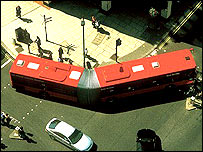 Traffic is a problem for drivers and bus riders alike. When traffic gets bad, it gets even worse for buses downtown. Here is why:
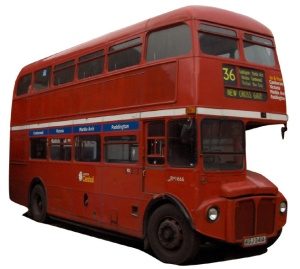 Seattle and other communities should take a second look at double-decker buses for popular routes that traverse the city center or look to banish “bendy” buses from downtown routes altogether. Double-decker buses are only slightly taller than most standard buses, have a smaller footprint than bendy buses, and give riders a nice view of the city.
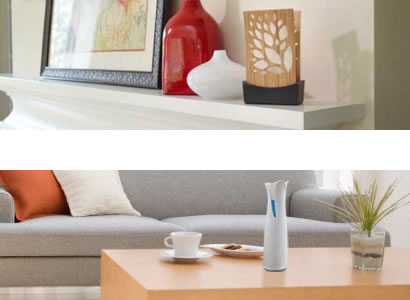 I was flipping through the throwaway coupon circular the other day to see if there were any coupons for anything that I buy anyways, and I came across a couple of items that for me it wasn’t immediately obvious what they were. At the bottom you have an item that looks like a cross between a milk bottle and a flower, but is in fact a room freshener spray, and at the top you have an item that almost looks like a night light but is a room freshener. Both of these are part of the new
 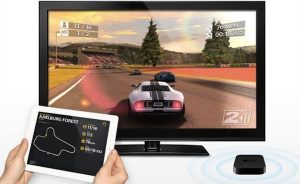 There have been several recent product announcements or launches that move a step closer to the future vision of computing that I began advocating two years ago. That vision that moves computing to the pocket, home, or office and envisions display and input devices relevant to the context the person is currently in.
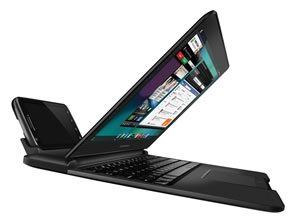 Motorola Atrix – A dockable 4G smart phone that while apparently it makes a pretty good smart phone, the lapdock that it connects to in order to give you laptop type functionality has received pretty poor reviews – making it sound like it’s not very-well designed or compelling.
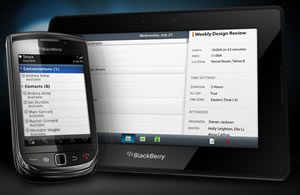 RIM Blackberry Playbook – RIM’s entry into the tablet market is the Blackberry Playbook. RIM failed to take the full leap and release an inexpensive dumb screen that connects to the user’s Blackberry. Instead it appears to be a fully functional (and priced) 7-inch tablet computer that uses the bigger screen to display the user’s email from their mobile handset without cables. RIM’s lack of commitment to the vision I’ve laid out has resulted in a ‘stuck in the middle’ device that is unlikely to catch on in the marketplace.
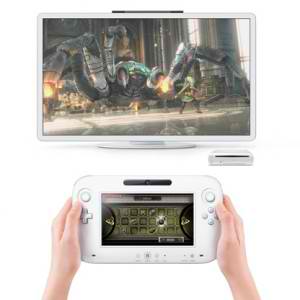 Nintendo WiiU – Nintendo is launching an oversize motion sensing controller that also has a display for game developers to utilize to extend the gaming environment out of the TV and closer to the gamer. This opens up the opportunity to either remove some of the visual visual clutter from the big screen onto the little one (creating a more immersive experience) or to leverage the second screen to deliver more game information (imagine flipping through pages of item inventories, maps, etc.). In this case the Nintendo Wii has the smarts and delivers the images wirelessly to the WiiU controller.