Category Archives: Customer Experience

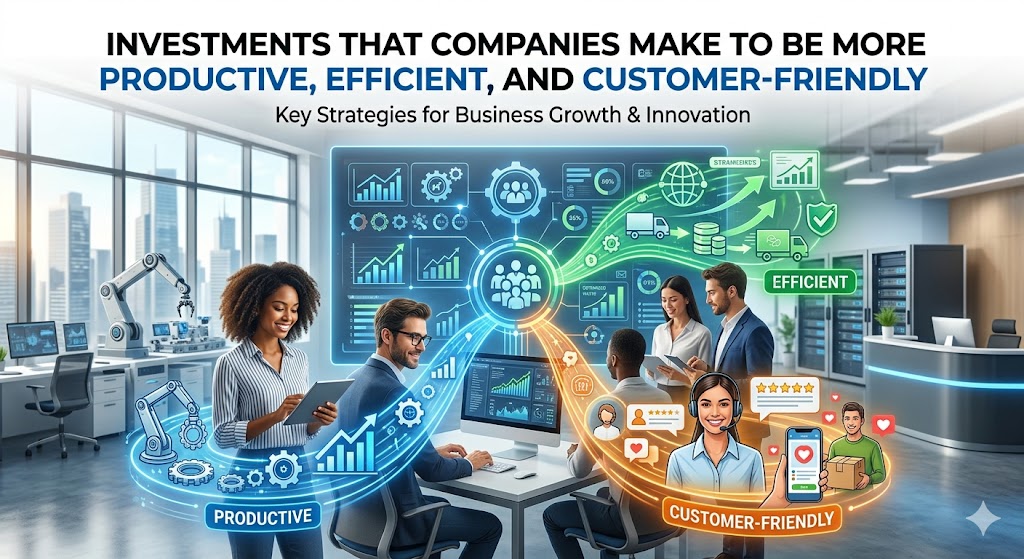
Investments That Make Your Company More Productive, Efficient and Customer-Friendly

Investments That Make Your Company More Productive, Efficient and Customer-Friendly

GUEST POST from Shep Hyken

What company doesn’t want to be more productive, efficient, and customer-friendly? (That’s a rhetorical question.) Isn’t this what every leader wants? Yet recent survey findings from Call Centre Helper an inconsistency in how organizations pursue these goals. This inconsistency can make or break their customer experience strategy. And if they fail their customers, their company may fail, as well.

The Call Centre Helper numbers tell the story. When asked where organizations can get maximum value for money while improving customer experience, a staggering 40% pointed to self-service solutions. Personalization came in a distant second at 18%, followed by productivity tools (12%). And despite years of improvement in AI, chatbots only received 8% of the vote.

In my own 2025 customer service and CX research of over 1,000 U.S. consumers, 68% still prefer the phone as their first choice for customer support, followed by online chat with a live agent at 55%. This creates what I call the customer experience investment paradox, where companies are pushing their investment into self-service tools while customers continue to value human-to-human interactions with live support agents.

The Self-Service Revolution is Real

In spite of the preference for phone support, the digital self-service revolution is real and becoming more important to companies. While the phone is still king, my research found that 34% of customers stopped doing business with a company because self-service options weren’t offered. That’s a third of your potential customers. Even if they prefer the phone, they want the option of doing it themselves.

There are some digital rockstar brands like Amazon and Uber, which have trained customers to expect instant and easy experiences. When customers can order groceries, stream entertainment, or hail a ride with a few taps of their mobile screen, they naturally expect similar experiences with every brand they encounter.

This makes the case for self-service, in spite of the customer’s desire to make a phone call. When the right solution is provided, the benefits to the company are big in the form of reduced operational costs and an improved customer experience. When executed well, self-service allows customers to resolve simple issues instantly, freeing up human agents to take on complex problems that require expertise and empathy.

That said, I regularly caution my clients that going “all in” on self-service without considering the larger customer journey could be a mistake. The keywords to consider are “when executed well.” Poorly implemented self-service creates frustrated customers who eventually demand human assistance anyway, often at a higher cost to resolve, and not to mention the bad will caused by the frustration.

Personalization: A Competitive Differentiator

The 18% investment in improving personalization shows that companies are understanding the importance of creating the personalized experience. My research reveals that 79% of consumers consider a personalized experience to be important.

Consumers are still being bombarded with generic messages from the companies they do business with that often leave them asking, “Why is this company sending this to me?” The result is customers disengage and often move on. As personalization technology improves (dramatically), analytics on a customer’s buying habits, frequency, past products purchased, and more can be incorporated into messaging and customer support experiences that have customers saying, “This company knows me.”

Smart companies use customer data to do more than personalize marketing messages and improve customer support. The data allows companies to anticipate needs, make recommendations for other products and services, and improve the overall customer experience.

The Relevance of the Human Connection

Despite a focus on digital investment, the human-to-human connection cannot be ignored. The fact that 68% of customers still prefer the phone confirms that self-service and chatbots may not be enough. Customers still want to talk to a live human being, especially about complex problems or major complaints.

However, the technology is getting better, and customers are becoming more confident with self-service solutions, which include chatbots. Also, as Gen Zs and younger Millennials become financially secure, they become a major force in the economy. They are the ones becoming I predict the 68% number will go lower for two reasons:

And age makes a difference, or does it? While my research finds that 82% of Baby Boomers prefer the phone, you can’t ignore that 52% of Gen Zs prefer it as well. At the same time, I predict that 68% of customers preferring the phone will go down for at least two reasons. First, the technology is getting better, and customers are becoming more confident with self-service solutions, which include improved chatbots. Second, Gen Zs and younger Millennials, who are more comfortable with technology, are becoming financially secure. The result is that they will be a major force in the economy.

Productivity and Efficiency

The 12% investment into productivity is about efficiency and optimizing the workforce. Some companies believe that being more efficient means replacing the workforce with technology. That’s a dangerous move for reasons and information already shared in this article. However, rather than saving money by eliminating employees, companies can make employees more productive. Imagine technology that saves employees 20% of their workday by eliminating menial tasks or answering basic questions that AI and chatbots can respond to. In turn, they use that time to focus on more important issues and tasks.

Many companies view chatbots as an investment in productivity, however according to the Call Centre Helper findings, companies are investing less than 8% in this powerful tool. My take on this is that companies have been let down by AI-fueled chatbots that make mistakes and hallucinate. That’s yesterday’s chatbot technology. Today, chatbots are far better than they were just a year ago. And if you’re worried about chatbots giving bad information to customers, don’t think that customers haven’t had the same experience with human support.

Final Words

The most successful companies I work with aren’t choosing between digital efficiency and human connection. They’re creating integrated experiences that deliver both. They use self-service for simple, routine interactions while ensuring a seamless hand-off to a human when needed. They leverage personalization to anticipate customers’ needs and build relationships. They invest in tools that enhance rather than replace human connection, achieving what every leader wants: a business that’s more productive, efficient, and loved by its customers.

This article was originally published on Forbes.com.

Image Credit: Gemini

Subscribe to Human-Centered Change & Innovation WeeklySign up here to join 17,000+ leaders getting Human-Centered Change & Innovation Weekly delivered to their inbox every week.

The Customer Confidence Score™ (CCS)

The Customer Confidence Score™ (CCS)

GUEST POST from Shep Hyken

Recently, I wrote about a customer trust survey. The feedback was amazing, which compelled me to take this a step further. After more writing and additional research, I recognized the need for more attention to a metric that measures a customer’s trust, which will directly correlate with customer satisfaction levels, loyalty, and any metric that measures what keeps customers or drives them away.

Merriam-Webster defines trust as an assured reliance on the character, ability, strength, or truth of someone or something. One in which confidence is placed.

One can’t ignore that the word confidence is part of the definition! They are very closely linked. We might ask something similar to, “Which came first, the chicken or the egg?” The question would be, “Which comes first, confidence or trust?”

Or, put another way: Does more trust lead to higher confidence, or does a higher level of confidence lead to more trust?

Or does it really matter? If you have both, you win. My take is that trust leads to confidence. Customers show confidence in your company through repeat business and referrals. That’s how they express their trust.

And that is why I’m officially announcing to you, our subscribers, readers, and viewers, a name to describe the trust questions I recently covered. I call it the Customer Confidence Score™ (CCS), another question to add to the survey questions you use to measure customer satisfaction (CSAT) and Net Promoter Score (NPS). Here’s an anchor question from my recent article on trust surveys:

On a scale of 1-10, how much do you trust that we will always do what’s right for you as our customer?

If your customer doesn’t give you a perfect 10 on this question, there are trust issues. Customers either fully trust you, or they don’t. And obviously, the lower the score, the less likely you’ll see them return. But a score alone is just a number. The real insight comes when you ask your customers why they gave you that score. The answer is your opportunity to resolve trust issues and improve the likelihood they will return.

The Customer Confidence Score™ is the result of surveying for trust, but it’s more than just another metric. It doesn’t replace CSAT or NPS. It completes them by measuring the foundation they are built on: trust. Without trust, a high CSAT or NPS score may be temporary at best. Measure CCS consistently, act on the insights, and you’ll build the kind of confidence and loyalty that get customers to say, “I’ll be back!”

Image Credit: Pexels

Subscribe to Human-Centered Change & Innovation WeeklySign up here to join 17,000+ leaders getting Human-Centered Change & Innovation Weekly delivered to their inbox every week.

Go Beyond SLAs and Measure Human Success with the New XLM Matrix (free download)

An Experience Level Measure (XLM) is a metric that quantifies human experience success — not just system uptime or ticket speed. Where a traditional SLA (Service Level Agreement) commits to technical or operational performance, an XLM asks whether people can reach their goal without unnecessary friction, confusion, or cognitive fatigue.

The XLM (Experience Level Measure) Matrix™ is Braden Kelley’s visual workshop framework for moving from a specific “ugh” moment (friction) → to an XLM that measures the absence of that friction → to the innovation or design lever that improves it. Use it for customer, employee, partner, patient, or constituent experiences.

In short:

  • SLA = Did the system/process meet a technical threshold?
  • XLM = Did the human succeed without avoidable pain?
  • XLA (Experience Level Agreement) = A commitment to experience outcomes, informed by XLMs
  • XLM Matrix™ = The tool that connects friction → measure → fix

Free download: Get the XLM Matrix™ (11″×17″)
Related: Experience Design Glossary — XLM & XLA · Customer Experience Audit


Go Beyond SLAs and Measure Human Success with the XLM Matrix

by Braden Kelley


The Crisis of the “Efficient but Empty” Experience

In our current landscape of rapid digital transformation, we have achieved unprecedented levels of speed and automation. Organizations have mastered the “how” of delivery, yet many find themselves facing a growing paradox: processes are becoming more efficient while human satisfaction is simultaneously declining. We are successfully building faster systems that often leave the user feeling more like a cog in a machine than a valued participant.

The root of this issue lies in our reliance on traditional Service Level Agreements (SLAs). For decades, SLAs have served as the gold standard for operational success, measuring technical markers like system uptime, response times, and throughput. While these metrics are essential for maintaining infrastructure, they are fundamentally “cold” metrics. They can tell you that a system is functioning, but they cannot tell you if the person using that system is thriving, frustrated, or merely exhausted by the interaction.

To innovate effectively in a human-centered future, we must look beyond technical availability and begin measuring the actual quality of the human encounter. We need a shift in perspective—moving from monitoring system performance to measuring human success. This evolution requires a new framework: Experience Level Measures (XLMs). By focusing on how an innovation impacts the user’s cognitive load, sense of agency, and emotional resonance, we can move past “efficient but empty” outputs and toward solutions that deliver genuine value.

Introducing the XLM Matrix

To bridge the gap between technical output and human success, we developed the XLM (Experience Level Measure) Matrix. This visual framework is designed to help innovation teams move beyond abstract empathy and toward concrete, measurable experience improvements. By visualizing the relationship between friction, measurement, and action, teams can align their efforts with the outcomes that actually move the needle for their users.

The matrix is structured as a series of concentric rings, requiring teams to work from the “inside out” to ensure every innovation is rooted in a real-world human need:

  • The Inner Circle (The Friction Point): This is the starting line. Here, teams identify the specific “ugh” moment—the point in the journey where the user currently feels confused, slowed down, or disempowered.
  • The Middle Ring (The XLM): This layer transforms qualitative frustration into a quantitative metric. It asks: “How do we measure the absence of that friction?” An XLM isn’t about system uptime; it’s about the user’s success rate in reaching their goal without cognitive fatigue.
  • The Outer Ring (The Innovation Lever): Once the friction is identified and the metric is set, the outer ring focuses on the solution. It identifies the specific change in the product, service, or workflow that will directly influence the XLM and eliminate the friction point.

By using this “Target Logic,” teams ensure that they aren’t just innovating for the sake of novelty, but are strategically pulling levers that have a measurable impact on the human experience.

The XLM (Experience Level Measure) Matrix

The Four Pillars of Human-Centered Innovation

To provide a comprehensive view of the user experience, the XLM Matrix is divided into four critical quadrants. Each quadrant represents a fundamental pillar of how humans interact with technology and services. By examining an innovation through these four lenses, teams can uncover hidden friction points and prioritize improvements that resonate most deeply with their audience.

1. Cognitive Load

“Does this make the user’s life simpler or more complex?”

In an age of information abundance, mental energy is a finite resource. This pillar focuses on the mental effort required to complete a task. Innovation here is about reducing noise, simplifying navigation, and ensuring that the “cost of thinking” is kept to an absolute minimum.

2. Time-to-Value

“How quickly does the user reach their ‘Aha!’ moment?”

Success is often determined by the distance between a user’s first interaction and their first realization of value. This quadrant measures the speed of relevance. Effective innovation in this space removes barriers to entry and streamlines the path to a meaningful outcome.

3. Agency

“Does the user feel in control, or like a cog in the process?”

As systems become more autonomous, maintaining human agency is vital. This pillar explores whether a tool empowers the user or forces them into a rigid, predetermined path. High-agency innovations provide the user with the autonomy to make meaningful choices and direct the outcome.

4. Emotional Resonance

“Does the interaction build trust or cause frustration?”

Every interaction leaves an emotional footprint. This quadrant assesses the “vibe” of the experience. It looks beyond function to ask if the solution feels reliable, empathetic, and aligned with the user’s values, transforming a transactional moment into a relational one.

How to Use the Matrix with Your Team

The XLM Matrix is most effective when used as a collaborative workshop tool. By gathering cross-functional perspectives—from product and design to engineering and customer success—you can ensure a 360-degree view of the human experience. Follow these three steps to run your first experience audit:

Step 1: The Empathy Audit

Focus on the Inner Circle. Select one of the four quadrants and ask the team to identify the most persistent “ugh” moment currently facing the user. Be specific. Instead of saying “the checkout process is slow,” identify the exact friction point, such as “the user feels overwhelmed by the number of form fields.”

Step 2: Defining the Metric

Move to the Middle Ring. Once the friction point is clear, brainstorm how you would measure its absence. This is your Experience Level Measure (XLM). If the friction is cognitive overload from form fields, your XLM might be “reduction in time spent on the checkout page” or “a 20% increase in completion rate without support intervention.”

Step 3: Pulling the Innovation Lever

Reach the Outer Ring. Now, identify the specific technical or design change that will move that metric. This is your “Innovation Lever.” It could be an AI-driven auto-fill feature, a progress bar to improve the sense of agency, or a “save for later” option to reduce immediate emotional pressure.

Repeat this process for each quadrant to build a robust, human-centered innovation roadmap that prioritizes meaningful outcomes over simple feature checklists.

Conclusion: Creating a Human-Centered Future

The transition from measuring system performance to measuring human success is not just a technical shift; it is a cultural one. As we move deeper into an era of agentic AI and rapid digital acceleration, the organizations that thrive will be those that prioritize the human experience as their primary north star. Innovation is no longer defined solely by what we can build, but by how effectively we enable people to feel, act, and succeed.

The XLM Matrix provides a structured, repeatable path to this future. By moving from the friction of the “ugh” moment to the strategic clarity of the innovation lever, your team can ensure that every project delivers meaningful, human-centered value. It is time to stop guessing how our users feel and start building for their success.

Start Your Experience Transformation Today

Ready to move beyond SLAs? Download the high-resolution, 11″x17″ (works as A3 too) printable version of The XLM Matrix and begin identifying the measures that truly matter for your innovation team. You can also use it virtually by uploading it and locking it down as a background in Miro, Mural, LucidSpark, Figjam or the FREE Microsoft Whiteboard or Google Jamboard.


Download the Free XLM Matrix Canvas

Frequently Asked Questions

What is the difference between an SLA and an XLM?

A Service Level Agreement (SLA) measures technical system performance, such as uptime or response speed. An Experience Level Measure (XLM) focuses on human outcomes, measuring how effectively an innovation reduces cognitive load, increases user agency, or builds emotional resonance.

How does the XLM Matrix help innovation teams?

The XLM Matrix provides a visual framework to move from identifying user friction (“ugh” moments) to defining specific metrics and identifying the technical or design “levers” required to improve the human experience.

Can the XLM Matrix be used for internal digital transformation?

Yes. The matrix is highly effective for internal projects. By measuring the cognitive load and time-to-value for employees using new internal tools, organizations can ensure their digital transformation efforts actually increase productivity rather than just adding complexity.

Image credits: Braden Kelley, Google Gemini

Subscribe to Human-Centered Change & Innovation WeeklySign up here to get Human-Centered Change & Innovation Weekly delivered to your inbox every week.

You Chose the Top 10 Customer Service Brands

You Chose the Top 10 Customer Service Brands

GUEST POST from Shep Hyken

We live in a world where 76% of customers say they will switch to a competitor if they know they will receive a better customer experience. Understanding which brands consistently win their customers’ hearts and wallets and why isn’t just interesting—it’s essential knowledge that will help you stay competitive.

Each year I survey more than 1,000 U.S. consumers for my annual customer service and CX research. The “audience” mirrors the U.S. population demographics for age, gender, ethnicity, geography and more. We learn about their likes, dislikes, expectations and more when it comes to customer service and customer experience (CX). One of my favorite questions to ask each year is, “When you think of customer service, what are your favorite companies?”

We ask each person to name their three favorites. Many of these brands you would expect to be on this list. For the research report, we listed the top 25 brands. For this article, I’m sharing the top 10. In addition to listing the brands, I’ve shared a few sentences about why these brands are loved by consumers. These lessons show us what our customers want, not just from these brands, but from any brand or company, including yours.

And here’s a disclaimer. This is a “people’s choice” list. You may or may not agree with the choices, but you can’t argue with the numbers. Furthermore, many of these brands have shown up on the list year after year.

So, with no further ado, let’s start with No. 10 and work our way to No. 1 for 2025!

No. 10 – Home Depot

Customers appreciate the friendly service and help from employees who are knowledgeable about tools, paint and building supplies. Home Depot customers appreciate how employees guide them to the right solution and sometimes even share helpful tips. Here’s my tip, based on personal experience. When you have a project, look for an older employee. They often have the experience and wisdom you’re looking for. The lesson: Friendly employees empowered with knowledge create confidence for customers, and confidence builds loyalty.

No. 9 – AT&T

Customers value AT&T’s nationwide coverage, international packages and helpful support, whether in stores or over the phone. Many mention the responsiveness of employees who work to resolve issues quickly. The lesson: In a competitive industry, fast response and reducing friction can win over customers.

No. 8 – Verizon

“Can you hear me now?” Those five words have been part of Verizon’s marketing campaign since the early 2000s. It means Verizon customers can trust its products. In addition, it has reliable service and knowledgeable support teams. Its staff consistently provides clear answers and helps customers make sense of plans, devices and upgrades. The lesson: Reliability plus clarity equals trust, and trust creates the confidence that brings customers back.

No. 7 – Google

I did a Google search and asked, “How many Google searches are there per day? The answer is more than 13 billion! While Google is known for its search engine, it also has many products such as Gmail, YouTube, Google Maps and many others. While much of the experience is self-service, the technology itself delivers convenience that feels effortless. The lesson: Sometimes the best service is making things so easy that customers don’t even need to ask for help.

No. 6 – Costco

Customers love the value (low prices) and quality that Costco delivers through its membership program with generous return policies and an in-store experience that includes friendly and helpful employees. They’ve built a reputation for standing behind what they sell. The lesson: Customer-friendly policies send a powerful message: we’ve got your back.

No. 5 – Chick-fil-A

“It’s my pleasure!” is the phrase the brand’s founder, Truett Cathy, asked employees to use instead of “You’re welcome.” It symbolizes commitment to hospitality. Customers consistently rave about the friendliness of its employees. Even though it is considered to be a fast-food restaurant, it has proven that consistently friendly service—not to mention delicious chicken—wins the hearts of customers. The lesson: A smile and a genuine expression of “my pleasure” can transform ordinary transactions into extraordinary experiences.

No. 4 – Apple

Customers value not only the products but also the support, especially through the Genius Bar and the knowledgeable employees at its retail stores. Employees are trained to explain, teach and solve problems in a way that makes technology approachable. The lesson: Knowledgeable employees who can make the complicated simple remove customers’ fears and replace them with confidence.

No. 3 – Target

Customers want a clean shopping environment with employees who are helpful and approachable. The brand even refers to its customers as guests. That, combined with smooth checkouts and easy returns, is why Target ranks high. The recent news about the DEI rollback can’t be ignored, but Target recognizes this, and its new CEO has announced how they plan to win back customers. The lesson: Customers appreciate friendly employees, an easy shopping experience and convenience in the form of traditional shopping, curbside pickup and same-day delivery options.

No. 2 – Walmart

Customers love the convenience of thousands of locations and low prices. Approximately 90% of Americans live within 10 miles of a Walmart store. That’s convenience, and when you combine that with low prices, you have a winning combination. While you may not find an employee in every aisle (one of the ways Walmart keeps prices down), when you do interact with Walmart employees, they are friendly and helpful. The lesson: Low prices get customers in the door, but an overall positive customer experience that includes friendly employees helps bring customers back.

No. 1 – Amazon

It should not be a surprise that Amazon is ranked No. 1. Often, in my customer service keynote speech, I ask the audience to yell out their favorite company to do business with. I hear Amazon more than any other. Customers love its unmatched convenience. It is open 24/7, has fast delivery and easy returns. It is the ultimate company when it comes to removing friction from the buying experience. The lesson: Easy wins. Make doing business with your company simple, fast and reliable, and customers will reward you with repeat business and loyalty.

Final Words

You may or may not agree with the brands on this list. I was even surprised that a couple of them ended up in the top 10, but this wasn’t my list. It’s a people’s choice list. My comments about each of these brands are based on research, personal experience and informed opinion. Feel free to share your comments, as well as your opinion of other companies you would add to the list.

This article was originally published on Forbes.com.

Image Credit: Shep Hyken

Subscribe to Human-Centered Change & Innovation WeeklySign up here to join 17,000+ leaders getting Human-Centered Change & Innovation Weekly delivered to their inbox every week.

Turning the Customer Experience Trifecta into a Sure Thing

Turning the Customer Experience Trifecta into a Sure Thing

GUEST POST from Shep Hyken

If you go to the horse race, you can place a bet known as the trifecta. This is where you correctly predict which horses will finish first, second, and third, and in the specific order. The payout is typically big because, while it’s simple in theory and easy to explain, it is a hard bet to win.

Here’s a bet you can always win: taking care of your customers. And when you do it right, you hit the trifecta:

  • First, they come back.
  • Second, customers who come back will typically spend more every time.
  • Third, customers who come back also recommend you. We love it when customers do our advertising and marketing for us.

So, how can we define taking care of your customers? Here’s a simple definition:

Taking care of your customers means you consistently deliver on what they expect, and do it in a way that’s easy, respectful, and reliable every time.

So, let’s break down the important words within this definition:

  • Consistently: The experience must be predictable and consistent. Consistency creates confidence. Confidence creates trust, and that leads to repeat business, and ideally and ultimately, customer loyalty.
  • Expect: Customers want you to meet their expectations. If you consistently – there’s that word again – meet those expectations, you don’t leave your customers hoping for more. And once in a while, you can go “above and beyond” or “over the top” when the opportunity presents itself.
  • Easy: This is about convenience. Customers love doing business with a company or brand that is easy and convenient. I wrote an entire book on this one, The Amazement Revolution.
  • Respectful: In addition to treating customers with respect, also respect their time. Wasting someone’s time is a sign of disrespect.
  • Reliable: This goes along with consistency and expectations. The product must do what the customer paid for it to do. No matter how good the service is, if the product doesn’t work, even the friendliest customer service won’t get customers to come back.

When a customer chooses to do business with you, there’s an implied agreement. They give you money in exchange for a product or service, and they expect you to take care of them as I’ve defined it. It may seem like common sense, and it is, but that doesn’t mean it’s easy to implement. You need all employees on board with this simple concept. Everyone must understand how they contribute to the concept of taking care of the customer. Do that, and you’re not gambling. You’re betting on a sure thing. You’ll hit the trifecta!

Image Credit: Pexels

Subscribe to Human-Centered Change & Innovation WeeklySign up here to join 17,000+ leaders getting Human-Centered Change & Innovation Weekly delivered to their inbox every week.

This One Thing Could Cost You 1/3 of Your Customers

This One Thing Could Cost You 1/3 of Your Customers

GUEST POST from Shep Hyken

If your customers reach out to you for customer support or for problems to be resolved, this is must-have information. In my annual customer experience research, we asked more than 1,000 U.S. consumers if they had ever stopped doing business with a company or brand because self-service options were not provided. Thirty-four percent said yes, which means:

Not offering self-service options for customer support could cost you one-third of your customers.

Age makes a difference. When you break it down by generations, more than twice as many Gen-Z customers (43%) than Baby Boomers (20%) have stopped doing business with a company because it didn’t offer self-service options for customer support.

Traditional Customer Support

The majority of all customers (68%) prefer the phone to self-service options. While the phone may be the first choice, it does have its drawbacks. Often, customers experience wait times. While the friendly recorded message may indicate the customer’s call “is very important,” a long wait time sends a different message. Sometimes customers become frustrated with being transferred, having to repeat their story to multiple customer support agents, language barriers and more.

Self-Service Options

Self-service customer support options are available to customers 24 hours a day, 7 days a week. They typically handle simple questions and problems, and in some cases, are interactive, allowing customers to complete simple transactions. Customers using self-service appreciate how quickly they can get answers to questions and get their problems resolved without wait times and the hassle of authentication procedures that customers view as time wasters. Some of these options include:

  • Frequently Asked Questions: This is typically on a website and provides brief answers or articles related to the most common customer inquiries.
  • Video Tutorials: These are often found on a website, and many companies and brands also host these videos on YouTube, which means that they are potentially searchable by using Google to ask the question.
  • Interactive Voice Response (IVR) Systems: This is a phone-based automated system that allows customers to navigate menu options to find simple answers or complete easy transactions.
  • AI-Fueled Chatbots: Similar to traditional IVR systems (but usually better), chatbots can message back and forth with customers. With the latest ChatGPT-type technology, it can seem as if you’re communicating with a human.
  • Customer Portals: Access on a company’s website allows customers to log in and check orders, make payments, set appointments and much more.
  • Mobile Apps: If a customer is willing to download the company’s app on their mobile phone/device, they may have access to an easier experience that provides many or all of the above options.

A warning: Just because some customers are demanding self-service options doesn’t mean they won’t be as frustrated (or even more) than with traditional phone support. If they don’t get their answers or you waste their time, they won’t be happy. For example, even though 39% of customers would rather clean a toilet than contact live customer support, 76% say they have been trapped in an automated menu system (IVR) and repeatedly screamed into the phone, “Agent” or “Representative,” and eventually hung up out of frustration. While these findings may seem funny, there’s a lot of truth in humor.

Demand For Self-Service Increases

In 2025, 34% of customers demand that companies provide self-service options or they will seek out a competitor, up from 26% in 2024. That’s a 30% increase. If the trend continues at that pace, we’re less than two years away from more than half of customers walking away because of the lack of self-service options.

Final Words

Self-service is about convenience, and customers love convenience. In 2025, 91% of customers said convenience is important to them, and 73% are willing to pay more if the experience is more convenient. Self-service options, when done right, deliver exactly that: convenience. They give customers control, save time and are available 24/7. Companies that provide excellent self-service can earn customer loyalty by proving they respect their customers’ time and preferences.

But, self-service options aren’t enough. Not every question or problem can be handled through self-service, which is why the best companies provide a blend. A powerful self-service option allows customers to easily and seamlessly transfer to a live agent, and rather than forcing the customer to start over, the agent can see why the customer is contacting support.

The companies that win in the future won’t be those that choose between self-service and human support. They’ll be the ones that blend both to create a customer support experience that makes customers say, “I’ll be back!”

Image Credit: Google Gemini

This article was originally published on Forbes.com.

Subscribe to Human-Centered Change & Innovation WeeklySign up here to join 17,000+ leaders getting Human-Centered Change & Innovation Weekly delivered to their inbox every week.

Top 10 Human-Centered Change & Innovation Articles of March 2026

Top 10 Human-Centered Change & Innovation Articles of March 2026Drum roll please…

At the beginning of each month, we will profile the ten articles from the previous month that generated the most traffic to Human-Centered Change & Innovation. Did your favorite make the cut?

But enough delay, here are March’s ten most popular innovation posts:

  1. Resilient Innovation — by Braden Kelley
  2. Has AI Killed Design Thinking? — by Braden Kelley
  3. Mapping Customer Experience Risk to the P&L — by Braden Kelley
  4. Moral Uncertainty Engines — by Art Inteligencia
  5. Necesita un Diagnóstico de Riesgo de Experiencia del Cliente y Fuga de Ingresos — por Braden Kelley
  6. Layoffs, AI, and the Future of Innovation — by Braden Kelley
  7. Organizational Digital Exhaust Analysis — by Art Inteligencia
  8. You Need a Customer Experience Risk & Revenue Leakage Diagnostic — by Braden Kelley
  9. Stereotypes – Are They Useful and Should We Use Them? — by Pete Foley
  10. Is There Such a Thing as a Collective Growth Mindset? — by Stefan Lindegaard

BONUS – Here are five more strong articles published in February that continue to resonate with people:

If you’re not familiar with Human-Centered Change & Innovation, we publish 4-7 new articles every week built around innovation and transformation insights from our roster of contributing authors and ad hoc submissions from community members. Get the articles right in your Facebook, Twitter or Linkedin feeds too!

Build a Common Language of Innovation on your team

Have something to contribute?

Human-Centered Change & Innovation is open to contributions from any and all innovation and transformation professionals out there (practitioners, professors, researchers, consultants, authors, etc.) who have valuable human-centered change and innovation insights to share with everyone for the greater good. If you’d like to contribute, please contact me.

P.S. Here are our Top 40 Innovation Bloggers lists from the last five years:

Subscribe to Human-Centered Change & Innovation WeeklySign up here to get Human-Centered Change & Innovation Weekly delivered to your inbox every week.

5 Stages from SLAs to XLAs (A CX Maturity Roundup)

5 Stages from SLAs to XLAs (A CX Maturity Roundup)

by Braden Kelley and Art Inteligencia


What Are the Five Stages from SLAs to XLAs? (Short Answer)

Five CX maturity stages from SLAs to XLAs: (1) SLA Default — green metrics, miserable humans; (2) Experience Sensing — listening without power; (3) XLM Definition — human success becomes measurable; (4) XLA Adoption — experience becomes a commitment; (5) Experience-Led Management — XLAs steer, SLAs enable. An SLA (Service Level Agreement) tells you the service ran. An XLM (Experience Level Measure) tells you whether humans succeeded. An XLA (Experience Level Agreement) is how you promise and manage that success.

CX maturity is not “more surveys.” It is whether human success can change a budget meeting. Mature organizations rarely delete SLAs — they demote them from the steering wheel to the dashboard lights.

Why Do Green Dashboards Hide Red Tuesdays?

I have lost count of how many “healthy” service reviews I have sat through where every SLA was green and every human in the room was exhausted.

The portal was up. The tickets closed. The vendor collected their availability credit theater. And somehow employees still needed three workarounds to finish one task, customers still repeated their story to four people, and leaders still wondered why loyalty and productivity refused to follow the scorecard.

That is not a tooling failure. It is a maturity failure. Organizations learn to manage what they can defend in a contract — uptime, response, resolution — and then mistake green for good. Cold metrics create warm fiction.

This roundup is the map: five stages from steering by SLA to managing by human success. Each stage has a trap, an exit signal, and a different Tuesday when you climb.

Stage Managing by… Trap Exit signal
1. SLA Default SLAs and SLA-like KPIs Optimizing the metric, not the human Admit green ≠ good; structured listening on one journey
2. Experience Sensing SLAs + ad hoc listening Listening theater — dashboards, same decisions Defined XLMs with owners and baseline
3. XLM Definition SLAs + human-success measures Too many XLMs; “experience = speed” XLA language with targets and cadence
4. XLA Adoption SLAs and experience commitments Paper XLAs — no funding or teeth Portfolio led by XLA/XLM outcomes
5. Experience-Led Management XLAs first, SLAs as enablers Stage 5 in town hall, Stage 1 in payroll Red XLA stops a green review

1. What Is Stage 1 — SLA Default?

The stage: Service performance is managed through SLAs (or SLA-like KPIs), often inconsistently across teams and vendors. Experience shows up as complaints, escalations, or heroic recoveries — not as a managed system.

Primary question: Did we meet the technical target?

The trap: Optimizing the metric — faster closes, defensive ticket hygiene, throughput over outcome — instead of the human result.

Exit signal: Leaders admit SLA-green ≠ experience-good, and begin structured listening beyond tickets for at least one critical journey.

On Tuesday: Employees and customers can be miserable while every SLA is green. Cold metrics, warm fiction.

2. What Is Stage 2 — Experience Sensing?

The stage: SLAs still run the operating rhythm. Beside them appears experience signal: surveys, VoC, shadowing, journey maps, advisory boards. Insight exists; it is not yet designed into commitments or tradeoff decisions.

Primary question: What are people feeling, and where does it hurt?

The trap: Listening theater — more dashboards, same decisions. Frontline cynicism grows: “we surveyed again.” Sensing without power to act is worse than not listening.

Exit signal: For a priority journey, a small set of XLMs tied to human success — effort, confidence, agency — with owners and a baseline.

On Tuesday: Frontline staff often know the truth first. The organization hears pain; it does not yet manage by it. For scorekeeping disguised as CX, see 11 Signs Your CX Program Is Scorekeeping, Not Sense-Making.

3. What Is Stage 3 — XLM Definition?

The stage: The organization deliberately designs Experience Level Measures — translating friction into measurable human outcomes. XLMs sit beside SLAs: task effort, time-to-confidence, sense of agency, repeat contact for the same intent, EX enablement to deliver CX. Not SLAs renamed.

Primary question: Which human outcomes must improve for this journey to count as successful?

The trap: Too many XLMs; or “experience = speed” — SLAs in disguise. A metric that only celebrates faster failure is still cold.

Exit signal: Stakeholders agree to XLA language — targets, review cadence, consequences — for at least one service, vendor, or internal shared service.

On Tuesday: Teams can finally argue for fixes that do not move an SLA but remove massive human struggle. Human success becomes a number you can improve — and defend.

4. What Is Stage 4 — XLA Adoption?

The stage: Experience Level Agreements sit beside SLAs. A dual scorecard: SLA health and XLA attainment. Joint reviews; XLAs in charters or SOWs; escalation when XLMs breach even if SLAs pass.

Primary question: Did we keep our promise about how this should feel and work for humans — not only whether the system was up?

The trap: Paper XLAs — beautiful agreements with no funding, no decision rights, no repair paths at the moment of truth.

Exit signal: Portfolio priorities and vendor tradeoffs begin led by XLA/XLM outcomes. SLAs remain hard constraints but are no longer the primary definition of success.

On Tuesday: Authority starts matching empathy. Recovery power is designed into the system — not left as an accident of character on the front line.

5. What Is Stage 5 — Experience-Led Management?

The stage: The organization manages by XLAs first. Reliability is table stakes. Human success is how strategy, funding, and continuous improvement are judged. Innovation is evaluated on XLM lift, not demo applause.

Primary question: Where is human success leaking — and what will we stop, start, or redesign to recover it?

The trap: Declaring Stage 5 in a town hall while Stage 1 incentives still run payroll and promotions.

Signs you are actually here: A green SLA cannot close an executive review if the XLA is red. Vendors are retained or exited on experience outcomes, not only uptime credits. Journey owners can fund repairs that improve XLMs without waiting for an outage.

On Tuesday: People stop choosing between “hit the SLA” and “do right by the human.” The system expects both — and funds the second.

How Do You Check CX Maturity Before the Next Review?

Before the next service or CX review, run five honest questions. If you cannot answer them, you are reporting maturity you have not earned:

  1. Are we steering by SLA or by human success? — Who owns the experience outcome, not only the uptime number?
  2. Is listening changing decisions — or decorating decks?
  3. Do we have XLMs we would defend in a budget fight? — Not vanity scores; human outcomes with baselines.
  4. Do XLAs have owners, cadence, and teeth? — Or paper promises?
  5. Would a red XLA stop a green review? — If not, you are still in Stage 1 with better graphics.

One-journey climb (without boiling the ocean):

  1. Pick one critical journey.
  2. Keep SLAs as reliability rails.
  3. Define 3–5 XLMs that measure human success on that journey.
  4. Baseline current performance.
  5. Commit — turn XLMs into an XLA with owners and cadence.
  6. Rewire escalations so red XLAs trigger action as reliably as red SLAs — then scale.

For the full framework — stuck points, governance detail, and the one-pager — read The XLA Maturity Model: How Organizations Move from SLA Theater to Human Success. For why belief in CX rarely survives the budget meeting, see 9 Reasons Companies Underinvest in CX. For economics that fund the climb, use 7 Ways to Calculate CX ROI Without Hope-Based Slideware.

SLAs measure whether the service ran. XLMs measure whether humans succeeded. XLAs are how we promise — and manage — that success.

Frequently Asked Questions

What are the stages from SLA to XLA?

Five stages: (1) SLA Default — managing by uptime and handle time; (2) Experience Sensing — listening without commitment; (3) XLM Definition — human success becomes measurable; (4) XLA Adoption — experience becomes a shared commitment; (5) Experience-Led Management — XLAs steer, SLAs enable reliability underneath.

What is the difference between SLA, XLM, and XLA?

An SLA (Service Level Agreement) commits to operational performance — uptime, response, resolution. An XLM (Experience Level Measure) tracks human success — effort, confidence, agency, emotional residue. An XLA (Experience Level Agreement) is a shared commitment to defined experience outcomes, governed with XLMs. SLAs tell you the machine worked; XLMs tell you whether humans succeeded; XLAs are how you promise and manage that success.

What is XLA maturity?

XLA maturity is how far an organization has moved from steering by SLAs alone to managing by human success through XLMs and XLAs. Low maturity means green dashboards and red Tuesdays. High maturity means experience outcomes influence funding, vendor decisions, and executive reviews — with SLAs as reliability rails, not the definition of success.

How do you move from SLAs to XLAs?

Start with one critical journey. Keep SLAs as reliability constraints. Define 3–5 XLMs tied to human success, baseline them, then commit via an XLA with owners and review cadence. Rewire escalations so red XLMs trigger action like red SLAs. Scale to vendors and shared services once one journey proves the model.

What is experience-led management?

Experience-led management is Stage 5 CX maturity: the organization steers by XLAs and human-success outcomes first, with SLAs as enabling conditions underneath. Portfolio priorities, vendor scorecards, and innovation bets are judged on XLM lift. A green SLA cannot close a review if the experience commitment is red.

Image credits: Pixabay

Content Authenticity Statement: The topic area, key elements to focus on, etc. were decisions made by Braden Kelley, with a little help from Google Gemini and Cursor to clean up the article, add images and create infographics.

Subscribe to Human-Centered Change & Innovation WeeklySign up here to get Human-Centered Change & Innovation Weekly delivered to your inbox every week.
11 Signs Your CX Program is Scorekeeping, Not Sense-Making

11 Signs Your CX Program is Scorekeeping, Not Sense-Making

by Braden Kelley and Chateau G Pato


How Do You Know Your CX Program Is Scorekeeping, Not Sense-Making? (Short Answer)

Your CX program is scorekeeping, not sense-making, when governance energy goes to NPS, CSAT, CES, and dashboard hygiene while nobody can explain — in a customer’s words — why the number moved or what journey you actually changed. Eleven signs: the CX review is a score review; people are paid for the number; driver models replace talking to humans; surveys serve the calendar not the moment; closed loop is a ticket not a redesign; competitive NPS theater; channel scores with orphaned seams; capture volume as the KPI; comments in a dump; sentiment AI as costume; and a green score with a red Tuesday you are not allowed to name.

A score asks whether they would recommend you. Sense-making asks what happened to them — and what you will stop doing because of it.

The Number Is Not Understanding

I have sat in CX reviews that felt like a weather report. Promoters up. Detractors down. Traffic lights polite. Someone asked what we learned about humans. The room reached for a driver model the way a drowning person reaches for a brochure.

That is scorekeeping: treating the number as the product of the program. Sense-making demotes the score to a signal. It funds contact with real Tuesdays. It judges CX by journeys changed — not points harvested.

Sign Scorekeeping Sense-making
1. Score review as CX review Traffic lights vs last quarter One journey, one story, one decision
2. Paid for the number Beg for tens; hide detractors Incentives on outcomes and loops
3. Models replace humans Word cloud as root cause Contact evidence required
4. Calendar surveys Tool default / ticket+24h Listen at the hot moment
5. Loop = case closed SLA on the detractor call Person recovered; system owned
6. NPS theater Beat the category chart Your Tuesday, your economics
7. Channel scores Leaderboards by org chart Seam owners and journey scores
8. Capture as KPI We listened to N people What got redesigned or stopped
9. Comments in a dump Verbatim “available” One decision, owner, date
10. Sentiment costume The tag is the insight AI sorts; humans make meaning
11. Green score, red Tuesday Official story is the dashboard Dual truth; red journey can stop the review

1. Why Is a CX Review That Is Only a Score Review a Warning Sign?

The sign: The monthly CX meeting is a walk through NPS, CSAT, CES, traffic lights, and “up or down versus last quarter.” Stories, seams, and decisions are leftover time — if they get time at all.

Why it seduces: Numbers look like management. A chart is faster than a human.

Sense-making instead: Lead with one journey, one human story, one decision. The score is a footnote, not the agenda. If the meeting could run without a customer’s words, it was scorekeeping with catering.

3. Why Can’t Driver Models and Word Clouds Replace Talking to Humans?

The sign: “Root cause” is a regression, a theme cluster, or a word cloud. Nobody has to sit with a customer or a frontline person this month to keep the program green.

Why it seduces: Analytics look like insight. You can screenshot a driver model. You cannot screenshot someone’s third explanation of the same billing break.

Sense-making instead: Every priority theme requires contact evidence — quotes, recordings, ride-alongs — that could not have been invented from the dashboard. If it could have been written without leaving the building, it is not sense. It is interior decorating with data.

4. Why Is Surveying on the Program’s Calendar Instead of the Customer’s Moment a Problem?

The sign: Cadence is quarterly, or twenty-four hours after a ticket close, or whenever the tool’s default fires — not at the emotional peak or the stalled wait.

Why it seduces: A program needs a calendar. Tools need a trigger. Neither is a moment of truth.

Sense-making instead: Listening designed for the moment — conversational, in-channel, after the cliff. Scores are a pulse, not a ritual. If you always ask when it is convenient for you, you will always hear a polite version of Tuesday.

5. How Is a Closed Loop That Only Closes Cases Still Scorekeeping?

The sign: Detractor follow-up is a SLA: call them, code them, close them. The same break happens next week. The loop never climbs from person to pattern to policy.

Why it seduces: “We close the loop” photographs well. Cured systems do not fit in a weekly metric as neatly.

Sense-making instead: Person-level recovery and a named system owner when the same friction repeats. Closed is not cured. A recovered human and an unchanged process is hospitality theater.

6. What Is Competitive NPS Theater in a CX Program?

The sign: The north star is beating a category benchmark or a rival’s published score. Your own journeys, effort, and failure demand are secondary.

Why it seduces: Boards like relative rankings. A league table feels like strategy.

Sense-making instead: Your economics and your Tuesday — retained humans, repeat contacts, dignity costs — beat a borrowed chart. If you cannot name the friction you removed in this book of business, you are competing at poster height.

7. Why Do Channel Scores With Orphaned Seams Mean You Are Scorekeeping?

The sign: Phone, chat, web, and store each have a score. The handoff between them has no owner and no metric. Customers live in the seam; the program lives in the channel.

Why it seduces: Channel dashboards map cleanly to org charts. Seams do not.

Sense-making instead: Journey and seam scores with owners — not only channel leaderboards. If the customer fell between teams and every channel still looks “green,” you measured the boxes, not the human path.

8. Why Is Capture Volume a Weak CX KPI?

The sign: Success is response rate, comments captured, tickets tagged, “we listened to N customers.” Action rate and journey change are unmeasured or someone else’s job.

Why it seduces: Listening is visible. Changing the work is political.

Sense-making instead: Judge the program by what got redesigned or stopped — not by how much you collected. Volume without action is a warehouse of other people’s pain.

9. What Does It Mean When CX Comments Live in a Dump?

The sign: Verbatim sit in a portal. Nobody has to translate them into a decision in human language. Qualitative is “available” and unused.

Why it seduces: You can say you “have the voice of the customer.” Storage is cheaper than courage.

Sense-making instead: A standing ritual: this month’s comments must produce one decision, one owner, one date — or they were storage, not listening. Available is not the same as heard.

10. When Is Sentiment AI Just a Sense-Making Costume?

The sign: Models tag emotion and topics at scale. The readout is the insight. No one checks whether the tag matches the job the human was trying to do.

Why it seduces: AI looks like understanding at volume. Speed flatters the wrong conclusion.

Sense-making instead: AI as a sorter, humans as meaning-makers. If a frontline person would not recognize the “theme,” it is not sense. It is labeling. Use machines to find the pile. Use people to say what the pile is.

11. Why Is a Green CX Score With a Hard Tuesday Still Failure?

The sign: NPS or CSAT hold or rise while effort, workarounds, and “I know what they deserve” attrition stay ugly. Naming the gap is treated as disloyalty to the program.

Why it seduces: The dashboard is the official story. Official stories like to stay employed.

Sense-making instead: Dual truth — score and lived experience. A green number cannot close the review if the journey is still red. If you cannot say that out loud, you are not running CX. You are running a reputation program for a metric.

How Do You Test Scorekeeping Versus Sense-Making in a CX Review?

Before the next VoC or CX steering meeting, run five questions. If you cannot answer them, you are managing a score, not making sense of humans:

  1. What human story led this meeting — in their words, not in a theme label?
  2. What did we change in a journey — not in a survey or a dashboard tile?
  3. Who is paid for the number versus the outcome?
  4. Where does the seam live that no channel score owns?
  5. Can a frontline person recognize our “why” — or would they laugh?

If scores have become the strategy because nothing else gets funded, that is a budget problem as much as a program problem — see 9 Reasons Companies Underinvest in CX. If the listening layer is still a dead form, Conversational and Agentic VoC is the method shift. If the number never had to name a behavior, 7 Ways to Calculate CX ROI Without Hope-Based Slideware is how you price the work. And if the map is still late to the pain, start with 12 Friction Points Customers Feel Before Your Journey Map Does.

Scorekeeping asks how we did. Sense-making asks what happened to them — and what we will stop pretending is fine.

Frequently Asked Questions

What is the difference between CX scorekeeping and sense-making?

Scorekeeping treats NPS, CSAT, or CES as the product of the CX program — optimizing surveys, samples, and dashboards. Sense-making uses those scores as signals, requires contact with real journeys, and judges success by what you changed for humans, not by points gained.

How do you know if your CX program is just managing NPS?

Warning signs include CX meetings that are only score reviews, incentives tied to survey points, root cause that never leaves a driver model, closed loops that close cases but not systems, channel scores with no seam owner, and a green NPS while Tuesday is still hard.

Why is NPS not enough for customer experience?

NPS is a signal, not a strategy. It does not name the job the customer was trying to do, the seam that failed, or the behavior you must change. Without that translation — and without owners, recovery power, and journey redesign — a rising score can coexist with rising effort and workarounds.

What should a CX review meeting cover?

Lead with one journey, one customer or frontline story in their language, and one decision — what to fix, stop, fund, or own. Scores, themes, and AI tags can inform. They should not consume the agenda. End with an owner and a date, not only a traffic light.

How do you stop survey gaming in CX programs?

Stop paying people for the score. Tie incentives to journey outcomes and closed-loop system changes. Sample in ways that cannot hide detractors. Treat begging for tens as a control failure. If the number is the bonus, the number will be the work.

Image credits: Unsplash

Content Authenticity Statement: The topic area, key elements to focus on, etc. were decisions made by Braden Kelley, with a little help from Google Gemini and Cursor to clean up the article, add images and create infographics.

Subscribe to Human-Centered Change & Innovation WeeklySign up here to get Human-Centered Change & Innovation Weekly delivered to your inbox every week.
What You Can Do to Make Customers Love You

The One Thing Netflix, Zappos and Salesforce Do to Get Customers to Love Them

What You Can Do to Make Customers Love You

GUEST POST from Shep Hyken

Personalization used to be about recognizing a customer who’s done business with you before. Just recognizing them and using their name created the feeling of a personalized experience. Earlier this year, I wrote Personalization Is More Than Using A Customer’s Name. While using the customer’s name is still important, over time, that experience morphed into much more. It is name recognition, combined with a knowledge of how you have marketed to them, sold to them and supported them, which makes them feel like you know them, not just recognize them.

My annual customer experience research found that nearly eight out of 10 customers (79%) in the U.S. feel a personalized experience is important. Twilio Segment’s State of Personalization Report found that “89% of leaders believe personalization is crucial to their businesses’ success in the next three years.”

No Longer a Trend, Personalization Is a Competitive Advantage

Customer service has evolved with how we do business. What was once a nice-to-have feature has become table stakes for success. Companies that don’t personalize risk being left behind by competitors that do.

Creating Personalized and Customized Experiences Online

Artificial intelligence (AI) has made it possible to analyze customer data faster and easier than ever before. This means we can use real-time information to turn routine transactions into memorable experiences that feel customized just for that customer.

For example, Netflix uses AI to analyze viewing habits, time of day preferences and even how long someone watches to make movie and TV show suggestions, creating a very personalized experience.

Zappos.com calls itself a service company that just happens to sell shoes. It is an online retailer that offers award-winning live customer support. They create WOW experiences that draw customers in and keep them coming back. Personalization comes in the form of recognizing returning customers and making spot-on recommendations.

Personalization and customization go beyond traditional consumer-facing businesses. A California-based firm, DK Law serves a diverse group of clients that speak English, Spanish and Korean. One might think that having lawyers who speak the different languages of their clients and have similar cultural backgrounds would be all that’s needed to create a personalized experience for the firm’s clients, but they didn’t stop there. They built an online presence with multiple website entry points that cater to their clients’ diverse backgrounds, creating a sense of cultural comfort and understanding. The result is higher trust and better communication in a traditionally impersonal environment, such as injury law.

In the B2B world, the ability to personalize and customize a solution can win over customers. Salesforce uses AI to analyze how each company (customer) uses its software, tracking which features teams use most and what challenges they face. Based on the data, Salesforce provides personalized dashboards, suggests training modules and delivers targeted suggestions to help each business maximize its investment.

Final Words

A successful personalization strategy will combine technology with human insight. The goal is to gather the right data about each customer and understand them well enough to create an experience that seems deeply personalized. The businesses that master the balance between using AI to gather insights while maintaining the human touch will be the ones customers choose to return to.

Personalization has evolved from a nice surprise to an expected standard. Companies that invest in truly knowing their customers and understanding their buying habits will keep those customers. And provided the overall customer experience meets the customer’s expectations, which includes the sales process, ease of doing business, customer support and product quality, why would a customer take a chance on leaving a company that knows them for a company that doesn’t?

Image Credit: Google Gemini

This article was originally published on Forbes.com.

Subscribe to Human-Centered Change & Innovation WeeklySign up here to join 17,000+ leaders getting Human-Centered Change & Innovation Weekly delivered to their inbox every week.