Sensing the Future via Digital Olfaction
LAST UPDATED: May 15, 2026 at 6:56 PM
GUEST POST from Art Inteligencia
Breaking the Tyranny of the Screen
For decades, digital transformation has been trapped in a flat, two-dimensional paradigm. We have poured billions of dollars into refining pixels, expanding screen real estate, and perfecting spatial audio. Yet, despite these massive leaps in graphics and computational power, our digital interactions remain fundamentally detached from the full spectrum of human biology. We live in a world of glass and glare — a sensory monoculture that prioritizes sight and sound while leaving our other senses completely starved.
The Sensory Deficit in Modern UX/CX
This heavy reliance on visual and auditory stimuli has created a profound sensory deficit in modern user experience (UX) and customer experience (CX) design. Today’s digital landscape feels cold, clinical, and transactional. Whether we are navigating a corporate dashboard, exploring a virtual reality environment, or interacting with an e-commerce platform, the experience is mediated by barriers that keep us isolated from the physical world.
As experience designers and innovation leaders, we must ask ourselves: Have we reached the limits of what sight and sound can achieve for human engagement? When every brand possesses a sleek logo and a curated sonic identity, visual and auditory channels become noisy, overcrowded, and subject to diminishing returns. To truly differentiate and build deeper connections, we must look — and sniff — beyond the screen.
The Emotional Gravity of Smell
This is where the biological reality of olfaction changes everything. Unlike sight and sound, which are processed, filtered, and rationalized by the thalamus before reaching the higher brain, our olfactory system possesses a direct, unmediated highway to the limbic system — the evolutionary ancient seat of memory, emotion, and behavioral drive.
When we smell something, we don’t just process data; we feel it instantly. Scent has an unparalleled emotional gravity. It can trigger deep nostalgia, alter cortisol levels, shift cognitive focus, and inspire trust in a fraction of a second. By ignoring this hardwired human superpower, traditional digital design misses the ultimate tool for meaningful behavioral change, authentic memory retention, and empathetic engagement.
The Core Thesis: Moving Toward Molecular Awareness
Digital olfaction — or olfactory digitization — is not a marketing gimmick, a transient trend, or a sci-fi novelty. It represents a foundational shift toward a molecule-aware world.
By building the infrastructure to digitize, transmit, and synthesize scent data, we are introducing an entirely new layer of contextual intelligence to technology. This infrastructure will fundamentally redefine how humans interact with machines, environments, and brands. It transitions us away from merely manipulating data on a screen and guides us toward a future where technology adapts to, respects, and enriches the holistic human experience.
The Technical Frontier: Mapping the Unmappable
To build a molecule-aware world, we must first solve a massive engineering and translation problem. Nature is a breathtakingly complex designer; the biological nose has spent millions of years evolving to detect microscopic chemical shifts in real time. Replicating this capability in silicon and software requires us to bridge the gap between organic chemistry, data science, and advanced hardware. It is a frontier defined by two distinct structural barriers and a fundamental challenge of standardization.
The Dual Barriers of Machine Olfaction
True digital olfaction requires a system to do two things simultaneously: capture a physical molecule and understand what it means. In the field of machine olfaction, these are known as the two structural limits:
- The Limit of Detection: This is a hardware challenge. A digital nose must possess near-single-molecule sensitivity to match the resolution of biological systems. It means engineering sensors capable of registering minuscule traces of volatile organic compounds (VOCs) drifting through highly chaotic, real-world environments.
- The Limit of Recognition: This is a software and artificial intelligence challenge. Even if a sensor detects a plume of molecules, it must accurately decode the complex chemical signature. A single familiar scent — like fresh morning coffee or rain on hot asphalt — is rarely a single molecule; it is an intricate dance of dozens of compounds mixed together. Advanced AI classifiers are required to isolate, identify, and categorize these dynamic patterns against a noisy background.
The Standardization Hurdle: Why Smell Isn’t RGB
Why has digital olfaction lagged so far behind computer vision and digital audio? The answer lies in the lack of a universal data standard.
In digital vision, we conquered the world by breaking light down into three primary color channels: Red, Green, and Blue (RGB). By mixing varying intensities of these three channels, a screen can replicate almost any color the human eye can perceive. Audio functions similarly, mapping neatly onto measurable wave frequencies.
Scent possesses no such simplicity. There are no “primary smells” that can be combined to recreate every odor in the universe. Instead, olfaction relies on thousands of unique chemical structures interacting with hundreds of highly specialized biological receptors. Because of this multi-dimensional complexity, the industry currently lacks a consensus on the optimal sensor modality or a unified digital language to catalog the molecular world. We are essentially building the internet of scent before agreeing on the protocol.
The Modern Sensor Toolkit
Despite these hurdles, a sophisticated toolkit of biomachine noses is emerging, moving us away from bulky laboratory equipment and toward nimble, edge-computing devices. Innovation leaders should watch three primary sensor modalities:
Metal-Oxide (MOx) Sensors: These are the reliable workhorses of industrial gas detection. When volatile molecules hit a heated metal-oxide surface, a change in electrical resistance occurs. While excellent for detecting specific gases or simple environmental hazards, traditional MOx arrays often struggle with the nuanced, multi-layered scent profiles required for complex experience design.
Electrochemical Arrays: Operating via chemical reactions that produce measurable electrical currents, these sensors offer excellent sensitivity. They are increasingly deployed in localized industrial settings and specialized quality control loops where target chemical compounds are well-defined.
Peptide-Functionalized Optoelectronic Platforms: This represents the cutting edge of human-centered sensory innovation. By coating silicon-photonic chips with engineered synthetic peptides — microscopic strings of amino acids designed to mimic human scent receptors — these devices combine biological precision with light-based data transmission. When a scent molecule binds to the peptide, it alters the path of light through the chip, creating an instantaneous, highly accurate digital “fingerprint” of the odor.
Human-Centered Experience Design (UX/CX)
As experience designers, our ultimate goal has always been to close the gap between human intent and digital execution. We strive to create environments that feel natural, intuitive, and profoundly resonant. By introducing digital olfaction into our design toolkit, we move past the constraints of traditional user interfaces. We are no longer just designing interfaces for the eyes and fingers; we are designing holistic ecosystems for the entire human nervous system.
From Interfacing to Immersing: Achieving True Presence
The rise of spatial computing, augmented reality (AR), and virtual reality (VR) has exposed the limitations of purely visual and auditory immersion. You can render a flawless, photorealistic forest in a headset, and you can surround the user with the directional audio of wind rustling through leaves — but if the air smells like a sterile corporate office or a plastic headset, the illusion remains fragile. The user’s brain recognizes the sensory mismatch, preventing total cognitive buy-in.
When we integrate localized, precise olfactory cues alongside visual, auditory, and haptic feedback, something extraordinary happens: we unlock a state of genuine presence. Scent anchors the subconscious mind. By introducing the crisp note of pine or the damp aroma of earth at the exact moment the user steps into that virtual forest, we align the sensory inputs. This multisensory harmony deepens engagement, accelerates learning retention in training environments, and elevates digital storytelling from a passive viewing experience to an unforgettable lived event.
Designing Olfactory Brand Identities: The Invisible Logo
For decades, enterprise branding has relied heavily on the visual and the vocal. Organizations spend millions curating color palettes, typography, and sonic logos or jingles. Yet, the most emotionally direct channel for brand equity remains completely unmapped.
In a molecule-aware future, progressive organizations will design intentional, digitized olfactory brand identities. Imagine a luxury automotive brand delivering a subtle, signature digital scent through the cabin’s climate system the moment an autonomous vehicle picks up a passenger. Or consider an upscale hospitality brand synchronizing a digital scent profile across its physical lobbies, its digital unboxing experiences, and its virtual travel previews. Because scent bypasses critical filters and triggers historical nostalgia instantly, these invisible logos build an emotional stickiness that traditional visual advertising simply cannot match. It transforms a transaction into a relationship.
Sensory Assistive Technologies: Empathy in Innovation
Perhaps the most profound application of digital olfaction lies not in commerce, but in empathetic, human-centered innovation. When we look at experience design through the lens of accessibility and care, digital scent becomes a powerful tool for cognitive bridging and behavioral support.
Consider the design of environments for individuals living with advanced dementia or cognitive decline. As cognitive faculties diminish, traditional visual signs and auditory reminders can become confusing or anxiety-inducing. Digital olfaction offers a gentler, more deeply rooted alternative. By utilizing automated, sensory-based design architectures, care facilities can introduce specific ambient scents — such as the distinct aroma of baked bread or fresh citrus — just prior to mealtime. This subconscious cue naturally stimulates appetite, reduces anxiety, and provides a comforting sense of emotional grounding and temporal orientation without requiring complex cognitive processing. Here, innovation ceases to be about technological novelty and becomes an act of profound human empathy.
Strategic Industry Vectors: Where “Digital Sniffing” Disrupts First
While the consumer applications of digital olfaction in gaming and brand marketing grab headlines, the most immediate, high-value disruptions are occurring deep within enterprise operations. Digital sniffing is transitioning from a novelty to critical infrastructure. By operationalizing ambient chemical data, forward-thinking industries are solving legacy challenges that have resisted traditional digitization for decades. The vanguard of this molecular revolution is concentrated across three strategic vectors.
Healthcare & Non-Invasive Diagnostics: The Breath as a Biometric
For centuries, medicine has been a largely reactive discipline — we treat illnesses after symptoms manifest. Digital olfaction turns this paradigm on its head by transforming the human breath into a continuous, non-invasive biometric stream. Every metabolic process in the human body leaves behind a specific trail of Volatile Organic Compounds (VOCs) that escape through our breath, sweat, and fluids. Diseases like lung cancer, diabetes, and even early-stage Parkinson’s alter these VOC signatures long before a patient feels sick.
By embedding AI-powered biomachine noses into everyday medical devices, smartphones, or public wellness kiosks, we can detect these microscopic shifts with incredible accuracy. This unlocks low-cost, ultra-early screening platforms that democratize preventative care. The human-centered impact here cannot be overstated: we are moving away from invasive, anxiety-inducing diagnostic procedures toward a future of passive, continuous health monitoring that catches threats when they are most treatable.
Agribusiness & Food Safety: Dynamic Freshness Over Static Dates
The global food supply chain is plagued by a massive structural inefficiency: our reliance on arbitrary, static “best by” or expiration dates. These dates are often conservative estimates calculated months in advance, leading to staggering amounts of premature food waste, or conversely, failing to prevent outbreaks of foodborne illnesses when supply chains break down.
Digital olfaction introduces real-time, molecular transparency to agribusiness. By deploying sensor arrays within shipping containers, cold-storage warehouses, and processing facilities, companies can constantly monitor the chemical outgassing of produce, meat, and dairy. Instead of guessing freshness based on a calendar, logistics networks can track actual degradation, optimize shipping routes based on real-time shelf life, and instantly flag contamination or spoilage. This optimization reduces waste, enhances food security, and protects margins across the entire ecosystem.
Security & Defense: Decentralized Threat Detection
In high-stakes security environments, biological working dogs have long been the gold standard for detecting explosives, narcotics, and hazardous materials. However, K9 units are a finite, highly resource-intensive asset. Dogs get tired, require extensive training, and face immense physical danger in active threat zones.
Autonomous, localized digital olfaction platforms are stepping in to complement and augment these biological heroes. Highly ruggedized, peptide-functionalized sensor arrays can be integrated into stationary security checkpoints, autonomous drones, or robotic ground vehicles. These systems work continuously without fatigue, mapping invisible chemical plumes and identifying airborne hazards in real time. By decentralizing threat detection, we can safeguard critical infrastructure and protect human lives without putting operators — or animals — in harm’s way.
The Market Shapers: Leading Companies and Startups to Watch
The digital olfaction ecosystem is accelerating rapidly, moving from academic labs to commercial viability. For innovation leaders and experience designers, keeping a pulse on this landscape is no longer optional — it is a baseline requirement for future readiness. The market is currently being shaped by specialized pioneers who are building the foundational hardware, software, and chemical registries required to make technology molecule-aware.
To navigate this emerging sector, organizations should closely monitor these three trailblazing companies, each approaching the challenge from a distinct technological modality and targeting unique strategic markets:
| Company / Startup | Core Technology Modality | Primary Strategic Target Market |
|---|---|---|
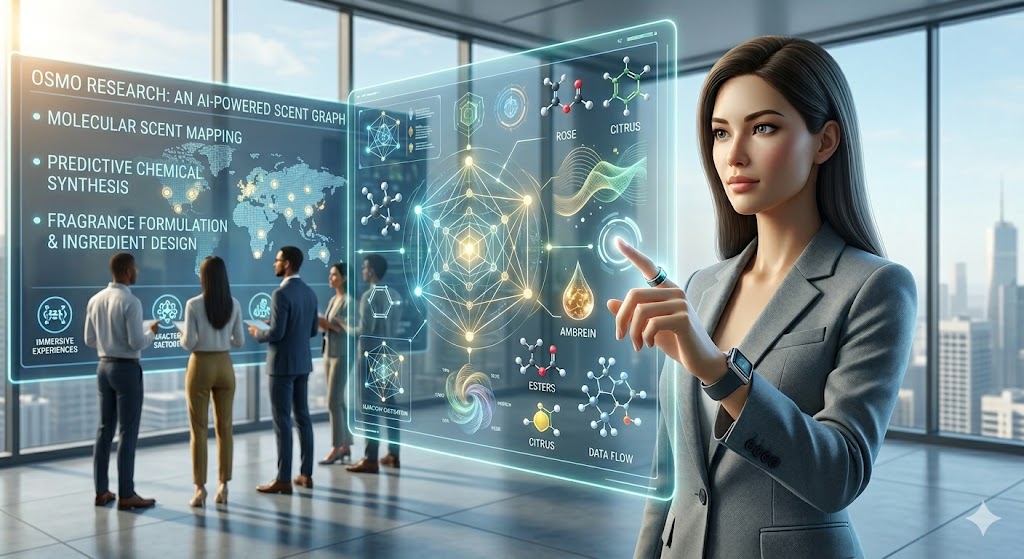
| Osmo | AI-powered molecular scent mapping and predictive chemical synthesis. Built on a foundation of machine learning models that can predict how a molecule smells based solely on its molecular structure. | Fragrance formulation, sustainable ingredient design, raw material sourcing, and digital scent replication for consumer goods. |
| Aryballe | Peptide-functionalized, silicon-photonic optoelectronic noses. They combine biochemical sensors that mimic human olfactory receptors with advanced machine learning to deliver precise, repeatable digital scent fingerprints. | Food and beverage quality control, automotive cabin diagnostics, industrial fluid monitoring, and supply chain integrity. |
| OVR Technology | Micro-cartridge scent-dispensing hardware and spatial audio-visual integration tools. They specialize in ultra-precise, localized burst technology that releases and completely clears scents in milliseconds. | Immersive professional training, spatial computing (AR/VR/XR), therapeutic digital wellness, and next-generation entertainment ecosystems. |
Navigating the Ecosystem
What makes this landscape fascinating from an innovation perspective is that these players are not necessarily in direct competition; rather, they are constructing different pieces of the same puzzle. While Osmo acts as the brain cataloging and synthesizing the molecular world, Aryballe serves as the highly sensitive diagnostic receptor, and OVR Technology operates as the delivery mechanism for human interaction.
As these technologies mature and converge, they will form the backbone of a standardized internet of scent. Strategic leaders should begin identifying which modality aligns with their organizational needs — whether they need to decode the environment (Aryballe), predict chemical design (Osmo), or deliver a transformative user experience (OVR Technology).
Deep-Dive Case Study: Nondestructive Quality Control in Luxury Agribusiness
To truly understand the power of innovation, we must look at how it solves real-world, high-stakes problems where trust and value intersect. Theory inspires, but application instructs. To see digital olfaction in action, we look at the luxury agribusiness sector — specifically, the global market for Extra Virgin Olive Oil (EVOO), a premium product where liquid gold meets legacy fraud.
The Challenge: The Fragility of Premium Trust
Extra Virgin Olive Oil is one of the most economically vulnerable agricultural products in the world. It is highly susceptible to two critical vulnerabilities: natural degradation via oxidation, and deliberate financial fraud. Because true EVOO commands a premium price, bad actors frequently blend it with lower-grade seed oils or older, rancid inventories, passing it off as fresh, single-origin product.
For luxury brands, this is a catastrophic customer experience and brand equity risk. Yet, defending the supply chain has historically been a logistical nightmare. Traditional laboratory verification methods — such as Gas Chromatography-Mass Spectrometry (GC-MS) or panels of human sensory tasters—are slow, incredibly expensive, and completely destructive to the product sample being tested. A brand cannot easily or cost-effectively test every batch at every point of transfer, leading to a reactive, backward-looking quality assurance model that only catches fraud after the consumer has already had a subpar experience.
The Innovation: Upgrading to the Electronic Nose
To disrupt this cycle, progressive producers deployed an innovative solution built on a portable, peptide-functionalized silicon-photonic electronic nose platform (utilizing technology similar to Aryballe’s NeOse Advance). Instead of destroying the oil or waiting weeks for lab results, operators use handheld digital sniffing devices right on the factory floor and at receiving docks.
The process leverages headspace analysis. By capturing the volatile organic compounds vaporizing in the empty space right above the liquid oil, the digital nose pulls in the molecular “aroma plume” without ever touching or contaminating the product itself. The synthetic peptides on the sensor chip bind with the specific VOCs characteristic of pure, fresh olives. The device then uses machine learning algorithms to instantly compare the resulting digital fingerprint against an established baseline registry of verified EVOO profiles.
The Result: Shifting from Post-Mortem to Real-Time Experience
The integration of digital olfaction fundamentally transformed the agribusiness value chain, shifting quality control from a clinical post-mortem to a proactive, real-time design asset:
- Instant Fraud Detection: The AI-driven platform can instantly flag if an oil has been cut with a cheaper alternative, identifying the molecular mismatch in under 60 seconds at a fraction of the cost of traditional lab tests.
- Dynamic Shelf-Life Monitoring: Because the system detects the earliest microscopic markers of oxidation long before a human palate can taste the rancidity, producers can dynamically reroute inventories, ensuring only peak-condition product ever hits retail shelves.
- Nondestructive Integrity: Zero product is wasted during testing. The supply chain remains completely fluid, transparent, and verified from grove to table.
By digitizing smell, this luxury agribusiness application proves that human-centered innovation isn’t just about building cooler apps; it’s about deploying invisible infrastructure that fiercely protects human trust, operational integrity, and the authenticity of the consumer experience.
The Ethics of Invisible Data & Change Management
Every profound technological leap brings a shadow side, and digital olfaction is no exception. As we build the infrastructure to sense the molecular world, we are introducing data streams that are entirely invisible to the naked eye. In human-centered design, innovation cannot be divorced from ethics. If we fail to design the governance frameworks around these technologies with the same care we use to build the sensors, we risk creating a deeply invasive future that erodes the very human trust we aim to build.
The Privacy of Odor Plumes: Non-Consensual Surveillance
We are accustomed to managing our digital footprints — we clear our browser cookies, turn off location services, and cover our webcams. But we cannot stop breathing, and we cannot stop shedding chemical signatures into the air around us. Every human being constantly leaves behind a unique, dynamic “odor plume” filled with metabolic, emotional, and environmental data.
The rise of decentralized molecular tracking creates intense new ethical dilemmas regarding privacy and non-consensual surveillance. If a retail environment can deploy passive digital noses to detect stress hormones in a customer’s sweat, or if an employer can passively scan an office to monitor health conditions or substance use, we cross a dangerous line from contextual assistance into dystopian violation. Innovation leaders must champion strict boundary lines: molecular data must be treated with the same weight as biometric or genomic data, requiring explicit user consent, radical transparency, and robust edge-computing privacy protections.
Organizational Adaptation: Navigating the Change Management of Data Fusion
Beyond the societal ethics, bringing digital olfaction into an enterprise requires a massive shift in organizational culture and change management. For legacy operations and engineering teams, integrating “ambient chemical data” into existing IoT architectures can feel overwhelming, disruptive, and unnecessary. People naturally resist what they do not understand, and a machine that “smells” can easily be misconstrued as an invasive policing tool or an eccentric, unstable gimmick.
To successfully guide organizations through this transition, change leaders must focus on two core pillars:
- Demystifying the Technology: Frame digital olfaction not as an omniscient surveillance apparatus, but as a collaborative asset. Teams need to see the electronic nose as an extension of their own capabilities — a tool that automates tedious quality checks or safeguards their environment, rather than a system designed to audit their individual performance.
- Emphasizing Human-Centered Data Fusion: Avoid the temptation to turn molecular insights into rigid, punitive metrics. Instead, design workflows where chemical data functions as a supportive layer of contextual intelligence. When a sensor flags a supply chain variance, the system should empower the human operator with options and insights, maintaining human agency at the center of the loop.
True transformation happens when technology aligns with human behavior, not when it forces humans to bend to the technology. By proactively managing the ethical guardrails and cultural shifts today, we ensure that the molecule-aware organizations of tomorrow remain profoundly human-centered.
Conclusion: Designing a Molecule-Aware World
We stand at a unique crossroads in the history of innovation. The digital architectures we have built over the last half-century are incredibly powerful, yet they remain fundamentally incomplete. By treating the human being as an organism that merely looks and listens, we have built a digital ecosystem that operates at a fraction of our true experiential capacity. Digital olfaction is the bridge that closes this gap, moving us from an era of superficial digital interaction to one of deep, molecule-aware integration.
The Innovation Mandate: Why Waiting is a Losing Strategy
When encountering an emerging frontier like olfactory digitization, the default corporate reflex is often to wait. Leaders look at the lack of a universal “RGB standard” for scent or the early stage of sensor convergence and decide to kick the container down the road, waiting for the market to mature and settle on a single victor.
This is a critical strategic blunder. The organizations that dominate the next decade will not be those that waited for absolute standardization, but those that began experimenting with the messy, beautiful reality of sensory enhancement today. The infrastructure is already viable. Whether you are using peptide-functionalized chips to protect a premium supply chain, or utilizing micro-burst delivery systems to deepen immersion in spatial computing, the tools to build a competitive advantage exist right now.
The mandate for innovation leaders is clear: begin auditing your customer and user journeys today. Look for the friction points, the cold zones, and the sensory deficits where emotional gravity and memory retention are lacking. That is where your digital olfaction roadmap begins.
The Future Smells Real
Ultimately, human-centered change is about designing a world that respects the entirety of the human experience. It is about using technology not to isolate us further behind sheets of glass, but to reconnect us to the rich, multi-layered textures of reality.
As we step boldly into this next horizon, we must remember that the ultimate destination of digital transformation isn’t a more complex virtual simulation — it is a more vibrant, authentic human existence. The future of technology will not just look sleek and sound sharp. It will smell real.
Digital Olfaction: Frequently Asked Questions
What is digital olfaction, and why does it matter for experience design?
Digital olfaction (or olfactory digitization) is the technology infrastructure used to capture, analyze, transmit, and synthesize scent data, effectively creating a molecule-aware world. For experience designers and innovation leaders, it matters because smell is the only sense that bypasses the logical brain and interacts directly with the limbic system — the seat of emotion and memory. Integrating digital olfaction allows us to move past a two-dimensional visual-auditory monoculture and build experiences with profound emotional gravity, accelerated learning retention, and authentic human connection.
How do machines actually “smell” without a universal standard like RGB?
Because scent relies on thousands of unique chemical structures rather than simple wave frequencies, it cannot be neatly mapped into an “RGB” equivalent. Instead, machine olfaction requires a dual-layer approach. The hardware layer utilizes biomachine noses — ranging from metal-oxide sensors to cutting-edge peptide-functionalized optoelectronic chips — to catch volatile organic compounds (VOCs). The software layer then uses advanced AI classifiers to analyze the resulting chemical patterns, matching the multi-dimensional “scent print” against digital registries to identify and decode the smell.
What are the primary ethical and change management risks of olfactory digitization?
The foremost ethical risk is privacy; humans constantly shed invisible odor plumes containing metabolic, emotional, and health data that cannot be turned off, opening the door to non-consensual biometric tracking if guardrails are not established. On an organizational level, the primary change management challenge is demystifying the technology. Leaders must proactively design workflows where digital noses are framed as collaborative assets that empower human operators and protect supply chains, rather than punitive, invasive surveillance tools.
Disclaimer: This article speculates on the potential future applications of cutting-edge scientific research. While based on current scientific understanding, the practical realization of these concepts may vary in timeline and feasibility and are subject to ongoing research and development.
Image credits: Gemini
 Sign up here to get Human-Centered Change & Innovation Weekly delivered to your inbox every week.