
Author Archives: Robyn Bolton

About Robyn Bolton

Robyn M. Bolton is the founder and chief navigator of MileZero, a consultancy that helps leaders use innovation to confidently and consistently grow revenue. She is also an assistant professor at the Massachusetts College of Art and Design, where she teaches innovation and strategy courses. She is the author of "Unlocking Innovation: A Leader’s Guide for Turning Bold Ideas into Tangible Results." She previously worked at Innosight, the innovation and strategy firm founded by Clayton Christensen; the Boston Consulting Group; and Procter & Gamble, where she helped develop and launch Swiffer. Bolton holds an MBA from Harvard Business School and a BS in marketing from Miami University. If you are frustrated that your innovation efforts are not producing results, she offers a free one-sheet with 5 Ways to Get Rapid Results from Innovation at www.MileZero.io

5 Tips for Leaders Navigating Uncertainty

From Executives at P&G, CVS, Hannaford, and Intel

5 Tips for Leaders Navigating Uncertainty

GUEST POST from Robyn Bolton

“We have successfully retained the opportunity for improvement.”

When the CEO said this to kick off a meeting, I knew we were in for an adventure. He smirked at the corporate double-speak, paused for the laughter, then outlined all the headwinds facing the business. But the only thing I remember from that meeting was his opening line.

I think about it all the time. Because it seems to apply all the time.

And despite the turmoil brought on by a pandemic, a war, and an economic slowdown, we have successfully retained the opportunity to improve how we deal with uncertainty. 

That isn’t to say we haven’t improved over the past three years. In fact, at an event sponsored by NextUp, four executives from P&G, CVS, Hannaford, and Intel shared what they learned and how they changed while navigating uncertainty.

Listen more

Dave DeJohn, Director of Operations for Hannaford, talked about the importance of listening deeply and constantly to employees, especially those on the front lines. Consistent with its core values of family, community, quality, and value, store associates are trained that the customer is always right. However, as incidents of verbal abuse increased during the lockdowns, employee satisfaction and mental health declined. By closely listening and observing what was happening in stores, Hannaford’s leadership modified their customer service approach to “the customer is always right, within reason” and empowered employees to stand up for themselves and each other when faced with hostile shoppers.

Stronger relationships lead to stronger results

Every executive shared stories from the early days of working from home – technical glitches, kids invading calls, and even cats positioning themselves awkwardly in front of cameras when the human stepped away.   Far from being signals of a lack of commitment or professionalism, these moments transformed roles and titles into human beings, juggling all the things humans must juggle. Once people started seeing others as fellow humans versus bosses, peers, or subordinates, they connected on a human level and formed genuine and trusting relationships. Those relationships led to better collaboration, more effective troubleshooting, and better business results.

Concise concrete communication is critical

In periods of uncertainty, information is power. But it’s also constantly changing. For that reason, constant communication is a must. But in a large organization, communication often comes from multiple departments – employee relations, HR, health and safety, operations, and marketing, to name a few – and that can be overwhelming. For this reason, DeJohn learned that keeping every message concise (ideally the length of a tweet but no more than a short paragraph) and concrete (specific, tangible, tactical rather than high-level platitudes) proved critical to keeping people aligned and moving forward.

Just because you can, doesn’t mean you need to

Keris Clark, VP of Sales at P&G, spoke about the drastic shift in her work/life balance when she could no longer travel to see customers or attend meetings. Instead of taking the first flight from Boston to Seattle for a meeting and then a red-eye back home, she suddenly had time to work out, cook, and spend time with family. As travel became safer and invitations to far-away meetings came in, she thought more critically about whether or not to book the tickets. Like most of us, she still travels for some things, but it’s no longer the default option now that more people are used to video calls and other ways of working.

We can do things differently and still deliver

COVID’s effect on the supply chain is well documented, and Tiffiny Fisher, Chief of Staff and Technical Assistant for Intel’s America region, gave us a view into Intel’s situation in the earliest days of the pandemic. With fabrication, assembly, and testing sites throughout Asia, Intel had to work quickly to figure out how to continue operating while staying with government lockdown guidelines. Ultimately, hundreds of employees volunteered to leave their families and live in hotels near Intel facilities so that they could continue operating. It was a huge sacrifice by employees and probably not one that anyone would want to make again. Still, it proved that Intel, with the support of its employees, could quickly make massive changes to its operations while continuing to deliver results.

Uncertainty can be deeply uncomfortable, even frightening, even though we face it every day. Building the skills to navigate it and learning lessons about what works and doesn’t can make it easier. But if you still struggle, don’t worry. It just means you’ve successfully retained the opportunity for improvement.

Image credit: Pixabay

Subscribe to Human-Centered Change & Innovation WeeklySign up here to join 17,000+ leaders getting Human-Centered Change & Innovation Weekly delivered to their inbox every week.


Basketball, Banks and Banana Splits

Is failure everywhere?

Basketball, Banks and Banana Splits

GUEST POST from Robyn Bolton

When asked to describe his test for determining what is and isn’t hard-core pornography, Supreme Court Justice Potter Stewart responded, “I know it when I see it.”

In that sense, pornography and failure may have a lot in common.

By accident, I spent the month of April thinking, writing (here and here), and talking about failure. Then, in the last week, a bank failed, two top-seeded sports teams were eliminated in the first round of the playoffs, and the New York Times wrote a feature article on the new practice of celebrating college rejections.

Failure was everywhere.

But was it?

SVB, Signature, First Republic – Failure.

On Monday, First Republic Bank became the third bank this year to fail. Like Silicon Valley Bank and Signature Bank, it met the definition of bank failure according to the FDIC – “the closing of a bank by a federal or state banking regulatory agency…[because] it is unable to meet its obligations to depositors and others.”

It doesn’t matter if the bank is a central part of the entrepreneurial ecosystem, is on the cutting edge of new financial instruments like cryptocurrency, or caters to high-net-worth individuals. When you give money to a bank, an institution created to keep your money safe, and it cannot give it back because it spent it, that is a failure.

Milwaukee Bucks – Failure?

Even if you’re not an NBA fan, you probably heard about the Milwaukee Bucks star Giannis Antetokounmpo’s interview after the team’s playoff elimination. 

Here’s some quick context – the Milwaukee Bucks had the best regular season record and were widely favored to win the title. Instead, they lost in Game 5 to the 8th-ranked Miami Heat. After the game, a reporter asked Antetokounmpo if he viewed the season as a failure, to which Antetokounmpo responded:

“It’s not a failure; it’s steps to success. There’s always steps to it. Michael Jordan played 15 years, won six championships. The other nine years was a failure? That’s what you’re telling me? It’s a wrong question; there’s no failure in sports.”

If you haven’t seen the whole clip, it’s worth your time:

The media went nuts, fawning over Antetokounmpo’s thoughtful and philosophical response, the epitome of an athlete who gives his all and is graceful in defeat. One writer even went so far as to proclaim that “Antetokounmpo showed us another way to live.”

But not everyone shared that perspective. In the post-game show, four-time NBA champion Shaquille O’Neal was one of the first to disagree,

“I played 19 seasons and failed 15 seasons; when I didn’t win it, it was a failure, especially when I made it to the finals versus the (Houston) Rockets and lost, made it to the finals for the fourth time with the (Los Angeles) Lakers and lost, it was definitely a failure.

.

I can’t tell everybody how they think, but when I watch guys before me, the Birds, the Kareems, and you know that’s how they thought, so that’s how I was raised.

.

He’s not a failure as a player, but is it a failure as a season? I would say yes, but I also like his explanation. I can understand and respect his explanation, but for me, when we didn’t win it, it was always my fault, and it was definitely a failure.”

Did Antetokounmpo fail?  Are the Bucks a failure? Was their season a failure?

It depends.

College Rejections – Not Failure

Failure is rarely fun, but it can be absolutely devastating if all you’ve ever known is success. Just ask anyone who has ever applied to college. Whether it was slowly opening the mailbox to see if it contained a big envelope or a small one or hesitatingly opening an email to get the verdict, the college application process is often the first time people get a taste of failure.

Now, they also get a taste of ice cream.

Around the world, schools are using the college application and rejection process as a learning experience:

  • LA: Seniors gather to feed their rejection letters into a shredder and receive an ice cream sundae. The student with the most rejections receives a Barnes & Noble gift card. “You have to learn that you will survive and there is a rainbow at the other end,” said one of the college counselors.
  • NYC: After adding their rejection letters to the Rejection Wall, students pull a prize from the rejection grab bag and enjoy encouraging notes from classmates like, “You’re too sexy for Vassar” or “You’ve been rejected, you’re too smart. Love, NYU.”
  • Sydney, Australia: a professor started a Rejection Wall of Fame after receiving two rejections in one day, sharing his disappointment with a colleague only to hear how reassured they were that they weren’t alone.

“I know it when I see it” – Failure

I still don’t know a single definition or objective test for failure.

But I do know that using “I’ll know it when I see it” to define failure is a failure. 

It’s a failure because we can define success and failure before we start. 

Sometimes failure is easy to define – if you are a bank and I give you money, and you don’t give it back to me with interest, that is a failure. Sometimes the definition is subjective and even personal, like defining failure as not making the playoffs vs. not winning a championship, or not applying to a school vs. not getting in.

Maybe failure is everywhere. Maybe it’s not.

I’ll know it when I define it.

Image credit: Pixabay

Subscribe to Human-Centered Change & Innovation WeeklySign up here to join 17,000+ leaders getting Human-Centered Change & Innovation Weekly delivered to their inbox every week.

How to Fail Your Way to Success

How to Fail Your Way To Success

GUEST POST from Robyn Bolton

“Rapid Unscheduled Disassembly”

It’s a meme and my new favorite euphemism for getting dumped/fired (as in, “There was a rapid unscheduled disassembly of our relationship.”  Thank you, social media, for this gem)

It’s also spurred dozens of conversations with corporate leaders and innovation teams about the importance of defining success, the purpose of experiments, and the necessity of risk. 

Define Success so You Can Identify Failure

The dictionary defines “fail (verb)” as “be unsuccessful in achieving one’s goal.”

But, as I wrote last week, using your definition of success to classify something as a failure assumes you defined success correctly.

Space X didn’t define success as carrying “two astronauts from lunar orbit to the surface of the moon,” Starship’s ultimate goal. 

It defined success in 3 ways:

  • Big picture (but a bit general) – Validating “whether the design of the rocket system is sound.”
  • Ideal outcome – “Reach an altitude of 150 miles before splashing down in the Pacific Ocean near Hawaii 90 minutes [after take-off].”
  • Base Case – Fly far enough from the launchpad and long enough to generate “data for engineers to understand how the vehicle performed.”

By defining multiple and internally consistent types of success, SpaceX inspired hope for the best and set realistic expectations. And, if the rocket exploded on the launchpad? That would be a failure.

Know What You Need to Learn so You Know What You Need to Do

This was not the first experiment SpaceX ran to determine “whether the design of the rocket system was sound.”  But this probably was the only experiment they could run to get the data they needed at this point in the process.

You can learn a lot from lab tests, paper prototypes, and small-scale experiments. But you can’t learn everything. Sometimes, you need to test your idea in the wild.

And this scares the heck out of executives.

As the NYT pointed out, “Big NASA programs like the Space Launch System…are generally not afforded the same luxury of explode-as-you-learn. There tends to be much more testing and analysis on the ground — which slows development and increases costs — to avoid embarrassing public failures.”

Avoiding public failure is good. Not learning because you’re afraid of public failure is not.

So be clear about what you need to learn, all the ways you could learn it, and the trade-offs of private, small-scale experiments vs. large-scale public ones. Then make your choice and move forward.

Have Courage. Take a Risk

“Every great achievement throughout history has demanded some level of calculated risk, because with great risk comes great reward,” Bill Nelson, NASA Administrator.

“Great risk” is scary. Companies do not want to take great risks (see embarrassing public failure).

“Calculated risk” is smart. It’s necessary. It’s also a bit scary.

You take a risk to gain something – knowledge, money, recognition. But you also create the opportunity to lose something. And since the psychological pain of losing is twice as powerful as the pleasure of gaining, we tend to avoid risk.

But to make progress, you must take a risk. To take a risk, you need courage.

And courage is a skill you can learn and build. For many of us, it starts with remembering that courage is not the absence of fear. It is the choice to take action despite fear. 

When faced with a risk, face it. Acknowledge it and how you feel. Assess it by determining the best, worst, and most likely scenarios. Ask for input and see it from other people’s perspectives. Then make your choice and move forward.

How to know when you’ve successfully failed

Two quotes perfectly sum up what failure en route to success is:

“It may look that way to some people, but it’s not a failure. It’s a learning experience.”- Daniel Dumbacher, executive director of the American Institute of Aeronautics and Astronautics and a former high-level NASA official.

“Would it have been awesome if it didn’t explode? Yeah. But it was still awesome.” – Launch viewer Lauren Posey, 34.

Subscribe to Human-Centered Change & Innovation WeeklySign up here to join 17,000+ leaders getting Human-Centered Change & Innovation Weekly delivered to their inbox every week.




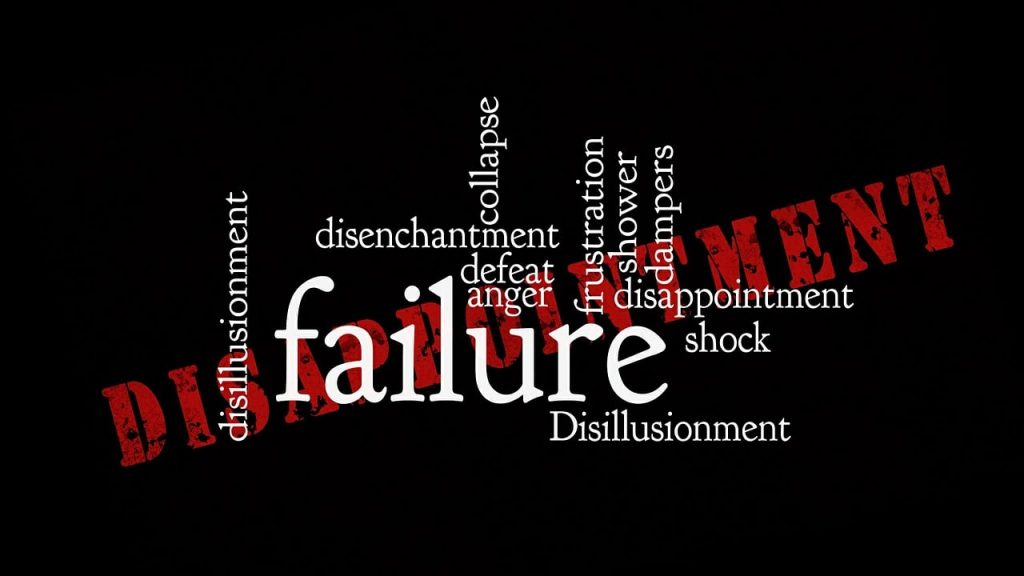


What is Failure?

What is Failure?

GUEST POST from Robyn Bolton

A couple of weeks ago, I wrote about my hatred of failure while acknowledging that there are things I hate more (inertia, blind allegiance to the status quo, unwillingness to try) that motivate me to risk it.

In response, I received this email from my friend and former colleague Daymara, now the Founder & CEO of Rockin’ Baker in Fayetteville, AR (shared here with her permission)

I’m the opposite. I love failing! That’s when I learn the most, that I question what and how I could better, question more and more. It triggers my brain to look back, re-evaluate, assess and spring forward. I wouldn’t be here today if I had not risked. I don’t think anyone starts anything thinking when they’d fail. But some of us aren’t afraid or hate it. I wouldn’t be here if I hate failing, wouldn’t have left my country looking for a safer place, wouldn’t have launched RBI because I didn’t have any entrepreneurial experience not even in the hospitality industry, wouldn’t have switched to focus on neurodiversity and so much more.

.

Because I came to the US, I got to meet you. Yes, I failed at seeing the signs & lost over 60% of my savings just 2 weeks before leaving Venezuela. I could’ve decided to stay because maybe it was going to be harder and the risk of failing in a country I didn’t know higher. I had a plan. If it didn’t work, come back home & start all over again.

.

I started RBI understanding that I could fail. I told myself, if I did, at least I would have an answer. Yes, I’m failing terribly at making this social enterprise work. Yet, I’ve gained so much knowledge about humanity, our differences, the unfairness that neurodivergents have to live daily, running a social enterprise and so much more. If I had hated failing, I wouldn’t be sharing my experience with other entrepreneurs so they don’t make the same mistakes I made. I wouldn’t be advocating for more equitable places for all, including women.

.

Failing feeds me to do better, to ask more questions, to explore more, to lead me to become better. I don’t love failing, I welcome it.

.

My first thought was, “Wow, this is so healthy! I wish more people felt and acted this way!”

My second thought was, “I wouldn’t apply the word ‘fail’ to any of these situations. You’re trying, learning, changing, and trying again.:

Just because you don’t get the expected outcome the first time doesn’t mean you failed.

Or does it?

What the Dictionary Says

According to Oxford Languages, “fail” (verb) means

  1. Be unsuccessful in achieving one’s goal, “he failed in his attempt to secure election.”
  2. Neglect to do something, “the firm failed to give adequate risk warnings.”
  3. Break down; cease to work well, “a truck whose brakes had failed.”

True but contextual:

  1. If success is defined as launching a new product, but customer feedback proves there’s no demand or willingness to pay, is shutting it down a failure?
  2. If you neglect something that isn’t important or doesn’t have significant ramifications, like not eating breakfast, did you fail or simply forget, run out of time, or make a mistake?
  3. If something works but not well, like an expense reporting system, is it a failure or just burdensome, a pain, or a necessary evil?

Also, incomplete.

What People Say

“Fail” has so many definitions and meanings in Daymara’s telling of her story. In addition to some of the dictionary’s definitions, she also uses “Fail” to mean:

  1. Take smart risks, “I could’ve decided to stay because maybe it was going to be harder and the risk of failing in a country I didn’t know higher. I had a plan. If it didn’t work, come back home & start all over again.”
  2. Get new information to facilitate learning,
    • “I’m the opposite. I love failing! That’s when I learn the most, that I question what and how I could better, question more and more. It triggers my brain to look back, re-evaluate, assess and spring forward.”
    • I started RBI understanding that I could fail. I told myself, if I did, at least I would have an answer.
  3. Adapt and change based on learning, “wouldn’t have switched to focus on neurodiversity”
  4. Grow, improve, evolve, “Failing feeds me to do better, to ask more questions, to explore more, to lead me to become better. I don’t love failing, I welcome it.”

What Do You Say?

Like “Innovation,” “Failure” is a word we all use A LOT that no longer has a common definition. In the dictionary, failure is bad and to be avoided. To Daymara and scores of entrepreneurs and innovators, failure is wonderful and welcome.

Progress, either towards or away from failure, requires us to define “Failure” for ourselves and our work and agree on a definition with our teammates.

So, tell me:

  1. What is failure to you?
  2. To your team?
  3. To your boss?

Subscribe to Human-Centered Change & Innovation WeeklySign up here to join 17,000+ leaders getting Human-Centered Change & Innovation Weekly delivered to their inbox every week.

3 Innovation Types Not What You Think They Are

But They Do Determine Your Success

3 Innovation Types Not What You Think They Are

GUEST POST from Robyn Bolton

The Official Story

When discussing innovation, you must be specific so people know what you expect. This is why so many thought leaders, consultants, and practitioners preach the importance of defining different types of innovation.

  • Clayton Christensen encourages focusing on WHY innovation is happening – improve performance, improve efficiency, or create markets – in his 2014 HBR article.
  • The classic Core/Adjacent/Transformational model focuses on WHAT is changing – target customer, offering, financial model, and resources and processes.
  • McKinsey’s 3 Horizons focus on WHEN the results are achieved – this year, 2-3 years, 3-6 years.

It’s easy to get overwhelmed by the options and worry about which approach is “best.”  But, like all frameworks, they’re all a little bit right and a little bit wrong, and the best one is the one that will be used and get results in your organization.

The REAL story

Everything in the official story is true, but not the whole truth.

“Innovation” is not peanut butter. 

You can’t smear it all over everything and expect deliciousness.

When doing innovation, you must remember your customer – the executives who make decisions, allocate resources, and can accelerate or decimate your efforts.

More importantly, you need to remember their Jobs to be Done (JTBD) – keep my job, feel safe and respected, and be perceived as competent/a rising star – because these jobs define the innovations that will get to market.

Three (3) REAL types of innovation

SAFE – The delightful solution to decision-makers’ JTBD

Most closely aligned with Core innovation, improving performance or efficiency, and Horizon 1 because the focus is on improving what exists in a way that will generate revenue this year or next. Decision-makers feel confident because they’ve “been there and done that” (heck, doing “that” is probably what got them promoted in the first place). In fact, they’re more likely to get in trouble for NOT investing in these types of innovations than they are for investing in them.

STRETCH – The Good Enough solution

Most like Adjacent innovation because they allow decision-makers to keep one foot in the known while “stretching” their other foot into a new (to them) area. This type of innovation makes decision-makers nervous because they don’t have all the answers, but they feel like they at least know what questions to ask. Progress will require more data, and decisions will take longer than most intrapreneurs want. But eventually, enough time and resources (and ego/reputation) will be invested that, unless the team recommends killing it, the project will launch.

SPLATTER – The Terrible solution

No matter what you call them – transformational, radical, breakthrough, disruptive, or moonshots – these innovations make everyone’s eyes light up before reality kicks in and crushes our dreams. These innovations “define the next chapter of our business” and “disrupt ourselves before we’re disrupted.”  These innovations also require decision-makers to let go of everything they know and wander entirely into the unknown. To invest resources in the hope of seeing the return (and reward) come back to their successor (or successor’s successor). To defend their decisions, their team, and themselves when things don’t go exactly as planned.

How to find the REAL type that will get real results.

  1. “You said you want X. Would you describe that for me?” (you may need to give examples). When I worked at Clayton Christensen’s firm, executives would always call and ask for our help to create a disruptive innovation. When I would explain what they were actually asking for (something with “good enough” performance and a low selling price that appeals to non-consumers), they would back away from the table, wave their hands, and say, “Oh, not that. We don’t want that.
  2. “How much are you willing to risk?”  If they’re willing to go to their boss to ask for resources, they’re willing to Stretch. If they’re willing to get fired, they’re willing to Splatter. If everything needs to stay within their signing authority, it’s all about staying Safe.
  3. “What would you need to see to risk more?”  As an innovator, you’ll always want more freedom to push boundaries and feel confident that you can convince others to see things your way. But before you pitch Stretch to a boss that wants Safe, or Splatter to a boss barely willing to Stretch, learn what they need to change their minds. Maybe it will be worth your effort, maybe it won’t. Better to know sooner rather than later.

Image credits: Pixabay

Subscribe to Human-Centered Change & Innovation WeeklySign up here to join 17,000+ leaders getting Human-Centered Change & Innovation Weekly delivered to their inbox every week.



Moneyball and the Beginning, Middle, and End of Innovation

Moneyball and the Beginning, Middle, and End of Innovation

GUEST POST from Robyn Bolton

Recently, pitchers and catchers reported to MLB Spring Training facilities in Florida and Arizona.  For baseball fans, this is the first sign of Spring, an occasion that heralds months of warmth and sunshine, ballparks filled (hopefully) with cheering fans, dinners of beers and brats, and the undying belief that this year will be the year.

Of course, there was still a lot of dark, dreary cold between then and Opening Day.  Perfect weather for watching baseball movies – Bull DurhamMajor LeagueThe NaturalField of Dreams, and, of course, Moneyball.

Moneyball is based on the book of the same name by Michael Lewis and chronicles the 2002 Oakland Athletics season.  The ’02 Oakland A’s, led by General Manager Billy Beane (played by Brad Pitt), forever changed baseball by adopting an approach that valued rigorous statistical analysis over the collective wisdom of baseball insiders (coaches, scouts, front office personnel) when building a team.  This approach, termed “Moneyball,” enabled the A’s to reach the postseason with a team that cost only $44M in salary, compared to the NY Yankees that spent $125M to achieve the same outcome.

While the whole movie (and book) is a testament to the courage and perseverance required to challenge and change the status quo, time and again I come back to three lines that perfectly sum up the journey of every successful intrapreneur I’ve ever met.

The Beginning

I know you’ve taken it in the teeth out there, but the first guy through the wall…he always gets bloody…always always gets bloody.  This is threatening not just a way of doing business… but in their minds, it’s threatening the game. Really what it’s threatening is their livelihood, their jobs. It’s threatening the way they do things… and every time that happens, whether it’s the government, a way of doing business, whatever, the people who are holding the reins – they have their hands on the switch – they go batshit crazy.”

John Henry, Owner of the Boston Red Sox

Context

The 2002 season is over, and the A’s were eliminated in the first round of the playoffs.  John Henry, an owner of the Boston Red Sox, has invited Bill Beane to Boston to offer him the Red Sox GM job.

Lesson

This is what you sign up for when you decide to be an Intrapreneur.  The more you challenge the status quo, the more you question how business is done, the more you ask Why and demand an answer, the closer you get to “tak(ing) it in the teeth.”

This is why courage, perseverance, and an unshakeable belief that things can and should be better are absolutely essential for intrapreneurs.  Your job is to run at the wall over and over until you get through it.

People will follow.  The Red Sox did.  They won the World Series in 2004, breaking an 84-year-old curse.

The Middle

“It’s a process, it’s a process, it’s a process”

Bill Beane

Context

Billy has to convince the ballplayers to forget all the habits that made them great and embrace the philosophy of Moneyball.  To stop stealing bases, turning double plays on bunts, and swinging for the fences and to start taking walks, throwing to first for the easy out, and prioritize getting on base over hitting a home run.

The players are confused and frustrated.  Suddenly, everything that they once did right is wrong and what was not valued is deeply prized.

Lesson

Innovation is something new that creates value.  Something new doesn’t just require change, it requires people to stop doing things that work and start doing things that seem strange or even wrong.

Change doesn’t happen overnight.  It’s not a switch to be flipped.  It’s a process to be learned.  It takes time, practice, reminders, and patience.

The End

“When you get an answer you’re looking for, hang up.”

Billy Beane

Context

In this scene, Billy has offered one of his players to multiple teams, searching for the best deal.  When the phone rings with a deal he likes, he and the other General Manager (GM) agree to it, Billy hangs up.  Even though the other GM was in the middle of a sentence.  When Peter Brand, the Assistant GM played by Jonah Hill, points out that Billy had just hung up on the other GM, Billy responds with this nugget of wisdom.

Lesson

It’s advice intrapreneurs should take very much to heart.  I often see Innovation teams walk into management presentations with long presentations, full of data and projections, anxious to share their progress, and hoping for continued funding and support.  When the meeting starts, a senior exec will say something like, “We’re excited by the progress we’re hearing about and what it will take to continue.”

That’s the cue to “hang up.”

Instead of starting the presentation from the beginning, start with “what it will take to continue.”  You got the answer you’re looking for – they’re excited about the progress you’ve made – don’t spend time giving them the info they already have or, worse, could raise questions and dim their enthusiasm.  Hang up on the conversation you want to have and have the conversation they want to have.

In closing

Moneyball was an innovation that fundamentally changed one of the most tradition-bound businesses in sports.  To be successful, it required someone willing to take it in the teeth, to coach people through a process, and to hang up when they got the answer they wanted.  It wasn’t easy but real change rarely is.

The same is true in corporations.  They need their own Bill Beanes.

Are you willing to step up to the plate?

Image credits: Pixabay

Subscribe to Human-Centered Change & Innovation WeeklySign up here to join 17,000+ leaders getting Human-Centered Change & Innovation Weekly delivered to their inbox every week.


‘Innovation’ is Killing Innovation. How Do We Save It?

'Innovation' is Killing Innovation. How Do We Save It?

GUEST POST from Robyn Bolton

How do people react when you say “innovation?”

  1. Lean forward, eyes glittering, eager to hear more
  2. Stare blankly and nod slowly
  3. Roll their eyes and sigh
  4. Wave their hands dismissively and tell you to focus on other, more urgent priorities.

If you answered C, you’re in good company.

Innovation is a buzzword. Quick searches of Amazon and Google Scholar result in 100,000+ books and 200,000+ articles on the topic, while a scan of the SEC’s database yields 8,000 K-1 filings with the word “innovation” in 2020 alone.

“Innovation” is meaningless, like all buzzwords. There’s a reason that practitioners and consultants insist on establishing a common definition before starting innovation work. I’ve been in meetings with ten people, asked each person to define “innovation,” and heard 12 different answers.

But all this pales in comparison to the emotional response it elicits. Some people get incredibly excited, bouncing out of their seats, ready to bring their latest idea to life (whether it should be brought to life is a different story.). Some nod solemnly as if confronted by a necessary evil, accepting a fate beyond their control. Most roll their eyes because they’ve been through this before and, like all management “flavors of the month,” this too shall pass.

“Innovation” is killing Innovation

The emotions and opinions we tie to “innovation” overwhelm the dictionary definition, making it difficult to believe that the process and, more importantly, the result will be different this time.

We need a different word.

One that has the same meaning and none of the baggage.

This may feel impossible, but if “literally” can mean “figuratively” (do NOT get me started on this 2013 decision) and the Oxford English Dictionary can add 700 new words in 2022, surely we can figure this out.

10 alternatives to ‘Innovation’

The following options are sourced primarily from conversations with other experts and practitioners.

  1. Invention
  2. Ideation
  3. Incubation
  4. Improvement
  5. Creation
  6. Design
  7. Growth
  8. Transformation
  9. Business R&D*

Yes, #10 is intentionally missing because…

What do you think?

Finding a new word (or maybe changing how “innovation” is perceived, understood, and pursued) is a group effort. One person alone can’t do it, and a few people on a call complaining about the state of things certainly won’t (we’ve tried).

What do you think?

Do we need a different word for “innovation,” or should we keep it and deal with the baggage?

If we need a different word, what could it be? What do YOU use?

If we keep it, how do you combat the misunderstanding, eye rolls, and emotional baggage?

Let us know in the comments.


* This option came directly from a conversation with a client last week, and I kinda love it. 

We discussed the challenge of getting engineers to stay in a discovery mindset rather than jumping immediately to solutions. Even though they work in R&D (the function), he observed that 99.9% of their work (and, honestly, their careers) is spent on the D in R&D (development).

That’s when it clicked.

Research begins with investigation and inquiry to understand a broad problem and then uses the resulting insights to solve a specific problem. It is a learning process, just like the early stages of Innovation. And, just like in the early days of Innovation, you can’t predict the result or routinize the work.

Development focuses on bringing the “new or modified product or process to production,” Just like the later phases of Innovation when prototyping and experimentation are required, and risk is driven out of the proposition.

Traditional R&D focuses on technical and scientific exploration and solutioning,

Innovation focuses on market, consumer/customer, and business model exploration and solutioning.

It is R&D for the business. 

Business R&D.

Image credits: Pixabay

Subscribe to Human-Centered Change & Innovation WeeklySign up here to join 17,000+ leaders getting Human-Centered Change & Innovation Weekly delivered to their inbox every week.


Innovation Is Driving Away Your Top Talent

Innovation Is Driving Away Your Top Talent

GUEST POST from Robyn Bolton

You want and need the best, most brilliant, most awesome-est people at your company. But with unemployment at a record low, the battle for top talent is fierce.

So, you vow not to enter the battle and invest in keeping your best people and building a reputation that attracts other extraordinary talents.

You offer high salaries, great benefits, flexible work arrangements, the prestige of working for your company, and the promise of rapid career progression. All things easily matched or beaten by other companies, so you get creative.

INNOVATION!

Your best people are full of ideas and have the confidence and energy to make things happen. So, you unleash them. You host hackathons and shark tanks. You install idea collection software and run contests. You offer training on how to be more innovative. You encourage employees to spend 20% of their time on passion projects.

And they quit.

They quit participating in all the opportunities you offer.

They quit sharing ideas.

They quit your company,

Not because they are ungrateful.

Or because they don’t want to innovate.

Or because they don’t have ideas.

They quit because they realize one of the following “truths”

They’re not “Innovators”

High performers believe they need to work on an innovation project to progress (because management explicitly or implicitly communicates this). But when they finally get their chance, they struggle. The project falls behind schedule, struggles to meet objectives, and is quietly canceled. They see this as a failure. They believe they failed.

But they didn’t fail. They learned something very uncomfortable – they’re not good at everything.

Innovation is different than Operation. When you’re operating, you’re working in a world full of knowledge, where cause and effect are predictable and “better” is easily defined. When you’re innovating, you’re working in a world full of assumptions, where things are unpredictable, patterns emerge slowly, and few things are defined. Most people are great at operating. Some people are great at innovating. Extraordinarily few are great at both.

Innovation is a hobby, not an imperative

The problem with innovation efforts like hackathons, shark tanks, and “20% Time” is that people pour their hearts and souls into them and get nothing in return. Sure, an award, a photo with the CEO, and bragging rights motivate them for a few weeks. But when their hard work isn’t nurtured, developed, and brought to a conclusion (either launched or shelved), they realize it was all a ruse.

They are disappointed but hope the next time will be different. It isn’t.

They stop participating to spend time on “more important” things (their “real” work). But they still care, so they keep tabs on other people’s efforts, quietly hoping this time will be different. It isn’t.

They grow cynical.

They choose to stay and accept that innovation isn’t valued or resign and go somewhere it is.

Their potential is bigger than your box

“I felt like Dorothy in the Wizard of Oz. Before the training, the world was black and white. After, it was full color. I don’t want to go back to black and white.”

For this person, the training had gone wonderfully awry.

The training built their innovation skills but motivated them to find another job because it opened their eyes. They realized that while they loved the uncertainty and creativity of innovation, their place in the organization wouldn’t allow them to innovate. They were in a box on an org chart. They no longer wanted to be in that box, but the company expected them to stay.

But are these “truths” true?

As Mom always said, actions speak louder than words.

  • Who does your company value more – innovators or operators? The answer lies in who you promote.
  • Is innovation a strategic priority? The answer lies in where and how you allocate resources (people, money, and time).
  • Do you want to retain the person or the resource? The answer lies in your willingness to support the person’s growth.

Speak the truth early and often

If a top performer struggles in an innovation role, don’t wait until the project “fails” to reassure them that operators are as (or more) important and loved as innovators. Connect them with senior execs who faced the same challenges. Make sure their next role is as desirable as their current one.

(Or, if innovators are truly valued more than operators, tell them that, too.)

If innovation is an imperative, commit as much time and effort to planning what happens after the event as you do planning the event itself. Have answers to how people will be freed up to continue to work on their projects, money will be allocated, and decisions will be made.

(Or, if innovation really is a corporate hobby, follow the model of top universities and let people participate f they want and give everyone else time off to pursue their hobbies).

If you want to retain the person more than the resource, work with them to plot a path to the next role. Be honest about the time and challenge of moving between boxes and the effects on their career. And if they still want to break out of the box, help them.

(Or, if you want them to stay in the box, tell them that, too.)

Don’t let Innovation! drive away your top talent. Use honesty to keep them.

Image credits: Pixabay

Subscribe to Human-Centered Change & Innovation WeeklySign up here to join 17,000+ leaders getting Human-Centered Change & Innovation Weekly delivered to their inbox every week.


3 Examples of Why Innovation is a Leadership Problem

Through the Looking Glass

3 Examples of Why Innovation is a Leadership Problem

GUEST POST from Robyn Bolton

Do you sometimes feel like you’re living in an alternate reality?

If so, you’re not alone.  Most innovators feel that way at some point.

After all, you see things that others don’t.

Question things that seem inevitable and true.

Make connections where others only see differences.

Do things that seem impossible.

It’s easy to believe that you’re the crazy one, the Mad Hatter and permanent resident of Wonderland.

But what if you’re not the crazy one?

What if you’re Alice?

And you’re stepping through the looking glass every time you go to work?

In Lewis Carroll’s book, the other side of the looking glass is a chessboard, and all its inhabitants are chess pieces that move in defined and prescribed ways, follow specific rules, and achieve defined goals.  Sound familiar?

Here are a few other things that may sound familiar, too

“The rule is, jam tomorrow and jam yesterday – but never jam today.” – The White Queen

In this scene, the White Queen offers to hire Alice as her lady’s maid and pay her “twopence a week and jam every other day.”  When Alice explains that she doesn’t want the job, doesn’t like jam, and certainly doesn’t want jam today, the queen scoffs and explains the rule.

The problem, Alice points out, is that it’s always today, and that means there’s never jam.

Replace “jam” with “innovation,” and this hits a little too close to home for most innovators.

How often do you hear about the “good old days” when the company was more entrepreneurial, willing to experiment and take risks, and encouraged everyone to innovate?

Innovation yesterday.

How often do you hear that the company will invest in innovation, restart its radical innovation efforts, and disrupt itself as soon as the economy rebounds, business improves, and things settle down a bit?  Innovation tomorrow.

But never innovation today.  After all, “it’s [innovation] every other day: today isn’t any other day, you know.”

“When I use a word, it means just what I choose it to mean – neither more, not less.” – Humpty Dumpty

In this scene, poor Alice tries to converse with Humpty Dumpty, but he keeps using the “wrong” words.  Except they’re not the wrong words because they mean exactly what he chooses them to mean.

Even worse, when Alice asks Humpty to define confusing terms, he gets angry, speaks in a “scornful tone,” and smiles “contemptuously” before “wagging his head gravely from side to side.

We all know what the words we use mean, but we too often think others share our definitions.  We use “innovation” and “growth,” assuming people know what we mean.  But they don’t.  They know what the words mean to them.  And that may or may not be what we mean.

When managers encourage people to share ideas, challenge the status quo, and take risks, things get even trickier.  People listen, share ideas, challenge the status quo, and take risks.  Then they are confused when management doesn’t acknowledge their efforts.  No one realizes that those requests meant one thing to the managers who gave them and a different thing to the people who did them.

“It takes all the running you can do, to keep in the same place.  If you want to go somewhere else, you must run at least twice as fast as that!” – The Red Queen

In this scene, the Red Queen introduces life on the other side of the looking glass and explains Alice’s new role as a pawn.  Of course, the explanation comes after a long sprint that seems to get them nowhere and only confuses Alice more.

When “tomorrow” finally comes, and it’s time for innovation, it often comes with a mandate to “act with urgency” to avoid falling behind.  I’ve seen managers set goals of creating and launching a business with $250M revenue in 3 years and leadership teams scrambling to develop a portfolio of businesses that would generate $16B in 10 years.

Yes, the world is moving faster, so companies need to increase the pace at which they operate and innovate.  But if you’re doing all you can, you can’t do twice as much.  You need help – more people and more funding, not more meetings or oversight.

“Life, what is it but a dream?”

Managers and executives, like the kings and queens, have roles to play.  They live in a defined space, an org chart rather than a chessboard, and they do their best to navigate it following rules set by tradition, culture, and HR.

But you are like Alice.  You see things differently.  You question what’s taken as given.  And, every now and then, you probably want to shake someone until they grow “shorter – and fatter – and softer – and rounder – and…[into] a kitten, after all.”

So how do you get back to reality and bring everyone with you?  You talk to people.  You ask questions and listen to the answers.  You seek to understand their point of view and then share yours.

Some will choose to stay where they are.

Some will choose to follow you back through the looking glass.

They will be the ones who transform a leadership problem into a leadership triumph.

Image credits: Pixabay

Subscribe to Human-Centered Change & Innovation WeeklySign up here to join 17,000+ leaders getting Human-Centered Change & Innovation Weekly delivered to their inbox every week.


5 Questions to Answer Before Spending $1 on Innovation

5 Questions to Answer Before Spending $1 on Innovation

GUEST POST from Robyn Bolton

Just because you can doesn’t mean you should.

That is one of the very few pieces of advice that seems to apply to everything, including spandex workout clothes, movie tickets, and bank fees.

And innovation.

Just because you can invest in innovation doesn’t mean you should.

Yes, I know this is borderline blasphemy in a volatile, uncertain, complex, and ambiguous (VUCA) world. It’s also downright shocking from someone who spends every day trying to help companies innovate.

But it’s true.

And the state of corporate innovation would be infinitely better if executives stopped spending on innovation simply because they can and started exploring if they should.

You can start that exploration with these five (5) questions:

1. What is the current state of the business?

If the business fundamentals aren’t solid – you’re hemorrhaging cash, customers are abandoning you like a sinking ship, and you can’t make or deliver a quality solution to save your life – DO NOT INNOVATE! Do not spend $1 or 1 minute on anything other than fixing your fundamentals.

While innovation theory is very clear about the importance of building your core business and creating new ones, it does not apply in this situation because, in this situation, you won’t be in business long enough to reap the rewards of your innovation investment. Instead, invest in re-building your business into a viable and sustainable enterprise. Then invest in innovation.

If your fundamentals are solid, go to the next question.

2. Why is innovation important?

There is no wrong answer to this question. But your answer has massive implications on what you do next and the results you should expect.

If innovation is important because it enables or accelerates a strategic priority, creates or reclaims a competitive advantage, or fundamentally alters the basis of competition in your industry, then invest in it like the Mission Critical endeavor it is and expect game-changing results.

If innovation is important because it builds your reputation as an innovator while helping you attract and retain customers, employees, and investors, then it’s a marketing or PR tactic. Invest in it as you would other marketing and PR tactics and measure success in awareness, trial, and loyalty.

If innovation is important because investors are demanding it, take time to understand why. The answer is probably one of the two reasons above.

3. What does it need to deliver, and by when?

What gets measured gets managed. If it’s measured, it’s important. If it’s not measured, it’s a hobby.

You would never enter a new market, invest in a new plant, or launch a new product without success metrics and KPIs. You start with a plan for measuring success because these investments are important.

If innovation is truly important, you need to do the same thing – determine what you will measure (how we will quantify success), how (specific metrics and tools), and how often (monthly, quarterly, annually). And then do the work of measuring (and managing).

4. How much are we willing to invest before we get ROI?

Innovation takes time to generate meaningful results, but very few executives have the patience to wait years for results, mainly because they know that every dollar or person they allocate to innovation is a dollar or person not generating (almost) guaranteed results this year.

Be honest about when you expect meaningful results and whether you’re willing to continue to invest money and hire people for that long before you get results. If there’s a gap, close it by moving the time to results in (and adjusting expectations) or moving your investment horizon out.

5. ???

I want to hear from you.

What’s a question that you wished leadership asked before investing in innovation?

Drop your suggestion in the Comments, and I promise to respond!
(plus others will thank you)

Image credits: Pixabay

Subscribe to Human-Centered Change & Innovation WeeklySign up here to join 17,000+ leaders getting Human-Centered Change & Innovation Weekly delivered to their inbox every week.