The Symbiotic Relationship
GUEST POST from Chateau G Pato
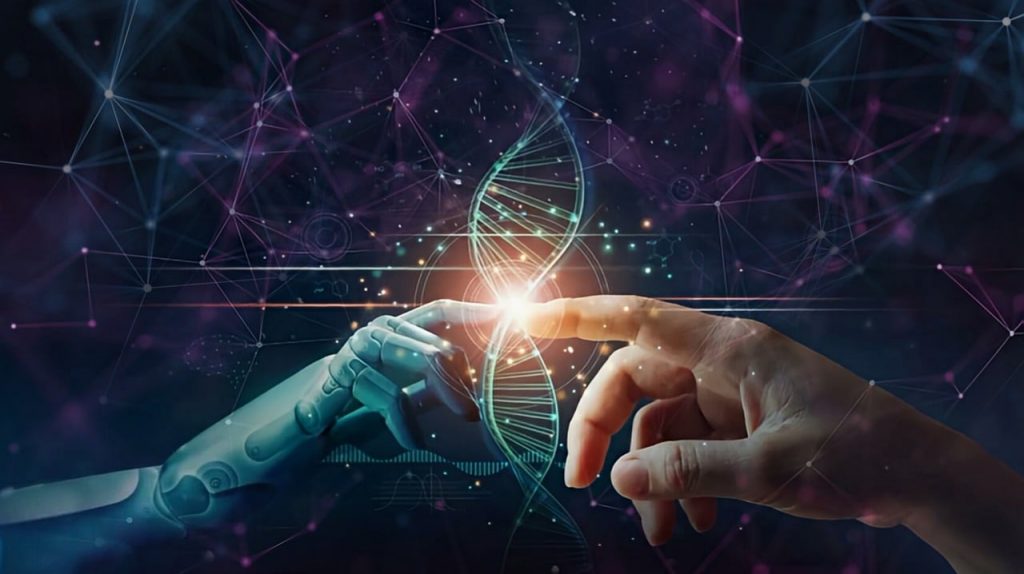
The narrative surrounding Artificial Intelligence often veers into two extremes: utopian savior or dystopian overlord. Both miss the profound truth of our current inflection point. As a human-centered change and innovation thought leader, I argue that the most impactful future of AI is not one where machines replace humans, nor one where humans merely manage machines. Instead, it is a symbiotic relationship — a partnership where the unique strengths of human creativity, empathy, and intuition merge with AI’s unparalleled speed, scale, and analytical power. This “Human-AI Teaming” is not just an operational advantage; it is the definitive engine for exponential, human-centered innovation.
The true genius of AI lies not in its ability to replicate human thought, but to augment it. Humans excel at divergent thinking, ethical reasoning, abstract problem framing, and connecting seemingly unrelated concepts. AI excels at convergent thinking, pattern recognition in vast datasets, rapid prototyping, and optimizing complex systems. When these distinct capabilities are deliberately integrated, the result is a cognitive leap forward—a powerful fusion, much like a mythical centaur, that delivers solutions previously unimaginable. This shift demands a radical rethink of organizational structures, skill development, and how we define “innovation” itself, acknowledging potential pitfalls like algorithmic bias and explainability challenges not as roadblocks, but as design challenges for stronger symbiosis.
The Pillars of Human-AI Symbiosis in Innovation
Building a truly symbiotic innovation capability requires focus on three strategic pillars:
- 1. AI as a Cognitive Multiplier: Treat AI not as an autonomous decision-maker, but as an extension of human intellect. This means AI excels at hypothesis generation, data synthesis, anomaly detection, and providing diverse perspectives based on vast amounts of information, all to supercharge human problem-solving, allowing us to explore far more options than before.
- 2. Humans as Ethical & Creative Architects: The human role is elevated to architect and guide. We define the problem, set the ethical boundaries, provide the contextual nuance, and apply the “human filter” to AI’s outputs. Our unique capacity for empathy, understanding unspoken needs, and managing the inherent biases of AI remains irreplaceable in truly human-centered design.
- 3. Iterative Feedback Loops: The symbiotic relationship thrives on constant learning. Humans train AI with nuanced feedback, helping it understand complex, subjective scenarios and correct for biases. AI, in turn, provides data-driven insights and rapid experimentation capabilities that help humans refine their hypotheses and accelerate the innovation cycle. This continuous exchange refines both human understanding and AI performance.
“The future of innovation isn’t about AI or humans. It’s about how elegantly we can weave the unparalleled strengths of both into a singular, accelerated creative force.” — Satya Nadella
Case Study 1: Moderna and AI-Driven Vaccine Development
The Challenge:
Developing a vaccine for a novel pathogen like SARS-CoV-2 traditionally takes years, an impossibly long timeline during a pandemic. The complexity of mRNA sequencing, protein folding, and clinical trial design overwhelmed human capacity alone.
The Symbiotic Innovation:
Moderna leveraged an AI-first approach where human scientists defined the immunological targets and ethical parameters, but AI algorithms rapidly designed, optimized, and tested millions of potential mRNA sequences. AI analyzed vast genomic databases to predict optimal antigen structures and identify potential immune responses. Human scientists then performed the critical biological testing and validation, refined these AI-generated candidates, and managed the ethical and logistical complexities of clinical trials and regulatory approval. The explainability of AI’s outputs was crucial for human trust and regulatory acceptance.
The Exponential Impact:
This human-AI partnership dramatically accelerated the vaccine development timeline, bringing a highly effective mRNA vaccine from concept to clinical trials in a matter of weeks, not years. AI handled the computational heavy lifting of molecular design, freeing human experts to focus on the high-level strategy, rigorous validation, and the profound human impact of global health. It exemplifies AI as a cognitive multiplier in a crisis, under human-led ethical governance.
Case Study 2: Generative Design in Engineering (e.g., Autodesk Fusion 360)
The Challenge:
Traditional engineering design is constrained by human experience and iterative trial-and-error, leading to designs that are often sub-optimal in terms of weight, material usage, or performance. Designing for radical efficiency requires exploring millions of permutations—a task beyond human capacity.
The Symbiotic Innovation:
Platforms like Autodesk Fusion 360 integrate Generative Design AI. Human engineers define the essential design parameters: materials, manufacturing methods, load-bearing requirements, weight constraints, and optimization goals (e.g., minimum weight, maximum stiffness). The AI then autonomously explores hundreds or thousands of design options, often generating organic, complex structures that no human designer would conceive. The human engineer then acts as a discerning curator and refiner, selecting the most promising AI-generated designs, applying aesthetic and practical considerations, and testing them for real-world viability and manufacturability.
The Exponential Impact:
This collaboration has led to breakthroughs in lightweighting and material efficiency across industries, from aerospace to automotive. AI explores an immense solution space, while humans inject creativity, contextual understanding, and final aesthetic and ethical judgment. The result is parts that are significantly lighter, stronger, and more sustainable—innovations that would have been impossible for either human or AI to achieve alone. It’s AI expanding the realm of possibility for human architects, leading to more sustainable and cost-effective products.
The Leadership Mandate: Cultivating the Centaur Organization
Building a truly symbiotic human-AI innovation engine is not merely a technical problem; it is a profound leadership challenge. It demands investing in new skills (prompt engineering, AI ethics, data literacy, and critical thinking to evaluate AI outputs), redesigning workflows to integrate AI at key decision points, and—most crucially—cultivating a culture of psychological safety where employees are encouraged to experiment with AI, understand its limitations, and provide frank feedback without fear.
Leaders must define AI not as a replacement, but as an unparalleled partner, actively addressing challenges like algorithmic bias and the need for explainability through robust human oversight. By strategically integrating AI as a cognitive multiplier, empowering humans as ethical and creative architects, and establishing robust iterative feedback loops, organizations can unlock an era of innovation previously confined to science fiction. The future of human-centered innovation is not human-only, nor AI-only. It is a powerful, elegant dance between both, continuously learning and adapting.
Extra Extra: Because innovation is all about change, Braden Kelley’s human-centered change methodology and tools are the best way to plan and execute the changes necessary to support your innovation and transformation efforts — all while literally getting everyone all on the same page for change. Find out more about the methodology and tools, including the book Charting Change by following the link. Be sure and download the TEN FREE TOOLS while you’re here.
Image credit: Pixabay
 Sign up here to get Human-Centered Change & Innovation Weekly delivered to your inbox every week.