Customer Experience Personified

Customer Experience Personified

by Braden Kelley

When it comes to doing great customer experience work on behalf of HCLTech clients, personas are foundational. But it is harder to create meaningful, actionable personas than people might think.

An Introduction to Personas

Personas are a key part of bringing the customer experience, and the customer, to life. Personas set the stage for the activity that most people associate with customer experience work – the journey map. But for most organizations, not all customers have the same journey. So, it is important to identify the relevant and distinct customer groupings that it is critical to build personas for. Personas serve a number of important functions:

  1. Validate customer segments are sufficiently different from each other
  2. Capture key details about each customer segment on a single page
  3. Serve as a quick reference for the chosen customer segment(s)
  4. Visualize each customer segment as a representative individual people can relate to
  5. Empower people to put themselves in the customer’s shoes (and ideally – their mindset)

For optimal results, personas should be built AFTER conducting research to better understand the customer’s experience via interviews, focus groups, and panels directly with customers across a range of customer sizes and types to understand where their journeys, needs and expectations diverge.

Continue reading the rest of this article on HCLTech’s blog

Image credits: Pexels

Subscribe to Human-Centered Change & Innovation WeeklySign up here to join 17,000+ leaders getting Human-Centered Change & Innovation Weekly delivered to their inbox every week.

True Transformation Goes Across Not Top-Down Or Bottom-Up

True Transformation Goes Across Not Top-Down Or Bottom-Up

GUEST POST from Greg Satell

In a disruptive era, the only viable strategy is to adapt and that is especially true today. With change seeming to accelerate with each passing year, every organization must transform itself. Those who are unable to change often find that they are unable to compete and soon disappear altogether.

There has been a long running debate about whether change should be top-down or bottom-up. Some say that true change can only take hold if it comes from the top and is pushed through the entire organization. Others argue that you must first get buy-in from the rank-and-file before any real change can take place.

As I explain in Cascades, the truth is that transformation isn’t top-down or bottom-up, but happens from side-to-side. Change never happens all at once and can’t simply be willed into existence. It can only happen when people truly internalize and embrace it. The best way to do that is to empower those who already believe in change to bring in those around them

Identify your Apostles

All too often, change initiatives start with a big kickoff meeting and communication campaign. That’s almost always a mistake. In every organization, there are different levels of enthusiasm to change. Some will be ready to jump on board, but others will be vehemently opposed. To them, change is a threat.

So starting off with a big bang may excite some supporters, but it will also mobilize the opposition, who will try to undermine the effort—either actively or passively—before you have the chance to gain momentum. Before you know it, your initiative loses steam and change dies with it.

So a better strategy is to start by identifying your apostles—people who are already excited about the possibilities for change. For example, when Barry Libenson first started his movement to transform Experian’s digital infrastructure from a traditional architecture to the cloud, he didn’t announce a big campaign right away. Instead, he found early allies that he could start with.

They weren’t enough to drive change throughout the organization, of course, but they did allow him to start small-scale initiatives, such as building internal API’s. The success of those brought in others, who brought in others still.

Don’t Try To Convince — Empower

Anybody who has ever been married or had kids knows how difficult it can be to identify even a single person of something. Trying to convince hundreds or even thousands is truly a fool’s errand, which is why those kickoff meetings and communication campaigns have so little effect. Everybody brings their own biases and prejudices.

However, once you’ve identified your apostles, you can empower them to bring in others around them. Unlike top-down or bottom-up efforts, people generally have a pretty good idea which of their peers may be receptive. As the network theorist Duncan Watts put it to me, viral cascades are largely the result of “easily influenced people influencing other easily influenced people.”

The revolutionary movement Otpor put this principle to work through its strategy of recruit-train-act in their effort to bring down the Serbian dictator Slobodan Milošević. First, they would recruit new members, usually through tactics like pranks and street theatre. Then they would train those recruits. Finally, they would encourage new members to take an action, no matter how small, because action is how people take ownership of a movement.

Wyeth Pharmaceuticals took a similar approach in its effort to bring lean manufacturing techniques to 17,000 employees in its manufacturing operation. Rather than try to indoctrinate everyone all at once, it started with just a few teams in a few plants. Once those initiatives were successful, other teams were brought into the fold.

In both cases, the results were extraordinary. Within a few years, Milošević was ousted and would later die in his prison cell at The Hague. Wyeth Pharmaceuticals would cut costs by 25% within a year (the company was later sold to Pfizer).

Constrain Your Movement With Values

While peer-to-peer movements can be immensely powerful, they can also spin dangerously out of control. The Occupy movement, to take just one example, inspired thousands of people in over 951 cities across 82 countries to protest income inequality, but then fizzled out almost as fast. It accomplished little, if anything.

In a similar vein, Circuit City’s Superstore electronic store format spread like wildfire in the 1980s and gained a well-earned reputation for exceptional service. As Jim Collins reported in Good to Great, the company went to great trouble and expense to ensure that its salespeople were factory-trained. By 2000, however, the firm began to falter. It went bankrupt in 2008.

In both cases, a failure to indoctrinate values was at the core of the collapse. The Occupy protesters, while passionate, were also often vulgar and undisciplined, which turned off many others sympathetic to their cause. For Circuit City, investing in training was a strategy, not a core value, and was easily abandoned when profit margins were under pressure.

Values are important not because they are nice things to say, but because they represent constraints. If you value inclusiveness, you don’t shout down those that don’t agree with you and turn off others that do in the process. If you value service, then investing in training is more than just a line item on an income statement.

Make no mistake. Values, if they are to be anything more than platitudes, always come with costs. If you are unwilling to incur those costs, then it isn’t something you truly value.

Surviving Victory

In 2004 and 2005, I found myself in the middle of Ukraine’s Orange Revolution. At the heart of the issue was a falsified election and millions took to the streets to see that the rightful president, Viktor Yushchenko, was put in power. Yet even though it was truly a grassroots movement, its ethos was top-down.

“In 2005 everybody just disappeared and let Yushchenko do what he wanted,” Vitaliy Sych, editor of the popular newsmagazine Novoye Vremya, told me. “They thought he was some kind of magician and things were going to happen right away.” The movement soon flamed out and Ukraine descended once again into chaos.

In 2013, a similar uprising, called Euromaidan, erupted in Ukraine. But this time, rather than centered on any one person or objective, the movement was rooted in adopting European values. While the country still faces significant challenges, democratic norms are no longer in question. Its most recent election saw a peaceful transfer of power, rather than turmoil.

Irving Wladawsky-Berger made a similar point about IBM’s historic turnaround in the 1990s. “Because the transformation was about values first and technology second, we were able to continue to embrace those values as the technology and marketplace continued to evolve,” he told me.

That’s what’s key to successful transformations. The answer doesn’t lie in any specific strategy or initiative, but in how people are able to internalize the need for change and transfer ideas through social bonds. A leader’s role is not to plan and direct action, but to inspire and empower belief.

— Article courtesy of the Digital Tonto blog
— Image credit: Pexels

Subscribe to Human-Centered Change & Innovation WeeklySign up here to join 17,000+ leaders getting Human-Centered Change & Innovation Weekly delivered to their inbox every week.

Transformative Strategies Propel You From Good to Great

Catalysts of Creativity

Transformative Strategies Propel You From Good to Great

GUEST POST from Teresa Spangler

“The desire to create is one of the deepest yearnings of the human soul.” 

Dieter F. Uchtdorf

Creating Brilliance: Unlocking Greatness Through the Power of Fresh Perspectives

So, you’ve got a good team—dedicated, hardworking, and innovative. But you’re aiming for greatness. You want that creative spark to turn into a full-blown inferno. You’re seeking the secret ingredient to take you from good to extraordinary. The Wall Street Journal article, To Spur Team Creativity, Replace a Regular With an Outsider that secret may be as simple as inviting an unexpected guest sparking a creative fiesta.

Unearthing Diamonds: The Unconventional Maverick

Let’s imagine your team is a finely tuned orchestra, each instrument playing its part to create a harmonious melody. Now, suppose you bring in a jazz saxophonist to your classical symphony. It’s out there. But the unique rhythm and raw improvisation that the saxophonist introduces can completely transform your orchestra’s sound, creating a rich, vibrant symphony that’s truly unforgettable. That’s the exciting, transformative potential an outsider brings to your team.

This isn’t a novel concept. It dates back to the time of the Medicis in Renaissance Italy. This influential family knew that when diverse minds—scientists, artists, philosophers, all under one roof—collide, they create a kaleidoscope of groundbreaking ideas. Your team can tap into That magic of the Medici effect.

From Good to Great: Ingenious Strategies for a Fresh Perspective

How do you go from good things are peachy to GREAT we’re rockin and rollin like the best jazz bands in a world? Here are some ingenious ideas to help you:

  1. Cross-Pollination with Different Industries: Imagine what could happen when your team brainstorms with folks from a different sector. It’s like creating a fusion cuisine that surprises and delights. Remember the delicious blend of tech and fitness when Apple and Nike collaborated? We got the brilliant Nike+ product line!
  2. The AI Ace: AI tools, like OpenAI’s GPT-4, can be your secret weapon to unleash a storm of innovative ideas, helping you push the boundaries of what’s possible.
  3. Global Immersion: Send your team members on an adventure to explore different cultures, similar to Adobe’s international sabbaticals. The diverse insights they return with can be the secret to your team’s creativity.
  4. Innovation Showdowns: Throw open a challenge to outsiders to develop innovative ideas. GE’s Ecomagination Challenge did just this, resulting in a treasure trove of ideas on renewable energy.
  5. Crowdsourcing Creativity: Leverage the crowd’s power to generate many ideas. Online platforms like our PBG Innovation Labs, IdeaScale pr Innocentive platforms can help you source a universe of ideas from a world of thinkers.

Creative Sparks: Exercises to Ignite Brilliance

While bringing in fresh perspectives, it’s equally important to stoke the internal creative fires. Here are a few fun exercises that can help:

  1. Rapid Ideation: Set a timer and get your team to write down as many ideas as possible on a topic. The aim is to think quickly and wildly, making way for some unexpected gems of ideas.
  2. Storyboarding: This technique borrowed from filmmakers can help your team visualize a process or product development, opening up new avenues for innovation.
  3. Yes, And…: Borrowed from improv comedy, this exercise involves building on a teammate’s idea with an attitude of acceptance and expansion, creating an environment that encourages creative risk-taking.
  4. The 30 Circles Test: Give your team a sheet of paper with 30 identical circles and challenge them to transform as many circles as possible into different objects within a set time. This exercise is an excellent exercise for enhancing flexibility and diversity in thinking.
  5. The Six Thinking Hats: A strategy developed by Edward de Bono, this exercise requires team members to ‘wear’ different ‘hats’ representing various thinking styles – factual, emotional, and creative. Six Thinking Hats promotes diversity of thought and holistic problem-solving.

Igniting Greatness: Creative Exercises and Wisdom from ‘Thinkertoys’

One of my favorite go to creative resources is the book, Thinkertoys, as I reference in the article The Phoenix Checklist, there are many great exercises in the book. I note a few below.

False Faces: Based on a technique from Michael Michalko’s ‘Thinkertoys,’ this exercise encourages reversing your perspective to spark innovation. For example, if you think a particular solution won’t work, switch your mindset to consider how it could work. The shift in perspective often uncovers unexpected paths.

  1. Hall of Fame: Inspired by another Thinkertoy, this exercise has you pondering what a famous individual would do if faced with your problem. Posing Albert Einstein or Amelia Earhart can lead to innovative solutions that you might not have thought of in your shoes.
  2. Circle of Opportunity: This ‘Thinkertoy’ involves identifying trends relevant to your project or problem. Then, pick two randomly and try to create opportunities at their intersection. This exercise can often result in novel ideas or approaches.
  3. The Three B’s: Another recommendation from ‘Thinkertoys,’ the Three B’s stand for Bath, Bed, and Bus. Our best ideas often come to us during quiet times or when our mind is relaxed. Incorporate downtime into your brainstorming process to allow ideas to flow naturally.

Now, let’s sprinkle in some wisdom from ‘Thinkertoys’:

  • “Everyone can create if given the opportunity and the right methods” – Let this be your team’s mantra. Creativity isn’t the domain of a select few—it’s a muscle everyone has and can be trained with the right exercises.
  • “All the good ideas have not been thought of yet” – Just when you think you’re out of ideas, remember this. Innovation is boundless space, and there’s always room for another groundbreaking idea.
  • “Separate fact from fiction, and you will discover your unique way of thinking” – Encourage your team to challenge assumptions and look at the facts constantly. This will help them forge their unique problem-solving approach.

Embracing this wisdom from ‘Thinkertoys,’ along with the exercises and strategies mentioned above, can empower your team to move from good to great. Remember, diversity of thought and ideas is the wind beneath your creative wings—let it carry you to unexplored heights of innovation. Keep striving, innovate, and let the fireworks of creativity illuminate your path to greatness.

Reaping the Rich Harvest of Outsider Influence

Welcoming an outsider to your team is akin to introducing a new species into an ecosystem. It stirs things up, leads to some unexpected interactions, and eventually, often creates a more dynamic, resilient system.

Explaining the team’s ways to an outsider forces everyone to take a step back, reevaluate, and articulate their perspectives more clearly. And in that process, you’re likely to uncover some unexplored trails, some exciting possibilities that were right there, waiting to be discovered.

Also, the outsider’s fresh approach to solving problems is contagious. Before you know it, your team members are trying on different hats, looking at challenges from new angles, and coming up with solutions that are as out-of-the-box as they are effective.

Going from Good to Great: The Creative Way

So, the Wall Street wisdom stands true—adding an outsider to your team can be the secret ingredient to take you from good to great. By inviting fresh perspectives and stimulating internal creativity through clever strategies and exercises, you’re not just kindling the creative spark but fueling a brilliant blaze of innovation.

Remember, diversity of thought and ideas isn’t just a good-to-have—it’s the golden key that unlocks greatness. By embracing diversity, we ensure that our team doesn’t settle for the ordinary but constantly reaches for the extraordinary. So let’s keep striving for the stars and make the journey from good to great creatively fulfilling. Get ready to embrace brilliance, and let the creative fireworks begin!

 LEARN MORE

Learn how we leverage the best strategies for your organization to spark new ways of thinking and prepare you for a strong growth filled future. Schedule a complimentary facilitated 2-hour creative program today and kickstart renewed energy and creative culture.

Image credit: Unsplash

Subscribe to Human-Centered Change & Innovation WeeklySign up here to join 17,000+ leaders getting Human-Centered Change & Innovation Weekly delivered to their inbox every week.

Don’t Be Strangled by Success

Don't Be Strangled by Success

GUEST POST from Mike Shipulski

Success demands people do what they did last time.

Success blocks fun.

Success walls off all things new.

Success has a half-life that is shortened by doubling down.

Success eats novelty for breakfast.

Success wants to scale, even when it’s time to obsolete itself.

Success doesn’t get caught from behind, it gets disrupted from the bottom.

Success fuels the Innovator’s Dilemma.

Success has a short attention span.

Success scuttles things that could reinvent the industry.

Success frustrates those who know it’s impermanent.

Success breeds standard work.

Success creates fear around making mistakes.

Success loves a best practice, even after it has matured into bad practice.

Success doesn’t like people with new ideas.

Success strangles.

Success breeds success, right up until the wheels fall off.

Success is the antidote to success.

Image credit: Pixabay

Subscribe to Human-Centered Change & Innovation WeeklySign up here to join 17,000+ leaders getting Human-Centered Change & Innovation Weekly delivered to their inbox every week.

Making Your Customer the Hero

Making Your Customer the Hero

GUEST POST from Shep Hyken

“What we say doesn’t matter. What our customers say is what matters!”

Those are the words of Ragy Thomas, founder and CEO of Sprinklr, a customer experience software platform used by an incredible list of clients that includes nine of the 10 most valuable brands in the world and whose mission is to enable every organization on the planet to make their customers happier.

I had the chance to interview Thomas at a recent conference in Dubai. We began by discussing the company’s vision, which he conceived in 2009 and is just as appropriate today as it was back then: To be the world’s most loved enterprise software company.

Now, that’s a pretty lofty vision, and I love it. Some might even refer to it as a goal. I can envision Sprinklr’s leadership team meeting to discuss new ideas and products and how this vision might come up in the discussion. I can picture Thomas asking the question behind his vision, “Is what you’re proposing going to help us continue to be the most loved enterprise software company in the world?”

Phrasing the vision in the form of a question can help reveal the opportunities and pitfalls of a new idea. It’s obvious that if the answer is “No,” the discussion changes the approach to the new idea. It could even stop the discussion altogether. But if an idea is in sync with the vision, the question fuels the conversation.

So, how do you define what customers love? The answer comes in the form of feedback. And here is where Thomas shared another concept: The customer is always the hero.

Specifically, Thomas referred to how Sprinklr gets feedback and sums it up by saying, “What we say doesn’t matter. What our customers say is what matters.”

So, I asked, what kind of feedback works? I was surprised to hear Thomas stays away from the Net Promoter Score (NPS) question, which is: On a scale from zero to 10, what’s the likelihood that you would recommend us to a friend or colleague? Thomas said, “The NPS question makes the company the hero. It is a little presumptuous to be asking customers if they would recommend us, which means we get to be the hero again.”

Of course, Thomas would love for customers to recommend them, but he wants the focus to be 100% on the customer. He wants to make them the heroes, and what he cares about is knowing the customer is happy. It’s that simple, which is why he believes the right question for Sprinklr is: On a scale of one to 10, how happy are you with us?

So, if a customer rates the Sprinklr product and experience as any number less than 10, there is a follow-up question: What three things could we do to get you to give us a 10?

And if you didn’t already notice, the customer’s happiness is tied to their vision. They want their customers to love the company, so much so that Thomas believes that a score of 10 is the only acceptable score. If the customer were to rate them less than a nine or 10, Thomas and his team want to know why and what they can do to improve the product or experience.

Some may argue that any simple feedback question similar to NPS, CSAT or any other rating gives you a base to know the overall customer sentiment. I don’t disagree, but I do like that Thomas and his team are purposeful about always putting the customer first and their desire to get them to love Sprinklr at the center of the conversation. In the end, it may not matter what words Sprinklr uses to create feedback questions. What matters is knowing that they are achieving their vision, which is worth repeating: To be the world’s most loved enterprise software company.

This article originally appeared on Forbes.com

Image Credit: Pixabay

Subscribe to Human-Centered Change & Innovation WeeklySign up here to join 17,000+ leaders getting Human-Centered Change & Innovation Weekly delivered to their inbox every week.

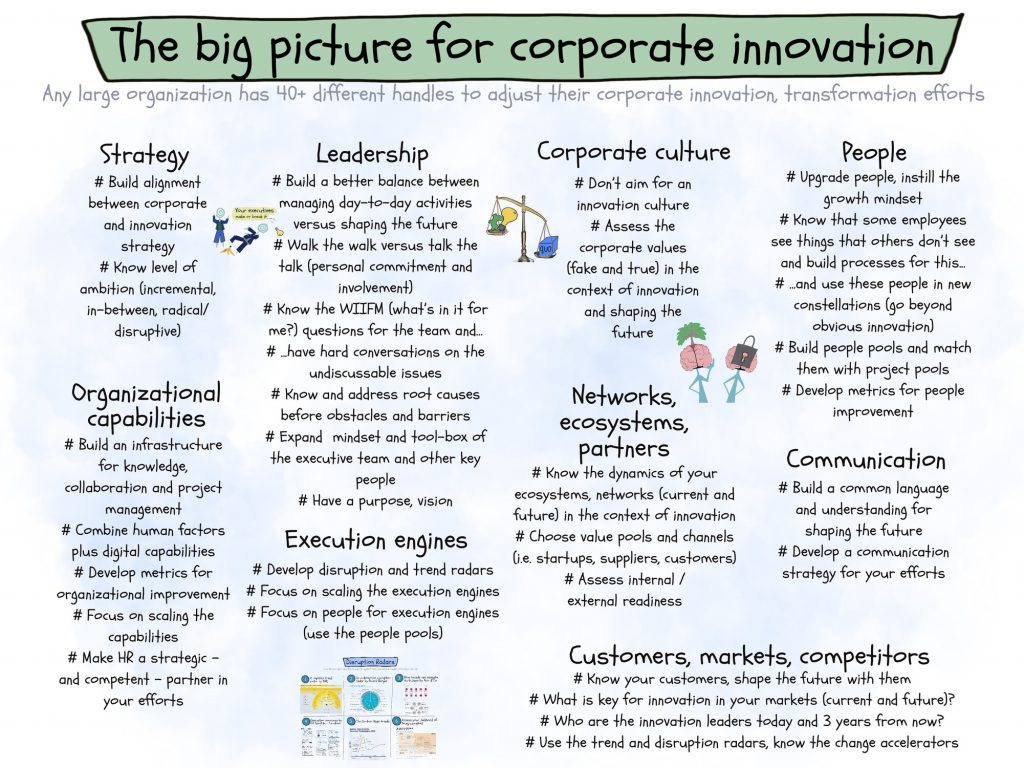
A People-First Perspective on Corporate Innovation

A People-First Perspective on Corporate Innovation

GUEST POST from Stefan Lindegaard

As we ponder on corporate innovation, our minds often dart to the latest technologies, inventive solutions, or groundbreaking business models. While these components have their place, my 25-year journey, dotted with experiences from hundreds of innovation teams, has shown me a deeper truth: people form the core of corporate innovation. It is the individuals in an organization, their mental frameworks, and their team dynamics that truly drive innovation.

People-First Innovation: More Than Just Ideas and Tech

Innovation goes beyond simply developing new ideas or adopting the latest technologies. It’s about weaving the ethos of innovation into the fabric of our organizations. This means aligning innovation with our deeply-held values, principles, and strategic ambitions. It calls for a consistent commitment to continuous evolution, growth, and improvement.

A people-first approach stands at the heart of this innovation-friendly environment. This entails fostering a culture where creativity is celebrated, risk-taking is seen as courage, and learning from one’s actions is the norm. It requires an environment that champions psychological safety, a space where everyone feels comfortable voicing their ideas, taking calculated risks, and learning from their experiences, whether successful or not. In this environment, innovation is demystified and becomes a natural part of our day-to-day operations.

Leadership: Shaping a People-First Culture

Leaders play a pivotal role in molding a people-first culture. They have the responsibility to set the tone for an environment that cultivates innovation. This involves promoting open and respectful dialogue, appreciating the value of diverse viewpoints, and fostering collaborative and effective teamwork.

The challenge for leaders lies in harmonizing their attention between immediate operational tasks and the nurturing of this culture. It is common for leaders to become absorbed in the pressing tasks of today, inadvertently sidelining the equally important task of shaping tomorrow’s culture. To genuinely embrace a people-first approach, leaders need to prioritize building a supportive, innovation-friendly environment.

People: The Heart of Innovation

People are the driving force behind innovation. They generate the ideas, share them, evaluate them, and refine them into tangible, impactful outcomes. You can have the most brilliant minds in your organization, but without the conducive team dynamics to harness that intelligence, the innovation potential remains dormant.

The Innovation Ecosystem: A Collaborative Endeavor

Corporate innovation isn’t an isolated phenomenon confined within the walls of a company. It reaches out to external stakeholders – customers, partners, and even competitors. Innovation in today’s world is a collaborative endeavor, often taking place within intricate networks or ecosystems.

These ecosystems act as fertile grounds for the cross-pollination of diverse perspectives, varied knowledge bases, and a broad range of skills. This melting pot leads to more comprehensive and holistic solutions to complex problems. The interactions and collaborations within this ecosystem are the engines of innovation, highlighting the paramount importance of people and their relationships.

The Way Forward: Customizing Your Innovation Journey

Every organization is distinct, each with its unique set of values, principles, and strategic goals. Therefore, an approach to corporate innovation should be individually tailored to resonate with these unique characteristics.

In my experience, a people-first approach really works. It can be tough because it’s different from what most companies have been doing for years. But by putting people at the center and creating a supportive environment, companies can reach their full potential for innovation. Yes, it takes effort, but the results are worth it.

Remember, this is just one perspective in the vast and dynamic field of corporate innovation. It would be great to hear your thoughts on this people-first approach and your take on other key elements for successful corporate innovation.

The images in my original LinkedIn post give you a further idea of my perspectives on corporate innovation. Get in touch if you want to discuss ideas or learn together!

Image Credit: Pexels

Subscribe to Human-Centered Change & Innovation WeeklySign up here to get Human-Centered Change & Innovation Weekly delivered to your inbox every week.

5 Tips for Leaders Navigating Uncertainty

From Executives at P&G, CVS, Hannaford, and Intel

5 Tips for Leaders Navigating Uncertainty

GUEST POST from Robyn Bolton

“We have successfully retained the opportunity for improvement.”

When the CEO said this to kick off a meeting, I knew we were in for an adventure. He smirked at the corporate double-speak, paused for the laughter, then outlined all the headwinds facing the business. But the only thing I remember from that meeting was his opening line.

I think about it all the time. Because it seems to apply all the time.

And despite the turmoil brought on by a pandemic, a war, and an economic slowdown, we have successfully retained the opportunity to improve how we deal with uncertainty. 

That isn’t to say we haven’t improved over the past three years. In fact, at an event sponsored by NextUp, four executives from P&G, CVS, Hannaford, and Intel shared what they learned and how they changed while navigating uncertainty.

Listen more

Dave DeJohn, Director of Operations for Hannaford, talked about the importance of listening deeply and constantly to employees, especially those on the front lines. Consistent with its core values of family, community, quality, and value, store associates are trained that the customer is always right. However, as incidents of verbal abuse increased during the lockdowns, employee satisfaction and mental health declined. By closely listening and observing what was happening in stores, Hannaford’s leadership modified their customer service approach to “the customer is always right, within reason” and empowered employees to stand up for themselves and each other when faced with hostile shoppers.

Stronger relationships lead to stronger results

Every executive shared stories from the early days of working from home – technical glitches, kids invading calls, and even cats positioning themselves awkwardly in front of cameras when the human stepped away.   Far from being signals of a lack of commitment or professionalism, these moments transformed roles and titles into human beings, juggling all the things humans must juggle. Once people started seeing others as fellow humans versus bosses, peers, or subordinates, they connected on a human level and formed genuine and trusting relationships. Those relationships led to better collaboration, more effective troubleshooting, and better business results.

Concise concrete communication is critical

In periods of uncertainty, information is power. But it’s also constantly changing. For that reason, constant communication is a must. But in a large organization, communication often comes from multiple departments – employee relations, HR, health and safety, operations, and marketing, to name a few – and that can be overwhelming. For this reason, DeJohn learned that keeping every message concise (ideally the length of a tweet but no more than a short paragraph) and concrete (specific, tangible, tactical rather than high-level platitudes) proved critical to keeping people aligned and moving forward.

Just because you can, doesn’t mean you need to

Keris Clark, VP of Sales at P&G, spoke about the drastic shift in her work/life balance when she could no longer travel to see customers or attend meetings. Instead of taking the first flight from Boston to Seattle for a meeting and then a red-eye back home, she suddenly had time to work out, cook, and spend time with family. As travel became safer and invitations to far-away meetings came in, she thought more critically about whether or not to book the tickets. Like most of us, she still travels for some things, but it’s no longer the default option now that more people are used to video calls and other ways of working.

We can do things differently and still deliver

COVID’s effect on the supply chain is well documented, and Tiffiny Fisher, Chief of Staff and Technical Assistant for Intel’s America region, gave us a view into Intel’s situation in the earliest days of the pandemic. With fabrication, assembly, and testing sites throughout Asia, Intel had to work quickly to figure out how to continue operating while staying with government lockdown guidelines. Ultimately, hundreds of employees volunteered to leave their families and live in hotels near Intel facilities so that they could continue operating. It was a huge sacrifice by employees and probably not one that anyone would want to make again. Still, it proved that Intel, with the support of its employees, could quickly make massive changes to its operations while continuing to deliver results.

Uncertainty can be deeply uncomfortable, even frightening, even though we face it every day. Building the skills to navigate it and learning lessons about what works and doesn’t can make it easier. But if you still struggle, don’t worry. It just means you’ve successfully retained the opportunity for improvement.

Image credit: Pixabay

Subscribe to Human-Centered Change & Innovation WeeklySign up here to join 17,000+ leaders getting Human-Centered Change & Innovation Weekly delivered to their inbox every week.

Change Management Best Practices for Maximum Adoption

Change Management Best Practices for Maximum Adoption

GUEST POST from Art Inteligencia

Change is inevitable but so often dreaded in the workplace. A successful transition requires planning and execution, and the ability to adapt quickly to those changes. Change management involves planning around a change to ensure its successful adoption. A well thought out and properly planned change management strategy can help ensure a successful and cost-effective transition to a new process or system.

First and foremost, it is important to manage expectations. Make sure people understand how the change will impact them, and how they can benefit from the change. It is essential to address any perception the stakeholders may have about the potential outcomes. Hopefully, they will all become supporters of the change and get on board with the goal.

Once expectations are managed, it is important to strive for maximum adoption of the change. This means understanding the people impacted by the change and their likely reaction. It’s tempting for leaders to rush the adoption but patience is necessary. Here are a few best practices to ensure change is adopted quickly and easily:

1. Start with communication

When introducing a change, communicate the “why” of the change. Explain why it is necessary, what the expected benefits are, and how it will help the organization succeed. This will help employees to understand the importance of the change and motivate them to get on board.

2. Involve the impacted stakeholders

It’s always helpful to involve those who will be impacted by the change from the beginning. Involving the impacted team in the change planning will encourage them to take ownership and help drive the adoption. They can provide good insight on potential pitfalls and how best to roll out the change.

3. Provide training

Good training can make the transition to the new process, system, or way of working much easier. Provide training before the change is rolled out to ensure everyone is on the same page. This will minimize confusion and eliminate any skepticism in the employees.

4. Have a plan

Effective change management involves having a solid plan for roll-out and clearly defined goals. Implementing a well-thought-out plan means not having to go back and re-do things as you roll out the change. A plan will help make sure everybody is in sync and on the same page.

5. Monitor progress

Monitor the progress of adoption and measure the impact of the change. This will allow you to make any necessary changes or adjust any existing plans. Monitoring progress is essential for ensuring a successful transition and adoption of the change.

There are many different approaches to change management, depending on the situation and what is needed for successful adoption. However, these best practices can be applied to most changes and greatly increase the likelihood of success.

To illustrate this, here are two examples of successful change management.

Case Study #1

A large manufacturing firm needed to replace their legacy accounting system with a new automated system. The company first involved stakeholders in the change planning process and held a series of workshops to ensure everyone understood the needs of the change. Training was provided to the stakeholders involved in the transition and a detailed plan was put in place outlining the steps to implementation. As the project moved ahead, progress was regularly monitored and feedback was sought from employees. The project was completed successfully with minimum disruption to business processes and no unplanned hiccups.

Case Study #2

A mid-sized consulting firm needed to change their customer relationship management (CRM) software. They went the extra mile and identified all key stakeholders in the transition process and clearly outlined the “why” of the change. They also created a timeline for the project to ensure all actions were taken in the right order. They provided extensive training and allowed employees time to get familiar with the new system before implementing it. The project was completed ahead of schedule and the transition was smooth, resulting in increased customer satisfaction.

Conclusion

Change can be a difficult transition, but by following the change management best practices outlined here, you can ensure maximum adoption of the change and successful transition to the new process or system. From communication and involvement of stakeholders, to monitoring progress, these are just a few practical change management best practices that can help you manage successful transitions.

Image credit: Pixabay

Subscribe to Human-Centered Change & Innovation WeeklySign up here to get Human-Centered Change & Innovation Weekly delivered to your inbox every week.

4 Things Leaders Must Know About Artificial Intelligence and Automation

4 Things Leaders Must Know About Artificial Intelligence and Automation

GUEST POST from Greg Satell

In 2011, MIT economists Erik Brynjolfsson and Andrew McAfee self-published an unassuming e-book titled Race Against The Machine. It quickly became a runaway hit. Before long, the two signed a contract with W. W. Norton & Company to publish a full-length version, The Second Machine Age that was an immediate bestseller.

The subject of both books was how “digital technologies are rapidly encroaching on skills that used to belong to humans alone.” Although the authors were careful to point out that automation is nothing new, they argued, essentially, that at some point a difference in scale becomes a difference in kind and forecasted we were close to hitting a tipping point.

In recent years, their vision has come to be seen as deterministic and apocalyptic, with humans struggling to stay relevant in the face of a future ruled by robot overlords. There’s no evidence that’s true. The future, in fact, will be driven by humans collaborating with other humans to design work for machines to create value for other humans.

1. Automation Doesn’t Replace Jobs, It Replaces Tasks

When a new technology appears, we always seem to assume that its primary value will be to replace human workers and reduce costs, but that’s rarely true. For example, when automatic teller machines first appeared in the early 1970s, most people thought it would lead to less branches and tellers, but actually just the opposite happened.

What really happens is that as a task is automated, it becomes commoditized and value shifts somewhere else. That’s why today, as artificial intelligence is ramping up, we increasingly find ourselves in a labor shortage. Most tellingly, the shortage is especially acute in manufacturing, where automation is most pervasive.

That’s why the objective of any viable cognitive strategy is not to cut costs, but to extend capabilities. For example, when simple consumer service tasks are automated, that can free up time for human agents to help with more thorny issues. In much the same way, when algorithms can do much of the analytical grunt work, human executives can focus on long-term strategy, which computers tend to not do so well.

The winners in the cognitive era will not be those who can reduce costs the fastest, but those who can unlock the most value over the long haul. That will take more than simply implementing projects. It will require serious thinking about what your organization’s mission is and how best to achieve it.

2. Value Never Disappears, It Just Shifts To Another Place

In 1900, 30 million people in the United States were farmers, but by 1990 that number had fallen to under 3 million even as the population more than tripled. So, in a manner of speaking, 90% of American agriculture workers lost their jobs, mostly due to automation. Still, the twentieth century was seen as an era of unprecedented prosperity.

We’re in the midst of a similar transformation today. Just as our ancestors toiled in the fields, many of us today spend much of our time doing rote, routine tasks. Yet, as two economists from MIT explain in a paper, the jobs of the future are not white collar or blue collar, but those focused on non-routine tasks, especially those that involve other humans.

Far too often, however, managers fail to recognize value hidden in the work their employees do. They see a certain job description, such as taking an order in a restaurant or answering a customer’s call, and see how that task can be automated to save money. What they don’t see, however, is the hidden value of human interaction often embedded in many jobs.

When we go to a restaurant, we want somebody to take care of us (which is why we didn’t order takeout). When we have a problem with a product or service, we want to know somebody cares about solving it. So the most viable strategy is not to cut jobs, but to redesign them to leverage automation to empower humans to become more effective.

3. As Machines Learn To Think, Cognitive Skills Are Being Replaced By Social Skills

20 or 30 years ago, the world was very different. High value work generally involved the retaining information and manipulating numbers. Perhaps not surprisingly, education and corporate training programs were focused on building those skills and people would build their careers on performing well on knowledge and quantitative tasks.

Today, however, an average teenager has more access to information and computing power than even a large enterprise would a generation ago, so knowledge retention and quantitative ability have largely been automated and devalued, so high value work has shifted from cognitive skills to social skills.

To take just one example, the journal Nature has noted that the average scientific paper today has four times as many authors as one did in 1950 and the work they are doing is far more interdisciplinary and done at greater distances than in the past. So even in highly technical areas, the ability to communicate and collaborate effectively is becoming an important skill.

There are some things that a machine will never do. Machines will never strike out at a Little League game, have their hearts broken or see their children born. That makes it difficult, if not impossible, for machines to relate to humans as well as a human can.

4. AI Is A Force Multiplier, Not A Magic Box

The science fiction author Arthur C. Clark noted that “Any sufficiently advanced technology is indistinguishable from magic” and that’s largely true. So when we see a breakthrough technology for the first time, such as when IBM’s Watson system beat top human players at Jeopardy!, many immediately began imagining all the magical possibilities that could be unleashed.

Unfortunately, that always leads to trouble. Many firms raced to implement AI applications without understanding them and were immediately disappointed that the technology was just that — technology — and not actually magic. Besides wasting resources, these projects were also missed opportunities to implement something truly useful.

As Josh Sutton, CEO of Agorai, a platform that helps companies build AI applications for their business, put it, “What I tell business leaders is that AI is useful for tasks you understand well enough that you could do them if you had enough people and enough time, but not so useful if you couldn’t do it with more people and more time. It’s a force multiplier, not a magic box.”

So perhaps most importantly, what business leaders need to understand about artificial intelligence is that it is not inherently utopian or apocalyptic, but a business tool. Much like any other business tool its performance is largely dependent on context and it is a leader’s job to help create that context.

— Article courtesy of the Digital Tonto blog
— Image credit: Pixabay

Subscribe to Human-Centered Change & Innovation WeeklySign up here to join 17,000+ leaders getting Human-Centered Change & Innovation Weekly delivered to their inbox every week.

An Executive’s Guide for Market Adaptability and Goal-Based Alignment

Shifting Sands

An Executive's Guide for Market Adaptability and Goal-Based Alignment

GUEST POST from Teresa Spangler

A rolling stone gathers no moss, but a business executive, unlike the stone, can’t just roll along. We’ve got to navigate the shifting sands of business markets while juggling not just two but a myriad of short-term and long-term goals. So, how do we get from being a ‘dazed and confused’ executive to a ‘smooth operator’? Buckle up; let’s embark on this wild ride together.

Welcome to the Quicksand!

Business markets these days change faster than a chameleon on a rainbow. Technology advances, consumer trends, competition – you name it. It’s like trying to build a sandcastle on quicksand. But with a strategic approach, even quicksand can become solid ground. Here’s how:

1. Turn into Business Chameleons

Agility is the still the new cool. Embrace it. An agile organization is like a well-oiled transformer, ready to change form and function with market trends. Bill Gates is known for being a long time agile leader. “Success today requires the agility and drive to rethink, reinvigorate, react, and reinvent.”  In the face of regenerative AI and so many technological advances this quote has never been truer!  Transforming your organization into business chameleon leaders could have significant benefits. You’re rarely left behind and always ready to grab new opportunities.

How to:

  • Promote a culture of flexibility: Encourage the “Yes, we can!” spirit.
  • Make innovation your best friend: Regular brainstorming sessions, innovation labs, or ‘Shark Tank’ style pitches can be fantastic.
  • Flex your strategies: Don’t stick to one path like a GPS with a weak signal. Adapt, change, and grow.

2. Balancing Act with Objectives

Picture this: You’re walking a tightrope, balancing a feather in one hand (short-term goal) and a bowling ball (long-term goal) in the other. Sounds tough? This scenario may be! So let’s come down to steadier grounds. Balancing short and long-term goals is an art and a science.

·      Strategic Planning and Prioritization

o  Planning is at the core of balancing short and long-term goals. It involves setting clear, measurable goals and creating a roadmap.

o  Begin with your long-term goals (3-5 years), and then break them down into shorter-term goals (1 year, quarterly, monthly). This way, you create a clear path towards your long-term vision.

o  Prioritize your goals based on their impact on your long-term objectives. This ensures you’re always working towards your big picture goals, even while tackling immediate tasks.

·      Flexible Resource Allocation

o  A flexible resource allocation strategy is key to balancing short and long-term goals.

o  Allocate resources (time, money, staff) to both short-term projects and long-term initiatives.

o  However, remain flexible and ready to reallocate resources as needed. For instance, you may temporarily divert more resources if a short-term opportunity arises that could greatly benefit the business.

·      Regular Progress Reviews

o  Regularly reviewing progress towards your goals is crucial.

o  Set specific milestones for both short-term and long-term goals. This will allow you to track progress and make necessary adjustments.

o  If you find you’re consistently missing short-term goals due to focusing too much on the long-term (or vice versa), it’s a sign that you need to reassess your balance and possibly adjust your strategy.

Balancing short-term and long-term goals is an ongoing process. It requires strategic planning, flexible resource allocation, and regular progress reviews. By employing these strategies, you can ensure your business stays focused on the present while keeping an eye on the future.

 Benefits:

  • Ensures survival today (short-term) and success tomorrow (long-term).
  • Enhances value for stakeholders.
  • Builds resilience in the organization.

Arm Yourself with Tools and Techniques

Like a Swiss army knife, these tools can get you out of any sticky situation:

  • Scenario Planning: Picture yourself as a fortune teller. Create different future scenarios based on market trends. Plan your strategies accordingly.
  • Key Performance Indicators (KPIs): These are your compasses in the business wilderness. They help you stay on track with both short and long-term goals.
  • Regular Strategy Reviews: Like annual medical check-ups, regular strategy reviews ensure your business is in good health and shape.
  • Stakeholder Engagement: This is not just a buzzword. Engage employees, customers, shareholders, etc. They provide valuable insights and help align business objectives.

3. Embracing Technological Disruption

In the business world, technology is the game-changer, the grand maestro orchestrating a symphony of innovation. For executives, it’s not just about staying up-to-date with the latest tech; it’s about anticipating the next ‘big thing’ and leveraging it to get an edge.

How to:

  • Build an innovation-focused IT team: Encourage them to explore emerging tech trends that can revolutionize your business.
  • Invest in training: Ensure your team has the skills to handle new technology.

Benefits:

  • Improved operational efficiency.
  • Greater customer satisfaction through personalized experiences.
  • Competitive advantage in the market.

4. Expansion into New Markets

Growing businesses often look to expand into new markets – it’s like exploring uncharted territories. It’s challenging but can be incredibly rewarding.

How to:

  • Research extensively: Understand the new market’s dynamics, customer behaviors, and potential competitors.
  • Adapt your product/service: Modify your offerings to cater to the needs of the new market.

Benefits:

  • Diversification of revenue streams.
  • Increased brand recognition and business growth.

5. Building Strategic Partnerships

Think of it as having a dance partner to help you waltz through the shifting sands. Strategic partnerships can provide resources, technology, or market access you don’t currently have.

How to:

  • Identify potential partners: Look for companies that complement your business and share your values.
  • Clearly define roles and objectives: Make sure both parties understand what they’re bringing to the table and what they expect in return.

Benefits:

  • Access to new resources, technology, or markets.
  • Shared risks and costs.

6. Customer-centric Approach

In a world where the customer is king, ignoring their needs is like shooting yourself in the foot. With every market shift, customer preferences change. It’s important to listen, learn, and adapt accordingly.

How to:

  • Gather feedback: Use surveys, interviews, or focus groups to understand your customer’s needs.
  • Incorporate feedback: Modify your products or services based on the insights gathered.

Benefits:

  • Increased customer loyalty and satisfaction.
  • Greater market share and profitability.

7. Sustainable Business Practices

The world is waking up to the importance of sustainability. And businesses are no different. Incorporating sustainable practices can help businesses stand out and thrive amidst market shifts.

How to:

  • Go green: Implement eco-friendly practices in your business operations.
  • Promote sustainability: Ensure that your business partners, suppliers, and customers know about your commitment to sustainability.

Benefits:

  • Enhanced brand image and reputation.
  • Attracting conscious consumers and, thus, increasing market share.

8. Effective Change Management

Change is scary. It’s the boogeyman under the business bed. But as the market shifts, change is inevitable. The key is managing it effectively so your business can adapt and your team is on board.

How to:

  • Communicate: Let your team know about upcoming changes and how it impacts them.
  • Train and support: Provide the necessary training and support to help your team adapt to the changes.

Benefits:

  • Smooth transition during periods of change.
  • Maintaining high morale and productivity levels in your team.

CASE STUDY EXAMPLES

Case Study: The Phoenix Rises

Remember Blockbuster? They were the big kid on the block in video rentals. Then, along came a little-known company called Netflix. Blockbuster didn’t adapt quickly, and we know how that story ends. Netflix, on the other hand, has continually adapted. They went from mailing DVDs to streaming, licensing content, and creating their own. It’s been quite the journey from the ‘little engine that could’ to the ‘big engine that did.’

Case Study: The Rise, Fall, and Rise Again of LEGO

LEGO, a beloved brand for many of us growing up, hit a wall in the early 2000s. Competition from video games and a lack of product focus almost led to their downfall. But they didn’t give up. LEGO turned things around by aligning their short-term and long-term goals, returning to their core product, and expanding into new ventures like movies and video games. It’s a testament to the fact that even when the sands shift beneath your feet, you can build a castle with the right strategies!

Case Study: The Digital Transformation of Domino’s Pizza

Once upon a time, Domino’s Pizza was just another pizza delivery company. But when online ordering began to gain traction, they seized the opportunity. They invested in their online ordering system and mobile app and embraced social media marketing. Today, Domino’s is seen as a tech-savvy pizza company. Their share price skyrocketed, and they’re now stiffly competing with Pizza Hut.

Case Study: Starbucks’ Embrace of Sustainability

Starbucks, one of the world’s largest coffee chains, took notice of the growing trend toward sustainability and decided to make a change. They’ve committed to reducing their environmental impact, from sustainable sourcing of their coffee to reducing waste. This commitment has helped Starbucks enhance its brand image and cater to environmentally conscious consumers.

Plazabridge Group Case Studies

The journey through the shifting sands of market change is daunting yet exciting. The real magic happens when we, as executives, adapt to these changes and ensure that our objectives align.

So, as you put on your boots to trudge through the sands, remember to keep your compass (goals) in hand, your team by your side, and your eyes on the horizon. And remember, the journey through the shifting sands is always easier when you’re not dragging your feet. So, let’s adapt, align, and conquer!

EMPLOYEES THE ENGINE TO YOUR BUSINESS

Let’s not forget, EMPLOYEES are not just cogs in the wheel. They’re the engine of your business. Engaging them in the efforts is like adding rocket fuel to your engine. They understand the ground realities, customer pain points, and operational hurdles. By involving them in decision-making, you benefit from their insights and build a more committed workforce. As the saying goes, “Alone we can do so little; together we can do so much.”

Staff engagement is like a secret weapon for businesses. It’s about creating an environment where employees feel valued, heard, and motivated to contribute their best. Here’s how you can tap into this powerful resource:

How to:

  • Encourage feedback: Let your team know their opinions matter. Whether through suggestion boxes, regular team meetings, or anonymous surveys, create channels for them to share their thoughts.
  • Involve them in decision-making: When making decisions that affect your team, include them. It could be through brainstorming sessions or by assigning them to task forces.
  • Recognize and reward: Appreciate the hard work and celebrate the wins. It could be a simple ‘thank you’ note or an employee of the month award. Recognition goes a long way in boosting morale and motivation.

Benefits:

  • Increased productivity: Employees who feel engaged and valued will likely be more productive.
  • Reduced turnover: Engaged employees are likelier to stick around, reducing the costs and disruptions associated with high staff turnover.
  • Better decision-making: By tapping into your team’s insights, you can make better-informed decisions.
  • Enhanced customer service: Happy employees often lead to happy customers. When your team is engaged, they’re more likely to deliver superior customer service.

So, there you have it, visionary leaders! An eight-step playbook to help you navigate the shifting sands of market changes. From being agile to aligning your goals, embracing technology to involving your team – it’s all about staying adaptable. As we journey through the shifting sands together, remember – it’s not just about surviving the change. It’s about thriving amidst it and becoming stronger on the other side. Now, let’s get out there and conquer those sands!

Navigating through the ever-shifting business sands can feel like being in constant flux. But as we’ve seen, by becoming agile, balancing objectives, embracing technological disruption, expanding into new markets, and building strategic partnerships, businesses don’t just survive but thrive. Yes, we all know, in the world of business, change is the only constant. With greater adaptability and alignment of goals, you can ride the waves of change to success. So, roll up your sleeves and get ready to dive into the dunes!

Image credit: Unsplash

Subscribe to Human-Centered Change & Innovation WeeklySign up here to join 17,000+ leaders getting Human-Centered Change & Innovation Weekly delivered to their inbox every week.