Category Archives: Design

Fostering a Culture of Design Thinking

Strategies for Business Leaders

Fostering a Culture of Design Thinking

GUEST POST from Art Inteligencia

In today’s fast-paced and ever-changing business landscape, it is essential for leaders to foster a culture of design thinking within their organizations. Design thinking is a problem-solving approach that places the user at the center of the process, with a focus on empathy, collaboration, and experimentation. By embracing design thinking, businesses can create innovative solutions that truly meet the needs of their customers, drive growth, and stay ahead of the competition.

To successfully foster a culture of design thinking within an organization, business leaders must first understand the key principles and strategies that underpin this approach. This includes encouraging a mindset of curiosity and experimentation, promoting cross-functional collaboration, and creating a safe space for employees to explore new ideas and take risks. Leaders must also lead by example, embodying the principles of design thinking in their own decision-making and problem-solving processes.

Case Study 1: Airbnb

One company that has successfully embraced design thinking is Airbnb. By focusing on the needs and experiences of their users, Airbnb has been able to revolutionize the way people travel and find accommodation. Through a user-centered design process, Airbnb has been able to create a platform that is intuitive, accessible, and personalized, leading to a loyal customer base and continued success in the competitive travel industry.

Case Study 2: Nike

Another company that has made design thinking a central part of its culture is Nike. Nike has a long history of innovation and design, with a strong focus on understanding the needs and desires of their customers. By incorporating design thinking into their product development process, Nike has been able to create cutting-edge athletic wear and footwear that not only meets the functional needs of athletes but also resonates with their sense of style and identity. This approach has helped Nike stay at the forefront of the sports industry and maintain its position as a leading global brand.

Conclusion

Fostering a culture of design thinking is essential for businesses looking to drive innovation, engage customers, and stay competitive in today’s rapidly changing market. By embracing the principles of design thinking and creating a supportive environment for experimentation and collaboration, business leaders can unlock new opportunities for growth and success. By following the example of companies like Airbnb and Nike, organizations can create products and services that truly resonate with their customers and deliver lasting value.

Bottom line: Futurists are not fortune tellers. They use a formal approach to achieve their outcomes, but a methodology and tools like those in FutureHacking™ can empower anyone to be their own futurist.

Image credit: Pixabay

Subscribe to Human-Centered Change & Innovation WeeklySign up here to get Human-Centered Change & Innovation Weekly delivered to your inbox every week.

Design Thinking: A Powerful Tool for Cultivating Employee Creativity

Design Thinking: A Powerful Tool for Cultivating Employee Creativity

GUEST POST from Art Inteligencia

In today’s fast-paced and ever-changing business world, companies are constantly looking for ways to stay ahead of the competition and foster innovation within their organizations. One tool that has gained popularity in recent years is design thinking. Design thinking is a human-centered approach to innovation that focuses on understanding the needs and desires of end users in order to create innovative solutions. By putting the end user at the center of the design process, companies can develop products and services that truly resonate with their target audience and differentiate themselves in the marketplace. Design thinking encourages a collaborative and iterative approach to problem-solving, which empowers employees to think creatively and come up with innovative solutions to complex challenges. As companies continue to embrace design thinking as a key strategy for cultivating employee creativity, we can expect to see even more groundbreaking innovations and successful businesses emerge in the future.

Case Study 1: Airbnb

One of the most well-known examples of a company using design thinking to foster employee creativity is Airbnb. The popular vacation rental platform has a unique company culture that emphasizes creativity and innovation. In order to encourage employees to think outside the box and come up with new ideas, Airbnb has implemented a number of design thinking techniques.

For example, in their annual Innovation Week, employees are given the opportunity to pitch new ideas and work on innovative projects that are outside of their usual job responsibilities. This not only allows employees to flex their creative muscles, but also fosters collaboration and cross-pollination of ideas across different departments.

As a result of their focus on design thinking and employee creativity, Airbnb has been able to stay ahead of the competition and continue to innovate in the rapidly changing travel industry.

Case Study 2: IDEO

Another great example of a company successfully using design thinking to cultivate employee creativity is IDEO, a global design and innovation firm. IDEO is known for its innovative approach to design thinking, which involves a deep understanding of the end user and the development of human-centered solutions.

At IDEO, employees are encouraged to think creatively and work collaboratively to solve complex design challenges. One of the ways they do this is through their “Design Thinking Bootcamp,” where employees are given the opportunity to work on real-world design challenges in a fast-paced, immersive environment.

Through their focus on design thinking and employee creativity, IDEO has been able to attract top talent and work with some of the world’s leading companies to develop groundbreaking products and services.

Conclusion

Design thinking is a powerful tool for cultivating employee creativity and fostering innovation within organizations. By incorporating design thinking principles into their everyday practices, companies can create a culture of creativity and innovation that will help them stay ahead of the competition and continue to thrive in today’s rapidly changing business environment.

Bottom line: Futurists are not fortune tellers. They use a formal approach to achieve their outcomes, but a methodology and tools like those in FutureHacking™ can empower anyone to be their own futurist.

Image credit: Wikimedia

Subscribe to Human-Centered Change & Innovation WeeklySign up here to get Human-Centered Change & Innovation Weekly delivered to your inbox every week.
Rise of the Evangelist

Chief Evangelist Braden Kelley

by Braden Kelley

What is an evangelist?

When many people hear this term, their minds used to picture Billy Graham or Pat Robertson, but this is changing. Why?

Our perceptions of evangelists are transforming as the pace of change accelerates to construct a new reality faster than most human brains can process the changes.

This creates a chasm in understanding and change readiness that evangelists can help bridge in a number of different ways.

Let us look at what an evangelist really is…

Oxford Dictionaries say an evangelist is a “zealous advocate of something.”

Nine Innovation Roles EvangelistIn business, the evangelist is a role that any of us can take on (with varying levels of success). Evangelism is very important to innovation success, which is why the evangelist is one of The Nine Innovation Roles™. This is how I define this particular role:

“The Evangelists know how to educate people on what the idea is and help them understand it. Evangelists are great people to help build support for an idea internally, and also to help educate customers on its value.”

Notice at this point we are talking about an evangelist as a role that can be played by one or more people, and not as a job that one or more people hold. Evangelism normally will be a role and not a job, but there are inflection points where this must change.

Outside of an innovation context, evangelism often falls on the shoulders of CEOs, business owners and product managers within organizations. When the need for evangelism is small, this can work. But for most organizations, this is no longer the case.

When should you hire an evangelist?

The time to cross over from evangelism as a role to evangelism as a job is when:

  1. The pace of internal change is accelerating faster than employees can grasp without help
  2. The pace of external change is accelerating faster than customers can understand without help
  3. Your company is facing disruption by new entrants or existing competitors
  4. You’re considering a digital transformation
  5. You’ve already embarked upon a digital transformation
  6. You’re using Agile in product development
  7. Your brand essence is being shifted by you or your customers
  8. You need a more human and personal presence in your marketing efforts to better connect with customers

When one or more of these conditions are true, you’ll find that it isn’t possible for CEOs, business owners and product owners to meet the needs for evangelism in the short spurts of time these people can dedicate to the necessary activities.

As highlighted by Agile Product Development’s presence in the list, organizations leveraging Agile to develop software-based products will find that their product managers are always engaged with the backlog with little time to focus on evangelism. They’re always focused on shipping something.

Some organizations will resist adding evangelists to their team, feeling that such a role is superfluous, but having one or more people focused on evangelism delivers value to the organization by executing a range of incredibly important activities, including:

  • Growing awareness
  • Building a community around the company and/or plugging the company into pre-existing external communities (potentially taking the brand to places it has never been before)
  • Generating interest
  • Working with customers and the marketing team to identify the stories that need to be told and the themes that need to be introduced and/or reinforced
  • Creating desire
  • Building and maintaining conversations with the community that cares about your products/services/brands
  • Engaging in an open and honest dialogue to help gather the voice of the customer
  • Facilitating action
  • Practicing a human-centered design mindset to continuously elicit needs and surface wants and desired outcomes

Depending on the size of the organization you may decide to have a single evangelist, or some larger organizations have more than one type of evangelist, including:

  1. Chief Evangelist
  2. Brand Evangelists
  3. Product Evangelists
  4. Service Evangelists
  5. Innovation Evangelists

This specialization occurs when the evangelism an organization needs become too big for one evangelist to handle. At that point a Chief Evangelist creates the evangelism strategy and manages the execution across the team of brand, product, service and other evangelism focus areas.

So what makes a good evangelist?

Evangelists arrive from a range of different job specialties, but key knowledge, skills and abilities include:

  • Empathetic
  • Passionate About the Company’s Mission, Products/Services, and Customers
  • Comfortable Public Speaker
  • Efficient and Effective Writer
  • Human-Centered Design Mindset
  • Experienced with Social Media, Audio and Video
  • Skilled Content Creator
  • Continuous Learner
  • Self-Directed and Comfortable with Ambiguity

… and ideally your chosen evangelists will already have some presence in the communities important to you, or the knowledge of how to establish a presence in these communities.

Customer buying journeys are notoriously unpredictable, meandering, long and non-linear. Evangelism is a critical part of helping to build relationships with potential buyers and increasing the chances that your brand will be top of mind when a non-buyer finally becomes a potential customer of your products or services.

It’s a long-term non-transactional investment, one that will pay dividends if you see the wisdom in making the expenditure.

Has your organization already invested in evangelists? What learnings would you like to share in the comments?

Are you ready for the evangelists to rise in your organization?

Or do you need help with evangelism? (contact me if you do)

Share the love!

p.s. I wrote a follow-up article for InnovationManagement.se that you might also enjoy — Increase Your Innovation Reputation and Velocity with an Innovation Evangelist


Accelerate your change and transformation success

Subscribe to Human-Centered Change & Innovation WeeklySign up here to get Human-Centered Change & Innovation Weekly delivered to your inbox every week.
Design Thinking for Non-profits

Solving Social Challenges with Human-centered Approaches

Design Thinking for Non-profits

GUEST POST from Art Inteligencia

In today’s rapidly evolving world, non-profit organizations face numerous complex social challenges that require innovative and effective solutions. Design thinking, a problem-solving approach that focuses on human-centered solutions, is increasingly being embraced by non-profits as a powerful tool to create meaningful change. By leveraging empathy, collaboration, and iterative processes, non-profits can successfully tackle social issues while ensuring that the needs and experiences of the communities they serve are at the forefront. In this thought leadership article, we will explore the application of design thinking in the non-profit sector and provide two case study examples that demonstrate its effectiveness in solving social challenges.

Case Study 1: WaterAid’s Innovative Solution for Accessible Water Supply in Ethiopia

WaterAid, an international non-profit organization working to improve access to safe water, sanitation, and hygiene, adopted design thinking principles to address the challenge of scarce and unreliable water supply in a rural region of Ethiopia. Recognizing the importance of involving the local community in the solution development process, WaterAid engaged in empathy-building exercises and conducted interviews with residents to gain insights into their lived experiences.

Through the empathetic understanding gained, WaterAid discovered that the main problem was not the lack of water sources but rather the existing water sources’ unreliability. To address this, they implemented a design thinking approach that involved collaboration with local residents, engineers, and government officials to co-create a sustainable solution. The resulting innovation was a solar-powered water pumping system that leveraged renewable energy to provide a reliable and continuous water supply to the community. This human-centered approach not only solved the immediate challenge but also empowered the community by involving them in the problem-solving process.

Case Study 2: IDEO.org’s Design Thinking Approach for Financial Inclusion in Kenya

IDEO.org, a non-profit design and innovation organization, used design thinking to tackle the issue of financial exclusion faced by smallholder farmers in Kenya. Facing numerous barriers to accessing financial services, these farmers struggled to invest in their businesses and enhance productivity. IDEO.org employed a design thinking framework that placed the end-users, the farmers, at the center of the solution development process.

By conducting in-depth interviews and on-the-ground research, IDEO.org gained valuable insights into the farmers’ needs and challenges. They discovered that financial exclusion was exacerbated by a lack of trust and knowledge among the farming community. IDEO.org then collaborated with farmers, local financial institutions, and technology experts to devise a solution that would address these underlying issues. The result was a mobile-based platform that simplified financial transactions, provided easy-to-understand financial literacy resources, and fostered trust through transparent and personalized interactions.

Through this design thinking approach, smallholder farmers gained access to previously unavailable financial resources and were able to harness their entrepreneurial potential, leading to increased productivity and improved livelihoods.

Conclusion

Design thinking has proven to be a powerful tool for non-profit organizations aiming to address complex social challenges. By centering their solutions around the experiences and needs of the communities they serve, non-profits can create interventions that are effective, sustainable, and empowering. The case studies of WaterAid and IDEO.org demonstrate how design thinking can lead to innovative and impactful solutions that transform lives.

Non-profits should embrace design thinking as an essential part of their problem-solving toolkit, fostering a culture of empathy, collaboration, and learning that enables them to adapt and iterate their approaches continually. By taking a human-centered approach to tackle social challenges, non-profit organizations can create lasting change that truly improves lives and provides the necessary tools for a brighter and more equitable future.

Bottom line: Futurists are not fortune tellers. They use a formal approach to achieve their outcomes, but a methodology and tools like those in FutureHacking™ can empower anyone to be their own futurist.

Image credit: Pexels

Subscribe to Human-Centered Change & Innovation WeeklySign up here to get Human-Centered Change & Innovation Weekly delivered to your inbox every week.

Design Thinking in the Workplace

Creating a Culture of Innovation

Design Thinking in the Workplace

GUEST POST from Art Inteligencia

In today’s rapidly evolving business landscape, organizations are increasingly realizing the importance of fostering a culture of creativity and innovation. Design thinking, a problem-solving approach rooted in human-centered design, has emerged as a powerful tool for organizations seeking to create an environment conducive to innovation. By embracing design thinking, companies can transform their workplaces into hubs of creativity, unlock untapped potential, and stay ahead of the competition. In this article, we explore the concept of design thinking and delve into two case study examples that illustrate its impact on creating a culture of innovation in the workplace.

Case Study 1: Airbnb’s Reinvention of Customer Experience

Airbnb, the disruptive accommodation-sharing platform, understood the need to revamp their user experience to meet the evolving needs of their customers. By integrating design thinking into their organizational culture, Airbnb was able to create a culture of innovation that propelled them to new heights. The company embraced empathy as a core principle, encouraging employees to immerse themselves in the lives of their customers to gain a deep understanding of their pain points and desires.

Using design thinking methodologies, Airbnb redesigned its entire booking process to provide a more intuitive and seamless experience for their users. The company’s cross-functional teams used ideation sessions and rapid prototyping to test and refine their ideas, fostering an environment of collaboration and iteration. The result was not only a user-friendly and engaging platform but also a transformative cultural shift that made innovation a part of the company’s DNA.

Case Study 2: IBM’s Design Thinking Transformation

IBM, a technology giant with a long-standing legacy, recognized the need to reinvent itself to stay relevant in a fast-changing industry. The company embarked on a design thinking transformation by embedding design as a fundamental approach to problem-solving across its entire organization. IBM understood that design thinking would not only enhance their product development but also spark a cultural shift within their workforce, making them more agile and responsive to market needs.

IBM’s design thinking transformation focused on nurturing a diverse, collaborative, and empathetic workforce. Teams were trained on empathy-building techniques, actively involving end-users in the design process. Through ongoing collaboration and iteration, IBM successfully designed innovative products and experiences that addressed their customers’ emerging needs. The transformation empowered employees to think beyond technical solutions, fostering a culture where creativity and innovation thrived.

Key Learnings:

The case studies above offer valuable insights into how organizations can leverage design thinking to create a culture of innovation in the workplace. Some key learnings include:

1. Embracing empathy: By placing empathy at the core of their design thinking process, both Airbnb and IBM were able to gain a deep understanding of their customers’ needs, thus enabling them to design products and services that truly resonate.

2. Cross-functional collaboration: Integrating design thinking requires breaking down departmental silos and fostering cross-functional collaboration. Both companies emphasized the importance of diverse perspectives in problem-solving, ultimately resulting in breakthrough ideas.

3. Iterative prototyping: Rapid prototyping and iterative testing allow organizations to continuously refine and improve their offerings. Embracing a mindset of learning from failure encourages risk-taking and propels innovation forward.

Conclusion

Design thinking has proven to be a powerful tool in creating a culture of innovation in the workplace. By fostering empathy, encouraging collaboration, and embracing iterative prototyping, organizations like Airbnb and IBM have harnessed the potential of design thinking to transform their products, services, and organizational cultures. As companies strive to stay ahead of disruption and adapt to the ever-changing needs of their customers, integrating design thinking into their DNA can provide a competitive advantage and unlock new possibilities for innovation.

Bottom line: Futurists are not fortune tellers. They use a formal approach to achieve their outcomes, but a methodology and tools like those in FutureHacking™ can empower anyone to be their own futurist.

Image credit: Pexels

Subscribe to Human-Centered Change & Innovation WeeklySign up here to get Human-Centered Change & Innovation Weekly delivered to your inbox every week.

Picking a Problem Worth Solving From a Sea of Problems

Picking a Problem Worth Solving From a Sea of Problems

In the current environment, human-centric challenges abound, but you can’t focus on solving all of them. Many organizations complain not about having too few ideas, but about having TOO MANY IDEAS. Human-centered design principles can be incredibly helpful to assist with empathy, problem framing, problem re-framing, solutioning, prototyping, hypothesis testing, experimentation, and iteration. All of which can help you narrow down onto a few problems worth solving.

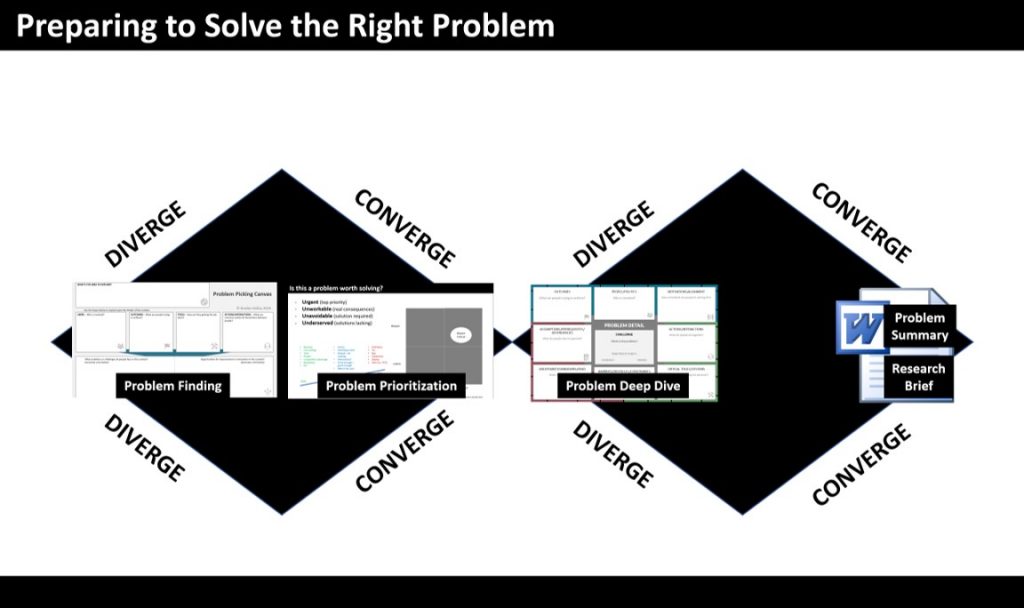
Preparing to Solve the Right Problem

I’d like to share with you here the recording of the keynote I delivered on 9 June 2020 at the virtual ISPIM Innovation Conference titled Picking a Problem Worth Solving From a Sea of Problems:

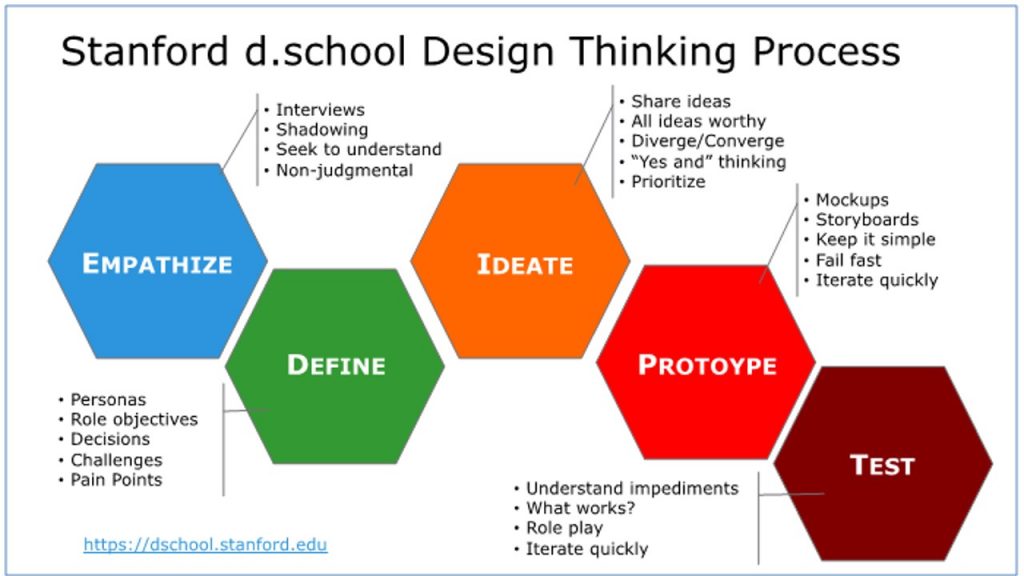
Because there are not a lot of great tools for Human-Centered Design (aka Design Thinking) I’ve been putting together some tools to make the approach a little more intuitive. I’ve either built, or am in the process of building tools for:

  1. Insight Generation (under construction)
  2. Science Fiction and Futurism (completed)
  3. Problem Finding Canvas (available)
  4. Problem Prioritization (completed)
  5. Problem Deep Dive (completed)

Some of my human-centered design approaches are covered in the virtual keynote video above, and below you’ll find a quick introduction to a simple but powerful tool I created for picking a search area and a challenge to design against:

Inexpensive Tool for Finding Problems Worth Solving

Problem Finding CanvasThe Problem Finding Canvas is intended to help you think deeply about the different areas to explore that you could address, the challenges that make up each of those areas to explore and the opportunities for innovation or improvement that exist in solving those challenges.

Key Focus Areas

The middle of the canvas is designed to help clients uncover more than just the obvious challenges, so be sure and dig deep into the details of the:

  • Users
  • Outcomes
  • Tools
  • Actions/Interactions

Desired Outcome

The Problem Finding Canvas should help you investigate a handful of areas to explore, choose the one most important to you, extract all of the potential challenges and opportunities and choose one to prioritize.

What’s Missing?

I’m in the middle of packaging together the other tools mentioned above into a suite of Human-Centered Design tools for your Design Thinking efforts and a broader Human-Centered Innovation Toolkit™.

What tools do you wish you had for doing design thinking?

What tools are missing from your innovation toolbox that you wish you had?

Please leave a reply in the comments and maybe I can build them for you!


Accelerate your change and transformation success

Subscribe to Human-Centered Change & Innovation WeeklySign up here to get Human-Centered Change & Innovation Weekly delivered to your inbox every week.

Why Sometimes Being Certifiable is a Good Thing

Certified Design Thinking ProfessionalRecently I became a Certified Design Thinking Professional (CDTP) through the Global Innovation Institute (GInI).

I’m sure you’ve probably heard someone say that an individual is certifiable. In the negative context of the word it means that an individual is “officially recognized as needing treatment for mental disorder” according to the Oxford Languages dictionary.

BUT, there is of course a positive meaning to the word certifiable as well – “able or needing to be certified.”

I’ve been doing human-centered design, or what some people refer to as ‘design thinking’, for more than twenty years – since I built Symantec’s first web-based technical support and customer service capabilities. But, despite decades of experience I’ve never bothered to get certified. So, why now?

Well, recently I finished building and launching a Design Thinking program for Oracle customers similar to Salesforce Ignite, Deloitte Greenhouse, EY Wavespace, SAP Leonardo, etc. Now as I explore a range of potential new opportunities to tackle next, there is one inescapable fact that presents itself very quickly:

Companies are extremely risk averse as they evaluate potential vendors and employees, and so they place a great deal of value on diplomas and certifications as a way of decreasing the perceived risk of hiring the services of a new employee or contractor.

This is valuable to the individual as well, but certifications help to increase the knowledge and confidence for the person too. And, tools like the Applied Innovation Master Book (AInMB) contain not only valuable information about design thinking, but also about innovation in the bargain. And, the Applied Innovation Master Book gives you one place to jump back to for selecting the methods you want to leverage each time you engage in a new design challenge.

So, does it make sense to get certified in everything you could possibly get certified on?

Maybe not. But, there are definitely times where being certifiable is a good thing.

Keep innovating!


Accelerate your change and transformation success

Subscribe to Human-Centered Change & Innovation WeeklySign up here to get Human-Centered Change & Innovation Weekly delivered to your inbox every week.

Why Your Digital Transformation May Be Doomed to Fail

Why Your Digital Transformation May Be Doomed to Fail

Digital Transformation, like Innovation, has become an overused buzzword that is losing its meaning. Whoever created the Wikipedia page for Digital Transformation defines it this way:

“Digital Transformation (DT or DX) is the adoption of digital technology to transform services or businesses, through replacing non-digital or manual processes with digital processes or replacing older digital technology with newer digital technology. Digital solutions may enable – in addition to efficiency via automation – new types of innovation and creativity, rather than simply enhancing and supporting traditional methods.”Wikipedia

This definition is too focused on technology as the source of the transformation instead of the transformation being driven by the needs of customers and employees. In my view, technology should always be seen simply as a tool to help achieve the desired human-centered transformation.

Too often the SaaS and Cloud vendors co-opt the true practice of digital transformation by trying to claim that a shifting from on-premise software to Software-as-a-Service (SaaS) is somehow a digital transformation or that going to the Cloud is the secret to everything that troubles your organization.

None of this of course is true in and of itself.

This definition of digital transformation from EnterprisersProject is a bit closer to the truth:

“Digital transformation is the integration of digital technology into all areas of a business, fundamentally changing how you operate and deliver value to customers. It’s also a cultural change that requires organizations to continually challenge the status quo, experiment, and get comfortable with failure.”

But, even this definition doesn’t go far enough…

Number One Reason Your Digital Transformation May Be Doomed to Fail

The primary reason your digital transformation will fail or take much longer than you expect, or possibly even than you can fund, is the failure of the organization to put the customer and the employee at the center of its data model and to be able to construct a fully-linked and coherent picture of every customer and employee’s body of interactions/transactions/experiences across the enterprise.

When you lack this ‘single source of truth’ and this ability to connect everything together, you greatly increase the chances that your well-intentioned digital transformation will fail or will be abandoned when you run out money.

Defining What Successful Digital Transformations Look and Sound Like

Successful digital transformations are human-centered transformations empowered and accelerated by the proper use of technology in support of the desired experiences and outcomes. You can’t have a human-centered transformation without a human-centered data model. You also can’t have a human-centered transformation without a holistic understand of what information customers and employees are looking for, what information you have, what they want to do using your digital infrastructure, what they can do with your digital infrastructure, and where the gaps are.

One of the many tools in the Change Planning Toolkit™ is a series of worksheets that help you explore these foundational questions for a successful human-centered digital transformation.

While you can improve the organization through a judicious use of technology in absence of a consciously designed human-centered data model, you cannot digitally transform the organization without doing this difficult work.

The disruption that many startups attempt against the incumbents is achieved because they start with a human-centered data model. Their approach leverages technology where appropriate to add value and remove friction from the human-centered design of their customer experience instead of trying to force customers to use new and often disparate technology experiences. It is a subtle but important distinction. We must be careful not to let the servant become the master.

So, what is driving your digital transformation?

Do you need help creating a human-centered design?

If so, contact me.

Change Planning Toolkit Backed By Million Dollar Investment

Image credit: Pixabay

Subscribe to Human-Centered Change & Innovation WeeklySign up here to get Human-Centered Change & Innovation Weekly delivered to your inbox every week.

Leveraging Technology for Disruptive Design

Discussing the role of emerging technologies like AI, IoT, and blockchain in designing for disruption

Leveraging Technology for Disruptive Design

GUEST POST from Art Inteligencia

In today’s fast-paced and ever-changing world, disruptive design has become a key differentiator for businesses looking to stay ahead of the curve. With the rapid advancement of technologies such as artificial intelligence (AI), Internet of Things (IoT), and blockchain, designers now have more tools at their disposal than ever before to create innovative and groundbreaking solutions.

AI, in particular, has revolutionized the design process by enabling designers to analyze vast amounts of data and identify patterns that would have been impossible to detect just a few years ago. By leveraging AI-powered algorithms, designers can now predict trends, personalize products, and streamline the design process to deliver more meaningful and impactful experiences for users.

One such case study that exemplifies the power of AI in disruptive design is the fashion industry. By utilizing AI to analyze customer preferences and behavior, companies like Stitch Fix have been able to create personalized clothing recommendations that cater to individual styles and needs. This not only enhances the customer experience but also drives sales and customer loyalty.

Similarly, IoT has opened up new avenues for disruptive design by connecting physical devices and sensors to the internet, allowing for unprecedented levels of data collection and automation. For example, companies like Nest have revolutionized the home automation industry by creating smart thermostats that learn from user behavior and adjust to optimize energy efficiency. This not only saves money for consumers but also reduces carbon emissions and contributes to a more sustainable future.

Lastly, blockchain technology has the potential to disrupt traditional design practices by enabling secure and transparent transactions, streamlining processes, and enhancing collaboration between stakeholders. For instance, companies like Provenance are using blockchain to trace the origins of products and ensure ethical sourcing practices, providing consumers with greater transparency and trust in the products they purchase.

Conclusion

The role of emerging technologies like AI, IoT, and blockchain in disruptive design cannot be understated. By harnessing the power of these technologies, designers have the ability to create innovative solutions that challenge the status quo and drive positive change in the world. As we look towards the future, it is clear that the intersection of technology and design will continue to shape the way we live, work, and interact with the world around us.

Bottom line: Futures research is not fortune telling. Futurists use a scientific approach to create their deliverables, but a methodology and tools like those in FutureHacking™ can empower anyone to engage in futures research themselves.

Image credit: Pexels

Subscribe to Human-Centered Change & Innovation WeeklySign up here to get Human-Centered Change & Innovation Weekly delivered to your inbox every week.
The One Movie All Electric Car Designers Should Watch

Ford Mustang Electric Cobra

by Braden Kelley

In 2011 a Ron Howard comedy was released starring Kevin James, Vince Vaughn, Winona Ryder, Channing Tatum, Jennifer Connelly, and Queen Latifah. The film was called ‘The Dilemma’ and it was a very funny buddy comedy focused on commitment and marital infidelity. But today, we’re focused on one of the subplots that makes ‘The Dilemma’ a movie that every electric car designer should watch. The subplot highlighted a solution to the silent problem with electric vehicles and one of the barriers to widespread adoption.

Vince Vaughn and Kevin James’ characters are best friends and partners in a small auto design firm. The two have recently been given an opportunity to pitch an eco-friendly car to Dodge. One of the main features of this car is that it looks like a muscle car and it sounds like a muscle car, but it’s actually an electric car. Here is a video clip in German that I found on YouTube that shows their sound triumph:

Besides being like large golf carts, electric cars are also INCREDIBLY dangerous to pedestrians and cyclists at low speeds because they’re nearly silent. In addition to being dangerous, electric cars also sound boring.

Electric cars are so dangerous because of their silence, some governments are mandating that they make sounds at least while backing up – you know, those annoying beeping sounds.

Even the cool 1,500 horsepower equivalent electric Ford Mustang Cobra pictured above sounds really boring when it shoots off the line in its promo video going down the drag strip.

Designers, why can’t you implement more interesting, more exhilarating sounds like those in the video before we’re all forced to buy electric vehicles?

They could easily be designed to fade away as the vehicle reaches speeds of around 30 miles per hour and wind and road noise starts to become sufficient to give pedestrians and cyclists a fighting change.

What say you?

Image credit: Slashgear.com


Accelerate your change and transformation success

Subscribe to Human-Centered Change & Innovation WeeklySign up here to get Human-Centered Change & Innovation Weekly delivered to your inbox every week.