Markets Don’t Build Themselves, You Must Engineer Them

Markets Don't Build Themselves, You Must Engineer Them

Exclusive Interview with Bruce Cleveland

In a business landscape increasingly cluttered by “feature wars” and fleeting viral trends, true market leadership isn’t just about who builds the best product — it’s about who defines the problem. In his groundbreaking work, Market Engineering, Bruce Cleveland argues that successful companies don’t just enter markets; they architect them. By blending rigorous systems thinking with the art of category design, Cleveland provides a blueprint for moving beyond commodity status to become a dominant force that sets the rules of the game.

In this insightful Q&A, Cleveland breaks down why “Market Engineering” must be foundational from day one rather than a secondary thought for the marketing department. From the evolution of Chief Storytellers to the strategic distinction between a market and a category, he explores how leaders can steer through the noise — especially in the age of AI — to create a resonant narrative that sticks.

Today we dive deep into the characteristics and necessities of market engineering with our special guest.

Markets Don’t Build Themselves

Bruce ClevelandBruce Cleveland is a former venture capitalist and engineering and product executive at Apple, C3 AI, Oracle, and Siebel Systems. As founder of Traction Gap Partners, he has helped hundreds of startups, scale-ups, and enterprises to transform innovation into impact. His previous book, Traversing the Traction Gap, is taught in universities and used by investors and founders worldwide. Cleveland’s frameworks blend analytical discipline with creative storytelling — empowering leaders in companies of all sizes and industries to transform technology into traction and markets into movements. He lives in Bend, Oregon.

Below is the text of my interview with Bruce and a preview of the kinds of insights you’ll find in Market Engineering presented in a Q&A format:

1. When does it make sense for a company to engage in Market Engineering?

Market Engineering isn’t something you save for later: it’s foundational from the moment you decide to bring a new product or company to life. The earlier you start intentionally defining or redefining your category, shaping positioning, and setting the narrative, the more leverage you have. If you wait until after a product launch or when you’re trying to scale, you’re forced to play by definitions set by incumbents or competitors, which makes differentiation and leadership much harder.

2. Why is it so important for a company to shape the market reality?

If you don’t shape your market’s reality, someone else will, often in a way that disadvantages you. Shaping market reality means you control how problems are defined, which features or metrics matter, and what the buying criteria look like. Market leadership is rarely awarded to the objectively “best” product; it’s achieved by those who frame the market in terms they can win.

3. Why must all leaders intimately understand the difference between a category and a market?

A market is the overarching territory: the set of buyers, sellers, and needs. A category is a specific frame or context you create and own within that market. If you only compete in the market, you become a commodity; if you define and then dominate a category, you set the standards and leave competitors playing catch-up. Leaders must understand this distinction so they can move from playing the existing game to rewriting the rules.

4. What do you think about the Chief Storyteller roles we see appearing in companies?

It’s a positive development; as long as the role goes beyond polished campaign stories and becomes architect and keeper of the full-market narrative. The best Chief Storytellers aren’t just marketers; they’re narrative engineers who unite product, category vision, customer proof, and internal culture into a coherent, resonant story that attracts and aligns stakeholders. Think Steve Jobs: one of the best storytellers ever.

5. Many see Thought Leadership as a combination of messaging and storytelling, what makes it a standalone tenet?

Thought Leadership stands alone because it’s about setting the agenda (leading the conversation) rather than just communicating your point of view. It requires original insight, provocation, and the courage to propose new models, not just synthesize existing ones. When done well, it changes the direction of the market; others start to echo your terminology and frameworks.

6. Why is it so hard for most new products to get traction?

Most new products fail to get traction not because of weak tech, but because of unclear value, undifferentiated positioning, or market confusion. Teams overfocus on features and under-invest in the story, category, and proof. Without clear market engineering, no one knows why the product matters or how they should think about it compared to everything else.

7. Where do companies go wrong with category design?

The most common mistake is either not designing a category at all (just trying to out-feature incumbents) or making it a “naming exercise” disconnected from authentic customer need and business reality. Category design isn’t branding; it’s systems thinking. it should be rooted in a real problem, codified with relentless clarity, and validated with influential customers and analysts.

8. How does the leadership team recognize they got the positioning wrong and how do they fix it?

Market Engineering Book CoverYou’ll know you have a positioning problem if deals stall in the pipeline, you get slotted into the wrong RFP bucket, or media/analysts lump you with solutions you don’t respect. Fixing it starts with honest investigation: talking directly to customers/prospects, auditing every touchpoint, and rigorously re-testing your Messaging Matrix. It’s usually about clarity, not cleverness.

9. What are the biggest pitfalls of message ownership and management and how can leaders avoid them?

The biggest pitfalls are lack of internal discipline and message drift: where every functional group tells the story a bit differently, or the narrative morphs with each campaign. Leaders must treat the messaging as a living, central artifact (like the Messaging Matrix), ensure frequent training, and make every update explicitly cross-functional. Messaging must be owned at the top.

10. What are some of the keys to great storytelling that every leader should master?

Great storytelling starts with empathy: a deep understanding of customer pain and aspiration. Then, it follows with clarity (no jargon), specificity (real data, real outcomes), and tension (what’s at stake in the market). Too often, stories become “laundry lists”. The key is to focus on a single arc: What’s broken in the world, what new future you’re inviting them into, and social proof that it’s real.

11. What are the keys to creating effective thought leadership?

You must have a strong point of view and the willingness to challenge conventional wisdom. Effective thought leadership is not just more content; it’s original, actionable ideas presented consistently across channels and validated with real-world outcomes, not just theory. Authenticity and a learning mindset are critical: the market rewards those who teach, not just those who promote.

12. Does AI make Market Engineering easier or more difficult and why?

AI makes Market Engineering both easier and much harder. Easier, because it democratizes access to research, market signals, and rapid content generation. Harder, because it amplifies noise and makes it much more difficult to stand out unless your positioning, messaging, and insight are precise and differentiated. The bar for clarity and originality rises: those who do Market Engineering well will thrive; those who don’t will be commoditized instantly.

13. Is there anything you wish I had asked so that you could speak to it?

I wish more people asked, “How do you maintain momentum and discipline in Market Engineering after the initial category launch?” Winning the first lap is one thing; evolving category leadership into true market leadership and dominance over the years is another. It’s not a one-time event: it’s ongoing narrative, data, partner ecosystem, and customer proof work. The companies that endure are those that outlearn, outevolve, and outlast, not just outlaunch their competition.

Conclusion

Thank you for the great conversation Bruce!

I hope everyone has enjoyed this peek into the mind of the man behind the insightful new title Market Engineering!

Image credits: Bruce Cleveland, Google Gemini

Subscribe to Human-Centered Change & Innovation WeeklySign up here to join 17,000+ leaders getting Human-Centered Change & Innovation Weekly delivered to their inbox every week.
Customer Experience Benchmarking

How Do You Actually Compare?

Customer Experience Benchmarking

by Braden Kelley and Art Inteligencia

Most organizations benchmark their customer experience against themselves. They track NPS month over month, monitor CSAT scores quarter over quarter, and celebrate when the numbers move up. What they rarely do is answer the question that actually matters for competitive survival: how does our experience compare to what our customers can get elsewhere?

Customer experience benchmarking — the systematic comparison of your experience performance against competitors, industry standards, and best-in-class exemplars — is one of the most underused tools in the CX practitioner’s toolkit. It is also one of the most important. CX leaders generate 6x the revenue growth of bottom-quartile peers, per the Forrester CX Index 2026. The gap between leaders and laggards is widening, not narrowing. Organizations that don’t know where they stand relative to that gap are making investment decisions in the dark.

What is Customer Experience Benchmarking?

Customer experience benchmarking is the process of systematically measuring your organization’s experience performance against external reference points — competitors, industry standards, and best-in-class organizations — to understand where you lead, where you lag, and where investment will generate the greatest competitive return.

It is distinct from customer experience measurement, which tracks your own performance over time. Benchmarking adds the external context that transforms a metric from a number into a signal. A Net Promoter Score of 35 means nothing in isolation. A Net Promoter Score of 35 in an industry where the average is 22 means you are performing above average. A score of 35 in an industry where leaders are at 60 means you have a significant competitive gap to close.

Without benchmarking, organizations routinely invest in improving metrics that are already competitive while ignoring gaps that are costing them customers and revenue.

Why Most CX Benchmarking Falls Short

The most common form of CX benchmarking — comparing NPS, CSAT, and CES scores against published industry averages — is useful but severely limited. CSAT is typically based on how consumers feel about a service or product on a sliding scale, and CES measures how effortless it is for customers to interact with an organization. These are legitimate signals, but they have three critical limitations as benchmarking tools:

They measure what customers say, not what they experience. Survey-based metrics capture customer perceptions at a moment in time, filtered through whatever prompted them to respond. They systematically miss the silent majority — customers who had mediocre experiences but didn’t feel strongly enough to complete a survey — and they overrepresent the emotional extremes.

They measure aggregate outcomes, not specific experience drivers. Knowing your NPS is below industry average tells you that you have a problem. It doesn’t tell you where in the journey the problem lives, what is causing it, or what to fix. Benchmarking aggregate scores without diagnosing the specific experience gaps producing them leads to unfocused investment that improves the score without improving the underlying experience.

They don’t capture the full competitive experience landscape. Published industry benchmarks aggregate across organizations with very different models, customer bases, and experience investments. Your real competitive benchmark is not the industry average — it is the specific alternatives your customers are comparing you to, evaluated on the specific dimensions they care about most.

The Four Levels of Customer Experience Benchmarking

Effective customer experience benchmarking operates at four levels, each providing different and complementary insight:

Level 1: Internal Benchmarking

Comparing your own experience performance across time periods, customer segments, channels, geographies, or business units. Internal benchmarking establishes your baseline, identifies where performance is improving or declining, and surfaces the internal variations that indicate what better is possible — if your highest-performing region or channel is significantly outperforming others, the gap represents an internal benchmark that can be studied and replicated.

Best tools: NPS, CSAT, CES trend analysis; journey analytics; complaint and escalation rate tracking; customer effort mapping across channels.

Level 2: Competitive Benchmarking

Comparing your experience performance directly against the specific competitors your customers are most likely to consider as alternatives. This is the most commercially important form of benchmarking and the most underinvested. Analyzing competitor reviews on platforms like Google and Trustpilot and looking for patterns in customer feedback — recurring praise or common complaints — is a starting point. But the most valuable competitive benchmarking requires actually walking the competitor’s experience firsthand — going through their onboarding, calling their support line, submitting a service request — to understand the experience your customers are comparing you to.

Best tools: Mystery shopping of competitors; competitor review analysis; win/loss interview research; shared customer feedback analysis; direct experience walking.

Level 3: Industry Benchmarking

Comparing your performance against published industry standards and research benchmarks. Tools like Contentsquare’s 2026 Digital Experience Benchmark, built from 99 billion web sessions across 6,500+ websites in 9 industries, provide cross-device behavior data spanning traffic, engagement, frustration, conversion, and retention. Forrester’s CX Index, the ACSI (American Customer Satisfaction Index), and industry-specific research provide standardized benchmarks across NPS, CSAT, and CES by sector.

Best tools: Forrester CX Index; ACSI scores by industry; Contentsquare Digital Experience Benchmark; J.D. Power studies; industry association research.

Level 4: Best-in-Class Benchmarking

Comparing your experience against the best experiences your customers encounter anywhere — not just in your industry, but across the categories they interact with most frequently. This is the most ambitious and most valuable form of benchmarking, because customers don’t evaluate your experience against your direct competitors alone. They evaluate it against every excellent experience they have — Amazon’s delivery reliability, Apple’s onboarding simplicity, Ritz-Carlton’s service recovery. When an experience falls below the best available standard in any category, it registers as inadequate regardless of industry norms.

Best tools: Cross-industry experience research; direct walking of best-in-class exemplars; customer interviews that explicitly ask “what’s the best experience you’ve had with any company in any category, and what made it great?”

Four Levels of Customer Experience Benchmarking Infographic

Key Customer Experience Benchmarks by Metric

Net Promoter Score (NPS) Benchmarks

NPS ranges from -100 to +100. General interpretation: above 0 is good, above 20 is favorable, above 50 is excellent, above 70 is world-class. Industry averages vary significantly:

  • Technology/SaaS: 35–45 average; leaders 60+
  • Financial Services: 30–40 average; leaders 55+
  • Retail: 40–50 average; leaders 65+
  • Healthcare: 25–35 average; leaders 50+
  • Telecommunications: 15–25 average; leaders 40+
  • Hospitality: 50–60 average; leaders 75+

Customer Satisfaction Score (CSAT) Benchmarks

CSAT is typically measured on a 1–5 or 1–10 scale and converted to a percentage of satisfied respondents. Industry averages cluster around 75–85% across most sectors, with leaders consistently achieving 90%+. ACSI data for 2025–2026 shows overall US customer satisfaction at approximately 77.4 out of 100 across industries.

Customer Effort Score (CES) Benchmarks

CES measures how easy it is for customers to interact with your organization, typically on a 1–7 scale. Lower effort scores are better. Research by CEB (now Gartner) found that reducing customer effort is more predictive of loyalty than delighting customers — 96% of customers with high-effort experiences become more disloyal, versus only 9% of those with low-effort experiences.

First Contact Resolution (FCR) Benchmarks

FCR measures the percentage of customer issues resolved on first contact. Industry average FCR rates cluster around 70–75%, with best-in-class operations achieving 85–90%. Every percentage point improvement in FCR drives measurable improvements in both CSAT and cost-to-serve.

How to Conduct a Customer Experience Benchmark

Step 1: Define what you are benchmarking and why
Benchmarking everything produces noise. Start with the specific experience dimensions most likely to be affecting your competitive position — the areas where you suspect you may be lagging, or where you are investing most heavily and want to validate that your performance justifies the investment.

Step 2: Select your benchmark references
For each dimension, identify the most relevant reference points: your direct competitors for competitive benchmarking, published industry research for industry benchmarking, and best-in-class exemplars for aspirational benchmarking. The most valuable benchmarks are often the ones that are hardest to obtain — direct competitor experience walking and cross-industry best-in-class research — precisely because they reveal gaps that published survey data doesn’t surface.

Step 3: Gather data across multiple methods
No single data source provides complete benchmark insight. Effective benchmarking combines quantitative measures (NPS, CSAT, CES, FCR) with qualitative research (customer interviews, journey walking, competitor experience analysis) and observational data (direct observation of experience delivery, mystery shopping). Each source surfaces different dimensions of the experience gap.

Step 4: Map gaps to their revenue implications
A benchmark gap is only useful if it is connected to a business outcome. For each significant gap identified, estimate the revenue implication: how much churn is this gap contributing to? How much expansion revenue is it suppressing? How much competitive displacement is it enabling? This translation from experience gap to revenue impact is what makes benchmarking findings actionable at the executive level.

Step 5: Prioritize investments by competitive return
Not all gaps are worth closing. Prioritize experience investments that address gaps in dimensions your customers care most about, where closing the gap would produce the largest competitive differentiation, and where the investment required is proportionate to the revenue at stake.

How to Conduct a Customer Experience Benchmark Infographic

The Role of an Experience Audit in Benchmarking

A customer experience audit is the most comprehensive benchmarking instrument available — one that combines internal experience measurement, competitive experience walking, and best-in-class gap analysis into a single, systematic assessment.

Unlike survey-based benchmarking that measures what customers say about their experience, an experience audit walks the actual experience — physically and digitally traversing every significant touchpoint across your customer journey and your competitors’ — to produce a firsthand, evidence-based comparison (customer journey mapping helps here). It identifies:

  • The specific touchpoints where your experience is measurably inferior to the best available alternatives
  • The friction gaps — moments where your experience requires more effort than competitors’ equivalents
  • The consistency gaps — channels or segments where your experience significantly underperforms your own average
  • The service recovery gaps — how your response to failures compares to competitive and best-in-class standards
  • The personalization gaps — where competitors are demonstrating deeper customer understanding than you are

The output is not a score comparison — it is a prioritized, actionable roadmap of experience improvements ranked by their estimated competitive and financial impact. This is benchmarking that produces decisions, not just data.

Frequently Asked Questions About Customer Experience Benchmarking

What is customer experience benchmarking?

Customer experience benchmarking is the process of systematically measuring your organization’s experience performance against external reference points — competitors, industry standards, and best-in-class organizations — to understand where you lead, where you lag, and where investment will generate the greatest competitive return. It differs from customer experience measurement, which tracks your own performance over time, by adding the external context needed to interpret whether your metrics represent a competitive advantage, a competitive parity position, or a competitive gap that requires urgent attention.

What metrics are used for customer experience benchmarking?

The primary metrics used for customer experience benchmarking are Net Promoter Score (NPS), Customer Satisfaction Score (CSAT), Customer Effort Score (CES), and First Contact Resolution (FCR). Published industry benchmarks for these metrics are available from Forrester, the ACSI, J.D. Power, and industry-specific research sources. However, survey-based metric benchmarking has significant limitations — it measures what customers say, not what they experience, and it measures aggregate outcomes rather than the specific experience drivers producing those outcomes. The most valuable benchmarking combines metric comparison with direct competitive experience walking and qualitative customer research.

How do you benchmark against competitors on customer experience?

Competitive customer experience benchmarking requires multiple approaches used in combination. Quantitative approaches include comparing published NPS, CSAT, and review scores across competitors; analyzing competitor reviews on platforms like Google, Trustpilot, and G2 for recurring patterns; and using win/loss interview research to understand the experience factors most frequently cited in competitive displacement. Qualitative approaches include directly walking the competitor’s experience — going through their onboarding, calling their support line, submitting a service request — to build firsthand understanding of the experience your customers are comparing you against. A customer experience audit typically includes direct competitive benchmarking as a core component.

What is a good NPS score by industry?

NPS benchmarks vary significantly by industry. In technology and SaaS, average NPS is typically 35–45 with leaders above 60. In financial services, averages run 30–40 with leaders above 55. Retail averages 40–50 with leaders above 65. Healthcare averages 25–35 with leaders above 50. Telecommunications typically averages 15–25 with leaders above 40. Hospitality averages 50–60 with leaders above 75. The most meaningful benchmark is not the industry average but the performance of the specific competitors your customers are most likely to compare you against — and the gap between your current performance and best-in-class in your sector.

What is the difference between customer experience measurement and benchmarking?

Customer experience measurement tracks your own performance over time — monitoring NPS, CSAT, CES, and other metrics to identify trends and evaluate the impact of specific investments. Customer experience benchmarking adds external context by comparing your performance against competitors, industry standards, and best-in-class organizations. Measurement tells you whether you are getting better or worse. Benchmarking tells you whether you are competitive — whether your current performance represents an advantage, parity, or a gap that is costing you customers and revenue. Both are necessary, but benchmarking is what connects experience performance to competitive and financial outcomes.

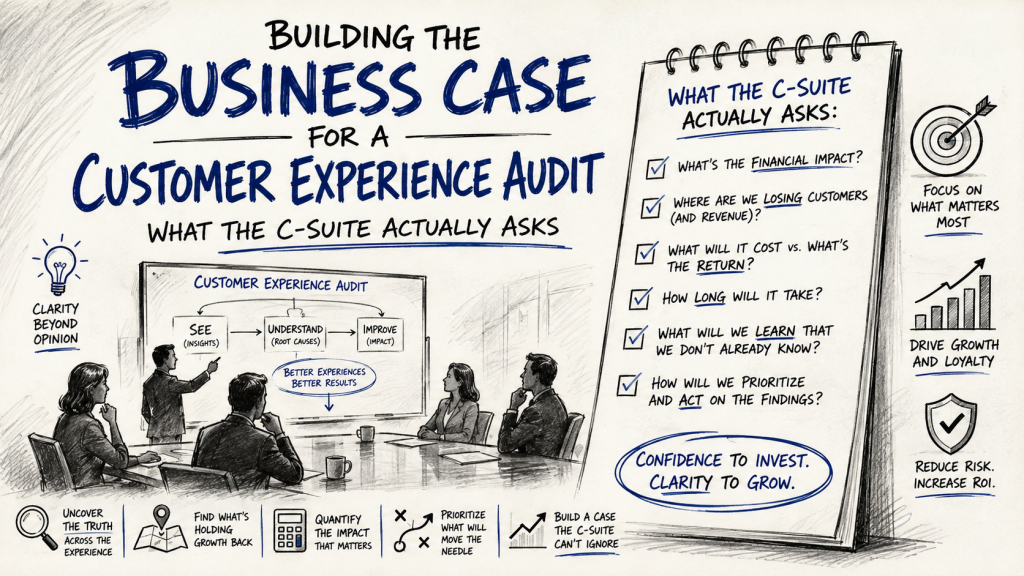
Ready to understand how your experience compares to competitors and best-in-class standards? Learn more about the Experience Audit →

Content Authenticity Statement: The topic area, key elements to focus on, etc. were decisions made by Braden Kelley, with a little help from Claude and Google Gemini to clean up the article, add images and create infographics.

Image credits: Google Gemini

Subscribe to Human-Centered Change & Innovation WeeklySign up here to get Human-Centered Change & Innovation Weekly delivered to your inbox every week.

3 Cultural Shifts That Will Reignite Change in Your Organization

3 Cultural Shifts That Will Reignite Change in Your Organization

GUEST POST from Greg Satell

On a cold November day in 2013, frustrated by recent events in Ukraine, a journalist named Mustafa Nayyem posted to Facebook, “Okay guys, let’s get serious. Who’s ready to go to the Maidan today at midnight? ‘Likes’ will not be counted. Only comments under this post with the words ‘I’m ready.’ Once there are more than a thousand, we will organize it.”

Nothing needed to be explained. Everyone knew exactly what he meant. Nine years earlier, hundreds of thousands of people flooded Independence Square in Kyiv, locally known as “the Maidan,” to protest a falsified election in a movement called the Orange Revolution. Mustafa was now calling on his fellow citizens to do the same.

It was a moment that changed history. Yet it’s not that moment we should focus on, but what came before. It was what happened in those ensuing nine years—the development of unseen networks, the learning and the cultural change—that made the moment possible. The truth is that for genuine change to take place, significant cultural shifts need to come first.

1. From Preaching To Listening

The Orange Revolution got its name because orange was the campaign color of the opposition candidate, Viktor Yushchenko. “It was not about social mobilization, it was not about political mobilization, it was mostly about the political class in Kyiv,” Mustafa would later tell me. And while it achieved its goal of putting the preferred candidate in office, it would ultimately fail to survive victory, which is what led to the call for people to revolt again nine years later.

Many organizational transformations follow a similar pattern. Convinced change has to come from the top, they start with a big kickoff campaign detailing what change will look like. In a show of force, leaders take center stage and declare their support. The goal is to create a sense of urgency and inevitability around change.

It almost always fails and it usually fails for the same reason: people resist it. The simple reality is that human beings form attachments to people, ideas and other things. When they feel those attachments are threatened, they will lash out in ways that are dishonest, underhanded and deceptive. If you are going to bring change about, that’s what you need to overcome.

There are a number of ways to overcome that kind of resistance, but in the early stages, when the idea is nascent, the simplest and most effective way is to focus on listening rather than trying to overpower with a show of force. Don’t push your idea on people or try to persuade them. Go out and find people who are enthusiastic and want it to succeed.

“You have to go where the energy is,” John Gadsby, who built a movement for process improvement inside Procter & Gamble that has grown to encompass 60,000 employees, told me. “We’ll choose energy and excitement and enthusiasm over the right position, or the person at the right leadership level, or the person whose job it is supposed to be to do that.”

2. From “Us And Them” to “We Together”

Humans are naturally tribal. In fact, decades of research has found that we will tend to form groups based on identity—even if that identity is something we are arbitrarily assigned, like a “red team” and a “blue team”—and will show loyalty to group members and hostility towards outsiders. These results have also been documented in children and even in infants.

We often trip over subtle matters of identity without realizing it. That was certainly true of the Orange Revolution, which had a regional undercurrent few appreciated at the time. Viktor Yanukovych, the thuggish politician who would trigger both the Orange Revolution and the protests that came nine years later, was associated with the Donbass region. The residents there saw an attack on him as an attack on them.

Organizational change agents commonly fall into a similar trap. In a misguided effort to gain credibility, they set themselves and their ideas apart from others. They position themselves with a credential they’ve earned or as being proponents of some school of thought, such as design thinking or agile development. Unwittingly they set up separate ”us and them” identities.

So before you can ignite change, you first need to forge a shared identity based on shared values. That’s exactly the approach Lou Gerstner took in his historic turnaround of IBM. Despite being the first CEO to come from outside the company, he made sure to explain his changes in terms of the firm’s traditional values rather than something different. His efforts led to a legendary success.

3. From Imposed Beliefs To A Co-Created Future

The Orange Revolution was a political movement with political aims. That is, in large part, why despite the initial victory it would ultimately fail in the end. The truth is that you can never base transformation on any particular person, policy or technology. It also has to be rooted in shared values. That’s the only way that you can overcome resistance, survive victory and build a common future.

When people followed Mustafa Nayem to Independence Square the protests were dubbed Euromaidan, because the proximate cause had to do with an EU Association Agreement but also because they represented a desire to adopt European Values. As things heated up, a group of prominent journalists released a video giving voice to these aspirations.

Here’s part of what they said:

There are many things that unite Rivne and Luhansk, Kyiv and Odessa. [cities in the west, east, north and south, respectively]

We want to live in an honest and fair country, where individual rights are respected, where you can freely express your views and not be afraid of the police, where courts are just and can’t be bought, where there is real competition in business and opportunity to work in an honest way.

Today, it’s common for Ukrainians to refer to the events of 2014 as the Revolution of Dignity, because as events progressed it became less about the country’s relationship with its western neighbors and more about how they saw themselves. No longer would they accept being simple pawns in the games of corrupt leaders, but would decide their own future.

For change to succeed, everybody needs to see themselves as heroes in the story. In some cases, that means that people will have to decide to seek a different journey in another place. In other cases, they will need to be shown the way out. But the possibility for them to thrive in a shared future needs to be there.

Becoming Mundane And Ordinary

Today, few would question the dignity of the Ukrainian people. In fact, they have become such an inspiration to the world that it’s hard to remember that the country used to be a very cynical place. When I first arrived there in 2002, I was struck by the apathy. There was so little hope that anything could ever change that few saw any sense in even trying.

My friend, the global activist Srdja Popović, once told me that the goal of a revolution should be to become mainstream, to be mundane and ordinary. If you are successful it should be difficult to explain what was won because the previous order seems so unbelievable. That’s certainly true of Ukraine today, but also true of successful organizational transformations.

Today, Apple is so associated with Steve Jobs and the Macintosh that it seems incredible that he was fired from the company, in large part due to tensions that resulted from its development. Lou Gerstner’s turnaround of IBM was so complete it seems crazy that most people assumed the company would be broken up and sold for parts. Artificial intelligence has become so embedded in our lives, it’s hard to remember that not long ago it seemed like science fiction.

One of the things that makes change so challenging is that when we hear about the successes—failures are rarely documented—the story is told in a way that makes everything seem inevitable. We have to remember that things start out much differently. There were failures along the way that needed to be learned from and overcome.

The successful path to transformation starts with culture, how people see themselves and those around them. That doesn’t just happen. Leaders must work intentionally to create shared values. The truth is that change that is imposed never sticks, because it asks those who must affect change to betray themselves. You must first change minds before you can change actions.

— Article courtesy of the Digital Tonto blog
— Image credit: Google Gemini

Subscribe to Human-Centered Change & Innovation WeeklySign up here to join 17,000+ leaders getting Human-Centered Change & Innovation Weekly delivered to their inbox every week.

We Need More Innovators and Scientists in Leadership Roles

We Need More Innovators and Scientists in Leadership Roles

GUEST POST from Pete Foley

Our world is changing at an unprecedented rate. We are in an innovation driven economy. AI, genetic manipulation, energy innovation, climate, and virtually anything driving change are all highly technical and complex. And all come with high stakes pros and cons.

Scientists and innovators navigating this requires strategic leadership that understands technical complexity, uncertainty and that collectively has some knowledge of basic science and engineering. 

Politics Lacks Scientists: Today, while more than half of US Senators have a law background, only one has a science PhD.  I believe this creates a serious gap in fundamental knowledge between our strategic leaders and the innovators that are driving change.

Experts or Oracles? Of course, our leaders have access to ‘experts’ to help them with complex topics.  But when the fundamental knowledge gap between leaders and experts becomes too big, experts become oracles. They pronounce rather than persuade. When this happens we risk the determining factor in strategy becoming superior communication skills, instead of knowledge or superior ideas.  The ideas (and regulations) that win are not the necessarily best ones, but the ones championed by good communicators, salesmen scientists or smooth talking lobbyists.  It’s dangerous to follow the science blindly, and even riskier to regulate what we don’t understand. That invites dangerous unintended consequences. But increasingly, that is the path we are on.
 

Why We Need More Innovators and Scientists in Leadership Roles

Of course, our leaders don’t need to all be 160 IQ polymaths with PhD’s in quantum mechanics. But to make good decisions they do need to at least be able to understand and apply critical thinking to the inevitably conflicting opinions of experts.

Communicating Science and Technology: Now of course, much of the onus for promoting understanding of complex technology lies with us in the broader innovation and science community.  If we cannot communicate knowledge to people who own resources and executive power, then we risk that knowledge becoming redundant.

But communication is always a two way street. Bridging between leaders and experts requires some common ground.  It’s really hard to have a useful discussion with someone who does even have a basic vocabulary for a topic. As technology and innovation become increasingly important, without more technically savvy leaders we risk a disconnect between strategy, regulation and knowledge. As our leaders get older, and more disconnected from the science driving change they rely less on quality of ideas, and more on appealing framing of ideas, or perhaps familiarity with equally disconnected experts. That is a dangerous path.

Non Scientific Mindsets Facing Technical Challenges. One key danger is the tendency to view choices as binary, another is sunk cost. Binary choices are superficially easy, but in the real world most innovation is not black and white, but instead involves some form of trade off.  Whether it is AI, energy strategy, pharmaceutical development or one of the other ever growing list of emerging technologies, there are benefits, but also costs.  With AI for example, the benefits of gaining and holding global leadership of the technology are likely as economically huge as the opportunity cost of not doing so.  But with big opportunity also comes big risks, including the environmental costs of data centers, risks to societal structure, and even existential risk to humanity itself.  The stakes don’t get much higher.

The Uncertainty Principle: And this is multiplied by the sunk cost fallacy. Over commitment to an incorrect binary choice can be really risky. While we know there are going to be pros and cons to any new technology, we rarely understand them very well in advance.  Innovation is by definition a dive into the unknown, and that makes accurately predicting both upsides and downsides really difficult.  This requires flexible, agile thinking, openness to new data, and a willingness to adjust mid-flight, skills inherent to science and technology . 

But as a society, if anything we seem to be moving away from flexible thinking, and towards more rigid viewpoints that are often heavily pre-primed by affiliations, preconceptions and bizarrely, politics.  People are often passionately for or against AI, but all too often without really knowing why. ‘Green’ energy is polarizing, climate change is divisive.  But while passion and ownership have their place, often the best answer is not cheerleading for a team. Instead it’s beneficial to find a flexible balance that acknowledges the pros and cons, and that ideally identifies non zero sum answers for those contradictions. But that again typically requires nuance, and some level of technical understanding. 

Finding Non Zero Sum Answers: The good news is that once we step away from polarized and binary thinking, non zero sum solutions are sometimes not as hard to find as we think.  Just as an example, with AI, there is potential to have our cake and eat it.   If we cut out digital slop, it’s conceivable that could we achieve and maintain technology leadership, but with much lower environmental cost.  For example, using AI to solve complex medical problems may be a net benefit that is worth some damage to our wilderness, or use of our scarce resources.  But action figures, generic illustrations, mediocre music and often pointless copies of master artists not so much!  I’m sure all of the latter help advance our knowledge to some degree, and help to justify AI investment, but by being more selective, could we achieve the same or similar ends with a superior benefit/cost ratio? 


The Human Advantage: But making smart trade-off decisions like this requires flexible and creative thinking.  Ironically that is one of the things humans still do better than AI.  We just need to embrace our human strengths, but also make sure our leaders also reflect those strengths.

Innovators in Leadership Roles: This means we need a more balanced and scientific approach to leadership if we are navigate the increasingly technology driven future.  Having lawyers making laws is not bad per se, but I passionately believe we need a more diverse set of skills at our upper leadership levels if we are to effectively navigate the coming years. That means the innovation and scientific community needs to step up.  We also need to get much better, and mea culpa, at communicating complex issues.  It’s critical to be clear and simple but not simplistic.

The Tyranny of Simplicity: Simplistic answers, memes, and binary choices have a great deal of superficial appeal.  And politicians and the media exploit this very effectively. In our information overloaded, time constrained world, everybody’s cognitive bandwidth is stretched.  We often seek answers rather than understanding because that’s all we have time for.  But from a leadership perspective, we need to understand that limited cognitive bandwidth is not the same as limited intelligence. People may grasp for simplistic answers, but because they have no commitment to them based on their own knowledge or critical thinking, that grasp is tenuous. This means that being simplistic can be self defeating in the long run.  For example, take the much quoted, ‘globally agreed’ climate target; to not exceed a 1.5 degrees Celsius increase since pre-industrial times. For sure, some people will accept this without question. But other enquiring minds will ask if 1.49C OK? Is this a tipping point? Do we fall of a cliff at 1.51C. Conversely, what happens if we exceed that limit and nothing dramatic happens?  Do we discard that boundary, or move it? Then there are obvious questions around how we address that boundary. What will it take to prevent crossing it?  What are the trade offs?  Who has the sphere of influence to actually make a difference?  It’s OK to have a simplistic position, but it needs to be supported by layered reasoning.


Cry Wolf: I’m not suggesting that climate scientists who promote 1.5C don’t grasp this complexity.  But somewhere in the path from science to politicians and media the real world complexity it often gets lost in translation.  And thats not trivial, as it creates the risk of ‘cry wolf’ effects, and of leaders being perceived as manipulative.   If we overstate the importance of 1.5 C, and it proves to be wrong, or at least a softer limit than previously advertised, we risk people perceiving that they have been mislead or manipulated.  That then feeds skepticism, and even gives support to some of the wilder ‘conspiracy theories’. Once a source has become discredited on one vector, it is typically discredited on everything. 

No easy answers to this.  But I believe innovators and scientists really need to take a bigger leadership role in a world where innovation is increasingly the driving force. Politicians generally don’t get elected because they deeply understand complex issues, but because they understand how to motivate, communicate, simplify and manipulate. They often rely on peoples limited cognitive bandwidth, as this helps them to craft simple slogans, concepts, and sometimes trigger fear and division. Remember that we dislike losing something about twice as much as we like gaining it, which makes fear a very powerful manipulative tool. That brings power, but not necessarily wisdom. But limited cognitive bandwidth is not the same as limited intelligence. And simplistic concepts are vulnerable to challenge, or evolving data.

Of course, we don’t want to make every issue a PhD thesis.  But we do need to acknowledge increasing complexity and uncertainty, and at the very least develop authentic, layered narratives that acknowledge complexity and the inevitable uncertainty of an innovation driven world.  Without that, our strategies become extremely fragile, and easily shattered the first time we are proved wrong. Even if we may start from a position of intense conviction, we must also change paths in the face of compelling evidence. Scientists and innovators tend to be good at this. It’s a skill that maybe needs to be used more broadly

Image credits: Google Gemini

Subscribe to Human-Centered Change & Innovation WeeklySign up here to join 17,000+ leaders getting Human-Centered Change & Innovation Weekly delivered to their inbox every week.
Customer Churn

The Hidden Experience Failures Driving Customers Away

Customer Churn

by Braden Kelley and Art Inteligencia

Customer churn is the most honest signal your organization receives. When customers leave, they are telling you — with their feet — that something in their experience with you fell below the threshold required to stay. Most organizations respond to churn with data: dashboards, cohort analysis, predictive models, and win-back campaigns. These tools are valuable. But they treat churn as a measurement problem when it is fundamentally an experience problem.

You cannot data-model your way out of experience failures. You have to find them, understand them, and fix them. That requires a different kind of inquiry — one that starts with the human experience, not the spreadsheet.

What is Customer Churn?

Customer churn — also called customer attrition — is the rate at which customers stop doing business with an organization over a given period. It is calculated as:

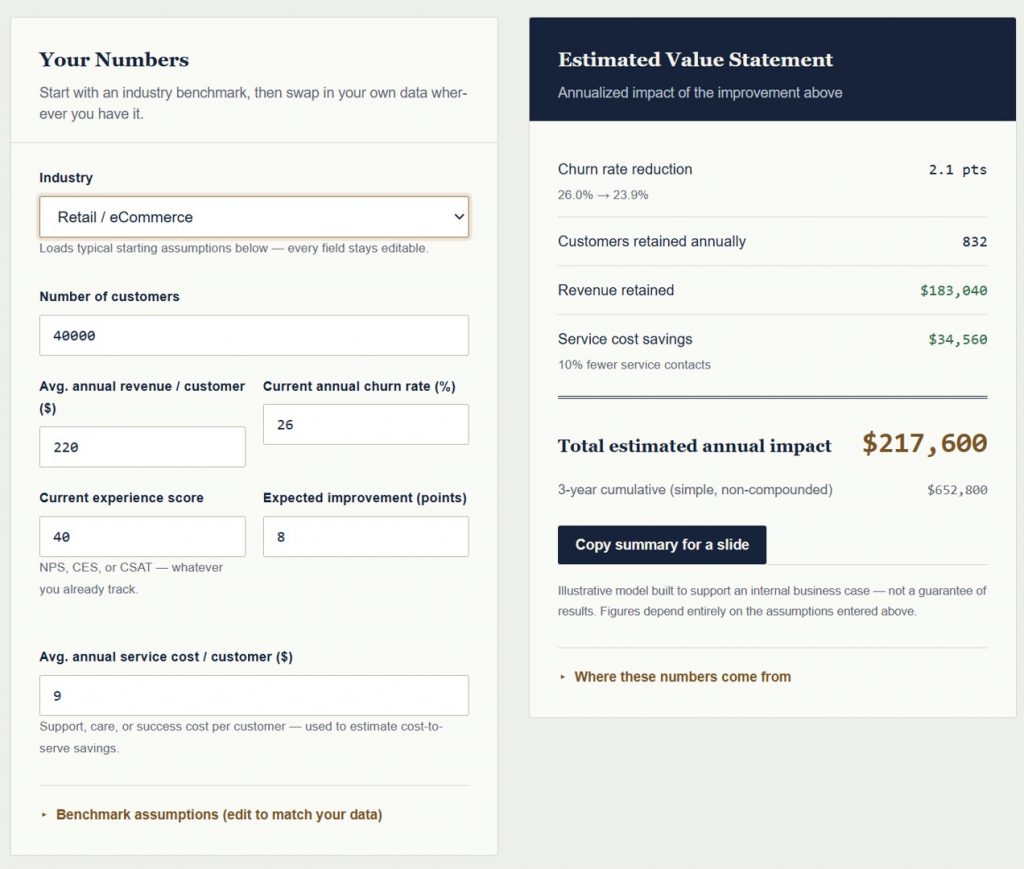
Churn Rate = (Customers Lost During Period ÷ Customers at Start of Period) × 100

A 5% monthly churn rate means you are replacing your entire customer base roughly every 20 months — just to stay flat. The business math is brutal: acquiring a new customer costs 5–25x more than retaining an existing one, and a 5% improvement in retention rate can increase profitability by 25–95% (Bain & Company / Harvard Business Review). This is why customer churn is one of the most consequential metrics in any business.

But the number alone tells you nothing about why customers are leaving — or how to stop them.

The Two Types of Customer Churn

Voluntary churn is when customers actively choose to leave — canceling subscriptions, switching to competitors, or simply stopping purchases. Voluntary churn is almost always caused by experience failures: unmet expectations, accumulated frustrations, competitive alternatives that seem better, or a specific incident that broke trust.

Involuntary churn is when customers leave for passive reasons — failed payments, expired cards, technical issues, or life circumstances. Involuntary churn is more mechanical and can be addressed through better billing infrastructure and proactive outreach. It is typically 20–40% of total churn in subscription businesses.

Most churn reduction programs focus on involuntary churn because it is easier to address with automation. Most churn value is in voluntary churn because fixing experience failures has compounding effects — it retains existing customers, reduces negative word of mouth, and improves the experience for future customers simultaneously.

The Real Causes of Customer Churn

Research and practitioner experience consistently point to the same root causes of voluntary churn. None of them are primarily data problems:

1. The experience didn’t deliver on the promise
The most common cause of churn is the gap between what was promised in marketing and sales and what was actually delivered. Customers who feel misled — even subtly, even unintentionally — lose trust quickly and rarely recover it. This gap is often invisible to internal teams because the people who make the promise (marketing and sales) and the people who deliver the experience (product and service) rarely sit together and compare notes.

2. Friction accumulated across the journey
Customers rarely churn because of a single bad experience. They churn because friction accumulated over time — small inconveniences that individually seem trivial but collectively communicate “this company doesn’t value my time.” Difficult onboarding, confusing interfaces, slow support responses, and unnecessary process steps all add to the friction load. Most organizations have no systematic way to identify where this friction lives because they measure transactions, not journeys.

3. A critical moment was handled badly
Every customer relationship has moments of truth — high-stakes interactions that define whether trust is built or broken. A billing dispute, a product failure, a service incident, an onboarding call. When these moments are handled well, they can actually increase loyalty beyond the pre-incident level (the well-documented “service recovery paradox”). When they are handled badly, they trigger churn decisions that no amount of loyalty program points will reverse.

4. The customer never fully succeeded with the product or service
In subscription and service businesses, customers who never achieve the outcome they purchased for are churning before they formally cancel — they are just paying while they look for alternatives. Customer success failure is one of the most underdiagnosed causes of churn because organizations measure activation and onboarding completion, not whether customers are actually achieving meaningful outcomes.

5. A competitor offered a better experience
Customers don’t leave because competitors are cheaper. Research consistently shows that price is rarely the primary stated reason for churn — and almost never the actual reason. They leave because a competitor’s experience made them feel more valued, more understood, or more successful. Experience-driven competitive loss is particularly dangerous because it is silent: customers don’t complain, they just leave.

6. The relationship was never built
In many organizations, the customer relationship effectively ends at purchase. No proactive outreach, no success check-ins, no relationship beyond transactional interactions. Customers who feel like account numbers rather than people are easy to lose to any competitor who treats them like humans.

Causes of Customer Churn Infographic

Why Most Churn Reduction Programs Fall Short

Most churn reduction programs are built on two flawed assumptions: that churn is primarily a data problem, and that it can be solved primarily through automation.

The data assumption leads organizations to invest in increasingly sophisticated churn prediction models — systems that identify customers likely to leave based on behavioral signals. These models are valuable for triage, but they don’t fix anything. They tell you who is at risk; they don’t tell you why, and they don’t address the underlying experience failures causing the risk in the first place. Predicting churn without fixing its causes is like repeatedly bailing out a leaking boat without patching the hole.

The automation assumption leads organizations to invest in win-back campaigns, automated health score outreach, and in-app nudges. Again, these are useful tools. But they are responses to churn, not prevention of it. By the time a customer is in your win-back campaign, the experience failure has already occurred — you are trying to recover a relationship that your experience has already damaged.

The organizations that consistently achieve low churn rates do something different: they invest in understanding and improving the actual customer experience across the full journey — not just the moments that show up in their metrics.

How an Experience Audit Identifies the Real Drivers of Churn

A customer experience audit is the most direct path to understanding why customers are actually churning — not why your data suggests they might be churning, but why they actually are.

An experience audit approaches churn from the customer’s perspective rather than the organization’s. Rather than analyzing behavioral data, it walks the actual customer journey — across all channels and touchpoints — to identify the specific experience failures that are driving departure decisions. It surfaces:

  • The friction points that accumulate into churn decisions
  • The gaps between promised and delivered experience
  • The critical moments that are being handled badly
  • The competitive experience gaps that make alternatives look attractive
  • The relationship voids where customers feel like numbers rather than people

Critically, an experience audit finds the failures that your data isn’t showing you — the things customers endure without complaint, the friction they work around rather than report, and the competitive experiences they compare you to that you’ve never measured against. These invisible failures are often the most important drivers of churn precisely because they are invisible to internal teams.

The result is not a churn prediction — it is a churn explanation, with specific, prioritized experience improvements that address the actual causes rather than the symptoms.

A Framework for Addressing Customer Churn Through Experience Improvement

Based on the root causes above, here is a practical framework for reducing churn through experience improvement:

Step 1: Audit the actual experience
Before investing in churn reduction tactics, understand what the experience actually is — not what you designed it to be, but what customers actually encounter. Walk the journey. Call your own support line. Go through your own onboarding. Submit a billing dispute. What you find will almost certainly surprise you.

Step 2: Map churn to experience failures, not to data signals
For each significant churn segment, identify the specific experience failures most likely to be driving it. Exit interviews, customer journey research, and direct observation will give you information that no behavioral dataset can.

Step 3: Prioritize by impact and fixability
Not all experience failures are equal. Prioritize fixes that address high-frequency friction (affecting many customers), critical moments of truth (high emotional stakes), and competitive gaps (experiences where alternatives are demonstrably better). Fix the leaky bucket before you pour more water in.

Step 4: Fix the experience, then measure the effect on churn
Most churn reduction programs measure first and fix second. Flip this: fix the highest-priority experience failures, then measure whether churn rates move. This approach produces sustainable churn reduction rather than temporary improvements driven by win-back campaigns that reset when the campaign ends.

Step 5: Build ongoing experience intelligence
Churn prevention is not a project — it is a capability. Organizations that consistently achieve low churn rates have built systematic ways to monitor the customer experience continuously, not just when churn spikes. This means regular journey reviews (customer journey mapping helps here), systematic feedback collection at key touchpoints, and competitive experience benchmarking.

Framework for Reducing Customer Churn Infographic

Frequently Asked Questions About Customer Churn

What is a good customer churn rate?

A good customer churn rate varies significantly by industry and business model. For SaaS businesses, monthly churn rates below 2% (roughly 22% annually) are generally considered acceptable, with best-in-class companies achieving under 0.5% monthly churn. For subscription consumer businesses, annual churn below 5-7% is strong. For B2B enterprise businesses with long contracts, annual churn below 5% is typical for well-performing companies. The most meaningful benchmark is not an industry average but your own trend over time — and whether your churn rate is higher or lower than your key competitors.

What is the difference between customer churn and customer attrition?

Customer churn and customer attrition are used interchangeably in most contexts and refer to the same phenomenon: customers stopping their relationship with an organization. Some practitioners use “attrition” for the broader category (including involuntary churn from payment failures) and “churn” specifically for voluntary departures, but there is no universal standard. What matters more than terminology is distinguishing between voluntary churn (customers actively choosing to leave) and involuntary churn (customers lost due to passive factors like payment failures), as these require fundamentally different interventions.

How do you reduce customer churn?

The most effective approach to reducing customer churn starts with understanding why customers are actually leaving — not just predicting who might leave next. This requires walking the actual customer journey to identify the experience failures driving departure decisions: accumulated friction, gaps between promised and delivered experience, badly handled critical moments, and competitive experience gaps. Once root causes are identified, targeted experience improvements produce more sustainable churn reduction than win-back campaigns or loyalty programs, which address symptoms rather than causes. A customer experience audit is the most direct way to identify the specific experience failures driving churn in your organization.

What is the relationship between customer experience and churn?

Customer experience is the primary driver of voluntary churn. Research by Bain & Company found that 80% of companies believe they deliver superior customer experience, while only 8% of their customers agree — and the gap between those perceptions is where churn lives. Customers who rate their experience as “very good” churn at dramatically lower rates than those who rate it “good” — the difference between satisfied and truly delighted customers is measurable in retention rates. Improving customer experience is not just a service initiative; it is one of the highest-ROI investments available for reducing churn and improving the financial performance of any customer-facing business.

How does a customer experience audit help reduce churn?

A customer experience audit identifies the specific experience failures driving churn by walking the actual customer journey across all channels and touchpoints — finding the friction, gaps, and critical moment failures that behavioral data doesn’t surface. Unlike churn prediction models that identify who is at risk, an experience audit explains why customers are actually leaving and provides a prioritized roadmap of experience improvements that address root causes rather than symptoms. Organizations that conduct experience audits before investing in churn reduction tactics consistently achieve more durable retention improvements than those that rely on data-driven outreach alone.

Ready to find the experience failures driving churn in your organization? Learn more about the Experience Audit →

Content Authenticity Statement: The topic area, key elements to focus on, etc. were decisions made by Braden Kelley, with a little help from Claude and Google Gemini to clean up the article, add images and create infographics.

Image credits: Google Gemini

Subscribe to Human-Centered Change & Innovation WeeklySign up here to get Human-Centered Change & Innovation Weekly delivered to your inbox every week.

How Claytronics Will Redefine Co-Creation and Experience Design

The Morphing Paradigm

LAST UPDATED: May 29, 2026 at 5:06 PM

How Claytronics Will Redefine Co-Creation and Experience Design

GUEST POST from Art Inteligencia


I. Introduction: Beyond the Flat Screen and the Static Prototype

The Hook: For decades, innovators and experience designers have been trapped in two dimensions (screens) or limited by static three dimensions (3D printing). What happens when matter itself becomes dynamic?

Defining the Tech: Introduce Claytronics and the concept of “catoms” (claytronic atoms)—sub-millimeter micro-robots that self-assemble, shift, and lock on demand based on software.

The Thesis: Claytronics is not just a technological milestone; it is the ultimate evolution of human-centered experience design and futurology. It shifts us from interacting with devices to collaborating with physical matter that adapts dynamically to human intent.

II. The Futurology Lens: A New Era for Physical UI (User Interface)

The Death of Fixed Forms: Explore how the concept of a “device” changes when form follows function in real-time.

Real-time Ergonomic Configuration: If a user grabs a physical tool, the tool’s matter dynamically adjusts its texture, grip, and weight distribution to perfectly fit that specific human hand.

Continuous Evolution: Products are no longer “finished” when they leave a factory. Through software updates, physical objects can completely rewrite their hardware configuration in the consumer’s home.

The Tech Pioneers: Who is Shaping the Programmable Matter Landscape?

As we transition from theory to practice, the claytronics and programmable matter market is expanding rapidly, with projections positioning its value to reach tens of billions of dollars over the next decade. Moving the needle on this technology requires immense R&D infrastructure and cross-disciplinary agility. Today, a distinct mix of tech giants, specialized pioneers, and academic heavyweights are laying the foundation for a morphing physical world.

1. Industry Titans & Enterprise Investors

Large enterprise technology leaders are quietly securing intellectual property and investing heavily in the underlying material science and processing architecture required to synchronize millions of micro-robots.

  • Intel Corporation: A long-standing force in the claytronics space, Intel focuses heavily on researching the advanced materials, nanotechnology, and micro-electromechanical systems (MEMS) necessary to scale catom hardware.
  • IBM: Leveraging its profound computing capabilities, IBM recently forged partnerships with leading academic research labs to focus on micro-robotic scaling and advanced distributed control algorithms.
  • Sony & Samsung: Consumer electronics giants are increasingly looking toward a “fluid device” future, establishing joint ventures and research pipelines to figure out how modular, shape-shifting interfaces can be commercialized for home and entertainment ecosystems.

2. Specialized Pioneers & Modular Robotics Startups

While the market is still deeply rooted in advanced engineering, several dedicated commercial entities and venture-backed players are pushing the boundaries of physical automation.

  • Claytronics, Inc.: A foundational enterprise dedicated solely to this paradigm shift, driving the design of actual millimeter-scale catom prototypes and software frameworks to coordinate them.
  • Modular Robotics (Cubelets): Operating successfully at the intersection of education and design, their “Cubelets” system serves as an early, commercialized proof-of-concept for how individual robot blocks can use emergent behavior to collaborate and form complex structures.
  • Early-Stage Innovators: The sector is witnessing a sharp uptick in funding from elite venture arms—such as Boston Dynamics Ventures—backing next-generation startups focused on high-resolution reconfigurable motors and haptic 3D replication tools.

3. Elite Academic & Defense Innovation Hubs

Because programmable matter sits at the bleeding edge of physics and computer science, the intellectual capital is driven by elite institutional partnerships.

  • Carnegie Mellon University (CMU): The historic epicentre of claytronics research. CMU continually breaks ground on the algorithmic breakthroughs needed for self-assembling structures, spatial control, and dynamic interlocking physics.
  • MIT (Distributed Robotics & CSAIL): Renowned for inventing “self-sculpting sand” and programmable origami sheets, MIT specializes in high-resolution, low-power reconfigurable chains and magnetically reprogrammable materials that connect autonomously.
  • Defense Advanced Research Projects Agency (DARPA) & US Army Research Lab: Through initiatives like the Programmable Matter Project, defense funding acts as a massive catalyst, validating use cases ranging from rapid disaster relief infrastructure to remote medical simulation tools.

III. Transforming the Design Thinking Sandbox

The Hyper-Agile Workshop: How design thinking squads will run co-creation workshops using programmable matter.

Instant Prototyping: Instead of waiting hours for a 3D print or sketching on a whiteboard, a team can say, “Let’s see what a more aerodynamic dashboard feels like,” and the matter morphs instantly under their fingers.

Failing Fast in Three Dimensions: Reducing the cost and friction of physical experimentation, allowing teams to iterate on tactile, real-world experiences as quickly as software developers push code.

IV. Human-Centered Change: Leading Organizations Through the Transition

The Mindset Shift: Moving organizations away from “product-centric” thinking to “fluid experiential” thinking. When physical assets become software-defined, product management must merge completely with software engineering agile loops.

Overcoming Resistance to Radical Change: Shifting from predictable, rigid supply chains to dynamic, software-driven physical assets will trigger immense organizational anxiety. Supply chain managers will fear obsolescence, and quality assurance teams will struggle with testing an object that can have infinite forms. Leaders must establish psychological safety by framing claytronics not as a replacement for human craft, but as an amplifier for creative intent.

The New Skillsets (The Co-Creation Canvas): What experience designers, innovation managers, and change agents need to learn today. To help teams transition, organizations should adopt a 3-part internal upskilling framework:

  • Tactile Storytelling: Designers must learn to program haptic feedback, defining not just how an object looks on a screen, but how its weight, texture, and density shift to communicate with the user.
  • Dynamic Safety Mapping: Change agents must define the operational guardrails of morphing spaces, creating strict environmental rules for when and where matter is allowed to change shape to protect human workers.
  • Elastic Branding: Marketing and experience leaders must move past fixed logos and static industrial designs, learning to build brands that express themselves through physical motion and real-time physical adaptation.

V. Ethical and Experiential Guardrails (The Human Factor)

The Cognitive Load of a Shifting Reality: How do we maintain trust and spatial familiarity when the objects around us can change shape on a whim?

Safety and Standards: Ensuring that self-assembling structures are structurally sound, reliable, and secure from digital tampering (malicious software redefining physical shapes).

Sustainability: The potential for claytronics to radically reduce waste—one block of programmable matter can become a hundred different tools over its lifecycle, eliminating single-use plastic and manufacturing overhead.

VI. The Claytronics Playbook: Strategic Horizons for Investors and Executives

Programmable matter is not a distant science fiction fantasy; it is an emerging asset class and a looming disruptive force for traditional manufacturing. To capitalize on this shift, leaders and investors must look at the transition through three distinct commercial horizons.

Horizon 1: The Software Layer & Control Infrastructure (Next 3–5 Years)

The Opportunity: The immediate value lies not in the physical hardware, but in the software, algorithms, and digital security required to manage millions of moving parts simultaneously.

  • Investment Vector: Target companies developing decentralized operating systems, micro-robotic mesh networking protocols, and AI-driven spatial compilers that translate 3D CAD files into catom movement commands.
  • Corporate Action: IT and product design departments should begin auditing their existing digital twins and asset pipelines, ensuring software architectures can eventually export to dynamic physical matter.

Horizon 2: High-Value, Niche Prototyping & Medical Tooling (5–8 Years)

The Opportunity: As catom hardware scales down in cost, initial commercialization will thrive in industries with high margins and low volume requirements.

  • Investment Vector: Monitor advanced medical device companies utilizing programmable materials for minimally invasive surgery tools that morph inside the body, or aerospace firms using fluid materials for wind-tunnel testing.
  • Corporate Action: Research and development (R&D) centers should prepare to phase out traditional additive manufacturing (3D printing) in favor of early-stage programmable matter sandboxes to cut rapid prototyping cycles from days to seconds.

Horizon 3: The Programmable Consumer Ecosystem (8+ Years)

The Opportunity: This is the ultimate destination: consumer goods that redefine their own form factors on demand, radically altering global supply chains.

  • Investment Vector: Long-term venture capital should track innovations in advanced material science, specifically room-temperature electromagnetics and low-power latching mechanisms that allow catoms to stay rigid without draining energy.
  • Corporate Action: Supply chain and logistics executives must begin scenario-planning for a “hardware-as-a-service” model, where physical inventory shipping is replaced by digital design licensing streams.

VII. The Ripple Effect: Which Industries Face Imminent Disruption?

Claytronics represents a massive threat to legacy businesses that rely on the mass production of static items. Forward-thinking investors should carefully evaluate their exposure to fields vulnerable to the rise of programmable matter.

Vulnerable Sector The Claytronics Threat The Strategic Pivot
Tooling & Hardware Manufacturing Single-use mechanical tools become obsolete when a single block of claytronic matter can morph into a wrench, a hammer, or a custom caliper on demand. Shift from manufacturing physical steel and plastic components to selling proprietary, certified 3D geometry software licenses.
Commercial Warehousing & Logistics The need for massive warehouses stuffed with static safety stock plummets when raw programmable matter can be stored efficiently and shaped instantly at the point of sale. Invest heavily in localized, highly secure “material computation hubs” rather than sprawling hub-and-spoke distribution warehouses.
Office & Retail Real Estate Fixed layouts limit commercial utility. Programmable walls, desks, and retail displays mean a single square foot of real estate can effortlessly shift from a collaborative workspace by day to an immersive retail store by night. Value real estate assets based on adaptive spatial capacity and structural data throughput rather than pure square footage.

VIII. Conclusion: Designing a Fluid Future

Summary: Claytronics turns the physical world into a digital canvas, putting unprecedented power into the hands of experience designers and innovators.

Call to Action: The future isn’t something that happens to us; it’s something we build. Innovators must start thinking beyond static constraints today, because tomorrow, the very matter around us will bend to human imagination.

Frequently Asked Questions

What is Claytronics and how does it work?

Claytronics, or programmable matter, combines micro-robotics and computer science to create millions of sub-millimeter units called “catoms” (claytronic atoms). These units dynamically self-assemble, shift, and lock together to form three-dimensional physical objects that change shape, texture, and function on demand based on software inputs.

How will programmable matter transform design thinking and prototyping?

Programmable matter eliminates the lag time of traditional 3D printing and the limitations of flat screens. Design thinking squads can use it to create hyper-agile workshops where physical prototypes morph instantly in real time based on human intent, allowing teams to test ergonomics, fail fast in three dimensions, and iterate rapidly.

What are the organizational and human challenges of adopting Claytronics?

The primary challenges involve a massive mindset shift from rigid, product-centric manufacturing to fluid, experiential design. Organizations must manage the anxiety of shifting supply chains to software-driven assets, address the cognitive load humans experience when their physical surroundings change shape, and build rigorous digital security guardrails to prevent physical tampering.


Disclaimer: This article speculates on the potential future applications of cutting-edge scientific research. While based on current scientific understanding, the practical realization of these concepts may vary in timeline and feasibility and are subject to ongoing research and development.

Image credits: Gemini

Subscribe to Human-Centered Change & Innovation WeeklySign up here to get Human-Centered Change & Innovation Weekly delivered to your inbox every week.

Innovation Frameworks

A Practitioner’s Guide to the Most Important Models

Innovation Frameworks

by Braden Kelley and Art Inteligencia

Every organization wants to innovate. Few do it consistently. The difference is almost never creativity — most organizations have more ideas than they can act on. The difference is structure: a repeatable way of thinking about innovation that aligns effort with strategy, channels creative energy toward real opportunities, and builds the organizational capability to innovate continuously rather than occasionally.

That’s what an innovation framework provides. And after two decades of working with organizations on innovation and change — and developing my own frameworks including the Eight I’s of Infinite Innovation, the Value Innovation Framework, and the Human-Centered Innovation Toolkit™ — I’ve developed strong views on which frameworks work, which ones fall short, and how to choose the right one for your situation.

This guide covers the most important innovation frameworks in use today, what each one does well, where each one is limited, and how to choose the right framework for your organization’s specific innovation challenge.

What is an Innovation Framework?

An innovation framework is a structured approach that helps organizations systematically identify opportunities, generate and evaluate ideas, and move from concept to implemented value. A good innovation framework does three things: it provides a common language that aligns leaders, teams, and stakeholders around what innovation means and how it works in your context; it sequences the activities of innovation so that effort is directed toward the highest-value opportunities; and it builds repeatable capability — so that innovation becomes a way of working rather than a periodic event.

The most important thing to understand about innovation frameworks is that no single framework covers all types of innovation equally well. Frameworks that excel at incremental product improvement are not designed for disruptive business model innovation. Frameworks built for startup environments don’t always transfer to large, complex organizations. The first step in choosing a framework is understanding what type of innovation challenge you are actually facing.

The Most Important Innovation Frameworks

McKinsey’s Three Horizons Framework

Developed at McKinsey and popularized in the book The Alchemy of Growth, the Three Horizons Framework helps organizations balance their innovation portfolio across three time horizons:

  • Horizon 1 — Extending and defending the core business. Incremental improvements to existing products, services, and business models. Typically 70% of innovation investment.
  • Horizon 2 — Building emerging businesses. Adjacent opportunities that leverage existing capabilities in new markets or segments. Typically 20% of innovation investment.
  • Horizon 3 — Creating genuinely new options. Transformative innovations that may cannibalize the core business or create entirely new markets. Typically 10% of innovation investment.

Strengths: The most useful framework for having conversations about innovation investment allocation at the executive level. Forces organizations to acknowledge that they need different innovation approaches for different time horizons, and that Horizon 3 work requires protection from the short-term pressures that dominate Horizon 1 management.

Limitations: The 70-20-10 split is a guideline, not a rule — and organizations in different competitive situations need different allocations. The framework also doesn’t tell you how to innovate within each horizon, just how to allocate investment across them. And the original framework assumed horizons of roughly 0-2, 2-5, and 5+ years — in fast-moving industries today, those timeframes may be compressed significantly.

Best for: Portfolio strategy, investment allocation conversations, and helping leadership teams understand why protecting Horizon 3 work from Horizon 1 pressures is essential.

Jobs to Be Done (JTBD)

Developed by Clayton Christensen and refined by Tony Ulwick and Bob Moesta, Jobs to Be Done reframes the innovation question from “what product should we build?” to “what job are customers hiring this product to do?” The insight is that customers don’t buy products — they hire them to make progress in specific circumstances, and understanding the underlying job opens innovation opportunities that product-focused thinking misses entirely.

Strengths: The most powerful framework available for identifying genuinely unmet customer needs and generating breakthrough product and service concepts. The “milkshake marketing” insight — that people hired McDonald’s milkshakes for a morning commute job, not a dessert job — is one of the most cited examples in innovation literature because it illustrates how different JTBD thinking is from conventional market research. JTBD consistently surfaces opportunities that product roadmaps and voice-of-customer surveys miss.

Limitations: Requires significant qualitative research skill to apply well. The interviews and observation needed to surface real jobs-to-be-done are more demanding than standard customer research. JTBD also doesn’t provide a framework for the full innovation process — it’s an insight methodology, not an end-to-end innovation system.

Best for: Product and service innovation, identifying white space opportunities, and challenging assumptions about why customers actually use your products.

Lean Startup

Developed by Eric Ries and drawing on Toyota’s lean manufacturing principles, the Lean Startup framework centers on the Build-Measure-Learn loop: build a minimum viable product (MVP), measure how real customers respond, and learn whether to persevere with the current direction or pivot to a different approach. The core insight is that the biggest risk in innovation is building something nobody wants — and that risk is best mitigated through rapid, cheap experimentation rather than elaborate upfront planning.

Strengths: The most influential innovation framework of the past two decades in the startup world, and increasingly in corporate innovation. The MVP concept has genuinely changed how organizations think about early-stage development. Lean Startup’s emphasis on validated learning — testing assumptions with real customers before significant investment — reduces the waste that kills most innovation programs.

Limitations: Developed for startup environments and doesn’t fully account for the complexity of large organization constraints — governance requirements, brand risk, organizational politics, and the need to coordinate across functions. “Move fast and break things” works differently when you are breaking an established brand or regulatory relationship. Also focuses primarily on product and technology innovation rather than business model or organizational innovation.

Best for: New product development, digital product and service innovation, and any context where rapid experimentation and validated learning are possible.

Disruptive Innovation Framework

Clayton Christensen’s theory of disruptive innovation describes how new entrants typically begin by serving overlooked, over-served, or non-consuming segments with simpler, cheaper solutions — and then move upmarket over time, eventually displacing established players who were focused on serving their most profitable customers. The framework provides a lens for understanding competitive threats that conventional competitive analysis misses.

Strengths: The most powerful framework for understanding how industries are disrupted and for identifying both threats and opportunities from disruptive dynamics. Helps established organizations avoid the innovator’s dilemma — the tendency to dismiss disruptive threats as irrelevant to their core market until it is too late.

Limitations: Better as a diagnostic and strategic lens than as a practical innovation process. The framework tells you where disruption is likely to come from and why, but doesn’t tell you what to do about it. Also, the theory has been misapplied so frequently — with “disruptive” used as a synonym for any significant innovation — that it has lost some of its precision.

Best for: Competitive analysis, strategic planning, and helping leadership teams understand the threats they are systematically underestimating.

Open Innovation

Coined by Henry Chesbrough, open innovation describes a model in which organizations use both internal and external ideas and paths to market to advance their innovation. Rather than relying solely on internal R&D, open innovation deliberately leverages external partners — startups, universities, customers, suppliers, and even competitors — to access capabilities and ideas that would take too long or cost too much to develop internally.

Strengths: Dramatically expands the innovation surface area available to an organization. Companies like Procter & Gamble, whose Connect + Develop program targeted sourcing 50% of innovations from outside the company, demonstrated that open innovation can transform both the scale and velocity of an innovation program. Particularly powerful for organizations that need to access rapidly evolving technology capabilities.

Limitations: Requires significant organizational capability to manage external relationships, evaluate external ideas, and integrate external technologies without destroying their value. The “not invented here” syndrome — the organizational immune system’s tendency to reject external ideas — is a powerful force that many open innovation programs underestimate. Also raises complex IP and partnership issues.

Best for: Technology-intensive industries, organizations seeking to accelerate innovation velocity, and any context where the external innovation ecosystem is moving faster than internal R&D can match.

Design Thinking

Formalized at Stanford’s d.school and popularized by IDEO, design thinking is a human-centered, iterative problem-solving methodology built around five stages: Empathize, Define, Ideate, Prototype, and Test. At its core, design thinking insists that innovation must begin with deep understanding of the people being served — not with technology capabilities or product roadmaps.

Strengths: The best framework available for ensuring that innovation addresses real human needs. Design thinking’s emphasis on empathy and prototyping has genuinely changed how organizations approach product and service development. The methodology transfers well beyond product design to organizational change, service design, and public policy — anywhere that complex human-centered problems need to be solved creatively. For a full treatment, see our guide to the design thinking process.

Limitations: The Empathize and Define stages require significant time investment that organizations under delivery pressure often shortcut — producing the tool’s use without its value. Design thinking also doesn’t address the full innovation pipeline beyond concept validation: scaling, organizational alignment, and change management are outside its scope.

Best for: Product and service innovation, organizational change design, and any context where the problem is not fully understood and human needs are the primary design constraint.

Braden Kelley’s Innovation Frameworks

After applying and observing the frameworks above across hundreds of organizations, I developed my own frameworks to address the gaps I consistently encountered — particularly the absence of frameworks designed for building continuous innovation capability rather than managing individual innovation projects.

The Eight I’s of Infinite Innovation

The Eight I’s of Infinite Innovation is a continuous innovation framework built around eight interconnected elements: Inspiration, Insight, Ideation, Invention, Implementation, Illumination, Improvements, and Infinity. Unlike project-based innovation frameworks, the Eight I’s is designed to be a perpetual cycle — the outputs of one round become the inputs for the next, creating a self-reinforcing engine of continuous innovation rather than a series of discrete projects.

The framework is particularly suited to organizations transitioning from a product-centered to a customer needs-centered structure — where innovation must be ongoing and adaptive rather than periodic and planned. The Eight I’s is most powerful when combined with the Value Innovation Framework, which provides the strategic lens for determining which opportunities are worth pursuing. Read more about the Eight I’s of Infinite Innovation →

Eight I's of Infinite Innovation

The Value Innovation Framework

The Value Innovation Framework addresses the question that most innovation frameworks leave unanswered: will this innovation actually succeed in the market? Most frameworks focus on generating and validating ideas, but provide little guidance on predicting whether an innovation will achieve real-world adoption. The Value Innovation Framework fills that gap with a simple but powerful equation:

Innovation = Value Creation × Value Access × Value Translation

The components are multiplicative, not additive — which is the key insight. Do two of the three brilliantly and one poorly, and the innovation can still fail. All three must be executed well for an innovation to succeed:

Value Creation — The innovation must create incremental or entirely new value large enough to overcome the switching costs of moving from the old solution (including the “Do Nothing” option). New value can be created by making something more efficient, more effective, possible that wasn’t possible before, or by creating new psychological or emotional benefits. If the value created doesn’t exceed the friction of switching, adoption won’t happen regardless of how well the other two components are executed.

Value Access — Also thought of as friction reduction. How easy is it for people to access, use, and do business around the new solution? A highly valuable innovation that is difficult to access, purchase, integrate, or use will fail. Value Access covers the full spectrum of friction that stands between a customer and the value an innovation creates — distribution, pricing, integration complexity, learning curve, and switching costs.

Value Translation — How well does the innovation communicate its value in terms that resonate with the people it is designed for? Apple’s iPad launch illustrates this perfectly: the initial announcement failed to translate the value clearly, putting the launch at risk — until a single Out of Home advertisement showing a person relaxing with an iPad on their lap communicated in seconds what no amount of technical specification could. Value Translation is about helping people understand how the innovation fits into their lives, not just what it does.

The Value Innovation Framework is an innovation success prediction tool — it can be applied to evaluate existing innovations, diagnose why past innovations failed, and guide the development of new ones. It is most powerful when combined with the Eight I’s of Infinite Innovation – which can be downloaded as an 11″ x 17″ reference for free here. Read the full treatment in Innovation Is All About Value →

Value Innovation Framework

The Human-Centered Innovation Toolkit™

The Human-Centered Innovation Toolkit™ is the most comprehensive of my innovation frameworks — a complete system for building innovation capability inside organizations. It draws on the best of design thinking, jobs to be done, and lean startup while adding the organizational change management dimension that none of those frameworks adequately address.

The central insight driving the toolkit is that innovation programs fail most often not because of insufficient creativity or inadequate process, but because the organizational change required to implement innovations is underestimated and under-managed. The Human-Centered Innovation Toolkit™ integrates the innovation process with the change management process — giving organizations a single system for generating validated concepts and successfully implementing them.

How to Choose the Right Innovation Framework

The right framework depends on your innovation challenge, organizational context, and where you are in the innovation process. Use this guide to match your situation to the most appropriate approach:

Your situation Best framework(s)
Deciding how to allocate innovation investment across time horizons Three Horizons Framework
Identifying unmet customer needs and white space opportunities Jobs to Be Done
Validating new product concepts quickly and cheaply Lean Startup
Understanding competitive disruption threats Disruptive Innovation Framework
Accessing external innovation capabilities and ideas Open Innovation
Solving complex human-centered problems Design Thinking
Building continuous innovation capability across the organization Eight I’s of Infinite Innovation + Value Innovation Framework
Integrating innovation and change management into a single system Human-Centered Innovation Toolkit™
Full-spectrum innovation from insight to implementation Human-Centered Innovation Toolkit™ + Change Planning Toolkit™

Most organizations benefit from combining frameworks rather than selecting one exclusively. The Three Horizons gives you the portfolio lens. Jobs to Be Done gives you the customer insight. Design Thinking gives you the problem-solving process. Lean Startup gives you the validation methodology. The Human-Centered Innovation Toolkit™ ties them together with the organizational change capability that determines whether any of them actually produce results at scale.

The Most Common Reasons Innovation Frameworks Fail

Even the best innovation framework will fail if applied poorly. Here are the most common failure modes I’ve observed across organizations:

Selecting frameworks based on trend rather than fit. Design thinking is enormously popular. That doesn’t mean it’s the right framework for every innovation challenge. Before selecting a framework, diagnose your actual situation — what type of innovation are you pursuing, what is your primary constraint, and what organizational capability do you most need to build?

Treating frameworks as one-time events. A design thinking workshop is not a design thinking capability. A Lean Startup bootcamp is not a Lean Startup organization. Frameworks only build organizational capability when they are practiced repeatedly, supported by leadership, and embedded in how work actually gets done — not when they are run as standalone events.

Ignoring the organizational change dimension. Every significant innovation requires organizational change to implement — changes to processes, structures, skills, culture, and resource allocation. Most innovation frameworks are silent on this dimension, which is why so many validated concepts never get implemented. Building an innovation framework without a corresponding change management approach is the single most common reason innovation programs produce learning but not results.

Applying corporate constraints to startup frameworks. Lean Startup and Design Thinking were developed for environments where speed, flexibility, and risk tolerance are high. Large organizations often apply these frameworks while maintaining governance structures, approval chains, and risk management processes that fundamentally undermine the methodologies’ core principles. The frameworks need to be adapted for corporate environments, not applied verbatim.

Under-investing in the human side. The best innovation frameworks are collaborative, not expert-driven. They are designed to be used with the teams and stakeholders who will implement innovations, not by consultants or innovation functions who deliver conclusions to leadership. Organizations that use frameworks as expert tools rather than collaborative platforms consistently get lower-quality insights, lower ownership, and lower implementation rates.

Top Reasons Innovation Frameworks Fail

Frequently Asked Questions About Innovation Frameworks

What is an innovation framework?

An innovation framework is a structured approach that helps organizations systematically identify opportunities, generate and evaluate ideas, and move from concept to implemented value. It provides a common language for talking about innovation, a sequence of activities for managing the innovation process, and a set of principles that reflect how successful innovation actually works. The best innovation frameworks are adapted to the specific type of innovation challenge an organization faces — there is no single framework that is right for all situations.

What are the most widely used innovation frameworks?

The most widely used innovation frameworks include McKinsey’s Three Horizons Framework (for portfolio allocation), Jobs to Be Done (for identifying unmet customer needs), Lean Startup (for rapid concept validation), Disruptive Innovation (for competitive strategy), Open Innovation (for accessing external ideas and capabilities), and Design Thinking (for human-centered problem solving). Most experienced innovation leaders use multiple frameworks in combination rather than relying on any single approach, selecting frameworks based on the specific innovation challenge at hand.

What is the difference between an innovation framework and an innovation process?

An innovation framework is a broader conceptual structure — a set of principles, lenses, and approaches that guide how an organization thinks about and pursues innovation. An innovation process is more specific — a defined sequence of steps, activities, and decision points for managing innovation from idea to implementation. Most innovation frameworks include or imply a process, but the framework encompasses more than the process: it includes the mindsets, organizational capabilities, and strategic logic that determine whether the process produces results.

How do you build an innovation framework for your organization?

Building an innovation framework for your organization involves four steps. First, diagnose your actual innovation challenge — are you trying to improve the core business, explore adjacent opportunities, or develop transformative new capabilities? Different challenges require different frameworks. Second, select the frameworks that best fit your challenge and organizational context. Third, adapt those frameworks to your specific environment — accounting for your governance requirements, risk tolerance, and organizational culture. Fourth, build the organizational capability to use the frameworks consistently over time, not just as one-time events. This requires leadership support, training, embedded practice, and the organizational change management capability to implement what the frameworks reveal.

Why do innovation frameworks fail in large organizations?

Innovation frameworks fail in large organizations most often for four reasons: they are applied as one-time events rather than ongoing practices; they are selected based on trend rather than fit; they ignore the organizational change dimension required to implement innovations; and they are applied by expert consultants rather than collaboratively with the teams who will execute the work. The organizations that get the most value from innovation frameworks are those that adapt them to their specific context, practice them consistently, and invest equally in the change management capability needed to turn innovation concepts into implemented results.

For real-world examples of each framework in action, see our guide to innovation framework examples.

Content Authenticity Statement: The topic area, key elements to focus on, etc. were decisions made by Braden Kelley, with a little help from Claude and Google Gemini to clean up the article, add images and create infographics.

Image credits: Google Gemini

Subscribe to Human-Centered Change & Innovation WeeklySign up here to get Human-Centered Change & Innovation Weekly delivered to your inbox every week.

You Have to Be Right in the Right Way

You Have to Be Right in the Right Way

GUEST POST from Mike Shipulski

When something doesn’t feel right, respect your intuition. Even when you don’t know why it doesn’t feel right, respect your gut. When something doesn’t make sense, don’t judge yourself negatively. Rather, make the commitment to dig deeply until you hit the fundamentals. When a proposed approach violates something inside, don’t be afraid to say what you think is right. Or, be afraid and say it anyway. But right doesn’t mean your predictions will come true. Right means you thought about it, you understand things differently and you have a coherent rationale for thinking as you do. And right also means you don’t understand, but you want to. And right means something does not sit well with you and you don’t know why. And it means the right view is important to you.

Right doesn’t mean correct. And right doesn’t mean something else is wrong. When you have right view, it doesn’t mean you see things exactly right. It means you’re going about things in a way that’s right for the situation. It means your approach feels right to the people involved. It means you’re going about things with the right intention.

Now, like with any new idea, you’re obligated to formalize what you think is right and explain it to your peers. But, to be clear, you’re not looking for permission, you’re writing it down to help you understand what you think. When you try to present your thoughts, you’ll learn what you know and what you don’t. You’ll learn which words work and which don’t. You’ll learn right speech.

And you’ll find the potholes. And that’s why you present to your peers. They’ll be critical of the idea and respectful of you. They’ll tell you the truth because they know it’s better to iron out the details early and often. As a group, you’ll support each other. As a group, you’ll take the right action.

When ideas are introduced that are different, the organization will feel stress. Everyone wants to do a good job, yet there’s no agreement on the right way. Even though there’s stress, no one wants to create harm and everyone wants to behave ethically. It’s important to demonstrate compassion to yourself and others. The stress is natural, but it’s also natural to go about your livelihood in the right way.

But when the stakes are high and there’s no consensus on how to move forward, it’s not easy to hold onto the right mental state. The stress can cause us to delude ourselves into thinking things aren’t going well. But, letting the disagreement go unaddressed is unskillful, as it will only fester. It’s far more skillful to respectfully debate and discuss the disagreement. In that way, everyone makes the right effort to work things out.

Over time, the pattern of behavior can transition to a natural openness where ideas are shared freely. This becomes easier when we drop the mental habit of categorizing things into buckets we like and buckets we don’t. And it helps to maintain awareness of how things really are so we can strip away our subjective options. In this case, mindfulness is the right way to go.

None of this is easy. Our minds are constantly distracted by competing demands, growing to-do lists and organizational complexities of the work. Without dedicated practice, our minds can get lost in a flurry of thoughts of our own creation. To make it work, we’ve got to maintain a heightened alertness to our mental state and that takes the right concentration.

There’s nothing new here, but this well-worn path has merit.

Image credit: Unsplash

Subscribe to Human-Centered Change & Innovation WeeklySign up here to join 17,000+ leaders getting Human-Centered Change & Innovation Weekly delivered to their inbox every week.
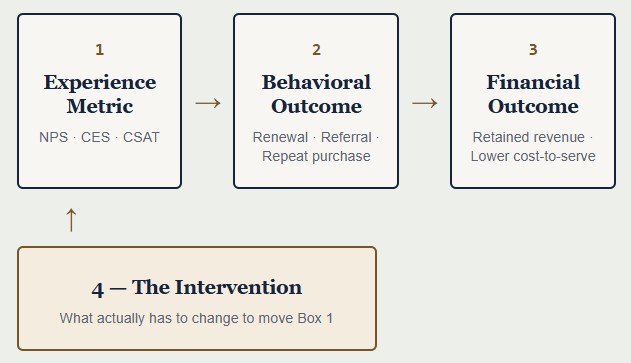
Change Management Models

A Practitioner’s Guide to the Most Important Frameworks

Change Management Models

by Braden Kelley and Art Inteligencia

Change management models exist because organizational change fails far more often than it succeeds. Research consistently puts the failure rate of major change initiatives at 60–70% — not because leaders lack intelligence or commitment, but because most organizations attempt change without a structured framework for thinking about what change actually requires of people, processes, and leadership.

After two decades of working with organizations on change and innovation, and developing the Human-Centered Change™ methodology — including the Change Planning Canvas™ and more than 70 visual, collaborative tools that make up the Change Planning Toolkit™ — I’ve come to believe that the right change management model is not the one that is most academically respected or most commonly cited. It’s the one that fits your organization’s specific situation, culture, and change challenge.

This guide covers the most important change management models in use today, what each one does well, where each one falls short, and how to choose the right framework for your change initiative.

What is a Change Management Model?

A change management model is a structured framework that helps leaders plan, implement, and sustain organizational change. Models provide a common language for talking about change, a sequence of steps or activities to follow, and a set of principles that reflect how people and organizations actually respond to change. Without a model, change programs tend to focus on technical deliverables (new systems, new org charts, new processes) while neglecting the human dimensions that determine whether change is actually adopted.

The best change management models for different organizational change types share three characteristics: they are grounded in how people actually experience change (not just how organizations want them to), they provide actionable guidance rather than abstract principles, and they are flexible enough to be adapted to different organizational contexts and change types.

The Most Important Change Management Models

Lewin’s Change Model (Unfreeze-Change-Refreeze)

Developed by social psychologist Kurt Lewin in the 1940s, this is the foundational model that most others build on. Lewin proposed that change occurs in three stages:

  • Unfreeze — Create the motivation and readiness to change by challenging the status quo, communicating the need for change, and reducing the forces that resist it
  • Change — Move toward the new desired state through new behaviors, processes, and ways of thinking
  • Refreeze — Stabilize and sustain the new state by embedding new behaviors in culture, systems, and practices

Strengths: Elegantly simple. Captures the essential insight that change requires deliberate unfreezing of current patterns before new ones can take hold — an insight most organizations ignore by jumping straight to implementation.

Limitations: Too linear for complex modern change environments. The “refreeze” concept is increasingly obsolete in organizations that need to change continuously rather than stabilize between change cycles. Also provides little practical guidance on how to execute each stage.

Best for: Providing a conceptual foundation and common language for thinking about change. Less useful as a practical implementation guide.

Kotter’s 8-Step Change Model

Harvard Business School professor John Kotter developed his 8-step model based on research into why change programs fail. The eight steps are: create urgency, build a guiding coalition, form a strategic vision, communicate the vision, remove obstacles, generate short-term wins, sustain acceleration, and institute change.

Strengths: The most widely used change management model in large organizations. Strong emphasis on building a coalition of change champions and creating visible short-term wins to sustain momentum. The urgency-first approach addresses one of the most common failure modes in change programs.

Limitations: Primarily a leadership model — it tells leaders what to do but provides little guidance on the employee experience of change. Sequential step approach can create rigidity in dynamic environments. Does not adequately address resistance or the emotional dimensions of change. Works better for top-down, well-resourced change programs in large organizations than for the complex, multi-directional change challenges most organizations actually face.

Best for: Large-scale organizational transformation programs with strong executive sponsorship. Less effective for culture change or change initiatives that require significant employee participation in the design process.

ADKAR Model (Prosci)

Developed by Jeff Hiatt at Prosci, ADKAR focuses on the individual experience of change rather than the organizational process. The acronym stands for Awareness (of the need for change), Desire (to support the change), Knowledge (of how to change), Ability (to implement new skills and behaviors), and Reinforcement (to sustain the change).

Strengths: The best model available for diagnosing where individual change adoption is breaking down. Highly practical — if someone isn’t changing, ADKAR helps you identify exactly which building block is missing. Strong focus on the human side of change that Kotter’s model underemphasizes. Excellent for managing large-scale ERP implementations, technology rollouts, and process changes where individual adoption is the critical success factor.

Limitations: Individual-focused model that doesn’t address organizational or systemic dimensions of change. Can create a mechanical, compliance-oriented approach to change if not applied thoughtfully. Doesn’t address the cultural and leadership behavioral changes required for transformation. The reinforcement stage is often underfunded and underexecuted in practice.

Best for: Technology adoption, process change, and any initiative where the primary challenge is getting individuals to change their behavior in specific, defined ways.

McKinsey 7-S Framework

Developed by Tom Peters and Robert Waterman at McKinsey in the late 1970s, the 7-S Framework identifies seven interdependent elements of an organization: Strategy, Structure, Systems, Staff, Style, Skills, and Shared Values. The model proposes that effective change requires alignment across all seven elements.

Strengths: The most comprehensive organizational diagnostic tool of the major models. Excellent for identifying where misalignment is undermining change efforts — especially useful for post-merger integration, where organizational systems and values are often deeply misaligned. Forces leaders to think systemically rather than focusing on one or two visible elements of change.

Limitations: A diagnostic model, not an implementation guide. Tells you what needs to be aligned but not how to align it. Complex enough that it often requires external facilitation to apply effectively. Can become an academic exercise without strong executive engagement.

Best for: Organizational diagnosis, post-merger integration, and large-scale transformation programs where systemic alignment is the primary challenge.

Bridges’ Transition Model

William Bridges distinguished between change (the external event or situation) and transition (the internal psychological process people go through in response to change). His model identifies three phases: Endings (letting go of the old), the Neutral Zone (the in-between state of confusion and possibility), and New Beginnings (embracing the new).

Strengths: The most psychologically sophisticated of the major models. The critical insight — that transition begins with an ending, not a beginning — is consistently underappreciated by change leaders who focus on communicating the new state without acknowledging the loss of the old one. Exceptionally useful for understanding and managing resistance to change.

Limitations: A conceptual model rather than a practical implementation framework. Requires skilled facilitation to apply effectively. Less useful for organizations looking for a step-by-step change management process.

Best for: Culture change, leadership transitions, post-restructuring integration, and any change situation where resistance and emotional response are the primary obstacles.

Kübler-Ross Change Curve

Originally developed to describe the emotional stages of grief, Elisabeth Kübler-Ross’s model was adapted for organizational change to describe the emotional journey individuals experience when facing unwanted change: shock, denial, anger, bargaining, depression, acceptance, and integration.

Strengths: Helps leaders understand that resistance and emotional responses to change are normal, predictable, and temporary — not signs of failure. Creates empathy for the human experience of change. Particularly useful for communicating with leaders who are frustrated by employee resistance.

Limitations: Originally developed for grief, not organizational change — the mapping is imperfect. Implies a linear progression through stages that people actually experience non-linearly and idiosyncratically. Can inadvertently normalize a passive, wait-it-out approach to change resistance rather than proactive engagement.

Best for: Building change leadership empathy and designing communication strategies that acknowledge the emotional journey of change.

The ACMP Standard for Change Management

Before covering the Human-Centered Change™ methodology, it’s worth acknowledging the ACMP Standard for Change Management — the professional standard developed by the Association of Change Management Professionals (ACMP). The ACMP Standard is not a prescriptive model but a competency framework that defines what effective change management practice looks like across five process groups: Evaluating Change Impact and Organizational Readiness, Formulating the Change Management Strategy, Developing the Change Management Plan, Executing the Change Management Plan, and Closing the Change Management Effort.

The ACMP Standard is significant because it represents the profession’s consensus on what change management involves — independent of any proprietary model or methodology. Practitioners who hold the Certified Change Management Professional (CCMP™) designation are assessed against this standard. The Human-Centered Change™ methodology is designed to be fully consistent with the ACMP Standard, giving practitioners a practical visual toolkit that aligns with the professional framework their organizations may require.

The Human-Centered Change™ Methodology — A Practitioner’s Evolution

Every model above has genuine value. But after years of applying them in organizations and observing where they fell short, I wrote Charting Change and developed the Human-Centered Change™ methodology to address the gaps that no single existing model fills.

The core problem with most change management models is that they are either too abstract (Lewin, Bridges) or too prescriptive (Kotter), too individually focused (ADKAR) or too organizationally focused (McKinsey 7-S), and critically — none of them are visual or collaborative. They were designed to be communicated to people, not built with them. In an era of complex, multi-stakeholder change, that is a fundamental limitation.

The Human-Centered Change™ methodology takes a different approach. At its center is the Change Planning Canvas™ — a poster-sized visual planning tool that functions as the anchor of a physical or digital Change Planning Wall. Surrounding the Canvas are 70 additional tools from the Change Planning Toolkit™, printed at 11″ x 17″ (A3) size, that cover every dimension of change planning: stakeholder mapping, resistance analysis, communication planning, readiness assessment, and more.

The entire toolkit is designed for both physical and digital use. Change teams can build a Change Planning Wall in a conference room using printed tools, or work entirely in online whiteboarding platforms such as Miro, Mural, FigJam, Lucidspark, Google Jamboard, or Microsoft Whiteboard. This flexibility means the methodology works equally well for co-located, hybrid, and fully distributed teams.

The Change Planning Canvas™ and elements of the Change Planning Toolkit™ (26 of 70+) are included with every copy of Charting Change. Commercial licenses for organizational use are available at bradenkelley.com. The methodology is also delivered through workshops, masterclasses, and private events for organizations that want facilitated implementation support.

The result is a change planning approach that is more visual, more collaborative, more comprehensive, and more likely to produce change plans that are genuinely owned by the teams executing them — rather than documents developed by consultants and communicated downward.

How to Choose the Right Change Management Model

No single model is right for every change situation. The most effective change leaders are fluent in multiple models and know when to apply which one. Here is a practical guide:

Your primary challenge Best model(s) to use
Building executive alignment and urgency for a large transformation Kotter’s 8-Step Model
Diagnosing why individuals aren’t adopting a new system or process ADKAR
Understanding and managing emotional resistance to change Bridges’ Transition Model, Kübler-Ross Change Curve
Identifying systemic misalignment blocking change McKinsey 7-S Framework
Building a shared, comprehensive change plan with your team Human-Centered Change™ / Change Planning Canvas™
Post-merger integration or cultural transformation McKinsey 7-S + Bridges’ Transition Model
Technology rollout or process change ADKAR + Human-Centered Change™ toolkit
Large-scale organizational transformation Kotter + Human-Centered Change™ toolkit
Aligning with professional change management standards ACMP Standard for Change Management + Human-Centered Change™

The most common mistake change leaders make is selecting a model based on familiarity or organizational convention rather than fit. If your organization has always used Kotter, that doesn’t mean Kotter is right for your current change challenge. Take the time to diagnose what your specific situation requires before selecting your framework.

Frequently Asked Questions About Change Management Models

What is the best change management model?

There is no single best change management model — the right model depends on your specific change situation, organizational culture, and primary challenge. Kotter’s 8-Step Model works well for large-scale transformation with strong executive sponsorship. ADKAR is best for individual behavior change and technology adoption. Bridges’ Transition Model is most effective for managing emotional resistance and cultural change. The Human-Centered Change™ methodology and its Change Planning Canvas™ provide the most comprehensive visual and collaborative planning toolkit for change teams who need to build a shared, actionable change plan. Most experienced change leaders use multiple models in combination rather than relying on any single framework, and align their work with the ACMP Standard for Change Management as the professional baseline.

What is the most widely used change management model?

Kotter’s 8-Step Change Model and Prosci’s ADKAR model are the two most widely used change management frameworks in large organizations. Kotter’s model dominates in leadership development and executive education contexts. ADKAR dominates in change management practitioner communities and is especially prevalent in organizations that have invested in Prosci certification for their change practitioners. Lewin’s Unfreeze-Change-Refreeze model, while less commonly cited by name in organizational contexts, is the conceptual foundation underlying most other models.

What is the difference between Kotter and ADKAR?

Kotter’s model focuses on what leaders need to do to drive organizational change — it is a leadership action model with eight sequential steps. ADKAR focuses on what individuals need to successfully adopt change — it is an individual change readiness model with five building blocks. Kotter is organizational and top-down; ADKAR is individual and diagnostic. They are complementary rather than competing: many organizations use Kotter to structure their overall change program and ADKAR to diagnose and address individual adoption barriers within it.

Why do change management models fail?

Change management models fail most often not because the models themselves are flawed, but because of how they are applied. The most common failure modes are: selecting a model based on familiarity rather than fit; applying models mechanically without adapting them to organizational context; using models as compliance frameworks rather than genuine planning tools; underinvesting in the human dimensions of change (communication, training, emotional support) while overinvesting in technical dimensions; and abandoning the model when resistance arises rather than using it to diagnose and address the resistance. A good model poorly applied will fail. A good model thoughtfully adapted to the specific situation will succeed.

What is the Change Planning Canvas™ and how do I get it?

The Change Planning Canvas™ is a 35″ x 56″ poster-sized visual change planning tool developed by Braden Kelley as the centerpiece of the Human-Centered Change™ methodology. It is designed to be used collaboratively with the teams executing the change — either physically on a wall surrounded by 70 additional tools from the Change Planning Toolkit™ printed at 11″ x 17″ (A3) size, or digitally in online whiteboarding platforms like Miro, Mural, FigJam, Lucidspark, Google Jamboard, or Microsoft Whiteboard. The Change Planning Canvas™ and elements of the Change Planning Toolkit™ (26 of 70+) are included with every copy of Braden Kelley’s book Charting Change. Commercial licenses for organizational use are available at bradenkelley.com. Unlike traditional change management models that are communicated top-down, the Canvas is designed to build genuine shared ownership of the change plan among the people who will execute it.

What is the ACMP Standard for Change Management?

The ACMP Standard for Change Management is the professional standard developed by the Association of Change Management Professionals (ACMP) that defines competent change management practice across five process groups: Evaluating Change Impact and Organizational Readiness, Formulating the Change Management Strategy, Developing the Change Management Plan, Executing the Change Management Plan, and Closing the Change Management Effort. It is the basis for the Certified Change Management Professional (CCMP™) designation. Unlike prescriptive models such as Kotter or ADKAR, the ACMP Standard is a competency framework that describes what effective change management involves without dictating a specific methodology. The Human-Centered Change™ methodology is designed to be fully consistent with the ACMP Standard. For the step-by-step ACMP process of executing change, see our guide to the change management process.

Content Authenticity Statement: The topic area, key elements to focus on, etc. were decisions made by Braden Kelley, with a little help from Claude and Google Gemini to clean up the article, add images and create infographics.

Image credits: Google Gemini

Subscribe to Human-Centered Change & Innovation WeeklySign up here to get Human-Centered Change & Innovation Weekly delivered to your inbox every week.

Leadership Nightmares That Drive Employees Away

Bosses Emailing at Midnight and Other Tales of Woe

Leadership Nightmares That Drive Employees Away

GUEST POST from Shep Hyken

“People don’t leave jobs. They leave bad bosses.”

There is truth to this unattributable quote. (I searched Google and ChatGPT, and neither could give me the definitive origin of this quote.) Validation comes from numerous articles and studies that claim a large percentage of employees quit their jobs because of bad managers.

A Harvard Business Review article, Quiet Quitting Is About Bad Bosses, Not Bad Employees by Jack Zenger and Joseph Folman, explains that employees don’t have to outright leave their jobs to “quietly quit,” or do only the bare minimum needed to keep their jobs. According to Gallup’s 2024 State of Global Workplace Report, only 23% of employees are engaged, 62% are “not engaged” and 15% are “actively disengaged.” And 70% of the variance in team engagement is due to the manager.

When you look at the best companies to buy from, you often find they are also listed on Glassdoor.com as the best companies to work for. That direct correlation isn’t a coincidence. In my customer service and customer experience (CX) work, I recognized decades ago that what’s happening on the inside of an organization is felt by customers on the outside. The employee experience is as important, if not more so, than the customer experience, and the boss can “make or break” that experience.

Meet Mita Mallick, who once had a boss who would only communicate with her via email between 10 p.m. and 2 a.m. That seemed to be the only time the boss was available. Trying to meet with her boss during normal business hours was an exercise in futility. The message was clear: “I don’t have time for you.” And as a junior employee, Mallick thought she had to respond in real time to keep her job.

That experience, along with others, is why Mallick, who is now an author and speaker on a mission to “fix what’s broken in the workplace,” wrote the book, The Devil Emails at Midnight: What Good Leaders Can Learn from Bad Bosses. This book shares the details of 13 bosses, herself included, who demonstrate what not to do.

I interviewed Mallick for an episode of Amazing Business Radio to learn about some of these bad bosses, in hopes that anyone who falls into that category of leadership might learn a lesson and make their employees’ experience better. Here are descriptions of just a few of the bad bosses Mallick talked about in our interview, along with some of my commentary:

The Boss Who Never Had Time for Employees—Except at Midnight

As mentioned, this is where the book begins, with a boss who didn’t respect employees’ time or explain that just because she worked at midnight, she didn’t expect her employees to do the same. A simple explanation that immediate responses to her late-night emails weren’t necessary would have been easy, but unfortunately for Mallick, that was not the case. Everything seemed urgent, and Mallick emphasized this by saying, “When we treat everything as urgent, nothing is urgent.”

The Lesson: Leadership means making time for your team. Respect employees’ time and boundaries.

The Boss Who Wouldn’t Call an Employee by Name

Mallick shared that a boss didn’t want to call her by her full first name, Madhumita. Because he struggled to pronounce her full name, he renamed her Mohammed. One day, she worked up the courage to say, “You can call me Mita,” but the insensitive boss smiled and said, “Oh, Mohammed is funny. Everyone loves it. Don’t be so sensitive!” No doubt an HR issue by today’s standards, this boss showed a lack of respect for a good employee.

The Lesson: Calling people by their correct names is a basic courtesy and sign of respect. But there’s more to this. It’s not just about a name. Recognizing something sensitive and/or important to an employee should be acknowledged and accepted. Teasing about it will, at a minimum, put distance between the boss and employee.

The Boss Who Was Filled with Toxic Positivity

An upbeat and energetic boss is great, but ignoring real problems and acting like everything is fine is known as toxic positivity. If the facts indicate that something isn’t possible, then pretending it is can set a team up for failure and disappointment. Cheerleading only helps so much. If the boss hypes everyone up to believe something impossible can be done, and then the team fails, it can be demoralizing to the team.

The Lesson: Leaders should inspire, but not at the cost of reality.

Final Words

The worst behaviors in any workplace become part of its culture if they are allowed to continue. Whether it’s disrespect, slacking off or bullying, what leaders let slide becomes the norm. Look at yourself in the mirror and ask, “Am I one of these people causing the problem?” Creating a positive environment means taking action when problems arise, not ignoring them. A healthy workplace looks out for everyone, not just the loudest or most powerful voices.

The Final Lesson: Culture is defined by what is tolerated and demonstrated by the boss.

This article was originally published on Forbes.com.

Image Credit: Unsplash, Shep Hyken

Subscribe to Human-Centered Change & Innovation WeeklySign up here to join 17,000+ leaders getting Human-Centered Change & Innovation Weekly delivered to their inbox every week.